Customer service skills resume: 8 keywords I'd actually list
The customer service resume skills that beat the scan, where each goes on the page, and how to turn it into a bullet with real numbers instead of a claim.


Written by Dr. Priya Sharma
Career Development Expert & Resume Analyst
Updated August 2026
Reviewed by Sarah Chen
Is your resume ATS-friendly?
Drop your resume in and see which of these skills a scanner can actually read, and which ones the job you want is asking for that you have not listed.
PDF or DOCX. Max 2MB.
We never share your resume or use it to train a model.
In This Guide:
What are resume keywords, and why do they change from job to job?
Two resumes can list the exact same job history and get completely different results, and nine times out of ten the difference is which words are on the page.
I've read enough of these to know: the resume that gets a callback isn't the one with more experience, it's the one that echoes the posting back.
Keywords the hiring software scans for
Before a person ever opens your resume, software checks it against the job posting for a match.
It's not reading for meaning. It's counting whether the terms in the posting show up in your file, so if the listing says "conflict resolution" and you wrote "handling upset customers," that's a miss even though you mean the same thing.
Keywords a human reader is looking for
Once a person has your resume, they're scanning for something slightly different: proof you can do the job, fast.
They want to see the words that tell them you've been in this exact kind of role before, in the first few lines they read.
Hard skills, tools and certifications
These are the specifics: the phone systems, POS software, or CRM tools named in the posting.
Easy to check, easy to search for, and the first thing both the software and the hiring manager look for.
Soft skills like communication and time management
Active listening, patience, communication, empathy - these show up in almost every customer-facing posting I've seen, and they're the ones people skip because they feel too obvious to write down.
Don't skip them. Just don't leave them floating on their own - pair each one with proof, which is what proving a skill instead of listing it covers.
Why a nurse and a warehouse picker need different words
A CNA and a warehouse picker might both need "attention to detail," but almost nothing else on their lists overlaps.
That's why one generic skills section never works for every job you apply to - see what to list for your specific job. ResumeJudge will check your resume against a posting, flag exactly which of these words are missing, and rewrite your resume to add them before you hit submit.
How do you find the right keywords for your own job title?
How do you find the right keywords for your own job title?

Step 1: Pull the words out of the job posting
Open the posting you actually want and read it like a checklist, not an ad.
Every noun and verb that describes a duty is a candidate: "handle inbound calls," "resolve escalations," "process returns." Copy them in the posting's own words first - you'll trim later.
Step 2: Read three more postings for the same title
One posting tells you what one manager wants. Four tell you what the title means.
I've pulled skills and experience keywords examples from dozens of postings for the same role and the pattern is always the same: two or three words show up in every single one. Those are the words to lead with.
Step 3: Mine the official job description for your role
If your role has a standard job description on file - HR's, O*NET's, whatever your industry publishes - pull from it too.
This matters most for regulated or credentialed work. A CNA job description for a resume, for instance, will name things a casual posting skips, like documenting vitals or assisting with activities of daily living.
Step 4: Cross out anything you can't back up
Now go back through your list and cut anything you can't point to a real shift, call, or task for.
Nine times out of ten, the resumes that get flagged aren't lying outright - they're just padded with a skill the candidate can't speak to in an interview. If you're not sure a skill will hold up, run it against the actual posting; ResumeJudge will tell you which of your claims the job actually asks for and which ones you're stretching.
Step 5: Split what's left into hard skills and soft skills
Sort what's left into hard skills and soft skills, which the first section defines. Keep both groups - where each one goes on the page is covered under your skills section.
Example: turning a CNA job description into resume wording
Say the description lists "assists patients with mobility and daily living activities, documents vital signs, communicates changes to nursing staff."
That becomes: "Assisted 15+ patients daily with mobility and ADLs; recorded and reported vital signs to nursing staff each shift." Same duties, now with a number and an action verb doing the work - which is exactly what turns a duty into a result.
What skills should you list for your job?
Which skills for which job
| Job | Hard skills | Soft skills |
|---|---|---|
| Customer service | CRM, ticketing system | Active listening, de-escalation |
| Retail | POS system, inventory | Patience, upselling |
| Food service | Food safety, POS | Multitasking under pressure |
| CNA | Vitals, charting | Compassion, patience |
| Security guard | Surveillance, access control | De-escalation |
Every job title below reads differently to an ATS scanner. Skip to the one that matches you, and if it's close but not exact, borrow from the nearest match - the words overlap more than you'd think.
Customer service and call centre
I read hundreds of these, and the ones that get skipped over all say the same three things: "excellent communication skills," "team player," "customer-focused." None of it means anything to a hiring manager or a scanner.
Say what you actually did. Active listening, de-escalation, conflict resolution, first-call resolution - these are the words a call centre posting is actually scanning for, because they describe a skill, not a personality trait.
If you worked a queue, name the system: Zendesk, Salesforce Service Cloud, Five9, whatever you touched. If you hit numbers - average handle time, CSAT score, calls per shift - put them in.
A resume that says "resolved customer complaints" loses to one that says "resolved 60+ tickets daily with a 95% CSAT score" every time.
Round out the list with product knowledge, upselling or cross-selling if you did any sales-adjacent work, bilingual support if you're bilingual (it's one of the highest-value words you can put on a service resume), and multitasking across chat, phone, and email if that was your day.
Retail and cashier work
Retail resumes get treated like an afterthought, and it costs people interviews. The keywords a retail posting wants: POS systems (name the one you used if you can - Square, Clover, whatever it was), cash handling, inventory management, loss prevention, visual merchandising, and stock replenishment.
If you ever closed a register and balanced a drawer, say so - "balanced cash drawer with zero discrepancies" is a stronger line than "handled cash transactions."
Retail is also where soft skills matter more than in almost any other list here: patience, upselling, and the ability to stay calm during a rush. Don't just list them - attach them to something.
"Upsold add-on items, increasing average ticket size" beats "strong upselling skills" every time.
Food service and hospitality
Hospitality resumes live and die on the same handful of words: food safety, ServSafe certification (list it if you have it - it's a real credential and it gets picked up), POS operation, table turnover, and multitasking under pressure.
If you worked front of house, name the covers you handled per shift. If you worked back of house, name the line station.
Numbers do the same work here they do everywhere else on this page: "managed a 12-table section during dinner rush" tells a hiring manager more than "provided excellent service."
Nursing assistant (CNA)
A CNA job description for a resume needs to show two things at once: the clinical tasks and the patient-facing ones. Vitals monitoring, ADL assistance (activities of daily living - bathing, feeding, mobility), patient charting, infection control, and EHR documentation are the hard-skill core.
Your certification goes near the top, not buried in a skills list - CNA license number and state, plus CPR/BLS if you have it.
The soft-skill side matters just as much for this role: compassion, patience, and the ability to work a rotating shift. I've seen CNA resumes get passed over because they read like a task list with no scale to it - "assisted 15+ residents daily with ADLs" tells a reader something "assisted with daily living activities" doesn't. For the exact mechanics of turning a shift into a bullet like that, the before-and-after CNA example on this page walks through it.
Phlebotomy
Phlebotomy resumes get scanned for a short, specific list: venipuncture, capillary draws, specimen collection and labeling, order of draw, patient identification protocols, and safety/OSHA compliance. If you've got a certification - CPT, ASCP, NHA - put the letters on the page; they're exactly the kind of thing a scanner is built to find.
Draw volume is worth including if you know it. "Performed 40+ venipunctures daily with a 98% first-stick success rate" is a real, specific line that most phlebotomy resumes are missing.
Clinical research
Clinical research keywords split into regulatory and operational. Regulatory: GCP (Good Clinical Practice), IRB submissions, informed consent, protocol adherence.
Operational: patient recruitment, data collection, CRF (case report form) completion, and site coordination.
If you've worked with a specific data system - REDCap, Medidata Rave, whatever your site used - name it. Clinical research postings are heavy on acronyms, and matching them exactly is one of the few places on this page where the exact wording of the posting matters more than paraphrasing it.
Warehouse and picking
Warehouse skills for a resume split into speed and accuracy. The words that show up on almost every warehouse posting: picking and packing, RF scanner or handheld scanner operation, inventory control, forklift certified (say which class if you know it - Class 1, 2, 3), and pallet jack operation.
Numbers carry more weight in a warehouse resume than almost anywhere else on this list, because the job itself is measured in numbers. Units picked per hour, order accuracy rate, pallets moved per shift - put them in if you have them.
The before-and-after warehouse bullet shows what that looks like against the version with no numbers in it.
Round it out with safety compliance and OSHA if you've had the training - warehouse postings care about it more than most.
Logistics and supply chain
Logistics resumes want the process words: inventory management, supply chain coordination, vendor relations, freight and shipping coordination, and demand forecasting. If you've touched a WMS or ERP system - SAP, Oracle, NetSuite - name it specifically; that's a keyword a scanner is built to catch.
The higher up the logistics ladder you go, the more the resume needs to show cost and time savings - "reduced shipping costs 12% by renegotiating carrier contracts" is the kind of line that separates a coordinator resume from a manager one.
Foreman and construction site work
Foreman resumes need to show you can run a crew and read a job. Crew supervision, blueprint reading, OSHA 30 (list the exact certification level you hold), site safety compliance, scheduling and sequencing, and subcontractor coordination are the words that come up again and again.
Crew size and project scale are worth putting in numbers - "supervised a 15-person crew across three concurrent job sites" tells a hiring manager more about your level than any adjective could.
Security guard
Security resumes are shorter on jargon than most of the roles on this page, but the words still matter: surveillance monitoring, access control, incident reporting, patrol procedures, and de-escalation. If you're licensed - a state guard card, armed vs. unarmed - that goes at the top of your skills, not buried.
CPR/First Aid certification is worth including even if it feels minor; it's a real credential and it's exactly the kind of thing a scanner picks up that a human skim might miss.
TSA and airport screening
TSA resume keywords are specific to the job in a way that's worth taking seriously: X-ray screening, baggage inspection, passenger screening, security protocols, and regulatory compliance (specifically TSA and federal aviation regulations). If you've had specific equipment training - imaging technology, explosive detection systems - name it.
This is a role where attention to detail is more than a throwaway phrase - it's the actual job, so back it with something concrete if you can, like a low-error or high-throughput screening rate.
Administrative and clerical work
Admin assistant resume keywords cluster around a few reliable buckets: calendar management, correspondence, data entry, filing systems, and office software (Microsoft Office, Google Workspace - name the specific tools, since "proficient in Microsoft Office" alone is one of the most overused, least useful lines I see).
Clerical postings also want to see multitasking, scheduling, and record-keeping accuracy. If you managed a calendar for an executive or a team, say how many meetings a week or how many people you supported - "coordinated scheduling for a 20-person department" reads stronger than "managed calendars."
This is also a role where checking your list against the actual posting pays off, since admin postings vary a lot in what they emphasize - that's the kind of gap ResumeJudge is built to catch, by comparing your resume straight against the job description and flagging what's missing.
Human resources
HR resume keywords split by seniority and specialty, but the core words show up everywhere: employee relations, onboarding, HRIS systems (name the one - Workday, ADP, BambooHR), performance management, and policy compliance.
If you've handled a specific process end-to-end - benefits administration, employee handbook updates, exit interviews - name it rather than folding it into "general HR duties." The generalist resumes I see the most of are also the ones that read the most alike, and specifics are what break the pattern.
HR assistant
HR assistant resume keywords sit a level below the full HR list: onboarding support, file maintenance, benefits enrollment support, data entry into an HRIS, and scheduling interviews. This is an entry point into HR, so it's fine - expected, even - if your list leans more clerical than strategic.
What separates a strong HR assistant resume from a weak one is usually volume: how many new hires you onboarded, how many personnel files you maintained, how many interviews you scheduled in a week. Put the number in.
Recruiting
Recruiting resume keywords: sourcing, candidate screening, applicant tracking system (name it - Greenhouse, Lever, iCIMS), interview coordination, and offer negotiation. Time-to-fill and requisitions closed are the two numbers that show up most in strong recruiting resumes, because they're the two numbers recruiters get measured on.
If you've recruited for a specific function - technical, sales, healthcare - say so; it's a keyword in itself and it tells a hiring manager you already speak the language of the roles you'd be filling.
Training and learning development
Training resume keywords: curriculum development, instructional design, LMS (learning management system - name the one), facilitation, and needs assessment. If you've built a program from nothing, say so explicitly - "designed and rolled out a new-hire onboarding curriculum" is a stronger line than "conducted training."
Completion rates, satisfaction scores, or the number of employees trained are the numbers worth including if you have them.
Accounting and finance
Finance resume keywords split roughly into software, process, and analysis. Software: QuickBooks, SAP, Excel (and be specific about Excel - pivot tables, VLOOKUP, financial modeling mean more than "proficient in Excel").
Process: accounts payable/receivable, reconciliation, general ledger, month-end close. Analysis: variance analysis, budgeting, forecasting.
If you've closed the books faster, cut errors, or found savings, put a number on it. "Reduced month-end close time from 10 days to 6" is the kind of line finance hiring managers are actually scanning for.
Banking
Banking resume keywords lean on compliance and product knowledge: KYC (know your customer), AML (anti-money laundering), loan processing, account management, and regulatory compliance. If you've sold or cross-sold banking products, put a number on it - banks measure this closely, and so should your resume.
Customer service words from earlier in this section apply here too, since most banking front-line roles are service roles with a compliance layer on top.
Financial analysis
Financial analysis resume keywords: financial modeling, forecasting, variance analysis, budgeting, and data visualization (Tableau, Power BI). Excel specifics matter even more here than in general accounting - DCF models, pivot tables, macros.
The strongest financial analyst resumes I see quantify the size of what they analyzed - "built a forecasting model across a $40M budget" tells a reader more about your level than "responsible for financial analysis."
Compliance
Compliance resume keywords: regulatory compliance, risk assessment, audit, policy development, and industry-specific regulations (SOX, HIPAA, GDPR - name the ones relevant to your field). Compliance is a field where the exact regulation names function as keywords in their own right, so don't paraphrase them away.
Contract specialist
Contract specialist resume keywords: contract negotiation, contract administration, RFP (request for proposal) management, vendor management, and compliance review. If you've worked government contracts specifically, FAR (Federal Acquisition Regulation) compliance is worth naming directly.
Contract value and volume - dollar amount managed, number of contracts processed - are the numbers that carry the most weight here.
Legal work
Legal resume skills split by role. Paralegal-adjacent: legal research, document review, case management, e-filing.
Broader legal support: contract review, compliance, litigation support.
If you've used a specific legal software - Westlaw, LexisNexis, Clio - name it. Legal postings, like clinical ones, tend to reward exact terminology over paraphrase.
Help desk and IT support
Help desk resume keywords: ticketing systems (Zendesk, ServiceNow, Jira), troubleshooting, hardware/software support, remote desktop support, and Active Directory. Resolution time and ticket volume are the numbers that matter most - "resolved 30+ tickets daily with a 90% first-contact resolution rate" is a real line, and I see far too few help desk resumes that include one.
Computer science and software
Computer science resume keywords depend heavily on the stack, so name your actual languages and frameworks rather than a general "proficient in programming." Version control (Git), agile/scrum methodology, API development, and testing/debugging are close to universal across software postings regardless of stack.
Project scale and impact matter more than task lists here - shipped features, users affected, performance gained. If you're not sure which of your projects reads as strongest against a specific posting, running your resume against the actual job description is the fastest way to find out, which is exactly what ResumeJudge does - it flags the skills a posting names that your resume doesn't, then rewrites your project bullets to work them in.
Data science
Data science resume keywords: Python, R, SQL, statistical modeling, data visualization, and the specific libraries you've used (pandas, scikit-learn, TensorFlow). Name the size of the datasets you've worked with if it's meaningful - data science postings care about scale in a way a lot of other fields don't.
Machine learning
Machine learning resume keywords: model development, deep learning, neural networks, and the frameworks you've used (TensorFlow, PyTorch). Name the specific problem type - classification, NLP, computer vision - rather than just "built ML models," since that's what separates one ML resume from the next in a hiring manager's eyes.
Model performance numbers - accuracy, precision, recall, or business impact like reduced processing time - are worth including if you have them.
Cyber security
Cyber security resume keywords: threat detection, vulnerability assessment, incident response, SIEM tools (Splunk, QRadar), and specific certifications (Security+, CISSP, CEH). Name the certifications directly - cyber security is a field where certifications function almost like keywords in their own right.
If you've reduced incident response time or closed a specific number of vulnerabilities, that number belongs on the page.
GIS and mapping
GIS resume keywords: ArcGIS, QGIS, spatial analysis, geodatabase management, and remote sensing. Name the specific software and the scale of the datasets or maps you've worked with - GIS postings, like data science ones, care about scale.
Implementation and rollout work
Implementation resume skills: project management, stakeholder coordination, system configuration, user training, and change management. If you rolled out a system to a specific number of users or sites, put the number in - "led implementation of a new CRM across 200+ users" tells a reader more than "managed system implementation."
CIO and technology leadership
CIO resume keywords sit at a different altitude than most of this page: IT strategy, digital transformation, budget management, vendor negotiation, and team leadership. Numbers here should be organizational in scale - budget size managed, team size led, cost savings delivered through a technology change.
Web strategy
Web strategist resume keywords: content strategy, SEO, UX/UI collaboration, analytics (Google Analytics), and stakeholder management. Traffic growth, conversion rate improvement, or engagement numbers are the figures that carry the most weight in this kind of resume.
Public relations
Public relations resume keywords: media relations, press release writing, crisis communication, brand messaging, and stakeholder engagement. Media placements secured or reach numbers (impressions, coverage volume) are worth including if you have them - PR is a field that gets measured in exactly those terms.
Advertising
Advertising resume keywords: campaign development, media planning, creative direction, and client management. Campaign performance numbers - reach, engagement, conversion, budget managed - are what separate a strong advertising resume from a generic one.
Market research
Market research resume keywords: survey design, data analysis, competitive analysis, consumer insights, and statistical software (SPSS, SAS). If your research directly informed a business decision, say so - "research findings informed a product launch that grew market share 8%" is a stronger line than "conducted market research."
Interior architecture
Interior architecture resume keywords: space planning, CAD/Revit, building codes, materials selection, and project management. Name the software specifically - Revit, AutoCAD, SketchUp - since this is a field where a scanner is looking for exact tool names.
Teaching
Teaching skills for a resume split into curriculum and classroom management: lesson planning, curriculum development, differentiated instruction, classroom management, and assessment design. If you're certified in a specific area or state, list it directly rather than folding it into "certified teacher."
Student outcome numbers - test score improvement, growth over a semester - are worth including if you have them; they're rare on teaching resumes and stand out because of it.
Nonprofit work
Nonprofit resume keywords: grant writing, fundraising, donor relations, program development, and volunteer coordination. Dollar amounts raised, number of volunteers managed, or program reach are the numbers that carry the most weight - nonprofits run on exactly those figures internally, so a resume that speaks in them reads as fluent.
Management and supervision
Resume keywords for managers cut across every field on this page, which is why they're worth calling out on their own: team leadership, performance management, budget oversight, process improvement, and cross-functional collaboration.
Team size, budget managed, and measurable results - retention improved, output increased, costs cut - are what turn a management resume from a list of duties into a case for promotion. I've read a lot of management resumes that list responsibilities and never once say how big the team was; that's the single easiest gap to close.
Large employers like Boeing, Disney and Lockheed Martin
Large, well-known employers often run their own applicant tracking systems tuned to their own internal job codes and competency language, on top of the standard scan. The safest approach is the same one that works everywhere else on this page: pull the exact words from the posting itself, because a big-name employer's listing is usually more detailed, not less, than a smaller company's version of the same role.
If you're applying to one of these by name, a dedicated page for that employer will go deeper into what its postings specifically reward - this section is about the pattern, not the individual company.
Where do these keywords go on your resume?
Where do these keywords go on your resume?
Knowing the right words doesn't help if they land in the wrong spot. I've seen plenty of resumes with a strong skills section that never repeats a single one of those words anywhere else on the page - and the scanner reads it as thin.
Your job title line
Put your actual target title at the top, matching the posting as closely as your real title allows.
If you were a "Customer Support Rep" but the job calls it "Customer Service Associate," lead with the version the posting uses. This is the single highest-weighted spot on the page for most tracking systems.
Your resume summary
Your first three or four lines should name your title, your years of experience, and two or three of your strongest skills.
Something like: "Customer service professional with 4 years handling high-volume phone and chat support, known for de-escalating upset callers and hitting first-call resolution targets." That's a full set of resume keywords by industry worked into two sentences, not a list.
Your skills section
Lay the two groups out separately here rather than running them together in one line.
Nine times out of ten, the resumes that get flagged as generic only listed the soft side. Name the actual software.
Your work experience bullet points
This is where a keyword stops being a claim and becomes proof - I'll walk through how to do that in the next section.
If you want skills and experience keywords examples matched against a specific posting instead of guessed at, ResumeJudge will pull the ones your resume is still missing and write them into your resume for you.
Certifications and licences
Any customer service or call-centre certification goes in its own short line near your skills or summary, not buried in a bullet point.
How many keywords is too many
A skills line with 25 buzzwords and no context reads as padding, not proof. Whether each individual word will hold up is a separate test - see the FAQ.
How do you prove a skill instead of just listing it?
Is your resume good enough?
Drop your resume in and see which of these skills a scanner can read, and which ones the job you want is asking for that you have not listed.
Upload your resumeFree. PDF or DOCX. We never share your resume or use it to train a model.
Anyone can put "customer service" or "team player" in a skills list. I've read hundreds of resumes, and the ones that get callbacks show the skill happening, not just claim it.
Turn a duty into a result
A duty is what you were supposed to do. A result is what happened because you did it well.
The before-and-after customer service bullet below shows the same duty rewritten as a result.
Every bullet under your skills section should lean toward the second kind.
Numbers that back a skill claim
Nine times out of ten, the fastest fix I make on a resume is adding a number that was already true but never written down.
Up-sell rate, tickets closed per shift, items picked per hour, patients checked per rounds, error rate, retention percentage - if you tracked it or could estimate it honestly, it belongs in the bullet, not just the job title line.
Action verbs that fit your field
Match the verb to the work. Customer service reads well with resolved, de-escalated, retained.
Warehouse work reads better with picked, palletized, loaded. Clinical roles want assessed, monitored, documented.
The mistake I see most often is one generic verb - "handled," "responsible for" - stretched across an entire resume regardless of role.
Before and after: a customer service bullet point
A customer service resume bullet
Handled customer complaints and answered phones.
Resolved 40+ customer complaints daily, maintaining a 95% first-call resolution rate and a 4.8/5 satisfaction score.
Before: "Handled customer complaints and answered phones."
After: "Resolved 40+ customer complaints daily, maintaining a 95% first-call resolution rate and a 4.8/5 satisfaction score."
Before and after: a warehouse bullet point
A warehouse resume bullet
Picked and packed orders in the warehouse.
Picked and packed 150+ orders per shift with 99.5% accuracy, using an RF scanner to hit daily throughput targets.
Before: "Picked and packed orders in the warehouse."
After: "Picked and packed 150+ orders per shift with 99.5% accuracy, using an RF scanner to hit daily throughput targets."
Before and after: a CNA bullet point
A CNA resume bullet
Took care of patients and helped with daily needs.
Assisted 12-15 patients per shift with mobility, hygiene, and vitals monitoring, flagging changes to the charge nurse within minutes.
Before: "Took care of patients and helped with daily needs."
After: "Assisted 12-15 patients per shift with mobility, hygiene, and vitals monitoring, flagging changes to the charge nurse within minutes."
If you're not sure your bullets carry enough proof, ResumeJudge will check them against the posting you're applying to and rewrite the ones that still read as duties into results.
Go deeper
Account Executive Resume Skills and Keywords
The exact ARR, MEDDIC, and CRM keywords account executives need, where to put them, and the 7 mistakes that get sales resumes rejected before you apply.
Read MoreAccounting Resume Skills and Keywords
I've screened accounting resumes and pulled 36 keywords across 6 categories, the 11 software tools worth naming, and how to match them to 9 job titles.
Read MoreAccounts Payable Resume Skills and Keywords
The invoice-processing, software, and job-level keywords AP postings actually ask for, and where to place them so an ATS and a hiring manager both catch them.
Read MoreAccounts Receivable Resume Skills and Keywords
The 8 AR keyword buckets employers search for, which accounting systems to name, and exactly where each one goes on your resume so it actually gets read.
Read MoreBartender Resume Skills and Keywords
I read hundreds of bartender resumes and broke down the 10 skills, 6 certifications, and the exact keywords hiring software and bar managers scan for.
Read MoreBoeing Resume Keywords and Skills
Boeing splits keywords by division: Commercial Airplanes, Defense, and Global Services. See the exact terms Workday scans for by job title and program.
Read MoreBusiness Analyst Resume Skills and Keywords
The 10 keywords that appear in almost every business analyst posting, the full list by category, where to place them, and how to prove each with a number.
Read MoreBusiness Development Resume Skills and Keywords
Which of the 15-25 business development resume keywords to use, how many per section (3-5 in your summary, 10-15 in skills), and the 80% match score to aim for.
Read MoreBusiness Resume Skills and Keywords
See which business resume keywords actually matter: 8 skills employers ask for most, the 5-step way to pull them from a posting, and where to place them.
Read MoreBuyer Resume Skills and Keywords
See the keywords buyer postings actually search for, sorted by role (retail, category, manufacturing and more), by seniority, and by the numbers to quote.
Read MoreCashier Resume Skills and Keywords
See 14 cashier skills to list, the 6 employers ask for most with exact percentages, 10 ready-to-use bullets, and what to write with zero cashier experience.
Read MoreClaims Adjuster Resume Skills and Keywords
The exact keywords, software names, and licenses claims adjuster postings repeat - plus CPCU, AIC, 5 claim types, and bullet points with real numbers.
Read MoreConstruction Resume Skills and Keywords
See the 9 keywords construction employers screen for, plus the software, certifications, equipment, and trade-specific terms to add before you apply now.
Read MoreConsultant Resume Skills and Keywords
See the 10 keywords consultants actually need, where to place them, verb swaps, tool terms, and how to check your resume against a posting before you apply.
Read MoreConsulting Resume Skills and Keywords
See the 10 keywords consulting recruiters actually look for, how McKinsey, BCG and Bain phrase them differently, and the 7 mistakes that get resumes rejected.
Read MoreCustomer Service Representative Resume Skills and Keywords
See the 10 keywords, 10 tools, and 7 metrics that get a customer service representative resume past the screener, plus weak vs strong bullet examples.
Read MoreCustomer Service Resume Skills and Keywords
12 customer service skills for your resume, the exact keywords employers search for, a healthcare-specific keyword list, and 3 weak-vs-strong bullet examples.
Read MoreData Analyst Resume Skills and Keywords
See which SQL, Excel, and BI keywords show up most in data analyst postings, how many to use, where to place them, and 6 bullets you can adapt for your resume.
Read MoreData Entry Resume Skills and Keywords
The 12 skills recruiters actually screen for on a data entry resume, the exact WPM number to list, and how to prove each one with a real, numbered bullet point.
Read MoreMarketing Resume Skills and Keywords
The 12 keywords marketing job postings ask for most, the tools and soft skills recruiters check for, plus the bullet formula that proves you've used it.
Read MoreDisney Resume Keywords and Skills
Everything Disney checks a resume for: 6 keyword groups, exactly where to place them, how they shift across 6 different park roles, and 5 things to leave off.
Read MoreEvent Coordinator Resume Skills and Keywords
The 9 keywords event coordinator postings actually use, plus the software, certifications, and numbers that make each one count on your resume today.
Read MoreEvent Manager Resume Skills and Keywords
Here's the 8 keywords event manager postings repeat most, which software and certifications to name, and how to write bullets that prove them on your resume.
Read MoreEvent Planner Resume Skills and Keywords
11 keywords event planner resumes need, 9 job titles to match the posting, plus the software, certifications, and verbs that get you past the screener.
Read MoreExecutive Resume Skills and Keywords
I list the 10 keywords every executive resume needs, plus terms for 8 C-suite roles, a 5-step way to find your own, where to place them, and which ones to avoid.
Read MoreFinancial Analyst Resume Skills and Keywords
See the 10 keywords, software tools, valuation terms, and metrics financial analyst resumes need, plus how to list your CFA and match any job posting.
Read MoreFlight Attendant Resume Skills and Keywords
See the 12 resume keywords airlines' scanning software checks for, why safety terms outrank service ones, and how to turn each into a real bullet with a number.
Read MoreFood Service Resume Skills and Keywords
The 8 skills to put on a food service resume, matched to 8 job titles, how to phrase them as bullets, beat the ATS scan, and what to list with zero experience.
Read MoreDesign Resume Skills and Keywords
See the exact keywords for 7 design job types, from junior designer to UX, plus the 5 ATS mistakes that get design resumes rejected before anyone reads them.
Read MoreHandyman Resume Skills and Keywords
A resume writer breaks down 11 handyman trades, where each skill goes on the page, how to write it so it doesn't sound generic, and what ATS scanners check for.
Read MoreHuman Resources Resume Skills and Keywords
See the 12 HR skills to list, the software to name (ATS, HRIS, payroll), skills by job title, and weak-vs-strong lines for recruiting, employee relations and payroll.
Read MoreEngineering Resume Skills and Keywords
16 industrial engineering keywords, plus core, electrical, and chemical engineering terms, how to pull them from a posting, and bullets that prove each one.
Read MoreInside Sales Resume Skills and Keywords
I've read hundreds of inside sales resumes. Here are the 12 keywords, 9 CRMs and sales tools, the numbers to show, and the words that hurt your chances.
Read MoreJanitor Resume Skills and Keywords
12 skills to name, 12 pieces of cleaning and safety equipment to know, where each goes on the resume, and how to pick the right ones for the job you want.
Read MoreAccount Manager Resume Skills and Keywords
The 20 keywords account manager job postings actually search for, where each one goes on your resume, and why an ATS keeps mixing you up with an accountant.
Read MoreAdministrative Assistant Resume Skills and Keywords
The 10 keywords an administrative assistant resume needs, the software and soft skills to name, plus the 6 mistakes that get admin resumes rejected fast.
Read MoreAnalyst Resume Skills and Keywords
The 12 keywords every analyst resume needs, how many to use, where to place them, and which ones can cost you the interview instead of helping it.
Read MoreBank Teller Resume Skills and Keywords
See the exact keywords banks scan for: compliance terms, banking software, cash-handling tasks, and how titles like senior or head teller change what you list.
Read MoreChild Care Resume Skills and Keywords
See the exact keywords, certifications and skill percentages employers search for on a child care resume, plus how to turn each into a real experience line.
Read MoreExecutive Assistant Resume Skills and Keywords
See the 8 keywords every executive assistant resume needs, the 7 tools worth naming, where to place them, and 5 mistakes that block an EA resume from ranking.
Read MoreManagement Resume Skills and Keywords
Keyword lists for management, project management, wealth management, supply chain, and property management resumes, plus 6 mistakes that get them rejected.
Read MoreMarketing Manager Resume Skills and Keywords
I read hundreds of marketing manager resumes and pulled the 12 keywords and 12 tools that actually get noticed, plus how to fit them into your bullets.
Read MoreMechanical Engineering Resume Skills and Keywords
See the 8 keyword categories mechanical engineering resumes need, the 6 roles that change the weighting, and how to turn a listed skill into a real bullet.
Read MoreRecruiter Resume Skills and Keywords
See the 11 recruiting tools, 8 numbers, 6 mistakes, and 4 certifications I check on a recruiter resume, plus how to pull exact keywords from any job posting.
Read MoreSocial Work Resume Skills and Keywords
12 keywords, 12 therapy models, and 9 licence credentials for a social work resume, plus which systems, settings, and people skills actually matter.
Read MoreSupervisor Resume Skills and Keywords
See the 8 keywords supervisor postings ask for, 7 verbs to replace 'supervised', 5 worth-listing certifications, and where each keyword belongs on your resume.
Read MoreLockheed Martin Resume Keywords and Skills
See the exact clearance wording, division names, and role-specific terms Lockheed Martin's screening looks for, plus how many keywords to use on the page.
Read MoreMarketing Intern Resume Skills and Keywords
See the 12 keywords marketing intern postings actually want, the 6 to leave off your resume, and how to pull the right ones from any single job posting.
Read MoreMedical Assistant Resume Skills and Keywords
20 medical assistant skills grouped by clinical, EHR, and admin duties, plus the 6 keyword types postings scan for and how to write them into bullets.
Read MoreMedical Resume Skills and Keywords
See the exact keywords, skills, and action verbs 14 medical job titles need, plus the 7 mistakes that get a medical resume rejected before anyone reads it.
Read MoreNursing Resume Skills and Keywords
The 16 nursing skills that get callbacks, the ATS keywords recruiters search for, and where each one belongs on your resume - broken out by specialty.
Read MoreOperations Manager Resume Skills and Keywords
See the 12 keywords ATS software scans for on an operations manager resume, plus which metrics, systems, and certifications actually belong on the resume.
Read MorePhlebotomist Resume Skills and Keywords
The 14 keywords ATS scanners and hiring managers search for on a phlebotomist resume, where to place them, and how to write bullets without stuffing them.
Read MoreProduct Manager Resume Skills and Keywords
The 10 keywords every product manager resume needs, plus hard skills, soft skills, tools, and how to place them so the ATS and a recruiter both find them.
Read MoreProgram Manager Resume Skills and Keywords
See the 8 terms program manager postings ask for most, plus planning, risk, budget, and tool keywords, and the 5-step process to pull them from any posting.
Read MoreProject Coordinator Resume Skills and Keywords
The 10 keywords, 10 tools, and 6 certifications project coordinator job ads search for, plus how to work them into your resume's bullets and skills list.
Read MoreProject Manager Resume Skills and Keywords
See the 10 keywords in 1,465 project manager job postings, plus the tools, certifications, and bullet rewrites that turn each one into real resume proof.
Read MoreQuality Assurance Resume Skills and Keywords
See the 12 keywords every QA resume needs, plus testing types, tools, standards and certifications employers actually search for on QA resumes now.
Read MoreSales Resume Skills and Keywords
See the 8 sales-keyword categories ATS scans for, how to narrow them to 10-15 you can defend in an interview, and exactly where to place them on the page.
Read MoreServer Resume Skills and Keywords
See which of the 10 server skills, 9 POS systems, and 6 certifications your resume covers, plus bullet rewrites and fine-dining vs. casual wording choices.
Read MoreSoftware Developer Resume Skills and Keywords
I checked over 1,000 developer job postings for keywords, found the 6 places to put them on your resume, and the 7 mistakes that get resumes rejected.
Read MoreActing Resume Skills and Keywords
What counts as a special skill on an acting resume, how to word it honestly, and how it differs between casting sites and your printed one-page resume.
Read MoreSystems Analyst Resume Skills and Keywords
The exact hard skills, soft skills, and industry-specific terms for a systems analyst resume, plus how many keywords to use and exactly where each one goes.
Read MoreTeacher Resume Skills and Keywords
The 8 skills every teacher resume needs, the keywords postings actually ask for by grade and subject, and the 5 mistakes that get a teacher's resume rejected.
Read MoreTechnical Support Resume Skills and Keywords
See all 13 technical support skills to list, how many to pick (8-12), which of the 6 certification groups matter, and how to write each as a proven result.
Read MoreTechnical Writer Resume Skills and Keywords
See the 6 things that get technical writer resumes filtered, plus the exact tools, standards, and keywords hiring managers scan for at every seniority level.
Read MoreWeb Developer Resume Skills and Keywords
The 10 keywords that show up most in web developer job postings, plus front-end, back-end, CMS, accessibility, and soft-skill terms to match by level.
Read MoreFrequently Asked Questions
How many skills should I list on my resume?
Aim for eight to twelve customer service skills, split between a dedicated skills section and your work experience. Listing too few makes you look underqualified, and padding the list past what you can back up with examples just dilutes it. Pick the ones the job posting actually asks for rather than every skill you've ever used.
Do I have to use the exact wording from the job posting?
Yes, match the exact wording where you can. Applicant tracking systems and hiring managers scan for the specific term in the posting, so "customer retention" and "client retention" don't always count as the same thing to a keyword scan. ResumeJudge will check your resume against a posting and flag any of these exact terms you're missing.
Should I list a keyword for a skill I don't really have?
No, only list a skill you can actually speak to in an interview. A resume that claims conflict resolution or bilingual support without any experience behind it falls apart the moment someone asks you about it. If you're missing a skill a posting wants, it's better to address it honestly or build the experience than to fake the keyword.
What if my job title isn't on this page?
Look at a posting close to your actual title and role, since most customer service skills - active listening, patience, problem-solving - carry across job titles in the field. The specifics still depend on the employer, so read the individual posting for what it emphasizes. ResumeJudge can score your resume against any job description, even one for a title that doesn't match this page exactly.
Do the same keywords work at every company?
No, the right keywords shift by company and even by role within the same company. A support agent job leans on communication and active listening, while a retail or sales-adjacent customer service role wants persuasion and upselling. Always read the specific posting rather than reusing one skills list everywhere you apply.
Should I put keywords in a separate skills list or in my experience?
Use both. A skills section gets the keyword in front of a scanner or a quick human read, but naming the skill again inside a bullet point in your experience, tied to a real result, is what actually proves you have it. Relying on the list alone reads as a checkbox exercise rather than a track record.
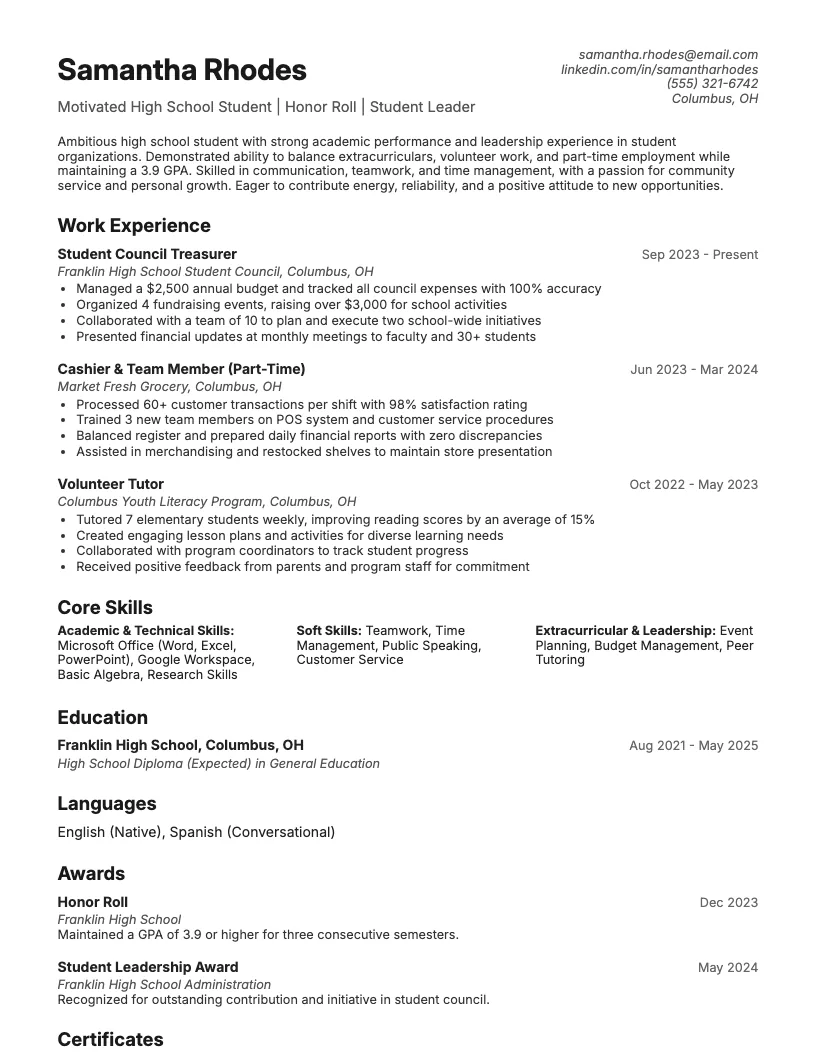
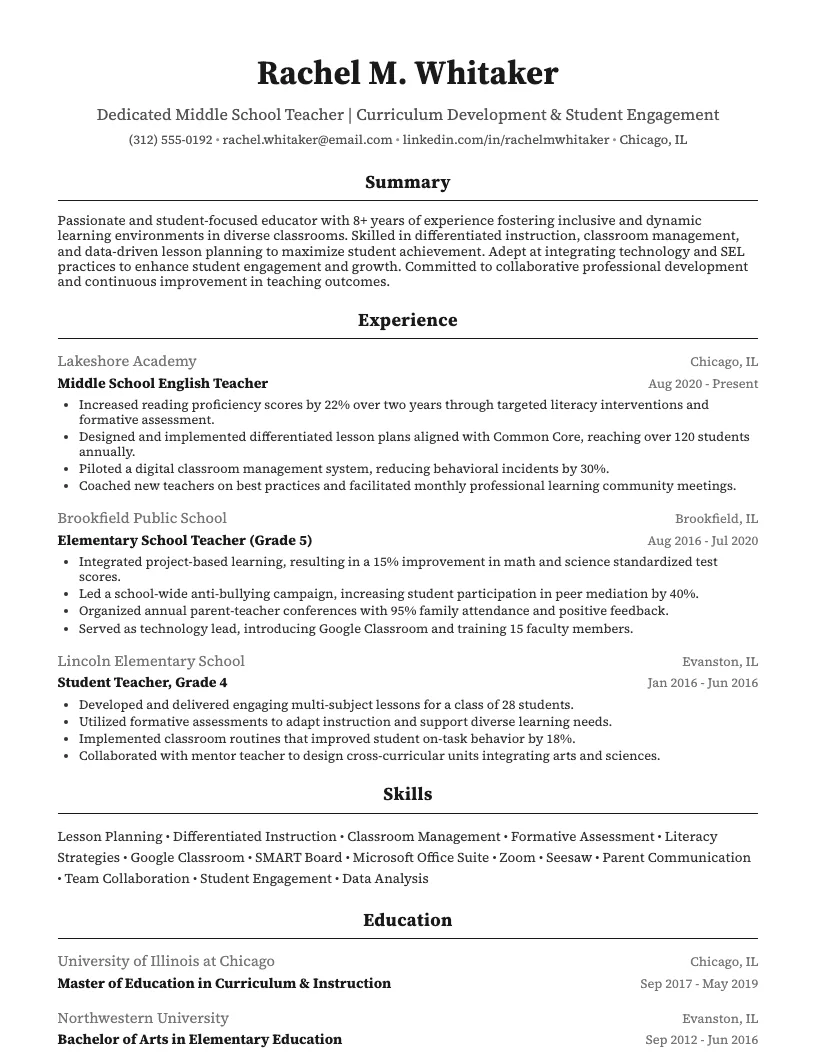
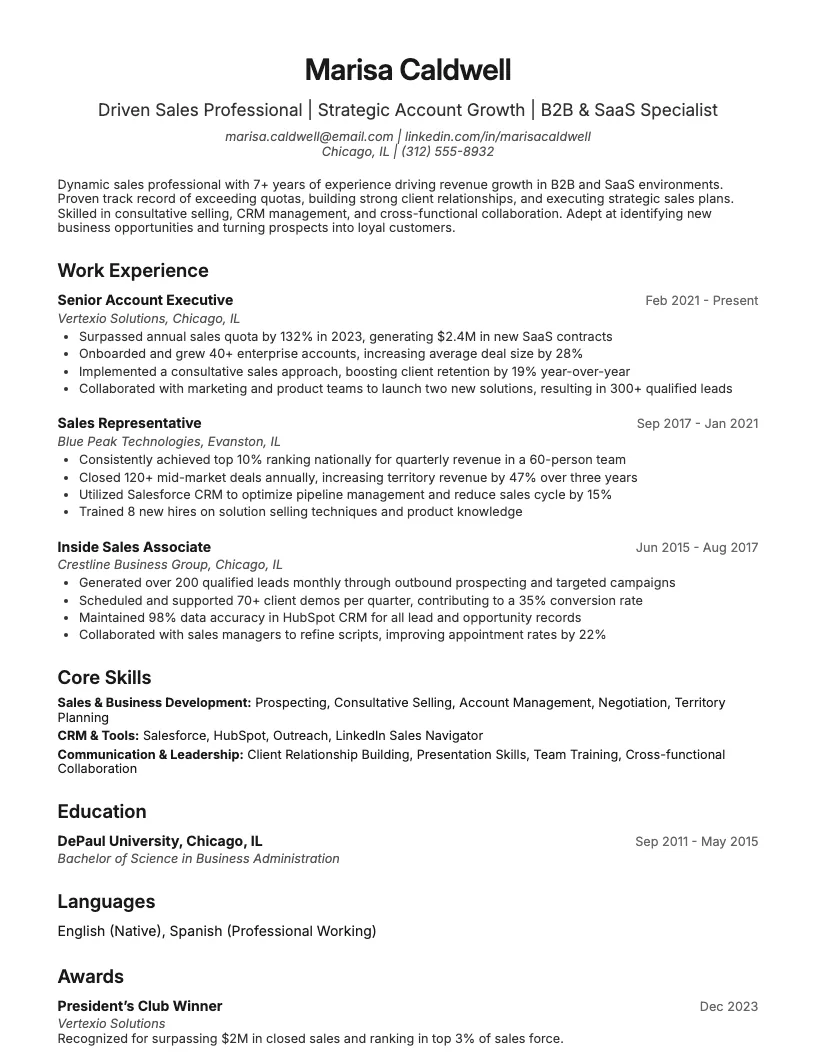
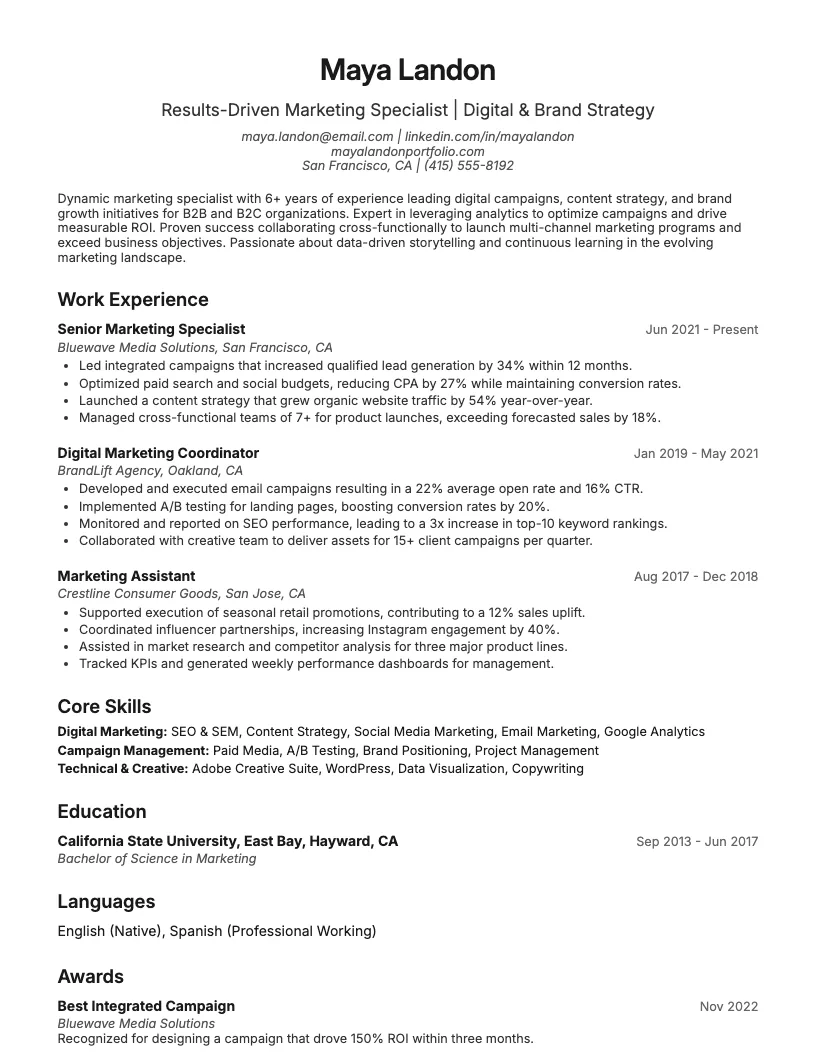
See these skills on a real resume
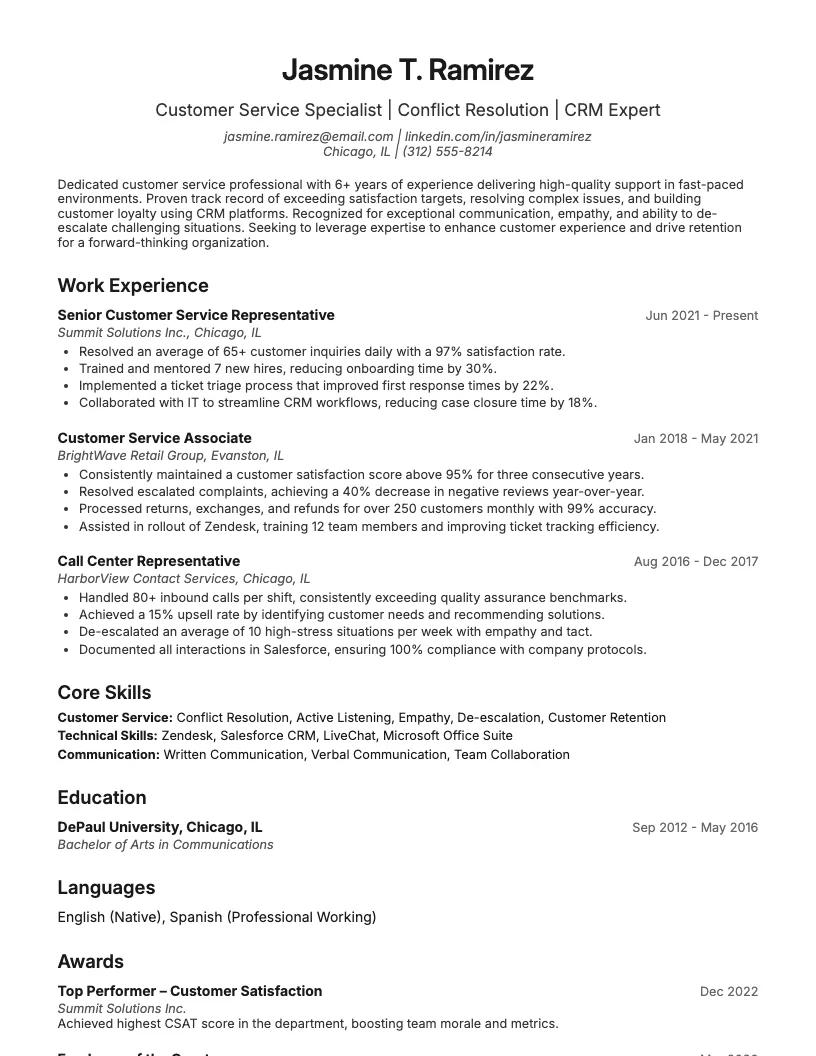
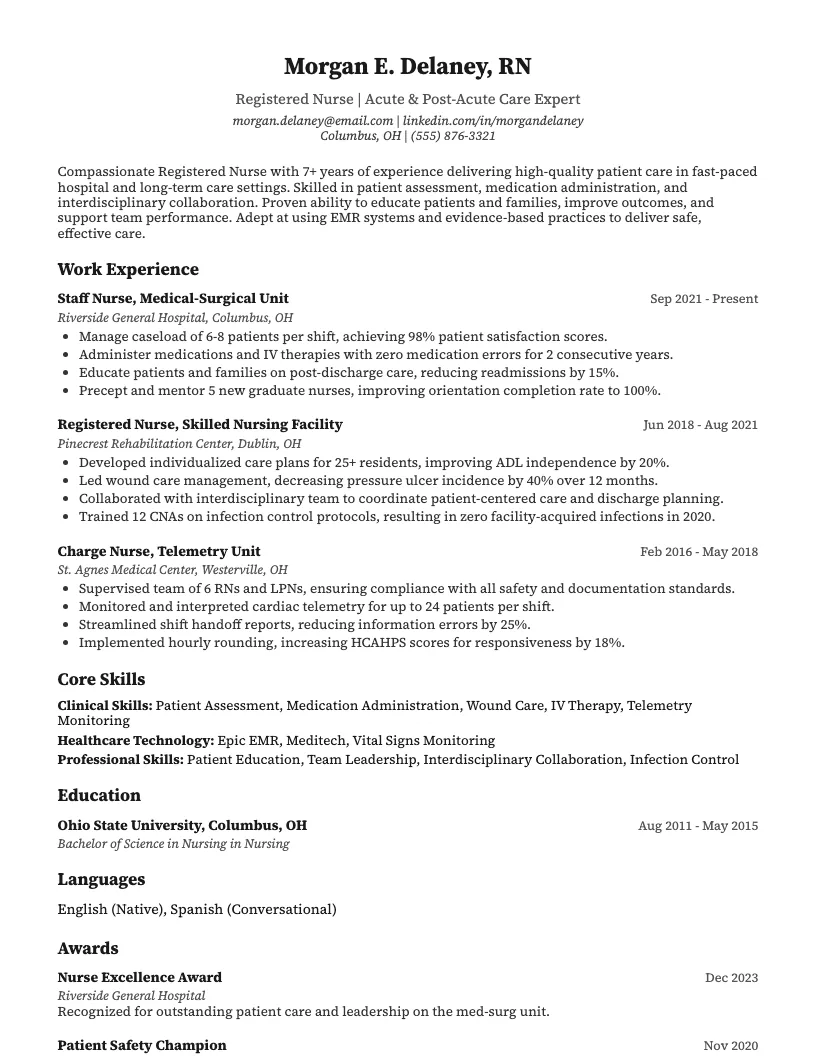
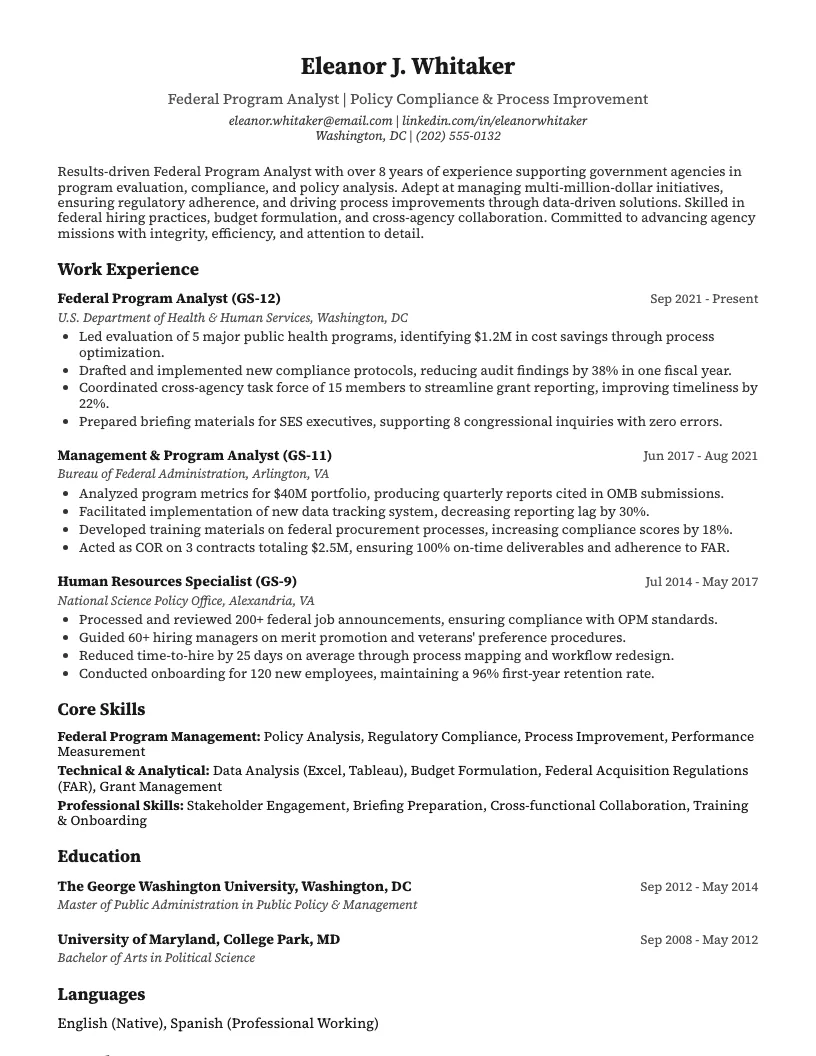
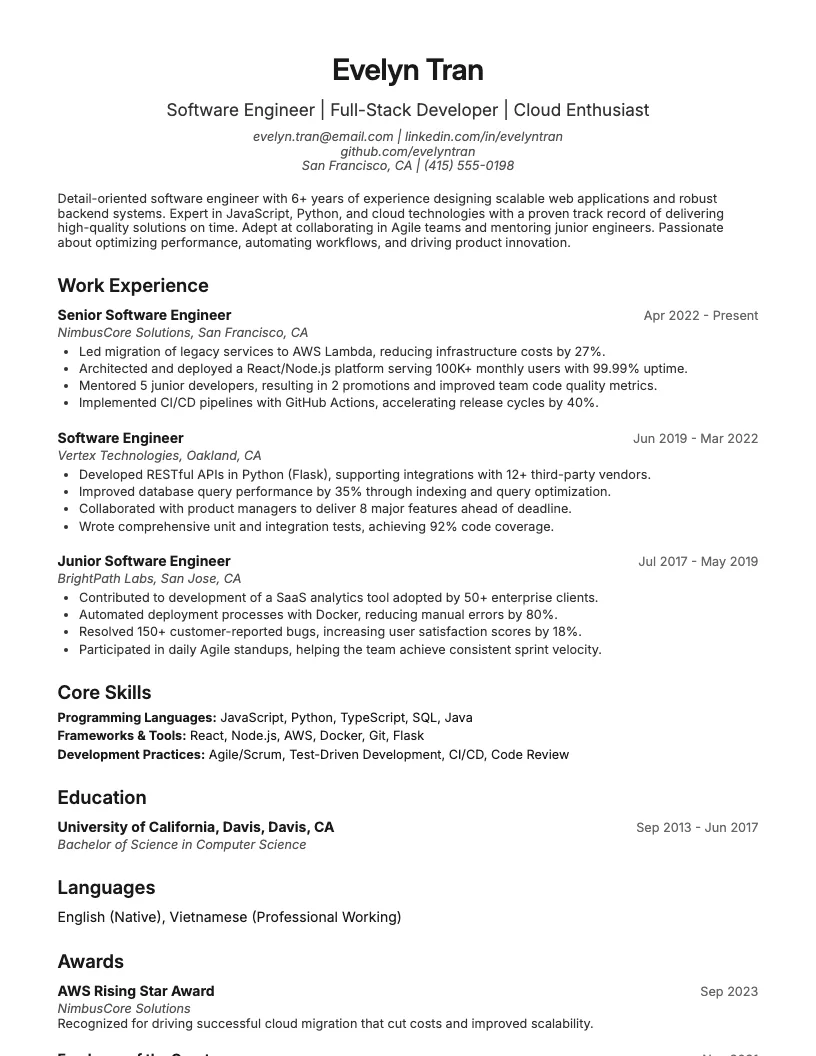
8 examplesStart from an example that already has them, and swap in your own.
Check your resume against the job you want
Scan your resume, see which skills and keywords the posting asks for that you are missing, and fix them before you apply.
Free to use • No credit card required