Keywords for Executive Assistant Resume: 8 to Include, 7 Tools to Name
See the 8 keywords every executive assistant resume needs, the 7 tools worth naming, where to place them, and 5 mistakes that block an EA resume from ranking.


Written by Marcus Rodriguez
ATS Optimization Specialist & Career Coach
Updated August 2026
Reviewed by Dr. Priya Sharma
Is your resume ATS-friendly?
Drop your resume in and see which of these skills a scanner can actually read, and which ones the job you want is asking for that you have not listed.
PDF or DOCX. Max 2MB.
We never share your resume or use it to train a model.
In This Guide:
What keywords do executive assistant resumes need?
What keywords do executive assistant resumes need?

I've read hundreds of executive assistant resumes, and the ones that get callbacks all share the same trait: they name the actual work, not a watered-down version of it. "Organized schedule" tells a screener nothing.
"Calendar management" is a keyword they're searching for.
Calendar management
This is the one every posting mentions, so it needs to be on your resume in those exact words. Don't write "scheduling help" when the job ad says calendar management - say what it says.
Travel coordination
Domestic trips, international trips, visas, multi-leg itineraries - if you've booked any of it, name it. "Travel coordination" or "travel arrangements" is what gets matched; "handled logistics" doesn't.
Inbox management and email triage
Nine times out of ten this gets left off entirely, and it shouldn't. If you've triaged an executive's inbox, flagged what needs a same-day reply, and drafted responses on their behalf, that's a real keyword an ATS is scanning for.
Meeting and board preparation
Board packet prep, agenda building, minutes - these separate a general admin resume from an executive-support one. If you've prepped materials for a board meeting, that phrase belongs on the page, not just "meeting support."
Expense reporting
Say the tool if you used one - Concur, Expensify - plus the words "expense reporting" or "expense management." I've seen candidates bury this under "administrative duties," which is exactly the kind of vague phrasing that gets skipped over.
Confidentiality and discretion
Discretion is hard to prove with a keyword alone. If you can name a category of information you handled - financial, M&A, personnel - without naming specifics, that detail is what actually lands in an interview.
Every posting for this role asks for it, and most resumes forget to say it. "Handled sensitive information with discretion" is a real line, not filler - put it in.
Stakeholder and vendor management
If you've coordinated with vendors, outside partners, or cross-functional teams on an executive's behalf, that's stakeholder management. Name it plainly.
Project coordination
Even light project work counts here - tracking deadlines, coordinating deliverables across teams. A lot of assistants undersell this because it feels like a side task, but it's a keyword recruiters search for on its own.
The mistake I see most often: candidates know they did all eight of these things but describe them in soft, generic language instead of the terms a posting and an ATS are actually matching against. If you're not sure which of these apply to a specific role, checking your resume against the posting is faster than guessing - and ResumeJudge will scan the both and tell you exactly which of these you're missing before you hit submit.
Which software should you name on an executive assistant resume?
Which software should you name on an executive assistant resume?
Duties tell a hiring manager what you did. Software tells them you can start Monday without training.
I look at the tools section of an EA resume before almost anything else, and Concur, Outlook, and Salesforce show up on the vast majority of postings I've read for this role. Only name the ones you've actually used - see listing software you have not used.
Microsoft Outlook and Office 365
This is the baseline. Every EA posting assumes you can run a calendar in Outlook, format a deck in PowerPoint, and build a tracker in Excel.
Don't just write "Microsoft Office" - name Outlook and Office 365 separately, since ATS systems match on the specific term more often than the umbrella one.
Google Workspace
Tech and startup postings lean Google over Microsoft, so if that's your background, list Gmail, Google Calendar, and Docs by name.
Supporting an exec who lives in both isn't rare either - if you've bridged the two, say so.
Zoom, Teams and Slack
These three cover meeting logistics and day-to-day messaging, and most EAs have touched at least two.
List the ones you've actually scheduled and hosted meetings in, not just joined.
SAP Concur and Expensify
Expense reporting lives inside a tool, and naming it beats describing the task. If you've processed reports in Concur or Expensify, that single word does more work than a sentence about "managing expenses."
I'd rather see one tool named correctly than three vague duties around it - see expense reporting for how that plays out in a full bullet.
Salesforce and HubSpot
Not every EA touches a CRM, but if your executive works sales or client-facing accounts, you might log contacts or pull reports in one of these. Worth a line if it's real experience.
Asana, Trello and Notion
Project coordination increasingly runs through one of these boards rather than a spreadsheet. Naming the specific tool signals you can manage cross-team work without hand-holding.
DocuSign and document management systems
Contracts, NDAs, board documents - most of it routes through DocuSign or a similar system now. If you've handled signature workflows or document repositories, name the platform.
Once you've got your list, check it against a real posting before you commit to a version - ResumeJudge will read the job description and tell you which of these it's actually asking for, so you're not guessing which ones matter for that application.
Where do these keywords go on your resume?
Where do these keywords go on your resume?
Right placement matters as much as picking the right words. I see EAs pack every keyword into one crowded skills list and lose half the credit for it.
In your summary
Your top three lines should carry 6 to 10 of your strongest keywords: your title, two or three signature duties, one tool, one strength.
Something like "Executive assistant supporting C-suite leaders, managing complex calendars and travel in Outlook, known for discretion under pressure."
In your skills section
This is where duty and tool keywords sit side by side, short and skimmable: calendar management, travel coordination, Concur, board prep.
Mirror the exact wording from the posting here. It's the section an ATS parses fastest, so it's not the place to get creative with synonyms.
In your experience bullets
Keywords need a job to do, not just a place to sit. Pair each one with what you did and what it produced, the way bullet rewrites further down show.
"Managed executive calendars using Outlook, coordinating across four time zones" tells a hiring manager more than the words "calendar management" ever will on their own. If you're not sure which of your duties match a specific posting's language, ResumeJudge will scan both and rewrite your bullets with the exact terms that posting is asking for.
In your certifications
If you hold a PMP, Notary, or a Microsoft Office certification, list it by its full name plus the acronym. Recruiters and ATS systems search both.
How do you write bullets that use these keywords?
I've read enough of these to tell you the single biggest gap: people list the duty and stop.
The keyword alone doesn't tell a hiring manager anything a form field couldn't already tell them.
"Managed executive's calendar" vs the version with scope
A calendar-management bullet
Managed executive's calendar and booked travel.
Managed calendar for CEO across 4 time zones, 40+ meetings weekly, 98% accuracy.
Nine times out of ten this line reads: "Managed executive's calendar and booked travel."
Rewrite it with who and how many: "Managed calendar for CEO across 4 time zones, 40+ meetings weekly, 98% accuracy." Same duty, but now it proves the scale.
"Booked travel" vs the version that names Concur and the cost saved
A travel-coordination bullet
Helped with travel arrangements.
Booked 15+ trips a month in SAP Concur, negotiated vendor rates that cut travel spend by tens of thousands of dollars.
"Helped with travel arrangements" says nothing. Name the tool and the number: booked 15+ trips a month in SAP Concur, negotiated vendor rates that cut travel spend by tens of thousands of dollars, coordinated itineraries across a dozen countries.
"Prepared presentations" vs the version that names the board deck
A presentation-prep bullet
Prepared presentations for leadership.
Built board materials and executive decks for quarterly earnings calls and investor meetings.
Anyone can "prepare presentations." Say what they were for: built board materials and executive decks for quarterly earnings calls and investor meetings.
That's the difference between a task and a responsibility.
"Managed office operations" vs the version with a budget figure
An office-operations bullet
Managed office operations.
Led office operations for a 200-person headquarters, managed a facilities budget, cut costs by double digits through vendor renegotiation.
Attach a headcount or a dollar figure: led office operations for a 200-person headquarters, managed a facilities budget, cut costs by double digits through vendor renegotiation. A duty with no scope attached is the thing that gets a resume passed over even when every keyword is there.
Numbers you can put on EA work: executives supported, meetings per week, time zones, trip volume
If you're stuck for a metric, these are the ones EA resumes actually carry: how many executives you supported, meetings booked per week, time zones juggled, trips booked per month, team size, budget size. Once your bullets are rewritten this way, ResumeJudge can check them against a specific posting and tell you which of these numbers are still missing before you hit apply.
Which keywords change with your level?
Keywords by seniority
| Level | Keywords to lead with |
|---|---|
| Entry-level | Calendar management, travel booking, Outlook, Excel, PowerPoint |
| Senior | Process improvement, budget management, vendor negotiations |
| EA to CEO / C-suite | Board of directors, board minutes, investor relations, confidential projects |
| Chief of staff | Executive decision support, cross-functional leadership, strategic initiatives |
The keywords you lead with should shift as you move up. A recruiter can usually tell your level from your skills section alone, before they even hit your job titles.
Entry-level executive assistant
At this stage, stick to the fundamentals: calendar management, travel booking, meeting coordination, Outlook, Excel, PowerPoint, Zoom. Add attention to detail and time management if you're short on paid experience - internships and part-time admin work count here.
Senior executive assistant
Now the words need to show you run things, not just support them: process improvement, strategic planning, budget management, vendor negotiations, multi-executive support. I've seen senior EAs undersell themselves by keeping entry-level language on a resume that's ten years past it.
Executive assistant to the CEO or C-suite
This is where board of directors, board minutes, investor relations, and confidential projects earn their place. These words also tell an ATS and a recruiter you've handled sensitive material, which matters more at this level than any software list.
See confidentiality and discretion for how to phrase that without sounding vague.
Chief of staff
If you're aiming here, your keywords need to move past support entirely: executive decision support, cross-functional leadership, strategic initiatives. ResumeJudge is useful for this jump specifically - feed it a chief of staff posting and it'll rewrite your EA experience into that language instead of leaving you to guess which words carry over.
Which keywords change with your industry?
Keywords by industry
| Industry | Key phrases | Tools worth naming |
|---|---|---|
| Tech / startups | Fast-paced, cross-functional, investor relations | Slack, Notion, Asana, Airtable |
| Finance / banking | Regulatory compliance, board materials | Bloomberg Terminal |
| Healthcare | HIPAA compliance, physician scheduling | Epic, Cerner |
| Legal | Attorney-client privilege, docket management | Westlaw, LexisNexis |
| Nonprofit / education | Stakeholder management, donor relations | - |
| Bilingual / international | Cross-cultural communication, global teams | - |
The core duties list stays the same everywhere. What changes is the second half of your resume - the words that tell a hiring manager you already know their world.
Tech and startups
I see two kinds of EA resumes for startup roles: ones that read like a corporate office, and ones that get the culture. Say fast-paced, cross-functional, remote coordination.
If you've supported founders through fundraising, say so - investor relations, pitch deck preparation, board deck prep for VC meetings. Name the tools too: Slack, Notion, Asana, Airtable.
If you've touched sprint planning or product launch coordination even loosely, that's worth a line.
Finance and banking
Banks and funds want to see regulatory compliance, confidentiality protocols, and comfort supporting board materials or investor presentations. If you've prepped for earnings calls or worked with a compliance team, name it - that's a keyword a generic assistant resume won't have.
Tools like Bloomberg Terminal or financial databases are a bonus, not a requirement.
Healthcare
HIPAA compliance is the one word every healthcare EA resume needs - leave it off and a recruiter assumes you've never worked near patient data. Beyond that: patient confidentiality, physician scheduling, credentialing support.
If you've used Epic or Cerner, that's a real differentiator, not filler.
Legal
Law firms scan for attorney-client privilege, case management, docket management, and e-filing. Naming Westlaw or LexisNexis tells a firm you won't need training on day one.
I've seen strong candidates get passed over just for calling it "confidentiality" instead of "attorney-client privilege" - the specific legal phrase carries more weight.
Nonprofit and education
These postings lean on stakeholder management, event coordination, and often grant administration or donor relations if fundraising touches your role at all. Budget tracking and board support matter here too - nonprofit boards run on the same prep work as corporate ones.
Bilingual and international roles
If you speak a second language, say so plainly - bilingual, plus the language itself - and back it with cross-cultural communication or international stakeholder coordination. Supporting execs across time zones is its own keyword: global teams, time zone management.
Once you've matched the industry language, run it against the actual posting - pulling keywords straight from the job description catches sector terms a generic list like this one never will. ResumeJudge will take that posting and your resume and rewrite the summary and bullets to match its language automatically, instead of you guessing which industry terms apply.
How is this different from an administrative assistant resume?
Executive vs administrative vs personal assistant
| Role | Who you support | Keywords |
|---|---|---|
| Executive assistant | One or two people at the top | Board prep, executive communication, confidential projects |
| Administrative assistant | A department | Scheduling, filing, data entry, general office support |
| Personal assistant | A family, not a business | Errands, household management, personal travel |
Executive assistant
You support one person, maybe two, usually at the top: a CEO, a CFO, a founder.
Your keywords lean strategic - board prep, executive communication, confidential projects, calendar management for someone whose time is worth a lot of money.
Administrative assistant
You support a department, not a person.
Keywords here are operational: scheduling, filing, data entry, general office support. Nothing wrong with that work - it's just a different job, and the resume should say so.
Personal assistant
This one's about a life, not a business.
Errands, household management, travel for one family rather than a company. If you've done both EA and PA work, keep them on separate resumes - mixing them muddies both.
Keywords that mark you as the wrong one
I've seen a lot of EA resumes get passed over because they read like admin resumes with a fancier title stapled on.
"Filed documents" and "answered phones" tell a recruiter you supported a team, not an executive. If you managed a board deck or ran interference on confidential deals, say that - it's what separates entry-level from senior EA language.
Not sure which version your resume sounds like? Run it against the posting in ResumeJudge and it'll flag wording that reads administrative when the job wants executive-level language.
How do you pull the right keywords out of a job posting?
How do you pull the right keywords out of a job posting?
Every posting is a checklist in disguise. Here's how I read one before I touch a resume.
Step 1: Mark the duties the posting repeats
If a posting says "manage calendar" once, note it. If it says some version of scheduling three times, it's the job, not a line item.
I go through and circle anything that shows up more than once in different words.
Step 2: Note every tool it names
Outlook, Concur, Zoom, Salesforce, whatever's listed - write down every single one, even ones you'd assume any EA knows.
Don't skip a tool because it feels minor. The scanner doesn't know it's minor.
Step 3: Note the seniority and who you'd support
"Supports the CEO" and "supports a director" are two different jobs with two different keyword sets - see how these change with level. Match your language to the level in front of you, not the level you had last.
Step 4: Pick the 15 to 25 you can actually back up
I've read enough resumes to tell you: 15 to 25 is the range that works. Fewer and you look thin, more and it reads as noise.
Pick the ones you've genuinely done. This is also where ResumeJudge earns its keep - it takes the posting and your resume and tells you exactly which of these you're missing, so you're not guessing.
Step 5: Rewrite your summary and top bullets only
You don't need to redo the whole resume for one application - update your summary and your top four to six bullets and leave the rest. Where these keywords go on your resume covers how to word each of those spots.
What blocks an executive assistant resume from ranking well?
I've read enough of these to spot the same five problems over and over. Here's what actually keeps a good candidate out of the interview pile.
Keyword stuffing
Cramming "calendar management, calendar scheduling, calendar coordination" into one bullet doesn't fool anything anymore. Modern screening reads for meaning, not density, and a human reader spots it in two seconds and starts skimming for the exit.
Pick the term the posting uses and say it once, naturally, where the work actually happened.
Listing software you have not used
Concur, Salesforce, and DocuSign show up in the vast majority of EA postings, so I get why people are tempted to list them anyway. Don't. The first interview question is usually "walk me through how you used this," and there's no recovering from a blank stare.
Only name what you can talk about for two minutes (which software to name).
Duties with no scope attached
"Managed calendar" and "coordinated meetings" are duties, not proof. The fix is to attach a number, which writing bullets with scope shows on four real bullets.
The wrong assistant job title
Calling yourself an administrative assistant when you did EA-level work, or the reverse, sends the wrong signal before anyone reads a bullet (EA vs admin assistant).
Tables, columns and icons the ATS cannot read
Multi-column layouts, icons, and text boxes get mangled or skipped entirely by a lot of parsers. Stick to a single column, plain text, and export as a clean PDF or DOCX.
If you want to know exactly which of your bullets survive the scan and which keywords are still missing, that's the kind of check ResumeJudge runs against the actual posting before you hit submit.
Frequently Asked Questions
How many keywords should I put on my resume?
Aim for a natural amount that mirrors the posting rather than a fixed target - for most executive assistant roles that works out to somewhere around 15 to 25 words and phrases, covering the core duties and tools the posting names. Don't stretch the list to hit a number if you can't back the words up with real experience. The right count depends on how much the posting actually names and how much of it applies to you.
Should I repeat the same keyword more than once?
Yes, when it happens naturally. Using a term like calendar management once in your summary and again in a bullet that shows what it looked like in practice reads as real, ongoing experience rather than a single checkbox mention. Just don't force it into a sentence where it doesn't belong - repetition should come from the work, not from padding.
Can I copy the job posting word for word?
No. Lifting phrases straight from the posting without connecting them to anything you actually did reads as filler, both to a scanner and to the person reading it after. Use the posting's own language where it genuinely matches your experience, but put it in your own sentence with your own result attached.
Should I send a PDF or a Word document?
Either works, as long as it's a simple, single-column, text-based file - most systems read both formats fine. Avoid a PDF built from a scanned image, heavy graphics, or a multi-column layout, since those can lose formatting or become unreadable when the file is parsed. If a posting tells you which format to send, follow that over your own preference.
Do I need to change keywords for every application?
Yes - the mix of duties and tools named in a posting shifts from job to job, so a keyword list built for one application rarely fits the next one. Read each posting, pull out its core terms, and update your summary and top bullets to match. ResumeJudge does this rewriting for you: give it your resume and a job posting, and it reworks the wording section by section so the keywords that posting asks for land in the right places.
Should my cover letter use the same keywords?
Yes - the letter and the resume should read as one story, built around the same core skills and tools rather than a different set of terms. Repeating a few of the posting's key phrases in the letter reinforces that you fit what's being asked for. ResumeJudge writes that cover letter for you, built around the same posting so it lines up with the keywords already in your resume.
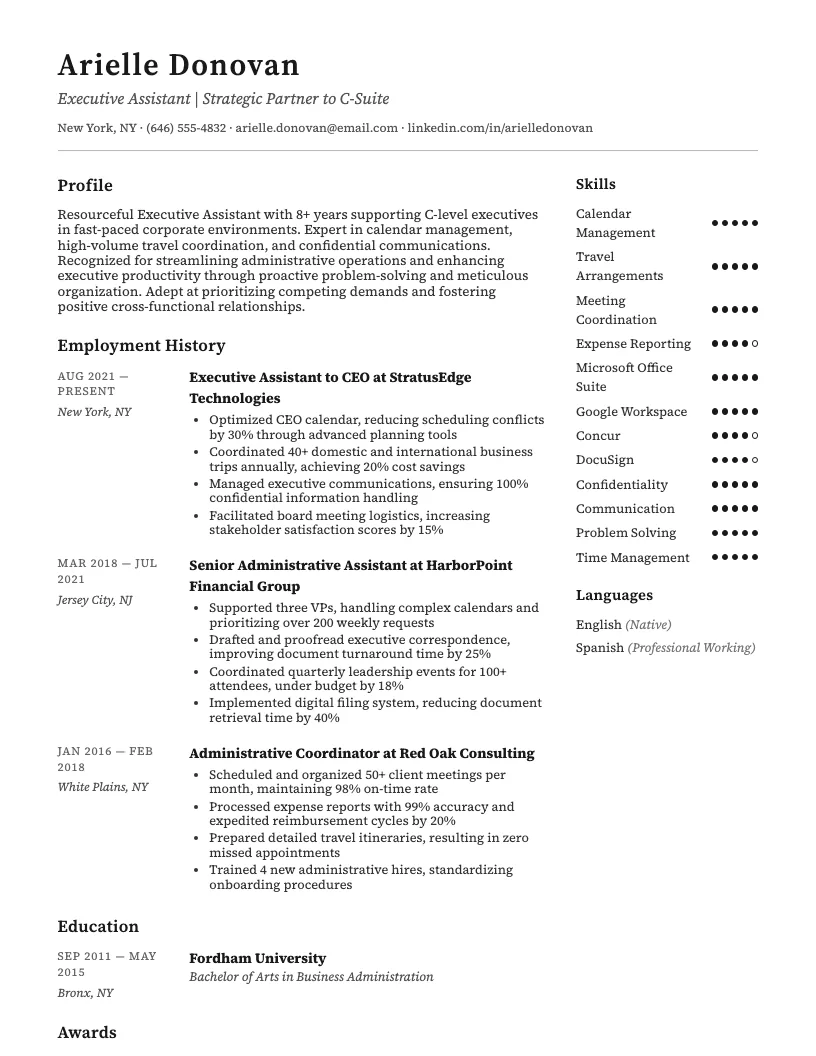
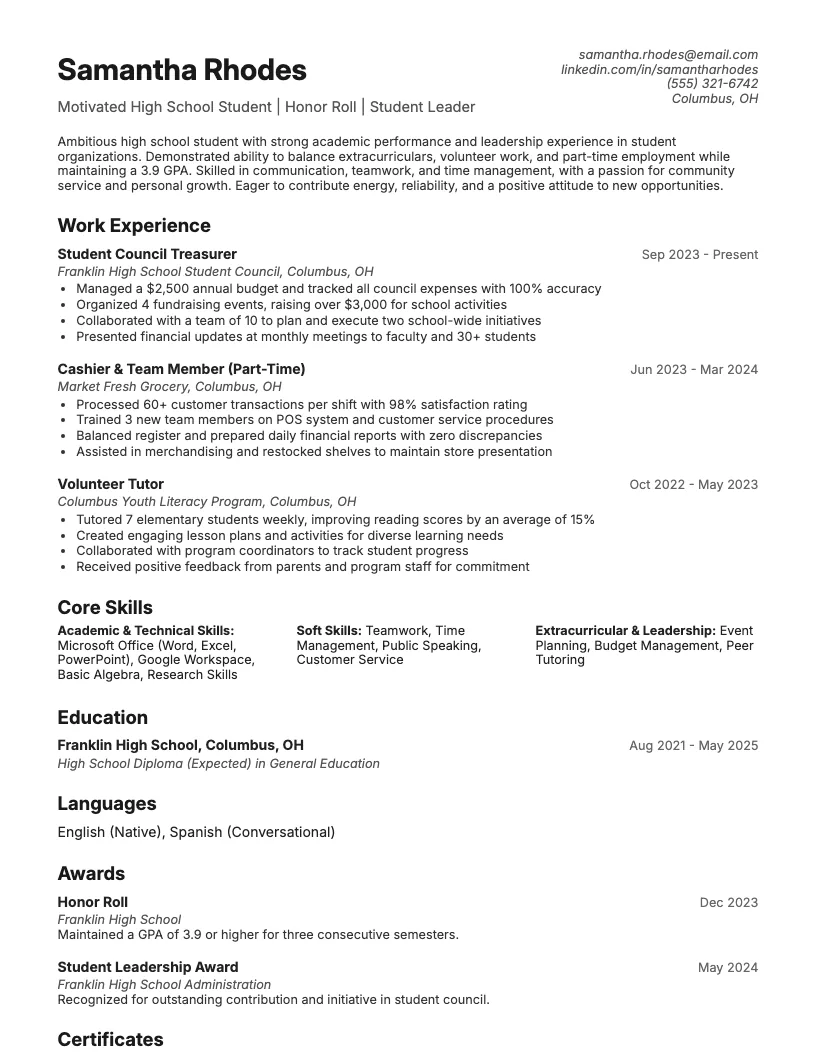
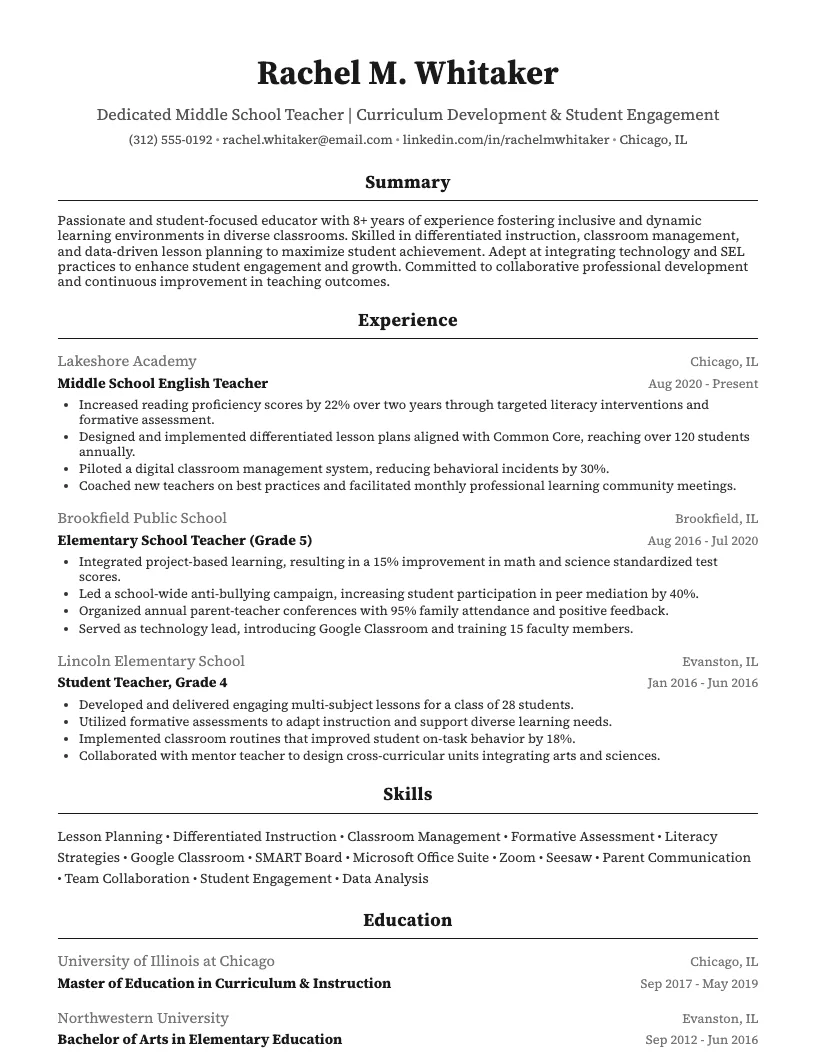
See these skills on a real resume
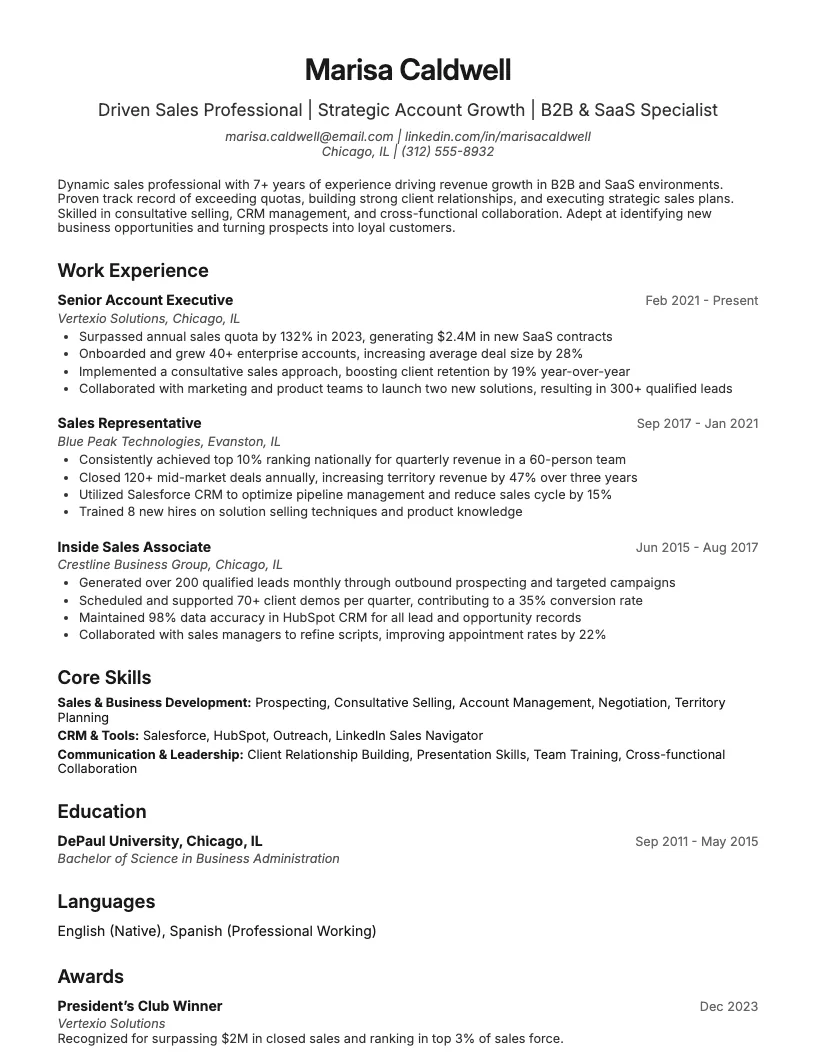
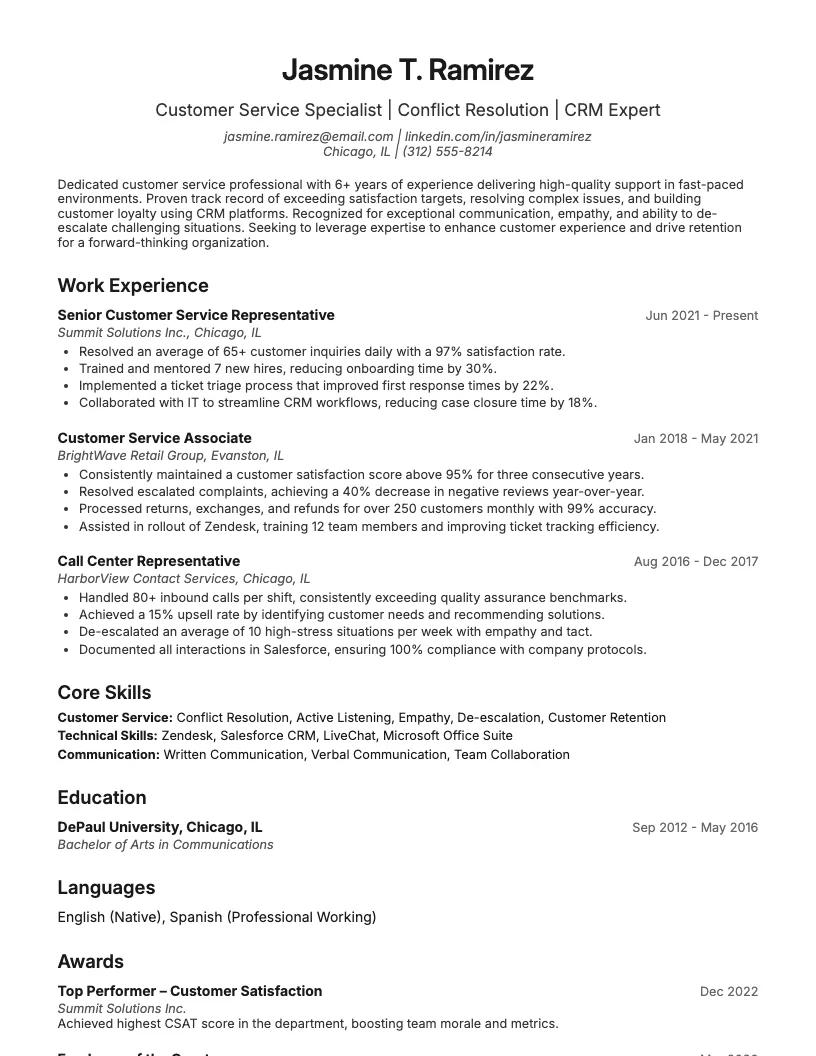
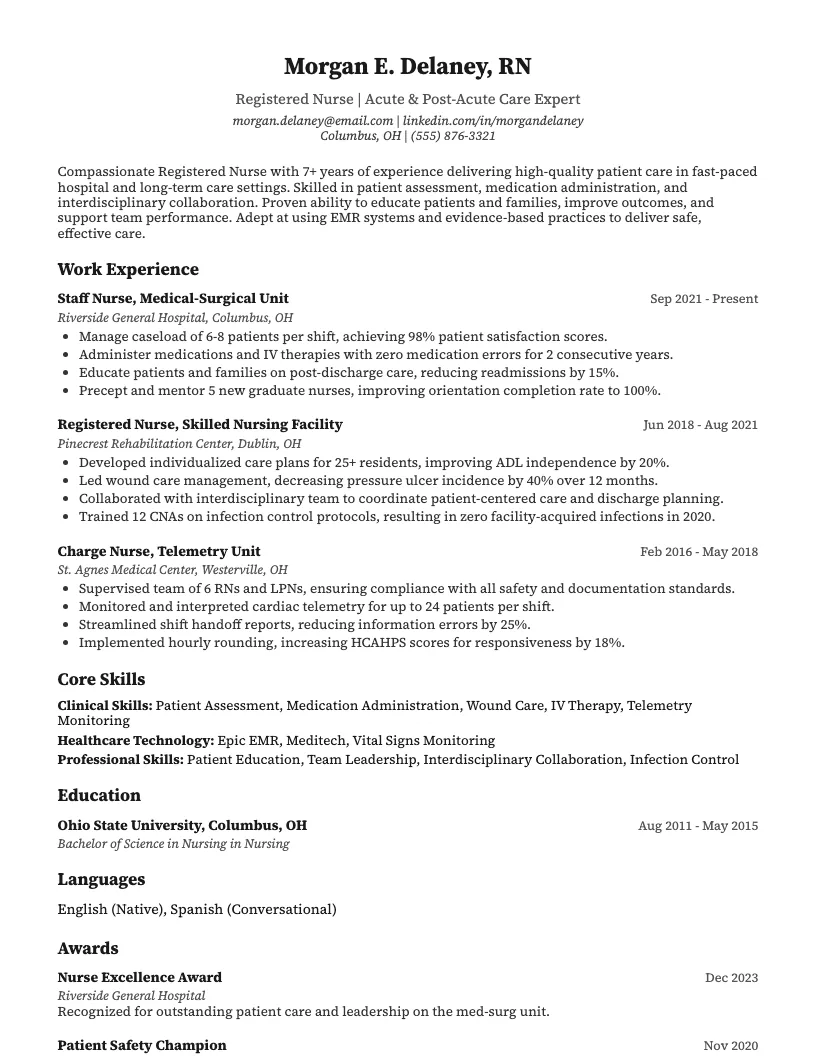
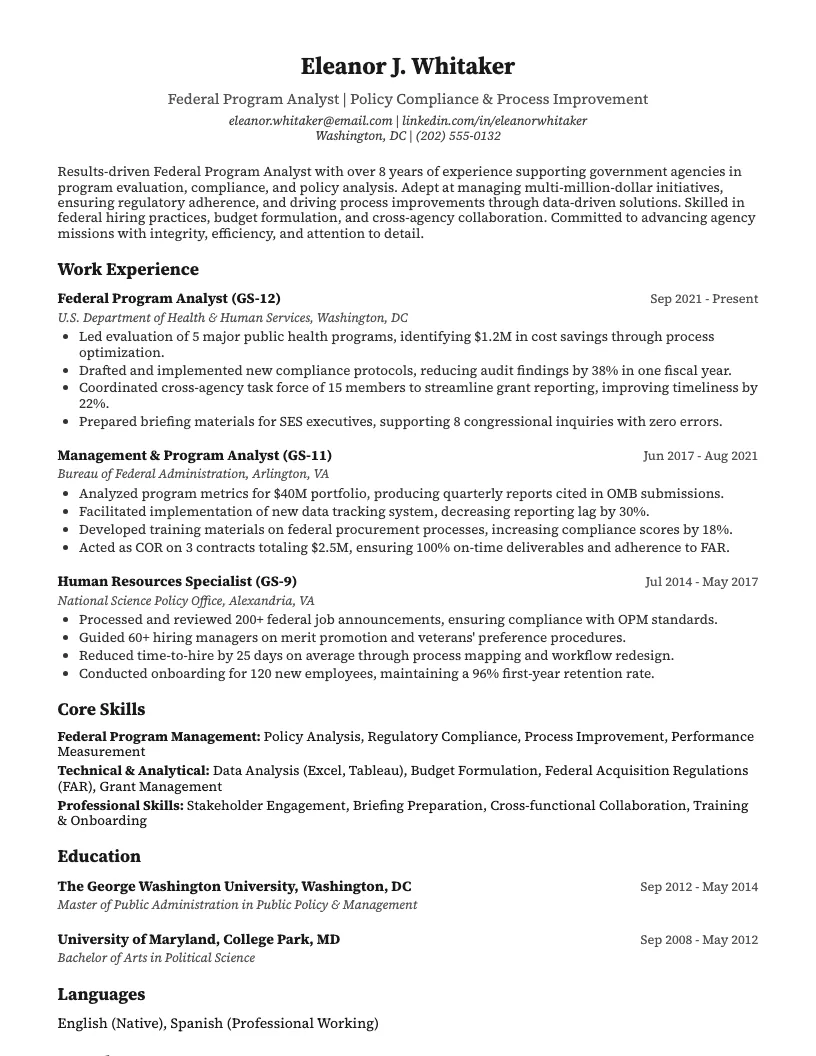
8 examplesStart from an example that already has them, and swap in your own.
Check your resume against the job you want
Scan your resume, see which skills and keywords the posting asks for that you are missing, and fix them before you apply.
Free to use • No credit card required