Consultant Resume Keywords: 10 Terms That Actually Get Callbacks
See the 10 keywords consultants actually need, where to place them, verb swaps, tool terms, and how to check your resume against a posting before you apply.


Written by Marcus Rodriguez
ATS Optimization Specialist & Career Coach
Updated August 2026
Reviewed by Dr. Priya Sharma
Is your resume ATS-friendly?
Drop your resume in and see which of these skills a scanner can actually read, and which ones the job you want is asking for that you have not listed.
PDF or DOCX. Max 2MB.
We never share your resume or use it to train a model.
In This Guide:
What keywords should a consultant put on a resume?
What keywords should a consultant put on a resume?

I've read enough consultant resumes to tell you the ones that get callbacks all lean on the same ten ideas. They're not exotic.
They're just specific, and most people write them vague instead.
Problem solving
This is the one every consulting resume needs, because it's the actual job. Don't write "solved problems" - say what you resolved and what changed because of it.
"Resolved a supply chain issue that was adding 12% to operating costs" tells a reviewer more in one line than a whole paragraph of "problem-solver" as a personality trait.
Analytical skills
Analyzed, evaluated, modeled - these words earn their place when they're followed by what you found. I'd rather see "analyzed financial statements to identify $500K in cost savings" than "strong analytical skills" every time.
The first one is proof. The second is a claim.
Project management
Managed, coordinated, delivered. If you ran workstreams, kept a timeline on track, or brought a project in under budget, that's what belongs here - not "managed projects" as a catch-all.
Name what you coordinated and what it cut: time, cost, headcount.
Client engagement
Consulting is a client business, so a resume with no client language reads oddly. Presented, advised, maintained relationships with - these show you can sit across from a client and be trusted, not just crunch numbers in a back room.
Strategy development
Developed, designed, created. The mistake I see most often is people describing strategy work as if they only executed someone else's plan.
If you shaped the plan - even part of it - say so, and back it with what it did: "created an initiative that lifted client engagement 20%."
Leadership
Led, directed, coached. You don't need a title to claim this - leading a team of two on one engagement counts.
What matters is naming the group and the outcome: "led a team of five consultants" beats "leadership skills" by a mile.
Quantitative and financial analysis
Quantified, calculated, forecasted. This is where those numbers live - see put a number at the end.
A model you built, a forecast that held up, a dataset you turned into a decision.
Communication
Presented, negotiated, persuaded. This isn't "good communicator" on a skills list - it's the specific act of getting an executive team to sign off on something you recommended.
That's a different, more useful claim.
Change management
Transformed, implemented, pioneered. Consulting often means walking into an organization and getting people to do something differently.
If you rolled out a new process or pushed a team through a transition, this is the language for it - and it pairs naturally with the leadership keywords above.
Results and impact
Improved, achieved, delivered, generated. Every other keyword on this page should end up feeding into a number here.
This is the section reviewers actually stop and read - "reduced operational costs by 18%" carries more weight than five sentences about your work ethic.
Once you've got a bullet under each of these, the real test is whether they match a specific posting, not just the general shape of "consultant." I'll usually run a resume against the actual job description at that point - ResumeJudge does that for you, flagging which of these ideas the posting is asking for that your resume hasn't answered yet, then rewriting the bullets to close the gap instead of leaving you to guess at the wording.
Where do these keywords go on the page?
Where do these keywords go on the page?
Placement matters as much as which words you pick. I've seen strong keyword lists buried where a recruiter, and a parser, will never register them.
The headline and job title
Your headline is the first thing scanned, so it needs the actual title you're applying for, not a clever label. "Consultant" or "Management Consultant" beats "Business Problem Solver" every time.
If your last title didn't say "consultant," that's worth fixing here rather than hoping someone infers it.
The summary at the top
Three or four lines, and this is where your top three keywords - problem solving, client engagement, whatever the posting leads with - earn their place. Say what you did, for whom, with what result.
Skip the summary and you've lost the section the eye hits first.
Bullet points under each job
This is where most resumes fail the check. A skill listed once at the top and never shown in a bullet reads as a claim with no proof, both to a human and to the parser.
Every keyword you care about should show up inside at least one bullet doing real work - more on building those bullets below.
The skills section
Useful for parsers, but treat it as backup, not your main pitch. It confirms what your bullets already showed.
Certifications: CMC, PMP, Six Sigma
List these near your name or in their own line - CMC, PMP, Six Sigma (Green Belt or Black Belt), whatever you hold. Spell each one out the first time it appears, then the abbreviation is fine after that.
If you're checking your resume against a specific posting, ResumeJudge will tell you whether it wants a certification you haven't listed at all, not just whether the wording is close enough.
How do you turn a keyword into a bullet point that gets read?
A keyword sitting alone in a skills section doesn't prove anything. A bullet built around it does.
Start with the action word
Open with a strong verb and keep it in past tense - you're describing work you already finished. Which verb to open with is covered in the verbs section.
Name the client or business problem
Say what you were fixing. "Resolved a client's declining margins" tells a hiring manager more than "resolved issues."
The problem is what makes the keyword mean something.
Say what you did, not what you were responsible for
Turning a weak bullet into a proven one
Responsible for project management
Managed a five-person team to implement a new process, delivering $300K in cost savings
A bullet that says what you were assigned describes a job description, not a person. Rewrite it as what you actually finished: "Managed a five-person team to cut delivery time by 15%."
Same keyword, ten times the weight.
Put a number at the end
Every bullet should end with a figure - cost savings, a percentage, a headcount, a timeline. "Improved client retention by 27%" beats "improved client retention" every time.
If you don't have an exact number, use a real range before you leave it out entirely.
Before and after: three rewritten bullets
| Weak | Rewritten |
|---|---|
| Responsible for project management | Led a cross-functional team to implement a new process, delivering $300K in cost savings |
| Worked with clients | Maintained relationships with senior leadership and delivered insights that shaped a $6M strategy |
| Analyzed data | Analyzed financial statements and market research to support a client's growth strategy |
Once your bullets read like this, run the resume against the actual posting - ResumeJudge will show you which of these still land flat and rewrite the weak ones in the exact language the job is asking for.
Which action verbs should you use instead of the tired ones?
Which action verbs should you use instead of the tired ones?
I've read enough consultant resumes to know the same six verbs show up on almost all of them: managed, worked, helped, assisted, responsible for, involved in. None of them tell me what you actually did.
Swap them out by category, not at random - the verb should match the kind of work sitting under it.
Verbs for solving a problem
Solved, resolved, addressed, diagnosed, untangled. "Resolved a billing discrepancy that was costing the client six figures a year" tells a reviewer more than "responsible for troubleshooting" ever will.
Verbs for leading people
Led, directed, managed, coached, mentored. Save "led" for when you actually had people reporting to you or a workstream under you - a reviewer at a Big Four firm will ask about it in the interview, and "I led a team of five" needs to survive that question.
Verbs for analysis and numbers
Analyzed, evaluated, modeled, quantified, forecasted. These pair naturally with a number at the end of the bullet - see how to close a bullet with a number if you're not doing that yet.
Verbs for building something new
Built, launched, designed, developed, introduced. This is where "created a framework" beats "helped create a framework" - own the thing, don't share credit for it in the verb.
Verbs for client work
Presented, advised, negotiated, facilitated, maintained. Client-facing consulting lives or dies on this category, and it's the one people default to "worked with" the most - which is exactly the word to cut.
Weak words to replace: helped, assisted, responsible for, worked with
These four kill more bullets than anything else I see. They put you in a supporting role even when you weren't in one, and they're vague enough to mean nothing to a reviewer skimming fast.
"Responsible for" is the worst offender. Replace it with the verb for what you actually did: analyzed, delivered, built, closed.
If you're not sure which bullets are still leaning on these words, upload the resume and let ResumeJudge flag the weak ones against the posting you're applying to - it'll rewrite the wording into the stronger verb for you instead of you hunting for it line by line.
What tools and terms should appear on a consultant resume?
What tools and terms should appear on a consultant resume?
I read hundreds of these, and the ones that stall have all the right experience described in words too soft for a scanner to catch. "Helped leadership solve business challenges" says nothing searchable.
"Used Excel and stakeholder interviews to size a $6M market opportunity" does the same job and gets picked up.
Excel and market sizing
Excel shows up on almost every consulting posting, so it needs to show up on your resume the same way you actually used it.
Name the output, not just the tool: a market-sizing model, a sensitivity analysis, a three-statement model. Where that goes on the page is covered under bullet points under each job.
PowerPoint and client decks
Same rule for PowerPoint. "Built client-facing decks" is fine, but "built the PowerPoint recommendation that a client used to approve a cost-cutting plan" tells a screener and a hiring manager what actually happened.
SQL, Tableau and Power BI
If your work involved pulling or visualizing data, name the tool. SQL, Tableau, Power BI, Alteryx - whichever you actually touched.
A vague line like "supported data analysis" loses to "queried client transaction data in SQL and built a Tableau dashboard the account team used weekly." Same work, very different odds of getting through.
Frameworks, workstreams and deliverables
Consulting has its own vocabulary - case interview, framework, workstream, deliverables, bench time. If you led a workstream, say "workstream," not "part of the project."
These words tell a firm you've actually worked inside consulting, not just adjacent to it, and they're often exactly what the posting is scanning for.
Spell out the acronym the first time
Write out the full term the first time you use it, then the acronym after: "Return on Investment (ROI)," "Request for Proposal (RFP)." Some parsers only match one form, so give them both.
This is a five-minute fix most people skip. If you're not sure your resume even contains the terms this posting is scanning for, ResumeJudge will pull the exact keywords from a job description, check them against your resume, and rewrite the bullets that are missing them - before-and-after bullets shows what that looks like in practice.
Which keywords change with the type of consulting you do?
Which keywords to lead with, by consulting type
| Consulting type | Lead with |
|---|---|
| Management & strategy | Strategy development, results |
| Big Four | Change management, frameworks |
| IT & technology | SQL, Tableau, Power BI |
| Financial & risk | Quantitative analysis, forecasting |
| Independent / freelance | Client engagement, results |
| Entry-level / career-changer | Problem solving, communication |
The ten keywords in the first section are the base. Which ones you lean on depends on which kind of consultant you are.
Management and strategy consulting
Here it's strategy development, problem solving, and results. Firms like McKinsey, BCG, and Bain want to see you break a messy problem into pieces and land on a recommendation with a number attached to it - a revenue increase, a cost saved, a market entered.
I see too many strategy resumes that stop at "developed recommendations." Say what the recommendation was and what it did.
Management consultant at a Big Four firm
Big Four work runs on process. You'll want change management and project management up front, plus the specific frameworks your practice uses - the ones you'd list under frameworks, workstreams and deliverables.
Client engagement matters more here too, since you're usually embedded with the client team for months, not weeks.
IT and technology consulting
Swap generic "analytical skills" for the actual tools: SQL, Tableau, Power BI, whatever platform you implemented. Recruiters in this lane search for the tool name, not the skill category.
Pair each tool with what it did - a dashboard that cut reporting time, a migration that hit its date.
Financial and risk consulting
Quantitative and financial analysis carries this one. Modeling, forecasting, regulatory work, risk assessment - these need to show up in your bullets, not just your skills list.
I've reviewed plenty of resumes in this space where the numbers are all internal (model accuracy, dataset size) and none of them show client impact. Fix that by tying at least one bullet per role to a dollar figure or a percentage the client cared about.
Independent or freelance consultant
No firm name doing the credibility work for you, so client engagement and results have to do it instead. List the industries you've worked in and the size of the engagements.
If you're applying for a role with a specific job posting, ResumeJudge can take that posting and rewrite your resume against it directly, so the wording matches without you guessing.
Entry-level and career-changer resumes
You likely don't have "consultant" in a past title, and that's fine. Lean on problem solving, communication, and any project or case-competition work that shows client-facing thinking.
See what to do if your title wasn't consultant for more on framing that gap.
How do you check your resume actually matches the job posting?
How do you check your resume actually matches the job posting?
Before you send anything out, spend ten minutes checking whether your resume actually speaks the posting's language. I've watched plenty of strong consultants get filtered out at this stage for no reason other than skipping this step.
Pull the exact words out of the posting
Copy the job description into a blank document and highlight every skill, tool, and qualification it names.
Not the ones you think it means - the ones it actually says. If it says "stakeholder management," that's the phrase you need on your resume, not "worked with stakeholders."
Compare the top half of your resume to the top half of the posting
Most postings put their priorities in the first few lines: the title, the top three requirements, the core responsibility.
Put your resume's top half next to it. If the words don't overlap there, a scanner - or a recruiter skimming for six seconds - won't connect the dots, no matter what's buried further down in your bullet points.
Upload it and read the text the system pulled out
Upload your resume and look at the raw text it extracted. ResumeJudge does exactly this - it scans your resume against the actual posting and scores the match, so you see gaps before a recruiter ever does, not after a rejection.
Fix a title that does not match
If your last title was "Senior Analyst" and the posting says "Consultant," that mismatch alone can sink you. Adjust your headline to reflect the language the role uses, as long as it's honest.
Export as a plain file and check nothing got lost
Export the final version and open it fresh. Check that nothing shifted into a table, a header, or a text box the parser can't read.
A resume that looks perfect on your screen can still lose half its content on export.
What mistakes make a consultant resume fail the keyword check?
I've read enough of these to spot the same six mistakes over and over. Fix them and you're ahead of most of the pile.
Stuffing keywords with no context
Dropping "change management, stakeholder alignment, digital transformation" into a sentence with nothing behind it reads as exactly what it is. A parser might pick the words up.
A person reading right after won't believe them. Every keyword needs a bullet that shows you actually did the thing.
Keywords in a skills list but never in a job bullet
This is the one I see most often. A term sits alone in the skills section and never shows up under any job.
Some ATS setups weight terms that appear in your actual work history higher than a bare list. If Tableau is in your skills, one of your bullets needs to say what you built in it.
Bullets with no number in them
A bullet that says you "led a workstream" tells me nothing. A bullet that says you led a workstream that cut cycle time 18% tells me everything.
Nine times out of ten, the resumes that get callbacks have a number in most of their bullets, not just one for show.
The same verb five times
"Managed" at the top of six different bullets is a resume that wasn't edited. It also wastes space you could use on a sharper word.
See the verbs list and spread them out.
Buzzwords with nothing behind them: go-getter, team player, synergy
"Go-getter," "team player," "synergy," "results-oriented" - these say nothing about what you did. Every one of them can be swapped for a real bullet with a client, a task, and a result.
Cut them.
Text boxes, columns and graphics the parser cannot read
Stick to a single column and standard fonts. The export check earlier in this page is where you catch this - it shows you the plain text pulled from your file, so you can see if a table or column ate a line of your experience.
Frequently Asked Questions
How many keywords should a consultant resume have?
Most consultant resumes work best with 15 to 20 keywords spread across the summary, skills section, and bullet points. Too few and the resume reads as generic; cramming them all into one block instead looks like keyword stuffing and puts recruiters off. Spread them through your actual experience instead of listing them in one place.
Should I copy keywords straight from the job posting?
No, dropping a term straight from the posting into your resume without changing anything looks obvious to a scanner and to a person reading it right after. Take the word and build a real sentence around it that shows what you actually did with it. ResumeJudge can do this rewrite for you: it takes your resume and the job description and works the posting's language into your bullets so it still reads like your own experience.
Do keywords still matter if a person reads my resume?
Yes, because a person skimming your resume is looking for the same terms as the scanner, just faster. The right vocabulary tells a hiring manager in seconds that you've done the work the role needs, without them having to translate your experience into their terms. Leave the words out and both readers move on.
What do I do if my job title was not 'consultant'?
Lean on what you actually did rather than the title itself. If you were an analyst, associate, or in another client-facing role, use terms like client delivery, stakeholder management, or workstream ownership in your bullets so the resume reads as consulting work even though your old title didn't say so.
Do I need a different resume for every firm I apply to?
Not from scratch, but yes, in the sense that each firm's posting uses different language and your resume should reflect it. A boutique strategy shop and a Big Four firm often want the same underlying skills described in different words. ResumeJudge can tailor a resume to each posting automatically, so applying to several firms doesn't mean starting over every time.
Should my consultant resume be one page?
For most consultants, yes, especially early career or under ten years of experience. Consulting resumes get scanned fast, and a second page usually means restating things rather than adding real substance. With deep experience across multiple firms or a decade-plus track record, a tight second page is acceptable, but the bar for keeping it is higher than in most other fields.
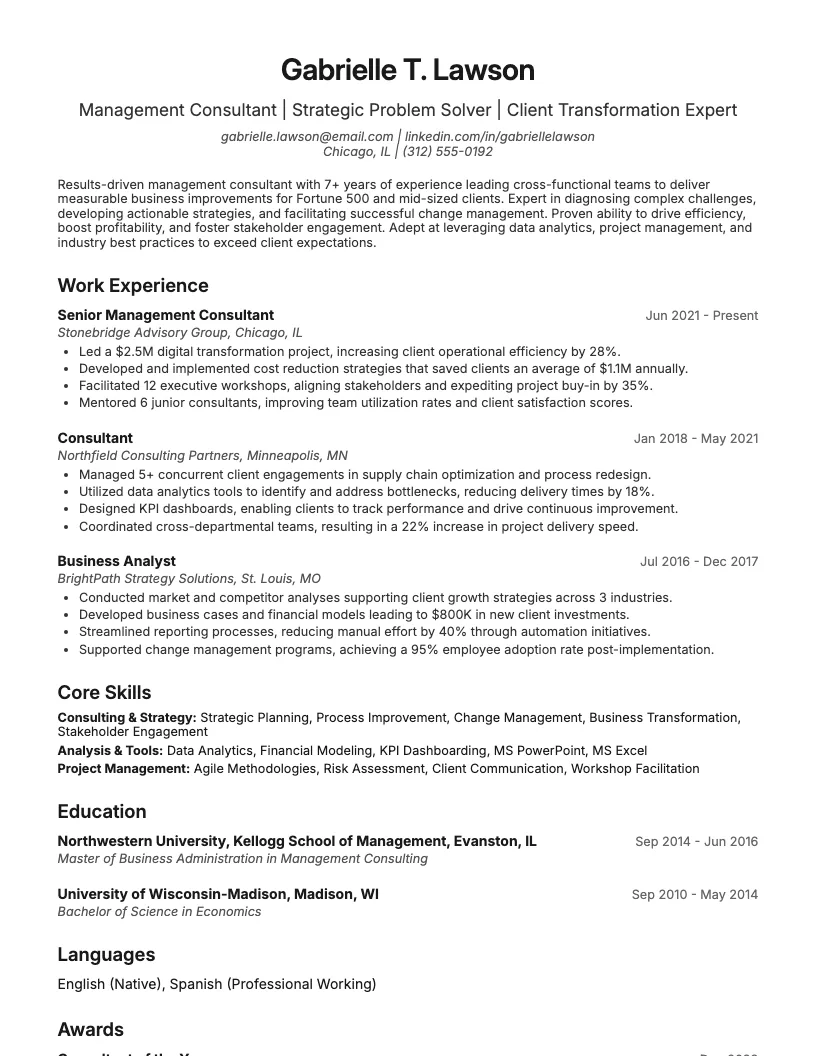
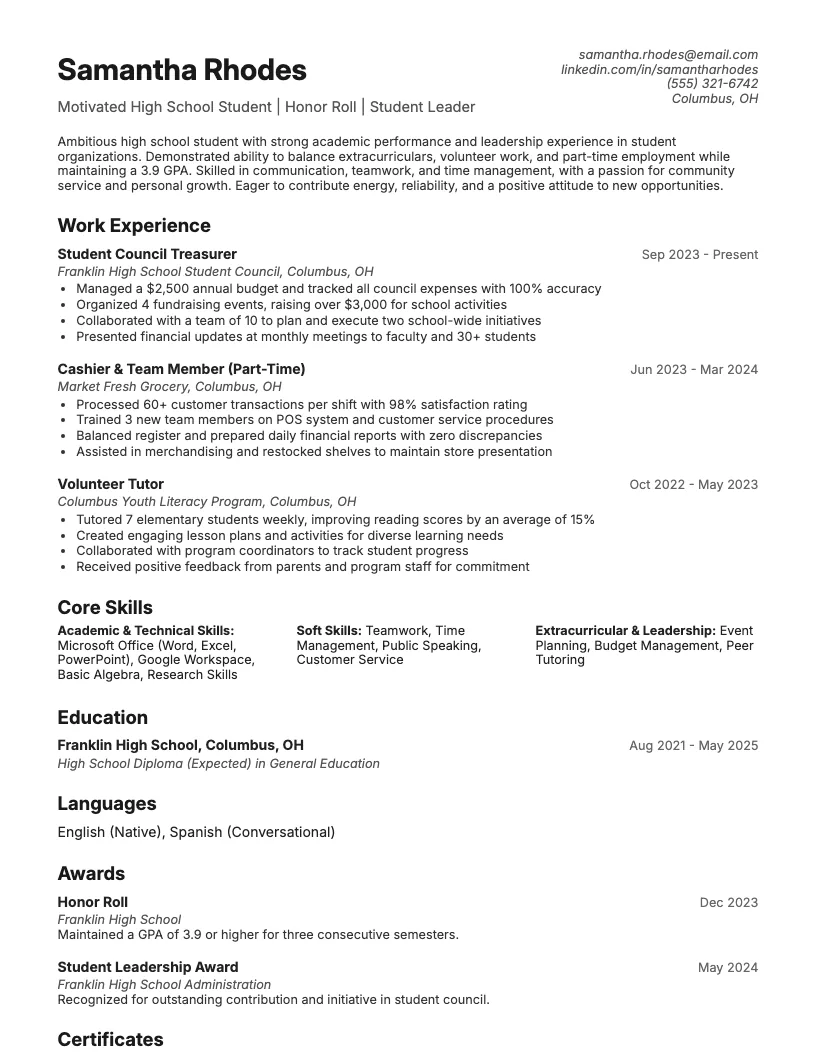
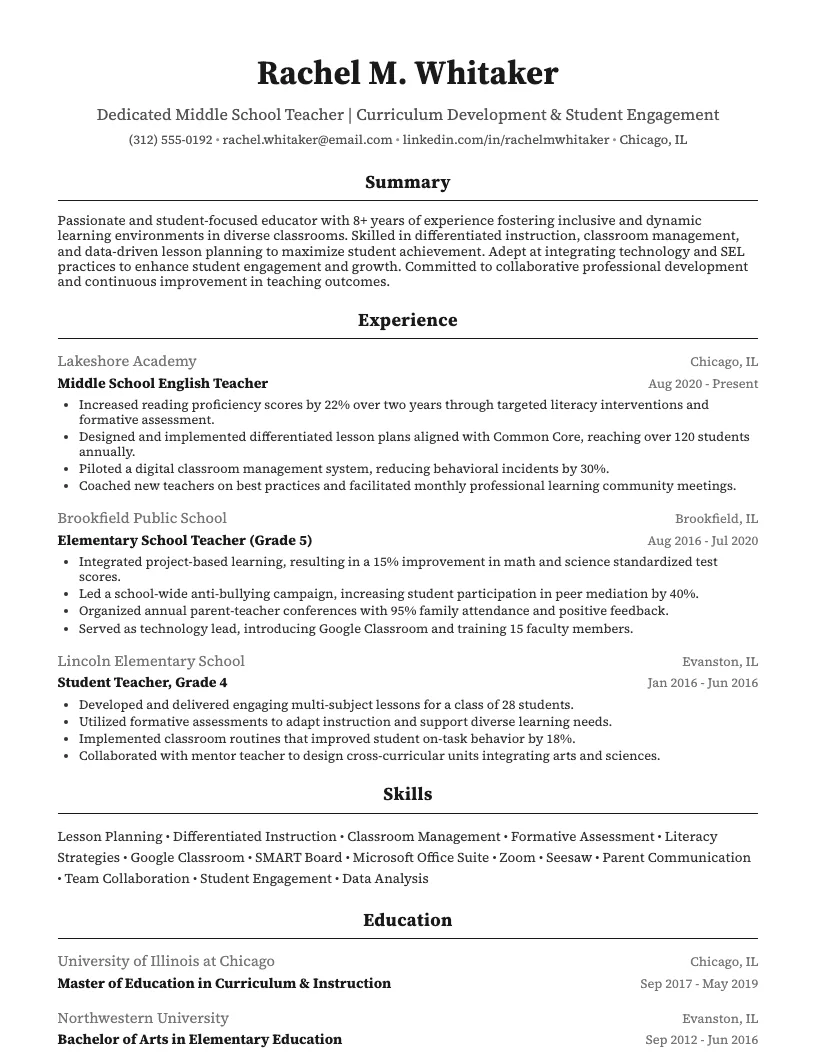
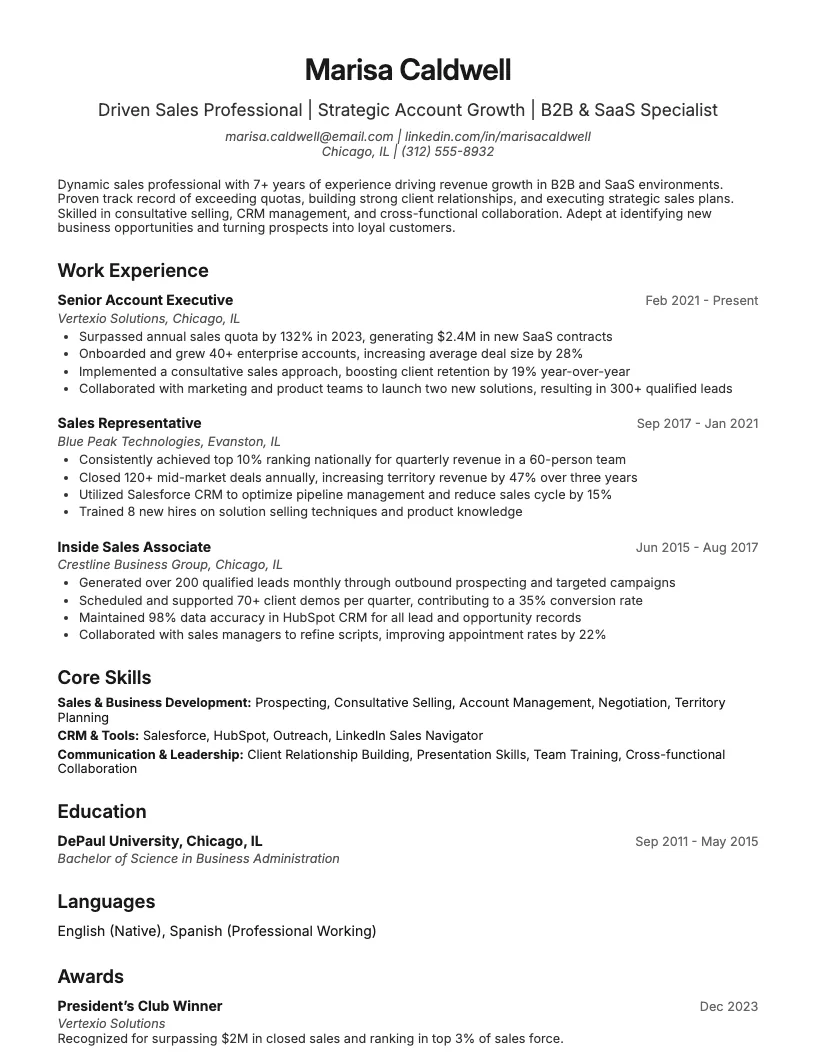
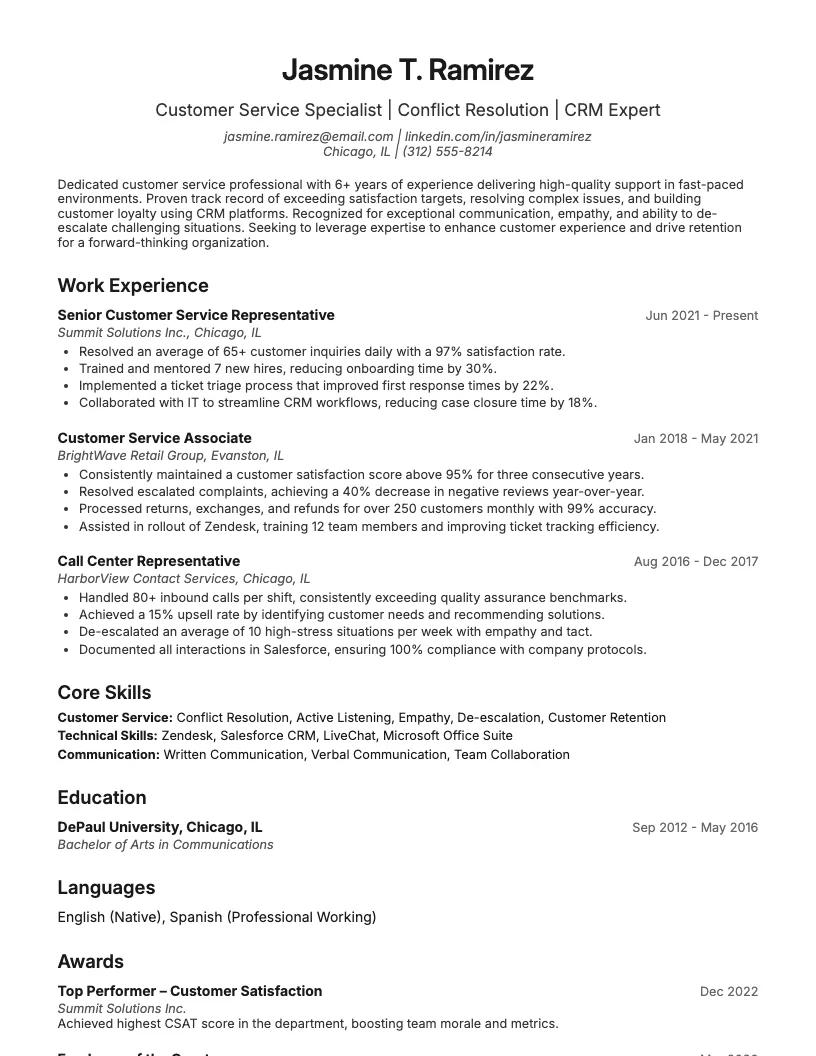
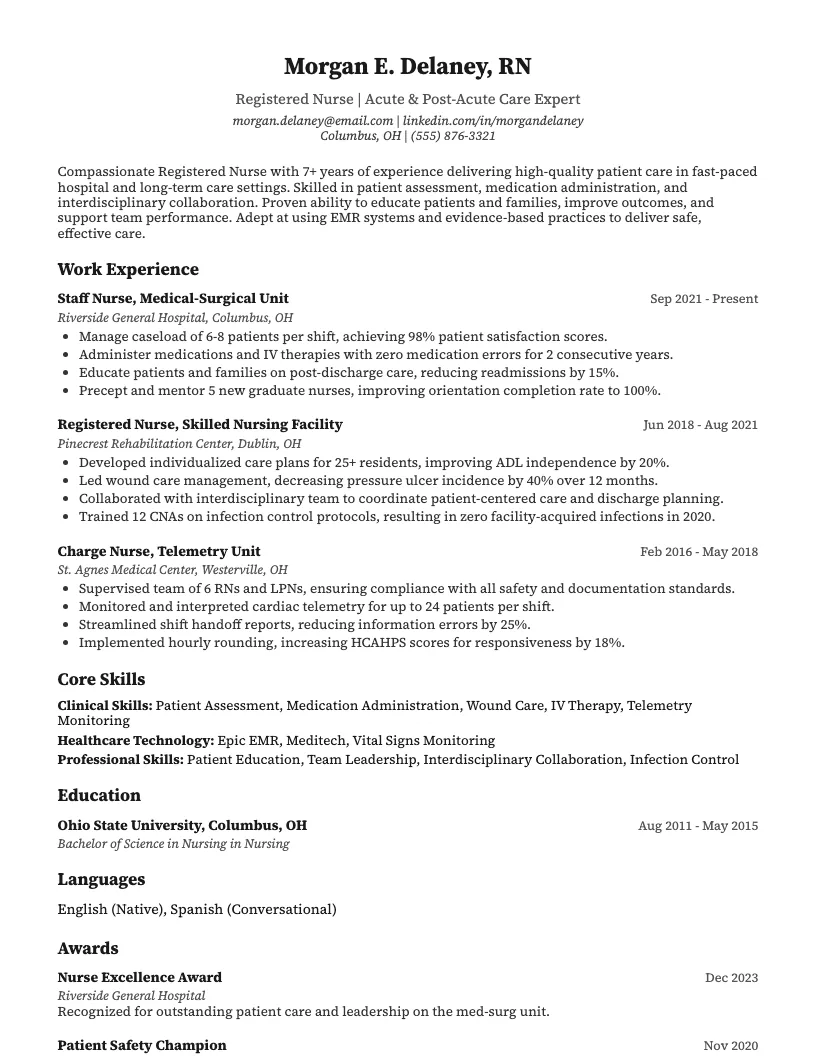
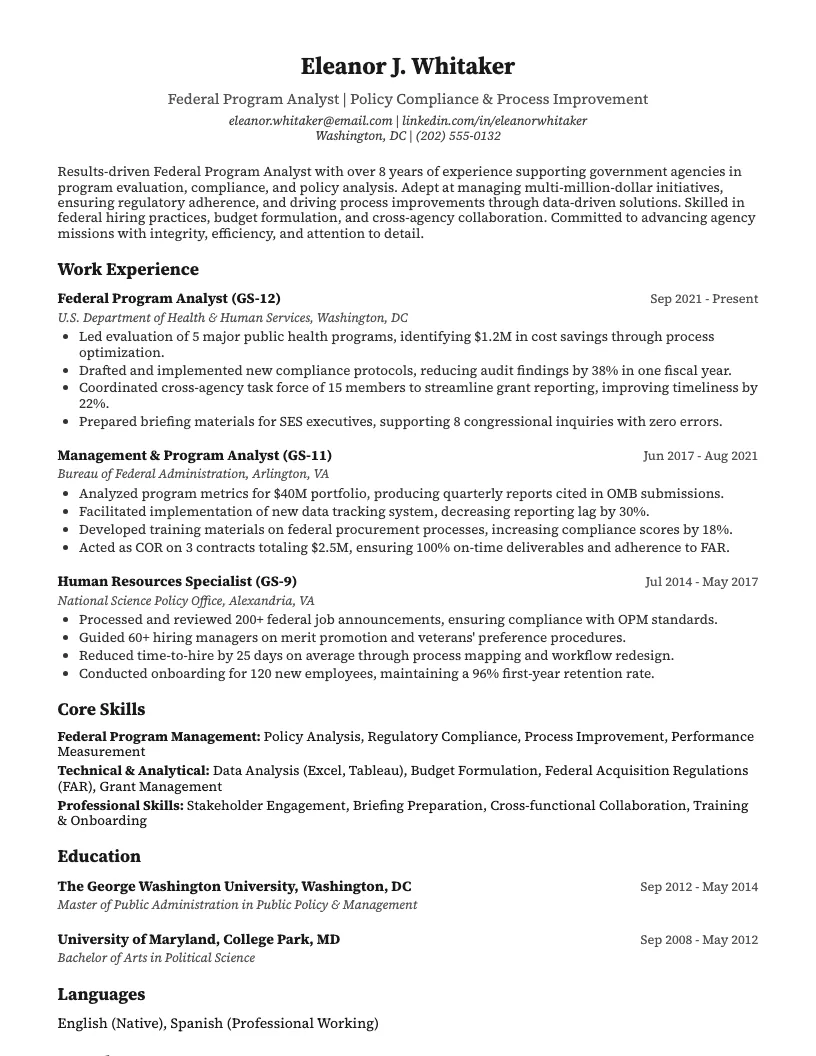
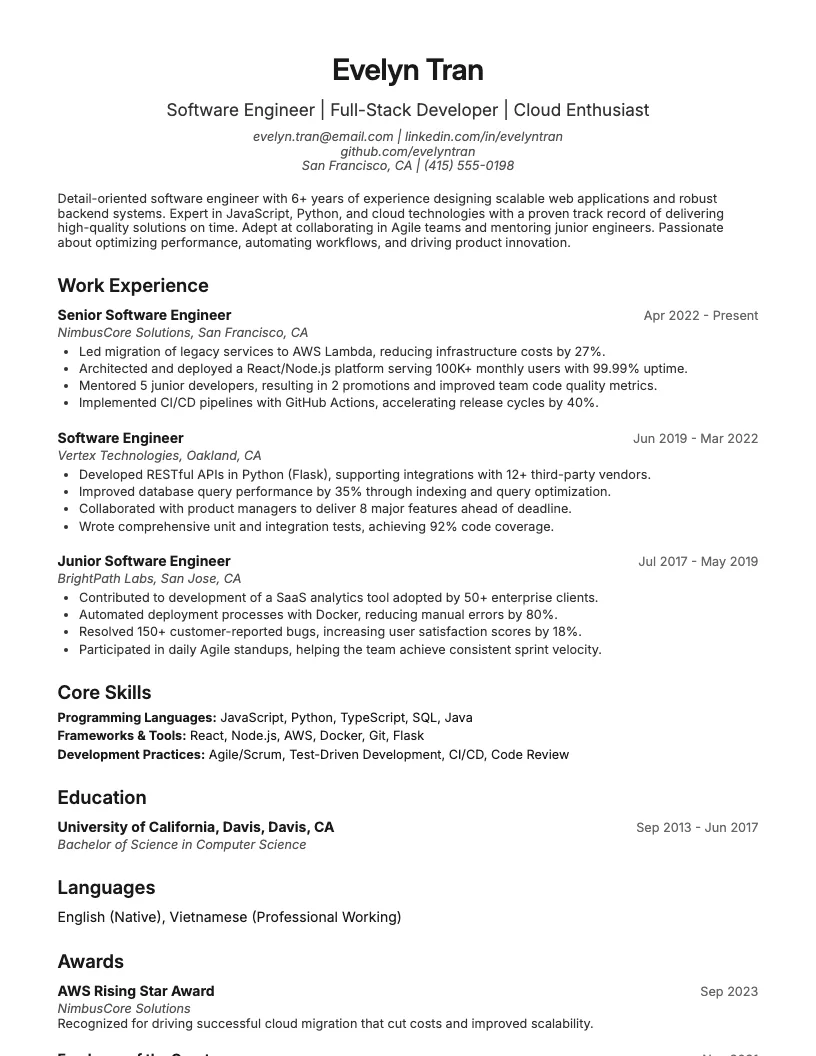
See these skills on a real resume
8 examplesStart from an example that already has them, and swap in your own.
Check your resume against the job you want
Scan your resume, see which skills and keywords the posting asks for that you are missing, and fix them before you apply.
Free to use • No credit card required