Words to Use on Resume: 9 to Avoid and 7 Swaps for 'Managed'
See which action verbs fit your work, learn 7 sharper swaps for 'responsible for' and 'managed', plus the 9 filler words recruiters skim straight past.


Written by Marcus Rodriguez
ATS Optimization Specialist & Career Coach
Updated August 2026
Reviewed by Dr. Priya Sharma
Is your resume ATS-friendly?
Drop your resume in and see which of these skills a scanner can actually read, and which ones the job you want is asking for that you have not listed.
PDF or DOCX. Max 2MB.
We never share your resume or use it to train a model.
In This Guide:
What words should you use on a resume?
What words should you use on a resume?

Five kinds of words earn a spot on your resume, and most resumes only use two of them.
Verbs that start a bullet point
Every bullet should open with something you did, not something you were in charge of.
"Led," "built," "cut," "closed," "launched" - short, plain, specific. I'd rather see "cut" than "reduced," because you'll actually say "cut" out loud in an interview.
Adjectives that describe you
Use these sparingly. One or two, if any, and not the same three every other resume opens with.
"Dependable" and "driven" tell a recruiter nothing until a bullet backs it up. Save the personality words for the cover letter, where they read like a person talking instead of a label.
Keywords lifted from the job posting
This is the one people skip, and it's the one that moves you up the pile before anyone reads the verbs.
Pull the exact terms from the posting - the tool names, the certifications, the phrase "project management" instead of your own "managed projects" - and use their words, not your paraphrase. I've seen resumes with a decade of real experience get filtered out because they said "spreadsheet software" and the posting said "Excel."
ResumeJudge will read the posting next to your resume and hand you the exact list you're missing, so you're not guessing which of your synonyms actually matches.
Numbers that size the result
A verb tells them what you did. A number tells them how much it mattered.
"Managed a team" and "led a team of 12 to a 30% drop in support tickets" are two different resumes. If you don't have exact figures, use the closest honest estimate - a range, a rough count, anything beats nothing.
Words that do none of these
Some words are just filler dressed up as content. "Responsible for," "helped with," "hard worker," "team player" - none of them say what happened, so an ATS can't score them and a recruiter skims past them.
If a phrase could sit on literally anyone's resume unchanged, cut it - see which words to keep off your resume for the full list.
Which action verbs work best for each kind of work?
The verb you pick should match what you actually did, not the fanciest word in the thesaurus.
I've read enough resumes to know the mistake: someone in a support role writes "spearheaded" because it sounds impressive, and it just reads as off. Pick from the right category below and you'll sound like you know your job, not like you're performing for one.
Leading a team
If you set direction and other people followed it, say so plainly: led, directed, managed, coordinated, delegated, oversaw, mentored.
"Directed a team of six through a product launch" tells a hiring manager exactly what your role was. Save "supervised" for when you had formal authority over people's schedules or reviews - it's a specific claim, not a decoration.
Managing a project
Projects need verbs that show you moved something from start to finish: coordinated, organized, streamlined, implemented, launched, executed.
"Coordinated" and "organized" are close cousins - I use "coordinated" when multiple people or teams were involved, and "organized" when it was more about structure and logistics. Either beats "worked on," which tells the reader nothing about what you were responsible for.
Working with other people
Collaboration verbs work best when they show what came out of the collaboration, not just that you were in the room: collaborated, partnered, facilitated, contributed, supported.
The trap here is claiming to be a "team player" - that phrase is dead on arrival (see why). "Facilitated weekly syncs between design and engineering" does the same job with proof attached.
Writing and speaking
Authored, drafted, presented, edited, briefed. Pick the one that matches the actual medium - "authored" for a report or article, "presented" for something you delivered live.
If you're job hunting and this is your strength, ResumeJudge can turn your resume into a tailored cover letter for the posting, which is the fastest way to put these same skills on display twice.
Researching and analyzing
Analyzed, evaluated, investigated, assessed, audited. These pair especially well with a number - "analyzed customer churn data" is fine, "analyzed churn data across 40,000 accounts and identified a 12% drop-off point" is what actually gets read twice.
That's the same instinct behind numbers that size the result - a research verb with no output next to it just describes an activity.
Building or fixing something technical
Built, engineered, developed, debugged, deployed, automated. These are some of the most literal verbs on this list - say what you built, not that you were "involved in" building it.
"Debugged" and "resolved" both work for fixing something broken, but I'd reach for "debugged" in a technical role and "resolved" almost everywhere else - it reads a notch less jargon-y outside engineering.
Money, budgets and numbers
Budgeted, forecasted, reduced, allocated, reconciled. This is the one category where the verb is almost worthless without a dollar figure or percentage attached - "reduced costs" is a shrug, "reduced costs by 18%" is a bullet point.
If you're not sure your resume's numbers match what a specific posting is asking for, that's exactly the gap ResumeJudge checks - it compares your resume against the job description and tells you which of your results the posting actually cares about.
Teaching and training
Trained, coached, onboarded, mentored, instructed. "Trained" tends to mean formal instruction with a curriculum; "coached" and "mentored" mean ongoing, one-on-one guidance.
Use whichever one actually happened - a hiring manager in this field notices the difference.
Hitting a target or finishing something
Achieved, exceeded, delivered, completed, surpassed. These close a bullet point the way a good ending should - with a result, not a task.
"Exceeded quarterly sales target by 22%" beats "achieved sales goals" every time, because it proves the claim instead of stating it. Once your bullets are full of results like this, the next question is usually which jobs are worth sending them to - that's a search ResumeJudge runs for you, matching your resume against open postings instead of you scrolling job boards one tab at a time.
What can you say instead of "responsible for", "managed" and "helped"?
What can you say instead of "responsible for", "managed" and "helped"?
These seven words show up on almost every resume I read, and they're the fastest way to look like everyone else applying for the same job.
They're not wrong, exactly. They're just empty - a hiring manager can't picture what you actually did from any of them.
Instead of "responsible for"
swapping 'responsible for' for what you actually did
Responsible for managing client accounts
Managed a portfolio of 40 client accounts, growing revenue 18% year over year
"Responsible for" describes a job description, not an achievement.
Swap it for what you actually did: achieved, delivered, ran, built, launched, secured, negotiated, produced.
"Responsible for managing client accounts" becomes "Managed a portfolio of 40 client accounts, growing revenue 18% year over year." Same job, but now there's a verb and a number doing the work instead of a phrase that could describe anyone.
Instead of "managed"
"Managed" isn't a bad word, but it's the one that gets reused most.
Pick a version that says how you managed: directed, oversaw, supervised, coordinated, led, steered, guided. If you ran a budget, say "administered a $200K budget."
If you ran people, say "supervised a team of six." The replacement should tell the reader something the word "managed" alone can't.
Instead of "helped"
swapping 'helped' for who did the work
Helped onboard new hires
Trained 12 new hires on the sales CRM, cutting ramp time by two weeks
"Helped" is the word I flag most often, because it hides who actually did the work.
If you did the thing, say you did it: supported, facilitated, contributed to, partnered with, trained, advised. "Helped onboard new hires" is vague.
"Trained 12 new hires on the sales CRM, cutting ramp time by two weeks" tells me you own that result.
Instead of "worked on"
"Worked on" is a placeholder for a verb you haven't found yet.
Try developed, built, launched, organized, produced, assembled, drove. Nine times out of ten, there's a sharper verb sitting one step away - "worked on the new website" is really "built the new website" or "redesigned the new website," and the reader deserves to know which.
Instead of "improved"
"Improved" only works if you follow it with a number, because "improved" alone tells nobody how much.
Boosted, streamlined, strengthened, refined, accelerated, cut, raised - any of these pair well with a figure. "Improved response times" is a shrug.
"Cut response times from 48 hours to 6" is a result you'd want to interview someone about.
Instead of "used"
"Used" is filler when you're listing a tool or a skill.
Applied, operated, deployed, leveraged, adopted all say more. "Used Excel to track inventory" is duller than "Built inventory tracking models in Excel that cut stockouts by 30%."
If the tool is a keyword from the posting itself, it matters more that it's on the page than which verb sits next to it - and a tool like ResumeJudge can tell you exactly which ones from the posting are still missing before you send it.
Instead of "hard worker"
"Hard worker" is a claim about yourself, not evidence.
Dedicated, driven, disciplined, tenacious, persistent read a little better, but even those are still adjectives - and adjectives alone don't convince anyone. The fix is the same one running through this whole section: replace the label with the achievement it's supposed to prove, then let the number do the convincing.
Which words should you keep off your resume?
I've read enough resumes to spot the same nine words before I've even finished the first line. They tell me nothing about you, and every other applicant used them too.
Team player
This is the most common phrase I see, and it's the least useful one.
Saying you're a team player proves nothing. Showing a time you coordinated with three other departments to hit a deadline proves it.
If you need the vocabulary for that, the verbs for working with other people are a better place to start.
Results-driven
Every candidate is "results-driven" on paper. Almost none of them put a number anywhere near it.
Cut the label, keep the result. "Grew renewals 18% in six months" does the same job the phrase was trying to do, except it's true and checkable.
That's really the whole method - see numbers that size the result.
Detail-oriented
I see this one constantly, and it never once has evidence behind it.
If you're detail-oriented, a hiring manager wants to see the detail you caught - the error that would've gone out the door, the discrepancy nobody else noticed. Name the catch instead of the trait.
Go-getter
Nobody has ever put "go-getter" on a resume and had it change a hiring manager's mind. It reads like it was written by the candidate about the candidate, which is exactly what it is.
Drop it. There's no substitute needed here - just delete it and let the bullet points underneath it do the talking.
Thinks outside the box
This phrase is trying to say "I'm creative" without committing to an example, and recruiters can tell.
If you actually did something unconventional - redesigned a broken process, found a workaround nobody had tried - say what it was. The specific fix is the interesting part, not the label you'd give it.
Hard worker
I get why people reach for this one. It feels true and it feels safe.
But it's also the single easiest phrase to fake, so it carries zero weight with anyone reading resumes for a living. The words to use in its place are in instead of "hard worker".
Ninja, rockstar, guru
These read like they belong on a startup job posting from a decade ago, not on the resume applying to it.
They also do something worse than sound dated - they replace an actual skill with a nickname. Whatever you're a "ninja" at, name the tool or the skill directly.
If you can't prove it on paper, run the resume against the posting and see what's genuinely missing - ResumeJudge will flag the real skills and keywords the job wants that your resume doesn't have yet, which is a better use of that space than a nickname.
Weak verbs: worked, made, helped, tried
These four show up on almost every resume I look at, and they're vague by design - "worked on a project" could mean you led it or watched it from the back row.
"Tried" is worse. It admits you didn't finish.
The sharper verb for each of the other three is in what can you say instead of "responsible for", "managed" and "helped".
Verbs that try too hard: crushed, smashed, destroyed
The opposite mistake is just as common, and I'd guess I see it on one resume out of every twenty.
"Crushed the quarterly target" and "destroyed the competition" aren't confident, they're unprofessional in the specific way that makes a hiring manager wince. Keep the achievement, lose the violence.
"Exceeded quarterly target by 22%" says more and sounds like someone I'd want to hire.
How do you pick the right word for your own resume?
How do you pick the right word for your own resume?
Staring at a blank bullet point and reaching for "responsible for" again? Here's the five-step version I walk people through.
Step 1: Pull the words out of the job posting
Start from the posting's own terms - which ones to take, and why your own paraphrase won't do, is covered in keywords lifted from the job posting.
Not because a robot is counting them - a human reads this after you, and they wrote the ad in the words they think in. Match that, and your resume sounds like it belongs in the role before they've read a single bullet.
Step 2: Match a verb to what you actually did
Now go back to your own history and find the moment that actually matches each word. If the posting says "led," don't slap "led" on a task where you were one of five people cc'd on an email.
This is where most people cheat, and hiring managers can tell. An interviewer will ask you to walk through the thing you claimed, and if the word doesn't match what you did, it falls apart in the room.
Pick the verb that's true, then dress it up from there - see the verbs by type of work list if you're stuck on which one fits.
Step 3: Put a number next to it
Grab any number attached to the outcome: percent, dollar amount, headcount, time saved, count of anything. Why a verb without one doesn't carry any weight is in the numbers section.
Step 4: Use each word once
I've read resumes with "managed" on six different bullets, and by the third one it's stopped meaning anything. Recruiters read the same tell as trying too hard, not as consistency.
Use a strong verb once per bullet, and don't reuse it lower down the page. If you're short on options, that's exactly what a verb list is for - pull a fresh one each time instead of recycling.
Step 5: Cut the pronouns and the passive voice
Drop "I," "my," "responsible for" - a resume bullet doesn't need a subject, it needs a verb up front. "Was responsible for screening 100+ patients a day" becomes "Screened 100+ patients a day."
Shorter, and it reads like you actually did it instead of watched it happen.
This is also where ResumeJudge earns its keep if you'd rather not hand-edit every line yourself: give it your resume and the posting, and it rewrites the bullets against that exact job, working in the wording the posting uses instead of you guessing at it.
What to write when you have no numbers yet
Early in a career, or in a role where nothing gets measured, you won't have a percent or a dollar figure to reach for. That's fine - lean harder on the verb instead.
"Helped lead the team to a championship" or "contributed to the recycling program" still say something real, even with no metric attached. Once you're picking words, it also helps to know which ones to avoid entirely - see words to keep off your resume before you finish the draft.
Where does word choice matter most on a resume?
Where does word choice matter most on a resume?
Not every line of your resume carries the same weight. If you're short on time, fix these five spots first - they're where a recruiter's eyes actually land.
The summary or objective at the top
what earns an adjective in the summary line
Passionate self-starter who loves a challenge
Extensive experience leading cross-functional teams
Skip "objective" entirely - it's outdated, and it makes you sound like you're asking for something instead of offering it.
Call it a summary and use it to lead with your strongest credential, in three or four sentences, aimed at what the employer needs rather than what you want. This is one of the only places on the page where an adjective earns its spot, and even then, one or two is plenty.
"Extensive experience leading cross-functional teams" works. "Passionate self-starter who loves a challenge" doesn't - nobody's hiring you for your feelings.
If you want more on adjectives that actually pull weight here, see adjectives that describe you.
Bullet points under each job
This is where verbs do the work, not adjectives.
I've read enough of these to tell you: piling descriptors onto a bullet that already starts with a strong verb is redundant. "Skillfully managed a team of ten" - the "skillfully" is dead weight, because managing a team of ten already says you can.
Save the color for the summary, and let the verb and the number carry the bullet on its own.
The skills section
A skills section full of adjectives - "Intelligent," "Professional," "Detail-oriented" - reads as empty, because none of it can be checked.
What holds up is a skill paired with a level of proof: "Fluent in Spanish," not "Good with languages." This is also the one section where matching the posting's exact terms matters most.
If you're not sure which words to pull, ResumeJudge will compare your resume to a posting and tell you exactly which skills and keywords are missing from your list.
Words that describe you as a person
Trait words - dependable, driven, cooperative - belong in the summary, not scattered through your experience section.
How many of them are worth using at all, and why they land better somewhere other than the resume, is in adjectives that describe you.
Accomplishments rather than duties
a duty rewritten as a result
Responsible for managing inventory
Cut inventory costs 12% over six months
Nine times out of ten, the resumes that don't land are full of duties, not results - "Responsible for managing inventory" instead of "Cut inventory costs 12% over six months."
Aim for at least one or two numbers per job. If you're stuck rewriting duty-language into results on your own, ResumeJudge can take your resume and the job description and rewrite the wording for you, section by section, so it reads like results instead of a job description.
Go deeper
Accomplishments on a Resume
12 job-specific accomplishment examples, a bullet-writing formula, exact wording, and what to leave off - from someone who has read thousands of resumes.
Read MoreResume Summary and Objective: Wording and Keywords
Get 7 resume objective and summary examples matched to your situation, the 5-step way to write either one, and the 7 mistakes that get them skipped over.
Read MoreResume Action Verbs and Power Words
See resume action verbs sorted into 16 categories by what you actually did, plus 8 overused phrases like responsible for and managed to cut from your bullets.
Read MoreResume Buzzwords: Which to Use and Which to Avoid
The 20 resume buzzwords that cost you interviews, why each one fails, and the specific rewrite to use instead, plus which terms are worth keeping and why.
Read MoreResume Synonyms: Better Words for Overused Resume Verbs
I read resumes for a living. Here are the 10 verbs and 6 filler words worth replacing, plus a 6-step process for picking synonyms that fit what you did.
Read MoreWords to Describe Yourself: Adjectives, Traits and Characteristics
See 9 overused self-descriptions like 'I'm passionate' rewritten with real proof, plus a 6-step process for choosing words your resume can actually back up.
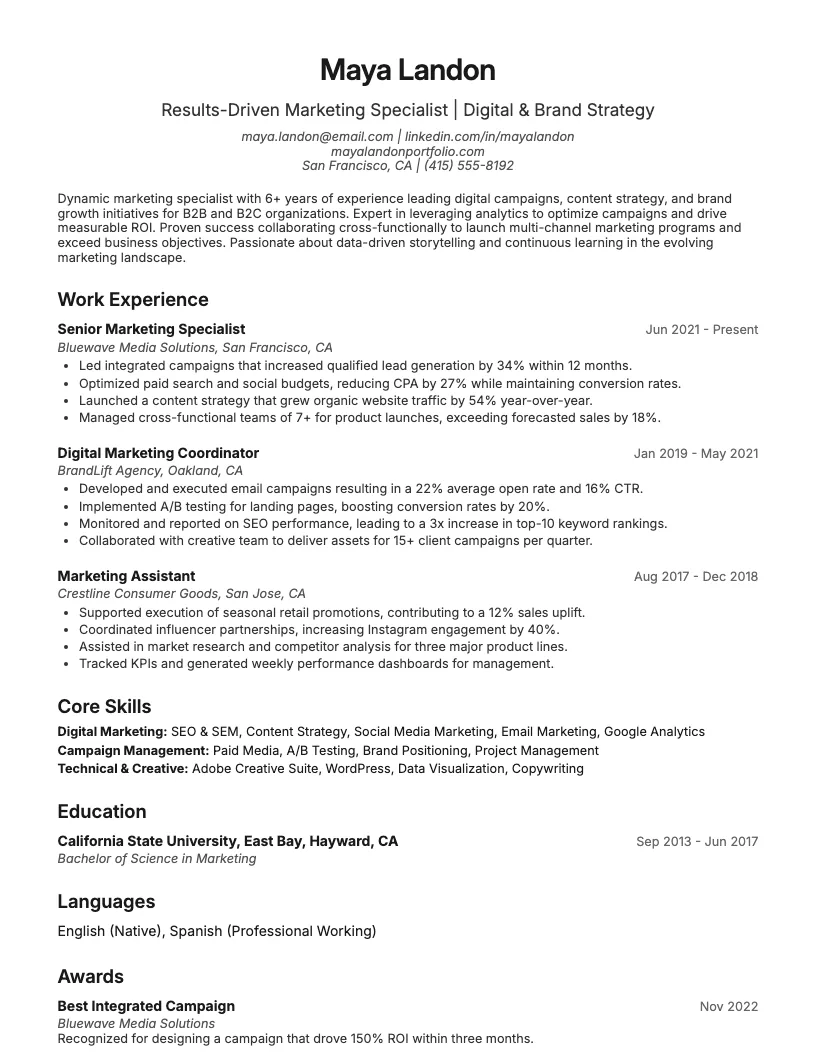
Read MoreSee these skills on a real resume
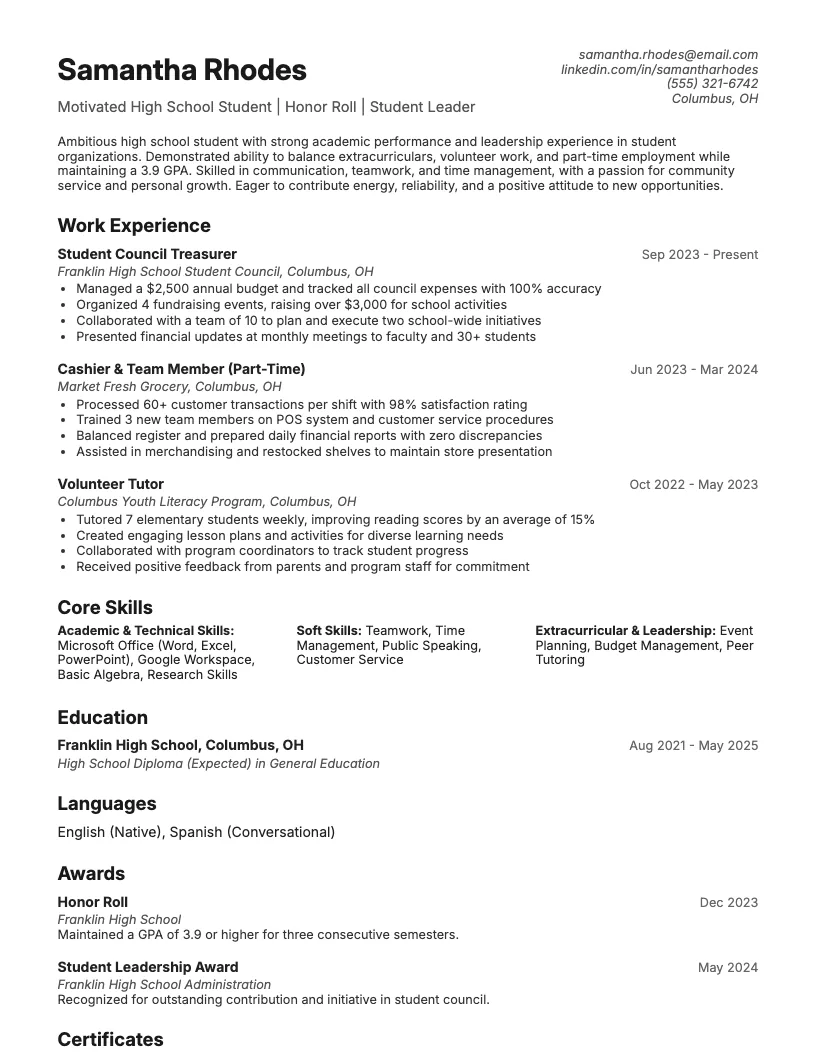
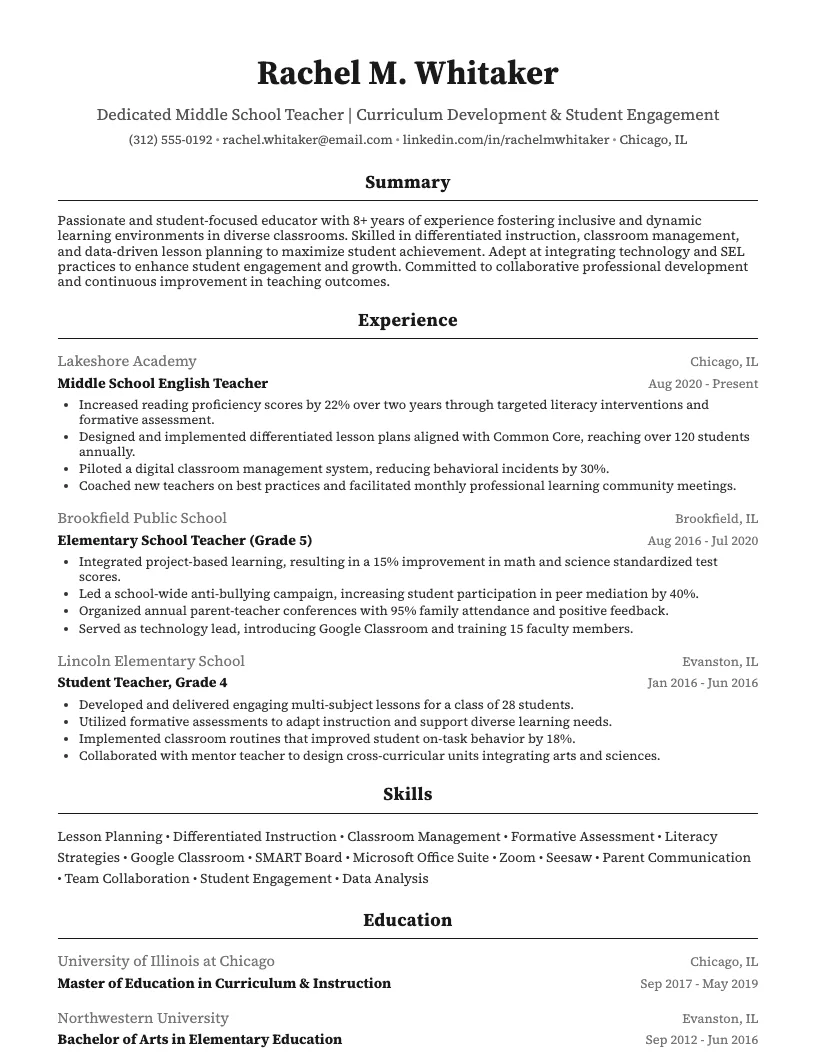
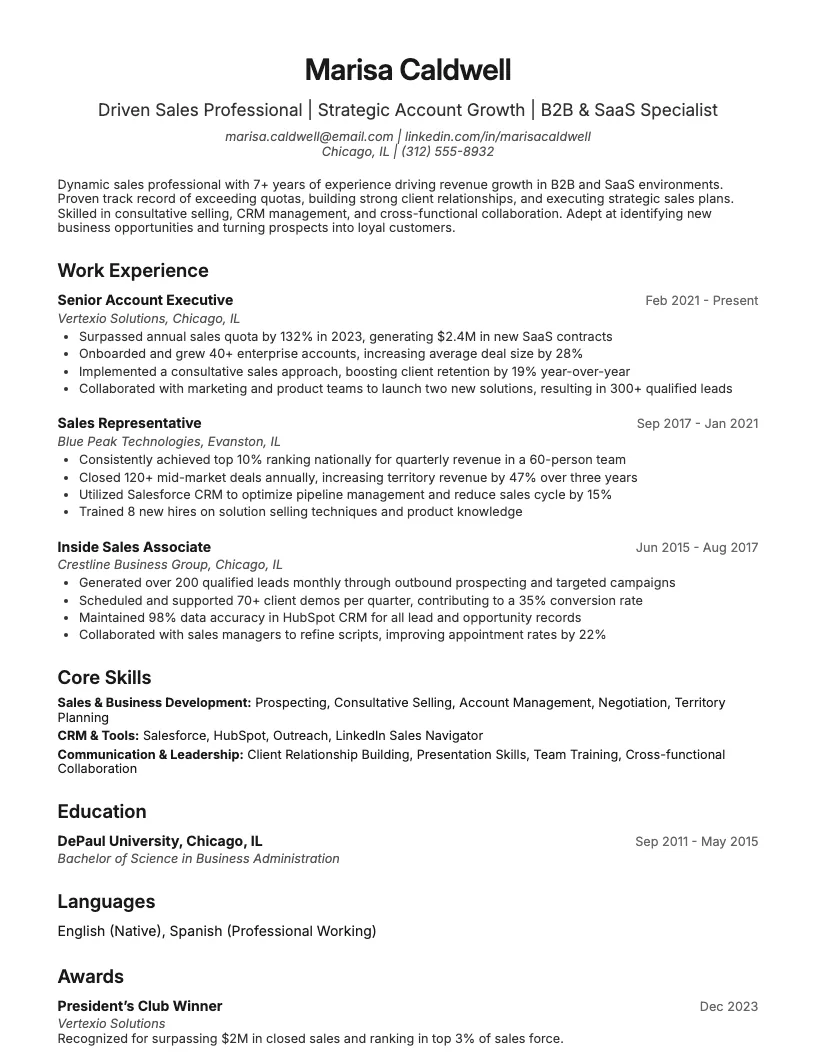
8 examplesStart from an example that already has them, and swap in your own.
Check your resume against the job you want
Scan your resume, see which skills and keywords the posting asks for that you are missing, and fix them before you apply.
Free to use • No credit card required