Project Coordinator Resume Keywords: 10 Terms I Found in Real Job Ads
The 10 keywords, 10 tools, and 6 certifications project coordinator job ads search for, plus how to work them into your resume's bullets and skills list.


Written by Marcus Rodriguez
ATS Optimization Specialist & Career Coach
Updated August 2026
Reviewed by Dr. Priya Sharma
Is your resume ATS-friendly?
Drop your resume in and see which of these skills a scanner can actually read, and which ones the job you want is asking for that you have not listed.
PDF or DOCX. Max 2MB.
We never share your resume or use it to train a model.
In This Guide:
What keywords do project coordinator resumes need?
What keywords do project coordinator resumes need?

I've read a lot of project coordinator resumes, and the ones that get calls all share the same ten words somewhere on the page. Job ads for this role repeat them so often that ATS software treats them as the baseline - leave one out and you look like you're missing a piece of the job, even if you've done it.
Project coordination
This is the umbrella term, so it belongs near the top of your resume, not buried in a bullet three jobs down.
Task management
Every posting wants to know you can keep a list of work moving without someone chasing you for updates.
Timeline management
Say it plainly - timelines, deadlines, schedules - rather than assuming "coordination" covers it. It doesn't, to a scanner.
Stakeholder communication
This is the phrase, not "worked with people" or "liaised." I'll get into how to turn this into a real bullet, with a number attached, when I cover writing a keyword into a bullet.
Meeting coordination
Scheduling, running, and following up on meetings is its own line item on most job ads - don't fold it into "communication" and assume it's covered.
Status reporting
Whoever wrote the posting wants proof you can tell leadership where things stand without being asked twice.
Documentation
Show up in nearly every posting I've checked. Name what you document - project plans, meeting minutes, process guides - because the word alone reads thin.
Cross-functional coordination
This is the phrase for working across departments - engineering, marketing, ops - without a reporting line to any of them.
Action item tracking
The mechanical cousin of status reporting: who owns what, and by when.
Microsoft Project
The tools worth listing by name section covers this one and what to write if you use Asana or Jira instead.
Getting the words right isn't the same as getting them matched to a specific posting - that's what ResumeJudge does: feed it your resume and the job description, and it tells you which of these ten (and which tools) are missing before you hit apply.
Why do these keywords decide whether anyone reads your resume?
The software scans before a person does
Most companies run your resume through an ATS before anyone sees it. It's searching for exact terms - "task management," "stakeholder communication," the tool names from the skills section. Miss the ones the posting cares about and you can be qualified and still never get read.
The words that get missed most often: tool names and document types
I see the same gap over and over: people describe what they did but never name what they used to do it. "Tracked project status" instead of "Smartsheet." "Kept documentation current" instead of "RAID logs" or "status reports." Tool names and document types are exactly what a scan is built to catch, and they're the easiest words to drop in.
Recruiters search the same words by hand
Even once you're past the ATS, a recruiter is often searching LinkedIn or an internal database the same way - typing in "Asana" or "cross-functional" and reading whoever surfaces first. Same problem, same fix: the words on your resume need to match what someone's actually typing into a search box.
Match the posting's wording, not a synonym
This doesn't mean stuffing every synonym in - it means finding the one word the posting actually uses and using it clearly, once. A resume with 'SDLC' and 'software development life cycle' and 'systems development lifecycle' all in one paragraph reads as keyword stuffing, not thoroughness.
A close-enough word is still a miss. Pulling the wording out of a specific posting covers how to do that.
Which hard skills appear most in project coordinator job ads?
Which hard skills appear most in project coordinator job ads?
I've pulled apart hundreds of these postings, and one skill shows up almost everywhere: project management, named directly in about 79% of listings. If you only have room to prove one thing, prove that.
Project management
This means planning, running, and closing out projects start to finish, not just showing up to meetings. Say it plainly in your resume, and back it with a result - a timeline you hit, a delivery you sped up.
Documentation
Nearly half of postings ask for this by name. How to write it is covered under the documentation keyword earlier.
Microsoft Office
Around 39% of ads name it outright, usually meaning Excel for tracking and PowerPoint for updates. Don't just write "Microsoft Office" - say what you built in it, a tracker, a dashboard, a deck.
Administrative support
Also close to 39%. This is the calendar management, correspondence, and general office-keeping that keeps a project team functioning - unglamorous, but it's what a lot of postings are actually asking for.
Coordination
Roughly a third of ads use this exact word. It's the same skill as project coordination earlier - write it the way that section describes.
Scheduling
About a quarter of postings name scheduling specifically - timelines, calendars, deadlines. If you've built or maintained a project schedule, that's the word to use, not "helped with timing."
Reporting
Around 21% of ads ask for this on its own, separate from documentation. Status reports up to leadership, progress updates to a client - name who you reported to and how often.
Budget and expense tracking
Fewer postings ask for this, but when they do, they mean it: tracking spend against a budget, flagging overruns. If you've done it, it separates you from candidates who've only scheduled meetings.
Resource allocation
This is assigning people, time, and equipment where a project needs them. It's a step up from task tracking, and worth naming if you've actually made those calls.
Purchase orders and vendor management
More common in construction and IT coordinator roles - issuing POs, managing vendor relationships. If your industry touches this, name it; a generic "coordination" listing won't cover it.
Once you've checked your resume against these, ResumeJudge can take the actual posting and rewrite your bullets to match its wording, rather than you guessing which of these ten terms it cares about most.
Which soft skills should you actually name?
Which soft skills should you actually name?
Soft skills feel like padding to a lot of coordinators, so they get squeezed into one throwaway line. That's a mistake - Jobscan found communication shows up in 31% of project coordinator postings, more than any hard skill on the list.
Communication
Don't just write "strong communication skills." I've read hundreds of resumes with that exact phrase and it tells me nothing.
Say what you communicated and to whom - how to write a keyword into a bullet shows the wording.
Problem solving
This one shows up in about a quarter of postings. Pair it with a real fix - a schedule slip you caught, a vendor issue you resolved - not the bare word.
Organisation and follow-through
Organized appears in around 14% of postings, and it's the trait hiring managers trust least on its own. Show it through action item tracking or status reporting instead of claiming it outright.
Working independently
About 1 in 10 postings ask for this directly. If you've owned a project end-to-end with minimal oversight, say so.
Attention to detail
Coordinators live in schedules, budgets, and documentation, so a missed detail costs someone else time. Name a place you caught errors before they became problems.
Working to tight deadlines
Nine times out of ten, this reads better as a number than an adjective - projects run at once, or an on-time delivery rate.
Diplomacy with people who don't report to you
Coordinators push work forward without authority over the people doing it. That's a real, distinct skill - name it, and back it with a stakeholder story if you have one.
Once your bullets say all this, ResumeJudge can check the wording against a specific posting and tell you which of these it still wants to see spelled out differently.
Which project management tools should you list by name?
Which project management tools should you list by name?
Postings for this role name their tools directly, so your resume has to name them back - leave off the one the job ad asks for and you look like you've never touched the software the job runs on.
Microsoft Project
Still the default in construction, government, and a lot of enterprise IT. If you've built a schedule or a Gantt chart in it, say so - don't just write "scheduling software."
Asana
The one I see most in marketing and tech coordinator roles. If you tracked tasks, deadlines, or a campaign calendar in it, name it - it reads as current, not legacy.
Jira
If you've coordinated anything Agile - sprints, tickets, release schedules - this is the word the posting is looking for, not "ticketing system."
Trello
Common at smaller companies and in entry-level roles. Nothing wrong with listing it, but don't stop there if you've also used a heavier tool - lead with the one the job ad names.
Smartsheet
Shows up a lot on the experienced end, alongside budget and resource tracking. If you built dashboards or reports in it, that's worth a bullet of its own, not just a mention in your skills list.
Monday.com
Same category as Asana and Trello - name it if you used it, and be specific about what you tracked in it.
Excel and the rest of Microsoft Office
I've reviewed hundreds of these resumes, and dropping Excel because it feels too basic is a mistake nine times out of ten. It's still how most coordinators track budgets and build status reports.
Confluence and SharePoint
These are where the documentation lives, not just the tasks. Naming them shows you can maintain a project's paper trail, not just its to-do list.
Slack and Microsoft Teams
Worth a line if daily coordination ran through them - postings increasingly call this out directly as remote and hybrid work grows.
Spell the tool out and add the version or how you used it
"Project management software" tells a scanner nothing. "Built and maintained project schedules in Microsoft Project" tells it everything.
Once you've picked your list, check it against the actual posting before you send anything - ResumeJudge will flag any tool the job asks for that your resume doesn't mention, so you're not guessing at what to add.
Which keywords change if you coordinate in IT, construction, or marketing?
Which keywords to add by industry
| Industry | Keywords | Tools |
|---|---|---|
| IT | SDLC, sprint support, release coordination | Jira, Azure DevOps, Confluence |
| Construction | Site coordination, RFIs, submittals | Procore, Bluebeam, PlanGrid |
| Marketing | Campaign coordination, content calendar | Workfront, Wrike |
| Healthcare | Compliance, audit trails, records retention | - |
The tools list above is the general kit. Your industry adds a second layer on top of it, and skipping that layer is the mistake I see most often on specialist resumes.
IT: SDLC, sprint support, release coordination, Jira, Azure DevOps, Confluence
If you coordinate technical projects, name the software delivery cycle by its real term: SDLC. Add sprint support and release coordination, and list the tools you actually touch - Jira, Azure DevOps, Confluence.
Agile or Scrum support terms belong here too, if that's how the team works.
Construction: site coordination, RFIs, submittals, change orders, permits, Procore, Bluebeam, PlanGrid
Construction has its own paperwork, and the resume needs to speak it: site coordination, RFIs, submittals, change orders, permit management. Pair those with the software the site runs on - Procore, Bluebeam, PlanGrid.
Marketing: campaign coordination, content calendar, asset management, production schedules, Workfront, Wrike
Marketing coordinators run a different clock: campaign coordination, a content calendar, asset management, production schedules. Workfront and Wrike show up here more than Jira does.
Healthcare and other regulated work: compliance and documentation terms
Regulated industries care about compliance and documentation more than they care about which board tool you used. Lead with audit trails, records retention, and the standards your last employer worked under.
How to pick the industry words without guessing
Don't guess - pull the words straight from postings for your specific title. ResumeJudge will scan a posting against your resume and tell you exactly which of these industry terms are missing before you send it.
Which keywords fit your experience level?
Which keywords fit your experience level
| Level | Keywords | Tools |
|---|---|---|
| Entry level | Task tracking, meeting scheduling, status updates | Excel, Outlook, Trello |
| From admin/scheduling | Meeting coordination, documentation | - |
| Experienced | Resource coordination, budget tracking, risk tracking | Microsoft Project, Smartsheet |
| Toward PM title | Resource allocation, budget ownership | - |
Entry level: task tracking, meeting scheduling, status updates, Excel, Outlook, Trello, Google Sheets
If you're a year or two in, don't dress up your resume with words for a job you haven't done yet.
Task tracking, meeting scheduling, status updates, Excel, Outlook, Trello, Google Sheets - that's the honest list, and it's enough. Pair it with organization and attention to detail, and you've covered what an entry-level posting actually asks for.
Coming from an admin or scheduling job
I've seen a lot of admin assistants make this jump, and the resume rarely needs new experience - just different words for the same work.
Calendar management becomes meeting coordination. Filing becomes documentation.
If you tracked a budget, a purchase order, or a vendor relationship even occasionally, name it - that's experienced-level language, not admin language.
Experienced: resource coordination, budget tracking, risk tracking, vendor management, Microsoft Project, Smartsheet
Once you've run more than one project at a time, resource coordination, budget tracking, risk tracking, and vendor management are the words that separate you from the entry-level pile.
Name the tools too - Microsoft Project and Smartsheet carry more weight than "project management software."
Moving from coordinator toward project manager wording
If you're eyeing a project manager title next, start shifting from "supported" to "owned" - resource allocation, risk tracking, budget ownership, not just budget tracking.
Run each version against the actual posting before you send it; ResumeJudge will tell you if your wording still reads as coordinator when the job wants manager.
Where do the keywords go on the page?
Where do the keywords go on the page?
The skills section, grouped into four or five headings
Don't dump 25 skills into one long line. I've seen it done and it reads as noise, not evidence.
Split them into four or five small groups - something like Project Management, Tools, Administrative, Interpersonal. A scanner reads them just as well grouped, and a recruiter's eye actually stops on them.
The summary at the top
Your first three lines should name your strongest keywords in plain sentences, not a list. "Project coordinator with 4 years managing concurrent timelines in Asana and Microsoft Project" does more work than a generic objective line ever will.
Inside your work experience bullets
This is where most people leave keywords out entirely, and it's the biggest miss on the page. A skill listed once at the top and proven again in a bullet counts twice with a recruiter - see how to write a keyword into a bullet for the wording.
Certifications and the line under your name
If you hold a PMP or CAPM, put it right under your name, not buried in an education section. See which certifications are worth naming.
How many to put in a skills list before it looks stuffed
There's no fixed number to hit. A list starts to look padded once it runs past what your bullets can back up, so cut the ones that don't appear in the posting - ResumeJudge will flag exactly which of yours are missing against a specific job description if you'd rather not guess.
How do you write a keyword into a bullet instead of just listing it?
a work experience bullet
Helped with project tasks
Coordinated 15+ concurrent projects in Asana, 95% on-time delivery
Here's the mistake I see on nine out of ten coordinator resumes: the skills list is fine, and then the bullets underneath don't back any of it up.
Weak: "helped with project tasks"
This tells an ATS nothing and tells a recruiter less. No tool, no scope, no result - it could describe an intern or a director.
Strong: "coordinated 15+ concurrent projects in Asana, 95% on-time delivery"
Same job, rewritten with a tool name, a volume, and a rate. That's the version that survives a scan and gets read.
Weak: "communicated with stakeholders"
Every coordinator "communicates with stakeholders." Saying so proves nothing.
Strong: "ran weekly status meetings for a 12-person cross-functional team"
Now there's a cadence, a headcount, and a scope a hiring manager can picture.
Action verbs that carry a coordinator's work: coordinated, facilitated, scheduled, tracked, resolved
Lead with these instead of "helped," "worked on," or "assisted with." They match how coordination actually gets done, and they're the words a recruiter is scanning for.
The numbers coordinators can actually quote: projects run at once, on-time rate, budget size, hours or delays cut
You don't need revenue figures to quantify this job - how many projects you juggled, your on-time percentage, the size of the budget you tracked, or the hours you shaved off a handoff all work. If you're not sure your draft actually reads this strong against a real posting, ResumeJudge will score it against the job description and rewrite the weak lines for you.
How do you pull the right keywords out of a specific job posting?
How do you pull the right keywords out of a specific job posting?
Read the posting and mark every tool, method, and document it names
Go line by line. Every tool, every method, every document type gets underlined.
"Project charter," "RAID log," "Gantt chart" - those are keywords, not just descriptions of the job.
Copy its exact wording, including the acronym and the full term
If the posting says "SDLC," write SDLC. If it also spells out "software development life cycle" somewhere, put that in too.
Some ATS tools now match on meaning, but plenty still match the exact string. I've watched a resume get skipped because it said "project management" and the posting only ever said "project coordination."
Check what's repeated in three or four postings for the same title
One posting mentioning a skill could be a fluke. If it shows up in three or four for the same title, that's the real list - build your skills section around that pattern, not one job ad.
Check your draft against the posting before you send it
Before you hit submit, read your resume next to the posting one more time. Nine times out of ten, something got missed on the first pass.
This is the one place I tell people to stop doing it by hand: ResumeJudge scans your resume against that exact posting, tells you what's still missing, and rewrites the wording to match it for you.
Which certifications are worth naming?
Which certifications are worth naming?
Certifications aren't required for a coordinator role, but they're the fastest way to tell a recruiter you're serious about the field, especially if your job titles don't say "project" anywhere.
CAPM
The Certified Associate in Project Management is the entry-level credential from the Project Management Institute, and it's the one I point people to when they don't have PM experience yet to qualify for anything higher.
PMP
The Project Management Professional, also from PMI, carries more weight, but it needs thousands of hours of documented project experience to sit for it. Most coordinators aren't there yet, and that's fine.
Certified ScrumMaster
If you're coordinating in an Agile shop, a CSM from Scrum Alliance signals you understand sprints, standups, and backlogs, not just task lists.
PRINCE2
Common on postings from companies with UK or European ties. If you see it named in a job ad, it's worth having; if you don't, skip it.
Google Project Management Certificate
This one's newer and more accessible than PMP or CAPM, and I've seen it work well for people moving into coordination from admin or retail roles with no formal PM background.
Construction credentials: CCM and Associate Constructor
Coordinating on job sites calls for its own credentials. The Certified Construction Manager and Associate Constructor designations tell a construction employer you know the field beyond an office spreadsheet - worth pairing with the industry-specific terms for that world.
How to write the line: full name, issuing body, year
Spell it out: full certification name, the organization that issued it, and the year. "Certified Associate in Project Management (CAPM), Project Management Institute, 2023" beats a bare acronym every time - the scanner and the recruiter both need the full name to match.
If you're not sure which certifications are actually worth chasing for your target role, that's the kind of gap ResumeJudge flags when it checks your resume against a real posting, alongside every other missing keyword.
Frequently Asked Questions
How many keywords should I put on my resume?
There's no fixed count to hit - what matters is that the important terms from the job posting show up naturally across your skills section, your bullets, and your summary, not crammed into one spot. A resume with a handful of the right keywords, each backed by a bullet that proves it, beats one with dozens of terms that never connect to anything you actually did. Pull the words straight from the posting rather than guessing at what sounds right.
Is it keyword stuffing if I repeat the same term in the skills list and the bullets?
No - using a keyword in both your skills list and a bullet is reinforcement, not stuffing. Stuffing is listing a term with nothing behind it, like naming "Agile" in your skills but never once describing agile work in your history. Putting "budget tracking" in your skills section and then showing it again in a bullet about a $200K budget you managed is exactly how a keyword should be used twice.
Should I list a tool I've only used a few times?
Yes, as long as you can say something specific about what you did with it - a few times still counts as real experience. List it in your skills section and, where you can, tie it to a task, like "used Smartsheet to track vendor deliverables," so it doesn't look like you copied it off the job description. If you'd have nothing to say about it in an interview, leave it off.
I've never had "project coordinator" as a job title - what do I write?
Keep your real job title, and put the project coordination work into your bullets and skills instead of relabeling yourself. If you were an Administrative Assistant or Operations Associate who scheduled meetings, tracked budgets, or managed vendor timelines, say that plainly, using the same words a project coordinator posting would use. ResumeJudge can take a specific posting and rewrite your existing bullets to bring that coordination work forward in those terms, without touching your title.
Do keywords still matter if someone refers me to the job?
Yes - a referral usually gets your resume past the automated screen, but the person reading it still needs to see the right skills and tools named to decide you're worth interviewing. Keywords aren't only there to beat a scanner; they're how a hiring manager confirms quickly that you've done the work the role needs. Once the resume itself is solid, ResumeJudge can also write the cover letter for that specific opening, which is where a referral's advantage really pays off.
Should I include Agile and Scrum if my company uses waterfall?
Only if you've genuinely worked in an Agile or Scrum environment, or the posting you're applying to asks for it - don't add methodology terms just because they're common in the field. If your company runs waterfall, list waterfall-specific experience instead, like phase gates, milestone tracking, or sequential scheduling. Match your resume to the exact methodology named in the posting, not to generic advice.
See these skills on a real resume
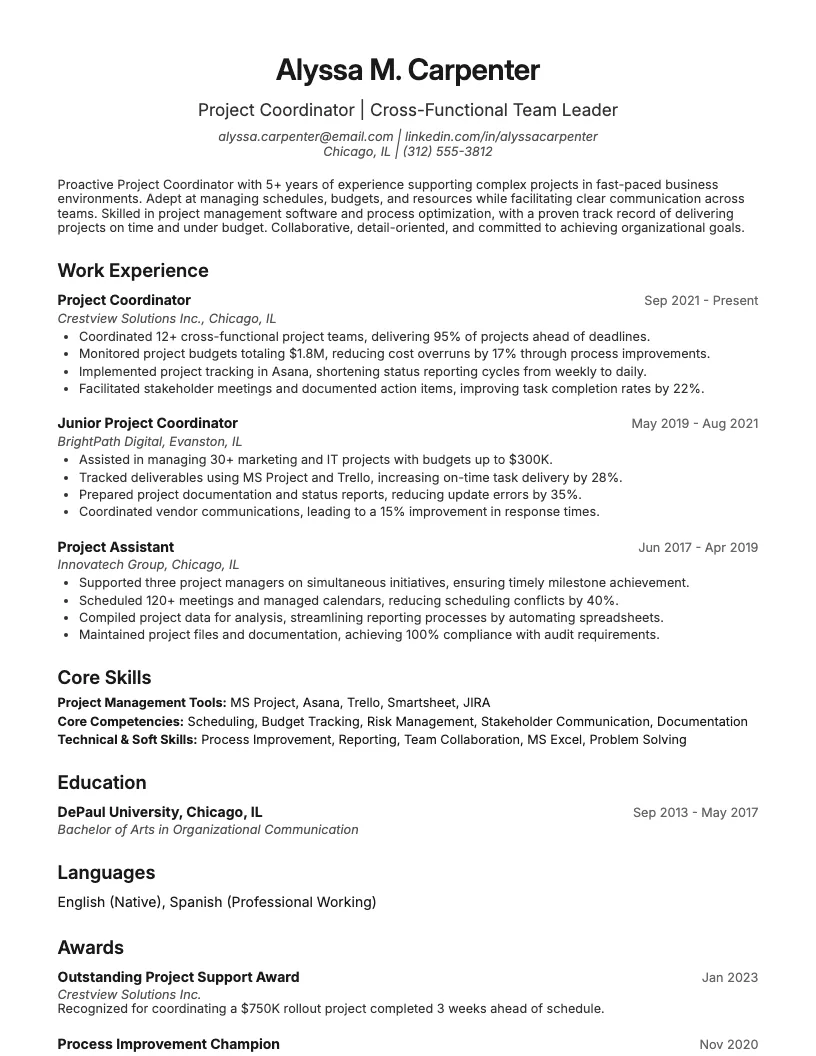
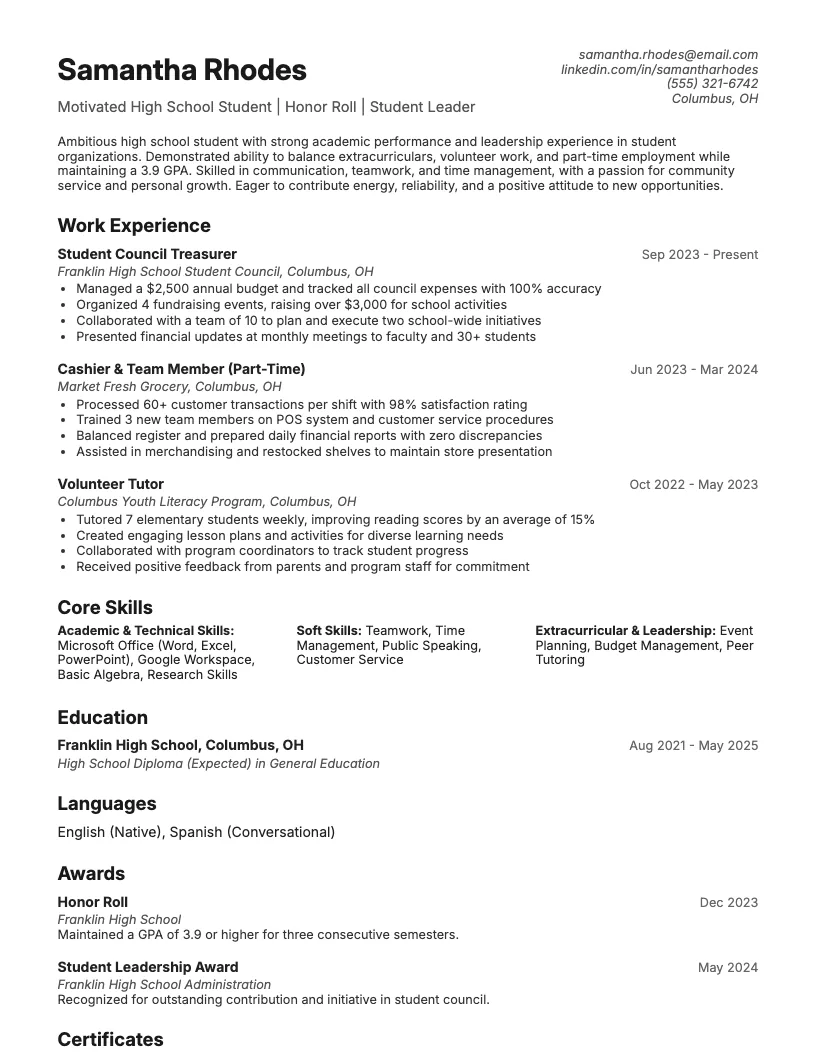
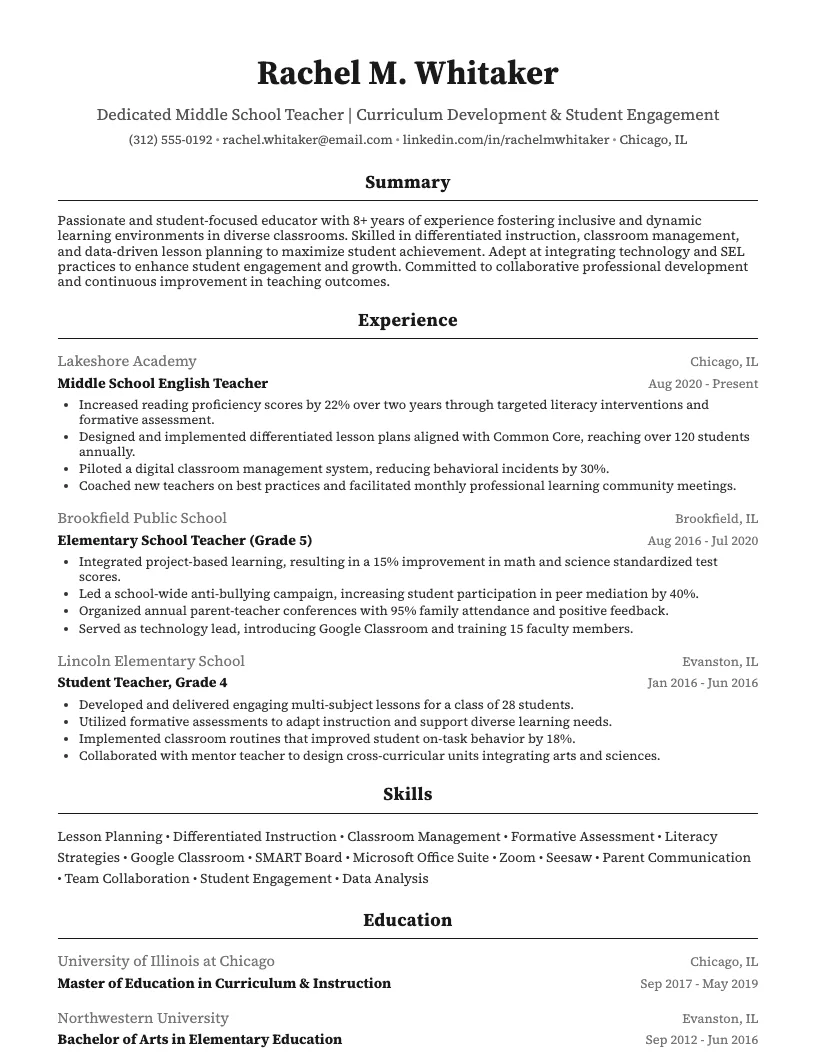
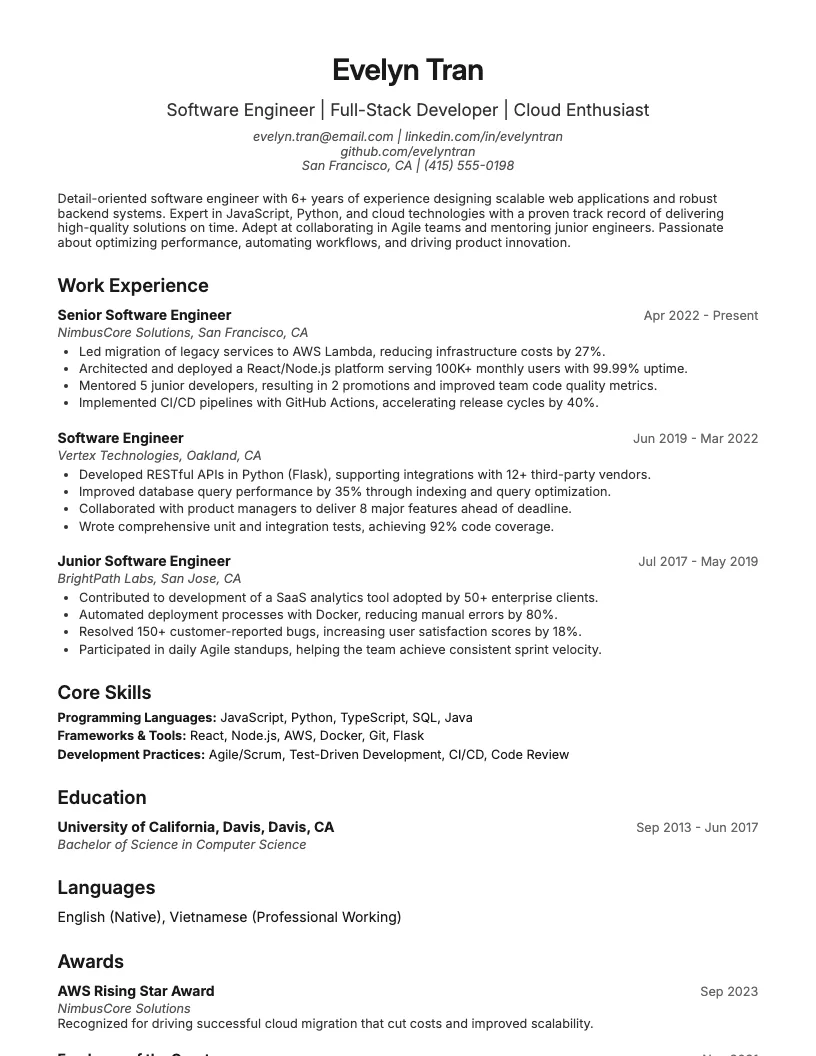
8 examplesStart from an example that already has them, and swap in your own.
Check your resume against the job you want
Scan your resume, see which skills and keywords the posting asks for that you are missing, and fix them before you apply.
Free to use • No credit card required