Industrial Engineering Resume Keywords: 16 Terms I'd Add First
16 industrial engineering keywords, plus core, electrical, and chemical engineering terms, how to pull them from a posting, and bullets that prove each one.


Written by Dr. Priya Sharma
Career Development Expert & Resume Analyst
Updated August 2026
Reviewed by Sarah Chen
Is your resume ATS-friendly?
Drop your resume in and see which of these skills a scanner can actually read, and which ones the job you want is asking for that you have not listed.
PDF or DOCX. Max 2MB.
We never share your resume or use it to train a model.
In This Guide:
What are engineering resume keywords, and why do they matter?
You already have the right experience. The problem is that a screen - software or a tired recruiter skimming for ten seconds - can't tell, because your resume doesn't say it in the words they're searching for.
That gap is what keywords close.
Keywords vs. skills: what the difference is on a resume
A skill is something you can do. A keyword is the specific word or phrase a hiring manager typed into the job posting, and later into a search box, to find someone who can do it.
"I improve manufacturing processes" is a skill. "Lean manufacturing" is the keyword.
Same thing, but only one of them gets you found.
How an applicant tracking system reads an engineering resume
An applicant tracking system doesn't read your resume the way a person does. It scans for exact terms from the job posting and ranks or sorts you against them.
I've seen strong engineers land far down that ranking for no reason other than writing "root-cause investigation" when the posting said "root cause analysis." ResumeJudge will run your resume against a posting and rewrite it with the exact terms it's missing before you hit apply.
Hard skills, tools, and methods
These are the easy ones to spot: named software (SolidWorks, MATLAB), named methods (FMEA, DOE), named systems (SAP). If it's a tool you touched or a method you ran, it's a keyword.
I go deeper on the specific tools for industrial, electrical, and chemical engineering further down.
Soft skills employers still screen for
Don't skip these because they feel vague. Postings still screen for cross-functional collaboration, communication with non-engineers, and attention to detail - and a resume with zero soft-skill language reads as someone who can't work with a team.
Why a generic engineering keyword list underperforms a job-posting one
Pull your keywords from the actual job description rather than one reused list. I walk through exactly how in the next section, and what the reused list costs you further down.
What engineering keywords belong on every engineering resume?
What engineering keywords belong on every engineering resume?

Strip away the discipline-specific tools for a second. Underneath the AutoCAD models and the process diagrams, every engineering resume I've reviewed gets judged on the same handful of things.
Problem solving
This is the one word every engineering job posting has in it somewhere, and the one skill candidates write worst.
"Strong problem solver" tells me nothing. What lands is the problem, what you tried, and what changed because of it - a line drawing that dropped a bottleneck, a failure mode you caught before it shipped.
Project management
You don't need a PMP to claim this one. If you've ever owned a timeline, a budget, or a handoff between teams, that's project management, and it belongs on the resume in those words.
Agile, Scrum, and Lean show up constantly in the postings I've read for engineering leads - name whichever one you actually ran meetings under.
Root cause analysis
Nine times out of ten, "troubleshooting" on a resume means the person looked at a problem until it went away. Root cause analysis means you traced it back to the actual source - a tolerance stack-up, a sensor drift, a supplier change - and fixed that instead of the symptom.
Naming the method (fishbone, 5 Whys, FMEA) signals you did this on purpose, not by accident.
Design and modeling software (AutoCAD, SolidWorks, MATLAB)
Name the actual tool, not "CAD software." A scanner and a hiring manager are both looking for the exact program in the posting, and "proficient in design software" matches neither.
If you've used AutoCAD for drafting, SolidWorks for 3D modeling, and MATLAB for simulation, list all three - they read as different skills to anyone screening this resume.
Technical documentation
Every engineer writes more documentation than they think to mention: specs, test reports, work instructions, design reviews. Skipping it is one of the more common gaps I see, because engineers assume it's implied by the job title.
It isn't. Say what you wrote and who used it.
Cross-functional collaboration
Engineering rarely happens in a vacuum. If you've worked with sales, manufacturing, or a client team to get a design out the door, that's cross-functional collaboration, and it's the phrase recruiters search for when a role needs someone who won't just sit in a lab.
Quality assurance and compliance
Whatever standard you worked under - ISO, OSHA, an internal spec - name it. "Quality-focused" is filler; "maintained ISO 9001 compliance across three product lines" is a fact a reader can check.
Data analysis
You don't need a data science background to claim this. Pulling numbers out of test results, production logs, or a spreadsheet and using them to make a call is data analysis, and it's worth stating plainly rather than burying inside a bullet about something else.
Continuous improvement
This is the umbrella term for kaizen, lean, and Six Sigma work, and it's worth having on the resume even if you don't hold a belt. If you shortened a process, cut scrap, or removed a step, that's continuous improvement in practice.
Attention to detail
I've seen this phrase kill more resumes than it's helped, because it's usually stated with nothing behind it. A wiring error, a missed tolerance, a bad calc - these cost money and time, so when you can point to a specific check you ran or catch you made, it does real work.
Otherwise, cut the phrase and let the specifics carry it.
Communication with non-engineers
The engineers who get promoted are usually the ones who can explain a technical problem to someone who isn't technical - a client, an executive, a sales rep. If you've presented findings to a non-technical audience, say so directly; it's a different skill from writing a spec, and it reads as one on a resume too.
Once you've got a list like this drafted, run it against the actual posting - ResumeJudge will find which of these it's asking for that your resume doesn't say yet and write them into the right sections before you hit submit.
What are the best industrial engineering resume keywords?
What are the best industrial engineering resume keywords?
Industrial engineering resumes live or die on process language. If you're coming from mechanical or another discipline and drifting into plant operations, this is the section to slow down on - the words below are what separates "engineer" from "industrial engineer" in a recruiter's eyes.
Lean manufacturing
This is the one term that shows up on almost every industrial engineer posting I've reviewed, and it's the one candidates most often list without backing it up.
Don't just write "lean manufacturing" and move on.
Say what you did with it - cut a changeover time, removed a non-value-add step, redesigned a line. A tool name with no result reads as a word you copied off a job posting.
Six Sigma and DMAIC
I see "Six Sigma" listed constantly, and half the time there's no belt behind it.
If you have a certification - Green Belt, Black Belt - name it, along with the org that issued it. If you don't, don't write "Six Sigma" alone; write what you actually did within a DMAIC project (define, measure, analyze, improve, control), because that's what a hiring manager is really checking for.
Value stream mapping
Value stream mapping earns its place because it's proof you can see a whole process, not just your corner of it.
The strongest version of this bullet names what the map found - a bottleneck, a redundant handoff - and what happened once you fixed it.
5S
5S shows up on nearly every industrial engineer skills list I've checked, and it's one of the easiest keywords to prove with a single sentence.
Say where you ran it - a cell, a line, a warehouse - and what changed. A vague "implemented 5S" tells the reader nothing they can picture.
Kaizen
Kaizen is continuous improvement, but don't write it that way - write the event.
Name the kaizen event you ran or joined, what it targeted, and the before-and-after number if you have one. Recruiters see this word paired with real outcomes far less often than you'd think, so a specific one stands out.
Failure Mode and Effects Analysis (FMEA)
FMEA belongs on a resume when you've actually built or contributed to a risk matrix, not when you sat in on a meeting where one came up.
If a posting lists FMEA as required and you've genuinely used it, spell it out once and use the acronym after - that matches how the applicant tracking system and the human reader both expect to see it.
Time and motion studies
Time and motion studies are old-school industrial engineering, and they're still asked for constantly in manufacturing and logistics postings.
If you've timed a process, standardized a task, or built a labor standard, this is the exact phrase to use - not "efficiency studies" or something you invented that a scanner won't match.
Supply chain management
This term stretches wide, so narrow it on your resume to what you actually touched - inventory planning, logistics, supplier coordination, demand planning.
A generic "supply chain management" line does less work than naming the piece you owned.
Throughput and cycle time
Throughput and cycle time are the numbers side of this job, and they're where you should be leading with real figures, not just the terms themselves.
"Reduced cycle time" is fine. "Reduced cycle time 18%, adding 400 units of daily throughput" is what actually gets read twice.
Overall equipment effectiveness (OEE)
OEE is a specific, calculable metric, and that's exactly why hiring managers trust it more than softer process language.
If you moved an OEE number, say what it was and what it became. If you just monitored a dashboard someone else built, say that honestly instead of implying you owned the metric.
Simulation modeling (Arena, FlexSim)
Simulation software names are worth listing individually - Arena, FlexSim, whatever you actually opened - because an applicant tracking system is matching exact tool names, not the general idea of "simulation."
Nine times out of ten, a resume that just says "simulation experience" with no tool named gets skipped in favor of one that's specific.
Minitab and statistical process control
Minitab and statistical process control travel together on most postings I've read, so list them together if you've used both.
This is one of the technical skills worth pulling straight from the posting's exact wording - see how to pull keywords out of a job description for the full method.
ERP systems (SAP, Oracle)
Name the actual system - SAP, Oracle, whichever you've worked in - rather than the umbrella term "ERP" alone.
A scanner set to look for SAP experience won't credit a resume that only says "ERP systems," so match the posting's own words here.
Plant layout and facility design
If you've touched plant layout, say what you were solving for - space utilization, flow, safety clearances - and the result if you have one.
I've seen "facility design" used as a catch-all for one CAD assignment in school; that's fine to include if you're early-career, but be honest about the scope in the bullet itself.
OSHA and workplace safety regulations
Safety terms get skimmed past constantly, and that's a mistake - plenty of industrial engineering postings treat OSHA familiarity as a hard requirement, not a nice-to-have.
If you've led a safety audit, updated a procedure, or reduced an incident rate, this is where that goes.
AI-driven optimization tools (predictive maintenance, demand forecasting)
These AI-adjacent terms shift every hiring cycle - what a posting asks for this year may not be the phrase it used two years ago. Don't reuse an old resume's wording here without checking the current listing.
This is the newest addition to the industrial engineer keyword set, and it's moving fast - employers are increasingly asking about hands-on time with predictive maintenance platforms and machine-learning-based demand forecasting, not just familiarity with the concept.
If you've worked with one of these tools in a live environment, name the platform and tie it to a downtime or forecast-accuracy number. Before you send a resume out, run it against the actual posting - a tool like ResumeJudge will rewrite your draft to add whichever of these terms the listing asks for that it's still missing.
What are the best electrical engineering resume keywords?
What are the best electrical engineering resume keywords?
Electrical is the discipline where I see the widest range on one resume - a candidate who's done PCB layout, PLC programming, and standards compliance all in the same job. That's normal for the field.
It's also why this section runs longer than most: the tools split into a few distinct buckets, and you shouldn't try to claim all of them if you've only touched one or two.
Circuit design (analog and digital)
This is the core of the discipline, and it's also the phrase people leave too vague. "Circuit design" alone tells a recruiter almost nothing.
Say which: analog, digital, or both, and name what you designed - power supplies, amplifiers, control boards. A resume that says "designed digital circuits for a motor controller" beats "circuit design experience" every time.
PCB design and Altium Designer
If you've laid out boards, name the tool. Altium Designer is the one postings ask for most, with Eagle CAD showing up as the lighter-weight alternative.
Don't just write "PCB design" and stop - add the layer count or the class of board if you can. "4-layer PCB design in Altium" reads as real work.
"PCB design" reads as a keyword someone stuffed in.
PLC programming and industrial automation
This one crosses over hard into the industrial engineering keywords above, and for good reason - a lot of automation work sits right on the line between the two disciplines.
If you've programmed a PLC, say which platform, and say what it controlled. A line, a conveyor, a test rig.
That's the difference between a claim and a credential.
Power systems and power distribution
Power is its own specialty, and it reads differently than the low-voltage, signal-heavy side of electrical. If you've worked on distribution, protection, or grid-facing systems, keep that language separate from your circuit design bullets - mixing them makes both sound thinner.
MATLAB and Simulink
These two go together so often on electrical resumes that listing one without the other looks incomplete if you've actually used both. MATLAB for analysis, Simulink for the model - say which tasks each one did.
SPICE tools (LTspice, PSpice, Multisim)
Simulation software, and one of the areas where I see the most exaggeration. Nine times out of ten, "SPICE simulation" on a resume means the candidate ran a class exercise once, not that they simulate circuits as part of the job.
Name the specific tool - LTspice, PSpice, or Multisim - rather than the generic term. It's a small change that signals you actually know which one you used.
ETAP and PowerWorld Simulator
These belong to the power side specifically - ETAP and PowerWorld Simulator are what postings name when the role touches grid analysis or power system studies. If your background is circuits and firmware, skip these; naming a tool you've never opened is the fastest way to lose credibility in an interview.
Embedded systems and firmware
Firmware work sits at the intersection of electrical and software, and it's worth calling out separately from circuit design because it draws on a different skill set - C, real-time constraints, hardware debugging. If that's your work, don't bury it under a generic "programming" line.
VHDL and Verilog
Hardware description languages, and a place I see resumes get the terminology backwards. These aren't programming languages in the software sense - they describe hardware behavior for chips and boards.
Name the one you know; claiming both when you've only used one is easy to catch in a technical screen.
FPGA design
FPGA work usually travels with VHDL or Verilog on a resume, and for good reason - you can't really claim one without the other showing up somewhere nearby. If you've only simulated a design and never synthesized it to hardware, say so honestly in the interview; the resume line doesn't need to spell out the limitation, but be ready for the question.
RF engineering and digital signal processing
Two more specializations that show up on senior electrical resumes far more than entry-level ones. If you've done RF or DSP work, it's usually worth its own bullet rather than folding into a general "signal processing" line - the specificity is what a hiring manager is scanning for.
Test instruments (oscilloscope, spectrum analyzer, multimeter)
Hands-on lab work still matters, even with how much has moved to software. Oscilloscope, spectrum analyzer, function generator, multimeter - name the instruments you've actually run, not just "lab equipment."
I've seen candidates skip this section because it feels basic. Don't. A lot of postings screen for exactly this, especially at the technician and junior engineer level.
Standards bodies (IEEE, IEC, ANSI, NEMA, NFPA, UL)
IEEE, IEC, ANSI, NEMA, NFPA, and UL show up across electrical postings as compliance shorthand. You don't need to know all six - most engineers work with two or three regularly depending on their sector - but naming the ones you've actually designed to carries real weight, especially in regulated industries.
Professional Engineer (PE) and other credentials
A PE license changes how a resume reads, particularly for senior and consulting-facing roles. If you're licensed, it goes near your name or in your header, not buried in a certifications list at the bottom.
If you're not there yet, EIT status is worth naming - it tells an employer you're on the path. And if you're checking your own resume against a specific posting to see which of these keywords you're actually missing, that's exactly the kind of gap ResumeJudge will close for you, rewriting the resume to include them before you hit submit.
What are the best chemical engineering resume keywords?
What are the best chemical engineering resume keywords?
Chemical engineering postings read differently from the general engineering list above - process, plant, and compliance words carry more weight than software alone. If you're moving between process, quality, and lab roles inside chemical engineering, here's what I look for on each resume.
Process simulation (Aspen Plus, HYSYS, ChemCAD)
Aspen Plus and HYSYS show up on almost every process engineer posting I've reviewed, and ChemCAD close behind.
Don't just name the software. Say what you modeled and what the model changed - I've seen bullets citing a 27% jump in production efficiency traced straight back to an Aspen Plus model, and that's the kind of line that gets noticed.
Process control and optimization
This is the umbrella term for keeping a process running inside spec, and it's worth having on the page even if your specific tools are listed elsewhere.
Pair it with a result. "Optimized reactor conditions" says nothing; "optimized reactor conditions to cut cycle time 30%" says everything.
Design of Experiments (DOE)
DOE is one of those keywords hiring managers scan for specifically, because it signals you can run a structured experiment instead of guessing.
If you've run even one formal DOE - in school or on the job - name it. It's a small credential that punches above its length.
Mass and heat transfer
These are core-discipline terms, not tools, so they belong near your degree or in a technical skills line rather than buried in a bullet.
Recruiters use them to confirm you actually studied chemical engineering fundamentals, not just picked up plant software on the job.
Piping and instrumentation diagrams
P&IDs come up constantly in process and project engineering postings. If you read, mark up, or build them, say so plainly - "P&ID" and "piping and instrumentation diagram" both get searched, so use whichever the posting uses.
Good Manufacturing Practice (GMP)
GMP is close to mandatory if you're anywhere near pharma, food, or biotech manufacturing. Leave it off and a recruiter searching for it has no reason to open your resume.
OSHA and EPA regulations
Nine times out of ten, plant-facing postings ask for one or both. Name the specific standards you've worked under if you can - a general "safety compliance" line is weaker than "OSHA process safety" or "EPA Clean Air Act reporting."
ISO 9001 and regulatory standards
ISO 9001 anchors this group, alongside standards like the Clean Water Act or RCRA when they're relevant to your plant or industry. List the ones you've actually worked with - a keyword you can't defend in an interview does more harm than leaving it off.
Laboratory techniques (chromatography, spectroscopy, crystallization)
If your background is R&D or lab-heavy, name the techniques directly instead of writing "lab experience." Chromatography, spectroscopy, and crystallization are each searched on their own, so a vague summary line won't catch any of them.
Statistical process control
SPC belongs near Six Sigma and quality assurance on the page - it's the data side of keeping a process in spec, and it shows up in almost every quality-adjacent chemical engineering posting I've seen.
Six Sigma Green Belt
A Green Belt is one of the few certifications worth its own line rather than folding into a skills list. If you're actively pursuing it, say so - a posting will often accept "in progress" over nothing at all.
Scale-up and pilot plant work
Scale-up experience is what separates a lab chemist from a process engineer on paper. If you've moved a process from bench to pilot to full production, spell out which stage - it's specific enough to be worth a full bullet on its own.
Process safety management
This is the compliance framework, distinct from the OSHA and EPA regulations above - it's about how a plant manages hazards over time, not a single rule.
If a posting lists a long safety and compliance section, run it against your resume before you apply - ResumeJudge will find which of those specific standards are missing and add them to your resume so you're not guessing.
Which keywords does your engineering discipline need?
Every discipline shares a core vocabulary - problem solving, project management, root cause analysis. But the words that actually get you an interview are the ones specific to your corner of engineering, and those change completely from one discipline to the next.
Here's a fast map so you know which keywords to reach for.
Mechanical engineering
Lead with GD&T, FEA, and the design software the posting names - SolidWorks, CATIA, Creo. If you ran a DFM review or a tolerance stack-up, say so.
I've seen dozens of mechanical resumes list "CAD" and nothing else, which tells a hiring manager nothing about what you actually touched.
Civil and structural engineering
Structural analysis, load calculations, AutoCAD Civil 3D, and the codes you design to - IBC, ASCE 7. PE licensure matters more here than in almost any other branch - see where a PE license goes on the page.
Software engineering
This one runs on languages and frameworks, not processes: Java, Python, React, SQL, Git, AWS, Docker. The mistake I see most often is a software resume padded with soft skills instead of the stack the job actually asks for - a recruiter scanning for "Python" or "Kubernetes" won't credit you for "strong communicator."
Manufacturing and process engineering
Almost the same vocabulary as the industrial engineering keywords above - if that's your field, start there instead.
Quality engineering
FMEA, statistical process control, ISO 9001, and Six Sigma - Green Belt at minimum, Black Belt if you have it. Quality resumes live and die on whether you can prove a defect rate you actually reduced, not just that you "ensured compliance."
Systems engineering
Requirements management, systems integration, V&V (verification and validation), and tools like DOORS or MATLAB/Simulink. Nine times out of ten, a systems engineer's resume is too abstract - name the system, not just "managed the lifecycle."
Petroleum and drilling engineering
Offshore drilling, directional drilling, well control, and drilling fluids are the terms that separate a real drilling engineer's resume from a generic one. Logistics and supply-chain language belongs on a different resume entirely - drilling postings want depth in the well, not the warehouse.
Aerospace engineering
Structural analysis, propulsion systems, avionics, and compliance standards like AS9100 or FAA regulations. If you've done qualification testing or flight-worthiness documentation, name it - aerospace hiring managers read for exactly those two things.
Network and hardware engineering
Cisco routers, network protocols, firmware, and embedded systems. This is one of the few branches where certifications - CCNA, CCNP - carry as much weight as a degree line, so give them their own space instead of folding them into education.
Sales engineering
A strange mix on purpose: technical depth from your engineering background (manufacturing, process engineering, value stream mapping) paired with account management and revenue numbers. A sales engineer who can't speak the client's technical language loses the room fast, so keep the engineering terms even though the job title says sales.
Not sure which of these actually match the posting in front of you? Paste it into ResumeJudge and it'll rewrite your resume with whichever keywords from your discipline you're missing before you hit submit.
How do you pull keywords out of an engineering job description?
How do you pull keywords out of an engineering job description?
I've watched engineers stare at a job posting for twenty minutes and then write a resume that ignores half of it. The posting is the answer key.
Here's how I work through one.
Step 1: Copy the posting into a blank document
Don't mark it up in the browser tab, it'll be gone in a week when the listing closes.
Paste the whole thing into a doc so you can highlight, cut, and come back to it while you write.
Step 2: Mark the required tools and software
Go through and circle every named tool: SolidWorks, MATLAB, Aspen Plus, Altium, whatever shows up.
These are the easiest wins on the page, and the ones an applicant tracking system checks first.
Step 3: Mark the responsibilities that repeat
If "root cause analysis" or "process optimization" shows up in both the summary and the day-to-day duties, that's not filler, that's the actual job.
I tell people: whatever gets said twice in a posting is the thing they'll ask about in the interview.
Step 4: Mark the qualifications that act as filters (degree, years, certifications, clearance)
Degree requirement, years of experience, PE license, security clearance - these get scanned before anyone reads a single bullet.
Miss one and the resume can get filtered out regardless of how good the rest of it reads.
Step 5: Mark the domain words (automotive, aerospace, pharma, HVAC)
An engineer who's worked automotive and one who's worked pharma can have near-identical skill lists and still be very different hires.
Domain words are how a recruiter tells the two apart, so if the posting says "GMP" or "aerospace," that word needs to land somewhere in your experience too.
Step 6: Rank required above preferred
Postings usually split into a "must have" list and a "nice to have" one, sometimes explicitly, sometimes just by which section it's in.
Put your strongest, most provable required-column keywords near the top of your resume. Preferred-column ones can sit lower, or get left out entirely if you're short on space.
Step 7: Cut any keyword you cannot back up with real work
This is the step people skip, and it's the one that gets them caught in an interview.
If you list "Six Sigma" and can't explain a DMAIC project you ran, cut it. Nine times out of ten, the follow-up question is the one you can't answer.
This is also the fastest way to use ResumeJudge: run the posting against your draft and it'll rewrite the bullets for whichever listed skills the resume doesn't actually back up yet.
Step 8: Match the exact job title in the posting
If the posting says "Industrial Engineer II" and your resume says "Process Engineer," update your title line to match, even if your old title was technically more accurate.
The exact phrase is what a keyword search matches on, and a near-miss title is an easy way to fall out of a search that should've included you.
Where do engineering keywords go on your resume?
Is your resume good enough?
Drop your resume in and see which of these skills a scanner can read, and which ones the job you want is asking for that you have not listed.
Upload your resumeFree. PDF or DOCX. We never share your resume or use it to train a model.
Right placement matters as much as the words themselves. An ATS and a hiring manager both look in specific places first, so put your strongest terms where the eyes land.
In the summary or objective
Your first three lines get the most attention on the page, so don't waste them on "seeking a challenging position." Lead with your title, years of experience, and two or three of your strongest keywords: "Industrial engineer with 5+ years in lean manufacturing and supply chain optimization."
That single line does more work than a paragraph of soft description.
If you're a recent graduate with no title to lead with, use an objective instead, naming the tools and methods from your coursework or internship.
In the skills section
This is your densest block of keywords, and it's the first place both a parser and a scanning recruiter check. I split mine into two groups: hard skills and tools on one side, things like communication and cross-team work on the other.
Keep it to terms you can actually back up - what mistakes get resumes rejected covers why that matters.
In your experience bullets
A skills list proves you know a word. A bullet proves you used it.
"Implemented lean manufacturing to cut waste 20%, saving $500K a year" carries far more weight than the same keyword sitting in a list - see how to turn a keyword into a proof point for the pattern. ResumeJudge will check a bullet like that against a posting and rewrite your experience section to include whichever required keywords are still missing.
In projects and coursework
If your work history is thin, a capstone project carries keywords just as well as a job does - see which keywords to use with little or no experience.
In education and certifications
List your degree and any credential - Six Sigma Green Belt, PE - right under it. These are filter words; a poster often searches for them by name before reading anything else.
How many times one keyword should appear
Two or three times across the whole resume, in different sections, is the number I see work. Once in skills, once in a bullet, maybe once in the summary.
More than that reads as stuffing, not strength.
Formatting that stops a parser reading your keywords
Tables, text boxes, headers, and graphics are where keywords go to die - a parser skips them entirely nine times out of ten. Keep your skills section in plain text, one column, no icons.
How do you turn a keyword into a bullet point that proves it?
A keyword claimed vs. a keyword proved
Responsible for improving manufacturing processes
Implemented lean manufacturing to cut waste 20%, saving $500K a year
A keyword sitting on its own in a skills list proves nothing. A recruiter - or the ATS score behind the scenes - wants to see it doing something.
That's the whole difference between a resume that gets a callback and one that doesn't.
The pattern: verb + keyword + what changed + by how much
Every strong bullet follows the same shape. Start with a verb, name the keyword or method you used, say what it changed, then put a number on the change.
That's it. Four pieces, one line.
Weak: "Responsible for improving manufacturing processes"
I've read hundreds of resumes with a line almost exactly like this one. It tells me nothing - not what you did, not what tool you used, not whether it worked.
"Responsible for" is the biggest tell of a duty-list resume instead of an accomplishment one.
Strong: "Implemented lean manufacturing to cut waste 20%, saving $500K a year"
Same job, same skill, completely different bullet. It names the method (lean manufacturing), states the result (cut waste 20%), and backs it with a dollar figure ($500K a year).
That single line does more than any keyword list could - it proves the keyword instead of just claiming it.
Action verbs engineers should use
Skip "responsible for," "helped with," and "worked on." Reach for verbs that show you owned the outcome: engineered, implemented, redesigned, automated, diagnosed, optimized, spearheaded, reduced, eliminated.
Nine times out of ten, swapping the verb alone makes a bullet sound like it belongs to someone who actually did the work.
Numbers to reach for when you think you have none
You have more numbers than you think. Percent reduction in waste, defects, downtime, or cycle time.
Dollars saved or generated. Headcount on a team you led.
Number of lines, plants, or SKUs affected. Time saved per unit or per shift.
If you genuinely can't attach a number, at least attach a scope - "across three production lines" still tells a reader more than nothing.
Showing leadership and cross-team work in a bullet
Industrial engineering is rarely a solo job - you're pulling in production, quality, and maintenance at once, so employers screen for it directly. "Led a team of 5 engineers to implement a new inventory system, finishing ahead of schedule and under budget" does the job.
So does naming a Kaizen event that pulled in three departments and cut changeover time.
Bullet patterns for design, analysis, testing, and documentation work
Not every keyword fits a "cut waste 20%" bullet, and that's fine - the pattern flexes. For design work: "Designed [layout/system] using [software], resulting in [outcome]."
For analysis: "Applied [method] to identify [problem], reducing [metric] by [amount]." For documentation: "Authored [type of document] used by [team/function] to [purpose]."
If you're not sure which keywords a posting actually wants proven this way, running your draft through ResumeJudge against the job description will rewrite whichever ones still read as unproven claims into bullets that back them up.
Which keywords do you use with little or no experience?
Which keywords do you use with little or no experience?
No full-time job title yet doesn't mean no keywords. You have coursework, projects, internships, and student teams - that's plenty, if you name it right.
Coursework worth naming
List classes that map straight to the job, not your whole transcript. Operations research, quality control, lean manufacturing, simulation modeling - those tell an employer you've touched the same tools they use.
Skip general education. Nobody's screening for it, and it just dilutes the classes that matter.
Capstone and senior design projects
Your capstone is probably the closest thing you have to real work experience, so treat it that way. "Designed and implemented a new inventory management system for a local manufacturing company, reducing waste by 15%" reads like a professional bullet because it follows the same pattern: verb, keyword, result, number.
If your project touched lean manufacturing, a simulation model, or a time study, say so by name - those are the keywords a posting is actually scanning for.
Internship and co-op work
Even a short internship carries real weight if you write it up properly. I've seen entry-level resumes built around a single internship line - 5S methodology, a 12% bottleneck reduction, that's it - and it worked because the number did the talking.
Don't undersell a co-op just because it wasn't full-time. Twelve weeks with a real metric attached beats a semester of vague duties.
Lab and student team projects (Formula SAE, robotics)
Formula SAE, robotics club, senior lab work - these are projects with deadlines, teammates, and constraints, which is exactly what a hiring manager wants to see before they hand you a real one. One line I've seen work well: "designed and built a robotic arm for an assembly line, resulting in a 15% increase in production speed."
Specific machine, specific number.
Software you learned in class
List what you actually used, not what the course description mentioned. If you ran a simulation in Arena or built a model in MATLAB, that's a real keyword - check the software list above against what you touched.
Certifications you can get before you graduate
A Lean Six Sigma belt earned as a student counts the same as one earned on the job. I've reviewed entry-level resumes where a Green Belt was the single strongest line on the page, because it's proof, not a claim.
Transferable skills from non-engineering jobs
Retail, food service, campus jobs - they all teach you to manage time, handle pressure, and work with people who aren't engineers. Don't hide that job; translate it.
"Managed inventory for a 40-person shift rotation" is a supply chain sentence in disguise.
An objective line for a recent graduate
Skip the summary and write an objective instead - you don't have five years to summarize yet. Something like "recent industrial engineering graduate with internship experience in quality control and process improvement, seeking an entry-level role applying Lean Six Sigma and data analysis to manufacturing operations" packs three keywords into one sentence that also states what you want.
Before you send it, run the whole resume against the actual posting - ResumeJudge will rewrite it to include whichever of these keywords are still missing before a recruiter ever sees the gap.
What keyword mistakes get engineering resumes rejected?
I've reviewed hundreds of engineering resumes, and the rejections almost never come from a missing keyword. They come from how the keyword got on the page.
A keyword list with no work behind it
A skills section with twenty terms and zero context reads as unconvincing, not impressive.
Every keyword needs a bullet that proves it: what you did, with the tool, and what changed. "Applied GD&T to reduce rework" beats "GD&T" sitting alone in a list.
If you're not sure which of your bullets actually prove a keyword, that's the fix to make before you touch anything else.
Claiming a tool you have only read about
Nine times out of ten, the interview question that trips someone up is about the tool they listed but never really used.
If you touched Arena in one class exercise, say that - don't let it sit next to years of hands-on SAP work like it's the same thing. A resume checked against the actual posting will show you exactly which claims are thin - and rewriting those into stronger bullets is the whole point of running one through ResumeJudge before you send it.
Stuffing keywords in white text or a footer
Hiding keywords in white-on-white text or a tiny footer used to fool old scanners. It doesn't anymore, and if a recruiter opens the file and sees it, that's the whole application gone.
Using an acronym the posting spells out, or the reverse
If the posting says "Failure Mode and Effects Analysis," don't make your resume the only place that says "FMEA" with no expansion in sight. Match the posting's form first, then add the other version once so both searches catch you.
Copying a generic keyword list across every application
I see this constantly: the same fifteen skills, pasted onto every application regardless of the posting. It's faster, and it's also why the resume doesn't land. Two different postings for "industrial engineer" can want completely different proof - one wants OEE and simulation modeling, another wants supply chain and ERP work. Pull the keywords from that specific posting instead of reusing last week's list.
Burying keywords in a graphic, table, or header
A skills table inside a graphic, or text dropped into a header/footer, often doesn't parse at all. If it's not in the plain body text, assume it isn't read.
Naming outdated software
Listing a tool your target companies retired years ago signals your experience is dated too. Check the posting's current stack before you assume last decade's software still counts.
Frequently Asked Questions
How many keywords should an engineering resume have?
There's no fixed number - the goal is to cover the specific tools, methods, and terms the job posting actually uses, which is usually somewhere between 15 and 25 across your whole resume. Padding a skills section with generic terms like "problem-solving" or "teamwork" doesn't help; a handful of exact matches on the tools and methods named in the posting does more than a long list of vague ones. ResumeJudge will check your resume against a specific posting and tell you which of its keywords you're still missing.
Should I use a separate skills section or work keywords into my bullets?
Do both. A dedicated skills section gives recruiters and the applicant tracking system a fast list to scan, while the same keywords showing up inside your bullets prove you actually used them on the job rather than just listing them. A skills section with no supporting evidence in your experience reads as padding.
Do I need to repeat a keyword for the applicant tracking system to count it?
No. Most systems register a keyword the first time it appears anywhere on the resume, so repeating it over and over doesn't earn extra credit and can make your writing sound stuffed. One clean mention in your skills section and one in a bullet where you actually used it is enough to get past a scanner without reading like you're gaming it.
Should I list programming languages on a non-software engineering resume?
Only if you actually used them and the job posting cares about them. Many industrial, mechanical, and electrical engineering roles do want to see Python, MATLAB, or SQL if you used them for data analysis, simulation, or automation, but listing a language you touched once with no real use case just invites a question you can't answer well in an interview.
Do certifications like PE or Six Sigma count as keywords?
Yes, and they're some of the strongest ones you can list, since they're specific, verifiable, and often named directly in job postings. Put the full certification name and, if you have it, the credentialing body or level, such as Six Sigma Green Belt or Six Sigma Black Belt, so it matches how the posting phrases it.
Should I list a tool I used once in a class?
You can, but treat it as a minor mention rather than a headline skill, and only include it if you could still answer a basic question about it in an interview. Group it separately from tools you've used professionally, or leave it off if the posting doesn't ask for it - a thin, unsupported skill can do more harm than good if you're asked about it. If you're not sure whether a skill is worth keeping on the resume, ResumeJudge can show you whether the posting actually asks for it.
How long should an engineering resume be?
One page for most candidates, including new grads and anyone with under ten years of experience. If you have ten or more years in the field, two pages is acceptable, but keep the detail focused on your last ten to fifteen years of work rather than padding out your entire career history.
Does the exact job title need to match the posting?
Not exactly, but it should be close enough that a recruiter or ATS recognizes it as the same role. If your actual title was something unusual internally, like "Process Engineer II," and the posting says "Industrial Engineer," it's fine to use the more standard version alongside your real title so the match is obvious. ResumeJudge can flag when your title or wording is far enough from the posting's language that it's worth adjusting.
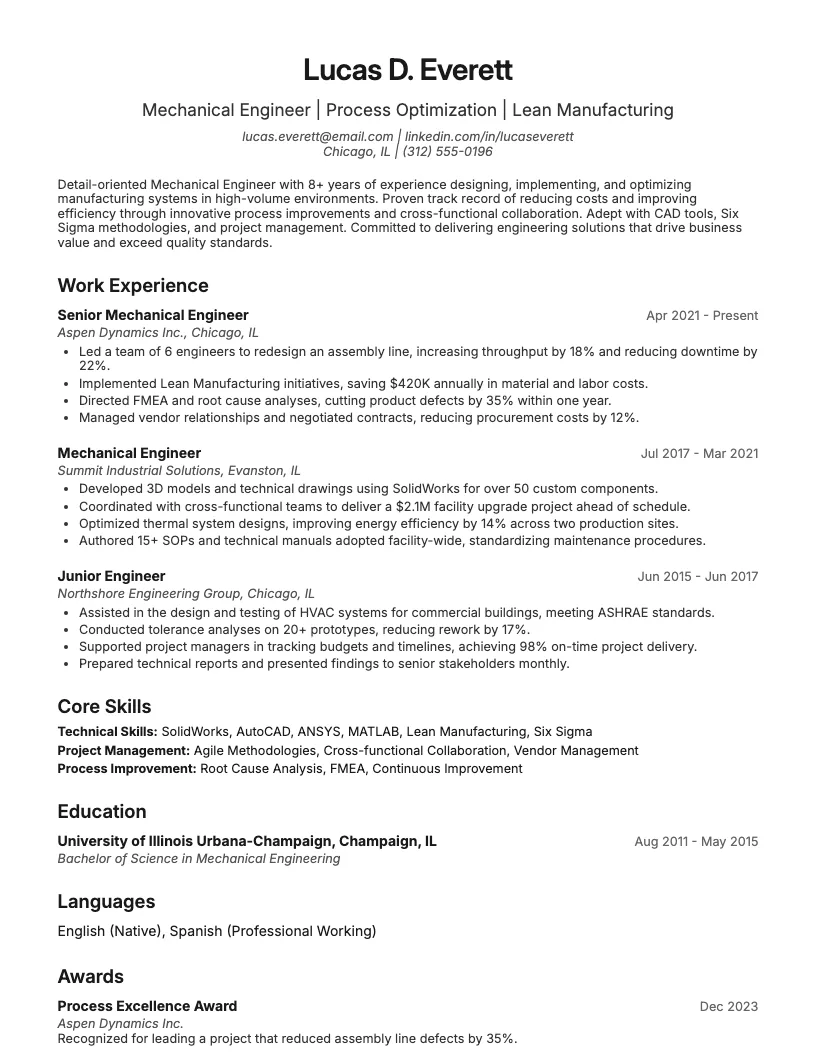
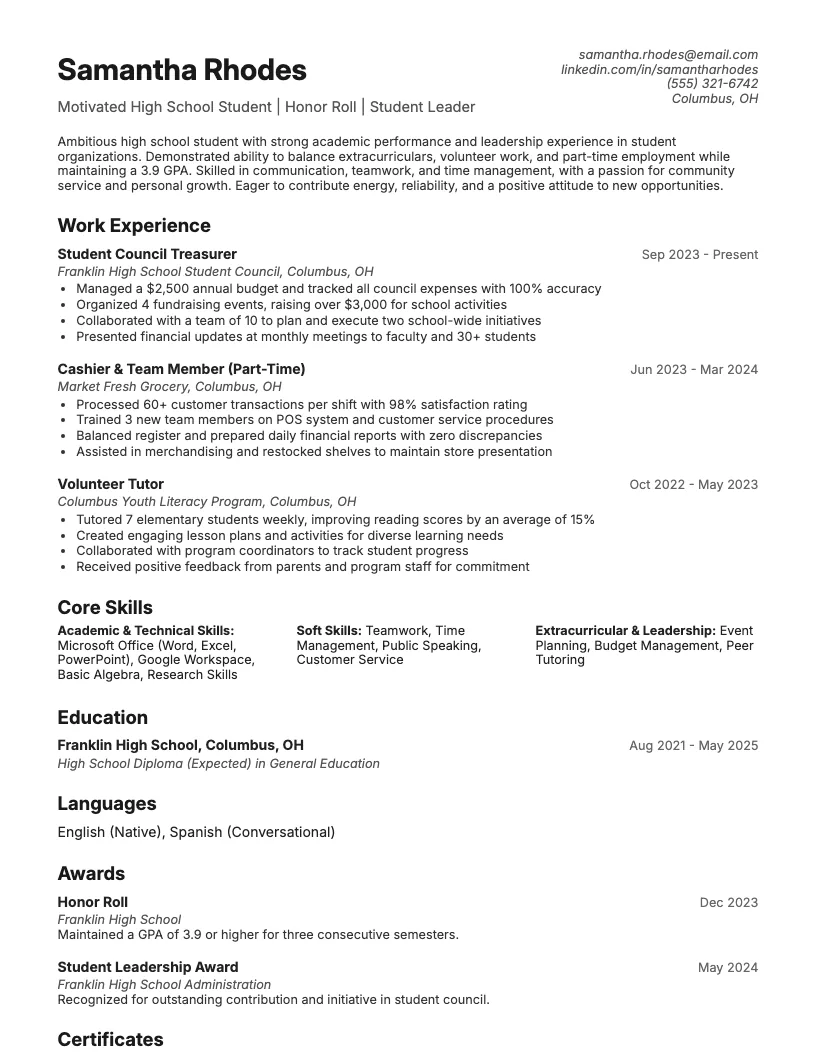
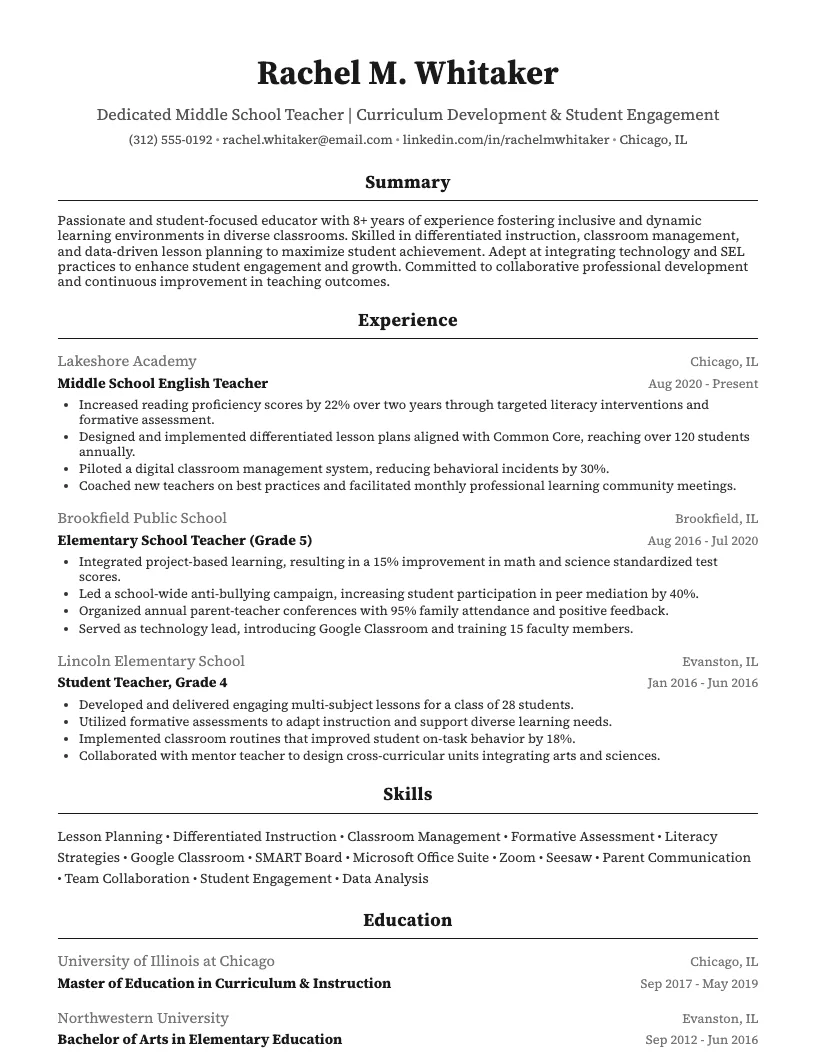
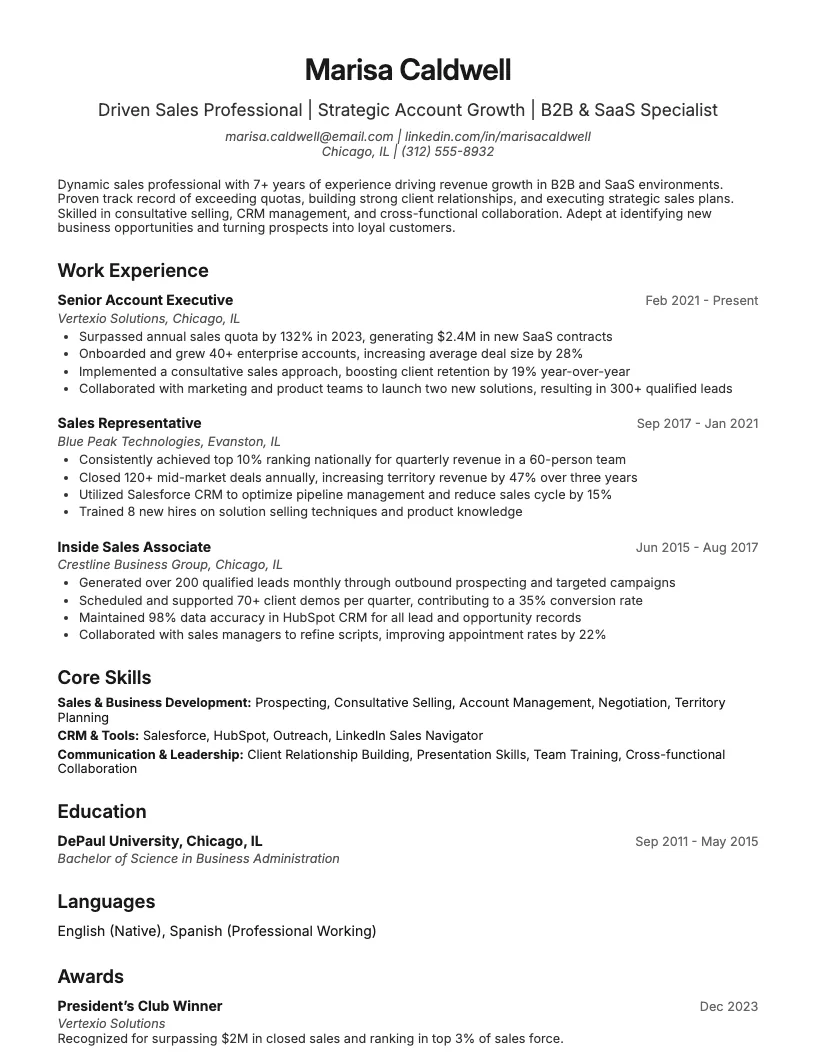
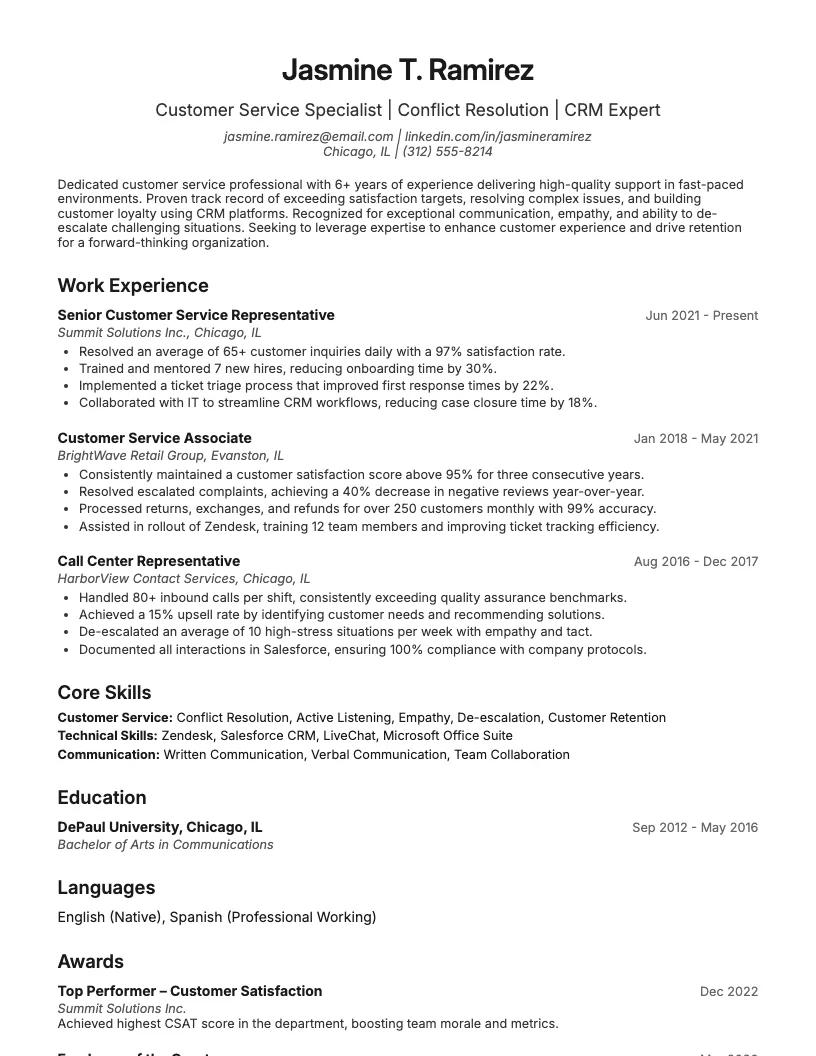
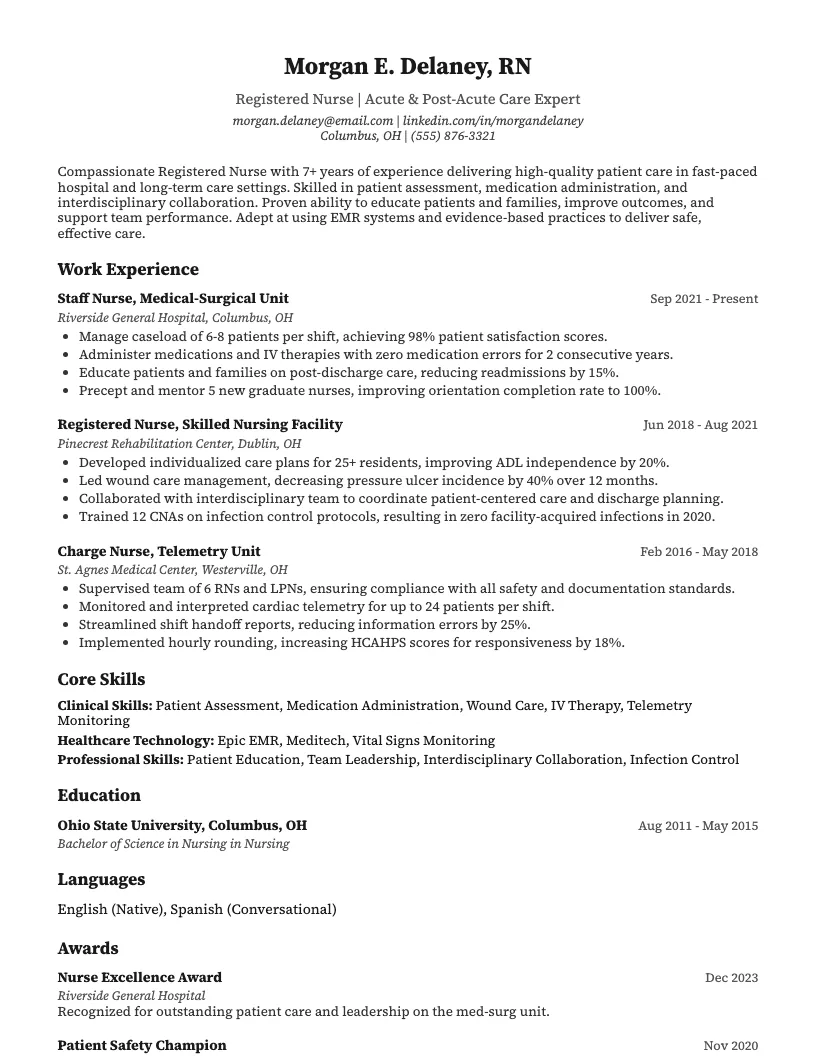
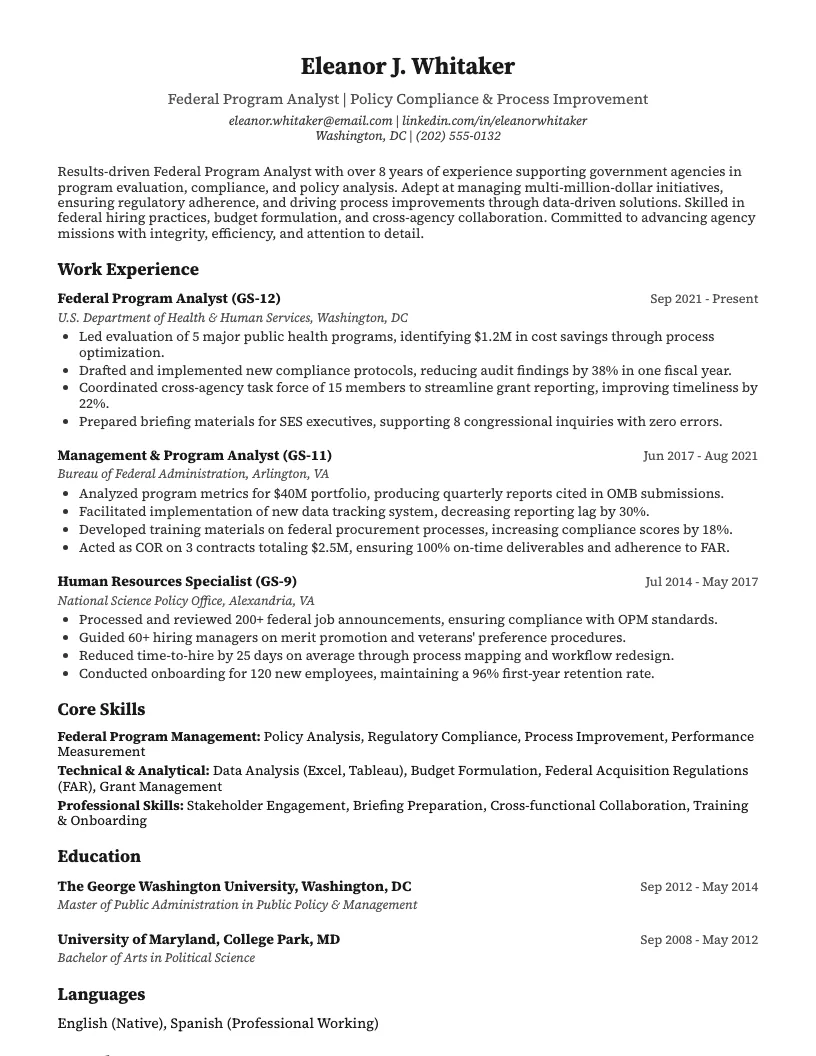
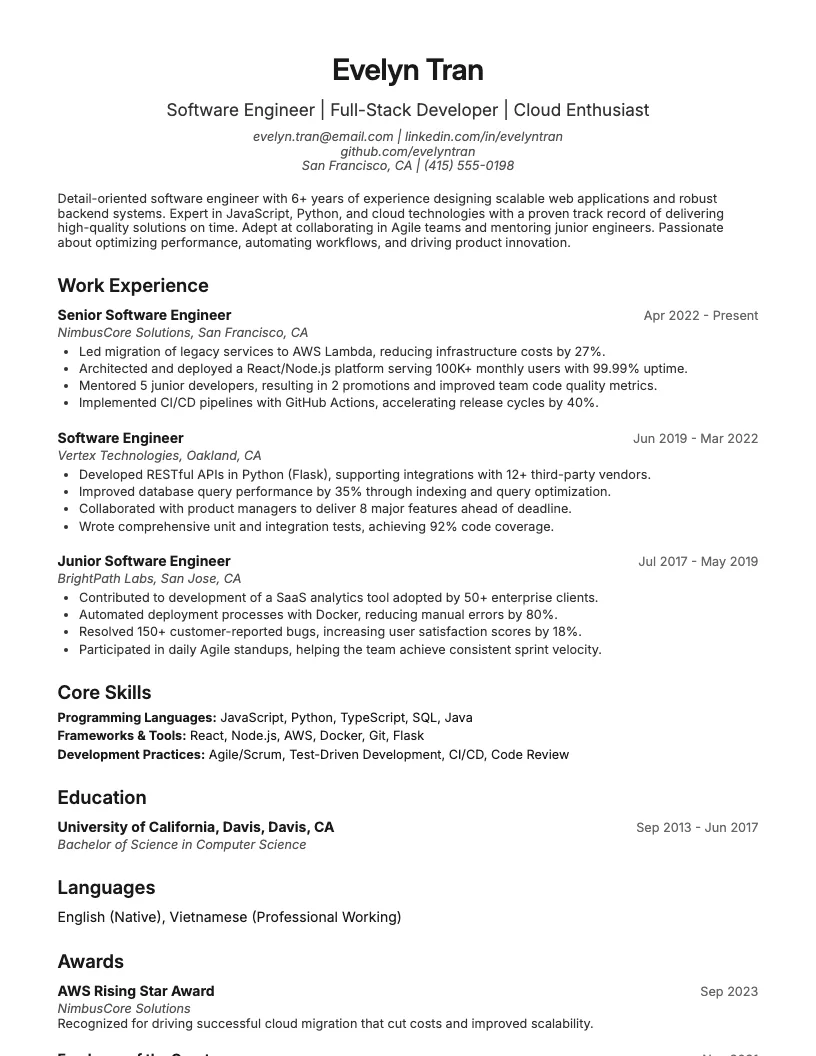
See these skills on a real resume
8 examplesStart from an example that already has them, and swap in your own.
Check your resume against the job you want
Scan your resume, see which skills and keywords the posting asks for that you are missing, and fix them before you apply.
Free to use • No credit card required