Special Skills for Acting Resume: 12 I'd List, 4 Casting Sites
What counts as a special skill on an acting resume, how to word it honestly, and how it differs between casting sites and your printed one-page resume.


Written by Sarah Chen
Senior Career Strategist & Resume Expert
Updated August 2026
Reviewed by Marcus Rodriguez
Is your resume ATS-friendly?
Drop your resume in and see which of these skills a scanner can actually read, and which ones the job you want is asking for that you have not listed.
PDF or DOCX. Max 2MB.
We never share your resume or use it to train a model.
In This Guide:
What counts as a special skill on an acting resume?
What counts as a special skill on an acting resume?

A special skill is anything you can actually do on cue, in front of a camera, right now. Not something you enjoyed once.
Not a personality trait. A performable ability.
I've read hundreds of these sections, and the ones that get an actor called back are specific, not impressive-sounding. Casting directors search these fields when they're filling a role, so vague entries just don't turn up.
Accents and dialects
There are close to 40 distinct accents and dialects in the UK alone, and "British accent" isn't one of them. List the one you can actually do - Yorkshire, Scouse, Received Pronunciation - and only list ones you could nail cold if asked.
See how specific you need to get for the wording.
Languages you speak fluently
Fluency here means you could hold a scene in that language, not that you took two years of it in school. Casting for non-English productions runs on this field, so it's worth getting right.
Singing and vocal range
Musical theatre resumes treat this as non-negotiable. List your voice type or range, not just "can sing" - a casting director reading "alto, belt to F5" knows exactly what they're getting.
Dance styles
Musical theatre performers usually train across several styles, and period productions increasingly want at least basic training in period-specific dance. Even limited experience is worth listing, as long as the level next to it is honest.
Musical instruments
Actor-musician roles are a real, growing category - shows built around actors who sing and play live. List years of training next to each instrument, the same way you'd note a belt rank.
Stage combat and fencing
Both stage and screen productions ask for these regularly. Drama schools teach them, and short intensive courses exist if you want to add the skill later.
Sports and athletics
This is a wide category: team sports, individual sports, martial arts, skating, weapons training. The rule I'd hold you to: list what you trained in, not what you tried.
Horse riding
I'll flag this one on its own, because it's the hardest skill to fake and the most dangerous to get wrong on set. Only list it if you'd get on a horse today with confidence.
Improvisation and stand-up comedy
Improv shows up more than people expect - plenty of scripted TV leans on it for texture. Casting directors also actively look for actors with stand-up backgrounds to fill comedic roles.
Movement work, mime, and acrobatics
Movement training, Alexander technique, mime, gymnastics, and acrobatics all belong here. These read as physical control skills, which is exactly what they're being scanned for.
Driving licences, motorcycles, boats, and aircraft
Standard licence, commercial licence, motorcycle, boating, piloting - list what you actually hold. Note that a plain driver's licence is often assumed in some markets and worth stating in others; more on that under common questions.
Party tricks casting directors remember
The oddball entries are the ones that get you remembered. Things like an unusual facial trick, a strange physical party trick, or a genuinely weird niche talent stick in a casting director's head in a way "team player" never will.
Things that are not special skills: personality traits, travel, job titles
Five things don't belong here, and I see all five constantly: personality traits like "outgoing," travel destinations, hobbies with no performance value, a job title with no named skill behind it, and anything you can't actually do if someone asks you to prove it on the spot. Before you finalize the list, run it against the actual job posting or breakdown you're applying to - ResumeJudge checks your resume against a posting and flags the skills it's asking for that you haven't listed, so nothing relevant gets left off by accident.
How do you write the special skills section?
How do you write the special skills section?
Where the section goes on the page
Special skills sits at the very bottom of the page, under training and credits.
That order is deliberate: casting directors read top to bottom, and by the time they hit your skills they already know whether you can act. This section is for the extra stuff that gets you cast when two actors are otherwise tied.
Say which accent, not just "British accent"
How to name an accent
British accent
Cockney accent - advanced
"British accent" tells a casting director almost nothing, because British covers everything from cockney to received pronunciation.
Write "cockney" or "Scottish Highlands" or "Southern American - Texas" instead. Same with "Southern accent" - Texas and New Orleans sound nothing alike, and a casting director who needs one won't cast you on the other.
Put a level next to every skill: intermediate, advanced, fluent
How to write a skill with a level
Stage combat
Stage combat - intermediate, 2 years training
Every skill on this list needs a proficiency next to it - intermediate, advanced, or fluent.
If you don't want to rate yourself, only list what you're actually experienced at and skip the label. Either way, don't let a bare skill name imply a level you don't have.
Years of training on instruments, belt rank in martial arts, voice type in singing
Where a plain intermediate, advanced, or fluent label doesn't fit, use the measure that skill already has: an instrument with years of experience, a martial art with your actual belt rank, singing with your vocal range or voice type.
These specifics are exactly what what counts as a special skill covers in more depth for each category - this is about how to phrase what you already have.
Lead with the skill that makes you memorable
Whatever you list first gets noticed most, so don't open with basic dance training when you can do something a casting director hasn't seen that day. Stand-up comedy, an odd physical trick, a rare dialect - put the memorable one up front and let the common ones follow.
How many skills to list
Quality beats quantity here, every time. I'd rather see five skills you can do cold than fifteen where three are shaky - a thin, honest list reads better than a padded one. The FAQ covers it too.
Drop anything you have not done in a year
If you haven't touched a skill in over a year, take it off - unless you're confident you could get back to that level fast if asked.
Never write "used to be great at it"
"Used to be great at it" isn't a special skill. Whether you can still do it right now is the test in can you actually do it if a casting director asks.
Can you actually do it if a casting director asks?
Here's the test that matters more than anything else on this list: can you do the thing right now, in the room, if someone asks you to?
The "Conversational Spanish" story
A casting director once tested an actress who'd listed "Conversational Spanish." She could say hello and goodbye.
Nothing else.
That's the whole story, and it's the one every casting director I've talked to has some version of. Once they catch one skill that isn't real, they stop trusting the rest of your resume.
Test the skill on camera before you list it
Don't take your own word for it. Get in front of a camera, do the accent or the dance or the instrument, and watch it back.
If you wouldn't send that clip to a casting director, don't put the skill on the page.
One vacation skiing is not a special skill
Skiing once on a trip is not the same as having trained. Same goes for any sport you've tried casually rather than practiced.
List what you trained in. Leave off what you tried.
Horse riding is the one you cannot bluff
Horse riding gets its own warning because it's dangerous to fake, not just embarrassing. If you haven't ridden with real confidence, this is the skill to leave off rather than stretch.
What a caught exaggeration costs you
An exaggeration doesn't just cost you that one line item. It costs you the casting director's trust in your credits, your other skills, everything else on the page.
Before you send anything out, it's worth running the resume itself against the posting - ResumeJudge will flag wording that reads as overstated so you catch it before a casting director does.
How do special skills work on casting sites versus a printed resume?
Casting site profile versus printed resume
| Casting site | Printed resume | |
|---|---|---|
| Where skills live | Separate skills field | Bottom of one page |
| Proof | Voice clips, footage | Words only |
| Found by | Keyword search | Read top to bottom |
| Native language | Dedicated language field | Listed with other skills |
Actors Access, Casting Networks, Backstage, Casting Frontier
Most of your special skills work now happens online, not on paper. Your profile on Actors Access, Casting Networks, Backstage, or Casting Frontier has its own special-skills field, separate from the resume file you upload. Fill that field in the same way you'd fill in the special skills section on your resume - same honesty rules, same level next to each skill.
Casting directors search by skill, so wording matters
Casting directors don't scroll profiles looking for a skill. They search for it. Type "stage combat" into that field and you show up in that search. Type "fighting" and you might not. Use the term a casting director would actually type, not a fancier version of it.
Put your native language in the language field
I've seen actors bury their native language inside a paragraph of special skills where no search will ever find it. These sites have a dedicated language field. Put it there first, then list any second languages you speak fluently in your special skills too.
Voice clips for accents and singing, footage for languages
A word on a page can't prove an accent or a singing voice. A clip can. Upload a short voice clip for accents or singing range, and footage with subtitles if you're listing a language. That's what turns a claim into evidence a casting director trusts.
The printed version: one page, back of an 8x10 headshot
The printed resume still has hard rules: one page, sized to fit the back of an 8x10 headshot, stapled at the corners, not paperclipped. No voice clips there, so say which accent and list a level next to each skill instead. It has to stand on the words alone.
Frequently Asked Questions
How many special skills should I put on my acting resume?
There's no fixed count to hit. List every skill you can genuinely perform right now, and stop there rather than padding the section to look fuller. A short, honest list beats a long one with items you can't actually back up if a casting director asks you to demonstrate one.
What special skills should I list if I have no acting experience yet?
List real abilities you can actually do, plus genuine personal interests, rather than guessing at what auditions usually ask for. Things like crying on cue, holding still for long periods, or a sport or instrument you've actually trained in count more than skills you assume are expected. Casting directors can tell the difference between something practiced and something invented for the page.
Should I list a driver's licence as a special skill?
It depends on where you're submitting the resume. In Los Angeles a driver's licence is assumed and takes up space better used on something distinctive, but in New York, where fewer actors drive, it can actually be worth including.
Can I list a skill I am still learning?
No, not until you can do it without coaching or rehearsal. If a casting director asks you to show it on the spot and you can't, it damages trust in the rest of your resume, not just that one line. Test the skill for real, or check with a coach, before you write it down.
Do I need a special skills section if I already have strong credits?
Not necessarily. Actors with a solid list of credits sometimes drop the special skills section entirely and let those credits speak for themselves. If your credits already imply a skill, like having played a role that required stage combat, listing it separately is often redundant.
Should I list hobbies like knitting or cooking?
Generally no, unless it's a genuine personal interest that gives a casting director a window into who you are in a general meeting rather than filling space. A hobby that isn't a performance skill and that you can't demonstrate doesn't help you get called back, so it's better used sparingly and only when it's true.
Is it worth learning a new skill just to put it on my resume?
Yes, if you actually train it to the point you can perform it convincingly, not just try it once. Casting platforms let directors search and filter by specific skills, so a real, current ability can put you in front of opportunities you'd otherwise miss. Just make sure you keep it fresh - drop anything you haven't practiced in over a year unless you could believably brush back up on it fast.
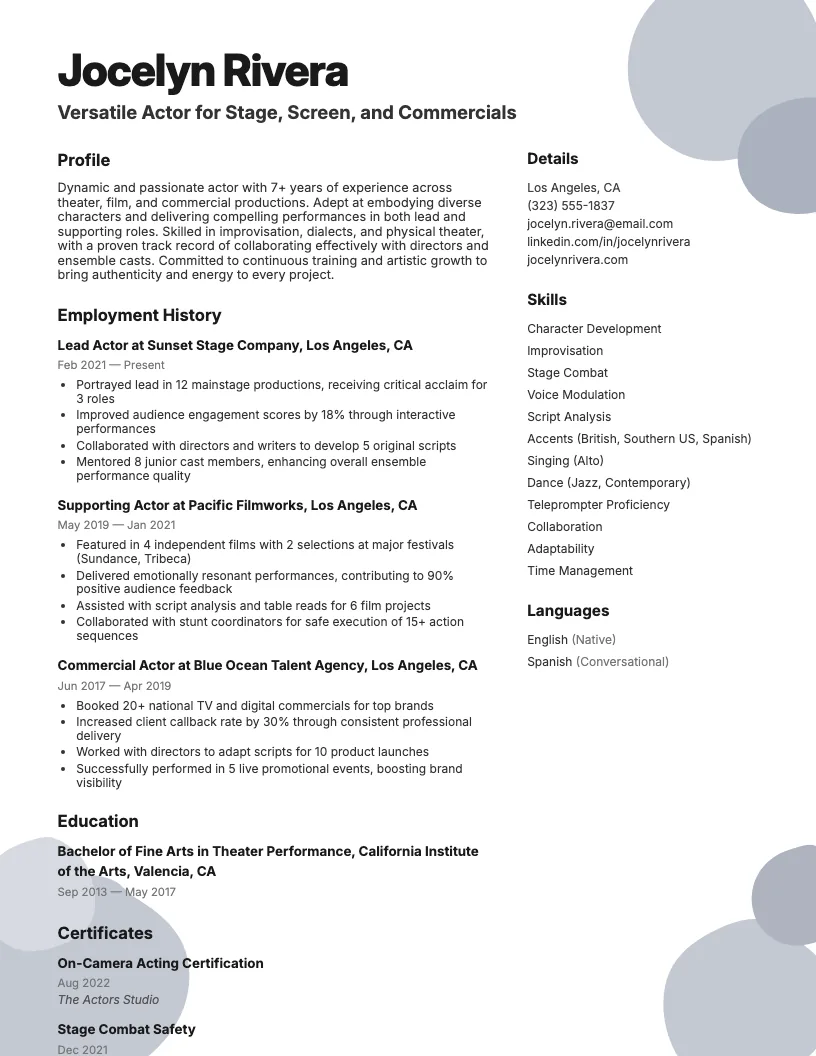
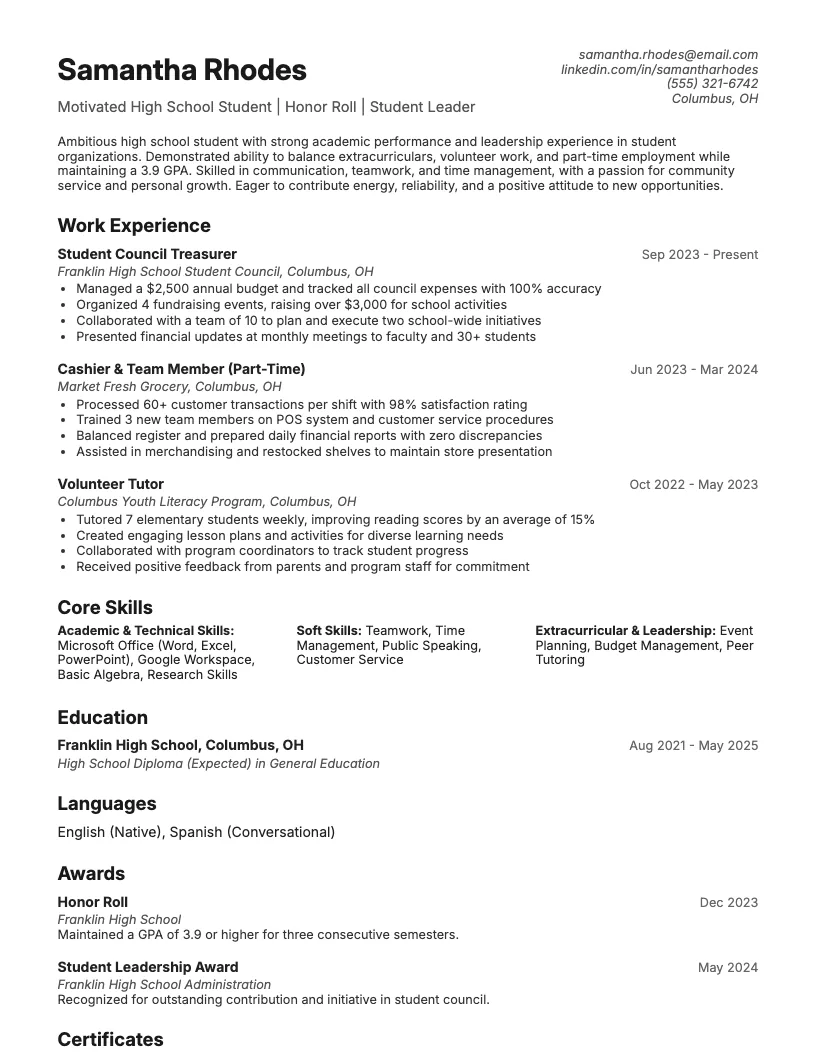
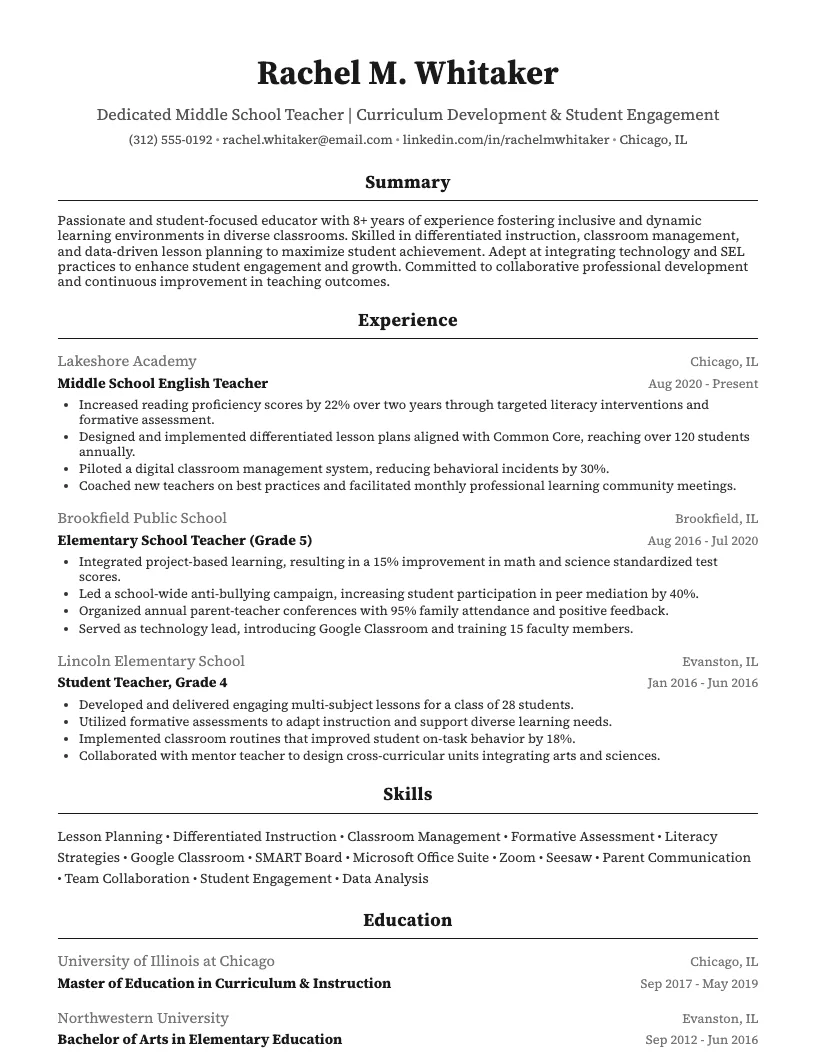
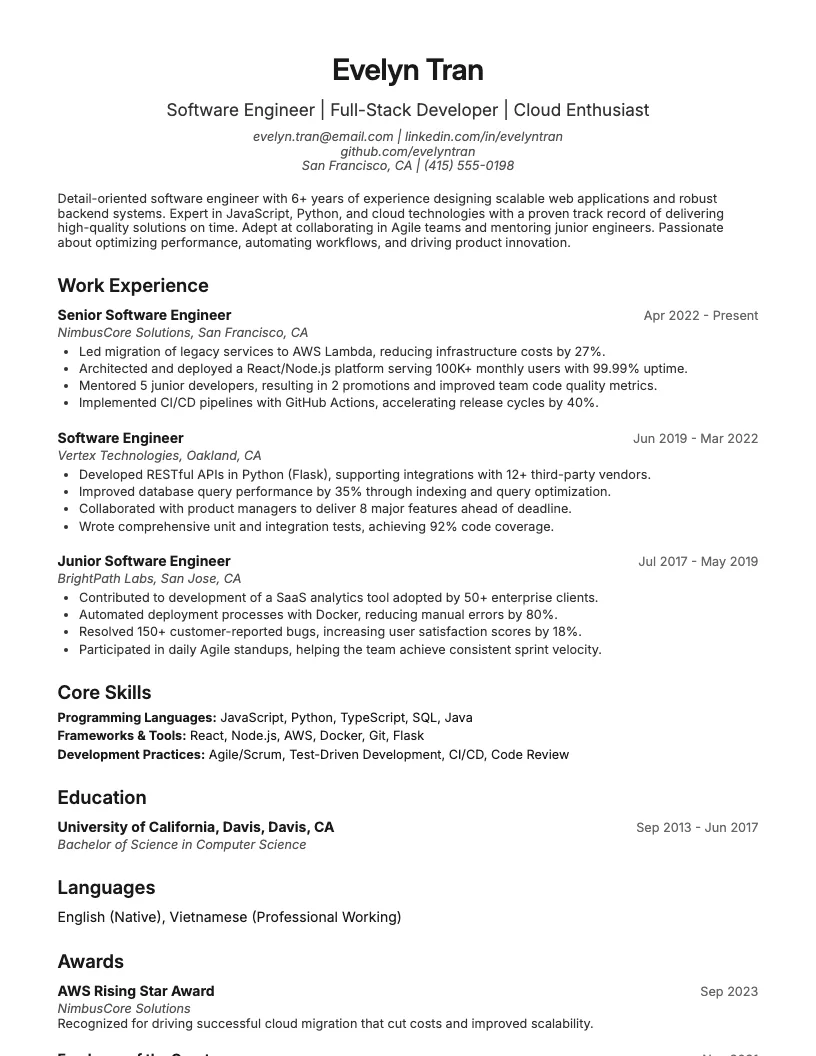
See these skills on a real resume
8 examplesStart from an example that already has them, and swap in your own.
Check your resume against the job you want
Scan your resume, see which skills and keywords the posting asks for that you are missing, and fix them before you apply.
Free to use • No credit card required