Nursing Skills for Resume: 16 Skills, 8 Specialties, ATS Keywords
The 16 nursing skills that get callbacks, the ATS keywords recruiters search for, and where each one belongs on your resume - broken out by specialty.


Written by Marcus Rodriguez
ATS Optimization Specialist & Career Coach
Updated August 2026
Reviewed by Dr. Priya Sharma
Is your resume ATS-friendly?
Drop your resume in and see which of these skills a scanner can actually read, and which ones the job you want is asking for that you have not listed.
PDF or DOCX. Max 2MB.
We never share your resume or use it to train a model.
In This Guide:
What nursing skills should you put on a resume?
What nursing skills should you put on a resume?

I've read enough nursing resumes to tell you the ones that get callbacks all do the same thing: they mix hands-on clinical ability with the softer stuff that keeps a unit running. Miss either half and you look unfinished, even if you're a strong nurse.
Patient assessment and vital signs
This is the one skill every hiring manager assumes you have, so don't just name-drop it. Say what you assessed and in what setting - physical exams, vitals, spotting a change before it became a problem.
Medication administration
Naming the skill vs. naming the routes
Medication administration
IV, IM, and subcutaneous medication administration with barcode verification (BCMA)
Name the routes you're comfortable with: IV, IM, subcutaneous. If you've worked with barcode medication administration or a controlled-substance system, say so - it tells the reader you already know their safety protocols.
Wound care
Cleaning, dressing, monitoring healing - this one rewards a specific example over a generic phrase. "Wound care" alone tells a recruiter nothing they didn't already guess.
IV therapy and venipuncture
This is an advanced skill, and units treat it that way. If you've worked in critical care or handled complications, that's worth a line of its own, not a footnote under "clinical skills."
Infection control and patient safety
Sterile technique, hand hygiene, fall prevention - these sound basic, which is exactly why so many resumes skip them. Don't. Hospitals live or die by this stuff.
Patient and family education
Nurses teach as much as they treat. Explaining a diagnosis or a home-care plan in plain language is a real skill, and it's one recruiters specifically look for because it prevents readmissions.
Electronic health records (Epic, Cerner, Meditech)
Name the system. "EHR experience" is vague; "Epic" or "Cerner" tells them you won't need two weeks of training just to chart a note.
Medical equipment (IV pumps, telemetry monitors, glucometers)
Same logic - name the equipment. It signals you can be useful on day one instead of learning the floor from scratch.
Communication and handoff (SBAR)
If you use SBAR for shift handoff, say so by name. It's a specific, checkable skill, and specifics beat "strong communicator" every time.
Teamwork and care coordination
Nursing runs on multidisciplinary coordination - doctors, therapists, other nurses. A resume that only talks about individual patient care misses half of what the job actually is.
Critical thinking and clinical judgment
This is what separates someone who follows a protocol from someone who catches the thing the protocol didn't cover. Show it through a decision you made, not the phrase itself.
Attention to detail
Preventable medical mistakes harm roughly 400,000 hospitalized patients a year in the US. That's the reason double-checking a chart or a dose isn't a nice-to-have - it's the job.
Time management and prioritization
You're juggling multiple patients on every shift. Employers want proof you can give each one real attention without falling behind - say how you prioritized, not just that you did.
Compassion and cultural competence
Technical skill gets you the interview; how you treat a scared patient from a background different than yours is what keeps you employed. Both belong on the page.
Stress management
Nursing is physically and mentally taxing no matter the setting. I look for candidates who can name a specific way they stay level under pressure - it reads as self-awareness, not a soft skill filler.
Ethics, professionalism and HIPAA
Confidentiality and professional conduct aren't optional extras - they're what an employer is trusting you with before you even start. Naming HIPAA specifically shows you already understand the stakes.
If you're not sure your resume covers every term a specific posting expects, run it against the job description in ResumeJudge and it'll fix your resume for you, adding in whatever's missing before you hit submit.
What nursing keywords do applicant tracking systems look for?
Nursing ATS keyword categories
| Category | Example terms | Where it's checked |
|---|---|---|
| Licenses & certifications | RN, BLS, ACLS, PALS | First pass by the ATS and the recruiter |
| Unit & specialty | Med-Surg, ICU, telemetry | Job title and unit match |
| Clinical tasks | Patient assessment, discharge teaching | Experience bullets |
| Systems & tools | Epic, Cerner, Pyxis | Skills section |
| Compliance | HIPAA, infection control | Throughout the resume |
| Action verbs | Assessed, Administered, Triaged | How bullets open |
The ATS scanning your application isn't reading for meaning. It's matching text against the job posting - your title, your license, your unit, your tools - so the words you choose matter as much as the work you did.
Licenses and certifications: RN, LPN, BLS, ACLS, PALS, TNCC, CCRN
This is the first thing the ATS checks and the first thing a recruiter checks by hand. List your license and every current certification by its exact abbreviation - RN, BLS, ACLS, whatever the posting requires - not a paraphrase.
Unit and specialty terms: Med-Surg, telemetry, ICU, ED, oncology, hospice
Nine times out of ten, the resumes that get skipped over used the wrong unit word. If you worked telemetry, write telemetry - not "cardiac," not "cardiac monitoring."
Older systems match strings, not concepts, and plenty of employers still run them.
Clinical task terms: patient assessment, care planning, discharge teaching, fall precautions
I've seen hundreds of nursing resumes that describe this work in vague terms ("helped patients") when the posting is looking for the exact task name.
Systems and tools: Epic, Cerner, Meditech, Pyxis, barcode medication administration
Name the actual system you used - the charting system and the medication dispensing system alike. The reason is under electronic health records.
Compliance terms: HIPAA, infection control, medication safety
Every nursing job touches these, so they show up in almost every posting. Write each one out by name - why they matter is under infection control and patient safety and ethics, professionalism and HIPAA.
Action verbs: Assessed, Administered, Coordinated, Treated, Triaged, Mentored
Opening a bullet with the task instead of the job description
Responsible for medication administration and patient monitoring.
Administered medications and monitored 10 telemetry patients per shift, flagging 3 arrhythmias per protocol.
Open your bullets with these instead of 'responsible for.' A posting's language changes by employer, so pull the exact terms out of each one you apply to rather than reusing one static list - or run your resume against the posting in ResumeJudge and it'll rewrite your bullets with the verbs you're missing, not just point them out.
Which skills should you list for your specialty?
If you're applying to a per diem or float role, don't try to cover every specialty's skill list - pick your two most recent units and go deep on those. A skills section that touches five specialties in six lines reads as generic to every one of the five hiring managers reading it.
Every ER resume I've reviewed and every ICU resume I've reviewed reads differently, and that's the point. Match your list to the unit, not to nursing in general.
ER nurse
Lead with triage and rapid assessment. List ACLS and PALS by name, trauma assessment, conscious sedation, and crisis decision-making - the pace of the floor is the skill.
ICU nurse
This is where ventilator management, hemodynamic monitoring, medication titration, and CRRT belong. Pair each with a soft skill like family advocacy - ICU hiring managers read for both.
Med-Surg nurse
Wound care, discharge planning, pre- and post-op care, and IV therapy carry the most weight here. Prioritization matters more on this unit than almost any other, so say it directly.
NICU nurse
Neonatal resuscitation, premature infant care, umbilical line management, and TPN are non-negotiable terms. Precision under pressure and family communication round it out.
Pediatric nurse
Pediatric assessment, vaccine administration, and developmental milestone monitoring do the heavy lifting. I always tell new grads to add child communication and family rapport-building - it's what separates a pediatric resume from a generic one.
Labor and delivery nurse
Fetal heart monitoring, delivery assistance, postpartum hemorrhage management, and lactation support are the terms hiring managers scan for first. Calmness under pressure is the soft skill that gets asked about in interviews.
Home health and hospice nurse
This specialty skews toward independence and communication: care coordination, patient and family education, symptom management, and comfort care. You're often the only clinician in the room, so say that on the resume, not just in the interview.
New graduate or nursing student
A rotation bullet, generic vs. specific
Completed clinical rotations in medical-surgical and pediatric units.
Completed a 12-week Med-Surg rotation, assisting with wound care, discharge teaching, and IV therapy for 6-8 patients daily.
No unit experience yet? Pull your skills straight from clinical rotations - the terms are the same ones a working nurse would list, just earned differently.
If you're not sure which ones a posting actually wants, run your resume against the job description in ResumeJudge and it'll rewrite your resume to include what's missing before a recruiter ever sees the gap.
Where do you put nursing skills on your resume?
Is your resume good enough?
Drop your resume in and see which of these skills a scanner can read, and which ones the job you want is asking for that you have not listed.
Upload your resumeFree. PDF or DOCX. We never share your resume or use it to train a model.
Nowhere on your resume by accident. Every skill has a home, and putting it in the wrong one is why a good resume still gets passed over.
The skills section, near the top
Put a dedicated skills section right after your summary, not buried at the bottom. Recruiters and scanners both look there first, so bullet-point it and group it: clinical skills, technical skills, communication.
The professional summary
Your top three lines should carry two to four keywords that match the posting's specialty and years of experience. Something like "RN with five years in telemetry, skilled in patient assessment and discharge teaching" does more work than a paragraph about your passion for nursing.
The certifications and licensure section
License and certification keywords belong in their own line, not folded into skills. BLS, ACLS, and specialty credentials are often the first thing an ATS filters on, so make them easy to find.
Work experience bullets
This is where skills become proof. "Managed care for high-acuity patients in a 20-bed ICU using ventilators and hemodynamic monitoring" tells a hiring manager more than the word "ICU" sitting alone in a list.
ResumeJudge checks your bullets against a posting and rewrites your experience section to work in the required skills that aren't showing up yet.
Clinical rotations and externships
If you're a new grad, rotations count as experience. List the unit, the skills you used, and any patient load you handled.
How many skills to list
I'd cap it at 12 to 15 in the skills section. More than that and it reads like you copied the job posting.
How do you pull the right keywords out of a nursing job posting?
How do you pull the right keywords out of a nursing job posting?
I've read enough job postings to know most of them bury the real requirements in a wall of boilerplate. Here's the process I walk nurses through.
Step 1: Highlight the must-have requirements
Print the posting or open it next to your resume. Mark anything phrased as required, not preferred - "BLS certification required" reads differently than "BLS a plus."
Step 2: Pull 12 to 25 terms into a list
Go back through and grab every skill, credential, and tool named anywhere in the posting. Ten minutes is usually enough to land somewhere in that 12 to 25 range.
Step 3: Match the unit's exact wording, not a near-synonym
If the posting says "telemetry," write telemetry, not "cardiac monitoring." ATS software matches strings, not meaning, and a hiring manager scanning fast will notice the mismatch too.
Step 4: Drop anything you have not actually done
Every term on your list needs to trace back to a real shift you worked. This is where ResumeJudge earns its keep - run your draft against the posting and it'll rewrite in the required terms you're missing instead of leaving you to guess.
Step 5: Place each term in the right resume section
Certifications go in certifications, tools and units go in your skills section, and the rest gets folded into your work experience bullets.
Before and after: a generic bullet rewritten with the posting's words
Before: "Responsible for patient care and charting."
After: "Assessed and documented vital signs for 8-10 telemetry patients per shift using Epic, flagging arrhythmias per protocol."
That's the posting's own language doing the work for you.
What gets a nursing resume rejected?
I've read hundreds of nursing resumes, and the same handful of mistakes send most of them straight to the reject pile.
Vague words like "hardworking" or "good nurse"
"Hardworking" and "good nurse" tell a recruiter nothing. Write "SBAR handoff" or "fall precaution protocol" instead - a concrete term the ATS can actually match against the posting.
Listing a certification you do not hold
Never list a certification you haven't earned yet - employers verify credentials before an offer goes out. The same rule applies to every term on the page, not just credentials: drop anything you have not actually done.
Writing "cardiac" when the unit says "telemetry"
The unit's exact word wins every time - I cover this in more depth under matching the unit's exact wording.
Stuffing forty skills into the skills section
Forty skills reads like you're hiding behind volume instead of proving depth. The right count is under how many skills to list.
Columns, text boxes and graphics the scanner cannot read
Multi-column layouts, text boxes, and graphics break ATS extraction - the parser reads the file in an order you didn't intend, and your best bullet ends up scrambled or missing entirely. Stick to a single-column, plain-text layout.
Leaving out EHR and medication safety terms
Postings that screen for these terms won't match a resume that leaves them out. The terms themselves are listed under systems and tools and compliance terms, and Step 5 says where each one goes.
Skills that are out of date
I see this most with charting systems - someone still lists Cerner from a job three moves back while their current unit runs Epic. Match your systems and certifications to your most recent position, not your whole career, and drop anything you haven't touched in the last two jobs.
Listing outdated practices or tools you haven't touched in years signals you haven't kept current - nine times out of ten, that's the resume that gets passed over for one with fresher, tailored language.
Frequently Asked Questions
How many skills should I put on a nursing resume?
\"Around 12 to 15, not every skill you have - [how many skills to list](#how-many-skills-to-list) explains why a longer list works against you. ResumeJudge will check your list against a specific job description and flag anything important you left off.\"
Should a new grad nurse list clinical rotation skills?
Yes, clinical rotation skills belong on a new grad resume. Without paid nursing experience yet, your rotations are the proof that you've done patient care, so list the skills and procedures you practiced during each one, tied to the unit or specialty.
Do I need a separate skills section if my experience bullets cover it?
Yes, keep a skills section even when your bullets already mention the same abilities. A skills section is what a scanner reads first and what a recruiter skims in seconds, while your bullets carry the detail and context - you need both, not one instead of the other.
Should I name the EHR system I used?
\"Yes, name it - Epic, Cerner, whichever you used. Why the specific system beats the generic phrase is under [electronic health records](#electronic-health-records-epic-cerner-meditech).\"
How do I write a nursing resume for two different specialties?
Keep one factual work history, but write a separate summary and skills section for each specialty you're applying to. Pull the skills and keywords for each version straight from the posting rather than trying to make one generic resume cover both. ResumeJudge can score each version against its own job description so you know which one is actually ready to send.
Can a nursing resume be two pages?
Yes, two pages is normal once you have a few years of nursing experience behind you. New grads and nurses early in their career should still aim for one page, since a full history of certifications and rotations usually doesn't need the extra space yet.
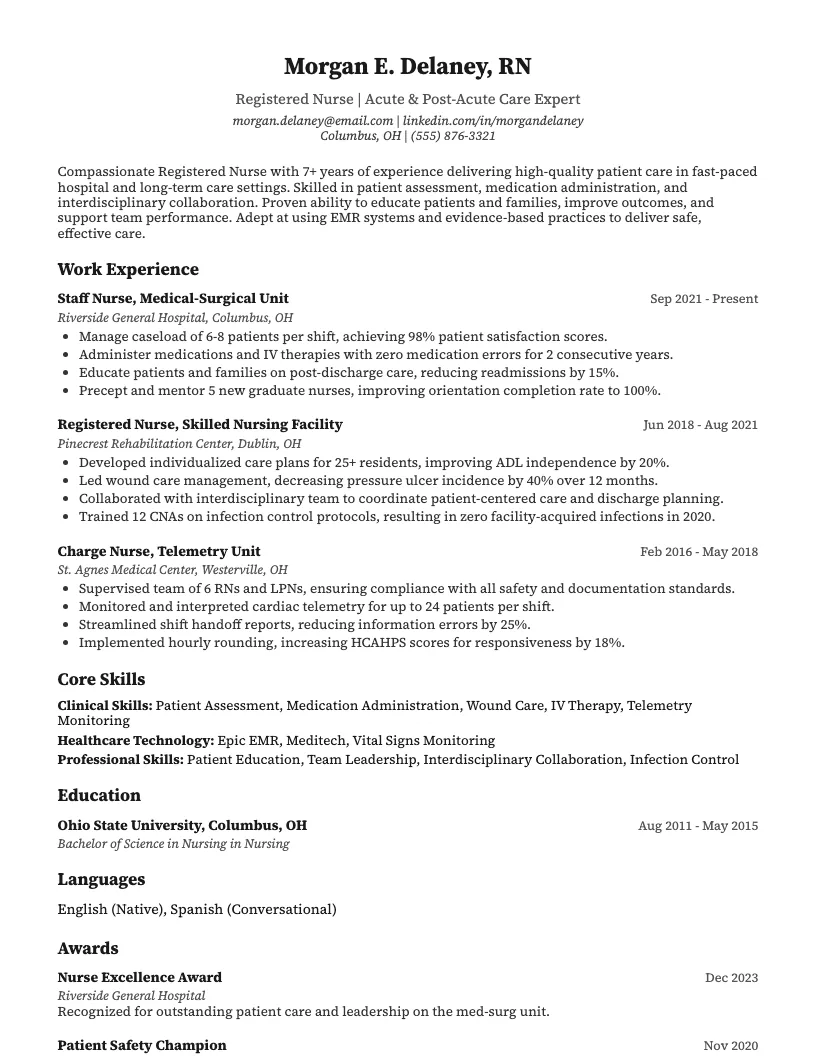
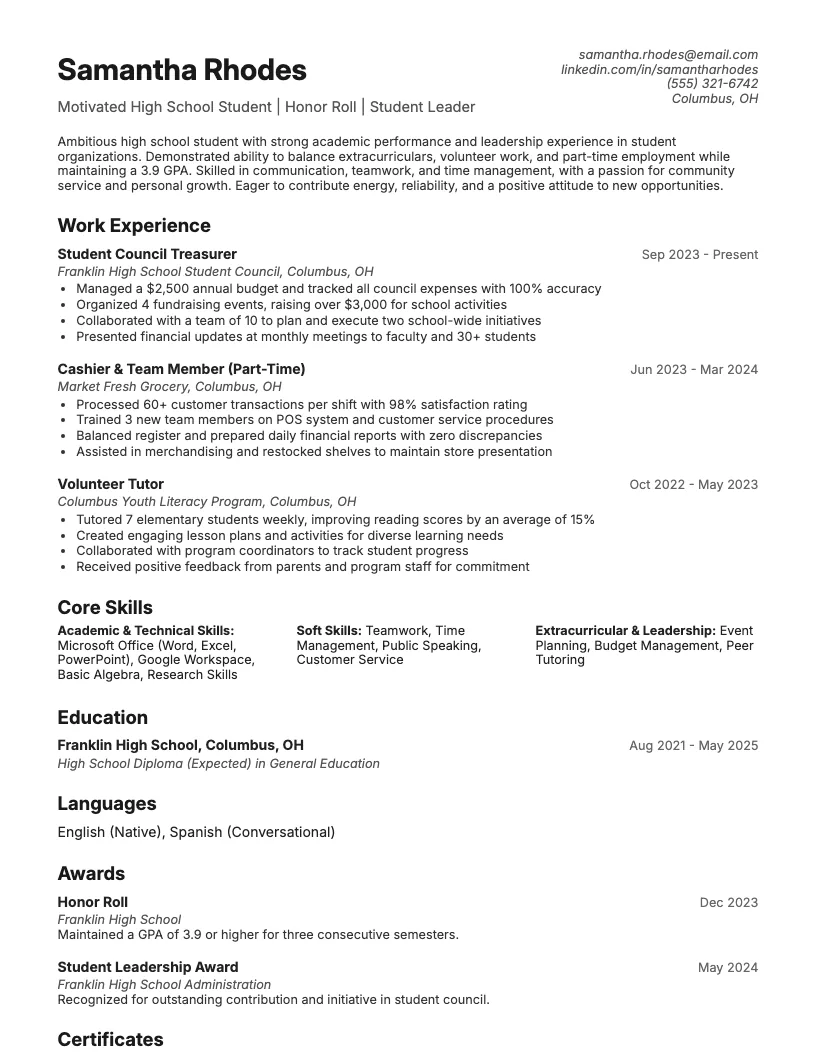
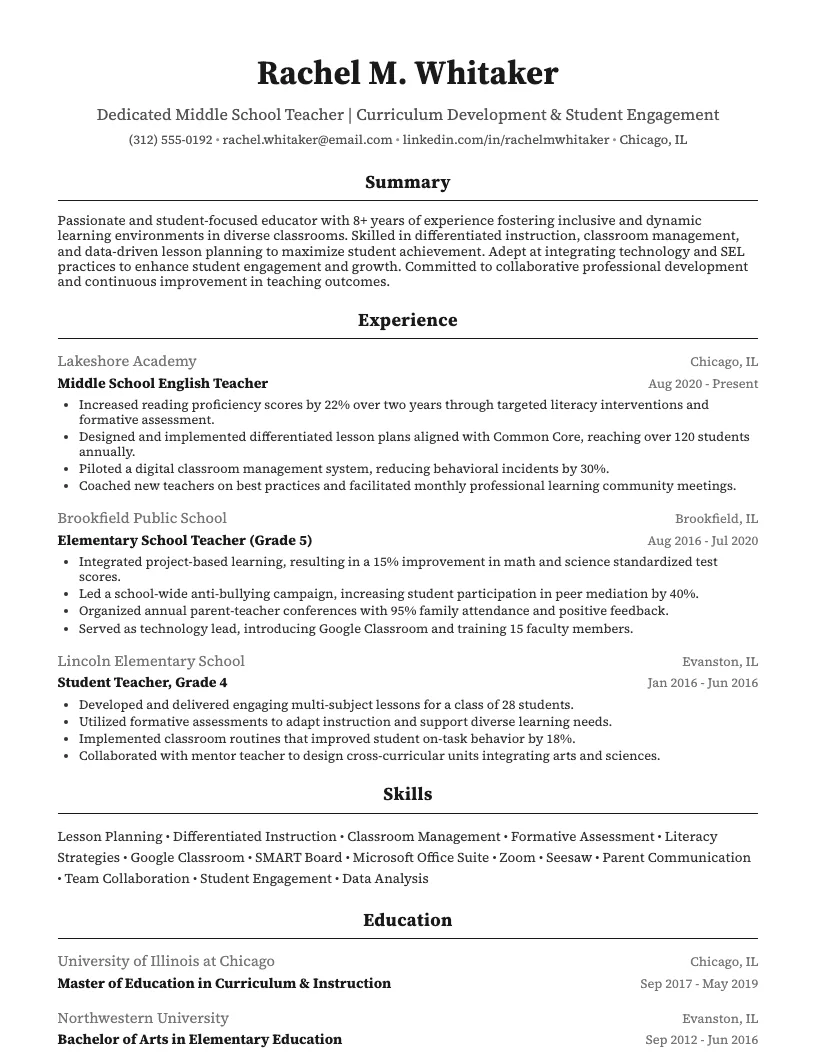
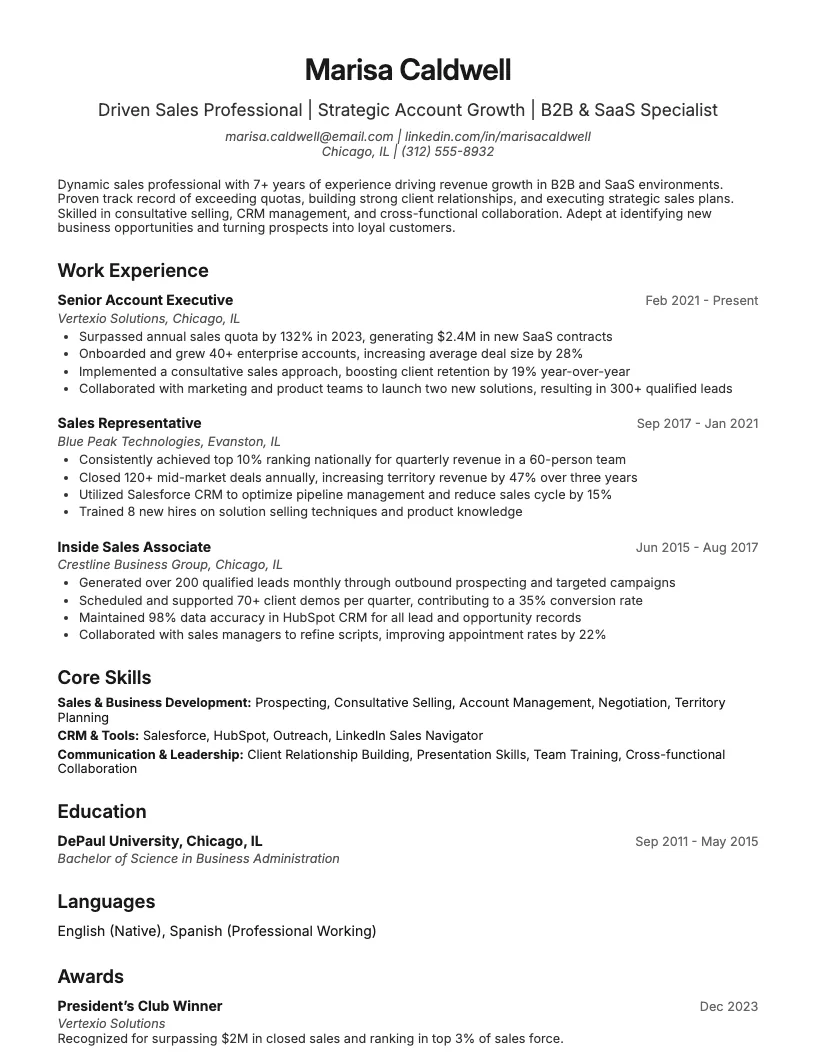
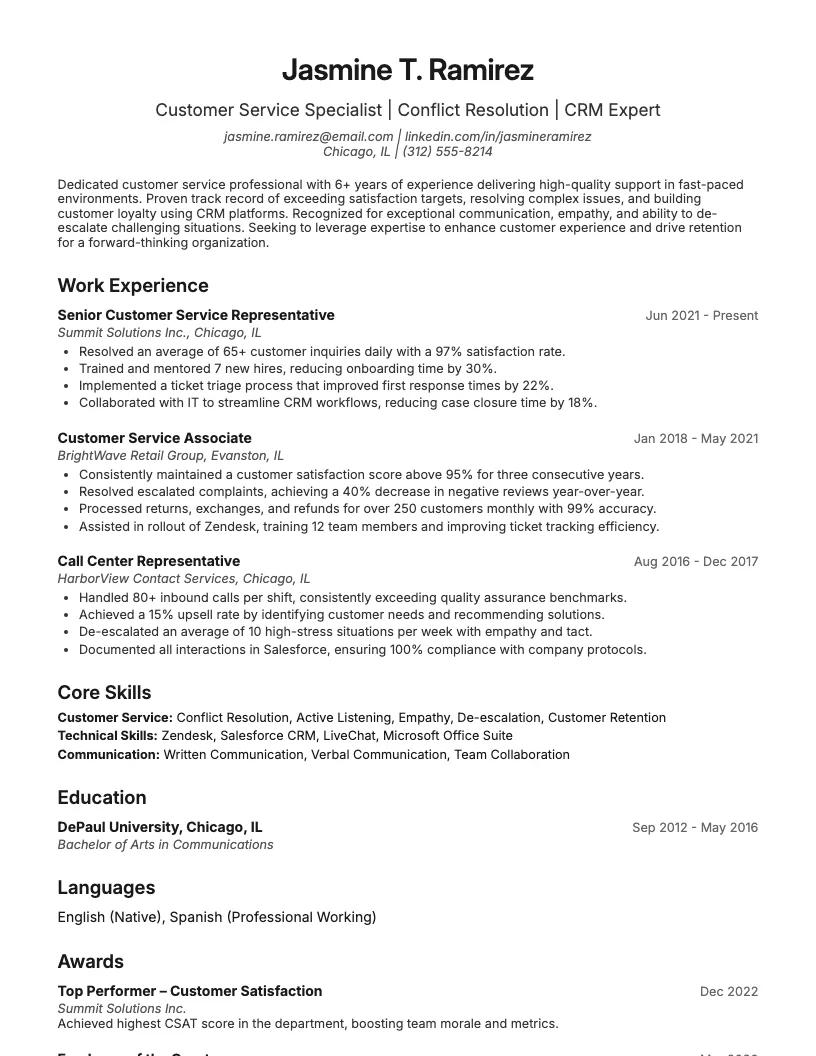
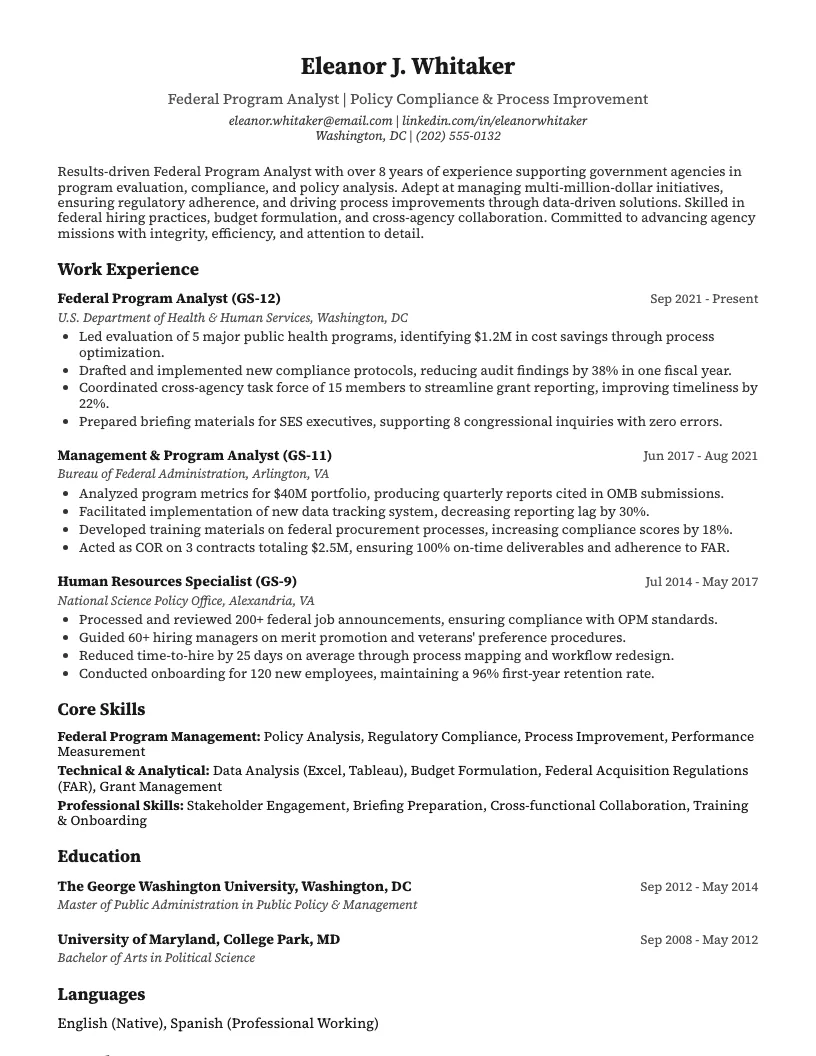
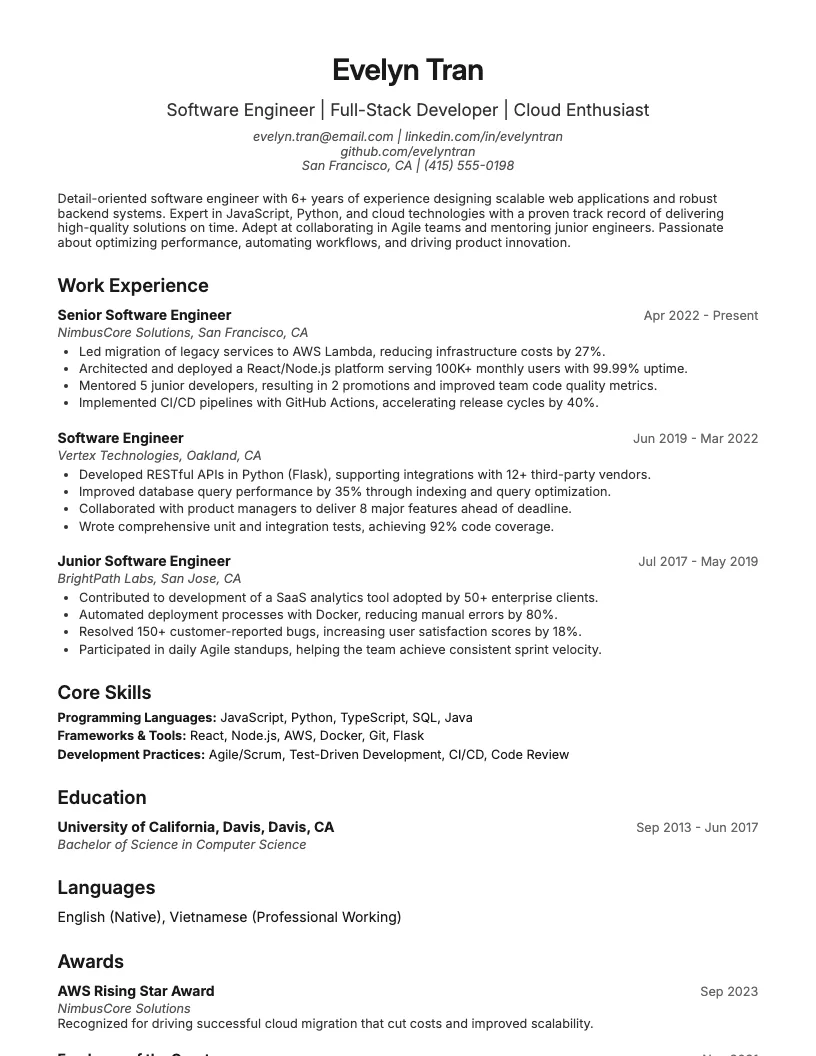
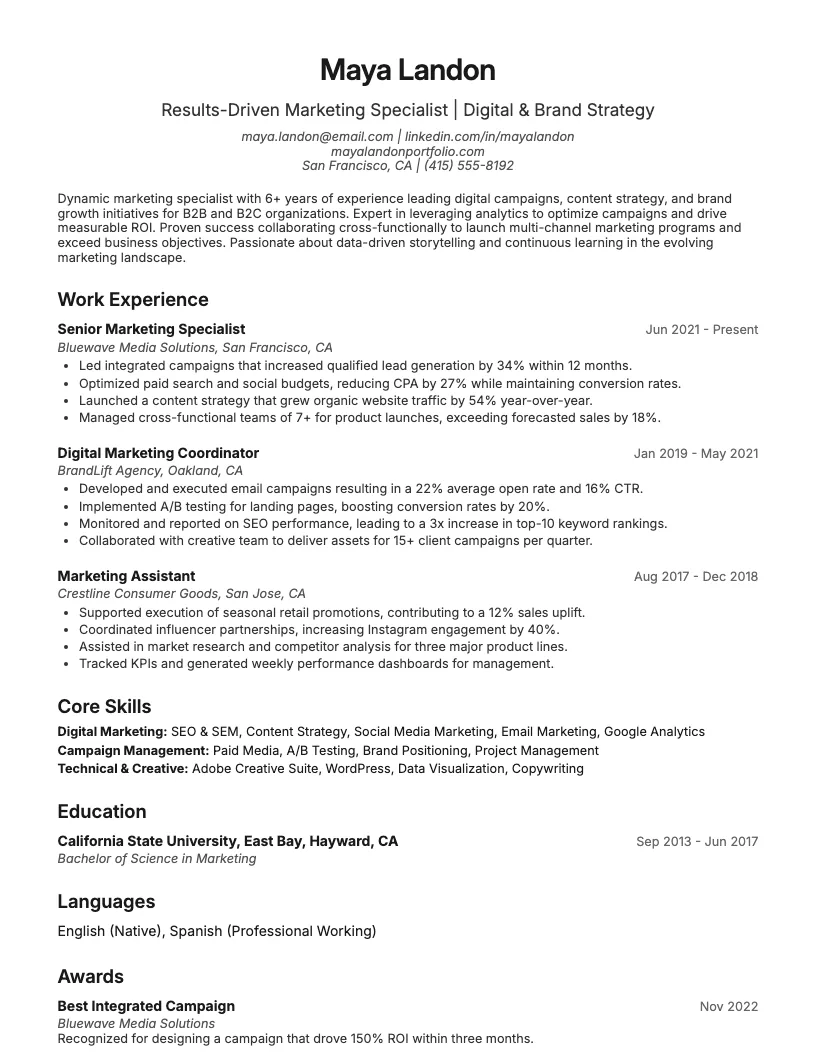
See these skills on a real resume
8 examplesStart from an example that already has them, and swap in your own.
Check your resume against the job you want
Scan your resume, see which skills and keywords the posting asks for that you are missing, and fix them before you apply.
Free to use • No credit card required