Keywords for Recruiter Resume: 11 Tools, 8 Numbers I Screen For
See the 11 recruiting tools, 8 numbers, 6 mistakes, and 4 certifications I check on a recruiter resume, plus how to pull exact keywords from any job posting.


Written by Sarah Chen
Senior Career Strategist & Resume Expert
Updated August 2026
Reviewed by Marcus Rodriguez
Is your resume ATS-friendly?
Drop your resume in and see which of these skills a scanner can actually read, and which ones the job you want is asking for that you have not listed.
PDF or DOCX. Max 2MB.
We never share your resume or use it to train a model.
In This Guide:
What keywords should be on a recruiter resume?
What keywords should be on a recruiter resume?

I've screened resumes for recruiter roles for years, and the ones that get a callback all say the same ten things, just in different words. Here's the short list.
Full-cycle recruiting
If you've owned a req from intake to offer, say "full-cycle recruiting" somewhere near the top. It's the single most-searched phrase on a recruiter resume, and hiring managers use it to filter out people who've only ever done one piece of the job.
Talent acquisition
"Talent acquisition" and "recruiting" get used almost interchangeably in postings, so your resume should carry both. Corporate roles lean toward "talent acquisition," agency roles lean toward "recruiting" - match whichever the posting uses.
Candidate sourcing
Sourcing is its own skill, separate from screening or interviewing. If you've built pipelines from cold outreach rather than just posting a job and waiting, say so.
Boolean search
This one gets skipped constantly, and it shouldn't. Naming "Boolean search" tells a technical or agency recruiter you can actually go find passive candidates, not just react to inbound applicants.
Applicant tracking systems
You'll want the general term "applicant tracking systems" plus the specific ones you've used - which recruiting software should you name covers exactly which tools matter and how to list them.
Interview facilitation
Scheduling panels, running debriefs, keeping hiring managers aligned - that's interview facilitation, and it's a named skill on its own, not a footnote under "recruiting."
Onboarding
If your responsibility ended at the offer letter, don't claim onboarding. If you carried candidates through their first weeks, it's worth its own line.
Employee relations
More common on in-house resumes than agency ones. It signals you've handled things past the hire - a broader HR skill set employers value.
Time-to-fill and time-to-hire
These are the two metrics every recruiting manager scans for first. I go deeper on both, with real numbers to use, in which recruiting numbers should you put on your resume.
Offer acceptance rate
Same as the two metrics above - the number to use is in which recruiting numbers should you put on your resume. Not sure how many of these ten to actually list?
Check the FAQ.
Which recruiting software should you name on your resume?
Which recruiting software should you name on your resume?
Don't just write "ATS experience" and move on. Name the actual systems, because every one has its own vocabulary the scanner is looking for.
Greenhouse
If you've used Greenhouse, say so, and pull in a term or two from how it actually works - pipeline stages, scorecards, offer approvals. Recruiters who've used it will recognize the language, and so will the scanner.
Lever
Lever leans on relationship-building language - nurture campaigns, candidate relationship management. If that's the tool you know, use its own words for what you did in it, not a generic paraphrase.
Workday Recruiting
Worth calling out separately from Workday the HR system - a posting that says "Workday Recruiting" wants that exact phrase, not just "Workday."
iCIMS
iCIMS shows up constantly in mid-size and enterprise postings. If you've run requisitions through it, name it plainly.
Bullhorn
This one's everywhere in agency and staffing recruiting specifically. If you've worked agency-side, Bullhorn is probably the single most valuable tool name on your resume.
Jobvite
Same rule as the others: name it only if you've actually opened it.
Taleo
Taleo is old, and a lot of companies have moved off it. Still worth listing if it's genuinely on your record - some employers, especially larger ones, haven't switched yet.
SmartRecruiters
Growing fast in mid-market companies. Same treatment as the rest - name it, don't just gesture at "ATS platforms."
LinkedIn Recruiter
This is a sourcing tool, not an ATS, and I'd bet it's the single most common keyword recruiters leave off. If you source candidates for a living, it belongs near the top of your skills.
Indeed Recruiter
Pair it with LinkedIn Recruiter if you've used both - postings that mention one often mention the other.
ZipRecruiter
Smaller footprint than the two above, but still shows up often enough in postings to be worth naming if it's real.
Run your list against a specific posting before you send it; ResumeJudge will check which of these systems the job actually asks for and flag the ones you're missing, so you're not guessing.
What to do if you have never used the system in the posting
Don't fake it - that's the one thing I tell every recruiter I coach. Name the systems you've genuinely worked in, and if the posting wants one you haven't touched, lean on transferable ATS experience instead of inventing familiarity you don't have.
See how to write a bullet with keywords in it for how to phrase that honestly. If you get asked about it in an interview and can't back it up, the keyword cost you more than it earned.
Which HR systems and compliance terms belong on a recruiter resume?
Which HR systems and compliance terms belong on a recruiter resume?
An applicant tracking system handles requisitions and pipelines. The HR system underneath it runs payroll, benefits, and personnel records - and postings name it separately, so your resume should too.
Workday
Workday shows up constantly, and not just as an ATS. If you've touched Workday HCM, Core HR, or Benefits alongside recruiting, say so - it tells the reader you can work across the whole employee lifecycle, not just the hiring part.
BambooHR
Common at smaller companies. If you managed the employee database, ran performance tracking, or pulled reports in BambooHR, name the specific task - "managed" alone is too vague to mean anything.
ADP Workforce Now
ADP almost always means payroll and benefits administration next to recruiting. Pair the two if that's genuinely what you did.
UKG
UKG (formerly UltiPro) covers HR, payroll, and workforce management. List it by its current name - a system's old name is one of the mistakes that gets resumes flagged, which the mistakes section covers in more detail.
Paycom
Same category as ADP and UKG. Only list it if you actually ran payroll or benefits in it, not because it's on the posting.
EEO
EEO, FMLA, and ADA are compliance terms, not tools - and I see recruiters skip them constantly because they don't feel like "skills." They are.
EEO means you understand equal opportunity hiring practices, which matters the moment you're screening candidates.
FMLA
If you've administered leave requests or coordinated with legal on FMLA cases, that's a real line item, not a footnote.
ADA
ADA knowledge - accommodating candidates and employees with disabilities - belongs here too, especially for anyone touching onboarding or employee relations.
I-9 verification
I-9 verification is one of the most concrete, checkable skills on this whole list. If you've run employment eligibility checks, put it on the page - it's exactly the kind of specific, provable line a hiring manager trusts.
Before you submit, run the resume against the actual posting - ResumeJudge will flag which of these systems and terms the job asks for that your resume is still missing.
Which recruiting numbers should you put on your resume?
Which recruiting numbers should you put on your resume?
Every recruiter says they're results-driven. The ones who get callbacks prove it with a number.
Here are the eight that actually carry weight, and why each one matters.
Time-to-fill
This is the full clock: req opened to offer accepted. If you cut it, say by how much - "reduced time-to-fill from 45 to 30 days" beats "improved time-to-fill" every time I've seen it.
Time-to-hire
Different clock: first candidate contact to offer accepted. I've seen recruiters get 18 days down from 30 and never mention it - that's the line, not a throwaway.
Offer acceptance rate
An 85% acceptance rate tells a hiring manager you're pitching the right candidates the right way, not just filling seats. This one belongs near the full-cycle recruiting skills you're already listing.
Quality of hire
Harder to measure, worth the effort anyway - a 90-day retention rate or manager satisfaction score works. A 30% quality-of-hire improvement on a resume tells me you tracked outcomes past the offer letter, not just headcount.
Source of hire
Where your best candidates actually came from. If you shifted spend toward referrals or a channel that outperformed job boards, that's a number worth a bullet.
Number of hires made
Straightforward, still worth naming - "50+ hires across engineering and sales" gives a recruiter scale fast.
Cost per hire
If you brought this down, say it. It's one of the few metrics finance actually reads.
Requisitions managed at once
Fifteen open reqs is a different job than three. This number alone signals seniority.
Not sure which of these your resume actually supports? Run it against a posting in ResumeJudge and it'll tell you which numbers are missing and where to add them.
What soft skills do recruiters need on a resume?
What soft skills do recruiters need on a resume?
I've read a lot of recruiter resumes that list "strong communicator" and "excellent negotiator" as bullet points on their own. They don't work.
A soft skill with nothing behind it just sits there.
Negotiation
You negotiate offers, counteroffers, and start dates with candidates who have other options on the table. Say what you negotiated and what happened - a closed offer, a saved candidate, a start date moved up.
Stakeholder management
Recruiting means managing a hiring manager who wants five things at once. Name the number of hiring managers or departments you supported at a time - that's the proof.
Time management
You're running multiple requisitions at once, each on its own clock. Tie this one to a number wherever you can, since a bare "manages time well" tells a hiring manager nothing.
Written and verbal communication
This covers writing job postings, screening calls, and delivering rejections without burning a candidate relationship. Show it through the artifact - postings written, candidates screened per week - not the label.
Confidentiality and judgment
Naming the actual sensitive matter - a specific employee's medical case, an executive's pay - breaks the same confidentiality you're claiming as a skill. Keep the example vague enough to prove you handled it without naming who or what.
You handle compensation data, medical accommodations, and termination details. Mention where that judgment mattered - a sensitive search, a confidential restructure - rather than just naming the trait.
How to show a soft skill instead of listing it
Nine times out of ten, the fix is the same: turn the trait into a sentence with a number in it. If you're not sure your bullets do that yet, running the resume against a real posting in ResumeJudge will show you exactly which lines still read as a label instead of a result.
Which certifications count as recruiter resume keywords?
Which certifications count as recruiter resume keywords?
Certifications are some of the highest-value keywords you can put on a recruiter resume. They're exact-match terms, so the system either finds them or it doesn't.
SHRM-CP and SHRM-SCP
These two show up constantly in postings, and I've seen them boost a resume's match score more than almost any single skill line. Write them exactly like that - full caps, hyphen included.
PHR and SPHR
Same rule applies here. These are older but still widely required, especially at companies that haven't switched fully to SHRM's system.
AIRS certifications
Less common than SHRM or PHR, but worth listing if you have one - sourcing-focused roles often name AIRS directly in the requirements.
LinkedIn Certified Professional Recruiter
Smaller signal than the others, but still a real keyword match if the posting mentions it.
How to write a certification so the system reads it
Copy the posting's exact wording - don't paraphrase "SHRM Certified Professional" as "SHRM-CP" if the job ad spells it out differently, and don't bury it in a two-column layout (more on that mistake). ResumeJudge checks your certifications against the posting's exact phrasing and flags any mismatch before you apply.
How do you pull keywords out of a recruiter job posting?
How do you pull keywords out of a recruiter job posting?
Step 1: Collect five recruiter postings you would apply to
Grab five postings for the recruiter job you actually want, not just the one you're applying to today.
Patterns only show up once you've got more than one posting in front of you.
Step 2: Mark every tool, system and metric named
Go line by line and mark every system, tool, and number they mention: Greenhouse, Workday, time-to-fill, whatever comes up.
Don't skip the requirements list either - that's usually where the real terms live, not the intro paragraph.
Step 3: Count which terms repeat across postings
Now count. Whatever shows up in three or more of your five postings is a real requirement for this job, not one company's house style.
That's your priority list.
Step 4: Match the posting's exact wording, not a synonym
Here's the mistake I see most: someone writes "talent acquisition" when the posting says "full-cycle recruiting," and figures it's close enough.
It isn't. Most ATS scoring matches exact phrasing, so use their words. This is the same work ResumeJudge does automatically - it reads the posting and your resume side by side and tells you exactly which of its terms are missing.
Step 5: Drop anything you cannot back up in an interview
Only add a term you can talk through in an interview. What goes wrong when you don't is covered under the mistakes that get resumes rejected.
Where do you put keywords on a recruiter resume?
Where each keyword goes on the resume
| Section | What goes there | Example |
|---|---|---|
| Professional summary | Top 5-7 terms: title + top ATS | 'Full-cycle recruiter, Greenhouse' |
| Skills section | 8-12 items grouped by type | ATS tools, sourcing tools, HR terms |
| Work experience bullets | One keyword + one number each | 'cut time-to-fill by 12 days' |
| Certifications | Full name, acronym in parentheses | 'SHRM Certified Professional (SHRM-CP)' |
| Job title line | Standard market title | 'Recruiter', not 'People Partner' |
There's a right spot for each keyword, and stuffing them all in one place is the mistake I see most often.
Professional summary
Your first three lines should carry your top 5-7 terms: the job title, full-cycle recruiting, and whatever ATS you're strongest in.
Skills section
List 8-12 items here, grouped by type - ATS platforms, sourcing tools, HR functions - so a scanner and a hiring manager can both read it in five seconds.
Work experience bullets
This is where keywords prove themselves. Pair each one with a number: "managed full-cycle recruiting for 40+ reqs, cutting time-to-fill by 12 days" beats a bare skills list every time.
If you're stuck matching your history to a posting's wording, ResumeJudge will rewrite your bullets against that exact job description.
Certifications
Spell out SHRM-CP or PHR in full at least once, acronym in parentheses - some systems only match one or the other.
Job title line
Use the standard title, not your company's internal one - see the mistakes section for why that trips up screeners.
How do you write a recruiter bullet point with keywords in it?
Is your resume good enough?
Drop your resume in and see which of these skills a scanner can read, and which ones the job you want is asking for that you have not listed.
Upload your resumeFree. PDF or DOCX. We never share your resume or use it to train a model.
Nine times out of ten, a recruiter's bullets read like a job description, not a track record. Fix that by naming the system, the metric, and the outcome in the same line.
"Hired employees for various roles" rewritten
A recruiting bullet point
Hired employees for various roles
Managed full-cycle recruiting in Greenhouse and LinkedIn Recruiter, cutting time-to-fill by 25% and hitting an 85% offer acceptance rate.
Try: "Managed full-cycle recruiting in Greenhouse and LinkedIn Recruiter, cutting time-to-fill by 25% and hitting an 85% offer acceptance rate." That's the same job, but now it's placed where a scanner and a hiring manager both catch it.
"Posted jobs and screened resumes" rewritten
A sourcing bullet point
Posted jobs and screened resumes
Sourced candidates through Boolean search and built a talent pipeline in Lever, improving quality of hire by 30%.
Say what you actually built: "Sourced candidates through Boolean search and built a talent pipeline in Lever, improving quality of hire by 30%." If you're missing a metric here, ResumeJudge can rewrite this bullet against a specific posting so the wording matches what that job actually asks for.
"Conducted interviews" rewritten
An interviewing bullet point
Conducted interviews
Led behavioral interviews for full-cycle recruiting roles, reducing time-to-hire to 18 days.
Name the method: "Led behavioral interviews for full-cycle recruiting roles, reducing time-to-hire to 18 days."
"Worked with hiring managers" rewritten
A stakeholder-management bullet point
Worked with hiring managers
Partnered with hiring managers to define role requirements, closing 40+ reqs a year at 100% compliance accuracy.
This one's usually the weakest line on the page. Rewrite it as a partnership with a result: "Partnered with hiring managers to define role requirements, closing 40+ reqs a year at 100% compliance accuracy."
Do keywords change by recruiter specialization?
Keywords by recruiter specialization
| Specialization | Keywords to use |
|---|---|
| Technical recruiter | IT recruitment, technical sourcing, staff augmentation |
| Healthcare and clinical | Healthcare staffing, physician recruitment, clinical research |
| Financial and accounting | Financial recruiting, contract recruitment, compensation negotiation |
| Sales recruiter | Sales recruitment, cold calling, account management |
| Creative recruiter | Digital marketing, talent management, brand development |
| Campus and admissions | Higher education, student recruiting, college recruiting |
| Executive search | Executive search, retained search |
Yes, and it's the fastest way to make a generic resume sound like it belongs to someone who's done this exact job.
I've reviewed recruiter resumes across a dozen industries, and the ones that get callbacks name the specialty in the skills section and back it up in the bullets, not just the title.
Technical recruiter
Lean on IT recruitment, technical sourcing, staff augmentation, and vendor management.
If you've ever screened for a specific stack - say, backend engineers or cloud roles - name it once.
Healthcare and clinical recruiter
Use healthcare staffing, physician recruitment, nurse recruitment, and clinical trials or clinical research if that's your world.
Hospital systems care whether you've hired for licensure-heavy roles before.
Financial and accounting recruiter
Financial recruiting, staffing services, contract recruitment, and compensation negotiation are the terms that show up again and again in these postings.
Sales recruiter
Sales recruitment, cold calling, and account management belong here - not because you're selling, but because you understand what a sales floor rewards.
Creative recruiter
Digital marketing, talent management, and brand development signal you can vet a portfolio, not just a resume.
Campus and admissions recruiter
Higher education, student recruiting, and college recruiting matter more here than corporate ATS jargon.
Executive search
Executive search and retained search carry weight on their own - pair them with a real placement number if you have one.
Once you've picked your lane, ResumeJudge can check your resume against a specific posting and flag which specialty terms it's still missing.
How do keywords change from coordinator to senior recruiter?
Keywords by seniority
| Level | Keywords to use |
|---|---|
| Recruiting coordinator | Scheduling, interview coordination, offer letter prep, onboarding |
| Recruiter, 2-5 years | Full-cycle recruiting, sourcing, time-to-fill |
| Senior recruiter / TA lead | Stakeholder management, hiring manager partnership |
| Talent acquisition manager | Workforce planning, employer branding, team leadership |
| Agency vs in-house | Placements and billable hours vs cost-per-hire and retention |
The word "recruiter" covers five very different jobs, and the keyword mistake I see most is a coordinator borrowing a manager's language.
Recruiting coordinator, entry level
At this level, lean on scheduling, interview coordination, offer letter prep, and onboarding. Don't reach for "full-cycle recruiting" if you've never owned a requisition.
Recruiter, two to five years
Now you can claim full-cycle recruiting and sourcing, plus one or two numbers - requisitions closed, time-to-fill.
Senior recruiter and talent acquisition lead
Add stakeholder management, hiring manager partnership, and a track record across multiple specializations.
Talent acquisition manager
Here the keywords shift to strategy: workforce planning, employer branding, team leadership, and budget or headcount ownership.
Agency recruiter versus in-house recruiter
Agency resumes should mention placements, billable hours, and client accounts. In-house resumes should mention cost-per-hire and retention.
Mixing the two languages is one of the fastest ways a hiring manager clocks you as a mismatch. If you're not sure which side your target posting speaks, ResumeJudge will check your resume against that specific job description and flag which terms it's missing before you apply.
What keyword mistakes get a recruiter resume rejected?
I've read enough of these to spot the same six mistakes over and over. Fix them and you're already ahead of most applicants.
Repeating "recruiting" in every line
If every bullet starts with some form of "recruited" or "recruiting," it reads like you typed the word into a bowl and pulled it out six times. The system doesn't reward the repeat count.
Vary the verb, then let the work experience bullets carry the real detail.
Listing tools you have never opened
Naming Greenhouse because it was in the job ad, when you've only ever used Bullhorn, is a bad trade. It gets your resume through, then falls apart the second an interviewer asks a follow-up question.
Naming only retired systems
Taleo and old PeopleSoft still show up on resumes years after most companies moved off them. If that's the newest system on your list, it signals you haven't kept current.
Writing the certification in your own words
"Certified HR Professional" isn't a match for SHRM-CP. Write it exactly how the credential is worded.
Burying keywords in a table or two-column layout
Columns and tables scramble the reading order for a lot of scanners. Keep it single-column.
Using your company's internal job title
"People Partner" might be your actual title, but if the market calls that role a recruiter, put recruiter on the resume. Before you send anything out, run it against the posting - ResumeJudge will flag exactly which of these mistakes you're making and rewrite the wording so it matches.
Frequently Asked Questions
How many keywords should a recruiter resume have?
Aim for roughly 15 to 25 keywords pulled straight from the job posting, spread naturally across your summary, skills, and bullet points. There's no exact number that guarantees a pass, so the real test is whether the terms in the posting show up somewhere in your resume in the same wording. More than that and you risk sounding like a list instead of a person; fewer and you may miss the ones the scanner is actually checking for.
Should I list an ATS I only used a few times?
Yes, if you actually used it and can talk through what you did in it, which is the same test the section "How do you pull keywords out of a recruiter job posting?" above sets. List it under your skills or in a bullet where it's relevant, without overstating how deep your experience with it was. If you can't talk it through, leave it off.
Do I need to spell out acronyms like ATS and SHRM-CP?
Yes, write out the full term at least once, ideally with the acronym next to it, since some systems only match the exact wording used in the posting. If the job listing says "Applicant Tracking System (ATS)" or "SHRM Certified Professional (SHRM-CP)," mirror that same format. Using only the acronym, or only the spelled-out version, risks missing a match if the scanner is searching for the other one.
Is a skills word cloud or skills graphic a bad idea?
Yes, skip it. It fails the same way a table or two-column layout does, which the section "What keyword mistakes get a recruiter resume rejected?" above explains. Stick to plain text lists or bullet points for your skills section, and save any visual flair for things that don't need to be machine-readable.
How do I show recruiting numbers if my company never tracked them?
Reconstruct a reasonable estimate from what you do remember, like how many roles you filled per month or your rough offer-acceptance rate, and frame it as an estimate if you're not fully certain. Even a rough number, such as "filled 15+ roles per quarter," carries more weight than no number at all. ResumeJudge can take a bullet like that and rewrite it against a specific job posting so the number lands where the hiring manager is actually looking for it.
Can I use "talent acquisition" and "recruiting" both?
Yes, use both if the job posting does, since some ATS systems treat them as separate terms even though they mean the same thing in practice. Work one into your summary and the other into a skills or experience line so both are covered without repeating yourself in the same sentence. Matching the posting's own mix of terms is more reliable than picking just one and hoping it's the one being searched for.
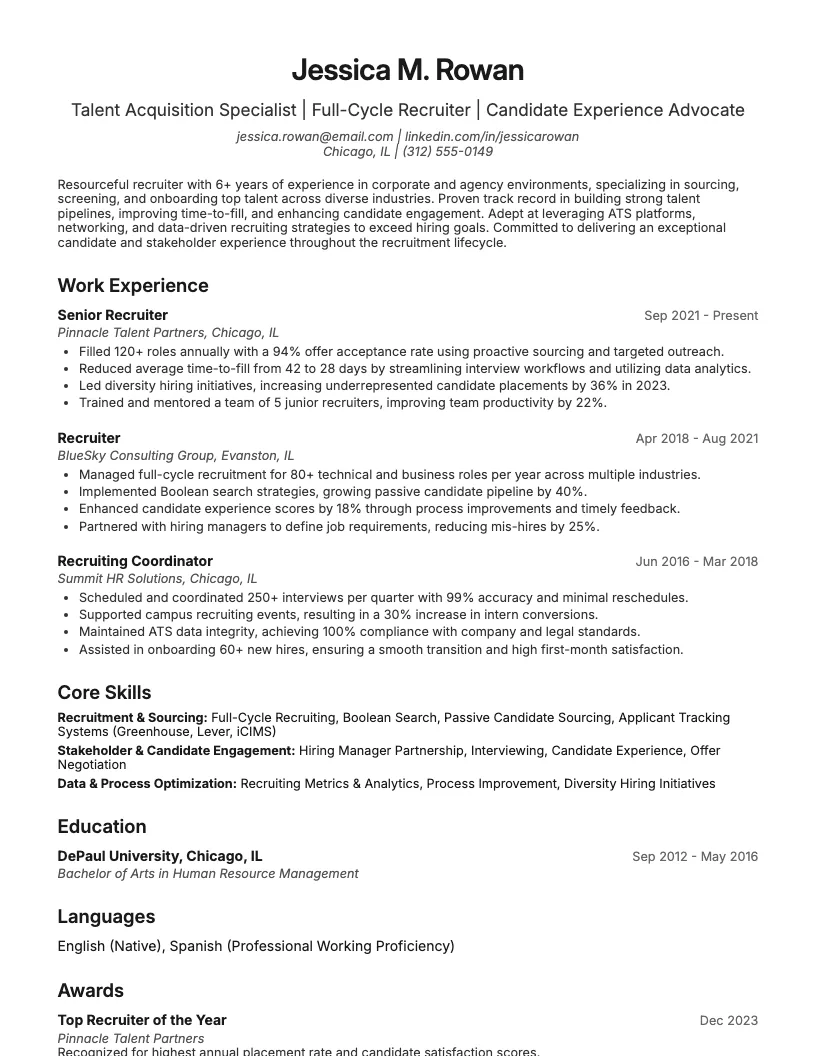
See these skills on a real resume
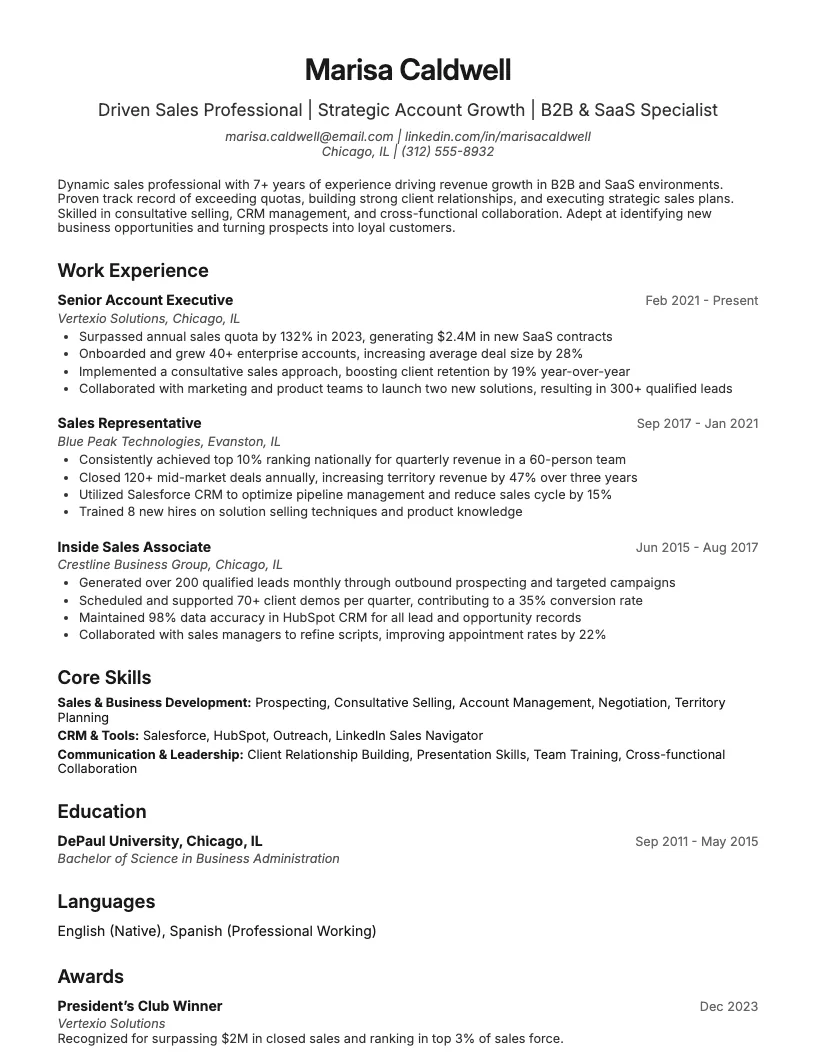
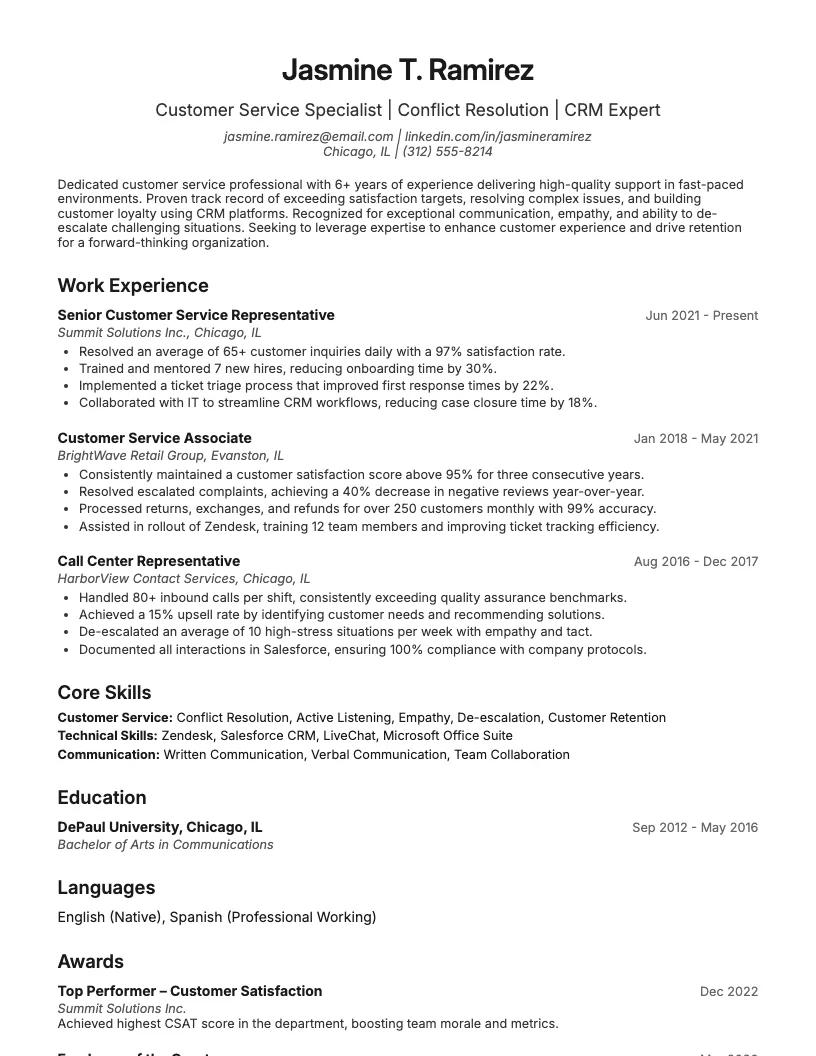
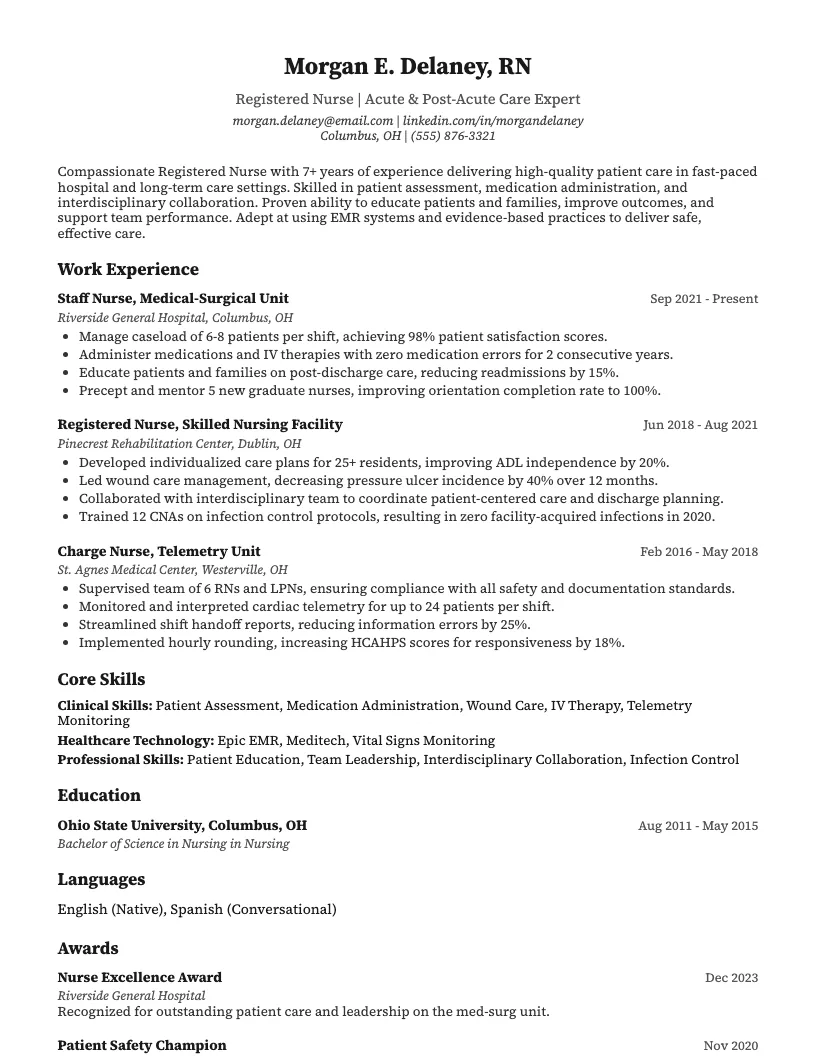
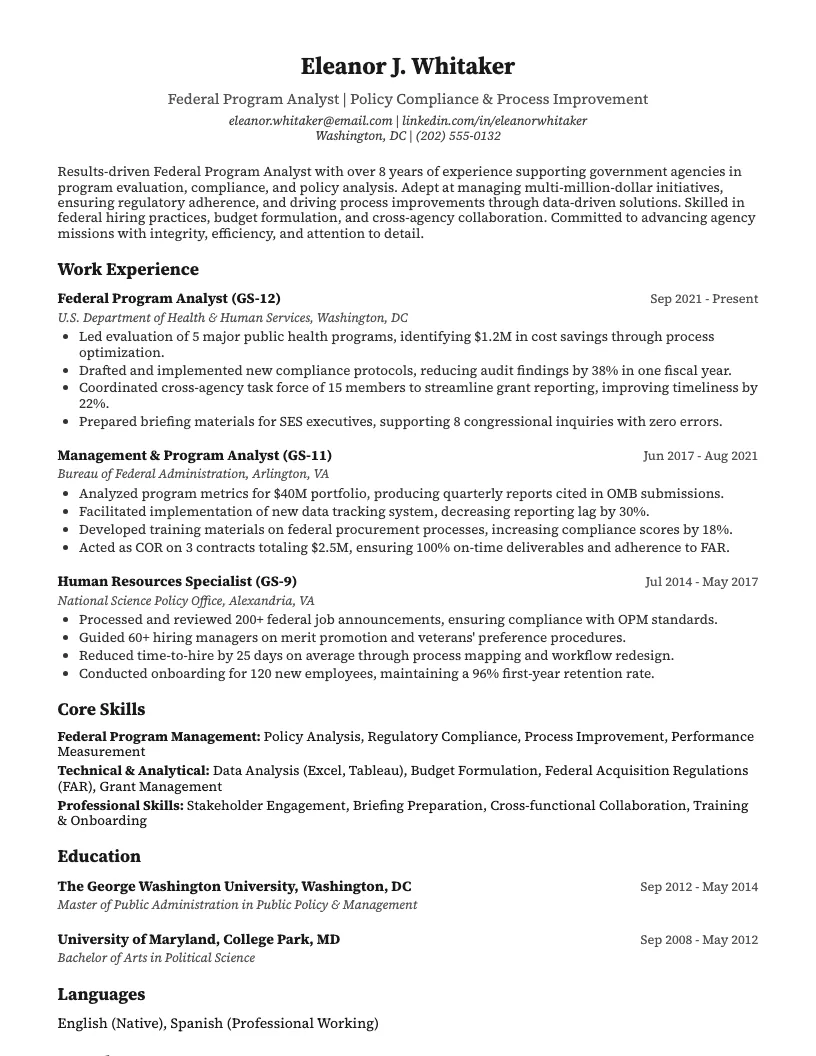
8 examplesStart from an example that already has them, and swap in your own.
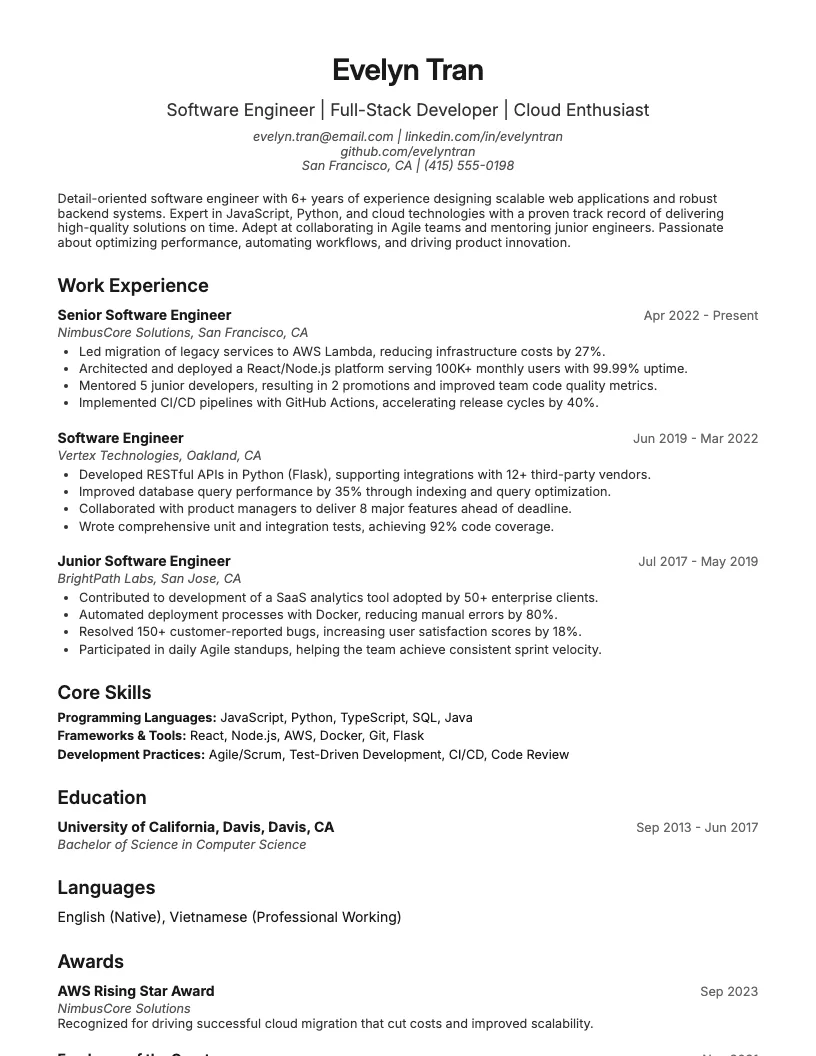
Check your resume against the job you want
Scan your resume, see which skills and keywords the posting asks for that you are missing, and fix them before you apply.
Free to use • No credit card required