Medical Resume Keywords: 16 Skills, 14 Jobs, 7 Ways to Get Rejected
See the exact keywords, skills, and action verbs 14 medical job titles need, plus the 7 mistakes that get a medical resume rejected before anyone reads it.


Written by Marcus Rodriguez
ATS Optimization Specialist & Career Coach
Updated August 2026
Reviewed by Dr. Priya Sharma
Is your resume ATS-friendly?
Drop your resume in and see which of these skills a scanner can actually read, and which ones the job you want is asking for that you have not listed.
PDF or DOCX. Max 2MB.
We never share your resume or use it to train a model.
In This Guide:
What are medical resume keywords?
What are medical resume keywords?

Medical resume keywords are the exact words a hiring manager or a scanner searches for before deciding whether to open your resume at all. Miss them and it doesn't matter how good a nurse or tech you actually are.
Clinical terms: patient care, triage, wound care, medication administration
These are the words that prove you've actually done the job. The resumes that get pulled for an interview name the exact task, not a vague summary of it.
Each of these is explained one at a time in what skills should you put on a medical resume.
Credentials: BLS, ACLS, PALS, CPR and First Aid, ICD-10 coding
Credentials are non-negotiable keywords. BLS, ACLS, PALS, CPR and First Aid, ICD-10 coding - a screener searches for these by name, and if the posting asks for ACLS and your resume says "advanced cardiac training," you won't show up in the results.
Software names: Epic, Cerner, MEDITECH, eClinicalWorks, Allscripts
Every hospital runs one of a handful of these, and "EHR experience" tells them nothing about whether you know theirs. How to write yours up is under electronic health records.
Compliance terms: HIPAA, OSHA, patient privacy, infection control
HIPAA, OSHA, patient privacy, infection control - these show up in almost every posting because compliance is non-negotiable in this field, and leaving them off reads as a gap even when you clearly know the rules.
Where the words come from: the job posting, not a generic list
Nine times out of ten, the mistake I see is someone pasting in a generic "top medical skills" list instead of reading the posting in front of them. The posting is the answer key - it tells you which of these terms this employer actually cares about.
ResumeJudge will scan your resume against that specific posting and tell you which of its exact terms are missing, which beats guessing every time.
Why the same word has to appear in your bullet points, not just your skills list
Where each keyword sits on the page matters, and how to write medical resume bullet points covers that.
What skills should you put on a medical resume?
What skills should you put on a medical resume?
I've read enough medical resumes to tell you the mistake almost everyone makes: they list the same six soft skills every other applicant lists, and skip the specific clinical ones that actually get a screener to stop scrolling. Sixteen skills, below, cover what shows up again and again in medical job postings.
Not all of them belong on your resume - only the ones you can actually back up.
Patient care
This is the umbrella term, and it's too vague on its own.
Say what you actually did: assessed needs, administered medication, followed a treatment plan, updated a chart. "Patient care" as a bullet point tells a hiring manager nothing they can picture.
Medical terminology
You don't put "medical terminology" on your resume as its own line - you prove it by using the terminology correctly everywhere else.
A resume full of vague phrasing like "helped with procedures" reads as someone who doesn't know the vocabulary of the job. Use the real terms for what you did.
Electronic health records
listing your EHR experience
EHR experience
Epic (2 years), Cerner (1 year)
Name the system if you've used one - Epic, Cerner, MEDITECH, eClinicalWorks.
Just don't list a system you've only seen in a demo - that's one of the fastest ways a medical resume gets rejected.
Vital signs and patient monitoring
Taking and recording vitals, watching for changes that matter - this belongs on almost every clinical resume, from CNA to RN.
It's also a place where a number helps: patient load, shift length, how many patients you monitored at once.
Diagnostic testing
Conducting or interpreting X-rays, MRIs, blood tests, EKGs - whatever's relevant to your role. Be specific about which tests. "Diagnostic testing" alone is a category, not a skill a screener can verify.
Phlebotomy
Drawing blood for testing, transfusions, or donations. If it's part of your job, name it directly - it's a searched-for keyword on its own, not something to fold into "patient care."
Wound care
Treating and managing wounds to prevent infection. Same rule as phlebotomy: it's specific enough that a generic phrase won't cover it. If you've done it, say the word.
Medical billing and coding
ICD-10 is the keyword that shows up constantly in postings for this work. If you code, name the coding system. If you bill, say what you reconciled and how much of it - dollar volume or claim count both work.
Insurance verification
A front-office and billing skill that's easy to undersell. Confirming coverage, handling denials, working with multiple payers - each of those is more specific and more credible than "insurance verification" alone.
Appointment scheduling and patient intake
Scheduling software experience matters here - name the platform if you can. Intake volume is a good place for a number: how many patients a day, how many providers you scheduled for.
Empathy and bedside manner
Every healthcare resume claims this. What separates the ones I believe from the ones I don't is whether there's a concrete example nearby - a patient satisfaction score, a specific situation described in a bullet, not just the word itself sitting alone on a skills list.
Communication with patients and families
Different from general "communication" - this is about explaining care plans, handling difficult conversations, working across a language or health-literacy gap. Say which of those you've done.
Attention to detail
I'll say this bluntly: if your resume has a typo, don't put "attention to detail" on it. More on what gets a resume tossed.
Working under pressure
Fast-paced, high-stakes, understaffed shifts - this is real in medical settings, more than in most industries. Back it up with a specific setting: ER, ICU, urgent care, a high patient-to-staff ratio.
Teamwork across a care team
Medical work is rarely solo. Name who you coordinated with - physicians, other nurses, techs, case managers - rather than just writing "team player."
Time management
Getting documentation, patient interactions, and handoffs done inside a shift that never has enough hours in it. Pair it with a number if you have one: patient volume, caseload, call volume.
Which of these are hard skills and which are soft skills
Patient care, medical terminology, electronic health records, vital signs, diagnostic testing, phlebotomy, wound care, medical billing and coding, and insurance verification are hard skills - things you were trained or certified to do.
Empathy, communication, attention to detail, working under pressure, teamwork, and time management are soft skills - how you do the job, not what you're qualified to do.
You need both, but they don't work the same way on a resume. A hard skill can sit in a skills list by itself and still mean something.
A soft skill on its own means almost nothing - it only lands when a bullet point shows it in action. This is also where the target job matters more than any generic list: a posting for an ICU nurse and one for a medical receptionist share almost none of these priorities, which is exactly what the next section breaks down by role.
Which keywords does your specific medical job need?
The lists above cover the whole field. Your posting doesn't. Here's what actually gets scanned for by title.
Nurse (RN and LPN)
Patient monitoring, medication administration, wound care, catheter insertion, care planning, EHR documentation. Then the credentials: BLS, ACLS, PALS if you're anywhere near pediatrics, and your license number and state right at the top.
I've read nursing resumes that bury the license three lines from the bottom - that's the first thing a hiring manager checks, not the last.
Add care coordination and multidisciplinary communication if you worked a unit with more than one type of provider. Most floors did.
Certified nursing assistant
Vital signs, ADLs (activities of daily living - bathing, feeding, mobility), patient transfers, and your state CNA certification number. Bedside manner and patience matter here more than almost any other role on this list, so say so - but pair every soft claim with what you actually did, not just the word.
Medical assistant
You're often doing both clinical and front-office work, so your resume needs keywords from both sides: vital signs and injections on one end, scheduling and insurance verification on the other. Name the EHR you used - Epic, Cerner, eClinicalWorks, whatever it was.
A resume that says "medical assistant" with no software named reads as unfinished to me.
Medical receptionist and front office
Scheduling, patient intake, insurance verification, multitasking, phone systems. This is a customer-service job wearing a medical coat - if you've read our customer service representative page, the same instincts apply: name the volume you handled, not just the task.
Medical biller and coder
ICD-10, CPT codes, claims processing, insurance reconciliation, denial management. These postings get scanned hard because coding is one of the few medical jobs where the software and the standard are the whole qualification.
If you know a specific billing platform, name it - don't just say "medical billing software."
Phlebotomist
Venipuncture, specimen collection and labeling, patient identification protocols, infection control. Small field, short list - which means every keyword on it matters more, because there's nowhere to hide a gap.
Radiology and imaging technologist
Name your modality - X-ray, CT, MRI, ultrasound - before anything else. ARRT certification, patient positioning, radiation safety protocols.
A generic "diagnostic imaging" resume without a named modality gets skipped for one that's specific.
Respiratory therapist
Ventilator management, airway clearance, patient assessment, oxygen therapy administration. Credentialing matters as much as the clinical terms - RRT, state license - so don't let those get crowded out by the skills list.
Physical and occupational therapist
Treatment planning, patient assessment, rehabilitation, mobility training. If you supervised aides or ran group sessions, add supervision and program development - those two words separate a staff-level resume from one that reads as ready for more.
Pharmacy technician
Prescription processing, medication dispensing, inventory management, insurance billing. PTCB certification belongs near the top, not folded into the skills list where a scanner has to work to find it.
EMT and paramedic
Triage, emergency response, patient assessment, protocols. NREMT certification and your state license, always.
If you've worked a specific call volume or response-time standard, that's the number this section is built for - put it in the bullet, not just the skills list.
Case manager and care coordinator
Care coordination, discharge planning, treatment plan management, multidisciplinary collaboration. This title covers a wide range of actual jobs, so lean on the medical terminology and communication sections above for the words that fit your specific setting.
Clinical research coordinator
Protocol adherence, patient screening, data collection, regulatory compliance, IRB documentation. This is one of the few medical resumes where "research" keywords matter as much as clinical ones - don't let the clinical terms crowd out protocol and documentation language.
Healthcare administrator and practice manager
Staff management, budget oversight, compliance, quality improvement, patient satisfaction. The keywords lean administrative even though the setting is medical - HIPAA and OSHA still belong, but so does anything you'd see on a general management resume.
Fourteen job titles, one same problem: a posting names words your resume doesn't have, and you can't always see which ones by eye. That's the gap ResumeJudge closes - feed it your resume and the posting, and it tells you exactly which of these terms are missing before you hit submit, then rewrites the bullet points to include them in your own experience instead of just tacking them onto a list.
How do you write medical resume bullet points that use these keywords?
How do you write medical resume bullet points that use these keywords?
The keyword can be sitting right there in your skills list and still lose you the interview if it never shows up in a sentence about what you actually did. Screeners and hiring managers both look for the word in context, not just on a list.
Action verbs for clinical work: Assessed, Administered, Triaged, Monitored, Diagnosed, Treated
These go at the front of any bullet about hands-on patient care.
Action verbs for administrative work: Scheduled, Coded, Billed, Reconciled, Documented, Processed
Front desk and billing roles need their own set. I've seen too many receptionist resumes lean on "handled" and "helped with" when "reconciled" or "processed" says the same thing with proof behind it.
Action verbs for leading and training: Trained, Mentored, Supervised, Coordinated, Spearheaded
Even one training cycle counts as leadership. Say how many people: "trained 10 new hires" beats "trained staff."
The numbers a medical job gives you: patient load, call volume, wait times, satisfaction scores, error rates
Medical jobs hand you numbers most fields don't: patient load, call volume, wait times, satisfaction scores. Use them.
"Cut wait times by 10 minutes" or "raised satisfaction scores 43% in a year" is the kind of line that gets remembered.
Weak bullet vs strong bullet: same job, same keyword
a patient-monitoring bullet
Responsible for patient monitoring and documentation.
Monitored vital signs and documented care for 20+ patients daily in Epic, catching two early warning signs flagged by the care team.
Weak: "Responsible for patient monitoring and documentation." Strong: "Monitored vital signs and documented care for 20+ patients daily in Epic, catching two early warning signs flagged by the care team."
Same keywords, but only one proves you did the job.
Putting keywords in the summary and work history, not only the skills list
Nine times out of ten, the resumes that get flagged as thin have every keyword parked in the skills section and nowhere else. Work the same term into your summary and at least one bullet under each job.
If you're not sure which keywords a specific posting is actually testing for, ResumeJudge will scan the resume against it and show you which ones are missing before you send it off.
What gets a medical resume rejected?
I've read enough of these to know the rejections almost never come from bad formatting. They come from claims that don't hold up.
Listing a certification that has lapsed
If your BLS or ACLS expired six months ago, don't list it as current. Credentialing staff verify your dates when you're hired, and a lapsed cert reads worse than no cert at all - it looks like you didn't notice, or hoped nobody would.
Claiming a clinical skill you cannot describe in an interview
Employers will ask you to walk through it. Nine times out of ten, the resume that falls apart in the room is the one where a skill was added because it matched the posting, not because the person ever did it.
Copying keywords out of the posting that you have never done
Same problem, earlier stage. Pulling phrases straight from the job description feels efficient, but if you can't point to where you did the thing, leave it out.
ResumeJudge will tell you which keywords in a posting you're actually missing, so you're not guessing which ones to reach for and which to skip.
Naming an EHR you have only seen a demo of
Epic and Cerner show up on almost every clinical posting, and it's tempting to list whichever one the job wants. But "seen it once in training" and "charted in it for a year" are different sentences, and a hiring manager who uses that system daily will find out which one you meant fast.
Writing 'attention to detail' on a resume with typos
This is the single most common contradiction I see. You're asking someone to trust your precision on a document that hasn't been proofread.
Fix the errors before you claim the skill, not after.
Leaving out your license number and state
For RNs, LPNs, and other licensed roles, the license number and state are what a recruiter checks first. Missing it doesn't just look incomplete - it can get the resume set aside before your experience is even read.
Burying the exact job title the screener searches for
If the posting says "Medical Assistant" and your resume only says "clinical support staff," the search that finds candidates won't find you. Put the exact title somewhere on the page, not just a description of the work.
Frequently Asked Questions
How many keywords should I put on a medical resume?
There's no fixed number to hit - what matters is that you've covered the keywords the specific posting actually uses, not padded the page with ones that don't apply. Listing every clinical skill you've ever touched reads as noise to a hiring manager and doesn't help with an applicant tracking system, which looks for relevance more than volume. Checking your resume against the actual job description, the way ResumeJudge does, shows you which of the posting's keywords you're missing instead of guessing.
Do I need a separate skills section, or is it enough to work the keywords into my experience?
Do both - a skills section that names them and experience bullets that show them in action. A scanner is looking for the words, but a hiring manager wants to see them proven, so naming "critical care" in a skills line means little if nothing in your work history backs it up. Keep the skills section short and specific, then use your bullet points to show what you actually did with that skill and what came of it.
Should I write out ACLS in full or just use the acronym?
Use both, at least once. Applicant tracking systems often search for an exact match, and postings vary between writing "ACLS" and "Advanced Cardiac Life Support," so covering both means you match either way. After that first mention, the acronym alone is fine.
Do I have to rewrite my resume for every hospital I apply to?
Yes, at least the keywords and the emphasis - a resume aimed at a trauma unit shouldn't read the same as one for a pediatric clinic, even if the underlying experience is the same. You don't have to start from scratch each time, but the skills you lead with and the language you use should match that posting. ResumeJudge does this part for you: give it your resume and the job description, and it rewrites the resume against that specific posting, putting the right keywords into the right sections.
Which keywords should I use if I'm a new grad with only clinical rotations?
Use the specific procedures, equipment, and patient populations you worked with during rotations, not just "clinical rotations" as a line item. Name the unit type - med-surg, ICU, pediatrics - and the skills you performed there, like wound care or medication administration, the same way an experienced nurse would list them from a paid job. Certifications like BLS or CPR are keywords too, so include them even without work experience behind them yet.
How long should a medical resume be?
One page if you're early in your career, two pages once you have enough relevant experience that cutting it down would mean losing real history. Hiring managers in healthcare skim fast, so keep it tight and put the keywords that matter most near the top rather than stretching the page. Length matters less than whether every line on it earns its place.
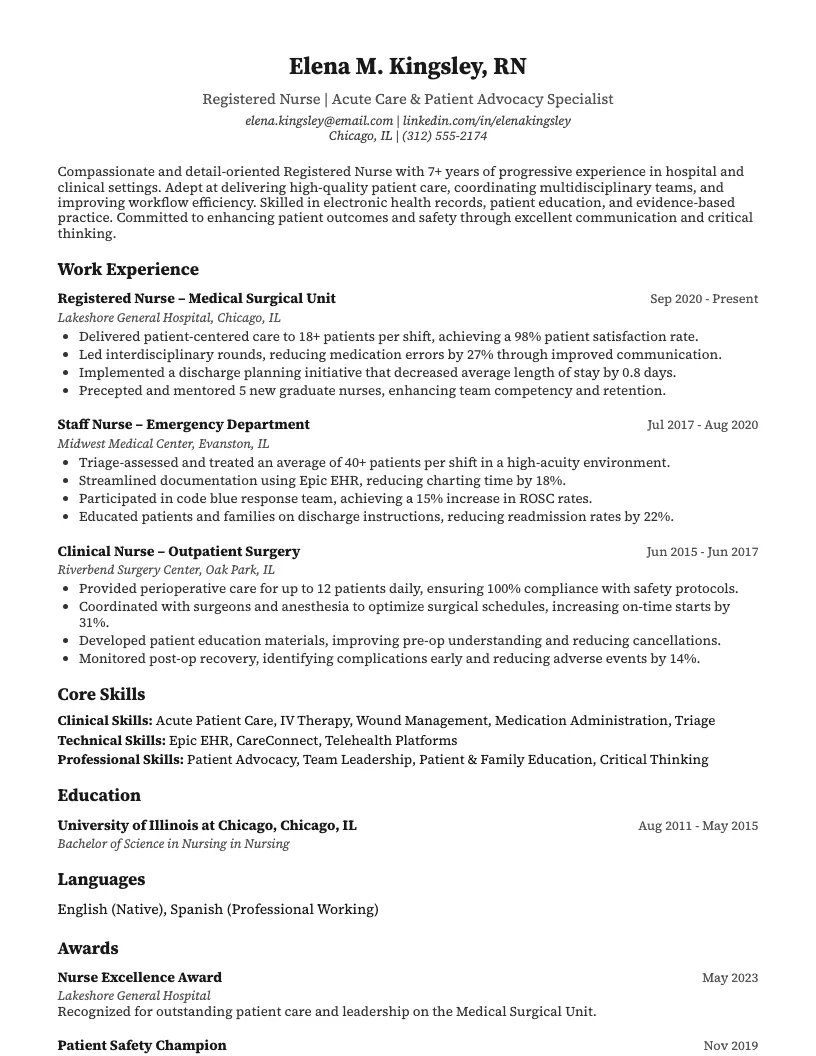
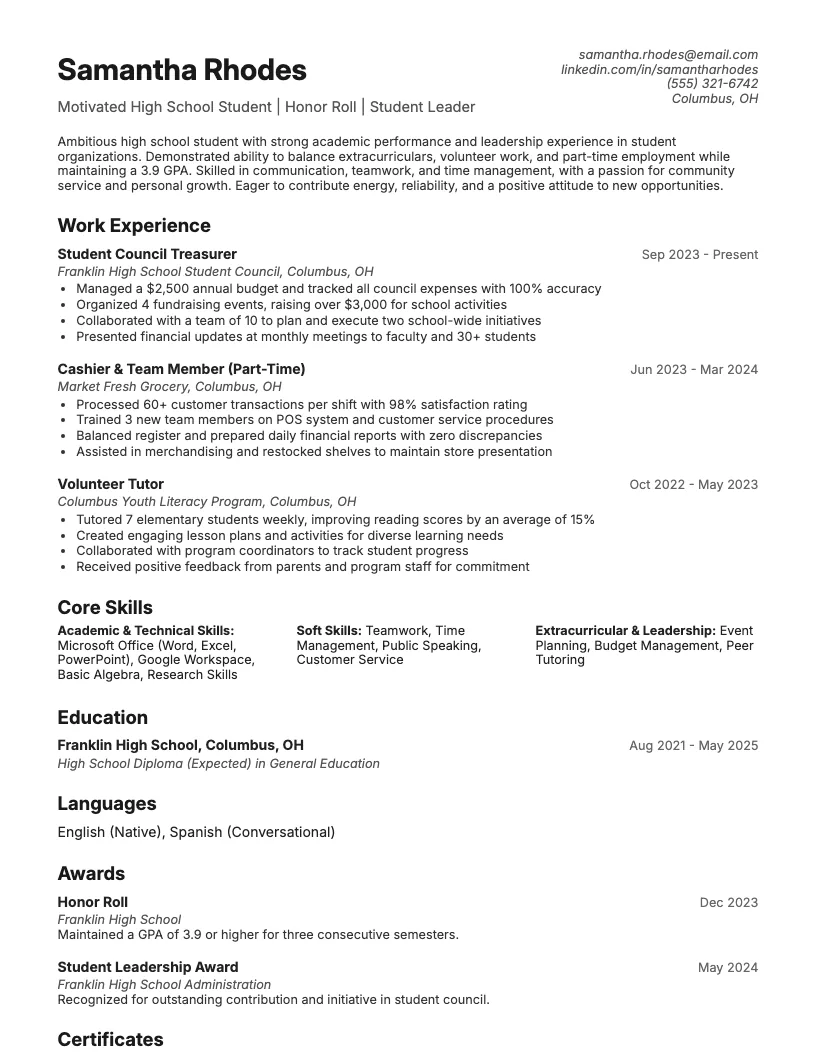
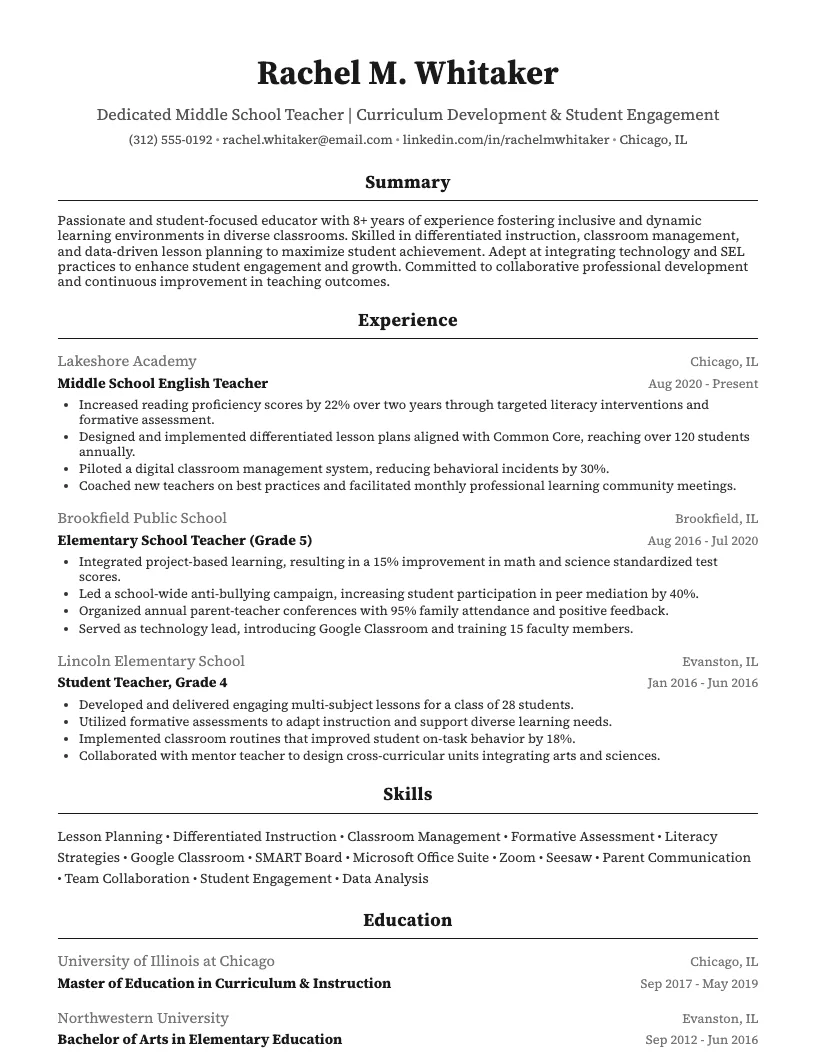
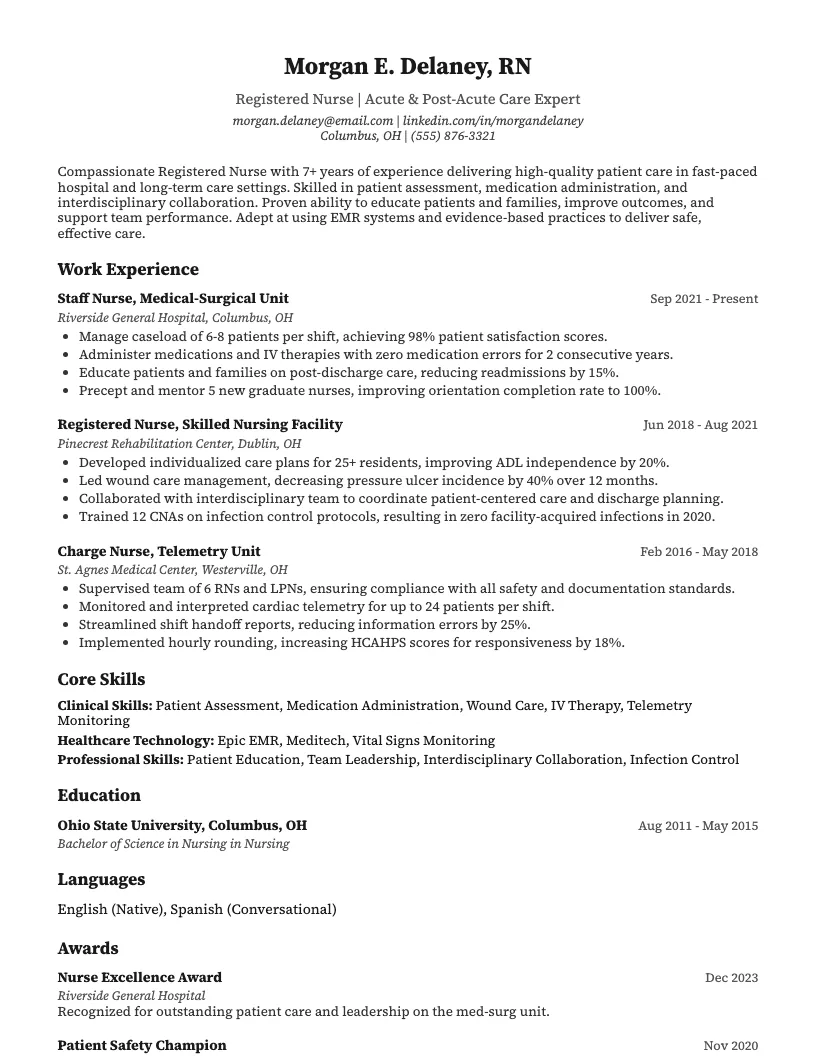
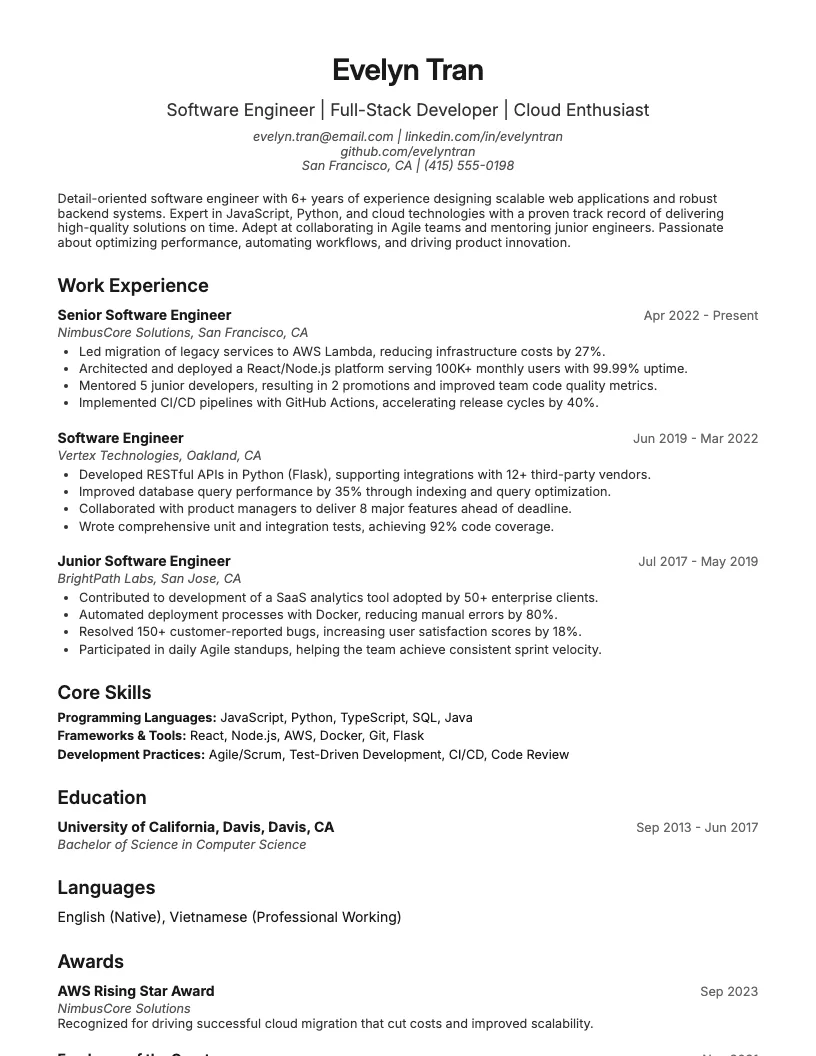
See these skills on a real resume
8 examplesStart from an example that already has them, and swap in your own.
Check your resume against the job you want
Scan your resume, see which skills and keywords the posting asks for that you are missing, and fix them before you apply.
Free to use • No credit card required