Keywords for Supervisor Resumes: 8 to Use, 6-10 Skills, 5 Certs
See the 8 keywords supervisor postings ask for, 7 verbs to replace 'supervised', 5 worth-listing certifications, and where each keyword belongs on your resume.


Written by Marcus Rodriguez
ATS Optimization Specialist & Career Coach
Updated August 2026
Reviewed by Dr. Priya Sharma
Is your resume ATS-friendly?
Drop your resume in and see which of these skills a scanner can actually read, and which ones the job you want is asking for that you have not listed.
PDF or DOCX. Max 2MB.
We never share your resume or use it to train a model.
In This Guide:
What keywords do supervisor job postings ask for?
What keywords do supervisor job postings ask for?

I've read hundreds of supervisor postings, and they all circle back to the same eight things. Get these into your resume and you've covered most of what a scanner and a hiring manager are both looking for.
Team leadership
This is the one every posting names, usually in the first line. Don't just write "team leadership" and move on - say how many people, because "led a team of 12" clears the keyword and proves it at the same time.
Staff scheduling
Postings ask for this under a few names: shift coverage, scheduling, staffing. If you built the weekly schedule or covered call-outs, that's what they mean, so use their word for it.
Performance management
This means reviews, coaching, and holding people to a standard - not just "managing performance" as a phrase. One posting I keep seeing wants "performance metrics" by name, so if you tracked scores or ran evaluations, say so directly.
Conflict resolution
Every supervisor role deals with this, but almost nobody writes a bullet that proves it. A line like "resolved scheduling disputes between shift leads" does more than the words "conflict resolution" ever will.
Training and onboarding
If you brought new hires up to speed, this is where it goes. Postings split it into "training" and "onboarding" as separate words sometimes, so it's worth having both somewhere on the page - check what to use if you've never had the supervisor title if this is the strongest experience you've got.
Process improvement
This is the catch-all for anything you made faster, cheaper, or less error-prone. Postings reward a number here more than almost anywhere else - cut a process from 30 minutes to 20, and say that.
Safety and policy compliance
In warehouses, production floors, and retail alike, this shows up as its own line item. Zero incidents, OSHA compliance, audit pass rates - whatever you've got, name it.
KPI tracking
Postings want to know you watch numbers, not just people. If you owned a metric - attendance, output, satisfaction scores - that's KPI tracking, whether or not you ever called it that.
The trouble with a list like this is knowing which of these eight actually showed up in the posting you're applying to. ResumeJudge reads the job description and tells you which ones are missing from your resume, so you're not guessing.
Which supervisor keywords are hard skills and which are soft skills?
Most supervisor resumes list ten soft skills and call it done. That's backwards.
Hard skills: the tools and systems you can prove
A hard skill is anything a hiring manager could quiz you on. Kronos, SAP, Excel, OSHA compliance - you either know them or you don't.
List these honestly, at the level you actually hold them. If a posting names a system you've never touched, don't add it just to match.
Soft skills: the people skills you have to show in a bullet
Leadership, conflict resolution, delegation - these are soft skills, and nine times out of ten I see them dumped into the skills section as bare words. That's the wrong place for them.
A soft skill belongs in a work experience bullet, attached to what you actually did.
Why a soft skill on its own list gets ignored
A soft skill you can't back up with a real example is one you should leave off entirely. Listing it thin and unproven costs you more in the interview than skipping it ever would - a recruiter who circles back to 'team leadership' and gets a blank stare remembers that more than a shorter skills section.
Anyone can type "team leadership." A recruiter reading resumes all day has learned to skip right past it.
What earns a second look is the same skill shown in action - "resolved conflict between two shift leads, cutting escalations to HR by half." If you're not sure your bullets do that yet, ResumeJudge will scan your resume against the posting and rewrite the weak ones for you.
What software and systems should a supervisor list?
What software and systems should a supervisor list?
Skills tell a hiring manager what you can do. Software tells them how fast you'll get up to speed.
I've reviewed enough supervisor resumes to know the software list gets skipped more than any other section, and it's the one that's easiest to fill in honestly.
Scheduling and timekeeping: Kronos, ADP Workforce Now
If you've ever built a shift schedule or approved timecards, name the tool. Kronos and ADP Workforce Now show up in most postings that mention staff scheduling, and a recruiter scanning for them wants to see the exact name, not "scheduling software."
Enterprise systems: SAP, Oracle
Bigger companies run on SAP or Oracle for inventory, payroll, or ordering. You don't need to be an expert - "used SAP daily for inventory tracking" is enough to clear the filter.
Project and task tools: Asana, Trello, Jira, MS Project
Pick the one you actually used. Listing all four when you've only touched Trello reads as padding, and it's the kind of thing that gets caught in an interview.
Spreadsheets and reporting: Excel, Google Sheets, Tableau
Excel comes up on fewer of these postings than most people assume - but where it is named, pivot tables and basic formulas count as real experience, not just "familiar with." If you've built dashboards in Tableau or Google Sheets for KPI tracking, say that instead of just naming the tool.
Communication tools: Slack, Microsoft Teams, Zoom
These rarely decide an interview on their own, but leaving them off a skills section that's otherwise thin looks like an oversight. If you're not sure which of these tools your target job actually wants, ResumeJudge will scan the posting and tell you which ones are missing from your resume - faster than guessing.
Which keywords change depending on the kind of supervisor you are?
Keywords by kind of supervisor
| Supervisor type | Core keywords | Number to use |
|---|---|---|
| Customer service | escalation handling, CRM systems, call quality monitoring | satisfaction score, e.g. 95% |
| Warehouse | inventory coordination, shipping schedules, safety compliance | staff supervised, e.g. 25 |
| Production | quality control, defect reduction, maintenance scheduling | output or downtime change |
| Retail | scheduling, sales targets, cash and inventory control | sales target reached |
| Operations | warehouse controls and freight, or CRM and accounts | matches the posting's own words |
| Shift | shift scheduling, staff coverage, end-of-shift reporting | coverage or handoff metric |
Here's what I tell people who copy the same skills section onto every application: a warehouse posting and a retail posting are not asking for the same supervisor, and using one list for both is why so many of these resumes read as generic to the person holding the posting.
Customer service supervisor
This one lives or dies on volume and tone. You want escalation handling, CRM systems, call quality monitoring, and a satisfaction number - "kept satisfaction above 95%" beats "great with customers" every time.
New-hire training on the CRM itself is worth a line too, since postings ask for it by name more often than you'd expect.
Warehouse supervisor
Postings here want inventory coordination, shipping schedules, and safety compliance, plus a real number for how many people you ran and how much you moved the needle - "supervised 25 staff" or "improved fulfilment speed by 30%" reads as proof, not a claim.
Production supervisor
Expect quality control, defect reduction, maintenance scheduling, and productivity metrics. I've seen dozens of these resumes lean on "line supervisor" alone with nothing about output or downtime - add the number and the keyword does its job.
Retail supervisor
Scheduling, sales targets, product knowledge training, and cash or inventory control are the four postings circle back to. "Led sales team past monthly targets" says more than "responsible for staff."
Operations supervisor
This title splits hard by industry - a logistics posting wants warehouse controls and freight, a sales-ops posting wants CRM and account management. Match the posting's own words rather than a generic operations list (see matching the exact wording).
Shift supervisor
The keywords that matter are coverage and handoff: shift scheduling, staff coverage, end-of-shift reporting. If you've never held the title, titles that still count covers what to use instead.
Running your resume against the actual posting - rather than guessing which of these six lists applies - is exactly what ResumeJudge's scan does, flagging which of these keywords the posting names and your resume doesn't.
How do you find the keywords for one specific supervisor job?
How do you find the keywords for one specific supervisor job?
Two supervisor postings can want completely different people. Read the one in front of you before you touch your resume.
Step 1: Highlight every leadership word in the posting
Go line by line and mark anything about running people or a process - team leadership, scheduling, conflict resolution, KPI tracking, whatever shows up.
That list is your target, not a general supervisor list you found somewhere else.
Step 2: Note the team size and the duties it names
Postings usually say how big the team is and what you're accountable for - staffing, safety, output, budget.
Write those numbers down. You'll want them again when you write your bullets.
Step 3: Keep only the ones you can back up
I've seen hundreds of these, and the mistake I see most often is grabbing every keyword from the posting whether or not the person has actually done it.
If you can't point to a real example, cut it. Getting caught in the interview costs you more than a thin skills section ever will.
Step 4: Match the exact wording, not a synonym
If the posting says "performance management," write "performance management" - not "employee development" or "staff coaching."
Scanners match the words on the page, nine times out of ten a close synonym just doesn't register. ResumeJudge will scan your resume against that exact posting and flag every one of these gaps for you, so you're not guessing which words to match.
Where do supervisor keywords go on your resume?
Where each kind of keyword goes
| Section | What goes here |
|---|---|
| Skills section | Plain, provable keywords: staff scheduling, KPI tracking |
| Professional summary | Team size and one result in two or three sentences |
| Work experience bullets | A keyword shown in action with a number attached |
| Certifications section | A short, separate list near the bottom |
Same keyword, four different jobs to do. Pick the wrong spot and it doesn't work as hard as it should.
Skills section
This is where the ATS looks first, so put the plain, provable ones here: staff scheduling, KPI tracking, conflict resolution. Keep it short - see how many to list.
Professional summary
Two or three sentences, right under your name, naming your scope. Something like "supervisor with 5+ years leading teams of 10+, focused on productivity and retention" - team size and one result, not a list of traits.
Work experience bullets
This is where a keyword actually proves itself. I've read thousands of these, and a bullet that says "supervised team, improving performance" beats a skills-section entry every time, because it shows the word in action with a number attached - see how to write one.
If you're staring at a job posting trying to work its exact phrases into your bullets without sounding like you copied it, that rewrite is exactly what ResumeJudge does for you against that specific posting.
Certifications section
A short, separate list near the bottom. Don't bury OSHA or Lean Six Sigma inside your skills section - see which certifications are worth listing.
How many skills should a supervisor resume list?
Is your resume good enough?
Drop your resume in and see which of these skills a scanner can read, and which ones the job you want is asking for that you have not listed.
Upload your resumeFree. PDF or DOCX. We never share your resume or use it to train a model.
The 6-10 range and why more hurts
I've read hundreds of supervisor resumes, and the ones that get filtered out almost always list too much, not too little.
Six to ten skills is the range that works. Go past that and you start looking unfocused rather than qualified.
A hiring manager skimming a skills section wants to know fast whether you can run their team. Fifteen-plus skills makes them work for it, and they won't.
Cutting a long list down to the job
Keep the skills that show up in the job's own keywords, and cut anything you can't back up.
If you're staring at a resume and a job description trying to figure out what to keep, ResumeJudge will scan both and tell you exactly which of your skills the posting is actually asking for.
Grouping skills so a long list still reads fast
If you genuinely need more than ten, split them into two or three labeled groups instead of one long line.
Something like "Leadership," "Systems," and "Compliance" lets a reader's eye jump straight to what they care about.
How do you write a bullet point that proves a supervisor skill?
Action verb + what you ran + the number it moved
Here's the formula, and it's the same one every time: action verb, what you were responsible for, and the number it moved.
"Responsible for supervising staff" tells a hiring manager nothing. Swap in a verb, a scope, and a result, and the same sentence starts doing work.
"Supervised a team of 10 employees, improving performance metrics by 15%"
This is the formula in its plainest form. Team size, then the metric it moved.
No adjectives doing the heavy lifting - just a number in and a number out.
"Trained and scheduled a team of 8 associates, cutting weekly overtime by 15%"
Two duties instead of one - training and scheduling - stacked into a single line, still closed out with a result. I like this version because it shows range without turning into a list.
"Managed 12 direct reports across 3 departments, overseeing $45M in rental assets"
Bigger scope gets a bigger bullet. Here the number isn't a percentage, it's a dollar figure - and that's fine.
Match the number to what you actually owned: budget, headcount, or output.
The weak version of the same bullet
A supervisor bullet with and without a result
Responsible for a team and daily operations
Supervised a team of 10 employees, improving performance metrics by 15%
"Responsible for a team and daily operations" is the bullet I see most often, and it's the one that gets skipped fastest. No verb doing anything, no number to anchor it.
If you're staring at a bullet like that, ResumeJudge will rewrite it against the actual posting you're applying to, in the exact wording that job wants.
What numbers should a supervisor put on a resume?
What numbers should a supervisor put on a resume?
Nine times out of ten, the resumes that get interviews are the ones with numbers in almost every bullet. Vague claims don't survive first contact with a hiring manager - a specific figure does.
Team size and number of direct reports
Start here. How many people did you supervise, across how many departments or shifts?
"Led a team of 12" tells a hiring manager more in four words than a whole paragraph about your leadership style.
Budget, inventory or spend you controlled
If you signed off on a budget, managed inventory, or were responsible for spend, put the dollar figure down. I've seen supervisors leave out numbers like "$45M in rental assets" or "$90M spend" because they didn't feel like their own money - but you were still accountable for it, and that accountability is exactly what the next employer is screening for.
Turnover and attendance
Cut staff attrition, improved attendance, hit full shift coverage for a stretch of weeks - these are supervisor numbers specifically, because retaining people is half the job. A stat like "lowered turnover by 10%" says you can keep a team together, not just run one.
Productivity and output
Whatever your team produced, processed, or shipped, put the change next to it: task completion rates up 20%, daily output up by a set amount. This is where the action verb and the number really do the work.
Safety incidents
Zero reportable incidents, or a stated cut in workplace accidents, belongs on the resume even if safety wasn't in your title. Employers read it as proof you run a disciplined shift, not just a productive one.
Customer satisfaction scores
If your role touched customers at all, a satisfaction score or a cut in complaints is worth the line. Once you've got the numbers picked out, ResumeJudge will check them against a posting and tell you which ones the job actually wants to see, instead of you guessing.
What can you use instead of the word "supervised"?
Verbs to use instead of 'supervised'
| Verb | Use when |
|---|---|
| Led | You set the direction, not just the roster |
| Managed | Day-to-day: schedules, workloads, people |
| Directed | You set the standards a team worked to |
| Coached | The story is improving someone's performance |
| Mentored | Longer-term guidance on more than one skill |
| Trained | Onboarding and process instruction |
| Delegated | You handed off work and trusted people with it |
"Supervised" is the word almost every draft starts with, and it's the flattest one on the page. I've read hundreds of these bullets, and "supervised a team" tells me nothing about what you actually did with that team.
Swap it for the verb that matches the action, and the bullet gets sharper on its own.
Led
Use this when you set the direction, not just the roster. "Led a team of 10 through a system changeover" says you owned the outcome.
Managed
This is the safest swap and the one hiring managers scan for most, since it doubles as a job title word. Use it for the day-to-day: schedules, workloads, people.
Directed
Reach for this when you set the standards a team worked to, not just the tasks. It reads heavier than "managed," so save it for when you actually called the shots.
Coached
This is the one to use when the story is about improving someone's performance, not just assigning their shifts. "Coached three associates to promotion" carries more than "supervised" ever will.
Mentored
Close to coached, but longer-term and less about a single skill gap. If you took someone under your wing over months, this is the honest word for it.
Trained
The right choice for onboarding and process instruction. It's concrete, it's provable, and it pairs well with a number - "trained 8 new hires" beats "supervised training."
Delegated
This one proves you can hand off work and trust people with it, which is exactly what a promotion into a bigger team requires. Use it sparingly - one bullet, not the whole section.
When "supervised" is the word to keep
Here's the part people miss: if the posting itself uses "supervised," keep it somewhere on the page. An applicant tracking system matches exact wording, and a resume that swaps out every instance can lose the match entirely. My rule: use the stronger verb in your bullets, but leave "supervisor" in your title and at least once in your summary. If you're not sure which word the posting actually leans on, that's exactly the kind of gap ResumeJudge flags when it checks your resume against the job description - it'll tell you if you've replaced a word the ATS was scanning for.
Which supervisor certifications are worth listing?
Which certification for which supervisor job
| Certification | Best for |
|---|---|
| OSHA safety | Warehouse, plant, or kitchen supervisors |
| Lean Six Sigma Green Belt | Production and operations postings |
| PMP | Operations and warehouse resumes |
| Certified Supervisor (CS) | Any supervisor title, built for it specifically |
| CPIM | Warehouse and production, manufacturing and logistics |
| First aid / food safety | Retail, food service, and hospitality |
Most supervisor jobs don't require a certification. But when a resume has one sitting next to real numbers, I notice it, and so does the hiring manager.
OSHA safety certification
If you've supervised anyone in a warehouse, plant, or kitchen, this one's worth the line. It tells the reader you know the safety rules well enough to keep people from getting hurt on your watch, which matters more than people admit.
Lean Six Sigma Green Belt
This shows up constantly on production and operations supervisor postings. It says you can run a process improvement project, not just talk about efficiency.
Project Management Professional (PMP)
I see this most on operations and warehouse resumes, less on retail or customer service ones. It's a heavier credential than the job usually needs, but it never hurts if you already have it.
Certified Supervisor (CS)
This one's built specifically for the title you're applying for, which is exactly why it's worth listing even though fewer people have heard of it than a PMP.
CPIM
Certified in Planning and Inventory Management is a niche one - mostly warehouse and production supervisors, mostly manufacturing and logistics postings. Skip it if that's not your world; list it if it is, because it's a strong signal in that world specifically.
First aid and food safety, where the job needs it
Retail, food service, and hospitality supervisor postings ask for these more than any of the ones above. A ServSafe card or basic first aid certification is small, but leaving it off when the posting mentions it is an easy way to look underprepared.
None of these do the work alone - a certification without proof behind it in your work experience bullets reads as a line item, not a qualification. If you're not sure which of these actually shows up in the posting you're applying to, ResumeJudge will scan the job description against your resume and tell you which ones you're missing before you send it.
What keywords can you use if you have never had the supervisor title?
What keywords can you use if you have never had the supervisor title?
You don't need "supervisor" on a past job title to use supervisor keywords. What you need is proof you were responsible for someone else's work.
Shift lead and acting lead cover
If you ever covered a shift lead role, even informally, that's supervisory experience. Write it as what you did: "Acted as team lead during peak periods, coordinating tasks and covering for the manager."
Training new hires
Training counts, full stop. If you onboarded new employees, showed them the ropes, or signed off on their readiness, that's training and onboarding experience a hiring manager will recognize.
Coordinating a project
Ran a project with other people's tasks depending on you? That's leadership, even with no direct reports.
Name what you coordinated and how many people were involved.
Mentoring a colleague
Mentoring a newer coworker is supervisory work with the title stripped off. I'd rather see "Mentored two new associates on register procedures" than "leadership skills" sitting alone on a skills list with nothing behind it.
Titles that count as supervisory experience
Shift lead, keyholder, team lead, lead associate, project coordinator - all of these read as supervisory groundwork, even without "supervisor" in the title. Name the past title and back it with a result, the same way you'd write any other bullet point that proves a supervisor skill.
If you're not sure a specific posting will count your experience this way, running your resume against it in ResumeJudge will show you which of its keywords you're already covering and which ones you still need to add in.
What gets a supervisor resume filtered out?
I've rejected hundreds of supervisor resumes before a human ever saw them, and it's usually the same five mistakes.
Pasting the job description back word for word
Copying the posting's language straight into your resume is the most common shortcut I see, and it backfires.
A scanner might pass it, but the person reading next spots it in seconds - there's no "I" in it, no specific team, no number.
Match the wording, sure, but attach it to something you actually did.
Buzzwords with no example behind them
"Strong leader." "Team player."
"Results-driven." I see these on nearly every supervisor resume and they tell me nothing.
If you say you led a team, the next words should be how many people and what changed because of it.
Stuffing the skills section
More isn't more here. Once you're past 10 skills, a hiring manager reads it as padding, not proof.
Cut it to what the posting actually asks for.
Bullets with no result on the end
"Supervised daily operations" stops right where it should start. What happened because you supervised it - turnover dropped, output rose, complaints fell?
Nine times out of ten, the fix is just adding the number you already know.
Graphics and tables the scanner cannot read
Skill bars, icon columns, two-column tables built for looks - a lot of applicant tracking systems can't parse them, and your best qualifications vanish before a person opens the file. Stick to plain text under standard headings.
If you're not sure your resume reads clean, ResumeJudge scores it against the actual posting and shows you exactly what's getting lost.
Frequently Asked Questions
What is supervisory experience?
Supervisory experience is any time you were responsible for other people's work, not just a formal manager title. Training new hires, scheduling a team, delegating tasks, or evaluating performance all count, whether or not "supervisor" was in your title. A shift lead or a coordinator who trained coworkers can claim it as long as they can point to what changed because of it.
Do I need to say how many people I supervised?
Yes. If your team size changed over time, use the largest one you managed. The section "What numbers should a supervisor put on a resume?" above covers why a real headcount beats "a team" and what to put next to it.
Should I use "supervisor" or "manager" as my job title?
Use whichever word the posting itself uses, since that's the term an applicant tracking system is scanning for. Keep your actual title as your job title, then work the posting's word into your bullet points. ResumeJudge reads the posting and rewrites your bullets in its own language automatically, so you're not stuck guessing which word to use.
Do I list soft skills like leadership in the skills section?
No - keep the skills section for concrete, scannable terms. The section "Which supervisor keywords are hard skills and which are soft skills?" above covers where a soft skill belongs instead and how to word it.
How do I show a promotion into a supervisor role?
List the supervisor role and your earlier title as two separate entries under the same employer, so the promotion shows up in the timeline. Note what changed with the promotion, such as team size or new responsibilities. Use a bullet point in the earlier role to show the groundwork that led to it being offered.
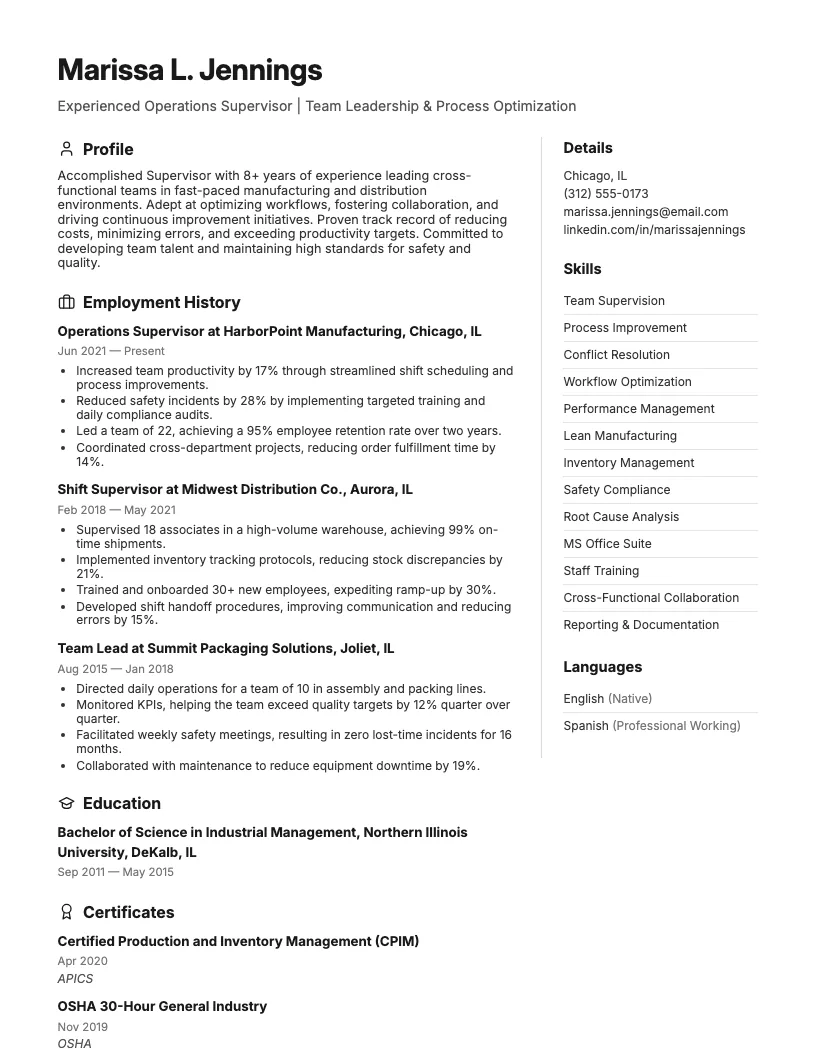
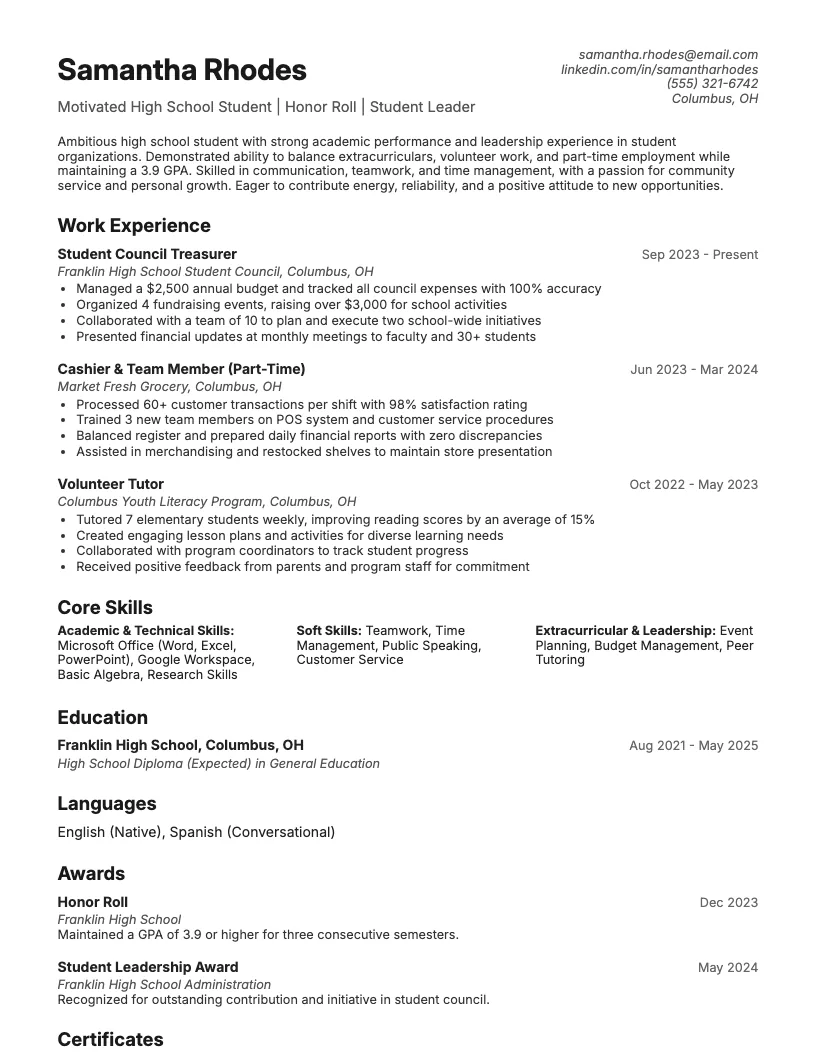
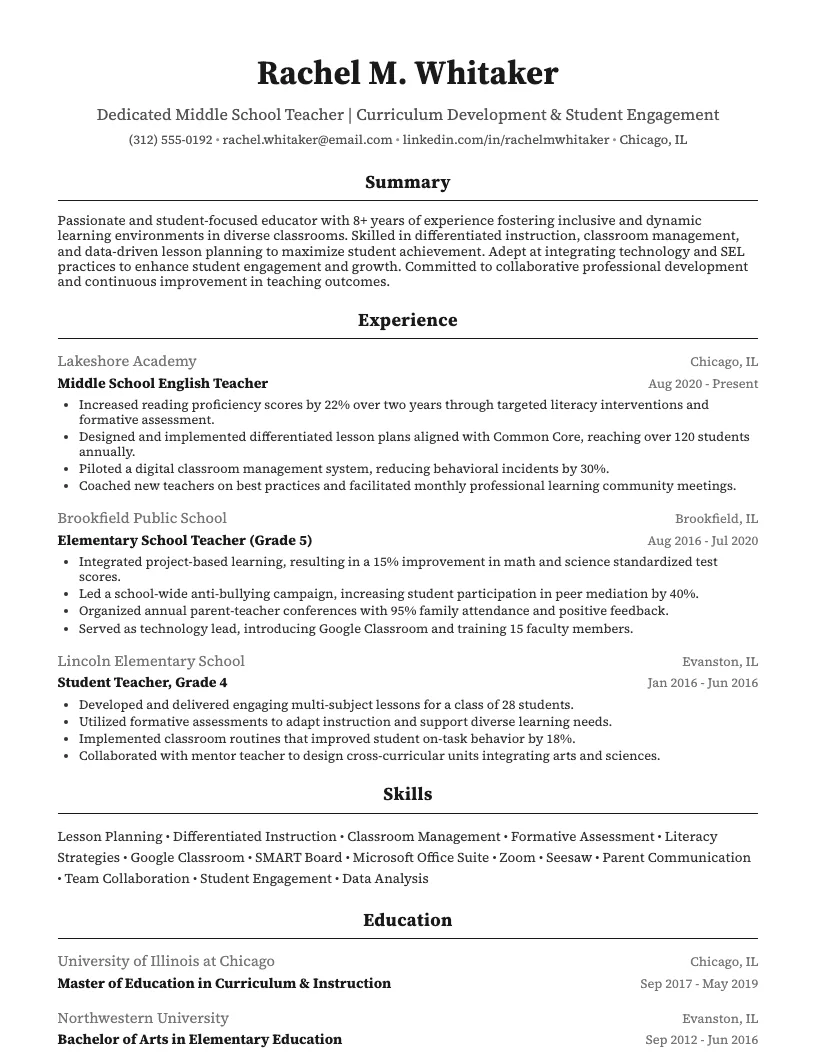
See these skills on a real resume
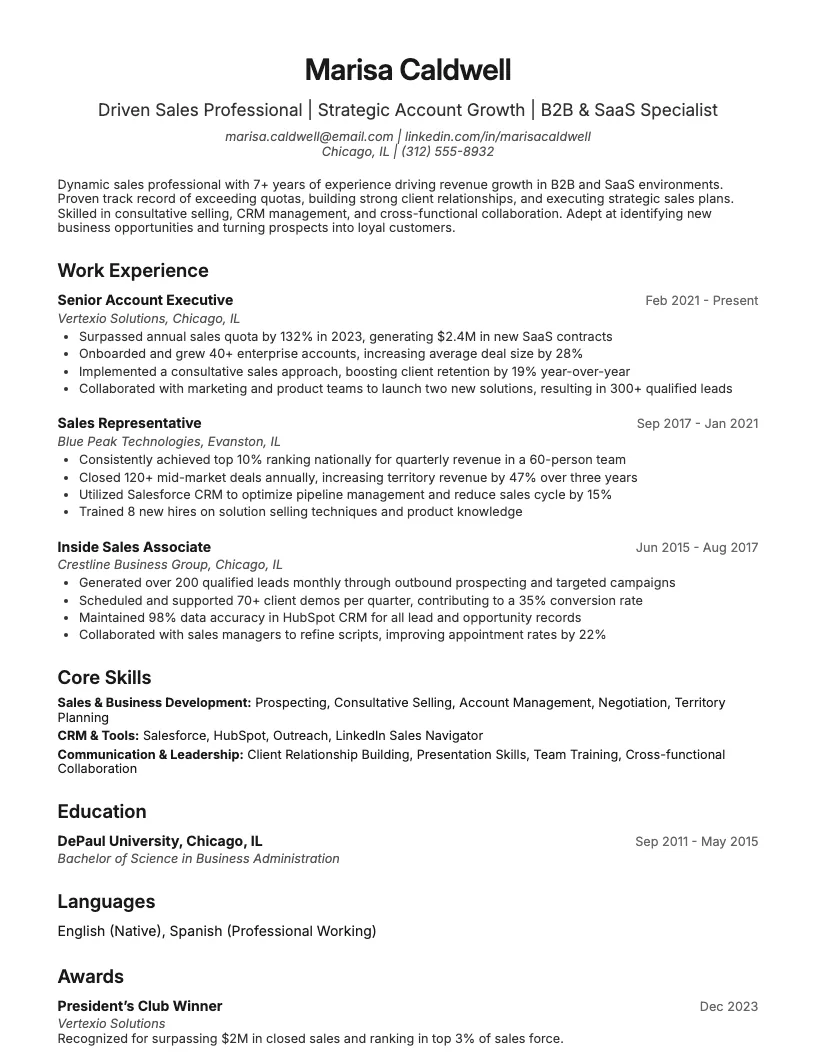
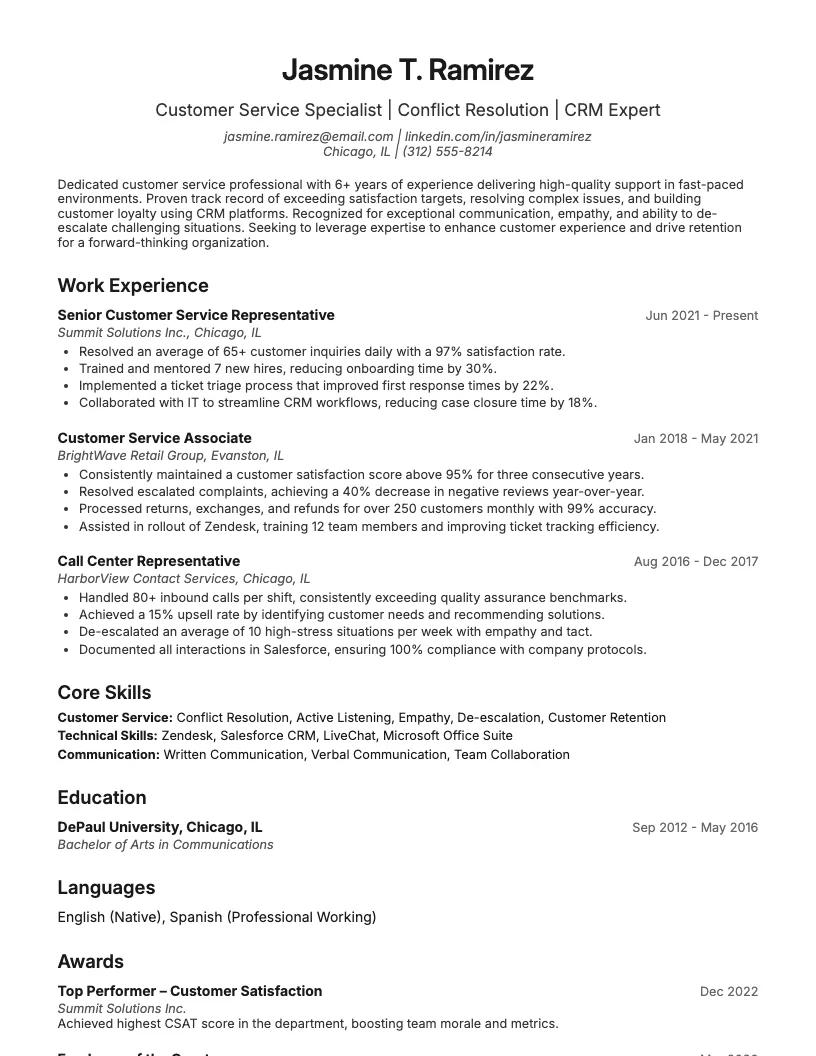
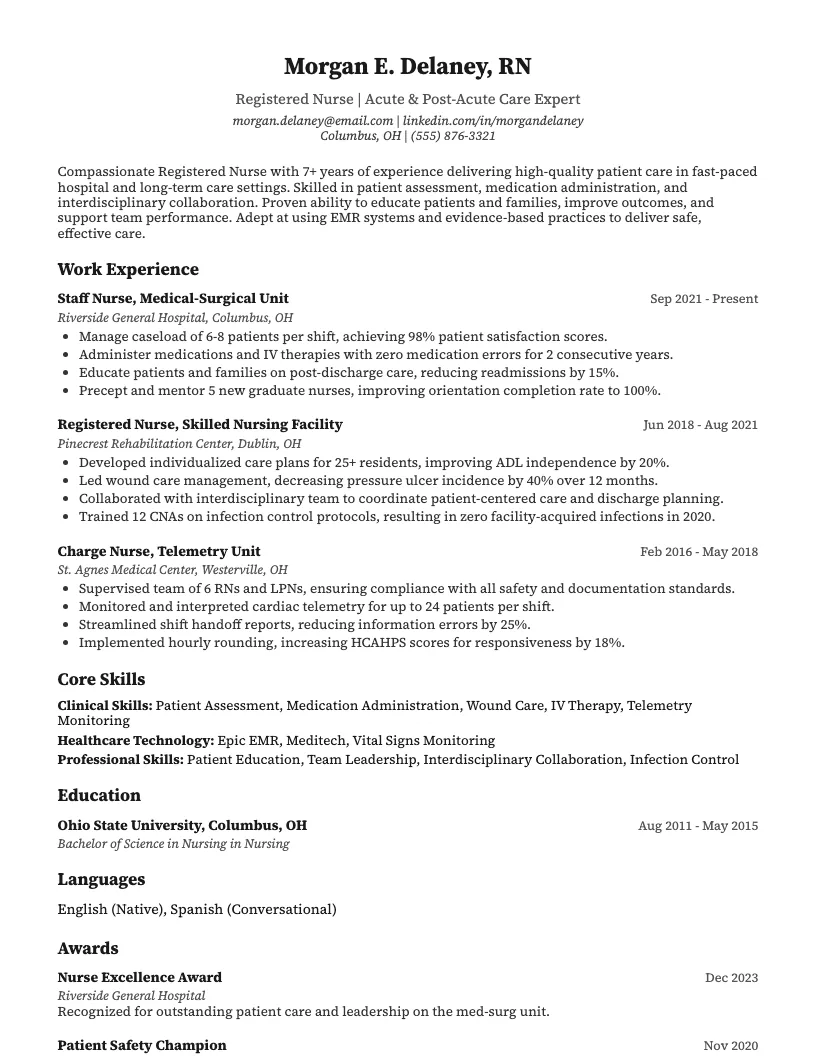
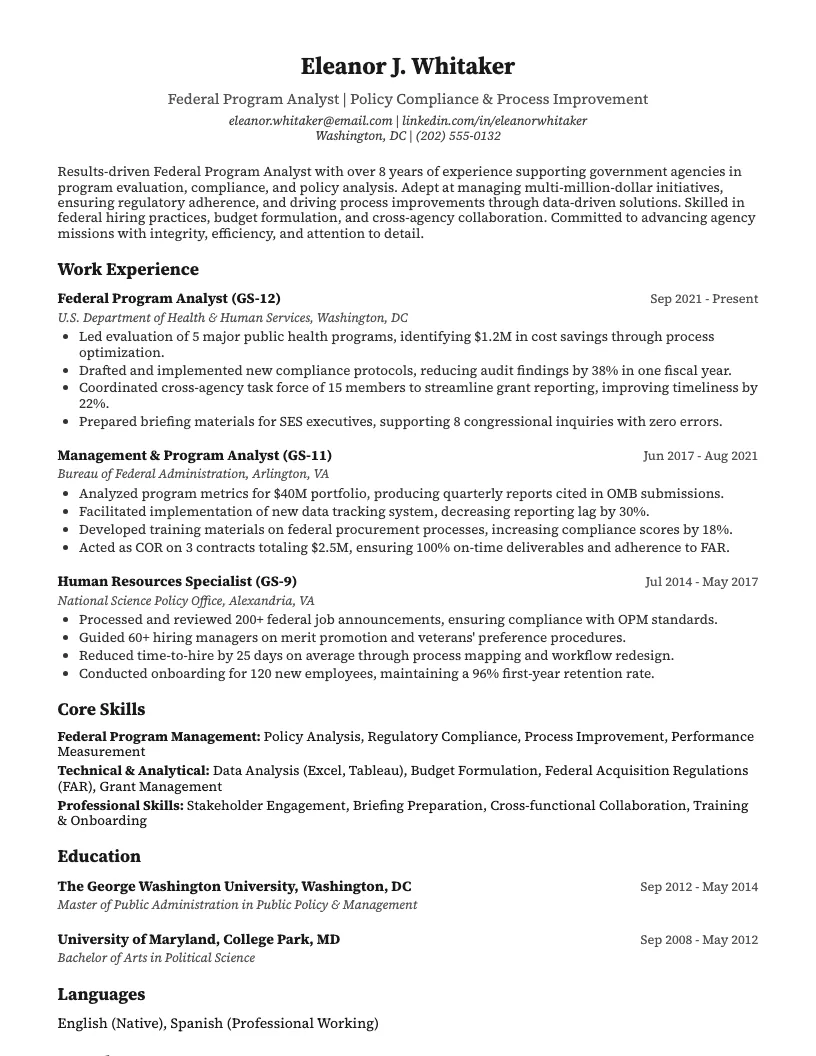
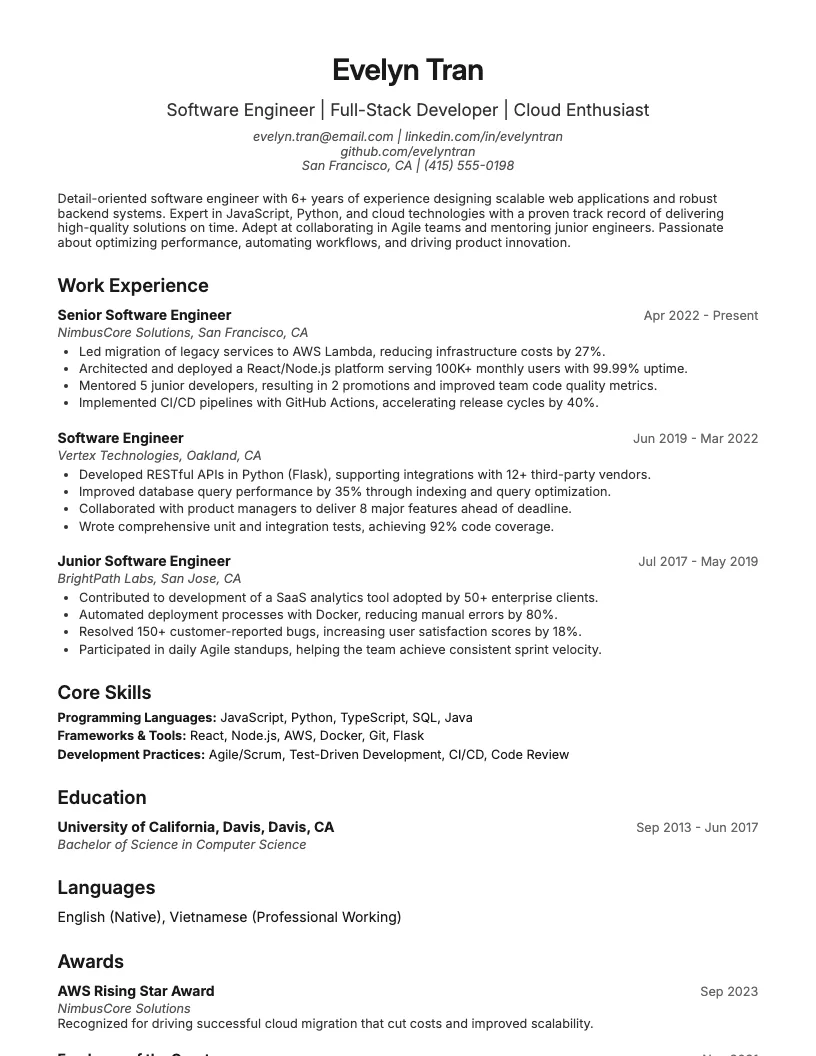
8 examplesStart from an example that already has them, and swap in your own.
Check your resume against the job you want
Scan your resume, see which skills and keywords the posting asks for that you are missing, and fix them before you apply.
Free to use • No credit card required