Keywords for mechanical engineering resume: 8 categories, 6 roles
See the 8 keyword categories mechanical engineering resumes need, the 6 roles that change the weighting, and how to turn a listed skill into a real bullet.


Written by Marcus Rodriguez
ATS Optimization Specialist & Career Coach
Updated August 2026
Reviewed by Dr. Priya Sharma
Is your resume ATS-friendly?
Drop your resume in and see which of these skills a scanner can actually read, and which ones the job you want is asking for that you have not listed.
PDF or DOCX. Max 2MB.
We never share your resume or use it to train a model.
In This Guide:
What keywords should be on a mechanical engineering resume?
What keywords should be on a mechanical engineering resume?

I've read enough of these to tell in ten seconds whether an engineer wrote their own resume or copied a template. The tell is always the same: real work has specific tools and standards named in it, and a template doesn't.
Here's the full set worth having somewhere on the page, split the way postings actually group them.
CAD software: SolidWorks, AutoCAD, CATIA, Creo, Siemens NX, Inventor, Fusion 360
Pick the ones you've actually modeled parts and assemblies in, not the ones you clicked around in a demo. If you know two or three well, name them; don't pad the list to look broader than you are.
Analysis and simulation: FEA, CFD, ANSYS, Abaqus, NASTRAN, stress analysis, thermal analysis
These matter most for R&D and validation roles. If you ran a stress analysis in ANSYS to catch a failure point before it shipped, that's a stronger line than just "FEA" sitting in a skills list on its own.
Engineering fundamentals: thermodynamics, fluid mechanics, heat transfer, statics, dynamics, materials science, machine design
Every mechanical engineering job assumes these underneath everything else. Where I see people underuse them is in the summary line - a design engineer with a thermal background should say so up front, not bury it under coursework.
Standards and compliance: GD&T, ASME, ISO 9001, ANSI, ASTM, tolerance analysis
GD&T and tolerance analysis show up on nearly every design and manufacturing posting I've seen. If you've never worked to a formal standard, say what you did instead - don't just drop ASME into a list because it sounds right.
Manufacturing and materials: CNC machining, injection molding, additive manufacturing, welding, composites, metals
Non-negotiable if you're going for a manufacturing or production role. Name the actual material families you've worked with - steel, aluminum, composites - rather than just writing "materials."
Methods and process: DFM, DFA, Lean Manufacturing, Six Sigma, Kaizen, 5S, root cause analysis
These prove you've worked inside a process, not just at a CAD station. Six Sigma or Lean carries more weight with a belt or certification attached - more on that in entry-level keywords if you don't have one yet.
Documentation and lifecycle: technical drawings, BOM, engineering change orders, Windchill, Teamcenter, ENOVIA
PLM systems separate people who've worked in a real engineering org from people who haven't. If a posting names Windchill or Teamcenter and you've used either, that's worth its own line, not a footnote.
Project and people: cross-functional collaboration, vendor management, budget management, technical communication
Engineers don't work alone, and postings for senior roles say so directly. If you're not sure which of these to prioritize when space runs out, that's exactly what ranking keywords by importance covers.
Once you've got the full list in front of you, the real work is matching it against a specific posting rather than a generic one - ResumeJudge will scan your resume against any job description and flag exactly which of these terms the posting wants that you're missing.
How do you pull the right keywords out of a job posting?
How do you pull the right keywords out of a job posting?
I've read hundreds of mechanical engineering postings, and most people skim one and start typing. That's the wrong order.
Step 1: Copy the posting into a blank document
Paste the whole thing in, not just the bullet points.
Job titles bury real requirements in the intro paragraph and the "about the team" section as often as they put them in the bullets.
Step 2: Mark the tools and software it names
Go through and highlight every named tool: SolidWorks, ANSYS, FEA, GD&T, whatever shows up.
Check the full keyword list if you're not sure whether something counts as a tool or a method.
Step 3: Mark the responsibilities it repeats
A responsibility mentioned once might be filler. One mentioned in the summary and again in the requirements is the job.
I look for the verb that shows up two or three times in different phrasing - design, validate, document, coordinate. That's the actual work.
Step 4: Mark the qualifications it calls required
"Required" and "preferred" mean different things, and postings are usually honest about which is which.
Anything under "required" or "must have" goes to the top of your list.
Step 5: Cross off anything you have not actually done
This is the step people skip, and it's the one that gets resumes rejected in the interview instead of the screen.
That is the same mistake as terms copied from the posting for work you never did. This is also where ResumeJudge is useful - it scans the posting against your resume and shows you exactly which required terms are missing, so you're not guessing at step 3 or 4.
Worked example: a design engineer posting, term by term
Say a posting reads: "3+ years designing components in SolidWorks, applying GD&T to production drawings, running FEA to validate designs before tooling, and coordinating with manufacturing on DFM."
That's four keywords in one sentence: SolidWorks, GD&T, FEA, DFM - two tools, one standard, one method. Each one earns a spot in your skills section and a bullet that shows you doing it, not just naming it.
Where do these keywords go on the resume?
Placement matters almost as much as which terms you pick. A scanner and a hiring manager read the same resume differently, and the right keyword in the wrong spot does you no good.
Summary: the two or three terms the posting leads with
Your first two lines should mirror the posting's own headline, not your job title from five years ago. If the ad opens with "SolidWorks" and "GD&T," those words belong in your first sentence too.
That's the fastest signal you're a match, before anyone reads a bullet.
Technical skills section: software, standards, methods
This is where the dense list lives - CAD tools, standards, methods, all in one scannable block. A block that runs to forty terms with no context is one of the keywords that hurt you.
Experience bullets: the term inside the work you did
A skills list proves you know the word. A bullet proves you used it.
Take the pattern from how to write a bullet that uses a keyword instead of just listing it and put your CAD, FEA, or DFM terms inside the sentence describing what you built or fixed.
Projects: where you cover a tool your job history does not
If a posting wants ANSYS and your job history never touched it, a capstone or personal project is the honest place to show it - not a stretch in your experience section.
Education and certifications: PE, FE, PMP, Six Sigma Green Belt
Licenses and certifications are hard filters for some postings - no PE, no interview, full stop. List them plainly here rather than burying them in a summary line.
The same keyword in two places is fine; the same keyword in six is stuffing
I've seen resumes repeat "SolidWorks" in the summary, skills, and three separate bullets. That's not thoroughness, it's noise, and a hiring manager notices before an ATS ever will.
Two mentions - once in skills, once inside a real bullet - is the pattern that actually reads as credible. If you're not sure which of your terms are pulling weight, ResumeJudge will scan your resume against the posting and flag which ones are missing versus which are just repeated.
How do you write a bullet that uses a keyword instead of just listing it?
Here's the test I use on every bullet I review: cover the second half of the sentence with your hand. Can you guess what tool or standard is coming?
If not, the keyword is missing, not the result.
"Designed parts" → the SolidWorks and GD&T version
A design bullet that names the tool
Designed mechanical parts and tested them
Designed mechanical assemblies in SolidWorks, applying GD&T to control tolerance stack-up, cutting prototype rework by 15%
"Designed mechanical parts and tested them" tells me nothing. "Designed mechanical assemblies in SolidWorks, applying GD&T to control tolerance stack-up, cutting prototype rework by 15%" tells me exactly what you touched and what happened because of it.
"Ran simulations" → the FEA and ANSYS version
Same fix. Name the analysis type, the software, and the outcome: "Ran FEA and stress analysis in ANSYS to validate structural integrity, catching failure points before tooling release."
That last clause is the part most people cut, and it's the part that proves the simulation mattered.
"Worked with manufacturing" → the DFM version
"Worked with manufacturing" could mean anything. "Partnered with manufacturing on DFM reviews, revising part documentation to cut assembly steps" is a sentence a hiring manager can picture.
"Tested prototypes" → the verification and validation version
Name what you were verifying against - a spec, a standard, a requirement - not just that testing happened.
The pattern underneath all four: tool + what you did with it + what changed
One bullet built this way is usually enough per job. I've read resumes where every single line is forced into the same tool-action-result shape, and it stops reading like real work and starts reading like a template.
Every one of those rewrites follows the same shape: tool or method, what you did with it, what changed because you did. Drop any of the three and the bullet goes flat again.
If you're staring at a posting and a stack of old bullets and can't tell which terms are actually missing, that's the tedious part - ResumeJudge will scan your resume against the posting and rewrite the bullets for you, working the exact terms it's asking for into that same tool-action-result shape.
Which keywords matter most when you can't fit them all?
Which keywords matter most when you can't fit them all?
Most postings ask for more than any one resume can hold. When you're cutting, don't cut at random - cut in order.
First: tools the posting lists as required
These are the terms you marked at step 4, and they survive every cut. I've seen resumes drop the required software and keep three nice-to-haves instead - that's backwards.
SolidWorks named as required beats FEA mentioned once in the summary.
Second: the responsibility it describes more than once
These are the terms you marked at step 3. Build a bullet around that recurring thread - design, then analysis, then verification - rather than scattering the term once and moving on.
Third: industry terms - automotive, aerospace, HVAC, robotics, EV
These matter less than tools or repeated duties, but they still tell a screener you've worked their world. Drop one into your summary or a project line, not as a standalone claim.
Last: anything you know but the posting never mentions
Nice to have, but it's the first thing to go. A posting that never says CATIA doesn't need you to prove you know CATIA.
How many to aim for on one resume
15 to 25, pulled straight from the posting itself, not your full skill set. If you're not sure which of your terms actually match, ResumeJudge will scan the posting against your resume and tell you exactly what's missing before you submit anything.
Which keywords change with the mechanical engineering role you're applying for?
How the lead keywords shift by role
| Role | Lead keywords | What matters most |
|---|---|---|
| Design engineer | SolidWorks, CATIA, Creo, GD&T | Manufacturability and tolerance |
| Manufacturing engineer | CNC machining, DFM, Lean, root cause analysis | Process and defect reduction |
| Product development engineer | Prototyping, DFM, verification and validation | Concept-to-production ownership |
| Mechanical design engineer (HVAC) | HVAC load calcs, energy modeling, ASHRAE | System sizing and code compliance |
| Project engineer | Budget, vendor management, schedule terms | Managing timelines and suppliers |
| Senior engineer / manager | Mentoring, technical communication, budget/headcount | Team and leadership impact |
The core list is a starting point, not a finished resume. The mistake I see most often is one resume aimed at every posting, when the six most common mechanical engineering titles want six different weightings of the same skills.
Design engineer
Lead with SolidWorks, CATIA, or Creo, then GD&T and tolerance analysis. This role lives or dies on whether your drawings can be manufactured and inspected, so tie every CAD mention to a tolerance or a design-for-manufacturing outcome.
Manufacturing engineer
Here the weight shifts to CNC machining, DFM, Lean Manufacturing, and root cause analysis. A posting for this role talks about the shop floor more than the design table, so lead with process improvements and defect reduction, not CAD hours.
Product development engineer
This one blends design and testing: prototyping, DFM, verification and validation, and cross-functional collaboration with marketing or industrial design. Show that you've carried a part from concept through a production decision, not just modeled it.
Mechanical design engineer (HVAC and building systems)
Swap in industry-specific terms - HVAC load calculations, energy modeling, ASHRAE standards - over generic machine-design language. A posting in this space cares far less about injection molding than about system sizing and code compliance.
Project engineer
Budget management, vendor management, and schedule terms matter as much as any tool here. I've seen strong technical resumes get passed over for this title because they read like a design engineer's resume with no mention of managing a timeline or a supplier.
Senior engineer and engineering manager
Technical keywords still belong, but leadership terms carry more weight: mentoring, technical communication, and budget or headcount responsibility. Nine times out of ten, a senior resume that's all tool names and no team impact reads as someone who hasn't managed anything yet.
Matching a resume's weighting to one specific posting by hand, across five or six versions, is exactly the kind of tailoring that's slow to do manually - ResumeJudge can take your resume and a posting and rewrite the wording and emphasis for you, version by version. If you're deciding which few keywords deserve the most attention on a given posting, that's covered in how many to aim for on one resume.
What keywords should an entry-level mechanical engineer use?
What keywords should an entry-level mechanical engineer use?
You don't have three years of design work to point to, and that's fine. You have coursework, a capstone, maybe an internship - and those carry real keywords if you name them right.
Coursework that names a tool: CAD, thermodynamics, machine design
Don't just write "Mechanical Engineering coursework." List the classes that map to what postings ask for: machine design, thermodynamics, fluid mechanics, statics and dynamics.
If a class had you in SolidWorks or ANSYS every week, say so.
Senior design or capstone projects
Your capstone is the closest thing you have to a work history, so treat it like one. Name the software you used, what you designed or analyzed, and what the result was - a tolerance you hit, a weight you cut, a load it passed.
Internships and co-ops
Even a short internship usually has one or two real keywords buried in it - a CAD package, a testing method, a manufacturing process you saw on the floor. Pull those out and put them in the technical skills section, not just the summary.
FE exam and EIT status
If you've passed the FE exam or hold EIT status, put it in your education section. Recruiters searching for entry-level candidates filter on this, and I've seen plenty of strong resumes bury it at the bottom where it gets missed.
Terms to leave off until you have really done them
A term you only met in a lecture or a posting - Six Sigma, DFM - is one to leave off; which keywords hurt you covers what it costs you. Before you apply, run your resume against the actual posting - ResumeJudge will show you which of these entry-level terms you're missing and where to add them.
Which keywords hurt you?
Not every keyword you add helps you. Some cost you the interview.
A skills block with 40 terms and no context
I've seen skills sections that read like a software catalog - SolidWorks, AutoCAD, CATIA, Creo, ANSYS, MATLAB, and 30 more, no scope, no result attached.
A recruiter reading that has no idea which ones you actually used on the job versus opened twice. Pick the terms the posting asks for, then prove the strong ones in a bullet - that's what turns a listed keyword into a believable one.
Software you touched once in a class
If you used Abaqus for one homework assignment, it doesn't belong next to four years of production ANSYS work. Interviewers ask about what's on the page, and "I used it once, briefly" is a bad answer to give out loud.
Terms copied from the posting for work you never did
This is the one that does the most damage. If the posting says DFM and you've never sat in a design-for-manufacturing review, leave it off - a hiring manager will ask you to walk through an example, and there's no good way to fake that in real time.
Run your resume against the actual posting before you submit it; ResumeJudge flags exactly this gap, showing you which required terms are missing so you can decide honestly whether to add real experience or leave the term out.
Acronyms with no spelled-out version anywhere on the page
GD&T, FEA and DFM left as bare acronyms are a smaller problem than the four above, but still one worth fixing - the keyword questions below cover how to handle them.
Generic filler: hard-working, detail-oriented, team player
These aren't keywords, they're padding. Nine times out of ten, cutting them and using the space for a real tool or a number does more for your resume than the phrase ever did.
Frequently Asked Questions
Do I need to spell out GD&T, FEA and DFM, or are the acronyms enough?
Spell each one out the first time, then use the acronym after that. Some applicant tracking systems don't recognize an acronym unless the spelled-out term is on the page too, and a human reader benefits from seeing the full term at least once so there's no doubt what you mean.
Should I list every CAD program I've used?
No, only list the ones that matter for the job. Put whatever the posting names front and center, and if you've used others worth mentioning, group them in a smaller software line rather than padding your skills section with tools nobody asked about.
Do keywords actually get me past the ATS?
They help, but they're not a guarantee. Most systems are matching your resume's language against the posting's, so the right terms in the right places raise your odds of getting seen - they don't force an interview on their own. ResumeJudge scores your resume against a posting and tells you exactly which required terms are missing before you apply.
Should I change my keywords for every application?
Yes. Two mechanical engineering postings can ask for very different things even with the same job title, so keywords that worked for one application can be irrelevant for the next. ResumeJudge takes your resume and a job description and rewrites the wording to match that specific posting, so you're not doing this by hand for every job.
Where do I put SolidWorks if I only used it on personal projects?
Put it in your skills section or a dedicated projects section, and say plainly that it was a personal or academic project rather than work experience. That's still real, demonstrable use of the software - just don't imply it was a paid role when it wasn't.
Do I need my PE license on the resume?
Include it if you have it, right in your header or in a certifications line near the top. It matters more for senior, government, or public-facing engineering roles than for entry-level positions, but even then it's a fast credibility signal worth including.
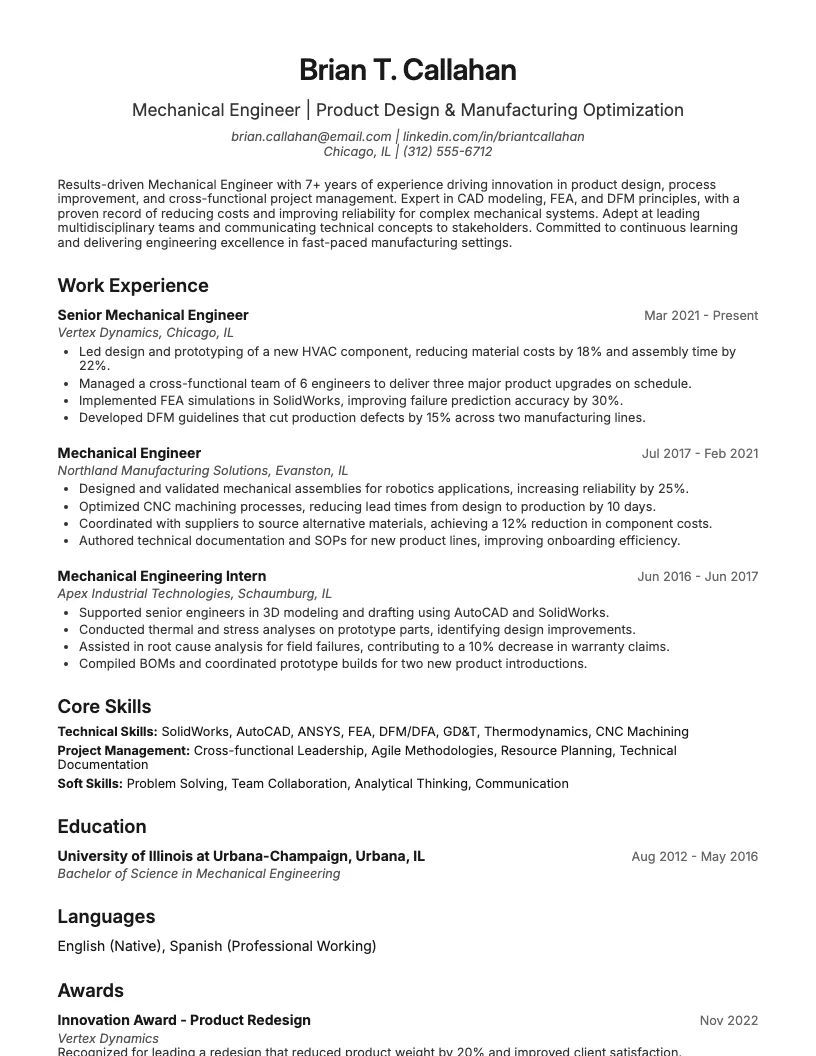
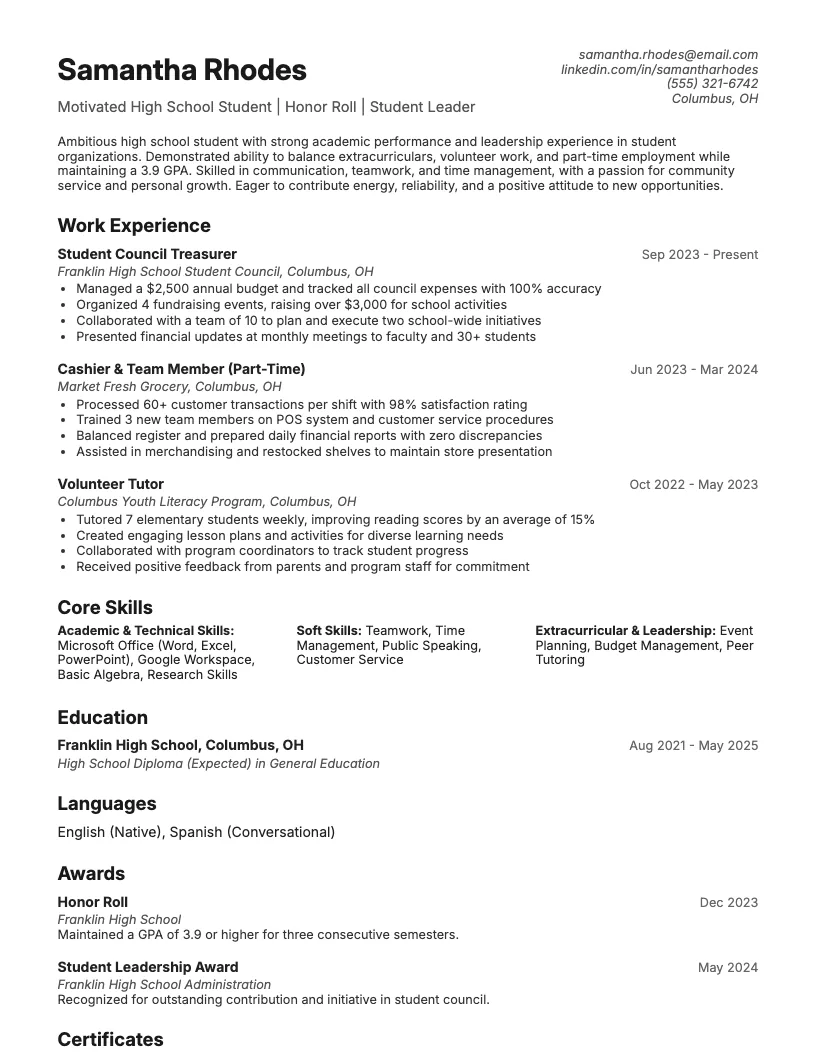
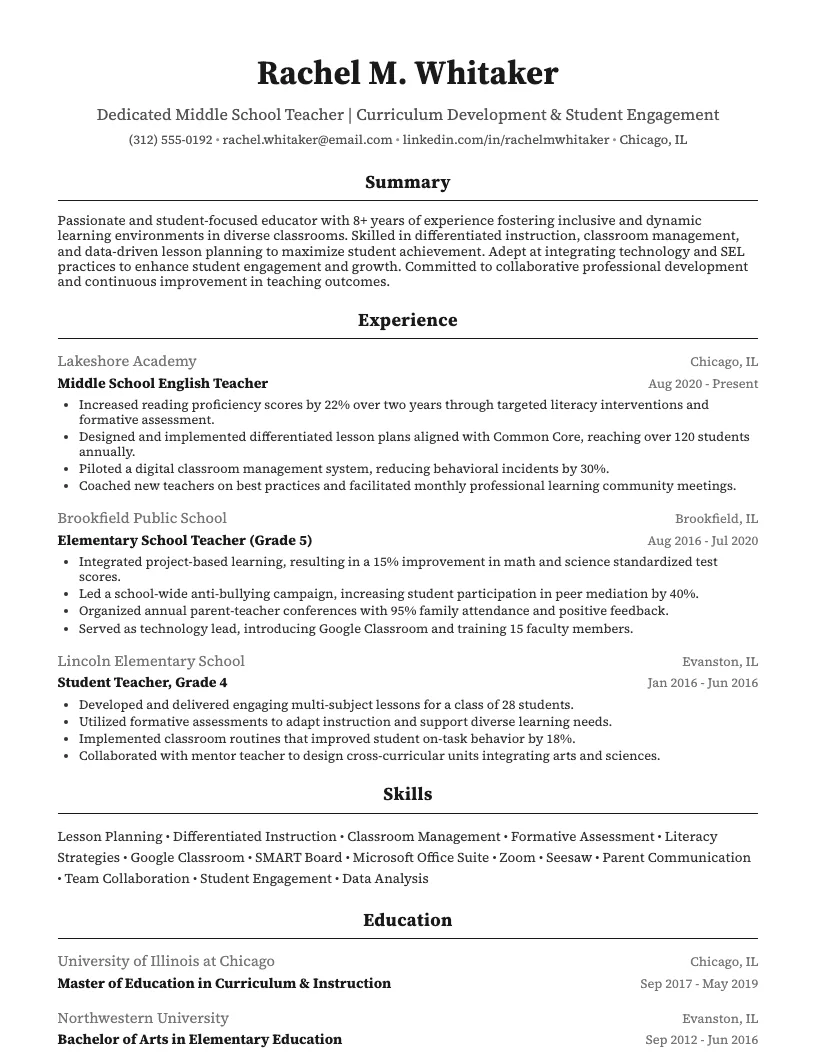
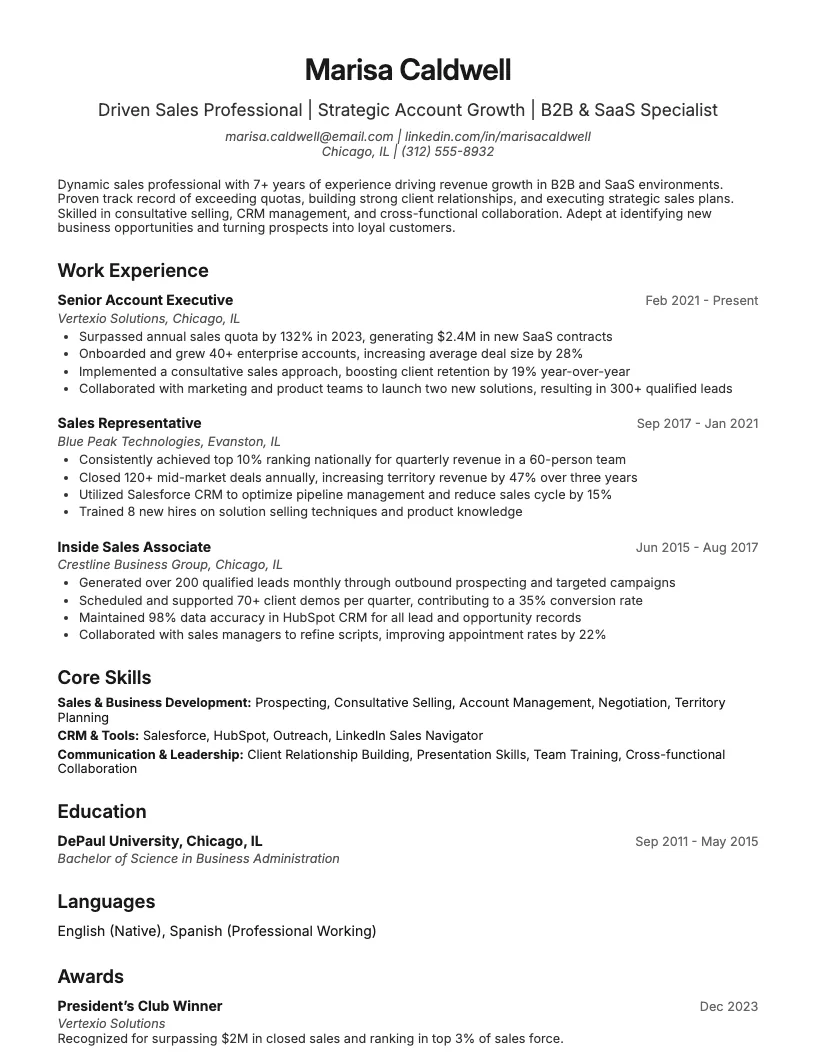
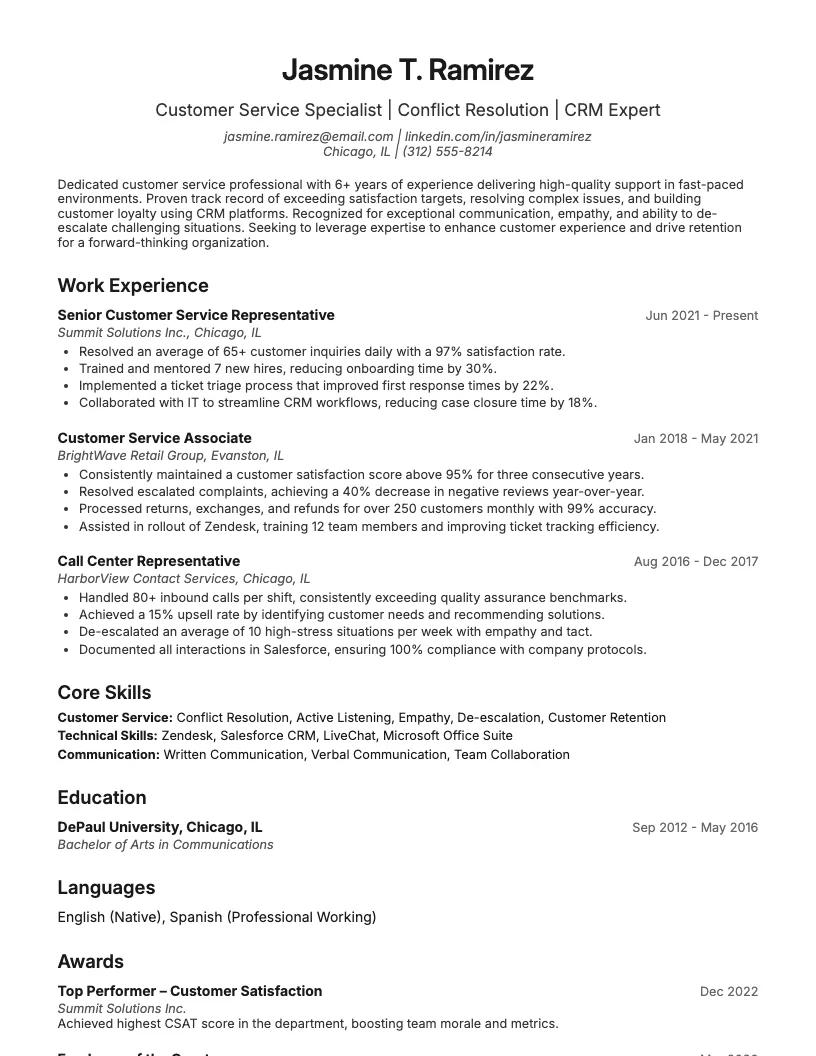
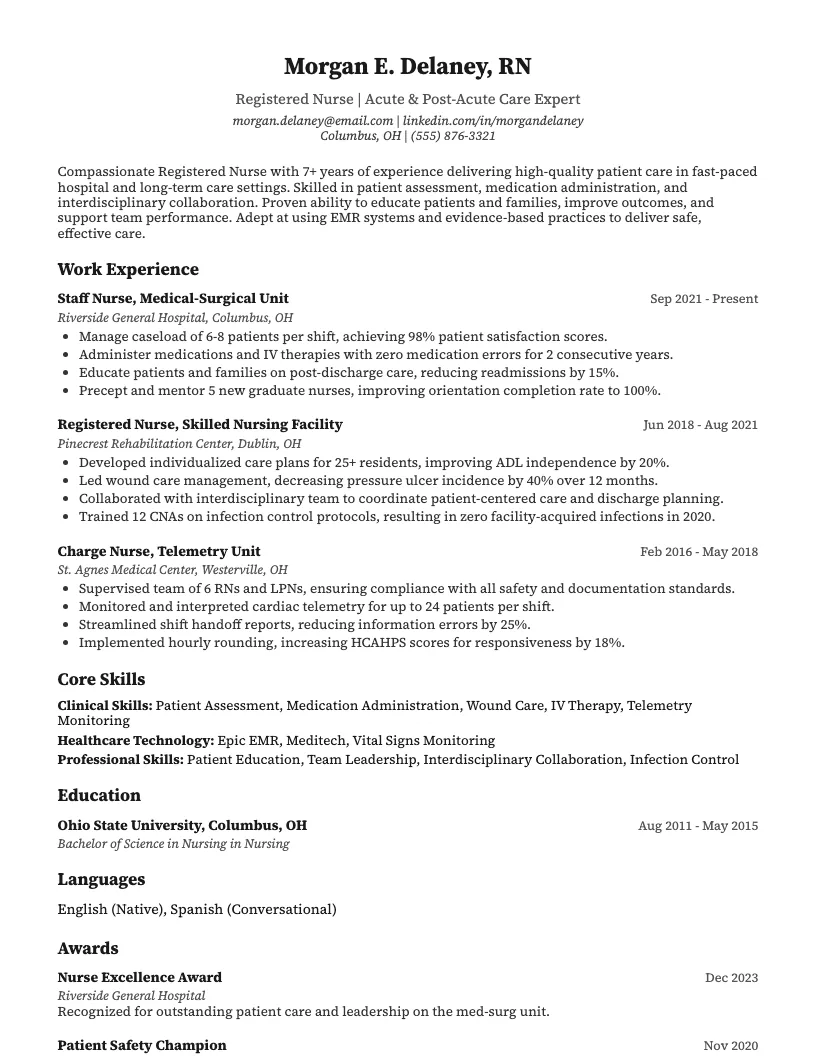
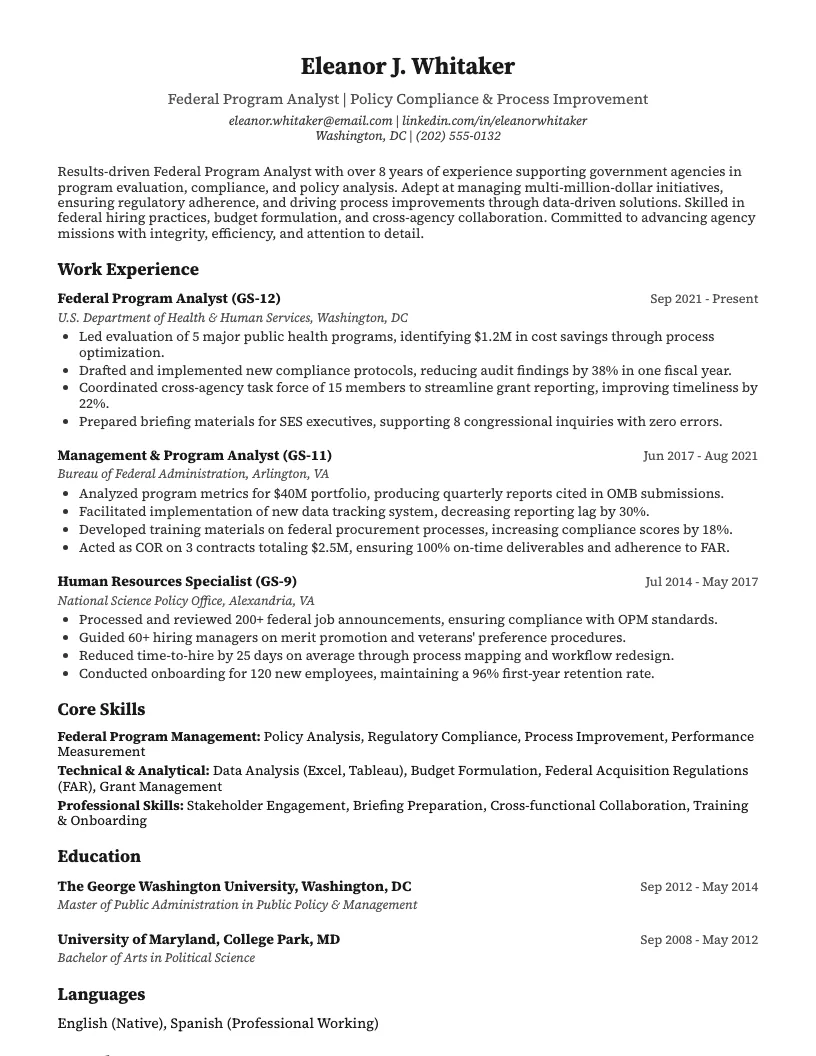
See these skills on a real resume
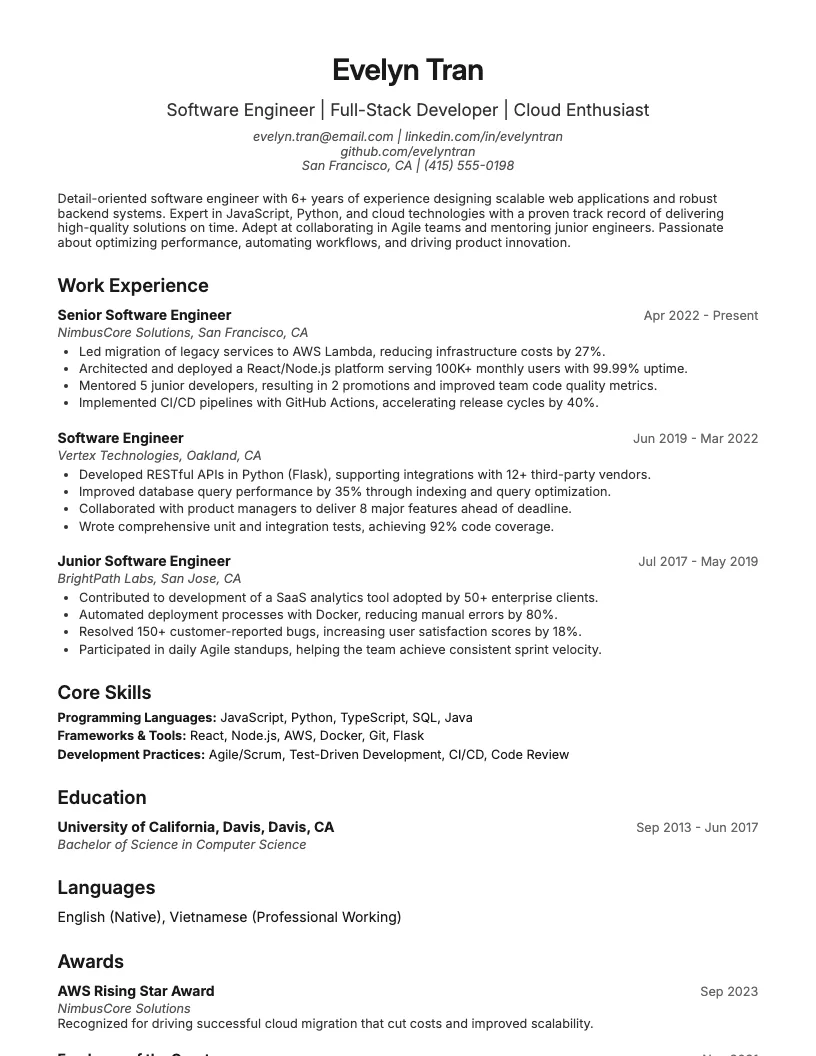
8 examplesStart from an example that already has them, and swap in your own.
Check your resume against the job you want
Scan your resume, see which skills and keywords the posting asks for that you are missing, and fix them before you apply.
Free to use • No credit card required