Customer Service Skills Resume: 12 Skills and Keywords That Work
12 customer service skills for your resume, the exact keywords employers search for, a healthcare-specific keyword list, and 3 weak-vs-strong bullet examples.


Written by Marcus Rodriguez
ATS Optimization Specialist & Career Coach
Updated August 2026
Reviewed by Dr. Priya Sharma
Is your resume ATS-friendly?
Drop your resume in and see which of these skills a scanner can actually read, and which ones the job you want is asking for that you have not listed.
PDF or DOCX. Max 2MB.
We never share your resume or use it to train a model.
In This Guide:
What are customer service skills on a resume?
Employers pay attention to this section more than most, because customer service is one of the few jobs where the resume itself is a sample of the skill. If the wording is sloppy, they assume you'll be sloppy with a customer too.
Soft skills that show how you treat a customer
These are the human side: staying patient with someone who's angry, listening for what they actually need instead of what they said first, and keeping your tone steady when the queue is backed up.
I've read hundreds of these resumes, and the soft skills are almost always the weakest part - people write "great communicator" instead of showing it. A hiring manager can't verify a claim like that, so it does nothing for you.
Hard skills that show what you can operate
These are the tools and systems: a CRM, a ticketing platform, a phone system, a specific reporting dashboard. Hard skills are checkable - either you've used Zendesk or you haven't - so they carry more weight with an applicant tracking system than any soft skill does.
Nine times out of ten, the resumes that get past the scanner are the ones naming the actual tools, not just "customer service software."
Why employers screen for both
A resume with only soft skills reads like a personality test. One with only hard skills reads like a systems manual.
Employers want proof you can operate the tools and handle the person on the other end of them, so they screen for both - often in the same posting, sometimes in the same bullet.
That's the gap ResumeJudge is built to close: paste in the job posting and it'll rewrite your resume to add whichever of the two categories it's thin on, before a recruiter ever sees it.
Where the phrase "customer service" itself belongs on the page
Don't just drop "customer service" once in your job title and call it done. It should show up in your summary, in your skills list, and inside at least one bullet under experience - that's the pattern applicant tracking systems are built to match.
You'll pick the exact skills to list next, and where you put them on the page after that.
Which customer service skills should you put on your resume?
Which customer service skills should you put on your resume?

I've read enough customer service resumes to tell you the mistake almost everyone makes: they list "customer service skills" as one skill, then stop.
That tells a hiring manager nothing.
The resumes that get interviews break the job down into the dozen or so things it actually asks you to do, and name each one.
Below are the twelve that show up again and again in job postings and in the resumes that actually land interviews. You don't need all twelve on one resume - pick the ones the job you want actually asks for.
More on how to do that later in how many skills to list.
Active listening
Hearing a customer and understanding them are two different things, and job postings know the difference.
Active listening means you catch what the customer is actually asking for, not just the words they used to ask it, and you ask a clarifying question before you answer instead of guessing.
Put it on your resume as a bullet that shows the outcome, not the trait: "asked clarifying questions to identify root cause, cutting repeat calls by X%."
Communication, written and verbal
This is the single most requested skill in the customer service postings I've looked at - one study put it above 20% of listings, well ahead of anything else on the list.
That's because almost every part of the job runs through it: what you say on a call, what you type in a chat, what you write in a follow-up email.
Show it with results. "Reduced average response time to under 2 minutes" says more than "strong communicator" ever will.
Empathy
Don't confuse empathy with over-apologizing - three "I'm so sorry"s in a row reads as anxious, not caring. One acknowledgment followed by a fix is what actually calms someone down, and that's the version worth putting in a bullet.
Empathy is what separates a rep who processes a complaint from one who actually calms the customer down.
It means putting yourself in the customer's spot for a second - seeing why they're frustrated before you try to fix anything.
I'd rather see one bullet that proves you did this ("de-escalated an upset customer and retained the account") than the word "empathetic" sitting alone in a skills list.
Patience
Patience is what gets you through the fifth call of the day that sounds exactly like the first four.
Customers repeat themselves, get frustrated, or take a while to explain the actual problem, and the reps who keep their tone level the whole way through are the ones managers want to keep.
You won't convince anyone by writing "patient" on a resume. You convince them with a number - average handle time, resolution rate, a queue you kept moving during a busy stretch.
Complaint resolution and de-escalation
Nine times out of ten, this is the actual job. Customers rarely reach out to say everything's fine.
De-escalation is a specific move: separate the customer's anger from the actual problem, deal with the problem, and don't take the anger personally while you do it.
This pairs closely with problem solving below - one is the emotional half of the job, the other is the practical half, and the strongest resumes show both in the same bullet.
Problem solving
A customer calls because something's broken, missing, or wrong, and your job is to figure out where the breakdown happened and fix it using what your company gives you to work with.
That's a specific process: listen, diagnose, resolve, and the resumes that show it as a process rather than a trait are the ones that stand out.
I always tell people to write the bullet backwards - start from the fix, then show what you did to get there.
Product knowledge
You can be the best listener in the building, but if you don't know the product, you're transferring the call to someone who does.
Product knowledge is what lets you answer a question in the first exchange instead of the third, and it's a skill hiring managers specifically screen resumes for when the role is technical or the product line is large.
Name the actual products, systems, or plan tiers you supported if you can - specifics beat "strong product knowledge" every time.
Attention to detail
Attention to detail shows up in the numbers too - one ranking of customer service soft skills by how often they appear in postings put it second only to communication.
In practice it means you log the account correctly, you catch the typo in the order number before it ships wrong, you notice the detail in the ticket that explains why the customer is actually upset.
It's a quiet skill, but it's the one that keeps errors from becoming complaints in the first place.
Time management under queue pressure
Every interaction is a different length, and the queue behind it doesn't care.
The skill isn't rushing people - it's knowing when you've given a customer what they need and it's time to wrap up, without cutting the conversation short in a way that damages the relationship.
If you've hit handle-time targets, kept a queue moving during a high-volume stretch, or held your quality score steady while volume spiked, that's the bullet. Say the number.
Adaptability
No two shifts look the same - different customers, different moods, sometimes a new tool or process dropped on you with no warning.
Adaptability is proof you don't need three weeks to get comfortable with a change, which matters a lot to a manager who's about to hand you a new script or a new system.
If you've supported more than one channel, product line, or team, that's adaptability already on your resume - you just have to say it plainly.
Upselling and cross-selling
Plenty of "pure support" roles still expect you to notice an upgrade opportunity and mention it, and retail and call center postings often ask for it outright.
This is where a number matters more than almost anywhere else on this list - "identified upsell opportunities" is forgettable, "upsold X% of support calls into plan upgrades" gets read twice.
If you've never tracked a number for this, numbers you can use if you have never tracked one covers what to put down instead.
Bilingual support
If you speak a second language, this is one of the highest-value lines you can put on a customer service resume, and I've watched it get resumes moved to the top of a pile on its own.
Name the language and the level you support at - "bilingual English/Spanish, handled Spanish-language calls" tells a recruiter exactly what they're getting.
Don't bury it in a skills list. Companies that need it are usually searching for the language by name, so if you run your resume against a posting that asks for a specific language, ResumeJudge will add that line to your resume if it's not already on the page.
Which customer service keywords do employers actually search for?
The five keyword categories to check your resume against
| Category | Examples | Why it matters |
|---|---|---|
| Role words | customer support, client relations, customer experience | Match the posting's exact phrase |
| CRM/tools | Zendesk, Salesforce, Freshdesk, Intercom, HubSpot | Proves you won't need onboarding |
| Channel words | live chat, email support, phone support, omnichannel | Signals the pace you can work at |
| Metric words | CSAT, NPS, first call resolution, AHT, SLA | Proves you were measured on the job |
| Action verbs | resolved, handled, escalated, retained, upsold | Shows what actually happened |
Skills tell a hiring manager what kind of person you are. Keywords are what get you in front of that hiring manager in the first place.
Most customer service applications land in a tracking system that recruiters search and filter, and those searches match words, not character. I've read through enough of these to know the same handful of terms come up again and again.
Here's where to spend your effort.
Role words: customer support, client relations, customer experience
Employers don't all call the job the same thing. One posting wants "customer support," the next wants "client relations," and a third has rebranded the whole function "customer experience."
Use the exact phrase from the posting you're applying to, not just the one on your last job title. If the listing says "customer experience" three times and your resume only says "customer service," a scanner can miss the connection entirely.
Ticketing and CRM tools: Zendesk, Salesforce, Freshdesk, Intercom, HubSpot
This is the category I see people underplay the most. Naming the actual software you used - Zendesk, Salesforce, Freshdesk, Intercom, HubSpot - tells an employer you won't need two weeks of onboarding just to open a ticket.
If you've used one, write it. Don't write "CRM software" when you mean Salesforce; the tool name is the keyword, not the category.
Channel words: live chat, email support, phone support, omnichannel
Every customer service job runs through a channel, and that channel is often a filter employers search on directly. Live chat is not phone support, and phone support is not email support - if you've done all three, say "omnichannel" and mean it.
Naming the channel also sets expectations about pace. Phone and chat run in real time; email gives you more room to think.
Employers read your channel experience as a signal for how fast you can work.
Metric words: CSAT, NPS, first call resolution, average handle time, SLA
These are the strongest keywords on the whole page, and most resumes leave them out entirely. CSAT, NPS, first call resolution, average handle time, SLA - these aren't jargon to a hiring manager, they're proof you were measured and held up.
A line like "maintained 95% CSAT" does more work than three sentences about being a people person. If you never tracked a number like this, there's a way to still show it.
Action verbs: resolved, handled, escalated, retained, upsold
The verb you open a bullet with is doing more than grammar. "Resolved," "handled," "escalated," "retained," "upsold" - each one tells the reader something different happened.
"Handled" is neutral, "resolved" says you closed it, "retained" says you kept a customer who was ready to leave. Pick the verb that's actually true, not the one that sounds biggest.
I'd rather see "escalated 12 complex cases weekly" than a vague "provided excellent service."
How often each of these shows up in job postings
Across customer service postings, communication shows up in roughly a quarter of them, attention to detail in about one in six, and management-related language in half. On the hard-skills side, operations, sales, and technical support each turn up in roughly three out of ten listings.
That spread is exactly why one generic resume doesn't work for every posting. Run yours against the specific job description and see which of these words it's actually missing - ResumeJudge will add the missing ones for you, so you're not guessing which to add or where.
What keywords does a healthcare customer service resume need?
What keywords does a healthcare customer service resume need?
Healthcare customer service is its own beast, and if you're coming at it with a generic call-center resume, it's going to fall flat. I've reviewed enough of these to tell you the ATS is looking for a different vocabulary here, and it's a mix of compliance terms, software names, and insurance jargon you won't see anywhere else.
HIPAA and patient privacy
Say it explicitly. Don't write "handled confidential information" when you mean "maintained HIPAA compliance while managing patient records."
One data point worth knowing: HIPAA and patient privacy show up in a meaningful share of these postings, and they're one of the first things a healthcare recruiter's eye goes to. If you've done any HIPAA training, name it, either here or in a certifications section.
Medical terminology
This one turns up on a lot of healthcare customer service job ads - one keyword breakdown put medical terminology at 14.7% of postings. That surprises people, but it makes sense.
A patient calls confused about a diagnosis code, and you need to speak the language back to them.
If you've worked intake, billing, or scheduling in any medical setting, name it directly: "medical terminology," not "healthcare vocabulary."
EHR systems: Epic, Cerner, Meditech, Athenahealth
Epic alone shows up in about 13% of postings, and I'd bet the real number for "any EHR system" is much higher once you add Cerner, Meditech, and Athenahealth. Name the specific system you've used, not "electronic health records" as a vague catch-all.
The mistake I see most often here: someone worked in Epic for two years and writes "proficient with medical software." That's invisible to both the scanner and the hiring manager.
Name the tool.
Insurance verification and prior authorization
This is a hard skill, and it belongs above the soft ones on this kind of resume. If you verified coverage or ran prior authorizations, put a number on it: how many requests a day, which portals you used (Availity and Navinet are the common ones).
"Handled 50+ insurance verification requests daily" tells a screener something a bullet point like "verified patient coverage" never will.
Claims processing and copay collection
These two get lumped together because they usually are, in the job and on the page. If your role touched claims triage, copay collection, or billing disputes, name each one.
A resume that just says "billing support" is leaving specifics on the table that a recruiter is actively scanning for.
Patient intake, registration and scheduling
Front-desk and administrative healthcare roles live and die on these three words. Whatever you called your day-to-day, translate it: check-in, registration, scheduling.
If you improved wait times or accuracy rates here, that's a number worth pulling into your experience bullets - I've seen candidates cite things like a 40% drop in patient wait times from a scheduling fix, and that kind of specific claim reads far stronger than "streamlined scheduling."
Certifications worth naming: CHAA, CHAM, CMAA, Epic Patient Access
Nine times out of ten, a healthcare customer service candidate has at least one certification worth naming and doesn't put it anywhere near the top of the resume. CHAA (Certified Healthcare Access Associate), CHAM, CMAA, and Epic Patient Access Certification are the ones I see recruiters actually recognize.
HIPAA compliance training and a CPR/BLS card are also worth a line.
Give each one a full entry: name, issuing body, year. A bare acronym in a skills list doesn't carry the same weight.
Job titles this covers: patient service representative, medical service coordinator, healthcare customer service rep
These three titles get treated as interchangeable by employers, even though the postings read a little differently each time. If you've held any of them, or done the work under a different title entirely, use the exact wording the posting uses rather than whatever your old title happened to be.
This page's main keyword section covers the general customer service terms; everything above is what layers on top of it for healthcare specifically.
One more thing worth doing before you submit: run your resume against the actual posting. ResumeJudge will add whichever of these healthcare-specific terms the job asks for and your resume is still missing, catching gaps a quick read-through won't.
Where do you put customer service skills on your resume?
Where do you put customer service skills on your resume?
Most resumes I look at have all the right skills on them somewhere - they're just buried in one spot when they need to be spread across four.
Skills that only live in a skills section read as a list you copied. Skills that only live in your bullets get missed by a recruiter skimming for six seconds.
You want the same handful of skills showing up in more than one place, each time in a slightly different form.
In the summary at the top
Your summary is three or four lines, and it's the first thing anyone reads, so it's worth naming your strongest two or three skills right there.
Not as a list - work them into a sentence. "Customer service professional with 4 years handling high-volume phone and chat support" tells a hiring manager more in one line than a summary that just says "excellent communicator."
In a dedicated skills section
This is the section applicant tracking systems scan first, so it needs to hold the exact words the job posting uses - not synonyms you think sound better.
I'd keep it to somewhere between eight and twelve skills. Any more and it stops reading as your strengths and starts reading as a wall of words nobody believes.
If you're not sure how many the posting is actually asking for, that's a fast thing to check against the posting itself - it'll flag which of your skills line up and which ones you're missing entirely.
Group them if your list runs long: software (Zendesk, Salesforce), metrics (CSAT, first call resolution), and the soft skills like de-escalation and active listening. Three or four categories, not one long column.
Inside your work experience bullets
This is the section people skip, and it's the one that actually proves the skill instead of just claiming it.
A bullet that names a duty gets skimmed past; the same skill with a number attached is checkable. The weak-versus-strong versions are in how you write a skill as a bullet point.
In a certifications section
If you've got a relevant certification - call center training, a CRM certificate, a healthcare access credential - give it its own line near the bottom rather than folding it into skills.
A named certification carries more weight than the same word sitting in a bullet list, because it's proof someone else already checked.
Where the skills section goes if you are entry level
If your work history is thin, put the skills section above your experience, not below it.
You want the reader hitting your strengths in the first few seconds, before they get to a job history that might only be a summer retail job. Once you've got a few years in the role, flip the order - by then your experience section is doing the convincing, and skills becomes a supporting section further down the page.
How do you write a skill as a bullet point that gets you an interview?
I've read enough of these to tell you the mistake in about two seconds: a bullet that names a duty instead of a result. "Helped customers with problems" tells me nothing you couldn't say about anyone who ever answered a phone.
Start with an action verb
Open with what you did, not what you were responsible for. Resolved, handled, escalated, retained, upsold, cut, raised - words like these put you in motion instead of parked at a desk.
"Responsible for customer inquiries" is a job description. "Resolved 40+ customer inquiries a day" is a resume.
Name the tool you used
If you touched Zendesk, Salesforce, Freshdesk, or any CRM, say so in the bullet itself, not just in a skills list off to the side. A recruiter scanning fast catches "managed tickets in Zendesk" in a way they never catch "managed tickets."
Naming the tool also does double duty: it proves the skill instead of just claiming it.
Put a number on the result
Every strong bullet I've ever flagged as strong has a number in it. Response time, satisfaction score, resolution rate, calls per day, dollars retained - pick whichever one you actually have.
You don't need a dramatic number. Cutting hold time by even a few percent, or holding a 90% first-call resolution rate, says more than a paragraph of adjectives.
Weak bullet vs strong bullet: complaint handling
Complaint-handling bullet
Handled customer complaints.
Resolved escalated complaints with a 90% first-call resolution rate, cutting average hold time and keeping satisfaction scores above target.
Weak: "Handled customer complaints."
Strong: "Resolved escalated complaints with a 90% first-call resolution rate, cutting average hold time and keeping satisfaction scores above target."
The weak version could describe a single day on the job. The strong one describes a pattern the next employer can bank on.
Weak bullet vs strong bullet: phone support
Phone support bullet
Answered phone calls from customers.
Fielded 70-90 inbound calls a day, cutting average handle time from 6:10 to 4:45 while holding accuracy above 98%.
Weak: "Answered phone calls from customers."
Strong: "Fielded 70-90 inbound calls a day, cutting average handle time from 6:10 to 4:45 while holding accuracy above 98%."
Volume plus a before-and-after number does more work than either one alone - it shows scale and improvement in the same line.
Weak bullet vs strong bullet: upselling
Upselling bullet
Upsold products to customers when possible.
Achieved the highest upsell rate on the team two years running, growing from 2.6% to 3%.
Weak: "Upsold products to customers when possible."
Strong: "Achieved the highest upsell rate on the team two years running, growing from 2.6% to 3%."
That's not a bigger claim than the weak version - it's the same claim, just with the proof attached.
Numbers you can use if you have never tracked one
Nine times out of ten, when someone tells me they have no numbers, it turns out they just never wrote them down. You almost certainly know:
- how many calls, chats, or tickets you handled in a shift or a day
- roughly how long a typical case took you to close
- how many people were on your team, or how many customers you supported
- whether a satisfaction score, return rate, or complaint count moved while you were there
Any one of those turns a duty into a result. If you're not sure which of your bullets are still sitting at "handled" and "responsible for," running your resume through ResumeJudge against a posting will flag the vague ones and suggest the rewrite for each.
What does a finished customer service skills section look like?
What each role leads with
| Role | Skills to lead with | Example metric |
|---|---|---|
| Customer service rep | Communication, complaint handling, tools | 100% customer approval rating |
| Call center agent | Handle time, resolution rate | Cut response time by 27% |
| Retail associate/cashier | Register accuracy, upsell rate | Small, honest numbers |
| Healthcare/patient services | EHR systems, HIPAA | Improved ticket resolution by 35% |
| Manager/supervisor | Team leadership, scale | 10-person team, $2.5M contract |
Reading skill names is one thing. Seeing them sit inside a real bullet is another, so here's what each role actually looks like on the page.
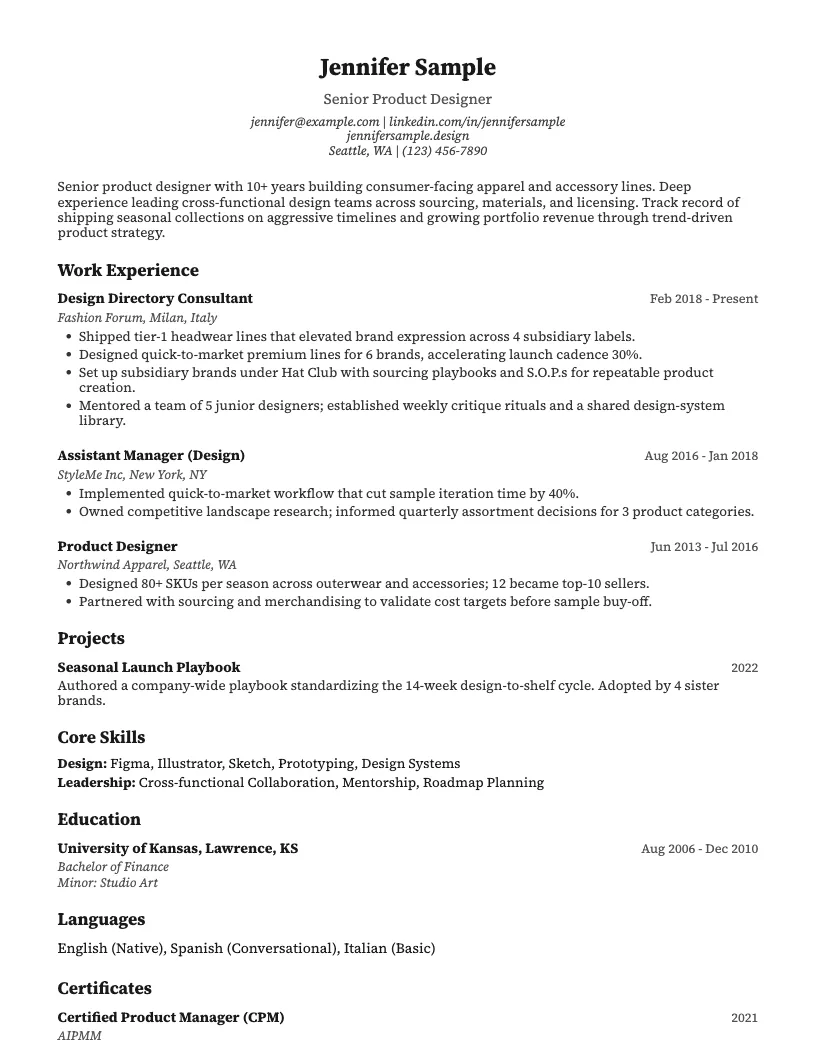
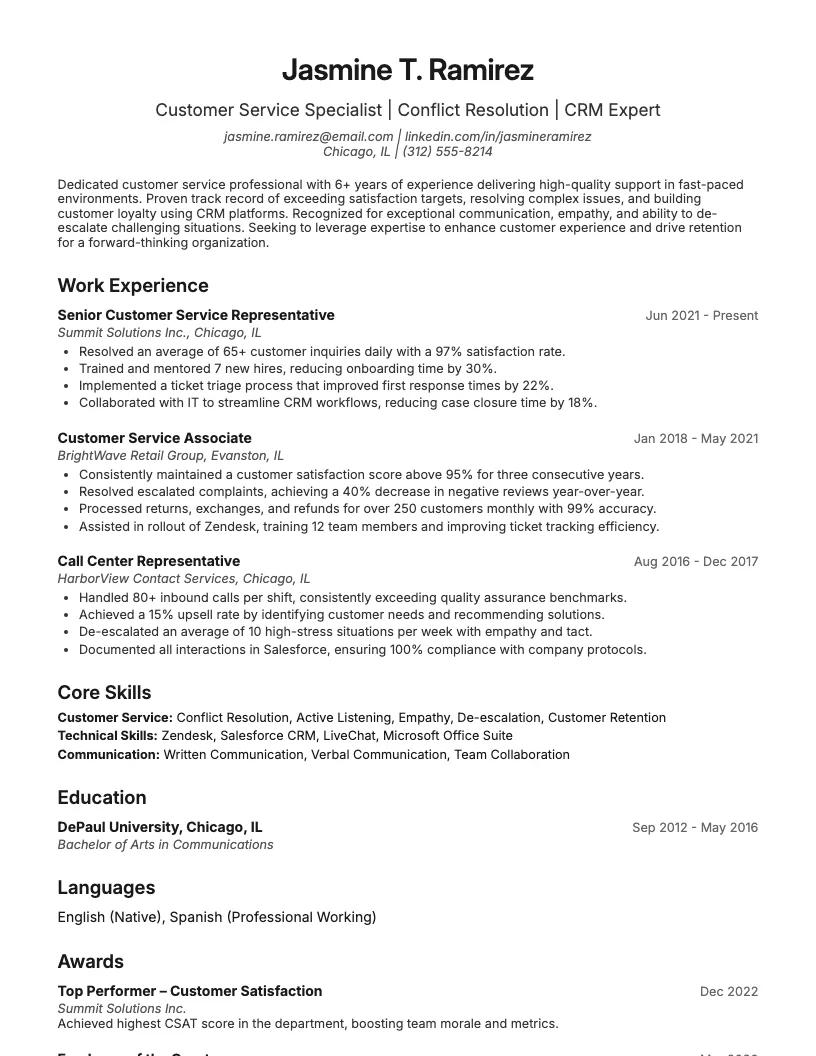
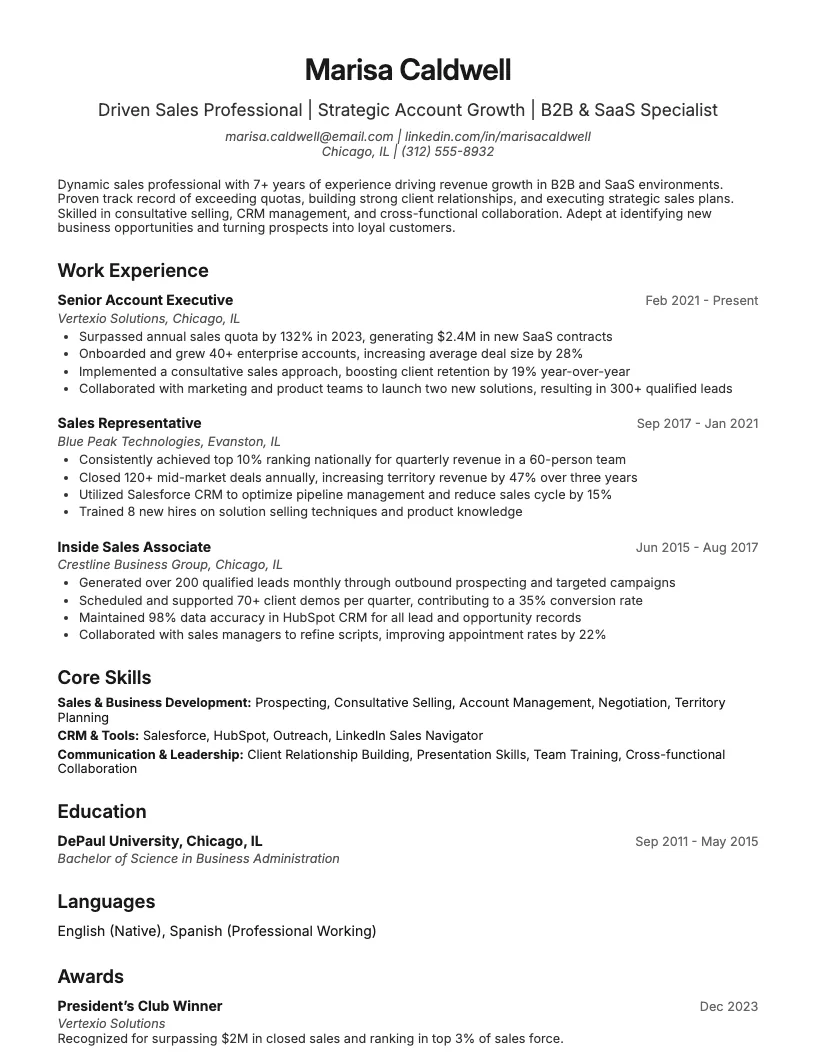
Customer service representative
Below the header, skills split into two rows - communication and complaint handling on one side, the tools (Zendesk, phone systems) on the other.
Call center agent
A call center skills list stays narrow: the phone and ticketing systems on one line, the metrics you were measured on - handle time, resolution rate, calls per shift - on the next. How to turn one of those metrics into a bullet is covered in how you write a skill as a bullet point.
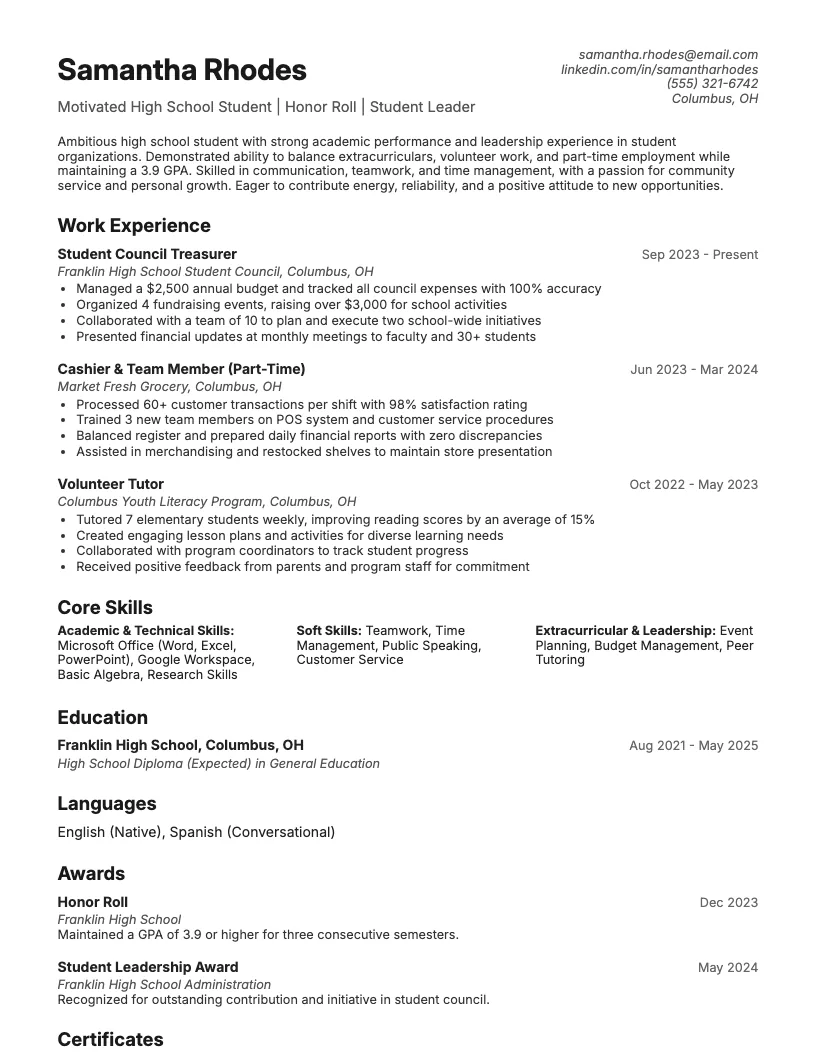
Retail associate or cashier
Cashier resumes get the most mileage out of small, honest numbers: register accuracy, transactions per shift, upsell rate.
Nobody expects a cashier to show six-figure numbers, and trying to inflate one is the fastest way to make a reviewer distrust the rest of the page.
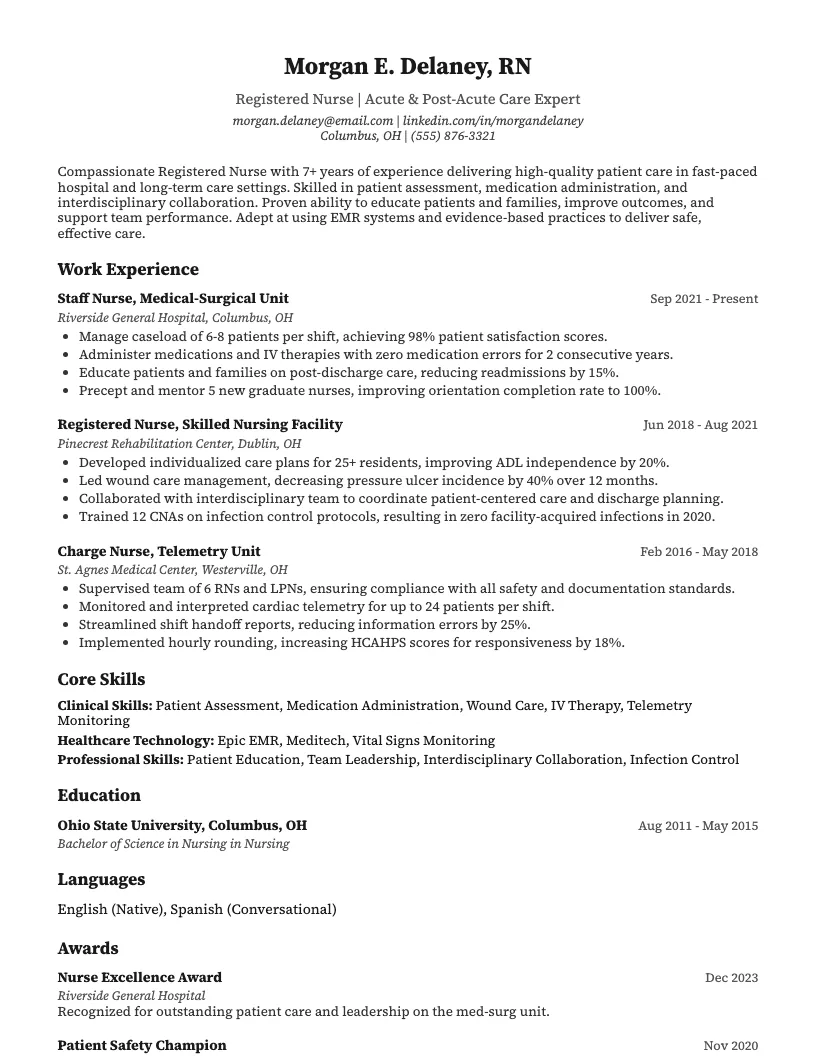
Healthcare or patient services
Here the skills section carries more weight than the summary, because it's doing double duty: proving customer service ability and proving you know the healthcare systems the posting names.
One template I've seen groups Epic Systems and Meditech under a "healthcare software" line, separate from general tools like Excel - and pairs it with results like "improved ticket resolution by 35%" and "exceeded retention targets by 40%." That grouping alone tells a reader you've worked inside a clinical environment, not just a general helpdesk.
If the posting names a system you haven't touched in years, check it against your resume before you send it - that's exactly the gap ResumeJudge closes by rewriting your resume against the posting.
Customer service manager or supervisor
At manager level the bullets shift from "I resolved" to "my team resolved," and the strongest examples show it in scale: a 10-person team, a 35% efficiency gain, a $2.5M contract negotiated.
Supervisor resumes add one thing reps rarely have - early management proof, like recruiting or training staff before the official title caught up. If you were doing manager work under a rep title, that belongs here, not buried in a paragraph.
How each one groups its skills into categories
Every strong example above does the same underlying thing: it never lists skills as one long, flat row.
The pattern I see work best is four buckets - leadership, technical, administrative, and software - with each skill dropped into exactly one. Keep the total inside the range in how many skills to list: past that, a reviewer stops reading and starts skimming, which defeats the point of listing them at all.
If you're not sure which bucket a skill belongs in, that's usually a sign it's vague. Complaint resolution and de-escalation is specific enough to place; "people skills" isn't.
How do you match your skills to the job posting you are applying to?
How do you match your skills to the job posting you are applying to?
I've read enough of these to tell you the single biggest difference between a resume that gets a callback and one that doesn't: the callback resume was written for one specific posting, not sent out fifty times unchanged.
Pull the repeated words out of the posting
Open the job description and read it twice. Once for meaning, once with a highlighter.
The second read is where you notice that "customer experience" shows up three times, or that "escalation" appears in both the responsibilities and the requirements. Words a posting repeats are the words its screen is built around, and they're usually the same words that later get typed into a recruiter's search bar.
Mirror the exact tool names it lists
Whatever tools the posting names, use its exact wording on your resume rather than the wording from your old job. Why the tool name beats the category is covered in ticketing and CRM tools.
Use both the full term and the acronym
Write "customer satisfaction (CSAT)" once, then you can use either after that. Same with "average handle time (AHT)" or "service level agreement (SLA)."
Postings aren't consistent about which form they use, and neither are the systems reading your resume. Covering both costs you a few characters and closes a gap that trips up more resumes than people realize.
Skills to cut when the posting never mentions them
Here's the part people resist: if the posting never mentions upselling, don't lead with your upselling numbers.
I've seen candidates cut a strong, relevant skill from a support-desk application because they were proud of it - meanwhile the posting was entirely about complaint resolution and de-escalation and never once mentioned sales. Every line on a one-page resume is competing for a few seconds of attention.
Give that space to what the employer actually asked for.
How many skills to list
Somewhere between eight and twelve in a dedicated skills section is the range I keep coming back to. Fewer than that and you look thin; more than that and the hiring manager stops reading them as distinct qualities and starts reading them as filler.
Pick the ones the posting cares about first, then round out with the strongest of what's left.
The line where tailoring becomes keyword stuffing
Tailoring means choosing which true things about you to say. Stuffing means saying things that aren't true, or saying true things so many times they stop reading like a sentence.
The test I use: if you can't back a skill up in an interview with a specific example, it doesn't belong on the page - no matter how many times the posting used the word. This is exactly the kind of check ResumeJudge does automatically, comparing your skills list against a posting and rewriting whatever's missing or overstated before a recruiter ever sees it.
How do you show customer service skills with no experience?
Is your resume good enough?
Drop your resume in and see which of these skills a scanner can read, and which ones the job you want is asking for that you have not listed.
Upload your resumeFree. PDF or DOCX. We never share your resume or use it to train a model.
You've never held a job with "service" in the title, so it feels like you have nothing to put here. You do - you just haven't labeled it yet.
Jobs that already count: retail, food service, tutoring, volunteering
Retail, food service, tutoring, babysitting, volunteering, even a group project where you dealt with people outside your team - all of it counts. Every one of those puts you in front of someone who needed something from you, often while you were juggling a line or a deadline.
I've read hundreds of entry-level resumes, and the ones that work don't wait for a "real" customer service job to show up. They pull the closest thing they have and describe it like it mattered, because it did.
Skills that carry over from them
Name the moment, not the job title. A shift where you calmed down an upset customer, a tutoring session where you had to explain the same thing three different ways, a volunteer shift where you kept a line moving - those are complaint resolution, patience, and active listening in disguise.
If you touched any kind of system - a register, a scheduling app, a basic CRM - say so. Tool familiarity reads as real experience even at a beginner level.
Coursework and free certifications worth adding
If you're a student or recent grad, relevant coursework belongs here too - communications, psychology, hospitality, anything that touches how people interact. It's thin evidence on its own, but paired with a real example it rounds out the picture.
Free certifications help the same way. They won't replace experience, but they show you went looking for it instead of waiting for a job to teach you.
Putting skills above work history
When your work history is short, lead with a skills section - the ordering is covered in where the skills section goes if you are entry level.
Once you've built that list, run it against the actual posting - ResumeJudge will add whichever of the skills the job asks for are still missing from your resume, before you send it anywhere.
An example bullet from a non-service job
Bullet from a non-service job
Tutored students in math.
Managed 60+ weekly student sessions, tracked recurring questions, and adjusted teaching style to cut repeat confusion - a pattern I logged with a rough 90%+ satisfaction rate from parent feedback.
Say you tutored part-time. A weak bullet reads "Tutored students in math."
A strong one reads: "Managed 60+ weekly student sessions, tracked recurring questions, and adjusted teaching style to cut repeat confusion - a pattern I logged with a rough 90%+ satisfaction rate from parent feedback."
That's not a customer service job. It's still a customer service resume, if you write it like one.
Frequently Asked Questions
How many customer service skills should I list?
Somewhere between eight and twelve in a dedicated skills section. Pull the skills that actually show up in the posting instead of listing every soft skill you can think of, and let the rest of the resume back them up with real examples. ResumeJudge can check your list against a specific job description and flag what you're missing.
Should I list customer service as a skill on any resume?
Only if the job actually involves dealing with customers, clients, or internal requesters, even loosely. For a role with no people-facing contact, like data entry or backend engineering, leave it off and use that space for skills tied more directly to the job. If the posting mentions any client-facing, support, or account work, it's worth including.
Do I need a cover letter for a customer service job?
Not always, but it helps when you're up against a lot of similarly qualified applicants. A cover letter gives you room to explain a specific result, like cutting call wait times or raising a satisfaction score, or to explain a move into the field from somewhere else. If the posting doesn't ask for one and the role isn't especially competitive, it's fine to skip.
Are customer service skills changing because of AI chatbots?
Yes - the job increasingly means working alongside automated tools rather than being replaced by them. Employers now expect comfort handing off from a chatbot, using a self-service knowledge base, and tracking metrics like first-contact resolution across chat, email, and social channels. Straight phone and email support is no longer the whole role.
Can I list a CRM I only used a few times?
You can, but only list it if you can talk through it in an interview - a tool you touched briefly still counts, just don't describe it like deep expertise. Match the level of detail in your bullet to how much you actually used it, rather than inflating the skill itself. ResumeJudge can show you which tools a posting is actually screening for, so you can decide whether a brief CRM stint is worth including.
See these skills on a real resume
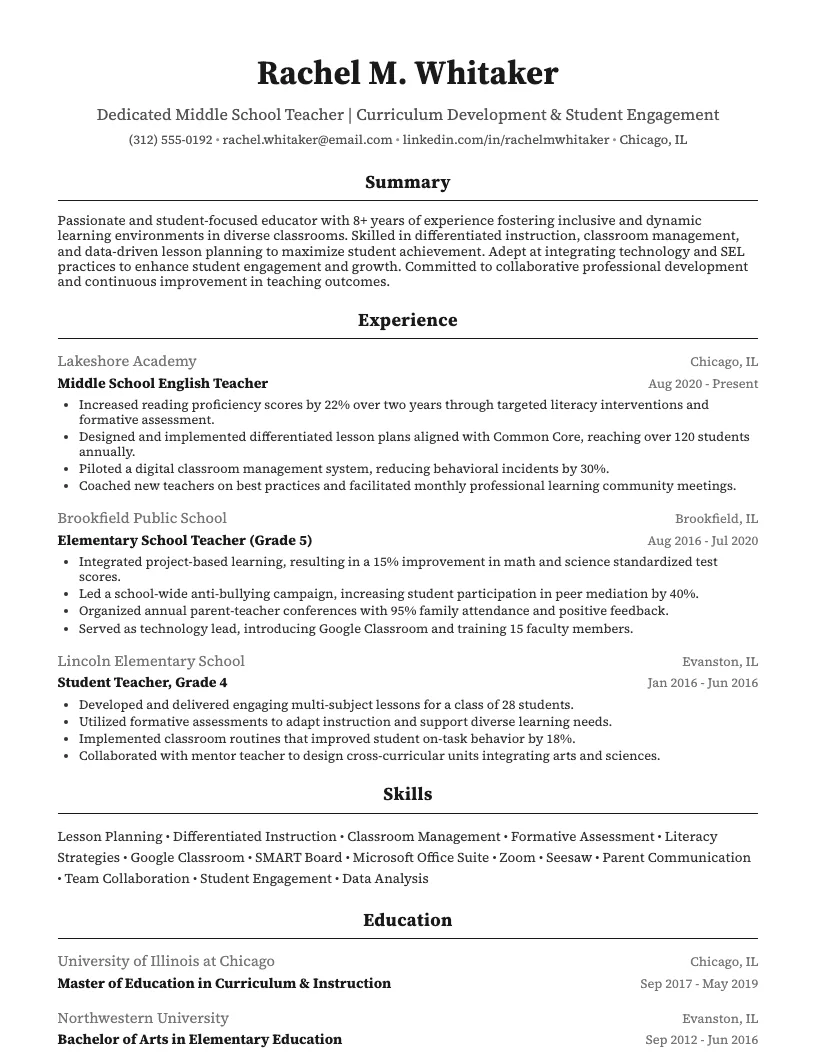
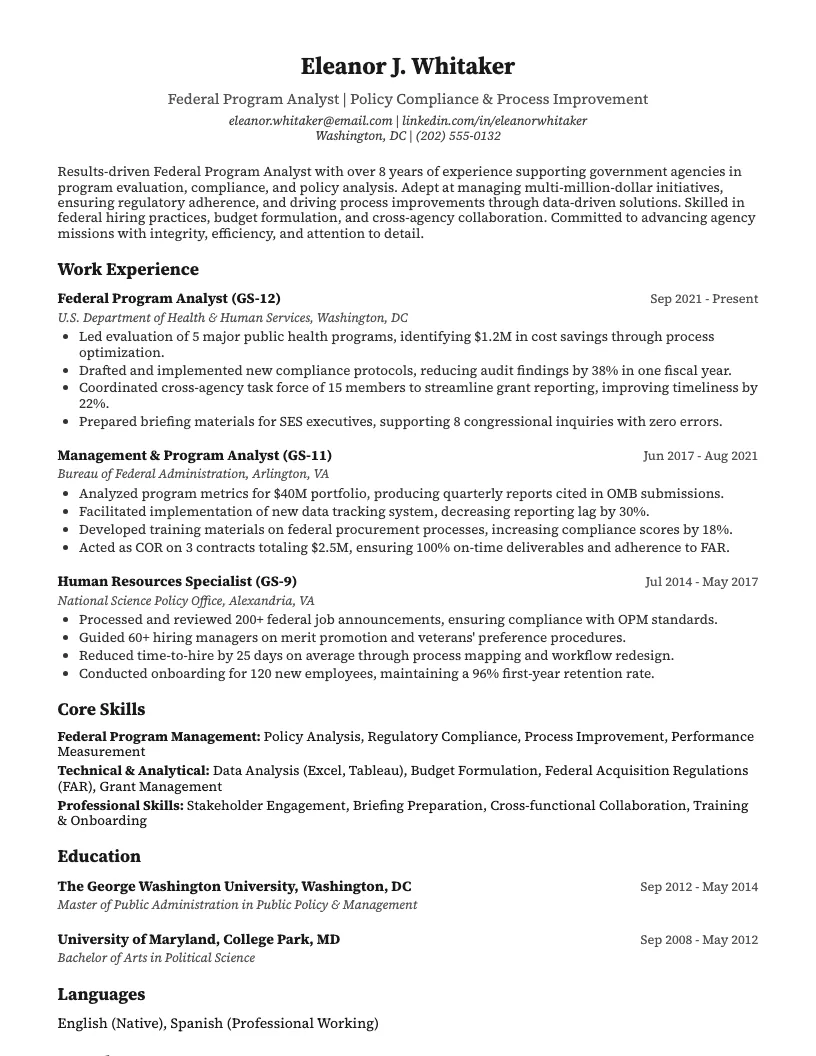
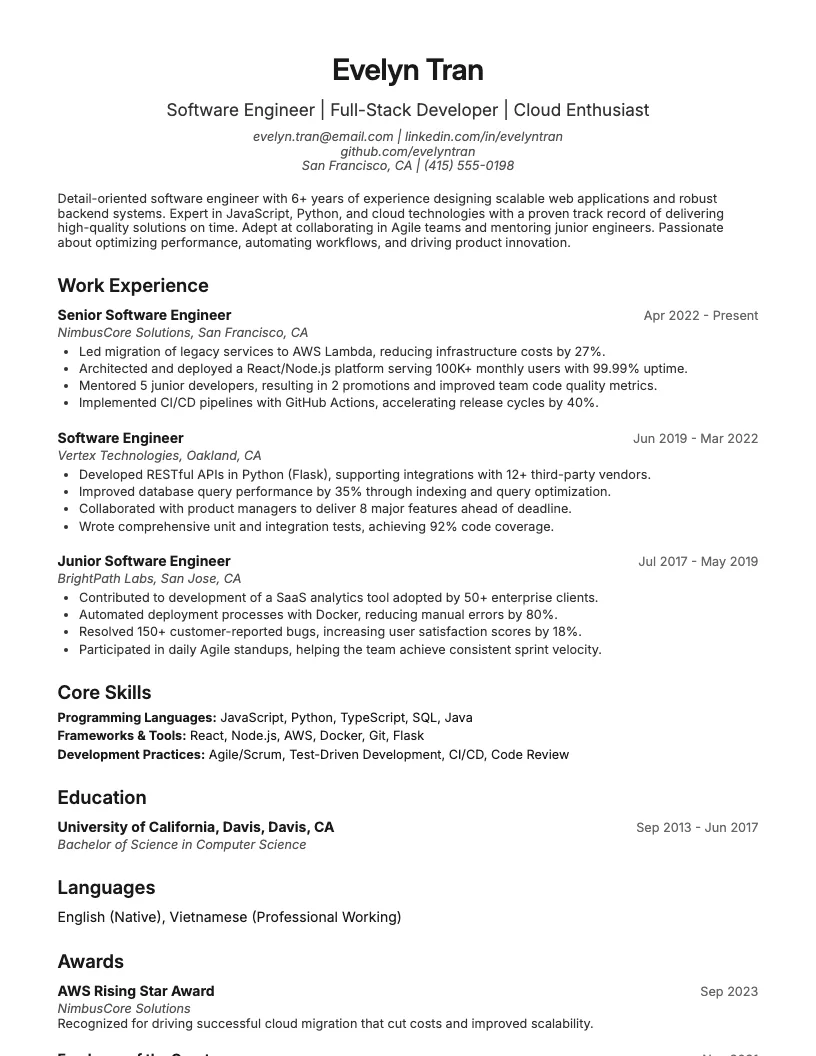
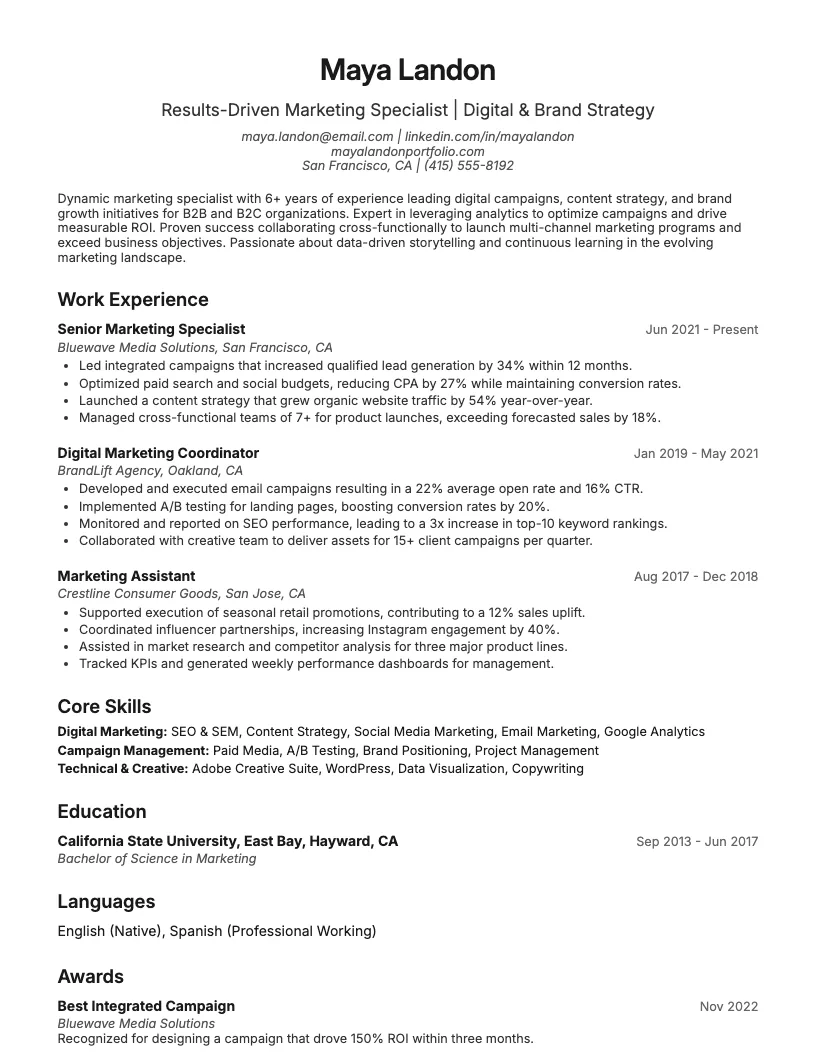
8 examplesStart from an example that already has them, and swap in your own.
Check your resume against the job you want
Scan your resume, see which skills and keywords the posting asks for that you are missing, and fix them before you apply.
Free to use • No credit card required