Project Manager Resume Keywords: 10 to Use From 1,465 Job Ads
See the 10 keywords in 1,465 project manager job postings, plus the tools, certifications, and bullet rewrites that turn each one into real resume proof.


Written by Sarah Chen
Senior Career Strategist & Resume Expert
Updated August 2026
Reviewed by Marcus Rodriguez
Is your resume ATS-friendly?
Drop your resume in and see which of these skills a scanner can actually read, and which ones the job you want is asking for that you have not listed.
PDF or DOCX. Max 2MB.
We never share your resume or use it to train a model.
In This Guide:
What are project manager resume keywords?
Keywords are just the words the job posting and the screening software both care about: the methodology you run projects in, the tools you touch daily, the outcomes you're judged on, and the letters after your name.
I've read enough of these to know most PMs undersell every one of these categories at once, not just one.
Methodologies (Agile, Scrum, Waterfall, Kanban)
Say which one you actually ran, not "familiar with Agile methodologies." If you sat in daily standups and managed a backlog, that's Scrum.
If you tracked work in swimlanes with WIP limits, that's Kanban. More on naming the right one and when to list two.
Core competencies (scope, risk, budget, schedule)
Scope, risk, budget, and schedule are the four things every PM posting is quietly asking you to prove. I break down the exact phrasing for each one here.
Tools (Jira, Confluence, Microsoft Project, Smartsheet)
Name the tool, then name what you did in it - "built Jira dashboards for a 12-person team" beats "proficient in Jira" every time. Full list, including which ones matter by industry, is here.
Delivery outcomes (on-time delivery, cost savings, cycle time)
This is the category people leave out entirely, and it's the one hiring managers read first: did you ship on time, under budget, faster than before. A number attached to any of those three beats a paragraph of duties.
Certifications (PMP, CAPM, PRINCE2, CSM)
PMP-certified PMs post a meaningfully higher median salary than non-certified peers. Which one to get and how to list it in progress.
Why a resume with the right experience still gets filtered out
Most large companies run every resume through screening software before a person ever opens it, and the software is matching words, not judging your career. Nine times out of ten, the PM I'm reviewing has the experience and just never wrote it down the way the posting phrased it.
Running your resume against the actual posting - which is what ResumeJudge does, scoring the match and telling you exactly what's missing - catches that gap before a recruiter ever sees the resume. See the common questions on how many keywords to use and where they get missed.
Which project manager keywords appear most in job ads?
I looked at a study of 1,465 real project manager postings, and the pattern holds across almost every job board I've checked myself: a handful of terms show up over and over, and they're not the fancy ones.
Project planning
This is the single most common phrase in PM postings - it shows up in 49% of them, 723 mentions in that set. If you only fix one thing on your resume this week, make sure "project planning" is in there somewhere, tied to something you actually planned.
Communication
Right behind it at 46% (679 mentions). Employers write this because a PM who can't explain a delay to a VP is useless to them, no matter how good the Gantt chart is.
Project monitoring and reporting
43% of postings ask for this (636 mentions). It's the "I track status and tell people the truth about it" skill, and it pairs well with the status reporting and KPI tracking terms covered elsewhere on this page.
Microsoft Office
Also 43% (629 mentions) - yes, still. I know it feels beneath a PM resume, but recruiters search for it, so leave it in your skills section even if it feels obvious.
Analytical skills
37% of postings want this (536 mentions). It's vague on purpose - it means "you can look at a spreadsheet and draw a conclusion," and you prove it with a number in a bullet, not by writing the phrase itself.
The rest of the top 15, with how often each appears
| Keyword | % of postings |
|---|---|
| Project management software | 34% |
| Interpersonal skills | 32% |
| Management skills | 28% |
| Collaboration skills | 26% |
| Organizational skills | 18% |
| Customer service | 11% |
| Data analysis | 11% |
| Strategic planning | 9% |
| CAD software | 9% |
| Time management | 9% |
The ten keywords worth putting on every PM resume
Project planning, communication, stakeholder management, risk management, budget management, Agile, Scrum, Jira, cross-functional teams, and timeline management. If your resume doesn't have most of these, run it against a posting - ResumeJudge will scan the two side by side and tell you exactly which of these ten, and which posting-specific ones, are missing.
What planning, budget, and risk keywords should you use?
What planning, budget, and risk keywords should you use?

I read a lot of PM resumes that stop at "managed projects from start to finish." That tells a hiring manager nothing about what you actually did, so I break it into the six buckets a posting usually names separately.
Planning: project charter, scope management, WBS, requirements gathering, milestone planning
This is where a project gets defined before anyone touches a task list. If you wrote the project charter, ran requirements gathering with stakeholders, or built a work breakdown structure to set milestone planning, say so by name.
Execution: sprint planning, backlog management, resource allocation, deliverables
Once work starts, the keywords shift to how you kept it moving: sprint planning, backlog management, resource allocation across a team, and hitting deliverables on the dates you committed to.
Monitoring: status reporting, KPI tracking, variance analysis, earned value management
Status reporting and KPI tracking are table stakes on almost every posting I've reviewed. If you've done variance analysis or earned value management, name it directly - those two terms tell a recruiter you can manage a project by the numbers, not just the calendar.
Budget: cost control, budget variance, forecasting, ROI analysis
Money keywords carry weight because they signal you're trusted above task level. Cost control, budget variance, forecasting, and ROI analysis belong in a bullet with a real dollar figure or percentage next to them, not on their own.
Risk: risk assessment, mitigation, contingency planning, RAID log
Risk assessment, mitigation, and contingency planning show up on nearly every job ad I've checked. If your team kept a RAID log, mention it - it's a specific enough term that it proves you've actually run risk process, not just talked about it.
Schedule: critical path, Gantt charts, schedule adherence
Critical path, Gantt charts, and schedule adherence round out the list. Once you've picked the right terms for your background, where you put them on the page matters as much as which ones you chose - and if you're not sure your version actually has the ones this posting wants, that's exactly what ResumeJudge checks: it scans your resume against the job description and tells you which of these you're still missing.
Which methodology keywords do you put on your resume?
Pick the wrong methodology word and a recruiter reads your resume as five years out of date before they get to your first bullet. Here's how to get it right for each one.
Agile
Say "Agile" when your team worked in short cycles with regular check-ins and changing priorities, not a fixed plan set at the start. Pair it with what you actually did inside that structure - iterative development, sprint cycles, backlog management - so it reads as lived experience, not a buzzword you dropped in.
Scrum
Scrum is a specific flavor of Agile, and I'd write it separately whenever you ran the ceremonies: daily standups, sprint retrospectives, sprint reviews, burndown charts. If you were the one facilitating those meetings, say Scrum Master, even if it wasn't your job title.
Waterfall
Waterfall still runs plenty of shops, especially in construction, government, and regulated industries. Name it when your projects moved through fixed phases in order - requirements, design, implementation - with sign-offs between each one.
Kanban
Kanban is the board, the WIP limits, the pull system - continuous flow rather than fixed sprints. If your team tracked work visually and optimized for lead time instead of running two-week cycles, this is the word, not Scrum.
Lean and Six Sigma
These show up more than people expect outside manufacturing. Lean means waste reduction and process optimization; Six Sigma means DMAIC, root cause analysis, statistical process control.
If you've got a Green Belt or Black Belt, this is where it earns its keep - see certifications for how to write it.
SAFe and scaled agile
SAFe matters once you're coordinating multiple Agile teams at once, not running a single team's sprints. If you've worked across program increments or release trains, say SAFe by name - it signals a scale of coordination that plain "Agile" doesn't.
Hybrid
Plenty of PM jobs run hybrid, blending Agile execution with Waterfall-style governance and reporting, and the share doing it keeps growing. Don't be shy about naming it that way if it's true - "hybrid" is now a legitimate methodology term, not a hedge.
When to write both Agile and Scrum instead of picking one
Nine times out of ten, when a posting names both Agile and Scrum, I put both on the resume. ATS systems often match on the exact framework word, so "Agile" alone can miss a screen looking for "Scrum," and vice versa.
If you genuinely ran both, don't collapse them into one term to sound tidy - the redundancy is doing real work. Unsure whether you're using the right combination for a specific posting?
Run your resume and the job description through ResumeJudge and it'll tell you exactly which methodology terms the listing wants that yours is missing.
Which project management tools should you name?
Which tool matters for which kind of PM work
| Tool | Where It's Named Most | What to Pair It With |
|---|---|---|
| Jira | almost every posting | sprints, backlog, release, ticket volume |
| Confluence | alongside Jira | project charters, meeting notes, team wiki |
| Microsoft Project | construction, government, older enterprise | written out in full, not 'MS Project' |
| Asana, Monday.com, Trello, ClickUp | interchangeably across postings | only the ones you've actually touched |
| Smartsheet, Wrike | operations, marketing-adjacent PM roles | a real project you ran in it |
| Azure DevOps, ServiceNow, GitHub | IT, software, DevOps-adjacent roles | only if your background is technical |
Name the ones you actually used, tied to what you did in them. A resume that just lists "Jira, Confluence, MS Project" in the skills section proves nothing - I've seen that exact line hundreds of times and it never tells me anything about the person's skill level.
Jira
Jira is the one almost every posting names, so it's the one worth getting right. Don't write "proficient in Jira" - write what you ran in it: sprints, backlog, releases, ticket volume.
Confluence
Confluence usually rides along with Jira in a posting, so pair them if you genuinely used both. Say what you documented in it - project charters, meeting notes, a team wiki - rather than just naming the tool.
Microsoft Project
Still common in construction, government, and older enterprise shops. If a posting asks for it by name, put it in your skills section exactly as written - "Microsoft Project," not "MS Project" - since some ATS software matches on the literal string.
Asana, Monday.com, Trello, ClickUp
These four show up interchangeably across postings for the same kind of work, so only list the ones you've touched. Swapping in a tool you haven't used because a posting mentions it is the fastest way to get caught in an interview.
Smartsheet and Wrike
You'll see these most in operations and marketing-adjacent PM roles, less in software teams. Same rule applies - name it only if you can talk through a real project you ran in it.
Power BI, Tableau, and Excel for reporting
Reporting tools deserve their own line if you built anything in them - dashboards, burn-down charts, budget trackers. This is a good place to connect back to status reporting if that's the keyword the posting used.
Azure DevOps, ServiceNow, GitHub
These lean technical - IT, software, DevOps-adjacent PM roles - so only reach for them if your background is in that world. Naming GitHub on a construction PM resume just looks like keyword stuffing.
How to name a tool with the work you did in it
The fix is always the same: tool, plus the specific thing you tracked or ran, plus a number if you have one. "Managed 8 concurrent sprints in Jira, cutting cycle time 25%" beats "Jira" every time.
If you're not sure which tools from a posting are even worth naming, ResumeJudge will scan the job description against your resume and flag which ones you're missing before you send it.
Which soft skills count as keywords for a project manager?
Every posting wants "strong communication" and "leadership." Almost nobody's resume shows it.
That gap is where you win.
Stakeholder management
This is the one term I'd fight for if you can only fit one. It covers the part of the job that's actually hardest - keeping a VP, a client, and three engineering leads all pointed the same direction.
Say who you managed and what came of it, not just the phrase.
Cross-functional leadership
If you ran a team that spanned engineering, design, and sales, this is the term for it. It's different from plain "team leadership" - it tells the reader you can get people who don't report to you to actually do the work.
Executive reporting
I see this skipped constantly, and it shouldn't be. Presenting status to leadership is its own skill, separate from the day-to-day project monitoring and reporting covered earlier.
Name it if you built the dashboard or ran the steering committee update yourself.
Conflict resolution and negotiation
Scope fights, vendor pushback, two directors who both think they own a deadline - this is where you earned your keep. Write the bullet around the actual disagreement and how it got settled.
Change management
Rolling out a new process, tool, or org structure and getting people to actually use it. It's a named skill because it's a named failure mode - plenty of PMs can plan the change, fewer can land it.
Vendor and client management
If you owned an external relationship - a contractor, an agency, a client account - say so directly. It reads differently than internal team management, and postings often ask for it separately.
Prioritization and time management
Every PM claims this. Nine times out of ten the resume gives no evidence, so it reads as filler.
Skip it unless you can attach it to a real trade-off you made.
Why a soft skill only counts inside an accomplishment
A skills section full of "communication, leadership, negotiation" tells a scanner and a hiring manager nothing - those words carry zero proof on their own. The fix is to put the skill inside a sentence: who you aligned, what conflict you resolved, what changed because you managed the vendor.
If you're not sure your bullets do that yet, run the resume against a posting and see which of these skills is claimed but never actually shown - ResumeJudge will flag exactly that gap and rewrite the bullet so the skill sits inside the result, not next to it.
Which certifications should you list, and how do you write them?
Which certification fits your situation
| Certification | What It Signals | Best For |
|---|---|---|
| PMP | overall PM credibility, PMI-issued | most postings; US holders report a median salary of $135,000 |
| CAPM | PMI's entry-level credential | early career, before you have PMP hours |
| PMI-ACP | PMI's agile credential | Scrum or Kanban shops |
| PRINCE2 | European PM standard | UK and European roles |
| Six Sigma Green/Black Belt | process improvement | manufacturing and operations |
| SAFe Agilist | enterprise-scale agile coordination | coordinating multiple agile teams |
Certifications are the fastest credibility check on the page. A recruiter scanning fifty resumes will look for one before they read your bullets.
PMP
Project Management Professional, from PMI, is the one most postings ask for by name. If you have it, put it right after your name or in your summary, not buried at the bottom.
In PMI's own salary survey, US PMP holders report a median salary of $135,000, and $173,000 once they've held the certification more than ten years, so this one certification does real work for you beyond the ATS match.
CAPM
Certified Associate in Project Management is PMI's entry-level version, for people who don't have the hours yet to sit for the PMP. If you're early in your career, this is the one that signals you're serious without overclaiming experience you don't have.
PMI-ACP
This is PMI's agile credential. Pair it with your methodology section if most of your work has been in Scrum or Kanban shops.
PgMP
Program Management Professional. Reserve this for a resume where you're managing multiple related projects at once, not a single project at a time.
PRINCE2 Foundation and Practitioner
PRINCE2 matters most for UK and European roles. I've seen American candidates leave it off entirely and lose nothing, and European candidates leave it off and lose everything.
CSM and PSM
Certified ScrumMaster and Professional Scrum Master are close cousins from different bodies. List whichever you actually hold, and match the wording the posting uses if it names one specifically.
Six Sigma Green Belt and Black Belt
These signal process-improvement chops. Green Belt for someone contributing to improvement projects, Black Belt for someone leading them.
SAFe Agilist
This one tells a reader you've worked at enterprise scale, coordinating multiple agile teams rather than running one.
Write the full name and the acronym, matched to the posting
The mistake I see most often: someone writes "PMP" and nothing else. Write the full name once, then the acronym in parentheses, and match the exact label the posting uses.
ResumeJudge will flag a certification you've named differently than the job description does, and rewrite it to match.
Listing a certification in progress
How to list a certification you haven't finished
PMP
PMP Candidate, exam scheduled [Month/Year]
If you're studying for the PMP but haven't sat the exam, say so plainly: "PMP Candidate, exam scheduled [month/year]." Never list a certification as if it's finished when it isn't - see what goes wrong for what that costs you when it comes up in an interview.
Where do the keywords go on your resume?
Right placement matters as much as picking the right words. I've reviewed enough PM resumes to know the same 12 keywords land completely differently depending on where you put them.
The summary: 3 to 4 lines, 8 to 12 keywords
Your summary is prime real estate - 3 to 4 lines, 8 to 12 keywords, no more.
This is where you name your methodology, your years of experience, and one or two things you're known for, like stakeholder management or on-time delivery.
The skills section: 20 to 35 terms, grouped by category
Aim for 20 to 35 terms, split into groups like methodologies, tools, and core competencies rather than one long undifferentiated list.
Grouping does double duty: it's easier for a recruiter to scan, and it stops you from padding the list past the point anyone reads it - see what a 50-item list does wrong.
Experience bullets: 5 to 7 per recent role
Your most recent one or two roles should carry 5 to 7 bullets each, and every one should pair a methodology or tool with a real outcome.
Older roles can run shorter - 3 to 4 bullets is plenty once a job is more than a few years back.
Certifications and education
Certifications go above education, unless you're early in your career and want the degree first - and write the full name next to the acronym when you list them.
A sample summary with the keywords marked
Here's one that does the job:
"PMP-certified Project Manager with 7+ years leading Agile and hybrid software delivery teams. Skilled in sprint planning, stakeholder management, and risk mitigation, with a track record of on-time delivery across cross-functional programs.
Proficient in Jira, Confluence, and executive reporting."
That's 9 keywords in 3 lines, and it still reads like a person wrote it.
A sample skills section with the keywords marked
Methodologies: Agile, Scrum, Kanban, Waterfall Tools: Jira, Confluence, Microsoft Project, Smartsheet Core Skills: Risk assessment, budget forecasting, stakeholder management, change management
If you're not sure which of these actually match the posting you're applying to, that's the kind of gap ResumeJudge finds automatically - it scans your resume against the job description and tells you exactly which keywords are missing before you hit submit.
How do you pull the keywords out of a job posting?
How do you pull the keywords out of a job posting?
Step 1: Highlight every skill, tool, and methodology in the posting
Print the posting or open it next to your resume. Mark every noun that names a skill, tool, or methodology - Agile, Jira, risk assessment, stakeholder management, whatever shows up.
Skip the vague lines. "Strong communicator" with nothing behind it isn't a keyword you can prove.
Step 2: Count how often each one appears and rank them
Go back through and tally. A term that shows up three or more times, or sits in the first few bullets of the requirements section, is one the hiring manager cares about most.
That's your priority list.
Step 3: Keep only the ones you could talk about in an interview
Now check each keyword against your own history. If you can't describe a real project where you used it, cut it - a keyword with no proof behind it gets you an interview you can't survive.
Step 4: Match each keyword to a bullet that proves it
Pair what's left with a specific accomplishment. Risk assessment goes with your mitigation bullet, executive reporting goes with the bullet about your dashboard, Jira goes with the sprint you ran in it. See what a keyword looks like inside a bullet for the before-and-after.
Step 5: Mirror the posting's exact wording, including its action verbs
If the posting says "roadmap and release planning," use that phrase, not your own synonym for it. Same with verbs - if they wrote "drive" and "mitigate," write those, not "responsible for."
What to do with a keyword you have no proof for
Leave it off. I'd rather see a resume with fifteen honest keywords than thirty where half fall apart under one follow-up question.
If you're not sure what's missing after all this, ResumeJudge will scan your resume against the actual posting and hand you the gap list directly, instead of you doing this by eye.
What does a keyword look like inside a resume bullet?
Is your resume good enough?
Drop your resume in and see which of these skills a scanner can read, and which ones the job you want is asking for that you have not listed.
Upload your resumeFree. PDF or DOCX. We never share your resume or use it to train a model.
Nine times out of ten, when a PM resume gets rejected, it isn't missing the right experience. It's stating that experience in a sentence with no keywords in it at all.
Weak: "Managed projects and worked with teams to complete deliverables"
A generic project management bullet
Managed projects and worked with teams to complete deliverables
Led 8 concurrent Agile projects in Jira, managing cross-functional teams of 12 to 25 members, and delivered a $3.2M portfolio 15% under budget and 2 weeks ahead of schedule
I see some version of this line on almost every resume that crosses my desk. It names no methodology, no tool, no team size, no result.
A scanner reads it as filler because there's nothing in it to match.
Strong: the same bullet with the methodology, tool, and numbers in it
Rewrite it and you get something like: "Led 8 concurrent Agile projects in Jira, managing cross-functional teams of 12 to 25 members, and delivered a $3.2M portfolio 15% under budget and 2 weeks ahead of schedule." Same job, same person, completely different resume.
It now carries a methodology, a tool, a leadership claim, and three numbers.
A planning bullet, before and after
A planning bullet
Created project plans for the team
Built the project charter and WBS for a 6-month systems rollout, cutting requirements-gathering time by 30%
Weak: "Created project plans for the team." Strong: "Built the project charter and WBS for a 6-month systems rollout, cutting requirements-gathering time by 30%."
A risk bullet, before and after
A risk bullet
Handled project risks as they came up
Ran weekly risk assessments and maintained a RAID log across 5 workstreams, reducing project delays by 40%
Weak: "Handled project risks as they came up." Strong: "Ran weekly risk assessments and maintained a RAID log across 5 workstreams, reducing project delays by 40%."
A budget bullet, before and after
A budget bullet
Kept track of project spending
Owned a $1.8M budget, tracking variance monthly and forecasting spend to close the year 12% under plan
Weak: "Kept track of project spending." Strong: "Owned a $1.8M budget, tracking variance monthly and forecasting spend to close the year 12% under plan."
A stakeholder reporting bullet, before and after
A stakeholder reporting bullet
Reported project status to leadership
Delivered weekly executive status reports and KPI dashboards to a 6-person leadership team, flagging scope risk two sprints before it hit the timeline
Weak: "Reported project status to leadership." Strong: "Delivered weekly executive status reports and KPI dashboards to a 6-person leadership team, flagging scope risk two sprints before it hit the timeline."
The four parts of a bullet that carries a keyword
Every strong version above has the same four pieces: an action verb, a method or tool, a scope (team size, budget, project count), and a number. Drop any one of them and the bullet slides back toward the weak version.
If you're pulling these straight from a posting, ResumeJudge will take your resume and that job description and rewrite each bullet this way for you, rather than leaving you to hunt down the methodology and the metric on your own.
Which keywords change with your industry?
Keywords by industry
| Industry | Keywords to Use |
|---|---|
| IT and software | SDLC, UAT, cloud migration, CI/CD, go-live, AWS/Azure/GCP |
| Construction and engineering | permitting, OSHA, subcontractor management, Procore, Primavera P6 |
| Healthcare | HIPAA, clinical trials, Epic, Cerner, care coordination |
| Marketing and creative | campaign management, go-to-market, A/B testing, HubSpot |
| Government | procurement, interagency coordination, federally funded programs |
The keywords above are the base layer. Every industry stacks its own terms on top, and skipping that layer is the single fastest way to look like you copy-pasted a generic PM resume.
IT and software: SDLC, UAT, cloud migration, CI/CD, go-live
Tech postings want to see the full software lifecycle, not just "managed projects." Work in SDLC, UAT, cloud migration, CI/CD, and go-live, plus the platform if you know it - AWS, Azure, GCP.
If your background is DevOps, SAP, or Salesforce implementation, name it.
Construction and engineering: permitting, OSHA, subcontractor management, Procore, Primavera P6
Here it's compliance and site work: permitting, OSHA, building codes, subcontractor management. Name your tools too - Procore and Primavera P6 come up constantly in this field, the way Jira does in software.
Healthcare: HIPAA, clinical trials, Epic, Cerner, care coordination
Healthcare recruiters check for regulatory fluency first. HIPAA and clinical trials signal you understand the constraints; Epic and Cerner show you've worked inside the systems; care coordination ties it back to patient outcomes.
Marketing and creative: campaign management, go-to-market, A/B testing, HubSpot
Marketing PMs get judged on results language: campaign management, go-to-market, A/B testing. Naming a platform like HubSpot helps, but the metric next to it is what actually proves you ran it.
Government: procurement, interagency coordination, federally funded programs
Public sector work has its own vocabulary - procurement, interagency coordination, federally funded programs. I've seen strong government PM resumes get passed over for leaving this out and writing like a private-sector applicant instead.
Which keywords to keep when you switch industry
Switching industries doesn't mean starting the keyword list over - see which keywords you keep when you change industry in the questions at the end of this page.
Which keywords fit your level?
Keywords by level
| Level | Keywords to Use |
|---|---|
| Entry level / coordinator | documentation, scheduling, status reporting, meeting facilitation, risk tracking, CAPM |
| Mid-level PM | full lifecycle management, cross-functional leadership, vendor coordination, budget ownership |
| Senior / principal PM | strategic planning, portfolio management, executive stakeholder management, P&L responsibility |
| Program / portfolio manager | portfolio governance, resource capacity planning, program roadmap, cross-program dependencies |
The keywords that work on a coordinator's resume will sink a senior PM's, and the other way around. Level first, then keywords.
Entry level and project coordinator
You probably don't have a title with "manager" in it yet, so lean on what you actually did: documentation, scheduling, status reporting, meeting facilitation, risk tracking. I've seen coordinators get past a scanner just fine with terms like task tracking and calendar management, backed by one real number - shortened onboarding time, improved on-time task completion.
CAPM belongs here too, even in progress.
Mid-level project manager
This is where ownership words start to matter: full lifecycle management, cross-functional leadership, vendor coordination, budget ownership. You should be able to point to a project you ran start to finish, not just supported.
Pair each keyword with the outcome it produced - on-time delivery, cost savings, whatever you can back with a number.
Senior and principal project manager
Here the keywords shift up: strategic planning, portfolio management, executive stakeholder management, P&L responsibility, multi-million dollar budgets. If you're still writing "managed projects" at this level, nine times out of ten that's why the resume reads junior.
Talk in scale - global, enterprise, multi-region.
Program and portfolio manager
Program and portfolio work needs its own vocabulary: portfolio governance, resource capacity planning, program roadmap, cross-program dependencies. These are different from project-level terms, and swapping one for the other is a fast way to look like you haven't done the job.
Moving into project management from another job
If you're coming from teaching, ops, or another field entirely, translate what you did into PM language - classroom or team coordination becomes cross-functional team leadership, a rollout becomes a delivery. ResumeJudge can take your résumé and the posting and rewrite those bullets into the terms the job actually asks for, instead of you guessing at the translation yourself.
What goes wrong with project manager keywords?
I've reviewed hundreds of PM resumes, and the same handful of mistakes show up over and over.
Listing a tool with nothing behind it
Writing "Jira" in your skills section and nothing else tells a hiring manager almost nothing. Which part did you own - backlog grooming, sprint planning, release tracking, reporting? Say that. It's the same fix as naming a tool with the work you did in it.
Naming one methodology when the posting names two
If a posting asks for Agile and Scrum and your resume only says "Agile," you've left half the match on the table. Write both, if both are genuinely true - see when to write both instead of picking one.
Repeating the same phrase until the bullet stops reading like English
Stuffing "stakeholder management" into every other line doesn't fool anyone reading it, and a person still has to say yes after the software says yes. Keep bullets outcome-focused, with the keyword worked in naturally.
A 50-item skills list nobody reads
Twenty to 35 terms, grouped by category, beats fifty crammed into a wall of text - see how many to list. Nobody's reading item 47.
Claiming a certification you have not finished
If you're mid-PMP, say "in progress," not PMP. Getting caught in an interview costs you more than the credential would have earned you - more on listing a certification in progress.
Using "responsible for" instead of the posting's own verbs
"Responsible for" is a placeholder, not a verb. Postings usually tell you exactly which ones they want - lead, coordinate, drive, deliver, mitigate. Mirror those. Once your bullets are fixed, ResumeJudge can rewrite your resume against the actual posting instead of you guessing at which verbs matter.
Frequently Asked Questions
How many keywords should I put on my resume?
Count it by section rather than as one total: 8 to 12 in your summary, 20 to 35 in your skills list grouped by category, and the rest worked into your bullets. Every one of them should come straight from the job posting - the methods, tools, and core skills it names. Going much past that starts to read as stuffing, and a resume that just lists terms without showing what you did with them tends to lose the reader even if it gets past the software.
Do keywords still matter if a person reads my resume first?
Yes. Most companies still route resumes through screening software before a person sees them, but even when a person reads it first, they're scanning for the same words - the tools you've used, the methods you know, the responsibilities that match the role - because that's how they judge fit quickly. The difference is that a person also notices whether those words show up in a real accomplishment or just sit in a list.
Should I list a certification the job doesn't ask for?
Only if it's directly relevant to project management work - a PMP, CAPM, or Scrum certification is worth including even when the posting doesn't mention it, since screening software and hiring managers both treat it as a strong signal. Certifications outside the field, or ones that don't connect to the role, are better left off - they take up space without helping your case.
Can I put a keyword in white text so only the software sees it?
No - don't do this. Most screening software today reads the raw text of your resume regardless of color, so it doesn't fool the system, and if a recruiter copies or pastes your resume text, the hidden words show up in plain sight, which looks like you were trying to game the process. Put the keyword where it belongs, in a bullet that shows you actually used it.
Which keywords do I keep if I'm changing industry?
Keep the core project management terms that don't depend on industry - planning, scope, risk management, stakeholder management, budget, delivery - since those describe what you actually did no matter where you did it. Add the new industry's terms only where you can back them up with something concrete, and frame your experience around outcomes that translate, like cutting delivery time or managing cross-functional teams. ResumeJudge can take your resume and a posting from the new industry and rewrite the wording so your experience lines up with what that posting is actually asking for.
How do I know which keywords my resume is missing?
Read the job posting closely and note the specific tools, methods, and skills it names, then check your resume against that list line by line. ResumeJudge does this automatically - it scans your resume against the posting, tells you exactly which keywords and skills are missing, and gives you a score so you know where you stand before you apply.
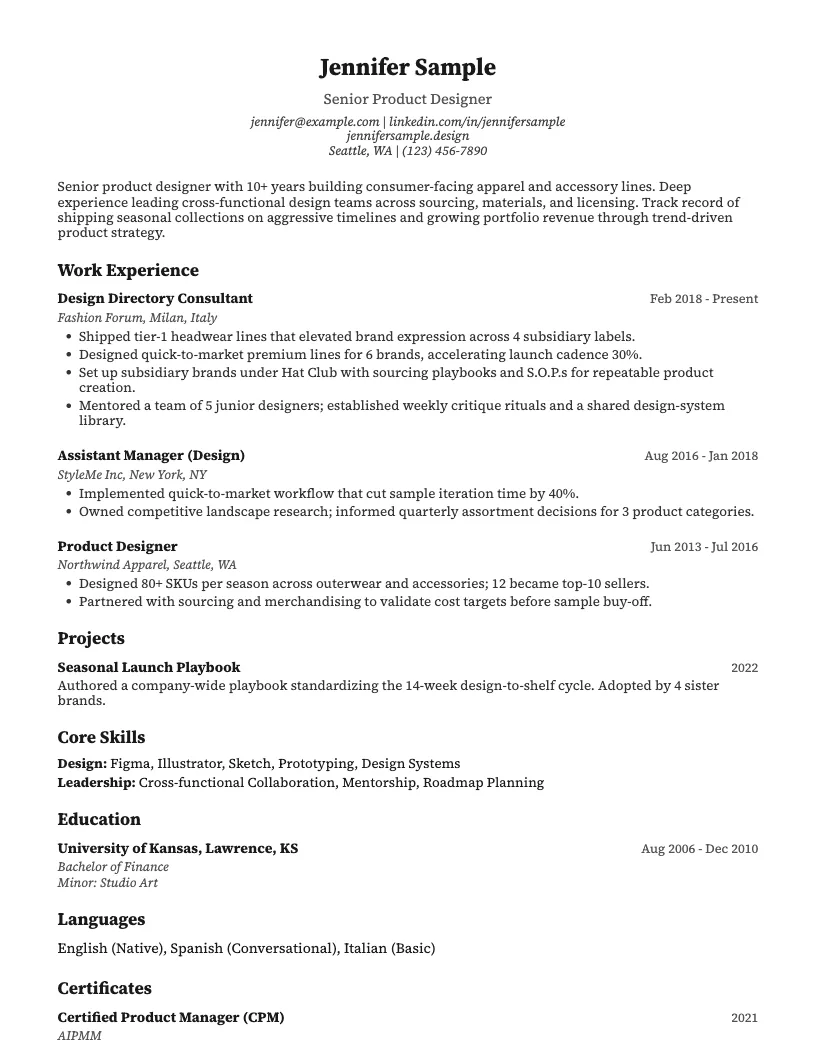
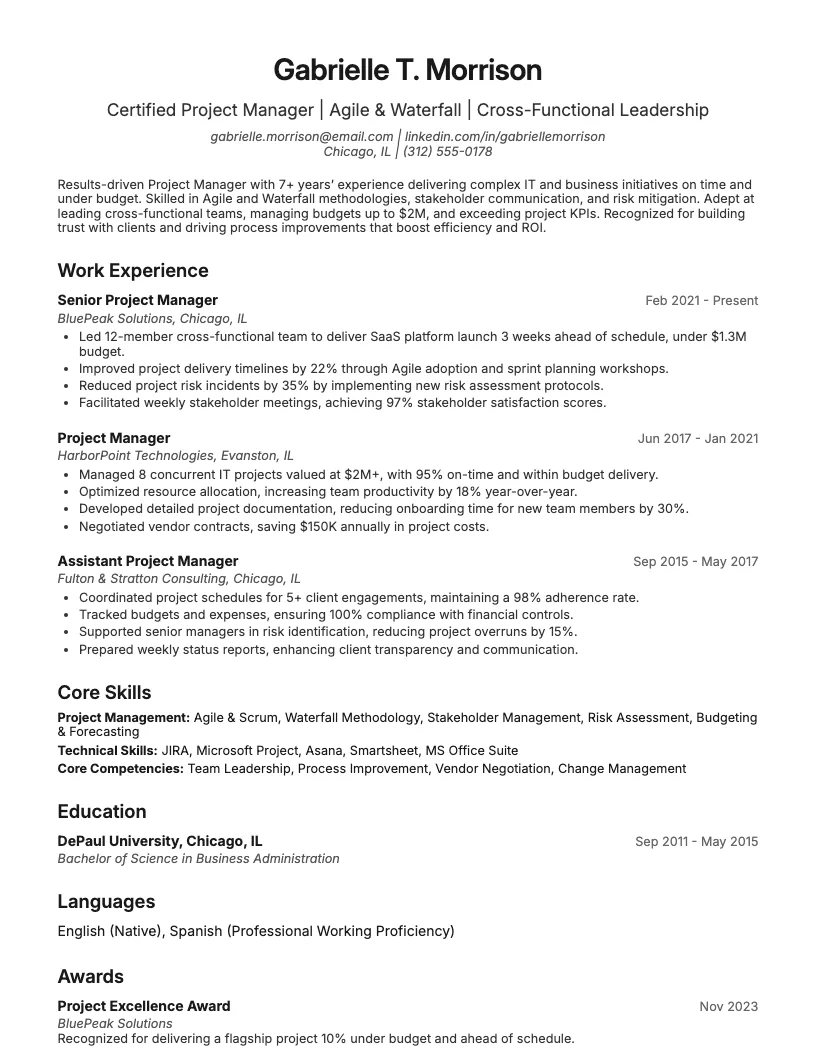
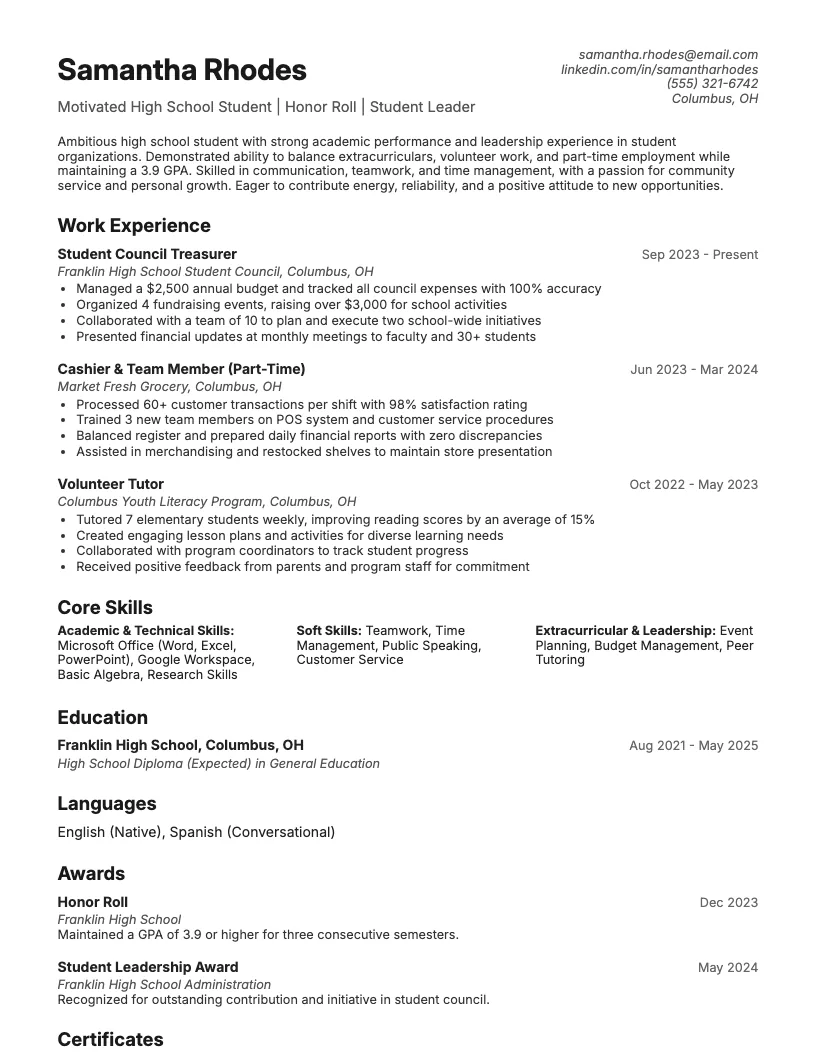
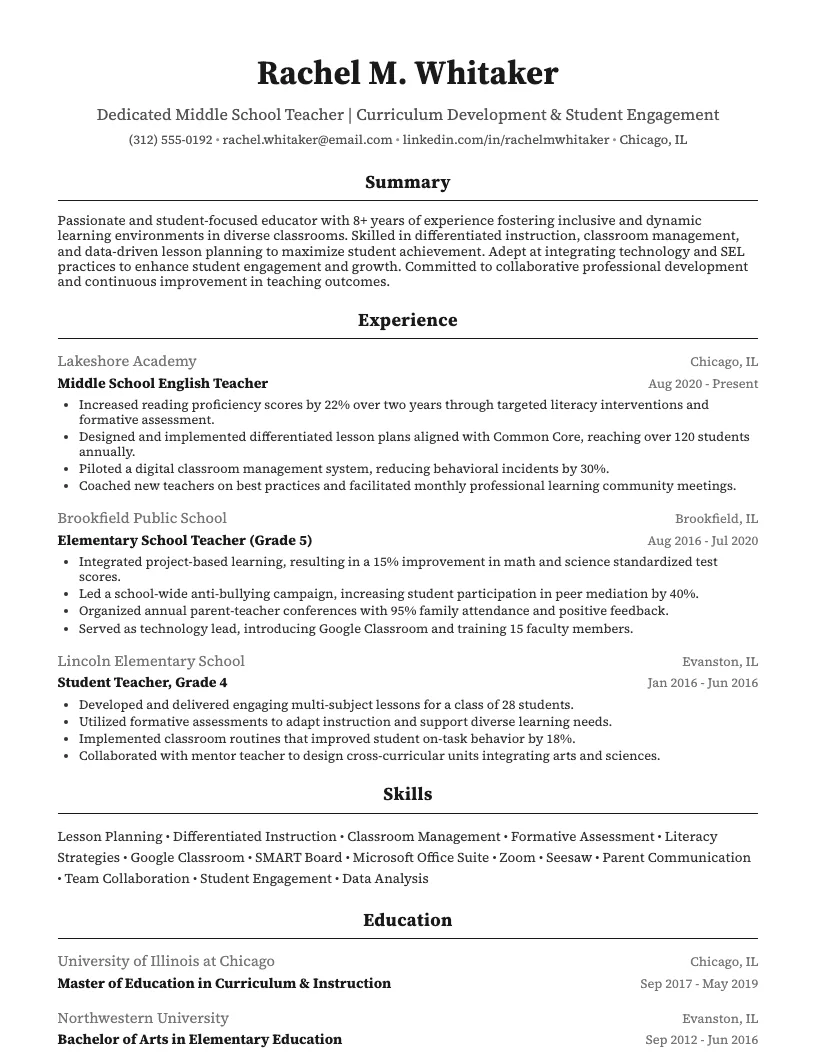
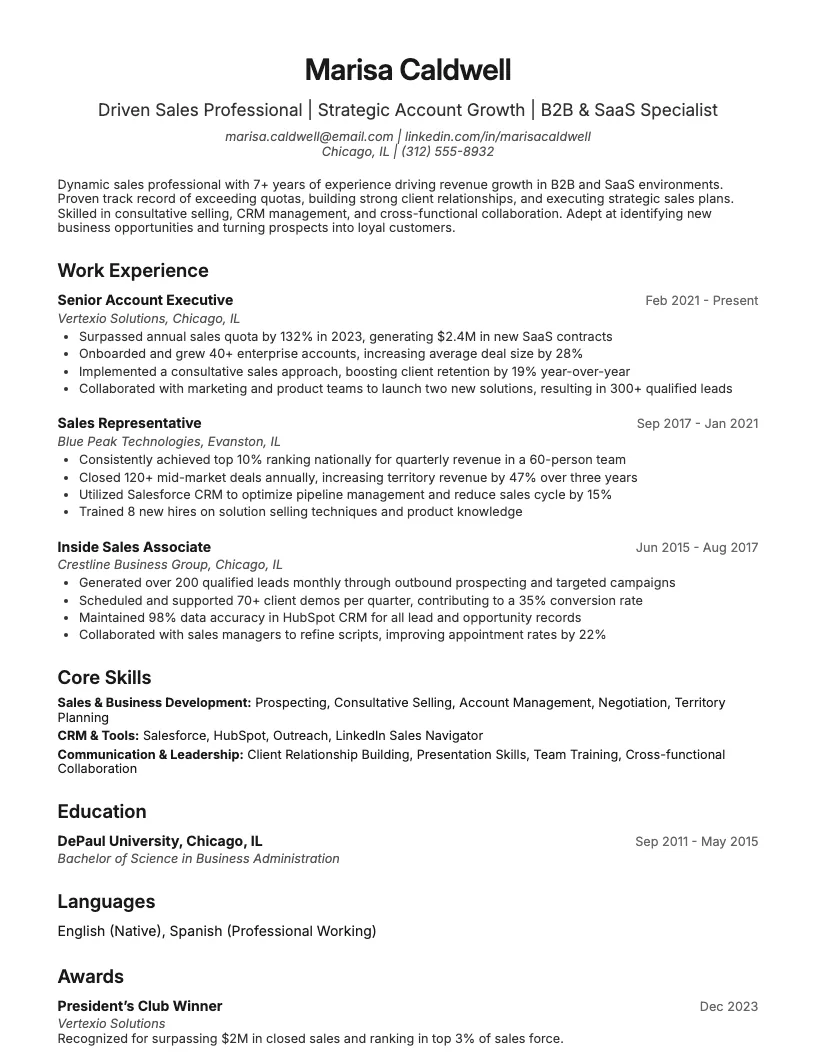
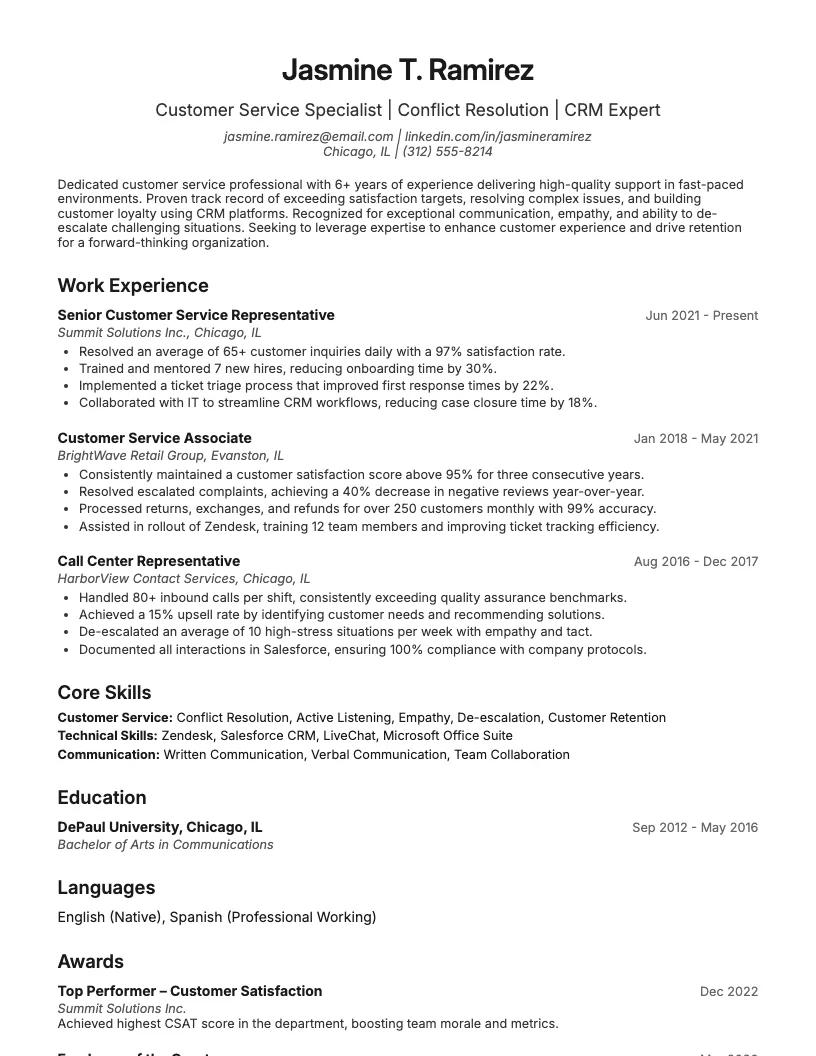
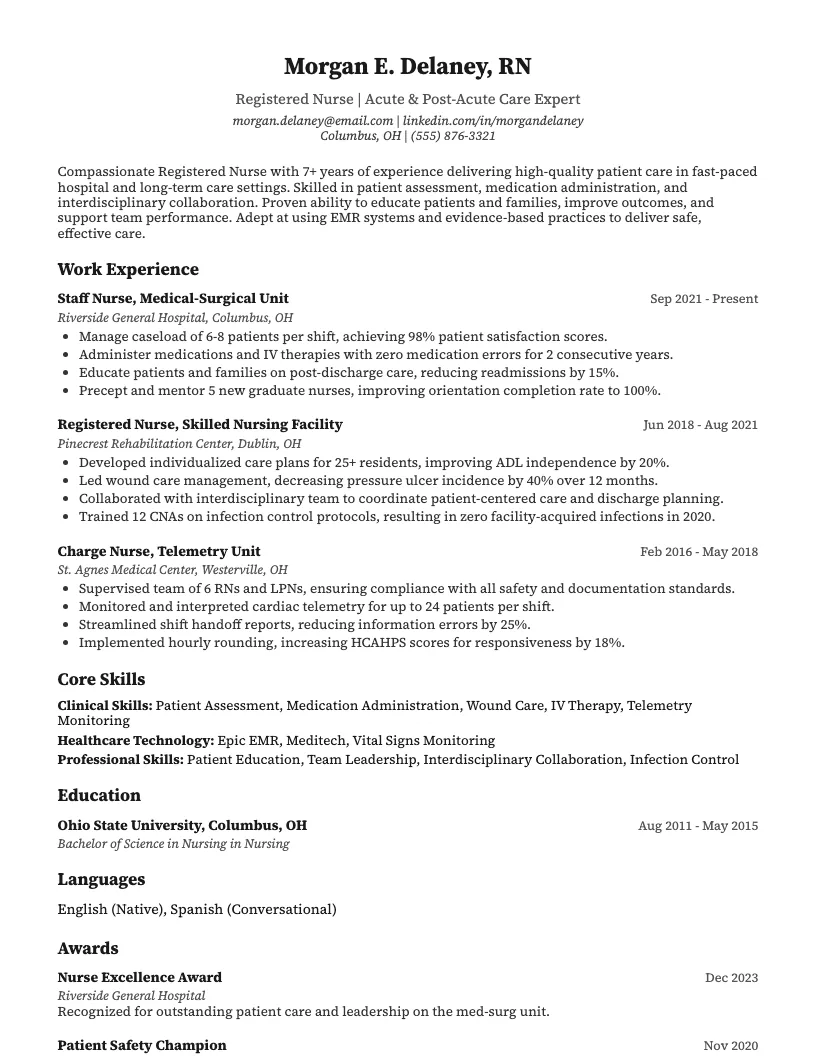
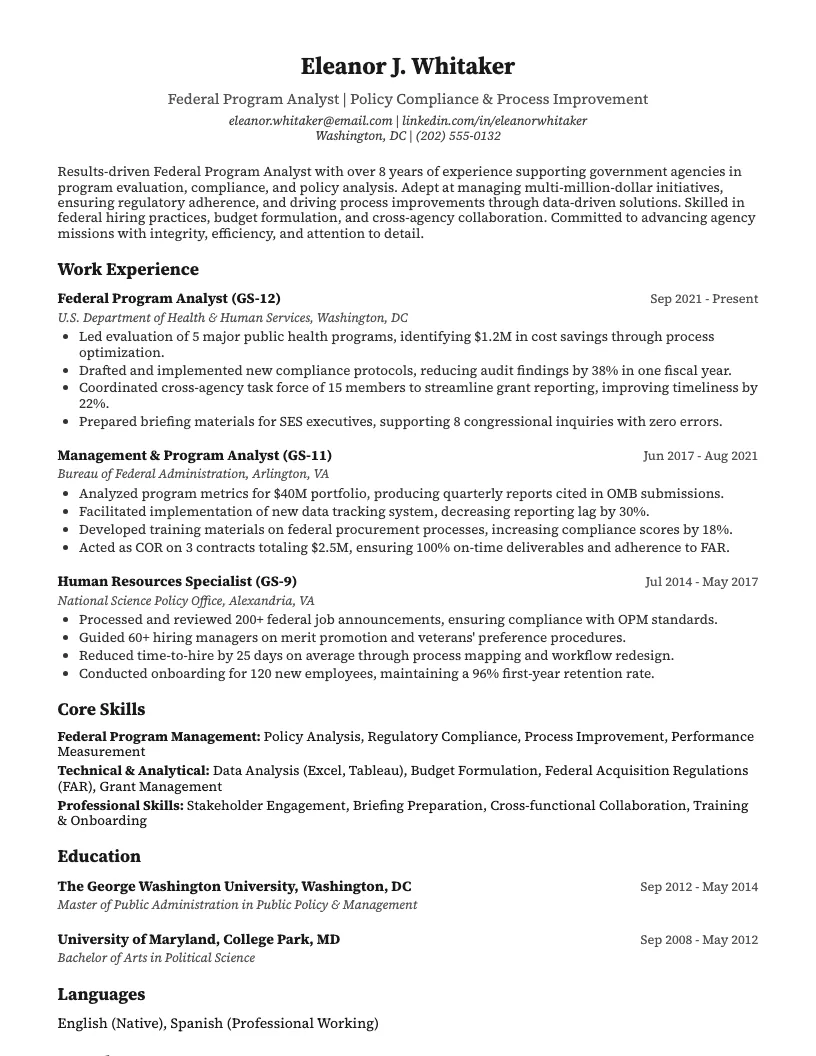
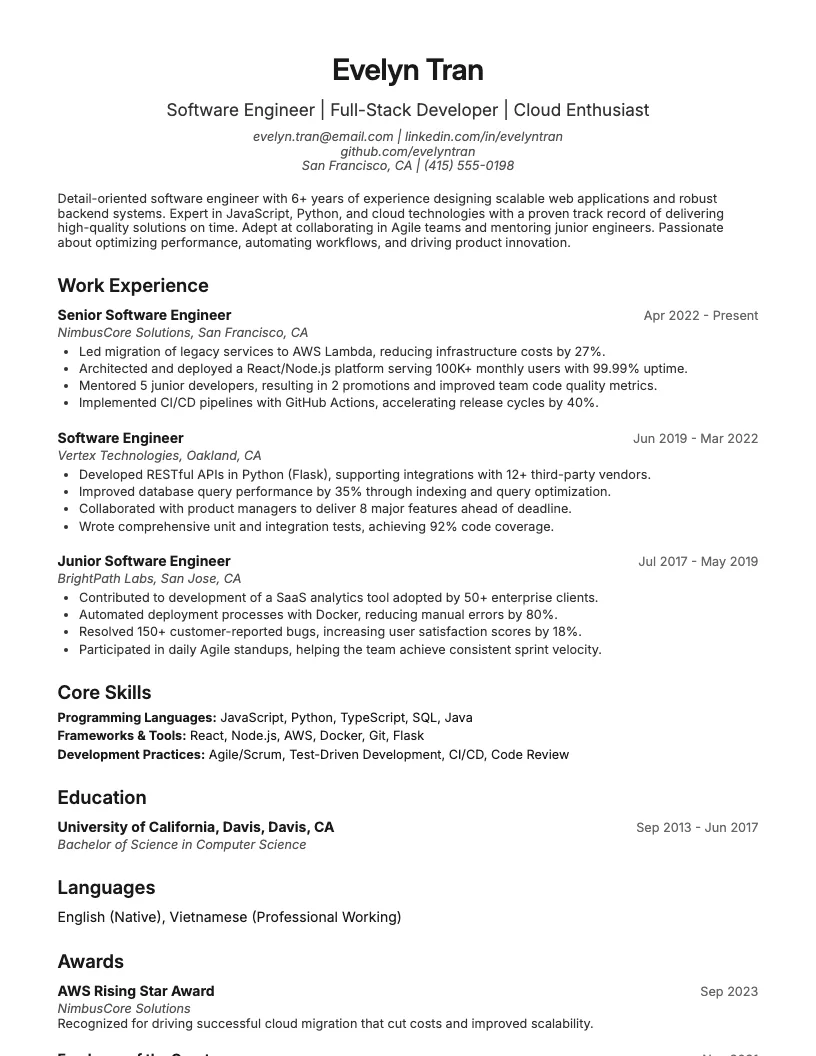
See these skills on a real resume
8 examplesStart from an example that already has them, and swap in your own.
Check your resume against the job you want
Scan your resume, see which skills and keywords the posting asks for that you are missing, and fix them before you apply.
Free to use • No credit card required