Business Resume Keywords: 8 Skills Employers Want + 5 Steps to Use
See which business resume keywords actually matter: 8 skills employers ask for most, the 5-step way to pull them from a posting, and where to place them.


Written by Dr. Priya Sharma
Career Development Expert & Resume Analyst
Updated August 2026
Reviewed by Sarah Chen
Is your resume ATS-friendly?
Drop your resume in and see which of these skills a scanner can actually read, and which ones the job you want is asking for that you have not listed.
PDF or DOCX. Max 2MB.
We never share your resume or use it to train a model.
In This Guide:
What are business resume keywords?
You open a business job posting and it's a wall of terms - "stakeholder management," "P&L ownership," "cross-functional." Some of those are worth putting on your resume.
Most of them aren't. A keyword is anything an employer or an applicant tracking system is scanning for as proof you can do the job, and business roles throw out five kinds of them.
Words pulled from the job posting
Start with the posting itself. If it says "budget forecasting" three times, that's not filler - that's the word the system is matching on.
I run a resume against the actual posting first, because ResumeJudge will show you exactly which of those repeated terms are missing from your draft, before you guess.
Words that name a tool or system
Excel, Salesforce, SAP, Tableau. Nine times out of ten, these are the fastest keywords to score points with, because they're binary - you either used the tool or you didn't.
Words that name a skill
Budgeting, negotiation, forecasting. Softer than a tool name, but still a specific, checkable claim.
Words that name a result
Cost reduction, revenue growth, retention. These carry the most weight when a number sits next to them (see numbers worth putting in a business bullet).
Buzzwords that are not keywords
Skills section entry
Team player, self-starter, synergy-driven
Cross-functional collaboration, stakeholder management, vendor negotiation
"Synergy" and "self-starter" describe nothing you did. More on that under which business words should you leave off.
Which business keywords should go on your resume?
Business roles cover so much ground that "business keywords" isn't really one list. It's eight, and the trick is knowing which ones actually belong on your resume.
I've reviewed resumes from strategy consultants, business developers, and ops managers, and the mistake I see most often is the same: everyone grabs the same ten adjectives and skips the words that actually describe what they did.
Strategy and planning
This bucket covers strategic planning, market research, competitive analysis, and goal-setting.
Nine times out of ten, candidates write "developed strategy" and stop there. Say what the strategy was for, and what changed because of it.
Finance and budgeting
Budgeting, forecasting, financial analysis, cost reduction, P&L management. These carry weight because they're specific and provable.
If you've reconciled a budget or built a forecast model, name it. Vague finance language reads as if you've never touched a spreadsheet.
Sales and business development
Prospecting, closing, account management, revenue growth, client relationships. This is one of the few areas where a number belongs in almost every bullet.
If you closed deals, name the size or count. "Increased sales" without a figure gets skimmed past.
Operations and process
Process improvement, streamlining, efficiency, workflow optimization, vendor management. Recruiters scanning for ops roles are hunting for verbs like these, not descriptions of your daily tasks.
Marketing and customer
Customer experience, branding, campaign management, customer retention, market positioning. Skip words like "synergy" and "customer journey" unless you're naming a specific campaign or channel behind them - see buzzwords that are not keywords for the ones that do more harm than good.
Project management
Cross-functional collaboration, timelines, deliverables, resource planning. If you've run a project end to end, this is where that shows.
Stakeholder management has its own entry under stakeholder management.
Reporting and analysis
KPI reporting, dashboards, data-driven decision making, analytics. I'd rather see "built a weekly KPI dashboard" than "strong analytical skills" every time - one's a claim, the other's a fact.
Excel is covered under Excel and spreadsheets.
Once your list is built, run it against the actual posting - ResumeJudge will flag which of these terms the job asks for that your resume is still missing.
People and leadership
Team leadership, mentoring, cross-functional teams, stakeholder communication. Only use these if you managed people or led a project - otherwise they read as filler, which is worse than leaving them off.
What business skills do employers ask for most?
What business skills do employers ask for most?

I read a lot of business resumes, and the ones that get interviews almost always name the same handful of skills - just in different words each time.
Communication
"Excellent communication skills" is the single most overused line I see, and it tells a hiring manager nothing.
Say what you communicated and to whom instead: "presented weekly performance updates to senior leadership" or "wrote client-facing proposals that closed six-figure deals."
Problem solving
Employers don't want to hear that you're a problem solver, they want proof.
Pick a problem you actually fixed, name the fix, and give the result. That's the whole skill, demonstrated instead of claimed.
Analytical thinking
This one overlaps a lot with reporting and analysis, and I'd point you there for the deeper list of tools and terms.
For this section, the short version: if you looked at numbers and made a decision because of them, that's analytical thinking - say which numbers and which decision.
Excel and spreadsheets
Advanced Excel shows up in the majority of finance-adjacent postings I've reviewed, and it's worth naming specifically - pivot tables, VLOOKUP, macros - rather than just writing "Excel."
Generic "spreadsheets" reads as entry-level. Naming the actual function reads as someone who's used it under pressure.
Financial analysis
The words for this one are listed under finance and budgeting.
Pair it with a number where you can: budget size, percentage under/over, dollars saved.
Stakeholder management
Nine times out of ten, "stakeholder management" on a resume means "I kept different departments from fighting with each other," and that's a fine thing to say plainly.
Name who: executives, clients, cross-functional teams. Vague stakeholders read as no stakeholders.
Adaptability
I'd leave this word off your resume entirely and show it instead - a role change, a reorg, a new system you picked up fast. One line proving it beats the word itself.
Attention to detail
Same problem as adaptability: everyone claims it, almost nobody proves it.
If accuracy mattered in your work - error rates, audit results, zero-defect reporting - that's the proof.
What are business intelligence resume keywords?
What are business intelligence resume keywords?
BI postings read like a checklist because hiring managers are matching you against a checklist. Name the wrong tool and you've handed the person reading it less to match against.
I've read hundreds of these, and the postings almost always break into the same eight buckets. Hit each one with something true and you're in good shape.
SQL and querying
SQL is the one nobody gets to skip. Say more than "SQL" - joins, subqueries, CTEs, window functions, query optimization.
If you're not sure how deep a posting wants you to go, run your resume against it in ResumeJudge and it'll flag which of those terms are missing.
Data warehousing and ETL
Name where your data lived and how it got there - a warehouse platform, plus ETL or ELT. "Built pipelines" without a platform name reads as filler.
Tableau, Power BI and QlikView
List the tool you actually used, not the category. "Data visualization software" is what someone writes when they haven't touched Tableau or Power BI - recruiters read it that way too.
Data modeling
This is a distinct line item on most BI postings, not a subset of SQL. If you built schemas or dimensional models, say so by name.
Dashboards and KPI reporting
Don't just say you built dashboards - say who read them and what they tracked. A dashboard that "identified $500K in cost savings" earns its spot; one that just "displayed metrics" doesn't.
Python, R and statistics
Only put these down if you'd survive a follow-up question about them. Half the BI postings I see ask for one or the other, rarely both at a serious level.
Data governance and data quality
This gets skipped constantly, and it's an easy keyword to earn if you've ever cleaned a dataset or set validation rules - say that plainly.
Stakeholder collaboration
Every BI job is half technical, half translation. Show you can hand a finding to someone who doesn't touch SQL - that's what separates an analyst from a report generator, and it's worth a line of its own, not a throwaway at the end of a bullet.
Which keywords change with the business job title?
Keywords by business job title
| Job title | Core keywords | What it proves |
|---|---|---|
| Business analyst | Requirements gathering, process mapping, SQL | What changed because of the analysis |
| BI analyst | SQL, data warehousing, Tableau/Power BI | A number that became a decision |
| BI developer | SSIS, data integration, OLAP | Pipelines and tools you built |
| BI manager | Team size, program owned, results | Leadership, not just analysis |
| Business development manager | Pipeline generation, partnerships, revenue growth | A dollar figure or percentage |
| Operations manager | Process improvement, cost reduction, vendor management | A cost or cycle time you cut |
Job titles with "business" in them cover wildly different jobs, and the resume needs to prove you did the right one. I've read enough of these to know the biggest mistake: reusing one generic "business professional" resume for every title instead of matching the words in front of you.
Business analyst
Here the keywords are requirements-gathering, process mapping, stakeholder interviews, and SQL. Say what you analyzed and what changed because of it, not just "analyzed business needs."
Business intelligence analyst
The tool list for this title is the one already covered under what are business intelligence resume keywords. What the title adds is proof you can turn a number into a decision, so pair the tool with what it drove - a report that got used, a metric that moved.
Business intelligence developer
More engineering, less analysis. The words shift to SSIS, data integration, OLAP, and building or customizing the actual pipelines and tools the analysts use downstream, not just reading their output.
Business intelligence manager
Leadership carries as much weight here as the technical stack. List a team size, a program you owned, or results your team delivered - a manager title with no leadership language reads like an individual contributor resume with a bigger job title on top.
Business development manager
Sales-flavored keywords: pipeline generation, partnerships, revenue growth. Numbers matter more here than almost anywhere else on this page - a dollar figure or a percentage beats any adjective you could use instead.
Operations manager
Process improvement, efficiency, cost reduction, vendor management. If you cut a cost or a cycle time, that number belongs in the bullet, not just the word "improved."
Business consultant
Client-facing language: stakeholder management, presenting findings, recommendations that got adopted. Show a result a client acted on, not just a project you were staffed to.
Business owner
Translate what you actually ran into the language the next employer's posting uses - P&L, staffing, growth - rather than leaving it as "owned a business" and hoping the reader connects the dots.
Across all eight, the fastest way to know which of these words your target posting actually wants is to check your draft against it directly - ResumeJudge scans your resume against the job description and tells you which of these title-specific terms are missing before you send it.
How do you pull keywords out of a business job posting?
How do you pull keywords out of a business job posting?
I do this the same way every time, whether it's a business analyst posting or a BI manager one. Five passes, in order, and none of them take long.
Step 1: Mark every term the posting repeats
Read the posting once and circle anything that shows up twice. A tool name, a task, a phrase like "cross-functional" - if it's said more than once, the company cares about it.
Step 2: Sort them into tools, tasks and outcomes
Split your circled list into three piles: tools and systems, the tasks they want done, and the results they're chasing. This tells you what's missing from your resume, not just what's different.
Step 3: Match each term to something you actually did
For every term, ask: where in my history did I do this? Most candidates already have the experience - they just never wrote it down in the posting's words.
Step 4: Rewrite only the wording that is missing
Don't touch bullets that already say it. Change 20-30% of the resume at most - the skills section and the top few lines under each job.
ResumeJudge does this part for you: feed it your resume and the posting, and it rewrites the wording into the right sections automatically.
Step 5: Check the rewrite is still true
Read the new line back. If you couldn't explain it in an interview, cut it.
Nine times out of ten, the honest version is stronger anyway.
Where do business keywords go on your resume?
Is your resume good enough?
Drop your resume in and see which of these skills a scanner can read, and which ones the job you want is asking for that you have not listed.
Upload your resumeFree. PDF or DOCX. We never share your resume or use it to train a model.
Placement matters as much as which words you pick. I've seen resumes with every right keyword on them get skipped because they sat in the wrong spot, or in a spot the scanner never even read.
Summary
Two or three lines at the top, and every word in them should be load-bearing. Name your years of experience, your specialty, and one or two tools or outcomes straight from the posting - something like "7+ years in operations, specializing in process improvement and vendor management."
Don't waste this space on adjectives.
Skills section
This is where you mirror the posting's tools and competencies - but only the ones you've actually used. I like grouping them by type rather than dumping one long line: Software (Excel, Salesforce, SAP), Analysis (KPI reporting, forecasting), Process (SOP development, vendor management).
Grouped skills get read; one giant comma-separated line gets skipped. For the real question of how many to put down, see how many keywords should I put on my resume.
Experience bullets
This is where keywords actually prove themselves. A skill listed at the top and never shown again reads as decoration.
Work the tool or task into what you did and what happened - see how to write a bullet that uses a keyword for the exact formula. ResumeJudge will take a job posting and rewrite your bullets against it directly, so the wording that's missing gets fixed instead of guessed at.
Projects
No business job title yet, or a thin work history? A project section can carry real weight - name the tool, the task, and the result, the same way you would in a job.
It works almost like a stand-in job when there isn't one on the resume yet.
Certifications
List the credential the posting actually names, not every course you've taken. One relevant certification beats three unrelated ones - it signals focus instead of padding.
Formatting that hides your keywords
Tables, headers and footers, multi-column layouts, and non-standard section names are the most common ways I see good keywords go unread by a scanner. Keep section titles standard - "Experience," "Skills" - and spell out abbreviations at least once, like "Key Performance Indicators (KPIs)."
How do you write a business bullet point that uses a keyword?
The mistake I see most often is a bullet that names the keyword but never proves it. "Strong analytical skills" is a claim.
A hiring manager wants evidence.
Action verb + what you did + the result
Every business bullet worth keeping has three parts: an action verb, what you actually did, and what happened because of it. Drop any one of the three and the bullet goes flat.
Action verbs for business resumes
Different work calls for different verbs. Budgeting and finance bullets lean on forecasted, reconciled, budgeted.
Sales and business development lean on closed, negotiated, secured. Operations lean on streamlined, automated, restructured.
Reporting and analysis lean on analyzed, modeled, synthesized. Pick the verb that matches the family of work, not the flashiest one on the page.
"Created weekly reports" rewritten
Reporting bullet point
Created weekly reports
Monitored KPIs through a weekly dashboard, flagging performance trends and exceptions for leadership
Nine times out of ten this bullet stops after the task. Push it further: "Monitored KPIs through a weekly dashboard, flagging performance trends and exceptions for leadership."
Same work, now it says why anyone cared.
"Excellent communication skills" rewritten
Communication bullet point
Excellent communication skills
Led a team of five through a client-communication overhaul that lifted customer satisfaction 20%
Show it instead: "Led a team of five through a client-communication overhaul that lifted customer satisfaction 20%." The word "communication" never even has to appear - the bullet proves it.
"Analyzed sales data" rewritten
Analysis bullet point
Analyzed sales data
Analyzed sales data in Tableau, identified a 15% dip in a key region, and helped leadership recoup $1.2M in lost revenue
Name the tool, the finding, the outcome: "Analyzed sales data in Tableau, identified a 15% dip in a key region, and helped leadership recoup $1.2M in lost revenue." That's the same task as before, but now it reads as a keyword and a result.
If you're rewriting a whole page of these against a real posting, ResumeJudge will take your resume and that job description and rewrite the wording for you, section by section, instead of you doing it bullet by bullet.
Numbers worth putting in a business bullet
Revenue lifted, cost cut, time saved, team size, accounts managed, error rate reduced - any number that shows scale. A bullet with one honest number beats three adjectives every time.
Which business words should you leave off?
Synergy, deep dive, bandwidth and other filler
Synergy. Deep dive. Bandwidth. Holistic. Unpack. Circle back. I've read hundreds of business resumes and none of these words have ever told me what someone actually did.
They fill space where a real detail should be. Cut them and replace each one with the task or the number behind it.
Skills you cannot back up
If you write "strategic planning," you need a plan you actually built sitting behind it. Same for "stakeholder management" or "analytical thinking" - see what business skills employers ask for most for the ones worth the risk.
Nine times out of ten, when I ask someone to describe the skill they listed, they can't point to a single instance of it. That's the tell it shouldn't be on the page.
The same word repeated in every bullet
"Managed the budget. Managed the team. Managed the rollout." Three bullets, one verb, and a hiring manager who's stopped reading by the second one.
Vary the action verb every time. Repetition reads as a thin vocabulary, not consistency.
Tools you have only read about
Naming Tableau or SQL because the posting mentions them, when you've clicked through a tutorial once, is the fastest way to lose an interview. The follow-up question comes in minute five, and it shows.
List a tool only if you could talk through a real task in it right now.
Long lists nobody reads
A skills section with 30 words in it tells a recruiter nothing, because nothing stands out. Keep the list short and let your bullets carry the proof - that's the trade how many keywords to list covers in more detail.
Before you send anything out, run the resume against the actual posting - ResumeJudge will flag which of these listed skills the wording doesn't actually support, so you catch it before a recruiter does.
Frequently Asked Questions
How many keywords should I put on my resume?
There's no fixed number - the real target is covering the responsibilities and qualifications the posting actually lists, not hitting a count. Pick the skills and tools that come up more than once or sit near the top of the posting, and use each one where it's true of your work. Repeating the same word five times across the page doesn't help; having it appear once in the right bullet does.
Should I copy the job posting word for word?
No - match the tool names, methods, and skills the posting uses, but describe your own work in your own sentences. Copying whole phrases or lines makes a resume read like it was written for the posting instead of by you, and a hiring manager notices. ResumeJudge takes your resume and the job description and rewrites the wording section by section, so the terms line up with the posting without you lifting sentences from it.
Do I need a separate skills section?
Yes - a dedicated skills section gives a scanner and a hiring manager one place to check your list against the posting fast. It doesn't replace showing those same skills in your bullet points; the section is a summary, the bullets are the proof. Keep it short and specific rather than a long unfiltered list.
What if I have never had a business job title?
Use the work you have to show the same underlying skills - managing a budget, coordinating with other teams, tracking a project to completion - even if it happened under a different title or in a school setting. Employers are checking for evidence of the skill, not the label on your old job. Name the skill plainly in the bullet, then show what you did with it.
Can I still apply if I am missing a tool the posting names?
Yes, especially if you have the rest of what the posting asks for - one named tool rarely decides an application on its own. ResumeJudge scores your resume against the posting so you can see exactly where you stand and what's actually missing before you apply, rather than guessing from the tool list alone. If the gap is real, it's worth naming a comparable tool you do know.
Do keywords matter if a person reads my resume, not software?
Yes - the same words that help a scanner match your resume to a posting also tell a hiring manager you have the specific experience they're looking for. A resume full of vague description reads as vague to a person too; naming the tool, the method, or the result is clearer either way. Keywords aren't just for getting past software - they're how you say what you actually did.
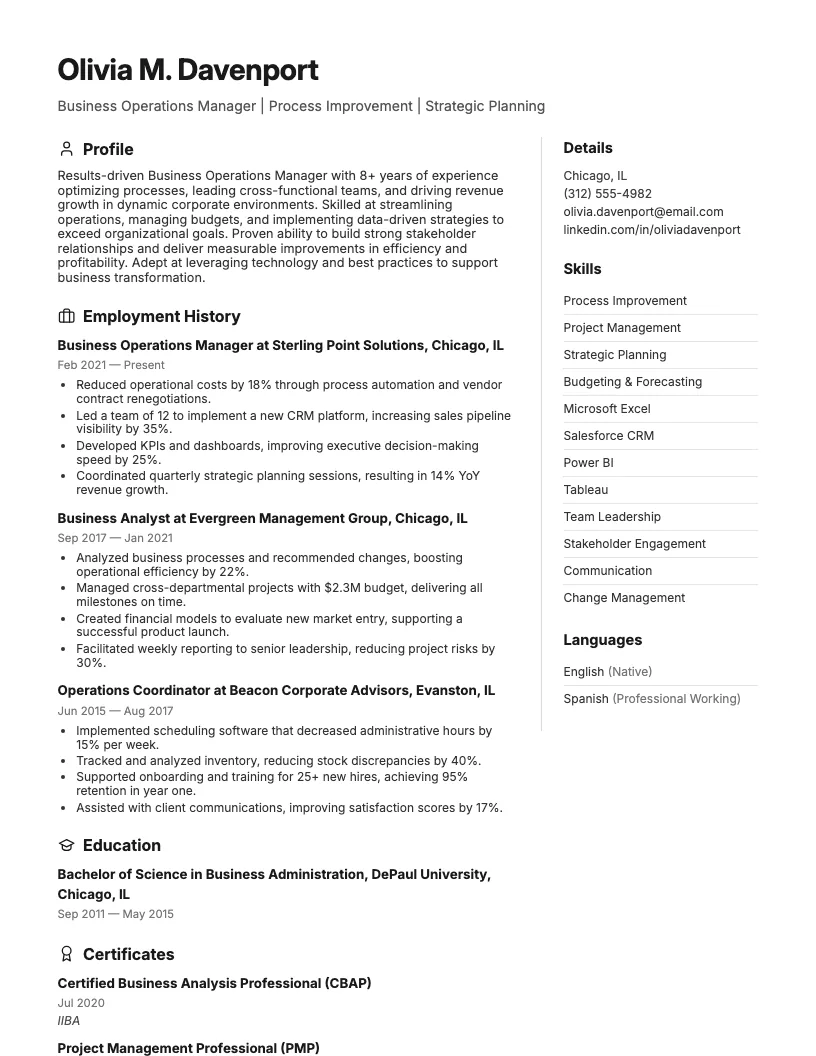
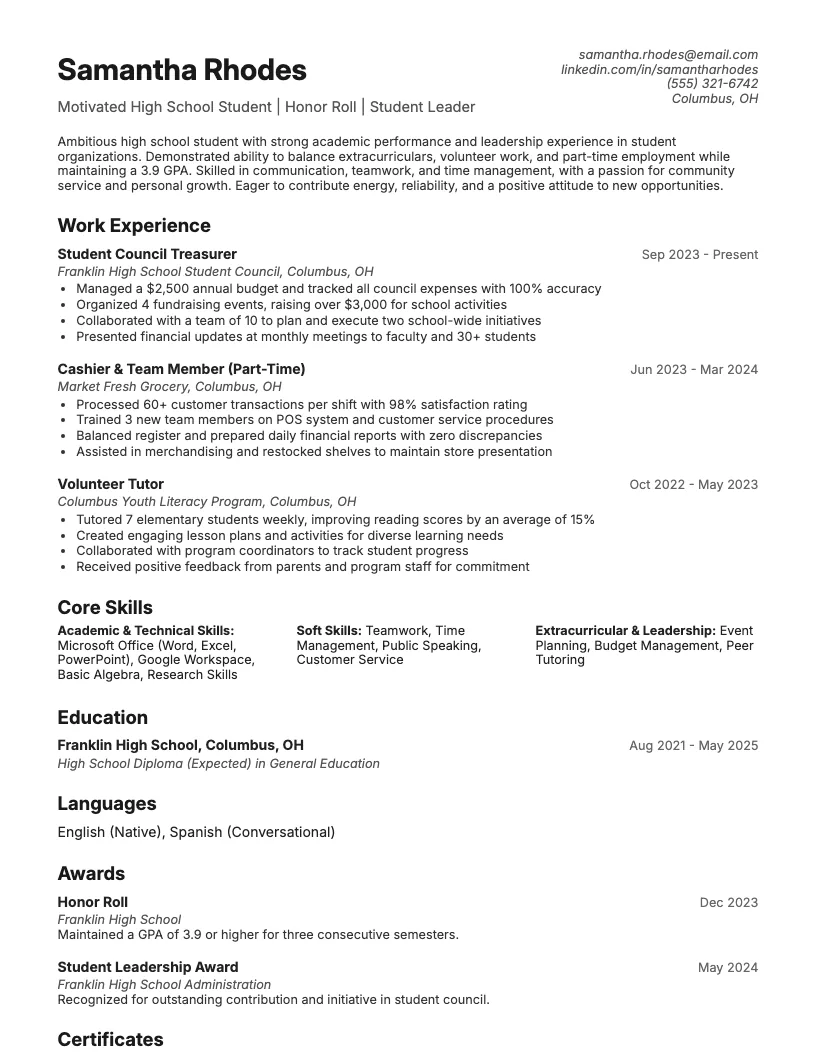
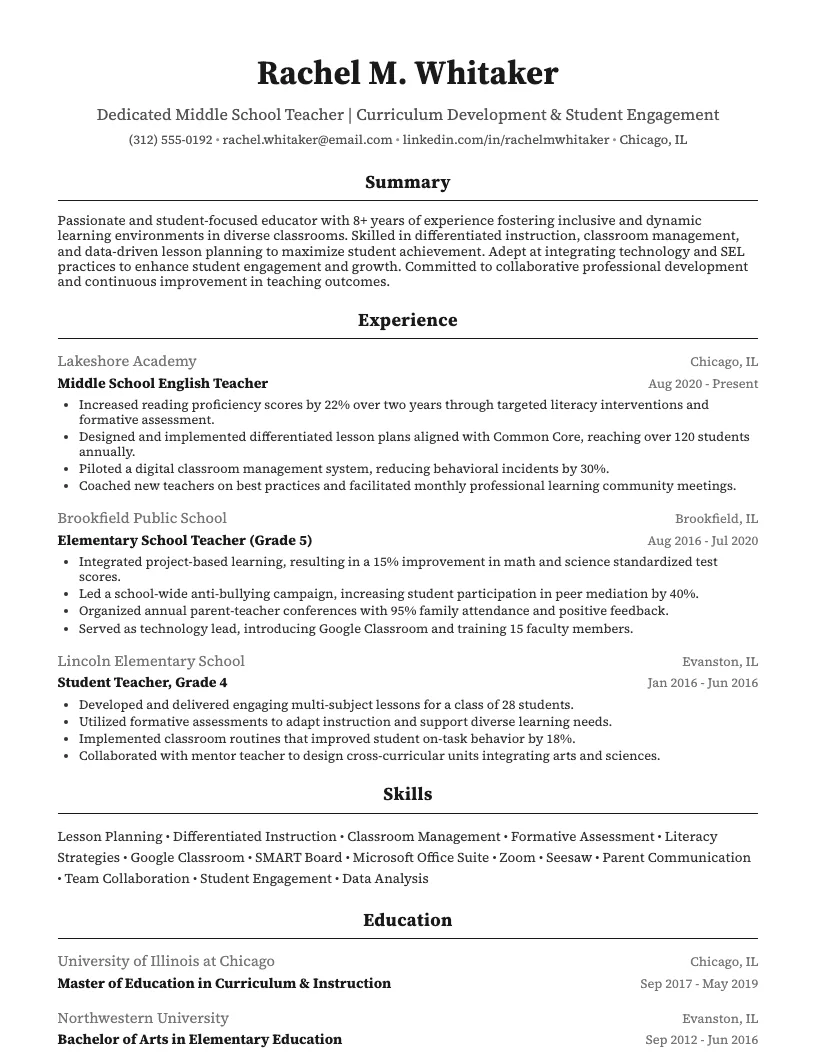
See these skills on a real resume
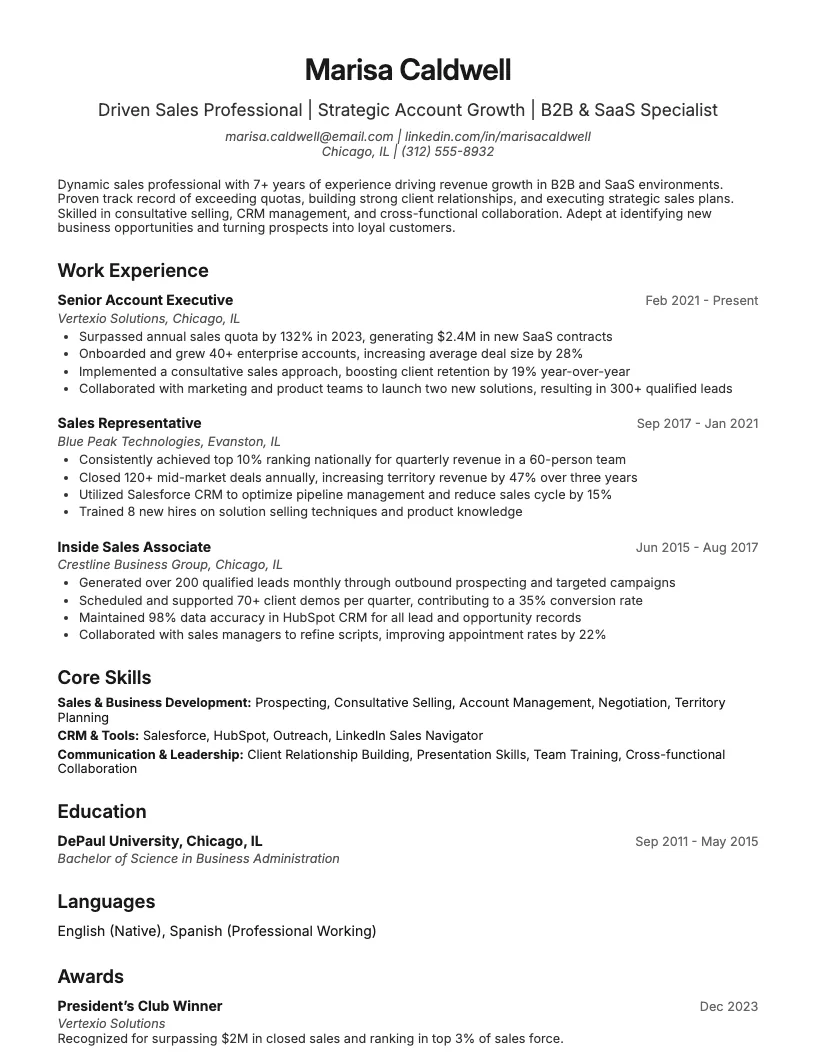
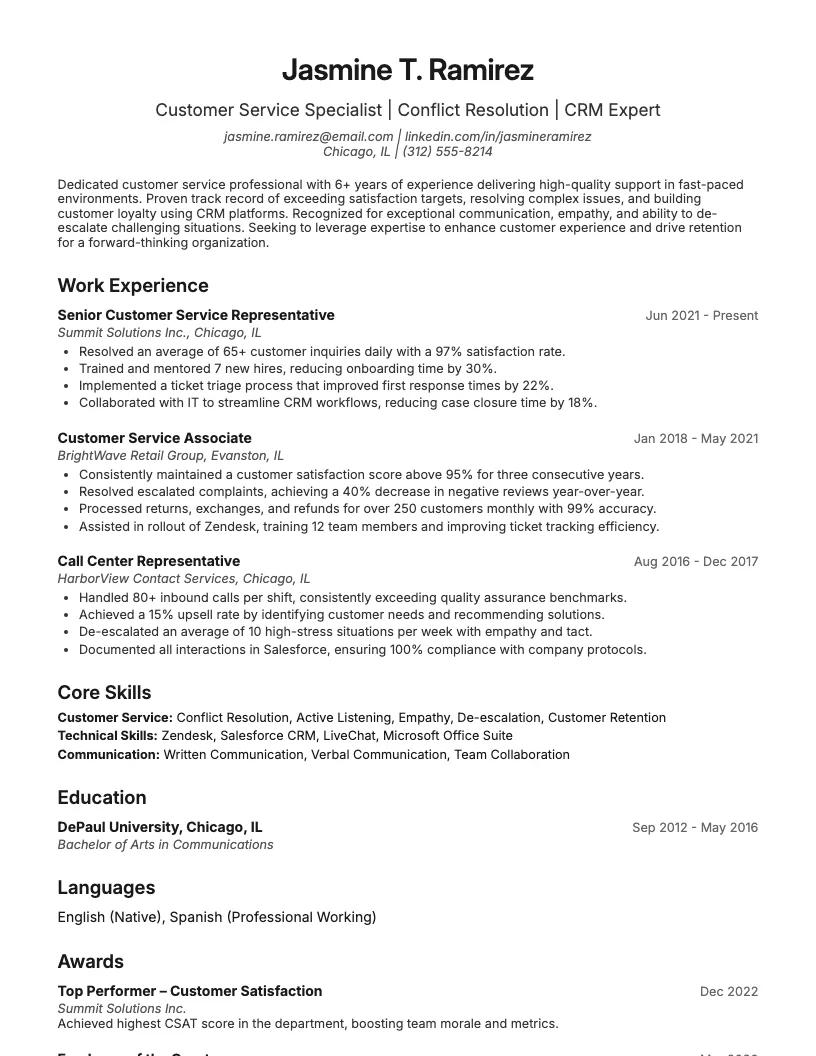
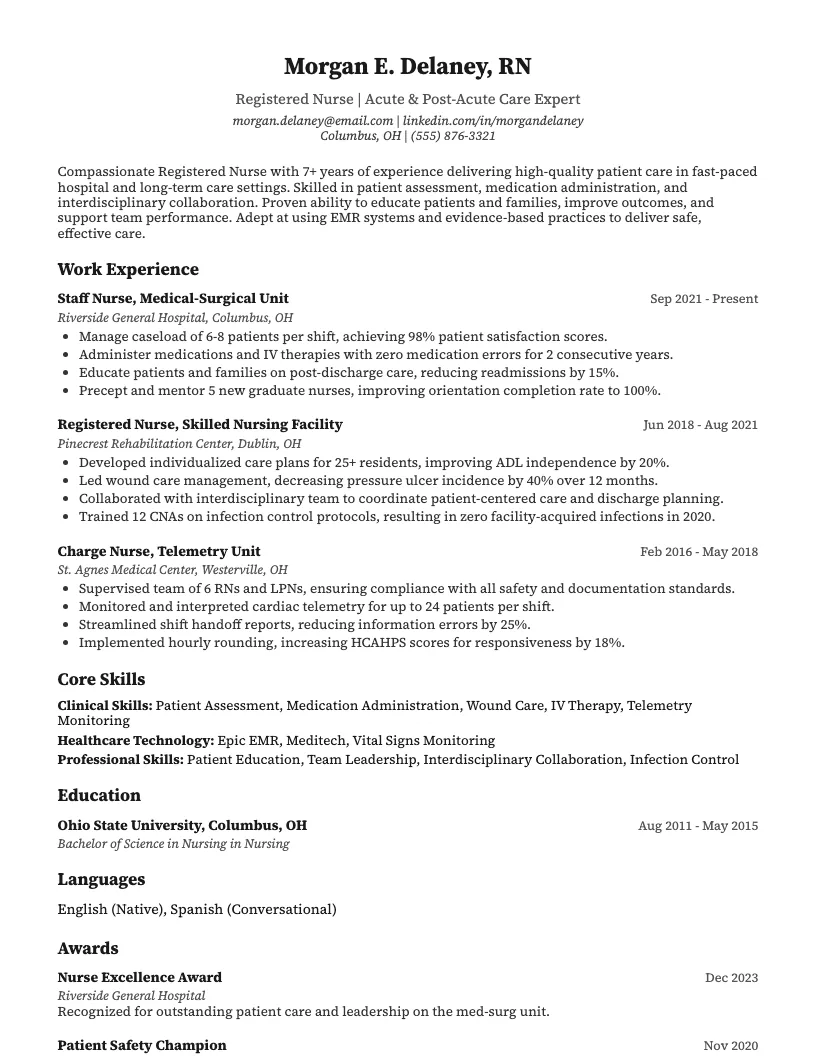
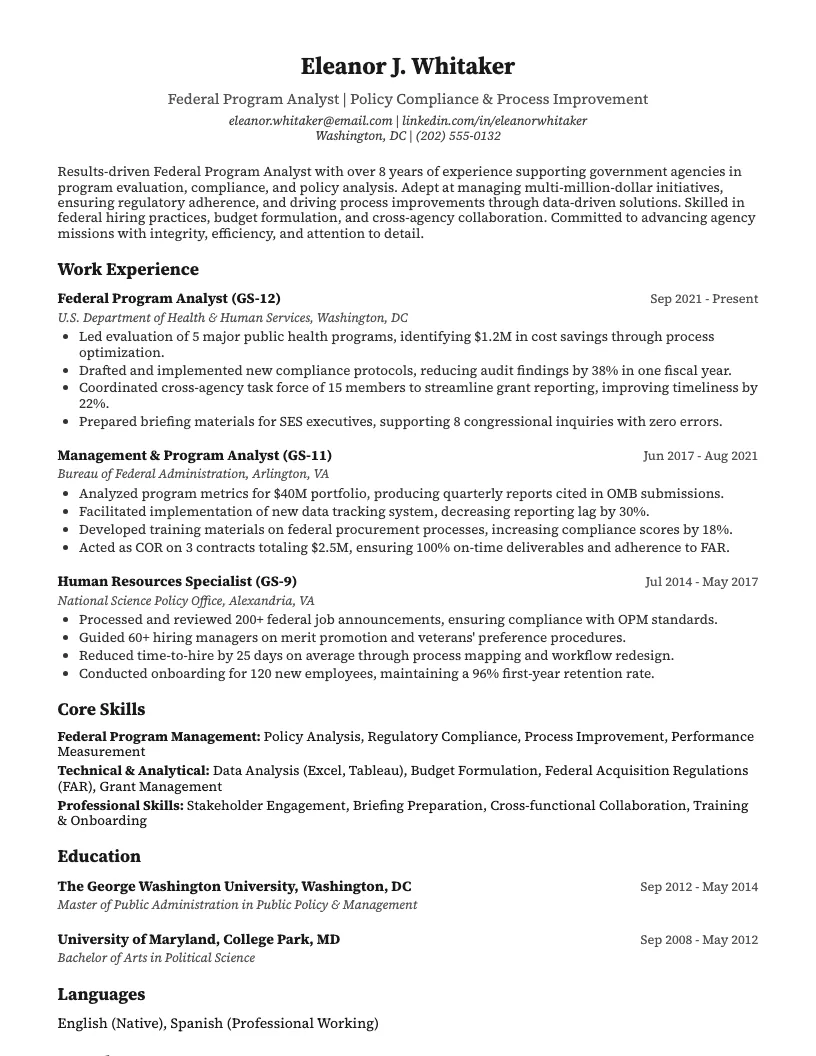
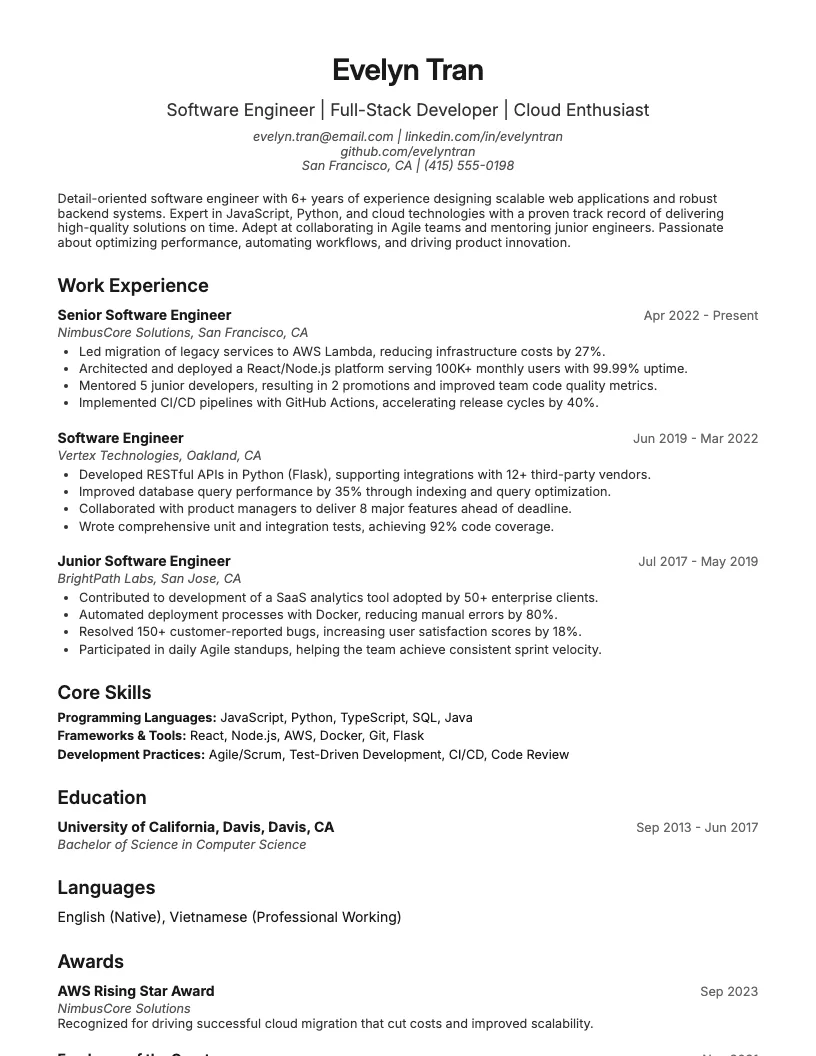
8 examplesStart from an example that already has them, and swap in your own.
Check your resume against the job you want
Scan your resume, see which skills and keywords the posting asks for that you are missing, and fix them before you apply.
Free to use • No credit card required