Buyer Resume Keywords: 8 Job Types and the Words Each Needs
See the keywords buyer postings actually search for, sorted by role (retail, category, manufacturing and more), by seniority, and by the numbers to quote.


Written by Dr. Priya Sharma
Career Development Expert & Resume Analyst
Updated August 2026
Reviewed by Sarah Chen
Is your resume ATS-friendly?
Drop your resume in and see which of these skills a scanner can actually read, and which ones the job you want is asking for that you have not listed.
PDF or DOCX. Max 2MB.
We never share your resume or use it to train a model.
In This Guide:
What are buyer resume keywords?
The four word groups a buyer resume needs
| Word group | Examples |
|---|---|
| Procurement words | purchasing, sourcing, vendor management |
| Software names | SAP MM, Oracle, Coupa, Ariba |
| Method words | strategic sourcing, category management |
| Trade shorthand | RFP, RFQ, PO, TCO |
Recruiters scanning buyer resumes are matching against a specific vocabulary, and if yours doesn't overlap with theirs, you don't get read. I've gone through hundreds of these, and the ones that get calls back use the same handful of word groups.
Here's what they are.
Procurement words: purchasing, sourcing, vendor management
These are the core function words - purchasing, sourcing, vendor management. Which keywords appear most often in buyer job postings takes them one at a time.
Software names: SAP MM, Oracle, Coupa, Ariba
Name the actual systems you've used, not a vague phrase like procurement software. Which software and systems should a buyer name has the full list.
Method words: strategic sourcing, category management
Strategic sourcing, category management - these describe how you buy, not just what you buy. Skip them and a resume reads like task lists, not a strategy someone can put in charge of a budget.
Trade shorthand: RFP, RFQ, PO, TCO
Buyers write in acronyms - RFP, RFQ, PO, TCO - and a resume missing them looks like it was written by someone outside the field, even if the experience is real.
Why the words on your resume decide whether a person ever reads it
Most companies run resumes through software before a person reads one, and that software parses, scores and ranks what it finds - it doesn't throw a resume out for missing a keyword, but the ones carrying the posting's own words are the ones that surface first. If you want to check your resume against a real posting instead of guessing, ResumeJudge will scan both and tell you exactly which of these terms you're missing.
See how these actually rank by frequency next.
Which keywords appear most often in buyer job postings?
Which keywords appear most often in buyer job postings?

I've read enough buyer postings to know which words show up over and over. Here's the short list, and what each one actually means for your resume.
Purchasing and procurement
These two words carry the most weight on a buyer resume, and postings use them almost interchangeably. Don't pick one and stick with it - if the posting says "procurement," your resume should say it too, even if your last job called it "purchasing."
Supply chain management
This is the umbrella term for how your work connects to everything downstream of it. Even if your title never said "supply chain," if you worked with logistics, suppliers, or delivery timing, this phrase belongs on your resume.
Inventory management and inventory control
Nine times out of ten, buyers who skip these words are the ones who've only ever purchased on demand, not managed stock levels. If you've touched reorder points, safety stock, or stockouts, say so - it separates a buyer from an order-taker.
Supplier negotiation and contract negotiation
Negotiation is the skill hiring managers care about most, and the mistake I see most often is burying it in a bullet instead of naming it outright. Say what you negotiated and what changed because of it.
Strategic sourcing and global sourcing
Strategic sourcing signals you're not just filling purchase orders - you're choosing suppliers with a long-term plan. Global sourcing is worth adding on top if you've worked with overseas vendors; it's a distinct skill recruiters search for separately.
Vendor management and supplier relationship management
Managing a vendor relationship is different from negotiating one deal, and postings test for both. If you've kept a supplier accountable over time - scorecards, reviews, performance issues - that's this keyword.
Demand planning and forecasting
This is where buying meets prediction. If you've ever had to guess what you'd need three months out and got it right, that's forecasting experience worth naming directly.
Merchandise planning and category management
These matter most for retail and category buyer roles - see which keywords does your kind of buyer job need for how that changes by specialty. Category management means owning a whole product group's strategy, not just its purchase orders.
Cost analysis and cost reduction
Every buyer posting wants proof you saved money, and the resumes that land interviews put a number next to this word - see which numbers do buyers put next to their keywords. "Cost analysis" without a result reads as unfinished.
Purchase orders and purchase-to-pay
These are the mechanics - the part of the job that's easy to underclaim. Even senior buyers should mention PO volume or purchase-to-pay process ownership, because it's often the first thing a scanner checks for.
If you're not sure which of these ten actually show up in the posting you're applying to, ResumeJudge will scan the listing and tell you exactly what's missing from your resume before you send it.
Which software and systems should a buyer name?
Which software and systems should a buyer name?
Every buyer posting names a system, and if you skip it, your resume matches the posting less closely than the ones that name it - it won't be thrown out, but it won't be near the top either.
SAP MM, Ariba and S/4HANA
SAP shows up more than any other name in this field. If you've worked in SAP MM, Ariba, or S/4HANA, name the one you know - don't just write "SAP," because a screener is often looking for one module specifically.
Oracle and Oracle Procure-to-Pay
Same rule for Oracle. "Oracle Procure-to-Pay" is the phrase that matches postings, not "Oracle experience."
Coupa, Jaggaer, Ivalua and Zycus
These four are the next tier down from SAP and Oracle, and I see them missed constantly. If a posting names one of them and your resume just says "procurement software," you've lost the match - write the actual name.
Excel, Power BI and Tableau
Don't skip these because they feel too basic to list. A buyer's whole job runs on spend analysis, and Excel, Power BI, and Tableau are how postings say that.
Pair one with a result - turn "used Excel" into something closer to the numbers a buyer should be quoting.
EDI and MRP
More common on manufacturing and materials postings than retail ones. If you've touched either, name it - they're short, specific, and easy for a scanner to catch.
Writing the version or skill level next to each one
I've seen resumes list six systems with no context, and a hiring manager can't tell if that means daily use or one training session. Mark each one "Advanced" or "Intermediate," or name the module.
It's a small habit that makes the whole list read as real. If you're not sure which systems a specific posting actually wants named, ResumeJudge will read the job description and tell you which ones are missing from your resume before you apply.
Which keywords does your kind of buyer job need?
Lead keywords by buyer type
| Buyer type | Lead keywords | ||
|---|---|---|---|
| Retail buyer | merchandise planning, inventory management, vendor negotiation | ||
| Fashion and apparel buyer | trend forecasting, product development, line planning | ||
| Category buyer | category management, category strategy, spend analysis | ||
| Manufacturing and materials buyer | raw materials, bill of materials, MRO, JIT | ||
| IT and technology buyer | SaaS procurement, enterprise agreements, hardware procurement | ||
| Media buyer | media planning, programmatic buying, campaign performance | ||
| \"Strategic and purchasing buyer\" | \"strategic sourcing | contract negotiation | supplier development\" |
The words you need change with the kind of buying you do. A resume built for one type of buyer role often reads flat for another, even when both say "buyer" in the title.
Retail buyer
Lead with merchandise planning, inventory management, vendor negotiation and trend analysis.
Add store-level numbers where you have them: sales lift, sell-through rate, markdown percentage. Retail hiring managers want to see you've watched a category's numbers move, not just placed orders.
Fashion and apparel buyer
This is retail buying with its own vocabulary layered on: trend forecasting, product development, line planning, textiles.
I've seen fashion buyer resumes get passed over for using generic "purchasing" language instead of naming the fabrics, seasons or product categories the role actually covers. Be specific about what you bought.
Category buyer
Category management and category strategy are the two phrases that matter most here, alongside supplier consolidation and spend analysis.
A category buyer resume should show you owned a slice of spend end to end, not just processed orders inside it.
Manufacturing and materials buyer
Name your materials vocabulary directly: raw materials, bill of materials, MRO, and production methods like JIT or Lean purchasing.
These terms tell a manufacturing recruiter you understand supply feeding a production line, which is a different job than buying finished goods for a shelf.
IT and technology buyer
Software licensing, SaaS procurement, enterprise agreements and hardware procurement are the terms that separate this role from general purchasing.
If you've negotiated an enterprise software contract or managed license renewals, say so in those exact words - that's what a tech procurement posting is scanning for.
Media buyer
Media buying pulls from marketing, not procurement: media planning, digital advertising, Google Ads, programmatic buying, campaign performance.
Don't dress this up in supply-chain language. It confuses a recruiter who's looking for ad-spend numbers, not supplier scorecards.
Strategic and purchasing buyer
Strategic sourcing, contract negotiation, supplier development and supply management sit at the center of this track - it's the closest thing to a generalist procurement resume.
Assistant buyer
Assistant buyer is a level rather than a kind of buying, so its words are covered in how do the keywords change as you move up.
Once you've mapped your specific track, run your draft through ResumeJudge against the actual posting - it'll flag which of these role-specific terms your resume is still missing and rewrite the bullets to include them in the posting's own wording.
How do the keywords change as you move up?
Keywords by level
| Level | Keywords to use |
|---|---|
| Junior buyer | PO processing, invoice matching, price comparison |
| Buyer | independent sourcing, contract negotiation |
| Senior buyer | spend analysis, category strategy, supplier consolidation |
| Procurement manager | team leadership, enterprise spend, stakeholder management |
The keywords on a buyer resume should shift with the job, not stay the same list at every level. I've read enough of these to tell within a few lines whether someone copied their keywords from a junior posting onto a senior application.
Junior buyer: PO processing, invoice matching, price comparison
At 0 to 2 years, the work is transactional, so the keywords should be too: PO processing, invoice matching, price comparison. Don't reach for "strategy" language here - it reads as inflated, and a recruiter who's screened a thousand of these notices right away.
Buyer: independent sourcing, contract negotiation
Once you're running your own sourcing without a senior buyer signing off, say so. Independent sourcing and contract negotiation are the words that separate you from the junior tier.
Senior buyer: spend analysis, category strategy, supplier consolidation
Now the resume needs to show influence, not just execution: spend analysis, category strategy, supplier consolidation. Pair these with the numbers section - a senior buyer's resume without a dollar figure next to "spend" is a red flag.
Procurement manager: team leadership, enterprise spend, stakeholder management
At this level the keywords move away from the purchase itself and toward running people and budgets: team leadership, enterprise spend, stakeholder management.
What to write when you have no buyer experience yet
No buyer title yet? Lean on transferable words - budget management, negotiation, vendor relationships - pulled from internships, coursework, or adjacent roles.
Run your draft against a real posting with ResumeJudge and it'll rewrite your bullets to carry those words the way the posting expects, even without buyer experience behind them.
Where do you put these keywords on the resume?
Where do you put these keywords on the resume?
Right words, wrong spot, and a scanner still won't find them. I've seen resumes with every keyword from the posting buried in a "Skills" line at the bottom, ignored because nothing above it backed them up.
Job title line: write the exact title from the posting
If the posting says "Buyer" and your last title was "Purchasing Specialist," put "Buyer" somewhere near the top anyway - a line under your name, or worked into your summary. Screening systems match on the literal title more often than people think.
Summary: 2 to 4 sentences with the role's own words
Four sentences, no more. Something like: experienced buyer, X years in procurement and supply chain, strategic sourcing and vendor management, track record of cutting costs.
That's the posting's own language doing the work.
Work experience bullets: the skill shown in use, not listed
This is where most resumes fail. "Vendor management" as a skill tag proves nothing; "negotiated contracts across 40 suppliers, cutting cost 20%" proves everything (see what a keyword-rich bullet looks like).
ResumeJudge will take your bullets and the posting and rewrite them so the wording matches without you guessing at phrasing.
Skills section: grouped, not one long line
Group by category - procurement, software, analysis - instead of one comma-stuffed row. A recruiter scans groups; they skip walls of text.
Education and certifications: CPSM, CPIM, CPP, CSCP
List the degree, then any of CPSM, CPIM, CPP, or CSCP you hold. If you're studying for one, that's a FAQ worth checking (#buyer-resume-keyword-questions).
What does a keyword-rich buyer bullet look like?
I've read hundreds of buyer resumes, and the same weak line shows up on almost all of them.
Weak: "Managed vendor relationships"
A vendor management bullet
Managed vendor relationships
Negotiated contracts across 40 suppliers, cutting unit cost 20%
This tells a recruiter nothing. How many vendors?
What happened because you managed them? Nobody can score a sentence like this against a job posting, and neither can you when you're trying to remember what you actually did.
Strong: "Negotiated contracts across 40 suppliers, cutting unit cost 20%"
Same job, completely different bullet. Now there's a number of suppliers, a negotiation, and a result.
That's the pattern I want you to copy: name the thing you did, name the scale, name what changed.
Weak: "Purchased materials"
A sourcing bullet
Purchased materials
Led strategic sourcing for $15M annual spend in SAP MM, achieving 12% cost reduction
Every buyer purchases materials. It's the job title, not an achievement, so it earns you nothing over the next resume in the pile.
Strong: "Led strategic sourcing for $15M annual spend in SAP MM, achieving 12% cost reduction"
Notice what changed: a dollar figure for the spend you owned, the system you ran it in, and a percent for the outcome. That's a bullet a hiring manager reads twice.
Action verbs buyers should use: negotiated, sourced, consolidated, forecasted, analyzed
Swap "managed" and "helped with" for these five and your bullets do more work in the same number of words. If you're staring at a real posting and can't tell which of your projects deserves this treatment, ResumeJudge will scan the posting against your resume and rewrite the weak bullets into ones that carry the right verbs, numbers, and systems for that specific job.
Which numbers do buyers put next to their keywords?
Which numbers do buyers put next to their keywords?
The resumes that get callbacks put a number next to almost every claim: a dollar figure, a percent, a count.
Spend you managed
Lead with the size of the budget you controlled. "$15M annual spend" tells a hiring manager more in three words than a paragraph of description.
If you've never stated your spend on a resume before, this is the first number to add.
Cost savings in dollars and percent
Give both the dollar amount and the percent where you can. "Negotiated $2.5M in annual cost savings" lands harder than "negotiated with suppliers," and a 12% or 15% reduction figure next to it makes the scale obvious even to someone skimming.
I'd rather see one strong savings number than three vague bullets about negotiation skill.
Supplier count and supply base growth
How many suppliers did you manage, and did that number change? A 30% expansion of the supply base, or consolidation from 40 vendors down to 12, both say something a list of software names never will.
On-time delivery and lead time
If you touched logistics at all, this belongs on the resume. A 25% reduction in delivery times or a jump to 40% on-time delivery shows you didn't just place orders - you fixed something.
Inventory turns and stockouts
Inventory turnover and stockout reduction are the numbers retail and manufacturing buyers get asked about in interviews, so put them on the page first. A 30% cut in stockouts or a 25% increase in product turnover are the kind of figures I see work.
Category sales growth
If you ran a category, show what happened to its sales - a 20% increase from a promotional push, or new product lines that grew category sales 25%. Once you've picked your numbers, ResumeJudge can check the finished bullets against the actual posting and tell you which ones still need a metric.
How do you find the keywords for one specific job posting?
How do you find the keywords for one specific job posting?
Read the posting and mark every noun that names a task, tool or metric
Go line by line and circle anything that names a task, a system, or a number.
"Manage supplier scorecards" is a keyword. "SAP MM" is a keyword.
"Reduce lead time" is a keyword.
Most postings give you 25 to 40 of these once you actually look.
Match their wording, not your company's wording
Your last employer might have called it "vendor scorecarding." This posting calls it "supplier performance management."
Use theirs. Plenty of screening is still a search for the exact words, and I've seen strong buyers get skipped because their resume said "cost cutting" instead of the posting's "cost reduction."
If you're not sure which term is missing, running your resume against the actual posting is faster than guessing.
Write the long form and the short form once each: "Total Cost of Ownership (TCO)"
Somewhere on the page, write it as "Total Cost of Ownership (TCO)." After that you can use TCO alone.
Do the same for RFP, RFQ, PO, and any acronym the posting uses both ways. This covers you whether the reader searches the long form or the short one.
How many keywords is enough
I tell buyers to aim for 20 to 30 across the whole resume, not crammed into one line.
That's enough to clear a match score without turning every bullet into a word dump.
What keyword stuffing looks like to a recruiter
A resume that lists the same term four different ways to catch every possible match usually reads as padding rather than proof, and some ATS scoring treats a stuffed list as a negative signal instead of a match. Pick the two or three phrasings the posting itself uses and let the bullets carry the rest.
A skills section that lists "strategic sourcing, sourcing strategy, strategic procurement, procurement sourcing" is stuffing, not writing. Recruiters spend seconds on a resume, and a list like that reads as padding, not proof.
ResumeJudge will scan your resume against the actual posting and rewrite the wording for you, so you're not stuffing to compensate for a wording mismatch. Still stuck on where the keywords should show up?
Frequently Asked Questions
How many keywords should I put on a buyer resume?
Aim for 20 to 30 keywords spread across your resume, not crammed into one list. That's usually enough to cover the core duties, tools, and results a buyer posting asks for without the resume reading like a word dump. Work them into your summary, skills section, and bullet points so each one shows up in context.
Do I need the word "buyer" on my resume if my title was different?
Yes, keep "buyer" or a close match like "purchasing" or "procurement" somewhere on the resume even if your actual title was something else, since that's the word hiring managers and applicant tracking systems search for. Under your real title, describe the buying, sourcing, or vendor work you did so the resume backs up the word with real duties. ResumeJudge can check your resume against a specific buyer posting and tell you exactly which terms from that listing are still missing.
Should I list a certification I'm still studying for?
Yes, list it, but label it clearly as in progress rather than implying you already hold it. Write it as something like "CPSM (in progress, expected 2027)" so a recruiter or a screening system credits you for working toward it without the resume being inaccurate. Leave off certifications you haven't actually started.
Do soft skills count as keywords?
Yes, soft skills like negotiation and communication are keywords too, and postings often ask for them by name. The mistake is listing them on their own line; instead, show each one inside a bullet that proves it happened, like "negotiated payment terms with 12 suppliers, cutting costs 8%." A bare list of adjectives doesn't tell an employer, or a scanner, anything a bullet with a real result already says better.
Should I send my buyer resume as a PDF or a Word file?
Send it as a PDF unless the posting specifically asks for a Word file. Most current applicant tracking systems read PDFs correctly, and a PDF keeps your formatting intact across different computers; the main reason to send Word is if a company's older system or an explicit instruction calls for it. When in doubt, check the job posting or application portal for a stated preference.
Is a skills section still needed if the keywords are in my bullets?
Yes, keep a skills section even if the same keywords already appear in your bullets. A skills section gives a scanner, or a hiring manager doing a quick read, a fast and obvious place to spot your keywords, while the bullets prove those skills with real numbers and outcomes. The two work together rather than one replacing the other.
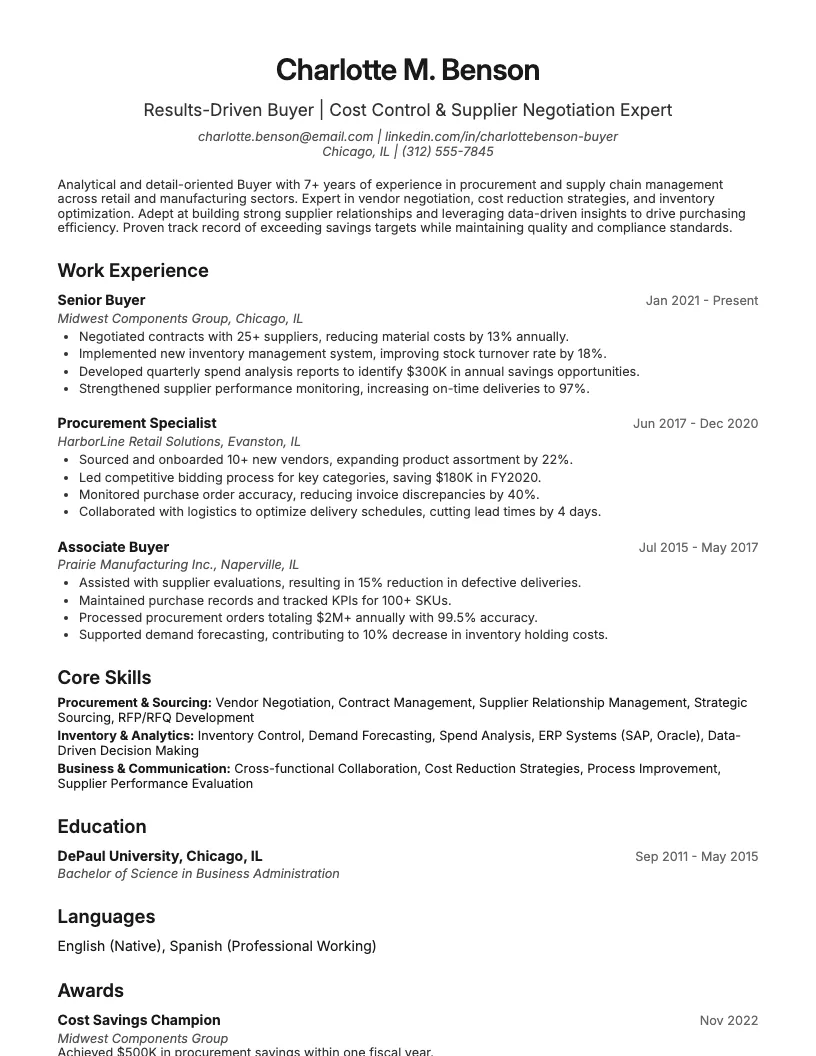
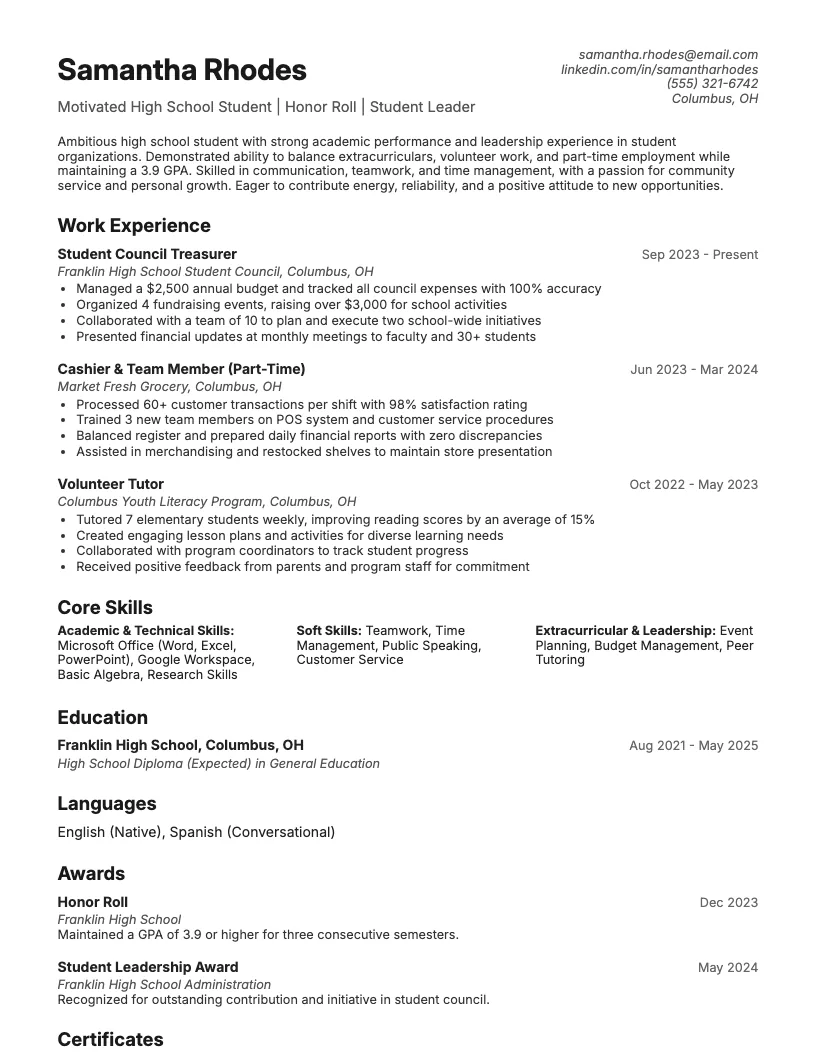
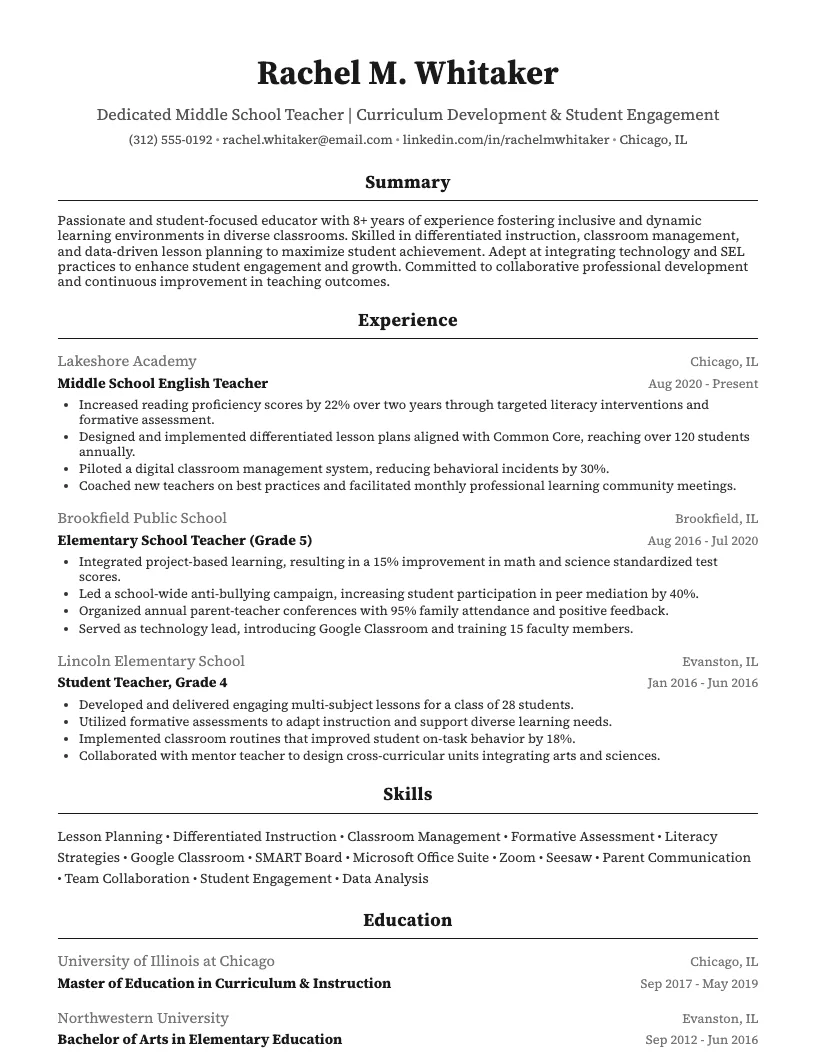
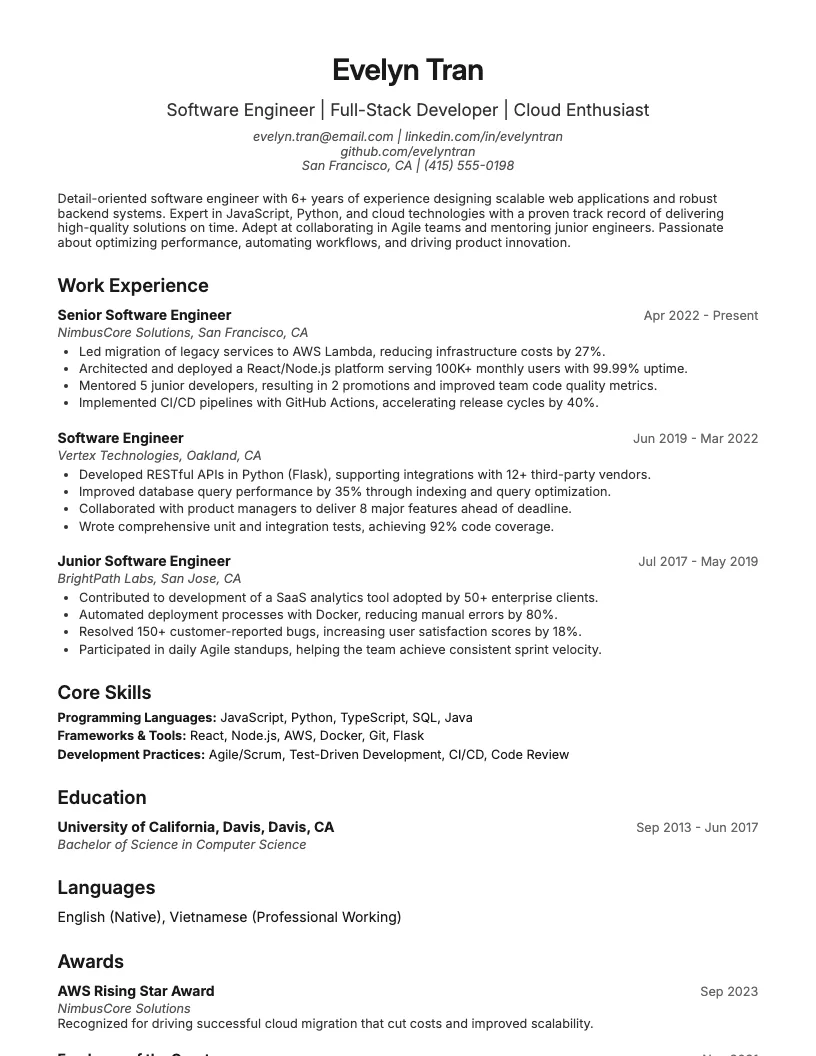
See these skills on a real resume
8 examplesStart from an example that already has them, and swap in your own.
Check your resume against the job you want
Scan your resume, see which skills and keywords the posting asks for that you are missing, and fix them before you apply.
Free to use • No credit card required