Boeing Resume Keywords: 15-25 Terms I'd Use Across 3 Divisions
Boeing splits keywords by division: Commercial Airplanes, Defense, and Global Services. See the exact terms Workday scans for by job title and program.


Written by Sarah Chen
Senior Career Strategist & Resume Expert
Updated August 2026
Reviewed by Marcus Rodriguez
Is your resume ATS-friendly?
Drop your resume in and see which of these skills a scanner can actually read, and which ones the job you want is asking for that you have not listed.
PDF or DOCX. Max 2MB.
We never share your resume or use it to train a model.
In This Guide:
What are Boeing resume keywords?
I've read enough Boeing rejections to know the pattern: strong engineer, real experience, resume never makes it past the screen. The reason is almost always the same.
Boeing's postings are packed with specific terms - a standard, a tool name, a program number - and if those exact words aren't on your resume, the system filtering applications never surfaces you to a person.
Aerospace standards and compliance terms
ITAR, NIST, FAA regulations, DoD and MIL-STD references - these aren't background noise, they're proof you've worked inside a regulated environment. Leave them off and a resume reads like it came from outside the industry, even when it didn't.
Engineering tools and software names
Name the actual tool, never the category. "CAD software" tells a screen nothing; the package name tells a screen you can start Monday.
Which packages matter depends on which division you're applying to - they're named in the Commercial Airplanes engineering list and the Defense engineering list.
Manufacturing and quality terms
If your work touched a production floor, the process and quality terms carry more weight than a paragraph describing what you did. Lean manufacturing and Six Sigma are the two that travel across all three divisions; the rest are listed under Commercial Airplanes manufacturing and quality.
Security clearance terms
Even when a posting doesn't ask for clearance directly, a lot of defense-adjacent roles still screen on it before a recruiter ever opens the resume.
Put your status down regardless of whether the posting mentions it.
Secret, Top Secret, TS/SCI, clearance eligible - say your status plainly and put it near the top. On defense-side roles this line gets checked before anything else on the page, so burying it costs you the fastest filter you could've passed.
Boeing program and aircraft names
Naming the program you touched signals direct, relevant experience in a way "commercial aircraft manufacturing" never will. Nine times out of ten, a resume with a program name beats one without, even when the underlying work is nearly identical.
The programs themselves are listed by division: commercial, defense and space.
Where these keywords come from in the job posting
Don't guess at these - pull them straight from the posting. The job title, the basic qualifications, and the "about this role" paragraph are where program names and platform terms hide.
I walk through exactly how to mine each of those in how you pull the right keywords out of a posting. If you'd rather not comb through it line by line, ResumeJudge reads the posting and your resume together and tells you exactly which of these terms you're missing.
How does Boeing screen your resume before a person reads it?
Before anyone at Boeing looks at your resume, software has already decided whether you're worth their time.
Boeing runs applications through Workday
Boeing uses Workday to take in every application.
RTX runs on Workday too, so if you've applied to both, the process will feel familiar.
What Workday does with the file you upload
Workday doesn't read your resume the way a person does.
It pulls the file apart into a database - job titles, dates, skills - and matches those fields against the posting.
If a term isn't sitting in your resume in plain text, Workday has nothing to match.
Why a qualified engineer gets filtered out
I've seen a resume with ten years of aircraft design experience get filtered out for one reason: it never said "AS9100" or "CATIA" anywhere on the page.
The experience was real. The system just couldn't see it, because Workday scores what it can match against the posting's own wording, not what it can infer.
That's the same gap ResumeJudge is built to close - it takes the actual posting and tells you exactly which terms your resume is missing before Boeing's system ever gets a look.
How other defense contractors differ (Lockheed, Northrop, RTX, L3Harris, Honeywell)
Every major contractor runs a different system, and each one parses resumes a little differently:
- Lockheed Martin: IBM Kenexa BrassRing
- Northrop Grumman: Eightfold AI
- RTX: Workday
- L3Harris: SAP SuccessFactors
- Honeywell: Oracle Recruiting Cloud, split across three separate divisions
If you're applying to more than one of these, don't assume a resume tuned for Boeing's Workday will parse the same way everywhere else.
What the recruiter sees in the first 7 seconds
Once you clear the system, a person spends about seven seconds on the first pass.
That means your job title, clearance line, and top skills need to be visible without any scrolling or squinting - see where these keywords go on the page for exactly how to lay that out.
Which keywords does Boeing Commercial Airplanes look for?
Which keywords does Boeing Commercial Airplanes look for?

BCA is the commercial jet side of the company, and its keywords split into four groups. Get the group right for your background and you're already ahead of most applicants.
Manufacturing: composite fabrication, autoclave, fastener installation, blueprint reading
If you build the airplane, name the process, not the department. "Composite fabrication," "autoclave," "sealant application," "fastener installation," and "blueprint reading" tell a recruiter exactly what station you worked.
"Production" or "assembly line" alone tells them nothing.
Quality: AS9100, first-time quality, CAPA, statistical process control
Every quality role on this side of Boeing expects to see AS9100 named outright. Pair it with "first-time quality," "CAPA," and "statistical process control," and if you've done audit prep, say so - audit readiness is its own line item recruiters scan for.
Maintenance and repair: MRO, non-destructive testing, eddy current, ultrasonic inspection
MRO work lives or dies on the inspection method named. "Non-destructive testing" is the umbrella term; "eddy current" and "ultrasonic inspection" are the specific techniques underneath it, and both belong on the page if you've run them.
Engineering: structural analysis, stress engineering, FEA, CATIA V5, SolidWorks
I've reviewed a lot of aerospace resumes that say "structural engineering experience" and stop there. Name the software - CATIA V5 or SolidWorks - and the method - FEA, stress engineering - because Workday and the recruiter are both matching on the tool name, not the job title.
Commercial programs: 737 MAX, 787 Dreamliner, 777X, 767 Freighter
Name the program you worked, down to the variant: "737 MAX" beats "737," and "767 Freighter" beats "767." If the posting names a program and your resume doesn't, that's a gap a recruiter notices in seconds - see what the recruiter sees in the first 7 seconds.
Once you've pulled these terms together, ResumeJudge can check your exact resume against the posting and flag which ones you're still missing.
Which keywords does Boeing Defense, Space and Security look for?
Which keywords does Boeing Defense, Space and Security look for?
If you're applying to the defense side of Boeing, the keywords are a different set than the ones on a commercial airplanes resume. I've reviewed resumes for both, and the mistake I see most often is someone reusing their BCA-style resume for a BDS posting and wondering why nothing lands.
Engineering: systems engineering, MBSE, SysML, digital thread, V&V
Engineering roles here center on systems-level work, not component design. If you've done model-based systems engineering, say MBSE by name, and pair it with SysML if that's the modeling language you used.
Digital thread and verification and validation (V&V) show up constantly in these postings too. Configuration management and technical data packages belong here as well if they're part of what you actually did.
Program management: EVM, IMS, WBS, risk management
Program management on the defense side runs on a handful of acronyms: earned value management (EVM), integrated master schedule (IMS), and work breakdown structure (WBS). Nine times out of ten, a program manager's resume that skips these terms gets read as "hasn't managed a defense contract," even when the experience is there.
Risk management and milestone tracking round this out.
Cybersecurity: RMF, NIST 800-53, STIG, ATO, DISA
Cybersecurity postings look for the Risk Management Framework (RMF), NIST 800-53 controls, STIGs, and Authority to Operate (ATO) work. DISA shows up when the role touches Defense Information Systems Agency requirements.
Vulnerability assessment and incident response are worth a line too if you've done them.
Supply chain: MRP, SAP, procurement, FAR/DFAR compliance
Supply chain roles want MRP and SAP named directly, plus procurement and supplier quality experience. FAR/DFAR compliance is the one people leave off most - it's federal acquisition and defense federal acquisition regulation, and defense supply chain postings expect to see it spelled out somewhere.
Defense programs: F/A-18 Super Hornet, F-15EX, KC-46 Pegasus, P-8 Poseidon, AH-64 Apache, CH-47 Chinook
Name the actual program if you worked on it: F/A-18 Super Hornet, F-15EX, KC-46 Pegasus, P-8 Poseidon, AH-64 Apache, or CH-47 Chinook. A recruiter scanning for a specific platform will stop on that name faster than on any skill list.
Space programs: SLS, CST-100 Starliner, ISS
On the space side, that's SLS, CST-100 Starliner, and the International Space Station. If your background touches more than one of these business units, don't try to force one keyword list - once you've matched a posting's terms, running the resume and the job description through ResumeJudge will tell you what's still missing before you submit it.
Which keywords does Boeing Global Services look for?
Which keywords does Boeing Global Services look for?
Global Services is the maintenance, logistics and training side of Boeing, and the resumes that pass here look almost nothing like the ones for Commercial Airplanes or Defense. If you're coming from supply chain, training or IT, this is your section.
Logistics: WMS, demand forecasting, fleet sustainment, parts distribution, inventory optimization
Recruiters here want to see you've actually run a warehouse management system, not just "managed inventory." Name the WMS you used, and pair it with a number - reduced backorders by some percent, cut lead time by some number of days.
Fleet sustainment and parts distribution are the phrases that separate a general logistics resume from one built for Boeing's aftermarket business. If you've done demand forecasting, say so directly rather than describing it as "planning."
Training: instructional systems design, curriculum development, LMS, ADDIE
Boeing's training roles lean hard on instructional design language. If you've built a course, call it curriculum development.
If you followed a design model to do it, name ADDIE specifically - it's the model Boeing's job postings reference by name, and I've seen plenty of qualified instructors get skipped because their resume said "trained new hires" instead.
Name the LMS platform you used. A platform name is a keyword; "learning software" is not.
IT and data: AWS, Azure, Power BI, Tableau, ServiceNow, ITSM, agile
This is where a lot of strong candidates undersell themselves. If you've built a dashboard, name the tool - Power BI and Tableau aren't interchangeable to a scanner.
Same with cloud: say AWS or Azure, not "cloud platforms." If you support IT tickets or change requests, ServiceNow and ITSM are the exact terms recruiters search for.
Before you send anything out, run it against ResumeJudge - it'll check your resume against the actual posting and flag which of these terms you're still missing.
Contracts and scheduling: IMS, EVM, contract management, performance metrics
Program and contracts roles inside Global Services still want IMS and EVM - see how those show up on the Defense side, since the terms carry over. Pair "contract management" with a performance metric you actually tracked; a bullet that just says "managed contracts" won't clear the bar.
Which keywords match your job title?
Which keywords match your job title?
Skip the categories that don't apply to you and go straight to your title. That's the fastest way to find your list.
Aerospace engineer
Your list is the Commercial Airplanes engineering terms, plus V&V from the Defense engineering list and AS9100 from quality. Don't just say "engineering software" - name CATIA or SolidWorks specifically, since that's what a recruiter scans for first.
Manufacturing engineer
This title runs on the whole Commercial Airplanes manufacturing list. Add CNC programming and lean manufacturing if you've touched them, and don't leave out first-time quality or CAPA from the quality list - those terms belong on a manufacturing resume just as much as a quality one.
Quality engineer
Work from the quality list, and add nonconformance reporting plus the methods in maintenance and repair if that's your background. The mistake I see most often here is leaving quality terms generic - "inspection experience" tells a screener nothing that "eddy current inspection" doesn't say better.
Software engineer
Boeing's software roles lean on systems engineering language even outside BDS - the Defense engineering list matters more than you'd expect from a "software" title. If you're in IT or data roles, the Global Services IT and data list carries more weight than a long list of languages.
Name the cloud platform and the methodology, not just "cloud experience."
Program manager
The Defense program management list is what recruiters look for on a program manager resume, full stop. Stakeholder management rounds it out, and if you're targeting a defense program, add DFAR compliance since that's a qualifier, not a nice-to-have.
Supply chain and logistics roles
Lead with the system name a screener is actually matching against, not "inventory software" - the Defense supply chain list has it. Add the Global Services logistics terms if you've worked BGS-style logistics.
Veterans moving from a military supply role: turning your military terms into Boeing language is worth a look before you finalize this section.
Mechanic and production technician roles
FOD prevention plus the shop-floor terms in the Commercial Airplanes manufacturing list are the baseline here. Add tool calibration and first article inspection if that's part of your day-to-day, and spell out any certification by name rather than folding it into "certified technician."
Once you've pulled your title's list, ResumeJudge can check it straight against the posting you're applying to and flag anything from your title's set that's still missing before you submit.
How do you pull the right keywords out of a Boeing job posting?
How do you pull the right keywords out of a Boeing job posting?
Open a Boeing posting and it can feel like fifteen different sections shouting at you. Here's the order I actually work through it in.
Step 1: Copy the job title exactly as it is written
Don't rephrase "Manufacturing Engineer II" into "Manufacturing Engineer" or "Senior Manufacturing Engineer." Workday matches on the exact string, so whatever's in the title bar of the posting goes on your resume word for word.
Step 2: Turn each basic qualification into a line on your resume
Basic qualifications aren't suggestions. They're the filter that decides whether a person ever sees your resume.
I go bullet by bullet and make sure each one has a matching line somewhere on the page, not just a vague nod to it.
Step 3: Treat preferred qualifications as the tiebreaker
These won't get you screened out if you're missing them, but they're what separates you from the other 40 people who cleared the basics. Any preferred qualification you genuinely have earns real space, not an afterthought.
Step 4: Find the program name buried in the 'about this role' paragraph
This is the step people skip. Boeing tucks the actual program - 737, 787, KC-46, P-8 - into a summary paragraph most applicants skim past.
If you've touched that platform anywhere in your history, name it explicitly.
Step 5: Pick 15 to 25 terms and drop the rest
When two terms mean almost the same thing, keep the one written in the posting itself, not the version you're used to saying out loud.
Workday and the recruiter are both matching against the posting's exact wording, so the synonym you like better doesn't help you.
I've seen resumes try to cram in every acronym from the posting, and it reads like noise, not a match. Fifteen to twenty-five well-placed terms is the range that works - enough to clear the scan, not so many it looks stuffed.
If you'd rather not comb the posting by hand, ResumeJudge will read the job description against your resume and hand you back the exact terms you're missing, so you're not guessing at step 4 or step 5.
Where do the keywords go on your resume?
Once you've picked your 15 to 25 terms (see step 5), where you put them matters almost as much as having them.
Summary line
Your summary is the first thing a recruiter reads, so it should name your role, your clearance if you have one, and two or three of your strongest keywords right away.
Something like "Aerospace Engineer with Secret Clearance, expertise in CATIA, ANSYS, and AS9100 compliance" does more work in one line than a paragraph of soft skills.
Clearance line near the top
If you hold a clearance, it belongs near the top of the page, not buried in a bullet halfway down.
Defense recruiters filter on clearance status first, before they even read what you've built. I cover exactly how to word this in the clearance section.
Experience bullets
This is where most resumes fall apart.
Name the tool, name the standard, name the program, and put a number on the result. Nine times out of ten, the difference between a resume that gets a call and one that doesn't is whether the bullets read like the second example below instead of the first.
Skills section grouped by category
Don't dump every keyword into one flat list. Group them: Aerospace Standards, Engineering Tools, Manufacturing, Quality, Security.
A recruiter scanning for AS9100 or CATIA finds it in two seconds when it's grouped, and skims right past it in a wall of text.
Certifications line
A certification that's about to expire is still worth listing, but say so - 'AS9100 Lead Auditor, renewal in progress' reads very differently from a bare name with no date at all.
A recruiter who sees a date without that context usually assumes the certification has lapsed.
List certifications with the year you earned them, not just the name. "AS9100 Lead Auditor, 2023" reads as current; "AS9100 Lead Auditor" with no date makes a recruiter wonder if it's lapsed.
A bullet before and after adding keywords
An experience bullet before and after adding keywords
Designed aircraft components using CAD software.
Applied CATIA V5 and ANSYS FEA to redesign 787 Dreamliner composite structures, reducing structural weight 15% and cutting production time 20%.
Before: "Designed aircraft components using CAD software."
After: "Applied CATIA V5 and ANSYS FEA to redesign 787 Dreamliner composite structures, reducing structural weight 15% and cutting production time 20%."
Same job, same work. One of those gets read by a person; the other doesn't survive the first scan.
If you're not sure your bullets are making that jump, ResumeJudge will take your resume and the actual posting and rewrite each bullet against it, so the keywords and the numbers land in the right place without you guessing.
How should you format a Boeing resume so Workday reads it?
How should you format a Boeing resume so Workday reads it?
Get the keywords right and then blow it on formatting - I've seen that happen more times than I can count. Workday parses your file into a database before a person sees it, and a fancy layout breaks that parsing.
Single column, no tables or graphics
One column, top to bottom, nothing else. Tables, text boxes, and multi-column layouts confuse the parser, and it can pull your dates and job titles into the wrong fields or drop them entirely.
Standard fonts at 10 to 12 point
Arial, Calibri, or Times New Roman, sized 10 to 12 point. Nothing decorative, nothing condensed to squeeze in more text.
Two pages maximum
Two pages, no more. Boeing hiring managers are working through hundreds of resumes for a single opening, and a recruiter spends about 7 seconds on that first pass.
A third page of padding just means less time on the two that matter.
Section headings Workday recognises
Stick to the standard labels: Professional Summary, Work Experience, Education, Skills. A clever heading like "Where I've Made an Impact" might read fine to a person, but Workday is matching against a known list, and anything off that list can get filed as nothing at all.
Plain text, never keywords inside an image
Every keyword needs to be text the parser can actually read - never inside a logo, a skills graphic, or a scanned image. And don't just dump them in a list either; work them into your bullets the way you'd say them out loud, the same approach I'd use when pulling keywords out of the posting in the first place.
File type: .docx or PDF
Save as .docx or PDF. Both parse cleanly in Workday; a scanned image or an oddball file type won't. If you want to know before you hit submit whether your file is actually going to parse the way you think it will, ResumeJudge scans your resume against the posting and shows you exactly which formatting or wording issues would trip up a system like this.
How do you write clearance, citizenship and ITAR on your resume?
How do you write clearance, citizenship and ITAR on your resume?
Leave this off and a recruiter has to guess whether you're even eligible for the role. I've seen strong resumes get passed over for exactly that reason - not because the person lacked a clearance, but because nothing on the page said so.
Which Boeing roles require US citizenship
Most defense-side postings restrict the role to US citizens because of ITAR. Check the specific posting rather than assuming - commercial roles are usually open to a wider pool, defense roles usually aren't.
How to write the clearance level and investigation date
Writing a clearance line
Cleared
Secret clearance, investigation completed 03/2023
If you hold a clearance, state the exact level and the date of your last investigation, not just "cleared." Something like "Secret clearance, investigation completed 03/2023" tells a recruiter everything they need in one line.
Put it near the top of the page - defense roles filter on this before anything else.
What ITAR eligibility means and who qualifies
ITAR eligibility just means you're allowed to work with export-controlled technical data. The rule counts you as a US person if you're a citizen, a lawful permanent resident, or a protected individual under 8 U.S.C. 1324b(a)(3), which includes refugees and asylees.
If you're none of those, say so plainly rather than leaving the line blank and hoping nobody notices.
What to write if you are clearance eligible but not cleared
Don't hide behind vague wording here. Write "US Citizen, clearance eligible" so the recruiter knows you could be sponsored even though you're not holding one now.
Nine times out of ten, a candidate who states this clearly beats one who says nothing and hopes the interview will sort it out.
Where on the page these lines belong
Keep citizenship, clearance and ITAR status together, right under your name or summary - not buried in a skills list. ResumeJudge flags this automatically when it checks your resume against a posting, so you're not left guessing which of these lines a given role actually expects.
How do you turn military experience into Boeing keywords?
Military term to Boeing keyword
| Military term | Boeing keyword |
|---|---|
| GCSS-Army | SAP/ERP |
| Property book | Asset management |
| PLL | Parts demand forecasting |
| ACAS | Vulnerability scanning |
| IA compliance | RMF/NIST 800-53 compliance |
| Safety inspections per AR 385-10 | OSHA compliance audits |
I've read a lot of veteran resumes that undersell the person by leaving their military terms exactly as the military wrote them. Boeing's recruiters aren't military - they're reading in Workday, and Workday only surfaces what matches the posting's own words.
Translate first, then let the achievement speak.
GCSS-Army becomes SAP/ERP
If you touched GCSS-Army, write it as SAP/ERP experience. That's the system family Boeing's supply chain and logistics postings actually name, and it's the same underlying skill.
Property book becomes asset management
Property book officer, hand receipt holder, whatever your role was - on a Boeing resume that's asset management. Say what you tracked and how much of it.
PLL becomes parts demand forecasting
Prescribed load list work turns into parts demand forecasting. It's the same job: predicting what inventory you'll need before you run out.
ACAS becomes vulnerability scanning
Here's one where you barely have to translate anything - ACAS experience is vulnerability scanning, full stop. Boeing's cybersecurity postings and the military use nearly identical frameworks, so this one carries over almost word for word.
IA compliance becomes RMF/NIST 800-53 compliance
Information assurance compliance work becomes RMF/NIST 800-53 compliance. If you want the fuller picture of how this maps into Boeing's cybersecurity terms, the cybersecurity keywords for Boeing Defense, Space and Security covers it.
Safety inspections per AR 385-10 becomes OSHA compliance audits
Safety inspections you ran under AR 385-10 are OSHA compliance audits in civilian language. Same discipline, different regulation number - name the civilian one.
Acronyms to spell out: FOD, NDI, AGE, CDI
FOD, NDI, AGE, CDI - I see these left untranslated constantly, and it's the single most common mistake I catch on a veteran's resume. A recruiter who's never worn a uniform won't stop to look them up; they'll just move to the next resume.
Spell each one out on first use: foreign object debris, non-destructive inspection, aerospace ground equipment, collateral duty inspector.
Fixing what Workday does to a parsed military job history
Workday's parser is bad at military resumes - it tends to flatten a whole career into one long block instead of separate roles. Don't leave it that way.
Go back in and manually edit each entry: match your role titles to the closest civilian title from the posting, and rewrite your bullets in the posting's own language, with real numbers attached. "Supervised junior personnel" should become something like "led daily production stand-ups for a team of 14 aircraft maintainers."
This is exactly the kind of rewrite ResumeJudge does for you - feed it your resume and the posting, and it rewrites the parsed-out military bullets into the terms this posting is actually scanning for, instead of you guessing at each translation by hand.
What keywords should a Boeing internship resume have?
What keywords should a Boeing internship resume have?
If you're a student, you don't get graded on the same curve as a five-year engineer, and your resume shouldn't pretend otherwise.
I've read a lot of intern resumes that try to sound senior. They end up sounding fake instead.
The fix is to lean into what you actually have: coursework, GPA, projects, and clubs.
GPA, expected graduation and honours
Boeing's scanner looks for the literal word "GPA," so if you're at 3.0 or above, put it right next to your degree line.
Below 3.0 overall but your major GPA clears 3.0? List that instead - "Major GPA: 3.2/4.0" reads fine.
If both numbers are weak, drop GPA entirely and let Dean's List or a scholarship carry that line.
Put your expected graduation next to it - "Expected Graduation: May 2027" - since that's another term the system checks for.
Relevant coursework, 6 to 8 courses
No internship yet? Coursework is how you prove you know the material.
I tell students to list 6 to 8 courses tied directly to the role - Aerodynamics, Structural Analysis, Thermodynamics for engineering roles, not a random transcript dump.
Cut anything that doesn't match the posting. A software internship doesn't need your thermo class listed.
CAD and analysis tools from class projects
Naming a class project tool
Used AutoCAD in a class
Modeled UAV wing structure in CATIA V5, ran FEA in ANSYS Workbench
You probably haven't used these tools on the job, and that's fine - name them anyway, tied to a project. "Modeled UAV wing structure in CATIA V5, ran FEA in ANSYS Workbench" beats "familiar with CAD software" every time.
The mistake I see most often here is vague phrasing - "used AutoCAD in a class" gets skipped by the scanner. Name the tool, name the project.
Programming languages
List the languages you've actually written code in - Python, C++, MATLAB, Java - and back at least one with a real project, like a flight data tool built with Python and a SQL database.
Software and IT internships get scored on this line hard, so don't bury it in a paragraph. Give it its own row in your skills section.
Leadership titles and AIAA, ASME, SAE, IEEE, SWE
Boeing has said plainly that leadership and volunteer experience matter to them, and nine times out of ten a student underlists this.
Name the title - President, Team Lead, Treasurer - and name the organisation: AIAA, ASME, SAE, IEEE, SWE. "Led team of 12" or "mentored 5 freshmen" does more work than "active club member."
Citizenship line for ITAR-restricted internships
A lot of Boeing internships require U.S. citizenship because of ITAR, and if your resume doesn't say so, recruiters often assume you're not eligible and move on. See clearance and citizenship for the exact wording.
Full-time wording versus intern wording for the same skill
The same skill gets written differently depending on where you are. A full-time engineer writes "5+ years CATIA experience."
You write "Coursework in CAD (CATIA, SolidWorks, NX)."
Don't inflate a class project into "led cross-functional team of 12" - save that phrasing for when it's true. This is exactly where ResumeJudge earns its keep: paste in the internship posting and it rewrites your bullets in the register that posting actually expects, instead of you guessing at how senior to sound.
What gets a Boeing resume rejected?
I've read enough of these to know most rejections aren't about the person's actual experience. They're about seven habits that show up over and over, and every one of them is fixable in an afternoon.
Stuffing in keywords the posting never mentions
If the posting never says "Six Sigma," don't put Six Sigma on your resume just because you have it.
Recruiters notice when a skills section reads like a wish list instead of a match to the job in front of them. Pull your terms from what's actually in the posting, not from every certification you've ever earned.
Listing a tool by category instead of by name
Naming your CAD tools
Proficient in CAD software
CATIA V5, SolidWorks, AutoCAD
This is the single most common miss I see on engineering resumes, and it costs nothing to fix - swap the category word for the actual tool name, as in engineering tools and software names.
Leaving the clearance or citizenship line off
If your resume doesn't say where you stand on citizenship or clearance, the recruiter has to guess or move on. How to write clearance, citizenship and ITAR covers the exact wording and where it goes on the page.
Bullets with no numbers in them
Adding a number to an engineering bullet
Designed aircraft components
Reduced structural weight 15% through FEA analysis on the 787 program
"Designed aircraft components" says nothing. "Reduced structural weight 15% through FEA analysis on the 787 program" says everything.
Nine times out of ten, the resumes that get callbacks have a number in almost every bullet. If yours don't, that's the first thing I'd fix - and it's exactly the kind of rewrite ResumeJudge does automatically, pulling the metrics you already have into the bullet where the posting expects to see them.
Keywords trapped in a graphic, table or header
If your skills live in a sidebar graphic or a table cell, they don't exist as far as the scanner is concerned. Keep everything in plain, single-column text.
Military acronyms left untranslated
If you don't spell your military acronyms out on first use, a civilian recruiter just skips past them. See how to translate military experience into Boeing terms for which ones and what to write instead.
Skipping fields marked optional
The cover letter box, the diversity self-ID, the additional certifications field - "optional" doesn't mean Boeing isn't collecting that data. Skipping it just means you handed a recruiter one less reason to move you forward.
What to actually put in the cover letter box is in the questions people ask section.
Frequently Asked Questions
How many keywords should I put on a Boeing resume?
Roughly 15 to 25, pulled straight from the specific posting rather than a generic aerospace list. Step 5 of pulling keywords out of a Boeing posting, further up this page, covers how to narrow a long posting down to that set and why cramming in more backfires. ResumeJudge can take your resume and that job description and rewrite your bullets so the qualifications the posting actually asks for show up in the right sections, instead of you guessing which ones count.
Do I need a security clearance to apply to Boeing?
Not for every role, but you do for most Boeing Defense, Space and Security positions and anything touching classified programs. Boeing Commercial Airplanes and many Global Services roles don't require one at all. Check the specific posting rather than assuming either way, and if you already hold a clearance, put its level near the top of your resume where a recruiter sees it right away.
Should I name specific aircraft like the 737 or F/A-18 if I never worked on them?
No, only list a named program if you actually worked on it. Boeing's applicant tracking system rewards program names for matching purposes, but a recruiter reading your resume after that scan will notice a 737 or F/A-18 mention that isn't backed up by real experience, and that costs you more than the keyword match gains you. If you worked on a comparable platform, name that one honestly and let your other skills carry the rest.
Are commercial and defense keywords different?
Yes. Commercial roles lean on terms like FAA regulations, commercial aircraft programs, and airline customers, while defense roles call for clearance level, ITAR, military aircraft platforms, and DoD contract experience. The two vocabularies overlap on things like AS9100 and Lean Manufacturing, but a resume aimed at Boeing Defense, Space and Security should read differently from one aimed at Boeing Commercial Airplanes. Match your keywords to the division and posting you're actually applying to, not a generic Boeing list.
Does Boeing actually read the cover letter box?
Yes, even though it's usually marked optional, recruiters do read what's in it. Keep it to around 300 words in four short paragraphs: your exact role title with a one-line statement of fit, three bullets that mirror the posting's basic qualifications in its own words, one line on a preferred qualification, and a one-sentence close. Skip flowery language, since a recruiter skims it in under 20 seconds. If writing that from scratch feels like a chore, ResumeJudge will write the cover letter for you once it has the job posting in hand.
Can international applicants apply to Boeing?
Yes for many commercial roles, but not all. Boeing Commercial Airplanes programs like the 737 and 787 often accept applicants with valid U.S. work authorization, while Boeing Defense, Space and Security roles usually require U.S. citizenship because of ITAR and clearance requirements. Always check the specific posting's citizenship language before applying, since it varies role by role even within the same program.
What GPA does Boeing want for an internship?
Boeing typically looks for a minimum 3.0 GPA on a 4.0 scale for engineering and technical internships, with competitive sites sometimes preferring 3.2 or higher. That said, Boeing evaluates candidates holistically, so strong leadership experience, relevant coursework, or hands-on projects can offset a GPA slightly below that line.
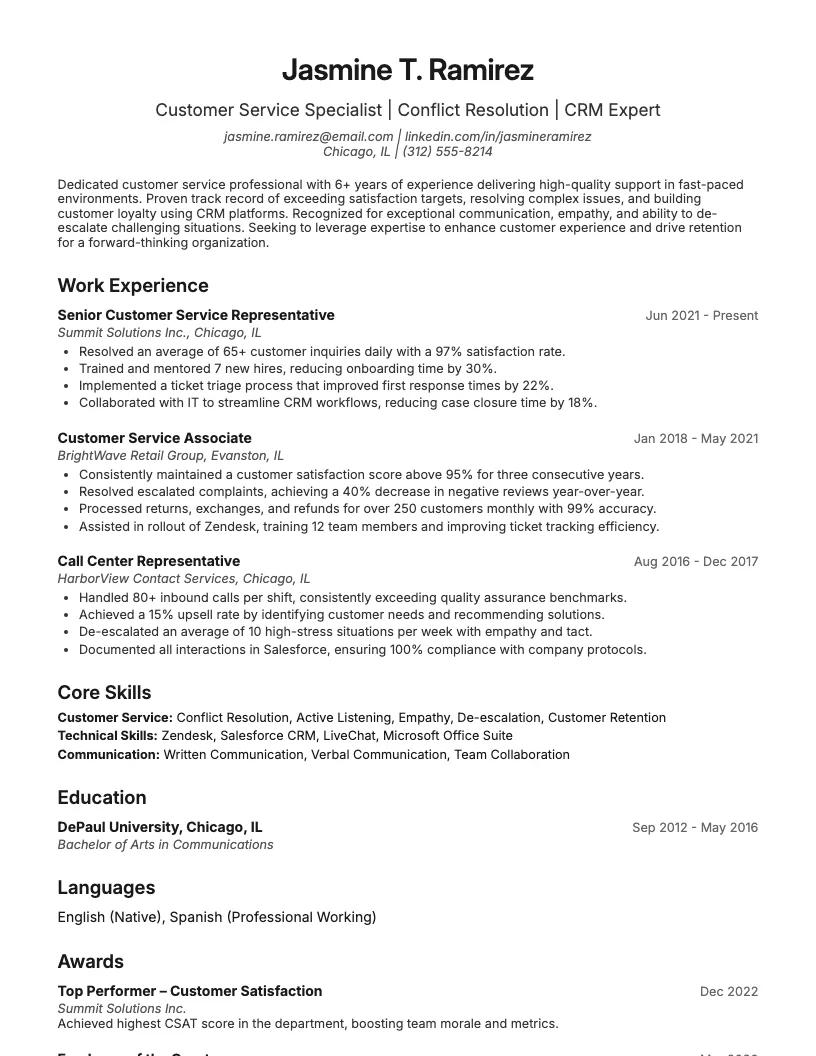
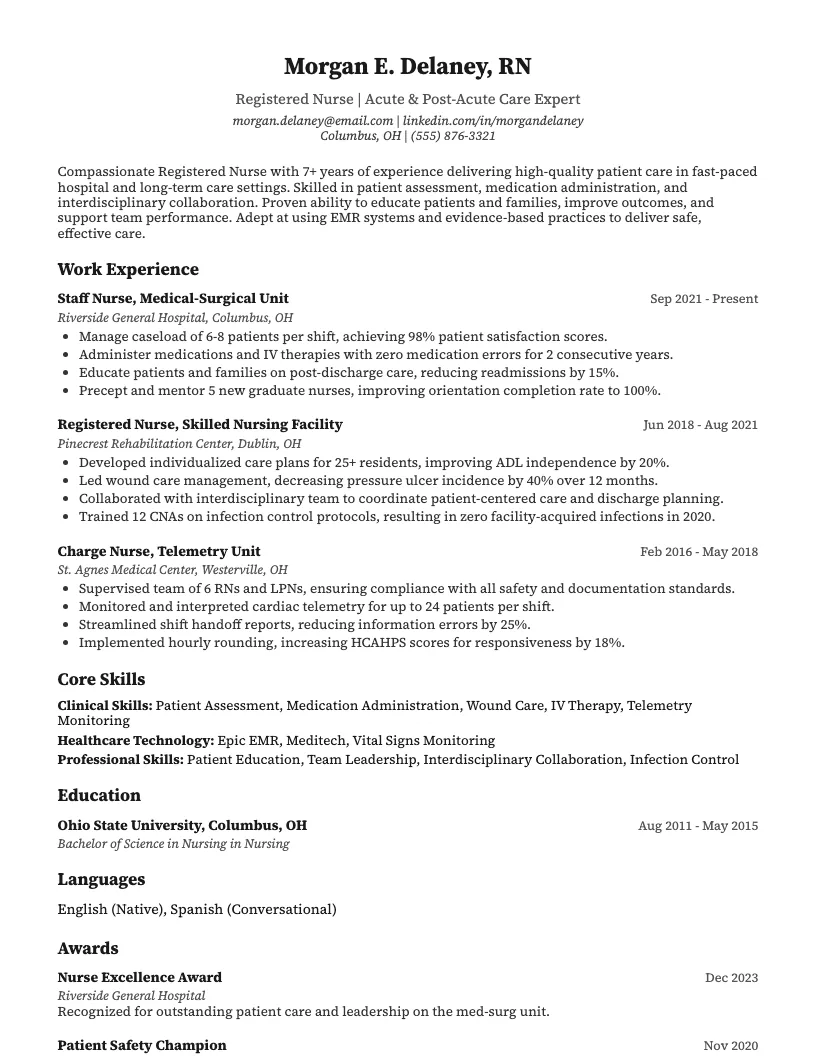
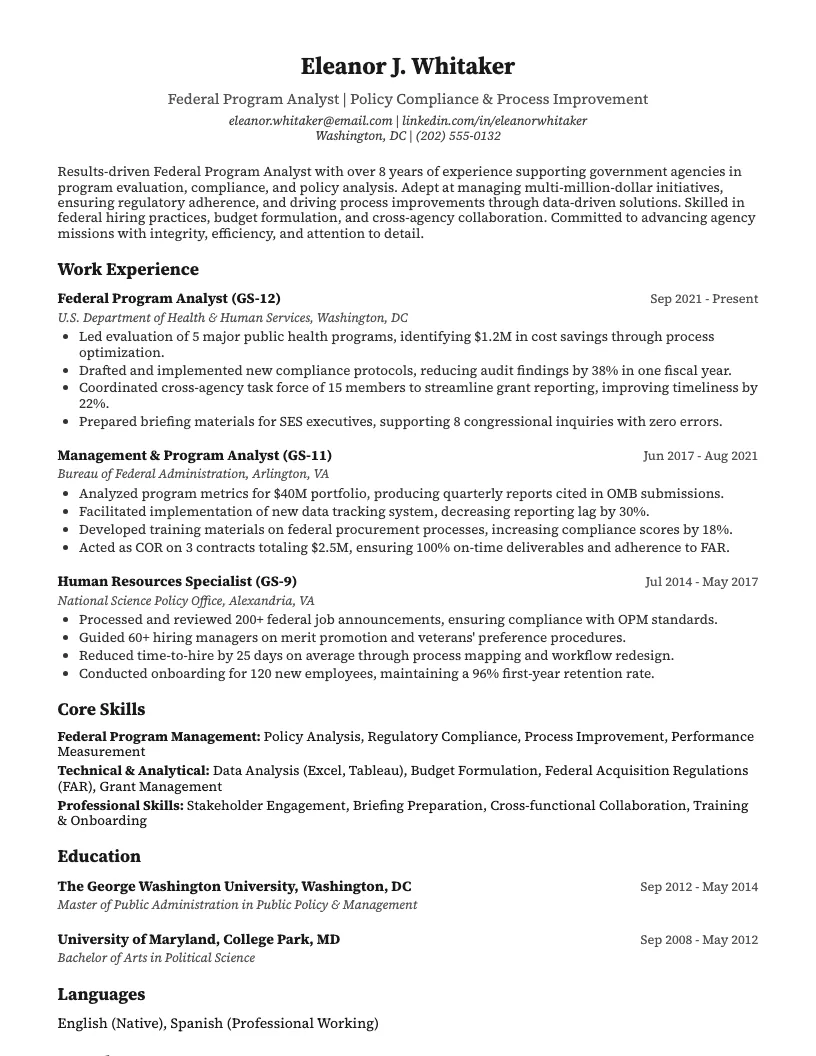
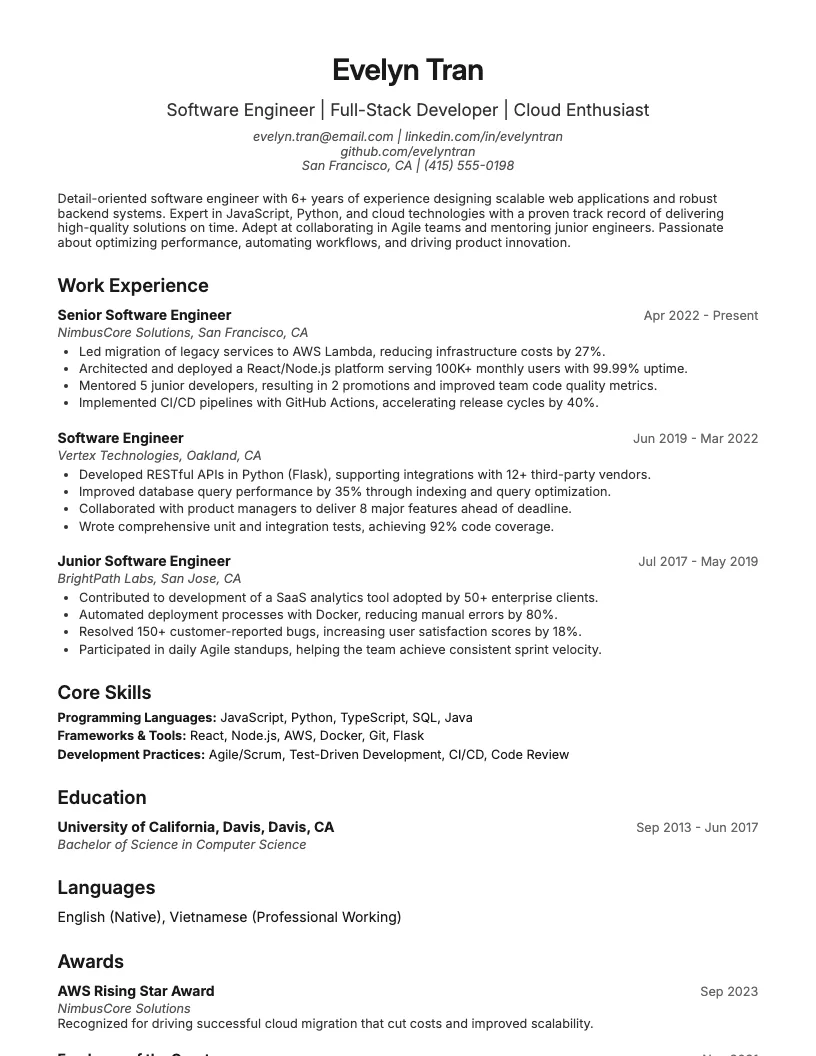
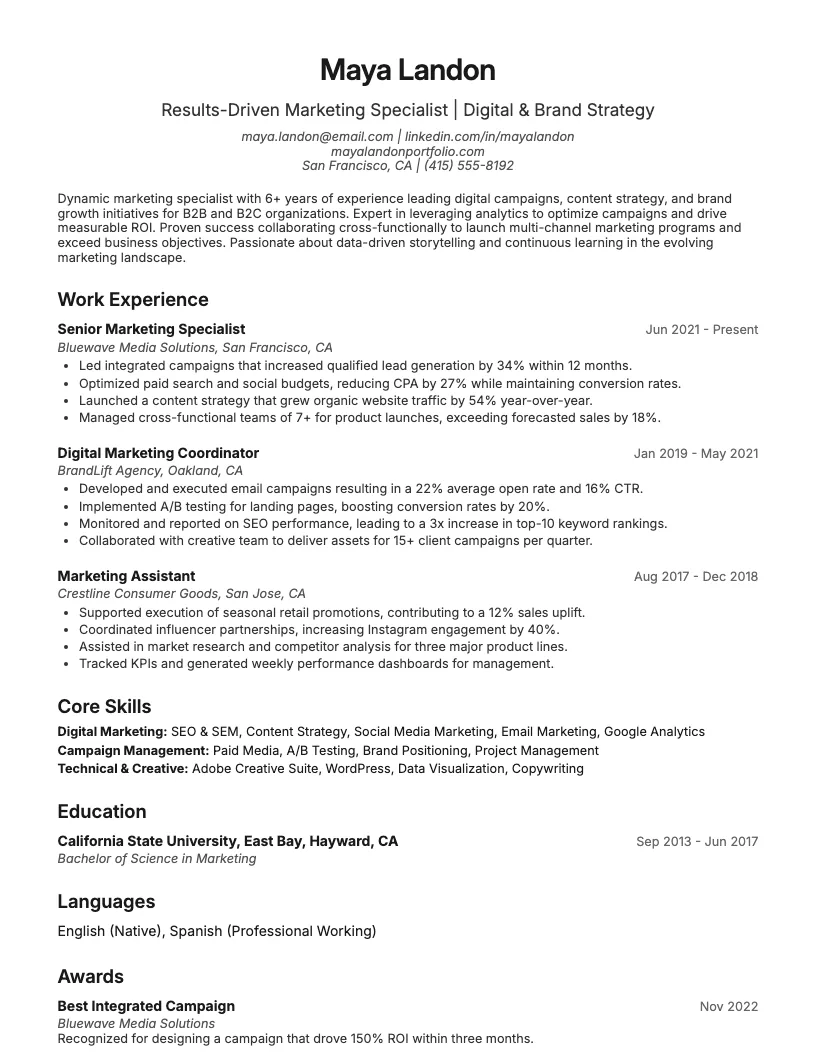
See these skills on a real resume
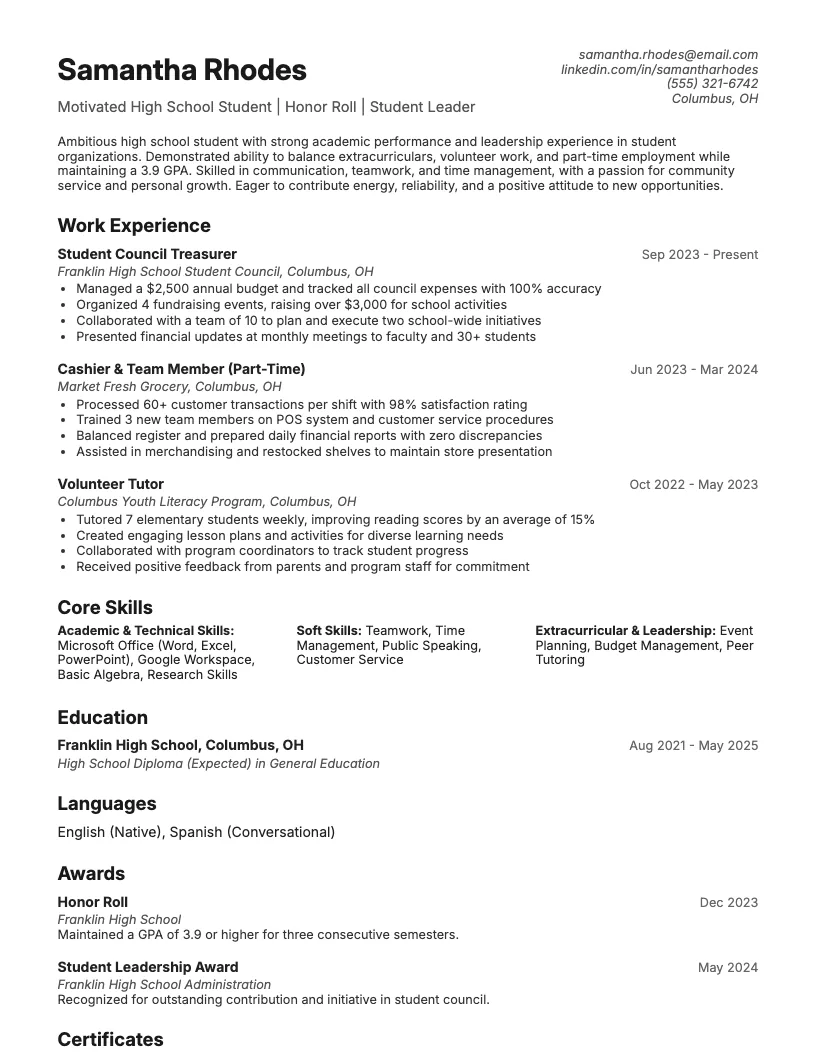
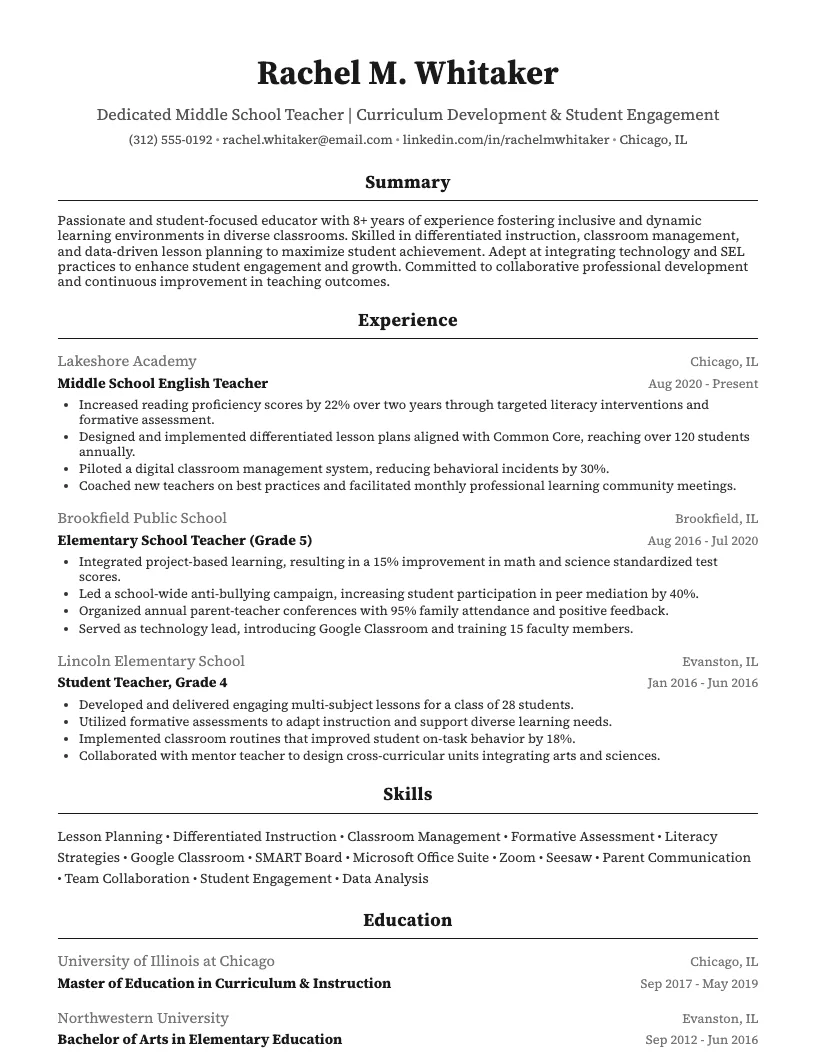
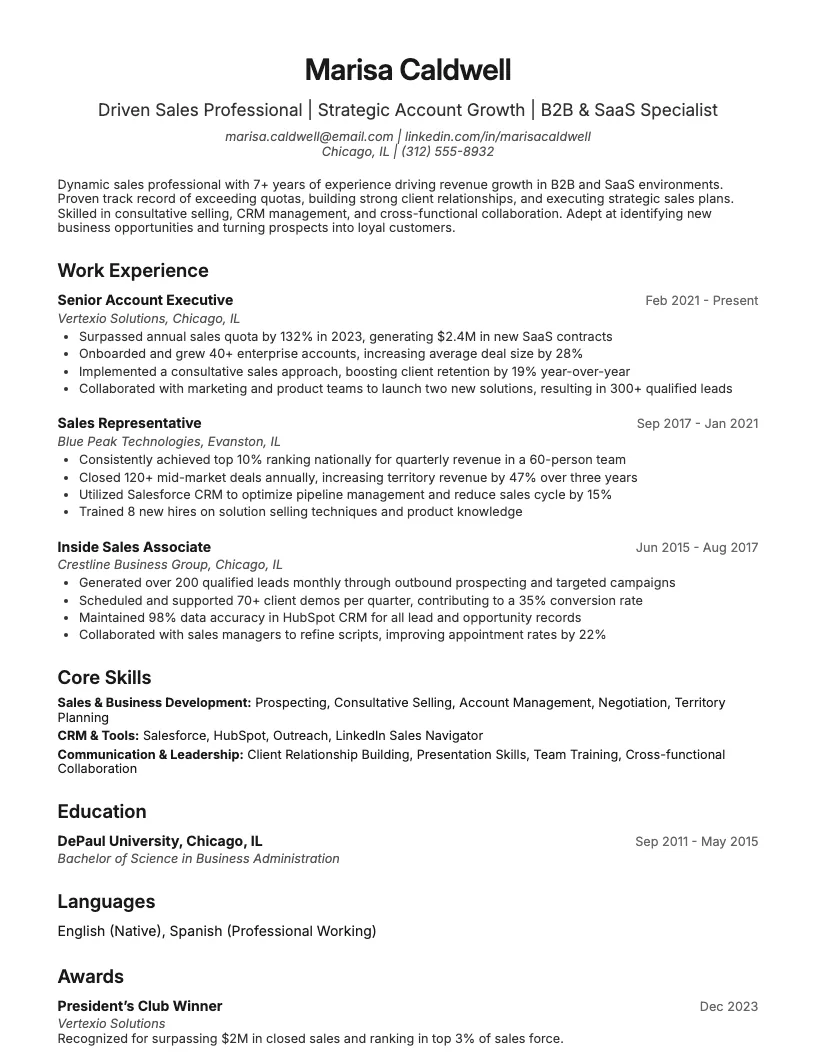
8 examplesStart from an example that already has them, and swap in your own.
Check your resume against the job you want
Scan your resume, see which skills and keywords the posting asks for that you are missing, and fix them before you apply.
Free to use • No credit card required