Keywords for Child Care Resume: 7 Certifications, Top Skills by %
See the exact keywords, certifications and skill percentages employers search for on a child care resume, plus how to turn each into a real experience line.


Written by Marcus Rodriguez
ATS Optimization Specialist & Career Coach
Updated August 2026
Reviewed by Dr. Priya Sharma
Is your resume ATS-friendly?
Drop your resume in and see which of these skills a scanner can actually read, and which ones the job you want is asking for that you have not listed.
PDF or DOCX. Max 2MB.
We never share your resume or use it to train a model.
In This Guide:
What keywords should you put on a child care resume?
Is your resume good enough?
Drop your resume in and see which of these skills a scanner can read, and which ones the job you want is asking for that you have not listed.
Upload your resumeFree. PDF or DOCX. We never share your resume or use it to train a model.
I've read a lot of child care resumes that list "childcare" as a skill and stop there. That word tells a hiring manager nothing they didn't already know from your job title.
The keywords that actually move a resume are specific: the certification you hold, the age group you've worked with, the framework you were trained in.
First aid and CPR certified
How to list CPR and first aid certification
Certified in first aid
CPR and pediatric first aid certified (American Red Cross)
This is the one almost every posting names outright, so don't bury it in a paragraph. Put the certifying body and the fact that it covers pediatric or infant CPR if it does - "CPR and pediatric first aid certified (American Red Cross)" reads as real, "certified in first aid" reads as filler.
Child development and milestones
Employers want to see that you know what a two-year-old should be doing versus a five-year-old. Words like developmental milestones, age-appropriate learning, and cognitive or social-emotional development signal that, and they're worth working into your experience section, not just a skills list.
Behavior management
Positive discipline, redirection, conflict resolution - these three cover most of what postings ask for. If you've handled meltdowns or sibling conflict without losing the room, that's the skill; behavior management is just the term for it.
Health, safety and safeguarding
Safeguarding protocols, sanitation standards, safe environments - this cluster shows up in nearly every listing because it's a liability issue for the employer, not a nice-to-have. Background check clearance belongs here too.
Meal preparation and food allergies
Allergy management and meal planning are their own line item on most job ads now, separate from general "care duties." If you've tracked allergies for a group of kids, say so specifically.
Activity and lesson planning
Curriculum development, lesson planning, play-based learning. The mistake I see most often is listing "planned activities" with nothing else - a hiring manager wants to know if you built structure around it or improvised day to day.
Parent communication and daily reports
Daily reports and milestone updates are a real keyword pair, and they're easy to turn into a strong line on your resume once you attach a number to them (see the example further down).
Classroom and group supervision
Group supervision and ratio management belong together - knowing you can hold a 1:8 ratio safely is worth more on paper than "watched the kids."
Special needs support
If you've worked one-to-one with a child who needed extra support, name it: inclusive education, individualized care plans, special needs support. It's a smaller applicant pool, so it's worth being specific rather than folding it into general experience.
Early childhood education frameworks: Montessori, Reggio Emilia, Waldorf, HighScope
Only list these if you were actually trained in one. Nine times out of ten I see "Montessori" tacked onto a resume because it sounds credible, and it falls apart in the first interview question about it.
Brightwheel, Procare and other parent apps
More centers run daily updates and digital portfolios through apps like Brightwheel and Procare now, so naming the ones you've used is a real keyword, not filler - it tells the employer you won't need training on their system.
State licensing and ratio requirements
These change by state and by age group, which is exactly why a generic keyword list only gets you partway. If you want to know which of these actually apply to the posting in front of you, ResumeJudge will scan your resume against that job description and show you which of these keywords are missing before a hiring manager ever sees the gap.
Which child care skills show up most often in job postings?
Child care skills by how often they appear in job postings
| Skill | % of listings | What to do |
|---|---|---|
| CPR certification | 50% | Keep it visible near the top |
| Communication | 43% | Name what you communicated |
| First aid certification | 37% | Pair it with CPR |
| Following directions | 35% | Show you stick to routines |
| Planning engaging activities | 34% | Name one activity, not 'planned activities' |
| Cleanliness, attitude, infant care | Single digits | Don't lead with these |
I pulled the frequency data on this because "list your top skills" isn't useful advice on its own.
Knowing which ones actually show up, and how often, tells you where to spend your limited space.
CPR certification - 50% of listings
Half of the postings I've looked at ask for it by name.
How to write the line is covered under first aid and CPR certified.
Communication - 43%
Almost as common, and the one people write the laziest.
What to write instead is covered under parent communication and daily reports.
First aid certification - 37%
Pair it with CPR wherever you list it. Employers usually ask for both together, so keeping them apart on your resume just makes a screener work harder to find the second one.
Following directions - 35%
This one surprises people, but it makes sense once you think about it. A center runs on routines and ratios, and an employer wants proof you'll stick to them, not improvise.
Planning engaging activities - 34%
Name a specific activity rather than writing "planned activities" - see activity and lesson planning.
Cleanliness, positive attitude, infant care - the tail end
These show up far less often, in the single digits. Cleanliness, positive attitude, and infant care each land in only a handful of listings out of every hundred.
That doesn't mean skip them. It means don't spend your best bullet point proving you're tidy when nobody's actually asking for it.
What the frequency numbers change about your skills section
The mistake I see most often is treating every skill as equally worth a line. It isn't.
Lead with the ones near 50%, back them up with a real example in your work experience, and let the tail-end skills sit lower down or fold into a sentence instead of their own bullet.
Better yet, run your resume against the actual posting you're applying to. ResumeJudge checks your resume against a specific job description and tells you exactly which of these skills the posting asks for that you haven't shown yet.
What are the soft skills a child care employer looks for?
A soft skill without a specific moment behind it is invisible to a screener - but don't manufacture a story to fill the gap. If you can't think of a real instance where you showed patience or compassion, that's usually a sign you're leading with the wrong skill.
Anyone can write "patient" on a resume. What separates the candidates who get called back is proof they've actually got it.
Patience and staying calm during a meltdown
This is the one every posting wants and almost nobody proves. A line like "stayed calm and consistent through a child's meltdown" tells a hiring manager more than the word "patient" ever will.
Compassion
Compassion shows up when a child is hurt, scared, or just having a bad day, and you respond instead of reacting. I've read a lot of resumes where this gets reduced to "caring nature" - name the moment instead.
Active listening
Eye contact, getting down to a child's level, checking that you understood what they told you. Employers read this as the difference between someone who supervises kids and someone who actually connects with them.
Physical stamina
Lifting, carrying, chasing a toddler across a playground for eight hours - this is real, physical work, and it's worth naming on the resume, not just assumed.
Reliability and punctuality
Parents build their whole morning around you showing up on time. I've seen more than one hiring manager say this matters as much as any certification, because a no-show caregiver is a parent's worst day.
Confidentiality about a family's business
You're in someone's home or trusted with their child's medical details, custody situation, or daily routine. Saying you protect a family's privacy, and don't share it online or with other parents, is a real qualification, not a throwaway line.
Cultural respect for how a family raises their child
Families differ on food, discipline, language, and traditions, and a good caregiver adapts rather than imposing their own way. If you've worked multicultural songs, stories, or routines into your care, say so - it shows you can walk into any household and fit their approach, not just your own.
Why listing the word "patient" does nothing on its own
Nine times out of ten, the resumes that get skipped are the ones with a wall of adjectives and nothing behind them. A screener has seen "patient, compassionate, reliable" a thousand times; it tells them nothing about you specifically.
What works is a sentence that shows the skill in action - see how to write these into your work experience for exactly how to turn "patient" into a line that proves it. If you're not sure which soft skills the posting actually cares about, ResumeJudge will scan the job description against your resume and tell you which ones you're missing, so you're not guessing at what to prove.
How do you write these skills into your work experience?
The mistake I see most often on a child care resume is a duty list dressed up as experience. "Performed all care duties" tells an employer nothing they didn't already assume from your job title.
Weak line: "Performed all care duties"
Turning a duty into a result
Performed all care duties
Cared for 4 children aged 2, 5, 8 and 11
If a line could sit on any caregiver's resume unchanged, it's not doing any work for you.
Strong line: "Cared for 4 children aged 2, 5, 8 and 11"
Same job, but now a hiring manager can picture the day: a toddler, two school-age kids, and a preteen, all under one roof. Which numbers are worth reaching for is covered under what numbers can you put on a child care resume.
Weak line: "Responsible for daily activities"
Showing structure instead of naming a duty
Responsible for daily activities
Ran themed weekly play sessions combining reading, crafts and outdoor time
"Responsible for" is a phrase I'd cut from almost any resume. It describes your job description, not what you actually did with it.
Strong line: "Ran themed weekly play sessions combining reading, crafts and outdoor time"
This version shows activity and lesson planning in action rather than naming it as a skill. A screener matches the keyword either way, but a person reading it now sees you plan, not just supervise.
Weak line: "Good with parents"
Proving parent communication with a number
Good with parents
Sent daily reports and monthly milestone updates to 15 families
Vague and unverifiable. Every candidate claims this.
Strong line: "Sent daily reports and monthly milestone updates to 15 families"
Fifteen families, on a schedule, in writing. That's parent communication and daily reports proven rather than asserted, and it's the kind of line I'd pull straight into a "results" bullet on a combination-format resume.
Action verbs that fit child care work
Swap "responsible for" and "helped with" for verbs that show ownership: cared, supervised, planned, prepared, monitored, documented, guided, fostered, organized, maintained. Pick the verb that matches what you actually did, not the biggest one available.
Once you've rewritten your bullets, it's worth checking they still land for a specific posting - ResumeJudge will score your resume against the job description and call out any of these skills you've named but haven't actually shown in a bullet yet.
What numbers can you put on a child care resume?
What numbers can you put on a child care resume?

A hiring manager spends about six seconds on your resume before deciding whether to keep reading. A number stops the eye.
How many children you supervised at once
This is the single easiest number to add and the one I see missing most.
Say the group size straight: "managed care for up to 15 children" tells an employer exactly what ratio you can handle. If you ever ran a room solo versus co-led with another staff member, say which - it changes how the number reads.
The age range you covered
Pair the headcount with ages, because a room of infants and a room of eight-year-olds are different jobs. "15 children ranging in ages from 2-10" does more work than either number on its own - it tells the reader you've handled a mixed group, not just one age band.
Hours per shift and years in the role
An 8+ hour shift, five days a week, for three years is a different résumé line than "worked in child care." Total years plus hours per shift gives a sense of stamina and consistency that a job title alone doesn't.
Parent satisfaction or centre rating
If your centre ever ran parent surveys, pull the number. A 98% parent satisfaction rating while supervising a dozen toddlers is a stronger line than "built strong relationships with families" ten times over.
Accident-free stretches
A clean safety record is worth stating in months: "maintained a zero-accident record for six months" says more about your supervision than a bullet listing "safety-conscious" ever could.
Attendance and illness rates
If your hygiene routines or health checks moved the needle on how often kids got sick, put the percentage on the page - a drop in illness-related absences is a result an employer can picture.
Enrollment or retention if you ran a room
If you had any hand in growing a centre - marketing, tours, waitlists - enrollment growth belongs near the top of your resume, not buried in a duties list. It's the kind of number that gets a director-track candidate noticed.
Training hours and certifications completed
Hours of training completed, or a count of certifications earned, is a number too - see which certifications belong on a child care resume for the full list worth chasing.
What to do when nobody measured anything
Most caregivers never had a formal metric handed to them, and that's fine. Reconstruct it: count the children from memory, estimate the shift length, count the years.
A close, honest estimate beats "responsible for various duties" every time - the reader isn't fact-checking your math, they're checking whether you think in outcomes.
Which certifications belong on a child care resume?
Which certifications belong on a child care resume?
Not every credential you hold needs to make the cut.
The ones below are the ones I actually see moving a child care resume to the top of the pile - list these first and let the rest wait for the interview.
CPR and pediatric first aid
It's the single most valuable line you can add - see how often postings ask for it.
Write it as a real line, not a badge: "Certified in pediatric first aid and CPR, renewed [month/year]." A date matters more than the words around it - a hiring manager scans for how current it is before they scan for anything else.
If you're weighing exact phrasing here, first aid and CPR certified covers the wording in more detail.
Child Development Associate (CDA)
The CDA is awarded by the Council for Professional Recognition, and I see it asked for specifically in lead teacher and preschool postings more than any other credential besides CPR.
If you're working toward it, say so - "CDA in progress, expected [date]" still tells a screener you're serious.
Certified Child Care Professional (NECPA)
Less commonly requested than a CDA, but I'd still list it if you have it - it signals the same thing, professional training beyond on-the-job experience, and it costs you nothing to include.
Newborn care specialist
This one only earns its place if you're applying to nanny or in-home roles built around infants. On a daycare or preschool resume it's dead weight; save the space for something the posting actually asks about.
State-required background check and clearances
Every child care job needs one of these, so it isn't really a certification - it's a box the employer has to check before they can hire you at all.
Listing "background check and fingerprinting clearance current" saves them a step and removes a reason to hesitate.
Food handler and allergy training
If any part of the job involves feeding kids - and most do - a food handler card and allergy-awareness training belong on the resume. I've seen this tip candidates over an equally experienced one who left it off.
Early childhood education coursework and degrees
Most child care jobs don't require a degree, but coursework still counts. List it even unfinished - "Coursework toward Associate's in Early Childhood Education" is a real line, not padding.
Where to put certifications so a screener finds them
Give certifications their own labeled section near the top, not buried inside education. Spell the name out in full at least once - a screener searching for "CPR certified" won't always catch a bare acronym.
If you're not sure which of these a specific listing actually requires versus prefers, that's exactly the gap ResumeJudge finds - it reads the posting against your resume and tells you which certifications to move up, and rewrites the line to match how the employer phrased it.
Which keywords change depending on the child care job you want?
Which keywords to lead with by child care job type
| Job type | Lead with | Why |
|---|---|---|
| Nanny or in-home provider | Tenure and family references | Hired on trust, not credentials |
| Babysitter | References, any coursework | Short history needs backup |
| Daycare or care assistant | Certifications | A licensing file checks them |
| Preschool / lead teacher | Curriculum language, results | Shows lead-teacher readiness |
| Infant and toddler room | Age band, feeding, sleep routines | Scanner can't guess the age |
| Centre director | Budgets, staff, enrollment | Reads as management |
The base list above gets you in the door. Which parts of it you lean on hardest changes with the job title, and I've seen candidates lose interviews by treating "child care" as one resume instead of eight.
Nanny or in-home provider
Nannies get hired on trust, not credentials, so lead with tenure and family references rather than certifications. "With the Miller family, 3 years" does more than a skills list ever will.
Babysitter
Same logic in miniature. A short work history means references and any relevant coursework carry more weight than they would on a longer resume - say so directly rather than burying it in a bullet.
Daycare or child care assistant
Centres want proof you can support a lead teacher and hold your own with a group, not just a single child. Certifications matter more here than they do for a nanny, because a licensing file is checking them.
Preschool teacher and lead teacher
This is where curriculum language earns its place - lesson planning, developmental milestones, classroom management. A line like "raised classroom developmental-progress scores by 30% after introducing a new activity plan" is the kind of concrete result that separates a lead teacher application from a generic one.
Infant and toddler room
Say the age band explicitly and mention feeding, diapering, and sleep-schedule routines by name. I've reviewed resumes with a decade of infant-room experience that never once say "infant" - the scanner has no way to guess.
Special needs and one-to-one support
Name the adaptation, not just the intent. "Supported a child with sensory sensitivities using visual schedules and calm-down strategies" tells an employer far more than "patient with special needs kids" ever could - see why "patient" does nothing on its own.
Child care centre director
Director postings are management postings wearing a child care badge. Budgets, staff supervision, compliance, and enrollment numbers belong here - a resume that grew enrollment 50% through a marketing push reads as director material even before the childcare specifics show up.
Camp counselor and after-school programs
Group supervision and activity planning do the heavy lifting, and ratios matter more than certifications. Since the right keyword mix shifts this much by title, it's worth running your resume against the actual posting before you send it - ResumeJudge will tell you which of these keywords the listing wants and which ones you're missing.
What can you list if you have never worked in child care?
What can you list if you have never worked in child care?
You don't need a job title with "child care" in it to build a real skills section. I've reviewed plenty of first-time applicants who had more relevant experience than they realized - they just never called it that on paper.
Babysitting for neighbours and family
This is the most common starting point, and it's a legitimate line on a resume. Say who you watched, how often, and for how long - "Babysat two children, ages 4 and 7, most weekends for two years" tells an employer more than the word "babysitting" ever could.
Camp counselor and youth group leader
A summer spent managing a cabin of kids translates directly. I've seen counselor bullets that read "Supervised 15+ children through six-hour daily activity blocks, with a strong safety record" - that's a child care resume skills example in disguise, and it belongs on this resume, not buried under "summer jobs."
Volunteering at a daycare or church nursery
Unpaid time still counts as experience if you were responsible for children while you did it. List it in your work history with real dates and hours, not tucked into a one-line "volunteer work" afterthought.
Tutoring and homework help
Tutoring shows you can hold a child's attention, explain something at their level, and manage one-on-one time patiently. Those are the same skills a preschool or after-school program is hiring for - see how you write these into experience bullets.
Coaching a kids' sports team
Coaching proves you can run a group, keep order, and handle the occasional meltdown in public. Employers reading a child care resume skills section respond well to it because it's supervision at scale, which is most of the job.
Caring for younger siblings
Don't leave this off just because it wasn't a job. Years of caring for a younger brother or sister, especially across different ages, is real hands-on experience - write it the same way you'd write a paid role.
Skills from retail or hospitality that carry over
Retail and hospitality teach patience with difficult people, working fast under pressure, and staying calm when a shift goes sideways - all things a busy classroom demands. If you're not sure which of those translate for a specific posting, run your resume and the job description through ResumeJudge and it'll tell you which skills are missing and rewrite the wording so the ones you do have actually match.
Certifications you can get in a weekend
A CPR and pediatric first aid course takes a day, sometimes less, and it's one of the fastest ways to close the experience gap on paper. Pair it with a food handler card if you can - see the full certification list for what else is worth the weekend.
How do you match your resume to a specific child care posting?
How do you match your resume to a specific child care posting?
Here's the mistake I see more than any other: someone builds one great child care resume, then sends the same file to a nanny listing, a daycare assistant listing, and a lead teacher listing. Each of those wants different words.
Fifteen minutes of matching beats a resume that's technically fine but generic.
Pull the exact job title from the ad
If the posting says "Child Care Specialist," put that phrase on your resume, not your own version of it. Screeners match on the literal title more often than people expect.
Copy the age group wording the employer used
"Infant" and "toddler" aren't interchangeable to a scanner. If the ad says "toddler room," write toddler.
If it says "birth to 2," use that range.
Note which certifications are listed as required
CPR shows up in about half of child care postings, so it's rarely optional - but "required" versus "preferred" changes how hard you push it. Check the full certification list if you're not sure what counts.
Pick the 5-10 skills that actually match you
Don't copy every word from the posting - copy the ones that are true of you. This is the one place I'd use a tool instead of doing it by eye: ResumeJudge takes the job description and your resume together, scores the match, and tells you exactly which required skills are missing so you're not guessing which ten to pick.
Mirror the software the centre names
If they mention Brightwheel or Procare by name, use that name. "Parent communication app" reads as vaguer than the actual product they run.
Check your skills appear in the experience section too
A skills list full of the right words means nothing if none of those words show up in your job history. I've rejected plenty of resumes on sight for this - the skills section and the experience section have to agree.
Words to leave off
Skip anything that's true of every candidate and proves nothing - "hardworking," "team player," "loves kids." Save the space for the specific words this employer actually asked for.
Frequently Asked Questions
How many skills should I list on a child care resume?
Aim for 5 to 10 skills, mixing hard skills like meal prep, potty training, or lesson planning with soft skills like patience and communication. Too few and you look thin; too many and nothing stands out. Pull from the job posting first, then round out with skills you know matter for the role.
Should I list CPR if my certification has expired?
Yes, list it, but add the expiration date or note that renewal is in progress, since employers care that you've been trained even if the card has lapsed. Leaving it off entirely makes it look like you never had it. Many child care employers will pay for or require renewal once you're hired anyway.
Do I need a degree to work in child care?
No, not for most roles - many day cares and families hire on experience, certifications like CPR and First Aid, and references rather than a degree. A degree in early childhood education matters more for lead teacher or director positions and can justify higher pay. Without one, lead with hands-on experience and any relevant coursework or a CDA credential instead.
Should I say how many children I looked after?
Yes - a line like "cared for 3 children ages 1-5" or "managed a classroom of 12 toddlers" tells an employer more than "responsible for child care" ever will. It shows you can handle a real ratio of kids, which is exactly what centers and families check for. Add the age range too, since that says even more about the level of care involved.
Is it worth listing a second language?
Yes, especially for families or communities where a second language is common, since it can be the deciding factor between two similar candidates. List it under skills with your fluency level - conversational, fluent, or native. It matters even more for nanny roles where a family wants their child exposed to another language early.
Do I list the families I nannied for by name?
No - use initials or "the [Last Name] family," or just describe the role, like "private nanny for two children," since naming a family raises privacy concerns for them. Note the dates and ages of the children you cared for instead, and save full details for when a reference actually calls.
Should I include references on the resume itself?
No, leave them off and bring a separate reference sheet to the interview instead. If you're short on space, a line saying references are available on request is enough. Line up 2-3 references ahead of time - former employers or parents you worked for carry the most weight.
How long should a child care resume be?
One page, unless you have more than 10 years of experience across multiple roles, in which case two pages is fine. Hiring managers are scanning quickly for certifications, experience, and the ratios of kids you've handled, so keep it tight and drop anything more than 10-15 years old. A shorter, focused resume reads faster than a padded one.
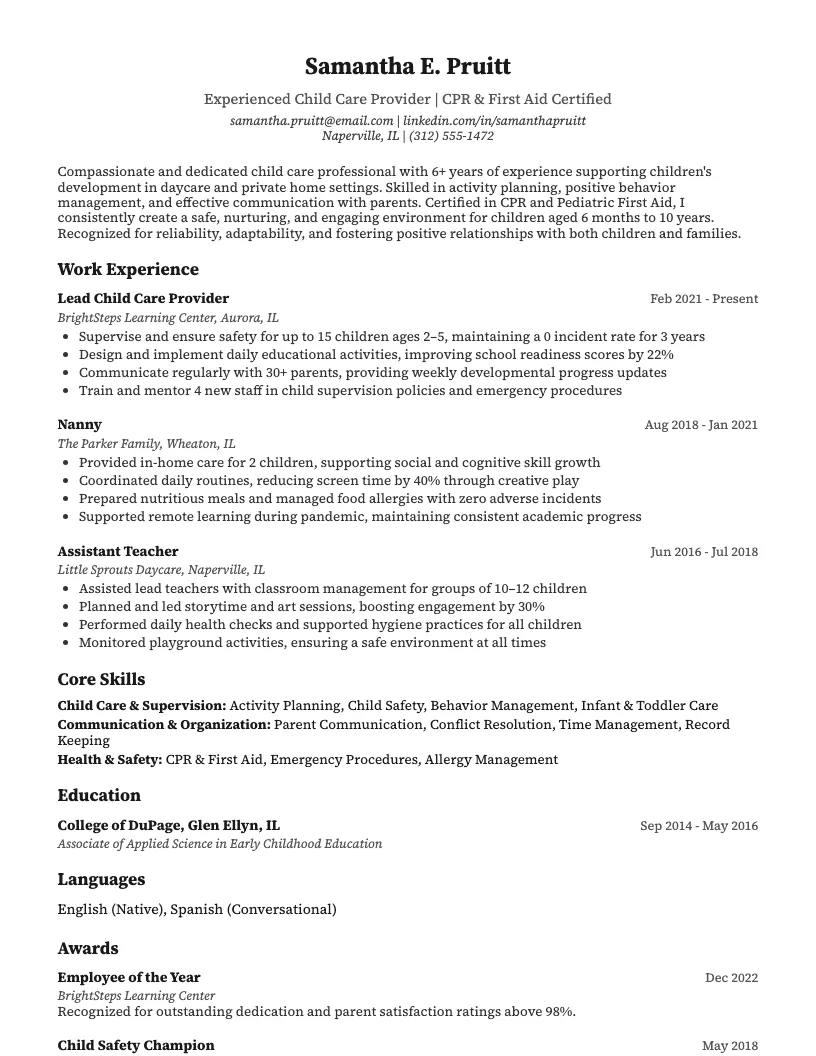
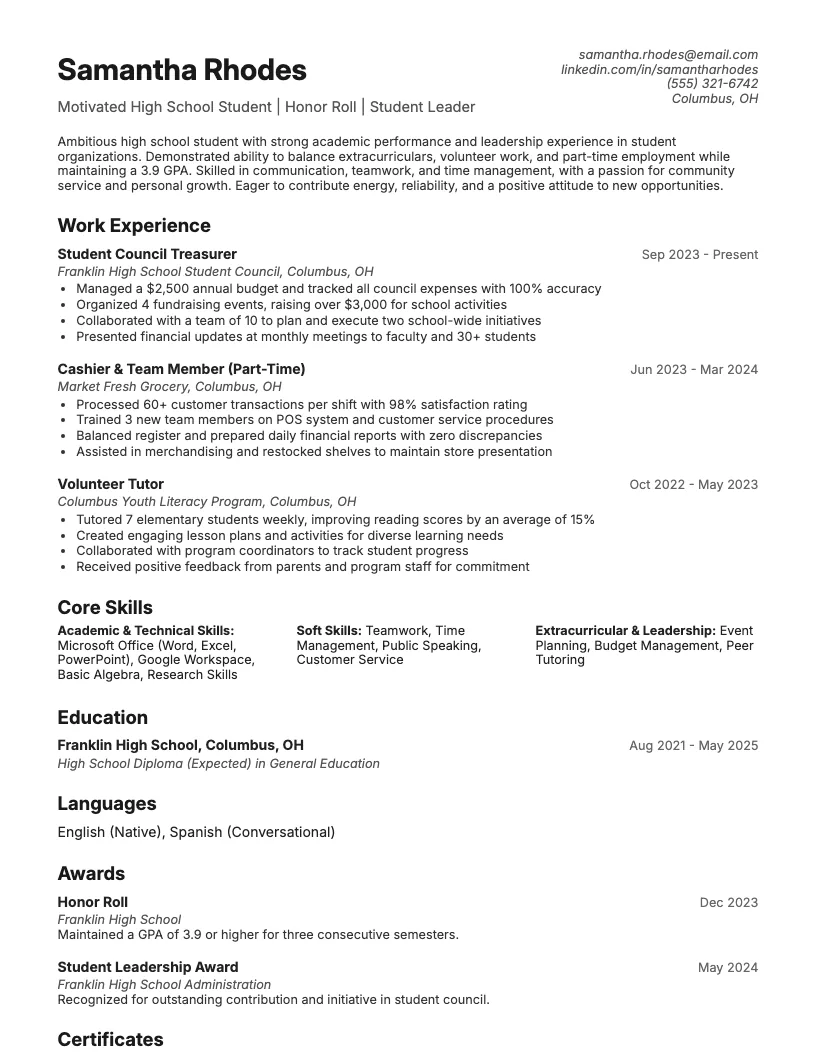
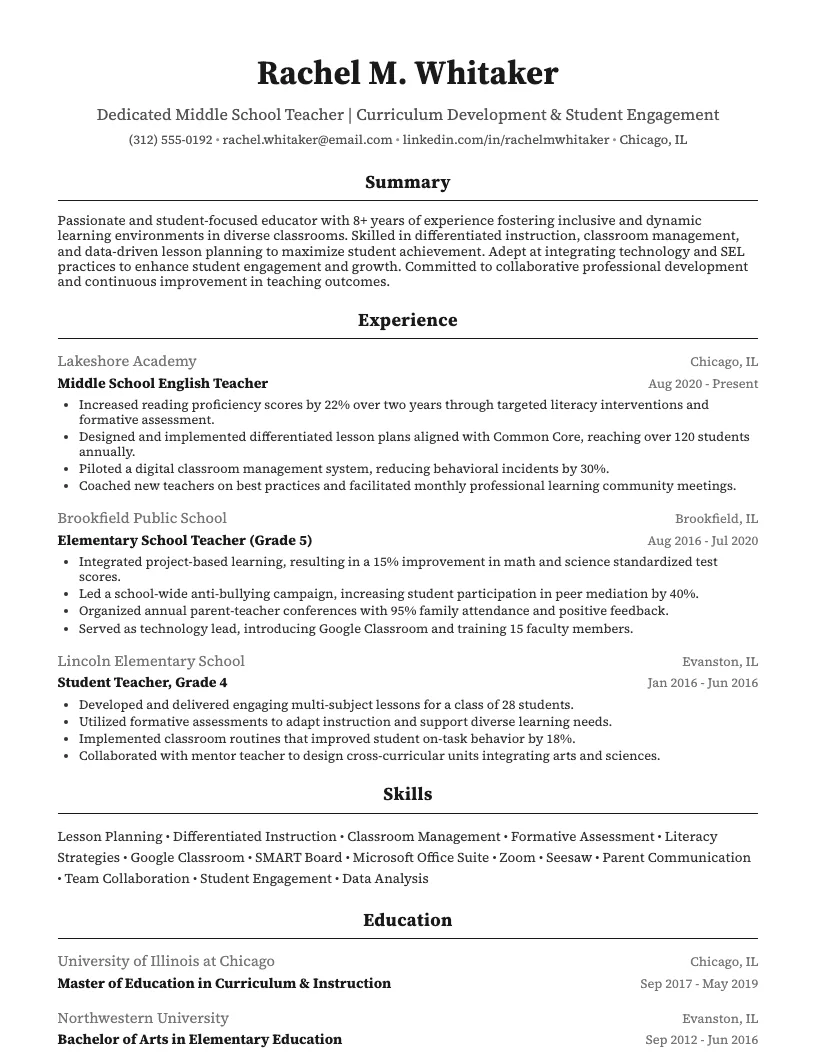
See these skills on a real resume
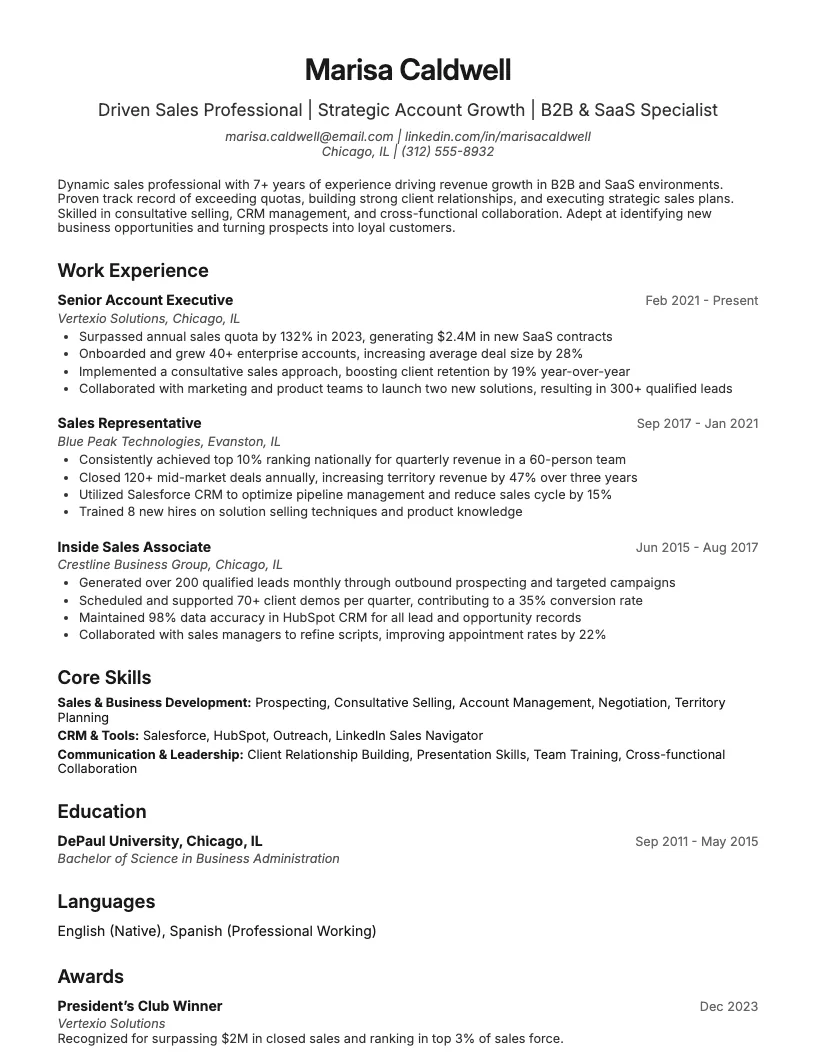
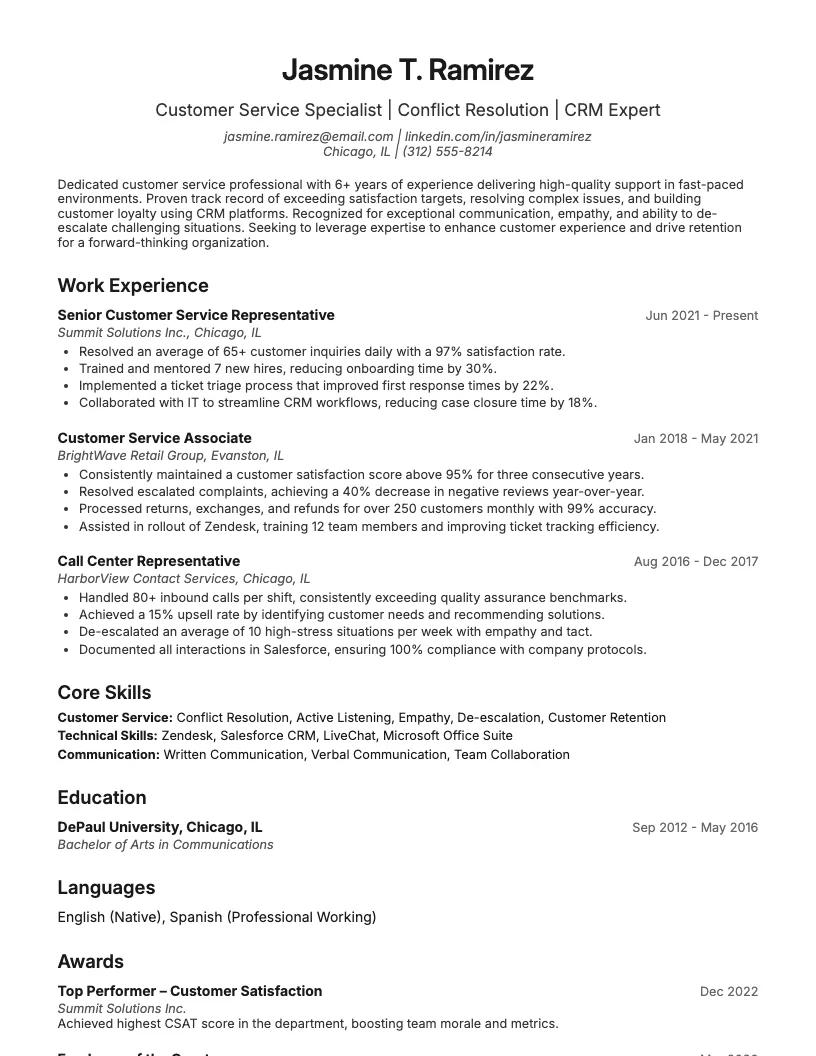
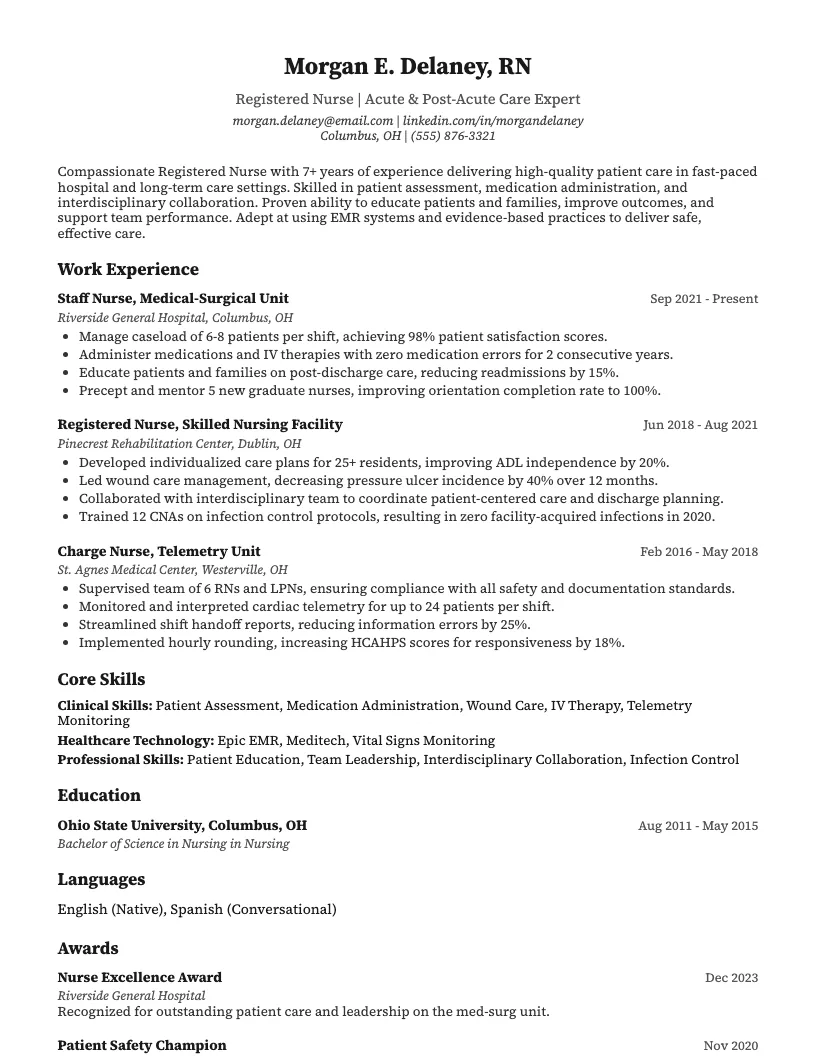
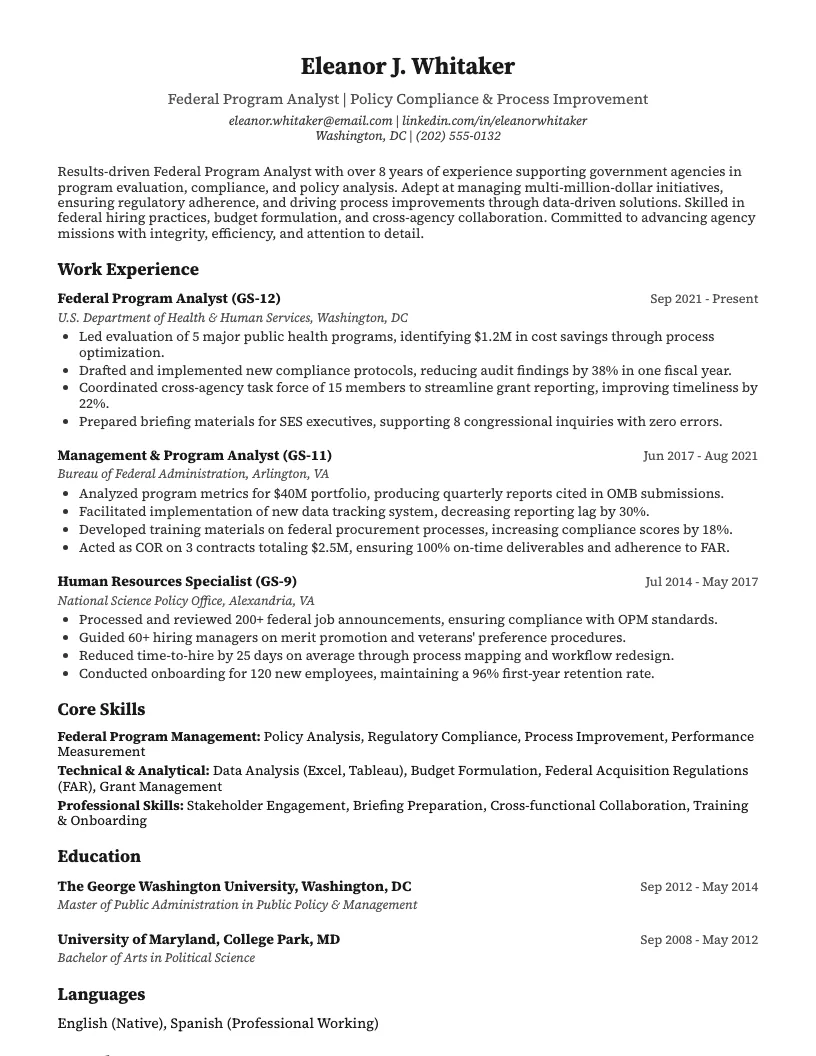
8 examplesStart from an example that already has them, and swap in your own.
Check your resume against the job you want
Scan your resume, see which skills and keywords the posting asks for that you are missing, and fix them before you apply.
Free to use • No credit card required