Event Coordinator Resume Keywords: 9 Terms Postings Actually Use
The 9 keywords event coordinator postings actually use, plus the software, certifications, and numbers that make each one count on your resume today.


Written by Dr. Priya Sharma
Career Development Expert & Resume Analyst
Updated August 2026
Reviewed by Sarah Chen
Is your resume ATS-friendly?
Drop your resume in and see which of these skills a scanner can actually read, and which ones the job you want is asking for that you have not listed.
PDF or DOCX. Max 2MB.
We never share your resume or use it to train a model.
In This Guide:
What keywords do event coordinator job postings actually use?
I've read hundreds of event coordinator postings, and they all circle back to the same handful of phrases. Learn these nine and you've covered most of what shows up.
Event planning and execution
This is the umbrella term, and postings use it even when they mean something narrower. Pair it with the actual event type you've run - conferences, galas, product launches - so your resume matches both the broad keyword and the specific one.
Vendor management
Every posting wants this, and it usually means negotiating contracts, not just booking caterers. If you've talked a vendor down on price or renegotiated a contract, say so - that's what "vendor management" is standing in for.
Budget management
Don't just write "budget management." Attach a dollar figure to it.
A $250K budget line does more work than the phrase alone ever will.
Venue selection
Postings list this as its own line item even though it's part of planning. If you've compared venues on capacity, cost, or AV setup, that's the detail that proves you actually did it.
Logistics coordination
This one covers everything from room blocks to shipping signage. Name what you coordinated, not just the word.
Registration and check-in
If you've used a specific platform for this, name it - it turns a generic phrase into evidence.
Run of show
This term shows up constantly and gets skipped just as often, mostly by people who've done the work but never learned the industry name for it. If you built a minute-by-minute event timeline, that's a run of show - say the term.
Stakeholder communication
This means keeping clients, sponsors, and internal teams aligned before and during the event. It's soft-skill sounding, but treat it as a keyword worth a real line, not a throwaway.
Post-event reporting
The most-forgotten one on this list. If you tracked attendance, spend versus budget, or survey scores after an event and wrote any of it up, that's post-event reporting - put it on the page.
Once you've pulled these into a draft, running it against the actual posting will show you which ones you're still missing and where to slot them in.
How do you find the right keywords in a job posting?
How do you find the right keywords in a job posting?

Most postings hand you the answer if you slow down and read them like a checklist instead of a wall of text.
Step 1: Pull 5-10 words straight from the posting
Go through the posting and pull out 5 to 10 words that describe the actual work: the software named, the tasks listed, the certifications mentioned. Those are what the screening software is matching against, so they belong on your resume in the posting's own wording.
Step 2: Write out both the short form and the full name (CMP and Certified Meeting Professional)
If a posting asks for a CMP, write "CMP (Certified Meeting Professional)" somewhere on the page. I've seen resumes get skipped over one missing expansion, because the scanner was set to match the other version.
Step 3: Use the posting's own word for the same job (coordinator vs planner vs specialist)
Coordinator, planner, specialist, manager - these get used interchangeably by employers but not by the software reading your resume. Match the posting's word, not your last title.
Step 4: Repeat each keyword in two or three different sections
Use each keyword once in your summary, once in a bullet, maybe once in your skills list. Once, buried in one bullet, isn't enough for it to register as a real qualification.
This is exactly the kind of gap ResumeJudge flags for you - it checks your resume against the posting and tells you which keywords are missing or underused before you hit submit.
Related job titles worth checking: event planner, meeting coordinator, event marketing specialist
If nothing under "event coordinator" is landing, search these titles too - postings written for them often ask for the identical skills.
Which event software should you name on your resume?
Which event software to name and why
| Tool | What it's for | Why name it | |
|---|---|---|---|
| Cvent | Registration pages, budget modules | Name it if you've used it | |
| Eventbrite | Registration for smaller orgs | Name only if that's what you used, not both | |
| Social Tables | Floor plans and room diagrams | Worth a line if used for 100+ people | |
| vFairs | Virtual and hybrid events | Signals you can run non-in-person events | |
| Asana / Trello / Monday.com | Timeline and task tracking | Proof you can manage many moving parts | |
| Excel / Google Sheets | Budget and data tracking | \"Don't skip it - Office named in ~19% of listings | Excel in over 10%\" |
Job ads for this role name a small set of tools over and over, and I've seen a lot of resumes lose points just for leaving them off.
Cvent
This is the one most postings expect. If you've built registration pages, pulled reports, or managed a budget module in Cvent, say so by name.
Eventbrite
Smaller organizations lean on this instead of Cvent. Name whichever one you actually used - don't list both if you've only touched one.
Social Tables
This is for floor plans and room diagrams. If you've used it to plan seating or layouts for a group over a few hundred people, that's worth a line on its own.
vFairs and virtual event platforms
Virtual and hybrid work is common enough now that naming a platform here - vFairs or whatever you used - signals you can run an event that isn't just in-person.
Asana, Trello and Monday.com
These show up constantly in job ads even though they're not event-specific. Recruiters read them as proof you can run a timeline with a lot of moving parts.
Excel and Google Sheets
Don't skip these because they feel too basic to mention. One posting analysis found Microsoft Office named in almost 19% of listings and Excel in over 10% - that's higher than most of the specialized tools above.
Salesforce and CRM tools
If any part of your job touched sponsor or attendee data, name the CRM. It tells a hiring manager you can be trusted near a database, not just a seating chart.
How to say what level you're at with each one
The mistake I see most often is listing six tools with no context, so nobody knows if you're a beginner or an expert in any of them.
Attach a number instead: events run, records in the system, or budget size. Once you've built that list against a specific posting, running it through ResumeJudge will tell you which of these tools the job actually asks for that your resume is still missing.
What soft skills belong on an event coordinator resume?
I've read hundreds of event coordinator resumes, and the soft skills section is where most of them go generic. "Team player, hard worker, detail-oriented" - that tells a hiring manager nothing.
The trick isn't picking different words. It's proving the ones that actually matter for this job.
Attention to detail
This is the one every posting asks for, and for good reason - a missed dietary restriction or a wrong start time on the invite is the kind of mistake people remember. Don't just claim it.
Show where it saved an event.
Time management
Coordinators run five deadlines at once, so this needs to sound like juggling, not calendar-keeping. Name how many events you ran at a time, or how tight the runway was.
Vendor negotiation
Nine times out of ten, candidates list this as a skill and never say what it got them. A rate you talked down, a contract term you won - that's what makes a recruiter believe you.
Staying calm under pressure
Claiming you stay calm under pressure
Thrives in a fast-paced environment
Handled a keynote speaker's last-minute cancellation by rebooking a replacement within 90 minutes
Everyone claims this. Almost nobody proves it.
The way to prove it is a specific day-of problem, described calmly, not a vague "thrives in fast-paced environments."
Problem solving on the day
Related to the point above but worth separating out - this is about the fix itself, not your composure while making it.
Clear communication with clients and attendees
You're translating between a client's vision, a vendor's constraints, and an attendee's experience all day. Say which of those you handled.
Delegation and leading temporary staff
If you've ever run a floor team or day-of volunteers, that's leadership experience, even without a manager title. Say how many people you directed.
How to prove each one instead of just listing it
Every skill above needs a bullet that backs it up - see the bullet formula for how. If you're not sure which soft skills a specific posting is actually weighting, ResumeJudge will compare your resume against it and tell you what's missing before you hit apply.
How do you put keywords into your experience bullets?
Action verbs event employers respond to: coordinated, negotiated, launched, streamlined
Skip "responsible for." Every bullet should open with what you actually did: coordinated, negotiated, launched, streamlined, executed, secured.
The bullet formula: verb + tool + what you ran + the number it moved
The formula that works: verb, then the tool, then what you ran, then the number it moved. "Coordinated 12 conferences in Cvent, cutting vendor costs 12% while hitting a 4.7/5 satisfaction score."
A weak bullet and the same bullet rewritten
An event coordination bullet
Organized company events and worked with vendors.
Negotiated vendor contracts across 26 client activations a year, saving 12% on average per event.
Weak: "Organized company events and worked with vendors." Rewritten: "Negotiated vendor contracts across 26 client activations a year, saving 12% on average per event." The second version is what a hiring manager remembers.
Where to put the keyword so a human still reads it naturally
Drop the keyword into the middle of the sentence, next to the result it produced, not as a tag stuck on the end. If you're stuck matching a posting's exact terms, that's the whole job ResumeJudge does for you - it takes the posting and your resume and rewrites the bullets in that language for you, numbers included.
What numbers should you attach to those keywords?
What numbers should you attach to those keywords?
Every keyword on this page gets stronger once there's a number sitting next to it. I've read enough of these to know the difference between "managed event budgets" and "managed a $120,000 budget, came in 6% under" - the second one is the sentence a hiring manager actually remembers.
Attendee count
Say how many people showed up. "Coordinated conferences for 25,000+ attendees" tells a recruiter more in five words than a whole paragraph of duties.
Budget size and money saved
Name the dollar figure you controlled, then the amount you saved against it. Something like "6% under a $120,000 budget" does both jobs at once.
Number of events per year
If you ran 50 events a year, that's a workload number, not a bragging number - it tells them you can handle volume, not just one big show.
Sponsor or ticket revenue
Revenue moved is one of the strongest lines you can put near budget management. "Grew sponsorship revenue 18%, from $45,000 to $53,000" reads as a business result, not a task.
Attendee satisfaction score
If you ran a post-event survey, use it. "Raised satisfaction from 4.2 to 4.7" is a quality number, and quality numbers are rarer on these resumes than budget ones - so they stand out.
Setup or planning time cut
Cutting a planning cycle from 10 weeks to eight says you fixed a process, which is exactly what a hiring manager wants to hear from someone who'll run this on their own.
Day-of incidents avoided
"Reduced day-of incidents by 40%" is proof you can handle problem solving on the day before it becomes a fire. If you're not sure which of your own numbers actually match what a posting is asking for, ResumeJudge will score your resume against the job description and tell you what's missing before you send it.
Which certifications are worth listing?
Which certification fits your background
| Certification | Best for | List it if... |
|---|---|---|
| CMP | Meetings and conferences | You have it - lead with it |
| CSEP | Social and corporate events | That's your world |
| CGMP | Government events | Targeting a government agency |
| DES | Virtual and hybrid events | You've run webinars or online conferences |
| CPCE | Catering and hospitality | Food and beverage was part of the job |
| DMCP | Destination management | Applying to a DMC or convention bureau |
Most event coordinator postings don't require a certification, so don't let a missing one stop you from applying. But if you've got one, it earns you a spot near the top of the page, not buried at the bottom.
Certified Meeting Professional (CMP)
This is the one hiring managers recognize on sight. If you have it, put it right after your name in the header, not just in an education section.
Certified Special Events Professional (CSEP)
More common on the social and corporate events side than the meetings side. Worth naming if that's the world you're in.
Certified Government Meeting Professional (CGMP)
Only relevant if you're coordinating events for a government agency or targeting one. Skip it everywhere else.
Digital Event Strategist (DES)
This one's newer, and it signals virtual and hybrid event chops. If you've run webinars or online conferences, this credential backs that up.
Certified Professional in Catering and Events (CPCE)
Leans catering and hospitality. Good to list if food and beverage was a real part of your job.
Destination Management Certified Professional (DMCP)
Niche, but it matters a lot if you're applying to a destination management company or a convention bureau.
Memberships: MPI, ILEA, NACE
I've seen candidates skip these because they're "just memberships," not certifications. List them anyway - they show you're plugged into the industry, and they're free real estate on the page.
Where to put them on the page
If a certification is recent or the posting asks for it by name, put it above your education. If it's older or general, it can sit below.
Either way, spell out the full name once, since a scanner might only be trained on one form of it - see step 2 for more on that. If you're not sure which certifications a specific posting actually wants named, ResumeJudge will scan the listing and tell you which ones to surface and which to cut.
Which keywords should you use if you have no event experience yet?
You don't need a job title to use event language. You need real events, even small ones.
Campus and student club events
Ran a speaker series or a club mixer? That's event planning and execution and vendor coordination, whether you called it that or not. Say what you ran, what tool you used, and how many people showed up.
Volunteer festival or race work
Race-day check-in, festival logistics, packet pickup - this is registration and check-in and logistics coordination in disguise. Put it on the resume in those exact terms.
Fundraisers and charity events
A bake sale with a budget and a headcount counts. Name the dollar amount raised or spent - that's your budget management proof.
Coming from hospitality, marketing or project management
I see this pivot constantly. Hospitality gives you vendor and guest-service language, marketing gives you promotion and attendee-acquisition language, project management gives you timelines and stakeholder communication. All three map straight onto this job.
Words to swap in when your title was never 'coordinator'
Describing vendor work without the title 'coordinator'
Handled vendors
Negotiated with three suppliers
Swap "hosted a team meeting" for "coordinated a 12-person session," "handled vendors" for "negotiated with three suppliers." Before you finalize, run the resume against a real posting - ResumeJudge will tell you which of these keywords the job actually wants and rewrite the bullets to match.
Will the software actually read your keywords?
Will the software actually read your keywords?
You can pick the perfect keywords and still get filtered out before a person sees the resume, because most employers run applications through an ATS first, and the software is picky about layout, not just words.
One column, no text boxes
Single column, always.
I've seen coordinators put their software list in a sidebar text box because it looked clean, and the ATS never read it - the parser skipped straight past it like it wasn't there.
Plain section headings like Work Experience
Call it "Work Experience," not "Where I've Made Magic Happen." The parser is matching against a small set of expected headings, and a creative one just doesn't register.
Standard fonts and no images
Arial, Calibri, Times New Roman. No headshot, no icons, no logo graphics - they add nothing for the software and can break the parse entirely.
Saving in the file type the employer asked for
If the posting says .docx, send .docx. Guessing wrong here is a self-inflicted rejection.
How many times to repeat a keyword before it looks stuffed
How many times to repeat a keyword is a wording question rather than a formatting one - step 4 covers how often to use each one and where to put them. If you want a second opinion before you hit submit, ResumeJudge will scan the formatted resume against the posting and tell you if anything's actually getting missed.
Frequently Asked Questions
How many keywords should I put on my resume?
Aim for somewhere around 5 to 10 keywords pulled straight from the job posting, spread across your summary, skills section, and bullets. Fewer than that and an applicant tracking system may not see enough of a match; more than that and you start diluting your bullets with terms that don't add real information. The goal is coverage of the posting's actual requirements, not a fixed count.
Should I use a skills section or work the keywords into your bullets?
Do both: a skills section gets the keyword on the page in a form scanning software can find quickly, and a bullet shows the hiring manager you actually used it. A skills list alone reads like a checklist with no proof behind it. ResumeJudge takes your resume and a job posting and rewrites both the skills section and the bullets so the posting's keywords land in the right place in each.
Do I use 'event coordinator' or 'event planner'?
Use whichever title the job posting uses. The two roles overlap heavily and get used interchangeably by employers, so matching the posting's exact wording in your resume title and summary matters more than picking the title you personally prefer.
Is it worth adding a keywords list at the bottom of the resume?
No, skip it. A dumped list of terms at the bottom looks like keyword stuffing to a human reader and doesn't help you with most modern applicant tracking systems, which weigh keywords found inside real experience and skills sections more heavily. Put the same words to work inside your bullets and skills section instead, where they double as proof you've done the thing.
Can I copy keywords straight from the job posting word for word?
Yes, for exact terms like software names, certifications, or specific skills, use the posting's exact wording rather than a synonym, since that's what a scanner is matching against. Just don't copy whole phrases or sentences into your bullets unchanged. ResumeJudge compares your resume against a posting and shows you exactly which of its terms are missing, so you're not guessing at what to copy.
Do keywords still matter if someone referred me?
Yes, in most companies a referral gets your resume looked at sooner, but it usually still goes through the same applicant tracking system and the same hiring manager screen as everyone else's. A referral buys you attention, not a bypass, so the resume still needs to match the posting's language to hold up once someone reads it.
See these skills on a real resume
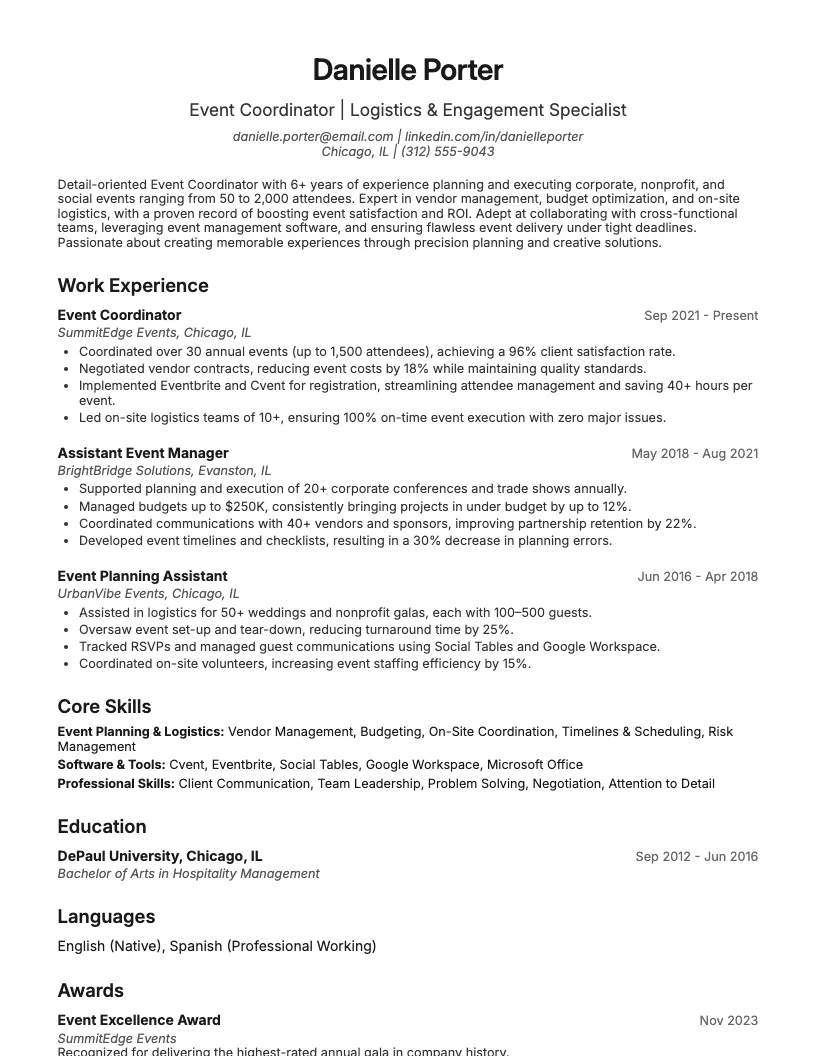
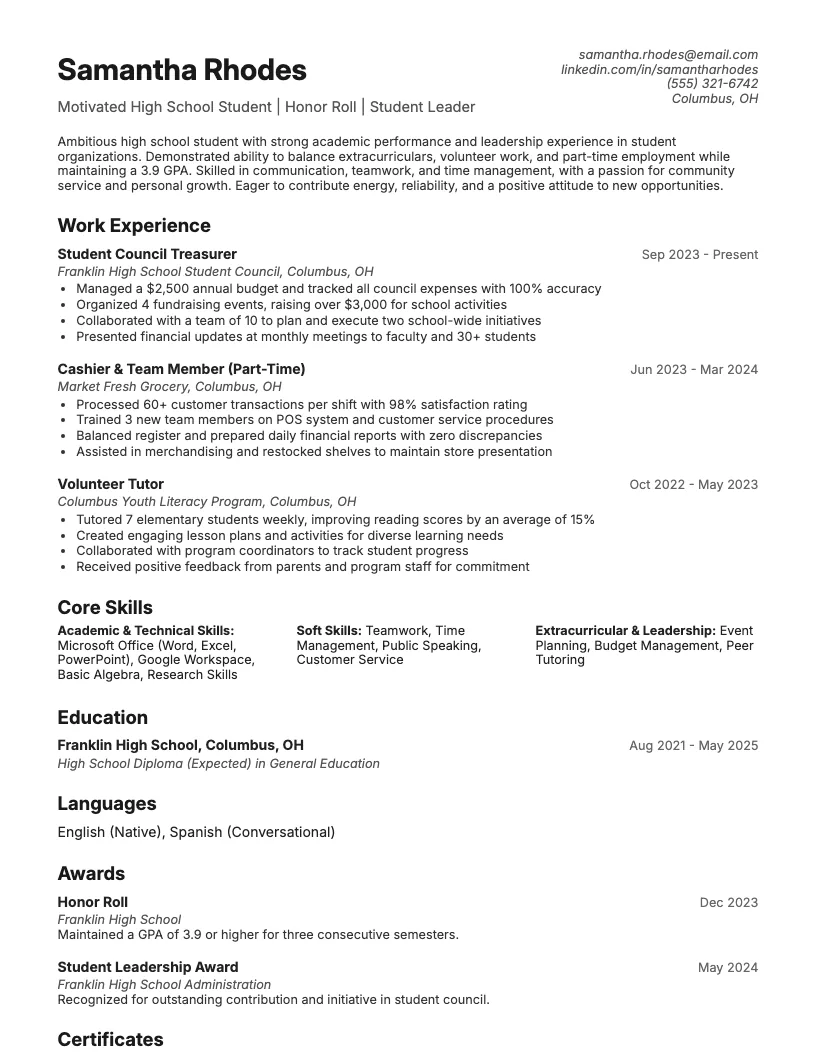
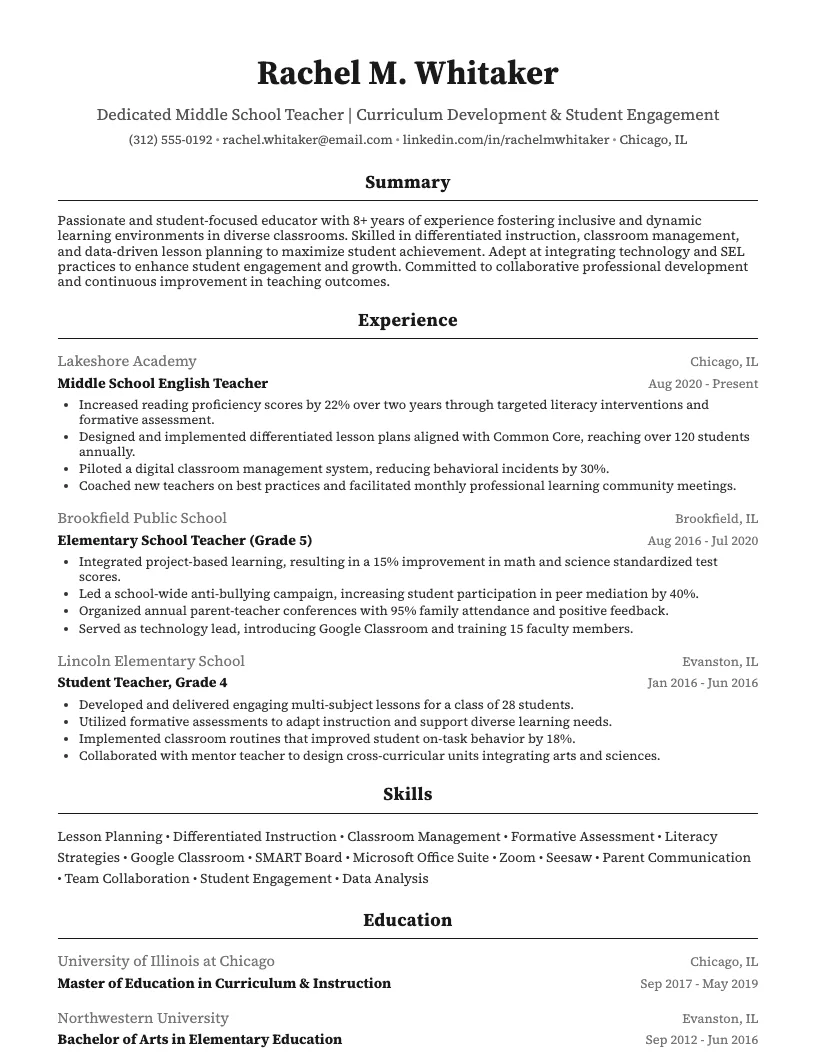
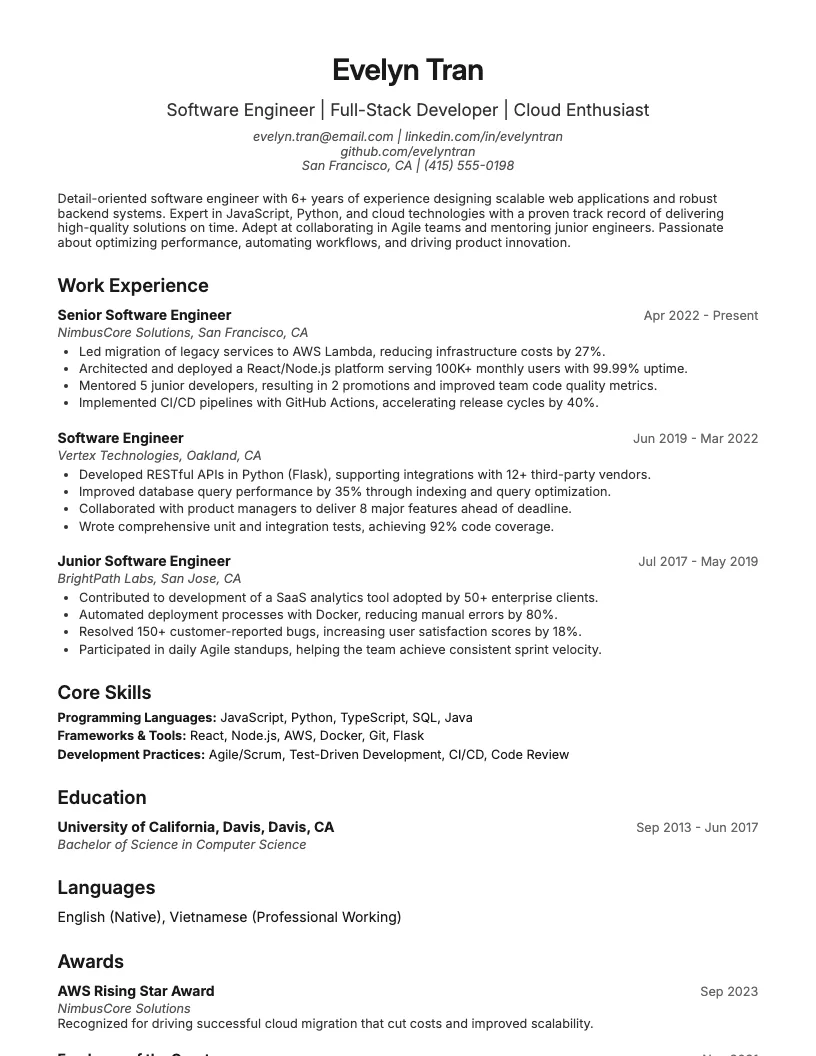
8 examplesStart from an example that already has them, and swap in your own.
Check your resume against the job you want
Scan your resume, see which skills and keywords the posting asks for that you are missing, and fix them before you apply.
Free to use • No credit card required