Operations manager resume keywords: 12 terms that matter most
See the 12 keywords ATS software scans for on an operations manager resume, plus which metrics, systems, and certifications actually belong on the resume.


Written by Sarah Chen
Senior Career Strategist & Resume Expert
Updated August 2026
Reviewed by Marcus Rodriguez
Is your resume ATS-friendly?
Drop your resume in and see which of these skills a scanner can actually read, and which ones the job you want is asking for that you have not listed.
PDF or DOCX. Max 2MB.
We never share your resume or use it to train a model.
In This Guide:
What are operations manager resume keywords?
Words the software matches, not words a person likes
Before a recruiter ever opens your resume, a filter reads it looking for exact terms from the posting.
Not "ran the warehouse floor." "Capacity planning."
"Vendor management." The specific words the job ad used.
I've seen strong operations managers get skipped over this alone.
The six things an operations posting always asks for
Nine times out of ten, an ops posting is asking about the same six things: the scope you managed, the improvement method you used, the metrics you hit, the compliance work you did, your planning and reporting, and the systems you ran it all on.
Miss a category entirely and that's usually the gap that sinks you.
Why an experienced ops manager still gets filtered out
The mistake I see most often: someone with real Lean Six Sigma experience never writes the words "Lean Six Sigma." They describe the work instead of naming it, and the filter can't guess what they meant.
Running your resume against the actual posting is the fastest way to catch this - ResumeJudge will show you exactly which of these six categories you're thin on before you hit submit.
How many keywords to actually put on the resume
Only the ones you can back up in an interview. I'd rather see 12 solid terms than 30 you can't talk about.
Check the FAQ for quick answers on stuffing and certifications.
Which operations manager keywords matter most?
Which operations manager keywords matter most?

I've read enough operations resumes to tell you the ATS isn't hunting for anything exotic. It's checking for the same dozen or so terms, over and over, and most candidates only hit half of them.
Operations management
This is the anchor phrase. If it's not in your summary and your most recent title, the software has already flagged you as a maybe instead of a match.
Continuous improvement
Every posting wants it, and most resumes say it without saying what changed. Pair it with a method and a result - Lean and Six Sigma has the detail on how to do that right.
Process improvement
Close cousin to continuous improvement, but scanners treat them as separate terms. Use both somewhere on the page - don't assume one covers the other.
Cross-functional leadership
The mistake I see most often: candidates write "worked with other departments" instead of naming the function - finance, sales, engineering. Name it.
That's the phrase the parser is trained on.
P&L management
If you owned a budget, this needs to be on the page in plain letters, not implied by "cost-conscious." Leaving it out is one of the more common reasons a qualified ops manager gets passed over - more on that under P&L and budget size.
KPI management
Not "tracked metrics." Say KPI.
Then name one or two you actually owned - throughput, OEE, whatever it was.
Capacity planning
Common in manufacturing and logistics postings specifically. If you've done workforce or production planning, this term needs to show up even if you called it something else on the job.
Vendor management
Shows up in nine out of ten operations postings I've checked. If you negotiated contracts or managed suppliers, say vendor management, not "worked with vendors."
Change management
This one's often buried in a bullet about a system rollout instead of stated outright. Pull it out and name it - the parser doesn't infer intent from a story.
Stakeholder management
Overlaps with cross-functional leadership, but it's its own keyword to the scanner. Use it once, ideally near an example of managing up to executives, not just across teams.
SLA compliance
If you ran anything with service-level targets, this belongs here and again with the numbers under metrics and KPI terms.
Cost reduction
The one hiring managers actually read for. A number next to it is what separates a resume that gets a callback from one that doesn't - how to put a number on it walks through exactly that.
Once you've got your list of terms, ResumeJudge checks it against a posting and shows you which of these it's actually asking for versus which ones you're guessing at.
How do you put Lean and Six Sigma on an operations resume?
How do you put Lean and Six Sigma on an operations resume?
I read a lot of operations resumes where Lean and Six Sigma show up as a single line buried in skills, and it's a waste - these are two of the highest-value terms on the whole page, and they deserve real space.
Lean
Lean is about cutting waste out of a process, and recruiters read it as shorthand for "this person can make things faster without spending more."
Don't just write "Lean" and move on. Pair it with what you actually did - value stream mapping, a 5S rollout, a Kaizen event - so it reads as a method you used, not a word you copied off the posting.
Six Sigma
Six Sigma is the data side of the same coin - reducing defects and variation using statistics rather than gut feel.
The mistake I see most often: someone lists "Six Sigma" with no belt level and no result next to it. A hiring manager can't tell if that means a two-day course or a certified Black Belt running six-figure projects.
DMAIC
DMAIC - Define, Measure, Analyze, Improve, Control - is the five-step framework behind most Six Sigma projects, and naming it signals you've actually run a formal project, not just attended a training.
Kaizen
Kaizen means continuous, incremental improvement, usually driven by the team doing the work rather than handed down from above. If you led or participated in Kaizen events, say so - it shows you can get frontline buy-in, which is a different skill than analyzing spreadsheets.
5S
5S - Sort, Set in order, Shine, Standardize, Sustain - is a workplace organization method, most common in manufacturing and warehouse operations. It's a small keyword but it's specific, and specific beats vague every time.
Value stream mapping
This is the exercise of drawing out every step in a process to find where time and material get wasted. If you've done it, name the process you mapped - "mapped the order-to-ship value stream" carries far more weight than the term alone.
Root cause analysis
Root cause analysis is what you do after something breaks - digging past the symptom to the actual cause. Pair it with a fix and a number whenever you can.
FMEA
FMEA - Failure Mode and Effects Analysis - is a structured way to predict what could go wrong in a process before it does. It's a denser term, so it tends to matter more in manufacturing and quality-heavy roles than in general ops.
Standard work and SOP development
Writing standard operating procedures isn't glamorous, but it's proof you can make an improvement stick after you leave the room. Say what you standardized and for how many people or sites.
Black Belt: header plus a named project
If you're a certified Black Belt, put it in your header, not buried in a bullet - it's one of the few certifications worth that placement. Then back it with one named project and its result: what you targeted, what changed, what it saved.
Green Belt: certifications plus one or two results
A Green Belt belongs in your certifications section, paired with one or two project outcomes underneath it. You don't need a dedicated header line the way a Black Belt does, but don't let the certification sit there with nothing to back it up.
Yellow Belt: skills line only
A Yellow Belt is entry-level training, and I'd treat it that way - list it in your skills or certifications line and leave it there. Stretching it into its own bullet with a manufactured "result" usually backfires; readers can tell.
Weak bullet vs strong bullet, side by side
A weak Lean Six Sigma bullet names the method and stops. A strong one names the process, the before-and-after, and what it saved.
Both versions are written out in full under what a keyword-rich resume looks like next to a weak one.
If you're not sure which of your own bullets read like the weak version, ResumeJudge will scan your resume against a posting and rewrite the wording so your Lean and Six Sigma work lands the way the strong bullet does.
Which metrics and KPI terms should be on the resume?
Which metrics and KPI terms should be on the resume?
Skills and methods tell a hiring manager what you know. Metrics tell them what happened when you used it.
OTIF
OTIF is on-time, in-full - did the shipment arrive when promised, with everything that was ordered. It's a favorite in supply chain and manufacturing postings, and it rewards a real before-and-after: "improved OTIF from 82% to 93%" reads a lot better than "improved OTIF."
SLA compliance
Already covered as a keyword to have on the resume in which operations manager keywords matter most. The percentage to write next to it is under SLA adherence.
OEE
Overall equipment effectiveness. If you've run a production floor, you've lived by this number, and naming it signals you speak the plant's language, not just a manager's.
Throughput
Units, orders, or transactions per hour, shift, or day. How to write the number next to it is under throughput and efficiency.
Cycle time
How long one unit takes from start to finish. How to write the before-and-after is under cycle time and turnaround.
First-pass yield
The share of output that's right the first time, no rework. Pair it with scrap rate below and you've covered quality in two lines.
Scrap and defect rate
Waste and errors, usually as a percentage. A drop here is a cost story as much as a quality one, so it's worth its own bullet.
Inventory turns
How often stock cycles through in a year. Higher usually means leaner, better-forecasted operations - a number recruiters in retail and logistics look for by name.
On-time delivery
Close cousin of OTIF, but simpler - did it arrive when promised. Use whichever term the posting uses; they're not always interchangeable to an ATS.
Budget variance
How close you ran to plan, over or under. This is the number that tells a hiring manager you can be trusted with P&L, not just headcount.
Mean time to resolution
How fast problems got fixed, from incident to close. Common in tech and service operations roles, less so on the plant floor.
Once you've picked the terms that actually fit your background, ResumeJudge will check the draft against the posting and flag which of these you're still missing before you hit submit.
Which supply chain and planning keywords do employers scan for?
Which supply chain and planning keywords do employers scan for?
If your background touches logistics, distribution, or a supply chain, this is the section that decides whether you clear the filter. I see ops managers with real supply chain wins bury them under generic "process improvement" language, and the ATS never connects the dots.
Demand forecasting
Say it if you built or fed a forecast, even informally - most companies write this into every planning-adjacent posting.
Capacity planning
Same term as the operations management list, but here it's paired with scheduling and headcount rather than throughput. One competitor bullet I've seen cites a 22% overtime cut from tighter capacity planning paired with SLA compliance - that's the kind of pairing that reads as real, not copied.
Workforce scheduling
If you built shift patterns or balanced labor against demand swings, name it. Recruiters searching for a multi-site or retail ops manager type this exact phrase.
Inventory planning
Distinct from inventory turns - planning is about what you order and when, turns is about how fast it moves. Use both if you own both.
Resource allocation
Vaguer term, so back it with what you allocated - people, budget, equipment - in the bullet right under it.
Supplier performance
Scorecards, on-time rates, quality holds. If you tracked vendors against a metric, this is the phrase hiring managers search for, not "vendor management" alone.
Strategic sourcing
Different from procurement - sourcing is picking who you buy from and why, procurement is running the process. Use strategic sourcing when you drove supplier selection or contract terms, not just purchase orders.
Last-mile delivery
Logistics-specific, and it's a phrase that shows up in real resumes with real numbers behind it - one I've seen cites a 98.4% on-time delivery rate across three distribution centers, and a transit-time cut from smarter routing.
Freight cost reduction
Pair it with a dollar figure if you have one. A freight renegotiation that saved seven figures is the kind of line that gets a callback on its own.
If you're not sure this list matches what a specific posting is actually asking for, ResumeJudge will scan the job description against your resume and tell you exactly which of these it's missing before you submit.
Which systems and software should you name?
Which systems and software should you name?
The methodology terms get you noticed. The systems get you shortlisted.
I'd guess two-thirds of ops manager postings name at least one platform by name, and if you've used it and don't say so, you're invisible to the same search that would've caught you.
SAP
Say "SAP" if you've used it, not "ERP experience." The scanner is looking for the actual name.
If you know a module - SAP MM, SAP WM - that's even better, but only if you can talk through it in an interview.
Oracle
Same rule. Oracle and SAP are the two names that show up most in this space, and postings usually ask for one or the other, not a general category.
NetSuite
More common at smaller and mid-size companies than SAP or Oracle. Worth naming on its own line if that's what you ran - don't lump it into "ERP systems" and hope it counts.
Warehouse management systems (WMS)
If you've touched a WMS, name the one you used. "Warehouse management systems" alone is fine as a category header, but the specific product name is what a scanner is actually matching against.
Transportation management systems (TMS)
Same idea for anyone in logistics or supply chain. Naming the TMS you ran, alongside supply chain terms like on-time delivery and last-mile delivery, tells a hiring manager you managed the whole flow, not just a warehouse floor.
Power BI and Tableau
These two show up constantly, and I mean constantly. If you built dashboards for KPI tracking in either one, name it - don't write "reporting tools."
Advanced Excel
Don't just write "Excel." Name what "advanced" means to you: pivot tables, VLOOKUP, macros.
A one-word skill line tells a recruiter nothing about your actual level.
SQL
Increasingly common for ops roles that lean analytical. If you can pull your own data instead of waiting on someone else's report, say so - it's a real differentiator, not a throwaway line.
Jira and ServiceNow
These signal you've run structured workflows, not just spreadsheets. Worth including if you used either one to track projects, incidents, or requests.
Datadog and PagerDuty
More common in tech operations than manufacturing or retail - pair these with the technology operations keywords if that's your world, and skip them otherwise.
Only list what you have actually used
An interviewer who has used the same system will usually ask about a specific module or version, not just whether you have 'used' it. If you cannot answer that, leave the tool off rather than naming it and hoping.
The mistake I see most often here: padding the tools section with anything vaguely related to sound thorough. Don't. An interviewer who's used the same system will ask you one specific question and you'll be caught in about ten seconds.
If you're not sure which system name the posting actually wants, that's exactly what ResumeJudge's scan is for - it reads the job description and flags the specific tools it's asking for that your resume doesn't name yet.
Which compliance and safety keywords belong on an operations resume?
Which compliance and safety keywords belong on an operations resume?
If your job touches a regulated environment, this section decides whether the resume gets past a recruiter who's checking for it specifically. I see this go wrong constantly - someone worked under a quality system for years and never once wrote it down.
ISO 9001
If you worked inside an ISO 9001 quality system, say so by name. It's the fastest signal to a manufacturing or logistics recruiter that you already know how audits and documentation work.
Audit readiness
Audit readiness means you can produce the paperwork when someone from outside the company asks for it, on short notice, without a scramble. Write about the audits you passed and what you had in place before they showed up.
CAPA
CAPA - corrective and preventive action - is one of those terms that only means something if you've actually run one. If you led or closed out CAPAs, name it.
If you just filled out the form once, leave it for the skills section, not a bullet.
GMP
GMP belongs on the resume if you've actually worked under it - pharma, food, medical devices, cosmetics, supplements, and other regulated production. I've seen candidates bolt it onto a warehouse resume because it sounded impressive, and it just tells a recruiter you don't know what the term means.
Regulatory compliance
"Regulatory compliance" on its own is filler. Name the actual regulation or standard you worked under, then use "regulatory compliance" as the umbrella term over it.
Incident management
Incident management is how you handled it when something went wrong - a safety event, a quality escape, a system outage - not just that you "responded to issues." Say what the incident was and what changed afterward.
Document control
Document control - version control on SOPs, work instructions, and quality records - is a real skill in regulated shops, and it's an easy one to leave off because it feels administrative. It isn't; it's what an auditor checks first.
Safety leadership and OSHA record
If you ran safety programs, say so with a number: days without a recordable incident, audits passed, injury rate reduced. A bare "safety-focused" line convinces nobody.
Business continuity
Business continuity is your plan for keeping operations running through a disruption - a supplier failure, a system outage, a site closure. Once you've sorted out which of these terms actually apply to your background, ResumeJudge will check them against the exact posting you're applying to and rewrite your bullets so the ones the job asks for are in there, worded the way the job worded them.
Which keywords change with your industry?
Which keywords change by industry
| Industry | Keywords that matter most | Real example |
|---|---|---|
| Manufacturing | Lean, Six Sigma, OEE, scrap rate, line balancing | Added value stream mapping and a defect-rate number |
| Logistics and supply chain | OTIF, inventory turns, WMS, exception handling | Cut freight cost, hit on-time delivery |
| Technology operations | Uptime, mean time to resolution, ITIL, Datadog, PagerDuty | Named Datadog over 'monitoring tools' |
| Retail | P&L ownership, multi-site management, loss prevention | - |
| Healthcare | Patient flow, HIPAA, bed utilization | - |
Same title, different resume. I've reviewed operations manager resumes from five industries side by side, and the ones that get interviews all speak their industry's language, not a generic "ops" dialect.
Manufacturing
Lean and Six Sigma carry the most weight here, alongside OEE, scrap rate, and line balancing. I've seen a plant manager land interviews just by adding "value stream mapping" and a defect-rate number to a resume that used to say "improved quality."
Logistics and supply chain
OTIF, inventory turns, WMS, and exception handling matter more than anything from a factory floor. If you've cut freight cost or moved a fleet toward on-time delivery, that's the number to lead with, not "managed transportation."
Technology operations
Uptime, mean time to resolution, and incident management terms like ITIL and observability tooling belong here. Naming Datadog or PagerDuty over a generic "monitoring tools" is what gets a tech ops resume past the screen.
Retail
P&L ownership, multi-site management, and loss prevention are the terms retail hiring managers scan for first.
Healthcare
Patient flow, HIPAA, and bed utilization are healthcare-specific and rarely show up elsewhere. Mixing in manufacturing terms here is a mistake I see constantly - it's worth checking your list against the actual posting before you submit anything.
Which keywords change with how senior you are?
Which keywords change by seniority
| Level | Keywords to add | Example number |
|---|---|---|
| Coordinator | Operations coordination, inventory tracking, vendor communication | 60% task alignment gain |
| Supervisor | Escalation handling, MIS reporting, dispatch metrics | 17% reporting accuracy jump |
| Operations manager | Operations management, vendor management, root cause analysis | - |
| Regional manager | Multi-site operations, SLA monitoring, regional compliance | - |
| Director | P&L, org transformation, M&A integration, board reporting | - |
The keyword set changes a lot between an entry role and a director role. I see resumes stall because someone's using senior-level language for a coordinator job, or coordinator-level language for a director job, and it reads wrong to both a scanner and a person.
Operations coordinator or executive
Keep it close to the ground: operations coordination, inventory tracking, vendor communication, warehouse operations, supply chain KPI tracking. One resume I'd point to had a candidate go from intern to coordinator on a 60% task alignment improvement and a 50% cut in follow-up delays.
No P&L, no strategy language yet - that's a red flag at this level, not a strength.
Operations supervisor or team lead
Add operations supervision, escalation handling, MIS reporting, dispatch and turnaround metrics. A supervisor resume I've seen used a 17% jump in reporting accuracy and a 14% cut in dispatch delays - small, specific, believable numbers.
Operations manager, single site
This is where operations management, vendor management, and root cause analysis earn their place - see which keywords matter most for the full set.
Regional or multi-site operations manager
Bring in multi-site operations, branch coordination, SLA monitoring, regional compliance - a step up from single-site language.
Director of operations
Now it's P&L, organizational transformation, M&A integration, board reporting. If you've cut enterprise attrition or led savings across sites, say the number - directors get judged on scale, not tasks.
ResumeJudge can pull the exact terms a director posting expects and rewrite your summary and bullets to match that scope.
Where do these keywords go on the resume?
Where do these keywords go on the resume?
Same word, five different jobs depending on where it sits. Get the placement wrong and the keyword still doesn't count.
The summary: 8 to 14 of them, written as sentences
Your summary is three or four lines, and I want 8 to 14 keywords inside them, written as actual sentences.
Not a pile of nouns. Something like: operations management experience, a couple of named methods, a KPI or two, a tool.
If a stranger reads it out loud, it should sound like a person talking about their job, not a list with commas.
Experience bullets: action, method, number, scope
Every bullet earns its keyword the same way: action, method, number, scope. You led a change (action), you led it using a named approach like Lean or a specific system (method), it moved a number (metric), and it covered a team or a site (scope).
A keyword sitting on its own with nothing attached to it reads as filler. Put a number on it and it reads as proof.
The skills section: five groups, not one long list
I've reviewed a lot of skills sections that are just forty words in a row, and they're useless - nobody can tell what's actually strong. Split it into groups instead: operations and continuous improvement, quality and compliance, KPIs and performance, planning and execution, tools.
Five groups, mirroring how the posting itself is usually organized.
Certifications: in the header when they carry weight
Not every certification earns a spot in the header. If the posting does not mention it and it is not a Black Belt, PMP, or something equally recognized, it can wait for the certifications line further down.
A Black Belt or PMP buried in a bullet halfway down page one gets missed nine times out of ten. If it's a real credential, put it right in the header, next to your name.
Keywords inside images and headers never get read
Plain text only. A keyword sitting inside a logo, an icon, or a fancy graphic header doesn't get parsed - the scanner skips straight past it.
If it matters, it needs to be text on the page, not a design element. Once you've pulled your list together, ResumeJudge will rewrite your summary, bullets, and skills section against the actual posting, so you're not guessing where each one belongs.
How do you pull the right keywords out of a job posting?
How do you pull the right keywords out of a job posting?
Every posting has the keywords in it already. You just have to sort them.
Step 1: Sort the posting's wording into scope, methods, metrics and tools
Read the posting once and bucket what you see: scope (team size, sites, budget), methods (Lean, Six Sigma, Kaizen), metrics (OTIF, SLA compliance, cost reduction) and tools (SAP, WMS, Power BI). Four piles, not one long scan.
Step 2: Keep the 10 to 18 you can back with a real example
I've seen candidates try to work in thirty terms and end up with a resume that reads like a word cloud. Pick 10 to 18 you can actually defend in an interview, and drop anything you can't.
Step 3: Change only the summary, three bullets and the skills list
You don't need to rewrite the whole document for one application. Touch the summary, two or three bullets, and the skills section.
That's it.
Step 4: Copy the posting's exact phrase, not a near-synonym
If the posting says "capacity planning," write "capacity planning," not "resource scheduling." Plenty of scanners now read for meaning and pick up related wording, but the posting's own phrase is the one that always counts.
Step 5: Re-read it as a hiring manager, not as a keyword count
Once the terms are in, read it out loud. If it sounds stuffed, it is.
ResumeJudge will scan your resume against the exact posting and tell you which of these terms are still missing before you hit submit.
How do you put a number on operations work?
How do you put a number on operations work?
"Managed operations, improved processes" tells a hiring manager nothing. I've read thousands of these, and the resumes that get calls all have one thing in common: a number sitting right next to the claim.
Cost reduction
Don't write "reduced operational costs through process improvements." Write "reduced operational costs by 18% ($2.4M annually) through vendor consolidation and headcount optimization."
Same accomplishment, completely different resume.
Throughput and efficiency
"Improved daily operations workflow by 28%" or "increased throughput 22% while holding headcount flat" does the job. Tie the percentage to the mechanism - what you actually changed - and it reads as real instead of decorative.
Cycle time and turnaround
"Reduced average task turnaround time by 32%" beats "improved cycle times" every time. If you cut a process from five days to three, say five to three.
A before-and-after number is more convincing than a percentage alone.
SLA adherence
Show the movement, not the destination: "increased SLA adherence from 84% to 96%." That range proves you inherited a problem and fixed it, which is exactly what the next employer wants to hear.
Team size and sites
Name the scope: headcount, shifts, sites, regions. "Managed a team of 25 across two shifts" tells a recruiter more in six words than a paragraph about leadership style.
Budget size and accuracy
State the dollar figure you owned and how close you came to it - a $12M budget held to 2% variance says more than "responsible for departmental budget."
Turnover and overtime
"Reduced overtime costs by 18%" or a turnover percentage drop belongs here too. These get skipped constantly, and they're some of the easiest numbers to pull from payroll or HR reports.
What to write when you have no number
No number on hand? Don't fake one.
Go get it - most of these live in a system you already have access to, or ask your old manager. If you truly can't, a specific mechanism ("cut manual reporting by automating the weekly variance report") still beats a vague verb.
When you're staring at a job posting trying to figure out which of your numbers actually matter to it, ResumeJudge will score your resume against that posting and show you exactly which metrics it's missing.
What does a keyword-rich operations resume look like next to a weak one?
A full resume line, before and after
Managed daily operations and worked to improve efficiency across departments.
Led Lean Six Sigma initiative reducing order-fulfillment cycle time from 4.8 to 2.3 days across two sites, while managing an $11M budget at 97.2% accuracy.
The weak version: managed operations, improved processes
"Managed daily operations and worked to improve efficiency across departments."
That's it. No method, no number, no scope.
I see this line, or one just like it, on maybe half the operations resumes that cross my desk.
The strong version: same job, named method and number
"Led Lean Six Sigma initiative reducing order-fulfillment cycle time from 4.8 to 2.3 days across two sites, while managing an $11M budget at 97.2% accuracy."
Same person, same job, completely different resume. One sentence, four keywords, three numbers.
Where each keyword landed and why
"Lean Six Sigma" answers a methodology screen. "Cycle time" and the day count answer a metrics screen. "$11M budget" and "97.2% accuracy" answer scope and precision - the two things a hiring manager reads for once they get past the scanner.
A finished skills section in five groups
The five groups to use, and why one long line fails, are set out under where these keywords go on the resume. Pull each term from there, not from a thesaurus.
Once you've written both versions, it's worth checking which one an actual posting would score higher - ResumeJudge takes your resume and a job description and tells you exactly which keywords are missing before you send it anywhere.
Which keyword mistakes get operations resumes rejected?
I've read enough of these to spot the same seven mistakes over and over. Fix them and you're ahead of most of the pile.
Dumping every term into the skills section
The mistake I see most often: someone pastes 30 terms into skills, half of them barely related to the job. It reads like a word dump, not evidence. Keep the group down to five categories that actually match the posting.
Claiming improvement with no number attached
"Improved processes" tells a recruiter nothing. Every improvement claim needs a percentage, a timeframe, or a dollar figure next to it - see how to put a number on the work you did.
Using manufacturing terms for a tech ops job
OEE and scrap rate belong on a plant floor resume, not a tech ops one. Match the vocabulary to your actual domain - the terms shift by industry, and using the wrong set signals you don't know the role.
Never naming the ERP you used
"Managed inventory systems" is a gap an ATS can't fill in. Name SAP, Oracle, or NetSuite outright, or it doesn't count.
Hiding PMP or Black Belt in the body text
Certifications buried in a paragraph get skipped - PMP and Six Sigma Black Belt belong in the header.
Leaving out P&L and budget size
Skip the dollar figure and you look like you never owned the budget, even when you did. State it.
Listing a tool you cannot talk about in an interview
If you used Tableau twice and can't walk through a dashboard you built, leave it off. A resume score checks whether your wording matches a posting - it can't catch this one. That part's on you before you hit submit.
Frequently Asked Questions
How many keywords should I put on my operations manager resume?
Aim for 10 to 18 across the whole resume, not crammed into one skills line. Spread them through your summary, skills, and bullets so each one shows up next to real proof you did the thing. That's enough to clear an ATS scan and still read like a resume a person wrote.
Do I need Six Sigma certification to use Six Sigma keywords?
No. If you've worked on a process improvement effort or sat on a Lean team, you can name Lean or Six Sigma without holding a belt, as long as a bullet backs it up with what you actually did. If you do hold a certification, name the belt level - green, black - in your header or certifications section rather than burying it in a skills list.
Should I list keywords I only used once?
Yes, if you can point to one real example of using it - a single strong bullet is enough to make it count. Only leave it off if you genuinely can't back it with anything you did; a keyword with no bullet behind it reads as padding to a recruiter, not experience.
Can keyword stuffing hurt my resume?
Yes. A skills section loaded with every term you can think of reads like a word dump instead of proof you've done the job, and a recruiter who notices will discount the rest of the resume too. Stick to the terms the posting actually uses, each backed by a bullet. If you're not sure which terms from a specific posting you're missing, ResumeJudge scans your resume against the job description and shows you the gap instead of you guessing.
What keywords do I use if I have no operations manager experience yet?
Lean on transferable responsibility rather than a job title - coursework, internships, admin or support roles, and campus or volunteer work where you tracked schedules, reports, or vendors. Name concrete skills you actually used, like Excel, KPI tracking, or MIS reporting, instead of ones you're hoping to learn. ResumeJudge can take that resume and rewrite it against a specific operations manager posting, working in the keywords and phrasing the posting is actually asking for.
Should my resume be one page or two?
One page if you have under about seven years of experience. Two pages once you've managed multiple sites, larger budgets, or enough roles that cutting them down would lose real detail. Length matters less than density - a padded two pages reads worse than a tight one page.
Do the same keywords work for an operations manager and a director of operations?
Mostly not. A director of operations posting leans harder on P&L ownership, multi-site or multi-team scope, and strategic planning, while operations manager postings weight day-to-day process and team execution more heavily. Read each posting and match its own wording rather than assuming one keyword set covers both - ResumeJudge does that matching for you, pulling the exact terms a specific posting uses and fitting them into the resume.
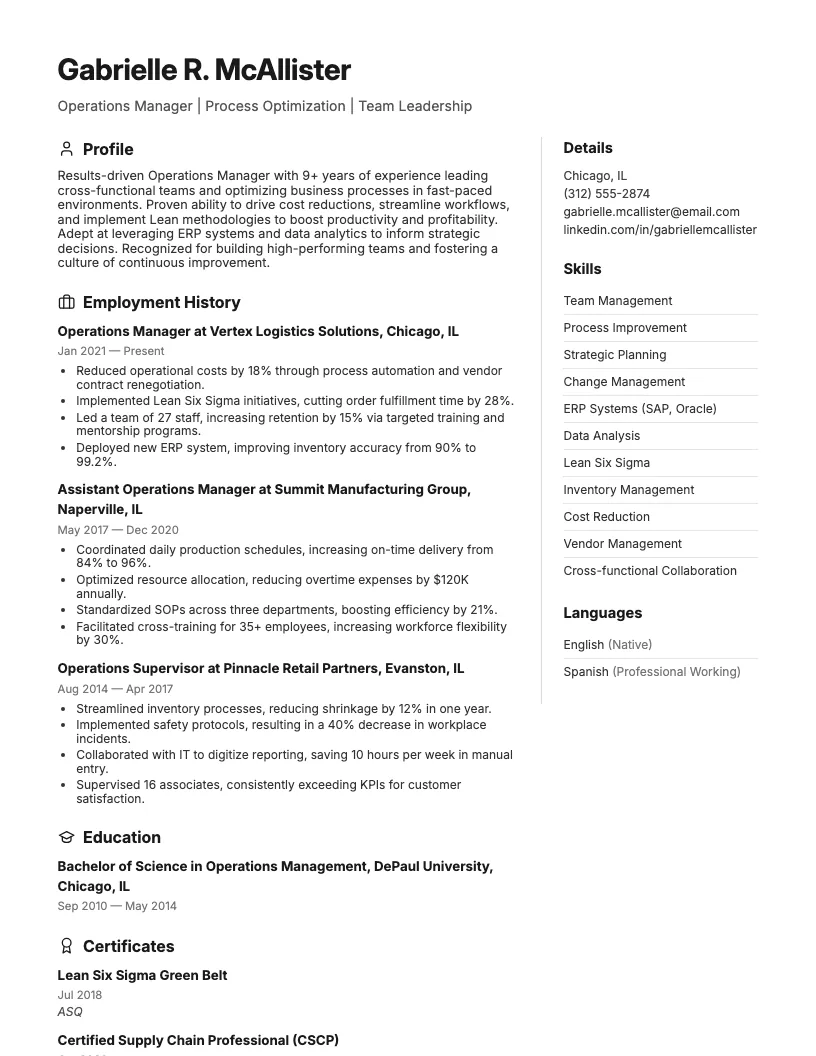
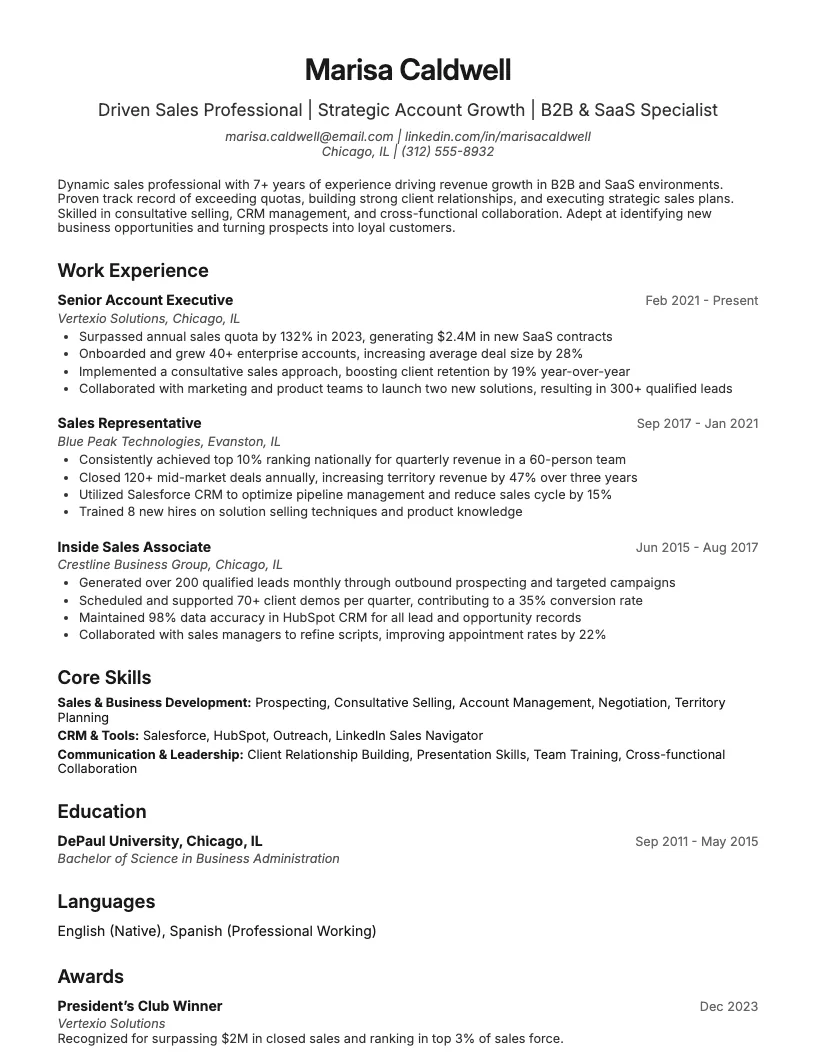
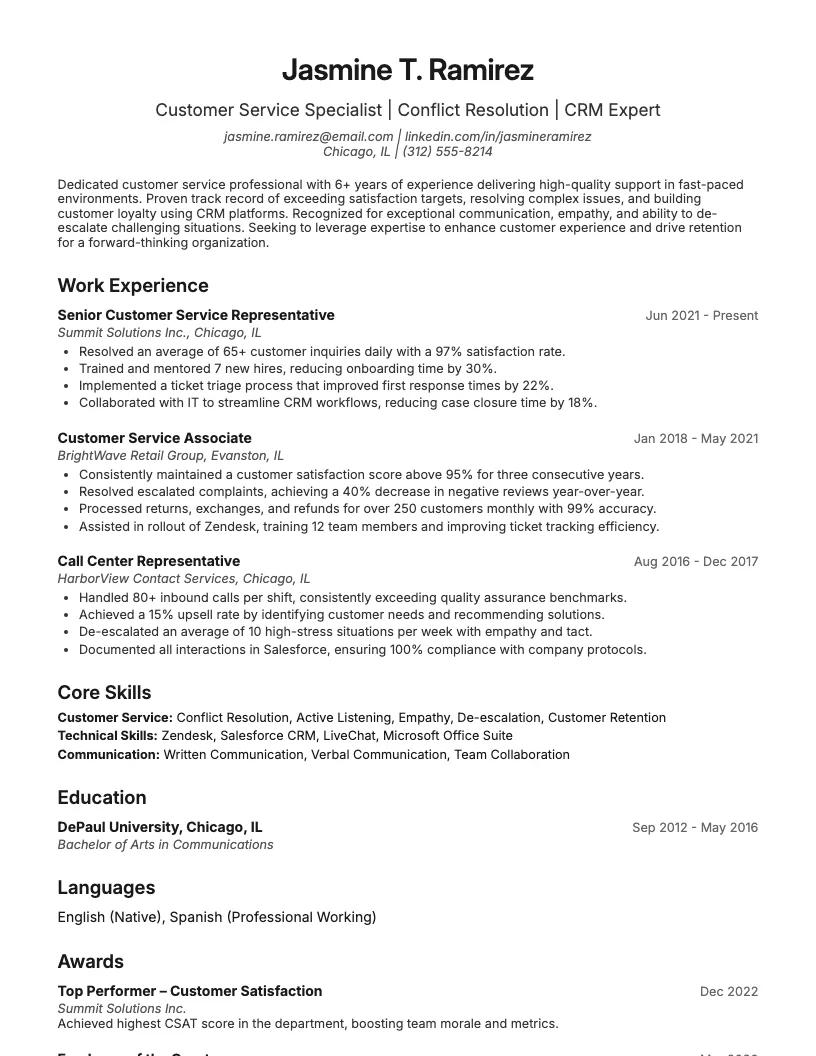
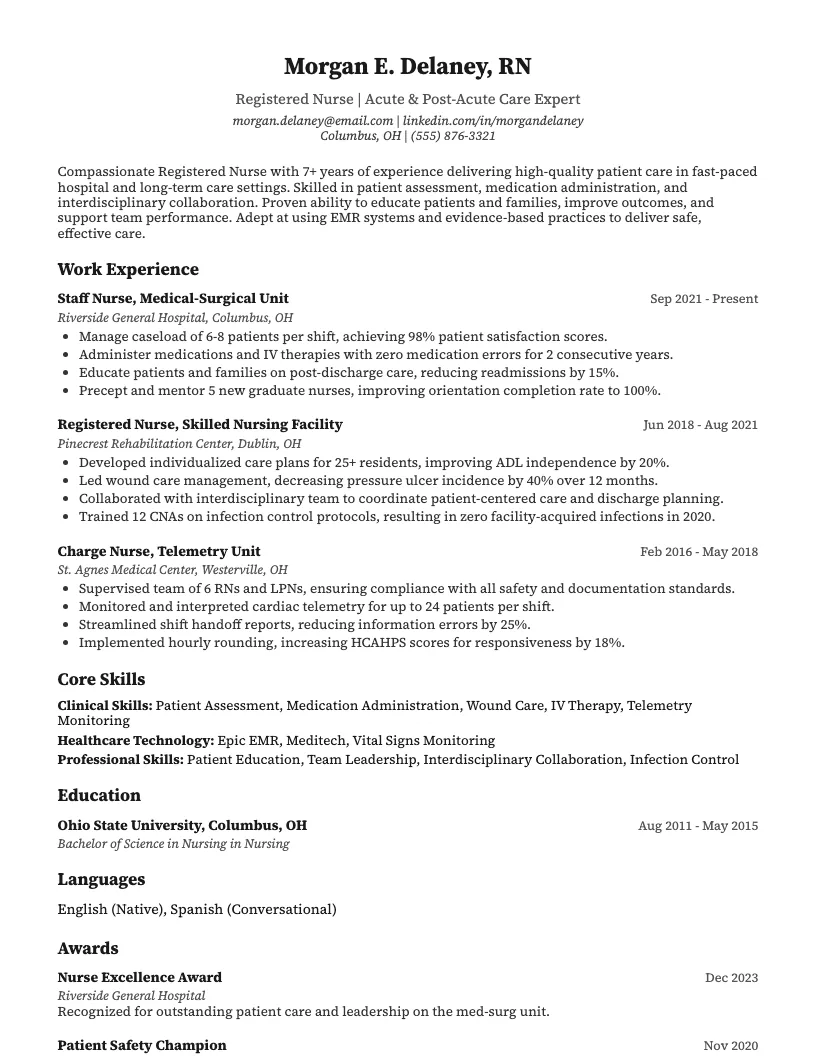
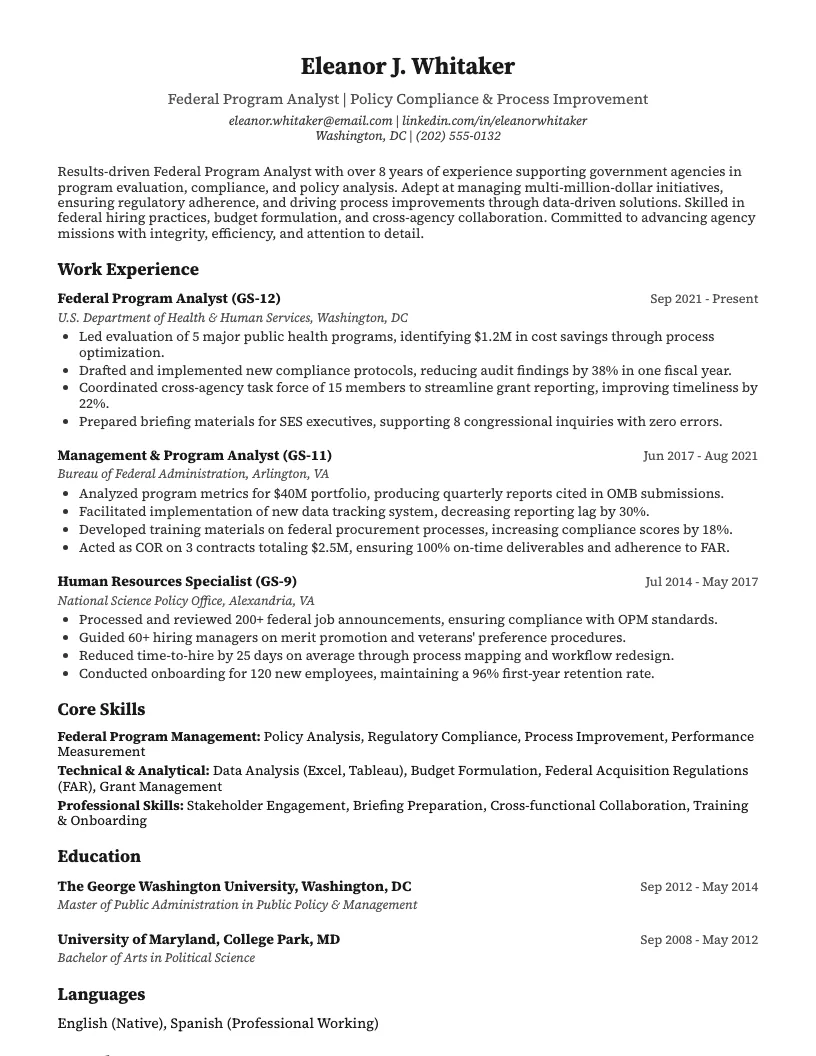
See these skills on a real resume
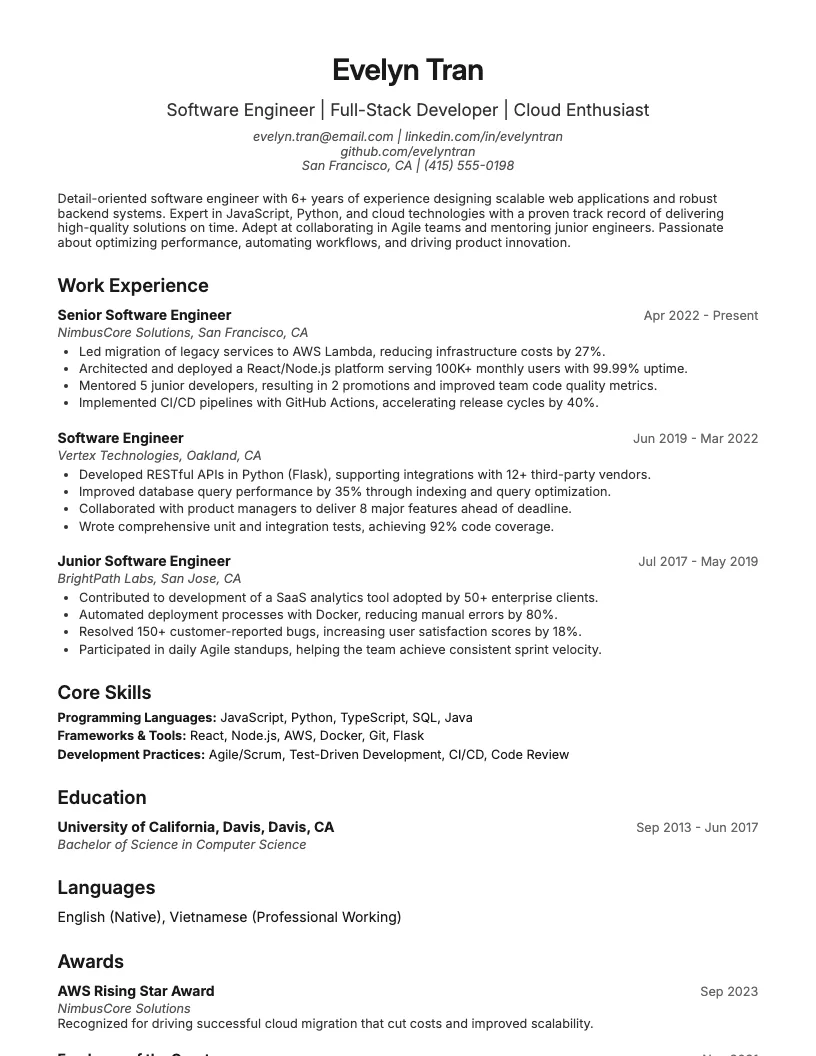
8 examplesStart from an example that already has them, and swap in your own.
Check your resume against the job you want
Scan your resume, see which skills and keywords the posting asks for that you are missing, and fix them before you apply.
Free to use • No credit card required