Keywords for Account Manager Resume: 20 Terms I've Actually Used
The 20 keywords account manager job postings actually search for, where each one goes on your resume, and why an ATS keeps mixing you up with an accountant.


Written by Sarah Chen
Senior Career Strategist & Resume Expert
Updated August 2026
Reviewed by Marcus Rodriguez
Is your resume ATS-friendly?
Drop your resume in and see which of these skills a scanner can actually read, and which ones the job you want is asking for that you have not listed.
PDF or DOCX. Max 2MB.
We never share your resume or use it to train a model.
In This Guide:
What keywords should you put on an account manager resume?
What keywords should you put on an account manager resume?

I've read enough account manager resumes to know the mistake most people make: they list "account management" once at the top and think that covers it. It doesn't. The posting is going to name a dozen specific things it wants, and your resume needs to say those same things back, not a polite paraphrase of them.
Here's the split that matters. Some of these keywords describe what you're paid to do.
Others describe how you get paid to do it. You need both.
Account management
This is the umbrella term, and it should show up in your title line and your summary, but don't stop there. It's too generic to carry a resume on its own - think of it as the header, not the proof.
Client retention
Keeping accounts is half the job, so say it plainly somewhere near the top of your experience section. If you have a number for it, that's worth more than the phrase itself - I'll get into which numbers to chase in what retention and growth numbers should you put on the resume.
Upselling and cross-selling
These are two different moves - selling a client more of what they already have versus selling them something new - and postings usually name both. Don't collapse them into "grew accounts."
Recruiters and the software that reads your resume before a recruiter does are both looking for the specific words.
Renewal management
This is the unglamorous work of getting a contract signed again before it lapses, and it's one of the clearest signs on a resume that you can be trusted with revenue. If renewals were your job, name them separately from "retention" - they're related but not the same word to a hiring manager.
Revenue growth
Generic "sales" language undersells an account manager. You're not chasing new logos, you're growing what's already signed - so "revenue growth," "account expansion," and "contract renewal" read as more accurate than a plain "sales" keyword, and accuracy is what gets you past someone who's screened fifty resumes today.
Relationship building
Every account manager resume claims this. The ones that stand out attach it to something - a portfolio size, a tenure, a save.
I'll show you how to prove instead of claim it in how do you rewrite a weak bullet with the right keywords.
Quarterly business review (QBR)
If you've run QBRs, say so by name - it's the meeting where you prove your value to the client, and naming it signals you've operated at that level, not just responded to tickets. Spell it out the first time it appears; I cover why in why does an ATS confuse account managers with accountants.
Contract negotiation
This one's borrowed more from the account executive side of the house, but if you negotiate renewal terms or pricing tiers, claim it. It signals you're closer to the deal than a purely relationship-focused AM.
Stakeholder management
Nine times out of ten, "stakeholder management" on a resume means "I dealt with more than one person at the client and didn't let anything fall through the cracks." Say that instead if you can - but the phrase itself is still worth having, because it's what the posting will search for.
Pipeline management
More common on account executive postings, but plenty of account manager roles ask for it too, especially ones with an upsell quota attached. Only claim it if you were actually tracking and forecasting opportunities, not just logging calls.
CRM (Salesforce, HubSpot)
Name the actual tool, not just "CRM software." I cover Salesforce and HubSpot specifically, along with the rest of the stack, in what software and tools should you name.
B2B
Worth including if the posting uses it, since it tells the ATS and the reader what kind of selling you've done. Skip it if your background is consumer-facing - don't force a keyword that doesn't fit your history.
SaaS
Same logic. If you've managed accounts for a software company, "SaaS" is a fast way to signal industry fit, and postings in tech almost always scan for it.
Lead generation
This leans more account-executive, but some account manager roles fold in a bit of it, especially referral generation from happy clients. Include it only if it's real - I'd rather see one honest keyword than five borrowed ones.
Sales operations
If part of your job was reporting, forecasting, or keeping the CRM data clean, this is the phrase for it. It's a quieter keyword than "revenue growth," but it tells a hiring manager you're organized, which matters more than people admit.
Solution selling
A named sales method, worth including if you were actually trained in or practiced it. I cover this and the other named frameworks - MEDDIC, Challenger, SPIN - together in which sales methods and frameworks are worth naming.
Cold calling
Less central to account management than to account executive work, but if your role had a hunting component, list it. Don't manufacture it if your book of business was entirely inbound - a false keyword is worse than a missing one, because it falls apart the second someone asks about it.
Sales presentations
If you've built and delivered a deck to a client - a QBR, a renewal pitch, a business review - this is the keyword for it. It's a small phrase that does a lot of work, because it implies you can operate in front of a decision-maker, not just behind a spreadsheet.
Business development
A broader phrase that overlaps with both account management and account executive work. Use it if your role genuinely had a growth mandate beyond your existing book - otherwise it reads as padding.
Customer service
The foundation most account managers built their career on, and still worth a mention even at a senior level - I go deeper on this one in customer service skills resume since it's its own subject. Don't lead with it though; at the account manager level, it should support the revenue-facing keywords, not replace them.
One thing I tell people constantly: the keywords above are a starting list, not a checklist to copy wholesale. The posting in front of you should decide which ones make the cut and how they're worded - this is exactly the kind of matching work ResumeJudge does automatically, scanning your resume against a specific job description and telling you which of these terms are missing before you hit submit, instead of you guessing at it line by line.
Where do the keywords go on your resume?
Where do the keywords go on your resume?
Getting the right keywords isn't enough. Where you put them matters almost as much as whether you have them at all.
The job title in your header
Start at the top. Which exact wording to put in the header is covered in why does an ATS confuse account managers with accountants.
If your current title is something like "Client Relations Specialist" but you're applying for account manager roles, write it as "Client Relations Specialist (Account Manager)." That gets you matched on the target title without misrepresenting what you actually did.
The summary
Your summary is where you get to name the role, the industry, and your biggest number in the same breath. I've seen hundreds of these, and the ones that work say something like "SaaS account manager with 5+ years growing a $1M book of business to $2.5M while keeping retention above 90%."
Generic lines like "results-driven professional" waste the best real estate on the page.
Mirror the posting's language here. If they say "renewal management," you say "renewal management" - not "kept clients renewing."
Experience bullet points
This is where most of your keywords should actually live, not the skills section. A bullet like "managed 10 key accounts, growing revenue 25% year-over-year through upsells and QBRs" packs in three or four keywords while still reading like a sentence a person wrote.
That's the difference between working keywords in and stuffing them in.
If you're not sure which of the keywords from the posting you can back into a bullet, that's usually a sign the bullet needs rewriting, not that you should skip the keyword.
The skills section
Nine times out of ten, I tell people to do both: keep a short skills section with your core tools and methods, and also weave the same terms into your bullets. The skills section catches a fast scan; the bullets prove you actually did the thing.
One without the other leaves a gap - a bare skills list looks unproven, and keywords buried only in prose can get missed by a scanner skimming for a list.
This is exactly the kind of check ResumeJudge does well - feed it your resume and the posting, and it tells you which keywords are missing and where to add them, instead of you guessing.
Certifications and education
Certifications earn their place lower on the page, but they're still worth a line if they match something in the posting - a Salesforce Administrator badge or a Challenger Sales certificate signals you've been trained in exactly what they're asking for. Keep degree, school, and year; drop coursework and GPA once you've got a few years of experience behind you.
How many times one keyword should appear
Twice is usually right - once in the summary or skills section, once again in a bullet where you prove it. Three times is fine if the keyword is central to the role, like "account management" itself.
Past that, it starts reading like you're padding the page, and a human reader will notice before an ATS does.
How do you pull keywords out of an account manager job posting?
How do you pull keywords out of an account manager job posting?
I've read enough job postings for this role to know most people either skim them once or copy every buzzword blind. Neither works.
Here's the process I'd actually use.
Step 1: Copy the posting into a blank document
Postings get edited or pulled down within days, so grab the text before it's gone.
Paste it into a plain document, no formatting. You're about to mark it up, and a clean copy makes that easier.
Step 2: Mark every noun that names a duty, tool, or metric
Go line by line and highlight anything concrete: a task ("manage a book of enterprise accounts"), a tool ("Salesforce"), a number ("hit renewal targets"). Skip the filler adjectives around them.
This is where most of your keyword list for the resume comes from - not a generic list you found online, but this specific posting.
Step 3: Check which ones repeat in the requirements list
Postings usually restate the important stuff in a "requirements" or "qualifications" block near the bottom. Anything that shows up both in the day-to-day description and in that list is a priority - that's the company telling you twice what they care about.
I'd rank those above anything mentioned once in passing.
Step 4: Match the posting's exact wording, not your own version
If the posting says "renewal management," write "renewal management" - not "contract renewals" or "retention work." Scanners and recruiters both match on the literal phrase, and I've seen good candidates get skipped over a wording mismatch that meant the same thing to a human.
Same goes for the job title itself, which is its own trap for this role - more on that in why an ATS confuses account managers with accountants.
Step 5: Cut the keywords you cannot back up with an example
Every keyword you keep needs a bullet behind it, or it's a liability the moment someone asks about it in an interview.
Nine times out of ten, the resumes that fall apart under questioning are the ones padded with terms nobody can walk through. This is also where a lot of people find out their resume doesn't actually back up half of what they listed - running the posting and your resume through ResumeJudge will flag exactly which keywords you're claiming without evidence, before a recruiter does.
What to do when the posting is vague
Some postings are two paragraphs of nothing - "manage client relationships," "drive results." When there's not enough to pull from, fall back on the standard set for this role, covered in the retention and growth numbers section and the software and tools section, and lean on what similar postings from that company or industry ask for.
Why does an ATS confuse account managers with accountants?
Why does an ATS confuse account managers with accountants?
Yes, really. I've seen resumes get filtered into the wrong pile because the word "account" is doing double duty in most applicant tracking systems.
What the scanner matches on
The ATS isn't reading your resume the way a person would.
It's matching strings - your header title, the words near it, and how often certain terms show up.
"Account" sits in both worlds: account manager and accountant, account payable, account reconciliation.
Land your resume in the wrong bucket and a recruiter searching for sales talent never sees you.
Writing the exact target title in your header
The job title in your resume header
Account Manager
Strategic Account Manager
Write the exact title from the posting in your header - not a shortened or generalized version.
If the job is "Strategic Account Manager," your header says "Strategic Account Manager," not just "Account Manager."
I've seen this fix interview requests on its own, because the filter is often looking for that specific phrase, not a close match.
'Account Manager' next to accounting words that trip the filter
Watch what sits next to "account" in your bullets and skills section.
Words like "reconciliation," "payable," "receivable," or "ledger" next to "account" can pull your resume toward the finance category.
Keep the words around your title sales- and client-facing: account management, client retention, revenue growth.
Spelling out abbreviations the first time (NRR, QBR, ACV, ARR)
Spell out an abbreviation the first time you use it, then use the short form after.
"Net Revenue Retention (NRR)" the first time, "NRR" from then on.
A scanner that isn't tuned to sales vocabulary may not credit "NRR" if the posting spelled out "net revenue retention," and vice versa - covering both catches it either way.
Where a keyword gets ignored because of formatting
A keyword buried in a text box, a table, or a graphic often doesn't get read at all - the parser skips straight past it.
Same goes for keywords stuffed into a header/footer on some systems.
Keep your title, skills, and bullets in plain text in the main body. If you want to check whether your specific resume is getting read correctly for a posting you're targeting, running it through ResumeJudge against that job description will show you exactly which keywords the scan is catching and which ones are getting missed.
Which keywords separate an account manager from an account executive?
Account manager vs. account executive vs. customer success manager
| Account Manager | Account Executive | Customer Success Manager | |
|---|---|---|---|
| Core focus | Keeping and growing accounts | Winning new accounts | Adoption and onboarding |
| Example keywords | retention, renewal, QBR | prospecting, cold calling, quota | onboarding, adoption, training |
| Sales motion | Farmer | Hunter | Enablement |
I've reviewed enough sales resumes to know the ATS doesn't care that you understand the difference between these roles - it just matches words. If your bullets read like an account executive's but the title says account manager, the software gets confused, and so does the recruiter reading it.
Account manager: keeping and growing accounts
You're a farmer, not a hunter. Your keywords should say so: client retention, upselling and cross-selling, renewal management, account expansion, quarterly business review (QBR).
Lean on "revenue growth" and "contract renewal" over a plain "sales" - it's more specific, and specific is what gets you matched.
Account executive: winning new accounts
An AE resume runs on hunting words: prospecting, cold calling, closing, quota attainment, pipeline velocity, outbound sales. If you've never carried a new-business number, don't borrow these - a recruiter who's screened a thousand resumes spots a manager dressed as a hunter fast.
Customer success manager: adoption and onboarding
CSM is its own lane again: onboarding, product adoption, training, usage metrics. Don't reach for these unless your job actually touched implementation - they read as a mismatch otherwise.
Keywords that belong to both
Some words cross the line without raising a flag: relationship building, stakeholder management, CRM, negotiation, customer service. Use these freely - they don't tip your resume toward one title or the other.
Which set to use when the job title mixes them
Postings for "Account Manager / Account Executive" hybrids show up constantly, and the fix is simple: match the posting's own split. If it lists retention duties first, lead with the account-manager set; if it opens on quota and new logos, lead hunter.
This is exactly the kind of line-by-line matching that's tedious to do by hand - ResumeJudge reads the posting against your resume and rewrites the wording to fit whichever side it leans, instead of you guessing.
What retention and growth numbers should you put on the resume?
What retention and growth numbers should you put on the resume?
Numbers are what separate an account manager resume from a stack of a hundred that all say "managed client relationships."
I've read enough of these to tell you: the ones that get interviews have a number in almost every bullet. The ones that don't, don't.
Here's what to put in, and where to get it if your manager never told you.
Net revenue retention (NRR)
This is the one number that matters most to whoever's reading your resume. It tells them whether the accounts you touched grew or shrank once you factored in churn, downgrades, and upsells all together.
A recruiter I'd trust reads "achieved 110% NRR" and knows immediately you didn't just keep your book intact - you grew it while some of it walked out the door. Anything over 100% says the same thing: growth outran loss.
Client retention rate
Simpler than NRR, and worth having even if you don't have the revenue math behind it. This is just the percentage of your accounts that stayed with the company over a given period.
I see this most often as "maintained a 95% client retention rate" or "improved client retention rate to 90%." If your NRR is fuzzy, retention rate is the fallback that still lands.
Churn rate
The inverse of retention, and sometimes the more honest number to lead with, especially if you turned a bad trend around. "Reduced churn to under 2%" tells a sharper story than a flat retention percentage, because it shows movement.
If you inherited a struggling book and stopped the bleeding, this is the number that proves it. Don't bury it just because it sounds negative - a reduction is an achievement.
Upsell and cross-sell revenue
This is where you show you didn't just babysit your accounts, you grew them. Put a dollar figure or a percentage on it: "$200K in upsell opportunities identified" or "20% increase in upsell revenue."
Nine times out of ten, a resume that only talks about keeping clients happy reads as passive. Add an upsell number and it reads as revenue-generating, which is what gets you paid more.
Portfolio size in dollars
Scale matters, and a dollar figure gives the reader instant context for everything else on the page. "$5M portfolio" or "$3M ARR" tells them the size of the responsibility before they've read a single bullet.
Without it, "managed key accounts" could mean anything from three clients to three hundred. Put the number next to the title, in the summary if you can, and it frames everything else you list under experience.
Number of accounts managed
Alongside the dollar figure, the count itself matters. "20 Enterprise Accounts" or "portfolio of 25 accounts" tells the reader how much juggling you were actually doing.
I'd pair this with the retention rate every time - "20 accounts, 98% retention" is a much stronger line than either number alone, because it shows you handled volume without losing anyone.
Renewal rate
Different from retention rate in a subtle way: this is specifically about contracts coming up for renewal and whether you closed them. If your job involved contract cycles and renewal negotiations, this number belongs here, not folded into retention.
"Secured 95% of contract renewals" is a clean, standalone line, and it works well next to a mention of the quarterly business reviews where those renewal conversations actually happened.
Quota attainment
If any part of your role was tied to a sales number, put your attainment on the page. "Exceeded sales quota by 25% for 3 consecutive quarters" does two things at once: it proves you hit a number, and the "consecutive quarters" part proves it wasn't a fluke.
This is also where a job description often uses the exact word "quota," so match it. It's one of the easier keywords to pull straight out of the posting.
Customer satisfaction score (CSAT)
A number like "average client satisfaction score of 4.8/5" backs up every soft-skill claim you're tempted to make elsewhere on the resume. It's proof, not adjective.
If you have it, use it. If you don't have an exact score, a retention or renewal number does the same job of proving the relationship side of the role without you having to say "excellent communicator" and hope someone believes you.
Where to find these numbers if nobody told you them
Most account managers never got a scorecard with "your NRR was 110%" printed on it. You have to go find the pieces yourself.
Start with your CRM. Salesforce or HubSpot will usually show you account values, renewal dates, and win/loss history if you pull the right report or ask whoever owns the dashboard.
Check old QBR decks and renewal emails too - a lot of these numbers were calculated once, for a client meeting, and then forgotten. Your own outbox is a better archive than you think.
If you genuinely can't reconstruct an exact figure, use a range you can defend in an interview rather than inventing a precise one. And once you've got real numbers, running them against the actual posting is worth doing before you send anything out - ResumeJudge will check your resume against a specific job description and tell you which of these metrics the posting is actually asking for, so you're not guessing which number to lead with.
What software and tools should you name?
What software and tools should you name?
The tools you list tell a hiring manager whether they'll need to train you or not. I've reviewed enough account manager resumes to know recruiters scan this part fast, looking for a handful of names they recognize.
Salesforce
If you've touched Salesforce, say so plainly, because it's the tool most postings mention by name. Don't just write "CRM" and hope it's close enough - an ATS scanning for "Salesforce" won't credit you for a synonym.
HubSpot
HubSpot shows up constantly in SMB and mid-market postings, so if that's the world you've worked in, name it separately from Salesforce rather than lumping both under "CRM software." They're not interchangeable to a recruiter who's hiring for one specifically.
Gong and Chorus
These are call recording and revenue intelligence tools, and naming one signals you've worked somewhere with a real sales process behind it, not just a spreadsheet. If you used either to review your own calls or coach against a playbook, that's worth a line in your experience bullets.
Salesloft and Outreach
Both are sequencing and engagement platforms. If your job involved structured follow-up cadences with clients or prospects, one of these names probably belongs on your resume, and it's more specific than writing "sales engagement."
Clari
Clari is a forecasting and pipeline tool, so it pairs naturally with anything you say about pipeline management or quota tracking. Most account managers haven't touched it, and that's fine - don't add it if you haven't.
LinkedIn Sales Navigator
This one's for prospecting and account mapping. If part of your job was finding the right contact inside a client's organization before a renewal conversation, Sales Navigator is the specific name for that work.
DocuSign
Small tool, but it comes up in postings that mention contract execution. If you've closed renewals or amendments, mentioning DocuSign next to your contract negotiation experience shows you handled the whole cycle, not just the conversation.
Zendesk and support ticketing
If any part of your role touched support - triaging client issues, tracking tickets to resolution - name the platform. It backs up anything you say about customer service with something concrete instead of a vague claim.
Excel and reporting
I know it sounds basic, but naming Excel next to something specific - pivot tables, forecasting models, a QBR deck you built from raw data - does more work than either alone. "Proficient in Excel" tells a recruiter nothing; "built the renewal forecast model in Excel" tells them you can own a number.
How to list a tool you have only used a little
Here's the part people get wrong most often: they either omit a tool they've used a bit, or they claim fluency they don't have. Neither is right.
If you used Salesforce for three months at your last job, list it - that's real experience, not a lie. Just don't pair it with words like "expert" or "advanced" in the same bullet.
The safer move is naming the specific thing you did with it - "logged and tracked 40+ accounts in Salesforce" - instead of a bare skill-list entry, because a specific action survives a follow-up question in an interview and a bare keyword doesn't.
If you're not sure which tools from a posting you can honestly claim, that's exactly the gap ResumeJudge checks for - it compares your resume against the job description, flags the tools the posting wants that you haven't listed, and rewrites the line so it's backed by something real instead of a stretch.
Which sales methods and frameworks are worth naming?
Which sales methods and frameworks are worth naming?
Naming a framework tells a hiring manager you know how a real sales process runs, not just that you can build rapport and hit a number. I've read resumes from account managers with five years in the seat who never once name the method they were trained in, and it's a missed shot every time.
MEDDIC and MEDDPICC
This is the one I'd fight for if you can only fit one. MEDDIC (Metrics, Economic buyer, Decision criteria, Decision process, Identify pain, Champion) and its longer cousin MEDDPICC signal you qualify deals the way enterprise B2B teams expect.
If your CRM or your old manager ever used this word, put it on the page.
Challenger Sale
Challenger Sale means you teach the client something about their own business instead of just taking orders. It's a well-known name in SaaS and enterprise sales, so if your training program used it, name it - recruiters searching for account managers scan for this exact phrase.
SPIN Selling
SPIN stands for Situation, Problem, Implication, Need-payoff - a way of asking questions that gets the client to say the value out loud instead of you saying it for them. Older than Challenger, but still shows up constantly in job postings, especially for renewal-heavy roles.
Consultative selling
This is the umbrella term for "I ask before I pitch." If none of the specific frameworks above match your training, consultative selling is the safe, honest word for the same instinct, and it still reads as a real qualification to a scanner.
Solution selling
Solution selling means you sold based on the outcome the client needed, not the feature list. I covered this one earlier in the keyword list - worth a mention here too because it's as much a named framework as it is a keyword.
BANT
Budget, Authority, Need, Timeline. It's older and simpler than MEDDIC, and some hiring managers see it as dated, but it still appears constantly in job postings for mid-market and inside-sales-flavored account manager roles.
If that's the world you're applying into, use it.
Joint business planning
Joint business planning, often shortened to JBP, is what you call it when you and the client build next year's roadmap together instead of you presenting a plan to them. It's a strategic-account word - I wouldn't put it on a resume for a book of small accounts, but for key or enterprise account manager roles it's exactly the phrase recruiters are trained to look for.
Naming a method you were only trained in
Here's where I see people freeze up: they sat through a two-day Challenger workshop and never closed a deal using it, so they leave it off entirely. Don't. Say "trained in Challenger Sale methodology" or list it under certifications rather than claiming you ran it daily - that's honest, and it still matches the keyword.
What kills a candidate isn't naming a framework you've only trained in, it's claiming daily mastery of one you can't speak to in an interview. If you're not sure which framework matches the posting in front of you, ResumeJudge will pull the exact terms from the job description and show you which ones are missing from your resume before you send it.
Which soft skills actually belong on an account manager resume?
Which soft skills actually belong on an account manager resume?
Every account manager resume I read has a skills section stuffed with words like "team player" and "hard worker." None of that tells a hiring manager anything, and none of it survives a second read.
The soft skills that actually matter for this job are the ones that explain how you keep a client from leaving. That's the whole job, so that's what your resume needs to prove.
Active listening
You can't fix a client's problem if you didn't hear what they actually said, not what you assumed they meant. I'd put this first because it's the skill behind almost every save I've seen described in a resume bullet - someone caught a complaint before it became a churn risk.
Emotional intelligence
This is the ability to read a room, or a call, and know when a client is about to walk even if they haven't said so. Recruiters see "emotional intelligence" on a lot of resumes and skip right past it.
What they stop for is a bullet that shows you noticed something and acted on it.
Conflict resolution
An angry client is not a lost client, most of the time. What separates a good account manager from an average one is turning that call into a reason the client stays another year.
If you have a story like that, it belongs in your experience section, not your skills list - this is the kind of keyword that only means something with an example attached.
Executive presence
Nine times out of ten I see this skipped on account manager resumes, and it shouldn't be. You're the person in the room with the client's VP during a quarterly business review, and a hiring manager wants to know you won't freeze in front of a senior stakeholder.
Negotiation
Every account manager negotiates, whether it's a renewal price, a scope change, or a favor to buy time. This one overlaps heavily with the contract negotiation keyword up top - if you already used that one, don't repeat it here word for word, just show the skill through a different result.
Strategic thinking
This is the difference between reacting to whatever a client asks for and having a plan for where the account should be in a year. It shows up in resumes as account growth plans, expansion roadmaps, or a QBR deck that set the agenda instead of just reporting numbers.
Adaptability
Accounts change owners, budgets get cut, priorities shift mid-quarter. I've seen plenty of resumes claim adaptability and then list five years in the same routine - if you're going to use the word, back it up with a moment where the account actually changed and you changed with it.
Resilience
Rejection is part of this job, whether it's a renewal that falls through or a client who goes quiet. Resilience is the one soft skill I'd actually let stand mostly on its own, because there's no clean way to "prove" it in a bullet - it shows more in the fact that your work history doesn't have gaps after a bad quarter.
How to prove a soft skill instead of listing it
A skills section with "communication, negotiation, conflict resolution" typed in a row proves nothing. What proves it is one sentence in your experience section where the skill caused a result - a client stayed, a deal closed, a relationship survived a bad quarter.
That's also where these words earn their keep for the scanner: a soft skill named once in a bullet with a number attached reads as real, where the same word sitting alone in a list reads as filler. If you're not sure which of these actually show up in the posting you're applying to, that's exactly what ResumeJudge checks - it takes your resume and the job description and tells you which of these skills are missing, then rewrites the bullets to work them in with the results you've already got.
What action verbs should you start your bullets with?
What action verbs should you start your bullets with?
I've read enough of these to spot the pattern in about two seconds: every weak bullet starts with "responsible for" or "helped with." Swap the verb and the whole line gets stronger, because the verb is where the ATS and the recruiter both land first.
Retained (instead of saved)
"Saved a client" sounds like you talked someone out of leaving once. "Retained" sounds like a skill you have.
If churn reduction is part of your story, this is the word - it also matches the churn rate and client retention rate numbers you should already have ready.
Expanded (instead of grew)
"Grew" is fine, but it's vague - grew what, from where? "Expanded" pairs naturally with a territory or an account list, and it reads better next to a before/after number: "expanded a $2M portfolio to $3.4M."
Orchestrated (instead of managed)
"Managed" is the most overused verb on this whole job title, and it says almost nothing. "Orchestrated" earns its place when you're coordinating more than one moving part - several stakeholders, a cross-functional team, a complex renewal.
Don't use it for a single client relationship; that's just managing.
Secured (instead of sold)
Account managers don't usually "sell" in the cold-outreach sense - they close renewals and land expansions with people who already trust them. "Secured" fits that better: "secured a three-year renewal" reads as account management, not door-to-door sales.
Advised (instead of helped)
"Helped" a client is what an intern does. "Advised" a client is what someone with judgment does.
If your job leaned consultative - walking clients through a decision instead of just fielding requests - this is the honest word for it, and it lines up with the consultative selling approach if that's a method you've used.
Negotiated
This one's underused. If you've talked a client into a better renewal term, a higher contract value, or an extended commitment, say "negotiated," not "worked with the client on."
Recruiters scan for this word specifically because it signals you can hold your ground in a conversation about money.
Exceeded
Save this one for a number you can actually prove - a quota, a target, a renewal rate goal. "Exceeded quota by 22%" does more work in five words than a whole paragraph of soft-skill language.
If you don't have the number memorized, that's worth digging up before you write the bullet - see where to find these numbers if nobody told you them.
Strengthened
This is your word for relationship depth without a hard dollar figure attached - "strengthened executive-level relationships across a 40-account book." It's softer than "secured" or "negotiated," so use it when the win was trust, not a signed number.
Implemented
Good for process, not people - a new onboarding step, a QBR cadence, a reporting structure you introduced. Nine times out of ten I see this verb wasted on something the candidate didn't actually build, just followed.
Only use it if you were the one who set the process up.
Verbs to stop using
"Responsible for," "worked on," "helped with," "assisted," "involved in" - every one of these tells a recruiter you were present, not that you did anything. I'd cut every instance of these from a resume before I'd add a single new bullet.
If you're not sure which of the verbs above fits a specific line, look at how do you rewrite a weak bullet with the right keywords - it walks through four real before-and-afters. And once the verbs are fixed, ResumeJudge's rewrite tool will check the rest of the bullet's wording against the actual posting and tighten it further, so you're not guessing which version lands.
How do you rewrite a weak bullet with the right keywords?
Four lines show up on almost every account manager resume I've reviewed. All four say nothing.
'Managed a list of clients' rewritten
A vague experience bullet, rewritten
Managed a list of clients.
Managed a portfolio of 20 enterprise accounts generating $3M in ARR, maintaining a 98% client retention rate.
Nobody can picture "a list." Name the size and the outcome instead: "Managed a portfolio of 20 enterprise accounts generating $3M in ARR, maintaining a 98% client retention rate."
Same job, but now it's a number a hiring manager can compare against their own team.
'Used Salesforce to track my calls' rewritten
A vague tool-use bullet, rewritten
Used Salesforce to track my calls.
Managed a 50+ opportunity pipeline in Salesforce, using MEDDIC qualification to improve forecast accuracy by 20%.
"Used Salesforce" tells me you clicked around in it. What I want is what the tool got you: "Managed a 50+ opportunity pipeline in Salesforce, using MEDDIC qualification to improve forecast accuracy by 20%."
That pulls in the CRM and the sales method in one line instead of leaving them as separate bullets nobody connects.
'Kept clients happy' rewritten
A vague relationship bullet, rewritten
Kept clients happy.
Maintained a 4.8/5 customer satisfaction score across a book of 25 accounts through quarterly business reviews and proactive check-ins.
"Happy" isn't a keyword an ATS or a hiring manager can score. A CSAT number is: "Maintained a 4.8/5 customer satisfaction score across a book of 25 accounts through quarterly business reviews and proactive check-ins."
That one line does the work of "relationship building," "QBR," and "client retention" at once - three keywords, zero listing them.
'Grew revenue' rewritten
A vague growth bullet, rewritten
Grew revenue.
Grew portfolio revenue 25% year-over-year, identifying $200K in upsell opportunities through structured account reviews.
Grew it how much, from what, over what period? "Grew portfolio revenue 25% year-over-year, identifying $200K in upsell opportunities through structured account reviews" tells the real story.
It also does something "grew revenue" can't: it separates you from someone who just held accounts steady.
The pattern behind all four rewrites
Every rewrite above swaps a vague verb for a number, and a task for an outcome. Nine times out of ten, the fix isn't a better word - it's a number you already have and forgot to write down.
If you're stuck figuring out which numbers your own bullets are missing, that's exactly the gap ResumeJudge closes: give it your resume and the posting, and it rewrites each bullet with the wording and metrics that posting is actually asking for, instead of you guessing at it line by line.
Which keywords change with the type of account manager job?
"Account manager" covers nine or ten different jobs wearing the same title. I've read resumes where someone applied to a strategic account manager role using the exact language from their old insurance account manager job, and it read like a mismatch even though the person was qualified.
The posting tells you which version you're being judged as - match its words, not your last job's words.
Key account manager
This is the version that handles a company's biggest, most important clients - not the most accounts, the most valuable ones. Lead with strategic planning and key account development: show you built and executed a plan that grew revenue or protected a relationship, with a real number attached.
Pair it with problem-solving - a conflict you resolved or a process you fixed. At the senior end of this track the language gets more partnership-flavored: joint business planning, P&L management, global account management, C-suite negotiation.
If you've negotiated with a CFO or CEO directly, say so - it's what separates this from a standard account manager resume.
Senior account manager
Senior versions of this job blend sales and customer success, and usually add people management - training or coaching junior account managers. Two keywords do the heavy lifting here: negotiation (contract renewals, retention saves) and management (of accounts, of people, or both).
If you've overseen anyone, even informally, name it.
Technical account manager
This one sits between sales and support - you're the person explaining the product, running onboarding, and troubleshooting after the deal closes. I've seen candidates undersell this by writing only sales language.
Name the technical side directly: implementation, onboarding, training manuals or troubleshooting guides you wrote, and specific software you supported. A revenue number matters less here than a customer satisfaction or adoption number.
Marketing account manager
A different job entirely - you're managing the client relationship while running their marketing. Name the channels you've worked in specifically: email, social, paid search, content.
Vague "marketing experience" reads weaker than "email and paid social campaigns." If you've worked across more than one industry, mention that too - marketing approaches shift a lot between sectors.
Insurance account manager
Recruiters here weight industry experience heavily, especially customer-facing field experience. If you've worked in insurance at all, even briefly, put it near the top.
Lead with your achievements in the summary rather than burying them - insurance hiring managers move through a lot of resumes fast.
National account manager
This version covers a large territory by phone and in person, often handling escalations across a wide client base. Team leadership and interpersonal skills both matter here, since you may be coordinating junior account managers spread across regions. Product knowledge depth is worth naming too - the breadth of the territory means you're expected to know the whole line.
Inside sales account manager
More phone- and CRM-driven than the field-heavy versions above it. Lean into pipeline management, cold calling, and CRM usage - see the tools section for which platforms to name specifically.
Volume numbers work well here: call counts, deals worked, response times.
Strategic account manager
Write the exact title in your header, for the reason covered in why does an ATS confuse account managers with accountants. Beyond that, this role is about long-term client value over the next quick win, so certifications carry more weight than usual, especially if your track record is still thin.
Enterprise account executive
Same core job as an account manager, but scaled up - bigger clients, bigger territories, more scrutiny on deal size. A plain B2B sales background reads as too small here; be specific about deal size, account tier, or territory scope.
This is also where the account manager versus account executive line gets blurriest - if you're unsure which set of keywords to lean on, the account manager vs. account executive section walks through it.
Whichever version you're targeting, the fastest way to know if you've got the right words is to check your draft against the actual posting - ResumeJudge scans the two together and flags the specific keywords from that listing your resume is still missing, so you're not guessing at which "account manager" you're supposed to sound like.
What keywords can you use with no account management experience yet?
You don't need the title "account manager" on a past resume to land the job. I've seen plenty of first resumes for this role built entirely from work that never had "account" in the title.
The trick is naming the overlap, not apologizing for the gap.
Customer service work
If you've handled phone or chat support, you've already done pieces of this job. Call it what it is: relationship building, issue resolution, and repeat contact with the same customers over time.
Say you resolved tickets, tracked recurring issues, or followed up with customers after a problem. That's the seed of client retention.
Retail or hospitality work
A shift on a sales floor or behind a hotel desk teaches you to read what someone actually needs, which is most of what account management is. If you hit sales targets, upsold add-ons, or handled repeat customers, write that in sales terms: quota attainment, upselling, customer satisfaction.
Nine times out of ten, the applicant already has the language buried in the job - they just wrote it as duties instead of results.
Internships
Any internship touching sales, marketing, or customer accounts gives you real keywords to use, even short ones. Name the tool you touched (a CRM, a spreadsheet of accounts, a pipeline report) and the task you did with it.
Don't inflate a three-week internship into "managed enterprise accounts." Say what you actually did - updated records, sat in on client calls, drafted follow-up emails - and let the wording stay honest.
University projects and coursework
A capstone project or sales simulation course counts, especially with no work history yet. List the course by name if it's directly relevant - Sales Strategy, CRM Systems, Business Communication - and cap it at two to four courses.
Group projects where you coordinated between teams or presented to a panel map directly onto stakeholder management and sales presentations.
Club and volunteer roles
Running a student business club, organizing a fundraiser, or leading a volunteer team all show the same thing a hiring manager wants from an account manager: you can manage people and outcomes you don't fully control. If you led a team, write "led team of five."
If you grew membership or donations, put a number on it.
Sales certifications you can finish quickly
A HubSpot Sales Software certification takes days, not years, and it gives you a keyword an ATS can match on when your work history can't. It won't replace experience, but it signals you've put in effort before day one.
Before you apply anywhere, it's worth running the resume against the actual posting - ResumeJudge will show you which of these keywords the listing wants and which ones you're still missing, so you're not guessing.
Words to avoid claiming this early
Don't write "account management experience," "managed client portfolio," or "led renewals" if you've never owned an account start to finish. An interviewer will ask you to walk through a deal, and a claim you can't back up falls apart in the first follow-up question.
Stick to verbs that match what you actually did: assisted, supported, contributed to, coordinated. Once you can point to a real number or outcome, you can upgrade the language - not before.
Which certifications are worth listing?
Which certifications are worth listing?
Certifications aren't what get an account manager hired. But they're a cheap way to fill gaps, especially if your experience section is thin, and they're keywords in their own right that a scanner will pick up.
Certified Sales Professional (CSP)
This one's a generalist credential and it reads that way. Worth a line if you're early in your career or switching in from another field, less useful once you've got three or four years of quota numbers to lean on instead.
Salesforce Administrator
I like this one more than most people expect. It's not just a CRM keyword next to Salesforce in your tools list - it tells a hiring manager you can set up reports, build dashboards, and actually run the system instead of just clicking around in it.
If your target company runs on Salesforce, this certification does real work for you.
HubSpot Sales Software certification
Free, quick to finish, and it matches the keyword straight from a posting if the company runs HubSpot. Don't oversell it - it's a supporting credential, not a headline.
Challenger Sales training
If your last company ran you through Challenger, put it down. It signals you were trained on a specific sales philosophy, and some hiring managers specifically screen for it because that's how their team sells.
SPIN Selling certification
Same logic as Challenger. It's a named methodology, not a soft skill, and naming it exactly the way the posting does is what gets it matched.
If you've only read the book, don't claim the certification - say you're trained in SPIN and leave it there.
SaaS sales certification
Worth having if you're aiming at SaaS account manager roles specifically. It's a narrower credential, so it only pulls weight when the job posting also says SaaS.
Insurance licences for insurance account managers
This is the one exception on this list that isn't optional. If you're applying for an insurance account manager role, your state or provincial licence isn't a nice-to-have credential - it's a requirement, and leaving it off can get your resume screened out before a human ever sees it.
List it plainly, with the licence type and the state it's valid in.
Where to put certifications on the page
I've seen hundreds of these resumes, and the mistake I see most often is burying a strong certification in a wall of text under education. Give certifications their own short section, near the top third of the page if you're light on experience, lower down if your work history is already doing the heavy lifting.
Either way, spell out the full name at least once - the scanner matching against a posting's exact wording is the whole reason you're listing it. If you're not sure whether a credential is worth the space at all, run your resume against a real posting in ResumeJudge and it'll tell you which certifications the job actually asks for versus which ones are just padding.
Frequently Asked Questions
How many keywords should I put on my resume?
There's no fixed number to hit - aim to cover the specific tools, methods, and terms the posting actually uses, which for most account manager listings works out to somewhere around 10 to 15 across the whole resume. Cramming in more than that dilutes your real experience and starts to read as keyword stuffing. Match what the posting asks for rather than chasing a count.
Should I use a skills section or work keywords into my bullets?
Both, ideally. A skills section lets an ATS and a fast human scan catch your core tools right away, while working the same terms into your bullets proves you actually used them and to what effect. A skills section with nothing backing it up in your experience reads like a list copied off the job posting.
Is a keyword list at the bottom of the resume a bad idea?
Not by itself, but it depends on length and what backs it up. A short, honest list of skills is fine; a long dump of every term from the posting, especially squeezed into the bottom margin with nothing matching in your bullets, reads as padding to a recruiter and can look like stuffing to an ATS too. Keep it short and make sure those words also show up in your actual work history.
Should I write 'Salesforce' if I only used it for a few months?
Yes - list it, but be honest about the depth. If you're worried a few months looks thin, put it in a bullet instead of just a skills line, something like "used Salesforce to track a 40-account pipeline," so it reads as real use rather than a claim. Employers mostly want to know you can pick the tool up, not that you're a certified expert.
Do I need different keywords for every application?
Yes - the keywords a posting rewards depend on that specific listing, so a resume tuned for one account manager role can miss the mark on another that wants a different tool or a different flavor of the job. ResumeJudge takes your resume and the posting and rewrites it for you, putting the right keywords into the right sections, instead of you rereading each posting and swapping skills in and out by hand.
Should I spell out NRR and QBR or use the abbreviations?
Use both. Spell it out the first time - net revenue retention, quarterly business review - and follow it with the abbreviation, so both a person reading it and an ATS matching either form pick it up. After that first mention, the abbreviation alone is fine.
Can I use white text to hide extra keywords?
No. Modern ATS software parses the text itself, not the color or size it's displayed in, so hidden keywords still get read and just leave you with a resume padded with terms unrelated to your real experience. Some systems flag it as an attempt to game the parser, which is worse than leaving the keyword out.
Do keywords still matter if a person reads my resume?
Yes. Even once a resume reaches a person, keywords are still what a recruiter is scanning for in the first several seconds, because they're often deciding who to interview by the same terms from the posting. They also work as evidence - "Salesforce" on its own reads weaker than "used Salesforce to grow a $2M book of business."
See these skills on a real resume
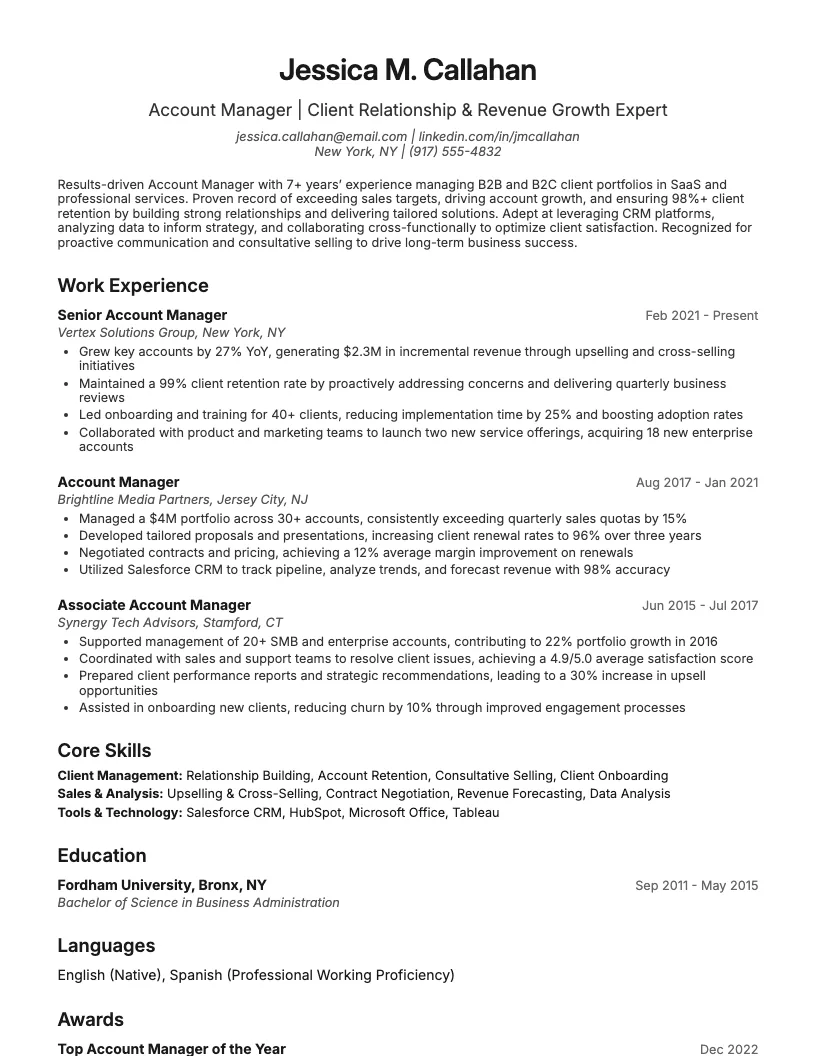
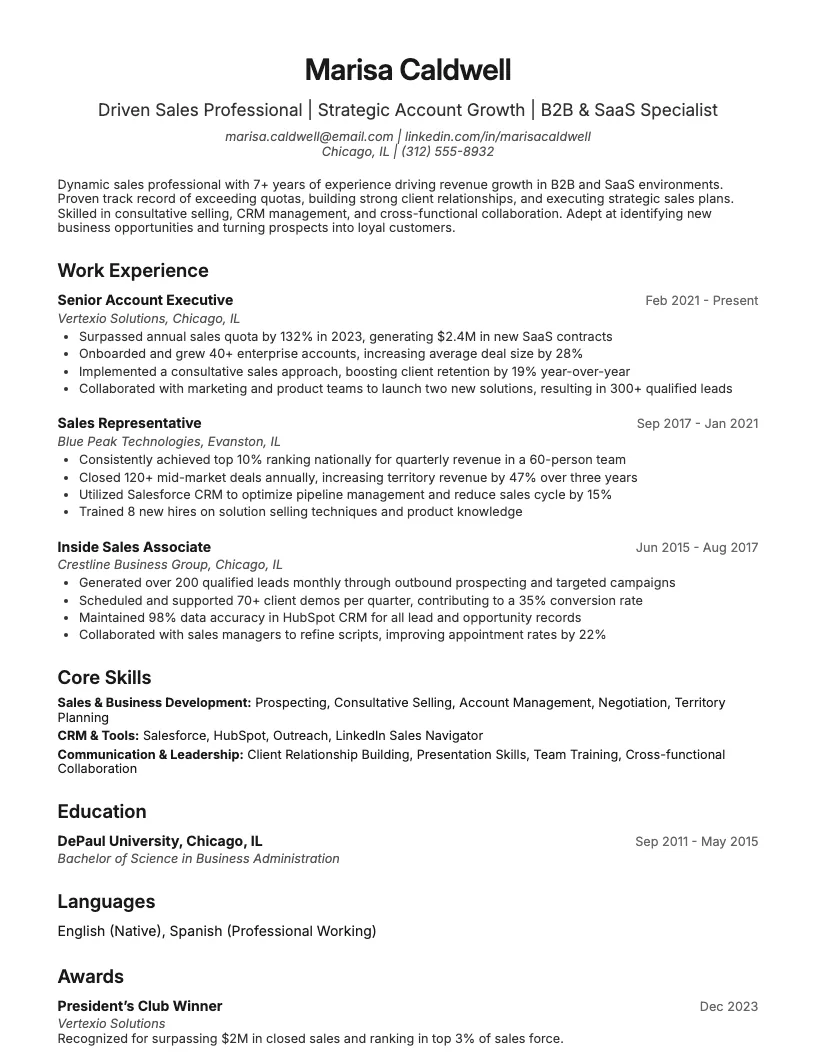
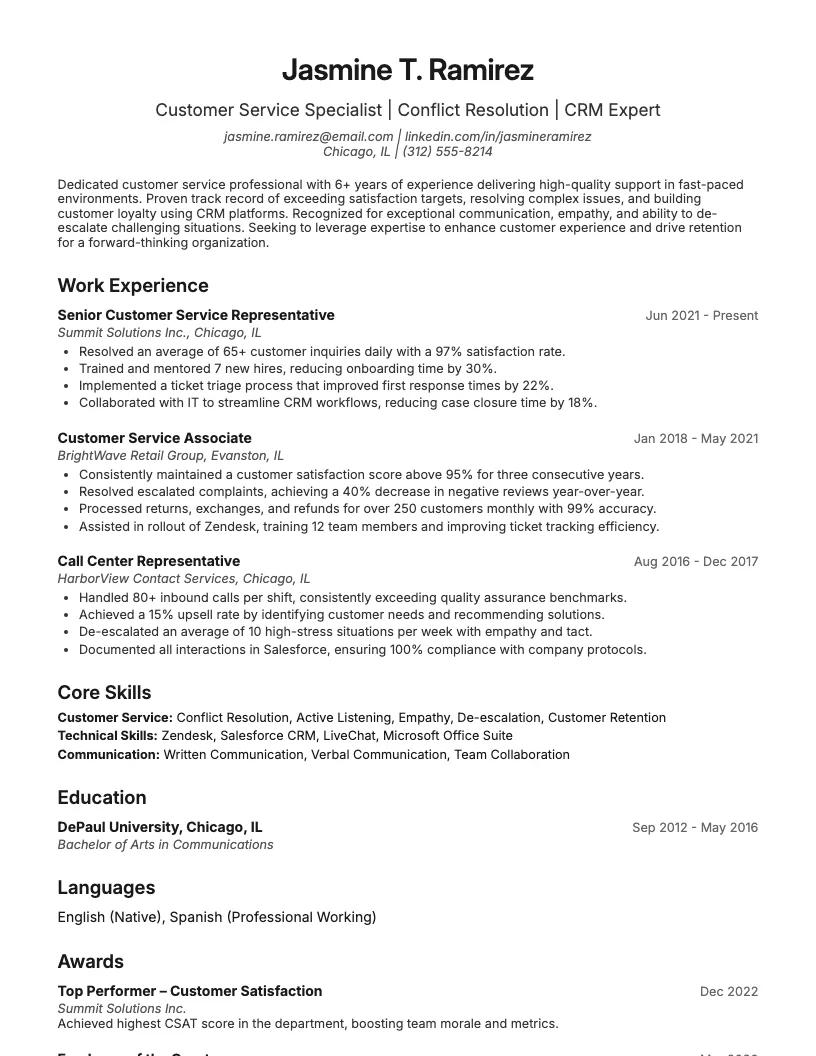
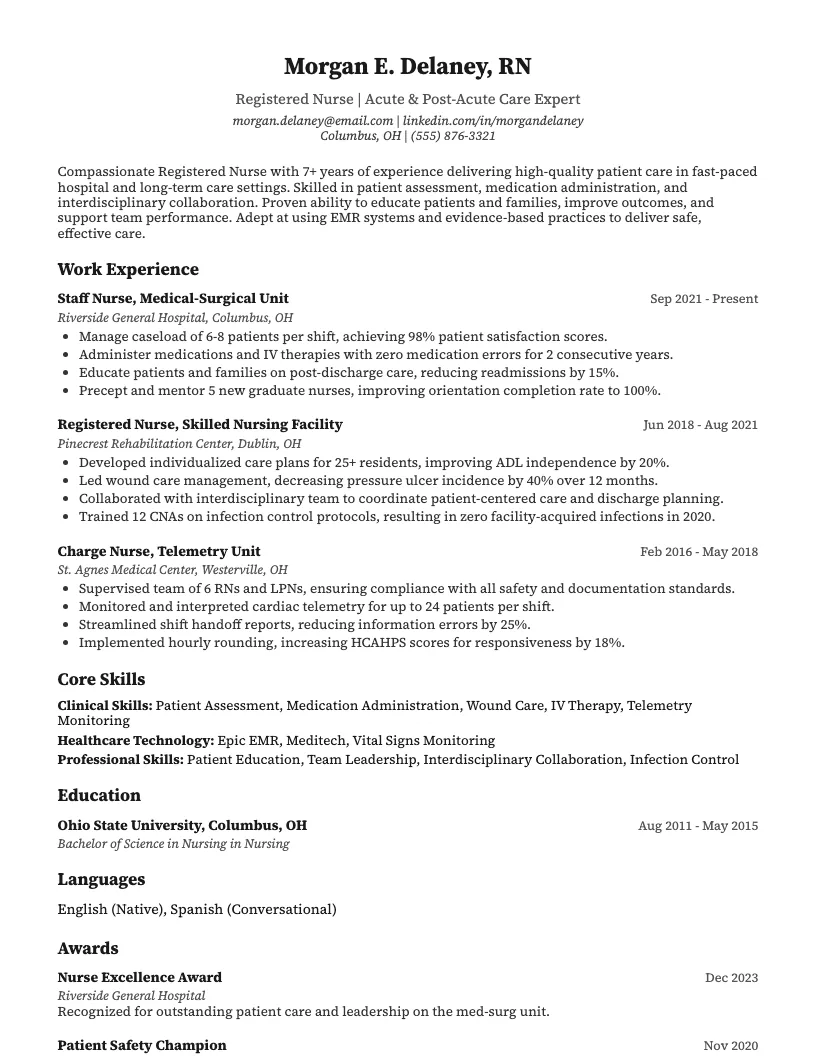
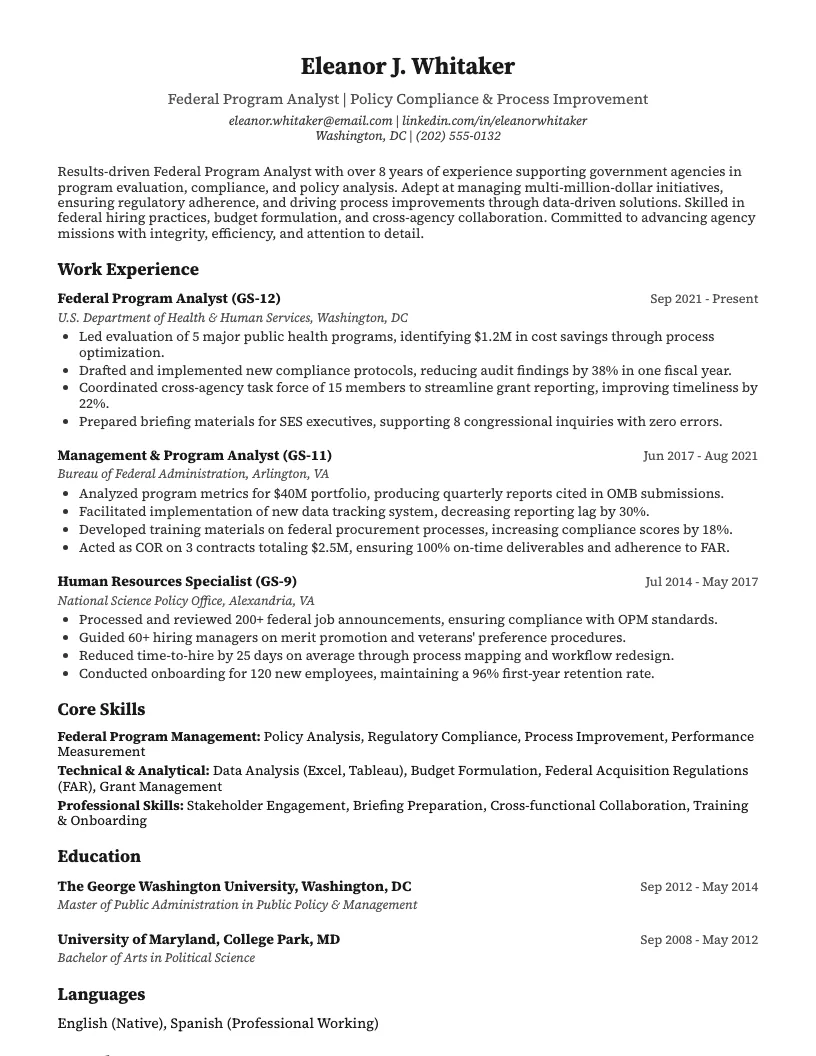
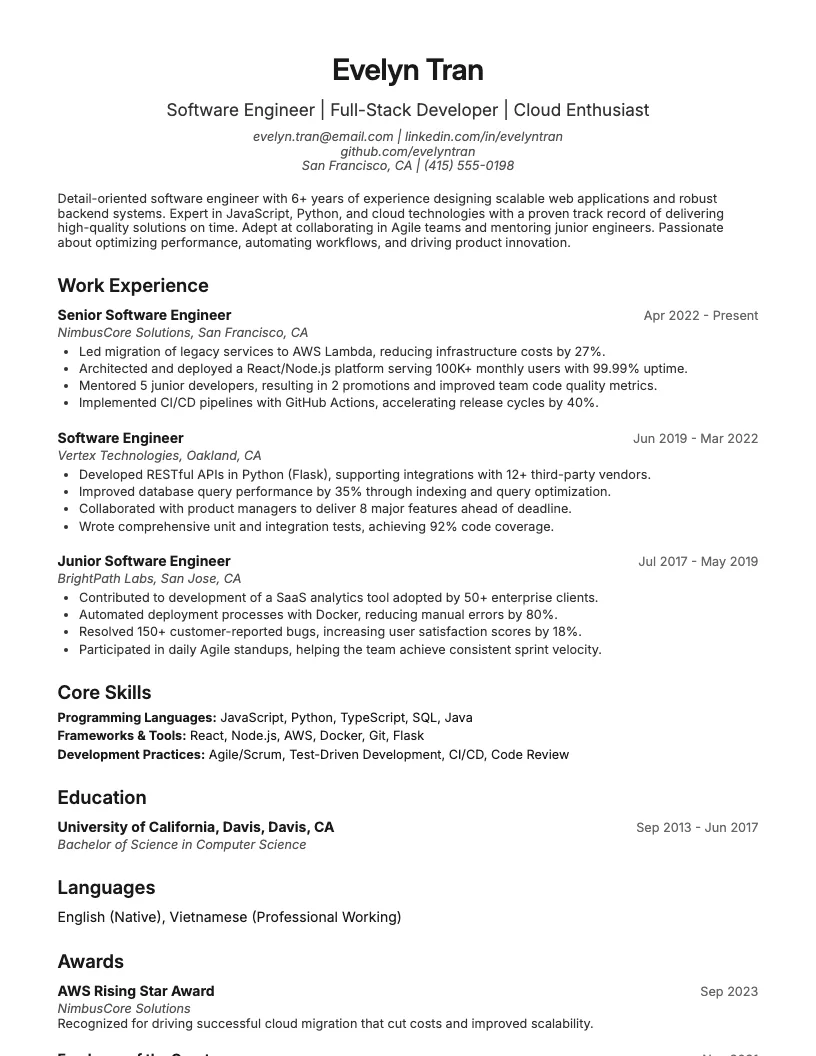
8 examplesStart from an example that already has them, and swap in your own.
Check your resume against the job you want
Scan your resume, see which skills and keywords the posting asks for that you are missing, and fix them before you apply.
Free to use • No credit card required