 ResumeJudge
Resume Keywords Sales: I Sorted 8 Categories Down to the Best 10-15
See the 8 sales-keyword categories ATS scans for, how to narrow them to 10-15 you can defend in an interview, and exactly where to place them on the page.


Written by Dr. Priya Sharma
Career Development Expert & Resume Analyst
Updated August 2026
Reviewed by Sarah Chen
Is your resume ATS-friendly?
Drop your resume in and see which of these skills a scanner can actually read, and which ones the job you want is asking for that you have not listed.
PDF or DOCX. Max 2MB.
We never share your resume or use it to train a model.
In This Guide:
What are the sales keywords recruiters and ATS software look for?
I've read enough sales resumes to know the ones that get a callback almost always share the same DNA: they sound like the job posting, not like a diary entry.
Sales postings run through an ATS before a person ever sees them, and the ATS is matching words, not judging character.
So the words matter more than they probably should. Here's the full set, grouped the way they actually show up on a strong resume.
Selling and pipeline terms: prospecting, cold calling, lead generation, pipeline management, closing
These are the verbs of the job itself, and they belong in your experience bullets, not just a skills list.
If you prospected new accounts, say prospecting. If you built and managed a pipeline, say pipeline management, not "kept track of deals."
Closing deserves its own line too - it's the word every sales manager scans for first, because it's the one that separates a rep who generates activity from one who converts it.
Account and territory terms: account management, territory management, key accounts, customer retention, upsell, cross-sell
This group is about what you did after the deal closed, and it's the group I see most resumes skip entirely.
Recruiters want to know you can keep an account, not just win one - so customer retention and account management carry real weight, especially for anything beyond an entry-level role.
If you grew existing accounts, name it: upsell and cross-sell are specific words that tell a hiring manager exactly what kind of revenue you added, and they're easy to pair with the numbers in the numbers section.
Number terms: quota attainment, revenue growth, market share, win rate, conversion rate, average deal size
Quota attainment is the single most-scanned phrase on a sales resume, full stop.
Don't just write the word. Pair it with the figure: 'achieved 118% of quota' beats 'consistently met sales goals' every single time, and it's the line ResumeJudge rewrites for you the moment it matches your resume against a posting that lists 'quota attainment' as a requirement.
Win rate and conversion rate matter just as much if you're earlier in the funnel - SDRs and BDRs should lean on these instead of revenue figures they never owned.
Deal and negotiation terms: contract negotiation, objection handling, pricing strategy, proposal writing, RFP response
This cluster shows you can survive the part of the deal where the prospect pushes back.
Objection handling is the one I'd fight to keep if you're cutting your list down to 10 to 15 keywords - it signals you can hold your ground in a live conversation, which is a different skill from just presenting well.
If you've written proposals or responded to RFPs, put the actual words on the page. "Helped with paperwork" tells the ATS nothing, and it tells the recruiter even less.
Selling method names: consultative selling, solution selling, SPIN Selling, value-based selling, challenger selling
These are named methodologies, and they only belong on your resume if you actually trained on them or your manager used the term in your reviews.
I've seen candidates bolt "challenger selling" onto a resume because it sounded sharp, and then freeze when an interviewer asks them to walk through how they used it.
If you did train on one of these, name it - it's a fast way to signal you sell the way a sophisticated buyer expects to be sold to, especially in B2B and enterprise roles.
Tools and software: Salesforce, HubSpot, Outreach.io, LinkedIn Sales Navigator, ZoomInfo, Gong, Veeva
Tool names are the easiest keywords to get right because there's no ambiguity - either you used Salesforce or you didn't.
List the CRM you actually worked in daily, plus anything you used for prospecting (Outreach.io, ZoomInfo, LinkedIn Sales Navigator) or call review (Gong). Pharma and medical device readers should note Veeva specifically - it's covered in more depth further down the page.
Don't list a tool you touched once in training. If a recruiter asks you a follow-up question about it in the interview and you go blank, that's worse than not listing it at all.
Sales action verbs: closed, negotiated, grew, exceeded, generated, prospected, converted, retained
These are the words that start your bullets, and they're doing more work than people give them credit for.
"Responsible for closing deals" and "closed $2.3M in new business" use almost the same words, but only one of them reads like an achievement.
Pick a strong past-tense verb, put a number right after it, and you've written a bullet that survives both the ATS scan and the six-second human skim.
Soft skills worth naming: active listening, relationship building, persuasion, resilience, adaptability
Soft skills get a bad name in resume advice, and mostly they deserve it - "team player" and "hard worker" say nothing.
But active listening, relationship building, and persuasion are different: they're specific enough that a sales manager reading them pictures an actual behavior, not a personality trait.
Resilience earns its spot too, because sales is a job built on rejection, and hiring managers know it. Just don't list these on their own - pair each one with a bullet that proves it, or it reads as filler.
Which sales keywords should you pick for your resume?
Every posting is a different list. The job title above (what recruiters and ATS software look for) tells you the categories that tend to show up - but which ones actually matter is sitting in the posting you're applying to, not in any generic list.
Here's how I sort through it.
Step 1: Pull the exact words out of the job posting
Open the posting and read it the way the ATS does: line by line, not for vibes.
Circle every skill, tool, and responsibility they name. Pay extra attention to anything sitting next to "must," "required," or "need to have" - those are the words they're screening for first, and they're usually the ones that decide whether a human ever sees your resume.
If the posting says "manage a book of key accounts and hit quarterly quota," those are your words. Not "handled clients."
Not "met sales goals." Their words, back on your resume, in your own sentences.
Step 2: Cut the ones you cannot back up with a real example
Now go through your list and ask, for each one: can I tell a real story about this in an interview?
If a recruiter asks "walk me through your consultative selling approach" and you'd freeze, that keyword doesn't belong on your resume yet. I've watched candidates get caught out in exactly this spot - the keyword got them the interview, and then it cost them the offer.
This is the step people skip, and it's the one that matters most. A resume that's honest about ten skills beats one that lists twenty and can only defend six of them.
Step 3: Keep 10 to 15 and drop the rest
Once you've cut the list down to what you can actually prove, stop. Ten to fifteen keywords spread across your summary, skills section, and bullets is the range that reads as focused instead of desperate.
Pick the ones that match this specific posting and let the rest go - what happens when you don't is covered under keyword stuffing.
If you're not sure which ten to fifteen are the right ones, running the posting and your draft through ResumeJudge will find exactly which required terms are still missing and write them into the right section for you.
Step 4: Match the job title in the posting word for word
If the posting says "Account Executive" and your last title was "Sales Executive," their title is the one to use. A near-match isn't the same as a match, so copy the posting's wording rather than your own.
Where that title goes on the page, and how to show it alongside your real one, is covered under your job titles.
How to tell a keyword the ATS filters on from a nice-to-have
Not every word in a posting carries the same weight. The ones tied to "required," "must have," or listed right under the job title are the ones getting filtered on - miss those and you may never clear the scan.
Everything else, usually softer language like "familiarity with" or "a plus," is a nice-to-have. Worth including if it's true, but not worth losing sleep over if you can't check that box.
The numbers you should be listing anyway - quota, revenue, retention - tend to matter more to a human reader than any soft-skill keyword ever will, so don't let the keyword hunt crowd them out.
What keyword stuffing looks like, and why it costs you the interview
Keyword stuffing is what happens when someone takes the full list of seventy possible sales terms and pastes as many as they can into a skills section, hoping volume beats precision.
It reads exactly like what it is. Sentences stop making sense, the same word shows up three times in one bullet, and a hiring manager who's read a thousand resumes spots it in about four seconds.
The fix is simple: use each keyword once, in a real sentence, where it actually happened. "Managed a territory of 40 accounts and grew quota attainment to 118%" does more work than five separate bullets that each mention "territory management" in isolation.
If you're not sure whether your draft has drifted into stuffing, ResumeJudge will flag repeated or context-free keywords when it scores the resume against the posting.
Where do sales keywords go on your resume?
Most sales resumes I read get the words right and the placement wrong. The keyword is buried in a skills list at the bottom, while the summary at the top - the part actually read first - says nothing at all.
Spread your best keywords across three places: the summary, the skills section, and the experience bullets. One dense cluster doesn't work.
A recruiter skims for ten seconds, and if the top third of the page is generic, they don't scroll to find out you're qualified.
Your summary: the two or three keywords that decide whether anyone reads on
Your summary gets three lines and about five seconds of attention. That's room for two or three keywords, not eight.
Pick the ones that answer "what kind of seller is this person, and what have they proven." A line like "Enterprise account executive, 118% of quota across a 40-account territory" does more work than a paragraph of adjectives.
Put your strongest number here, not just a title - a bare job title tells the reader nothing your resume doesn't already say at the top of the page.
If you're not sure which two or three keywords your summary should lead with, that's exactly the kind of question worth checking against the real posting rather than guessing - running your resume through ResumeJudge against the job description will rewrite your summary to lead with the keyword the posting actually weights, so you're not leading with the wrong one.
Your skills section: how to group tools, methods and metrics
Don't dump every keyword into one long line. Group them - CRM and sales tools in one line, methodologies in another, industry or product knowledge in a third.
It reads faster, and it shows range instead of a wall of nouns.
A tools line might read: Salesforce, HubSpot, Outreach.io, LinkedIn Sales Navigator. A methods line: consultative selling, SPIN Selling, objection handling, contract negotiation.
Keep each group short - four to six items - and match the exact tool names and method names the posting uses, since that's what the applicant tracking software is scanning for.
Your experience bullets: putting the keyword next to the number it earned
This is the part most resumes get backwards. The keyword and the result belong in the same sentence, not two sentences apart.
"Territory management" on its own is a skill claim; the territory management bullet below shows what it looks like as proof. The keyword tells the scanner what you did; the number tells the human reading it how well you did it.
Neither one works as hard alone.
Your job titles: when to add a plain-English title in brackets
Sales titles vary wildly between companies - the same job might be called Account Executive at one place and Territory Manager at another. If your actual title is unusual or company-specific, add the common version in brackets right next to it: "Business Development Specialist (Account Executive)."
That bracket does two jobs. It helps the applicant tracking software match you against postings searching for the standard title, and it stops a human reader from wondering whether your experience even applies.
When the posting uses a specific title, matching it word for word matters more than being clever about your own.
Weak bullet vs strong bullet: quota attainment
Quota attainment bullet
Exceeded sales goals every year.
Hit 127% of annual quota, ranking 4th nationally out of 52 reps, and grew the territory from $1.8M to $2.6M in 18 months.
Weak: "Exceeded sales goals every year."
Strong: "Hit 127% of annual quota, ranking 4th nationally out of 52 reps, and grew the territory from $1.8M to $2.6M in 18 months."
The weak version could belong to anyone. The strong one stacks three different kinds of proof - a percentage, a ranking, a dollar figure with a timeframe - and none of them repeat each other.
Weak bullet vs strong bullet: territory management
Territory management bullet
Managed my territory and built customer relationships.
Managed a multi-state territory, growing market share from 18% to 31% by building relationships with key accounts and converting three competitors' customers.
Weak: "Managed my territory and built customer relationships."
Strong: "Managed a multi-state territory, growing market share from 18% to 31% by building relationships with key accounts and converting three competitors' customers."
Notice the strong version doesn't just add a number - it names what the growth came from. That's the difference between a claim and a story a hiring manager can picture.
Weak bullet vs strong bullet: new business development
New business development bullet
Generated new business through prospecting.
Hit 120% of new-business targets for seven straight quarters, driving a 50% revenue increase in the first year.
Weak: "Generated new business through prospecting."
Strong: "Hit 120% of new-business targets for seven straight quarters, driving a 50% revenue increase in the first year."
I've seen a lot of new-business bullets that stop at "generated leads" or "built pipeline." Those are activities, not outcomes.
The strong version proves the activity converted - which is the only part a hiring manager actually cares about.
Weak bullet vs strong bullet: account retention
Account retention bullet
Maintained strong relationships with existing clients.
Improved client retention by 25% and lifted customer satisfaction scores to 98% across a 40-account book.
Weak: "Maintained strong relationships with existing clients."
Strong: "Improved client retention by 25% and lifted customer satisfaction scores to 98% across a 40-account book."
Retention is one of the easiest sales keywords to write badly, because "relationships" is a feeling, not a fact. Attach a retention percentage or a satisfaction score and it stops being a feeling.
The numbers a sales resume should always carry: quota percentage, ranking, revenue, deal size, retention
If you only have one strong number, lead with revenue over quota percentage. A dollar figure means something to a hiring manager even outside your industry, while a percentage only lands if they trust your quota was reasonable in the first place.
If you remember nothing else from this page, remember these five: quota attainment as a percentage, your rank against peers, revenue or revenue growth, average or largest deal size, and a retention or satisfaction figure.
You won't have all five for every role, and that's fine - two or three strong ones beat five thin ones. But nine times out of ten, when I see a sales resume that isn't landing interviews, it's missing every single one of these, not just a couple.
A resume that says "responsible for a sales territory" and nothing else is asking the reader to take your word for it. A resume with even one hard number - $1.2M in annual revenue, a 40% increase in six months, a top-10-nationally ranking - gives them a reason to believe the rest.
Which keywords change depending on the kind of sales job?
Sales keywords by job type
| Sales type | Anchor keywords |
|---|---|
| Outside sales | Territory management, route planning |
| Inside sales | Call volume, outbound sequences |
| Software/SaaS sales | ARR, MRR, churn |
| Pharmaceutical sales | Physician detailing, formulary |
| Medical device sales | OR access, clinical selling |
| Retail sales | Conversion rate, basket size |
Two sales resumes can use almost none of the same words and both be right.
I've read outside sales resumes stuffed with SaaS terms and SaaS resumes leaning on route planning, and both get filtered out for the same reason: the words don't match the job. The core sales vocabulary you'd find under recruiter and ATS keywords is your foundation.
What you build on top of it depends entirely on which kind of sales job you're chasing.
Outside sales: territory management, route planning, field sales, cold calling, distributor relationships
Outside sales postings are looking for proof you can run a patch of geography on your own.
Territory management is the anchor word here, so use it, and pair it with route planning if you actually built or optimized a route. Field sales and cold calling show you're comfortable outside an office, and distributor relationships matter a lot if you've sold through a channel rather than direct.
I see a lot of outside reps skip distributor and channel language entirely because it feels less impressive than "closed deals." It isn't. Recruiters hiring for this role read it as evidence you can manage a relationship that isn't a straight buyer-seller line.
Inside sales: call volume, outbound sequences, SDR to AE handoff, demo booking, CRM hygiene
Inside sales resumes live and die on activity metrics, so call volume needs a real number next to it, not just the word itself.
Outbound sequences and demo booking tell a hiring manager you know the modern SDR motion, not a decade-old cold-calling script. If you've ever handed a qualified lead to an account executive, say SDR to AE handoff by name - it's a specific, ATS-friendly phrase that a lot of candidates describe in vaguer terms and lose credit for.
CRM hygiene sounds small but I've had hiring managers tell me it's one of the first things they scan for, because a rep who keeps clean records is a rep who's easy to manage.
Software and SaaS sales: ARR, MRR, churn, net revenue retention, sales cycle length, MEDDIC, product-led growth
SaaS sales has its own dialect, and if you don't speak it, you read as an outsider even with strong numbers.
ARR and MRR aren't optional - nine times out of ten, a SaaS sales resume without them gets read as generic B2B sales rather than software sales. Churn and net revenue retention show you understand the business isn't just about closing, it's about keeping what you closed.
Sales cycle length matters because it tells a hiring manager how you sell - a 30-day cycle and a nine-month enterprise cycle are different jobs even with the same title.
If you were trained on MEDDIC or sold into a product-led growth motion, name it. Those two terms in particular get searched for directly by SaaS recruiters, and this is exactly the kind of thing worth checking against the actual posting rather than guessing at.
Pharmaceutical sales: physician detailing, formulary, managed care, market access, therapeutic area, sample distribution, PDMA compliance, Veeva CRM
Pharma sales resumes need to speak two languages at once - sales performance and clinical fluency - and most candidates only bring one.
Physician detailing is close to a universal term in this field, so if that's what your calls were, use the exact phrase. Formulary, managed care, and market access show you understand how a drug actually gets prescribed and paid for, which is a different skill than closing a deal.
Naming your therapeutic area - oncology, cardiovascular, whatever it was - tells a recruiter in one word whether you're relevant to their opening.
Sample distribution and PDMA compliance matter because pharma is regulated in ways most sales jobs aren't, and Veeva CRM is close to an industry standard - if you used it, say so by name rather than just "CRM software."
Medical device sales: OR access, clinical selling, capital equipment, KOL development, GPO and IDN, surgeon relationships
OR access is close to a hard filter for surgical device roles - if you've been in the operating room, that phrase needs to be on the page.
Clinical selling is the differentiator between a device rep who just quotes prices and one who can hold a conversation with a surgeon about outcomes. Capital equipment sales is its own skill set, since you're often selling a six- or seven-figure purchase with a completely different buying process than a disposable product.
KOL development and surgeon relationships both signal you can build trust with clinicians, not just purchasing departments.
GPO and IDN are worth spelling out once and then using the acronym - group purchasing organizations and integrated delivery networks are how a huge share of hospital buying actually happens, and a resume that never mentions them reads as unfamiliar with how the sale really gets made.
Retail sales: conversion rate, basket size, upsell, visual merchandising, shrinkage, customer satisfaction score
Retail keywords are almost entirely about numbers, so lead with them.
Conversion rate and basket size are the two figures every retail hiring manager wants to see, and upsell shows you didn't just ring people up - you grew the sale. Visual merchandising is worth including if you had any hand in how the floor looked, even informally, because it separates a sales associate from a stock associate.
Shrinkage and customer satisfaction score round it out. I've seen candidates leave shrinkage off because it sounds like a negative, but tying yourself to a low shrinkage number is a genuine accomplishment worth stating plainly.
Real estate, insurance and other commission sales: listings, renewals, book of business, policy retention
Commission-based sales resumes get judged on one thing above all: whether your book of business grew or shrank on your watch.
Listings, renewals, and policy retention are the specific words that show you managed relationships over time, not just single transactions. If you build a resume with a scanner in mind, checking it against a real posting is the fastest way to catch a missing term like this - ResumeJudge will catch a phrase like 'book of business' that's in the job description but nowhere on your resume, and write it into your resume in the right section, which is an easy miss when you're used to describing the same work in your own shorthand.
Sales management: forecasting, team quota, headcount, ramp time, pipeline reviews, coaching
Managing reps is a step up in seniority rather than a different kind of sales, so these words are covered in full under sales manager and director.
Which keywords change depending on how senior you are?
Sales keywords by career stage
| Level | Keywords to use |
|---|---|
| No sales experience yet | Upselling, handling objections, hitting goals |
| Entry-level rep | Prospecting, lead qualification, ramp to quota |
| Mid-level account executive | Full-cycle sales, enterprise accounts, multi-threading |
| Senior and enterprise | Strategic accounts, C-suite selling, partner channels |
| Manager and director | Team quota, forecasting accuracy, hiring |
| Switching from another field | Translate old-field terms into sales vocabulary |
Two people can hold the same title and need completely different resumes. A first-year rep and a director both say "sales," but the words that get them through the door are not the same set.
No sales experience yet: the words your retail, hospitality or campus work already earns you
Don't apologize for lacking "sales experience" in your summary. Naming the retail shift or campus fundraiser plainly, with what you actually did, does more for you than writing that you're eager to break into sales.
You've sold more than you think.
A shift at a retail counter, a summer waiting tables, a semester running a campus club fundraiser - all of that translates.
Pull out anything that involved a target, a customer, or money: upselling, handling objections, hitting a daily sales goal, managing a cash drawer, resolving a complaint on the spot.
Those map straight onto conversion rate, upsell, and customer satisfaction score, which is exactly the language a retail-adjacent sales posting is scanning for.
Add one or two of the soft skills that are worth naming - persuasion, resilience - because at this stage they carry real weight.
Entry-level sales rep: prospecting, lead qualification, activity metrics, ramp to quota
Once you've got a real sales title, the resume shifts from "I can do this" to "I did this."
I've read a lot of entry-level sales resumes, and the ones that work lean hard on activity: calls made, meetings booked, leads qualified, quota percentage during ramp.
You're not expected to have closed six-figure deals yet, so don't reach for language that belongs to a senior seat.
Prospecting, lead qualification, and how fast you hit full productivity are the terms recruiters use to sort resumes at this level, and they're also the numbers worth naming in your bullets - see the numbers a sales resume should always carry.
Mid-level account executive: full-cycle sales, enterprise accounts, six-figure deals, multi-threading
This is where "full-cycle" starts doing real work on a resume - it tells a hiring manager you can run a deal from first call to signed contract without a hand-off.
Enterprise accounts, six-figure deal sizes, and multi-threading (talking to more than one stakeholder inside the same account) are the phrases that separate a mid-level AE from someone still working smaller, single-threaded deals.
If you're not sure whether your deal sizes and win rates actually belong in this bracket, run your resume against a posting in ResumeJudge - it'll show you which of these terms the job actually asks for and which ones you're missing.
Senior and enterprise: strategic accounts, C-suite selling, contract renewals, partner channels
At senior level, the resume stops being about closing a single deal and starts being about who you can reach and how long you keep them.
Strategic accounts, C-suite selling, and multi-year contract renewals signal that you operate above the day-to-day and into relationship territory that takes years to build.
Partner channels belong here too - if you've grown revenue through resellers or alliances rather than direct selling alone, say so explicitly, because it's a distinct skill from account and territory management and recruiters look for it by name.
Sales manager and director: team quota, forecasting accuracy, hiring, territory design
The keywords change shape entirely once you're managing a team instead of a book of business.
Nobody cares about your personal quota attainment anymore - they want team quota, forecasting accuracy, how many reps you hired and ramped, and how you carved up territory.
I've seen plenty of strong individual contributors get passed over for management roles because their resume still reads like an AE's - all personal wins, no mention of coaching, hiring, or forecasting.
If you managed a team, that's the resume now: team quota, hiring, territory design, not your own deal count.
Switching into sales from another field: which of your current words to keep, which to translate
Career switchers usually make one of two mistakes: they either drop every trace of their old job, or they keep too much of it in language sales hiring managers won't recognize.
Keep anything that's genuinely transferable - negotiation, relationship management, hitting targets, presenting to stakeholders - but translate it into sales vocabulary rather than leaving it in your old field's terms.
"Managed client relationships" becomes account management; "exceeded project deadlines under pressure" becomes something closer to quota attainment or resilience under a number.
This is exactly the kind of gap that's hard to see in your own resume - run it against a sales posting and ResumeJudge will flag the job's actual keywords your draft is still missing, so you're not guessing at the translation.
Frequently Asked Questions
How many keywords should a sales resume have?
Aim for roughly 10 to 15 keywords rather than trying to cram in the whole job posting. Pull them from the ad, keep only the ones you can actually back up, and spread them across your skills section, summary, and bullet points instead of clustering them all in one place.
Do I need a separate skills section, or is the experience section enough?
A skills section alone is not enough - recruiters and ATS software both expect the same keywords to show up again in your experience section, backed by what you actually did. Use the skills section as a quick scan list up top, then work those same terms into your bullet points so they hold up when someone reads past it.
Should I list Salesforce if I only used it for a few months?
Yes, list it. A few months of real, hands-on use is still experience, and leaving it off means a scanner searching for that exact term won't find your resume at all. Just be honest about the level - describe what you actually did in it rather than implying years of expertise.
Can I put a keyword on my resume if I have no number to prove it?
Yes, you can still list it. Not every keyword needs a number attached - something like negotiation or pipeline management is fine standing on its own, though a result next to it always makes it stronger. If you're not sure which of your skills actually match what a job wants, ResumeJudge will show you which ones hold up against a specific posting and which don't.
Do I need to rewrite my keywords for every application?
Yes, at least the top few. Job postings vary enough between companies that a list built for one role won't match the next, so swap in the terms and phrasing each posting actually uses before you send it. ResumeJudge can compare your resume against a specific job description and show you which keywords are missing, so you're not guessing at each rewrite.
Does the ATS read keywords in tables, headers or graphics?
No, usually not. Most ATS software struggles to parse text inside tables, headers, footers, text boxes, or images, so keywords placed there often never get picked up at all. Keep your skills and experience in plain text in the main body of the document. ResumeJudge checks your resume the way an ATS would, so you can catch formatting that's hiding your keywords before you apply.
Should I put my quota attainment on my resume if I missed quota?
Yes, you can still include it, just frame it to show the full picture rather than a bare percentage under 100%. Growth over time, ranking against your peers, or strong attainment in a harder territory or a down period all say more about you than the raw number alone, and let a miss read as context rather than failure.
Do soft skills like resilience belong on a sales resume at all?
They can, but only in small doses and tied to something concrete. A word like resilience on its own tells a recruiter nothing; naming the deal you closed after a stalled quarter or the account you rebuilt after losing a key contact makes the same point with proof behind it.
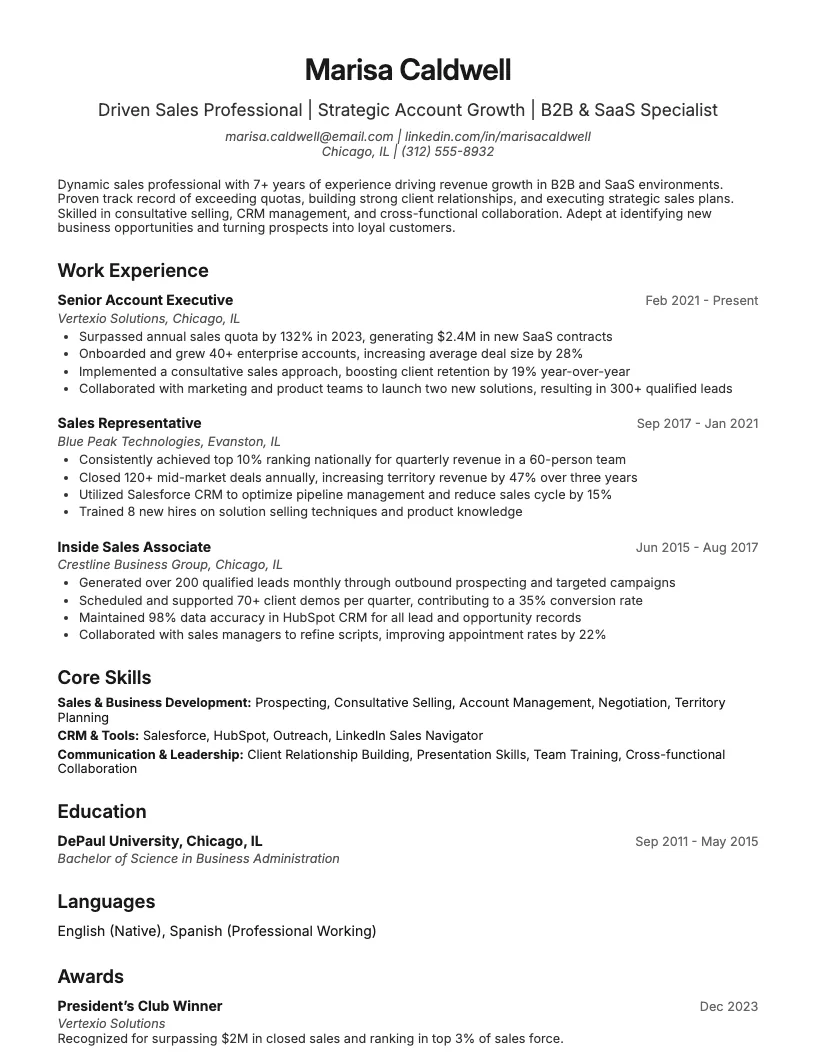
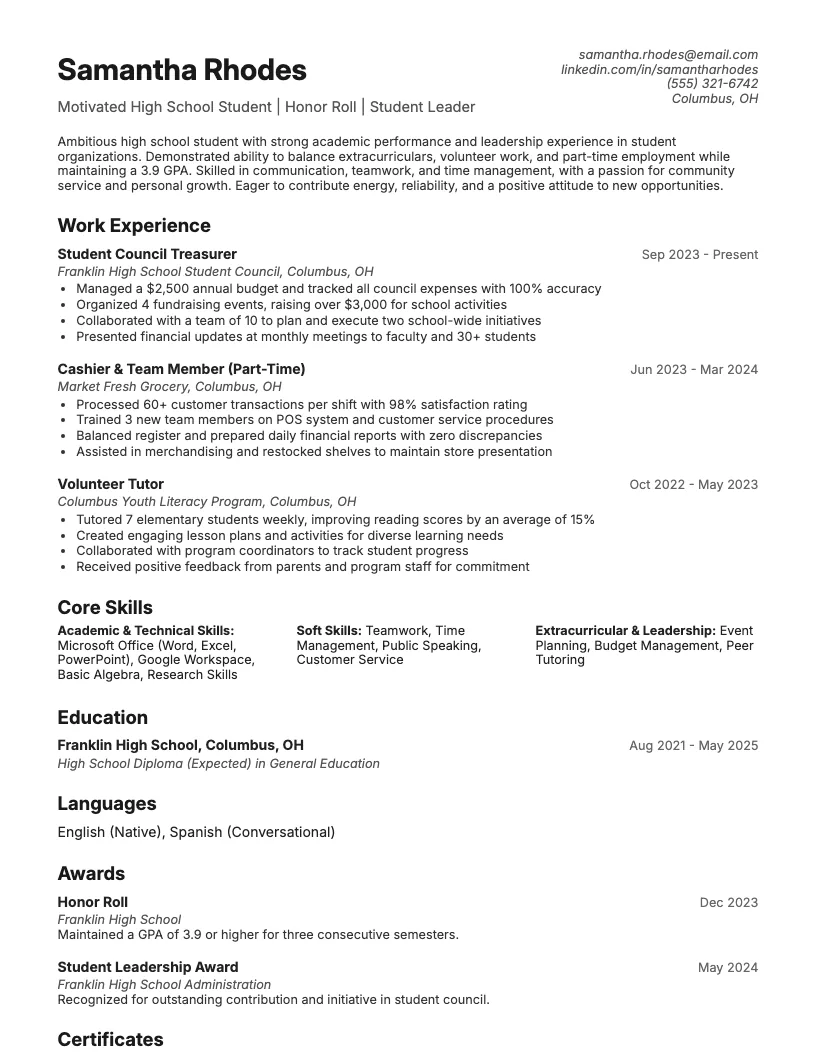
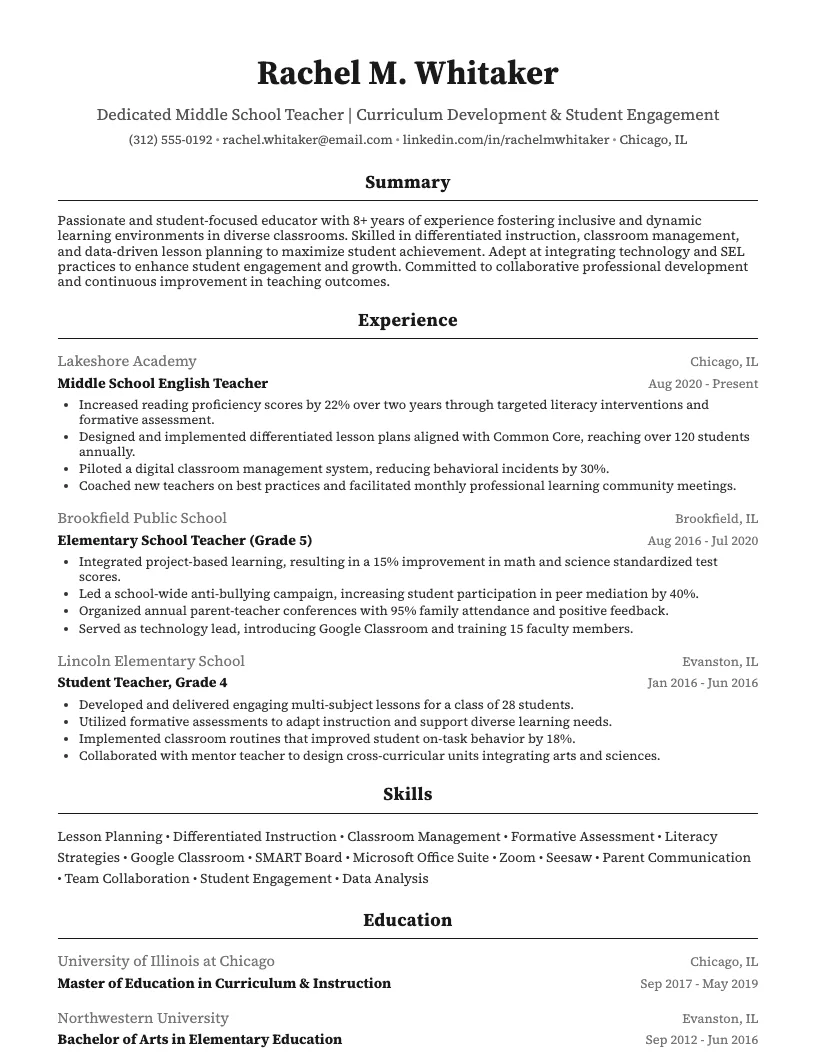
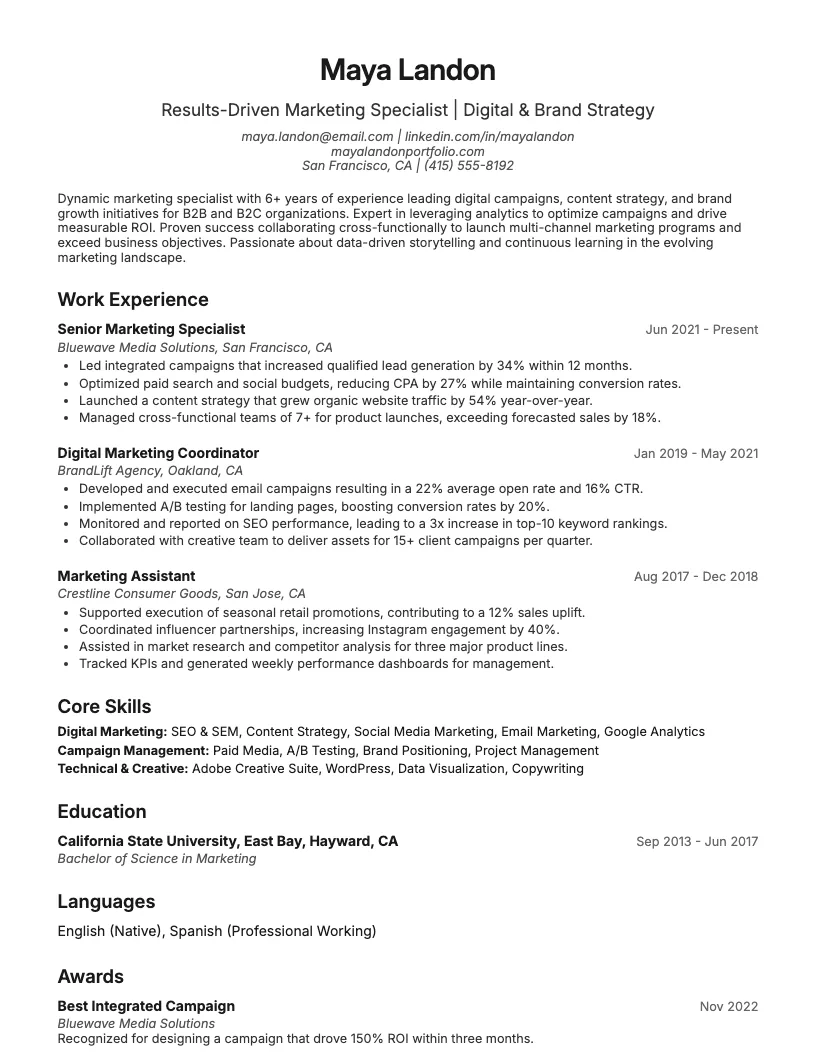
See these skills on a real resume
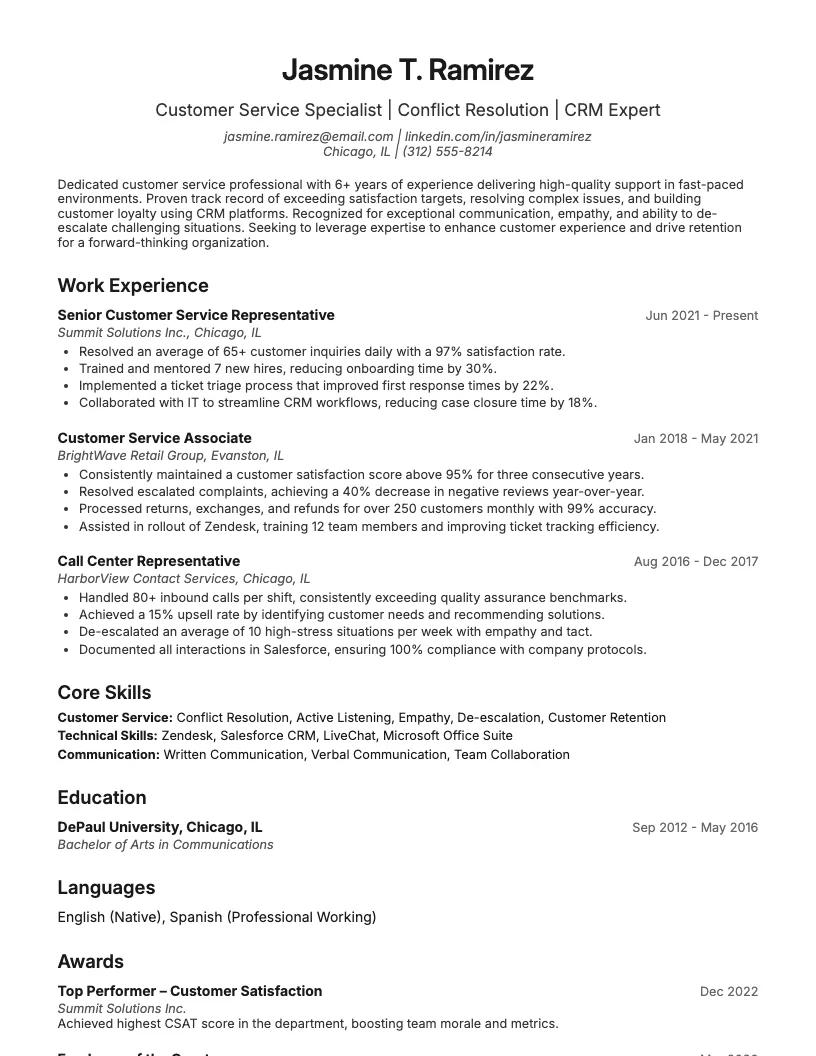
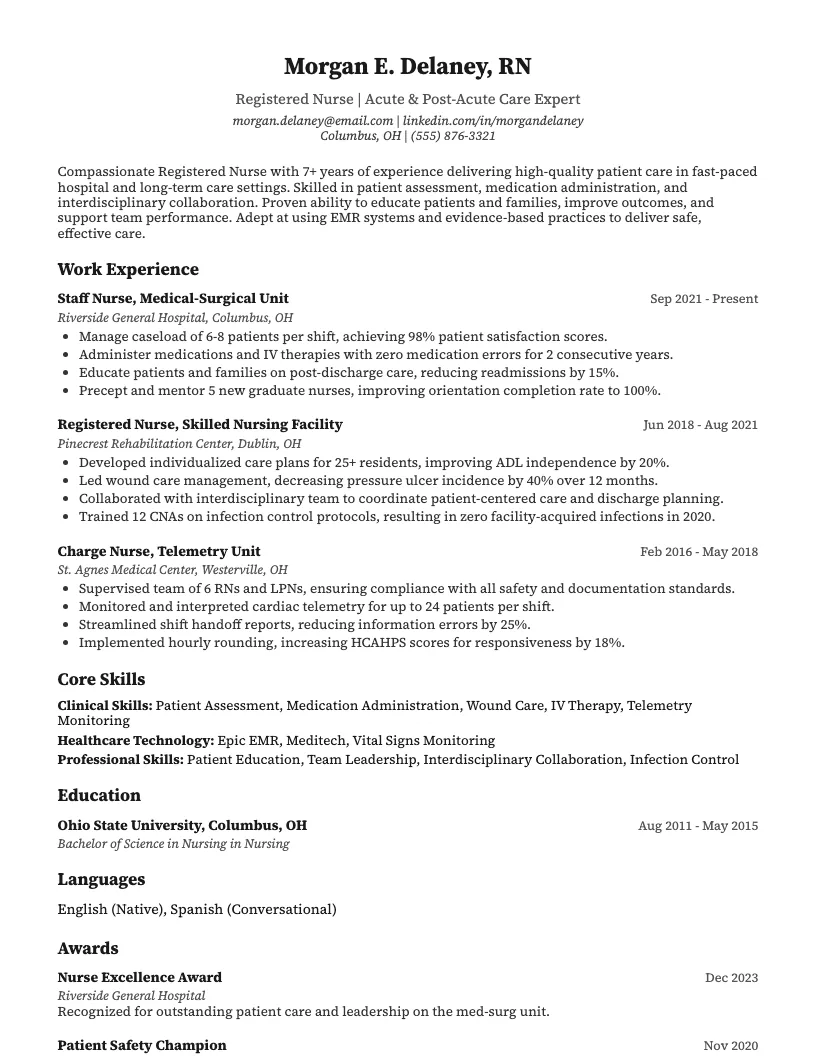
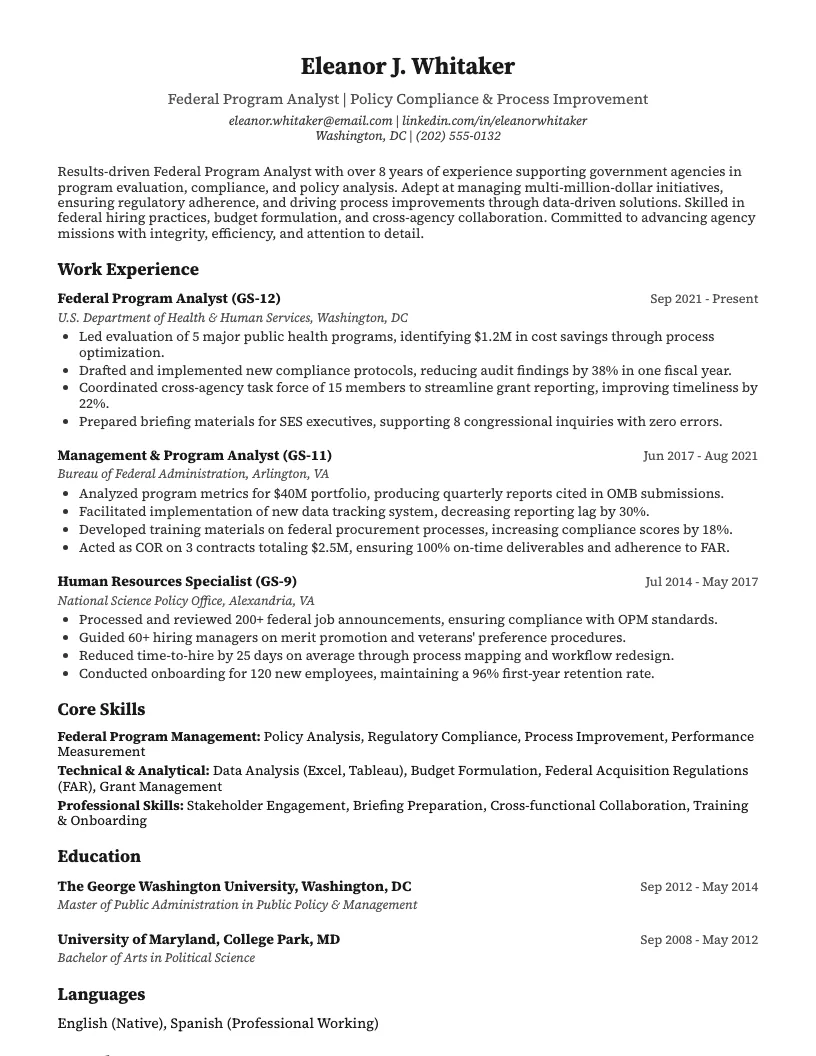
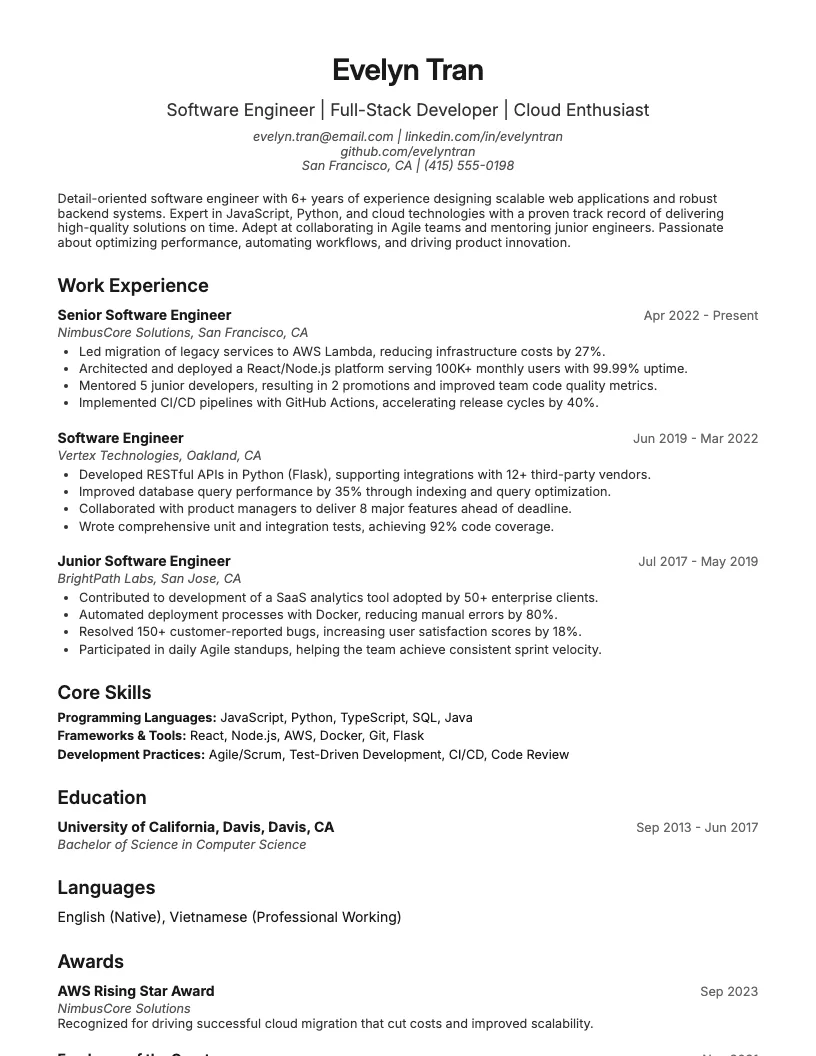
8 examplesStart from an example that already has them, and swap in your own.
Check your resume against the job you want
Scan your resume, see which skills and keywords the posting asks for that you are missing, and fix them before you apply.
Free to use • No credit card required