Human Resources Resume Skills: 12 to List, Plus 3 Weak vs Strong Lines
See the 12 HR skills to list, the software to name (ATS, HRIS, payroll), skills by job title, and weak-vs-strong lines for recruiting, employee relations and payroll.


Written by Sarah Chen
Senior Career Strategist & Resume Expert
Updated August 2026
Reviewed by Marcus Rodriguez
Is your resume ATS-friendly?
Drop your resume in and see which of these skills a scanner can actually read, and which ones the job you want is asking for that you have not listed.
PDF or DOCX. Max 2MB.
We never share your resume or use it to train a model.
In This Guide:
What skills should you put on a human resources resume?
What skills should you put on a human resources resume?

I've read enough HR resumes to tell you the failure mode before you make it: a wall of nouns - "communication, organization, HRIS, compliance" - with nothing behind any of them. That list tells a recruiter nothing they didn't already assume.
What gets you an interview is the same list, but each one attached to a number or a situation you actually handled.
Recruiting and talent acquisition
Sourcing, screening, interview scheduling, offer negotiation - say which parts you owned and how many reqs you carried at once.
If you ran a full cycle, say so; if you only sourced, say that instead. A resume that claims "full-cycle recruiting" for someone who only screened resumes gets caught in the first interview question.
Onboarding
Onboarding is where a lot of turnover actually starts, not where it ends. A weak first few weeks is one of the reasons new hires leave early, so if you built or tightened an onboarding process, that's not busywork - that's a retention number you can claim credit for.
Employee relations and conflict resolution
This is the skill hiring managers read most carefully, because it's the one that goes wrong in public. Name the kind of cases you've handled - performance disputes, harassment complaints, terminations - without naming the people or the company. Weak line vs strong line: employee relations shows you exactly how to phrase it.
Benefits and compensation administration
Open enrollment, benefits vendor management, compensation bands, pay equity reviews. If you've run an open enrollment cycle start to finish, that's worth its own bullet, not a buried keyword.
Payroll
Even if payroll isn't your title, if you've touched timesheets, bonus calculations, or off-cycle pay corrections, put it down. Payroll accuracy is one of the few HR skills a hiring manager can verify almost immediately, so don't inflate it - if you reviewed payroll rather than ran it, say reviewed.
Employment law and compliance
FMLA, wage and hour law, I-9 compliance, policy handbooks - this is the skill that protects the company from lawsuits, and it's also the one recruiters scan for fastest on a generalist resume. If you led a compliance audit or rewrote a policy manual, that's a stronger line than "knowledge of labor law."
Performance management
Performance review cycles, appraisal design, PIP administration. The mistake I see most often here is describing the process instead of your role in it - say whether you built the review framework, ran the cycle, or coached managers through it.
Training and development
Training that gets someone promoted is worth more on a resume than training that just got delivered. If you can point to people who moved into supervisor or management roles because of a program you ran, that's the line to write.
HR data and reporting
Turnover rates, time-to-fill, headcount reports, HRIS dashboards. Data skills are what separate an HR generalist from an HR business partner on paper, so if you've pulled or built reports that leadership actually used, say what the report was for.
Confidentiality
Even anonymized, a specific case can be traced back with just a few details - the department, the timing, the outcome.
Say what category of sensitive information you've handled (medical, compensation, harassment), not the specifics of any one case.
Nine times out of ten, this gets written as a throwaway line - "maintains confidentiality" - and it lands flat because everyone writes it that way. You're trusted with medical information, compensation, harassment complaints, and layoffs before anyone else in the building knows.
Say what kind of sensitive information you've handled, not just that you can be trusted with it.
Communication
Written and verbal both count, and they're not the same skill. Policy handbooks and offer letters test your writing; difficult conversations and interviews test your speaking - if you've done both, list both rather than folding them into one bullet.
Organization and multitasking
HR rarely does one thing at a time - you're running interviews, tracking a leave case, and closing out payroll in the same week. Before you send anything out, it's worth running your resume against the actual posting: ResumeJudge will show you which of these skills the job description is asking for that your draft doesn't cover yet, so you're not guessing which ones to lead with.
Which HR software and systems should you name on your resume?
Which system to name for which task
| Category | Systems to name | Name it when you've... |
|---|---|---|
| Applicant tracking | Workday, Greenhouse, Taleo, iCIMS | Posted a req or moved a candidate |
| HRIS | Workday, BambooHR, SAP SuccessFactors, UKG | Updated records or run reports |
| Payroll | ADP, Paychex, Gusto | Processed a payroll cycle |
| Benefits | Enrollment and COBRA tools | Run an enrollment period |
I've read HR resumes that list nothing but "Microsoft Office," and I can tell you that's the fastest way to look interchangeable. Name the actual systems.
Bigger companies run an HRIS and an ATS side by side, plus whatever recruiting or performance tools their hiring volume demands, and a resume that names them signals you can walk in and use the stack on day one.
Applicant tracking systems (Workday, Greenhouse, Taleo, iCIMS)
If you've posted a req, screened candidates, or moved someone through a pipeline in Workday, Greenhouse, Taleo, or iCIMS, say so by name.
Recruiters skim for these words specifically because they can't train someone from zero on a live req.
HRIS platforms (Workday, BambooHR, SAP SuccessFactors, UKG)
An HRIS is where employee records, personal data, and org structure live, and Workday, BambooHR, SAP SuccessFactors, and UKG are the ones I see over and over on job postings.
If you've updated records, run reports, or managed workflows in one, name it under HR data and reporting too, not just here.
Payroll systems (ADP, Paychex, Gusto)
Payroll software is its own line item, separate from HRIS, even at companies where the same person touches both.
List ADP, Paychex, or Gusto specifically if you've processed a payroll cycle, not just looked at a paystub.
Benefits platforms
Open enrollment tools, COBRA administration, leave tracking - these get overlooked constantly, and I think that's a mistake.
If you've run an enrollment period or fielded benefits questions through a platform, that's real technical experience worth its own bullet, tied back to benefits and compensation administration.
Excel and reporting tools
Every HR job posting wants Excel, but "proficient in Excel" tells a recruiter nothing.
Say what you actually did with it: pivot tables to track turnover, VLOOKUPs to reconcile headcount, dashboards for a leadership review. That specificity does more work than the word "reporting" ever will, and it's what backs up the numbers I talk about under put a number on it.
How to list a system you have only touched briefly
Nine times out of ten, brief exposure is still worth listing - just don't dress it up as expertise.
"Familiar with Workday" or "exposure to Greenhouse ATS" is honest and still gets you past a keyword scan. What kills you is claiming "advanced" on a system you touched twice in an internship, because that's exactly what an interviewer will test first.
Where the system names go on the page
System names belong in your skills section as their own line, not buried inside a paragraph of duties - where the skills list goes and how long it should be covers how long that list runs and what proof goes in your bullets instead.
If you're not sure which systems a posting actually wants, that's exactly the gap ResumeJudge finds: it compares your resume against the job description and flags the tools you're missing, then rewrites the bullet to include them.
Which skills does your HR job title actually need?
Which skills to lead with, by job title
| Job title | Lead with | Skip |
|---|---|---|
| HR assistant/coordinator | Organization, communication | Strategy language |
| Recruiter | Sourcing, ATS, fill-time numbers | Vague 'people skills' |
| HR generalist | 4-5 areas, one result each | Trying to cover everything |
| HR business partner | Business impact, not tasks | Task lists |
| HR manager/director | Headcount, budget, policy owned | No metrics |
| Benefits/comp specialist | Plan types, compliance systems | Vague language |
Not every HR job wants the same resume. I've seen a coordinator's resume get tossed because it read like a director's, and a generalist get skipped because every bullet was about one narrow task.
Match the list to the title.
HR assistant and HR coordinator
At this level, hiring managers want proof you can keep the trains running: scheduling interviews, filing paperwork, entering data into an HRIS, answering employee questions without escalating everything.
Put organization and communication front and center. Save the strategy language for later in your career - nobody's hiring a coordinator for "workforce planning."
Recruiter and talent acquisition specialist
This resume lives or dies on sourcing and pipeline skills, plus the ATS you've actually used.
Name the systems - Greenhouse, iCIMS, Workday - and back them with a number: reqs filled per quarter, average time to fill, offer-acceptance rate. If you don't have those numbers memorized, ResumeJudge will pull the phrasing straight out of the job posting and slot it into your bullets so you're not guessing at what the recruiter reading your resume wants to see.
HR generalist
Generalist resumes fail for the opposite reason coordinator resumes do - too broad, nothing proven. I tell generalists to pick four or five areas and show a result in each: one recruiting metric, one retention number, one compliance win, one onboarding improvement.
Trying to cover everything in equal depth reads as covering nothing well.
HR business partner
An HRBP resume needs to sound like it sits next to a VP, not behind a desk. Lead with how you influenced a business decision - a reorg, a retention push, a leadership coaching program - not with task lists.
If you're coming from a generalist role and haven't framed your work this way before, that's normal. It's a writing problem, not an experience problem.
HR manager and director
At manager and director level, the resume has to show you ran a function, not just performed tasks in it: headcount managed, team size, budget, policy decisions you owned.
Numbers matter more here than anywhere else - a director resume with no metrics reads like a coordinator resume with a bigger title.
Benefits or compensation specialist
This is the most technical HR resume, and vague language kills it fastest. Name the plan types you've administered, the systems you've used, and any compliance work - COBRA, ERISA, open enrollment numbers.
Career changer with no HR job yet
You've handled employee relations if you've resolved conflict on a team. You've done onboarding if you've trained new hires.
Name it in HR terms, and pull the exact wording from the posting so a scanner and a human both recognize it - if you're not sure your resume is even coming close, running it against the job description will show you what's missing before you send it.
How do you write these skills so a recruiter believes them?
Is your resume good enough?
Drop your resume in and see which of these skills a scanner can read, and which ones the job you want is asking for that you have not listed.
Upload your resumeFree. PDF or DOCX. We never share your resume or use it to train a model.
Recruiters read HR resumes all day. They can spot "team player" language from across the room, and they skip past it.
Put a number on it: time to fill, turnover, headcount, cases handled
Every HR job produces numbers even when it doesn't feel like it. How many roles did you fill, how fast, how many employees did you support, how much did turnover drop.
If you ran an event, say how many people showed up. If you touched payroll, say how many employees and how accurate.
Pick the number that was true for you and use it - never round up to something that sounds better.
Weak line vs strong line: employee relations
an employee relations line
Handled employee relations issues.
Resolved 40+ employee relations cases a year, cutting the average time to close from three weeks to eight days.
Weak: "Handled employee relations issues."
Strong: "Resolved 40+ employee relations cases a year, cutting the average time to close from three weeks to eight days."
The weak version could describe anyone who's ever answered an HR email. The strong one proves you actually did the job.
Weak line vs strong line: recruiting
a recruiting line
Responsible for recruiting for the company.
Filled 25 roles a quarter across three departments, dropping average time to fill from 45 days to 30.
Weak: "Responsible for recruiting for the company."
Strong: "Filled 25 roles a quarter across three departments, dropping average time to fill from 45 days to 30."
Same information, but one of them is a job description and the other is an achievement.
Weak line vs strong line: benefits and payroll
a benefits and payroll line
Managed benefits and payroll for staff.
Processed biweekly payroll for 300 employees at 99.9% accuracy and ran open enrollment for a workforce of 250.
Weak: "Managed benefits and payroll for staff."
Strong: "Processed biweekly payroll for 300 employees at 99.9% accuracy and ran open enrollment for a workforce of 250."
Payroll and benefits are trust jobs. A number about accuracy or headcount tells the reader you can be trusted with it.
Pull the wording from the job posting
If the posting says "full-cycle recruiting," don't write "end-to-end hiring process" - write "full-cycle recruiting." The applicant tracking system and the human reading after it are both matching words, not concepts.
This is where most people leave points on the table without knowing it. If you're not sure your resume actually reflects a specific posting's language, that's a five-minute check against the posting, and it's the kind of check ResumeJudge does automatically - it reads the posting, finds what's missing from your resume, and rewrites the wording to match rather than just flagging the gap.
Use both the acronym and the full term (HRIS, ATS, FMLA, SHRM-CP)
Write "HRIS (Human Resources Information System)" once, then you can use HRIS after that. Same idea for ATS, FMLA, SHRM-CP.
Some systems search for the acronym, some search for the spelled-out version, and some recruiters only know one of the two. Covering both costs you a few words and closes the gap either way.
Where the skills list goes and how long it should be
Keep the skills section short - eight to twelve items, near the top, under your summary. Anything longer starts to read like a word dump, and a recruiter skims the first few lines and moves on.
The proof belongs in your bullet points, not the list. The list tells them what you know; the bullets tell them you've actually used it.
Claims to cut: "people person", "strategic thinker", "high emotional intelligence"
I'd cut all three of these on sight. They're unverifiable, every HR resume has them, and they take up space a real accomplishment could fill.
If you're a strategic thinker, show me the initiative you led and what changed because of it. If you have high emotional intelligence, show me the conflict you resolved and how fast.
Nine times out of ten, the resume is stronger with the claim removed and nothing added back in its place.
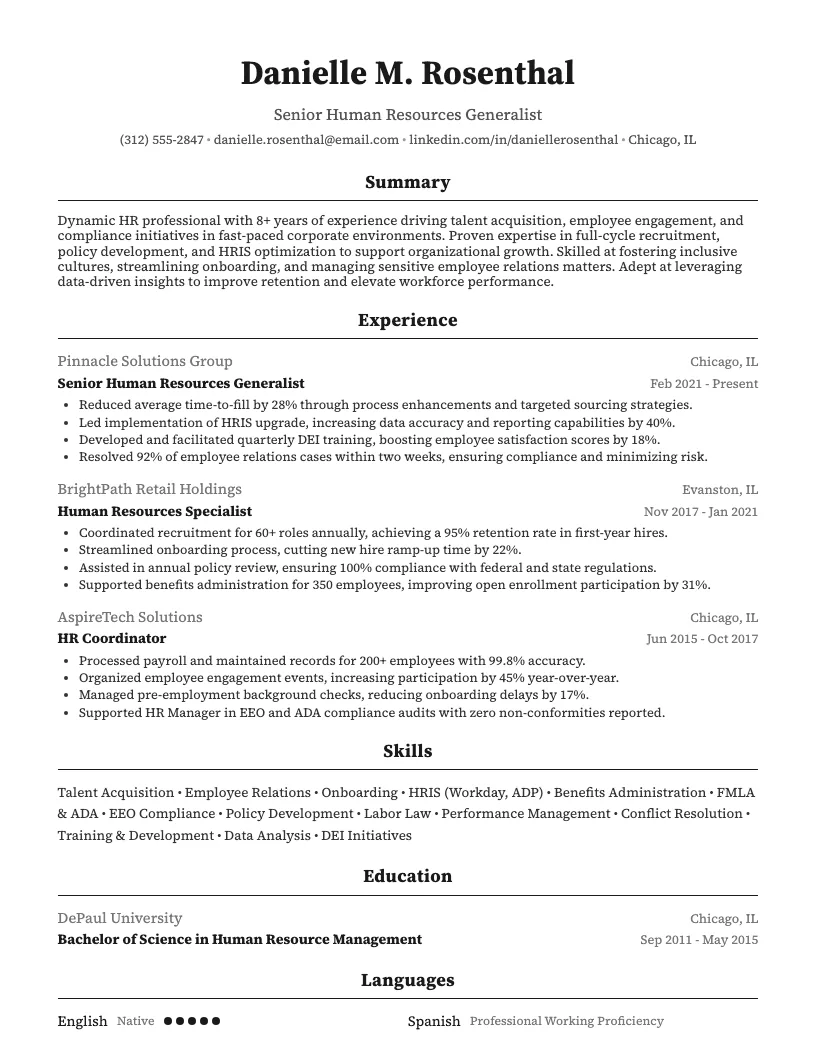
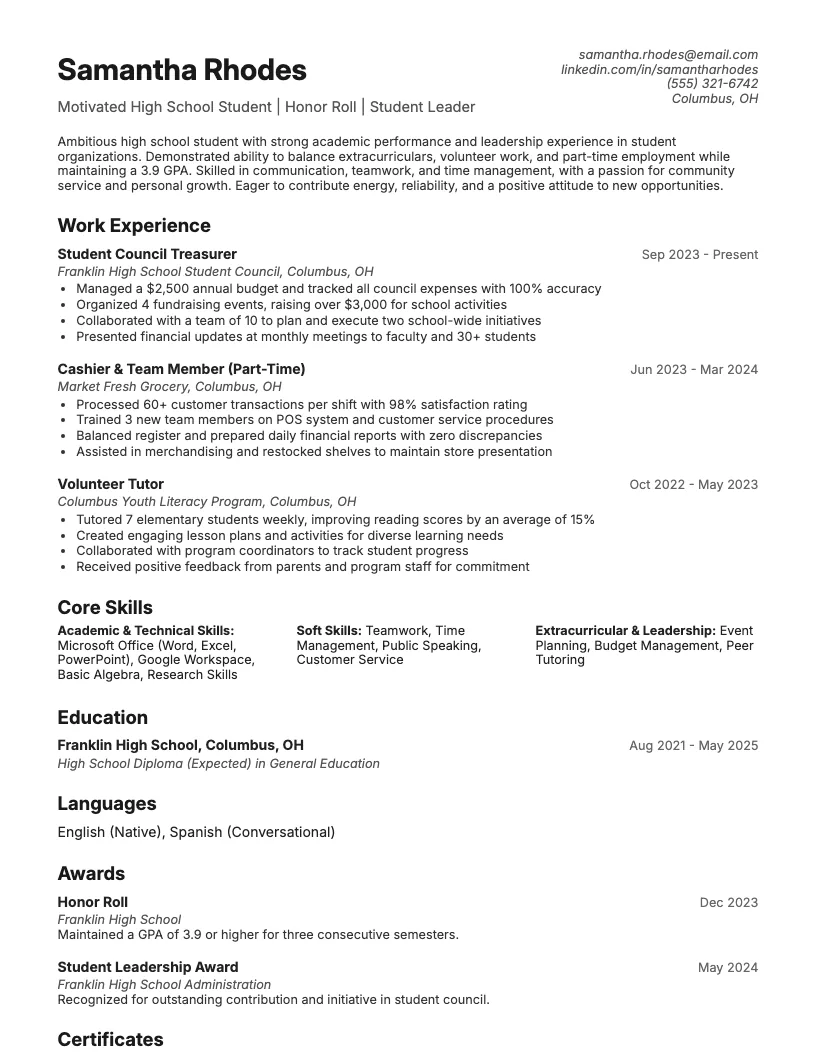
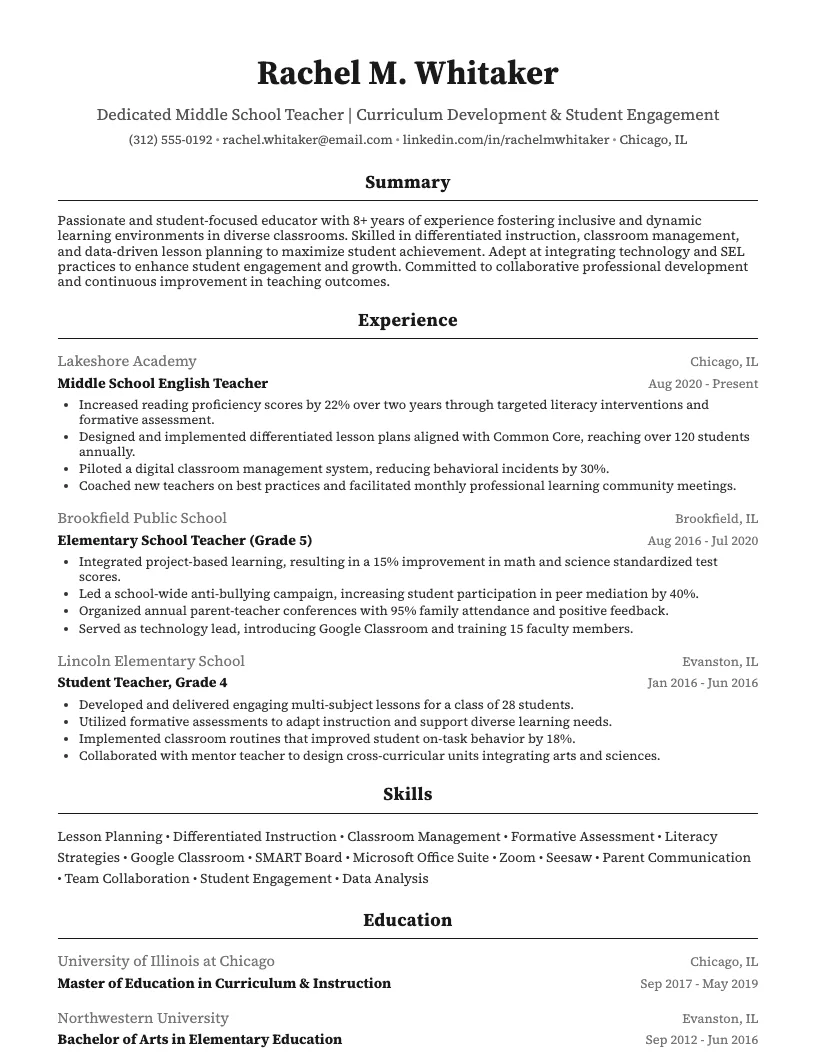
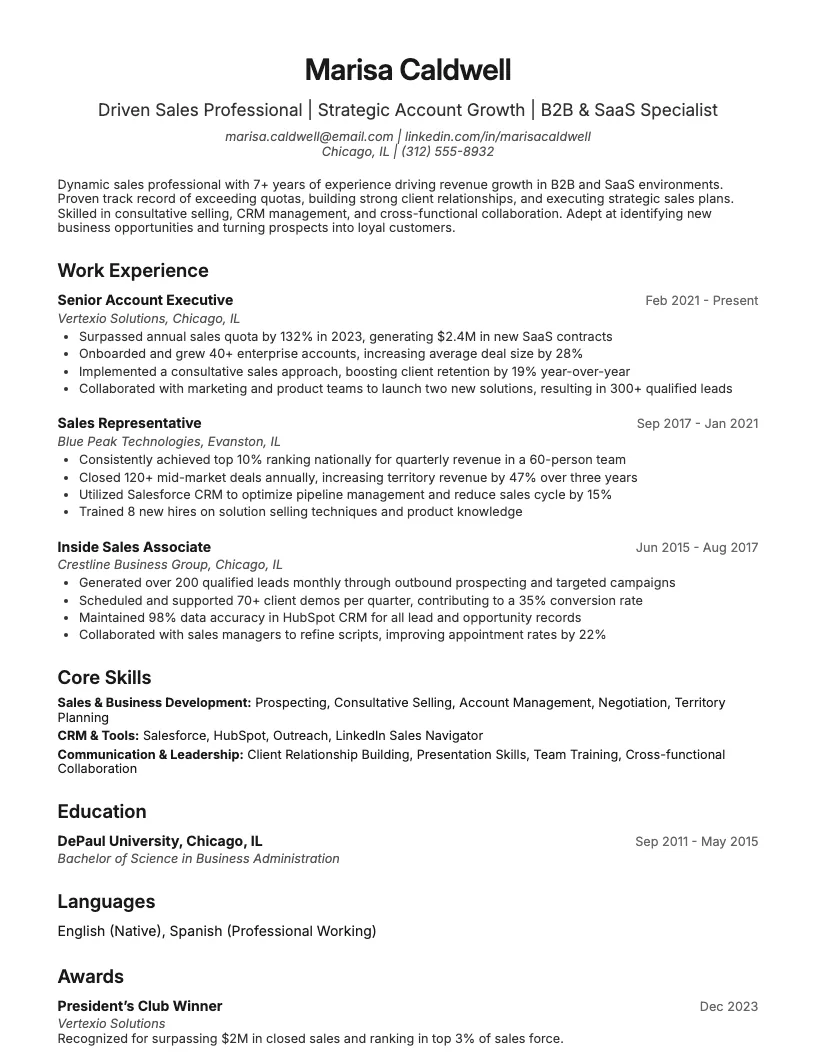
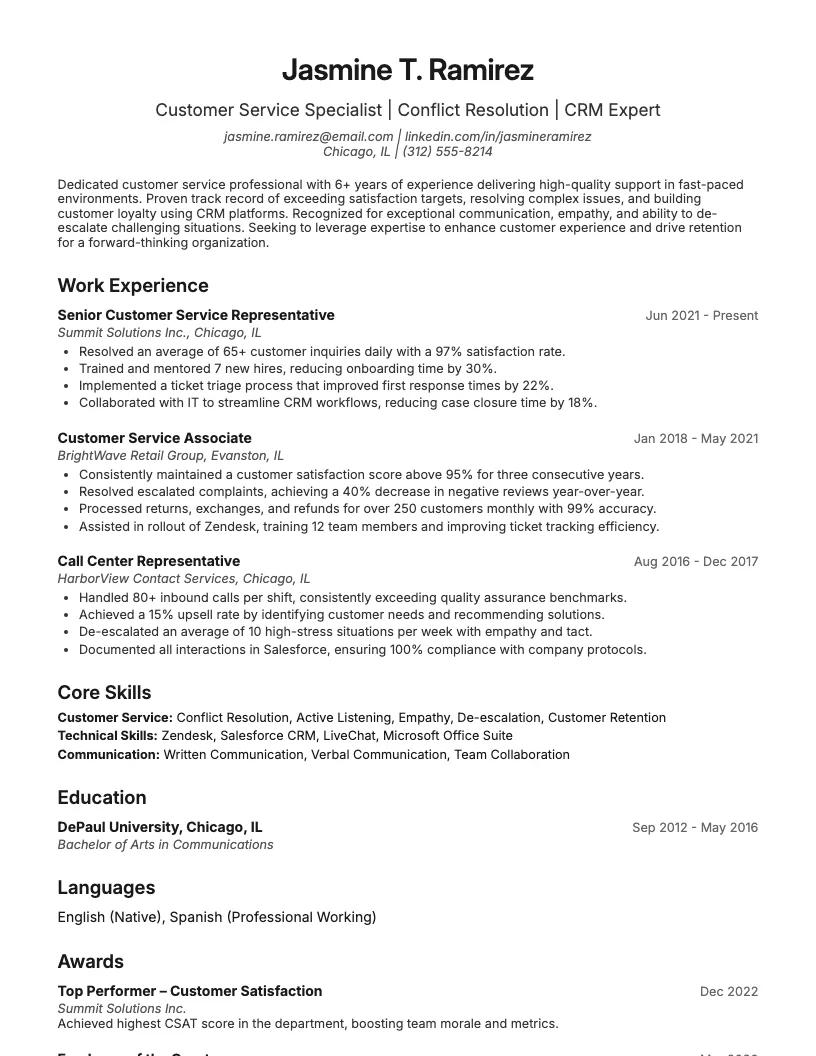
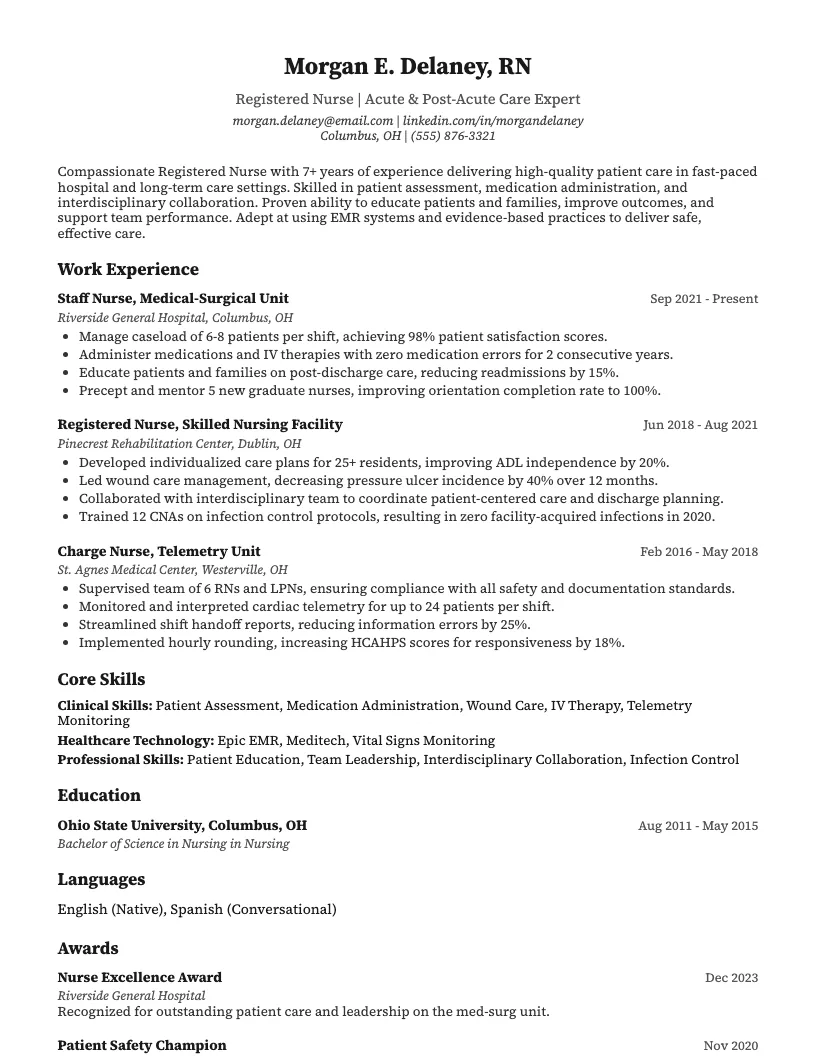
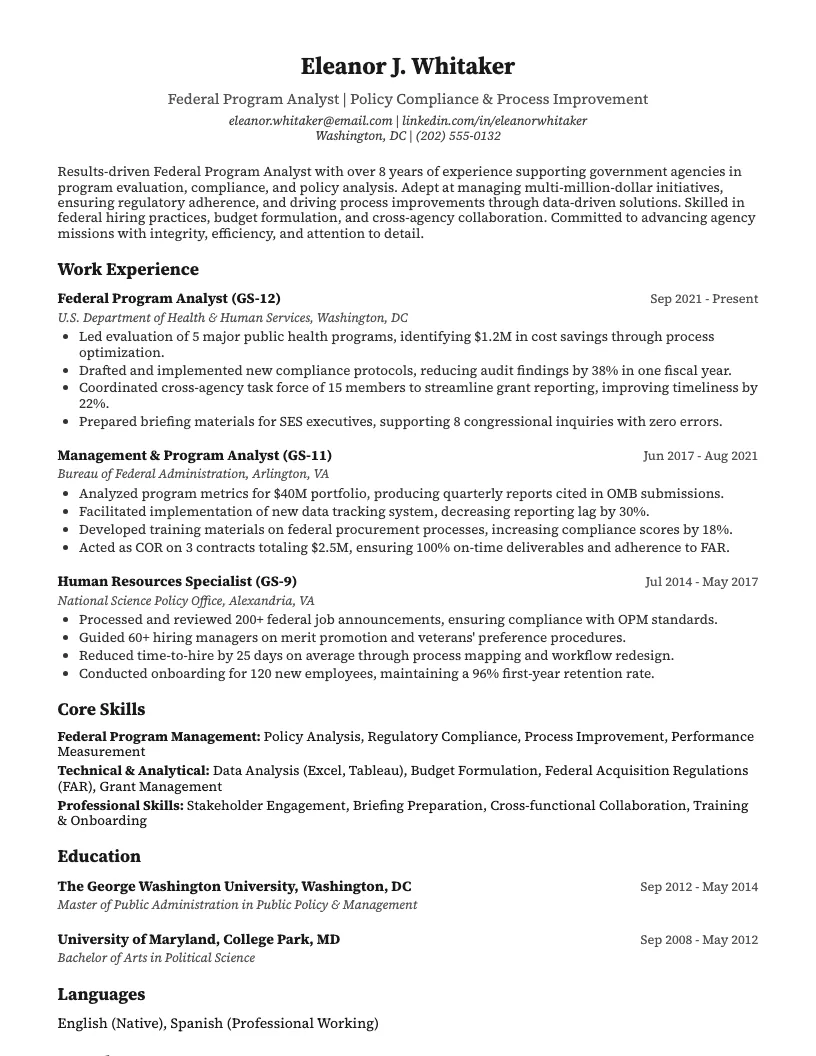
See these skills on a real resume
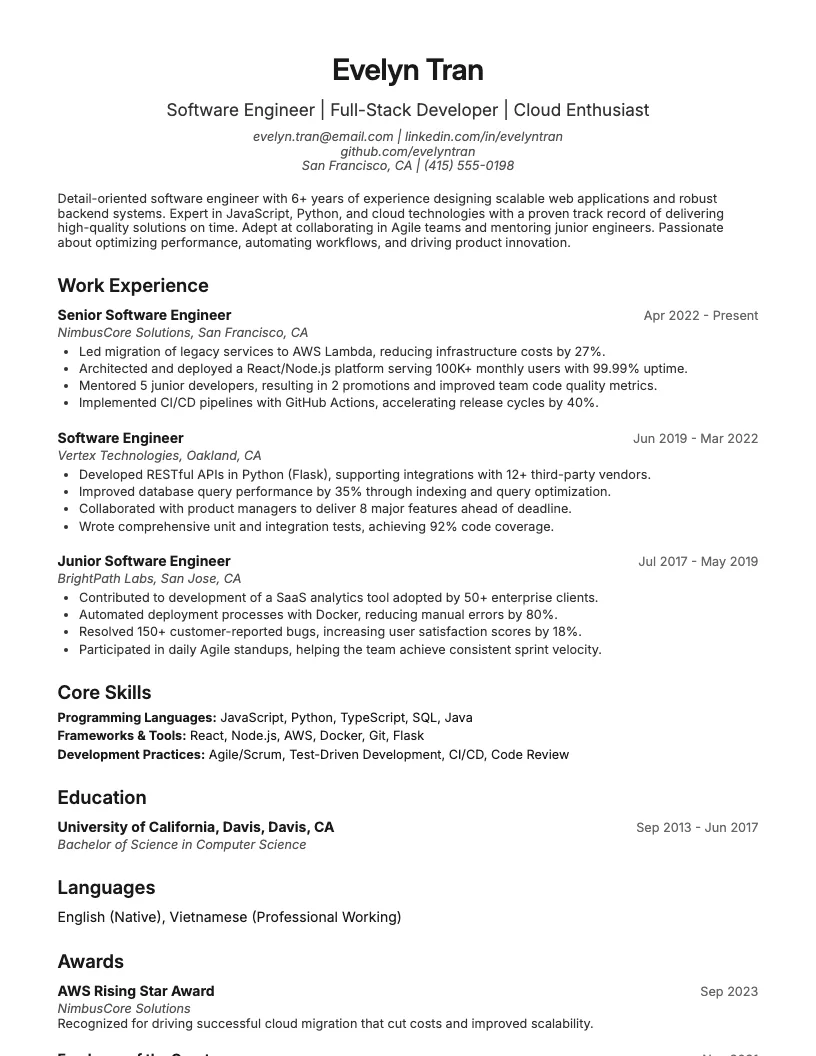
8 examplesStart from an example that already has them, and swap in your own.
Check your resume against the job you want
Scan your resume, see which skills and keywords the posting asks for that you are missing, and fix them before you apply.
Free to use • No credit card required