Keywords for Management Resume: 4 Job Types, 6 Mistakes to Avoid
Keyword lists for management, project management, wealth management, supply chain, and property management resumes, plus 6 mistakes that get them rejected.


Written by Marcus Rodriguez
ATS Optimization Specialist & Career Coach
Updated August 2026
Reviewed by Dr. Priya Sharma
Is your resume ATS-friendly?
Drop your resume in and see which of these skills a scanner can actually read, and which ones the job you want is asking for that you have not listed.
PDF or DOCX. Max 2MB.
We never share your resume or use it to train a model.
In This Guide:
What are the best keywords for a management resume?
What are the best keywords for a management resume?

If your resume says "managed a team" and nothing else, it's telling the scanner nothing. I've read thousands of these, and the ones that get pulled for an interview name what they managed, how, and what changed because of it.
Leadership and direction: led, directed, spearheaded, change management
Start with the verbs that carry weight. "Led," "directed," and "spearheaded" tell a recruiter you owned the outcome, not just attended the meeting.
"Change management" earns its place here too - every company is restructuring something, and naming it shows you've steered people through it, not just around it.
Team building: recruiting, onboarding, staff retention, delegation, 360 performance reviews
This is where a lot of managers undersell themselves. If you hired, trained, or kept people from quitting, say so - recruiting, onboarding, and staff retention are exactly what a hiring manager scans for when the job is really "run a team."
Delegation and 360 performance reviews belong here too, because they show you built a process, not just supervised one.
Planning: strategic planning, forecasting, scheduling, resource allocation, scaling operations
Planning keywords prove you think past this week. Strategic planning and forecasting show you anticipate problems; resource allocation and scheduling show you can act on that thinking with a limited budget and headcount.
"Scaling operations" is worth including any time you've grown a team, a process, or a location - it's a phrase that tells a reader you've handled growth, not just steady state.
Business and finance: profit and loss, budgeting, ROI, operations management, cost avoidance
Nine times out of ten, the resumes that clear ATS screens for management roles have a dollar figure attached to at least one bullet. If you owned a budget or a P&L line, name it - "profit and loss," "budgeting," and "ROI" are what a finance-literate reader is hunting for.
"Cost avoidance" is the one people forget: it counts even when you didn't cut a number, just kept it from growing.
Problem solving: conflict resolution, risk management, quality control, process improvement
Employers hire managers to fix things that go wrong. Conflict resolution and risk management show you handle people problems and process problems both; quality control and process improvement show you don't wait for a crisis to act.
Communication: stakeholder communication, constructive feedback, presentation, reporting
Management is a translation job - between leadership and the floor, between the team and the client. Stakeholder communication and reporting show you can move information up; constructive feedback shows you can move it down without wrecking morale.
Organisation: task management, tracking deadlines, coordination, milestones
These are the unglamorous keywords, but they matter because they're what a scanner uses to tell a manager from an individual contributor. If you're not sure which of your bullets are strong enough to prove you can back these up, run them past ResumeJudge against the actual posting - it'll rewrite the ones that don't back up a listed skill so the bullet actually proves it.
Software and tools: Salesforce, SAP ERP, JIRA, Asana, Microsoft Project, Excel, Power BI, Tableau
Name the tools you've actually used, not the ones you think sound impressive. A scanner matching against a posting that names JIRA or SAP ERP won't credit "project management software" as a substitute - check your list against the posting if you're not sure which ones the job actually asked for.
How do you find the right keywords for a specific management job?
How do you find the right keywords for a specific management job?
The list above tells you which words exist for management work. The posting in front of you decides which of them belong on this resume, and it's already telling you exactly what to put on the page.
Step 1: Copy the posting into a blank document
Paste the whole thing in, requirements and responsibilities both.
Don't try to do this in your head while you scroll. You'll miss the phrase that shows up three times in three different sections.
Step 2: Mark the words that repeat
Anything that shows up more than once is a word the company cares about, not filler.
I've read enough of these to know a term used twice in one posting almost always outranks something that only appears once, no matter how important it sounds.
Step 3: Sort them into skills, tools, processes and scope
Once you've got your list, group it. Skills like conflict resolution, tools like SAP or JIRA, processes like budgeting or forecasting, and scope words like headcount or portfolio size.
That grouping is what turns a pile of words into a skills section you can actually use.
Step 4: Pick 15 to 30 you can actually back up
Fifteen to thirty is the range I'd aim for. Any more and you're padding, any fewer and a scanner may not see enough overlap.
The rule that matters more than the count: only keep a keyword if you have a real example behind it. A recruiter will ask you about it in the interview, and "I put that on there because the posting had it" is not an answer.
ResumeJudge will check your draft against the posting and flag anything you've claimed that isn't backed up in your bullets, which catches this before a human does.
Step 5: Use the posting's exact job title
If they call the role "Operations Manager" and you call yourself a "Manager of Operations," the applicant tracking system may not connect the two. Match their wording, not your own.
What to do when the posting is vague
Some postings barely say anything beyond "manage a team." When that happens, look at two or three similar postings from comparable companies and pull the terms they share.
Nine times out of ten, that overlap tells you more about what the role actually needs than the vague posting does on its own.
Where do management keywords go on your resume?
Where do management keywords go on your resume?
Placement matters almost as much as which keywords you pick. I've seen strong resumes buried because every keyword sat in one block instead of spread across the page the way a scanner and a hiring manager both expect.
In the summary: 5 to 8 of your strongest
Your summary is the first thing scanned and the first thing read, so it needs to work twice as hard.
Three to four lines, 5 to 8 of your strongest keywords, no filler. Something like "operations manager with 8 years leading cross-functional teams, budgeting, and process improvement" covers title, scope, and two keywords in one breath.
In the skills section: 8 to 12, grouped
Don't just dump 20 terms in a flat line. Group them: leadership, planning, tools.
A grouped list reads as organized experience; a flat list reads as a word search.
I aim for 8 to 12 here, not more. Past that you're padding, and padding is exactly what gets a management resume rejected.
In experience bullets: keyword plus a number
This is where keywords actually prove something. The pattern I come back to every time: action verb, what you managed, the number that changed.
"Led 12 reps, cut turnover 22%" beats "responsible for team management" every time, because a keyword with no number attached is a claim, not evidence. If you're not sure which numbers you can actually back up, running your bullets against a real posting in ResumeJudge will flag which claims still need proof and rewrite them into ones you can stand behind.
In the job title line under each role
If your actual title doesn't match the posting's language, add a parenthetical: "Team Lead (Operations Manager)." Scanners match on title as much as on skills, and nine times out of ten this is the fix when someone's applying for the right role and getting nowhere.
Where they do not belong
Not repeated word-for-word in every section just to hit a count. Say it once, prove it once, move on.
The places a scanner cannot read at all - graphics, headers, tables, white text - are covered under burying keywords where the scanner cannot read them.
What are the keywords for a project management resume?
What are the keywords for a project management resume?
Project management resumes live or die on method and tool words. A resume that never says how you run a project, only that you "managed" one, reads as vague to both the scanner and the person reading after it.
Methods: Agile, Scrum, Waterfall, Lean, Six Sigma
Name the method you actually used, not the one that sounds impressive. If you ran sprints, say Agile or Scrum.
If you worked a fixed sequence with signed-off phases, that's Waterfall, and plenty of postings still ask for it by name.
Lean and Six Sigma belong here too if you cut waste or defects along the way - don't save them for a separate certifications line.
Planning terms: work breakdown structure, Gantt chart, critical path method, baseline, milestone
These are the words that prove you planned the project instead of reacting to it day by day. A work breakdown structure, a baseline you tracked variance against, milestones you actually hit or missed - a hiring manager who's run projects will look for one or two of these and nothing else on the page.
Documents and charts: statement of work, RACI chart, PERT chart, roadmap, project scope
I've seen a lot of project management resumes skip this group entirely, and it's the one that separates someone who executed tasks from someone who owned the project. A statement of work you wrote, a RACI chart you built to settle who signs off on what - those are ownership signals, not busywork.
Tracking terms: KPIs, status updates, contingency plan, scope creep, triple constraints
This is where you show you kept the project honest once it was underway. KPIs you reported against, a contingency plan you had ready, scope creep you caught and pushed back on - name the constraint you managed (time, cost, or scope) rather than just writing "managed constraints."
Tools: JIRA, Asana, Trello, Microsoft Project, Basecamp, Smartsheet
List the tools you actually opened every day, not every tool the industry uses. JIRA and Asana show up in project postings constantly; Microsoft Project and Smartsheet signal you can build and maintain a full schedule, not just move cards on a board.
Certifications worth naming: PMP, CAPM, PRINCE2, Certified ScrumMaster
PMP is the one recruiters scan for first, and CAPM is the fair stand-in if you're earlier in your career. If a posting names PRINCE2 specifically, that's a regional or industry signal - don't swap in PMP and assume it reads the same to the scanner.
Bullets that prove you ran the project
Proving you ran a project, not just attended it
Managed Agile projects
Ran two-week sprints across a 6-person team, cut release cycle from 6 weeks to 3
Sprint length, team size, release cycle, budget variance - those are the project numbers to reach for. Build them into bullets the way how do you turn a keyword into a bullet a recruiter believes sets out.
If you're not sure which of these terms a specific posting is actually asking for, running the description through ResumeJudge will pull out what it wants and flag which ones your bullets are still missing.
What are the keywords for a wealth management resume?
What are the keywords for a wealth management resume?
Wealth management resumes live or die on specificity. I've read enough of them to tell within ten seconds whether someone actually manages client portfolios or just answers phones at a brokerage.
The fix isn't more keywords. It's the right ones, grouped so a recruiter can see your range at a glance.
Planning services: financial planning, retirement planning, estate planning coordination, tax-efficient investing
Start here because it's the work itself, not a tool or a certification. Say what you plan for clients, not just that you "advise" them.
Retirement planning and estate planning coordination read as two different skill sets to a hiring manager, so don't collapse them into one vague line.
Portfolio terms: asset allocation, rebalancing, due diligence, model portfolios, risk profiling
This is where a lot of resumes go generic. Asset allocation and rebalancing show up everywhere; risk profiling and due diligence are what separate someone who executes trades from someone who builds the strategy behind them.
Use whichever of these actually describes your day-to-day, not the whole list.
Client segments: high-net-worth, ultra-high-net-worth, mass affluent, institutional
Name your segment. A mass-affluent book and an ultra-high-net-worth book need different language, different pacing, different compliance weight, and a posting for one won't forgive a resume written for the other.
If the job posting names a segment and yours doesn't match it anywhere, that's a gap worth checking before you apply - ResumeJudge will catch it against the actual posting and rewrite your bullets to include it.
Compliance terms: KYC/AML, suitability, regulatory documentation, audit-ready recordkeeping
These terms get scanned for, but only claim what you actually did. "Maintained audit-ready client files" is a real bullet.
"KYC/AML" sitting alone in a skills list is not.
Platforms: Salesforce, eMoney, MoneyGuidePro, Orion, Addepar
List a platform only if you'd survive being asked about it in the interview. I've seen candidates lose an offer over exactly that question.
Certifications worth naming: CFP, CFA, Series 7, Series 66
Put these near your name or in the summary, not buried in a skills block. They're the fastest credibility signal on the page.
Bullets that prove you grew and kept the book
Proving you grew the book, not just watched it
Responsible for portfolio growth
Grew AUM from $40M to $65M
Every wealth management resume claims growth. The ones that get callbacks say how much: assets under management, client retention rate, number of accounts, revenue per book.
Write them up the way how do you turn a keyword into a bullet a recruiter believes sets out.
What are the keywords for a supply chain management resume?
What are the keywords for a supply chain management resume?
Supply chain is one of the few management fields where the scanner and the hiring manager want almost the same thing: proof you've moved goods for less money and less time. I've read enough of these to tell you the resumes that get calls name the exact function - sourcing, inventory, or logistics - instead of writing "supply chain professional" and hoping it covers everything.
Sourcing and buying: procurement, vendor management, contract negotiation, supplier qualification
If you touch the supplier side, say so with these words. Procurement and vendor management are the two recruiters search for first, and contract negotiation and supplier qualification are what separate a buyer from someone who just places orders.
Inventory: demand planning, forecasting, safety stock, inventory turns, cycle counting
Inventory turns is the keyword I see missing most often, and it's the one that proves you understand the job isn't just "keep stock on hand." Pair demand planning and forecasting with a number - turns went from 6 to 9, safety stock dropped 15% - because those two words on their own are just a job title restated.
Logistics: freight, warehousing, distribution, transportation management, customs and trade compliance
If your work crosses a border, customs and trade compliance belongs on the resume even if it's one line - it's a specialism postings call out by name, and leaving it off reads as "hasn't done it." Freight, warehousing, distribution, and transportation management round out the rest; use whichever two or three actually describe your shipments.
Improvement methods: Lean, Six Sigma, Kaizen, process mapping, root cause analysis
These show up on almost every supply chain posting I've reviewed, and they work the same way they do for project management - name the method, then say what it fixed. "Applied Lean and root cause analysis to cut late shipments" beats "Lean" sitting alone in a skills list.
Systems: SAP, Oracle SCM, NetSuite, WMS, Excel modelling
Name the actual system you used, not "ERP software." SAP and Oracle SCM are the two that get searched for most, and any warehouse management system counts as WMS even if the posting doesn't use your vendor's brand name.
Certifications worth naming: APICS CPIM, CSCP, CPSM, Six Sigma Green Belt
If you hold CPIM, CSCP, CPSM, or a Six Sigma belt, put it near your name, not buried at the bottom - these are the credentials the field actually screens on.
Bullets that prove you cut cost and lead time
Proving you cut cost, not just managed vendors
Managed procurement and vendor relationships
Renegotiated freight contracts with 12 vendors, cutting logistics spend 18% and lead time by 3 days
The numbers to reach for here are freight spend, cost per unit, lead time in days, inventory turns, and on-time delivery rate. Write them up the way how do you turn a keyword into a bullet a recruiter believes sets out.
If you're staring at a posting and can't tell which of these words it's actually testing for, that's exactly the gap ResumeJudge checks - paste the posting in and it'll show you which keywords are missing before a recruiter ever sees the resume.
What are the keywords for a property management resume?
What are the keywords for a property management resume?
Property management resumes live or die on one question: can you run a portfolio without the owner losing money or the tenants filing complaints? I've read a lot of these, and the ones that clear ATS all hit the same five buckets - leasing, money, maintenance, compliance, and software.
Miss one and a scanner built off a real posting will skip you.
Leasing: lease administration, renewals, tenant screening, occupancy rate, turn time
This is the bucket that shows you keep units full.
Lease administration and renewals prove you manage the paperwork end to end, not just the move-in day.
Tenant screening tells them you protect the portfolio from bad placements.
Occupancy rate and turn time are the two numbers every owner actually cares about, so if your resume doesn't name them, add them.
Money: rent collection, delinquency control, operating budget, NOI, CAM reconciliation
Owners hire managers to protect revenue, so this section carries real weight.
Rent collection and delinquency control show you chase the money, not just record it.
Operating budget, NOI, and CAM reconciliation are the terms that separate someone who runs a P&L from someone who just answers phones - if you've built a budget or reconciled common area costs, say so by name.
Maintenance: work order management, preventive maintenance, vendor contracts, property inspections
Nine times out of ten, the resumes that get flagged as "operations only, no strategy" are missing this bucket entirely.
Work order management and preventive maintenance prove you're ahead of problems, not reacting to them.
Vendor contracts and property inspections show you manage outside partners and catch issues before a tenant does.
Compliance: Fair Housing, local housing code, eviction process, OSHA
Compliance keywords are the ones I see people skip because they feel like legal boilerplate, and that's exactly why hiring managers look for them.
Fair Housing and local housing code knowledge tell an employer you won't get them sued.
The eviction process and OSHA show you can handle the parts of the job nobody enjoys but every property needs covered.
Software: Yardi Voyager, AppFolio, RealPage, Buildium, RentManager
Name the exact platform the posting names - Yardi Voyager and AppFolio aren't interchangeable to a scanner, even though the work looks similar day to day.
If you've touched RealPage, Buildium, or RentManager, list the one you actually used, not the one that sounds more impressive.
Certifications worth naming: CPM, CAM, ARM, real estate licence
CPM, CAM, and ARM signal ongoing investment in the field, and a real estate licence often gates you into senior roles outright - put these near the top if you have them.
Bullets that prove you lifted occupancy and cut costs
Proving you lifted occupancy, not just managed leasing
Managed leasing
Raised occupancy from 91% to 97% across 180 units
Occupancy rate, delinquency, work order turnaround, and inspection results are the numbers owners track - write them up the way how do you turn a keyword into a bullet a recruiter believes sets out.
If you're not sure your bullets actually mirror the language a specific posting wants, running the resume through ResumeJudge against that posting will rewrite your bullets to include the terms you're still missing.
How do you turn a keyword into a bullet a recruiter believes?
How do you turn a keyword into a bullet a recruiter believes?
A keyword sitting alone in a skills block proves nothing. A recruiter has seen "leadership" a thousand times and stopped believing it around the two-hundredth.
What convinces them is a bullet that shows the word doing something.
The pattern: action verb + what you managed + the number that changed
The formula I come back to every time: action verb, then what you had ownership of, then the number that moved because of you.
Verb, scope, result. Nothing else needs to be in the sentence.
"Managed a 300-unit portfolio, raised occupancy from 92% to 97% in nine months" tells a hiring manager everything they need in one line. Compare that to "responsible for property operations," which tells them nothing.
Action verbs that carry management weight: spearheaded, restructured, streamlined, consolidated
Not every verb pulls its weight. "Helped with" and "assisted in" read as junior even when the work wasn't.
I'd rather see spearheaded, restructured, streamlined, or consolidated - verbs that put you at the front of the decision, not standing next to it. Directed, delegated, and negotiated do the same job for people- and vendor-facing work.
Save "managed" for when nothing sharper fits; it's the verb every other resume already used.
Numbers managers can always give: headcount, budget, portfolio size, percentage change
Nine times out of ten, a manager has a number available and just doesn't reach for it. Headcount, budget size, portfolio size, percentage change - pick whichever one moved.
Property managers have units and occupancy rate. Project managers have budget and on-time delivery.
Wealth managers have assets under management. There's always one of these sitting in a spreadsheet somewhere.
Weak bullet, rewritten: "responsible for team" to "led 12 reps, cut turnover 22%"
Turning a management duty into a result
Responsible for team
Led 12 reps, cut turnover 22%
"Responsible for team" tells a recruiter your title, not your impact. "Led 12 reps, cut turnover 22%" tells them what changed because you were the one leading.
That's the whole rewrite: swap the duty for the outcome. If you're not sure your bullets are making that swap, run them against a real posting - ResumeJudge will rewrite the lines that still read as duties instead of results.
What to write when you cannot get the exact number
Sometimes the number genuinely isn't available - you never saw the P&L, or the metric wasn't tracked before you left. Don't invent one.
Use scope instead: team size, number of stakeholders, budget range, or the before-and-after state in plain terms ("reduced backlog from unmanageable to current within the sprint"). A true scope beats a guessed statistic every time - a fabricated number is the fastest way to lose a recruiter's trust once they ask about it in the interview.
What keyword mistakes get management resumes rejected?
I've read hundreds of management resumes, and the rejections almost always trace back to one of six habits.
Stuffing a keyword list into a skills block
You cannot just drop "strategic planning, budgeting, stakeholder communication" into a skills line with nothing behind them.
That passes a scan and fails the human who reads it thirty seconds later. Every keyword needs a bullet somewhere on the page that proves it's real, not just a mention in a skills section.
Claiming compliance or software you barely touched
If you list KYC/AML or SAP because the posting mentions them, and a recruiter asks you one question about either, you're done.
I'd rather see you name the tool you actually use daily and skip the one you touched twice. A believable resume beats a complete-looking one every time.
Generic leadership words with no scope behind them
"Led a team" and "drove results" say nothing on their own. Nine times out of ten, the fix is a number: how many people, what budget, what changed.
See how to turn a keyword into a bullet a recruiter believes for the pattern.
Missing the segment or specialism the posting names
A wealth management posting that says "high-net-worth" wants to see that phrase, not just "clients" or "portfolios."
I see this constantly with wealth management resumes: strong finance language, but no client segment named anywhere, so the resume reads generic when the role isn't. Say who you actually served.
Burying keywords in a graphic, header or table the scanner cannot read
A skills box built as an image or a text box looks sharp and vanishes to an ATS. If a keyword only lives inside a table or graphic, treat it as invisible and write it into a plain line of text as well.
Using an acronym the posting spells out, or the reverse
If the posting says "profit and loss," don't only write "P&L," and if it says "P&L," don't only write it out. Match the posting's exact form first, and add the other version once if there's room.
This is the kind of gap that's easy to miss on your own read but obvious once you check your resume against the actual posting, which is exactly what ResumeJudge does before you hit submit.
Frequently Asked Questions
How many keywords should a management resume have?
There's no set number - aim to cover the themes the posting cares about, not hit a target count. Most management resumes end up with somewhere around 15 to 30 keyword terms once you count the skills, tools, and phrases woven naturally into your bullets. Piling in more than that usually means you're repeating yourself rather than adding anything new.
Do I need a different set of keywords for every application?
Yes - the keywords that matter change with each posting, since one company might emphasize budget ownership and another might care more about team size or a specific tool. Reusing the same resume everywhere means missing terms a screener or recruiter is specifically looking for on that job. ResumeJudge will check your resume against a posting and show you exactly which of its keywords are missing, so you're not guessing.
Should I list "management" as a skill on its own?
No, it's too vague to mean anything on a screener or to a recruiter skimming your resume. List the specific kind of management you do instead - budget management, vendor management, team management, project management - since those are the terms that actually match what a posting is asking for.
What keywords work if I have never held a manager title?
Use the verbs that describe what managers actually do, not the title: led, coordinated, trained, mentored, owned, oversaw. If you ran a project, trained a new hire, or were the go-to person on a cross-functional effort, those are management keywords even without "manager" ever appearing in your job title.
Do keywords still matter if someone refers me?
Yes. A referral can get your resume in front of a person faster, but most companies still run it through the same applicant tracking system and the hiring manager still skims it the same way everyone else's gets skimmed. Skipping the keywords just because you have an inside connection is a common way referred candidates still get passed over.
Should I put keywords in white text to beat the scanner?
No - don't do this. Most modern applicant tracking systems extract all the text on the page regardless of color, so the trick usually just gets flagged as manipulation rather than working, and a human reader who opens the file will see it immediately. If you're worried about getting past a scanner, ResumeJudge will score your resume against the actual posting and tell you which real keywords you're missing instead.
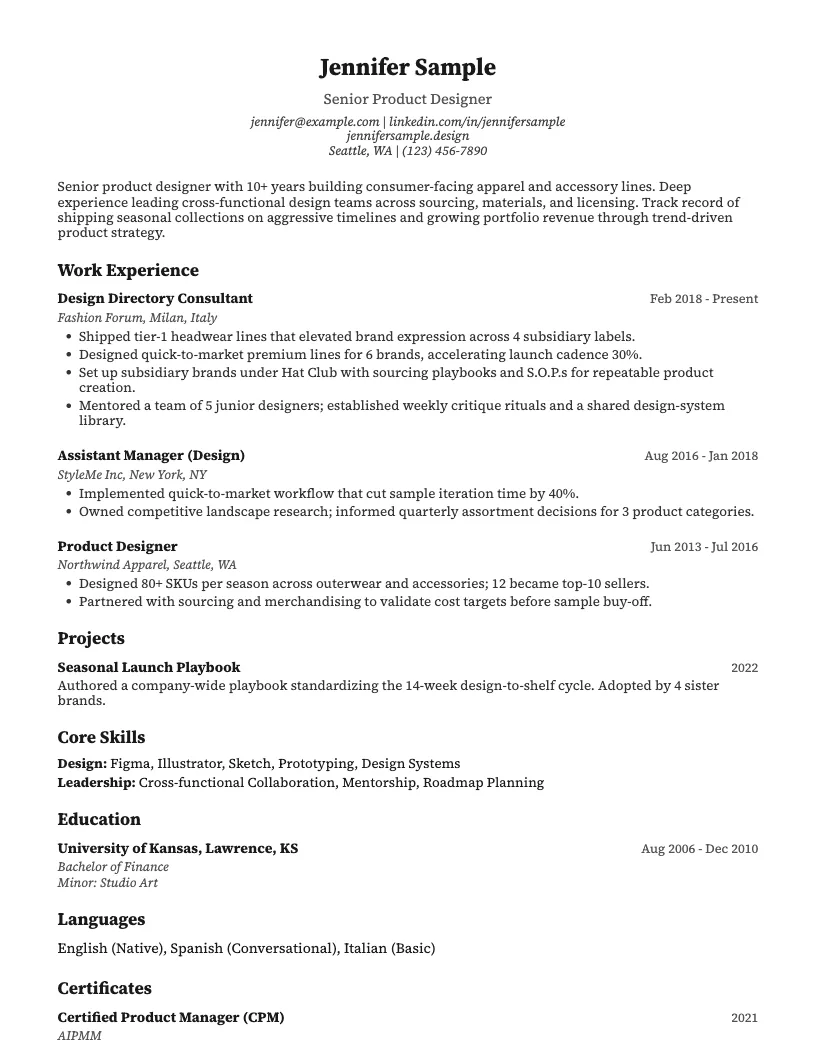
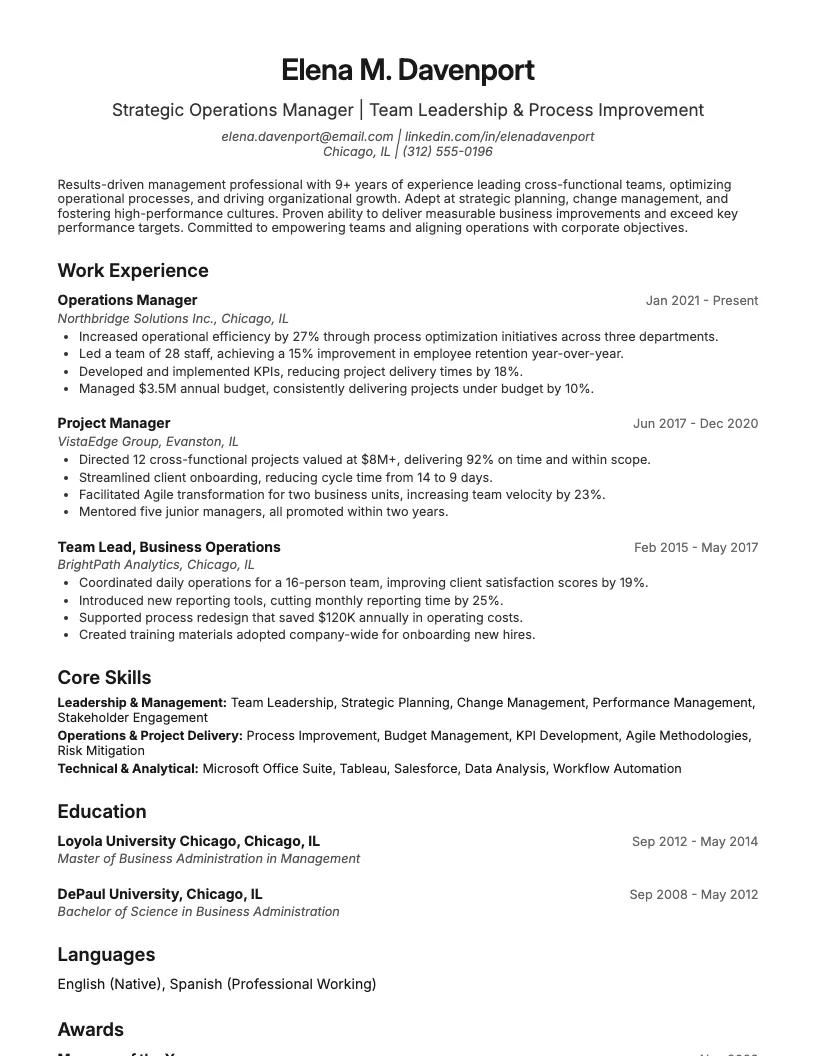
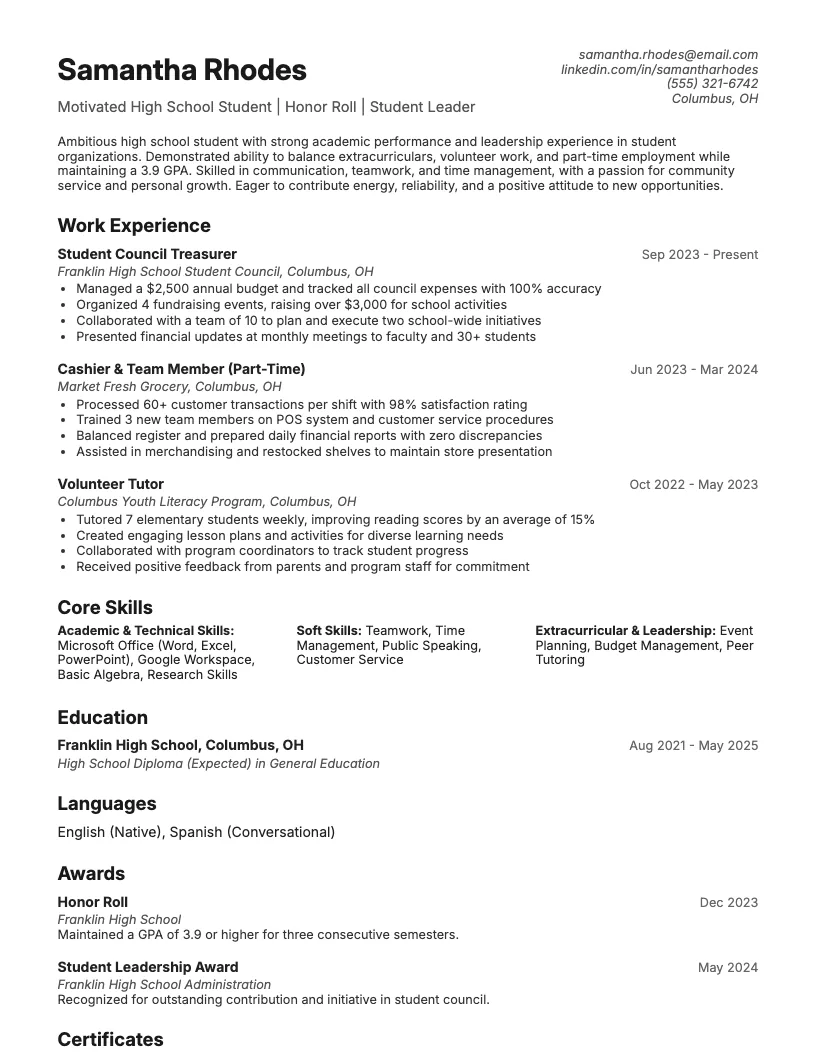
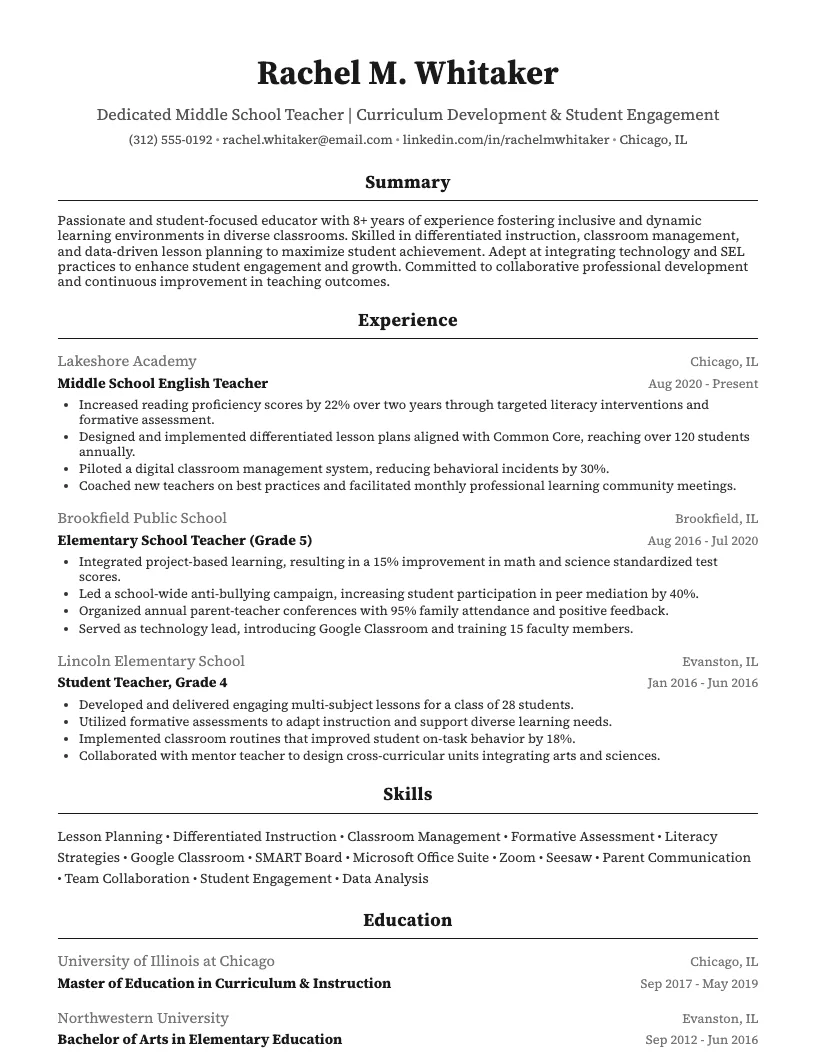
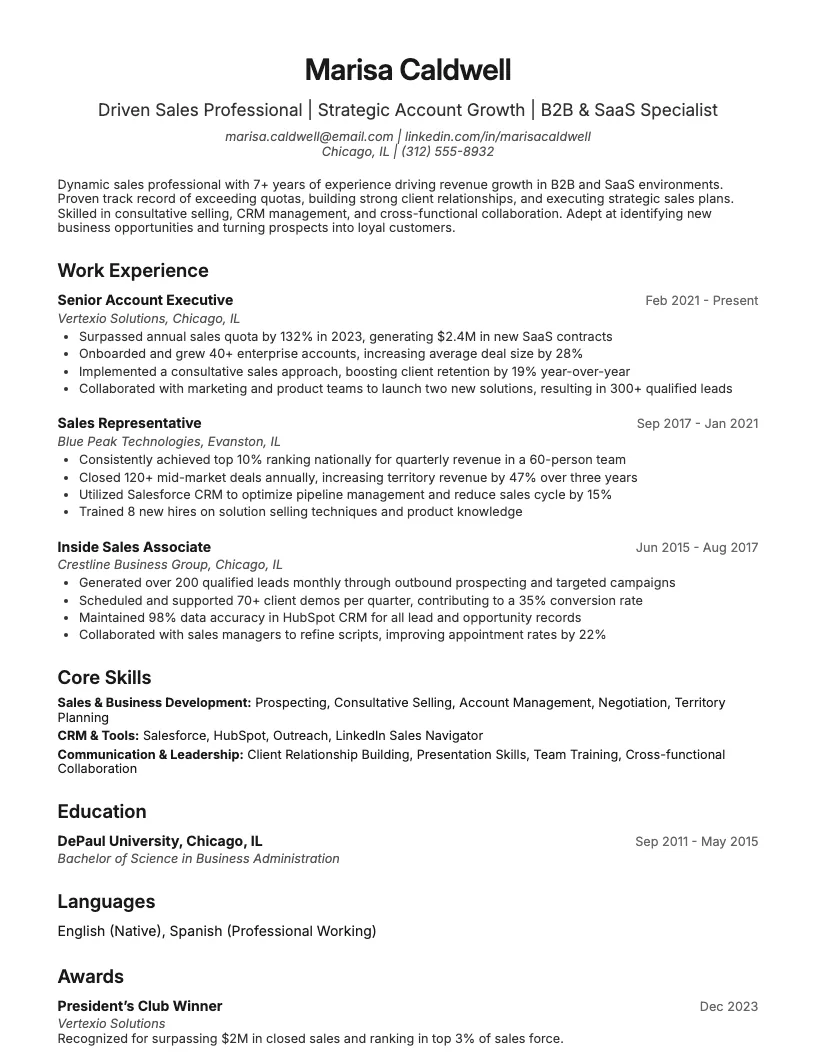
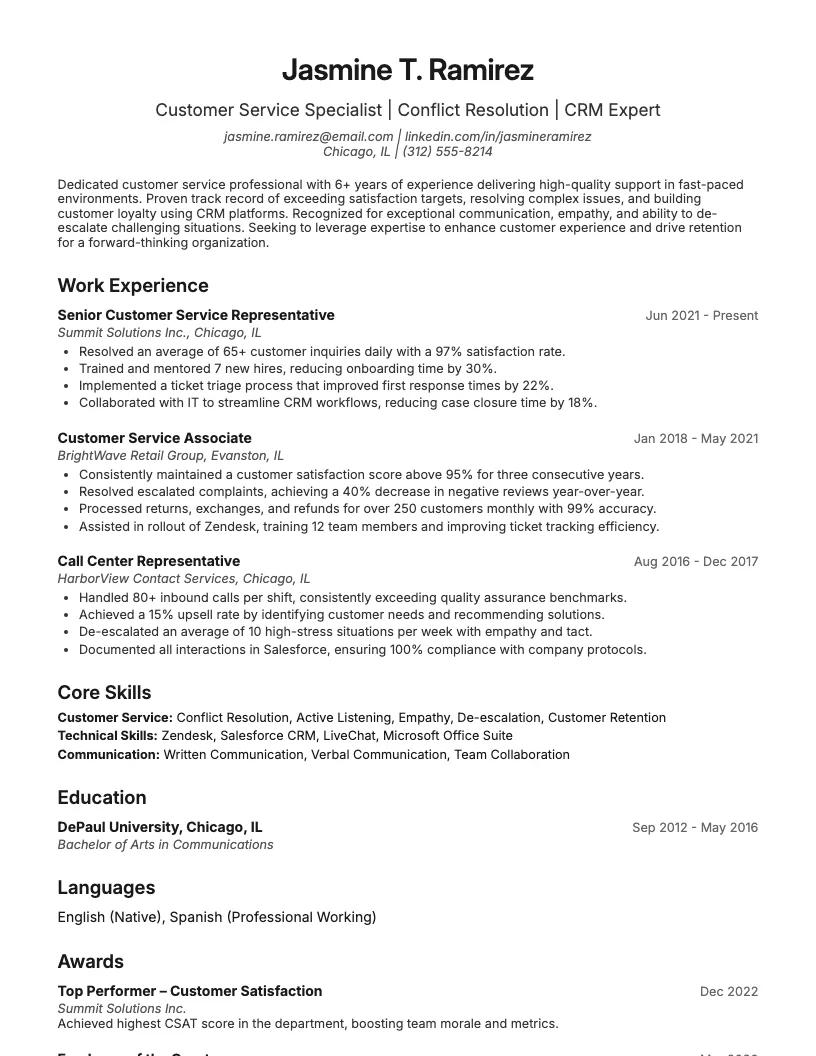
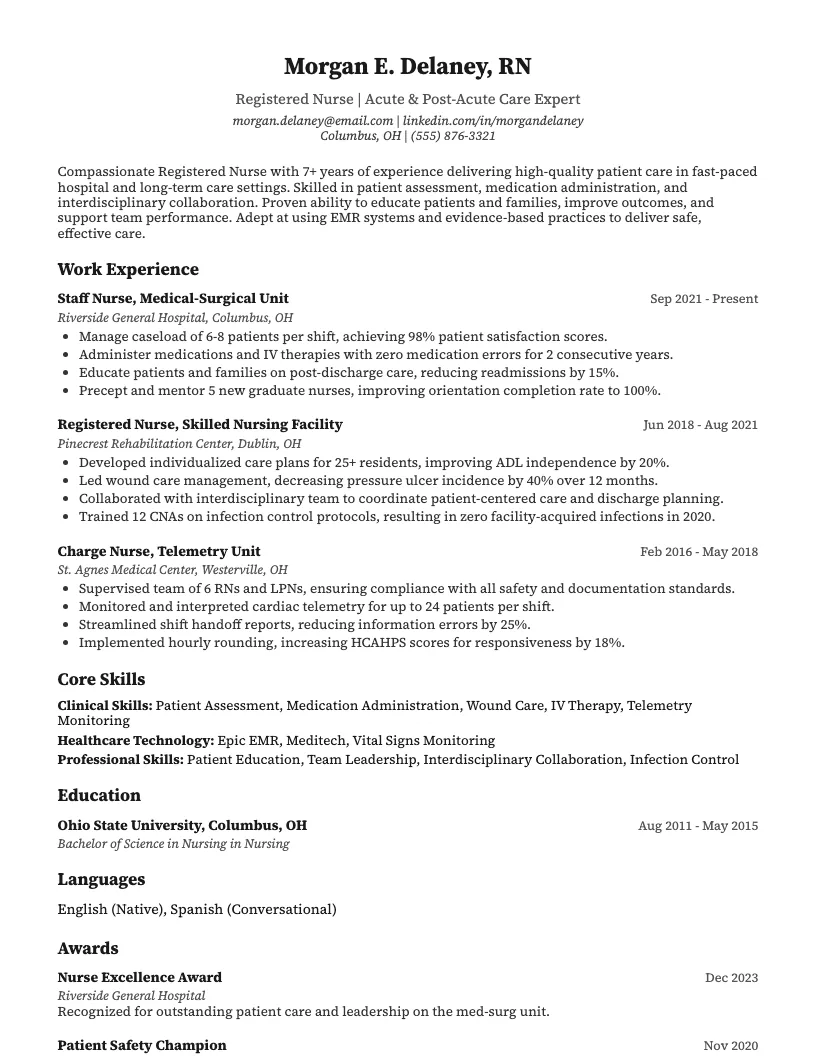
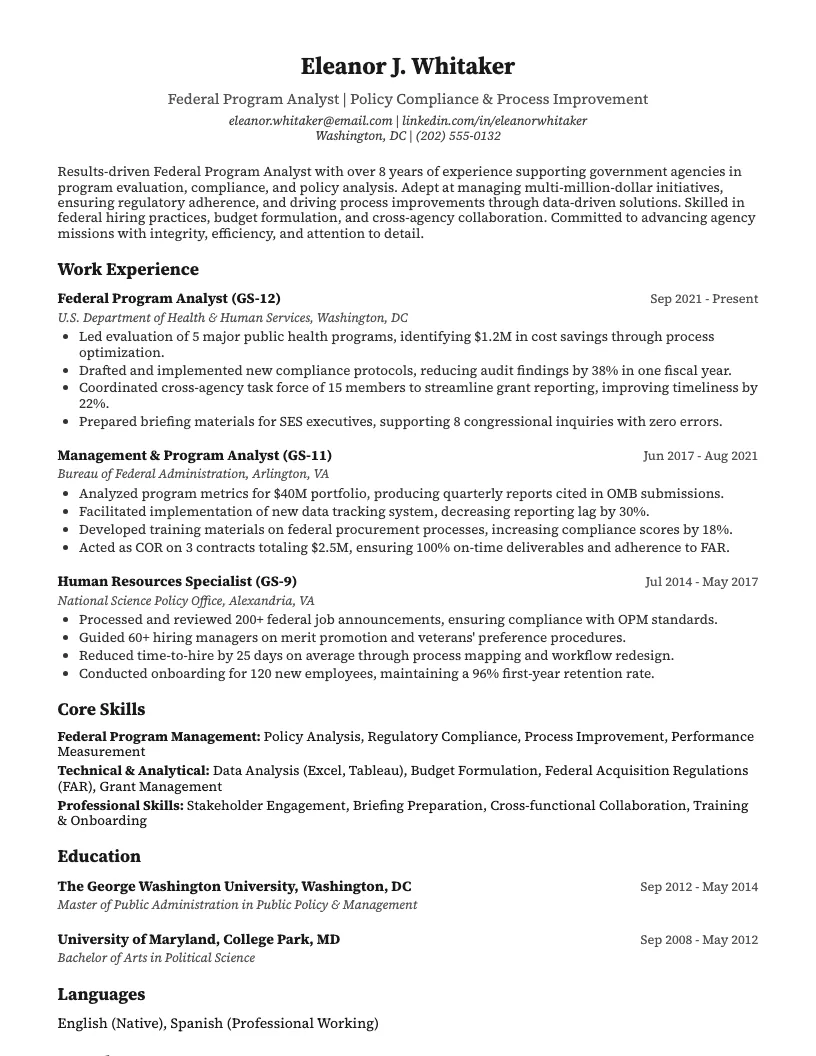
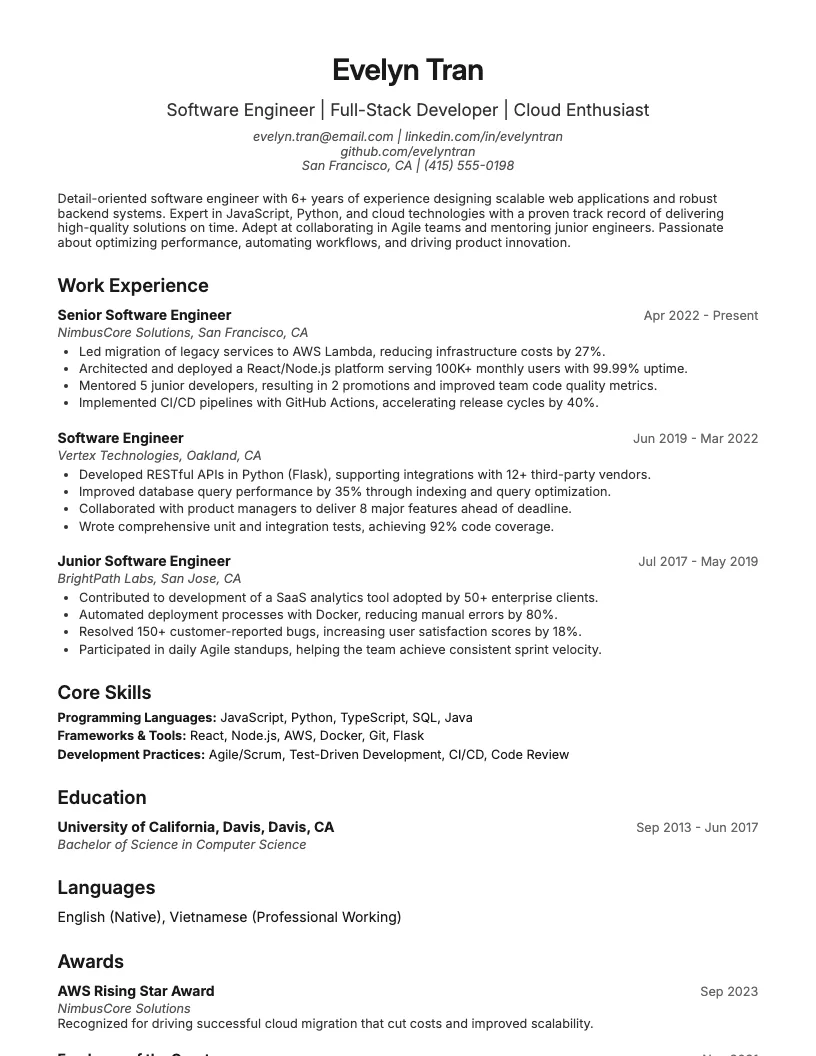
See these skills on a real resume
8 examplesStart from an example that already has them, and swap in your own.
Check your resume against the job you want
Scan your resume, see which skills and keywords the posting asks for that you are missing, and fix them before you apply.
Free to use • No credit card required