Lockheed Martin Resume Keywords: I Mapped 4 Divisions, 6 Roles
See the exact clearance wording, division names, and role-specific terms Lockheed Martin's screening looks for, plus how many keywords to use on the page.


Written by Sarah Chen
Senior Career Strategist & Resume Expert
Updated August 2026
Reviewed by Marcus Rodriguez
Is your resume ATS-friendly?
Drop your resume in and see which of these skills a scanner can actually read, and which ones the job you want is asking for that you have not listed.
PDF or DOCX. Max 2MB.
We never share your resume or use it to train a model.
In This Guide:
What are Lockheed Martin resume keywords?
\"The keyword categories Lockheed Martin's screening checks for\"
| \"Category\" | \"Example terms\" | |||||
|---|---|---|---|---|---|---|
| \"Security clearance\" | \"Active Secret | Top Secret | TS/SCI | Public Trust\" | ||
| \"Compliance\" | \"ITAR | EAR | NIST 800-171 | DoD 5000 | DFARS | RMF\" |
| \"Program and platform names\" | \"F-35 | Orion | THAAD | Aegis\" |
I've reviewed resumes for defense contractors for years, and the pattern is always the same: strong candidates get rejected because their resume reads like a commercial tech resume instead of a defense one. Lockheed Martin's screening looks for a specific vocabulary - clearance status, compliance standards, systems engineering terms, program management language, named tools, and the platforms you've actually touched.
Miss enough of them and a human never sees your application.
Security clearance terms
This is the first thing the screener checks, and it has to be stated the exact way Lockheed expects it: "Active Secret Clearance," "Top Secret," "Top Secret/SCI," "TS/SCI with Polygraph," or "Public Trust." I go into the exact wording and placement in how you write your security clearance on the resume - get this line wrong and you can be clearance-eligible and still filtered out.
Compliance and regulation terms (ITAR, EAR, NIST 800-171, DoD 5000)
ITAR, EAR, NIST 800-171, DoD 5000, DFARS, and RMF show you understand the regulatory environment these programs run inside - not just that you can do the job, but that you can do it under the rules that govern classified and export-controlled work.
Systems engineering terms (MBSE, V&V, requirements management)
These are the backbone terms for engineering roles here, and which ones you need depends on the job title you're applying under - the keywords by role section lists them role by role.
Program management terms (EVM, CAM, IMS)
These aren't buzzwords on a PM resume - they're table stakes, and the keywords by role section spells out which ones a program manager or control account manager needs. One review I trust cites that 60% of rejected PM resumes were missing this exact terminology in their opening section.
Nine times out of ten, that's a resume that never even names its clearance up top.
Technical tools and languages (DOORS, MATLAB, C++, Ada)
Named tools and languages separate a defense-ready resume from a generic engineering one, and the keywords by role section names the ones each job expects. List the ones you've actually used, not the ones you've heard of - a recruiter will ask.
Program and platform names
Naming the F-35, Orion, THAAD, or Aegis (where unclassified) tells a hiring manager you've worked inside programs like theirs, which division-specific detail lives in matching keywords to the division you're applying to. Once you've pulled your list together, ResumeJudge checks it against the actual posting and flags exactly which of these terms you're missing before you hit submit.
Why do qualified applicants get filtered out at Lockheed Martin?

I've read enough of these to spot the same four gaps over and over. Fix them and you jump ahead of most of the pile.
The clearance line is missing or worded wrong
Lockheed's applicant system needs your clearance stated in a specific format, and it needs to show up early, not buried in a bullet on page two.
"Cleared" or "security background" won't match. "Active Secret Clearance" or "Top Secret/SCI" will.
Generic words used where the posting names a specific tool
"CAD software" instead of CATIA V5. "Systems engineering" instead of naming MBSE or the V-Model.
"Requirements tool" instead of DOORS.
Nine times out of ten, the posting already told you the exact term to use. Go pull it from there instead of paraphrasing.
Commercial tech wording instead of defense wording
I've seen strong engineers get passed over because their resume reads like it was built for a startup. "Moved fast and broke things" doesn't land when the thing is a missile defense system.
Swap growth-and-speed language for delivery-against-requirements, documentation, and reliability. The full rewrite is in what a keyword-rich bullet looks like next to a weak one.
Program experience never named
Applying to an F-35 posting with no mention of aircraft, avionics, or platform work reads as a mismatch, even when the underlying skills line up. Name the program family you've touched, or the closest unclassified equivalent - see describing classified work in generic terms if you can't name the program itself.
If you're not sure which words a specific posting is actually scanning for, ResumeJudge will scan the job description against your resume and hand you back exactly what's missing before you spend another application on a guess.
How do you write your security clearance on the resume?
How do you write your security clearance on the resume?
Clearance is the one line on a Lockheed Martin resume that can end your chances before anyone reads the rest. I've seen strong resumes get passed over because the clearance line was vague, buried, or just missing.
Active Secret
Write it exactly like that: "Active Secret Clearance." Not "Secret cleared," not "clearance: yes."
The word "Active" matters - it tells the recruiter this doesn't need to be requested or verified before they can move you forward.
Top Secret
Same rule. "Active Top Secret Clearance," with the granting agency if you can include it (DoD, for example).
Investigation date helps too, since clearances can lapse.
Top Secret/SCI
Write "Active TS/SCI" and spell it out once - Top Secret/Sensitive Compartmented Information - the first time it appears on the page. One competitor calls "Active Top Secret/SCI" the single most impactful keyword you can put on a Lockheed Martin resume, and I don't think that's an exaggeration for the roles that require it.
TS/SCI with polygraph
If you've passed a polygraph, say so: "Active TS/SCI with CI Polygraph" (or full-scope, whichever applies). Leaving the polygraph off when you have one just costs you a keyword match for nothing.
Public Trust
Public Trust isn't a security clearance, but plenty of Lockheed roles ask for it, so write it the same way: "Public Trust - Active" or "Public Trust Cleared." Don't let it get lumped in under a generic "clearances" heading where it reads like an afterthought.
Where the clearance line goes on the page
Top third of the page, near your name and contact info, not buried in the skills section. Recruiters at Lockheed are scanning for clearance status first and qualifications second - nine times out of ten, a resume that makes them hunt for it gets set aside before your experience even gets read.
What to write if you are clearance-eligible but not cleared
Say "Eligible for Secret Clearance" or "Willing to undergo clearance investigation," never "clearance pending" if nothing is actually in process. Whether you can apply at all without a clearance is answered in the questions section.
If you're not sure which posting requires an active clearance versus eligibility, that's worth checking against the specific job description - running your resume through a tool like ResumeJudge against the posting will tell you which clearance wording the role actually calls for, before you guess.
US citizenship and 'US person' wording
Dual citizens sometimes read the US Citizen line as automatically disqualifying. It isn't - some programs sponsor clearance and citizenship pathways, so check what the specific posting actually requires instead of ruling yourself out.
Most Lockheed roles require US citizenship because of ITAR. Write "US Citizen" plainly near the clearance line rather than the vaguer "US Person," which technically includes green card holders but reads as evasive to a recruiter checking a box.
Which keywords match the division you are applying to?
Which platform names signal which division
| Division | Platforms and programs |
|---|---|
| Aeronautics | F-35, F-22, C-130, Skunk Works, avionics, stealth |
| Rotary and Mission Systems | Sikorsky, Black Hawk, Aegis, radar, C4ISR |
| Space | Orion, GPS III, SBIRS, satellite systems |
| Missiles and Fire Control | HIMARS, THAAD, PAC-3, Javelin, electro-optics |
Lockheed isn't one company on the page - it's four, and each one reads a resume looking for different words.
I've watched people write a strong systems-engineering resume, send it to the wrong division's requisition, and get passed over because none of the program names matched.
Aeronautics: F-35, F-22, C-130, Skunk Works, avionics, stealth
This is fixed-wing and stealth work. If you've touched flight controls, aerodynamics, composites, or avionics integration, say so by name.
"Skunk Works" is worth using if it's genuinely where you worked - recruiters on that side look for it specifically.
Rotary and Mission Systems: Sikorsky, Black Hawk, Aegis, radar, C4ISR, electronic warfare
Helicopters, combat systems, and sensor work live here. Sikorsky and Black Hawk are the platform names to use if you've worked rotary-wing programs.
Aegis, radar, and C4ISR signal mission-systems and electronic-warfare experience - undersea warfare and training/simulation work fits this bucket too.
Space: Orion, GPS III, SBIRS, satellite systems, payload integration
Orion, GPS III, and SBIRS are the named programs recruiters scan for here. If your work touched orbital mechanics, propulsion, or payload integration, those terms belong next to them.
Missiles and Fire Control: HIMARS, THAAD, PAC-3, Javelin, electro-optics
HIMARS, THAAD, PAC-3, and Javelin are the platform names. Fire control systems, guidance and control, and electro-optics round out the vocabulary this division expects to see.
How to find the division from the job posting
The posting almost always names the division in the first line or the requisition title - don't guess. If it doesn't, the program names inside the description tell you: THAAD points to Missiles and Fire Control, Orion points to Space.
Once you know the division, match your resume's language to it rather than reusing one generic version everywhere. If you're short on time to do that matching by hand, ResumeJudge reads the posting and rewrites your resume's wording - including the skills section - against that specific division's terms.
Which keywords does your role need?
Which keywords each role's resume needs
| Role | Keywords to use |
|---|---|
| Systems engineer | Requirements management, MBSE, DOORS, V&V, DoD standards |
| Software engineer | C++, Python, Linux, RTOS, Agile, Scrum, CI/CD, DevSecOps |
| Program manager / CAM | EVM, CAM, MS Project, Deltek Cobra, SPI, CPI |
| Mechanical engineer | CATIA, SolidWorks, MIL-STD, GD&T, tolerance stack-up |
| Supply chain and procurement | FAR, DFARS, supplier management, DAWIA, SAP |
| Quality engineer | AS9100, ISO 9001, root cause analysis, CAPA, Six Sigma |
Every role at Lockheed reads differently to the applicant tracking system. Here's what I look for in each one.
Systems engineer
Requirements management, MBSE, and DOORS are the backbone. If you've built out requirements in DOORS or run trade studies, say so by name.
Round out the picture with V&V, system integration, and modeling and simulation - MATLAB shows up constantly in these postings. Compliance language matters too: DoD standards, system safety, risk management.
A systems engineer resume that skips DoD standards reads generic, even with strong technical depth.
Software engineer
C++ and Python are table stakes, but I've seen just as many rejections from missing the environment words: Linux, RTOS, embedded software, object-oriented design.
Layer in how you build software, not just what you build it in - Agile, Scrum, CI/CD, DevSecOps.
Program manager and control account manager
EVM and CAM aren't optional here - they're what the title means. Add schedule management, risk management, and the tools recruiters expect to see named: MS Project, Deltek Cobra, SAP, Jira.
Metrics carry weight too. SPI and CPI variance numbers on a resume tell a reviewer you've actually run a control account, not just sat near one.
One thing I see rejected constantly: a PM resume that names the tools but never states an actual SPI or CPI figure.
Mechanical engineer
Pair your CAD platform (CATIA, SolidWorks, or whichever you used) with the standards you designed against - MIL-STD, GD&T, tolerance stack-up. Naming the standard is what separates a mechanical engineer resume from a generic manufacturing one.
Supply chain and procurement
FAR and DFARS aren't background reading, they're keywords the system is scanning for. Add supplier management, DAWIA level if you have it, and any ERP system you've actually used - SAP shows up often.
Quality engineer
AS9100 and ISO 9001 anchor this one, along with root cause analysis, corrective action (CAPA), and Six Sigma if you're certified.
Once you've matched your role's list against a specific posting, run it through ResumeJudge - it'll show you exactly which of these terms the job description asks for that your resume is still missing, and rewrite the bullets to work them in correctly.
How many keywords should you put on the resume?
How many keywords should you put on the resume?
How many terms to aim for
Fifteen to twenty-five, pulled straight from the posting in front of you.
Not from a master list you keep for every defense job. The posting names the tools, the standards, the program type it wants - match those words, not a generic set.
Ten to fifteen skills, grouped by domain, not forty
Don't group so tightly that you drop a keyword the posting actually used just because it doesn't fit your chosen categories. Add a fourth small group instead of cutting the term.
The skills section itself is smaller than that total, and it should be grouped.
Ten to fifteen items, sorted into two or three labeled groups - "Systems Engineering," "Program Tools," whatever fits your role - beats a flat alphabetical wall of forty. I've reviewed resumes with a skills section that listed six programming languages and four frameworks side by side, and the read every time is the same: this person hasn't decided what they do.
A recruiter scanning fast reads a tight, grouped list as focus. A long one reads as scatter, even when every word on it is true.
Spelling out the acronym and the short form together
Write it both ways on first use: "Earned Value Management (EVM)," "Model-Based Systems Engineering (MBSE)."
The scanning system may search for either form, and so may the human reading it after. One line covers both.
Miss it and you've quietly cut your own match rate on a term you actually have. If you're unsure which acronyms the role cares about most, the keywords by role section breaks that down by job.
What keyword stuffing looks like to a recruiter
A stuffed skills line versus a grouped one
Skills: C++, Python, Java, DOORS, MBSE, EVM, CAM, IMS, Agile, Scrum, CI/CD, Linux, RTOS, MATLAB
Systems Engineering: MBSE, DOORS, V&V | Program Tools: EVM, CAM, IMS
It looks like a skills list with no sentence structure and no proof behind any of it - every tool in defense engineering crammed into one paragraph, none of it tied to a program or a result.
Nine times out of ten I'd rather see twelve well-placed terms inside real bullets than forty sitting in a block at the bottom. If you're not sure which of your terms actually match what a given posting is asking for, running your resume and the job description through ResumeJudge will show you exactly which ones are missing before a recruiter ever opens the file.
Where do the keywords go on the page?
Where do the keywords go on the page?
Placement matters as much as which words you pick. A resume with every right term buried at the bottom still gets passed over, because the human reader and the scanner both weight the top of the page more than the bottom.
The header line and clearance statement
Your name and contact line come first, same as any resume. Right under it, on defense resumes, goes your clearance status.
The wording and exact placement are covered in how you write your security clearance on the resume.
The summary
Three or four lines, right below the header. This is where you name your discipline, your years of experience, and one or two of the domain terms from the keyword categories above - systems engineering, program management, whatever fits.
I've read hundreds of these summaries, and the ones that work say what you build and for whom, not "results-driven professional." Save the generic line for a resume that isn't trying to get past a defense contractor's screen.
Experience bullets
An experience bullet with the keyword in it versus without
Managed requirements
Tracked requirements in DOORS against DoD 5000 milestones
This is where most of your keywords should actually live, because a bullet that names the tool and the standard you worked against reads as proof, not a claim. What a keyword-rich bullet looks like next to a weak one works through four of these side by side. If you're not sure your bullets carry that weight yet, running your resume and the job posting through ResumeJudge will show you which specific terms are missing from each one and rewrite the wording to match.
The skills section
A grouped list near the top or bottom of the page, not buried in a wall of text. Keep it to ten or fifteen terms, organized by category, with clearance repeated here too.
Certifications: PMP, DAWIA, INCOSE CSEP, Six Sigma
List these with the year earned, in their own short section. PMP and INCOSE CSEP carry weight for program and systems roles; DAWIA matters if you've worked defense acquisition; Six Sigma helps mainly when you can tie it to an actual DoD program, not just as a line item.
Education
Reverse-chronological, degree and school only - this section shouldn't compete with your program experience for space. A newly cleared entry-level candidate can lean on education a bit more; anyone with a few years in should keep it short.
What does a keyword-rich bullet look like next to a weak one?
I've read hundreds of engineering resumes headed to Lockheed, and the weak ones and strong ones are almost always saying the same thing. The difference is which words carry the sentence.
"Worked on system requirements" rewritten
A systems engineering bullet, weak versus keyword-rich
Worked on system requirements
Led requirements analysis for a $15M subsystem using DOORS, achieving CPI and SPI above 0.95 through the CDR milestone
"Worked on" tells a screener nothing. Try: "Led requirements analysis for a $15M subsystem using DOORS, achieving CPI and SPI above 0.95 through the CDR milestone."
Same job, but now it names the tool, the process, and a number a reviewer can weigh.
"Managed budget" rewritten
A CAM's budget bullet, weak versus keyword-rich
Managed budget
Managed EVM metrics as CAM, maintaining 1.0 CPI across a $5M budget
Nine times out of ten this line is hiding a CAM's actual work. "Managed EVM metrics as CAM, maintaining 1.0 CPI across a $5M budget" says the same thing in the language the posting is scanning for.
"Managed a team of 10 engineers" rewritten
A management bullet, headcount versus decision
Managed a team of 10 engineers
Approved a 3-month schedule slip to protect test integrity, avoiding $4.2M in downstream rework
Headcount alone doesn't show judgment. "Approved a 3-month schedule slip to protect test integrity, avoiding $4.2M in downstream rework" shows a decision with a dollar outcome attached to it - that's what a program hiring manager is actually screening for.
"Reduced API latency by 40%" rewritten for defense
A performance bullet, commercial-tech versus defense wording
Reduced API latency by 40%
Reduced regression cycle time from 3 weeks to 4 days while maintaining 98% code coverage across 12,000 test cases under NIST 800-171 controls
This is commercial-tech phrasing, and it reads as a mismatch here. Reframe it around reliability and compliance instead: "Reduced regression cycle time from 3 weeks to 4 days while maintaining 98% code coverage across 12,000 test cases under NIST 800-171 controls."
Defense resumes reward accuracy and delivery discipline, not speed for its own sake.
A full experience section for a cleared systems engineer
Put the clearance line right under the title: Senior Systems Engineer - Active Top Secret/SCI. Then bullets that mix method, tool, and metric: MBSE work in Cameo, requirements verification in DOORS, a CDR milestone hit on schedule, DoD 5000 compliance called out by name.
Once your bullets read like that, run the whole resume against the real posting - ResumeJudge will catch anywhere the wording still drifts from what the job actually asks for and rewrite it into place before you submit.
How do you use program keywords without breaking classification rules?
How do you use program keywords without breaking classification rules?
I've read a lot of resumes from cleared engineers, and the fear is almost always backwards. People leave off program names that were never classified in the first place, and then write around actual restricted details in a way that gives more away, not less.
Naming unclassified programs and platforms
F-35, Orion, Aegis, HIMARS - these names show up in press releases and government budget documents. Naming one you worked on isn't a leak.
What you can't do is attach it to details that were never public: specific performance numbers, test results, technical architecture. Name the program, keep the specifics generic.
Describing classified work in generic terms
If the program itself is restricted, drop the name and describe the work: "led requirements verification for a DoD sensor integration program" tells a recruiter exactly what skills you used without naming anything.
I see this done well constantly in this industry - it's expected, not a red flag.
Leading with the decision instead of the program detail
A classified-work bullet, program-led versus decision-led
Worked on the sensor integration program for two years
Recommended a design change that cut integration risk by two review cycles
The strongest version of a classified-work bullet leads with what you decided, not what the program was. "Recommended a design change that cut integration risk by two review cycles" holds up regardless of what you can say about the platform underneath it.
Only claiming terms you can defend in an interview
Every acronym on your resume is fair game in an interview. If you can't explain MBSE or EVM in your own words when asked, don't put it on the page - a recruiter who catches one soft answer starts doubting the rest of your resume.
Before you send anything, running your resume and the actual posting through ResumeJudge will flag any term you've claimed that the wording doesn't actually support.
Frequently Asked Questions
Do I need a security clearance to apply?
No - most entry-level Lockheed Martin postings don't require you to already hold a clearance; the company sponsors the investigation after you're hired, and sponsorship generally requires U.S. citizenship. What you do need going in is to be clearance-eligible, meaning nothing in your background would stop you from passing that check later.
Should I name programs like the F-35 or Orion on my resume?
Yes, if you actually worked on it and the information is public. Naming a real program like the F-35 or Orion tells a recruiter and the applicant tracking system exactly what kind of work you've done, which a vague description can't do. Keep it to the program name and your role on it - never technical details that could be sensitive.
How do I find the right keywords for a specific posting?
Read the actual job posting and pull out the skills, tools, and qualifications it repeats - those are the terms the applicant tracking system is scanning for. ResumeJudge does this for you: give it your resume and the posting, and it tells you exactly what's missing and rewrites your resume to work those terms into the right sections.
Do Boeing and Lockheed Martin want the same keywords?
Not exactly. The two companies overlap on general terms like systems engineering, security clearance, and Six Sigma, but each has its own program names, terminology, and applicant tracking system, so a resume built for one won't automatically score well at the other. Tailor each resume to the specific posting rather than reusing one across both companies.
How long should my Lockheed Martin resume be?
One page if you have under ten years of experience, two pages if you're more senior. Defense hiring managers and the applicant tracking system both favor a resume that stays focused, so cut anything that doesn't support the role you're applying for.
Should I send a PDF or a Word file?
Send whatever the posting asks for. If it doesn't say, a PDF is the safer default - it keeps your formatting intact and most current applicant tracking systems, including Lockheed Martin's, parse it fine. Avoid tables, columns, or text boxes in either format, since those can confuse the parser no matter which file type you send.
What do I put on the resume with no defense experience?
Lean on transferable skills and any regulated, safety-critical, or heavily documented work you've done elsewhere - manufacturing, aerospace-adjacent, engineering, or government-adjacent roles all translate. Once your resume is in shape, ResumeJudge can find postings that actually fit your background and write a tailored cover letter for each one you apply to.
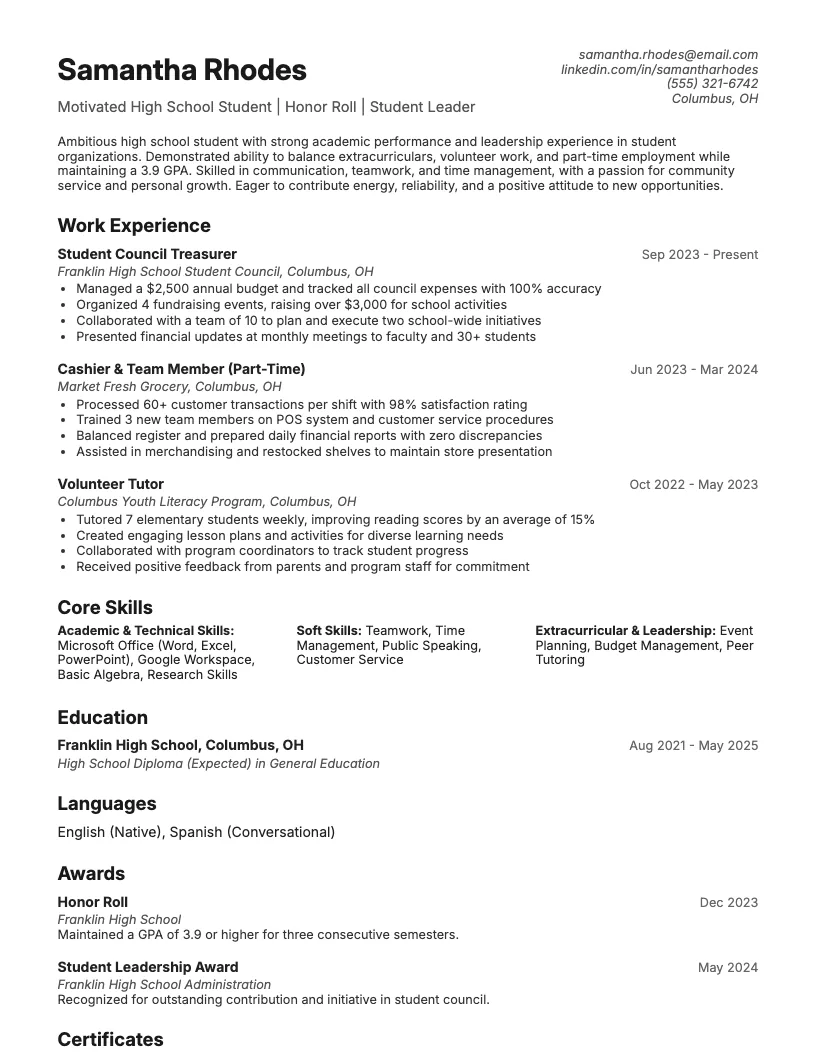
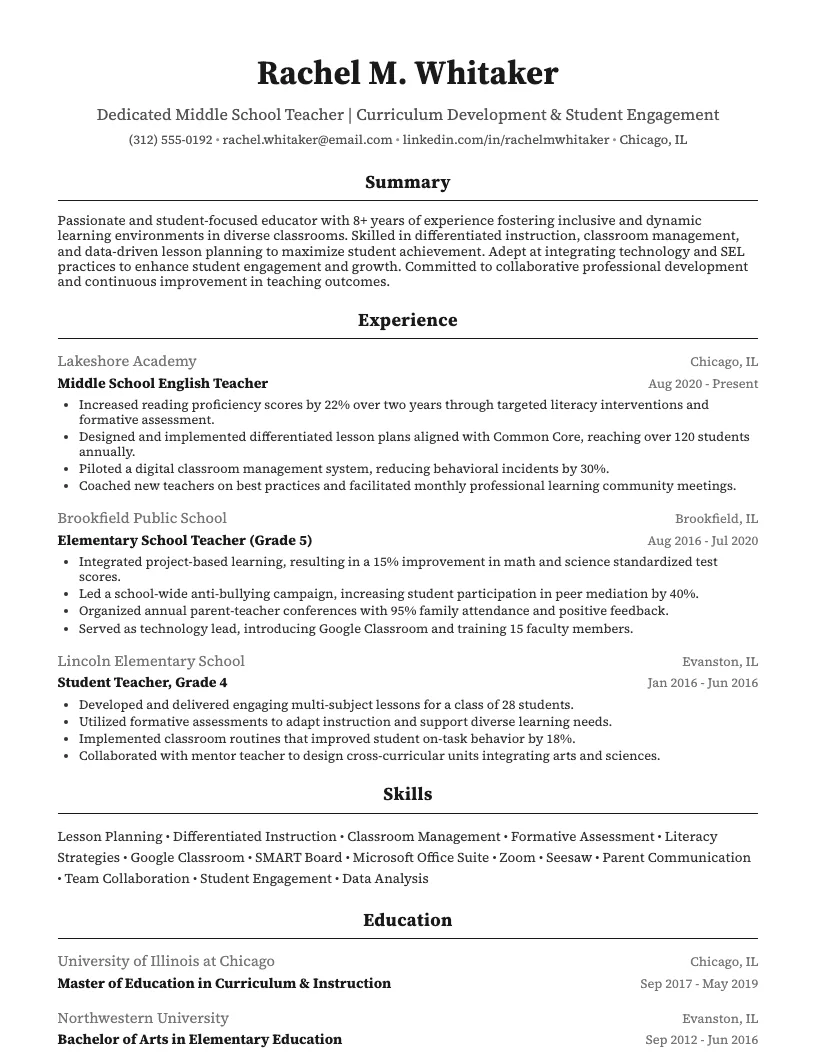
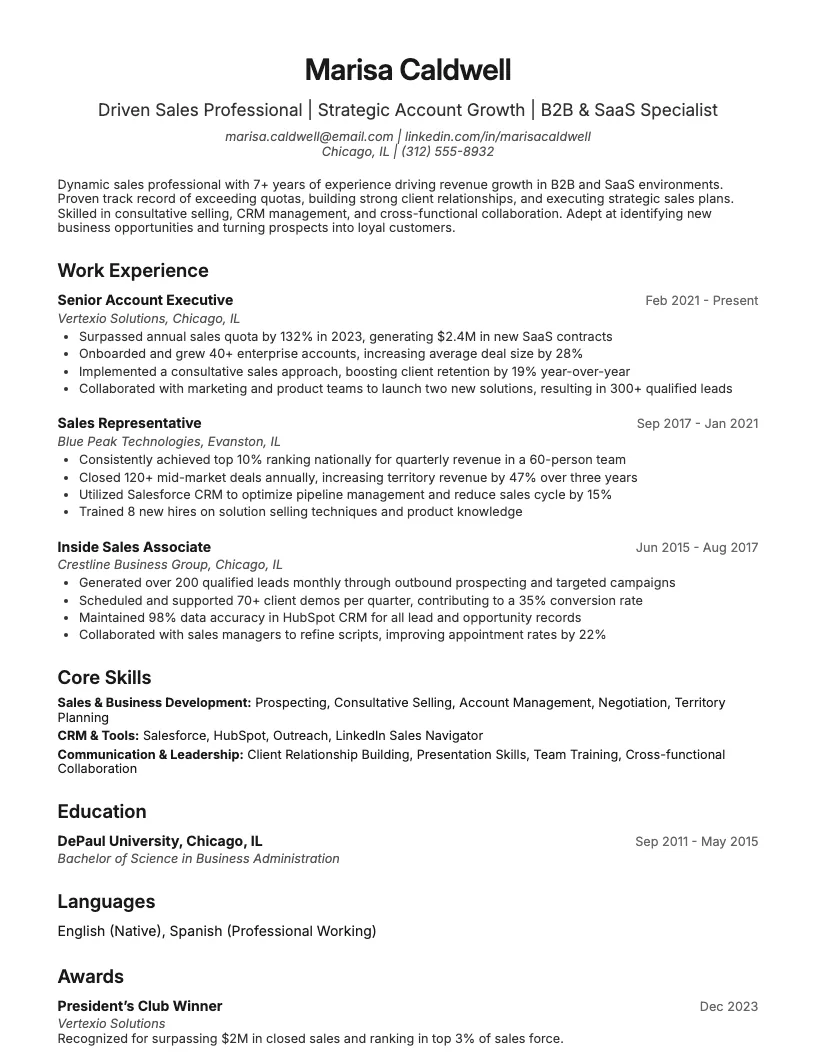
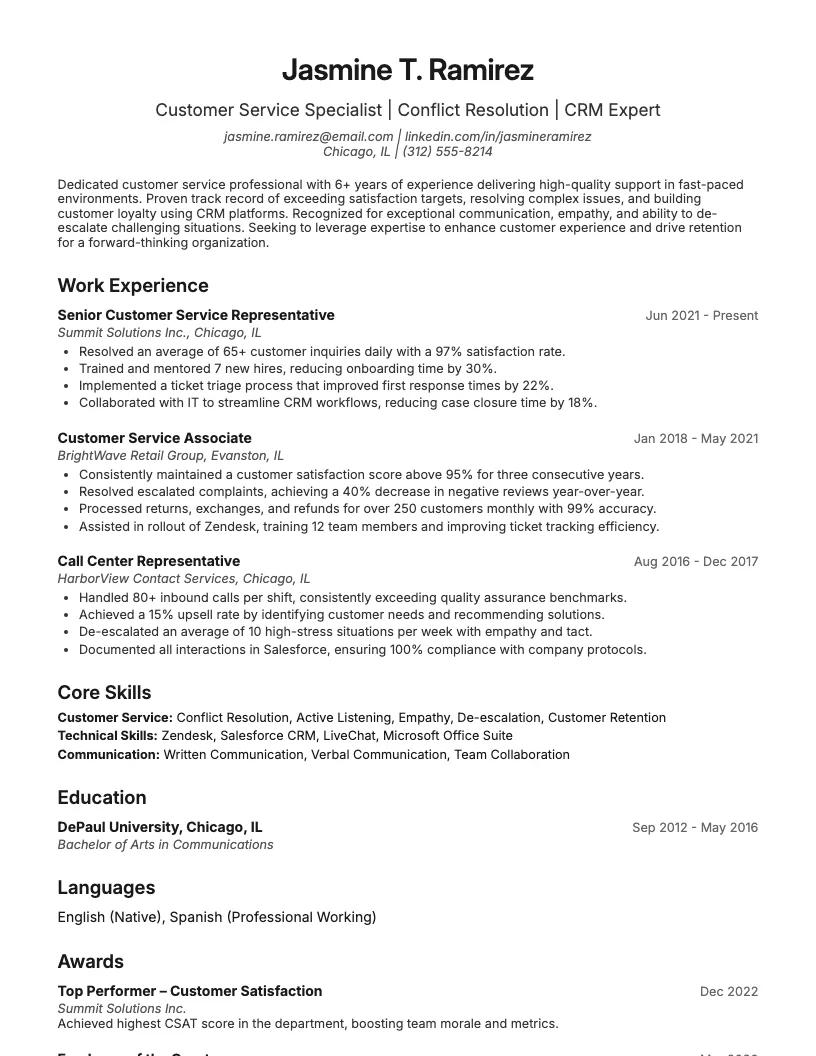
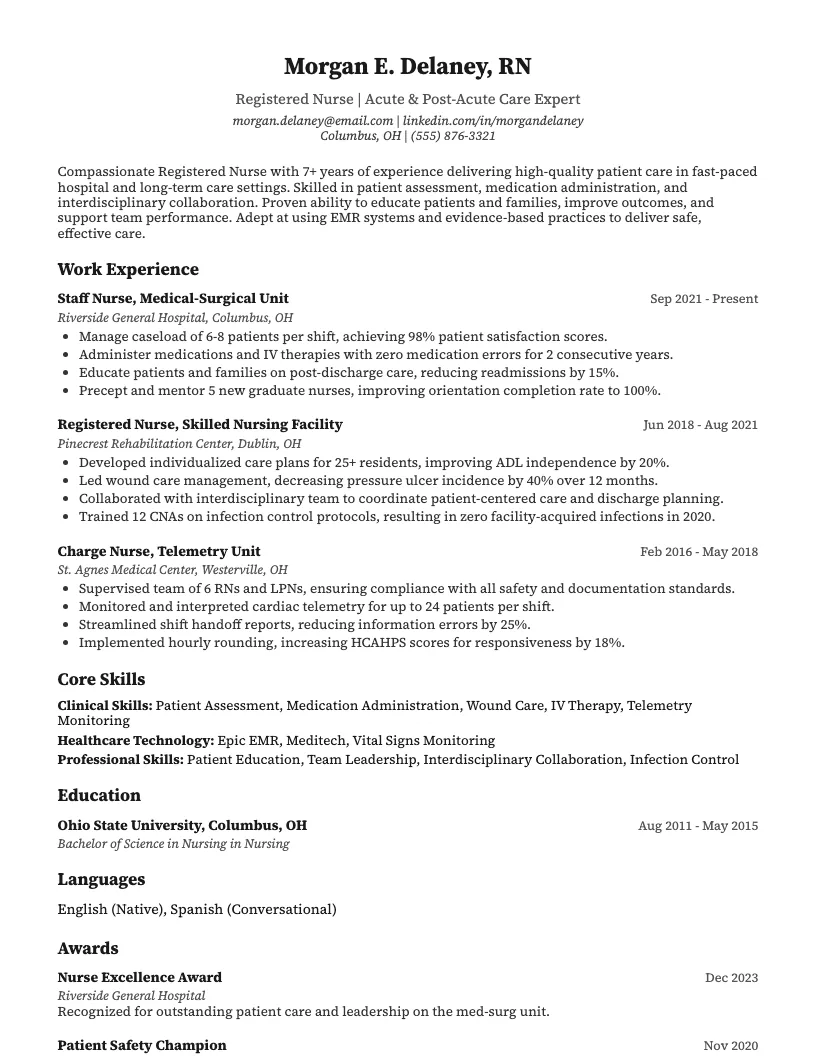
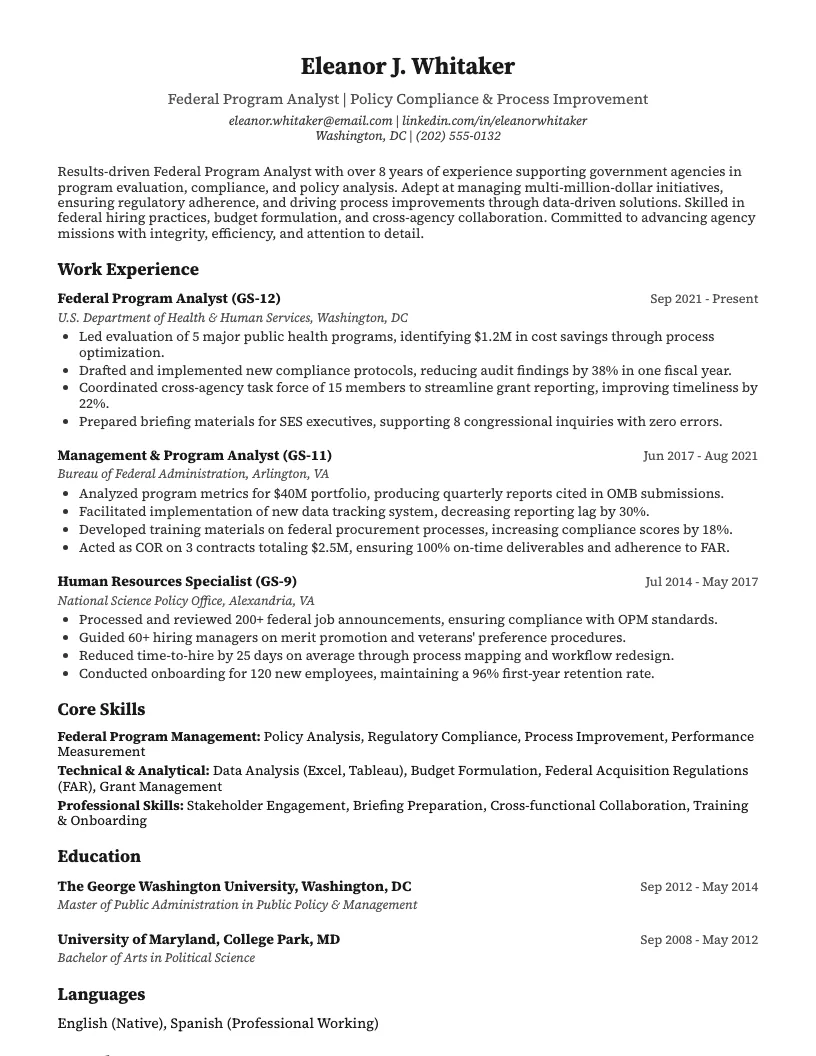
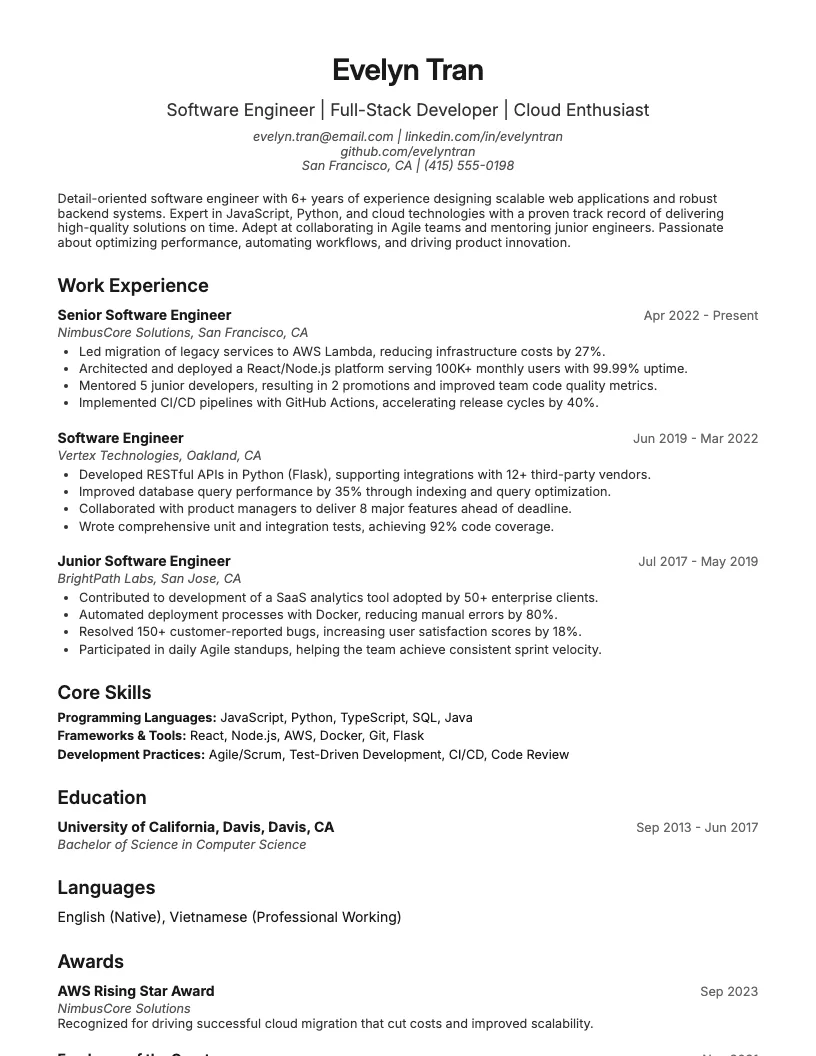
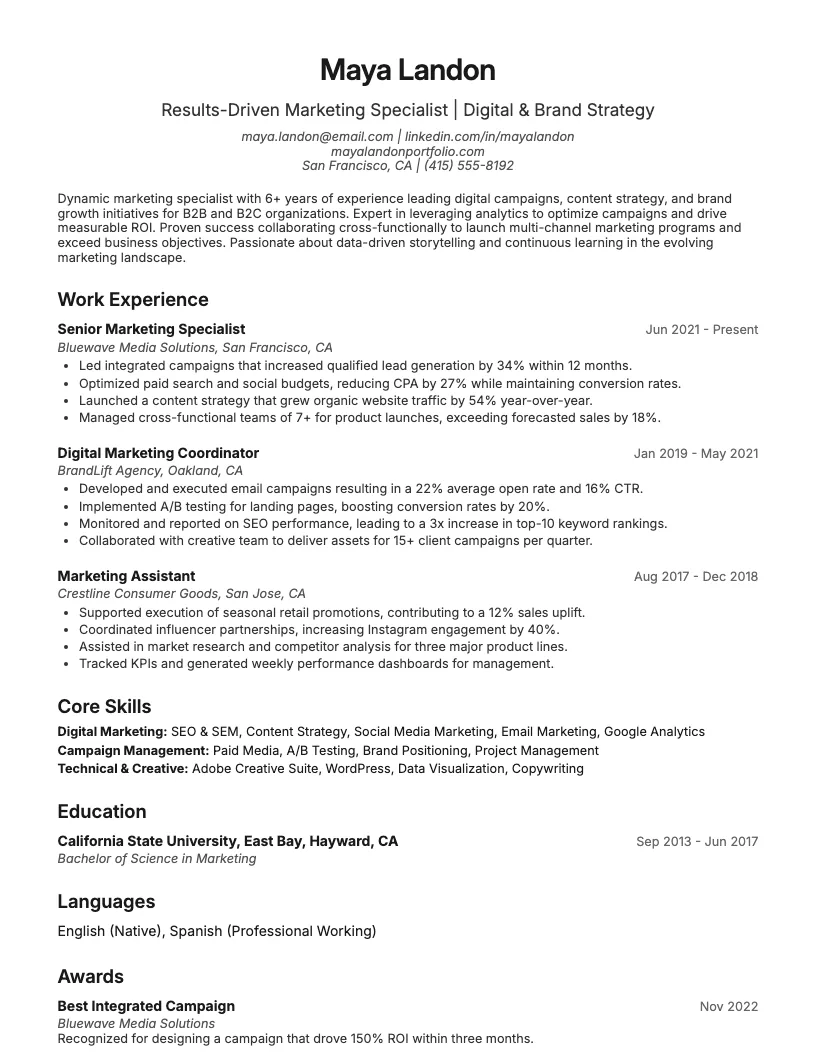
See these skills on a real resume
8 examplesStart from an example that already has them, and swap in your own.
Check your resume against the job you want
Scan your resume, see which skills and keywords the posting asks for that you are missing, and fix them before you apply.
Free to use • No credit card required