Skills for Resume: 14 I'd Keep, 5 I'd Cut, and Where They Go
14 skills for a resume with real proof behind each, 6 types to know the difference between, where to put them, and 5 things to cut before you apply to the job.


Written by Sarah Chen
Senior Career Strategist & Resume Expert
Updated August 2026
Reviewed by Marcus Rodriguez
Is your resume ATS-friendly?
Drop your resume in and see which of these skills a scanner can actually read, and which ones the job you want is asking for that you have not listed.
PDF or DOCX. Max 2MB.
We never share your resume or use it to train a model.
In This Guide:
What skills should you put on a resume?
What skills should you put on a resume?

You don't need all fourteen of these on your resume. You need the ones you can prove, and the ones the job you want actually asks for.
I've read more resumes than I can count, and the ones that get callbacks never read like a word list. They read like evidence - each skill sitting next to a moment where it actually happened.
Some guides list ten skills, some run past thirty. The count matters less than whether each one has something behind it, so here's how to think about the fourteen you'll use most.
If you'd rather not guess which of these your target job cares about, ResumeJudge checks your resume against the actual posting and rewrites it to work in the ones you're missing.
Communication
Everyone claims this one, and almost nobody proves it. Don't write "communication skills" - name the artifact: the report you wrote, the client call you ran, the update that kept a project moving.
Written and verbal are different muscles. If you're strong in one and weaker in the other, say which.
Problem solving
This is the skill that turns a flat bullet into a real one. Pick a moment something broke - a schedule, a system, a relationship with a client - and say what you noticed, what you tried, and what changed.
"Strong problem solver" tells a recruiter nothing. A number showing the fix worked tells them everything.
Teamwork
Teamwork on a resume comes down to one question: can you get something done with people you didn't choose. I look for a bullet that names the group and the outcome, not just "worked well with others."
If you led part of the effort, say so - that's closer to leadership.
Time management
Every posting at every level wants this, because every job has more to do than hours to do it in. Show it with a deadline you hit under pressure, or several projects you kept moving at once.
"Managed my time well" is not something a hiring manager can picture. A deadline is.
Leadership
You don't need a title to claim this. Training a new hire, running a project with two other people, being the one who kept things on track while a manager was out - that's leadership, and it belongs on the resume even at entry level.
Name how many people or how big the project was, if you can.
Customer service
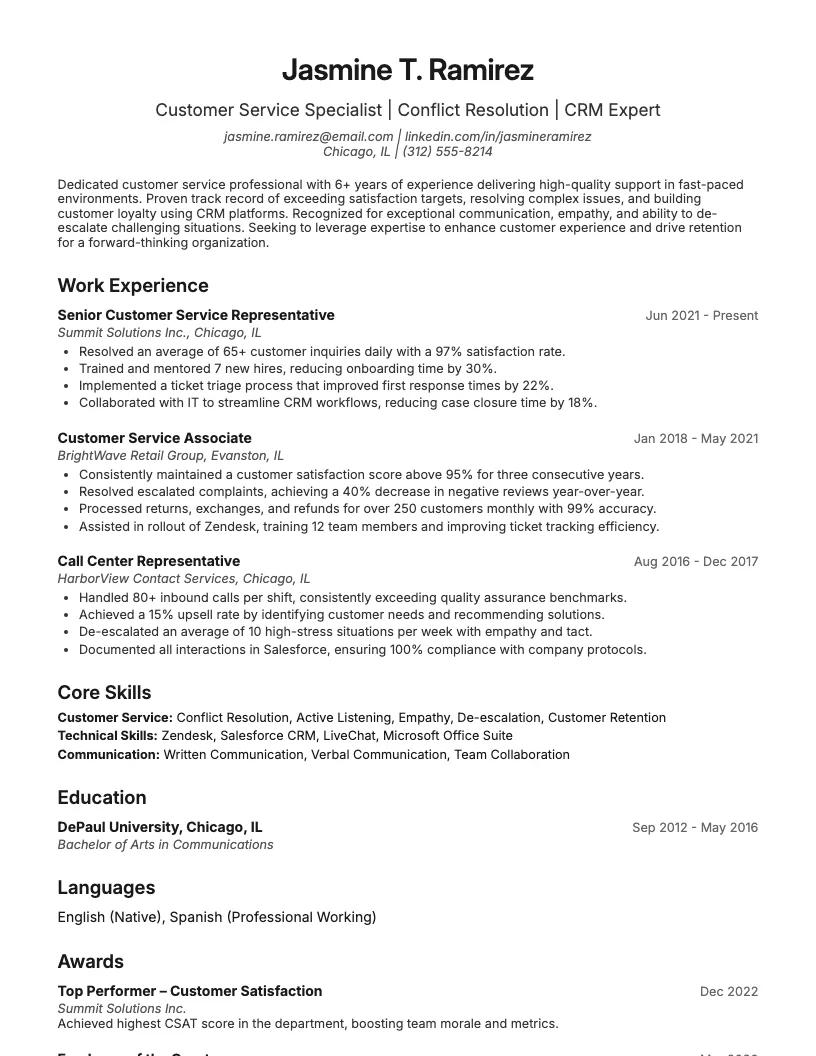
If you've calmed down an angry customer or turned a complaint into a repeat sale, that's the proof to use here - a resolved ticket count, a satisfaction score, a customer who came back.
Retail, hospitality, and healthcare resumes lean on this one hardest, and it's worth a closer look on its own if that's your field.
Attention to detail
This is the skill everyone claims and the easiest one to disprove - a typo two lines under "meticulous attention to detail" undoes the sentence. Show it instead: a mistake you caught before it caused a problem, an error rate you kept low.
Then proofread your own resume twice before it goes anywhere.
Adaptability
Employers ask for this because plans change constantly, and they want proof you won't fall apart when yours does. A role that grew past its original description, a tool switch you adjusted to fast, duties you picked up when a team shrank - any of those work.
Skip the version that just says "adaptable" with nothing behind it.
Organization
Organization is the invisible skill behind most of the others on this list - you can't manage time, lead a team, or catch an error without it. I like bullets that name a system: a tracker you built, a process you standardized, a backlog you kept clean.
That reads better than the word "organized" sitting on its own.
Computer and software skills
Listing computer skills
Proficient in Microsoft Office
Built macros in Excel to automate a weekly report
Name the actual tools, not the category. "Proficient in Microsoft Office" tells a recruiter almost nothing in 2026; "built macros in Excel to automate a weekly report" tells them exactly what you can do.
Match the software names the posting uses, and leave off anything so basic it's assumed - see what to leave off.
Data analysis
You don't need a data analyst title to claim this one. If you've pulled numbers out of a spreadsheet and used them to make a call, that counts - name the tool, whether that's Excel, SQL, or a dashboard, and the decision it changed.
It reads well on almost any resume, because most jobs generate data nobody actually looks at.
Project management
This doesn't require a certification. It requires proof you can carry something from a start date to a finish date without it falling apart - budget, team size, timeline, or the deadline you hit.
If you've genuinely run formal projects, step 3 on backing a skill up with a real example is worth a look before you write the bullet.
Critical thinking
Critical thinking is what problem solving looks like before you've fixed anything - the ability to look at a messy situation and figure out what actually matters. It's hard to name directly, so show it inside another bullet: the option you didn't take, and why.
On its own, the phrase reads as filler.
Writing
If your job touches email, reports, proposals, or social copy, writing is a real skill worth its own line, separate from "communication." Say what you wrote and who read it, so it's concrete instead of a claim.
It's one of the easier skills to prove - a hiring manager is reading your writing right now.
What are the different types of skills you can list?
Most people lump every skill into one list, and that's the mistake I catch most often when I'm reviewing a resume.
Your skills and abilities for a resume actually split into several buckets, and knowing which is which changes what you write and where you put it.
Hard skills
These are the specific, teachable things you can point to and prove: a language you speak, a program you can run, a certification you hold.
They're the professional skills a resume leans on to show you're qualified before anyone reads another word - learned through school, training, or just doing the job long enough to get good at it.
Soft skills
These are harder to put a number on: communication, teamwork, leadership.
I've seen research that puts soft skills behind roughly 85% of career success, and whether or not you buy that exact figure, it matches what I see in practice - the resumes that get interviews pair a technical skill with proof you can work with people.
Don't just name them. Show them doing something.
Transferable skills
These sit in the middle - general skills for a resume like writing, project management, and problem-solving that move with you from job to job, even into a different industry.
If you're changing careers, this is the bucket that carries you, because it doesn't depend on your last title matching your next one.
Core competencies
A core competencies line only works if it also shows up in a bullet further down the page - if it doesn't, it reads as a header with nothing behind it.
A core competencies resume section isn't a third category - it's your best hard and soft skills together, the handful you'd keep if you could only list five.
Strengths
A strength isn't the same as a skill - a skill is what you can do, a strength is how you actually do it: reliably, under pressure, with an eye for detail.
The strongest resumes I see use two or three strengths, each backed by a result, not ten adjectives with nothing behind them.
Special skills, like languages, licences and certifications
If you list a language as conversational or fluent, be ready for an interviewer to test it by switching into it mid-conversation - that's the skill on this page most likely to get checked on the spot.
Languages, licenses, and certifications get their own line because they're pass/fail - you either have the forklift license or you don't.
List the credential and the level if it applies, and drop anything that's expired.
How do you pick the right skills for the job you are applying to?
How do you pick the right skills for the job you are applying to?
Match the resume to the posting. That's the whole trick, and it's the one step most people skip.
Step 1: Pull the skills out of the job posting
Read the posting and underline every skill, tool, and qualification it names.
Not just the "requirements" list, either. Skills hide in the day-to-day duties too, and repeated words usually mean the employer cares about them a lot.
Step 2: Match them against what you have actually done
Now go down that list and ask, honestly, where you've done each one.
I've watched people list a skill because it sounded good, not because it was true. That's the fastest way to bomb an interview.
ResumeJudge will do this matching for you and rewrite your resume to add exactly the skills from the posting it's missing, which is faster than eyeballing two documents side by side.
Step 3: Keep only the ones you can back up with an example
If you can't tell a quick story about a time you used it, cut it.
A skill with no example behind it is just a word. One with a result attached - a number, an outcome, a "here's what happened" - is proof, and proof is what gets you through an interview.
Step 4: Use the employer's own wording so the screening software matches it
If the posting says "customer relationship management," don't write "CRM tools" and hope for the best. Match the exact phrase.
Applicant tracking software is often just checking for a literal match, not reading for meaning. I've seen good candidates sink so far down the ranked list over wording alone that nobody opened them.
This is exactly the kind of gap ResumeJudge catches and fixes before you hit submit, rewriting your resume into the posting's own language.
How many skills should you list?
Somewhere between 6 and 10 relevant skills is the sweet spot most hiring advice lands on, and I agree with it.
Go much past that and you start to look unfocused, like you're hoping something sticks.
Where do skills go on a resume?
Where do skills go on a resume?
Most people build one skills section and call it done. That's leaving three other spots on the page unused.
A dedicated skills section near the top
This is the one everyone knows, and a standalone list is still the right default. It's easy to update for each job, and it's the cleanest place for the screening software to find its keywords.
Where it sits on the page depends on your background - see above or below your work experience. The tradeoff: a bullet that just says "Excel" proves nothing on its own.
Pair it with the next three spots and it starts to.
Your resume summary
Your summary is where you name two or three strengths and say, in one line, what you actually did with them. I've read thousands of these, and the ones that work sound like a sentence a person would say out loud, not a keyword string.
Your work experience bullets
This is where a skill stops being a claim. Don't write "strong communicator" - write the line where you communicated something and what happened because of it.
If you're not sure a skill you've listed is actually backed up anywhere, check the resume against the job posting - ResumeJudge will flag skills you've named but never shown.
A skills-based resume, where skills come before jobs
If your work history has a gap, a career change, or barely any paid jobs in it, lead with a skills section grouped by theme instead of a chronological job list. It's a legitimate format, not a workaround - just know most recruiters still expect chronological, so use this one when the story genuinely calls for it.
Grouping skills under labels like "Technical" and "Languages"
Once your list runs past six or eight items, one unsorted line turns into noise. Break it into labeled groups - "Technical," "Languages," "Core Competencies" - so a recruiter can find the one they're scanning for in two seconds instead of reading the whole row.
Saying how good you are: "fluent", "advanced", "working knowledge"
For languages and software, a proficiency word does real work: fluent, advanced, working knowledge, beginner. Skip it and a hiring manager either assumes the best or asks in the interview - and finding out you meant "took one class" when you wrote nothing at all is a bad moment to have.
Which skills does your job and your experience level ask for?
Is your resume good enough?
Drop your resume in and see which of these skills a scanner can read, and which ones the job you want is asking for that you have not listed.
Upload your resumeFree. PDF or DOCX. We never share your resume or use it to train a model.
The list changes depending on what you do and how long you've been doing it.
A retail resume and an executive resume shouldn't share a skills section, even if the person writing them has overlapping strengths. Here's what each one asks for on top of the fourteen above, by role and by stage.
Customer service and retail
In retail and service roles I want to see active listening, patience under pressure, POS or register systems, and conflict resolution - the stuff that shows you can handle a bad interaction without it becoming a worse one.
Nursing and healthcare
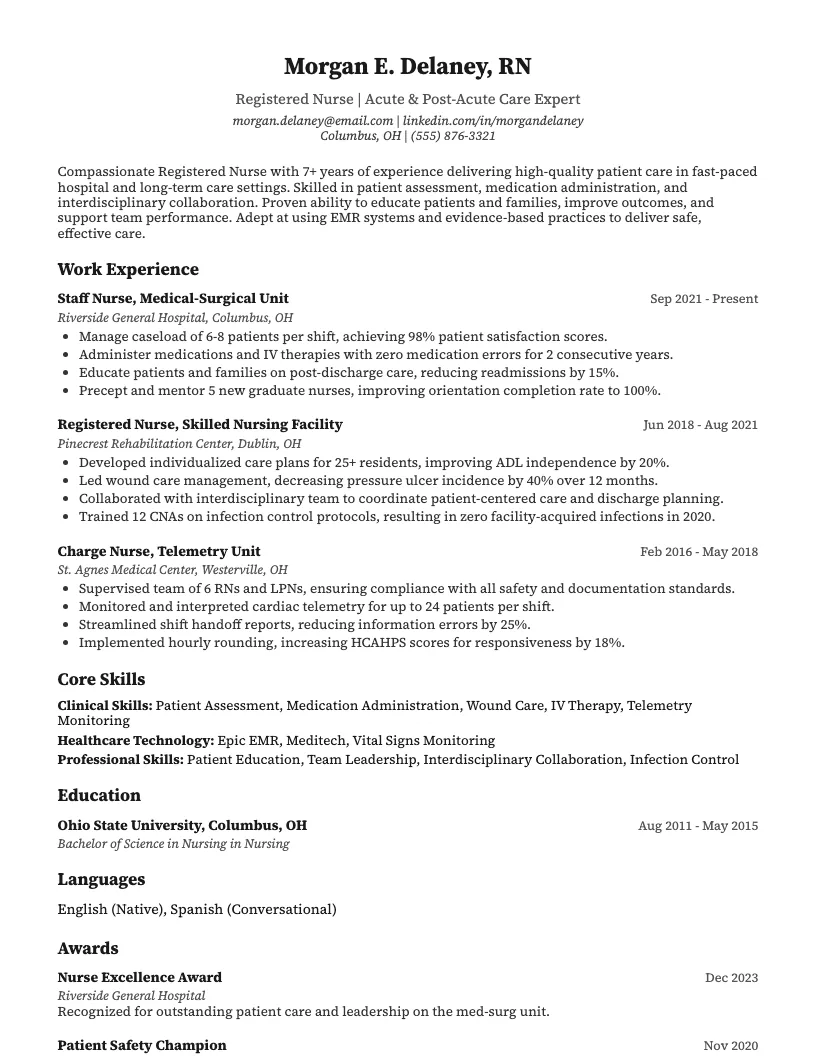
On the clinical side: patient assessment, CPR, infusion management, safety protocols, and comfort with the medical technology your unit actually uses.
On the human side: compassion. A nursing resume that only lists the clinical skills reads like a checklist, not a person.
Data analyst
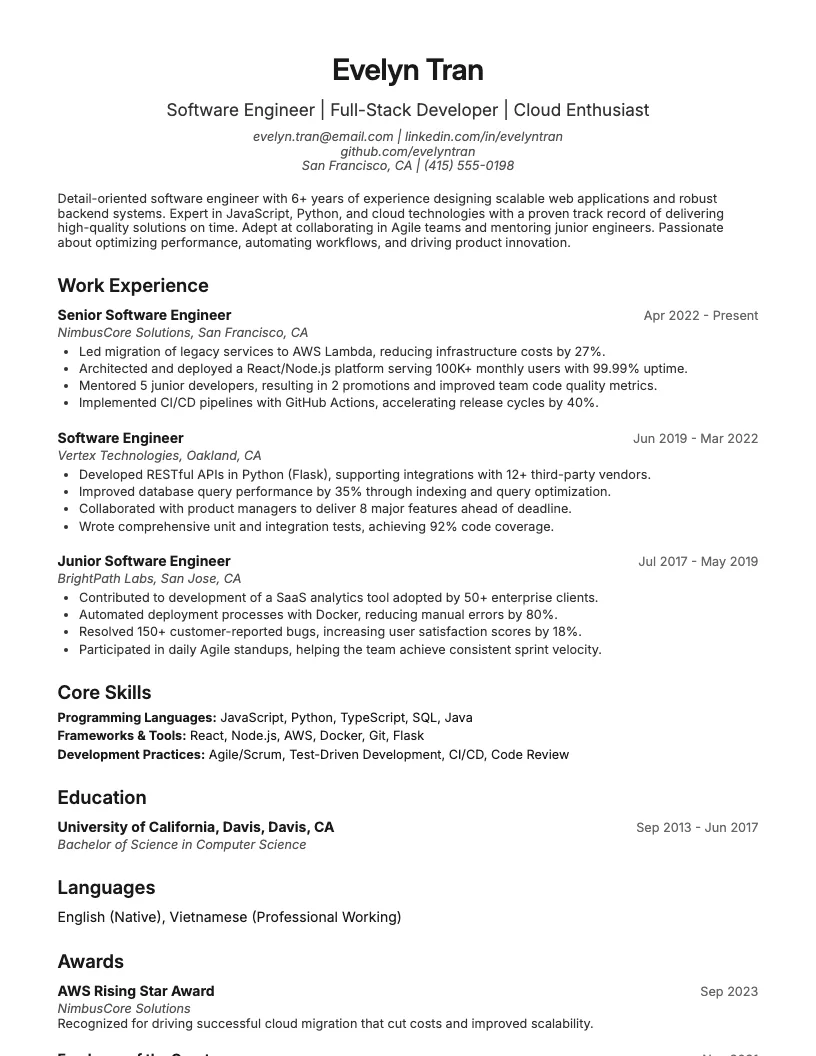
Hard skills first - SQL, Excel, data visualization, R or Python, and whatever reporting tools the posting names.
The rest of the job is catching the number that's wrong before it goes in a deck, and explaining the result to people who don't want to see the query.
Teacher
Lesson planning, classroom management, subject expertise, and educational technology carry the hard-skills half.
Empathy carries the rest - and running a classroom counts as leadership, even if the job posting never uses that word.
Administrative assistant
This is a role where organization and computer and software skills do most of the work - scheduling, calendar management, correspondence, filing systems, and fluency in whatever office suite the company runs on.
Multitasking matters more here than almost anywhere else, because the cost of a missed detail lands on someone else's calendar.
Sales
A sales skills bullet
Strong negotiator
Exceeded quota by 20%
Relationship building, negotiation, and CRM software are the baseline.
But what actually gets a sales resume read is a number - quota hit, pipeline grown, deal size closed. I'd rather see "exceeded quota by 20%" than "strong negotiator" every time.
Skills for a resume with no work experience
If you don't have a job history to point to, lean on transferable skills - strong work ethic, willingness to learn, collaboration, basic software proficiency. School, volunteering, and part-time work all count.
This gets its own full page since it needs more room than a paragraph here.
Skills for a mid-career resume
By mid-career, employers expect proof you've owned something, not just contributed to it: process improvement, quality assurance, and the fourteen above shown at a bigger scale.
Being able to present your case with numbers still belongs here - mid-career is where vague claims stop being forgivable.
Skills for a manager or executive resume
At this level the list shifts toward scale and influence: budgeting and financial oversight, stakeholder engagement, change management, team development, operations management, strategic planning, contract negotiation.
Leadership alone isn't enough at this stage - I want to see evidence you shaped how a team or a budget was run, not just that you managed people.
If you're not sure which of these actually show up in the posting you're applying to, run your resume against the job description in ResumeJudge - it'll rewrite your resume to add what's missing before a recruiter notices.
What skills should you leave off your resume?
I've read resumes where the skills section hurts more than it helps. Cutting the wrong entries is usually the fastest way to get to skills that look good on a resume - what's left once the noise is gone.
Buzzwords like "hardworking" and "team player"
Claiming "team player" on a resume
Hardworking team player with strong attention to detail
Cut onboarding time by 30% by rebuilding the training checklist
These show up on nearly every resume I read, which is exactly the problem.
"Hardworking," "team player," "detail-oriented" - a hiring manager sees them so often the words stop registering as information at all.
If you want to claim one, back it with what it produced instead. "Cut onboarding time by 30% by rebuilding the training checklist" says team player better than the phrase itself does.
Basics everyone has, like email and typing
Microsoft Word, email, typing 40 words a minute - unless the posting specifically tests for typing speed, leave these off.
Listing them tells me you're not sure what counts as a skill worth mentioning, and that's a worse impression than leaving the line blank.
Software nobody uses any more
I still see Windows XP and Internet Explorer on resumes. Every time, it tells me the section hasn't been touched in years - and makes me wonder what else on the page is stale.
If a tool hasn't been standard in your field for five-plus years, it's not proving you're current. It's proving the opposite.
Skills you could not talk about in an interview
Nine times out of ten, the skill that trips someone up in an interview is the one they weren't fully sure about when they typed it.
Checking your list against the real posting - which is what ResumeJudge does - will flag the ones you can't yet back up with an example.
Skills with nothing to do with the job
A skill can be completely real and still not belong here. Advanced Excel modeling is a strong entry for a data analyst and dead weight on a barista application.
Match the list to the posting, not to everything you've ever learned - that's how you end up with skills that look good on a resume for this job, not a general inventory of your life.
Go deeper
Resume Skills and Keywords by Job Title
The customer service resume skills that beat the scan, where each goes on the page, and how to turn it into a bullet with real numbers instead of a claim.
Read MoreHard Skills for a Resume
See the 12 hard skill categories worth listing, the 5 mistakes that sink a skills section, and exactly where each belongs before you hit send on your resume.
Read MoreHow Many Skills Should You List on a Resume?
See the skills range for every career stage and field, the 5-step process for picking which ones to list, and the mistakes that make a list read as padded.
Read MoreSkills-Based Resume: Format and Examples
How to write a skills-based resume in 6 steps, when to use one instead of a chronological resume, 4 real examples by career stage, and whether it beats the ATS.
Read MoreThe Skills Section of a Resume: What to Put In It and How to Format It
See how many skills to list (6-10, per a 93,000-resume study), what to cut, how to format the section, plus 7 real examples by job and a skills summary option.
Read MoreSkills to Put on a Resume With No Experience
10 soft skills and 9 hard skills you can list with zero job experience, plus how to pick 8-10, order them, and word them so ATS scanners catch them all.
Read MoreSoft Skills for a Resume
15 soft skills worth listing, the 4 places on your resume where they actually get proven, and why 'hard worker' and 'team player' fall flat on their own.
Read MoreSpecial and Unique Skills for a Resume
See 17 special skills for a resume, examples across 9 job fields, plus 5 steps to find your own and how to write each one so it reads credible instead of vague.
Read MoreFrequently Asked Questions
Can I list a skill I am still learning?
Yes, you can list a skill you're still learning, as long as you don't overstate your level. Instead of labeling it "beginner," use softer phrasing like "familiar with" or "currently building" so the claim matches reality. Pair it with something that shows you're actively closing the gap - a course, a side project, practice reps - and be ready to talk about that growth honestly if it comes up in an interview.
Should the skills section go above or below my work experience?
For most people, skills go below work experience, since employers weigh what you've actually done more heavily than a standalone list of abilities. If you're early in your career or changing industries and don't have much relevant work history yet, move skills up near the top instead, so they're the first thing a reader sees.
Do I need to change my skills list for every application?
Yes, adjust your skills list for each job, pulling in the specific terms and phrasing that posting uses. Applicant tracking systems mostly sort and rank - it's people who do the reviewing and the rejecting - but a generic list ranks low against the posting, and a recruiter working down a sorted list may never scroll far enough to reach you. ResumeJudge can check your resume against a job description and flag the skills and keywords you're missing, so you know exactly what to add before you apply.
Should I list certifications and training with my skills?
Yes, list relevant certifications and completed training alongside your skills, since they back up what you're claiming with something concrete. A certification shows you didn't just pick up an ability casually - you put in the time to get it verified, which signals commitment to an employer. Keep the list to certifications that are current and relevant to the role rather than every course you've ever finished.
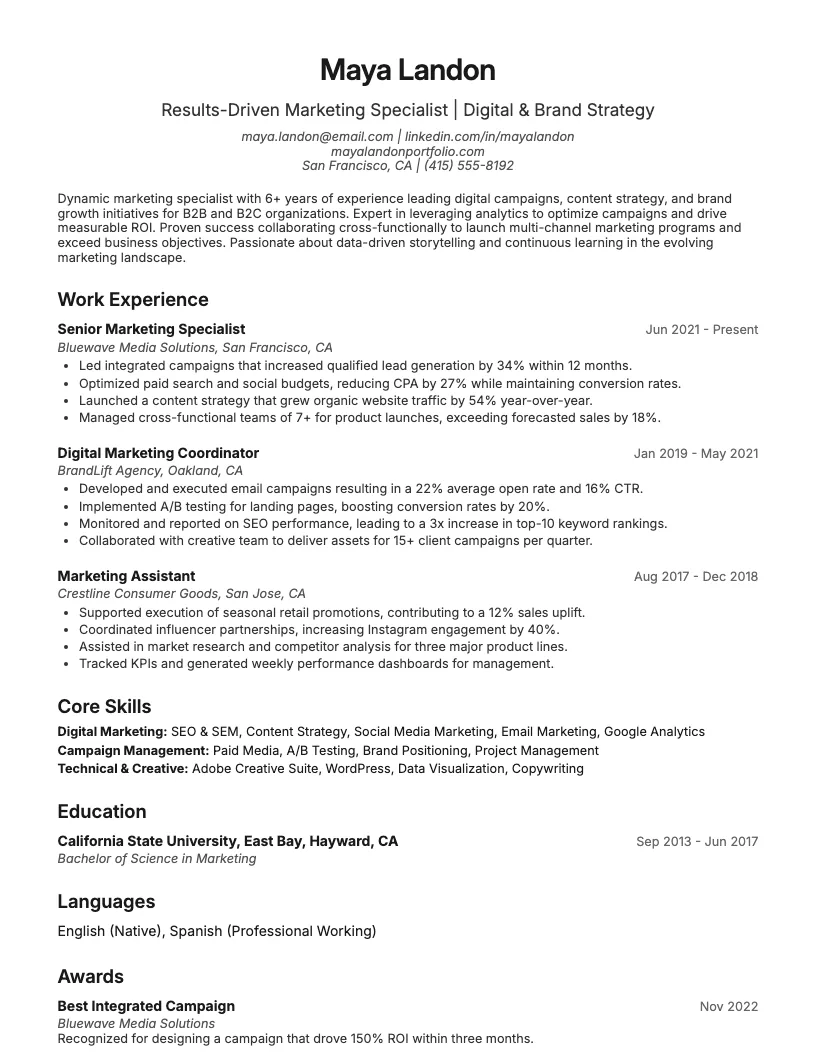
See these skills on a real resume
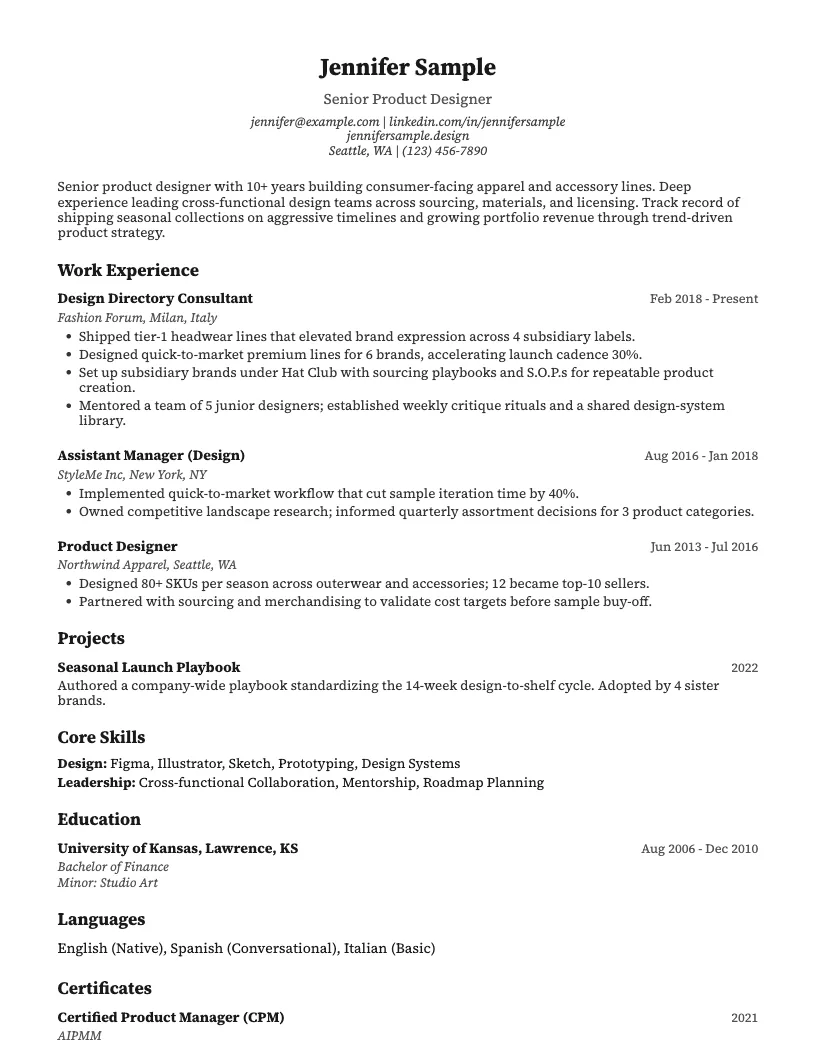
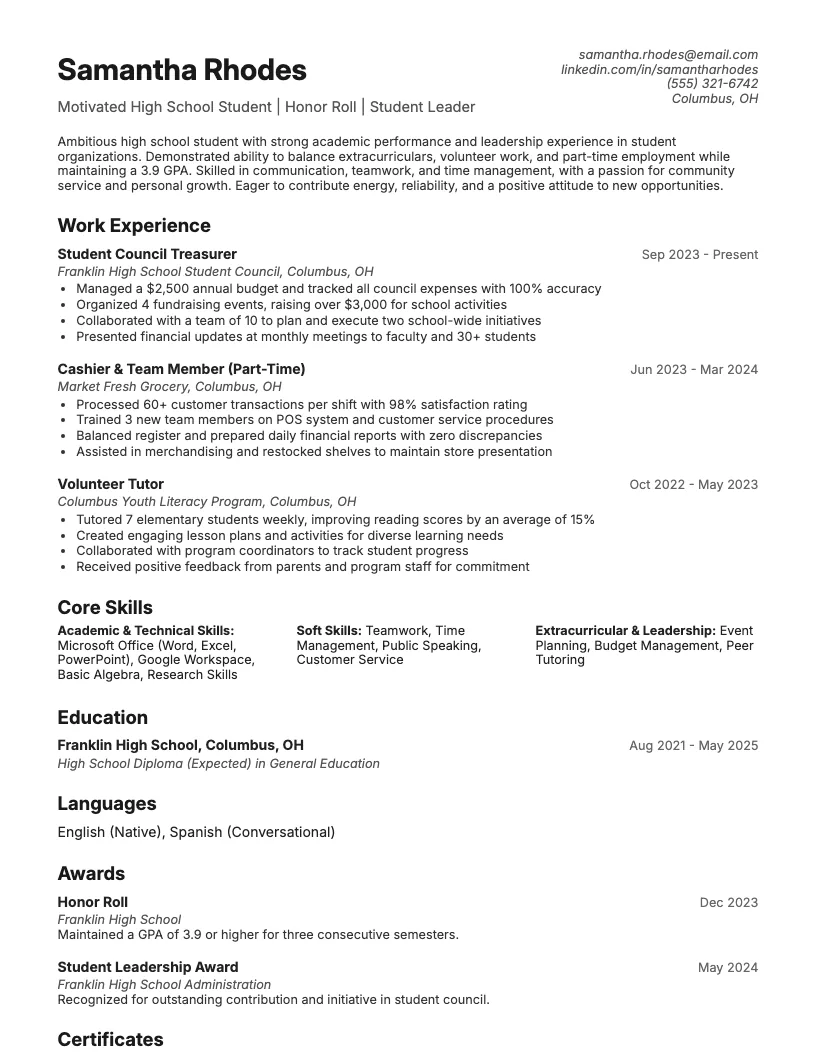
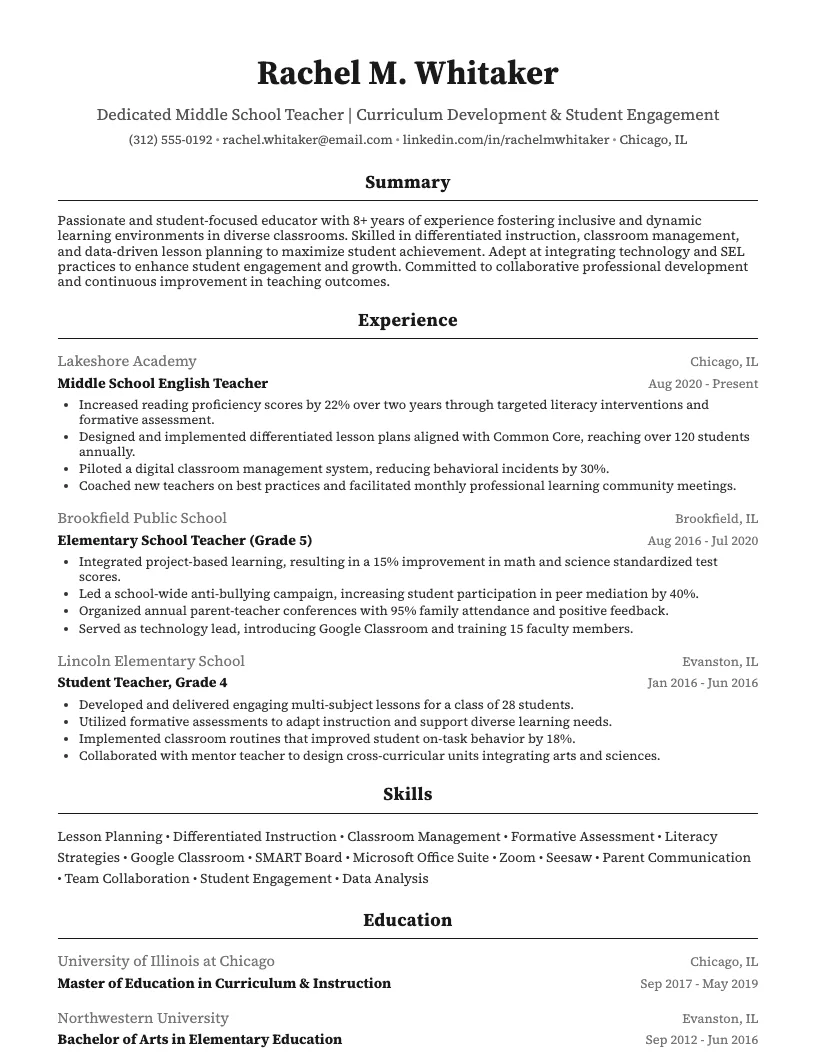
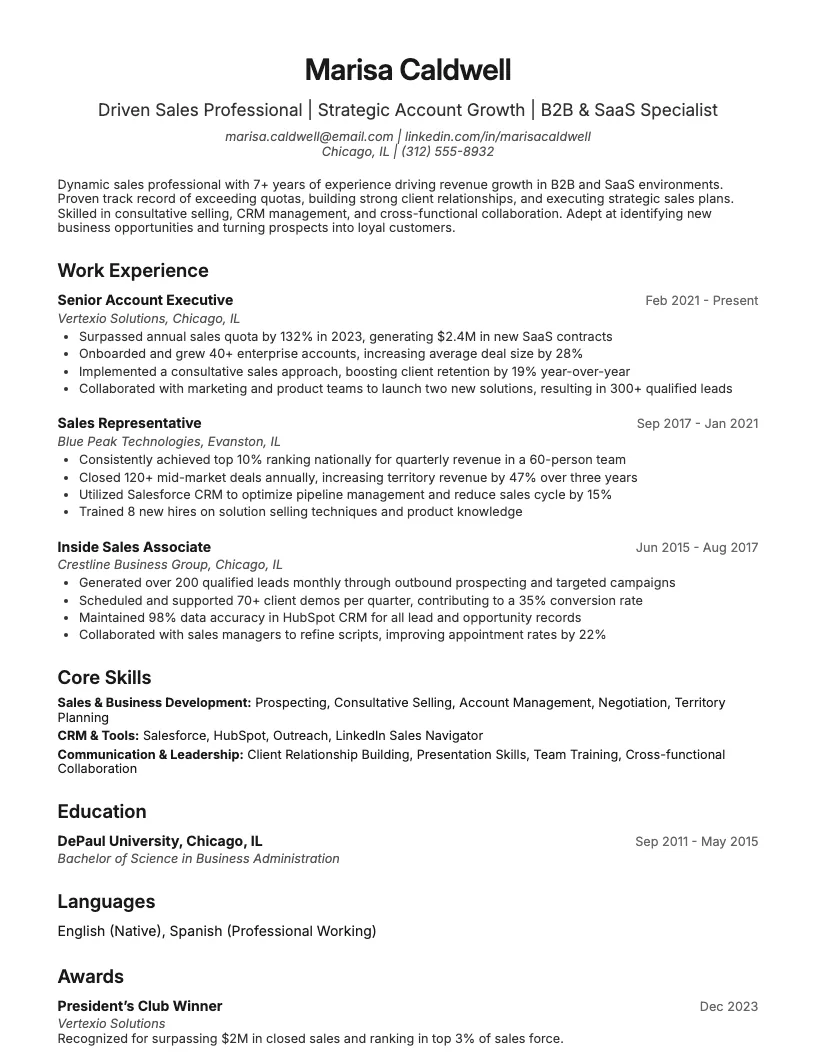
8 examplesStart from an example that already has them, and swap in your own.
Check your resume against the job you want
Scan your resume, see which skills and keywords the posting asks for that you are missing, and fix them before you apply.
Free to use • No credit card required