Event Manager Resume Keywords: The 8 Terms Every Posting Repeats
Here's the 8 keywords event manager postings repeat most, which software and certifications to name, and how to write bullets that prove them on your resume.


Written by Marcus Rodriguez
ATS Optimization Specialist & Career Coach
Updated August 2026
Reviewed by Dr. Priya Sharma
Is your resume ATS-friendly?
Drop your resume in and see which of these skills a scanner can actually read, and which ones the job you want is asking for that you have not listed.
PDF or DOCX. Max 2MB.
We never share your resume or use it to train a model.
In This Guide:
What keywords do event manager job postings ask for most?
What keywords do event manager job postings ask for most?

I've read enough event manager postings to know they're not all asking the same thing. But eight words show up again and again, and if your resume is missing most of them, you're making it harder for a recruiter to see you as a match.
Event planning and coordination
This is the baseline term, and it's usually in the job title too. Write it the way the posting does - "event planning," "event coordination," or both if the listing uses both.
Budget management
Every manager-level posting wants this, not just "budgeting." Say what you managed: a dollar figure, a percentage saved, a number of events on that budget.
Vendor management and contract negotiation
These two travel together in most postings. If you've negotiated catering, AV, or venue contracts, name the vendor type, not just "negotiation."
Venue selection and site sourcing
Some postings say "venue selection," others say "site sourcing" or "RFP process" - same skill, different words. Match whichever term the posting you're applying to actually uses.
Logistics coordination
This covers a lot: travel, housing, registration, day-of execution. Don't just write "logistics" - pick the piece you actually ran, because that's what a hiring manager pictures when they read it.
Stakeholder and client relations
The mistake I see most often here is managers who list "communication" and stop. Postings want "stakeholder management" or "client relations" specifically - it signals you've reported to executives or clients, not just teammates.
Risk management
This one's easy to skip if you've never had an incident, but every posting above coordinator level asks for it. Contingency planning, crisis management, and safety compliance all count.
Post-event reporting and ROI analysis
This is what separates a manager from a coordinator on paper. If you've tracked attendee satisfaction, sponsorship ROI, or post-mortems, this is where that goes.
If you're not sure which of these eight terms a specific posting is actually weighting, that's exactly what ResumeJudge checks - it scans the posting against your resume and tells you which ones you're missing before you apply.
Which event software should you name on your resume?
Which event software should you name on your resume?
You don't need to list every tool you've ever clicked on. You need the handful that match what the posting asks for, named correctly.
Cvent
Cvent is the one I see requested most in corporate and conference-heavy postings. If you've used it for registration, agendas, or room blocks, say so by name - "Cvent" gets noticed by a scanner in a way "event registration software" doesn't.
Eventbrite
Eventbrite shows up everywhere from nonprofit galas to small corporate events. It's lower-stakes than Cvent on a resume, but still worth naming if ticketing or registration was part of your job.
Bizzabo
Bizzabo tends to appear in postings for larger conferences and hybrid events. Name it only if you've actually run something through it - a tool you list but can't speak to in an interview does you more harm than good.
Whova
Whova is common in the same world as Bizzabo - conferences, trade shows, networking-heavy events. If your experience is more weddings or private events, skip it; naming tools outside your lane is a tell to anyone reading closely.
Social Tables
Social Tables covers floor plans and seating, so it's most relevant if you've handled venue layouts yourself. It's a smaller keyword, but a precise one - it signals you've done the hands-on logistics work, not just the planning.
Asana, Trello and Monday.com
These three get used almost interchangeably across event postings, so match whichever one the job listing names rather than substituting your own favorite. This is also where logistics coordination and your day-to-day task tracking overlap.
Salesforce and HubSpot
If you've touched sponsor or attendee data, these are worth naming - they tie into stakeholder and client relations and show you've worked with real CRM systems, not just spreadsheets.
Excel (pivot tables, budget tracking)
Here's a mistake I see constantly: people write "Microsoft Office" and call it done. Nine times out of ten, that line should instead say "Excel (pivot tables, budget tracking)" - it's specific, it matches what budget management actually requires, and it reads as a real skill instead of a default.
Once you've picked your specific tools, it's worth running the resume against the actual posting - ResumeJudge will flag any of these names the job asks for that your draft is still missing.
Canva and Adobe Creative Suite
These round out the list for anyone doing event collateral - signage, social graphics, programs. Don't force them in if design wasn't part of your role; a tool with no matching experience behind it just invites a question you can't answer well.
Which soft skills belong on an event manager resume, and how do you prove them?
Which soft skills belong on an event manager resume, and how do you prove them?
Skip the adjective list. I've read hundreds of these resumes, and the ones that get a callback never say "excellent negotiator" or "great under pressure" - they show it happening in a bullet.
Negotiation
Negotiation on an event manager resume means vendor contracts, not haggling. Show the number: a lower catering rate you locked in, a cancellation clause you added, a percentage you shaved off an AV bill.
Composure under pressure
Every posting wants this because event day always breaks something. Instead of writing "calm under pressure," describe the thing that broke and what you did about it - a vendor no-show, a room flip you had to redo in an hour.
Attention to detail
This is the word that shows up on almost every posting I've pulled apart, and it's also the laziest to claim. Prove it with a number instead: zero run-of-show errors across a season, a checklist that cut post-event fixes.
Time management and multitasking
Managers run several events at once, so this isn't optional. The proof is concurrency - how many events you ran in parallel, or how far ahead of deadline you delivered a run-of-show.
Cross-functional collaboration
Name the departments you actually coordinated with - marketing, sales, facilities, catering - because "collaborative" alone tells a hiring manager nothing about scope.
Delegation and team leadership
This is where you separate manager from coordinator. State the team size you led or the number of volunteers you supervised; a bare number does more work than "strong leader."
Client communication
For managers who sit across the table from clients, this means expectation-setting and status updates, not just being friendly. Mention the cadence - weekly check-ins, post-event debriefs - if you have it.
How to show a soft skill in a bullet instead of listing it
Nine times out of ten, the fix is the same: take the adjective out and put a verb and a number in its place. "Strong negotiator" becomes "negotiated vendor contracts that cut catering costs 12%."
If you're not sure which of your bullets still read like adjectives, that's exactly the kind of gap ResumeJudge flags - it checks your resume against a posting and tells you which required skills are only asserted, not proven, then rewrites the bullet for you. See where to place these once you've written them, or jump straight to common questions.
Where do you put these keywords on the resume?
Where do you put these keywords on the resume?
Placement matters as much as which words you pick. I've seen resumes packed with the right keywords that still got filtered out because they sat in the wrong spot.
In your summary
Your top three lines get scanned first, by a bot and by a human. Put your strongest keywords here: your title, your budget size, and one or two event types you run.
Something like "Event Manager with 6 years running corporate conferences and galas, managing budgets up to $500K."
In your job title line
If your actual title was "Senior Coordinator" but the posting says "Event Manager," and the work matches, put "Event Manager" in your resume title line too. See which job title to write on your resume for the honesty line.
In your experience bullets
This is where most keywords should live, not in a list. A bullet that says "Negotiated vendor contracts, cutting catering costs 18% across 20 annual events" carries three keywords and proves them at once.
A skills list alone proves nothing.
In your skills section
Still worth having, for the software names and certifications that don't fit naturally into a sentence. Cvent, CMP, Excel - these belong in a list because nobody writes "utilized Excel" as a bullet.
In your certifications and education
If you hold a CMP or CSEP, it's a keyword and a credential at once. List it near your name or in its own line - don't bury it at the bottom under a degree from ten years ago.
How many keywords to include
I aim for 15 to 25 across a full resume, spread across all five spots above. Fewer than that and you're not matching enough of the posting; more and it starts to read like a list, not a career.
Before you submit, running your resume and the job posting through ResumeJudge will show you exactly which of these five spots are still missing something the posting asked for.
What does an event manager resume bullet with keywords in it look like?
Is your resume good enough?
Drop your resume in and see which of these skills a scanner can read, and which ones the job you want is asking for that you have not listed.
Upload your resumeFree. PDF or DOCX. We never share your resume or use it to train a model.
I read hundreds of these resumes, and the bullets almost always fail the same way: they say what the person was responsible for, not what happened because of them. A keyword sitting inside a duty statement barely registers.
The same keyword sitting inside a result gets remembered.
Budget and cost savings
Don't write "managed event budgets." Write the size of the budget and what you did to it - "managed a $500K annual events budget, cutting costs 11% by consolidating vendor contracts."
That single line carries budget management, cost savings, and vendor negotiation without listing any of them.
Venue sourcing and vendor contracts
Name the number of venues or vendors, not just the activity: "sourced and negotiated contracts across 10+ venues annually, saving $30K." Site selection and contract negotiation are both in there, doing real work instead of sitting in a skills list.
Event volume and scale
Recruiters skim for scale fast, so put it up front: "planned and executed 30+ corporate events annually" or "delivered a 2,000-person summit." If you run a mix of sizes, lead with the biggest one you're proud of.
Attendee growth and satisfaction
Growth numbers and satisfaction scores both count as proof, and they read differently - one shows reach, one shows quality. "Grew attendee acquisition 35% through multi-channel marketing" and "raised attendee satisfaction to 98%" are doing different jobs; use both if you have them.
Sponsorship and revenue
If you touch the money side at all, say so with a figure - sponsorship sales, ticket revenue, fundraising totals. "Drove $410K in sponsor upsells through targeted outreach" tells a hiring manager you're not just logistics.
Team and volunteer supervision
Team size is a keyword hiring managers scan for on its own. "Supervised a team of 12 staff and 30 volunteers for a $1.2M gala" packs headcount, budget, and event type into one line.
Weak bullet vs. rewritten bullet
A weak bullet vs. one with keywords proven
Manage event coordinators and plan events.
Manage a team of 5 event coordinators, overseeing 30+ events annually.
Same job, same person - one gets past a scanner, one doesn't. If you're not sure which of your own bullets are still in the weak column, ResumeJudge will scan your resume against a posting and rewrite the flat ones for you, in the wording that posting actually uses. For where to pull your numbers from if you never tracked any, see which numbers to attach.
Which numbers should you attach to these keywords?
Which number to use for which metric
| Metric | Example number | What it proves |
|---|---|---|
| Budget size | $500K annual budget | Scope of responsibility |
| Events per year | 30+ events annually | Volume |
| On-time delivery | 98% on-time milestones | Reliability |
| Attendee satisfaction | 4.2 to 4.6 rating | Quality |
| Sponsorship revenue | $220K in sponsorship | Revenue impact |
| Team size | 12 staff, 30 volunteers | Scale of leadership |
A keyword with no number next to it is a claim nobody can check. "Budget management" tells a hiring manager nothing. "$500K budget" tells them exactly what you can be trusted with.
Budget size and cost savings
State the total budget you managed, and separately what you saved against it - the total shows scope, the saving shows what you did with it. See budget and cost savings for how that reads as a finished bullet.
Events per year and attendee counts
Event counts range from 20 a year for a small team to 500+ for someone running high-volume corporate programs, and attendee counts swing just as wide - a 2,000-person summit is a very different resume line than a 30-person board dinner, so don't round it away.
On-time delivery
This one gets skipped constantly, and it shouldn't. "98% on-time milestone completion" is a real metric that plenty of event managers actually track in their project tools - if you ran things through Asana, Trello, or Monday.com, you probably have this number sitting in a report already.
Attendee satisfaction and NPS
If you ran post-event surveys, you have this number. "Raised attendee satisfaction from 4.2 to 4.6" or a straight percentage increase both read well, and I'd take either over "received positive feedback" every time.
Sponsorship and ticket revenue
If sponsorship or ticket sales touched your role at all, put the dollar figure down. See sponsorship and revenue for how to word it in a bullet.
Team size
Count the people you managed directly, plus volunteers if you supervised them separately. See team and volunteer supervision for how to word that as a full bullet.
What to use if you never tracked numbers
You still have more than you think. Guest count, event count, and days-until-launch are all numbers you can reconstruct from an old run sheet or invitation list, and a rough number beats no number every time.
If you're not sure which of your numbers actually belong on the page, run your resume against a posting in ResumeJudge - it'll flag which metrics the job actually asks for so you're not guessing.
How are event manager keywords different from event coordinator or event planner keywords?
Keywords by role level
| Level | Keyword focus | Example terms |
|---|---|---|
| Coordinator | Day-of execution | Registration, on-site logistics, AV setup |
| Manager | Budget and team | Budget management, contract negotiation, ROI analysis |
| Director | Strategy | Financial forecasting, aligning events with objectives |
Titles get used loosely in job postings, but the keywords behind them split into three levels. Pick the wrong one and your resume reads as under- or overqualified before anyone looks at your experience.
Event coordinator: day-of execution words
Coordinator postings lean on execution: registration management, vendor communication, on-site logistics, setup and teardown, AV setup, staff scheduling. It's hands-on-the-day language.
Event manager: budget, team and profit words
Manager postings shift toward running the event as a business. Budget management, contract negotiation, ROI analysis, team leadership, stakeholder management. I've reviewed plenty of resumes stuck on coordinator words when the person had clearly been managing a budget and a team for years - that's the gap that costs interviews.
Event director: strategy and forecasting words
Director-level postings want vision-setting: strategic direction, financial forecasting, aligning events with client objectives. If you've built a budget from scratch or set the goals for a program, that's director language, not manager.
Which job title to write on your resume
Match the exact title the posting uses - ATS ranks exact title matches higher than a close synonym. If your real title was "events lead" but you're applying to "event manager" roles, write the posting's term and keep your actual title as a parenthetical. Before you submit, run the posting and your resume through ResumeJudge - it'll tell you whether your bullets read as coordinator, manager, or director level, and rewrite the wording to match the one the posting is actually asking for.
Which keywords change depending on the type of events you run?
The word "event" on your resume doesn't tell a hiring manager much on its own. The type of event you run is what they're actually screening for, and I've seen plenty of strong resumes get passed over because they never named it.
Corporate events and conferences
Here you want words like sales kickoffs, product launches, executive retreats, and breakout session management. If you've handled sponsorship decks, brand compliance, or post-event reporting for a business audience, say so directly - those are the terms a corporate recruiter is scanning for.
Weddings and private events
Wedding and private-event resumes lean on a different set entirely: ceremony logistics, floor plan design, vendor coordination with photographers and florists, and day-of timeline management. Guest management and RSVP tracking belong here too.
Nonprofit galas and fundraising
Fundraising events call for gala planning, silent and live auctions, donor relations, and volunteer coordination. If you've worked under grant requirements or nonprofit compliance rules, that's worth a line - it signals you already know the constraints these roles run under.
Trade shows and exhibitions
Trade show experience is about booth logistics, exhibitor relations, and lead retrieval. Mention any registration or badging systems you've used, since that's often what separates a generalist from someone who's actually run a show floor.
Catering and banquet events
Banquet-side roles want menu development, food and beverage operations, and catering software like Delphi. Ties to hospitality or hotel operations strengthen this further.
Virtual and hybrid events
Virtual and hybrid work needs its own vocabulary: livestreaming, breakout rooms, chat moderation, and platforms like Zoom or Cvent Virtual. Attendance rate and engagement score numbers prove you can run one, not just attend one.
Pulling the right set for a specific posting is tedious by hand - ResumeJudge reads the job description and rewrites your resume with the exact event-type language it's asking for, instead of you guessing which version to use.
Which certifications and credentials should you list as keywords?
Which certifications and credentials should you list as keywords?
I don't push certifications on every resume I look at, but for event manager roles they earn their space. They're one of the few keywords that prove you didn't just pick up the vocabulary from a job posting.
CMP (Certified Meeting Professional)
This is the one hiring managers recognize on sight. If you have it, put "CMP" right after your name or in your summary, not buried in an education line at the bottom.
CSEP (Certified Special Events Professional)
CSEP carries more weight for social and special events than corporate ones. If you're aiming at weddings, galas, or private events, this credential matches the event type better than CMP does.
CMM (Certificate in Meeting Management)
CMM is aimed at people already managing a meetings function, not planning individual events. List it if you have it, but don't chase it before CMP if you're earlier in your career.
CGMP (Certified Government Meeting Professional)
Only relevant if you've worked government or public-sector meetings. Outside that world, it means nothing to a hiring manager, so don't list it hoping it reads as a general credential.
PMP and CAPM
I see these more on event manager resumes that lean toward large-scale corporate or conference work, where budget and timeline discipline get treated the same as a construction project. CAPM is the entry point if you don't have the work hours PMP requires yet.
CPCE (Certified Professional in Catering and Events)
If your background touches catering, banquets, or food and beverage events, CPCE signals that specifically. It's a smaller credential than CMP, but it's the right one for that lane.
MPI, PCMA and ILEA memberships
Membership isn't a certification, but recruiters scan for these names anyway. List them if you're active, not just signed up once.
Where to put them on the page
Certifications go in your certifications and education section if they're not required by the posting, or higher up near your summary if the listing names them directly. Before you finalize placement, run the actual posting through ResumeJudge - it'll tell you which of these credentials the employer is actually screening for, and fix the wording in your resume to match theirs.
Which keywords can you use if you have no event management experience yet?
Which keywords can you use if you have no event management experience yet?
If you've never had "event manager" in a job title, you still have more of this on your resume than you think. You just have to translate it.
Project coordination
Any job where you tracked a timeline, kept a budget on target, or made sure a deadline was hit is event coordination in different clothes. Say it that way: "coordinated project timeline across five stakeholders" shows a hiring manager the same underlying skill as logistics coordination, even though it isn't written in event words yet.
Volunteer and campus event work
A campus fundraiser or a club's fall mixer counts. I've seen entry-level resumes get interviews off a single bullet like "planned three-day campus fundraiser, coordinated five vendors, delivered 220 attendees under a $1,500 budget."
Scope and a dollar figure make it real.
Vendor sourcing from another job
Ordered from suppliers, compared quotes, managed a delivery schedule? That's vendor sourcing.
Name the vendors you worked with, even if the job title never said "events."
Budget tracking from another job
If you've ever owned a spending line in Excel or reconciled a P-card, you've done budget management. Write it as budget tracking or cost control, and it will match what these postings are scanning for.
Customer service and hospitality
Serving customers under pressure, juggling multiple requests at once, keeping people calm when something goes wrong - that's composure and client communication, two of the soft skills hiring managers weight heavily.
Course names and workshops that carry keywords
A hospitality certificate, an event planning workshop, even a project management course, name it exactly as the school or provider titled it. If you're not sure which of these actually match a posting you're chasing, ResumeJudge will scan your resume against that job description and tell you which of your transferable bullets already land and which ones need sharper wording.
How do you pull the right keywords out of a specific job posting?
How do you pull the right keywords out of a specific job posting?
Generic advice gets you generic keywords. The posting in front of you is the only list that matters for this application.
Step 1: Copy the posting into a blank document
Paste the whole thing, not just the bullet points.
Requirements, "about us," even the benefits section sometimes name a tool or certification you'd otherwise miss.
Step 2: Mark the event types, tools and metrics it names
Highlight every event type (corporate offsite, gala, trade show), every software name (Cvent, Bizzabo, Whova), and every number they mention, like a budget size or attendee count.
That's your target list. Nine times out of ten it's shorter than people expect, maybe 15-20 terms.
Step 3: Check which ones you can honestly claim
Go through the highlighted list and cross out anything you can't back up in an interview.
I've seen candidates list six platforms and freeze when asked about the third one. Claim what you've used.
Step 4: Match its wording, not your own
If the posting says "vendor negotiation" and your resume says "supplier relations," change your resume.
ATS matching is often literal, and a synonym you're proud of can score as a miss. This is where checking soft skills against their exact phrasing matters too.
Step 5: Place them where they will be read
See where these keywords actually belong for which spot on the page each term should go in.
ResumeJudge does steps 2 through 5 for you: feed it the posting and your resume, and it flags what's missing, then rewrites your bullets and skills section in the posting's own language.
Mistakes that get a resume filtered out
The biggest one: sending the same resume to every posting. A close second is stuffing keywords into a block at the bottom with no context, which reads as filler to a human reviewer even when it passes the scan.
Frequently Asked Questions
How many keywords should an event manager resume have?
Aim for 15 to 25 relevant keywords pulled from the specific posting, not a fixed number that applies to every resume. ResumeJudge scans your resume against the job description and shows you exactly which of the posting's terms are missing, so you're not guessing at a count. Spread them across your summary, skills section, and bullet points rather than piling them all into one list.
Do I need a separate skills section, or is that keyword stuffing?
A skills section is fine, and it isn't keyword stuffing as long as everything in it is true. Stuffing means listing terms just to trip a resume-screening scan; a skills section only becomes stuffing when it's padded with things you can't back up elsewhere on the resume or in an interview. Keep it short, list the hard skills and tools you actually use, and let your work-experience bullets prove them with real numbers and outcomes.
Should I list Microsoft Office?
No, it's too generic to help you, and most hiring managers assume you already know it. Name the specific skill instead, like Excel (pivot tables, budget tracking) or PowerPoint (client presentations) - that tells a recruiter more and still contains the exact term a screening system is looking for.
Can I list a tool I have only used once?
You can, but call it familiar with rather than proficient in, and be ready to talk about it if asked. Listing a tool you used once as a core skill can backfire if someone tests you on it in an interview. If the posting names that tool directly, even a single, honest mention of real use is usually worth including.
Do keywords still matter if a recruiter reads my resume directly?
Yes. Most companies still run resumes through a screening system before a person sees them, but even once a human is reading, the same keywords tell them fast that you've done the work the posting is asking for. A resume without them can still land an interview, but it makes the recruiter work harder to connect your experience to the job.
Should I write 'event manager' if the posting says 'events lead'?
Match the posting's exact title, "events lead" - screening systems and recruiters both weight an exact title match higher than a synonym. Use it in your summary or headline, then keep "event manager" in your work history if that's your actual past title. Once your title and keywords match a posting, ResumeJudge can also write the cover letter for that specific job and apply on your behalf with a resume tailored to it, so getting this line right pays off past just the resume itself.
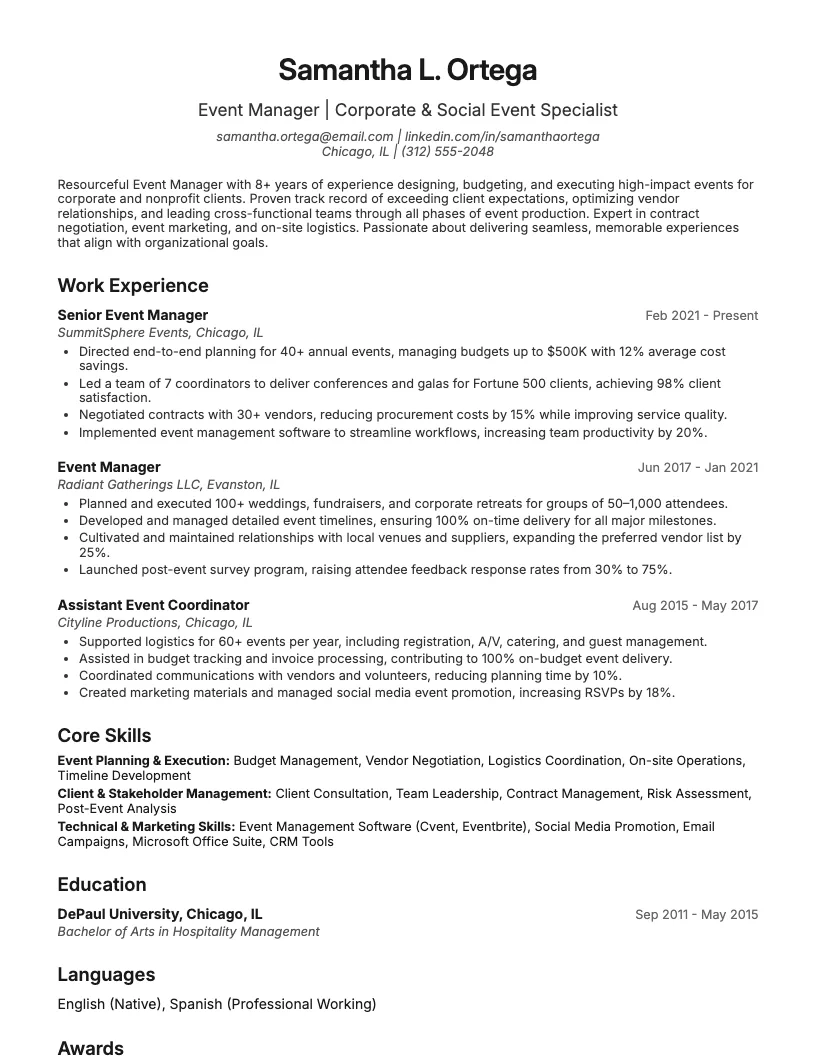
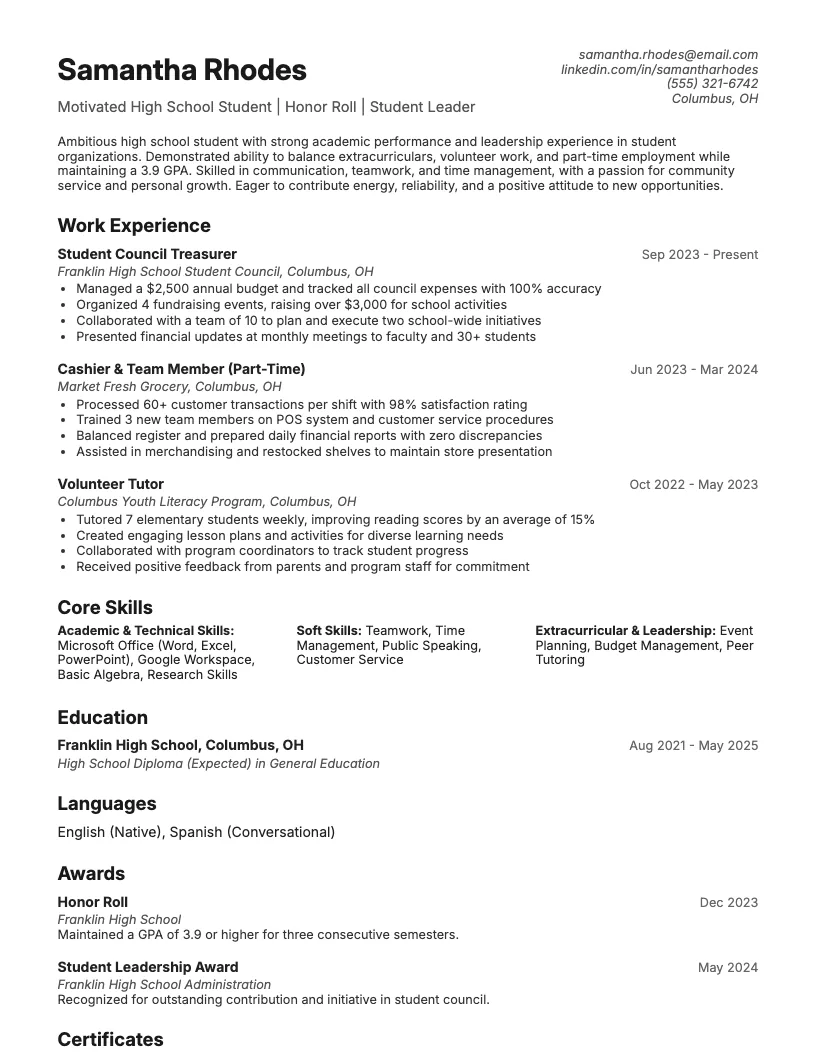
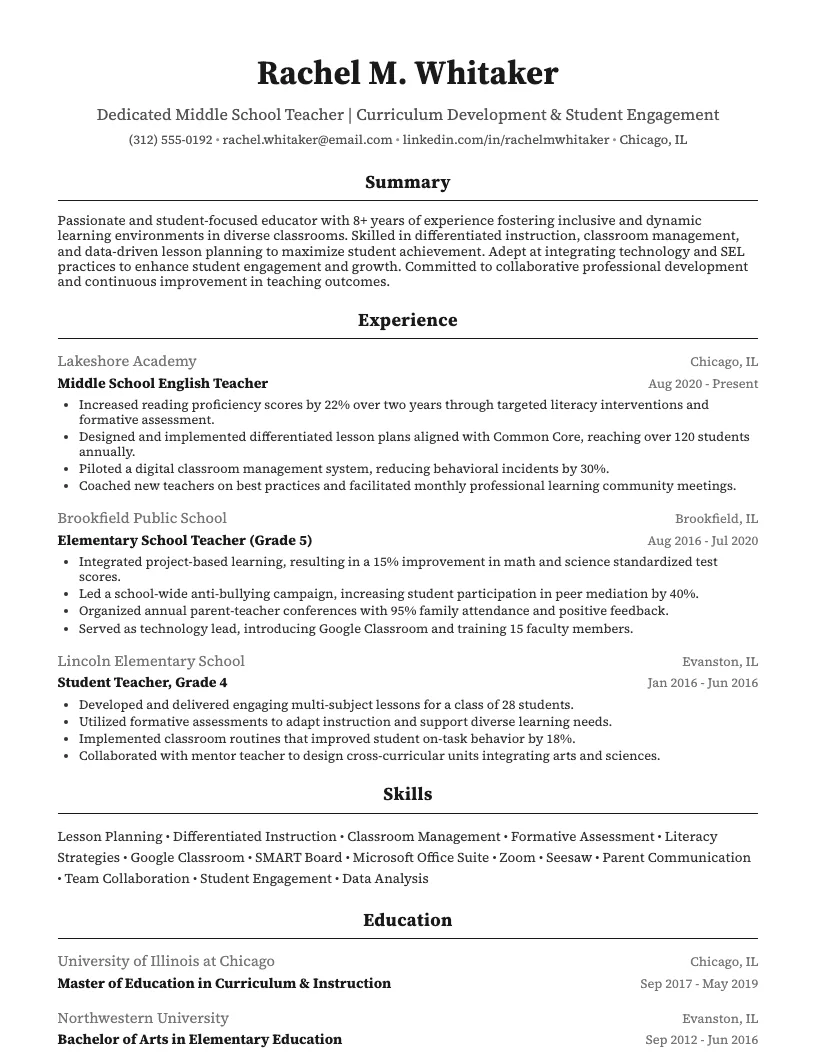
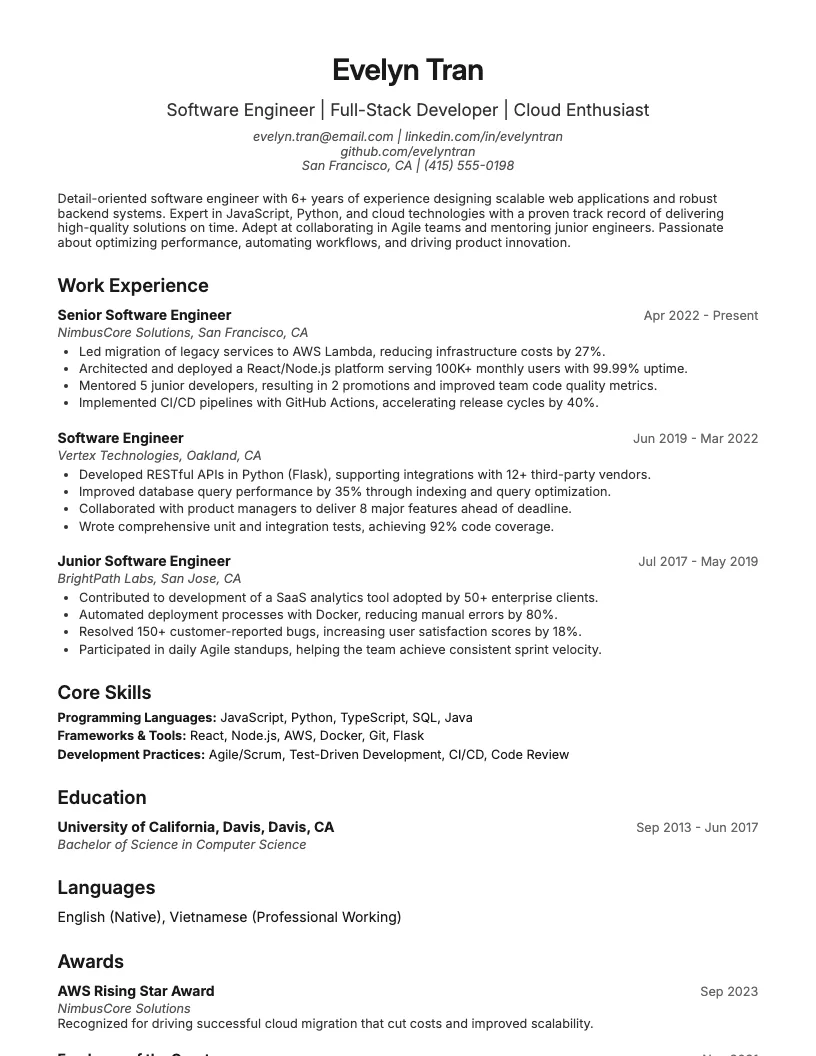
See these skills on a real resume
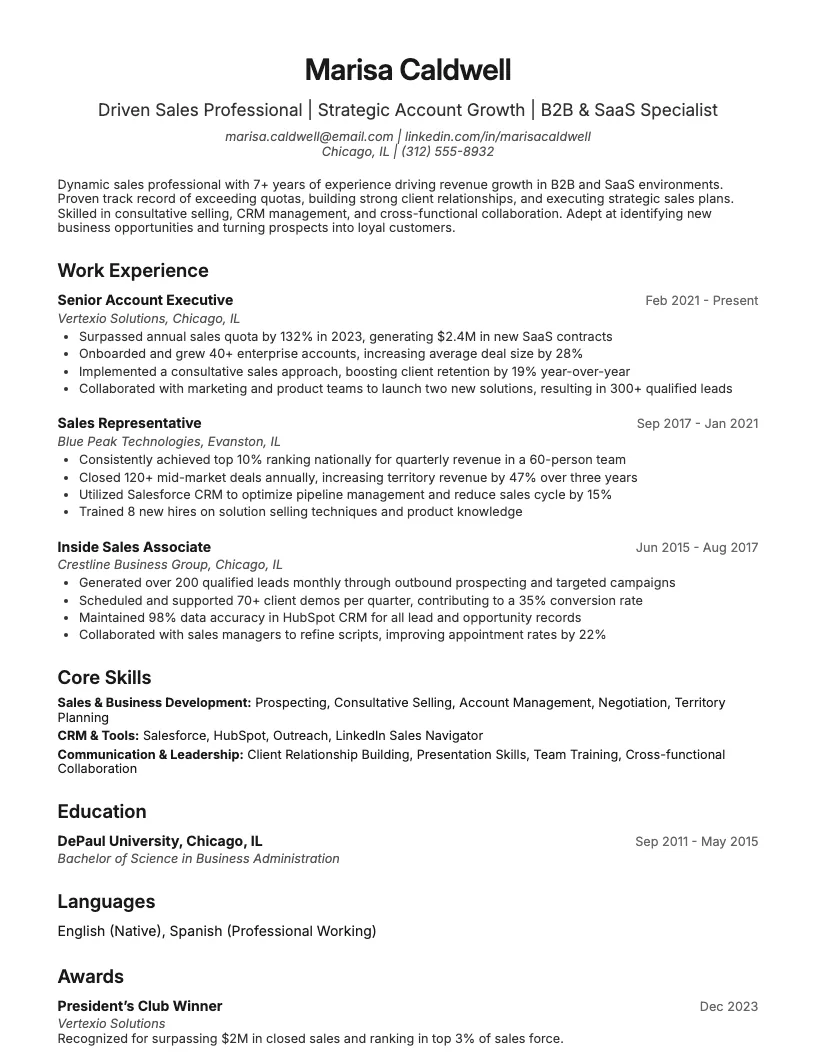
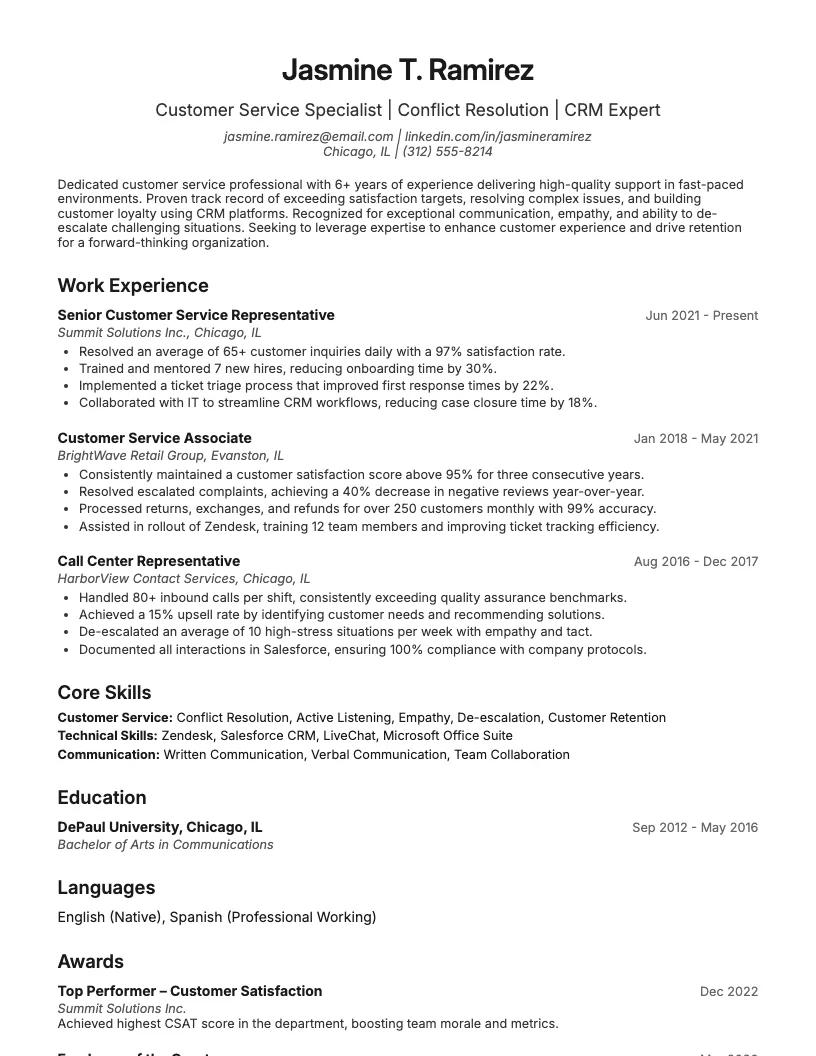
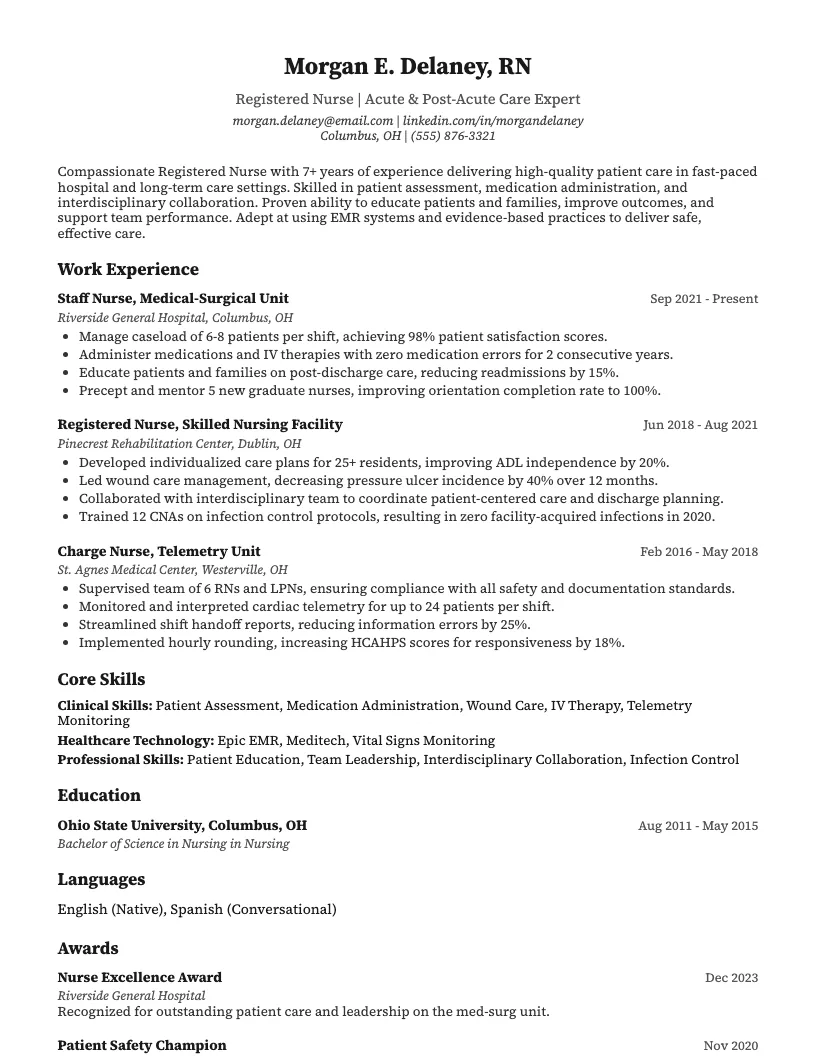
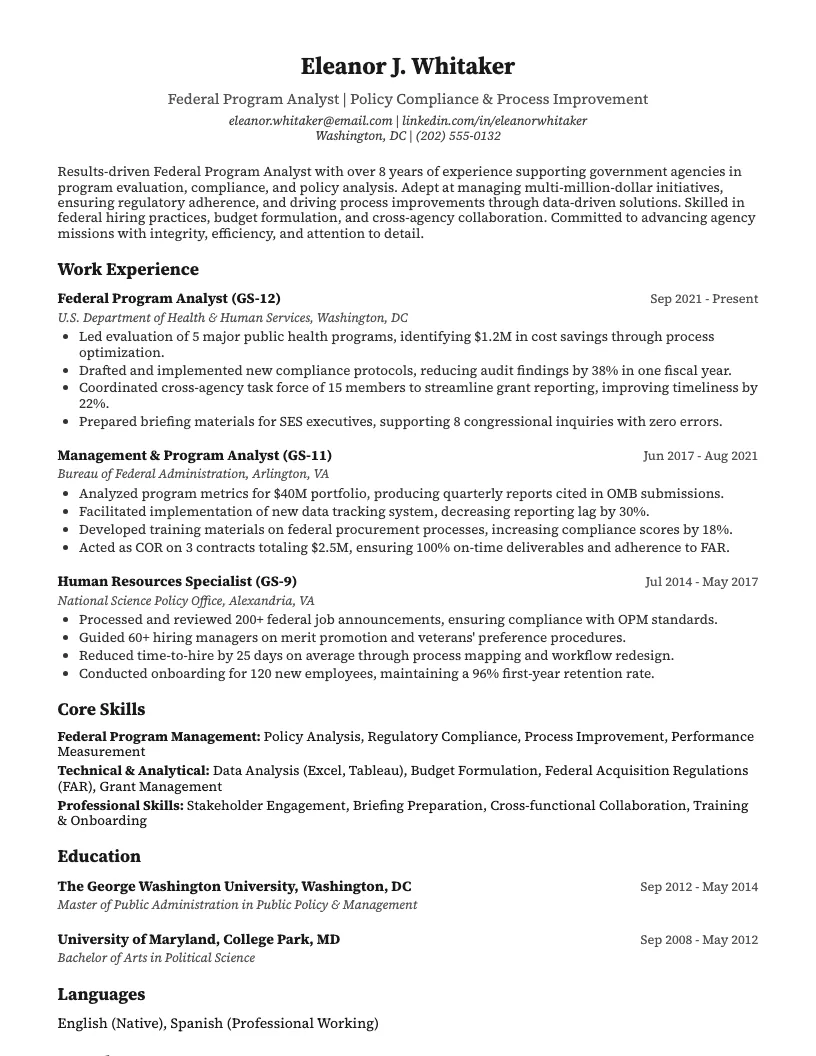
8 examplesStart from an example that already has them, and swap in your own.
Check your resume against the job you want
Scan your resume, see which skills and keywords the posting asks for that you are missing, and fix them before you apply.
Free to use • No credit card required