Resume Synonyms: 10 Verbs I'd Cut, 6 Words to Retire, 6 Steps
I read resumes for a living. Here are the 10 verbs and 6 filler words worth replacing, plus a 6-step process for picking synonyms that fit what you did.


Written by Marcus Rodriguez
ATS Optimization Specialist & Career Coach
Updated August 2026
Reviewed by Dr. Priya Sharma
Is your resume ATS-friendly?
Drop your resume in and see which of these skills a scanner can actually read, and which ones the job you want is asking for that you have not listed.
PDF or DOCX. Max 2MB.
We never share your resume or use it to train a model.
In This Guide:
Which resume verbs are worth replacing, and what do you use instead?
Which resume verbs are worth replacing, and what do you use instead?

Read your own resume out loud and count how many bullets start with the same verb. If any verb opens more than one bullet, that verb is worth swapping.
I read resumes for a living, and the same handful of words show up on almost every one I see. They're not wrong.
They're just tired - a hiring manager skimming forty resumes in an afternoon stops registering a word they've already read forty times.
Here's the part people miss: the fix isn't finding the fanciest synonym in a thesaurus. It's picking the word that actually matches what you did, then backing it up with a number.
Worked
Replacing 'worked' with a specific action
Worked on reports
Executed weekly reporting for a 12-person team
"Worked" is the vaguest verb you can put on a resume - it tells the reader nothing about what you actually did.
Swap it for something that names the action: executed, performed, carried out, completed, operated.
If you ran a process end to end, say you operated it. If you finished something, say you completed or delivered it.
"Executed weekly reporting for a 12-person team" tells a hiring manager more in five words than "worked on reports" does in four.
Managed
Naming what kind of managing you did
Managed onboarding
Oversaw onboarding for 30 new hires
Nine times out of ten, "managed" is the right word - the problem is people use it for everything, whether they supervised twelve people or maintained a spreadsheet.
Save it for when you actually had authority over people, budget, or a process. Otherwise reach for supervised, directed, oversaw, coordinated, or administered.
Oversaw fits a process you watched start to finish. Coordinated fits work that crossed teams.
Supervised and directed both signal people reported to you.
"Oversaw onboarding for 30 new hires" reads as ownership. "Managed onboarding" reads like a line off the job posting.
Led
Backing 'led' with a headcount and a result
Led a team
Directed a team of five to cut onboarding time by 30%
If nobody reported to you, skip "led" - use it and a recruiter's next question is "led how many people?"
When you did have that authority, spearheaded, directed, chaired, and mentored each say what kind of leading it was, instead of the generic version.
Spearheaded fits something you started from nothing. Chaired fits a committee or a recurring meeting you ran.
Mentored fits leading that was one-on-one.
Pair whichever one you pick with a headcount or a result. "Directed a team of five to cut onboarding time by 30%" does more work than "Led a team."
Developed
"Developed" gets used for everything from writing code to building a spreadsheet, which is exactly why it stops landing.
Built, designed, established, launched, and pioneered each point at something more specific.
Built and designed work for something concrete you made. Established and launched are the ones to reach for when you started something that didn't exist before you touched it.
The trick is closing the loop - don't just say what you developed, say what it did once it existed. Grew signups, cut a process from three days to one, replaced a manual step.
Assisted
I get why "assisted" feels honest when you weren't the one leading a project. The trouble is it tells a hiring manager you were in the room, not that you did anything.
Try contributed, facilitated, supported, or coordinated, then name the actual task.
"Facilitated onboarding for new hires" or "Coordinated logistics for a 200-person event" says what you handled, without the built-in apology that "assisted with" carries.
Helped
Naming what your support actually enabled
Helped the sales team
Enabled the sales team to close 15% faster by building a shared pricing sheet
Same problem as "assisted" - it undersells the work, and it's the default verb on a lot of early-career resumes.
Supported, contributed, facilitated, and enabled carry more weight while staying honest about a supporting role.
Enabled is my favorite of the four, because it's precise - it says your work let someone else do something they couldn't have done otherwise. "Enabled the sales team to close 15% faster by building a shared pricing sheet" earns more credit than "Helped the sales team."
Collaborate
"Collaborate" isn't wrong. It's just so common that it stops meaning anything by the third bullet you use it in.
Partnered, coordinated, liaised, and consulted each describe a slightly different kind of teamwork - pick the one that matches what actually happened.
Partnered fits an equal working relationship. Liaised fits when you were the go-between for two groups.
Coordinated fits when you were the one pulling several people's work toward one deadline.
Provide
Naming the thing you actually delivered
Provided onboarding materials
Delivered onboarding materials used by 40 new hires
"Provide" describes an action with no shape to it. You provided support, you provided training, you provided value - provided what, exactly?
Delivered, supplied, generated, and equipped push you toward naming the thing you actually handed over.
Delivered fits a finished product or result. Generated fits anything measurable, like leads or revenue.
Equipped fits when what you gave someone was a skill or a tool.
"Delivered onboarding materials used by 40 new hires" beats "Provided onboarding materials" because it tells the reader the materials actually got used.
Ensure
"Ensure" shows up constantly in job postings, which is exactly why it reads as filler on a resume - it sounds like you copied the posting instead of describing your own work.
Confirmed, verified, maintained, and safeguarded are more specific about what kind of checking you were actually doing.
Verified fits a one-time check. Maintained fits something ongoing.
Safeguarded fits anything related to risk, compliance, or security.
If you're not sure which of these actually matches the language in a posting you're applying to, that's worth checking directly rather than guessing - see how do you pick the right synonym for your resume.
Responsible for
Turning a job duty into a result
Responsible for managing a $2M budget
Managed a $2M budget, closing the year 8% under plan
"Responsible for" is the one I flag most often, because it isn't really a verb at all - it's job-description language, and it puts the weight on your title instead of your results.
Cut the phrase and start the bullet with what you actually did: managed, oversaw, tracked, directed, coordinated, then the outcome.
"Responsible for managing a $2M budget" becomes "Managed a $2M budget, closing the year 8% under plan" - same fact, now it reads as a result instead of a duty.
If you'd rather not comb through every bullet by hand, ResumeJudge takes your resume and the job posting you're applying to and rewrites the wording itself, swapping in the verbs and phrasing that posting actually rewards.
What can you say instead of "strong", "passionate", "skills" and "experience"?
Six words show up on almost every resume that crosses my desk, and by the tenth time I've read "strong" or "passionate" in a single pile, neither one tells me anything.
They're not wrong, exactly. They're just empty - the kind of word a resume reaches for when the writer hasn't decided what to say yet.
Strong
Naming the result instead of the rating
Strong negotiator
Recognized for persuasive negotiating skills
"Strong communication skills" is the phrase I skip fastest, because it's on almost every resume in the stack and never once explains what actually happened.
Swap it for capable, clear, cogent, compelling, effective, influential, keen, persuasive, resilient, sharp, solid, or steadfast, and then finish the sentence with a result. "Recognized for persuasive negotiating skills" tells me something "strong negotiator" doesn't, because it names an outcome someone else noticed.
The word isn't really the fix. What the word forces you to do, if you pick a sharper one, is finish the thought.
Passionate
Proving the interest instead of naming it
Passionate about React
Built three side projects in React outside of work
Nobody gets hired because they were passionate. They get hired because of what the passion produced, and a resume that only claims the feeling skips the part that actually persuades anyone.
If you want a word for it anyway, curiosity, dedication, devotion, eagerness, or enthusiasm all read better than "passionate," mostly because they sound like traits you can point to rather than a mood you're asserting about yourself.
But the better move is to drop the adjective entirely and show the evidence instead. "Built three side projects in React outside of work" proves passion.
"Passionate about React" just asks me to take your word for it, and nine times out of ten I don't.
Skills
Turning a skills header into a real line
Skills: InDesign, Acrobat, UX Design
Core strengths include InDesign, Acrobat, and UX Design
"Skills" itself isn't a bad word, it's just a lazy header. Abilities, aptitudes, capabilities, competencies, expertise, proficiencies, qualifications, skill set, strengths, and talents are all fair swaps - ten of them, and most are more specific than the original.
"Core strengths include InDesign, Acrobat, and UX Design" reads better than "Skills: InDesign, Acrobat, UX Design," and it costs you nothing to write it that way instead.
What matters more than the word, though, is which skills make the list at all. Read the posting first and match your wording to it - a page full of the right synonym for the wrong skills still gets passed over.
Experience
Attaching a number to your experience claim
Extensive experience delivering projects
Track record of shipping on time across five product launches
"Experience" is a fine word on its own. The problem is almost nobody stops there - it's always "extensive experience," "proven experience," "experience in," and none of those three qualifiers add anything a hiring manager can actually use.
Background, history, and track record work as plain swaps when you want variety in a paragraph. But the fix that actually moves the needle is attaching a number to whatever kind of experience you're claiming: five years, three product launches, two team turnarounds.
"Track record of shipping on time across five product launches" beats "extensive experience delivering projects" every time, because it's a claim someone can check.
Excellent
Replacing a rating with a number
Excellent results
Noteworthy accomplishments include increasing website traffic by 300% and doubling conversions over a one-year period
Same problem as "strong" - it's a rating with nothing behind it. Accomplished, distinguished, exceptional, noteworthy, outstanding, remarkable, respected, and stellar are all better starting points, and there are eight of them to choose from.
But they're only better because they push you toward specifics. "Noteworthy accomplishments include increasing website traffic by 300% and doubling conversions over a one-year period" does work "excellent results" never will, because the number is what's actually convincing anyone.
That's the pattern across this whole section: the word is doing less work than whatever number sits next to it. Pick the sharper adjective, then make sure a figure follows it.
Effectively and successfully
These two show up at the start of a bullet almost as a reflex - "effectively managed," "successfully implemented" - and honestly, I'd cut both more often than I'd replace them.
If you do need the adverb, capably, competently, diligently, efficiently, productively, proficiently, and skillfully all say slightly different things, so pick the one that's actually true of how you worked rather than the one that sounds biggest.
"Effectively implemented the office-wide adoption of a new CRM system" is a fine sentence, but only because "office-wide adoption" is carrying the real weight. Take the adverb out and read the rest on its own - if it still stands on a number or a concrete result, keep the adverb.
If it doesn't, the adverb was covering for something that was never there.
How do you pick the right synonym for your resume?
How do you pick the right synonym for your resume?
You've got a list of stronger verbs now. The mistake I see next, nine times out of ten, is swapping words in at random just to sound different.
That's how you end up with a bullet that says "orchestrated" a task you actually just did once, alone, with no team involved. Picking the right synonym isn't about sounding smart.
It's a six-step check, and it takes less time than you'd think.
Step 1: Circle every verb you used more than once
Print your resume, or open it next to a blank doc, and mark every verb that shows up twice or more.
Most resumes I look at use "managed" or "worked" four or five times across a single page. That repetition is the actual problem, more than any one word being weak on its own.
A recruiter skimming for fifteen seconds sees the same word four times and reads it as one accomplishment stretched thin, not four different ones.
Once you've circled the repeats, go pull replacements for the verbs worth swapping and keep them next to you for the rest of this process. Don't touch a verb that only appears once.
If it's not repeated, it's not costing you anything, and changing it just adds risk for no gain.
Step 2: Read the job posting and see which words it uses
Open the posting you're applying to and read it the way you'd read your own resume, circling the verbs and skill words it repeats.
If the listing says "collaborated" three times and "built" twice, that's not an accident. Someone wrote that posting, and those are the words they'll search for when they scan applications.
This is the step people skip, and it's the one that matters most, because the "right" synonym isn't the fanciest one, it's the one already sitting in the job description.
I'll run your resume and the posting through ResumeJudge for you if you'd rather not do this by hand - it scans the posting and shows you exactly which of its words and skills are missing from what you've written, so you know which ones to work in before you touch a single bullet.
Step 3: Choose the word that matches what you actually did
Now line up your circled verbs against the posting's circled verbs and pick the pairs that genuinely describe the same thing.
This is where people get greedy. They see "spearheaded" on a synonym list and slap it onto a project they contributed to, not led.
Don't do that. If you coordinated a handoff between two teams, "coordinated" is right and "spearheaded" is a lie, even if it tests better with a scanner.
The honest version always reads stronger once you sit with it. A hiring manager who's read a thousand resumes can tell the difference between a verb that fits and one that's borrowed, and it makes them start doubting the rest of the page.
Match the word to the size of the thing you actually did, not to the size you wish it were.
Step 4: Put a number next to the new verb
Turning a stronger verb into a provable result
Streamlined the onboarding process
Streamlined onboarding, cutting new-hire ramp time from six weeks to three
A stronger verb with no number attached is still a weak bullet. It's just dressed better.
"Streamlined the onboarding process" tells me nothing. "Streamlined onboarding, cutting new-hire ramp time from six weeks to three" tells me you actually changed something and you can prove it.
The verb sets the tone, but the number is what a recruiter's eye stops on, and it's what separates a claim from a result.
If you genuinely don't have a number, a scope word will do. "Managed a team" is vague.
"Managed a team of six across two time zones" isn't. Every synonym you swap in during this step should come with something concrete riding next to it, even if that something is a headcount instead of a percentage.
Step 5: Check the tense of every bullet
This is the step everyone forgets, and it's the fastest one to fix.
Every bullet under a past job should be past tense: led, built, managed, delivered. Every bullet under your current job should be present tense: lead, build, manage, deliver.
I've read resumes with three tenses mixed inside a single job entry, which happens almost every time because a new verb got dropped in without checking what tense the sentence around it was already in.
Go bullet by bullet, job by job, and read only the first word of each line. That's the fastest way to catch a mismatch, because your eye stops noticing tense once it's reading the whole sentence for meaning instead.
Step 6: Read it back and cut anything that oversells
Once every bullet has a matched verb, a real number, and the right tense, read the whole page out loud.
If a sentence makes you wince, or makes you think "well, technically," that's the sentence to cut back. A synonym that's technically defensible but reads like a stretch does more damage than the plain, repeated verb you started with, because now the reader doesn't trust the rest of the page either.
This is also where filler adjectives tend to sneak back in around your new verbs, words like strong, passionate, and excellent that don't survive this same test. Cut anything you wouldn't say out loud to the hiring manager's face.
What's left is the resume you actually wanted.
Go deeper
Resume Synonyms for "Assisted"
30 alternatives to 'assisted' on a resume, grouped by how much credit each one claims, plus 7 bullets rewritten and a 4-step way to pick the right word.
Read MoreResume Synonyms for "Managed"
20 synonyms for managed, matched to what you actually did, plus a 4-step rewrite process and 6 before-and-after examples to fix your own bullets.
Read MoreAnother word for skills on a resume
10 real words to use instead of 'skills' on a resume, matched to what you actually did, plus swaps for 'interpersonal skills', 'problem solving', and ATS fit.
Read MoreResume Synonyms for "Collaborate"
See 10 strong synonyms for 'collaborate' on a resume, when to use each, a full 40+ word list, a rewritten bullet example, and when to still use 'collaborate'.
Read MoreResume Synonyms for "Developed"
36 alternatives to 'developed' for your resume, sorted by what you actually did, plus rewritten bullets, a 4-step rewrite process, and the ATS answer.
Read MoreResume Synonyms for "Ensure"
13 stronger alternatives to 'ensure' for a resume, sorted by what you actually did, plus a 4-step process for rewriting weak ensure bullets with real numbers.
Read MoreAnother word for experience on a resume
18 synonyms for 'experience' on a resume, sorted by when to use each, plus 6 bullets rewritten and a check on whether the swap trips up ATS scanners at all.
Read MoreResume Synonyms for "Helped"
30 verbs to replace 'helped' on your resume, sorted by what you actually did, with 6 rewritten before-and-after bullets and word picks for 8 industries.
Read MoreResume Synonyms for "Led"
16 words to swap for 'led' on your resume, sorted by what you actually did, with real before-and-after bullet examples and picks for 9 different career fields.
Read MoreResume Synonyms for "Passionate"
15 synonyms for 'passionate' on a resume, matched to 8 job types, with 7 before-and-after line rewrites showing exactly how to swap the word for proof.
Read MoreResume Synonyms for "Provide"
36 words to use instead of 'provide' on a resume, grouped by what they're good for, plus 10 real 'provided' bullets rewritten with working numbers.
Read MoreResume Synonyms for "Strong"
15 synonyms for 'strong' sorted by what they actually mean, a verb-swap trick, and the 4-step process for rewriting any resume bullet that leans on it.
Read MoreResume Synonyms for "Worked"
12 synonyms for 'worked' on a resume, what each one actually claims, how to pick the right one, 6 bullets rewritten before/after, and when to keep 'worked'.
Read MoreFrequently Asked Questions
Do stronger words help my resume get through an applicant tracking system?
No - applicant tracking systems match your resume against the specific skills and keywords in the job posting, not against how strong your vocabulary sounds. A human reader notices confident verbs; the software is just checking for the terms the posting asked for. ResumeJudge scans your resume against a posting and shows you exactly which of those required skills and keywords are missing, so you know what to fix before you apply.
What counts as a resume buzzword?
A buzzword is a word that sounds impressive but shows up on so many resumes it's stopped meaning anything - things like "team player," "results-driven," "synergy," or "go-getter." It names a trait instead of a result, so a hiring manager reading it has no way to tell if it's actually true of you. The fix is to swap the buzzword for the specific accomplishment that would prove it.
Which words should I leave off my resume completely?
The buzzwords in the answer above are the list, and "responsible for" and "in charge of" belong on it too, for the reason the Responsible for part of the verbs section gives. ResumeJudge rewrites wording like this for you, swapping it out for the actual skills and terms the job posting is looking for.
How many different verbs should one resume use?
There's no fixed number - it depends on how many bullets you have. The count that actually matters is how many times a single verb repeats, and Step 1 of the six-step check above has you circle those repeats before you swap anything.
Is there another word for "resume" itself?
Yes - CV (curriculum vitae), work history, professional profile, and qualifications summary are all used for the same kind of document, though which term is expected depends on where you're applying. In the US, "resume" and "CV" are often used interchangeably for job applications, while in academia a CV is a longer, more detailed document than a resume. Match your file, and its title, to whatever term the job posting or application portal actually uses.
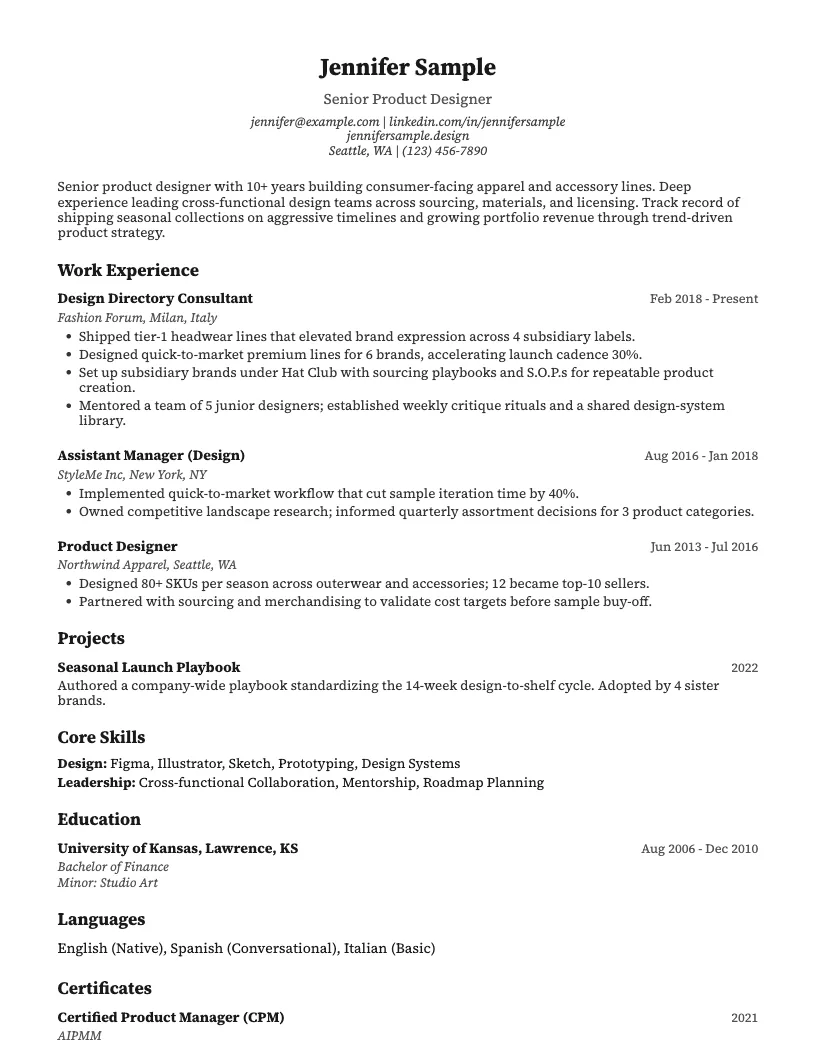
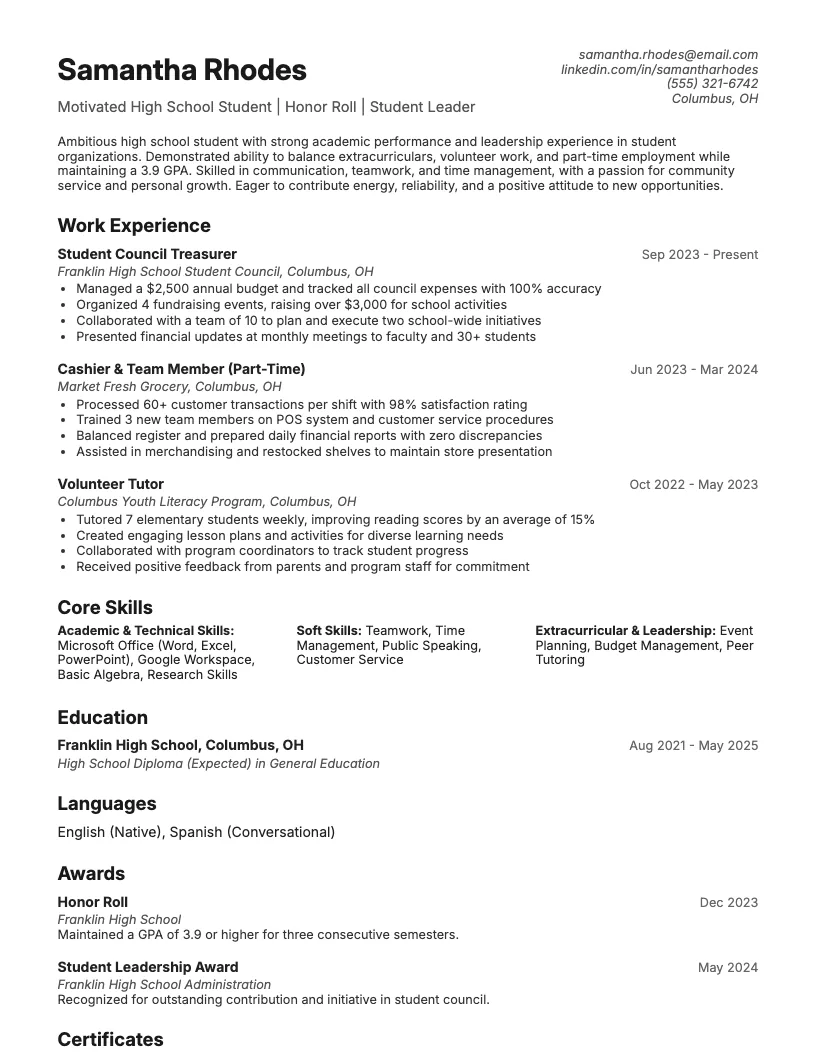
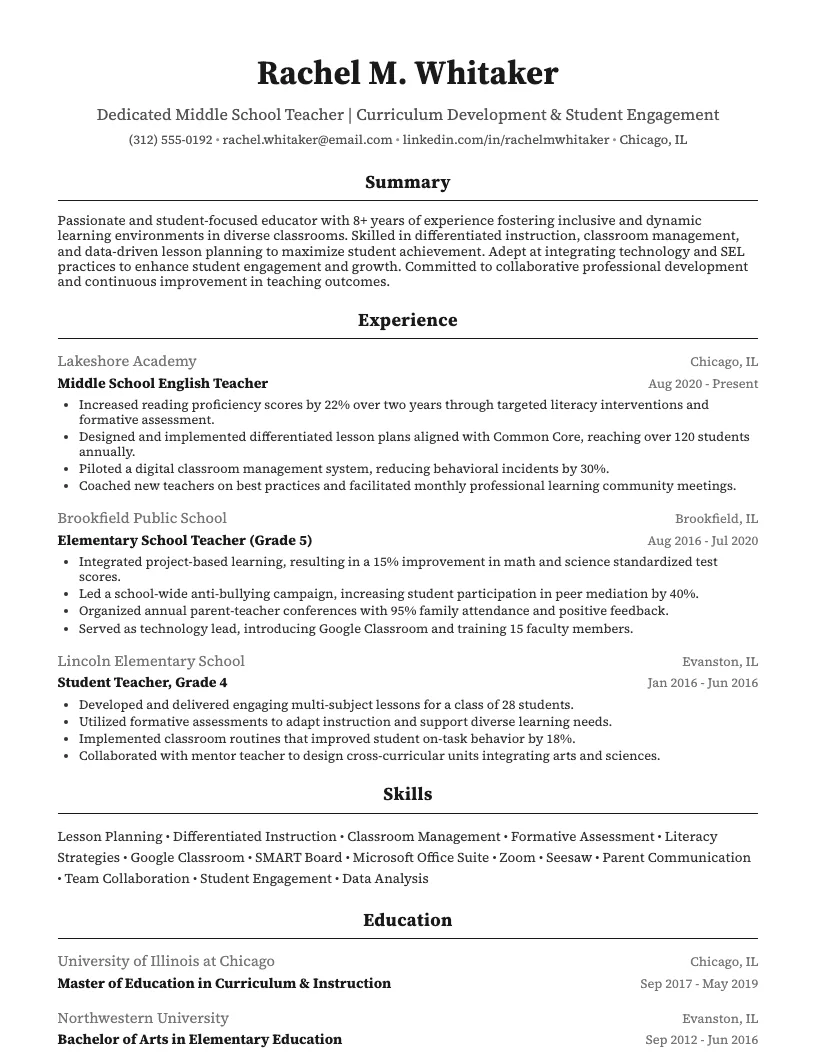
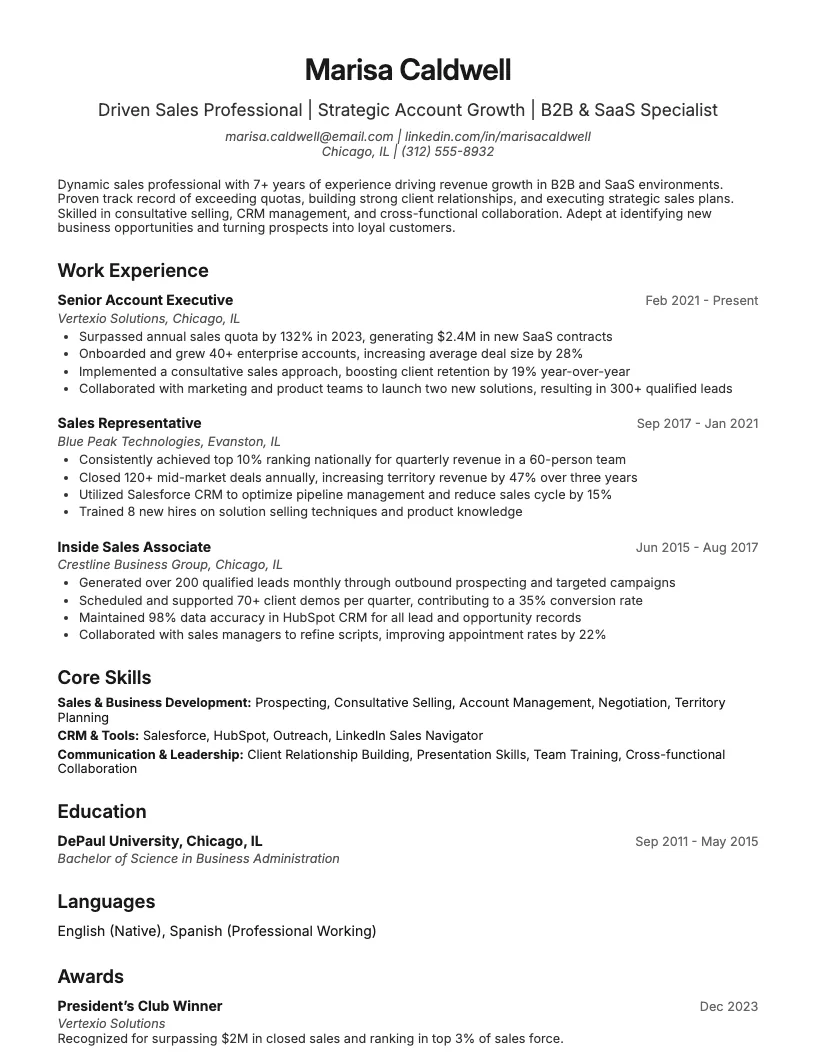
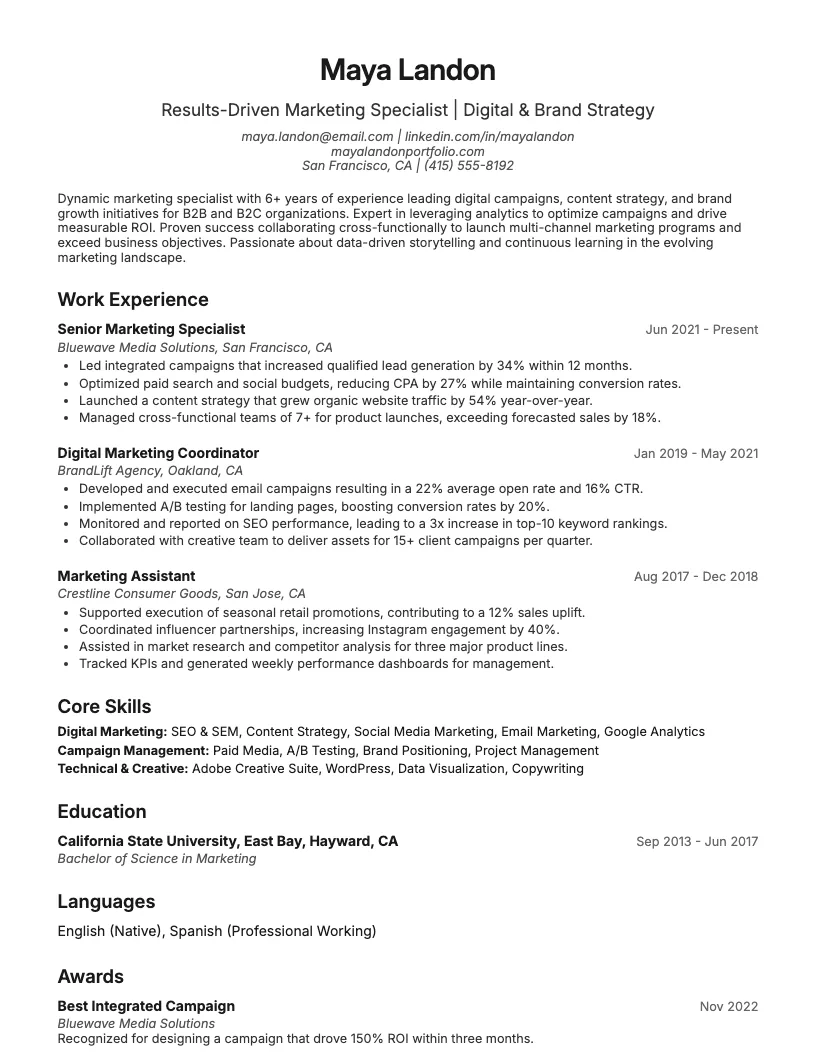
See these skills on a real resume
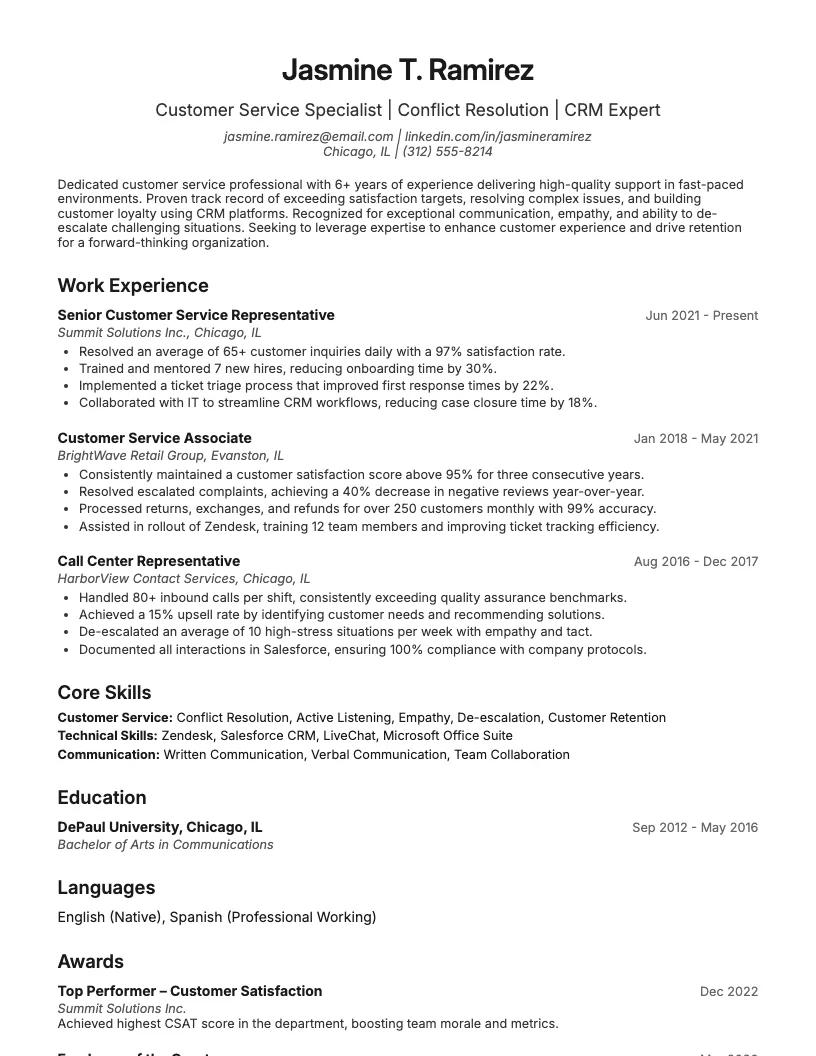
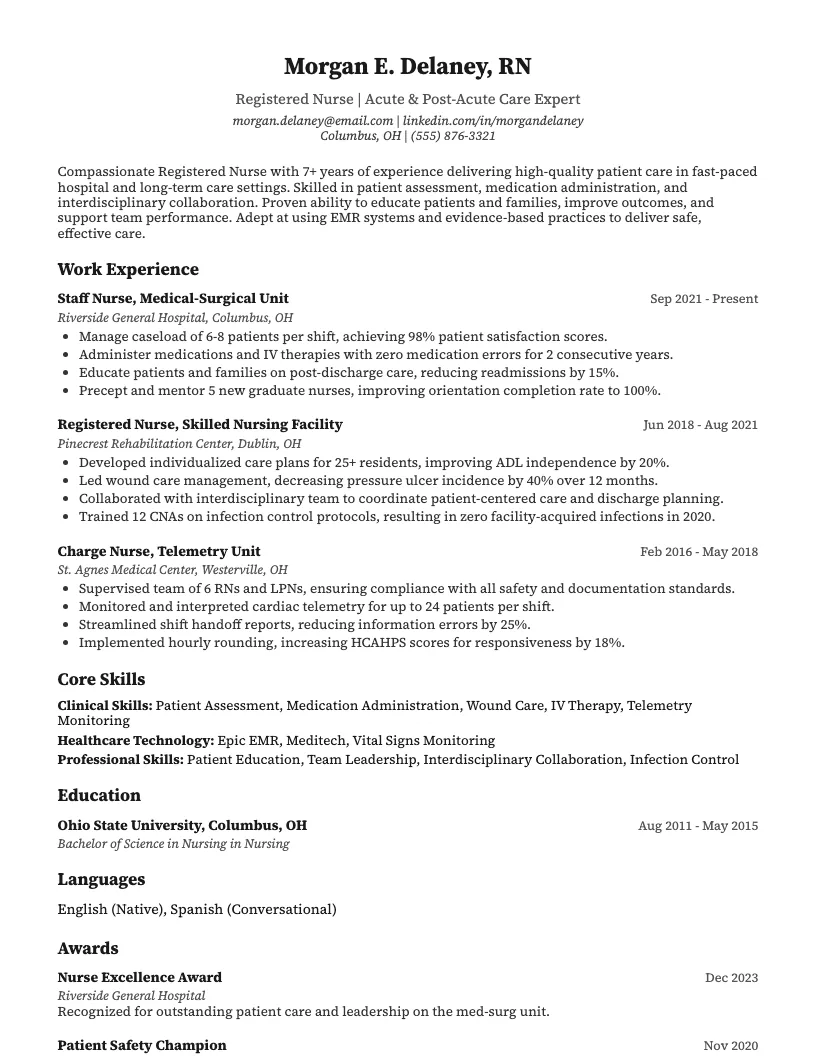
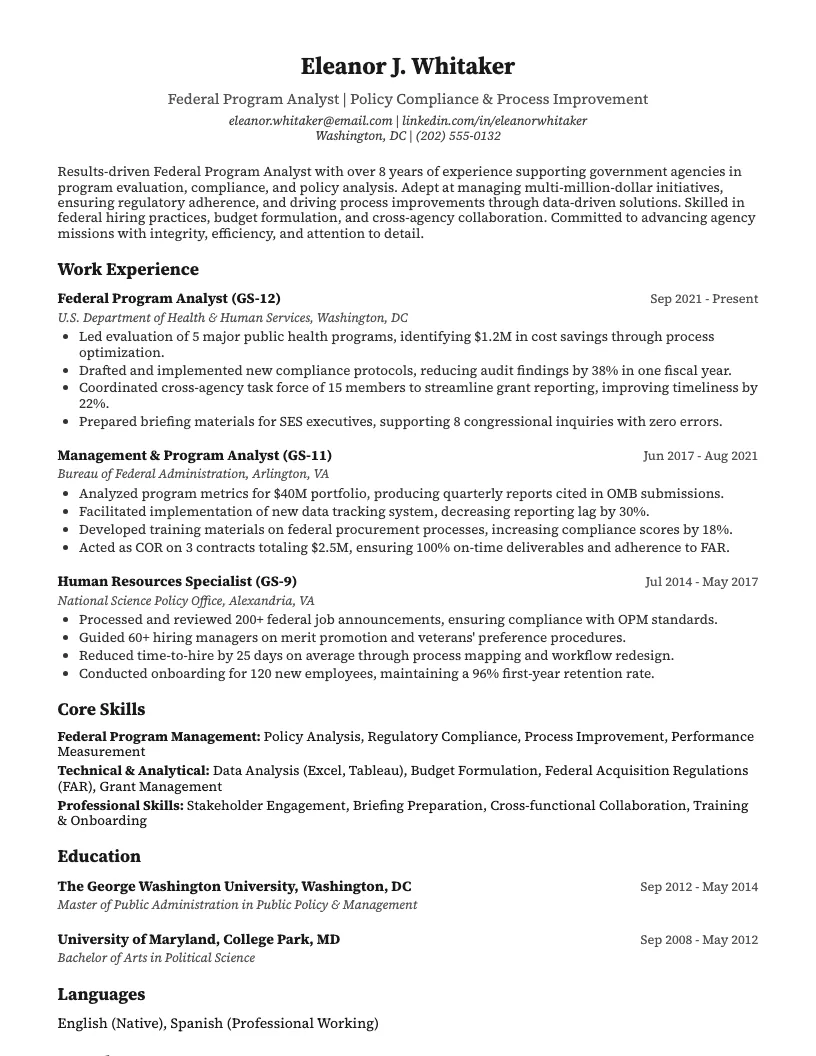
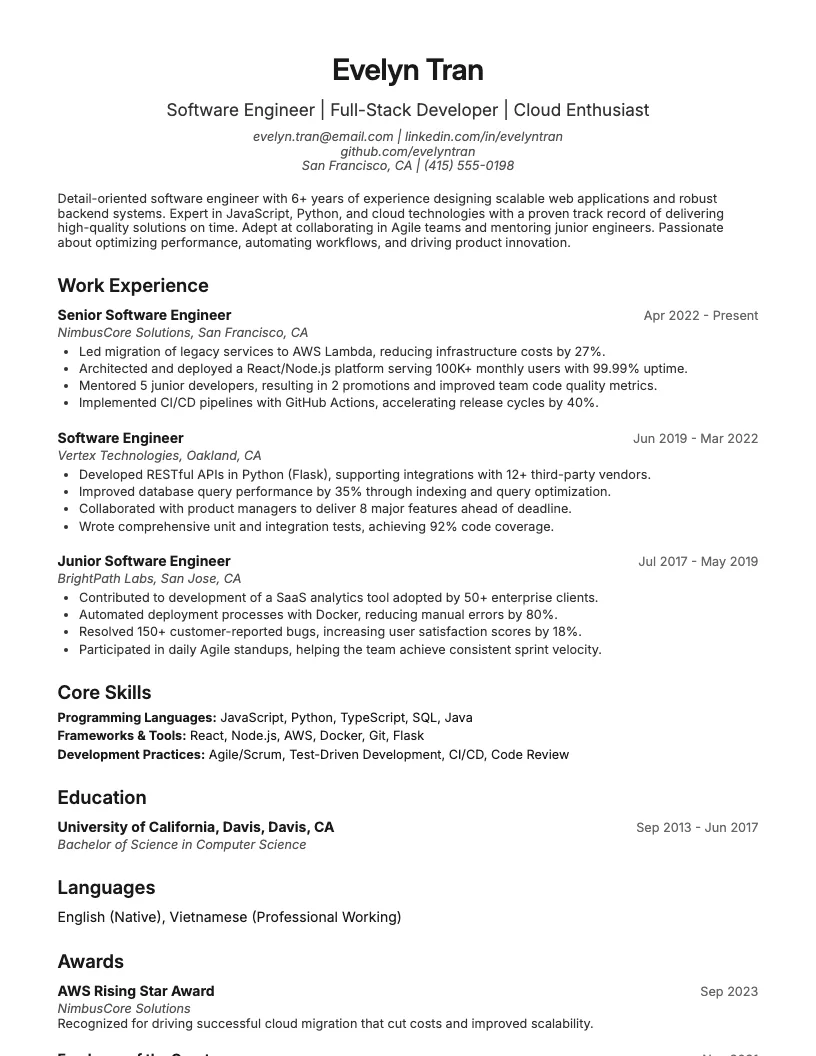
8 examplesStart from an example that already has them, and swap in your own.
Check your resume against the job you want
Scan your resume, see which skills and keywords the posting asks for that you are missing, and fix them before you apply.
Free to use • No credit card required