 ResumeJudge
Developed Synonym Resume: 36 Alternatives, 15 Bullet Examples
36 alternatives to 'developed' for your resume, sorted by what you actually did, plus rewritten bullets, a 4-step rewrite process, and the ATS answer.


Written by Dr. Priya Sharma
Career Development Expert & Resume Analyst
Updated August 2026
Reviewed by Sarah Chen
Is your resume ATS-friendly?
Drop your resume in and see which of these skills a scanner can actually read, and which ones the job you want is asking for that you have not listed.
PDF or DOCX. Max 2MB.
We never share your resume or use it to train a model.
In This Guide:
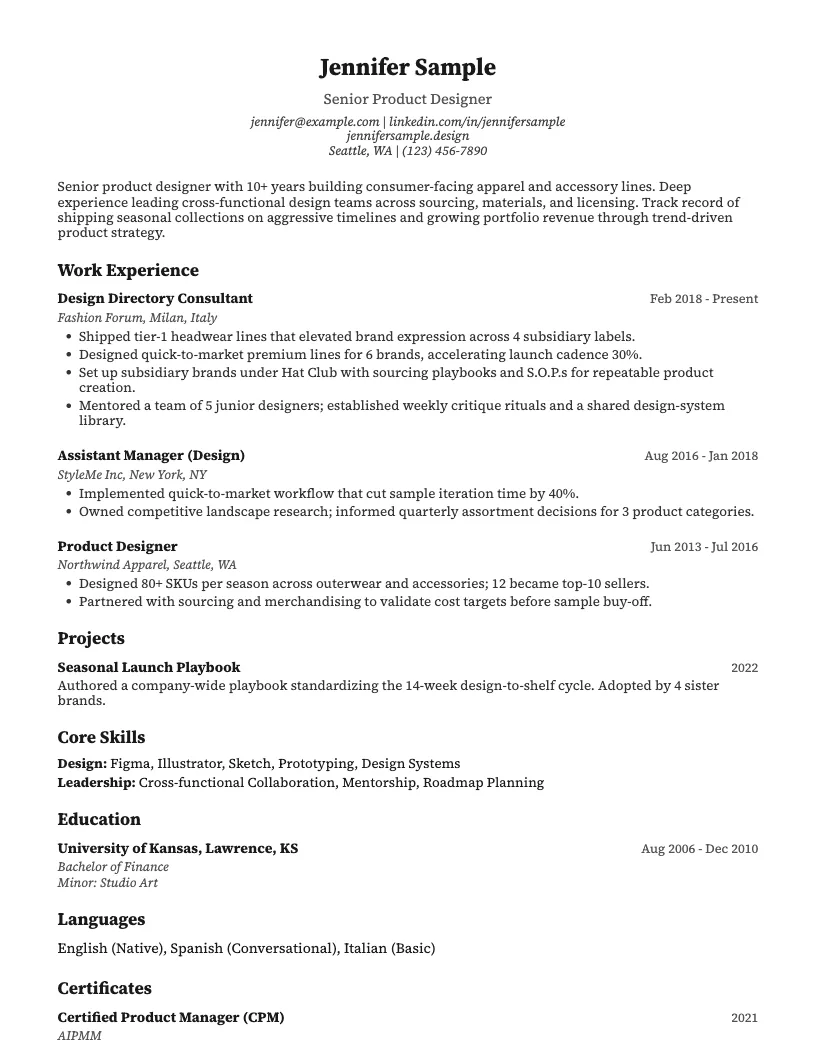
What can you say instead of "developed" on a resume?
Open your resume and count how many bullets start with "developed." If it's more than one, a recruiter skimming for ten seconds sees the same word over and over and reads it as "this person only has one gear."
Below are 36 words that actually say something different from each other - not just synonyms in a thesaurus sense, but words that point at a different kind of work. Skim the list, find the one that matches what you actually did, then check which synonym for "developed" you should pick if two of them still feel close.
Built
The honest, plain word for hands-on or technical work - a tool, a system, a process. I reach for this one when a candidate is unsure which fancier word to use; it's rarely wrong.
Created
Something existed after you were done that didn't exist before. Broad, safe, a little flat on its own - best paired with a number.
Designed
You made the decisions about how something should work or look before it got built. Use it for the planning, not the building - if you did both, say so.
Engineered
Signals technical precision. I'd only use this on genuinely technical work - engineering a pipeline, not engineering a spreadsheet - because a recruiter in a technical field will notice the mismatch.
Established
You laid the groundwork for something that's still standing. Good for a process, a partnership, a department - anything meant to outlast the project itself.
Launched
A single moment: the thing went live. If your work was months of iteration rather than one release date, "developed" or "refined" fits better than this.
Founded
Reserve this one - it means you started the whole thing from zero, usually with your name on it. Using it for a feature inside someone else's product overstates your role.
Pioneered
You did something nobody at the company had tried before. It's a strong word, so it needs a strong, specific claim behind it, not a routine task dressed up.
Spearheaded
You led the charge on something with other people involved. It's overused in the way "developed" is overused - fine occasionally, tired if it's your only leadership verb.
Orchestrated
You coordinated multiple moving parts or multiple people toward one outcome. This is the word for project management, not for solo work.
Formulated
You worked out a strategy or approach through analysis, not by building something physical. Good for plans, policies, pricing models.
Devised
Close cousin of formulated - you figured out a method or a workaround. I like it for problem-solving stories: "devised a process to catch errors before shipping."
Constructed
Literal, physical, or close to it - a system built piece by piece. It reads more mechanical than "built," which is exactly when you'd want it.
Crafted
Implies care and skill in the making, not just speed. Works well for writing, design, or anything where quality of execution is the point you're making.
Implemented
You took someone else's plan and put it into action. It's an honest word - don't be afraid it makes you look less senior.
Executing well is a real skill.
Instituted
You made something official and lasting - a policy, a rule, a standard practice. It carries a bit more weight than "implemented."
Generated
Usually paired with a number - generated leads, generated revenue, generated reports. If you can't put a figure right after it, pick a different word.
Produced
Plain, output-focused. It works best when the "what" that follows is countable: content pieces, units, reports.
Initiated
You got something started that other people then carried forward. Useful when you don't want to overclaim full ownership of the finished result.
Started
The plainest version of "initiated." I'd only use this on an entry-level resume where the simpler word actually reads as more confident than a stiffer synonym would.
Expanded
Something existing got bigger under you - a program, a market, a team. Needs a before-and-after number to land; "expanded" alone is a claim with nothing behind it.
Grew
Same idea as "expanded," shorter and more casual. I see it most on sales and marketing resumes, usually next to a percentage.
Improved
The workhorse word for making something better without a full overhaul. It's honest and it's fine - just don't let three bullets in a row use it.
Enhanced
Slightly more polished-sounding than "improved," same job. Pick whichever one you haven't already used two lines above.
Upgraded
Specifically for replacing something with a newer or better version - a tool, a system, a process. Don't use it for a change that wasn't really a version bump.
Revamped
A visible, noticeable redesign - you can picture the before and after. Good for anything a stakeholder would recognize had changed.
Overhauled
The strongest word in this cluster - a full rebuild, not a tweak. Save it for when you actually tore something down and rebuilt it, or it reads as exaggeration.
Streamlined
You removed friction or steps from an existing process. This one almost always wants a time or effort number next to it - "streamlined onboarding from two weeks to three days."
Fine-tuned
The opposite scale from "overhauled" - small, precise adjustments rather than a rebuild. Use it when the change was subtle but the result was meaningfully better.
Accelerated
Something that was already moving got faster. Almost always wants a time comparison to back it up.
Transformed
A big claim - the thing at the end barely resembles the thing at the start. I'd only sign off on this if the before-and-after is genuinely dramatic; recruiters are numb to inflated versions of it.
Evolved
Describes gradual change over time rather than a single action you took. It reads more as description than achievement - see when "developed" is still the right word for more on that distinction.
Refined
Small, deliberate improvements made over repeated passes. Works well for writing, design, and anything iterated on rather than launched once.
Advanced
Something moved forward or matured under your care, without one clean finish line. Common on longer-running research or product work.
Matured
A process or a team got more capable and less chaotic over time. I see this most in engineering and operations bullets describing a system's whole lifecycle.
Progressed
The softest word on this list - movement forward, no claim about how much. Use it sparingly; on its own it says less than almost anything else here.
Which synonym for "developed" should you pick?
Thirty-six words that all mean roughly the same thing don't help you if you can't tell them apart. I sort them by what you actually did, not by how impressive they sound.
You made something that did not exist before: created, founded, established, pioneered
Nobody had this before you. Use one of these when you're the reason it exists at all.
You built it with your hands or in code: built, constructed, engineered, crafted
You made the thing yourself, piece by piece. This is the honest word for anyone writing code or assembling a physical product.
You planned it before anyone built it: devised, formulated, designed, conceptualized
You did the thinking, someone else may have done the building. Don't take credit for construction you weren't part of.
You put an existing plan into place: implemented, instituted, launched, rolled out
The plan already existed; you're the one who made it real. See rewriting a bullet for how that reads in practice.
You made something that already existed better: improved, enhanced, upgraded, revamped, overhauled, streamlined
You started with something working and left it working better. The size of the fix decides which word: "streamlined" for a process, "overhauled" for a rebuild.
You made something grow: grew, expanded, scaled, accelerated
If there's a number attached - revenue, users, headcount - one of these belongs in front of it.
You led other people through it: spearheaded, orchestrated, led, directed
The work involved a team, and you ran it. Nine times out of ten I see candidates undersell this and reach for "developed" instead.
"Developed" as a description, not an action: evolved, refined, advanced, matured
These describe a state, not a move you made. They read weaker on a bullet and stronger in a summary line.
Match the word to the wording in the job posting
When two words fit equally well, pick whichever one the posting itself uses. ResumeJudge will scan your resume against that exact posting and rewrite each bullet with its wording already in place, so you're not guessing which synonym the recruiter typed into the search box.
How do you rewrite a bullet that starts with "developed"?
Is your resume good enough?
Drop your resume in and see which of these skills a scanner can read, and which ones the job you want is asking for that you have not listed.
Upload your resumeFree. PDF or DOCX. We never share your resume or use it to train a model.
Swapping the verb is the easy part. The rewrite that actually works follows four steps, in order.
Step 1: Say what you actually did to the thing
Forget the verb for a second. Write down, in plain words, what changed because of you - you didn't "develop" a system, you built one, or fixed one, or replaced one.
Step 2: Pick the verb that matches that action
Now go find the word that means that specific thing. If you're not sure which bucket you fall into, pick the right synonym here - it sorts them by what you actually did.
Step 3: Add the number that shows it worked
A stronger verb with no number is still a vague bullet. Nine times out of ten, the bullet that gets a callback is the one with a count, a percentage, or a size attached to it.
Step 4: Read it back against the job posting
Read your new sentence next to the listing you're applying to. If it doesn't echo the posting's language anywhere, it's not done yet - ResumeJudge will show you exactly which words from the posting are still missing from the bullet, and rewrite it in.
Before and after: "Developed an office filing system"
Rewriting 'Developed an office filing system'
Developed an office filing system.
Initiated and implemented an office filing system that replaced paper folders with a searchable digital index.
Weak: "Developed an office filing system." Stronger: "Initiated and implemented an office filing system that replaced paper folders with a searchable digital index."
Before and after: "Developed requirements for a new product"
Rewriting 'Developed requirements for a new product'
Developed requirements for a new product.
Led a 300+ person customer survey and 40+ face-to-face discussions to formulate product requirements.
Weak: "Developed requirements for a new product." Stronger: "Led a 300+ person customer survey and 40+ face-to-face discussions to formulate product requirements."
Before and after: "Developed a marketing strategy"
Rewriting 'Developed a marketing strategy'
Developed a marketing strategy.
Formulated a marketing strategy that shifted spend toward the two channels driving the most qualified leads.
Weak: "Developed a marketing strategy." Stronger: "Formulated a marketing strategy that shifted spend toward the two channels driving the most qualified leads."
Before and after: "Developed training for new hires"
Rewriting 'Developed training for new hires'
Developed training for new hires.
Built a structured onboarding curriculum that new hires complete in their first two weeks.
Weak: "Developed training for new hires." Stronger: "Built a structured onboarding curriculum that new hires complete in their first two weeks."
What to do when there is no number to add
A bullet with no number to add
Trained new employees on company procedures.
Trained 12 new hires across two locations on company procedures over six months.
Not every bullet has a metric sitting there waiting. When it doesn't, describe the scale instead - how many people, how many sites, how long it ran.
That's still specific, and specific beats vague every time.
What does a finished bullet look like for each of these words?
The bullet still has to earn the verb, so here's what "finished" actually looks like, word by word.
Built
Built a bi-weekly newsletter for a 30-person team, lifting event engagement 20%.
Created
Created a referral program that cut customer acquisition costs 13%.
Designed
Designed a new user interface off customer feedback that lifted engagement 45% in three months.
Engineered
Engineered an automated workflow that cut processing time 40%.
Established
Established a vendor onboarding process now used across five offices.
Launched
Launched three campaigns in a single quarter, growing revenue 40%.
Spearheaded
Spearheaded a cross-team rollout that cut delivery time 20% and saved $100K.
Orchestrated
Orchestrated a process rollout across five product lines that lifted quarterly sales 20%.
Formulated
Formulated a cost-reduction plan, consolidating suppliers to cut procurement costs 15% in a year.
Devised
Devised a marketing strategy across email and social that drove a 30% sales increase in six months.
Implemented
Implemented a new meeting structure that saved 10 hours a week and lifted productivity 25%.
Streamlined
Streamlined the monthly close process, cutting it from five days to two.
Expanded
Expanded a client portfolio from 10 accounts to 40+.
Improved
Improved new-hire onboarding, cutting ramp time roughly in half.
Fostered
Fostered a more collaborative culture with weekly brainstorms, driving a 50% jump in project ideas.
Notice the shape repeats: verb, object, number. That's not a coincidence - pick the verb that matches the action first, and the number does the rest of the convincing.
Bullets for a first job or internship
You don't need a department to have a real bullet.
"Built a weekly status update for a 12-person team, cutting missed deadlines noticeably" works as an intern, because it names a real thing you made and what changed because of it.
Nine times out of ten, the fix for a thin internship bullet isn't a fancier verb - it's finding the number you already have and just didn't write down.
Bullets for a senior or leadership role
At the senior level, the bullet needs to show scope: how many people, how much money, how many accounts.
"Orchestrated a five-office systems migration, leading a team of six" reads as leadership because it names the team and the scale, not because "orchestrated" sounds important on its own.
If you're not sure a bullet actually lands the way the posting wants it to, that's exactly what I'd run through ResumeJudge - it checks your resume against the posting and tells you which skills and keywords it's still missing, before a recruiter ever sees the gap.
When is "developed" still the right word?
Not every "developed" needs to go. I've read enough resumes to know the word earns its place a few times.
You built something from nothing over a long stretch
If you took something from zero to working over months, "developed" is honest. A single sprint calls for built or launched instead.
The work was gradual, not a single launch
Ongoing, incremental progress is what "developed" describes best. Save evolved or refined for work that's still moving, not finished.
The job posting says "developed"
If the listing uses that exact word, match it. ResumeJudge reads the posting and rewrites your bullets to mirror its wording automatically, so you're not guessing which verb it wants.
It is the honest word for software you wrote
Engineers who wrote the code, not just shipped a feature, can keep it plain.
When it is the wrong word: a task you were handed
If someone else designed it and you just executed, "developed" overclaims. Say what you actually did.
How many times you can use it on one resume
Twice, at most. More than that, and it reads like you ran out of words.
Do these synonyms hurt you with applicant tracking systems?
Short answer: no, and I'd stop worrying about it.
What the software actually matches on
The system isn't hunting for one exact word. It scans for skills and phrases, and it recognizes synonyms that point to the same thing.
Why swapping a verb rarely costs you a keyword match
"Engineered a system" still reads as the skill behind "developed a system." The verb isn't the keyword the scanner cares about.
The one case where you should keep the posting's exact word
If the posting names a specific tool, method, or certification - 'Salesforce', 'Six Sigma', 'PMP certified' - keep that exact phrase, don't swap in a synonym for it. The verb around it can still change; it's the noun the scanner is actually looking for.
If the listing names a specific tool, method, or certification, match that term exactly.
Where to put the posting's wording instead
Pull those exact phrases into your skills section or a project title. ResumeJudge will show you which of the posting's terms are missing from your resume and drop them into the right spot for you.
Frequently Asked Questions
What is another word for "developed" on a resume?
Built, created, and engineered are common replacements for "developed" on a resume. Which one fits depends on what you actually did, so pick the word that matches the work rather than defaulting to the same one every time.
What is the strongest replacement for "developed"?
"Engineered" is usually the strongest replacement, because it signals technical ownership and problem-solving rather than just involvement. Use it for work where you designed the approach yourself, not just carried out someone else's plan; for less technical work, "built" or "launched" can carry more weight.
What can I use instead of "developing"?
For work that's still in progress, use "building", "growing", or "expanding" instead of "developing". These keep the sense of ongoing work without repeating a word you may already be using elsewhere on the resume.
What is a better word than "made"?
"Made" is vague, so replace it with a word that says how: built, produced, created, or assembled, depending on what you actually did. A hiring manager reading "made a dashboard" learns far less than one reading "built a dashboard used by 40 sales reps."
Should "developed" be past tense in my current job?
No - if it's your current job, use present tense: "develop", not "developed". Save past tense for roles you've already left; mixing tenses within one job's bullet list is one of the more obvious slip-ups on a resume.
Can I use the same synonym more than once?
You can, but it's worth avoiding once you have more than a couple of bullets doing similar work, since repeating the same verb across a resume reads as lazy rather than consistent. Rotate between two or three synonyms that each accurately describe what you did instead of reusing just one.
Is "developed" bad on a software engineer's resume?
"Developed" isn't wrong, but it's one of the most overused words on software engineering resumes, so it blends in rather than standing out. Swapping in something more specific, like "engineered", "architected", or "built", for at least some of your bullets makes the same experience read as more technical. ResumeJudge can score your resume against a specific job posting and show you exactly where wording like this needs to change to match what the listing is asking for.
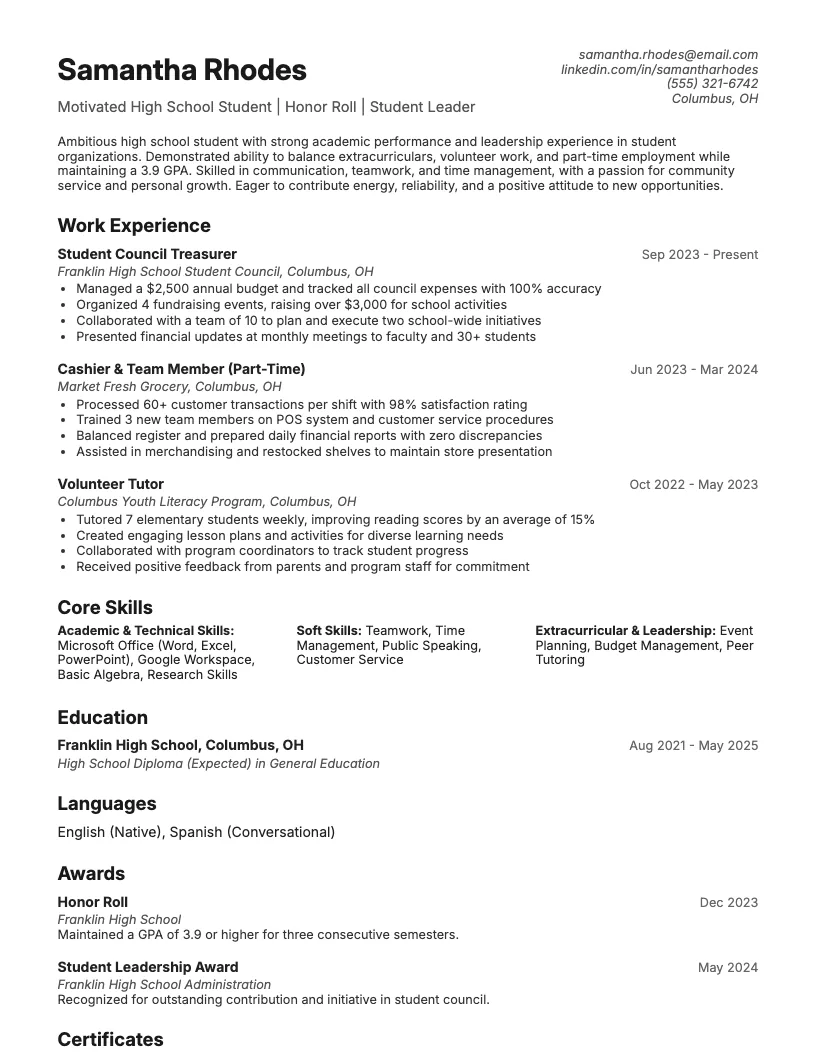
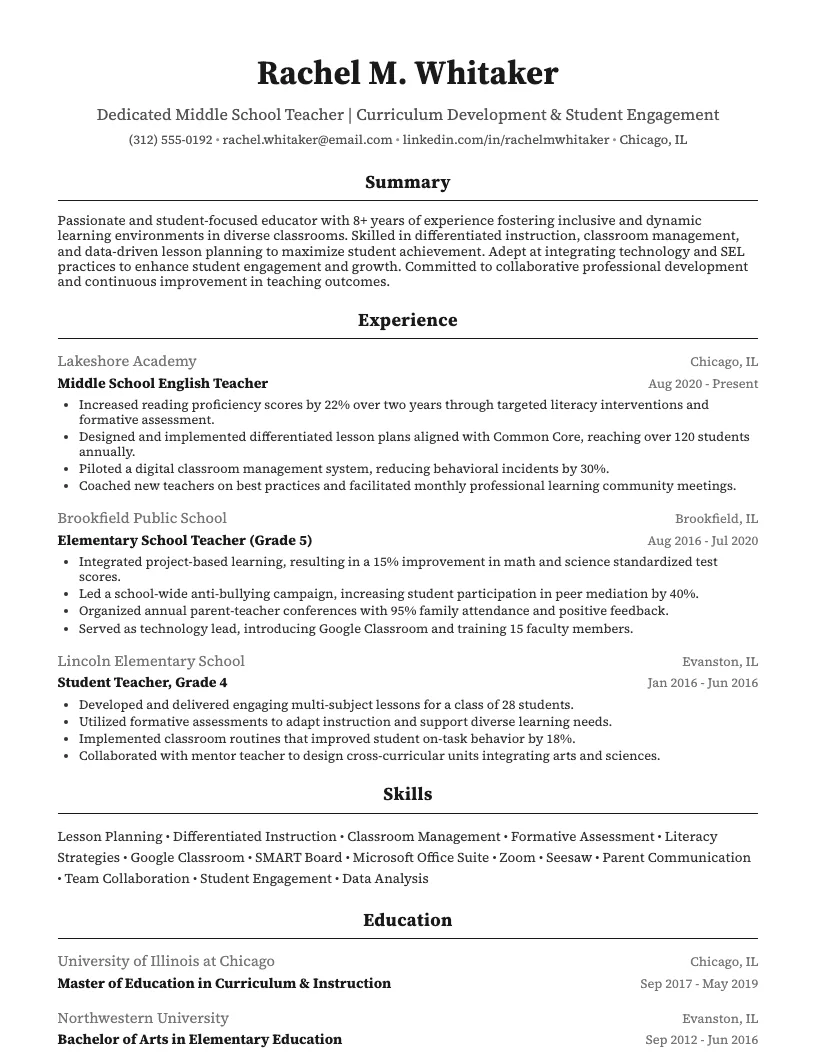
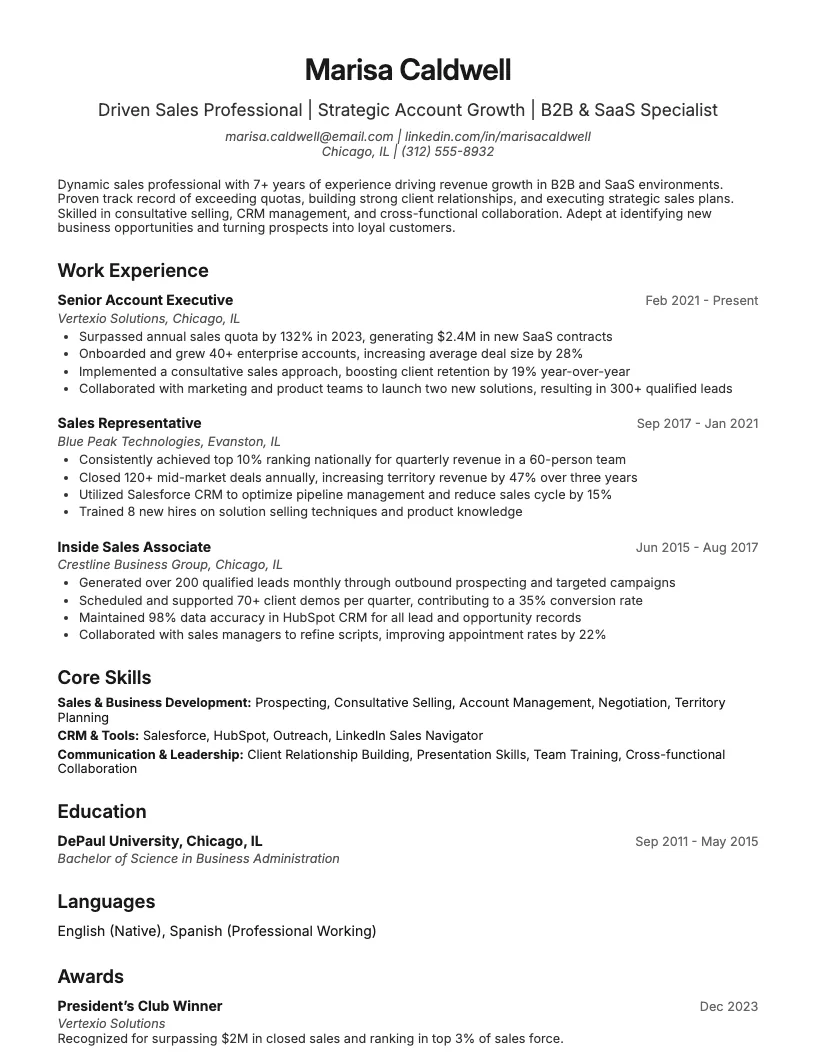
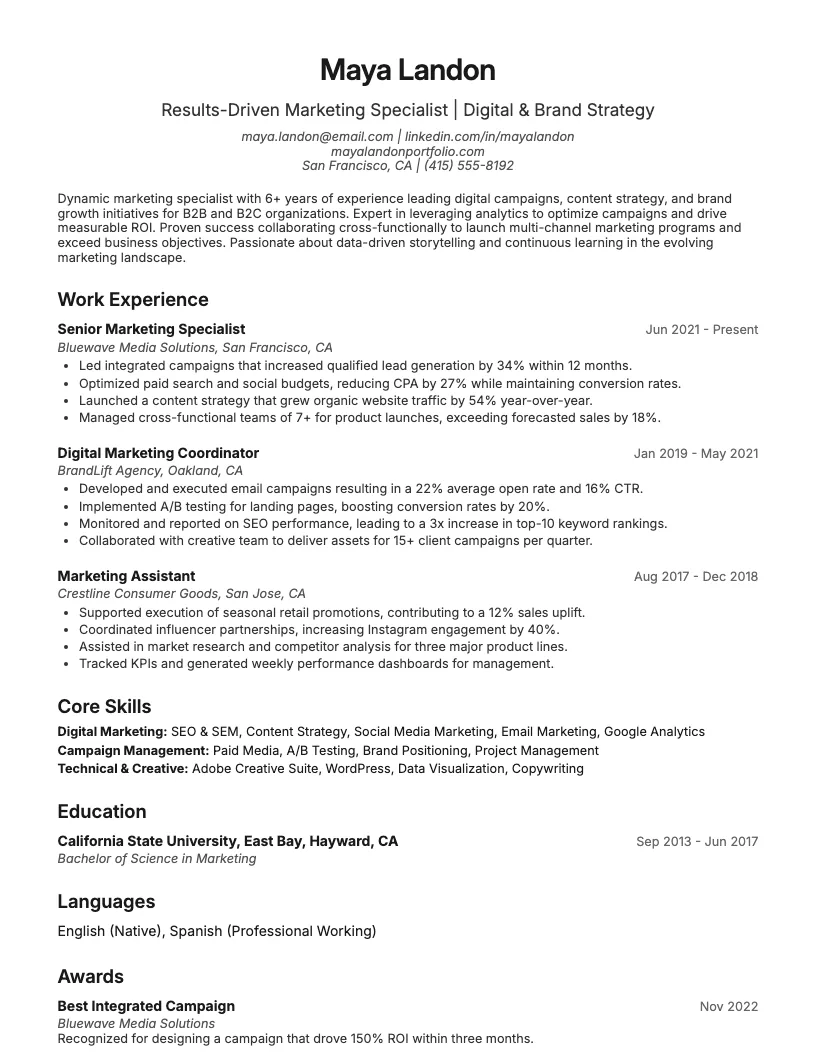
See these skills on a real resume
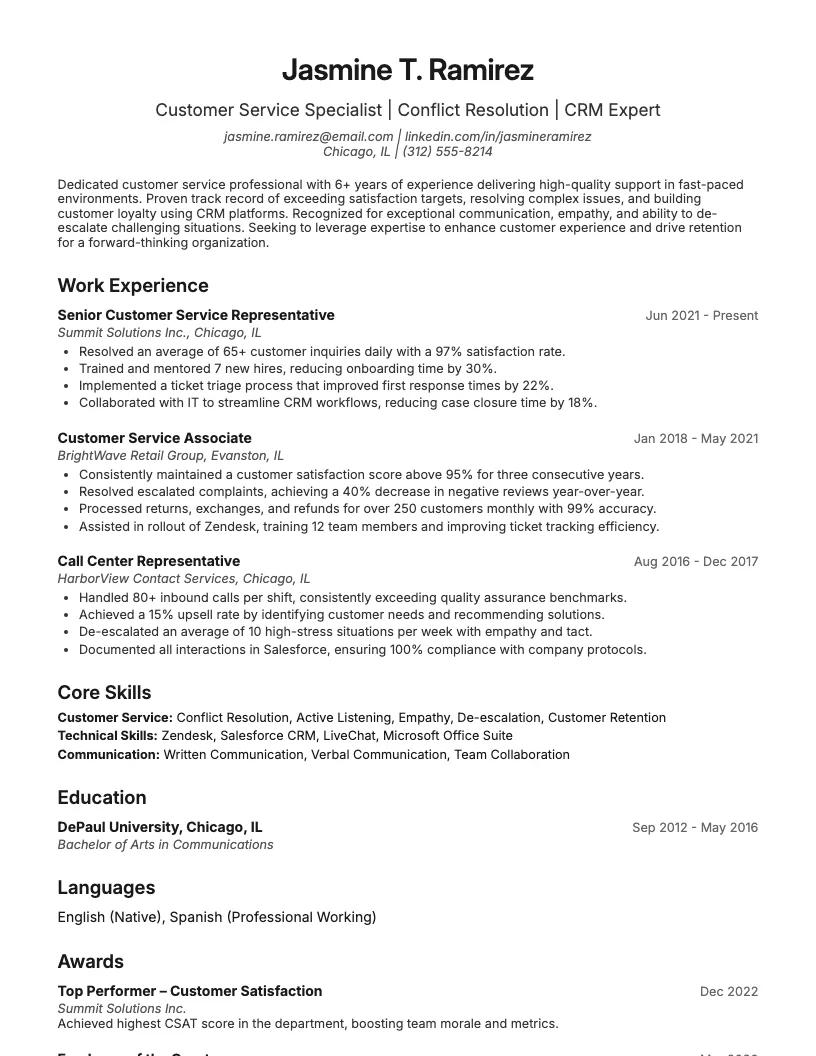
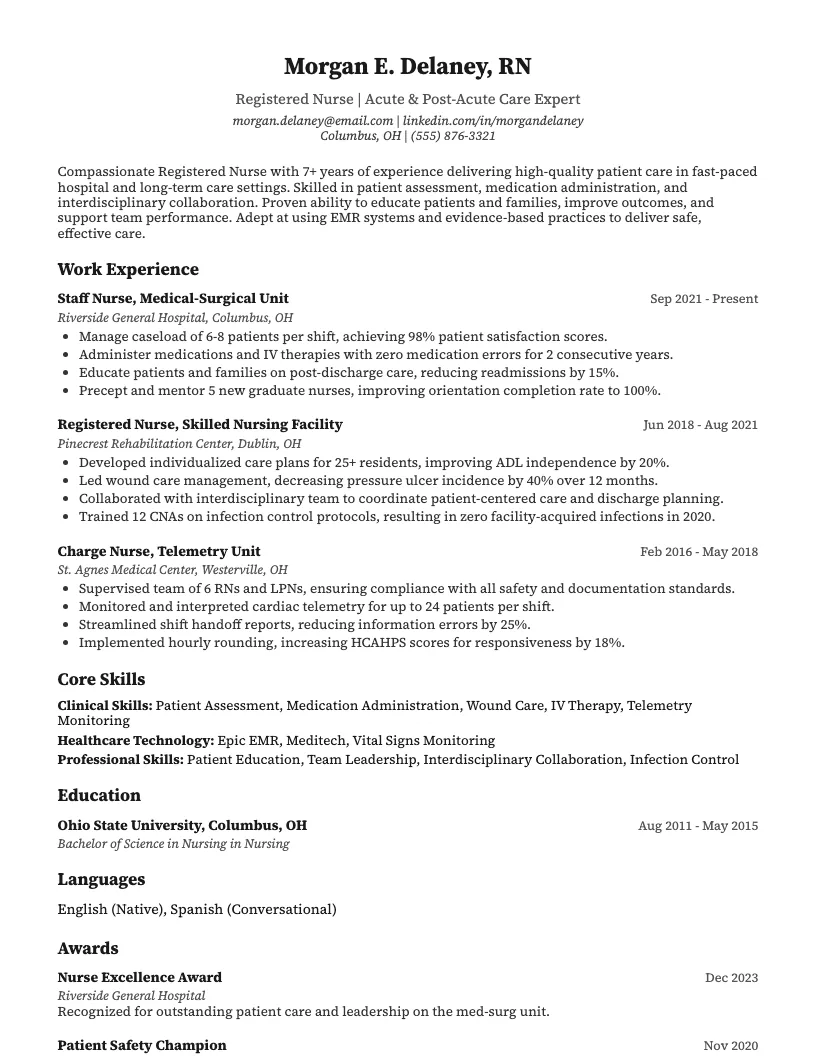
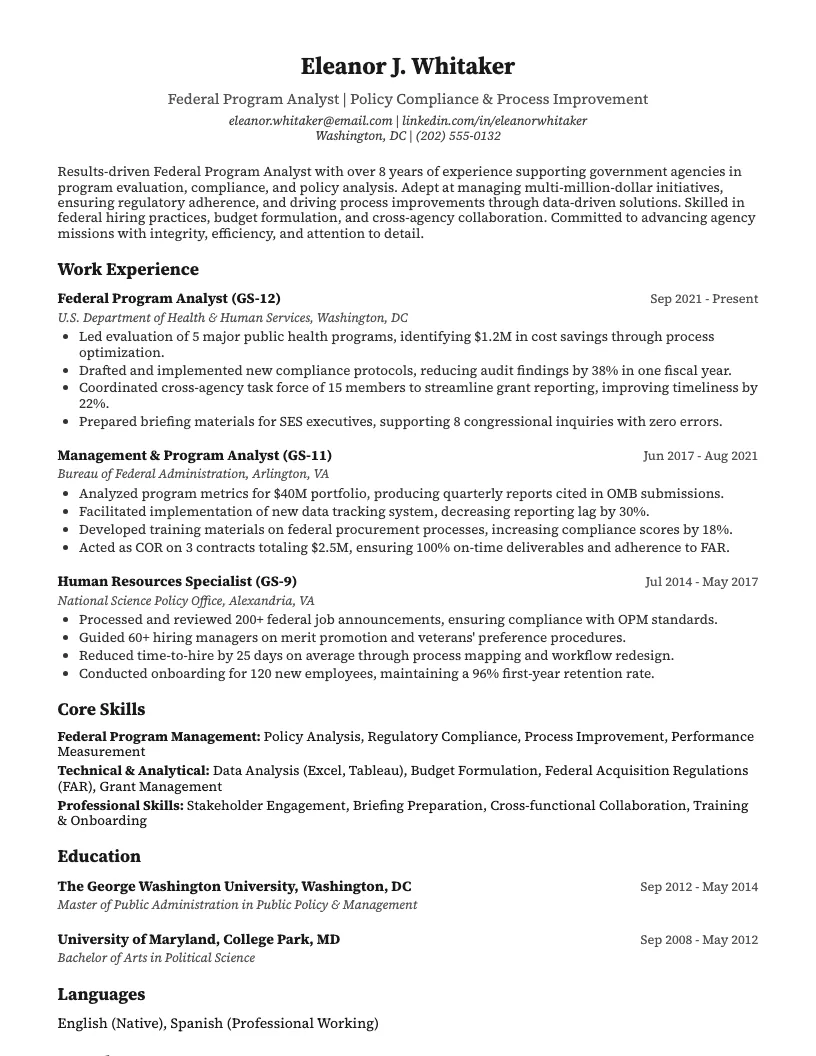
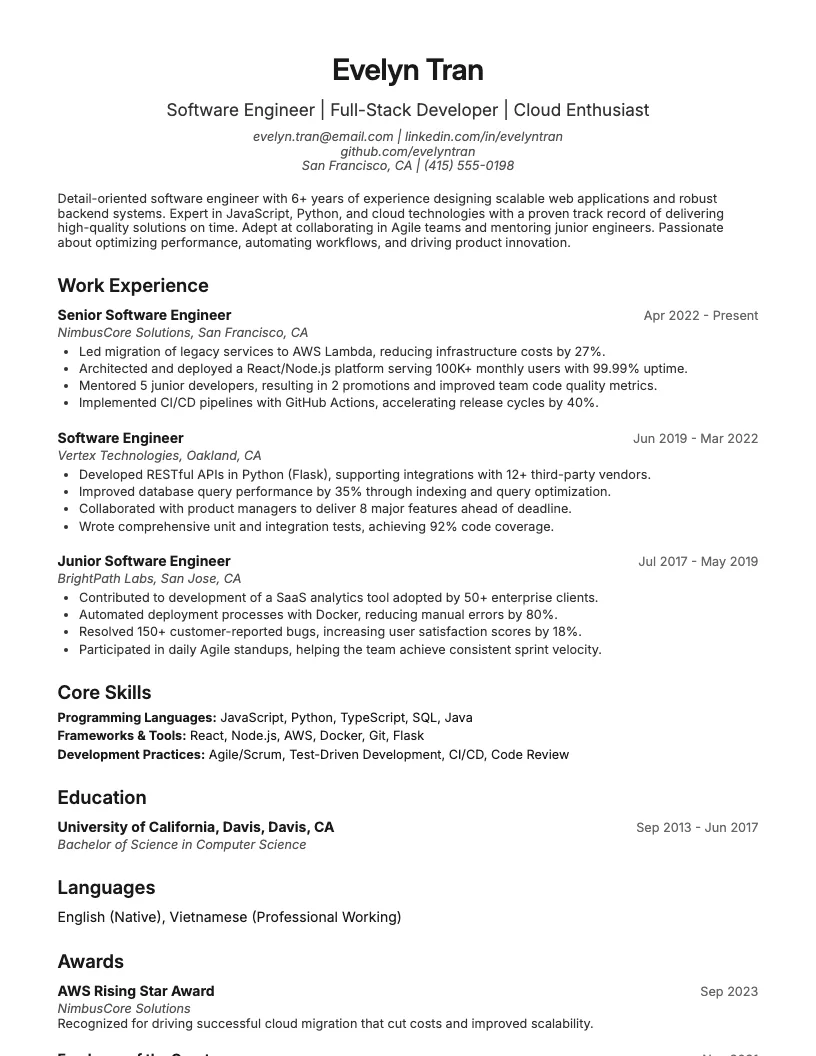
8 examplesStart from an example that already has them, and swap in your own.
Check your resume against the job you want
Scan your resume, see which skills and keywords the posting asks for that you are missing, and fix them before you apply.
Free to use • No credit card required