Helped Synonym Resume: 30 Stronger Words, 6 Rewritten Bullets
30 verbs to replace 'helped' on your resume, sorted by what you actually did, with 6 rewritten before-and-after bullets and word picks for 8 industries.


Written by Dr. Priya Sharma
Career Development Expert & Resume Analyst
Updated August 2026
Reviewed by Sarah Chen
Is your resume ATS-friendly?
Drop your resume in and see which of these skills a scanner can actually read, and which ones the job you want is asking for that you have not listed.
PDF or DOCX. Max 2MB.
We never share your resume or use it to train a model.
In This Guide:
What can you say instead of "helped" on a resume?
Thirty options, one word too many on your resume: "helped." I've read enough of these to know it's the verb people reach for when they're not sure what to call what they did.
Every word below does something "helped" can't - it tells the reader your actual role. Pick based on what you did, not on which one sounds biggest.
Assisted
Use this when you genuinely were the support role - someone else owned the task and you backed them up.
It's honest, and honest beats impressive when a hiring manager can tell the difference.
Supported
Close cousin of "assisted," but it works better for ongoing responsibilities - supporting a team, a system, a client account - rather than one task.
"Supported a portfolio of 40 accounts" reads as a real job. "Helped with accounts" doesn't.
Collaborated
This is the word for shared ownership - you and someone else both drove the outcome.
I see people undersell real partnerships by writing "helped the design team" when "collaborated with the design team on X" is both truer and stronger.
Facilitated
Good for when your job was to make something happen smoothly, not to do the technical work yourself - running a workshop, a handoff, a cross-team process.
It's a step up from "helped run" because it says you were in charge of the flow, even if you weren't the one executing every piece.
Guided
Use this for one-on-one direction - walking someone through a decision, a process, a tool.
It sits between "assisted" and "mentored": less ongoing than mentoring, more hands-on than advising.
Mentored
Reach for this when the relationship lasted - you were developing someone over weeks or months, not just answering one question.
If you can put a number on it ("mentored 3 junior analysts"), do - it turns a soft claim into a countable one.
Coordinated
This is the organizing verb - schedules, logistics, moving parts that needed someone keeping track.
I'd use this over "helped organize" every time. It says you owned the plan, not just the legwork.
Advised
For when you gave recommendations that someone else acted on - consulting, guidance, strategy input.
It implies expertise. Don't use it if you were just relaying someone else's decision.
Fostered
Best for culture and environment - team morale, an inclusive workplace, a habit that took hold over time.
It's soft language, but it's precise soft language, which "helped create a good environment" is not.
Enabled
Use this when you gave someone the tools, access, or resources to do something they couldn't do before.
It's a favorite in tech and operations because it's specific about cause and effect - you didn't do the work, you made the work possible.
Resolved
For problems that had an end point - a complaint, a bug, a conflict, a stuck process.
More on dropping "helped" from "helped resolve" in you fixed a problem.
Streamlined
Use this when you made an existing process faster or simpler, not when you built something from nothing.
It reads well because it implies a before-and-after, and a before-and-after wants a number next to it.
Improved
The workhorse verb for any metric that moved - quality, speed, satisfaction, accuracy.
It's generic enough to fit almost anywhere, which is exactly why it needs a number attached or it collapses into filler.
Boosted
Same territory as "improved," but punchier - it fits informal industries (sales, marketing, retail) better than it fits finance or law.
Read the tone of the job posting before you pick this one over "increased."
Spearheaded
Reserve this for when you started something that didn't exist before - a new initiative, a first-of-its-kind project.
It's a strong word. Using it for a task you were assigned, rather than one you originated, is the kind of overreach that makes a reader skeptical of the rest of the resume.
Championed
For when you pushed an idea that others were slow to adopt - an internal advocate, not necessarily the person who built it.
It pairs well with something like "championed a new onboarding process across three teams."
Led
The most contested word on this list. If you want the full case for when it's honest to use "led" without a title, that's covered in which synonym fits what you actually did.
Short version: if you set direction and others followed it, "led" is fair game regardless of your job title.
Oversaw
Use this for ongoing responsibility over a process, budget, or team - not a single project with a start and end.
It's a management word. Don't reach for it if you were an individual contributor checking your own work.
Optimized
Technical cousin of "improved" - best for systems, code, workflows, spend, anything with a measurable output you tuned.
It signals precision. Pair it with the metric that moved, or it's just a fancier "improved."
Transformed
Big word for a big change - a full rebuild, not an incremental tweak.
I see this overused constantly. If what you did was update a webpage, "transformed" oversells it; if you rebuilt the site from the ground up, it's the right word.
Revamped
A notch below "transformed" - a substantial refresh of something that already existed, not a from-scratch build.
Good fit for processes, branding, documentation, anything that got a real overhaul but kept its core purpose.
Pioneered
For genuinely first-of-its-kind work - nobody at the company had done this before you did it.
Like "spearheaded," it's a claim a reader can check by asking a follow-up question in the interview. Only use it if the answer holds up.
Empowered
For giving people the confidence, authority, or skills to act on their own - related to "enabled," but about people rather than processes.
"Empowered new hires to handle client calls independently by week two" is concrete. "Empowered the team" on its own is not.
Educated
Use this for structured knowledge transfer - training sessions, documentation, onboarding materials - rather than one-off help.
It fits teaching, healthcare, and compliance-heavy roles especially well.
Mediated
Narrow but useful - you were the neutral party resolving a disagreement between two other people or groups.
Don't stretch this to cover general problem-solving; save it for actual conflict resolution.
Cultivated
Best for relationships and long-term growth - client relationships, a talent pipeline, a partnership that built over time.
It implies patience and consistency, so use it for things that took months, not days.
Accelerated
Use this when you sped up something that was already going to happen - a timeline, a rollout, a hiring process.
It's a favorite in fast-moving industries because it answers the unspoken question "how much faster?"
Delivered
The verb for completion - you finished a defined piece of work and handed it over.
It's plain and it works everywhere, which is why so many strong bullets end up built around it.
Implemented
Use this for putting a plan, system, or decision into practice - you're the one who made it real, even if you didn't design it.
It's common in project-based roles and pairs naturally with a tool or process name.
Established
For building something that continues after you - a policy, a relationship, a department, a standard.
It's a founding word. If the thing you built still exists and still matters, this is the right verb for it.
None of these thirty words is automatically correct - the honest one is the one that matches what you actually did, and picking the wrong one is its own kind of red flag once someone asks you about it in an interview. If you're not sure which of these actually shows up in the posting you're applying to, ResumeJudge will scan the job description against your resume and tell you which of these words the employer is already using, so you're not guessing.
Why does "helped" weaken a resume bullet?
It hides what you actually did
"Helped" doesn't say what you actually contributed. Did you run the analysis, write the report, or hand someone a coffee while they did it? The hiring manager can't tell, and if they can't tell, they assume the smaller version. Swap it for a word that names the real action - I'll show you which one below in which synonym fits what you did.
It makes you sound like the second person in the room
"Helped launch a product" reads like someone else launched it and you stood nearby. Even when you were the one driving the work, "helped" quietly hands the credit away.
It gives an applicant tracking system nothing to match
Job postings ask for verbs like "led," "resolved," or "streamlined" - not "helped." A scanning system matching your resume against that posting has nothing to grab onto. If you want to see exactly which words a specific posting is looking for, that's the kind of gap ResumeJudge finds for you automatically.
"Helped" repeated five times reads as one job
I've read resumes with "helped" on six different bullets covering six different jobs. To a recruiter skimming for ten seconds, it reads as one flat responsibility repeated, not six distinct skills.
Which synonym for "helped" fits what you actually did?
What you did, and the words for it
| What you did | Words to use |
|---|---|
| Worked alongside others | Collaborated, partnered, co-led |
| Supported someone else's work | Assisted, supported, backed up |
| Taught or coached someone | Mentored, coached, trained, guided |
| Made a process faster | Facilitated, streamlined, expedited |
| Fixed a problem | Resolved, corrected, mediated |
| Started something new | Spearheaded, launched, established |
Pick the wrong synonym and you've just swapped one vague word for another. The fix isn't finding a fancier version of "helped" - it's naming the actual thing you did.
You did the work alongside others: collaborated, partnered, co-led
Say "collaborated with the design team on the new checkout flow" or "partnered with sales to close enterprise deals." If you shared the lead role, "co-led" is honest and specific - use it instead of pretending you ran it solo.
You supported someone else's work: assisted, supported, backed up
"Assisted the lead engineer with database migrations" tells a hiring manager exactly where you sat on the team. See when "assisted" is the honest word below for when to keep it.
You taught or coached a person: mentored, coached, trained, guided
Teaching someone is not helping them - it's a specific, valuable skill on its own. I see candidates bury this under "helped new hires" constantly, and it always undersells them.
"Mentored three junior analysts through their first close" or "trained the onboarding cohort on the new CRM" reads as leadership experience, because it is.
You made a process easier or faster: facilitated, streamlined, expedited, simplified
If you cut steps out of a workflow or sped something up, say that. "Streamlined the invoice approval process" is a claim you can back up in an interview; "helped with invoicing" is not.
You fixed a problem: resolved, corrected, mediated, repaired
"Helped resolve customer complaints" already contains its own stronger verb - just drop "helped" and lead with "resolved." If the problem was between two people or teams, "mediated" is more precise than either.
You raised a number: increased, boosted, grew, improved
If your work moved a metric, that's the sentence. "Helped increase renewal rates" hides the number behind a hedge word - cut straight to "increased renewal rates by 12%."
This is where ResumeJudge is worth a mention: paste in the job posting and it'll tell you which of these number-driven verbs the role is actually scanning for, before you guess.
You started or led the thing: spearheaded, launched, established, led
If you were the one who got something off the ground, "helped launch" is the single most common underselling I see on resumes. You didn't help launch it - you launched it.
You kept it organized: coordinated, organized, oversaw, scheduled
Logistics work is real work. "Coordinated" or "oversaw" names the skill of holding a dozen moving pieces together - a strength a lot of roles specifically ask for, so it's worth checking the posting for it.
When "assisted" is the honest word and a stronger verb would be a lie
Here's the one nobody wants to hear: if you genuinely were the support role, don't force yourself into "spearheaded." I've read plenty of resumes where an entry-level assistant claimed to have "driven" a project they had no authority over, and it falls apart the moment an interviewer asks a follow-up question.
"Assisted" or "supported" plus a specific detail - what you actually assisted with - beats a verb you can't defend.
How do you rewrite a "helped" bullet point?
Is your resume good enough?
Drop your resume in and see which of these skills a scanner can read, and which ones the job you want is asking for that you have not listed.
Upload your resumeFree. PDF or DOCX. We never share your resume or use it to train a model.
Here's the process I walk people through, in order. Skip a step and the bullet stays soft even with a fancier verb sitting on top of it.
Step 1: Say what you personally did
Before you touch a synonym, write down what actually happened in your own words. Not "helped with the launch" - what did you do that week?
Ran the test sessions? Wrote the copy?
Fixed the bug? That's your bullet, still in rough form.
Step 2: Pick the verb that names that action
Now match the verb to the action, not to what sounds impressive. If you ran 25 user-testing sessions, "conducted" is the word - not "spearheaded."
I'd rather see an accurate "assisted" than an inflated "transformed" that falls apart in the interview when someone asks you to walk through it.
Step 3: Add how you did it
A verb alone is still thin. Say the method: which system, which process, which tool.
"Resolved customer complaints" is fine; "resolved customer complaints by rolling out a new ticketing system" tells a hiring manager you can actually build something, not just react to fires.
Step 4: Add the number it changed
This is the step people skip, and it's the one that matters most. A verb change without a number is decoration.
With one, it's evidence. If you genuinely don't have a number, see the last part of this section - don't just leave it off.
Step 5: Check the job posting is using your word
Once you've got a verb, hold it up against the posting. If they wrote "collaborated" three times and you wrote "partnered," you've made an applicant tracking system work harder than it needs to for no reason.
This is exactly the kind of check ResumeJudge does automatically - it reads the job description, flags the wording it's looking for, and rewrites your bullets to use it, so you're not guessing at synonyms one posting at a time.
Here's what that looks like on six bullets I see constantly.
"Helped with customer complaints" → "Resolved customer complaints..."
Rewriting a customer-service bullet
Helped with customer complaints
Resolved customer complaints by implementing a new ticketing workflow, cutting repeat issues by 40% and lifting satisfaction scores by 20%.
"Resolved customer complaints by implementing a new ticketing workflow, cutting repeat issues by 40% and lifting satisfaction scores by 20%." Two numbers, one method, zero mention of "helped."
"Helped launch a new product line" → "Implemented the launch..."
Rewriting a product-launch bullet
Helped launch a new product line
Implemented the launch of a new product line, driving a 30% sales increase within the first quarter.
"Implemented the launch of a new product line, driving a 30% sales increase within the first quarter." "Implemented" says you owned the rollout, not that you stood near it.
"Helped improve the onboarding process" → "Streamlined the onboarding process..."
"Streamlined the onboarding process, cutting new-hire ramp-up time by 50%." One clean verb, one clean number.
"Helped organize the annual conference" → "Spearheaded the organization..."
Rewriting an event-organizing bullet
Helped organize the annual conference
Spearheaded the organization of the annual conference, drawing a record 2,000 attendees and securing $150,000 in sponsorships.
"Spearheaded the organization of the annual conference, drawing a record 2,000 attendees and securing $150,000 in sponsorships." Only use "spearheaded" if you actually ran point - I've seen it get walked back in interviews more than any other verb on this list.
"Helped train new hires" → "Empowered new hires through..."
"Empowered new hires through structured onboarding training, increasing their first-month productivity by 20%." Training is a service you provide; "empowered" says the result showed up in their numbers, not just yours.
"Helped in the rebranding of the company website" → "Transformed the company's old website..."
"Transformed the company's old website with a modern interface, doubling organic traffic within 3 months." "Transformed" only earns its place when the before-and-after is this stark.
What to do when you have no number to add
Nine times out of ten, a number exists and you just haven't gone looking for it - check ticket counts, team size, timeline, budget, page views, anything you can pull from memory or an old email. If there's genuinely nothing to count, describe the scope instead: how many people, how many sites, how long it ran.
Scope isn't as strong as a percentage, but it's still miles ahead of a bare verb with nothing behind it.
Which words work best in your industry?
Strongest verbs by industry
| Industry | Strongest verbs |
|---|---|
| Healthcare & care work | Assessed, cared for, monitored, advocated for |
| Technology & engineering | Implemented, built, optimized, debugged |
| Sales & marketing | Persuaded, negotiated, closed, grew |
| Teaching & education | Instructed, developed curriculum, evaluated |
| Customer service & hospitality | Resolved, assisted, coordinated |
| Finance & accounting | Analyzed, reconciled, forecasted, reduced |
Different fields reward different verbs. What sounds sharp on a sales resume can sound off on a nurse's.
Healthcare and care work
Skip "spearheaded" here - nobody wants a spearheading nurse. Reach for assessed, cared for, monitored, advocated for.
These say you made a clinical judgment, which is what a hiring manager in this field is actually screening for.
Technology and engineering
Implemented, built, optimized, debugged. Tech resumes get read by people who want to know what you shipped and what broke less often because of you.
If you can attach a number - uptime, load time, tickets closed - add it in step 4.
Sales and marketing
This is the one field where a little swagger works: persuaded, negotiated, closed, grew. I've read a lot of sales resumes, and the ones that land always pair the verb with a percentage - revenue up 20%, pipeline up 30%.
A number does more for you here than any adjective.
Teaching and education
Instructed, developed curriculum, evaluated, mentored. Anyone hiring a teacher wants to see that you can plan a lesson and measure whether it worked, not just that you were in the room.
Nonprofit and volunteering
Organized, fundraised, mobilized, advocated for. If you were part of a broader effort - a food drive, a campaign - say so plainly, and see when "assisted" is the honest word if that's really what happened.
Customer service and hospitality
Resolved, assisted, coordinated. Nine times out of ten, the strongest bullet here is a complaint you resolved and a number next to it - response time, satisfaction score, repeat business.
Administrative and office support
Coordinated, streamlined, organized, scheduled. This is where "kept it organized" verbs belong - see that group above for the full set.
Finance and accounting
Analyzed, reconciled, forecasted, reduced. Every one of these wants a dollar figure or a percentage attached, or it reads as filler.
Matching the word to the field only gets you halfway - if you're not sure your resume uses the language a specific posting wants, ResumeJudge will scan the two side by side and tell you exactly which terms are missing before you hit apply. Once you've settled on the right words, check the common questions below for the edge cases.
Where on your resume do these words go?
Where on your resume do these words go?

In your summary at the top
One strong verb here sets the tone for the whole page.
Indeed's own advice uses this line as a model: "Results-driven data analyst with a proven track record of fostering productive teamwork to achieve business objectives." Pick the one word that best describes how you work, not a string of them.
In your work experience bullets
This is where most of your synonyms live, one per bullet, each backed by a number.
"Collaborated with the marketing team on a new campaign, resulting in a 15% increase in brand awareness" tells a hiring manager far more than "helped with the campaign." If you're not sure which word fits which bullet, work through the rewrite steps first.
Once your bullets say what you actually did, running the resume against the real posting will show you if the wording still misses anything the employer asked for.
In your skills section
Pair the skill with the verb that proves it, instead of listing the skill alone.
"Leadership: guided and mentored team members" does more work than "Leadership" sitting by itself. "Collaboration: collaborated effectively with cross-functional teams" is the same idea.
It turns a bare word into a mini claim you can back up in an interview.
In a cover letter
Don't reuse your resume's exact verb here - a cover letter should sound like you're talking, not repeating a list.
Pick one accomplishment and describe it in a sentence or two, in plainer language than a bullet point allows. If writing that letter for a specific job feels like its own project, that's a task ResumeJudge will do for you once your resume's wording is in good shape.
How often is too often for one verb
I'd cap it at two uses of the same verb on one resume, three at the absolute most.
Beyond that, every job starts to read the same, which is the exact problem you're trying to fix by dropping "helped" in the first place.
Frequently Asked Questions
Is it ever fine to write "helped" on a resume?
It's fine in a first draft or a cover letter, but not in a finished bullet point. Bullets get read fast, so they need to lead with the specific action you took and what it produced, not a vague verb that could describe almost anyone on the team.
What is the strongest single replacement for "helped"?
There isn't one word that works everywhere - the right replacement depends on what you actually did. If you drove the outcome, use a stronger verb like led or built; if you supported someone else's work, a word like contributed or coordinated is more accurate and still stronger than helped.
Can I say "led" if I wasn't the manager?
\"Yes - your job title doesn't decide it. [You started or led the thing](#you-started-or-led-the-thing-spearheaded-launched-) covers when that word is honest.\"
What should I use if I was only part of a team?
\"Use a verb that's honest about shared ownership. The words for it, and how to phrase the bullet, are in [you did the work alongside others](#you-did-the-work-alongside-others-collaborated-par).\"
Does an applicant tracking system reject the word "helped"?
\"No - it doesn't reject words, it ranks resumes on how well they match the posting's keywords. Why \"helped\" carries no weight in that match is in [it gives an applicant tracking system nothing to match](#it-gives-an-applicant-tracking-system-nothing-to-m).\"
Should I use "assisted" instead, or is that just as weak?
\"It's weak when it's left bare, but it isn't always the wrong word. [When \"assisted\" is the honest word](#when-assisted-is-the-honest-word-and-a-stronger-ve) sets out when to keep it.\"
What tense should these verbs be in?
Past tense for any job you no longer hold, and present tense only for the bullets describing your current role. Keep it consistent within each job entry - don't mix "led" and "leads" under the same position.
How do I write about volunteer work without saying "helped"?
Describe the actual task the way you would for paid work: organized, coordinated, recruited, raised, or trained, plus what came of it, like how many people or how much money. Volunteer experience counts the same as any other resume line, so it deserves the same specific, active verb.
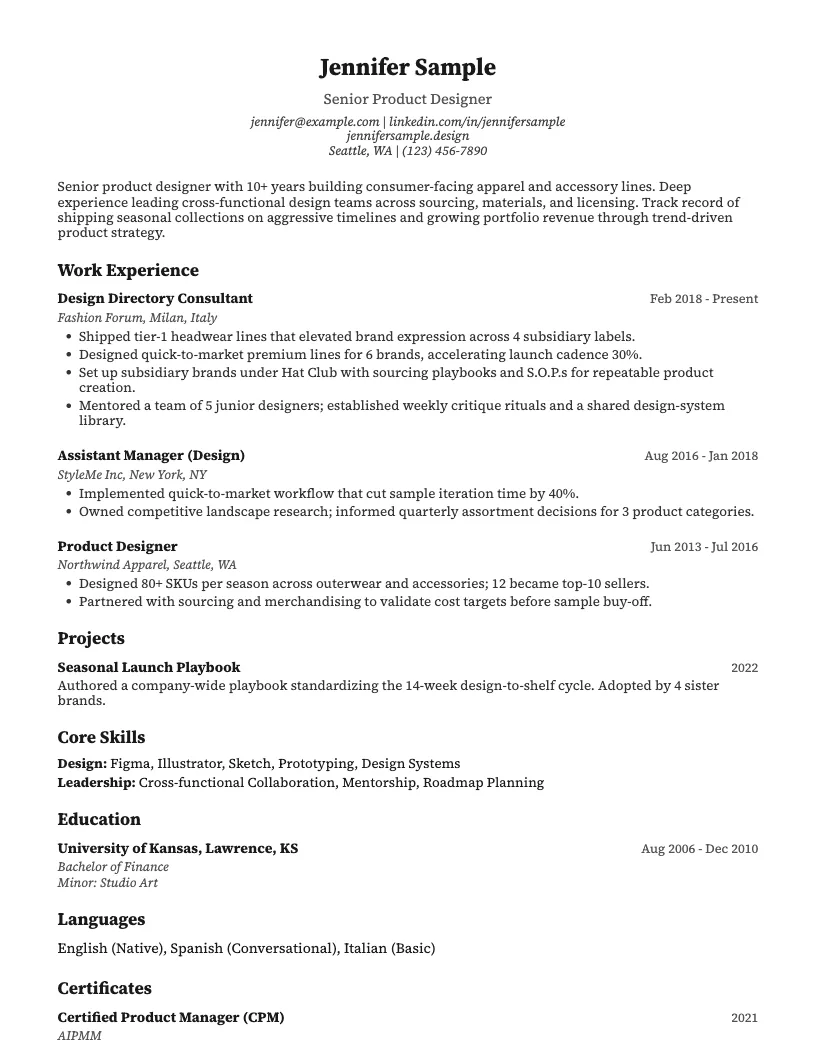
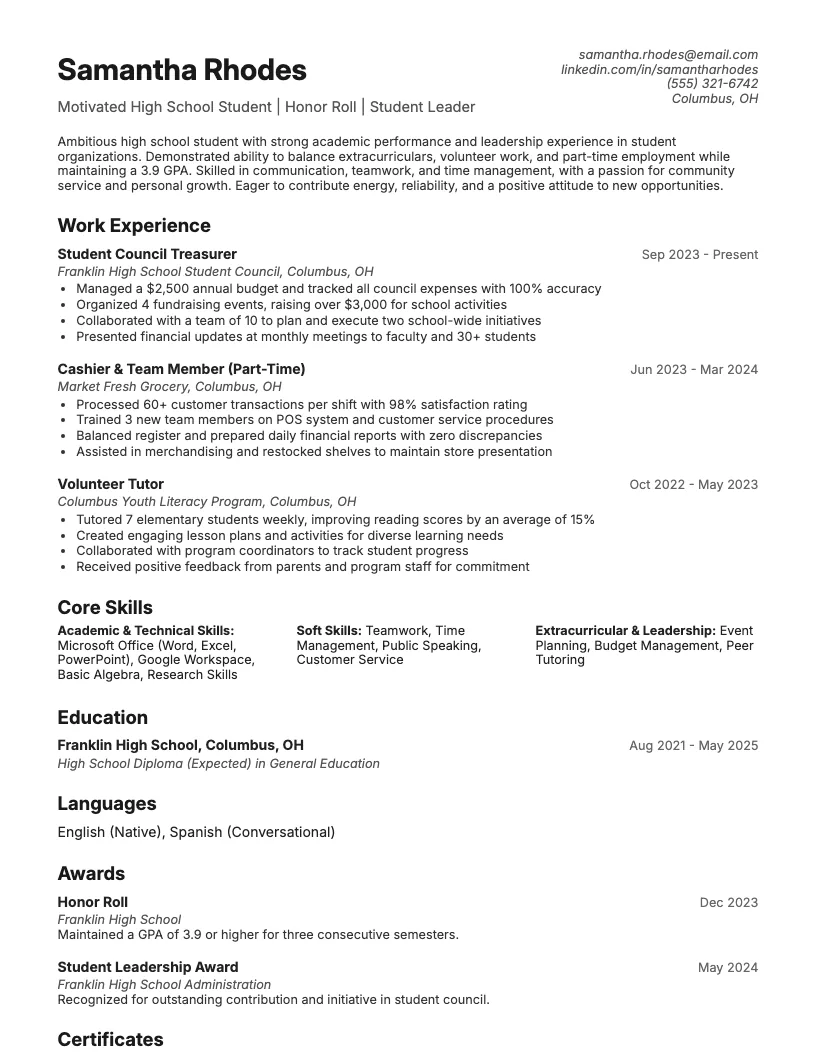
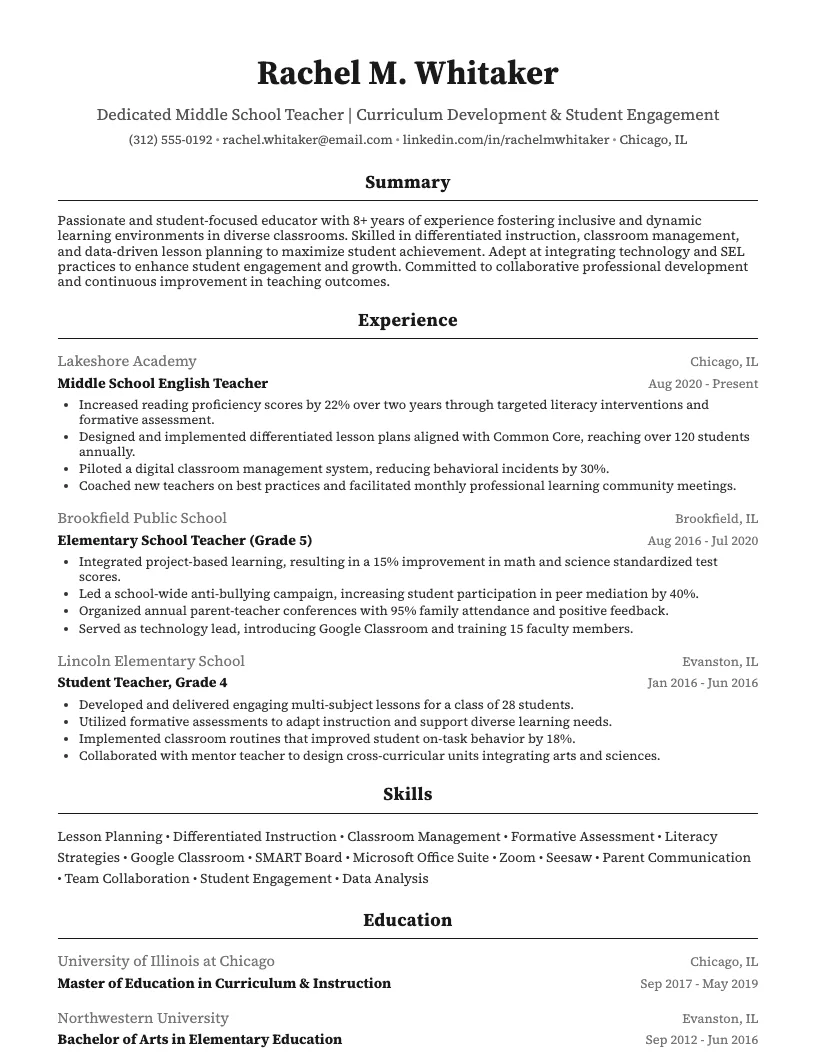
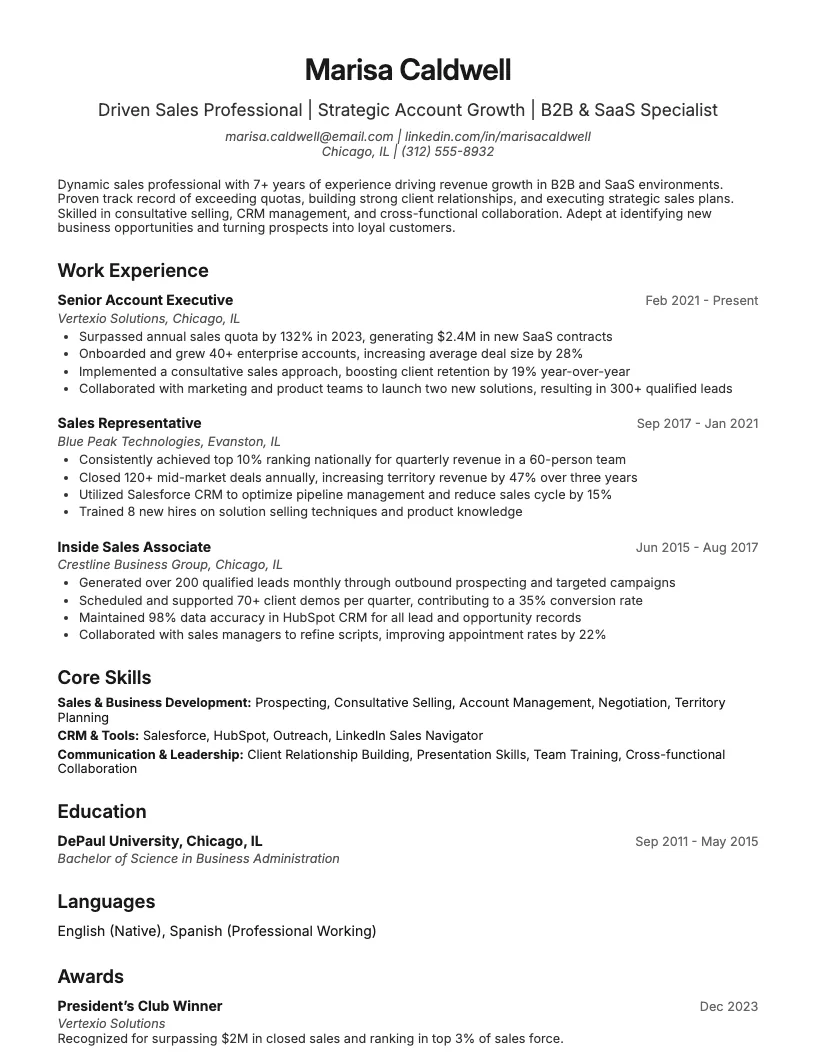
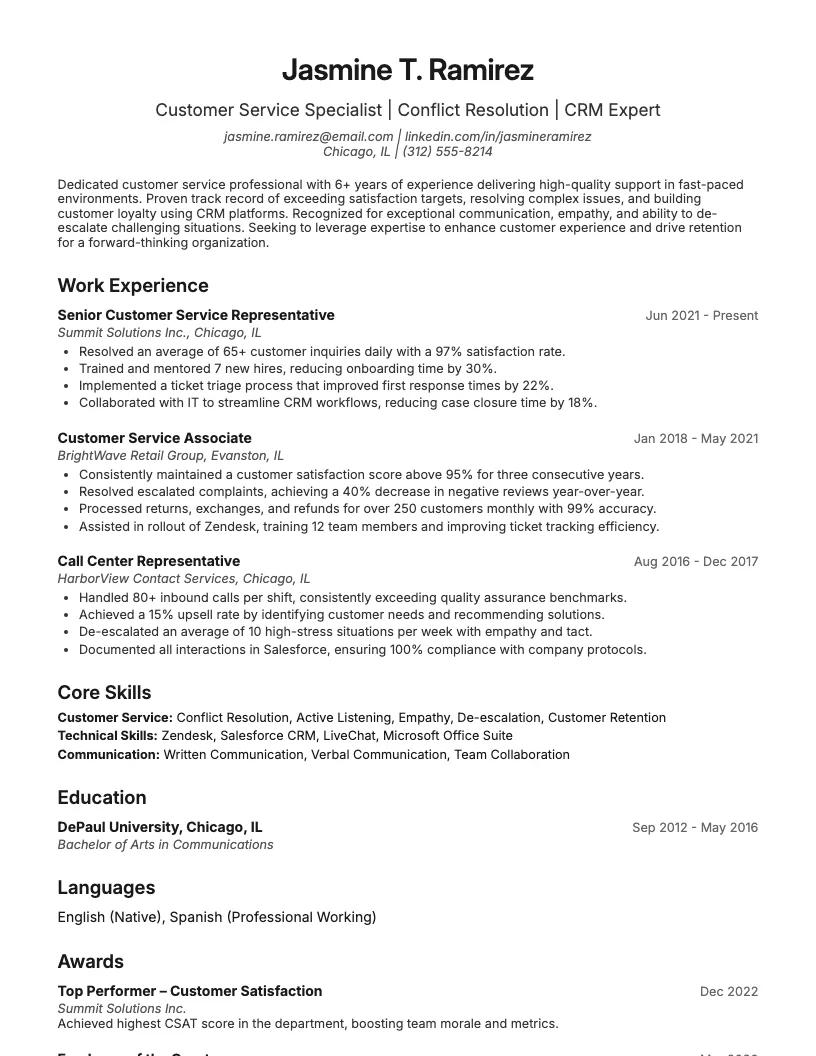
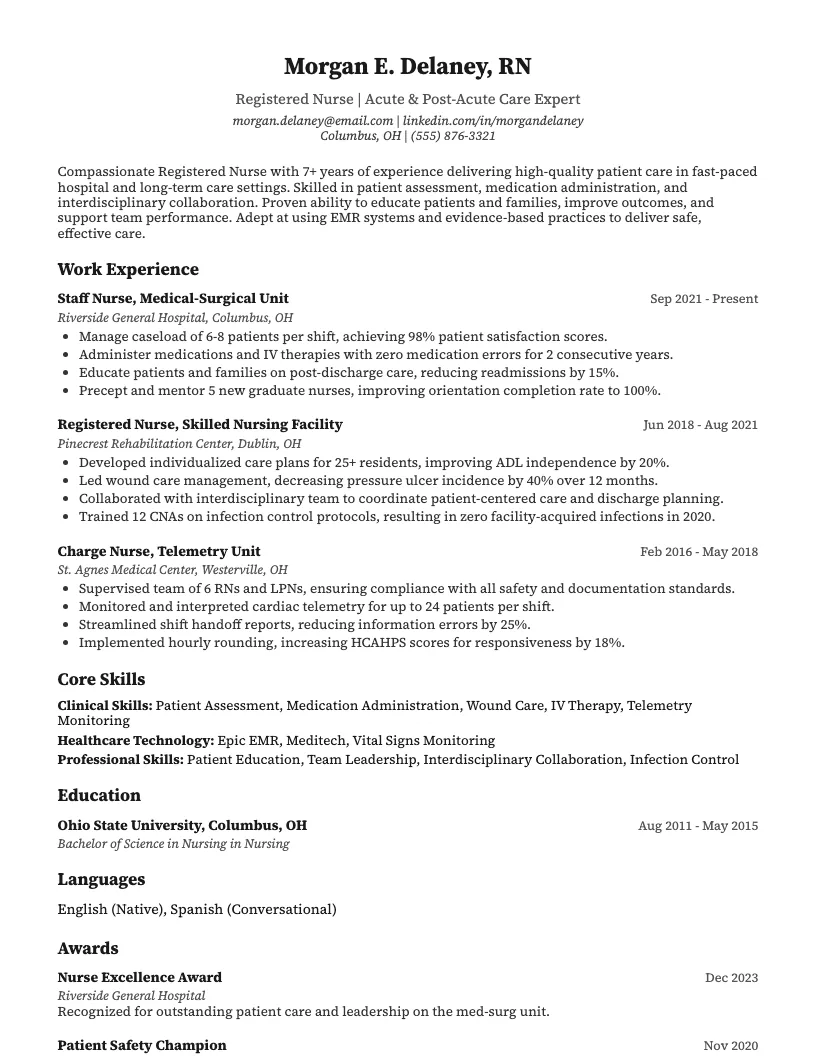
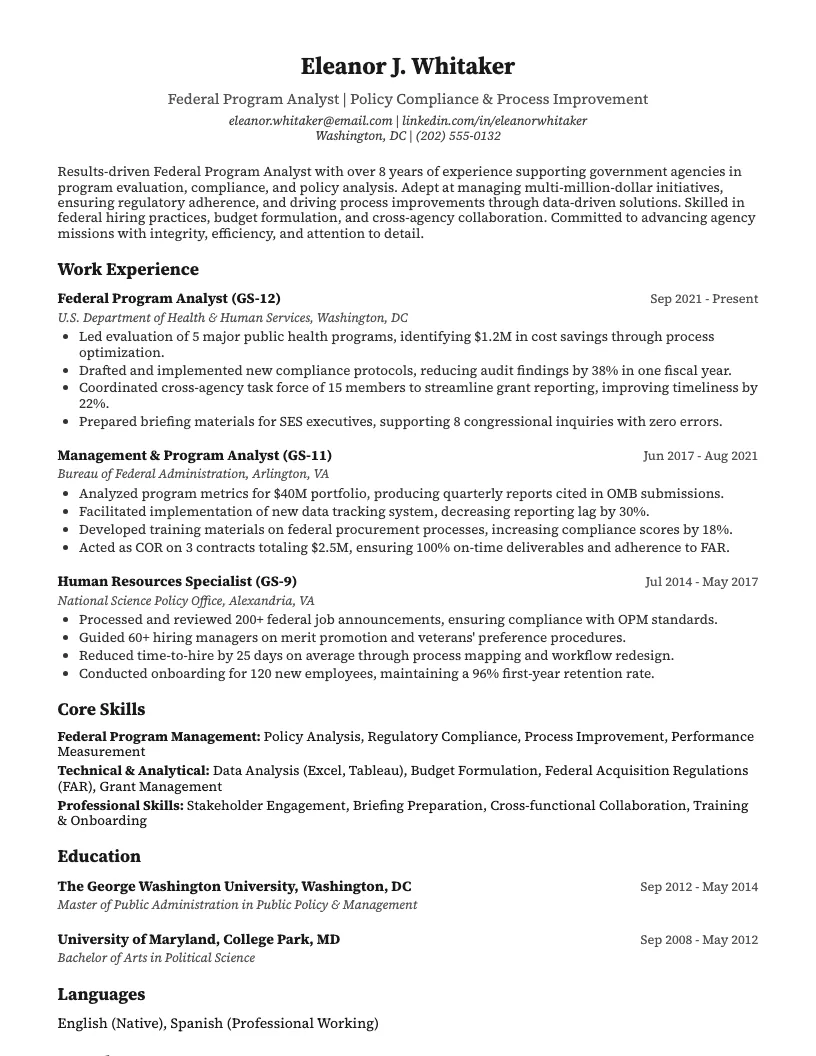
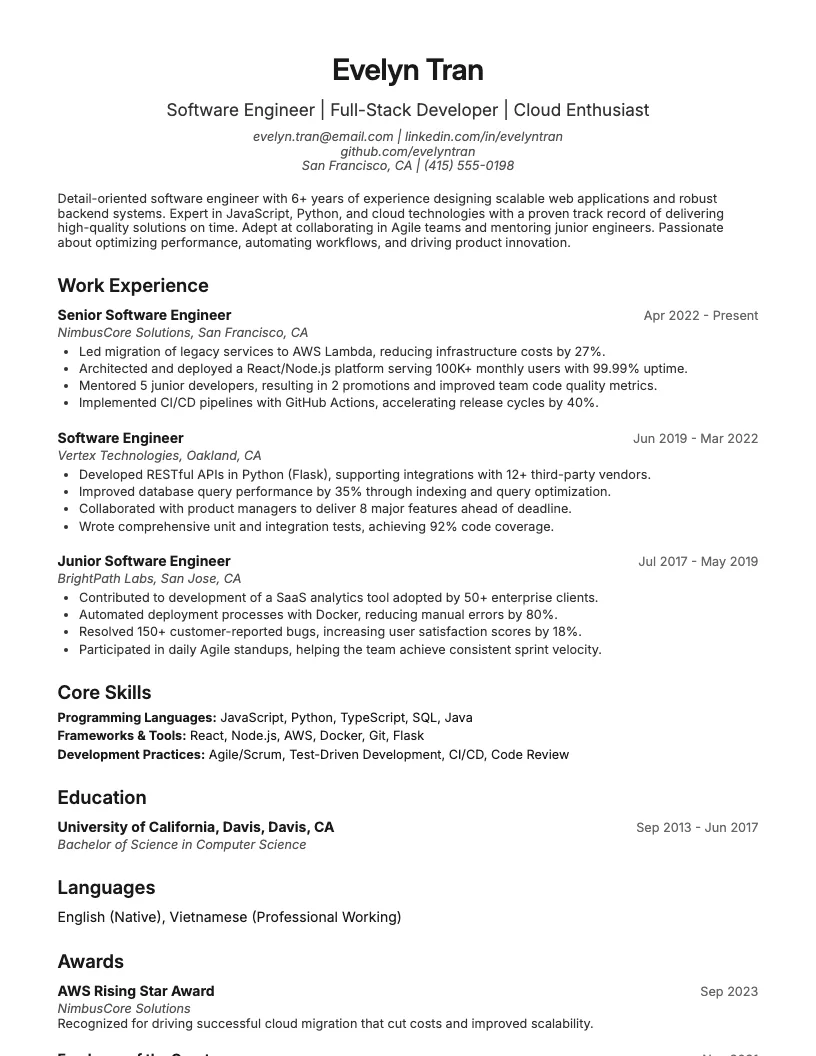
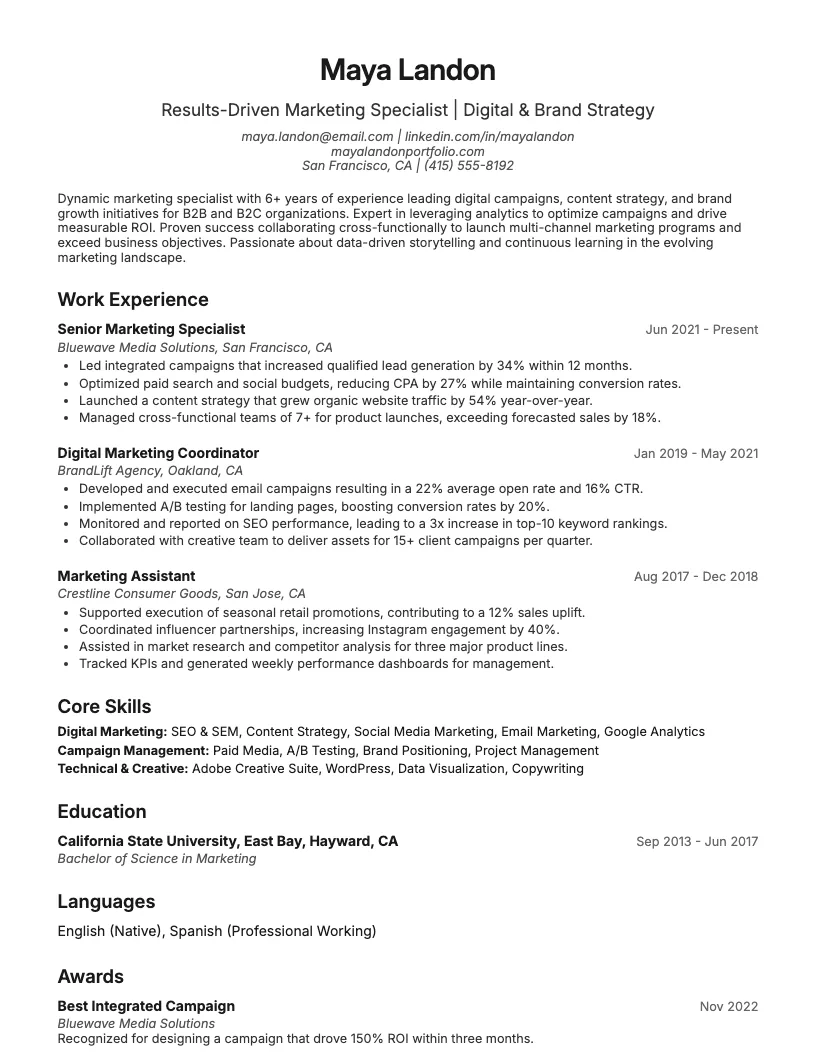
See these skills on a real resume
8 examplesStart from an example that already has them, and swap in your own.
Check your resume against the job you want
Scan your resume, see which skills and keywords the posting asks for that you are missing, and fix them before you apply.
Free to use • No credit card required