Worked Synonym Resume: 12 Words to Use Instead, 6 Rewritten
12 synonyms for 'worked' on a resume, what each one actually claims, how to pick the right one, 6 bullets rewritten before/after, and when to keep 'worked'.


Written by Dr. Priya Sharma
Career Development Expert & Resume Analyst
Updated August 2026
Reviewed by Sarah Chen
Is your resume ATS-friendly?
Drop your resume in and see which of these skills a scanner can actually read, and which ones the job you want is asking for that you have not listed.
PDF or DOCX. Max 2MB.
We never share your resume or use it to train a model.
In This Guide:
What can you say instead of "worked" on a resume?
Here's the twelve I'd reach for first, with what each one is actually claiming.
Managed
Use this when you had people, a budget, or a process reporting to you.
That's the whole test - if nothing was under you, don't use it.
I see candidates write "managed" when they mean "did." A recruiter can tell the difference in about two seconds, because the rest of the bullet won't back it up.
Led
"Led" means you made the calls and other people followed them.
If you were one of five people on a project and nobody looked to you first, this isn't your word - see when "led" is the wrong claim for how that plays out on paper.
Used honestly, it's one of the strongest verbs on this list. Used to dress up a group project, it's the fastest way to lose credibility in an interview when someone asks a follow-up question.
Executed
This says you ran a plan and it worked - not that you helped, not that you were around for it.
I like it for anything with a clear before-and-after: a launch, a migration, a campaign. Pair it with the result, not the task: "executed the migration" is thin, "executed the migration with zero downtime" is a bullet.
Implemented
"Implemented" is for the thing that didn't exist before you built it - a new tool, a new process, a new system.
It signals initiative in a way "worked on" never does. If a job posting uses this exact word for the tool or process you touched, that's the word to put on your resume - see step 4 on matching the posting's language.
Coordinated
Use this when your job was making other people's work line up - schedules, vendors, moving parts across teams.
It's honest about scope: you weren't in charge of the outcome, you were in charge of the logistics. That's a real skill and it reads as one, as long as you don't inflate it into "led."
Collaborated
This is the word for genuine teamwork, where credit is shared and nobody was in charge.
Nine times out of ten I see "worked with" instead of "collaborated," and the fix is a straight swap - see how that plays out under worked with → partnered. Don't stack it on every bullet, though - three "collaborated" bullets in a row start to sound like you never worked alone.
Delivered
"Delivered" is about the finish line - a thing shipped, a deadline hit, a project closed out.
It's one of the cleanest verbs because it forces a number right behind it: delivered what, by when, how much. If you can't finish that sentence, the bullet isn't ready yet - see step 5 on adding the number the verb is claiming.
Resolved
This is the word for fixing something that was broken - a complaint, a bug, a conflict, a backlog.
It's a favorite of mine because it's almost impossible to write a boring "resolved" bullet. Something was wrong, then it wasn't, and you're the reason.
Name the problem and the fix in one line and it does the work for you.
Built
"Built" means you made something from nothing - a system, a team, a spreadsheet nobody had before you.
I'd use it over "created" or "developed" most of the time, because it's plainer and it's the word people actually say out loud. Just make sure it was actually new - if you improved something that already existed, that's streamlined, not built.
Streamlined
This is for making an existing process faster, cheaper, or less painful - not for starting something from scratch.
The mistake I see most often is a "streamlined" bullet with no before-and-after: no old process, no new one, no time saved. Say what it looked like before and what changed, and the number practically writes itself.
Negotiated
Use this only when there was an actual back-and-forth - a price, a contract, a deadline, a deal - and you were the one at the table.
It's a high-trust word, so don't spend it on "I asked my manager for more time." Save it for the real thing and it carries weight.
Contributed
This is the honest word for real work on someone else's project, where you weren't running the show.
It's not a weak verb - it's the right one when it's true, and it's the honest alternative to claiming "led" when you were one of six. If you're not sure which of these twelve fits a given bullet, that's what the six steps for picking the right replacement walk through - and if you'd rather not do that word-by-word pass yourself, ResumeJudge will read your resume against the job posting and rewrite each bullet with the verb and wording the posting is actually asking for.
Why does "worked" weaken a resume bullet?
It describes attendance, not results
"Worked" tells me you showed up. It doesn't tell me what happened while you were there.
I've read hundreds of resumes, and "worked on the onboarding process" gives me nothing to picture. Did you fix it, redesign it, or just sit in on it?
A recruiter can't score attendance.
It hides who was in charge
The word is neutral on purpose, which means it never tells anyone whether you ran the thing or watched someone else run it.
That's the real problem with it: it erases the exact detail a hiring manager is scanning for. Were you the one making decisions, or the one carrying them out?
"Worked" answers neither question, so pick the replacement that matches your actual level of ownership instead of leaving it vague.
It repeats on every bullet
Nine times out of ten, once I spot "worked" in one bullet, I find it in three more on the same page.
That repetition reads as redundant to anyone skimming your resume, and it makes every line sound the same even when the work behind them was completely different. If you're not sure how many times it's hiding in your document, start by finding every instance before you touch a single word.
"Worked on" vs "worked with" vs "worked as"
These three aren't interchangeable, and swapping them for one generic verb loses information.
"Worked on" usually means a project. "Worked with" usually means a person or team, and that one specifically reads as passive, like you had no authority in the room.
"Worked as" is a role. Each needs a different replacement, and all three are rewritten as before-and-after bullets further down.
If your resume is already written and you just need every "worked" flagged with the right fix for its context, that's exactly what ResumeJudge's resume rewrite does - it reads the bullet and swaps in wording that matches the job you're applying to, not a generic thesaurus pick.
How do you pick the right replacement for "worked"?
How do you pick the right replacement for "worked"?

Here's the process I walk people through when their resume is full of "worked."
It's six steps, and none of them are about memorizing a list of fancy verbs.
Step 1: Find every "worked" in your resume
Search your document for the word. Every single instance.
I've reviewed resumes with "worked" six or seven times on one page. You won't know how bad it is until you count.
Step 2: Say what you actually did in that bullet
Before you touch the verb, write out - in plain words - what actually happened. Did you fix something, build something, manage people, close a deal, hit a number?
"Worked on improving processes" isn't an answer to that question. "I built a crash reporter and used the data to fix the three biggest causes of crashes" is.
Step 3: Match the verb to your level of ownership
Once you know what happened, pick the verb that matches your actual role in it. Did you run the thing, or help the person running it?
"Led" and "managed" claim you were in charge. "Supported" or "contributed to" admit you weren't. Pick wrong in either direction and a hiring manager who asks you about it in an interview will catch the gap immediately - I've watched it happen.
Step 4: Take the wording from the job description
Open the posting and pull out the verbs and terms it uses. If it says "cross-functional collaboration," and your bullet says "worked with other departments," that's your fix - use their word.
This isn't just about sounding sharper. Applicant tracking systems sort resumes by how closely they match the posting, so borrowing its language moves you up the list a recruiter is reading down - there's no scan you pass or fail, but there is an order, and you want to be near the top of it.
This is the one place a tool helps more than a thesaurus - ResumeJudge reads the posting and your resume side by side and tells you exactly which of its terms are missing, then rewrites the bullet to include them.
Step 5: Add the number the verb is claiming
A strong verb without a number is still a weak bullet. "Streamlined onboarding" is a claim; "streamlined onboarding, cutting new-hire ramp time by 15%" is proof.
If you don't have an exact figure, use a real range or a count you can defend - people managed, tickets closed, dollars moved. Nine times out of ten, when I ask someone for the number, they actually have one - they just never wrote it down.
Step 6: Read it back for tense and repetition
Read every bullet out loud, top to bottom. Two things jump out when you do: verbs in the wrong tense for the job, and a replacement verb you've reused across the page - using the same strong verb on every bullet covers what to do about that one.
Neither mistake is obvious on a silent read. Both are obvious out loud.
What does "worked" look like rewritten?
Reading examples side by side beats reading rules. Here are six real bullets, weak and strong, so you can see what actually changes.
"Worked with the sales team" → Partnered
Worked with the sales team
Worked with the sales team on new client outreach.
Partnered with the sales team to launch a new outreach process, generating 500 qualified leads in one quarter.
Weak: "Worked with the sales team on new client outreach."
Strong: "Partnered with the sales team to launch a new outreach process, generating 500 qualified leads in one quarter."
"Partnered" tells the reader you were a real contributor to a joint effort, not someone cc'd on the emails. Add the number the work produced and the bullet earns its place.
"Worked on the website redesign" → Rebuilt
Worked on the website redesign
Worked on the website redesign.
Rebuilt the company website, increasing traffic 30% and conversions 18%.
Weak: "Worked on the website redesign."
Strong: "Rebuilt the company website, increasing traffic 30% and conversions 18%."
"Worked on" could mean you fixed a typo or ran the whole project. "Rebuilt" says you owned it.
If you only handled a piece of it, say which piece - "rebuilt the checkout flow" - rather than let "worked on" cover for the gap.
"Worked as a shift lead" → Supervised
Worked as a shift lead
Worked as a shift lead at the store.
Supervised a team of six on evening shifts, cutting order errors 15%.
Weak: "Worked as a shift lead at the store."
Strong: "Supervised a team of six on evening shifts, cutting order errors 15%."
A job title already says "shift lead." Repeating it with "worked as" wastes the verb slot.
Use it to say what supervising meant day to day instead.
"Worked to improve the onboarding process" → Streamlined
Worked to improve the onboarding process
Worked to improve the onboarding process for new hires.
Streamlined new-hire onboarding, cutting ramp-up time 15%.
Weak: "Worked to improve the onboarding process for new hires."
Strong: "Streamlined new-hire onboarding, cutting ramp-up time 15%."
I've read this exact "worked to improve" line hundreds of times, and it never says what changed. "Streamlined" plus a number does the job in half the words.
If the posting you're applying to uses "streamlined" or "optimized" itself, take that wording from the job description instead of guessing.
"Worked closely with clients" → Advised
Worked closely with clients
Worked closely with clients to manage their accounts.
Advised 40+ client accounts on strategy, improving retention 25%.
Weak: "Worked closely with clients to manage their accounts."
Strong: "Advised 40+ client accounts on strategy, improving retention 25%."
"Advised" says you brought expertise, not just availability. Pair it with how many accounts and what moved as a result - retention, growth, renewals - and the bullet proves the relationship mattered.
"Worked in a fast-paced restaurant" → Served
Worked in a fast-paced restaurant
Worked in a fast-paced restaurant during peak hours.
Served 100+ guests per shift while maintaining a 95% satisfaction rating.
Weak: "Worked in a fast-paced restaurant during peak hours."
Strong: "Served 100+ guests per shift while maintaining a 95% satisfaction rating."
Entry-level roles get this wrong most: people think plain "worked" is the safe, honest choice. It isn't - it's just vague.
"Served" plus a volume number shows you can handle pressure, which is exactly what a fast-paced job is testing for.
Once you've rewritten a batch like this, run the resume against the actual posting - ResumeJudge will flag any of the job's required skills or phrasing your new bullets still miss, so you're not guessing at the second pass.
When is "worked" the right word to keep?
Not every "worked" needs replacing. I've seen resumes where someone swapped it out everywhere and the result reads worse than the original.
Job titles and dates don't need a verb at all
Your work history header - company, title, dates - isn't a bullet. Don't write "Worked as Sales Associate, 2021-2023."
Just write the title and dates. The verb belongs inside the bullets underneath, describing what you did, not labeling the job itself.
Claiming "led" when you were one of six
This is the one I flag most. Someone was on a six-person project team and writes "Led the migration" because led sounds better than worked.
It doesn't hold up in an interview when they get asked who reported to them.
If you weren't in charge, "worked" plus what you contributed is more honest than a leadership word you can't back up. Say "Worked with a six-person team to..." and then name your specific piece of it.
That's not weaker - it's accurate, and accurate survives follow-up questions.
Thesaurus words that read as fake: coacted, liaisoned, wangled
Some thesaurus lists suggest "coacted" or "liaisoned" as fancier stand-ins for "worked with." Don't use them.
Nobody talks like that, and a recruiter skimming your resume trips on a word they've never seen in a job context. When a synonym sounds like it came from a thesaurus and not from a person, "worked" was better.
Using the same strong verb on every bullet
Swapping every "worked" for "led" doesn't fix the problem - it just moves it. If every bullet starts with the same power verb, it reads as mechanical, and a hiring manager notices the pattern before they notice your results.
Mix your verbs across the bullet list the same way you'd vary sentence length in an essay - and if you can't tell which bullets are repeating, that's exactly the kind of pattern check ResumeJudge's resume scan flags for you before you send it out.
Frequently Asked Questions
Does an ATS reject the word "worked"?
No, an ATS doesn't reject specific words - it scores your resume based on how well it matches the keywords and skills in the job posting. Using "worked" won't get your resume screened out on its own; what actually hurts is a bullet that's vague about what you did. Swapping in a stronger verb helps a human reviewer read your resume more than it helps any automated score.
Should every bullet start with a different verb?
No, forcing a different verb into every bullet just for the sake of variety makes the resume read the same as before, only shuffled. Pick the verb that matches what actually happened - if you led something, say led; if you built something, say built. Repeating a verb twice across a resume is a much smaller problem than picking the wrong one.
Which tense do I use for my current job?
Use present tense for your current job and past tense for every previous one. That applies to every bullet under that job, not just the first one you write. If a task within your current job has already finished, it's fine to describe that one bullet in the past tense even though the job itself is ongoing.
What do I say instead of "worked with" for teamwork?
It depends on what you actually did. The twelve-word list at the top of this page says what each teamwork verb claims - see the Collaborated and Coordinated entries under "What can you say instead of 'worked' on a resume?" Pick the one that matches your actual role rather than the most impressive-sounding option. A hiring manager can usually tell when the verb overstates what happened.
I have no numbers to add - what then?
You don't need a percentage or dollar figure for every bullet - describing the scope in plain terms works too, like how many people, how often, or how large the project was. Try "supported a team of 12" or "handled scheduling for a 40-person department" instead of forcing in a number that doesn't exist. If you're not sure what detail is worth adding, checking your resume against the actual job posting can show you what the employer cares about most.
Can I use these words in my cover letter too?
Yes, the same replacement verbs work in a cover letter, and for the same reason - "worked" reads as vague there too. A cover letter gives you more room to walk through one specific example in detail, so use the space to explain what you did rather than repeating your resume bullets word for word. If you'd rather not write it from scratch, we write the cover letter for the job you're applying to based on your resume and the posting.
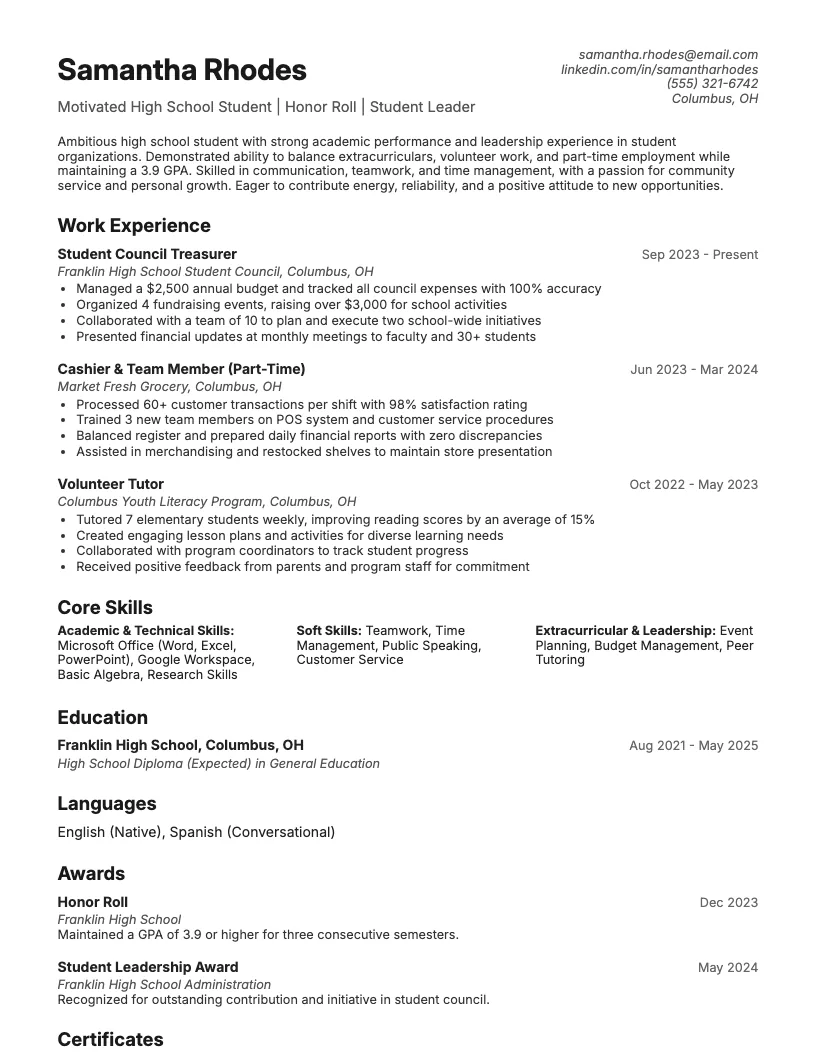
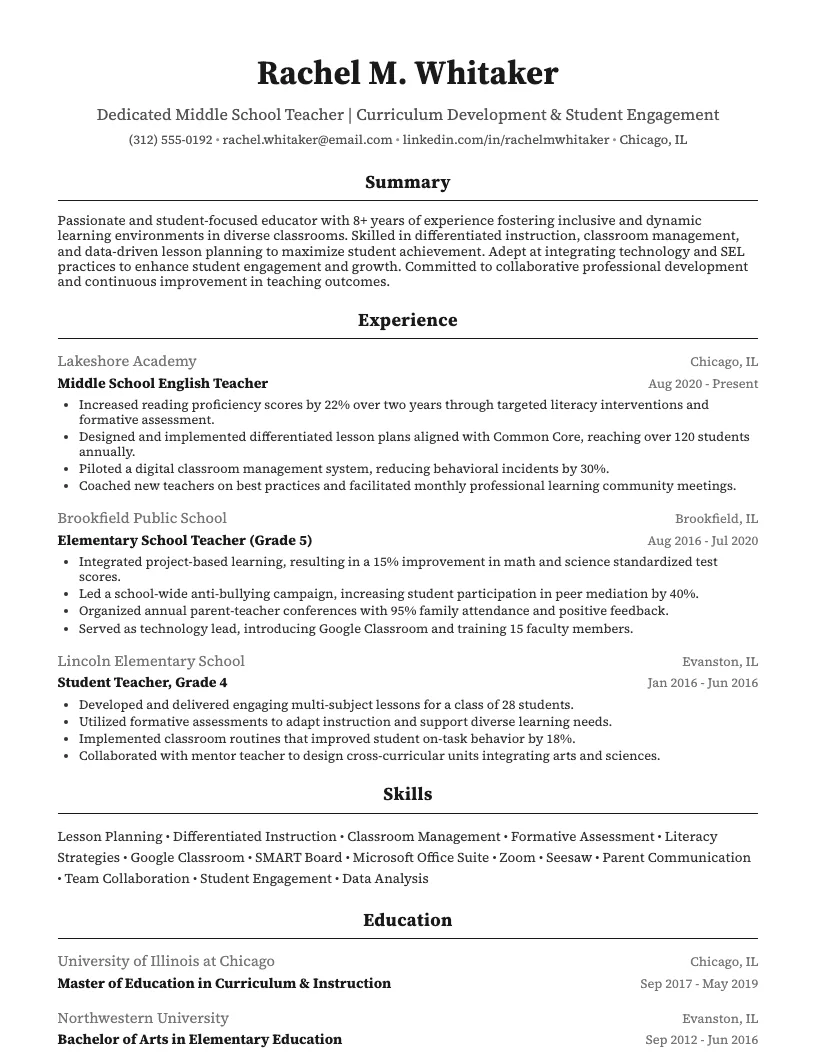
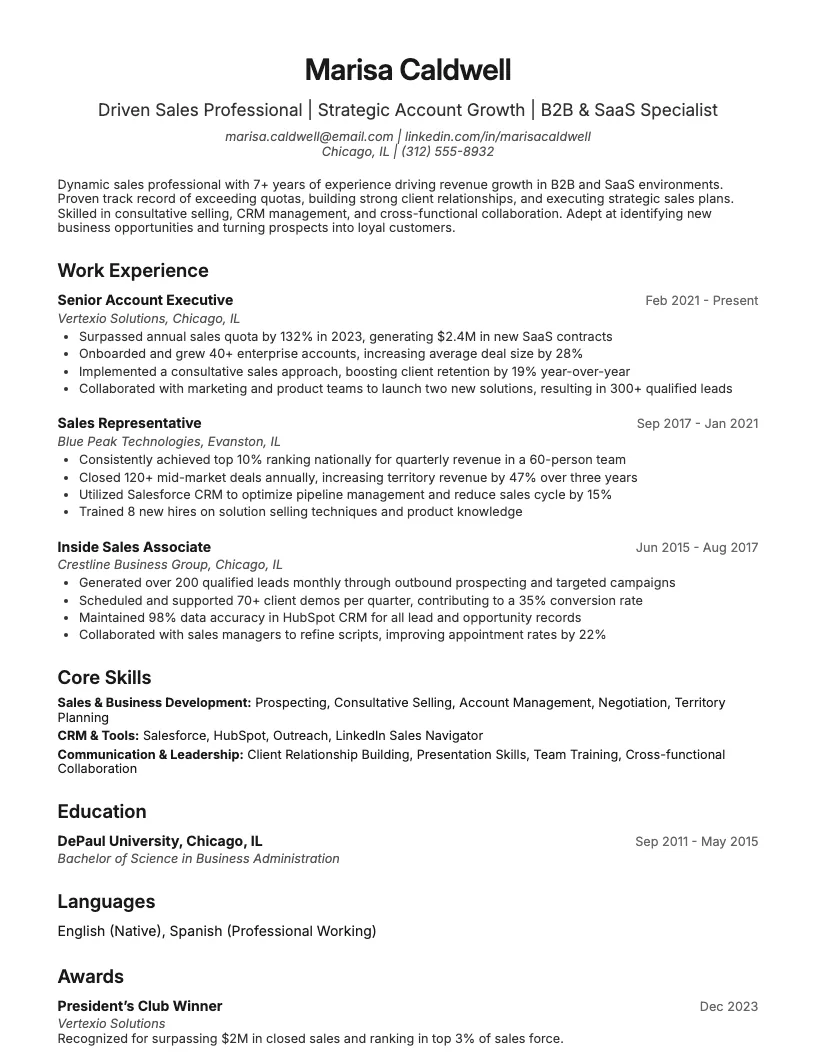
See these skills on a real resume
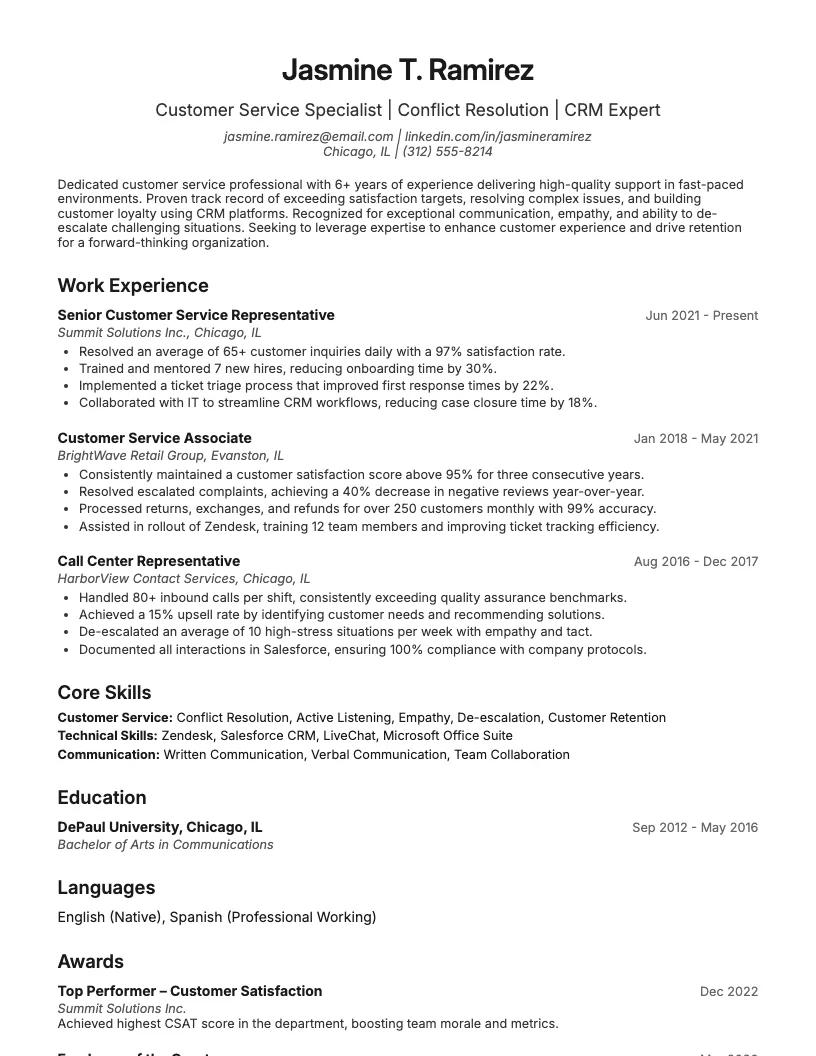
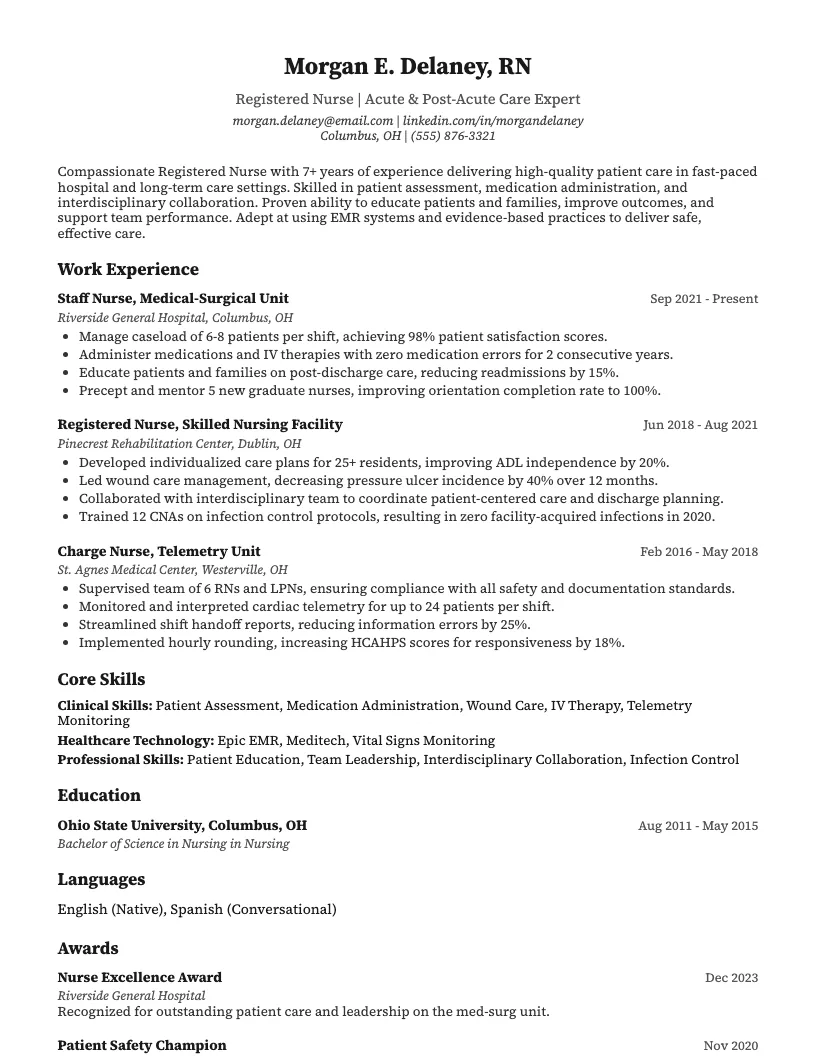
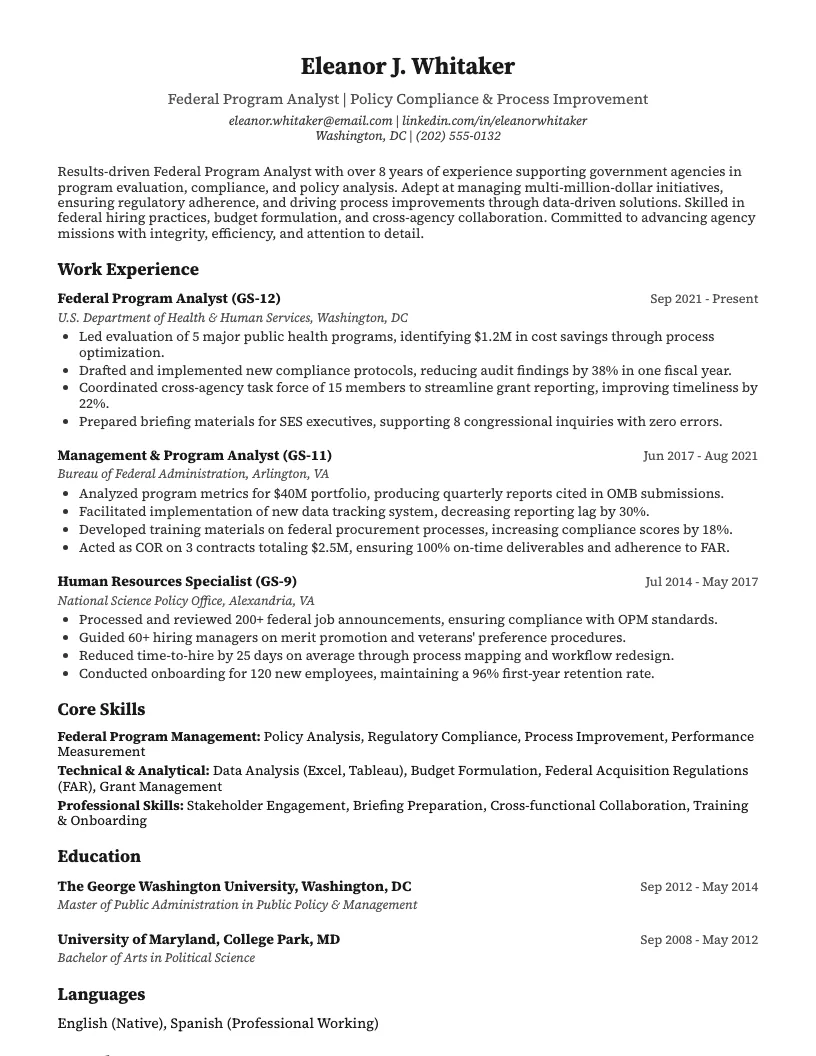
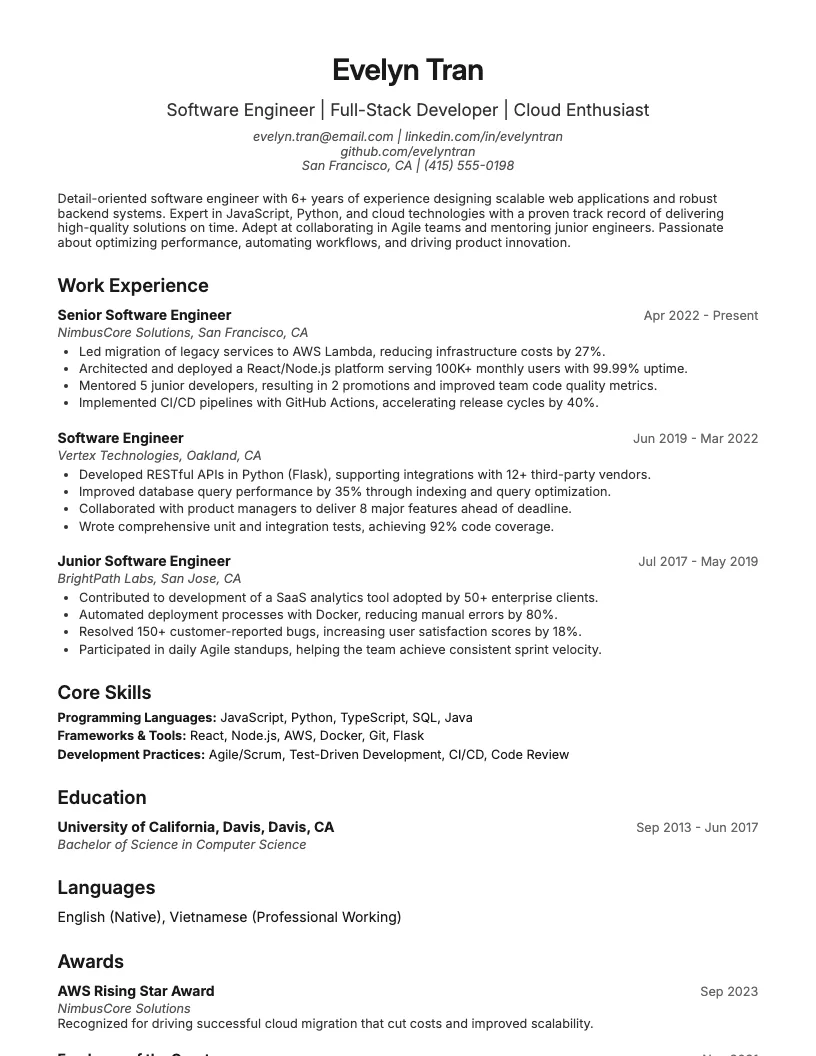
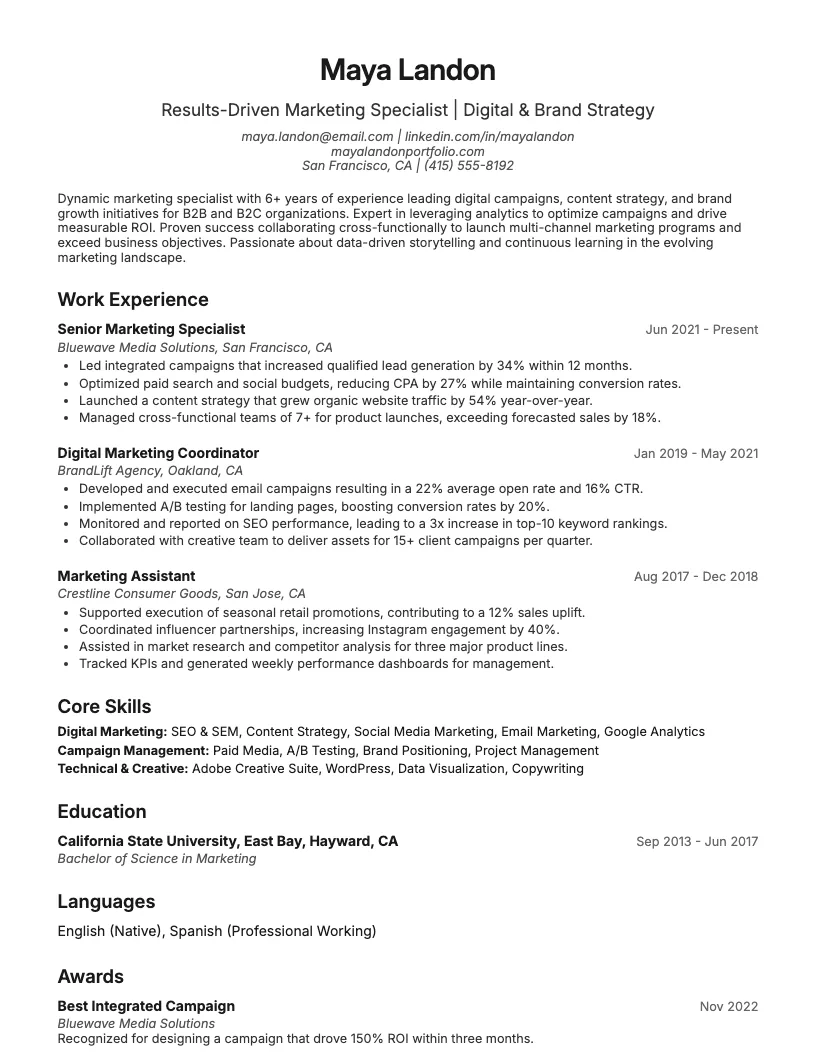
8 examplesStart from an example that already has them, and swap in your own.
Check your resume against the job you want
Scan your resume, see which skills and keywords the posting asks for that you are missing, and fix them before you apply.
Free to use • No credit card required