Collaborate Synonym Resume: 10 Words to Use (Plus 40+ More)
See 10 strong synonyms for 'collaborate' on a resume, when to use each, a full 40+ word list, a rewritten bullet example, and when to still use 'collaborate'.


Written by Marcus Rodriguez
ATS Optimization Specialist & Career Coach
Updated August 2026
Reviewed by Dr. Priya Sharma
Is your resume ATS-friendly?
Drop your resume in and see which of these skills a scanner can actually read, and which ones the job you want is asking for that you have not listed.
PDF or DOCX. Max 2MB.
We never share your resume or use it to train a model.
In This Guide:
What are the best synonyms for "collaborate" on a resume?
"Collaborated with the team" is the single most overused phrase I see on resumes. It tells a hiring manager nothing about what you actually did.
The fix isn't picking one fancy replacement. It's matching the word to your actual role, then adding a number to it.
Here are the ten I reach for most.
Partnered
Use this when you worked alongside someone at a similar level, not under them.
"Partnered with the design team to launch a new product line" says you were an equal contributor, not support staff. It's a good fit for cross-functional work, and it reads as more senior than "worked with."
Co-led
This is for shared ownership, and it only works if you actually shared it.
If you ran the project by yourself and had one person helping out, "co-led" oversells it - use "led" instead. If two of you genuinely split the responsibility, this is the word.
I'll show a full before-and-after of this one in the rewritten bullet example.
Coordinated
This is the word for logistics and alignment, not shared creative work.
Think scheduling, aligning teams, running an event. "Coordinated marketing and sales efforts" or "coordinated a corporate event that increased attendee satisfaction by 20%" - it signals organization, not partnership.
Liaised
Reach for this when your job was to be the connector between two groups.
It's common in healthcare, client services, and any role where you sit between departments that don't talk to each other directly. It's a little formal, which is exactly why it works on a compliance-heavy or corporate resume.
Teamed up
This is the casual one. Save it for startups, creative teams, or anywhere the rest of your resume already reads informally.
Put "teamed up" on a resume headed to a bank or a law firm and it'll stick out for the wrong reason. Match the tone of the room you're walking into - more on that in words to avoid on a formal resume.
Contributed
Nine times out of ten, this is the honest word for entry-level and early-career work, and there's nothing wrong with that.
You weren't leading. You were part of something bigger and you added real value to it.
"Contributed to a cross-functional project that cut production time by 50%" is a strong line - the number is doing the work, not the verb.
Assisted
This is the most under-appreciated word on this list, and I think people avoid it because it sounds junior. Sometimes junior is exactly what happened, and pretending otherwise is the actual mistake - see don't overstate your role.
Use it when you genuinely supported someone else's project. It's clear, it's honest, and a hiring manager trusts a resume more when the verbs match the seniority of the job title next to them.
United
This one is for bringing separate groups or efforts together around one goal, and it carries some weight - don't spend it on a two-person task.
"United regional teams around a single sales process" works. "United with a coworker to update a spreadsheet" doesn't.
Joined forces
This is the phrase version of "united" - bigger, more formal, and built for describing work on a real challenge, not a routine task.
Advocating for a policy change, tackling a major research project, that kind of scale. It reads well in nonprofit and mission-driven fields especially.
Pooled resources
This is specific: it means you and others each brought something (time, budget, expertise) to a shared goal.
"Pooled resources with a partner organization to fund a research initiative" or "pooled resources to cut delivery time by 30%" - it's a strong choice when the story is really about combining assets, not just combining effort.
The full list of 40+ alternatives
Ten words won't cover every bullet on your resume, and you shouldn't want them to - repeating even a good word five times looks worse than repeating "collaborated."
Here's a longer bank to pull from, grouped loosely by feel:
Formal / cross-functional: cooperated, coordinated, aligned, facilitated, integrated, synchronized, liaised, consulted
Team-building / connection: networked, bridged, connected, engaged, built relationships, worked alongside
Creating something together: co-created, co-developed, co-authored, co-produced, brainstormed, strategized with
Supporting role: assisted, aided, helped, supported, participated, volunteered
Merging or combining: merged, blended, combined, integrated, pooled, wove, incorporated
Communication-heavy: communicated, corresponded, interacted, reached consensus
I've gone through resumes where the same candidate used "collaborated" nine times in one document. Pick two or three from this list that actually fit what you did, and check each one against how to pick the right word for your bullet.
If you're rewriting a whole resume against a specific job posting, ResumeJudge will scan the posting, tell you which of these words and skills it's actually looking for, and rewrite your bullets to match - instead of you guessing from a list.
How do you pick the right one for your bullet?
How do you pick the right one for your bullet?

There's no single "best" synonym for collaborate. The right one depends on what actually happened, and picking the wrong one is the mistake I see most often on resumes that get skipped.
Match the word to how involved you actually were
The opening word of a bullet tells a recruiter what you actually did, so start there before you touch anything else.
Each entry in the word list above says which level of involvement it fits. Honest reads better than inflated - a recruiter can tell the difference in seconds.
Use the words the job posting uses
Read the posting before you write the bullet. If it says "partnerships," use "partnered."
If it says "cross-functional," work that phrase in.
The case where this matters most is the word "collaborate" itself - see when the posting says "collaborate".
Match the word to your industry
Where a word suits a particular field, the word list above says so.
I've seen resumes lose points just for sounding out of place next to the rest of the field they're applying into. Read a few job postings in your target industry and match their register, not just their keywords.
Words that fit an entry-level resume
If you're early in your career, don't reach for "led" when you weren't leading. The supporting-role words in the list above are the honest ones for internships, class projects, and first jobs.
Words that fit a senior or leadership resume
Nine times out of ten, if you managed people or drove the outcome, the word should say so directly instead of hiding behind "collaborated." The list above says which words carry that ownership.
Words to avoid on a formal resume
A formal bullet that avoids buzzwords
Synergized with the team to launch a new initiative
Coordinated with the team to launch a new initiative
Skip anything too playful or vague for a formal resume - words like "conspired" or unexplained buzzwords like "synergized" without a concrete result attached. They read as corporate filler, not achievement.
Once you've picked a word, see what the rewritten bullet looks like with a real number attached to it.
What does the rewritten bullet look like?
Reading examples is one thing. Watching a bullet actually change is another, so here's the real transformation, side by side, across a few different fields.
"Collaborated with the team" → "Co-led a team of ten"
Turning a vague team bullet into a specific one
Collaborated with the team
Co-led a team of ten to launch a product update that lifted sales 20%
"Collaborated with the team" tells me nothing - not what you did, not how many people, not what came of it.
"Co-led a team of ten to launch a product update that lifted sales 20%" tells me your role, your scope, and your result in one line.
That's the whole exercise: swap the vague verb, then attach a number the reader can picture.
Marketing bullets
A marketing bullet with a result attached
Collaborated on a launch
Coordinated cross-functional teams on a new product launch, driving a 15% revenue increase
Marketing rewards words that show initiative, because the field is judged on results. "Coordinated cross-functional teams on a new product launch, driving a 15% revenue increase" beats "collaborated on a launch" every time.
"Partnered with the design team to align creative with brand guidelines" works the same way - it says exactly who you worked with and what you were responsible for.
Healthcare and nursing bullets
A healthcare bullet naming the actual team
Collaborated with the care team on patient plans
Partnered with an interdisciplinary team on individualized patient care plans
Healthcare resumes lean on words like "partnered" and "coordinated" because care is genuinely a team effort, and the reader expects that.
"Partnered with an interdisciplinary team on individualized patient care plans" or "coordinated with lab and radiology on diagnostic turnaround" both keep the teamwork honest while making your specific piece of it clear. I'd steer clear of "collaborated" here - it's the word every other nursing resume already uses.
Tech and engineering bullets
A tech bullet that shows the bridge, not just the meeting
Collaborated with development and sales
Liaised between development and sales, leading to a product update that pushed sales up 40%
Tech bullets do best with precise, almost technical verbs. "Liaised between development and sales, leading to a product update that pushed sales up 40%" reads as someone who actually bridged two teams, not someone who just sat in on meetings.
"Cooperated with IT to streamline software deployment, cutting downtime 30%" is another one I see land well - it signals process and follow-through, not just presence.
Sales and account management bullets
A sales bullet with the number attached
Collaborated with R&D on product development
Teamed up with R&D on product development, resulting in a 20% sales increase
Sales resumes should sound like sales people wrote them: direct, numbers-forward. "Teamed up with R&D on product development, resulting in a 20% sales increase" or "coordinated sales strategy training, leading to a 30% profit increase" both do the job.
Add a number to every one
A bullet before and after adding a number
Led a joint effort with a team to increase sales
Led a joint effort with a team of five to increase sales by 25%
Nine times out of ten, the bullet that's missing a number is the one that gets skimmed past. "Led a joint effort with a team of five to increase sales by 25%" beats any unnumbered version, full stop.
No number to hand? Use scope instead - team size, client count, project count.
Once the wording and the metrics are both in place, that's when it's worth checking how many times you can reasonably use the same synonym across the page.
When should you still write "collaborate"?
Plenty. Synonyms fix a resume that repeats the same verb five times, but "collaborate" itself is a fine word - it's honest, and it's the word most postings actually use.
When the job posting says "collaborate"
If the posting says "collaborate with cross-functional teams," use that exact word somewhere on your resume, not just a synonym for it.
Applicant tracking systems match on the term the posting used, and a synonym doesn't always register as the same skill. I've seen resumes get passed over for using "partnered" when the posting wanted "collaborate" three separate times.
If you're not sure your resume actually mirrors the posting's language, running it through ResumeJudge against that job description will show you exactly which of its words are missing from yours.
How many times you can use it
Once, maybe twice, across the whole resume. Past that, it starts reading like you don't have another way to describe your work.
Pick the bullets where "collaborate" is genuinely the most accurate word - a shared, roughly equal effort - and save your other verbs for entries that were more you-led than we-led.
Don't overstate your role to get a stronger word
Don't reach for "co-led" or "directed" just because it sounds better than "collaborated." Nine times out of ten, an interviewer's first follow-up question exposes the gap between the word and the work.
If you supported someone else's project, say so plainly. "Collaborate" undersells nothing - it's an accurate, respected word for shared work.
Keep your own contribution visible, not just "we"
The real problem with "collaborated with the team" usually isn't the verb - it's that the rest of the bullet stays "we" all the way through. Name what you specifically did inside that collaboration; attaching a number is covered above.
Frequently Asked Questions
What is another word for "collaborate" on a resume?
Words like partnered, coordinated, and cooperated all work as replacements, since each says you worked with others while sounding more specific than "collaborate." Which one fits depends on what you actually did - partnered if you worked closely with one person or team, coordinated if you were organizing the effort.
Is "collaborate" a good word to put on a resume?
It's not a bad word, but it's a weak one if it's all you use. "Collaborate" is vague enough to appear on almost any resume without saying much, and hiring managers see it constantly, so it blends in rather than standing out. It works fine in small doses, but leaning on it for every team-related bullet makes your resume sound generic.
What can I say instead of "worked well with others"?
Name what you actually did with those other people instead of describing the general trait. "Worked well with others" tells a hiring manager nothing about your role, so replace it with something like "coordinated with the design and engineering teams to launch the feature on schedule." The specific version proves the skill instead of just claiming it.
What is a better word for "teamwork" on a resume?
"Teamwork" is a noun describing a general skill, so the better move is usually to swap it for a verb that shows what you did - collaborated, coordinated, partnered, or contributed, depending on your actual role. A phrase like "coordinated a five-person team to deliver the project early" says more than listing "teamwork" as a skill.
Should I put collaboration in my skills section or my work experience?
Work experience is where it counts most, because a bullet describing an actual project shows collaboration happening rather than just claiming it. A one-word mention in a skills list adds little on its own since almost every resume includes it. If you have room, a skills section entry can reinforce it, but it shouldn't be the only place it appears.
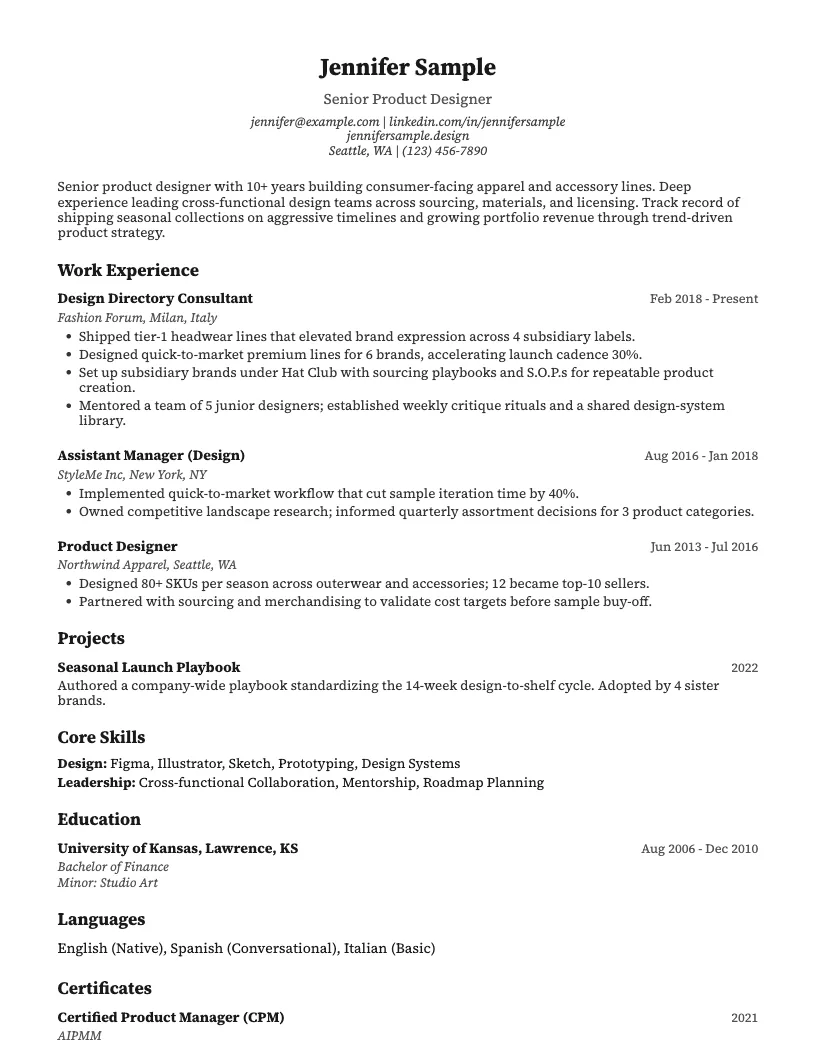
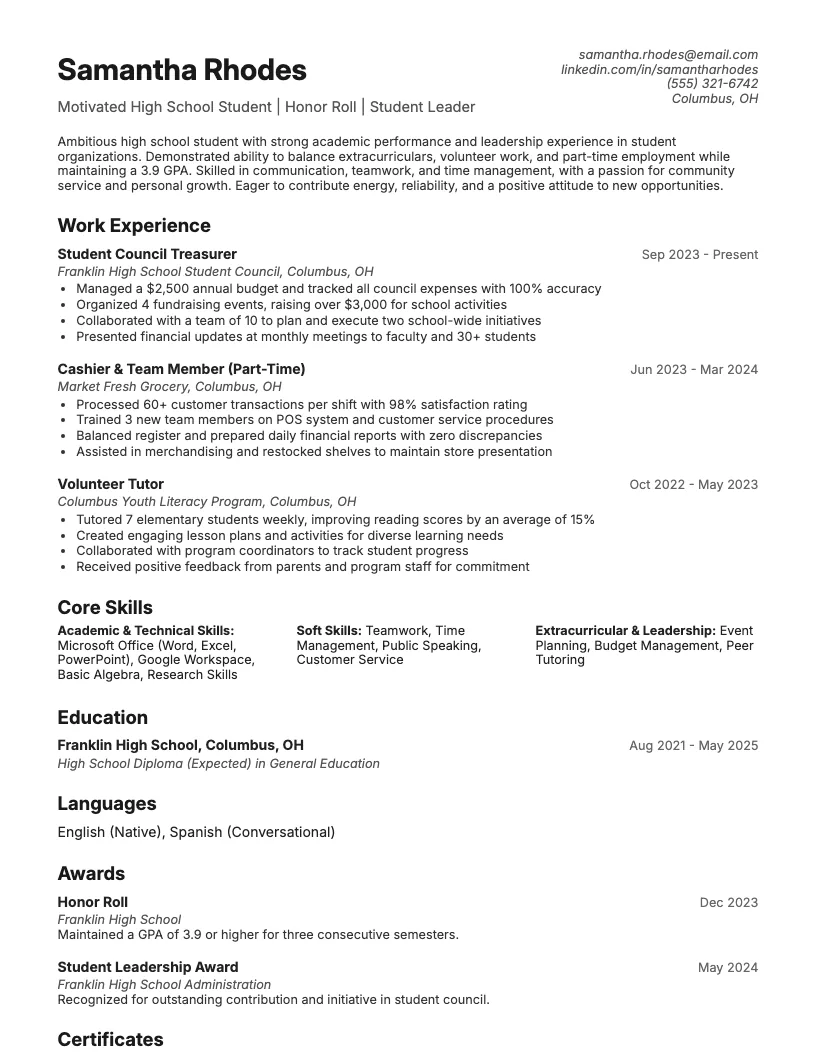
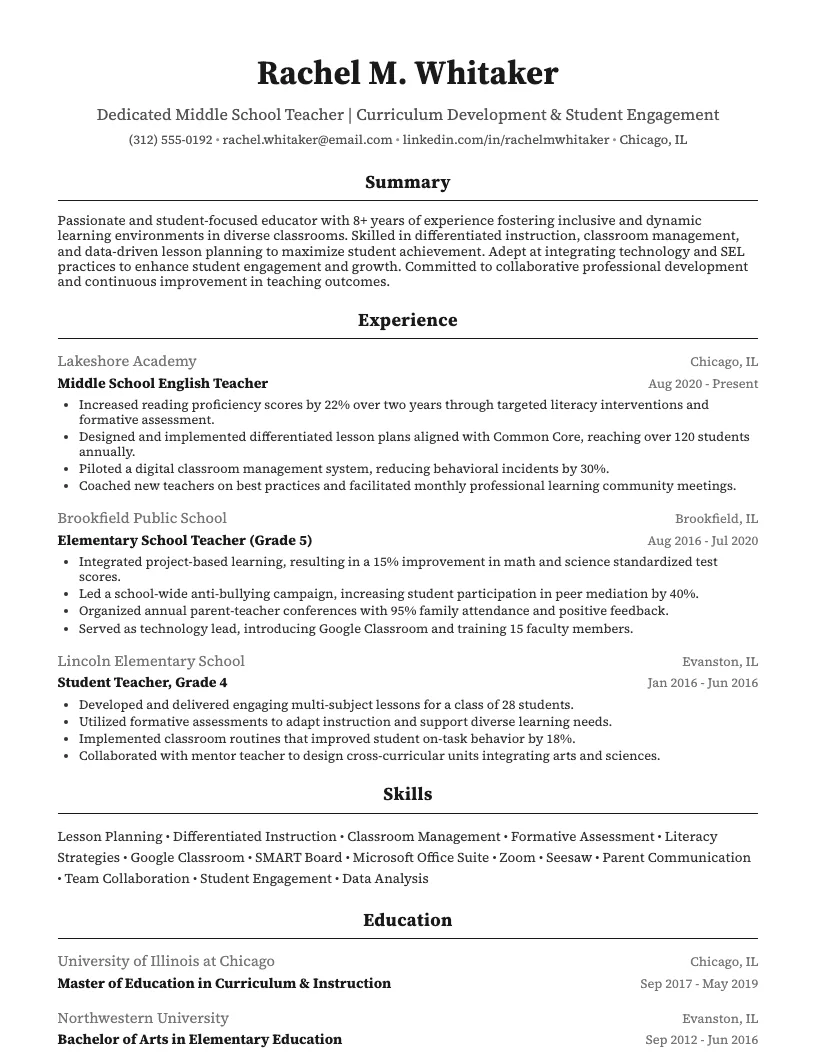
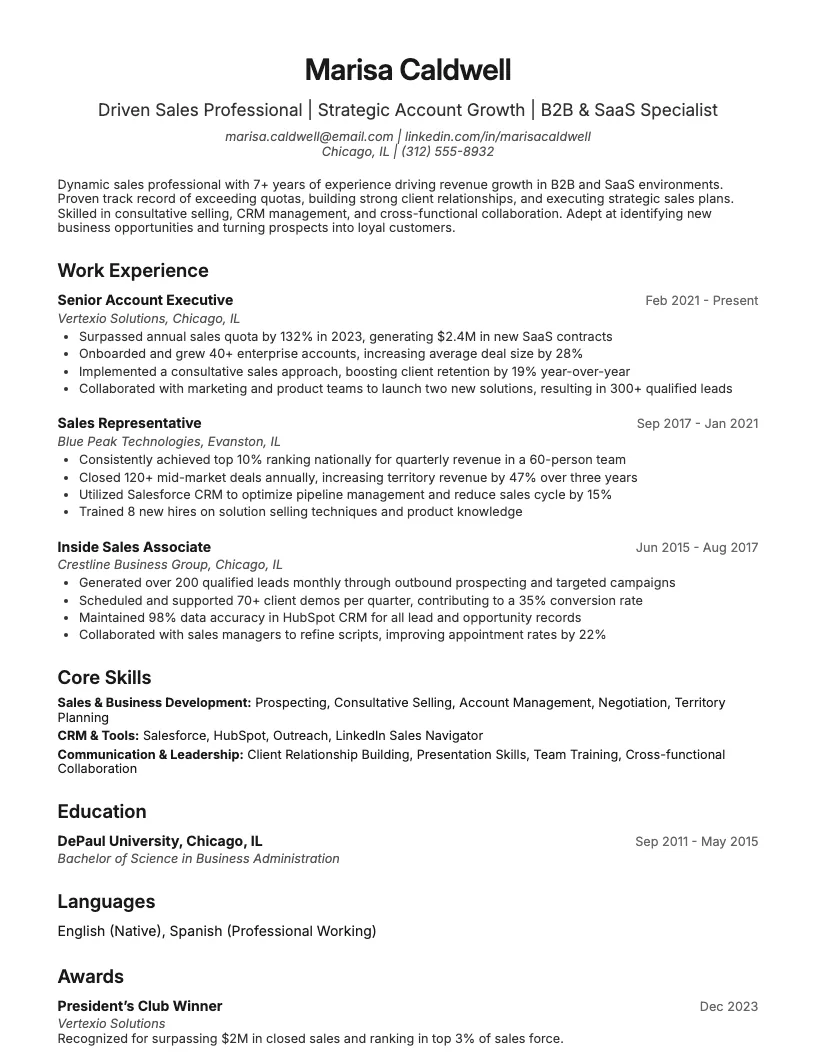
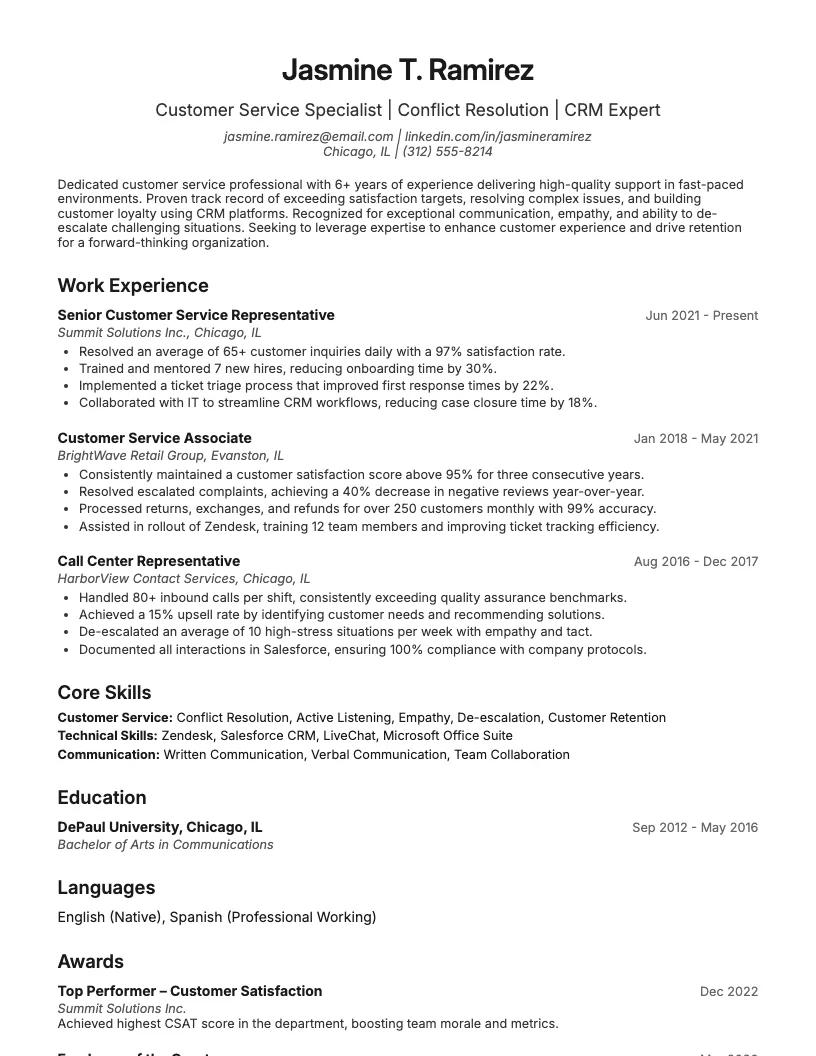
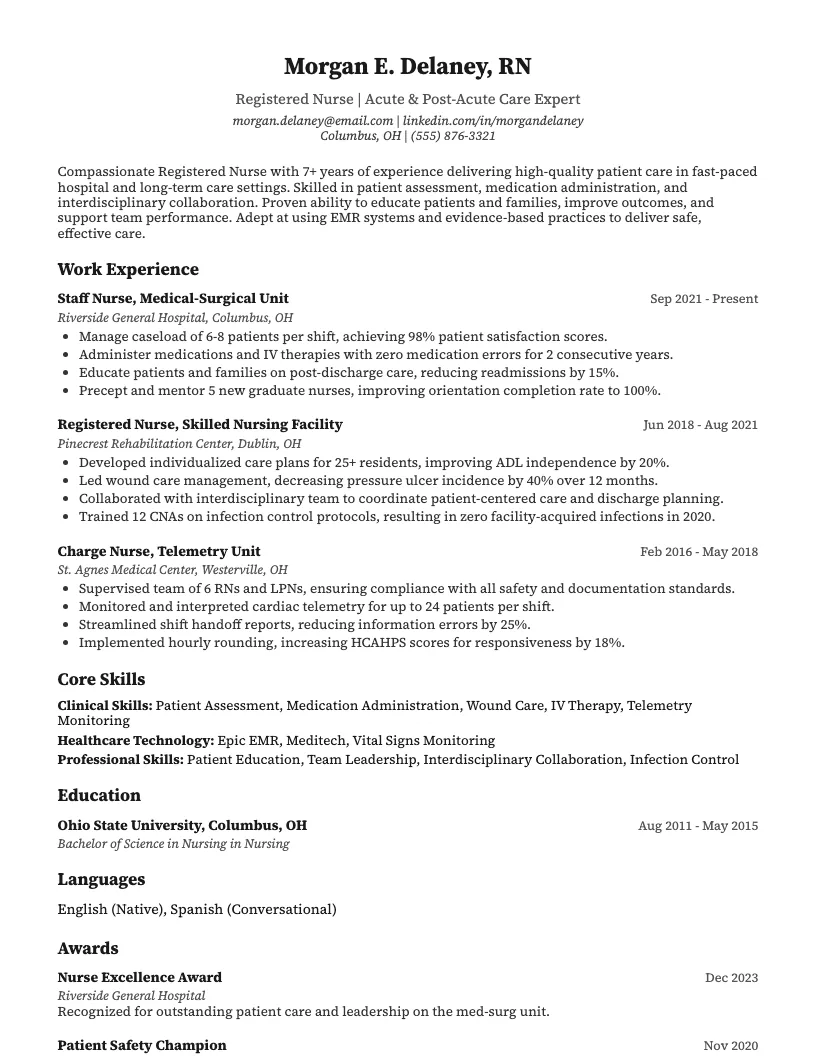
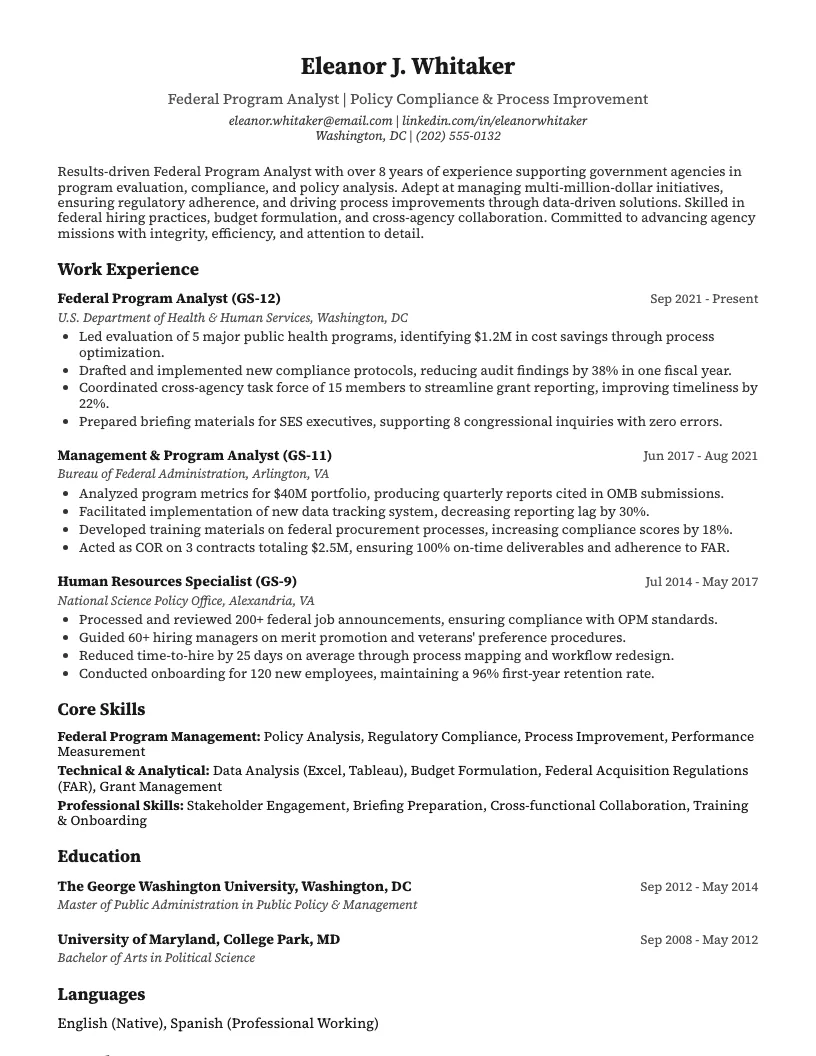
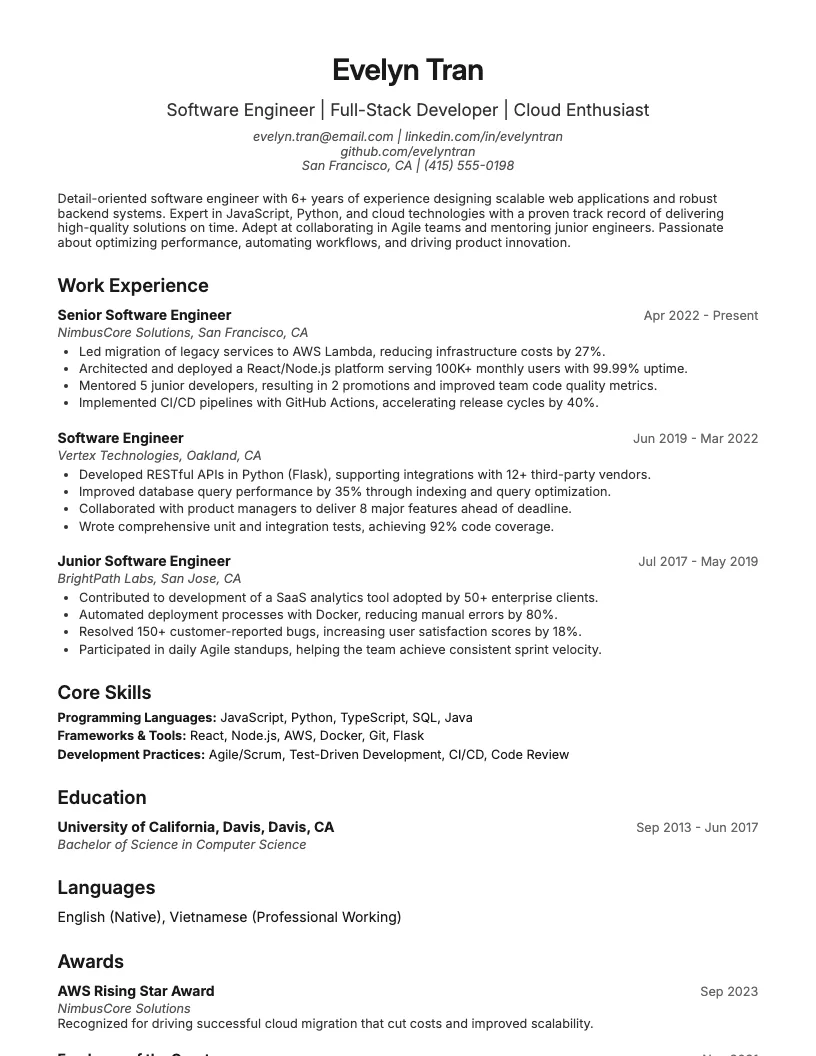
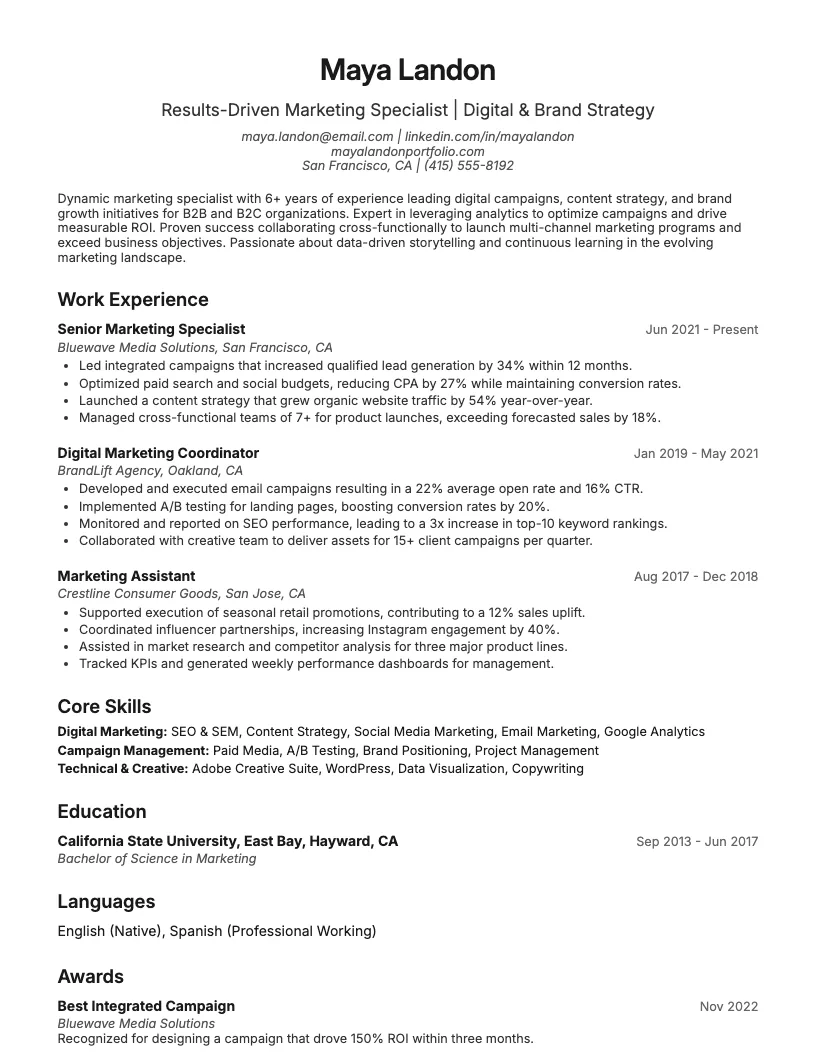
See these skills on a real resume
8 examplesStart from an example that already has them, and swap in your own.
Check your resume against the job you want
Scan your resume, see which skills and keywords the posting asks for that you are missing, and fix them before you apply.
Free to use • No credit card required