Passionate Synonym Resume: 15 Better Words (7 Before/After Rewrites)
15 synonyms for 'passionate' on a resume, matched to 8 job types, with 7 before-and-after line rewrites showing exactly how to swap the word for proof.


Written by Sarah Chen
Senior Career Strategist & Resume Expert
Updated August 2026
Reviewed by Marcus Rodriguez
Is your resume ATS-friendly?
Drop your resume in and see which of these skills a scanner can actually read, and which ones the job you want is asking for that you have not listed.
PDF or DOCX. Max 2MB.
We never share your resume or use it to train a model.
In This Guide:
What can you say instead of "passionate" on a resume?
You typed "passionate about" for the third time on this draft and something feels off.
That instinct is right. I've read thousands of resumes, and "passionate" is one of the first words I skim past, because it shows up on nearly every one of them.
Here's the fix. Fifteen words below do the same job with more precision, each one built for a specific kind of claim you're trying to make.
Pick the one that matches what you actually did, then go check why recruiters skip the original word so you don't just swap one vague word for another. If you want the word matched to your field instead of your claim, which synonym fits your job does that field by field.
Driven
Use this when you push initiatives forward without being asked. "Driven performance on a high-priority rollout, cutting delivery time by 22%" reads as someone who owns outcomes, not someone who just cares about the work.
Dedicated
This one covers consistency over time. It's the right word for a person who shows up and delivers the same quality on day 400 as day one, like the applicant who "dedicated consistent effort toward quality control, reducing errors by 35%."
Committed
Committed is dedicated's cousin, but it leans toward relationships and follow-through on people, not just process. "Committed focus on customer retention, resulting in a 20% increase in renewals" is a stronger line than any team-player cliché.
Enthusiastic
Save this for roles where energy in the room is part of the job, like sales, events, or customer-facing work. It's the softest word on this list, so pair it with something concrete: enthusiastic support during a launch, tied to a real result.
Motivated
Motivated says you don't need someone standing over you. It works when you can show you chase goals on your own without someone assigning them.
Eager
"Eagerly took on leadership responsibilities during a manager's absence, with no dip in team productivity" turns a gap-filling moment into proof you're ready for more.
Devoted
Devoted works when the commitment went beyond the job description, like the applicant who "devoted over 200 hours to voluntary community service." It's a strong word for volunteer work and side projects, which we cover more further down this page.
Zealous
Zealous is intense, and I'd only reach for it on a resume for a role that rewards intensity, like sales targets or turnaround projects. "Zealous commitment" paired with a 30% efficiency gain earns the word.
Without a number next to it, zealous just sounds loud.
Ardent
Ardent fits advocacy roles, where the job is convincing other people. "An ardent advocate for customer satisfaction, leading the team to a 95% positive feedback score" shows exactly what the advocacy produced, not just that you felt strongly about it.
Fervent
Fervent is close to ardent but reads a touch more urgent, which makes it good for fast-turnaround work. "Fervently developed a training module within two weeks, cutting onboarding time by 45%" tells a speed story as much as a passion story.
Tenacious
Tenacious is the word for the project that almost didn't get finished. "Applied tenacious follow-through, completing two major initiatives ahead of schedule" says you don't drop things when they get hard, which is worth more than most soft-skill lines on a resume.
Keen
Keen signals sharp attention, so it belongs near analytical claims. "Showcased keen analytical skills, identifying cost-saving opportunities worth $50K annually" earns its place because the number does the actual convincing.
Resolute
Resolute is a steady, unglamorous word, and that's exactly its use: process and operations work where nobody's watching. "Maintained a resolute approach to operational improvements, streamlining 12 recurring processes" is a line I'd want on an operations resume.
Energetic
Energetic is a fine, light word, but it's weaker as a standalone claim than most words here, so give it a concrete action to attach to.
Spirited
Spirited is the softest word on this list and I'd use it sparingly: "led spirited idea-generation sessions that strengthened campaign outcomes." If you're not sure it fits your industry, check which synonym fits your job before you commit to it.
If you're staring at fifteen options and not sure which one the job posting actually wants, that's exactly the kind of gap a tool like ResumeJudge is built to catch, by comparing your resume's language against the posting's and rewriting it to use the exact word the posting wants.
Why do recruiters skip over "passionate"?
I read resumes for a living, and "passionate" is the word my eyes slide right past. Here's why it doesn't land.
It says something about you, not something you did
"Passionate about design" is a claim about your feelings. A recruiter can't verify a feeling, so it just sits there unread.
Compare that to a line like "led a team of 5 to launch a campaign that grew qualified leads 35%." That's not a feeling, it's a fact, and facts are what get remembered.
Every other applicant used it too
Nine times out of ten, when I flag "passionate" on a resume, it's because I've already seen it three times that day on three other resumes. It's one of the most overused words in the entire stack, right up there with "motivated" and "enthusiastic."
Using it doesn't set you apart. It blends you into the pile.
It cannot be checked against anything
I've seen candidates try to make "passionate" checkable by writing something like "10+ years of passion for design." Don't - that just moves the vague word around instead of removing it. The fix is always a fact that stands on its own, not a modifier on the same weak word.
A skill, a certification, a number - a recruiter can check those against the job posting or ask you about them in an interview. "Passionate" has no such anchor.
If you want to know exactly which words in a posting your resume needs to answer for, running it through ResumeJudge against the real job description will rewrite your resume to use them, rather than leaving you to hunt for the right word.
It burns a line that could carry a number
Every line on your resume is real estate. Spend it on "passionate" and you've spent it on nothing measurable.
Spend it on hours, a certification, a percentage - see name the number the work moved - and that same line starts pulling weight.
How do you show passion without saying the word?
How do you show passion without saying the word?

Passion is a claim. The resume readers trust is one with proof attached.
Nine times out of ten, the fix isn't a better adjective, it's a fact you left out because you didn't think it counted.
Name the hours you put in outside the job description
If you stayed late to fix something nobody assigned you, or built a side tool that made your team's week easier, say that.
"Built an internal reporting script that cut manual data pulls from 3 hours to 20 minutes" tells a hiring manager more than any adjective could.
Name the certification you paid for yourself
A certification you funded and studied for on your own time is evidence, not decoration.
List it plainly in your skills or education section. If the posting names a specific tool or credential, check that your resume actually has it in those words, since that's what a scanner and a recruiter both search for first, and it's the kind of gap ResumeJudge will catch and rewrite into your resume in the posting's exact wording, before you apply.
Name the thing you started that nobody asked for
I've seen hundreds of these resumes, and the strongest ones always have one line about something the person built without being told to: a process, a doc, a habit that spread to the team.
Name it, and name what changed because of it.
Name the number the work moved
This is the one people skip most often, and it's the one that actually convinces someone.
Sales up 15%, tickets down 30%, onboarding time cut in half, whatever it was. A number does the job "passionate" was trying and failing to do.
What do these rewrites look like line by line?
Seeing the word swapped in isolation only gets you so far. What actually changes the sentence is the word plus what comes after it - so here's each one in a full line, before and after.
"Passionate about customer service" → dedicated
Customer service line
Passionate about customer service and building relationships with clients.
Dedicated to resolving customer issues on the first call, holding a 95% satisfaction score across 200+ tickets a month.
Before: "Passionate about customer service and building relationships with clients."
After: "Dedicated to resolving customer issues on the first call, holding a 95% satisfaction score across 200+ tickets a month."
The fix isn't just the word. It's that "dedicated to X" forces you to say what X is, and once you're naming a number, the sentence writes itself.
"Passionate about design" → driven
Design line
Passionate about design and creating great user experiences.
Driven to simplify complex flows - redesigned the checkout page and cut drop-off by 18%.
Before: "Passionate about design and creating great user experiences."
After: "Driven to simplify complex flows - redesigned the checkout page and cut drop-off by 18%."
I'd take that second line over the first every time. It's not close.
"Passionate about teaching" → devoted
Teaching line
Passionate about teaching and helping students succeed.
Devoted 200+ hours a year to after-school tutoring, on top of a full classroom load.
Before: "Passionate about teaching and helping students succeed."
After: "Devoted 200+ hours a year to after-school tutoring, on top of a full classroom load."
"Devoted" carries weight that "passionate" doesn't, because it implies a cost - time you gave up. That's worth naming, the same way you'd name the hours you put in anywhere else on the page.
"Passionate team player" → committed
Team player line
Passionate team player who works well with others.
Committed to keeping cross-functional projects on schedule, leading a five-person team through two product launches.
Before: "Passionate team player who works well with others."
After: "Committed to keeping cross-functional projects on schedule, leading a five-person team through two product launches."
This is the one I see butchered most. "Team player" tells a recruiter nothing - committed, tied to an actual outcome, tells them what you're like to work with.
"Passionate about data" → keen
Data line
Passionate about data and finding insights.
Keen analytical eye - flagged a reporting error that was inflating monthly revenue figures by 12%.
Before: "Passionate about data and finding insights."
After: "Keen analytical eye - flagged a reporting error that was inflating monthly revenue figures by 12%."
A resume that runs your bullets against the actual job posting will tell you fast whether "keen" or "driven" is the word the listing is already using - that match matters more than which synonym sounds better to you.
"Passionate learner" → eager
Learner line
Passionate learner always looking to grow.
Eager to take on stretch assignments - picked up SQL in six weeks to cover a gap on the team.
Before: "Passionate learner always looking to grow."
After: "Eager to take on stretch assignments - picked up SQL in six weeks to cover a gap on the team."
"Passionate about sustainability" → ardent
Sustainability line
Passionate about sustainability and environmental causes.
Ardent advocate for waste reduction, leading a recycling initiative that cut office waste by 30%.
Before: "Passionate about sustainability and environmental causes."
After: "Ardent advocate for waste reduction, leading a recycling initiative that cut office waste by 30%."
Notice the shape repeating: word, then proof. That's the whole trick, seven times over.
Which synonym fits your job?
Which synonym fits which field
| Field | Synonym | Why |
|---|---|---|
| Sales & account management | Driven, tenacious | Points at behavior, not feeling |
| Nursing & healthcare | Devoted, committed | Ties to patient outcomes |
| Teaching & education | Dedicated | Shows you stick with students |
| Software engineering | Keen, driven (or cut it) | Scanned for tools, not personality |
| Design & creative roles | Energetic, spirited | Fits a portfolio-driven resume |
| Entry-level & career changers | Eager, motivated | Only pair without a track record yet |
Not every synonym works everywhere. The word that lands well in a nursing cover letter can sound out of place on an engineering resume, and I've read enough of both to know the mismatch stands out fast.
Sales and account management
Sales hiring managers want to see that you chase numbers, not that you feel strongly about your quota.
Go with driven or tenacious - both point at behavior, closing, prospecting, hitting targets, rather than a feeling you're claiming to have.
Nursing and healthcare
Healthcare recruiters read hundreds of resumes that all claim compassion. What separates the pile is a word tied to patient outcomes.
Devoted or committed reads better here than almost anything else on the list, especially paired with a shift count or a patient-load number.
Teaching and education
Same logic as nursing. Schools want to know you stick with students, not that you find the subject exciting.
Dedicated does the job. If you want something closer to student outcomes, pair it with the numbers advice in how do you show passion without saying the word - a graduation rate or a test-score gain beats any adjective.
Software engineering
If you're applying somewhere large enough to run an ATS filter, it may still be searching for the exact word the posting used. If the job description itself says "passionate about X," one honest mention near your summary won't hurt, even if it won't do the convincing on its own.
Engineering resumes get scanned for tools and impact, not personality. This is the field where I cut adjectives hardest.
If you need one, keen or driven is as far as I'd go, and I'd rather see it gone entirely in favor of what you shipped.
Design and creative roles
Creative roles are the one place a livelier word earns its keep. Energetic or spirited fits a portfolio-driven resume in a way it wouldn't fit a compliance role.
Still, a rewrite works harder than an adjective - see passionate about design → driven for how that trade plays out in a real line.
Nonprofit and charity work
Nonprofits get flooded with applicants who say they care about the mission. Everyone does - that's why they applied.
Committed or devoted, backed by a volunteer hour count or a program you ran, does more than the word ever could on its own.
Management and team leads
Leadership resumes need resolve, not enthusiasm. Resolute or driven signals someone who holds a team to a standard.
Pair it with a team size or a retention number - where does the word go on your resume covers exactly which line to put that in.
Entry-level and career changers
This is the one group where I'll allow eager or motivated to stand alone, since you may not have the track record yet to back a stronger claim.
Even then, one line naming a certification or a self-taught project beats the adjective - see name the certification you paid for yourself for how to write it.
Where does the word go on your resume?
Where the word belongs, section by section
| Section | Use it? | Why |
|---|---|---|
| Professional summary | Only with proof attached | Prime space wasted on feelings |
| Work experience bullets | Only next to a result | Needs a number to back it up |
| Skills section | No | Not a skill, tool, or credential |
| Volunteer/side projects | Rarely | Showing beats telling here |
| Cover letter | Yes | Where tone and voice belong |
In your professional summary
This is where "passionate" shows up most, and it's the one place you can least afford it. Two lines under your name are prime space - spend them on what you're driven to build or what you've dedicated years to, not on how you feel about work. "Dedicated marketing specialist with an unwavering drive for innovation" tells a recruiter something. "Passionate marketer" doesn't.
In your work experience bullets
If it lands anywhere, it lands here - but only wrapped around a result, never standing alone. "Fervent commitment to customer satisfaction" only works next to the number it produced, like a retention rate or a review score. I'd rather see the number by itself and skip the adjective entirely.
In your skills section
Skip it here. Skills sections get scanned in seconds, and "passionate" isn't a skill - it's not a tool, a certification, or a language. Pair a real synonym with a real quality instead, something like "driven self-starter," and even then check it against the synonym list before you commit to one.
In volunteer work and side projects
This is the one section where showing beats telling anyway, so the word rarely earns its place. If you named the thing you started that nobody asked for, that already says more than any adjective could.
In your cover letter instead
"Passionate" has a real home, and it's the cover letter, not the resume. A cover letter is where tone and voice belong - a resume is where evidence belongs. If you genuinely feel strongly about the role, say so there, in a sentence, and let the resume carry the proof.
Frequently Asked Questions
Is it ever okay to use the word "passionate"?
Yes, it's fine to use occasionally, just not as a crutch. One "passionate" backed by a real accomplishment in your bullet points reads fine; the problem is when it's doing all the work in place of evidence. Use it once, if at all, and let your results carry the rest of the resume.
How many times can I use words like this before it looks repetitive?
Once is plenty, and twice is the outer limit before a reader starts noticing the pattern. If "passionate" or a stand-in like "dedicated" or "committed" shows up three or more times, it reads as a habit rather than a description of you. Search the document for the word and cut all but the strongest instance.
Should I say "passionate about" in my resume summary?
No, keep it out of your summary. That's the first thing a recruiter reads, and opening with an unproven claim about your attitude wastes the space instead of stating what you do and what you've achieved. Replace it with a specific skill or result tied to the role you're applying for.
Do applicant tracking systems care which word I use?
No, ATS software isn't scoring tone words like "passionate" - it's matching the skills, tools, and job titles listed in the posting against your resume. Swapping the word for a synonym won't move your score either way. ResumeJudge checks your resume against a job description and shows you which actual skills and keywords it's missing, which is what the software is really looking for.
Is "passionate" fine on a CV even if it is weak on a resume?
It depends on the document, not the word. Academic and international CVs allow more narrative, personal language than a US-style resume, so a line about passion for research can fit the format there. On a one-page resume the space is tighter, and the word still gets replaced by something you can prove.
What if I really am passionate and the job asks for it?
Show it instead of saying it. If a posting mentions the word, mirror the underlying trait it's really asking for, like initiative or collaboration, with a specific example rather than the word itself. Run your resume through ResumeJudge against that job description to check whether your bullet points already cover what the posting wants.
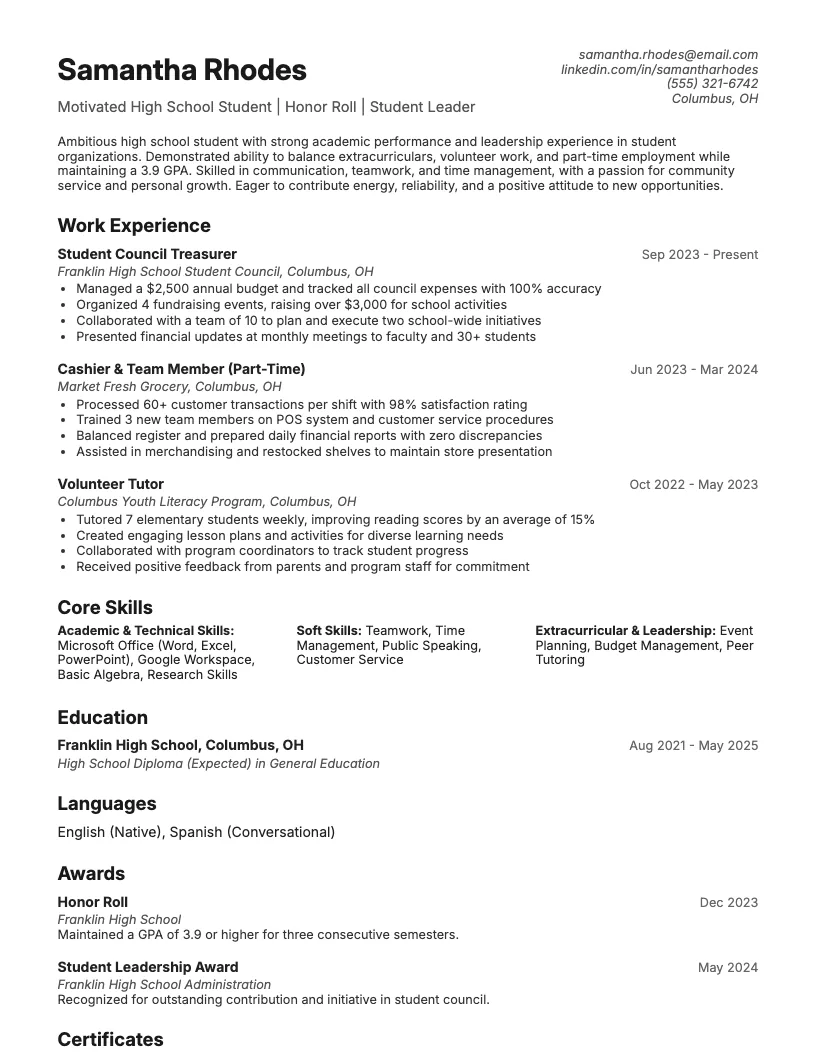
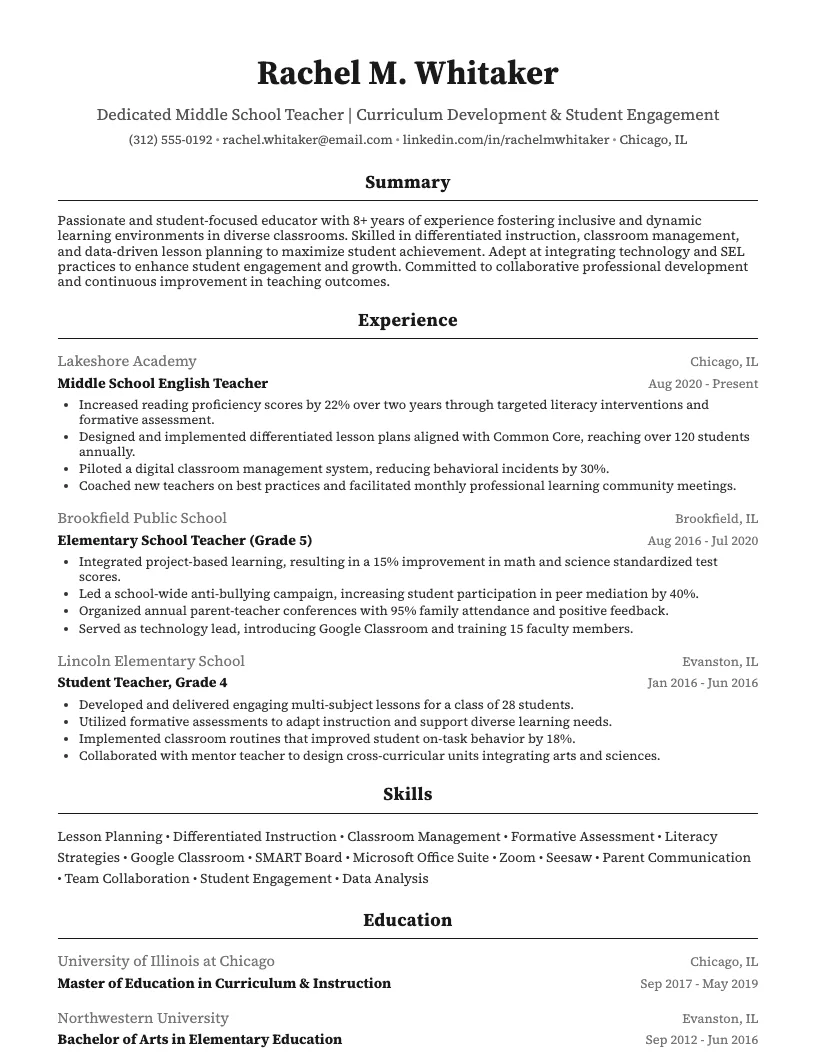
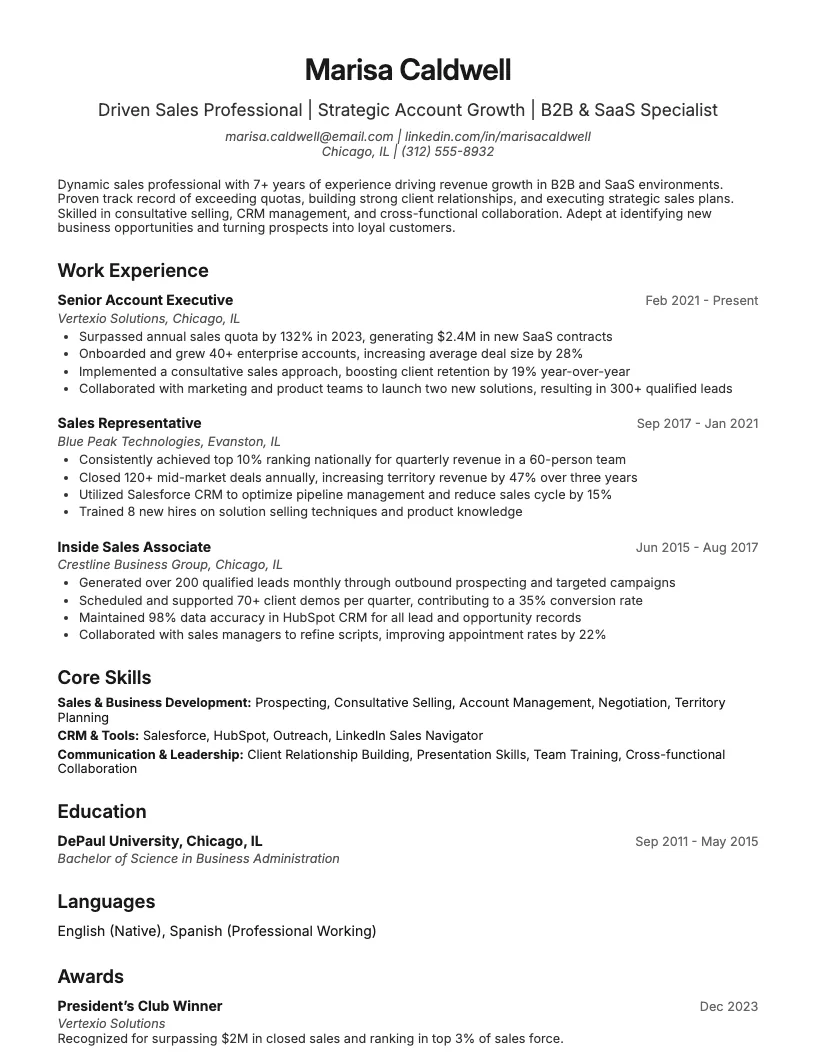
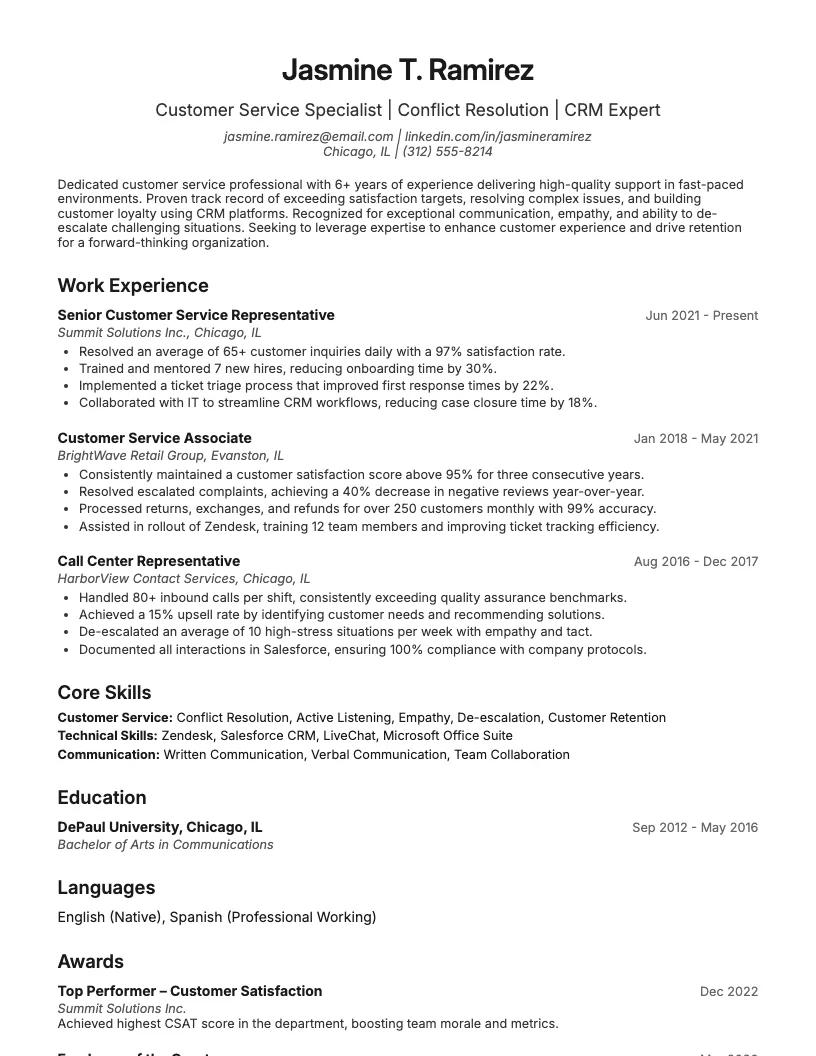
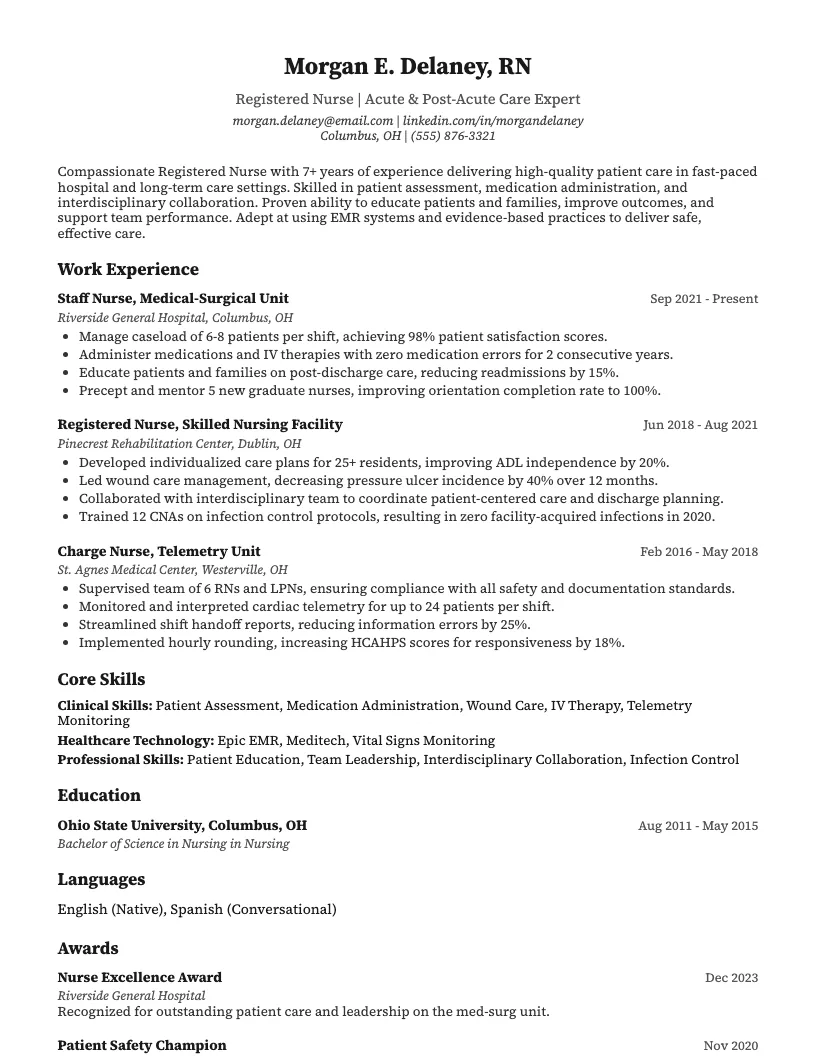
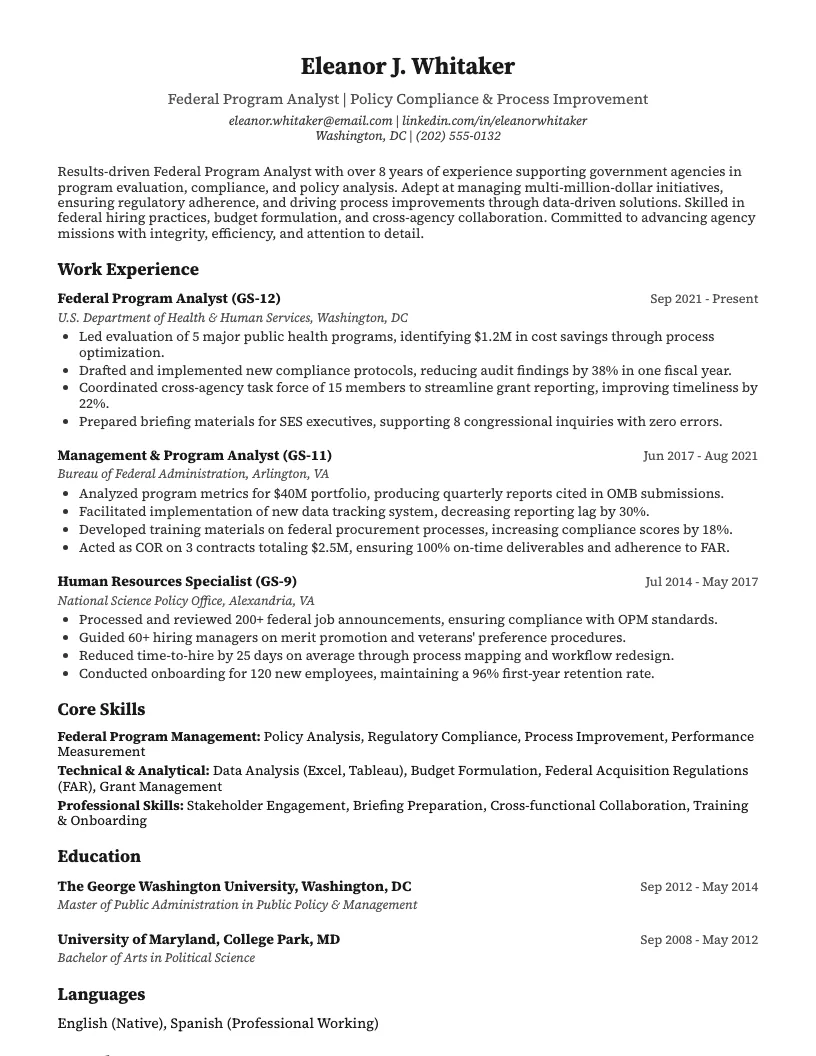
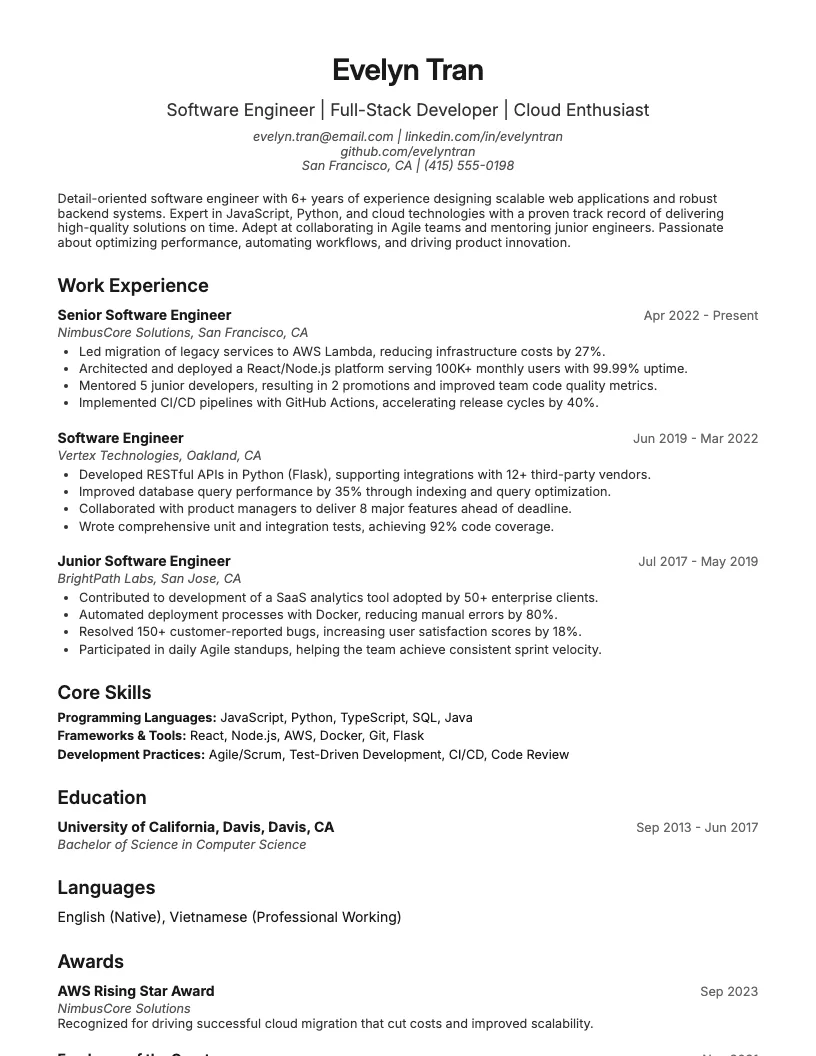
See these skills on a real resume
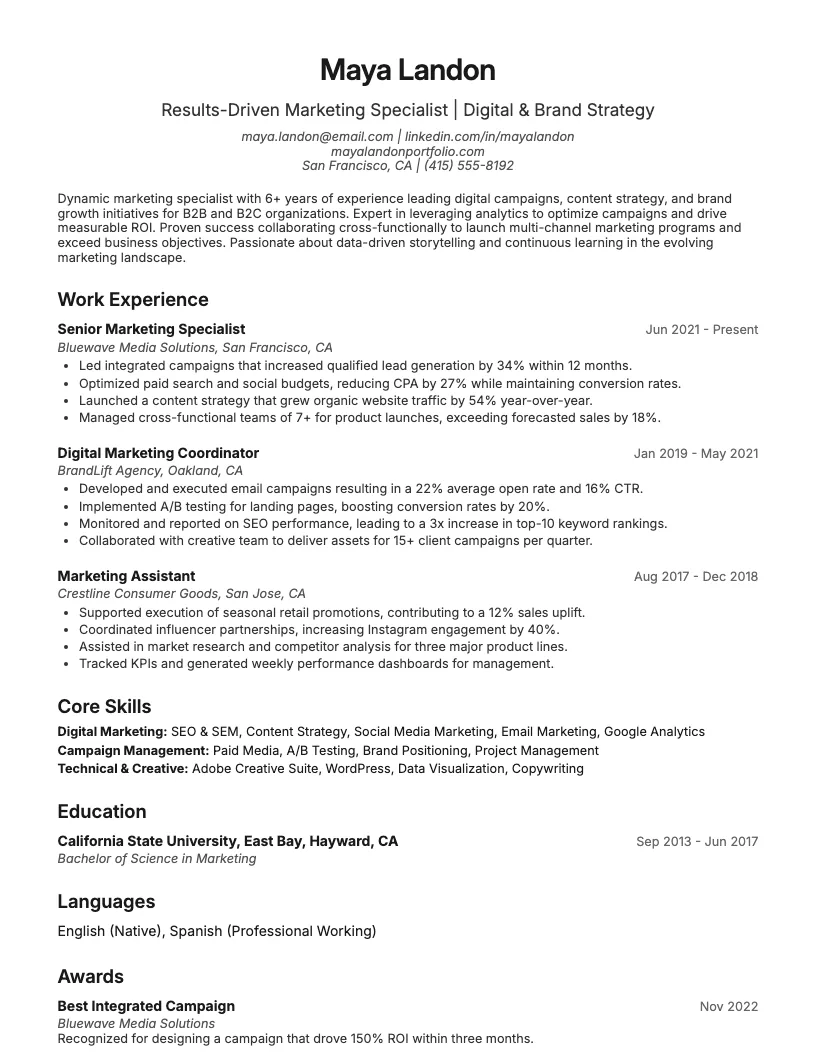
8 examplesStart from an example that already has them, and swap in your own.
Check your resume against the job you want
Scan your resume, see which skills and keywords the posting asks for that you are missing, and fix them before you apply.
Free to use • No credit card required