 ResumeJudge
Another word for assisted on resume: 30 swaps, 7 bullet rewrites
30 alternatives to 'assisted' on a resume, grouped by how much credit each one claims, plus 7 bullets rewritten and a 4-step way to pick the right word.


Written by Marcus Rodriguez
ATS Optimization Specialist & Career Coach
Updated August 2026
Reviewed by Dr. Priya Sharma
Is your resume ATS-friendly?
Drop your resume in and see which of these skills a scanner can actually read, and which ones the job you want is asking for that you have not listed.
PDF or DOCX. Max 2MB.
We never share your resume or use it to train a model.
In This Guide:
What's another word for "assisted" on a resume?
Which group of 'assisted' synonyms fits your role
| Words | Use when |
|---|---|
| Supported, Aided, Backed | Second person, not the lead |
| Collaborated, Partnered, Contributed | Work was truly shared |
| Facilitated, Coordinated, Organized | Ran logistics, not the task |
| Prepared, Compiled, Drafted | Produced a document |
| Trained, Mentored, Guided, Advised | Helped someone junior |
| Enabled, Streamlined, Expedited | Have a number to prove it |
Search your own resume for the word "assisted."
If it comes back more than two or three times, that's the tell. Recruiters read hundreds of these a week, and a word that repeats reads as filler, not experience.
The good news: there isn't one replacement, there are six or seven, and each one tells a slightly different story about how much of the work was actually yours.
Supported, Aided, Backed
These three sit closest to "assisted" - use them when you genuinely were the second person on the job, not the lead.
"Supported the onboarding of 40 new hires" or "aided the transition to a new billing system" say the same thing "assisted" was reaching for, just with more spine to the sentence.
"Backed" works well when someone else owned the decision and you were the one who made it stick - backing a manager's rollout, backing a sales push.
I'd reach for this group when the honest answer to "whose project was this" is someone else's name, not yours.
Collaborated, Partnered, Contributed
Use this group when the work was genuinely shared, not you helping someone else.
"Collaborated" and "partnered" both say two or more people owned the outcome together - pick "partnered" when it was one specific person or team, "collaborated" when it was looser.
"Contributed" is the one to reach for when you were part of a bigger group and your piece was real but not the whole thing.
Nine times out of ten, if a bullet says "assisted the team," the honest verb is "contributed" - you did add something specific, you just haven't named it yet.
Facilitated, Coordinated, Organized
This trio is for logistics and process, not hands-on output.
"Facilitated" fits when you made something happen more smoothly for other people - a meeting, a workshop, an approval process.
"Coordinated" and "organized" both signal you were managing the moving pieces - schedules, people, resources - without necessarily doing the underlying task yourself.
These three read as more senior than "assisted," because they imply you were running something, even a small something, rather than standing next to it.
Prepared, Compiled, Drafted
Reach for these when what you actually produced was a document, a dataset, or a deck - the most common truth behind a vague "assisted with reports."
"Compiled" says you pulled data or material together into one place, which is usually the real story behind "assisted with market research" or "assisted with the budget."
"Prepared" and "drafted" both say you produced the first version of something someone else may have signed off on - a report, a presentation, an email.
If your bullet is really about a document you built, one of these three is almost always more accurate than "assisted" - see what that looks like rewritten.
Trained, Mentored, Guided, Advised
If you mentored someone without an official title, be careful the verb doesn't imply authority you didn't have. 'Mentored' and 'guided' are safe because they describe a relationship, not a rank - 'managed' isn't, even if the day-to-day felt like managing.
This group is for when the assistance flowed the other way - from you to someone junior or newer than you.
"Trained" is the strongest of the four. Use it when you actually taught someone a skill or a system, not just showed them around.
"Mentored" and "guided" both work for a looser, more ongoing relationship - a new hire you checked in with, a student you steered through a project.
"Advised" fits best when people came to you for a recommendation rather than instruction - a client, a peer, a committee.
Enabled, Streamlined, Expedited
These three are for the resume writer who has an outcome to point to, not just an activity.
"Enabled" says your work made something else possible - a launch, a decision, another team's project.
"Streamlined" and "expedited" both claim you made a process faster or simpler, and both want a number next to them to be believed - a percentage, a day count, a volume.
If you can attach a figure to one of these, it beats "assisted" by a wide margin, because it answers the question every recruiter is actually asking: what changed because you were there.
The full list: 30 alternatives to "assisted"
Here's the full set in one place, grouped the way they read above:
- Supported, Aided, Backed, Reinforced, Relieved, Eased
- Collaborated, Partnered, Contributed, Cooperated, Participated
- Facilitated, Coordinated, Organized
- Prepared, Compiled, Drafted
- Trained, Mentored, Guided, Advised
- Enabled, Streamlined, Expedited, Boosted, Bolstered
- Sustained, Fostered, Nurtured, Upheld
Thirty words, but not thirty interchangeable options. Pick from the group that actually matches what you did, not the one that sounds the most impressive.
If you're not sure which group fits, walk through how you choose which replacement to use - it's a quicker call than it looks.
When is "assisted" still the right word to use?
Not every bullet needs a swap. If you genuinely played a supporting role and someone else owned the outcome, "assisted" is honest - and honest beats impressive every time a hiring manager checks your references.
A bullet where "assisted" is the accurate word
"Assisted the lead analyst in preparing quarterly board reports" is fine as written. You weren't running the analysis or presenting to the board - you were the second pair of hands, and the sentence says exactly that.
A bullet where "assisted" hides what you did
A vague 'assisted' bullet rewritten
Assisted with onboarding new hires
Trained and onboarded 15 new hires per quarter
"Assisted with onboarding new hires" is the one I flag constantly. Did you build the training materials?
Run the sessions? Track completion?
Pick a verb from the full list that names the actual task, because "assisted with" is usually covering for "did most of."
What a recruiter cannot tell from "assisted"
A recruiter reading "assisted" cannot tell whether you touched 5% of the work or 90% of it. They cannot tell if you had a say in decisions or just carried out someone else's. That ambiguity doesn't do you any favours with an applicant tracking system either - older ones like Taleo just match words, so a vague verb gives them nothing to catch.
If you're not sure which of your bullets read as vague versus specific, run the resume against the actual job posting in ResumeJudge - it'll flag which lines are underselling what you did and which skills from the posting aren't showing up anywhere on the page.
How many times "assisted" can appear on one page
Twice, maybe three times, on a full resume. I've read hundreds of these, and once you hit four or five instances of the same verb, it stops reading like a description of your work and starts reading like you ran out of words.
Recruiters spend six to seven seconds on a first pass - repetition is what makes them skim past you instead of stopping. Spread your verbs the way your actual responsibilities varied: some bullets you led, some you supported, and the wording should show the difference.
How do you choose which replacement to use?
Is your resume good enough?
Drop your resume in and see which of these skills a scanner can read, and which ones the job you want is asking for that you have not listed.
Upload your resumeFree. PDF or DOCX. We never share your resume or use it to train a model.
Thirty words on a list doesn't tell you which one is yours. Picking the right assisted synonym for your resume is a matching problem, not a vocabulary problem.
Here's the order I actually use.
Step 1: Write down what you actually did on the job
Before you touch a thesaurus, write the plain version. "I pulled the numbers together and someone else presented them."
"I ran the meeting but my manager set the agenda." No verb yet - just the facts, in your own words.
You can't pick an honest word for work you haven't described honestly first.
Step 2: Match the verb to how much of the work was yours
Now grade your own involvement. Did you do the thing, or help someone else do the thing?
If you ran it start to finish, use an ownership word - "led," "managed," "built." If you were one of several people and your piece was real but bounded, "coordinated," "contributed," or "supported" is the honest word, and it's still a stronger read than "assisted."
If your job was specifically to help someone more senior do their job, see when "assisted" is still the right word.
Step 3: Take the wording from the job posting
Once you've got the honest verb, check it against the posting. If the job ad says "coordinate," and your bullet says "supported," you're leaving an exact keyword match on the table for no reason - swap it, as long as it's still true.
This is the step people skip because it means reading the posting closely and rewriting bullets one at a time, which is slow. ResumeJudge does this comparison for you: it takes your resume and the posting and rewrites the wording to match what the posting is actually asking for, section by section, instead of you guessing at synonyms one bullet at a time.
Step 4: Add the number the work produced
A bullet with a number added
Coordinated onboarding
Coordinated onboarding for 40 new hires a quarter
A better verb without a number is still a vague bullet. "Coordinated onboarding" is fine.
"Coordinated onboarding for 40 new hires a quarter" is a sentence a recruiter remembers.
Words that claim too much: Spearheaded, Pioneered, Championed
These three get overused, and I flag them constantly. They all claim you originated something - started it, owned it, drove it against resistance.
If you joined an existing initiative, or you executed a plan someone else designed, none of them are true, and an interviewer who asks "walk me through how you started that" will find out fast. Save them for the one or two things on your resume where you genuinely were first.
Words that fit healthcare, sales, admin and teaching
Don't borrow a field's default verb when you're applying outside that field. 'Administered' reads as precise clinical language to a hospital recruiter, but to a hiring manager outside healthcare it just reads as vague - match the verb to the reader, not just the role.
Word choice should match the field. Healthcare readers expect "aided" or "administered" for direct patient contact - it's the accurate clinical word, not a weaker one.
Sales and admin roles read better with "coordinated" or "facilitated," since the work is usually about keeping people and processes moving. Teaching and mentoring roles suit "guided" or "advised" - active involvement in someone else's progress, not just presence in the room.
What does an "assisted" bullet look like rewritten?
Seeing the swap next to a real bullet is worth more than any list of verbs.
So here are seven, pulled from the roles I get asked about most. Same job, same work, just written the way someone who actually did it would write it.
Internship: "Assisted with market research" → "Compiled competitor pricing data"
An internship bullet rewritten
Assisted with market research
Compiled competitor pricing data
"Assisted with market research" could mean you pulled a spreadsheet together or sat in on two calls. Nobody reading it can tell which.
"Compiled competitor pricing data" tells them exactly what landed on your desk and what you handed back. If that work fed into something bigger, say so: interns who build the benchmarking behind a $150 million acquisition case should say that's what the data was for, not bury it under "assisted."
Admin: "Assisted with scheduling" → "Coordinated schedules for a 12-person team"
An admin bullet rewritten
Assisted with scheduling
Coordinated schedules for a 12-person team
The number is doing the work here. "Coordinated schedules" alone is still vague - twelve people is a real logistics problem, and naming the team size proves it.
If you also cut down on the double-bookings or last-minute scrambles that come with that job, a line like "reduced scheduling delays by 15%" earns its place. I'd rather see one true number than three adjectives.
Customer service: "Assisted customers" → "Resolved billing disputes"
A customer service bullet rewritten
Assisted customers
Resolved billing disputes
"Assisted customers" is the single most overused phrase I see on service resumes. It says you showed up.
"Resolved billing disputes" says you fixed something specific, and specific is what gets remembered. Add scale if you have it - resolving 85% of inquiries within 24 hours, or work that helped cut support volume by 45%, is the kind of detail that turns a support role into a results section.
Healthcare: "Assisted patients" → "Administered medications"
A healthcare bullet rewritten
Assisted patients
Administered medications
Healthcare bullets get flattened by "assisted" more than almost any other field, because the word erases a scope-of-practice difference that actually matters to whoever's hiring. Administering medication is a licensed task.
Helping someone to a chair isn't.
Say which one you did. If you were doing both, list them separately rather than folding a clinical duty into the same vague verb as a comfort task.
Marketing: "Assisted the marketing team" → "Drafted email copy for weekly campaigns"
A marketing bullet rewritten
Assisted the marketing team
Drafted email copy for weekly campaigns
"Assisted the marketing team" tells a recruiter you were in the room. "Drafted email copy for weekly campaigns" tells them what you shipped.
Marketing is one of the few fields where the metric is usually sitting right there - open rate, engagement, sign-ups. Campaign work tied to something like a 40% jump in engagement is worth naming outright instead of leaving it implied.
Retail: "Assisted with stock" → "Reconciled inventory counts"
A retail bullet rewritten
Assisted with stock
Reconciled inventory counts
"Assisted with stock" is doing a lot of hiding. Did you count it, order it, shelve it, or all three?
"Reconciled inventory counts" names one real, checkable task.
Teaching: "Assisted students" → "Counseled students on coursework"
A teaching bullet rewritten
Assisted students
Counseled students on coursework
Same problem as healthcare: "assisted students" could mean grading, tutoring, or supervising a study hall. "Counseled students on coursework" says you worked with them directly on their understanding of the material.
Pair it with an outcome where you have one - students counseled toward a 10% improvement in academic performance says a lot more than "assisted" ever will.
Rewriting a bullet when you have no numbers to add
A bullet with scope instead of a number
Reconciled inventory counts
Reconciled inventory counts across three store locations
Most of the pushback I get on this advice is "I don't have a metric." Fair - plenty of jobs don't hand you one.
When that's true, don't force a number you can't back up. Swap it for scope instead: how many people, how many accounts, how often, how big.
"Reconciled inventory counts across three store locations" doesn't need a percentage - the three locations is the proof of scale. Same with "coordinated schedules for a 12-person team" up above: the team size carries the weight a metric would.
If you're staring at a job posting and can't tell which of your bullets actually need rewriting, that's the harder problem, and it's worth solving before you touch a single verb - see step 4 on where numbers actually help.
Frequently Asked Questions
Is "helped" any better than "assisted"?
Not really. "Helped" has the same problem as "assisted": it says you were present for someone else's work, not what you actually did. Swap it for the specific verb that names your own contribution, like what you built, wrote, tested, or fixed. A hiring manager reading "helped launch a product" still won't know if you designed it, coded it, or just scheduled the meetings.
Should I write "assist" or "assisted"?
Match the tense to the rest of the bullet or section: "assisted" for a past role, and "assist" only in a current role bullet written in present tense. Most resumes are written in past tense throughout, so "assisted" is the one you'll use in almost every case. Either way, tense matters less than the word itself. Both are vague, so look for a stronger verb before worrying about which form fits.
Can I use "assisted" in my resume summary?
You can, but a summary is the first thing a hiring manager reads, so it's the worst place to spend on a vague verb. Use that space to state your strongest, most specific result instead, and save any real assisting-role language for the bullet where it belongs. If "assisted" is carrying a sentence in your summary, that's usually a sign the summary needs a sharper accomplishment, not a better synonym.
Does swapping "assisted" help my resume get past an ATS?
Not by itself. Applicant tracking systems match a resume against the specific skills and keywords in a job posting, not against verb choice, so swapping "assisted" for a stronger word isn't the thing that moves you up the pile. ResumeJudge scans your resume against a posting and shows you exactly which required skills and keywords are missing, which is what actually decides whether you clear an ATS.
What if I genuinely was the helper on everything I did?
Supporting work still belongs on your resume - it just needs the specific task named instead of "assisted" every time. The section on when "assisted" is still the right word covers both cases: the bullet where the word is accurate, and the one where it hides what you did.
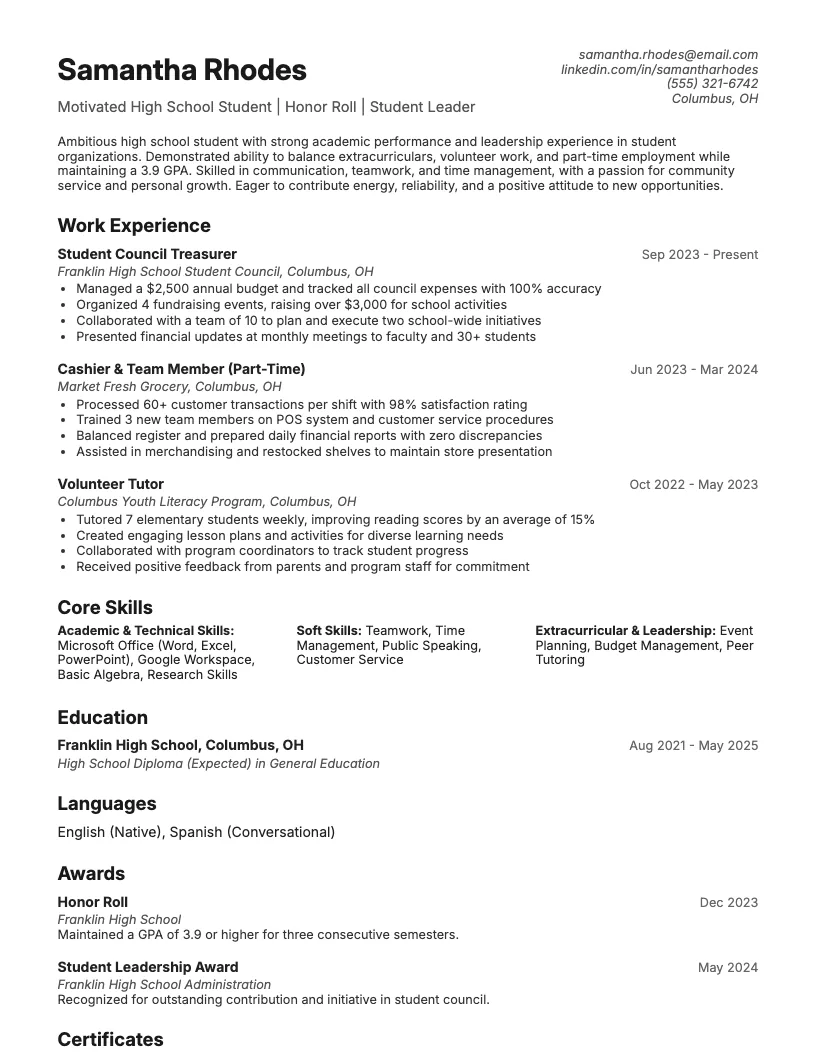
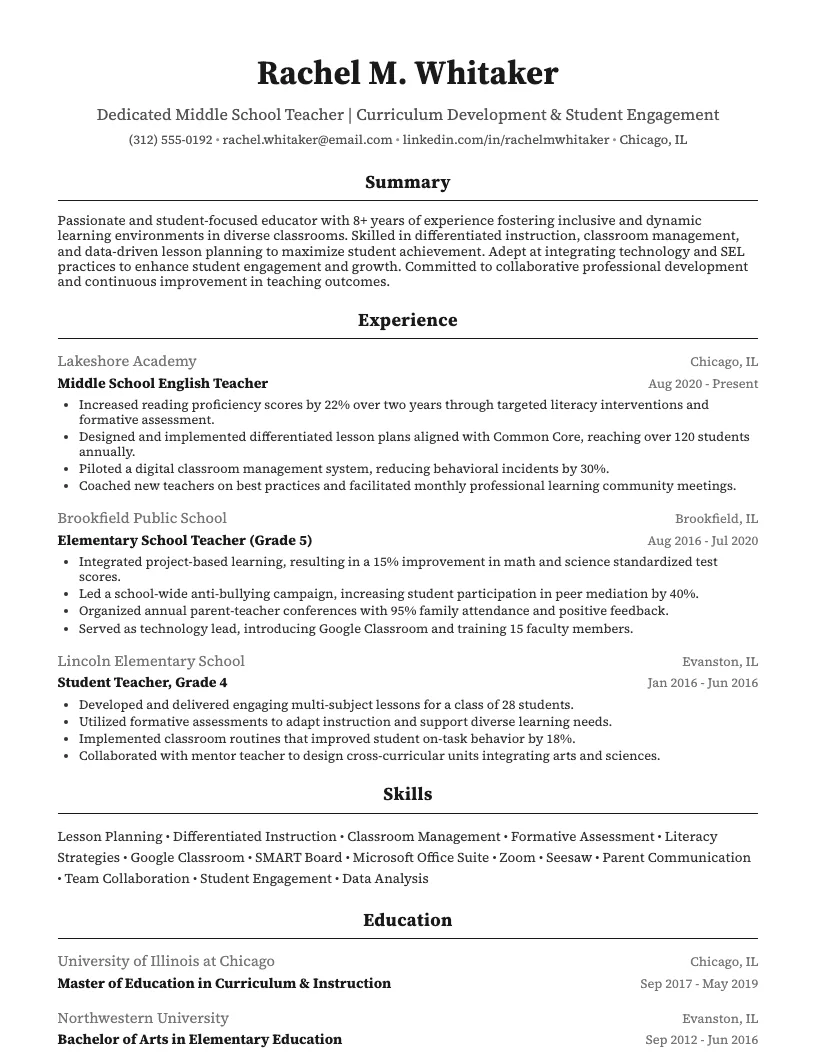
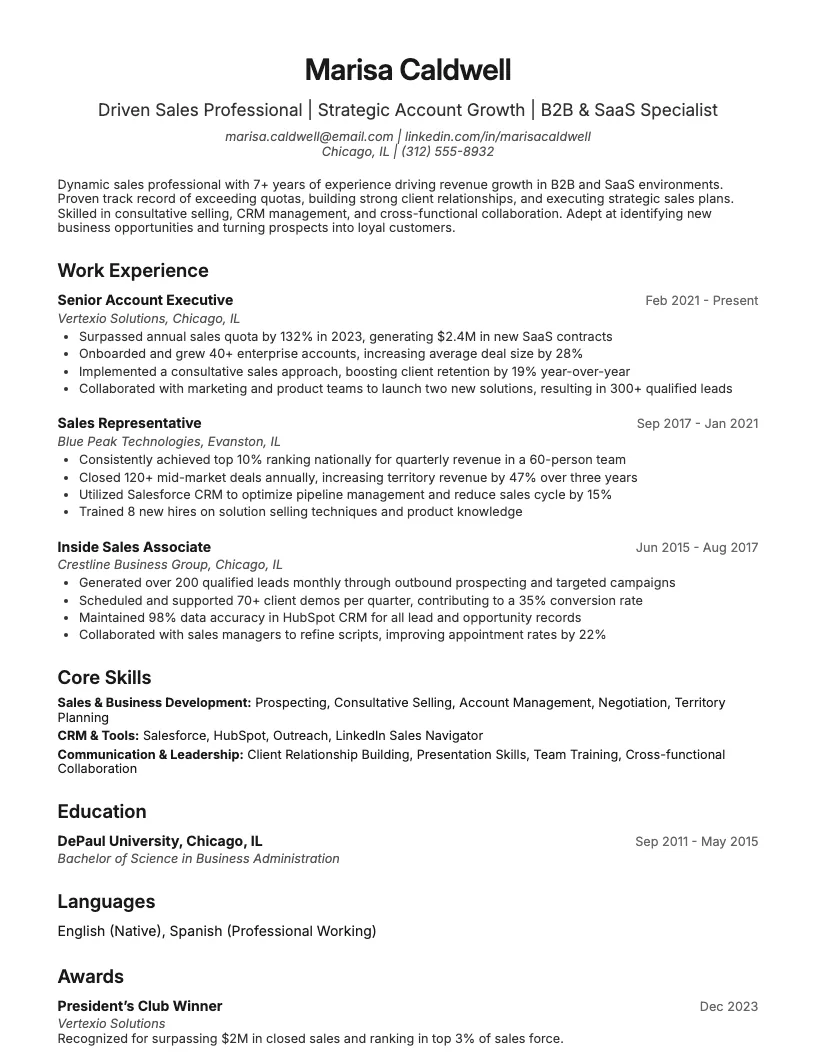
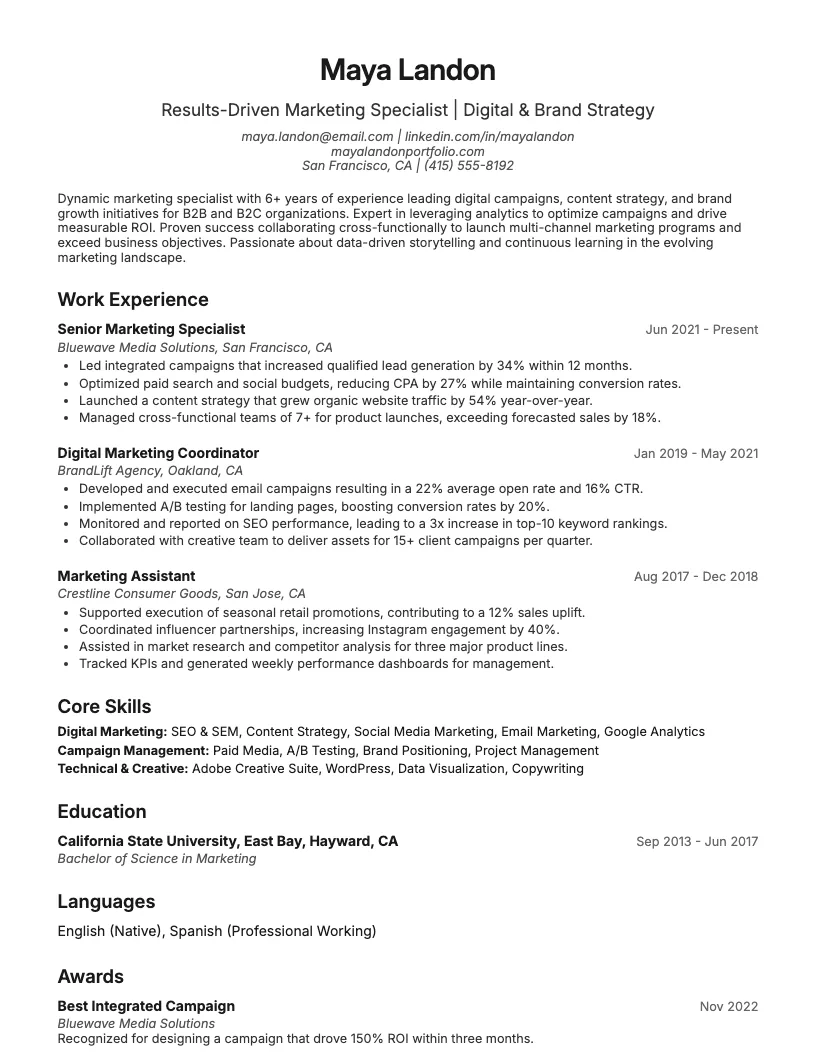
See these skills on a real resume
8 examplesStart from an example that already has them, and swap in your own.
Check your resume against the job you want
Scan your resume, see which skills and keywords the posting asks for that you are missing, and fix them before you apply.
Free to use • No credit card required