 ResumeJudge
Another Word For Skills On Resume: 10 Words I Actually Use (And Why)
10 real words to use instead of 'skills' on a resume, matched to what you actually did, plus swaps for 'interpersonal skills', 'problem solving', and ATS fit.


Written by Dr. Priya Sharma
Career Development Expert & Resume Analyst
Updated August 2026
Reviewed by Sarah Chen
Is your resume ATS-friendly?
Drop your resume in and see which of these skills a scanner can actually read, and which ones the job you want is asking for that you have not listed.
PDF or DOCX. Max 2MB.
We never share your resume or use it to train a model.
In This Guide:
What is another word for skills on a resume?
"Skills" is the word every resume uses. That's exactly why it doesn't stand out.
I've read enough of these to tell you: swapping the word only works if the new one is true to what you did. Below are ten real alternatives, each suited to a different kind of claim, not just a fancier way to say the same thing.
Competencies
This is the corporate, HR-approved version of skills. It suggests you don't just know something, you apply it consistently, which is why it shows up so often as a section header.
Expertise
It's a claim of depth, and I'd only use it if you can back it up in an interview.
Proficiencies
It works well for software, tools, and certifications where "proficient" has a clear, checkable meaning.
Strengths
Broader than the other nine. Strengths can be a mix of skill and personality, which makes it a good fit for a summary or a header rather than a bullet list.
Capabilities
It's the one word here that points forward instead of back.
Qualifications
If a posting names a required credential, this is the word that answers it directly.
Know-how
Informal, and I like it for exactly that reason. There's more on the kind of skill it covers below.
Specialties
This is for the narrow thing you're known for, not your whole skill set. A resume with a handful of specialties listed under a specialized header reads as focused, not scattered.
Talents
The most natural-sounding of the ten, and the most personal. There's more on when it fits below.
Abilities
Close in meaning to skills, but a step more formal. It's a safe, general-purpose swap when nothing else on this list quite fits the claim you're making.
Which word should you pick for the skill you are describing?
Which word matches what you actually did
| Word | Use it when |
|---|---|
| Proficiency | Learned formally, can do it reliably |
| Expertise | Built over years, could teach it |
| Qualifications | Documented - a license or certificate |
| Talent | Came easily, noticed before the job |
| Know-how | Practical, learned by doing the job |
| Capability | Potential, not yet proven |
Here's the mistake I see most often: someone finds a list of skills synonyms and just picks whichever one sounds smartest.
That's backwards. The word has to match what you actually did, or it reads as inflated the second someone asks you about it.
Something you were trained in: proficiency
Use "proficiency" for something you learned formally and can do reliably, but haven't necessarily mastered.
It signals competence without overclaiming.
Something you have done for years: expertise
"Expertise" is for the skill you've built over real time, the one you could teach someone else.
If you've only got a year in the role, save this word for later.
Something you are certified in: qualifications
"Qualifications" points to something documented, a license, a certificate, a formal credential.
Don't use it for a skill you just happen to be good at.
Something you are naturally good at: talent
"Talent" works for the ability that came easily to you, the one people noticed before you had the job title to back it up.
Something you learned on the job: know-how
"Know-how" is the practical, hands-on kind of skill, the workaround and shortcuts you only pick up by doing the work.
Something you can do but haven't done yet: capability
"Capability" is honest about potential rather than a track record. Use it when you're stretching into something adjacent to your experience, not something you've never touched.
Check the word against what you would say in an interview
Here's the test I use on every resume I look at: read the word out loud, then imagine the interviewer asking you to prove it.
If "expertise" would make you stammer, it's the wrong word. ResumeJudge's rewrite tool can hold your wording to the same standard, matching each skill you claim against the actual posting so nothing on the page overreaches what you can back up in the room.
What should you call your skills section?
You've already picked your synonym. Now you need a name for the section itself, and that's a separate call - the header sets the tone for everything listed under it.
Core Competencies
This is the safe pick. It reads as HR-standard across almost any industry, which is exactly why it blends in rather than stands out.
Areas of Expertise
I use this one for people with real seniority behind them - five-plus years, and five to eight broad knowledge areas rather than a list of tools.
Technical Skills
For engineers, developers, and data roles, this is the honest header. It tells a hiring manager exactly what's coming next, so group what follows into languages, frameworks, and tools rather than one long line.
Professional Expertise
Think of this as "Areas of Expertise" with more weight behind it. I reach for it with career changers, translating old-industry language into the new industry's terms.
Key Strengths
The most personal option here. It fits startups and creative roles where a little voice is welcome, and it's the one header where I'll mix a soft skill in next to a hard one.
Specialized Skills
Use this when licenses and credentials carry as much weight as the skills themselves - certifications, specific software, regulated tools. It only earns its name if what's underneath is genuinely specialized.
Relevant Experience & Proficiencies
This header leads with years, not labels - "12 years in enterprise account management" before the list even starts. It suits a long, provable track record more than a first resume.
When plain "Skills" is still the right header
Plain "Skills" isn't wrong. Every recruiter and every scanner already knows it, and on an early-career resume with a short list, a fancier header just draws attention to how short the list is.
Nine times out of ten, the header matters less than whether what's under it actually matches the posting. That's the part I'd let ResumeJudge handle - feed it the job description and it flags exactly which skills the posting wants that your resume is still missing, then rewrites your list to include them, whatever you called the section.
What can you say instead of "interpersonal skills"?
I've read enough resumes to tell you "interpersonal skills" is the phrase that makes a hiring manager's eyes slide right off the page. It doesn't tell them anything.
Here are the words that do.
Active listening
Use this where you took direction, gathered requirements, or handled a client who needed to be heard before you could fix anything. It's specific enough that a manager pictures you doing it.
Emotional intelligence
This one covers reading a room, staying calm when someone else isn't, and adjusting your approach person to person. Save it for roles where you managed people or worked across a lot of different personalities.
Collaboration
The safest of the bunch, and also the most overused, so back it up with what you actually built or shipped alongside other people.
Conflict management
Say this when you talked two people, or two teams, off a ledge. It reads stronger than "interpersonal skills" because it names an actual moment, not a personality trait.
Negotiation
If you've settled a price, a deadline, or a scope disagreement, this is the word. Pair it with a number if you have one.
Persuasion
Use this for getting buy-in on an idea, a budget, or a change nobody wanted at first. It's a sales word even outside of sales roles.
Relationship building
This is the long game version of collaboration. It fits account management, partnerships, or any job where you kept the same people coming back.
Written communication
Emails, docs, proposals, reports. If a job leans on writing at all, name it separately from "verbal communication" below. They're not the same skill.
Verbal communication
Presenting, briefing, running meetings. Nine times out of ten I see this crammed into "interpersonal skills" when it deserves its own line.
Public speaking
Only use this if you've actually stood in front of a group. It's a specific claim, and specific claims get checked.
Networking
Fits sales, recruiting, business development, and anything where your job is partly who you know and who you can call.
Empathy
The word to reach for in healthcare, education, and customer-facing roles where the job is understanding what someone else needs before they say it.
Before and after: rewriting an "interpersonal skills" bullet
Interpersonal skills bullet
Used interpersonal skills to work with a difficult client base.
Used active listening and conflict management to resolve escalated client complaints, cutting repeat tickets by 20%.
Weak: "Used interpersonal skills to work with a difficult client base."
Strong: "Used active listening and conflict management to resolve escalated client complaints, cutting repeat tickets by 20%."
The second version survives a skim. It names what you did and what happened because you did it - and it's the kind of rewrite ResumeJudge does automatically once you give it the job posting: it swaps in whichever of these words the listing actually uses, in the sections where they'll count, instead of leaving you to guess.
What can you say instead of "problem solving"?
"Problem solving" shows up on something like 70% of job applications.
That's not a guess - it's how common the phrase is on resumes right now. When a recruiter reads it for the fifth time in an hour, it stops registering as a skill and starts reading as filler.
The fix isn't to pick one fancier synonym and paste it everywhere. It's to name the specific kind of problem solving you actually did, because "critical thinking" and "troubleshooting" describe two different people.
Critical thinking
Use this when you weighed options before acting - evaluated evidence, questioned an assumption, chose a direction. It's the word for judgment, not action.
Analytical thinking
This is for breaking a messy problem into pieces you could actually work with - pulling data apart, spotting the pattern in it. I reach for it whenever a candidate's real story is "I dug into the numbers."
Troubleshooting
The hands-on, technical version. If you were the person diagnosing why something broke - a system, a process, a piece of code - this is your word, not "problem solving."
Root cause analysis
Stronger than troubleshooting because it says you didn't just patch the symptom - you found what actually caused it so it wouldn't happen again. Manufacturing, quality, and operations resumes should lean on this one hard.
Process improvement
For when the "problem" wasn't a single incident but a broken workflow, and you fixed the workflow itself. This one almost always wants a number next to it - hours saved, steps cut.
Strategic planning
The longer-horizon version - solving a problem that spans a quarter or a year, not an afternoon. I'd only use this if you actually owned the plan, not just executed someone else's.
Decision making
Good for roles where the job was choosing between real options under pressure or uncertainty, and living with the call.
Conflict resolution
The people-facing kind of problem solving - settling a disagreement between team members or clients. If most of your "problem solving" was actually about people, the interpersonal skills section has more options that fit better.
Systems thinking
For seeing how the pieces of something connect and predicting where a change will cause a ripple. Engineers and architects, this one's usually more accurate than "problem solving" anyway.
Resourcefulness
Solving something with less than you needed - no budget, no headcount, no time. Startups and small teams should use this one more than they do.
Design thinking
The iterative, user-first version - prototype, test, revise. It belongs on product and UX resumes, not much else.
Before and after: rewriting a "problem solving" bullet
Problem solving bullet
Responsible for problem solving within the department.
Ran root cause analysis on recurring shipment delays, cutting late orders by 30%.
Weak: "Responsible for problem solving within the department."
Strong: "Ran root cause analysis on recurring shipment delays, cutting late orders by 30%."
The second version doesn't just swap the word - it names the specific skill and proves it with a number. If you're not sure which term matches the language a particular job posting uses, run your resume against it in ResumeJudge - it'll show you the wording the posting actually wants and rewrite your bullets to match, instead of you guessing between eleven synonyms.
Which word fits your industry?
Which words fit which industry
| Industry | Words that fit |
|---|---|
| Software and IT | proficiency, expertise, command |
| Finance and consulting | acumen, competence, analytical proficiency |
| Healthcare and education | competence, capability |
| Creative and design | craft, finesse, technique |
| Sales and business development | prowess, aptitude, talent |
| Trades and manufacturing | certified, qualified, trained in |
The right synonym depends on who's reading it. A hiring manager in tech and one in finance won't nod at the same word for the same skill.
Software and IT
In software and IT, "proficiency," "expertise," and "command" read as technical competence, not filler. I'd write "command of distributed systems" over "skilled in distributed systems" every time - it sounds like something you'd actually defend in an interview.
Finance and consulting
Finance and consulting run more formal. "Acumen," "competence," and "analytical proficiency" match the tone recruiters expect there - plain "skills" can read casual next to it.
Healthcare and education
Healthcare and education lean on "competence" and "capability," because both fields hire against formal competency frameworks. Use their language and you sound like someone who already knows how the system works.
Creative and design
Creative and design fields want "craft," "finesse," or "technique" - words that signal practitioner-level skill over tool familiarity. "Skilled in Figma" says you clicked around it; "command of visual hierarchy" says you own the craft.
Sales and business development
Sales and business development favor "prowess," "aptitude," and "talent" - persuasive without overclaiming. Pair whichever word you pick with a number, the same way you'd back up a problem-solving claim with a result.
Trades and manufacturing
Trades and manufacturing reward plain, checkable words - "certified," "qualified," "trained in" - over anything abstract. Nobody hiring for a shop floor wants "expertise"; they want to know what you're certified to run.
How to find the word your own industry uses
Don't guess. Read ten postings for the role you want and note which word keeps showing up for the same skill - including whichever problem-solving synonym they favor.
That's usually the word worth matching, for the reasons I get into under how applicant tracking systems parse this. ResumeJudge will scan your resume against one specific posting and tell you exactly which of its words are missing, so you're not doing that reading by hand.
Does changing the word help or hurt with applicant tracking systems?
Is your resume good enough?
Drop your resume in and see which of these skills a scanner can read, and which ones the job you want is asking for that you have not listed.
Upload your resumeFree. PDF or DOCX. We never share your resume or use it to train a model.
I've watched a resume get filtered out because the word didn't match the posting, not because the skill was missing.
The system matches the job posting's wording, not the best wording
An ATS rewards the word the listing used, not the best one. Say "SQL skills" when the posting wants "proficiency in SQL" and you can lose points for the same experience.
Mirror the posting's own language and you're reportedly 40% more likely to clear the filter.
When to keep the posting's exact phrase, even if it is generic
If a listing says "interpersonal skills" or "problem solving" more than once, keep that exact phrase somewhere, even in spots where I'd rather you use a sharper word.
Where to put the synonym and where to keep the original
Put the posting's own phrase in your skills list, where the scanner looks first. Save the specific word - "conflict resolution," "root cause analysis" - for the bullet that proves it happened.
Words that sound better but parse worse
"Acumen" reads well to a person and means nothing to a scanner hunting the posting's own term. A swap that costs you the match isn't worth making - see swapping the word without evidence to back it up.
What does the swap look like on a real resume?
Side by side, the difference is obvious in a way a list of synonyms never quite is.
Weak: "Strong communication and problem-solving skills"
I see this exact line on maybe one resume in three.
It names two things and proves neither.
Strong: the same line rewritten with a named skill and a number
Both halves of that line already get rewritten earlier on this page: the communication half under the interpersonal skills before and after, the problem-solving half under the problem solving before and after. What the rest of this section shows is the same swap in the two places a bullet rewrite doesn't cover - the skills list and the summary.
A skills list before and after the swap
Skills list
Interpersonal skills, Cash handling, Organization, Customer service
Conflict management, Feedback acceptance, Leadership, Cash handling, Customer service
Before: Interpersonal skills | Cash handling | Organization | Customer service
After: Conflict management | Feedback acceptance | Leadership | Cash handling | Customer service
Four vague words became five specific ones.
A summary paragraph before and after the swap
Resume summary
Skilled in problem solving and interpersonal skills.
Coach who leans on collaboration and leadership to manage staff through 150+ games, with a 123-27 record.
Before: "Skilled in problem solving and interpersonal skills."
After: "Coach who leans on collaboration and leadership to manage staff through 150+ games, with a 123-27 record." A summary earns its space the same way a bullet does.
Swapping the word without the evidence to back it
I've seen resumes swap 'skills' for 'expertise' and change nothing else - same vague sentence, fancier label. The word only earns its keep once a number or a result sits right next to it. If you can't picture the interviewer's follow-up question, the swap was cosmetic.
Renaming "skills" to "expertise" and stopping there fixes nothing - the sentence still proves nothing.
The word only earns its keep once it's carrying a number or a result behind it. If you're not sure a bullet clears that bar, run the resume against the actual posting - ResumeJudge will score it and rewrite the weak lines for you instead of leaving you to guess.
Frequently Asked Questions
Is it bad to use the word "skills" on a resume?
No. It's plain, recognizable language that any recruiter or applicant tracking system understands right away, and it's easy to organize a section under. The only real downside is that it doesn't say anything specific about you, so if you keep it as a header, make sure the words listed under it are as specific as possible.
How many times can I say "skills" before it reads as repetitive?
Twice on one resume is about the limit before it starts to read as repetitive. Beyond that, it looks like you're reaching for the same generic word instead of naming what you actually did or know. Swap in the more precise word each time you need it again - communication, budgeting, negotiation, whatever fits - and save "skills" for places where the generic word is genuinely the clearest choice, like a section header.
Should I call it "Skills" or "Core Competencies"?
Both are fine, but "Core Competencies" and similar headers like "Areas of Expertise" tend to read as more senior and specific, while "Skills" is the safer, plainer choice earlier in your career or somewhere less formal. What matters more than which one you pick is whether it matches the language in the posting you're applying to. ResumeJudge scans your resume against a posting, shows you the skills and keywords it's missing, and rewrites the wording into the right sections for you, so you're not guessing at which header or which words the employer's system is looking for.
Can I use "expertise" if I only have a year of experience?
No - "expertise" implies years of depth, and a hiring manager will notice the mismatch if your resume claims it after one year on the job. Use a word that matches your actual level, like "proficiency," "working knowledge," or just "skills," and let your results carry the weight instead of the label. You can grow into a stronger word as your experience does.
Do I need a different word in my summary and my skills list?
Not necessarily, but repeating the exact same word in both places wastes a chance to say something different about yourself. Use your summary to describe your strengths in a sentence or two - "background in X" or "expertise in Y" - and use your skills list for the specific, scannable terms themselves. That variety also means you're not relying on the same one or two words to do all the work across your resume.
Is "soft skills" a phrase I should put on a resume?
You can, but the phrase "soft skills" itself doesn't tell an employer anything - it's a category, not a skill. Name the actual thing - communication, collaboration, adaptability - and back it with what you did, rather than labeling it "soft." A line like "led a cross-functional team of six" proves the skill; the label "soft skills" just names it.
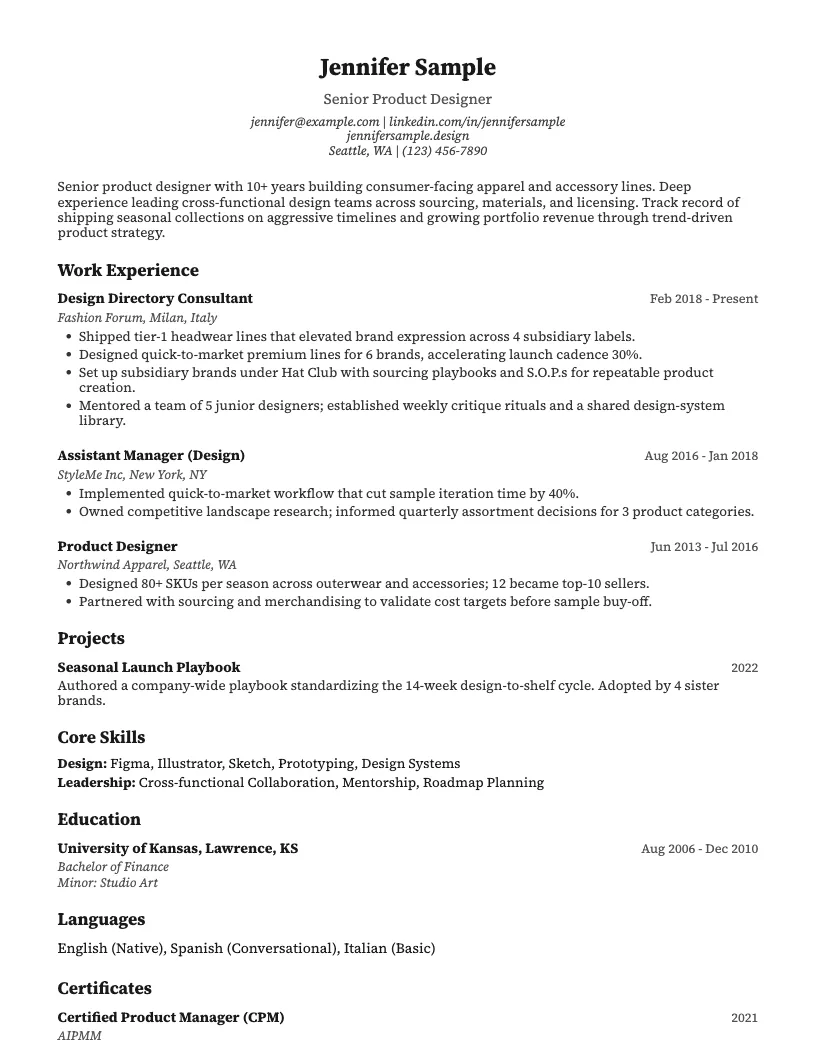
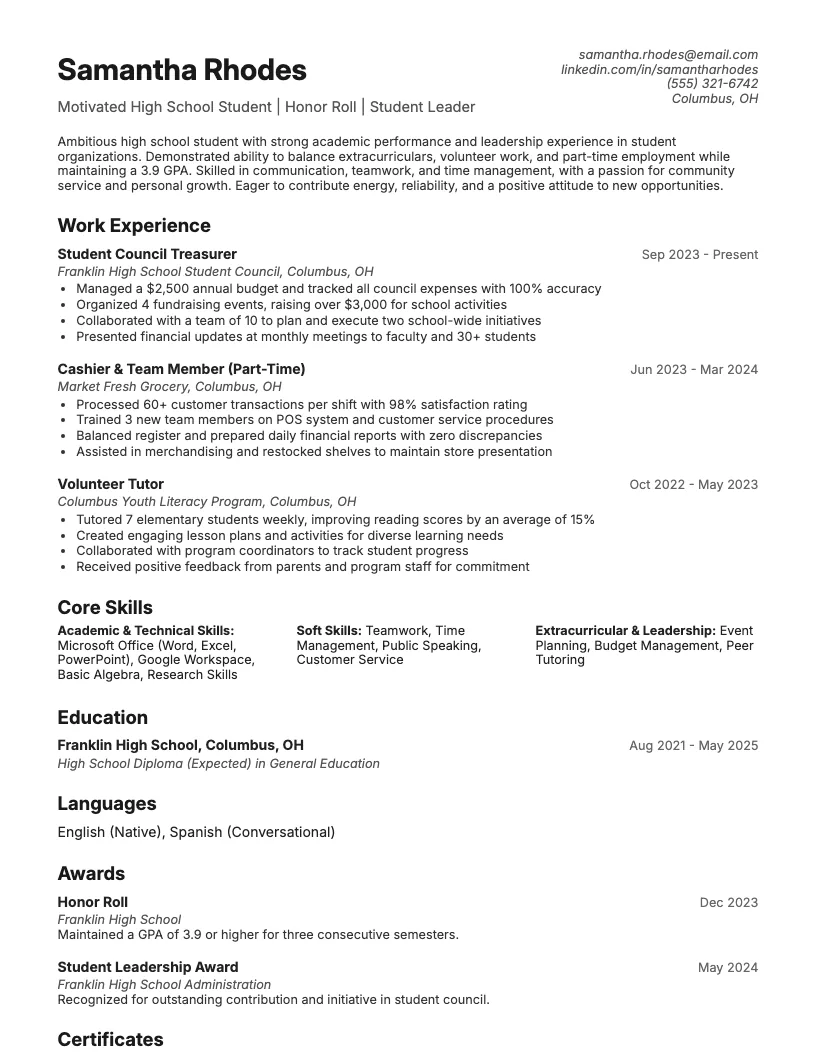
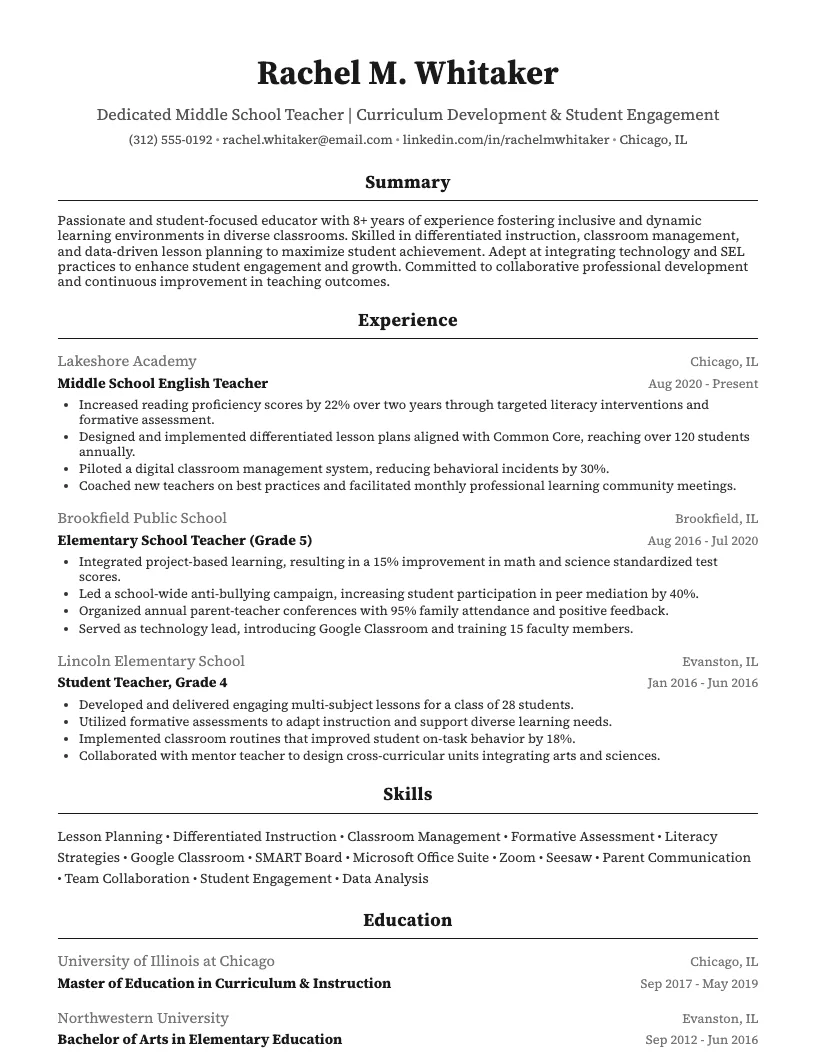
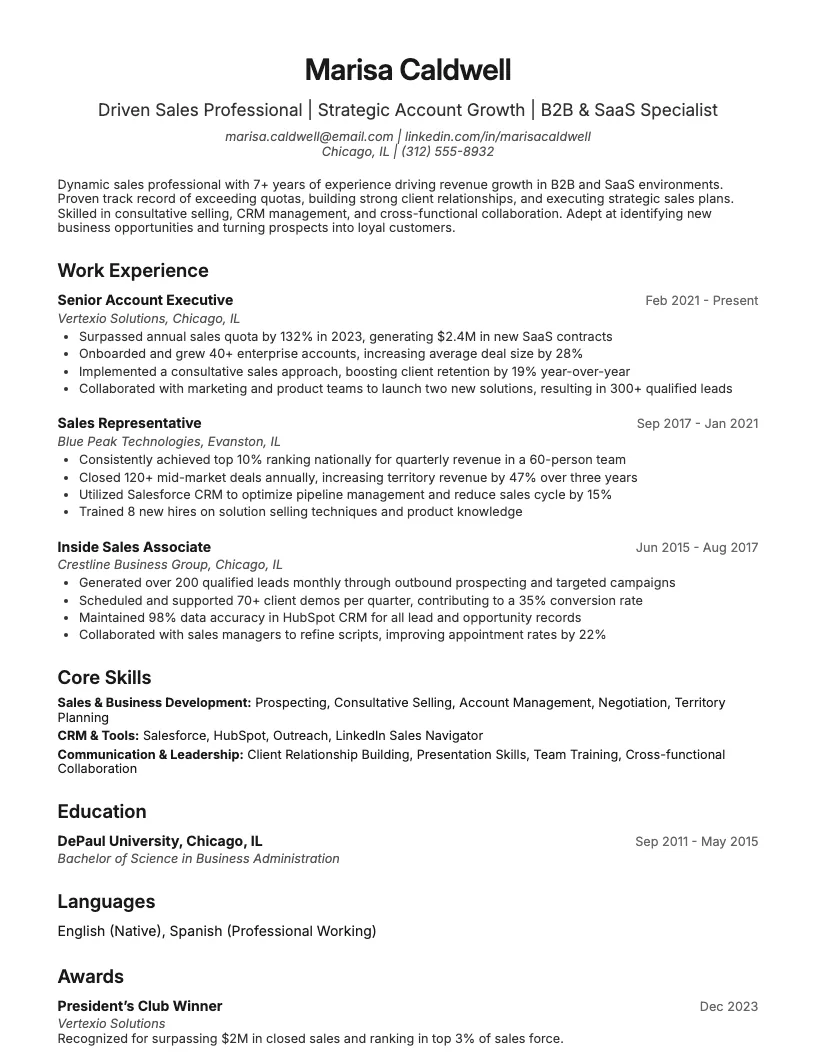
See these skills on a real resume
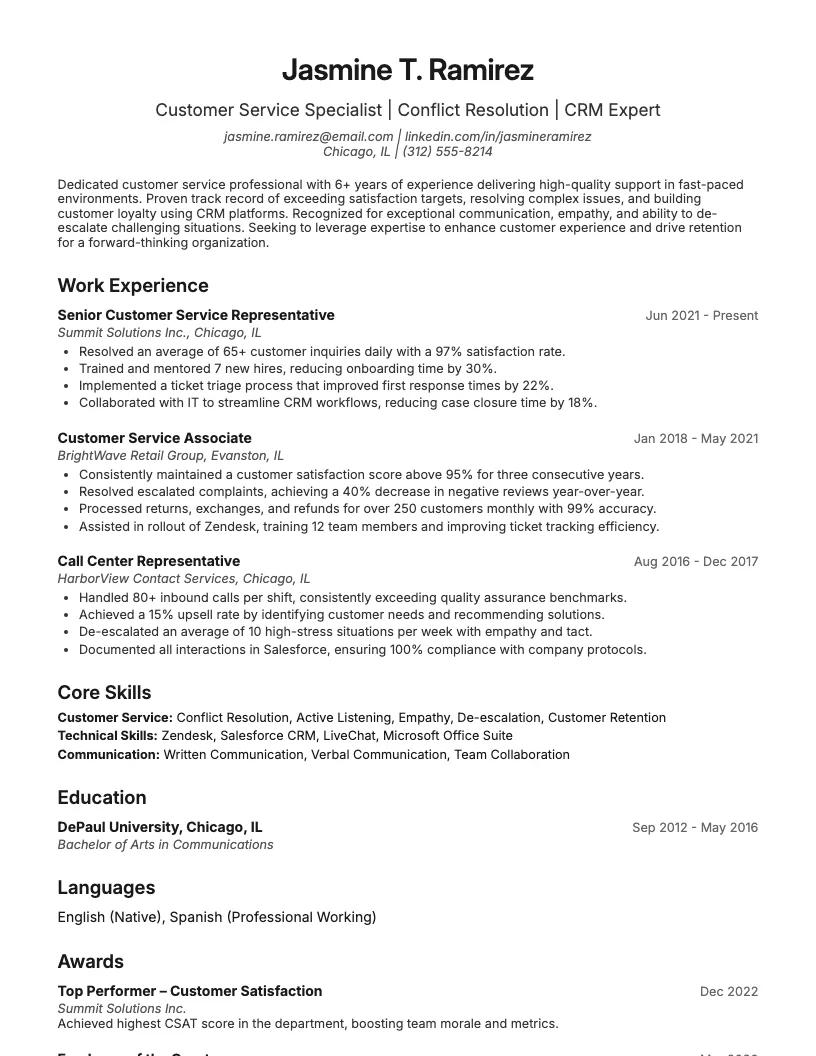
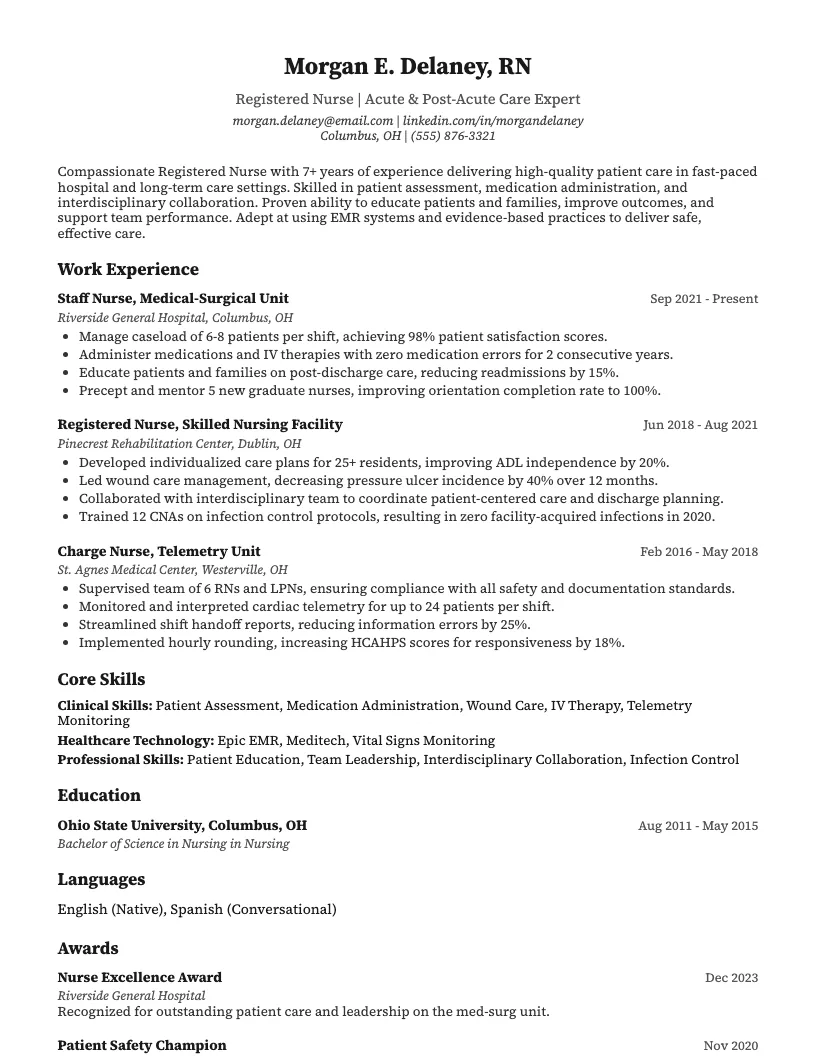
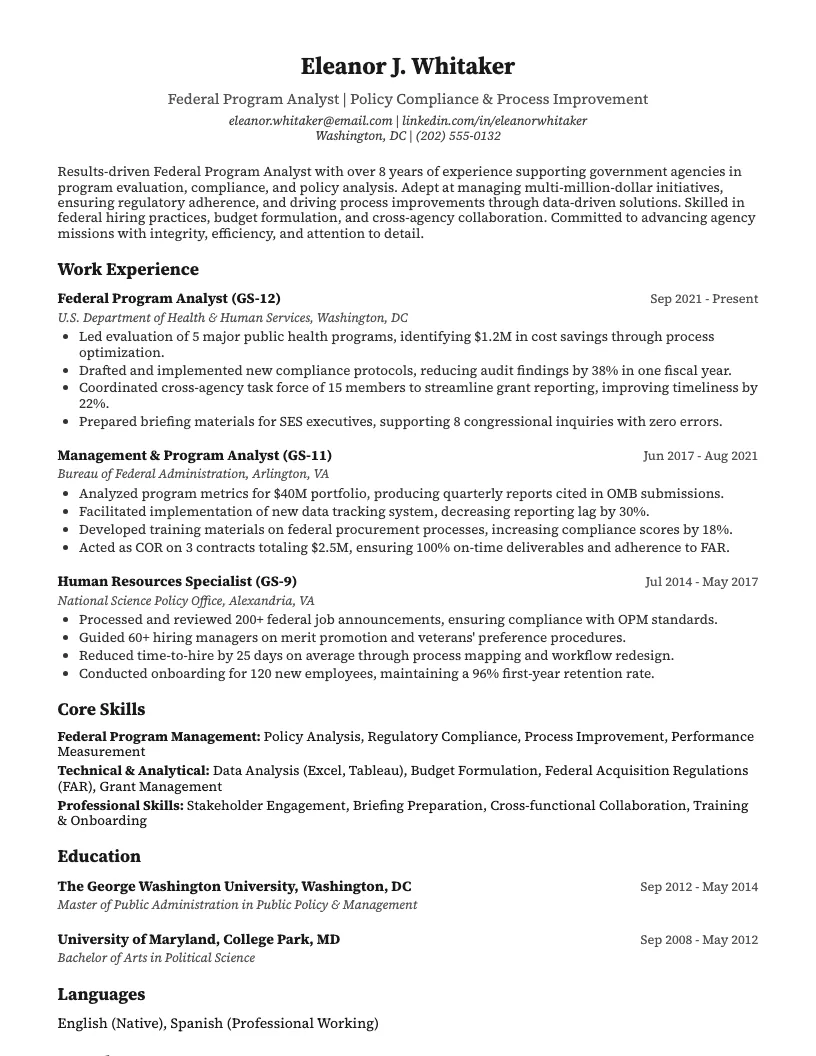
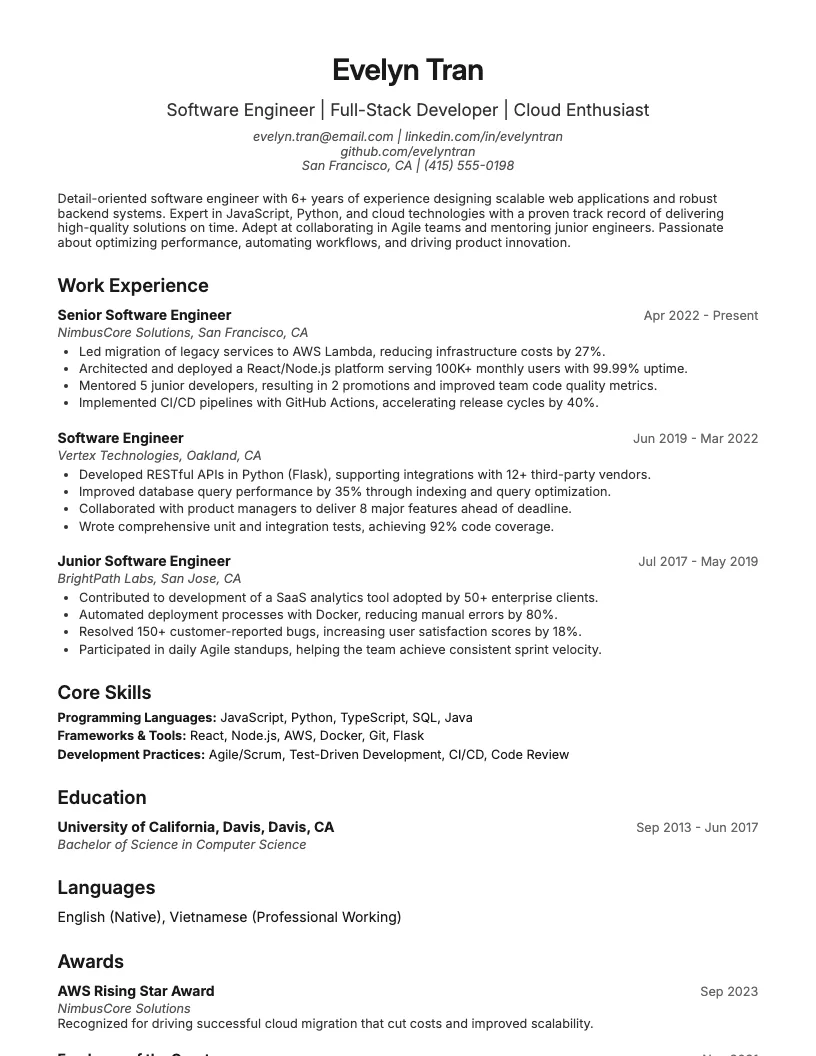
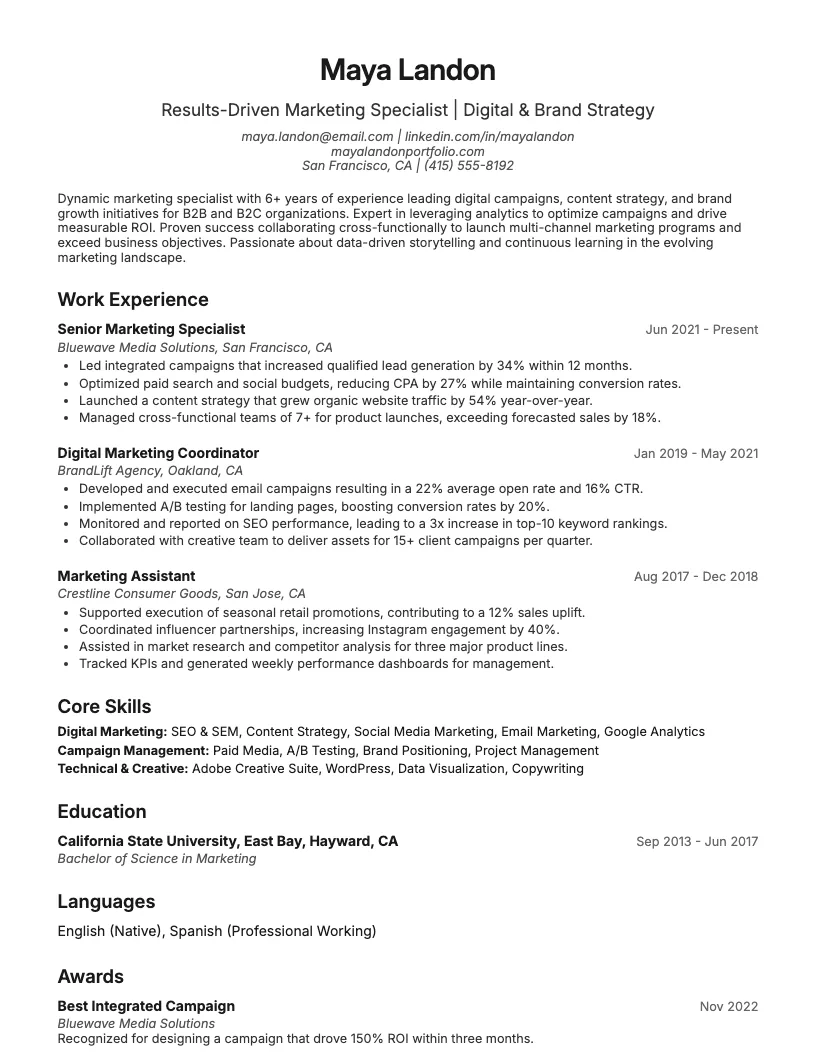
8 examplesStart from an example that already has them, and swap in your own.
Check your resume against the job you want
Scan your resume, see which skills and keywords the posting asks for that you are missing, and fix them before you apply.
Free to use • No credit card required