Words to Describe Yourself: 9 Phrases I Fixed With 6 Real Steps
See 9 overused self-descriptions like 'I'm passionate' rewritten with real proof, plus a 6-step process for choosing words your resume can actually back up.


Written by Marcus Rodriguez
ATS Optimization Specialist & Career Coach
Updated August 2026
Reviewed by Dr. Priya Sharma
Is your resume ATS-friendly?
Drop your resume in and see which of these skills a scanner can actually read, and which ones the job you want is asking for that you have not listed.
PDF or DOCX. Max 2MB.
We never share your resume or use it to train a model.
In This Guide:
What are the best words to describe yourself?
Every list you'll find online is the same fifty words shuffled into different buckets. The trick isn't finding a bigger list.
It's picking the two or three words that actually fit the situation in front of you, and being ready to back each one up. Below are the words I reach for most, sorted by what they're actually proving.
Words for your work ethic
These prove you finish things: driven, disciplined, resourceful, persistent, organized, thorough, hard-working, proactive.
I split them into two kinds. Some show drive - driven, ambitious, motivated.
Others show follow-through - disciplined, methodical, consistent. Pick one of each rather than three from the same pile, or you'll sound like you have one gear.
Words for your skills and thinking
Analytical, strategic, data-driven, detail-oriented, creative, decisive, innovative, adaptable.
These work best paired with what you actually thought about. If you're not sure your resume backs these up, that's exactly the kind of gap ResumeJudge will flag when you check it against a real posting.
Words for how you work with people
Collaborative, personable, articulate, empathetic, dependable, diplomatic, supportive, trustworthy.
I'd put collaborative and dependable near the top - they show up in almost every job posting I read, in some form, because almost every job involves other people. Save empathetic and diplomatic for roles where the friction is the job: support, healthcare, management.
Positive words that always land
Passionate, committed, resilient, optimistic, capable, reliable, honest.
I've read hundreds of resumes with "passionate" on them, and it lands maybe one time in five. The other four, it's a word with nothing behind it.
If you use it, put a sentence next to it that shows the passion instead of naming it.
Unique words that sound like you
Once you've got the standard set down, the next mistake I see is reaching for something unusual - "eclectic," "tenacious," "shrewd" - to stand out. That's a whole page of its own, on unique words to describe yourself, and it's worth reading before you swap in anything unfamiliar.
The short version: unusual only works if it's still true and still provable.
Nouns and verbs, not just adjectives
Adjectives describe you. Nouns and verbs show you doing something - "led," "built," "negotiated," "problem-solver," "self-starter."
Nine times out of ten, a resume reads stronger when you cut an adjective and replace it with a verb doing the same job. "Organized" becomes "built the filing system three teams still use."
Words to describe yourself as a student
Without much work history to point to, curious, adaptable, and resourceful tend to do more work than driven or ambitious - they don't need years of proof behind them, just one project or class where you actually showed it. There's a full page on this exact question if you're writing an application rather than a resume.
How do you choose which words to use?
How do you choose which words to use?

There's no master list here. The right word depends on where it's going and who's reading it, so work through it in order.
Step 1: Decide where the words are going
A resume summary, an "About Me" box, and an interview answer all want different words. A resume can carry a denser, more formal word than you'd ever say out loud in a room.
An interview answer has to sound like you talking, not a document. Pick the destination first, then pick the word - not the other way round.
Step 2: Pull the wording from the job posting
Job-posting scanners match text, not intent. A resume full of accurate, well-earned words can still get filtered out if none of them match the posting's own vocabulary. Mirror the exact word the posting uses instead of a synonym you personally prefer.
Read the posting and circle the traits it names outright. If it says "data-driven," your resume should say "data-driven" - not a synonym you like better.
This isn't just a style choice: a lot of resumes get scanned by software before a person ever sees them, and that software is matching text, not intent. I run this check for people constantly - a resume can be full of accurate, well-earned words and still get filtered out because none of them match the posting's own vocabulary.
That's exactly the kind of gap ResumeJudge fixes: paste in the posting and it'll rewrite your resume to work the missing terms in for you.
Step 3: Match the word to the role
Finance wants "meticulous" and "detail-oriented." Creative roles want "innovative" and "resourceful."
Technical roles want "methodical" and "solution-oriented." The same person can honestly claim all six - the job is picking the two or three that this particular reader is primed to trust.
Step 4: Ask people who know you how they'd describe you
Ask two or three people who've actually worked with you - not friends being nice, colleagues who've seen you under deadline. You're too close to your own habits to name them cleanly, and nine times out of ten the word they hand you is sharper than the one you'd have picked yourself.
Step 5: Back every word with one real example
Every word on this page needs a moment behind it. Don't write "analytical" - write the decision you made because you looked at numbers nobody else checked.
A claim with no story attached reads as filler, and readers skim right past it.
Step 6: Cut the words you can't prove
If you can't finish step 5 for a word, it doesn't survive step 6. Cut it. A shorter, fully-backed list beats a long one padded with words you're hoping nobody questions - see which words should you leave out for the specific ones to drop first.
How do you describe yourself on a resume?
Is your resume good enough?
Drop your resume in and see which of these skills a scanner can read, and which ones the job you want is asking for that you have not listed.
Upload your resumeFree. PDF or DOCX. We never share your resume or use it to train a model.
Here's the thing about resume adjectives: nobody reads them the way you think they will. A recruiter scans a resume in seconds, so a word sitting on its own does almost nothing.
It only works once it's attached to a sentence that proves it.
Where the words go in a resume summary
The summary at the top is where descriptive words earn their place. Two to five sentences, one or two strong adjectives, and the rest of the space spent on what you actually did.
I've read thousands of these, and the ones that work never stack adjectives back to back - "dedicated, detail-oriented, results-driven professional" reads like it was generated, because it usually was.
Turning an adjective into a line with a number in it
an adjective on its own vs. an adjective with proof
Efficient team member
Cut onboarding time by 30% by rebuilding the intake process
Pick the word, then find the one line of your work history that proves it, and put a number in that line. "Efficient" becomes "cut onboarding time by 30% by rebuilding the intake process."
That's the whole trick, and it's the one step most resumes skip. If you're not sure your bullets actually back up the words you're using, running the resume against a real job posting will show you which claims are missing evidence - that's exactly what ResumeJudge checks for.
Adjectives that read well on a resume
The lists at the top of this page already cover these - see words for your work ethic, words for your skills and thinking, and words for how you work with people. For a resume, take the ones a hiring manager can picture in action: they hold up because they describe something you do, not just something you are.
Adjectives that read well in a cover letter
A cover letter gives you more room, so words with more personality work better there than on a resume: adaptable, proactive, tenacious, methodical, committed. Same rule applies though - name the word, then give one real example with a number attached, and stop.
Two sentences is usually enough before it starts sounding like padding.
How would you describe yourself in an interview?
One word, three words, or five words
| Format | How many words | What it needs |
|---|---|---|
| One word | 1 | One trait, backed by a specific moment |
| Three words | 3 | Words that build one picture together |
| Five words | 5 | How you work, think, and fit the role |
Someone across the table just asked you to sum yourself up in a sentence, and you've got about thirty seconds before the silence gets awkward. This is one of the most common interview moments there is, and most people wing it.
Don't.
Why interviewers ask it
They're not curious about your personality for its own sake. They're checking whether what you value lines up with what the role and the team actually need.
I've sat through enough debriefs to know this question does double duty. It tells the interviewer whether your strengths match the job, and it tells them whether you'd fit how the team already works.
Nail it and you've set the tone for the rest of the conversation, because whatever you say here is usually what they dig into next.
The other ways they word the question
Same question, different clothes. You'll hear it as "tell me about yourself," "describe yourself in one word," "what are three words that describe you," "how would your last manager describe you," or just "walk me through your background."
Nine times out of ten, the interviewer is fishing for the same thing no matter which version they use: your standout trait and proof you can back it up. Prepare one strong answer and you can bend it to fit any of these.
Describe yourself in one word
Pick the trait that actually explains how you get results, not the safest word in the room. "Reliable" is fine.
"Resourceful," backed by a specific moment you solved something nobody expected you to, is memorable.
Describe yourself in three words
The mistake I see most often here is three unrelated adjectives with no thread between them. Choose words that build a picture together, then give each one a half-sentence of proof.
Before you settle on words, check them against the actual posting for the role - that's the kind of gap ResumeJudge will fix for you, rewriting your wording to match the posting once you paste the job description in.
Describe yourself in five words
Five words gives you room to cover more ground: one about how you work, one about how you think, one about how you work with others, and one or two tied straight to the role. Don't just stack synonyms - that reads as padding, not depth.
How would others describe you?
The strongest version of this answer isn't your opinion of yourself, it's someone else's. Quote a real thing a manager or colleague has said about you. It costs you nothing and it does more work than any adjective you'd pick on your own.
Creative answers: an object, a song, a metaphor
Some interviewers throw you a curveball: describe yourself as an object, a song, a color. Don't panic and don't overthink it.
Pick the first honest answer that comes to mind, then explain the connection in one clear sentence. The explanation is what they're actually grading, not the metaphor itself.
Present, past, future: a structure for the answer
When you need a full answer instead of a word or three, this is the frame I hand people: what you do now, what got you here, and where you're headed. It keeps you from rambling and it naturally lands on one word or three you can repeat if they ask a follow-up.
Two or three sentences per stage is plenty - any longer and you've lost them.
What do these answers sound like out loud?
What do these answers sound like out loud?
Read these nine lines out loud before you use one. Most of them sound fine on paper and hollow in a room, because a stranger can't tell if you mean it or if you memorized it.
The fix isn't a better adjective. It's one sentence of proof stapled to the end.
"I am passionate about my work"
This is the line I hear most and believe least, because "passionate" describes a feeling, not a thing you did. Say what you taught yourself and what it turned into instead - a skill you picked up on your own time that became the thing your team leans on you for. That's passion an interviewer can picture.
"I am ambitious and driven"
Fine word, empty on its own. If you've been promoted more than once in a short stretch, that's the sentence - three promotions in two years says "driven" better than the word does. No promotions yet? Point at a goal you set for yourself and hit anyway. Back every word with a real example or drop it.
"I am highly organized"
I ask people what "organized" means to them and get a shrug half the time. Give me the system: how you track deadlines, how you file things, what changed once you built it. A candidate who says their new process lifted their team's output by a quarter has said something. "I'm organized" hasn't.
"I'm a people person"
This one works when the job is customer-facing and falls flat everywhere else, so check the posting before you reach for it. If you use it, point at the number - satisfaction scores running well above the team average is a people-person claim with a spine. Without a number it's a personality trait, not a qualification.
"I'm a natural leader"
Nine times out of ten, "natural leader" means "I've never had the title." That's not disqualifying - say it straight. Coworkers coming to you before your manager does is leadership, title or not, and getting moved into a lead role within a year of two different jobs is a pattern, not luck.
"I am results-oriented"
Everyone claims this one, which is exactly why it needs a number more than any other line on this list. Shaved two weeks off a timeline, hit a target early, cut a process down - pick one and put the figure in the sentence. Before you commit to a number, run it against the job description; ResumeJudge will tell you if the posting is asking for a different result entirely.
"I am an excellent communicator"
"Communicator" is one of the most-checked words on a scanner and one of the least-proven in an interview. Retention or delivery numbers do the proving - a big jump in clients staying, or every project landing on the date you promised. Say what you kept everyone informed about, not that you're good at informing.
"I'm a constant learner"
This is the line for someone without a long résumé yet, and it's a good one - but only with a specific thing you learned attached. Name the skill, name where you picked it up, and you've turned a gap into a habit worth hiring.
"I work well on my own"
Say this for remote or freelance roles where nobody's checking in on you daily. The version that lands isn't "independent," it's a story about a project nobody had to manage - you set the pace and it got done. Adjectives that read well in a cover letter has more lines built the same way.
Which words should you leave out?
Not every word helps you. Some actively cost you the interview, and I've read enough resumes to sort them into five buckets.
Buzzwords everyone uses: go-getter, rockstar, guru
"Go-getter," "rockstar," "guru" - a hiring manager reads these dozens of times a week and stops seeing them as words at all.
They signal effort, not evidence. Swap the label for the thing you actually did.
Words that sound like bragging: perfect, flawless, genius
"Perfect," "flawless," "genius," "amazing" - these read as self-praise with nothing behind them, and nobody's work is actually flawless.
Claiming it just makes the reader doubt the rest of the page. Say what you built or fixed instead, and let the result carry the weight.
Negative words about yourself: lazy, moody, perfectionist
This one trips people up because it feels honest. Words like "lazy," "moody," "careless," or "unmotivated" have no place on a resume, even as a joke or a false-modesty aside.
"Perfectionist" belongs here too - it gets pitched as a humble-brag answer to weakness questions, but most interviewers have heard it so often it now reads as a dodge, not a trait.
If you're searching for negative words to describe yourself so you can avoid them, that's the whole list: anything that describes a flaw, cute or otherwise, stays off the page.
Words that can be read two ways: assertive, headstrong
"Assertive" and "headstrong" can land as confidence or as difficult to work with, and you don't get to control which reading the person on the other side picks.
I'd rather see a word with one meaning than a strong word with two. If you want the confident read without the risk, run it past the words for how you work with people list instead.
Any word you can't give an example for
This is the rule that catches everything else, and it's already step 5 and step 6 above: a word with no example behind it gets cut, same as any cliché. If you're not sure which of your words would survive that against a real posting, ResumeJudge will check your resume against the job description and flag the ones with nothing to back them up.
Go deeper
50 Words to Describe Yourself: The Full List
50 words to describe yourself, grouped by trait, 10 explained in depth with what they mean to an employer, plus which ones to leave off your resume too.
Read MoreDescribe Yourself in 5 Words: Five Adjectives That Work
15 adjectives to pick your five from, 9 overused words to cut, a 3-step way to narrow the list, word sets for 8 job types, and 6 full spoken examples.
Read MoreDescribe Yourself in One Word - Plus 2, 4, 6 and 100 Word Answers
5 words that actually prove something in an interview, 3 that get overused (hardworking, passionate, perfectionist), and a 3-step test to find your own word.
Read MoreCreative Ways to Describe Yourself: Objects, Songs, Quotes and Metaphors
10 metaphors, 10 objects to hold onto, and the songs and quotes people actually pick - real examples for each, so you're never caught freezing in an interview.
Read MoreNouns and Verbs to Describe Yourself
14 nouns and 35 verbs to describe yourself on a resume, the exact sentence pattern that turns either one into proof, and which ones to leave off entirely.
Read MorePositive Words to Describe Yourself (Good and Best Adjectives)
50 positive words to describe yourself, sorted by job and career stage, plus how to prove each one with a real number instead of just naming it alone.
Read MoreResume Adjectives: How to Describe Yourself on a Resume or CV
See the 10 categories of resume adjectives that actually hold up, the 7 words to cut, where each one belongs on the page, and how to pick the right ones from a job posting.
Read MoreThree Words to Describe Yourself (With Examples for Interviews)
11 three-word combos for any role, 7 overused words to cut, 5 full spoken answers to copy, and how a college application answer differs from an interview one.
Read MoreUnique Words to Describe Yourself (Stand Out Without Sounding Fake)
27 unique words that actually say something about how you work, 13 that only sound unique, swaps for hard-working and passionate, where each one goes.
Read MoreWords to Describe Yourself as a Student
10 student resume words explained with real proof examples, a 50-word list sorted into 5 categories, and exactly where each one goes on your student resume.
Read MoreHow to Describe Yourself in an Interview (Words and Sample Answers)
21 words to describe yourself in an interview, grouped into 7 categories, plus 7 sample answers by career stage and the words that make you sound generic.
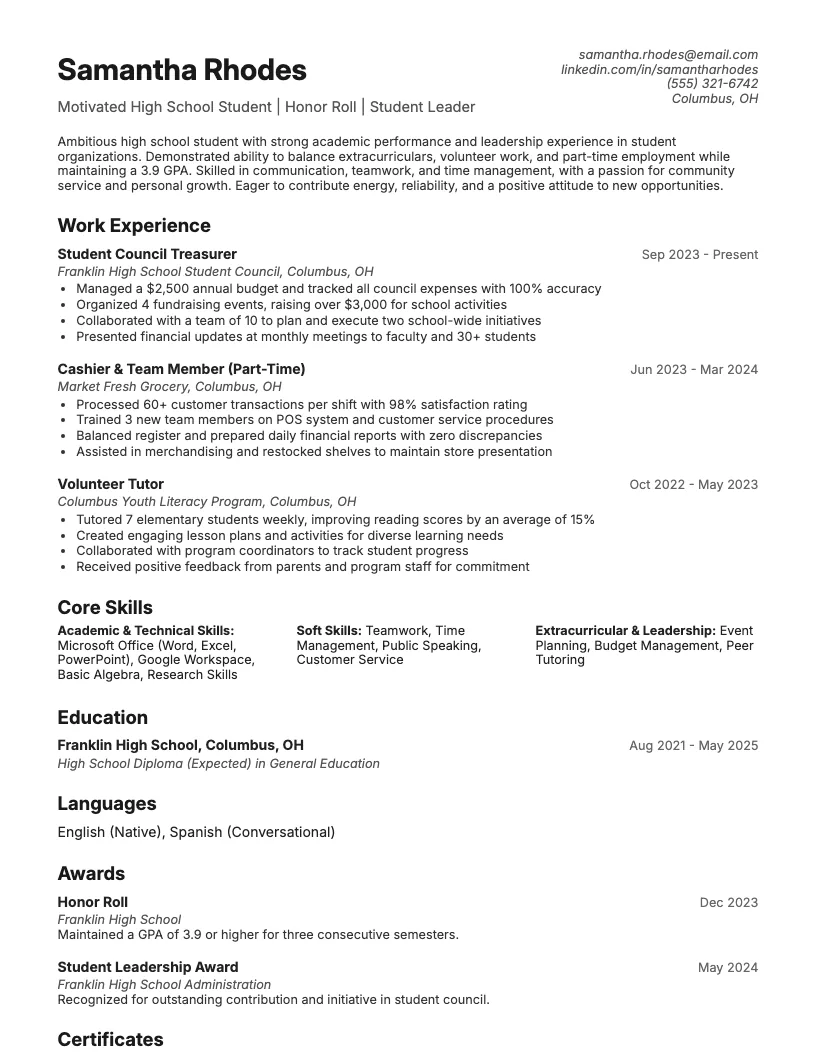
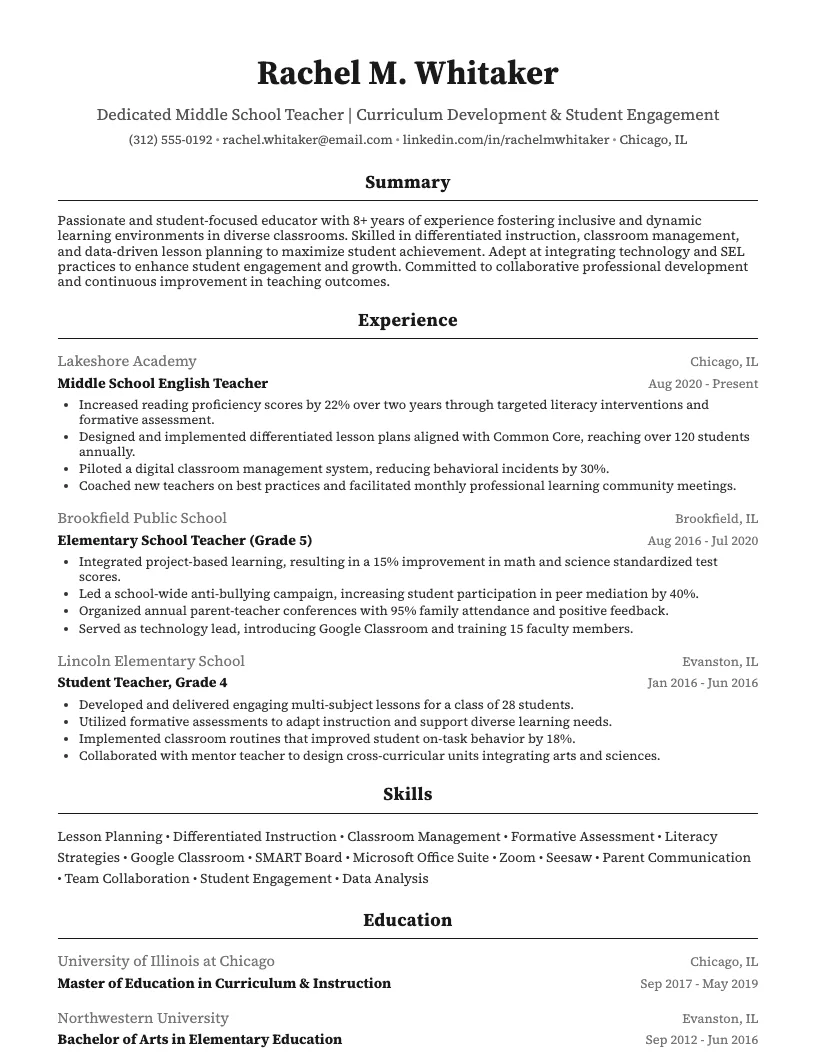
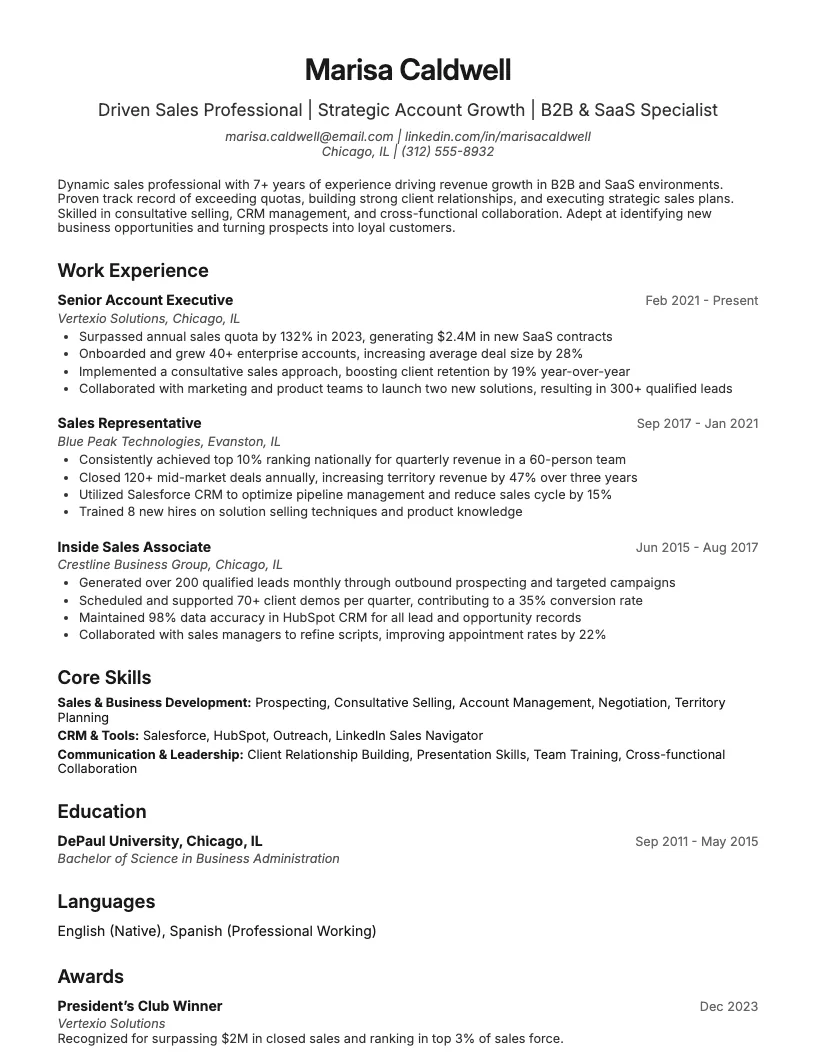
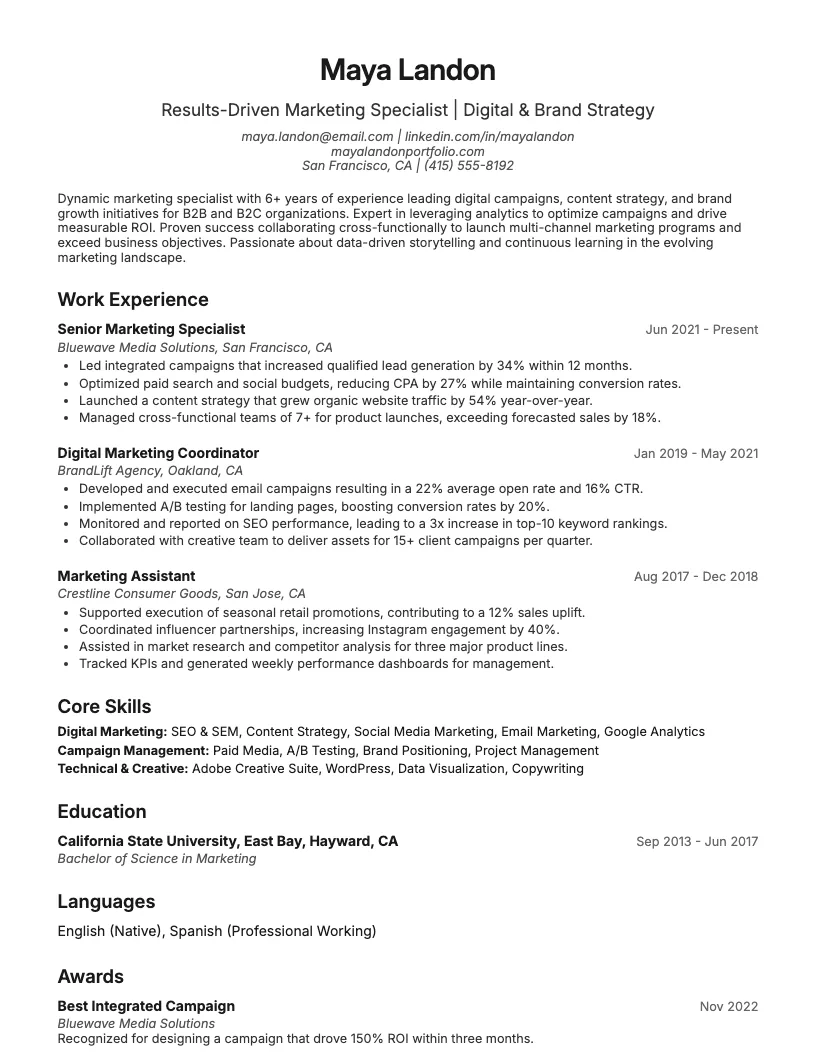
Read MoreSee these skills on a real resume
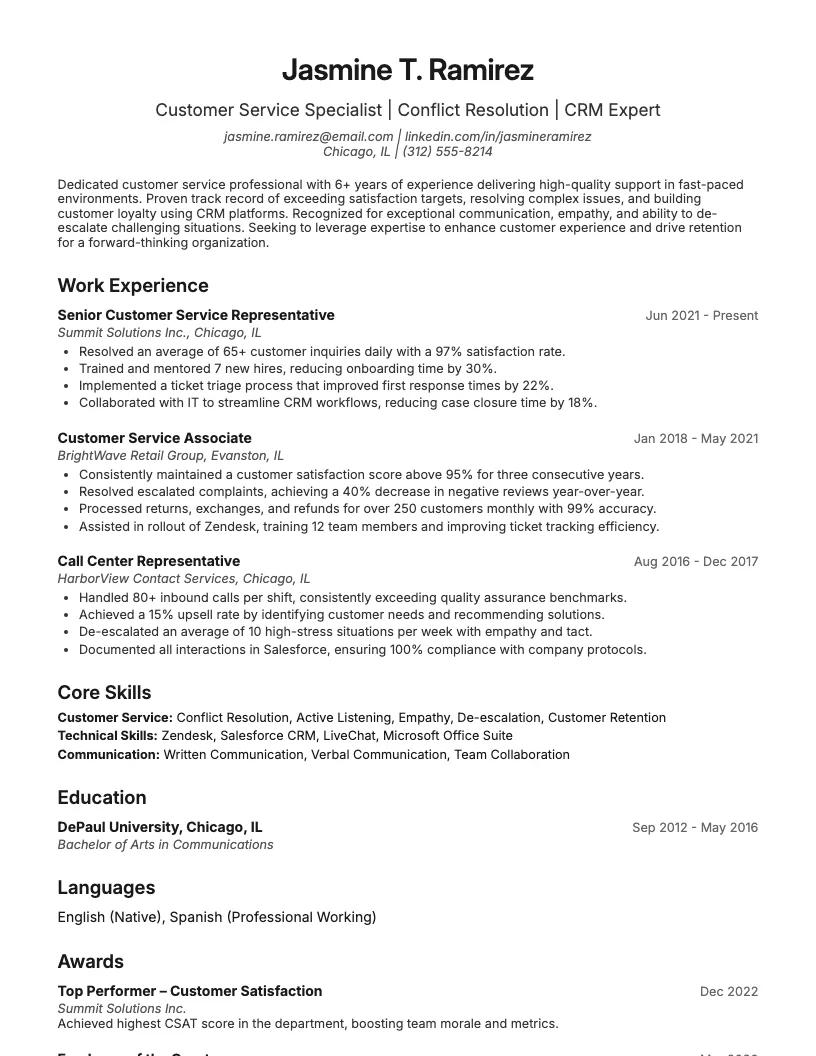
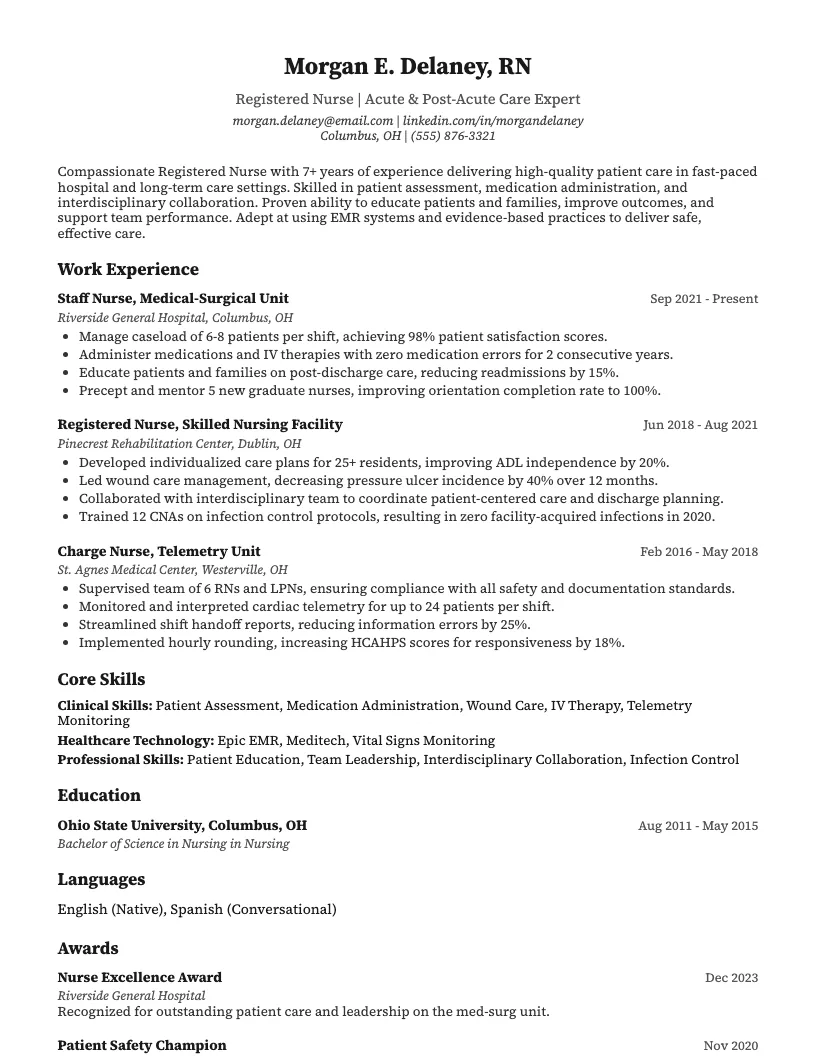
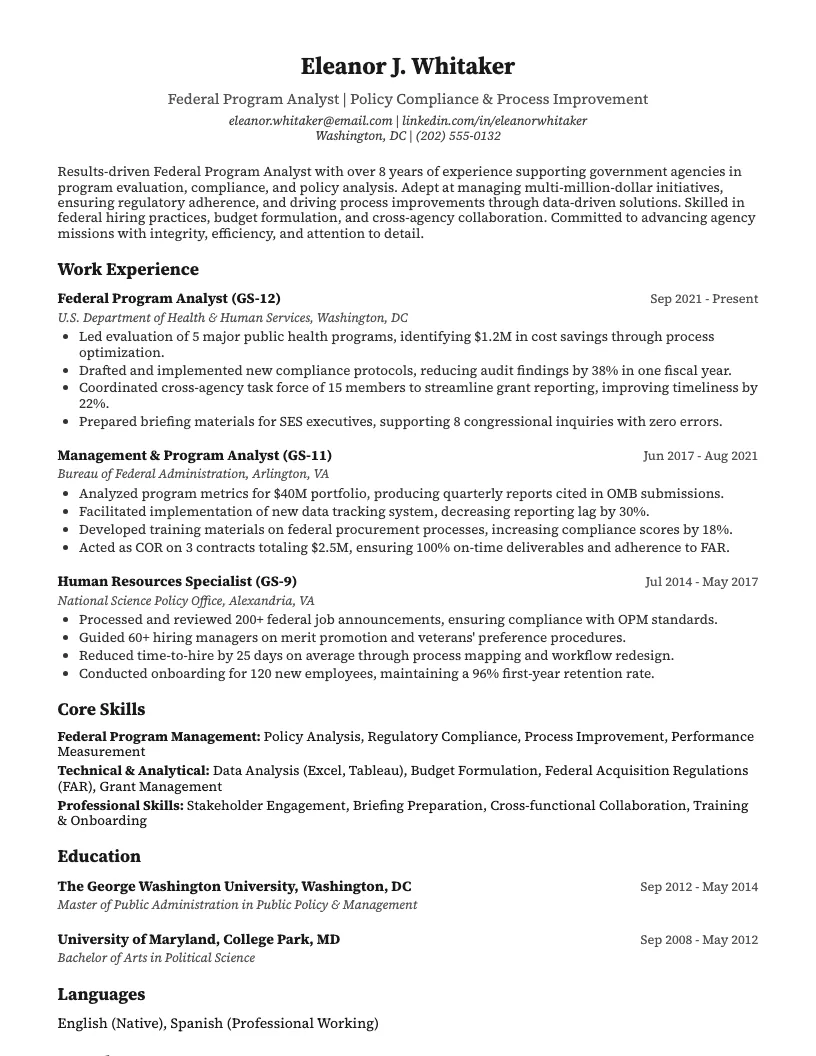
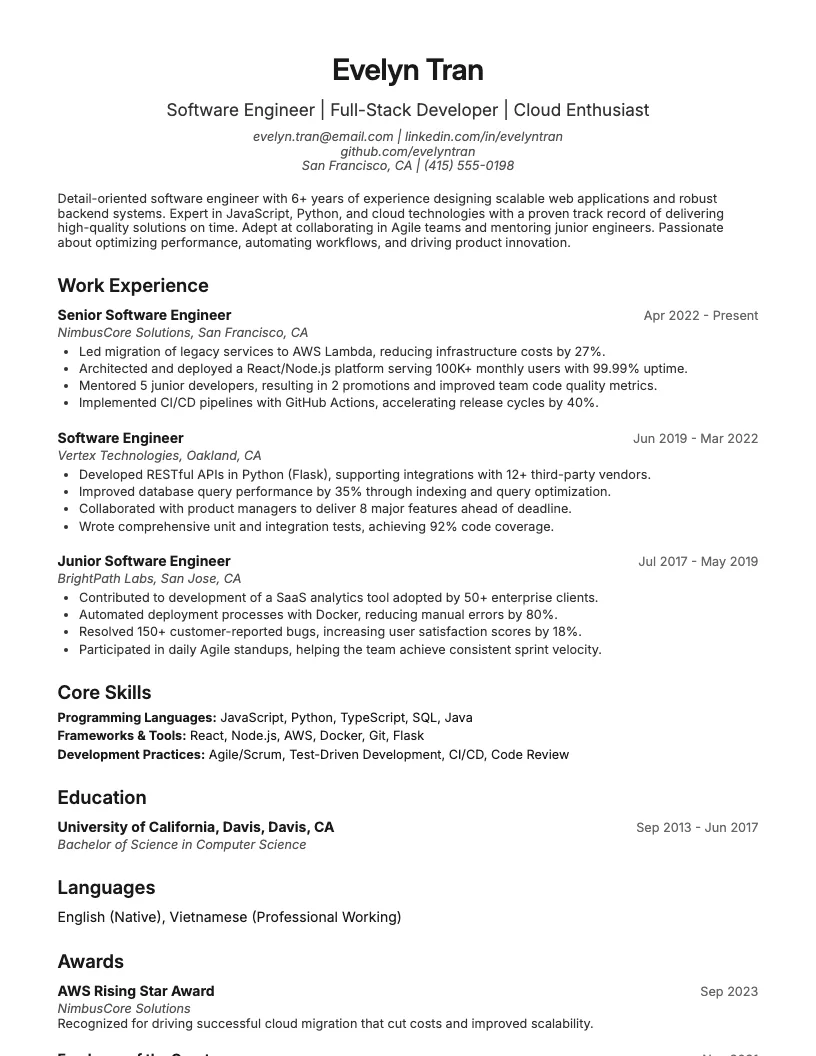
8 examplesStart from an example that already has them, and swap in your own.
Check your resume against the job you want
Scan your resume, see which skills and keywords the posting asks for that you are missing, and fix them before you apply.
Free to use • No credit card required