Words to Describe Yourself in an Interview: 21 Words, 7 Examples
21 words to describe yourself in an interview, grouped into 7 categories, plus 7 sample answers by career stage and the words that make you sound generic.


Written by Dr. Priya Sharma
Career Development Expert & Resume Analyst
Updated August 2026
Reviewed by Sarah Chen
Is your resume ATS-friendly?
Drop your resume in and see which of these skills a scanner can actually read, and which ones the job you want is asking for that you have not listed.
PDF or DOCX. Max 2MB.
We never share your resume or use it to train a model.
In This Guide:
How do you answer "describe yourself" in an interview?
How do you answer "describe yourself" in an interview?

I've watched candidates blow this one open-ended question more than almost any other. Here's the fix.
Pick a trait the job actually needs
Don't reach for a generic word. Read the posting, find the one or two traits it's actually asking for, and start there.
Say the trait, then prove it with one example
State the word, then back it with a real moment where it showed up and changed the outcome. A trait with no example behind it is just noise - I'd rather hear one solid story than five adjectives.
Checking a full list of traits against a posting - and rewriting your resume so the ones that match are already in it - is exactly what ResumeJudge does before you ever walk into the room.
Keep it to 60-90 seconds
Longer than that and you're not answering, you're rambling - and it reads as an inability to get to the point, whatever you actually said.
The word-context-example-result structure
Word, then the situation, then what you did, then the result. It's the same structure I'd use to choose the adjective in the first place, and it keeps you from freezing mid-answer.
Why do interviewers ask you to describe yourself?
They are checking you read the job description
Pick a trait that has nothing to do with the posting and it shows. I've watched candidates lead with "creative" for a compliance role - the interviewer's face tells you everything.
Match your word to what the job posting actually asks for, and this question stops being a trap.
They are testing whether the trait shows up as you speak
Say "confident" in a shaky voice and the interviewer trusts the voice, not the word. Say "organized" and ramble for three minutes with no structure, same problem.
The trait has to show up in how you answer, not just what you claim.
They are judging fit with the team
Every team has a working style already. A blunt, fast-moving sales floor and a careful, process-heavy finance team are listening for different things in the same question.
This is one reason it's worth checking your resume against the posting before you ever get to the interview - ResumeJudge will find the traits the job is actually asking for and rewrite your resume to use them, so you're not caught describing yourself as something the role doesn't need.
It sets the agenda for the rest of the interview
Whatever you lead with, the interviewer usually follows up on it. Nine times out of ten, your opening answer becomes their next two or three questions.
That's a chance to steer, not just a formality to get through - pick the trait you most want to talk about, because you probably will.
What are the different ways interviewers ask this question?
How the same question gets asked
| Phrasing | What it's really asking |
|---|---|
| Tell me about yourself | Walk through your role, a past win, and what's next |
| How would you describe yourself? | Lead with the trait, prove it fast |
| Describe yourself in three words | Three words covering different ground |
| Describe yourself in one word | The word, then keep talking |
| How would your boss describe you? | A word someone else has actually said about you |
| How would you describe your personality? | The trait as it shows up at work |
Same question, six different wrappers. Once you notice that, prepping gets a lot easier - you're not writing six answers, you're writing one and learning to bend it.
"Tell me about yourself"
This one's an invitation, not an essay prompt. I've seen candidates use the full two minutes on their life story and lose the interviewer by minute one.
Work in two or three of your traits naturally as you walk through present role, a past win, and what you're after next.
"How would you describe yourself?"
More direct than "tell me about yourself," and it wants fewer words. Lead with the trait, back it with a line of proof, done.
"Describe yourself in three words"
They want three, not one padded out three times. How to pick a set that covers different ground is in how do you describe yourself in three words.
"Describe yourself in one word"
The one-word version is a trap if you treat it as the whole answer. See what to say if they ask for only one word.
"How would your boss or coworkers describe you?"
This is a check on whether you're self-aware or just reciting a script. Use something a manager has actually said about you, not your own guess at what sounds good.
"How would you describe your personality?"
Broader than the others, but don't drift into a personality-test answer. Bring it back to how that personality shows up at work - a trait plus a moment it mattered, same as everywhere else on this page.
Running your three words against the actual posting first, which is what ResumeJudge is built for, pulls the exact words this employer wants to hear and puts them into your resume.
What are the best words to describe yourself in an interview?
I've read enough of these lists to know most of them are just lists - words with no home. Here's the same set, grouped by what each one actually proves, so you can grab the one that matches the story you're about to tell.
Work ethic: diligent, dedicated, accountable
Reach for these when the role rewards consistency more than flash. Diligent works best paired with a time you caught something others missed. Accountable lands when you can describe owning a mistake and fixing it, not just hitting deadlines.
Problem solving: resourceful, analytical, methodical
Resourceful is my favorite of the three - interviewers remember a story about scrambling to fix something more than a claim about being smart. Analytical and methodical suit roles built around process, not improvisation.
Communication: articulate, personable, diplomatic
Pick diplomatic if your example involves disagreement you smoothed over, not just a presentation you gave well. Personable fits customer-facing work; articulate fits anywhere you have to explain something complicated simply.
Teamwork: collaborative, supportive, dependable
Dependable is underused and it shouldn't be - it's what most managers actually want from a hire. Collaborative and supportive both need a specific person or project attached, or they read as filler.
Leadership: decisive, mentoring, empowering
You don't need a title to earn these. Mentoring covers showing one person the ropes; decisive covers a call you made when nobody else would.
Learning and adaptability: coachable, resilient, curious
Coachable is the word career changers should reach for first - it tells the interviewer you know what you don't know yet, which lands better than pretending you don't have gaps.
Technical: proficient, meticulous, certified
These only work with a name attached - the tool, the certification, the standard you were meticulous about. Before the interview, check your resume against the actual posting so the technical words you say out loud match what's already on the page; that's the kind of gap ResumeJudge is built to catch and fix.
Once you've got a shortlist from these seven groups, the next step is matching one to the actual job instead of just picking your favorite.
Which adjective should you choose for your job?
Words by industry
| Industry | Words to use |
|---|---|
| Healthcare | Compassionate, patient-focused, thorough, empathetic |
| Tech and engineering | Innovative, analytical, agile, solution-oriented |
| Finance and accounting | Meticulous, precise, strategic, compliance-focused |
| Sales and customer service | Reliable, attentive, results-driven, problem-solver |
| Creative and marketing | Imaginative, dynamic, visionary, adaptable |
There's no single "best" word. The one that lands is the one that matches what the posting is actually asking for.
I've reviewed resumes across every field, and the pattern holds everywhere: candidates who mirror the job's own language get remembered. Candidates who reach for generic praise don't.
Pull the words out of the job posting
Read the posting twice and circle the traits it repeats, not just the skills.
If it says "data-driven decision making," say "analytical" or "data-driven" back to them - not "smart." Applicant tracking systems and the humans behind them are both scanning for their own words, so give them back.
ResumeJudge will pull the exact skills and phrases a posting expects and flag which ones your resume is missing, which is a fast way to check your list before the interview.
Healthcare
Lean on compassionate, patient-focused, thorough, and empathetic. Anything that shows you notice the person, not just the chart.
Tech and engineering
Innovative, analytical, agile, and solution-oriented do the work here. Engineering managers want to hear you think in systems.
Finance and accounting
Meticulous, precise, strategic, compliance-focused. These roles reward people who catch what others miss - say so.
Sales and customer service
Reliable, attentive, results-driven, a problem-solver under pressure. Numbers help more than adjectives here, so pair the word with one.
Creative and marketing
Imaginative, dynamic, visionary, adaptable. This is the one field where a little flair in the word choice itself is welcome.
Match the tone of the company too
Industry gets you the right category of word. Company culture picks the register.
A startup wants "scrappy" or "energetic." A hundred-year-old firm wants "diligent" or "disciplined."
Same trait, different word - and whichever you pick still needs proof behind it, not just the label.
What does a good answer sound like?
Reading advice is one thing. Hearing a full answer is another - so here's what it actually sounds like at each stage of a career, word, context, example, result, in that order.
Notice none of these run longer than about 90 seconds spoken out loud. That's the target.
Sample answer: entry-level candidate
"I'd describe myself as curious and coachable. In my last internship I asked to sit in on client calls I wasn't assigned to, just to learn how the account team handled objections.
Within a few weeks I was drafting the follow-up emails myself."
No years of experience needed - just proof you go looking for more than what's asked.
Sample answer: career changer
"I'd call myself adaptable and quick to learn. I spent six weeks doing certifications while still working my old job, then ran a small business's social media from scratch in my first month here, growing followers by 200%."
The number is doing the heavy lifting - it tells the interviewer the new skills already work.
Sample answer: mid-career professional
"I'm resourceful and collaborative. When our team lost a vendor mid-project, I pulled together a replacement workflow in two days instead of the two weeks it would normally take, and looped in three other departments so nobody was blindsided."
Sample answer: senior or leadership role
"I'd say I'm decisive and empowering. I led a team of five through a tool migration, and rather than making every call myself, I let each person own their piece - we hit the deadline with zero rework."
Before you say the words out loud, run your three-word set against the actual job posting - ResumeJudge will flag which ones the listing is actually asking for versus which just sound good.
Sample answer: customer-facing role
"I'm a people person - I like figuring out what's actually bothering a customer, not just the surface complaint. I once talked a client out of cancelling by finding the one feature they didn't know they had access to."
Sample answer: technical role
"I'm methodical and meticulous. I worked in QA for six years before moving into engineering, so I still test my own code like someone's going to try to break it - it's saved my team from three bad releases this year alone."
How do you describe yourself in three words?
How do you describe yourself in three words?
Pick three words that cover different strengths
Don't pick three flavors of the same trait. "Driven, ambitious, motivated" is one idea said three times.
I tell people to cover different ground: one about how you work, one about how you think, one about how you deal with people. Something like organized, analytical, and personable does more work than three synonyms ever will.
Give one line of proof per word
Each word gets a few seconds of backup, not a story. Say the word, then the one thing that makes it true.
"Detail-oriented" on its own is a claim anyone can make. Attach a number - caught an error before it cost the company money, improved accuracy by 30% - and it stops being a claim.
If you're not sure your resume backs up the words you'd say out loud, running it against the job posting in ResumeJudge will rewrite the bullets that don't, so the ones you say out loud actually hold up.
Three-word answers by career stage
What you lead with should shift as your career does.
Early on, lean on curious, organized, coachable - you're selling potential. Mid-career, resourceful, collaborative, analytical says you can be handed a problem and trusted with it.
Leading a team, visionary, decisive, empowering fits better than anything about being a hard worker.
Sample three-word answer
"Creative, reliable, and diligent - creative because I find the workaround when the obvious fix doesn't exist, reliable because my manager never had to double-check my deadlines, diligent because I read specs twice before I write a line of code."
What to say if they ask for only one word
Give the word, then don't stop there. A single word with no follow-up sounds like you ran out of things to say.
Pick your strongest one - resourceful, meticulous, dependable - and use the extra ten seconds to explain it in a sentence, the same way you would in one sentence.
Which words should you avoid?
Some words do more harm than help. I've seen every one of these in an interview answer, and they all land flat.
"Hard worker" with nothing behind it
It's the most common word I hear, and the least convincing. Everyone says it, so it tells the interviewer nothing about you specifically.
If you want to keep it, attach a number: hours saved, a deadline you never missed, a project you carried alone.
"Team player"
Same problem. It's a claim, not evidence, and interviewers have heard it in every single interview they've run this month.
Say what you actually did on the team instead - covered a colleague's shift, ran the handoff meeting, caught another person's mistake before it shipped.
"Go-getter", "rockstar", "guru"
These read as marketing copy, not self-description. I've never once heard an interviewer write one down as a positive.
They also date you - they were fine ten years ago and now they mostly signal you haven't updated your language.
"Perfectionist" and "workaholic"
Both sound like strengths and both are actually warnings. A perfectionist misses deadlines chasing polish nobody asked for; a workaholic burns out and takes the team's timeline down with them.
If either is true of you, reframe it around the outcome - thorough, or reliable under deadline - and prove that instead.
Anything negative: shy, anxious, stressed
Keep the whole answer positive. This isn't the moment for self-deprecation or naming what you struggle with - save that for the weakness question if it comes up.
Any word you cannot back with an example
This is the real rule behind every word above, and it is the same point as say the trait, then prove it.
Before the interview, run your resume against the job posting - ResumeJudge will rewrite any claim on there you haven't actually backed up with proof, which is exactly what an interviewer is listening for.
How do you practise and deliver the answer?
How do you practise and deliver the answer?
Write it out, then cut it to two sentences plus an example
Write your full answer first, then cut it hard. Two sentences and one example is the whole thing - the trait, the reason, the proof. Anything past that is padding you'll trip over live, so if you can't say it in 60-90 seconds, it's still too long.
Say it out loud and time it
Reading it silently tells you nothing. Say it out loud, phone timer running, and you'll usually find you're 20 seconds over on the first try. Cut a clause, say it again. Three or four passes and it starts to sound like you, not a script.
Ask a colleague how they would describe you
Ask someone who's actually worked with you how they'd describe you. Nine times out of ten they'll hand you a word you wouldn't have picked yourself, and it's usually more convincing than the one you were about to use, because you didn't have to talk yourself into it.
Sound confident without sounding arrogant
State the trait plainly and back it with the example - that's confidence. Claiming you're the best the company will ever hire is arrogance. Own what you've done, then stay open: you're still learning the role, not arriving as the finished article.
Show the trait while you say it
If you're describing yourself as clear and organized, say it in a clear, organized way. If warmth is the word, let your tone carry it. Interviewers read your delivery as much as your words, so a flat voice undercuts a strong answer every time.
Check if they want more before carrying on
Finish your answer, then pause. If the room's quiet, ask "want me to go into more detail, or does that cover it?" It beats guessing and rambling on past the point where you'd already made your case.
Should the words match your resume?
Is your resume good enough?
Drop your resume in and see which of these skills a scanner can read, and which ones the job you want is asking for that you have not listed.
Upload your resumeFree. PDF or DOCX. We never share your resume or use it to train a model.
Yes, and I'd go further: they should match on purpose.
If you tell an interviewer you're "resourceful" and your resume never once shows it, the two versions of you don't line up. Recruiters notice.
So does the applicant tracking system that screened you in the first place.
Use the same words in your resume summary
Take whatever word you picked for your answer and put it in your summary line too.
"Resourceful operations manager who cut vendor costs 18% in a year" does more work than a bare adjective, and it plants the word before you ever walk in.
Put the proof in your work history bullets
Proving a trait in a work history bullet
Resourceful and reliable team member
Developed a retention program that cut customer churn by 25%
The word alone isn't the goal - a bullet that shows it in action is. Weave it into an achievement line instead of listing it as a trait: "developed a retention program that cut churn 25%" says resourceful without ever using the word.
If you're not sure your bullets back up the words you're choosing, run the resume against the job posting in ResumeJudge - it'll rewrite the bullet so the claim has proof behind it.
Keep the wording consistent so you sound prepared
Nine times out of ten, the candidates who sound rehearsed in a good way are the ones whose resume, cover letter, and spoken answer all use the same two or three words.
Adapt the delivery - concise on paper, told as a story out loud - but don't swap the vocabulary between formats. Consistency reads as clarity, not repetition.
Frequently Asked Questions
How long should my answer be?
Keep it to about 60 to 90 seconds, or two to three sentences per trait. State the word, back it with one specific example, and stop talking. Rambling past that point makes interviewers doubt your ability to communicate clearly, even if what you're saying is good.
What if I have no work experience?
Pull your words from school projects, clubs, volunteering, or a part-time job instead of a career - words like quick-learning, resourceful, or dependable work fine without years on a resume behind them. Pair each one with something concrete you did, like organizing an event or picking up a new tool fast. If you're not sure which of your skills actually match what the job wants, checking your resume against the posting on ResumeJudge will show you the gaps before the interview does.
Is it okay to use the same three words in every interview?
No - the words should shift with the job description and the company, even if your underlying strengths stay the same. A word like 'analytical' means something different at a startup than at a bank, so pick the version of your strengths that matches what the posting is actually asking for. ResumeJudge can show you which skills and keywords a specific posting is looking for, which makes it easier to pick words that actually fit.
What do I say if I'm asked how others would describe me?
Cite something a manager or colleague has actually said about you, not a guess at what they'd say. The subsection on [how would your boss or coworkers describe you](#how-would-your-boss-or-coworkers-describe-you) covers this phrasing in full.
Can I mention something from outside work?
Yes, briefly - a hobby or outside interest can make your answer memorable as long as it ties back to a trait the employer cares about. Running marathons can back up 'disciplined,' and coaching a kids' team can back up 'patient' or 'a good communicator.' Keep it to one line; it's a supporting detail, not the main point of your answer.
What if I freeze and forget my words?
Pause, take a breath, and fall back to just one word with one example instead of trying to recover the full list. Interviewers care far more about a clear, honest answer than a rehearsed one, so it's fine to say 'give me a second to think' before you answer. If you genuinely lose the thread, ask whether they'd like more detail or a different angle - that's a better recovery than talking your way through a blank.
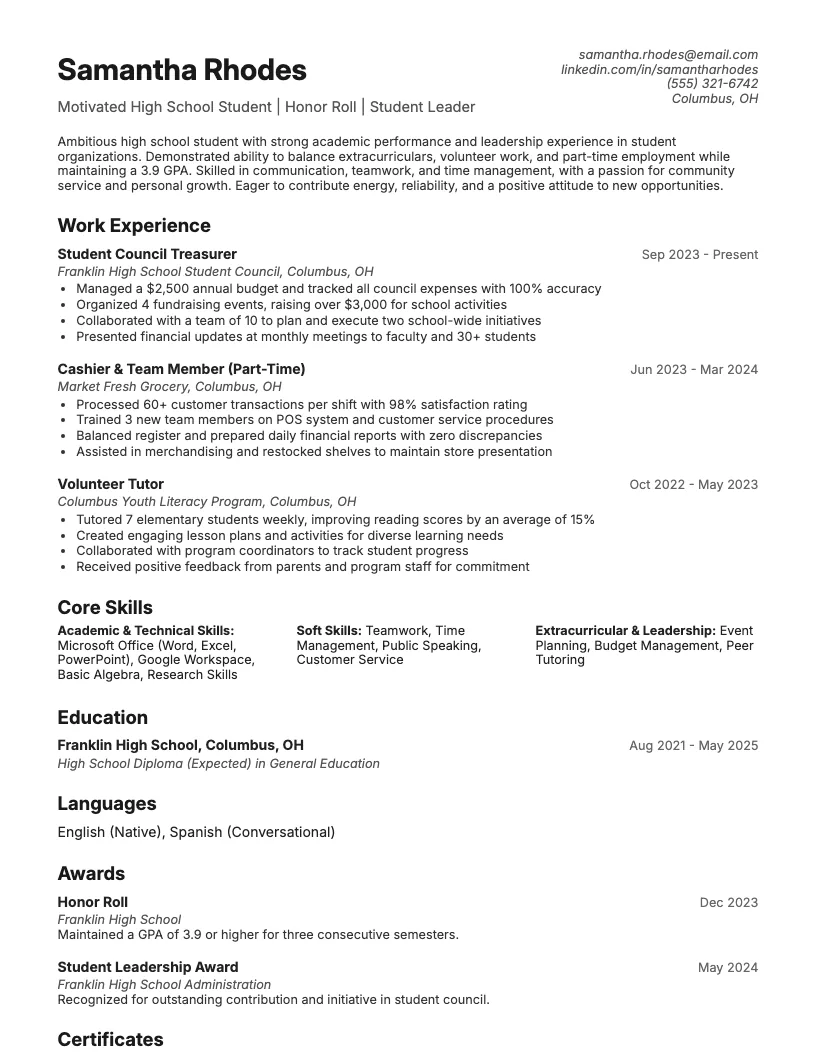
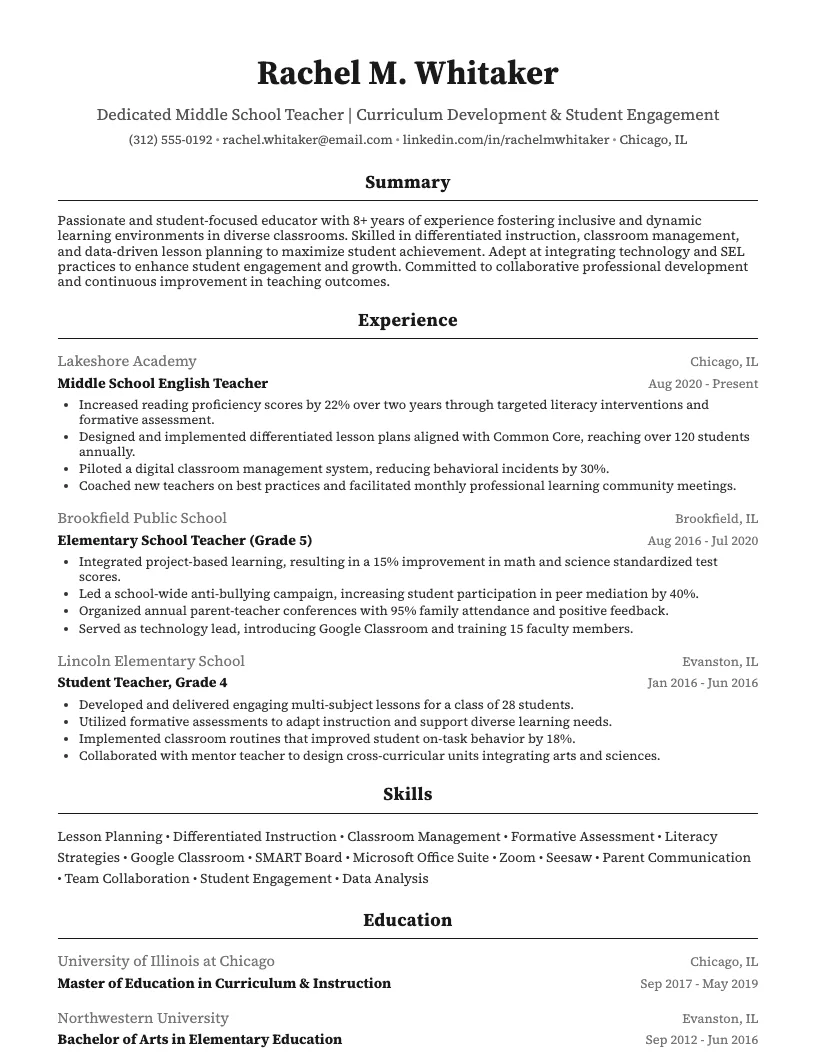
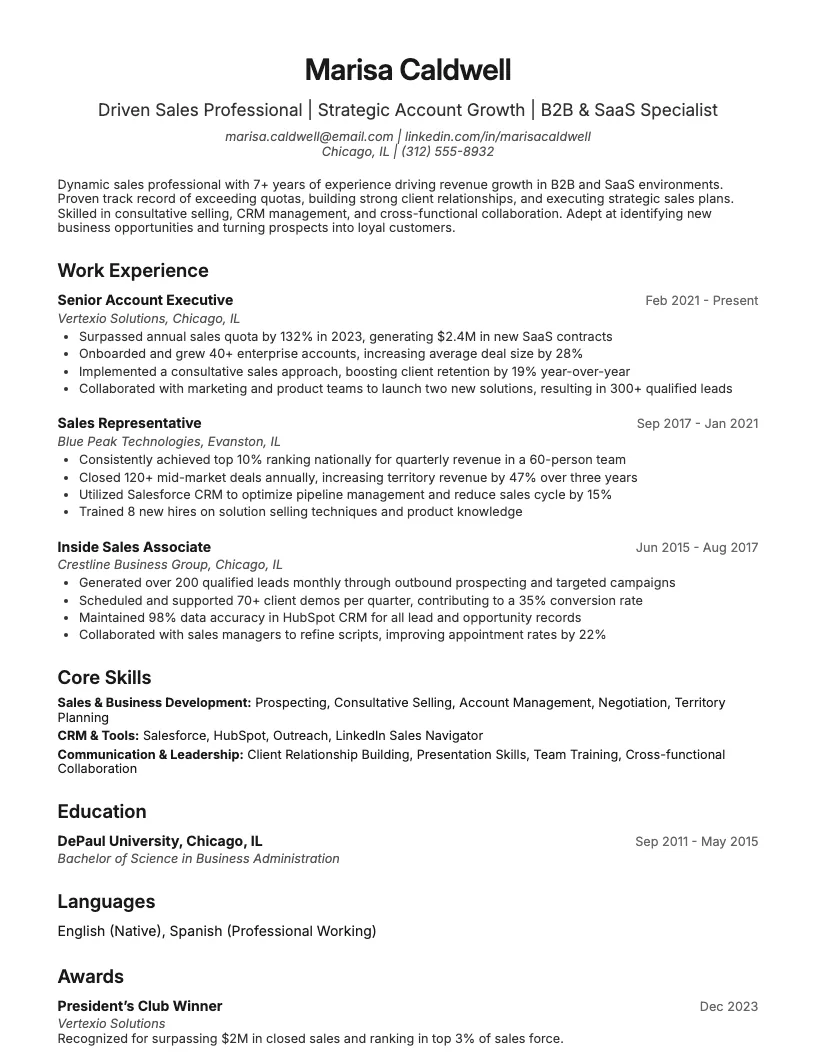
See these skills on a real resume
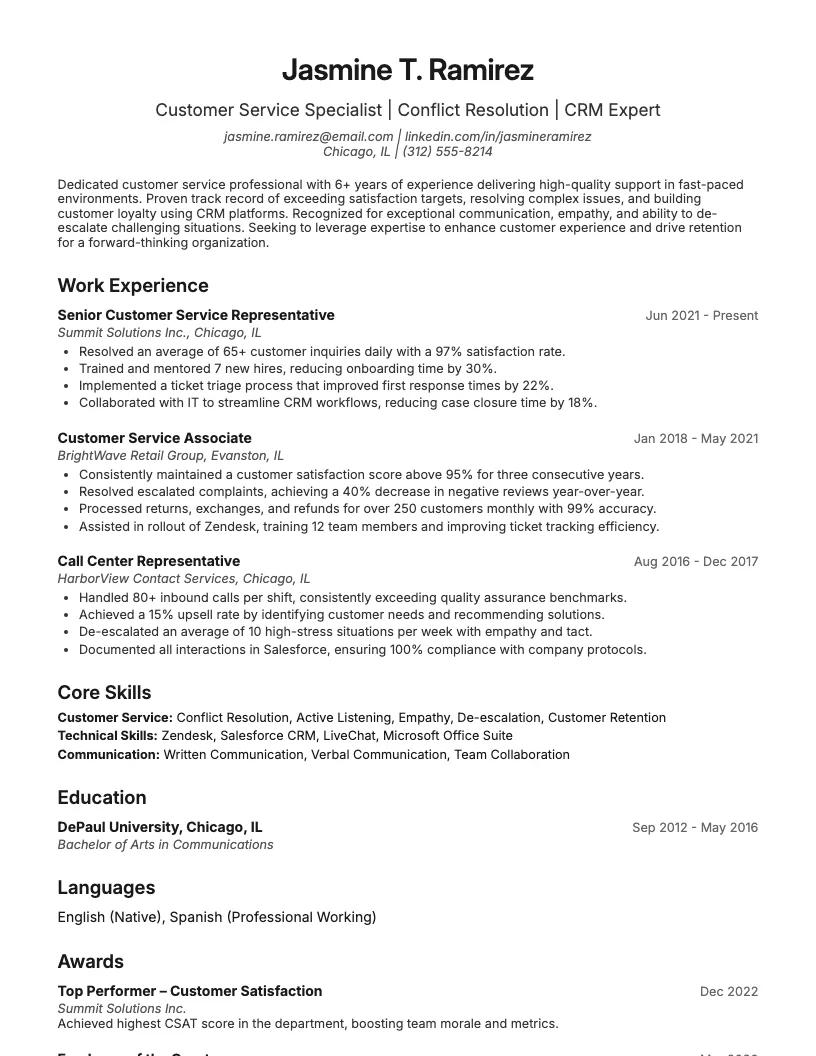
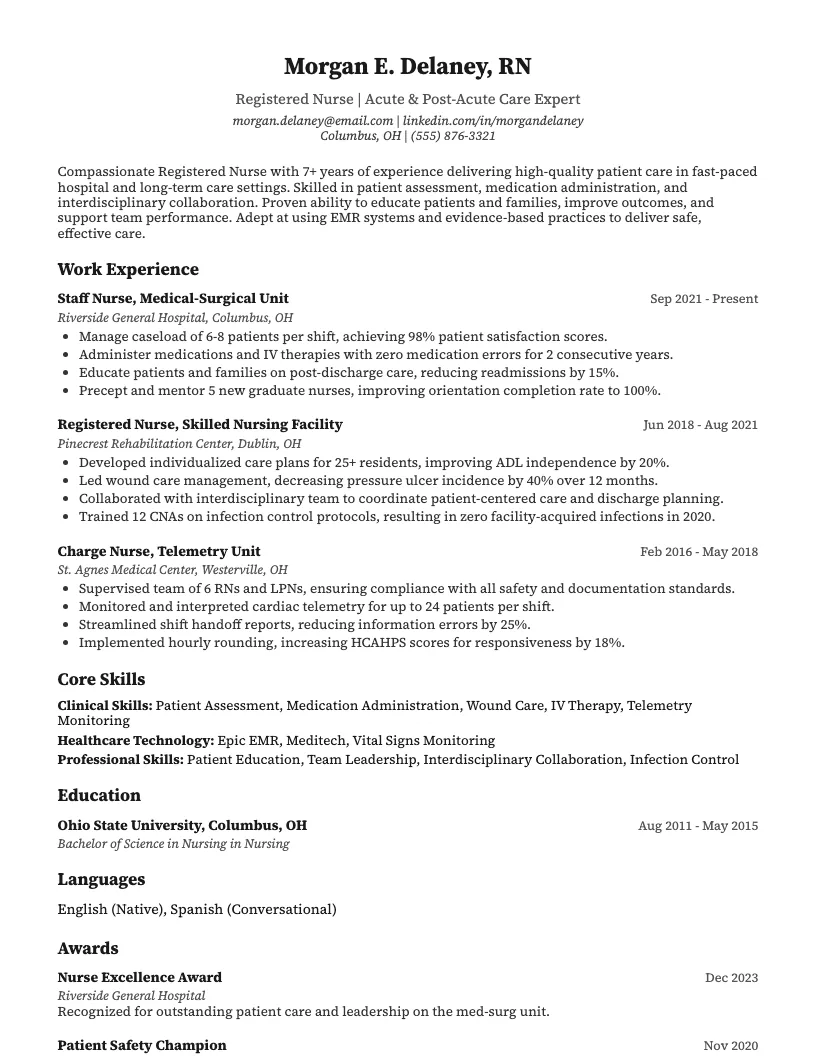
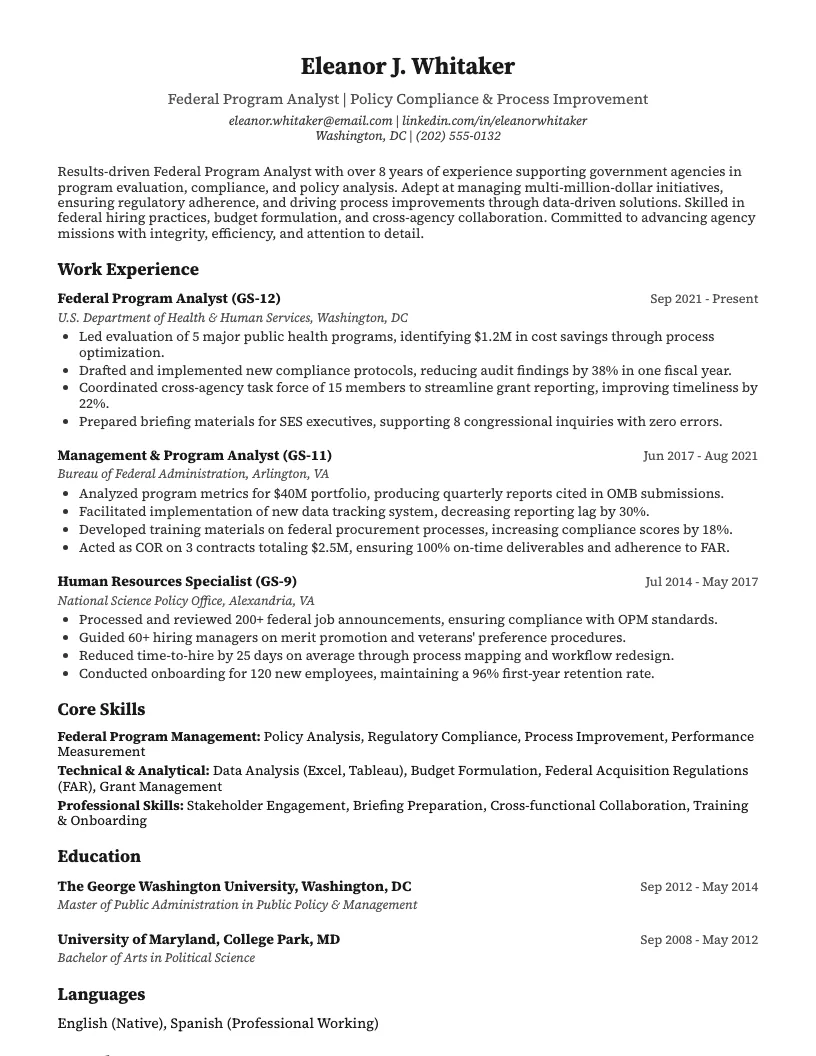
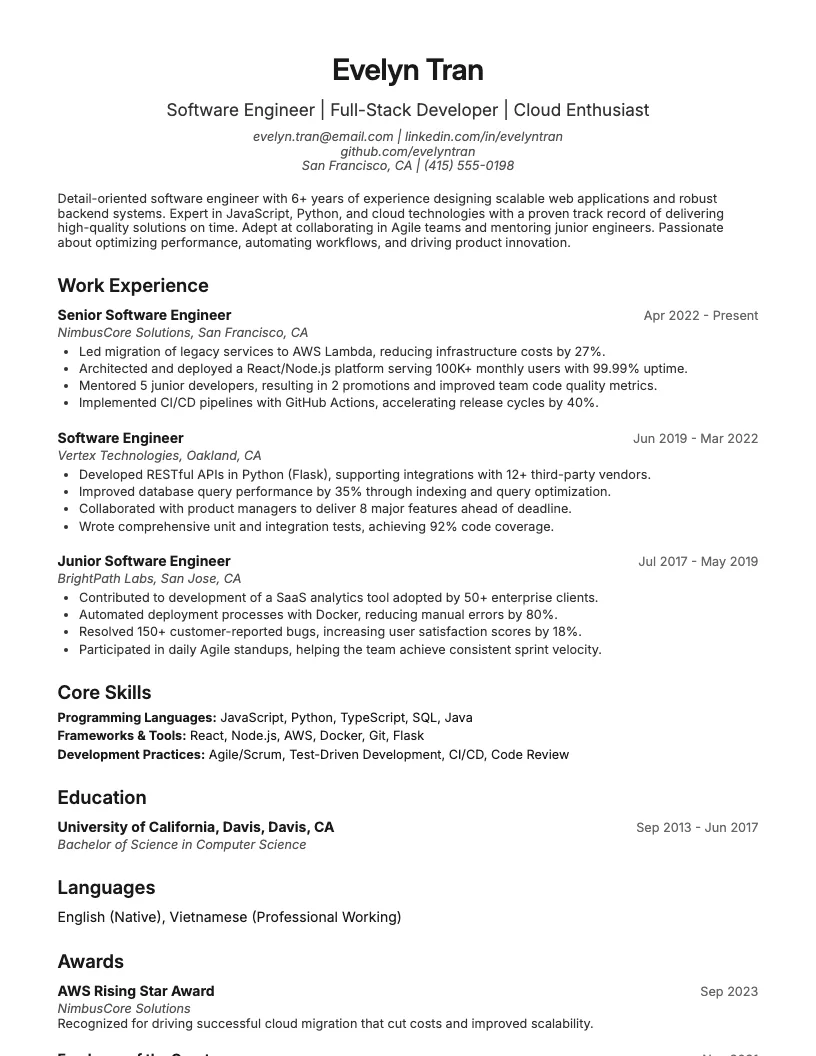
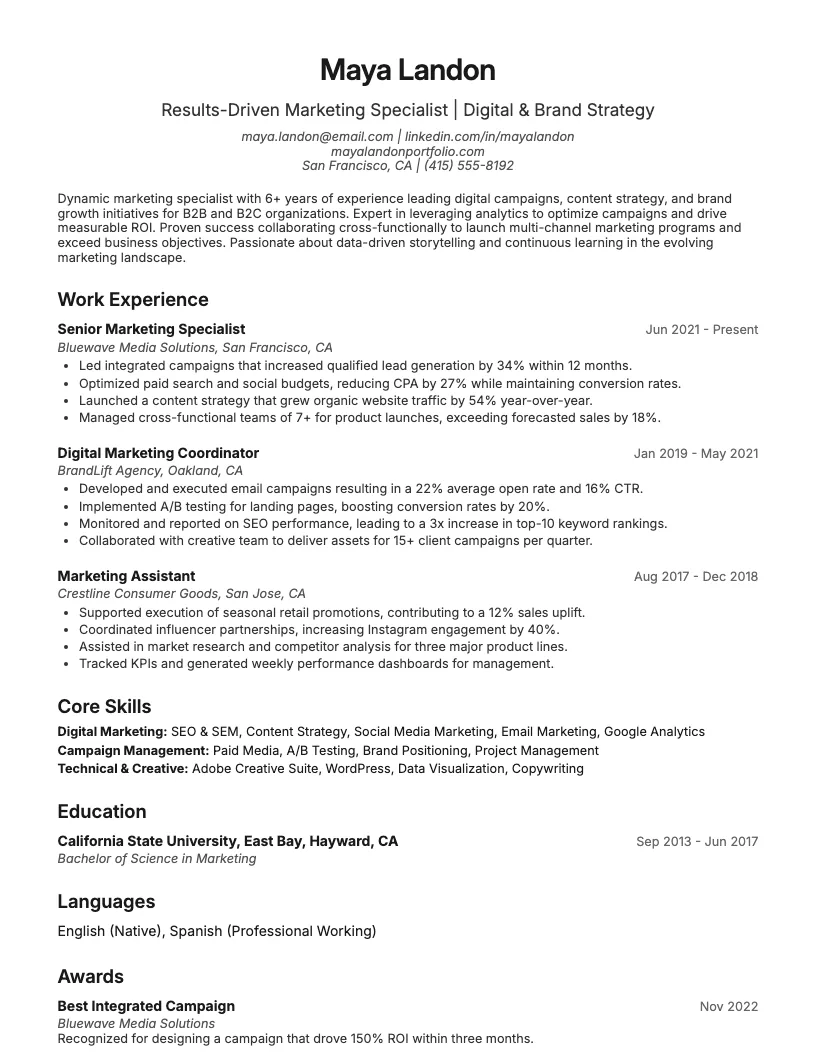
8 examplesStart from an example that already has them, and swap in your own.
Check your resume against the job you want
Scan your resume, see which skills and keywords the posting asks for that you are missing, and fix them before you apply.
Free to use • No credit card required