 ResumeJudge
Describe Yourself in One Word: 5 Strong Picks (and 3 to Avoid)
5 words that actually prove something in an interview, 3 that get overused (hardworking, passionate, perfectionist), and a 3-step test to find your own word.


Written by Marcus Rodriguez
ATS Optimization Specialist & Career Coach
Updated August 2026
Reviewed by Dr. Priya Sharma
Is your resume ATS-friendly?
Drop your resume in and see which of these skills a scanner can actually read, and which ones the job you want is asking for that you have not listed.
PDF or DOCX. Max 2MB.
We never share your resume or use it to train a model.
In This Guide:
How do you describe yourself in one word?
Someone asks you to describe yourself in one word, and your mind goes blank.
That's the point of the question. It's not really testing your vocabulary - it's testing whether you can cut a resume's worth of experience down to the one trait that matters most for this job.
I've watched this answer go wrong more times than I can count. People reach for the word that sounds impressive instead of the word that's actually true and provable.
The fix is a three-step process, not a brainstorm.
Step 1: Write down the word other people already use about you
Don't start with a thesaurus. Start with a memory.
Think back to the last performance review, the last thank-you note from a manager, the last time a coworker asked you specifically to take something on. What word did they use?
Write down every word you can remember, even the plain ones. "Reliable" and "organized" show up in real feedback far more often than "dynamic" ever does - and that's exactly why they carry more weight.
They sound earned, not chosen.
Step 2: Cross out any word the job posting doesn't ask for
Now put your list next to the job posting.
A word is only useful in an interview if it maps to something the employer actually needs. If the posting talks about deadlines, ownership, and process, "creative" isn't going to land, even if it's true about you.
This is the step people skip, and it's the one that matters most. I'd rather see someone walk in with "organized" backed by a real habit than "innovative" backed by nothing the posting asked for.
If you're not sure which words a specific posting is actually looking for, checking your resume against it directly is faster than guessing - ResumeJudge reads the posting and flags the exact skills and words it's looking for that your resume doesn't cover yet, so you know what to cross off before you're in the room.
Cross off anything that doesn't connect. You should be left with two or three words, not ten.
Step 3: Keep the word you have a real story for
Of what's left, pick the one you can back up in under thirty seconds.
Not a job title, not a list of duties - a specific moment where that trait actually did something. "Organized" on its own means nothing.
"Organized" attached to a system you built that cleared a backlog is a word an interviewer remembers.
If you can't tell a short story for a word, it's not your word yet, no matter how well it fits the posting.
Driven
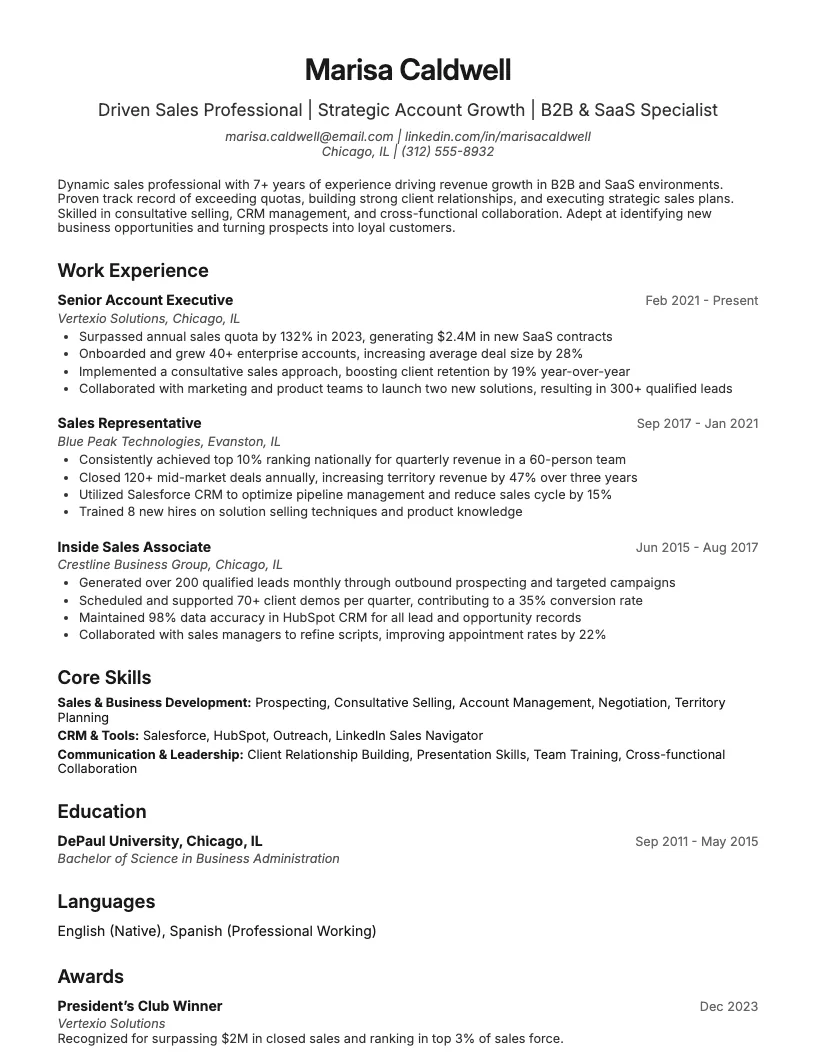
"Driven" says you set a target and hit it without needing to be pushed. It fits sales, project work, and anything measured in outcomes rather than hours logged.
The strongest resumes don't stop at the word - they attach a number to it, something like sales growing 50% inside a single quarter. That's what turns "driven" from a claim into evidence.
Adaptable
"Adaptable" says you don't fall apart when the plan changes. It's the right word for roles where the tools, team, or priorities shift often - customer-facing work, fast-growing teams, anywhere the ground moves under you.
The story that proves it is usually about a change you didn't choose - a new system, a new manager, a new process - and what you did in the first few weeks after it landed.
Organized
A skills-section line using 'organized'
Organized
Organized: built a tracking system that cut backlog time by 15%.
"Organized" is the most undersold word on this list. Nine times out of ten, the resume that gets called "detail-oriented" in an interview is the one where the numbers are clean and the timeline makes sense at a glance.
Prove it with process, not personality - a tracking system you built, a backlog you cleared, output that went up 15% once you changed how the work moved. A modest percentage gain reads as more credible than "very organized" ever will.
Dependable
"Dependable" doesn't sound exciting, which is exactly why it works. Every hiring manager I've talked to has a story about a hire who was talented and unreliable, and they remember it longer than any success story.
The proof here is almost always ownership under normal pressure, not a crisis - a team of five whose work landed on time, every time, under your watch. That's a stronger line than any adjective.
Resourceful
If they ask for the story on the spot, stick to one decision and its result. A story with three scenes loses the room before you get to the payoff.
"Resourceful" says you get to the answer even when nobody hands you one. It's the word for roles with a lot of ambiguity - early-stage teams, small companies, jobs where the manual doesn't exist yet.
The best story for this word is usually the smallest one: a problem nobody had solved, a workaround you found without being told to look for it, a result you got with less time or budget than the job normally allows.
Words to skip: hardworking, passionate, perfectionist
These three show up on almost every list of self-descriptors, and that's the problem - they've been said so often they've stopped meaning anything.
"Hardworking" describes effort, not results, and every candidate claims it. "Passionate" is a feeling, not a skill, and it's nearly impossible to prove in thirty seconds.
"Perfectionist" is worse - most interviewers hear it as a rehearsed dodge to "what's your biggest weakness," not a real trait.
If one of these is genuinely the truest word for you, don't lead with the label. Lead with what it produces.
Once you've settled on the honest version of the word, the next question is usually what you do when they don't want just one - more than one word covers two, four, six, and a full sentence.
What do you say when they ask for more than one word?
How the answer changes as the count goes up
| Format | What it should look like | Common trap |
|---|---|---|
| Two words | One hard trait + one soft skill | Two words that mean the same thing |
| Four words | Four separate proof points | Stacking virtue words |
| Six words | Six different strengths | Two words that could swap for each other |
| One sentence | Role + trait + result | Skipping the real result |
| 100 words | Summary + one number + what's next | Cramming in six adjectives |
Once you're past the one-word icebreaker, most postings and interviewers ask for more. The rule doesn't change: pull from the words you already tested against the posting, just at a longer count.
Two words
Two words to describe yourself works best as one hard trait and one soft skill, not two adjectives that mean the same thing. "Detail-oriented and resourceful" tells a hiring manager two different things about how you work.
"Driven and motivated" tells them one thing twice.
Four words
I've watched people answer "4 words to describe yourself" the way strangers answer it for fun online, stacking up virtue words like honest, reliable, and friendly until none of them says anything specific. For a resume or an interview, four words should read like four separate proof points, each one something you could back up with a sentence if asked.
Confident, organized, resourceful, and dependable works because no two of them overlap.
Six words
Six words to describe yourself is close to the six-word memoir format, and the trap is the same one: people list near-synonyms because they're reaching, not because each word earns its place. If two of your six could swap for each other, you've really only picked five.
I'd rather see six words that cover six different strengths than six ways of saying "hard worker."
One sentence
A one-sentence self-description
I'm a hardworking and passionate professional who works well in a team.
I'm a detail-oriented project coordinator who cut turnaround time on client reports by managing a tighter review process.
Describing yourself in one sentence for an interview follows a pattern I see work over and over: name the role, add a trait, then close on a real result. The trait comes from your list, the result comes from your resume, and the middle is where you check the sentence against the actual posting.
100 words
A hundred-word answer is really a short professional summary: two or three sentences on what you do and how you do it, one line with a number in it, and a closing line on what you're looking for next. Don't try to fit six adjectives in here - one or two, backed by the achievement, beats a list.
If you're drafting this alongside an actual application, that same paragraph is most of the opening of a cover letter, which is one of the things ResumeJudge writes for you once the resume side is done.
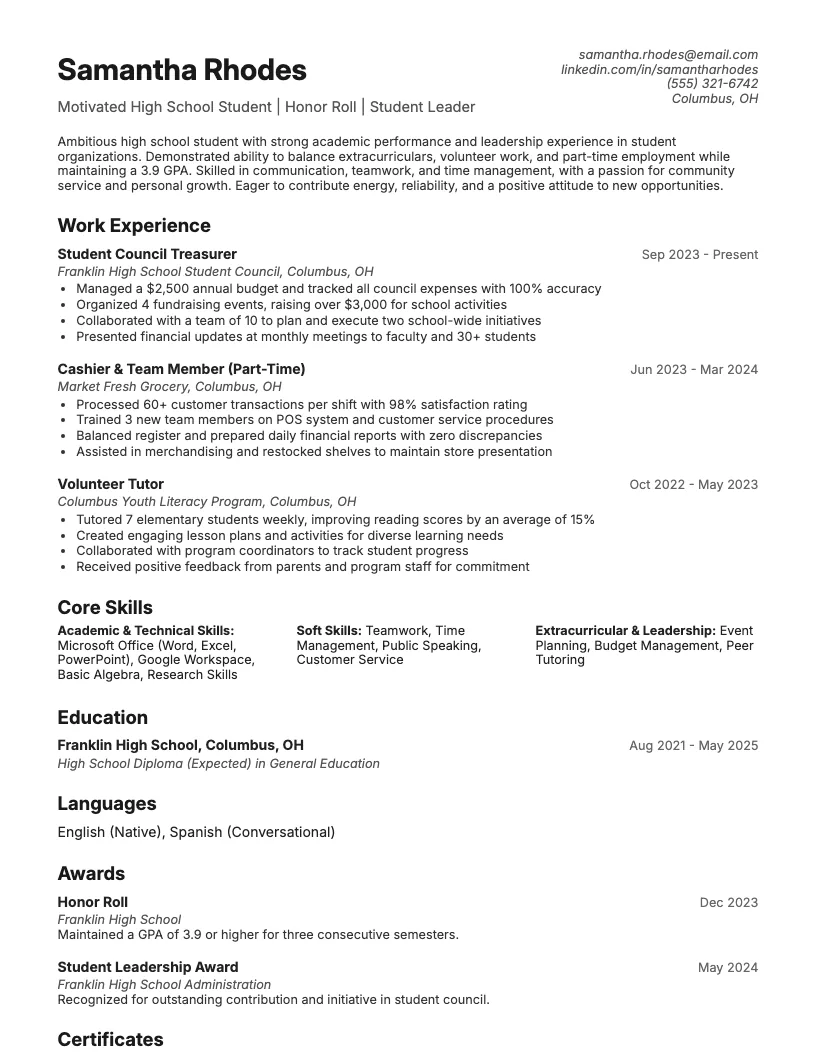
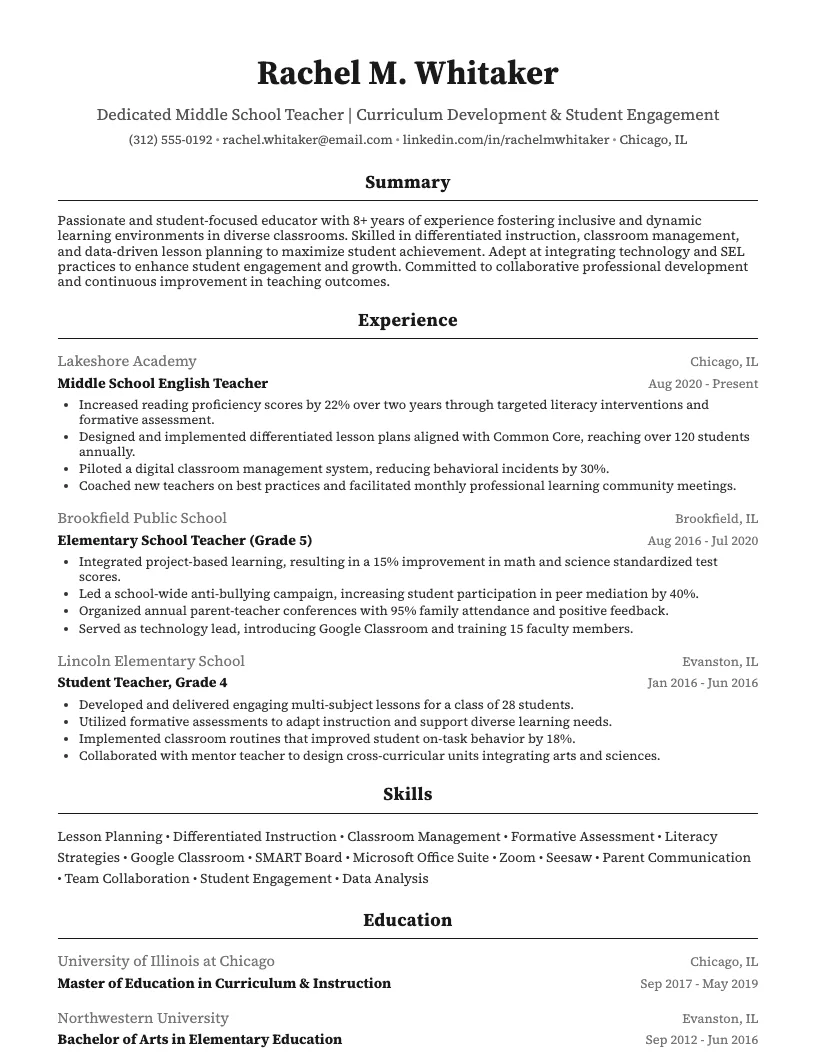
See these skills on a real resume
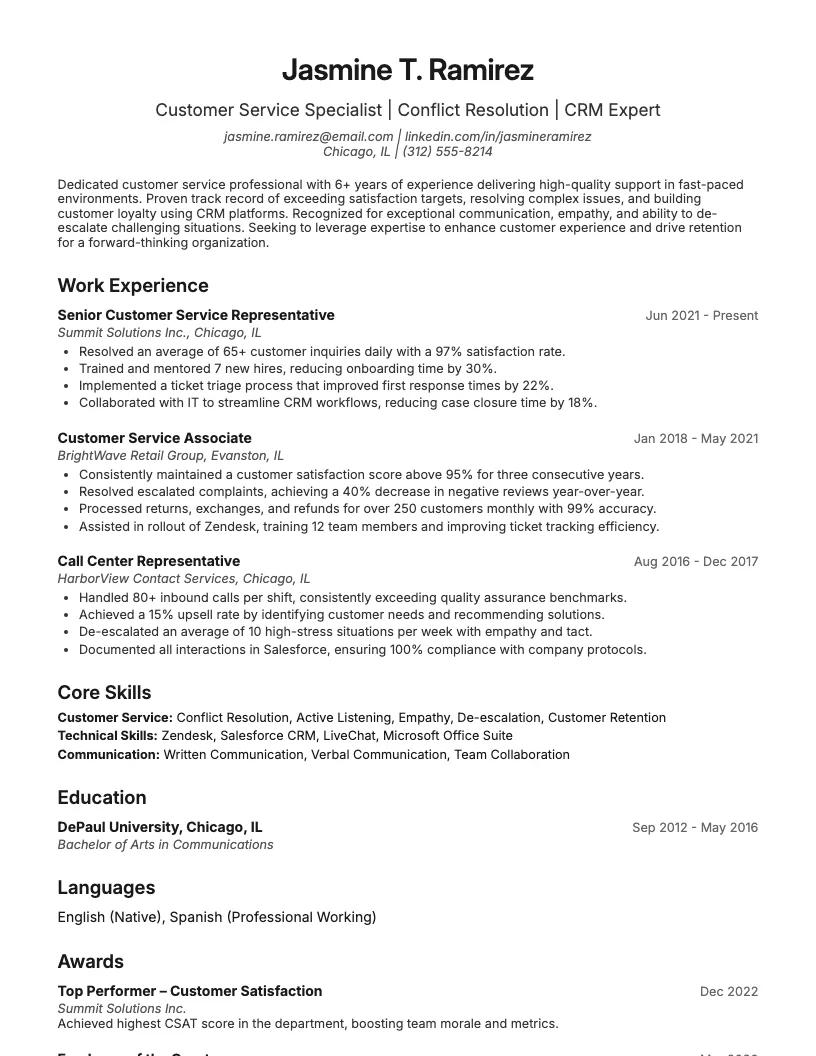
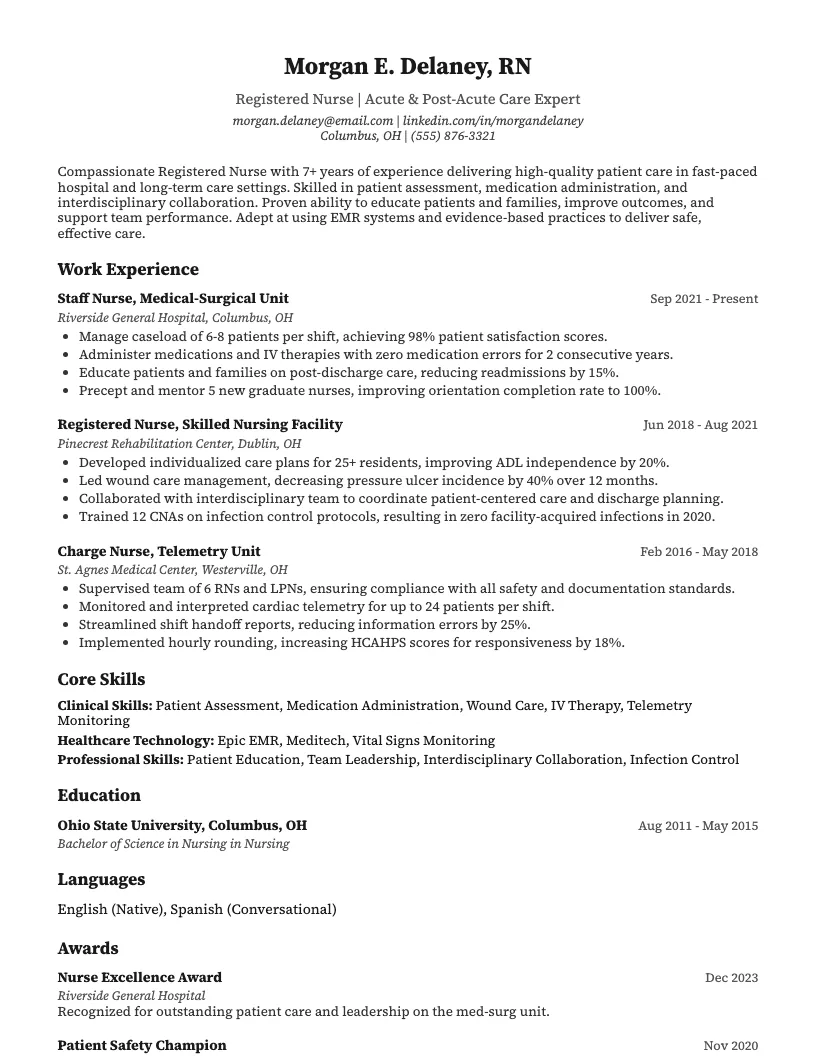
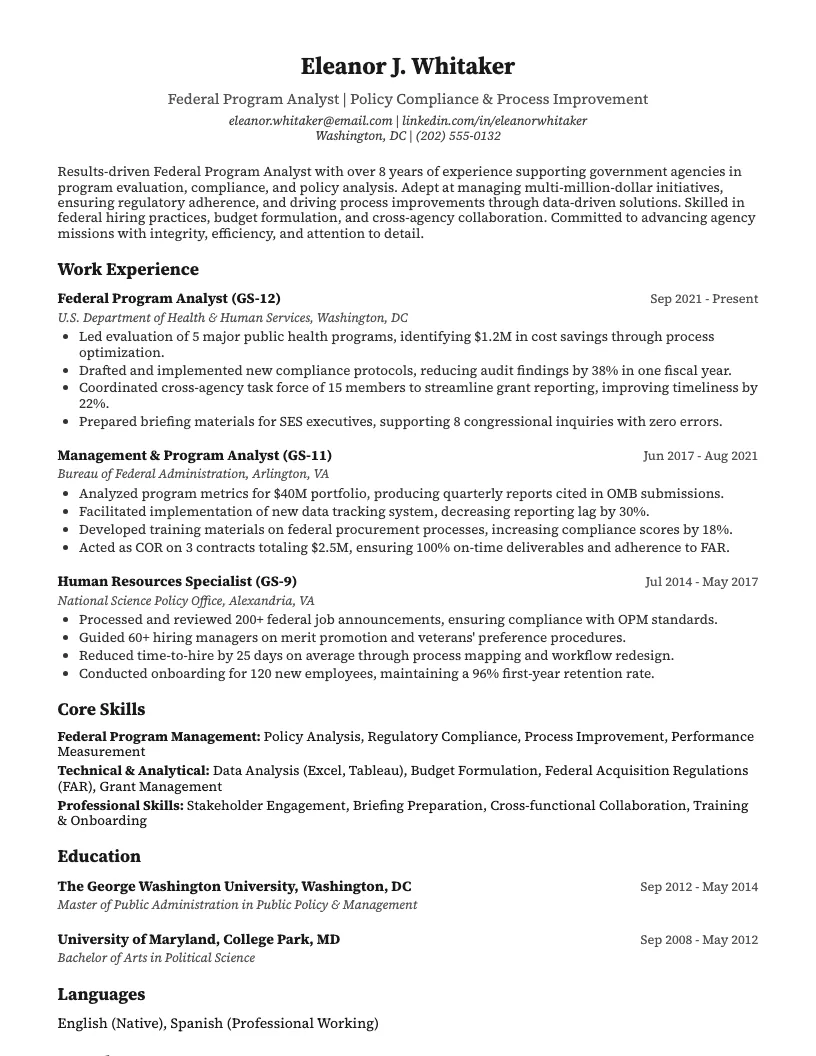
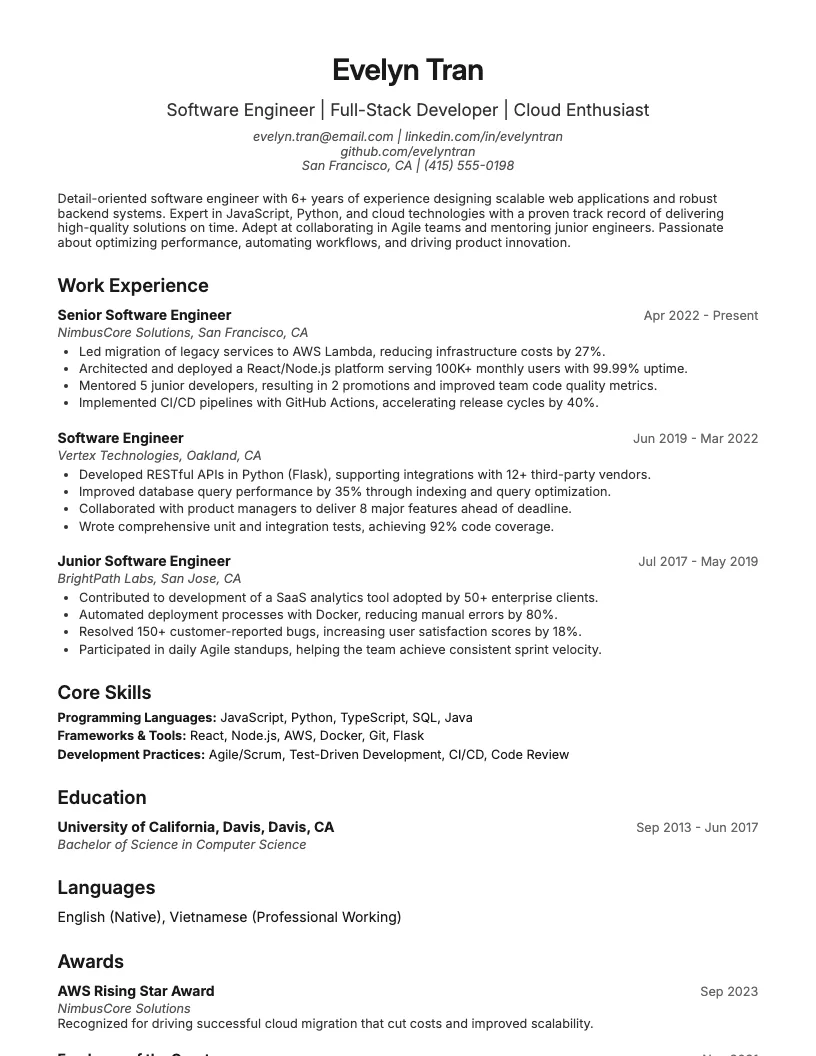
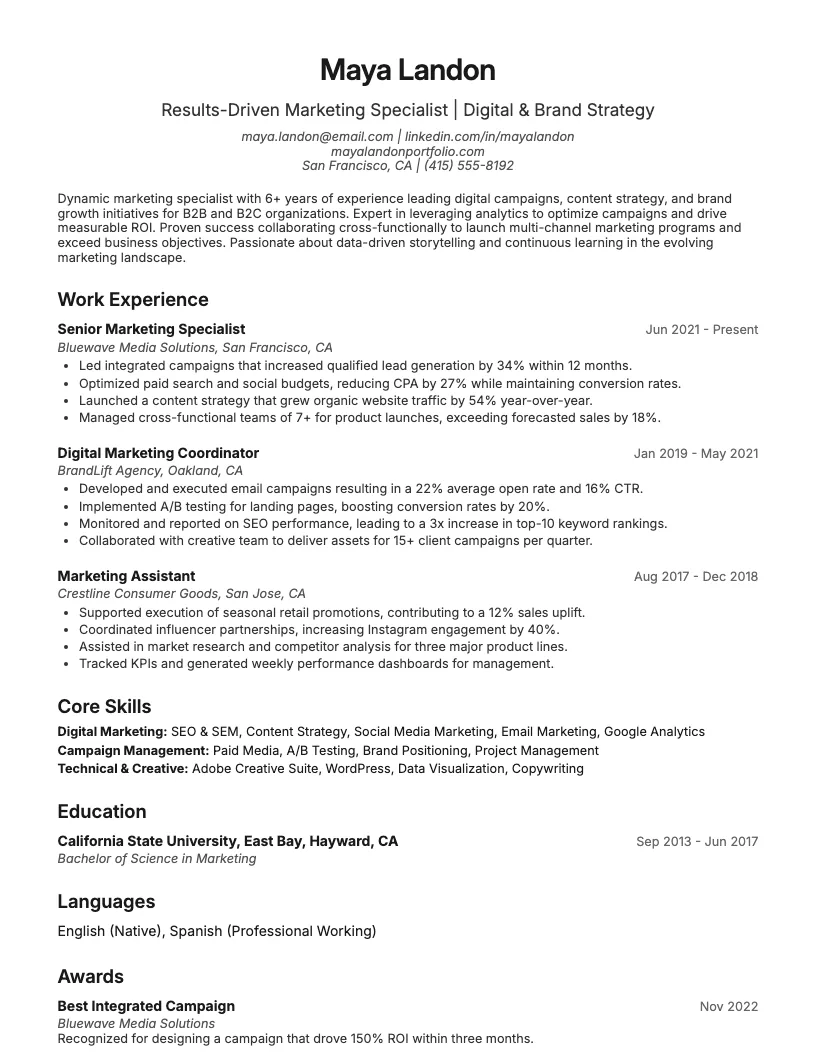
8 examplesStart from an example that already has them, and swap in your own.
Check your resume against the job you want
Scan your resume, see which skills and keywords the posting asks for that you are missing, and fix them before you apply.
Free to use • No credit card required