Describe Yourself in 5 Words: 15 Adjectives That Work [9 to Skip]
15 adjectives to pick your five from, 9 overused words to cut, a 3-step way to narrow the list, word sets for 8 job types, and 6 full spoken examples.


Written by Sarah Chen
Senior Career Strategist & Resume Expert
Updated August 2026
Reviewed by Marcus Rodriguez
Is your resume ATS-friendly?
Drop your resume in and see which of these skills a scanner can actually read, and which ones the job you want is asking for that you have not listed.
PDF or DOCX. Max 2MB.
We never share your resume or use it to train a model.
In This Guide:
How do you describe yourself in 5 words?
Someone asks you this cold, in an interview or on a form, and your mind goes blank.
Five words is not much room, so every one has to earn its place - and the words that work aren't clever, they're the ones you can back up with something you actually did.
Pick words the job actually asks for
I've read hundreds of these answers, and the ones that fall flat are always generic - "hardworking," "team player," words that fit anyone.
The posting already told you which five words matter. Pull your words from the skills and qualities it lists, not from a personality quiz.
Run your resume against that same posting and ResumeJudge will show you which of those words you're missing entirely, which is the same check in a different form.
Say the word, then the proof
A word on its own is an assertion. An interviewer has heard "driven" a thousand times and believed it maybe twice.
Nine times out of ten, the answer that lands is word, then one sentence of proof - see step 3 for how to build that pair.
Step 1: Write down every word that fits you
Don't edit yet. Write down every word you'd use for yourself, ten or twenty, however many come.
This list is raw material, not the answer - you're emptying your head, not choosing.
Step 2: Cut it to five that fit this job
Go back and cross out anything true about you but irrelevant to this role.
A word that doesn't serve the job just spends one of your five slots for nothing. Keep the five this job actually asks for, and check that no two of them are quietly saying the same thing.
Step 3: Attach one real example to each
For each word left standing, write one sentence: what happened, what you did, what came of it.
You can hear what those pairs sound like in the full answers further down. Do this before the interview, not during it.
How long the spoken answer should be
Two to four minutes, start to finish - five words, five short proofs, nothing padded between them.
Shorter and it sounds unprepared. Longer and you've turned one question into a monologue.
Why an interviewer asks this at all
It's not really about the words. It's a fast read on whether you know yourself, and whether what you say matches what's true.
An interviewer is listening for self-awareness and for how you think under a limit - not grading your vocabulary.
What are the best 5 adjectives to describe yourself?
You don't need fifteen words. You need five that are true, and five you can back up with something that actually happened.
Here's the list I'd pull from when someone asks me to help them describe themselves in five words, and what each one is actually telling an employer.
Reliable
Reliable says you show up and finish what you start. It's one of the safest words here, because every manager wants it - attach it to a streak, like two years without a missed deadline, and it stops sounding like filler.
Adaptable
Adaptable says you don't fall apart when the plan changes. Use it if you've switched tools, teams, or priorities mid-project and kept your output steady.
That's the proof. The word by itself proves nothing.
Driven
Driven says you push for a result without being told to. It only lands if you can name the result - a target you hit, a launch you pulled forward, a number that moved because of you.
Analytical
Analytical says you make calls from data, not gut feel. I like it for anyone who's built a report, run a test, or caught a pattern that saved time or money - it's a thinking word, not a feeling word.
Collaborative
Collaborative says you make other people's work better, not just your own. The proof is usually a cross-team project, or a handoff that went smoothly because you flagged something early.
Resourceful
Resourceful says you solve problems with whatever is already in front of you. It's the word for the time you fixed something without a budget, a manager, or a manual to follow.
Methodical
Methodical says you have a process and you trust it. It's strong for finance, engineering, healthcare - anywhere a mistake is expensive, "I have a system" beats "I work hard."
Persistent
Persistent says you don't quit at the first no. Of everything on this list, it's the strongest one for sales and business development, where the job is largely about trying again.
Personable
Personable says people like working with you, which matters more than most resumes let on. It belongs on client-facing and team-lead roles, not as a stand-in for "nice."
Detail-oriented
Detail-oriented is the most common word on every list like this one, which is exactly the problem - nine out of ten candidates claim it. Keep it only if you can point to an error rate, an audit, or a catch that actually mattered.
Decisive
Decisive says you can make a call without every fact in hand. It's a management word - use it if you've had to choose under real pressure, not just voiced an opinion in a meeting.
Curious
Curious says you go looking for the next problem before someone hands it to you. It's the one I recommend most for early-career resumes, where you don't have five years of results to point to yet.
Accountable
Accountable says you own the outcome, good or bad. It's quieter than the others on this list, but hiring managers notice it, because most candidates only ever take credit.
Enthusiastic
Enthusiastic says you want this job, not just a job. Use it once if at all - it's the easiest word here to overuse and the hardest one to prove with a real example.
Creative
Creative says you find a new way to a solution instead of the obvious one. It's worn thin in design and marketing, so back it with the actual idea, not the word "creative" itself.
Which five go together, and which repeat each other
The real work isn't picking five good words. It's noticing that half this list says the same thing twice.
Detail-oriented, methodical, and analytical all point at the same trait - carefulness - so using two of them in one answer just repeats yourself instead of showing range. Reliable, driven, persistent, and accountable are all forms of "I follow through," and again, one is plenty.
What you want is one word from each real cluster: a work-ethic word (reliable, driven, persistent, or accountable), a thinking word (analytical, curious, decisive, or methodical), a people word (collaborative or personable), a problem-solving word (resourceful or creative), and a fit word (adaptable). Five words, five different traits, no two doing the same job.
Then match them to what the job actually asks for instead of what sounds good in isolation - a support role and a sales role shouldn't get the same five words, even from the same person.
What five words should you use on a resume?
Where five words fit: the summary line
You don't get a moment on paper where someone asks "describe yourself in five words" the way an interviewer does.
What you get is a three-line summary at the top of your resume, and that's where those five words actually live.
Pick the same five you'd say out loud, then fold them into a sentence a recruiter reads in six seconds.
Words that survive a resume screen
Most resumes go through an applicant tracking system before a person ever sees them, and the words that make it through are the ones lifted straight from the job posting.
I've read enough of these to know the pattern: "reliable," "collaborative," and "detail-oriented" pass every screen because postings use them constantly. Vaguer picks like "unique" or "passionate" don't match anything a scanner is looking for, so they just sit there doing nothing.
If you're not sure which five actually match a posting, running your resume against the job description will tell you exactly which ones are missing before you submit it.
Turning each word into a bullet with a number
Turning a word into a bullet
Resourceful and hard-working team member
Resourceful: cut vendor costs 18% by renegotiating two supplier contracts
A bullet with a number is proof.
"Resourceful" means nothing until it's "cut vendor costs 18% by renegotiating two contracts." Nine times out of ten, that's the difference between a bullet that gets remembered and one that gets skimmed past.
Take each of your five words and ask: what's the one line from my work history that proves this? If you can't answer, drop the word.
Words that belong in an interview but not on paper
A summary line that survives the page
Funny, chill, easy-going team player
Personable, collaborative team player
Some words look thinnest in writing, where there's no tone to soften them - "funny," "chill," "humble."
They don't do much out loud either, which is why they're on the leave out list. On the page, stick to words a bullet can back up.
Which five words fit your job and career stage?
If you're straddling two of these categories - say, a technical role that's turning into people-management - don't pull all five words from either list. Take one or two from each, so your answer matches where you're actually headed, not just where you've been.
The right five words depend on where you sit, not just what job title is on the posting. A graduate leaning on "eager" sounds right at 22; the same word from someone ten years into a team-lead role reads as junior.
Match the words to the stage you're actually at, then attach the proof - that's what makes a word land.
Five words for a first job or graduate role
You don't have a decade of results to lean on, so lean on how you work instead - the recent graduate answer below names the five, with the proof attached to each. I've read a lot of graduate resumes, and the ones that stand out don't oversell - they show someone who picks things up fast and shows up.
Five words for a manager or team lead
Once you're responsible for other people's work, the words shift from doing to deciding: decisive, accountable, clear, collaborative, calm. Nine times out of ten, the manager who gets remembered is the one who stayed calm under pressure and said what they meant.
Five words for a career change
Changing industries means your five words have to carry more weight, because your job history won't. Adaptable, curious, resourceful, driven, quick to learn - words that say "the skills transfer" without you having to argue the point line by line. This is also where it helps to know which roles actually want that mix; ResumeJudge can scan postings and surface the jobs that fit what you're bringing, rather than you guessing from a title alone.
Five words for a sales or client-facing job
The sales rep answer below gives the five, with proof attached to each. Sales is one of the few jobs where "competitive" is a compliment - use it, but back it with a number, not a vibe.
Five words for a technical or engineering job
The software engineer answer below gives the five. Skip "passionate" here - it tells an engineering manager nothing about how you debug. These five hold up better on a resume screen because each one maps to something you actually did.
Five words for a healthcare job
The nurse answer below gives the five. In healthcare, "thorough" and "calm" carry more weight than almost anywhere else - they're the two words a hiring manager is actually screening for, whether the posting says so or not.
Five words for a creative job
Creative, curious, adaptable, resourceful, collaborative. Say "creative" if the work backs it up; if it doesn't, swap it for the word that does - a portfolio makes the case for imagination better than an adjective ever will.
Five words for an admin or operations job
Organised, detail-oriented, reliable, methodical, accountable. These are the roles where a missed step costs someone else time, so the words that matter are the ones about not dropping things.
Which words should you leave out?

I've read enough of these lists to spot the same five or six words showing up on almost every one. If you're still deciding on your five adjectives to describe yourself, cutting the ones below first will do more for you than adding anything new.
They're not wrong exactly - they're just so common the interviewer stops hearing them.
Rockstar, guru, superstar
These read like job titles from a startup job posting, not something a person calls themselves. I've never once seen "rockstar" land well in an interview - it sounds like you're selling, not describing.
Leave it for the posting to say about you, if it's going to say it at all.
Perfectionist
This one's a trap. Say it out loud and it either sounds like a humble-brag or a warning sign - someone who can't ship because nothing's ever finished.
Pick a word that shows care without implying you're hard to work with. Detail-oriented, from the best-adjectives list, says the same thing without the baggage.
Humble
Calling yourself humble undoes itself the moment you say it - the word cancels its own meaning. If you want to come across as grounded, show it in how you talk about your work, not in a label you put on yourself.
Hard-working
Everyone in the interview chair believes they're hard-working. It's the default assumption for anyone who applied, so naming it tells the interviewer nothing they didn't already assume.
Swap it for a word tied to what the hard work produced - driven, persistent, thorough.
Results-driven
This is a resume-summary word that wandered into spoken answers and never left. It's vague enough to mean anything, which is exactly why nine times out of ten I tell people to cut it.
Name the actual result instead, the way step 3 walks through.
Unique
Everyone thinks they're unique, which is precisely why the word does no work here. It tells the interviewer nothing about what makes you unique - only that you believe you are.
Passionate
Passionate about what, exactly? Without an object and a proof point, it's just enthusiasm with no shape.
If the passion is real, an interviewer will hear it in the specifics you give, not in the label.
Funny, chill, easy-going
These belong in a conversation with a friend, not an answer about how you work. They're not unprofessional so much as beside the point - the interviewer is trying to place you on a team, and these tell them nothing about that.
Any word you cannot give an example for
This is the real test, more than any specific word on this list. If you can't finish the sentence "for example, I..." after it, drop it - a word with no backing story is worse than no word at all.
Running your resume against the actual posting is a fast way to see which of your words the job would actually recognize as proven; ResumeJudge will flag the ones on your resume that don't have a number or an outcome sitting behind them.
What does a full five-word answer sound like?
Reading five words on a page and hearing someone actually say them are two different things. Here's what a full answer sounds like once you say the word, then the proof, across a few different jobs.
Marketing manager: motivated, analytical, creative, encouraging, friendly
"Motivated - I organized a 500-person virtual conference from scratch. Analytical - I dug into our email metrics and raised revenue per recipient by $10 over three months.
Creative - I built a space-themed campaign that pulled in 5,000 sign-ups and $30K on launch day. Encouraging and friendly - I've managed teams of three to fifteen people over four years, and I make time for one-on-ones."
Software engineer: methodical, curious, collaborative, pragmatic, accountable
"Methodical in how I break down a problem before I touch code. Curious enough to dig into a bug instead of patching around it.
Collaborative in code review. Pragmatic about shipping the right-sized fix, not the cleverest one.
Accountable when something I built breaks in production."
Nurse: calm, thorough, patient, adaptable, dependable
"Calm under pressure, thorough with charting, patient with anxious families, adaptable when a shift changes shape in an hour, and dependable - my team knows I show up."
Recent graduate: eager, organised, coachable, persistent, dependable
"I don't have years of experience, so I lean on eager, organised, coachable, persistent, dependable - and I back each one with a project, an internship, or a class where I actually did the thing."
Sales rep: persistent, personable, competitive, organised, resilient
"Persistent on follow-up, personable on the first call, competitive about hitting number, organised across a full pipeline, resilient when a deal falls through."
Project manager: proactive, resourceful, decisive, clear, calm
"Proactive and resourceful - eight years keeping projects moving when the plan changes. Decisive when a call has to be made fast.
Clear in how I write status updates. Calm when a deadline slips."
The same five words written into a resume summary
Words on a list vs. words in a summary line
Methodical, curious, collaborative, pragmatic, accountable.
Methodical, curious software engineer with a collaborative, pragmatic approach to shipping.
The same set, written out as a summary line: "Methodical, curious software engineer with a collaborative, pragmatic approach to shipping." Before you commit to a set, run them against the actual posting - ResumeJudge will tell you whether those five words match what the job is asking for, or whether you're proving the wrong things to the wrong reader.
Frequently Asked Questions
Do the five words have to be adjectives?
No, they don't have to be adjectives - nouns and short phrases work fine as long as each one is backed by something real. "Problem-solver" or "team player" land just as well as a bare adjective if you can point to a specific example behind it. Mix them if it helps you sound like a person describing themselves, not a list of traits.
Can I use the same five words in every interview?
You can reuse the same five words across interviews, but the examples behind them should shift to match the job. The words are just labels - what actually convinces the interviewer is the specific story you attach to each one. If you're applying to very different kinds of roles, it's worth swapping in one or two words that fit that particular job.
What if I'm asked for three words instead of five?
Pick your three strongest words from the five you'd normally use, the ones most relevant to the job, and drop the rest. Don't try to squeeze five words' worth of meaning into three - a shorter answer should be easier to explain, not more crowded. Spend the time you save on backing each word with a quick example instead.
Should I say all five words first, or explain as I go?
Either order works, but explaining as you go usually sounds more natural than reciting five words and then circling back to each one. If you do list all five up front, keep it quick and treat it as a preview, not the whole answer.
How do I answer without sounding arrogant?
Ground each word in a specific example instead of a flat claim about yourself, and let the example carry the weight. "Organized" on its own can sound like a boast; "I ran four projects at once without missing a deadline" doesn't. Keep your tone matter-of-fact and give credit to teammates where it's due, and the words will read as description rather than self-praise.
What if I can only think of four?
Four honest words beat five where one is just padding to hit the number - interviewers are listening for whether your words are true and specific, not counting them. If you want a fifth, ask a manager or colleague what they'd say about you, which is often faster than trying to invent one on your own.
Is it okay to use a word a colleague used about me?
Yes - a word someone else used about you is good material, because it isn't just your own opinion of yourself. Say where it came from: "A manager once told me I was the most reliable person on her team" carries more weight than the word alone. Just make sure you can still back it up with your own example if asked to.
How do I answer this in writing on an application form?
Write the five words as a short, plain list or one sentence stringing them together, then use any extra space to back each one up with a concrete example. Tone and pacing don't matter on paper the way they do out loud, so focus on whether the words are true and specific to you rather than how they'd sound spoken. If the form only gives you room for the words themselves, pick ones that are already obvious from the rest of your application.
See these skills on a real resume
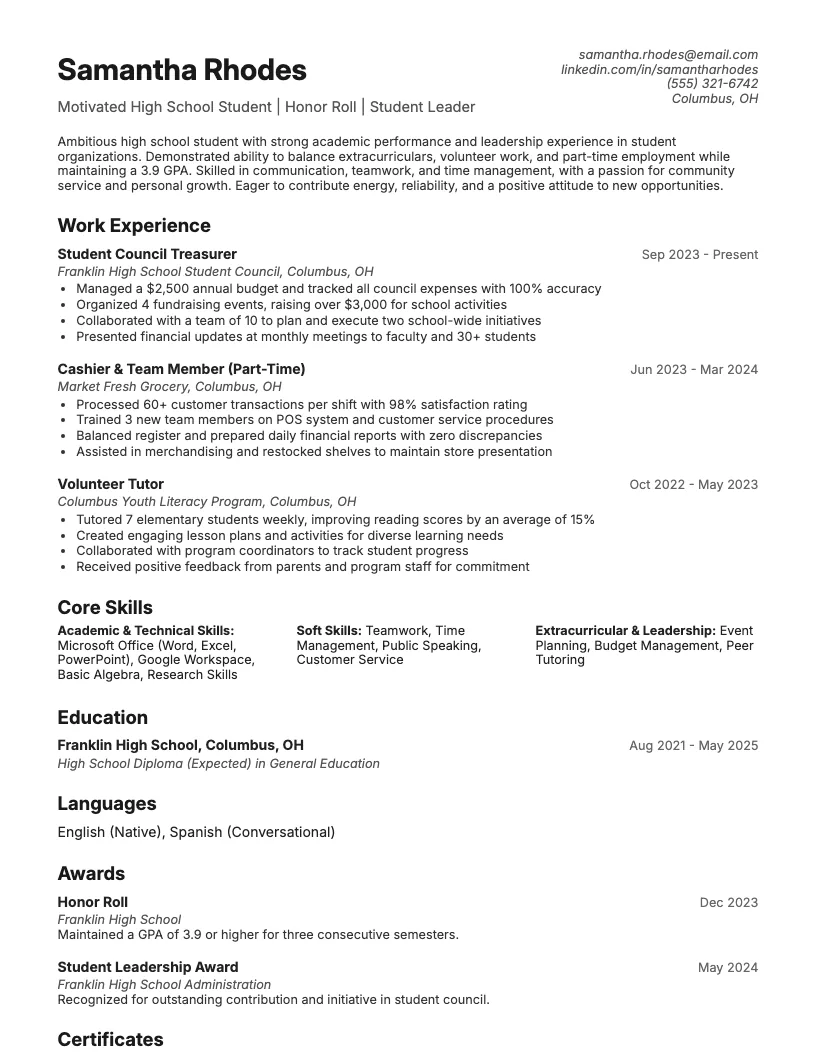
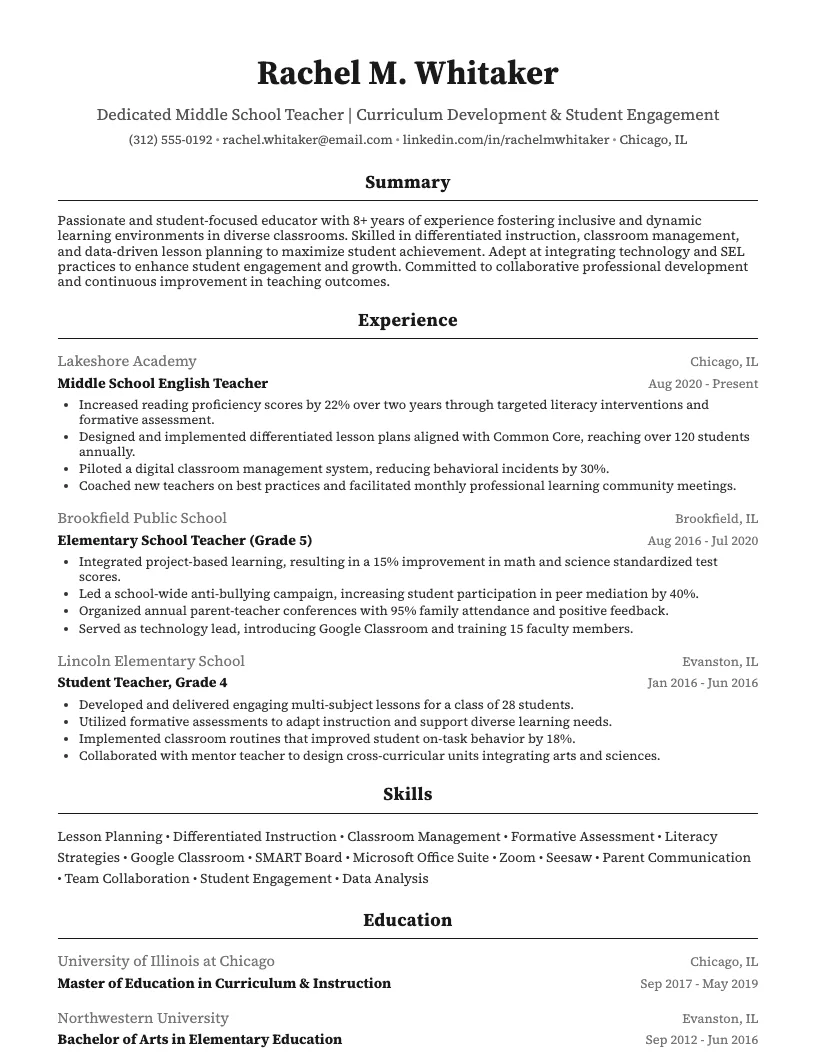
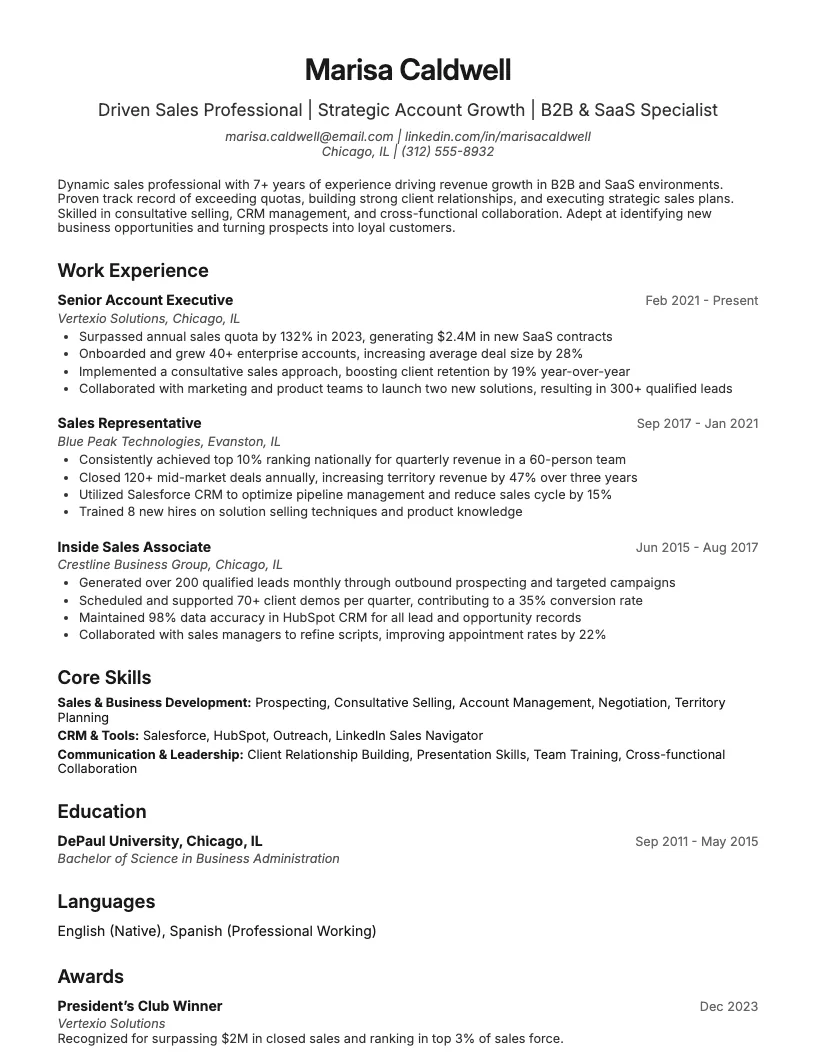
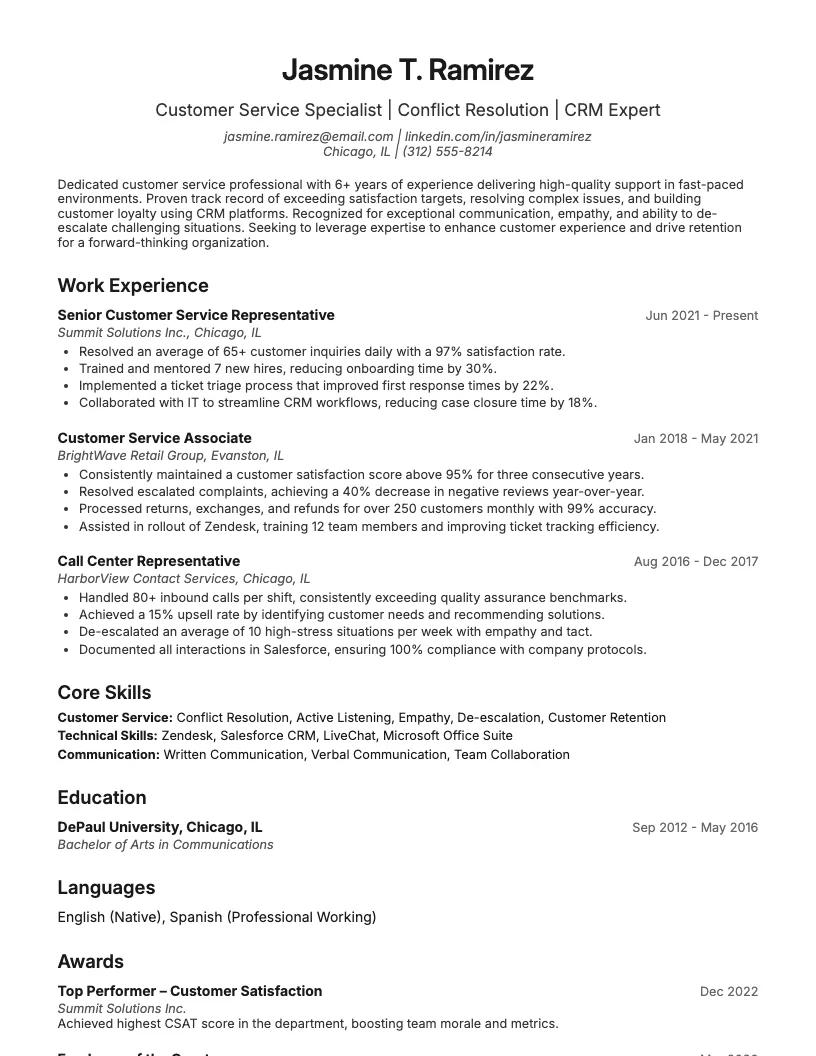
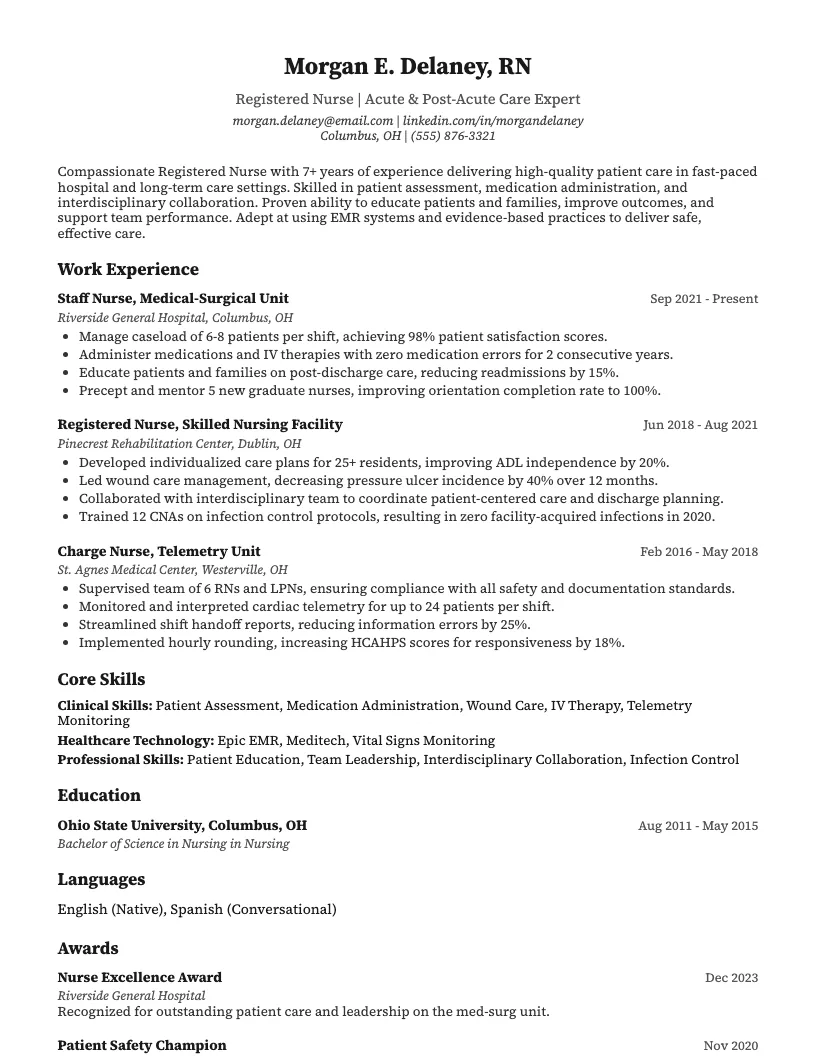
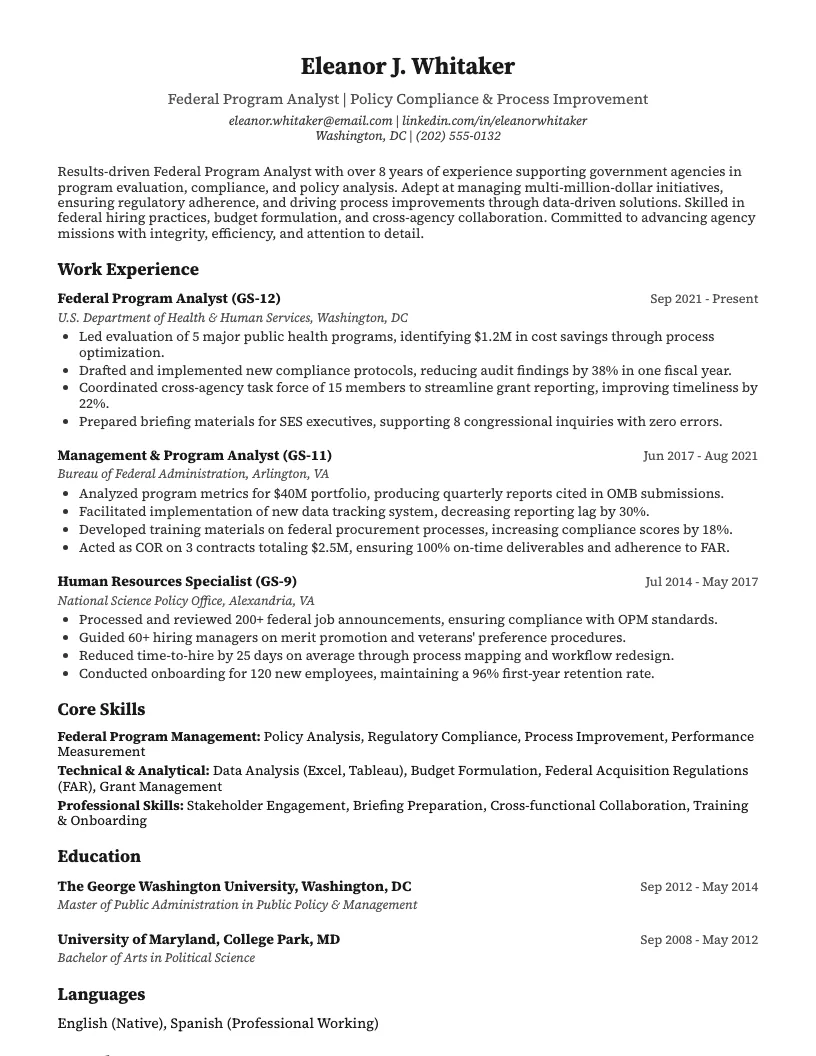
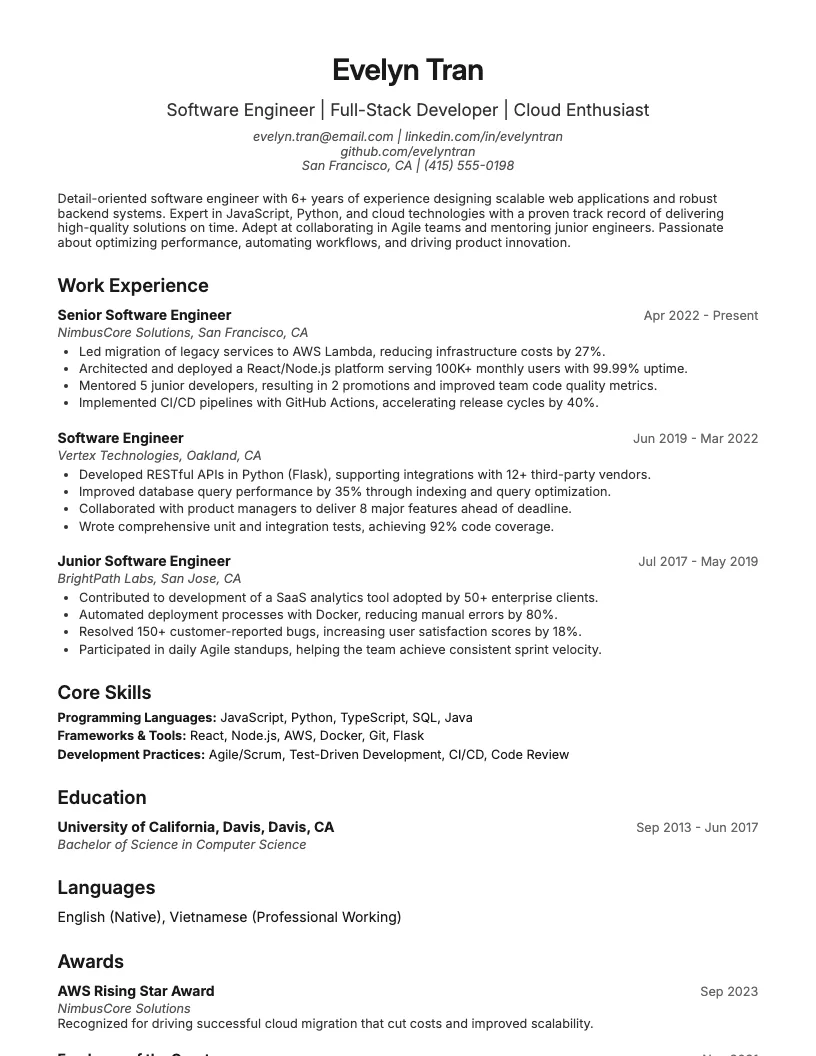
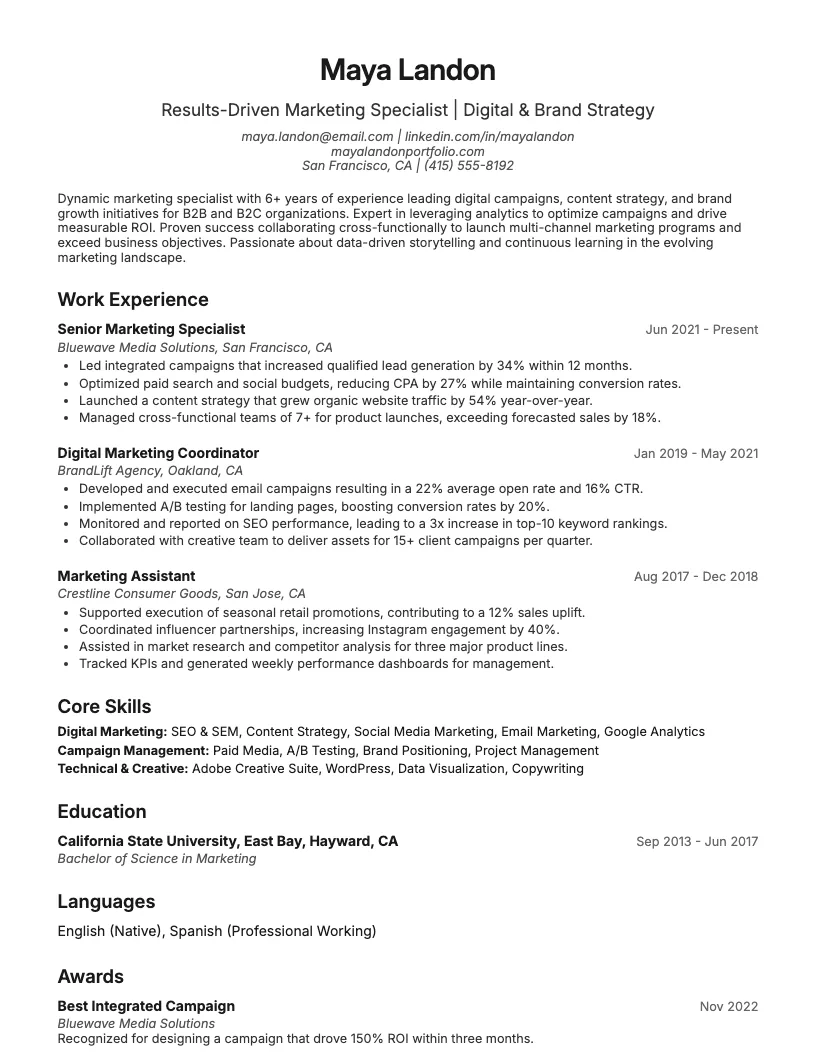
8 examplesStart from an example that already has them, and swap in your own.
Check your resume against the job you want
Scan your resume, see which skills and keywords the posting asks for that you are missing, and fix them before you apply.
Free to use • No credit card required