Three Words to Describe Yourself: 11 Combos + 5 Answers to Steal
11 three-word combos for any role, 7 overused words to cut, 5 full spoken answers to copy, and how a college application answer differs from an interview one.


Written by Marcus Rodriguez
ATS Optimization Specialist & Career Coach
Updated August 2026
Reviewed by Dr. Priya Sharma
Is your resume ATS-friendly?
Drop your resume in and see which of these skills a scanner can actually read, and which ones the job you want is asking for that you have not listed.
PDF or DOCX. Max 2MB.
We never share your resume or use it to train a model.
In This Guide:
What are three good words to describe yourself?
Is your resume good enough?
Drop your resume in and see which of these skills a scanner can read, and which ones the job you want is asking for that you have not listed.
Upload your resumeFree. PDF or DOCX. We never share your resume or use it to train a model.
You don't need a personality test for this. You need three words that are true, that fit the job, and that you can back up with a story if someone pushes.
I've read hundreds of resumes and heard the same handful of combos in interviews so often they've stopped meaning anything. The ones below actually work, because each pulls from a different part of you - how you think, how you work with people, and what makes you specifically useful.
Reliable, proactive, collaborative
This is the safe, solid combination, and there's nothing wrong with safe when it's true. "Reliable" says you finish what you start.
"Proactive" says you don't wait to be told. "Collaborative" says you're not going to be a headache to sit next to.
It works for almost any team role, which is also its weakness - pair it with one specific example or it reads generic.
Curious, diligent, teachable
This is the set I'd tell an early-career candidate to use. You're not claiming ten years of judgment you don't have yet.
"Curious" means you ask why. "Diligent" means you finish the task properly.
"Teachable" means feedback doesn't wound you, it gets used. Nine times out of ten, an entry-level answer that leans on manufactured confidence lands worse than one that's honest about still learning fast.
Creative, data-driven, adaptable
Good for marketing, design, or any role where you have to make a case with both a hunch and a number. The pairing matters: creative on its own can sound like you skip the analysis, so "data-driven" right next to it tells them you check your instincts against results.
Organized, communicative, resourceful
The project-management set. Someone reading this expects you to keep five things moving without dropping one, and to tell people when something's about to slip rather than let them find out.
"Resourceful" is doing real work here - it says you solve the problem in front of you instead of escalating it.
Analytical, methodical, innovative
Common in technical and data roles, and it should be, because it covers the full loop: break the problem down, follow a process you can repeat, then actually propose something new instead of just describing what's broken.
Empathetic, solution-oriented, resilient
This is the customer-facing and healthcare set. You hear someone's frustration, you fix the actual problem instead of reciting a script, and the next hard conversation doesn't wreck you.
If your resume already leans this way, check it against which words to avoid - "people person" tries to say the same thing and lands much weaker.
Strategic, decisive, accountable
Leadership words. "Strategic" is the long view, "decisive" is acting before you have every fact, "accountable" is owning what happens next either way.
Don't reach for this set unless you've actually made a call that mattered - it's the first one interviewers test with a follow-up question.
Disciplined, industrious, commercially-driven
Sales and revenue-facing roles. This set is blunt about being tied to numbers, which is the point - nobody hiring for quota work wants softness here.
Attentive, personable, adaptable
Built for support and account roles: you actually listen, people like dealing with you, and you shift your approach depending on who's in front of you rather than running one script for everyone.
Self-directed, transparent, time-conscious
The remote-work set. Nobody's watching you work, so the resume has to say it for you: you manage your own priorities, you post progress before anyone asks, and you respect a deadline across time zones.
If you're picking words for a fully remote role, weigh this set against what your three words need to prove in that setting before you lock them in.
Whichever set you land on, check it against the actual posting before you commit - if the job description keeps repeating a word you're not using, that's a gap worth closing, and ResumeJudge can close it, rewriting your resume to work that word into the right section.
Why do interviewers ask you to describe yourself in three words?
This question feels small, but it's doing five jobs at once. I've watched a lot of interviews go sideways here because candidates treat it as small talk instead of a test.
They are checking whether you know your own strengths
Most people can list their job duties. Fewer can name their actual strengths without stalling.
One study of 20,000 new hires found that 89% of the people who failed in their role failed on attitude and self-awareness, not on skill gaps. That's what this question is fishing for.
They are testing whether you can be brief under pressure
Three words means you can't ramble your way to safety. Either you know what matters about you or you don't.
I tell people: if you can't say your own strengths in under ten seconds, the interviewer assumes you'll struggle to explain a project update in under ten minutes.
They are checking whether you fit the team
Over 80% of employers now rank culture fit as a top hiring priority. The specific words you pick signal how you work, not just what you're good at.
"Methodical" and "scrappy" describe two very different people who might both be qualified.
They are checking whether you read the job posting
Generic words read as generic prep. If you've pulled a word straight from the posting's own language, the interviewer notices, and it's the fastest signal you actually want this job over any job.
Running your resume and the posting through ResumeJudge before the interview will find every one of the posting's words your resume doesn't back up yet, so you know exactly which ones you can honestly claim.
They are picking their next three questions from your answer
A sharp interviewer will take your third word and turn it into the next ten minutes of conversation. That's not a trap, it's an opening.
Pick words you actually have a story for, and you're choosing the questions instead of guessing at them.
How do you pick your own three words?
How do you pick your own three words?

Forget the lists of "best" words for a second. The three that work are the three that are true of you and also true of the job.
Step 1: Write down 10-15 words that are already true of you
Start wide. Pull from a performance review, a compliment a manager gave you, or a pattern you notice in your own work.
I tell people to skip words they admire in other people and only write down what they've actually been called or shown to be. An interviewer will ask you to back it up, and "aspirational" falls apart the moment they do.
Step 2: Pull the words the job posting keeps using
Reread the posting and underline anything repeated - not just skills, phrases like "fast-paced" or "cross-functional" count too. That's the employer telling you what they want to hear back.
If you're not sure you're reading it right, running the posting against your resume in ResumeJudge will find exactly which of its words you're missing.
Step 3: Keep only the words on both lists
Now compare the two lists. Anything that shows up on both is a real candidate - everything else gets cut, no matter how good it sounds.
Most people end up with three or four words here, which is exactly the range you want.
Step 4: Pick one word for how you think, one for how you work with people, one that is only yours
Three words that are all synonyms for "hard worker" waste the question. Split them: one about how you solve problems, one about how you work with others, and one that's specific to you and hard for another candidate to claim.
Step 5: Have a 20-second story ready for each word
Each word needs a real moment behind it, with a number if you have one. "Organized" backed by "I ran three launches on one calendar without missing a deadline" beats the bare adjective every time.
Step 6: Say the whole answer out loud and time it
Read it aloud, not in your head - that's where the filler words hide. You're aiming for somewhere around 30 seconds: long enough to prove the words, short enough that nobody starts checking the clock.
What does a full answer sound like out loud?
Five spoken answers, side by side
| Role | Three words | Proof |
|---|---|---|
| Marketing specialist | Creative, data-driven, adaptable | Grew engagement 28% |
| Software developer | Innovative, methodical, collaborative | Cut login failures 40% |
| Customer service rep | Empathetic, solution-oriented, resilient | 95% positive rating |
| Remote project manager | Organized, communicative, resourceful | Fixed a lost vendor in a week |
| Entry-level candidate | Curious, diligent, teachable | Self-taught a new tool for a project |
Here's the part most people skip: hearing the words isn't the same as hearing the answer. You need the whole thing, said out loud, the way you'd actually say it in the room.
Below are five versions, one per situation, so you can find the shape closest to yours and swap in your own words and proof.
A marketing specialist's answer
"Creative, data-driven, and adaptable. I found an underused audience segment, let the analytics guide the creative, and grew engagement 28%.
Then the strategy needed to change mid-year, and I pivoted it in two weeks." Thirty seconds, three words, one number.
A software developer's answer
"Innovative, methodical, and collaborative. I redesigned our authentication flow and cut login failures 40%.
I write with a process, which keeps my error rate 15% below the team average, and I work closely with UX and product to get there."
A customer service representative's answer
"Empathetic, solution-oriented, and resilient. I handle around 40 calls a day, and I look for the root cause instead of reading from a script.
My customers rate me positive 95% of the time." That's a full answer for customer-facing work: it proves patience under volume, not just a friendly tone.
A remote project manager's answer
"Organized, communicative, and resourceful. I run three projects at once across four time zones with async workflows that don't need everyone online together.
I send status updates before anyone asks. When a vendor lost funding, I found a workaround inside a week."
An entry-level candidate with no work history yet
No job history just means your proof comes from somewhere else - a class project, a part-time job, a club you ran. "Curious, diligent, teachable.
I taught myself a new tool for a class project because the one we were given couldn't do what I needed, and I put in extra hours until it worked." Same structure, different source.
The three sentences every answer needs: the words, the reason, the proof
Every answer above follows the same shape, and it's worth naming so you can build your own. Sentence one: the three words.
Sentence two: why those words, in one line each. Sentence three: a number or a specific outcome that proves it.
Skip the proof and you've just listed adjectives - I've sat through enough interviews to tell you that's the answer nobody remembers. Once you've got your own three words picked out (see how to pick your own three words), plug them into this shape and time yourself saying it.
If it runs past 30 seconds, cut the proof sentence down, not the words.
Which three words should you avoid?
I've read enough of these answers to spot the same seven words within the first sentence, every time. None of them are wrong exactly - they're just so common they've stopped meaning anything.
If you're picking from the list above, skip these first.
Hardworking
A three-word skills line
Hardworking, honest, motivated
Persistent, thorough, driven
Every candidate says this, so it tells the interviewer nothing about you specifically. Say "persistent" or "thorough" instead, and have a specific moment ready where that trait actually showed up.
Passionate
This one is vague and hard to verify - passionate about what, exactly? "Driven" or "curious" points to something you actually do, rather than a feeling you claim to have.
Team player
A cliché with no specificity behind it. "Collaborative" or "cross-functional" says the same thing but sounds like it came from your own head rather than a template.
Perfectionist
This one backfires. It reads as "misses deadlines chasing details that don't matter," which is the opposite of what you're going for.
"Detail-oriented" or "quality-focused" gets the same idea across without the warning sign.
Self-starter
A buzzword with nothing behind it until you prove it. "Self-directed" or "proactive" works better when it's followed by an example of something you kicked off without being asked.
People person
Too informal for most interviews, and it doesn't say what kind of person-skills you actually bring. "Empathetic" or "relationship-driven" is more specific and reads as more senior.
Results-oriented
This is corporate jargon that every LinkedIn headline already uses. "Outcome-focused" or "efficient" says something closer to what you mean, and it's less worn out.
Words that clash with the job you applied for
The word doesn't have to be bad - it just has to be wrong for this role. I've seen candidates walk into an accounting interview with "independent, philosophical, and creative," which is a fine set of words for the wrong job.
The role needs accuracy and attention to detail, and none of those three words say that, so the interviewer walks away thinking you don't understand the position. Before you settle on your three, check them against the job posting - this is exactly the kind of gap ResumeJudge fixes, working the posting's own words into your resume's language.
Any word you cannot back with an example
A word with nothing behind it falls apart the second someone asks "can you give me an example of that?" I've watched candidates freeze right there, and the silence undoes everything the word was supposed to prove.
Every word you choose needs a 20-second story attached before you walk in the room, not after you're asked for one.
How is a college application's three words different from an interview's?
An interviewer wants three words they can test against your resume in the next ten minutes. An admissions reader has your whole application sitting in front of them, so your three words have to match all of it, not just the sentence they're attached to.
What USC actually asks for
USC's supplement asks you to describe yourself in three words, full stop. No context, no follow-up question.
That's the whole prompt, which is exactly why so many applicants freeze on it.
Pick words your essays already prove
Don't pick three words and hope your essays back them up. Read what you already wrote, pull the traits that show up twice, and use those.
If "curious" never shows up in your activities list, it shouldn't show up here either.
Words that work on an application but not in an interview
Skip hardworking and determined - readers see them constantly and they say nothing about you specifically. A word like "globetrotter" or "philanthropic" tells a reader something a resume-safe adjective can't.
An example set for an applicant known for one cause
If your essays center on one cause, say environmental work, three words like committed, sustainable, and advocate tie straight back to it instead of describing a generic well-rounded student.
Frequently Asked Questions
What if the interviewer asks why I chose those words?
Tell them the truth: name a specific moment or project each word came from, so the reasoning sounds like recall, not sales copy. Interviewers ask this to see if you can back a claim with proof, so have one short example ready for each of the three words. Keep it under thirty seconds per word and connect it back to something the job needs.
What should I say if they ask how my coworkers would describe me?
Pick one word and support it with something a coworker actually said or did, rather than guessing at a compliment. If you've had a performance review or a piece of feedback that used a specific word, use that word - it reads as more credible than something you invented on the spot. Keep it to one or two examples so it doesn't turn into a list.
Which of my three words should I say matters most for this job?
Say whichever word most directly matches what the job description is asking for, and explain why in one sentence. Read the posting again before the interview and notice which qualities show up more than once - that's usually the word to lead with. ResumeJudge can score your resume against the same posting for free, which is a fast way to see which of your qualities the employer is actually emphasizing.
Can I use the same three words on my resume and in the interview?
Yes, and you should - saying different words in each place makes an interviewer wonder which version is true. Keep the same three words as your throughline, then use the resume to state them and the interview to prove them with a story. ResumeJudge checks whether your resume already contains the keywords a job posting is looking for, so you can confirm your three words are showing up on paper too, not just out loud.
Do I have to use single words, or can I use short phrases?
No, a short phrase works fine as long as it stays under three or four words itself, like "detail-oriented" or "fast learner." Single words are easier to remember on the spot, but a phrase can carry more specific meaning if a single adjective feels too vague. Just don't let any one of your three answers turn into a full sentence.
How do I deliver the answer on a video call?
Look into the camera lens rather than at your own image on the screen, since that's what reads as eye contact to the person on the other end. Say the three words with a short pause between each one instead of running them together, and test your audio and lighting before the call starts. A clean, plain background helps too, since it keeps the interviewer's attention on what you're saying.
What if I freeze and cannot think of three words?
Buy yourself a few seconds by saying something like "let me think about that for a second" instead of panicking or filling the silence with filler words. Picture a recent project or a piece of feedback you've gotten and pull a word out of that memory rather than trying to invent one from scratch. If you truly blank, it's fine to give two words and add the third after a beat - a short pause reads better than a wrong answer.
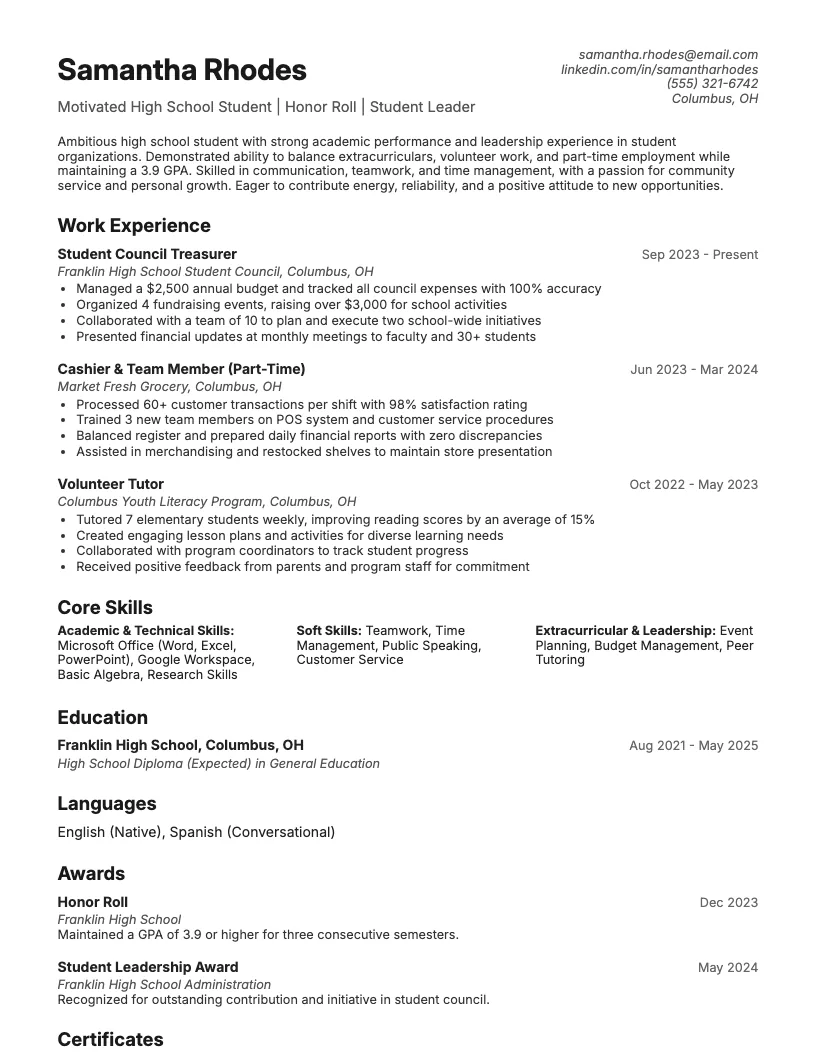
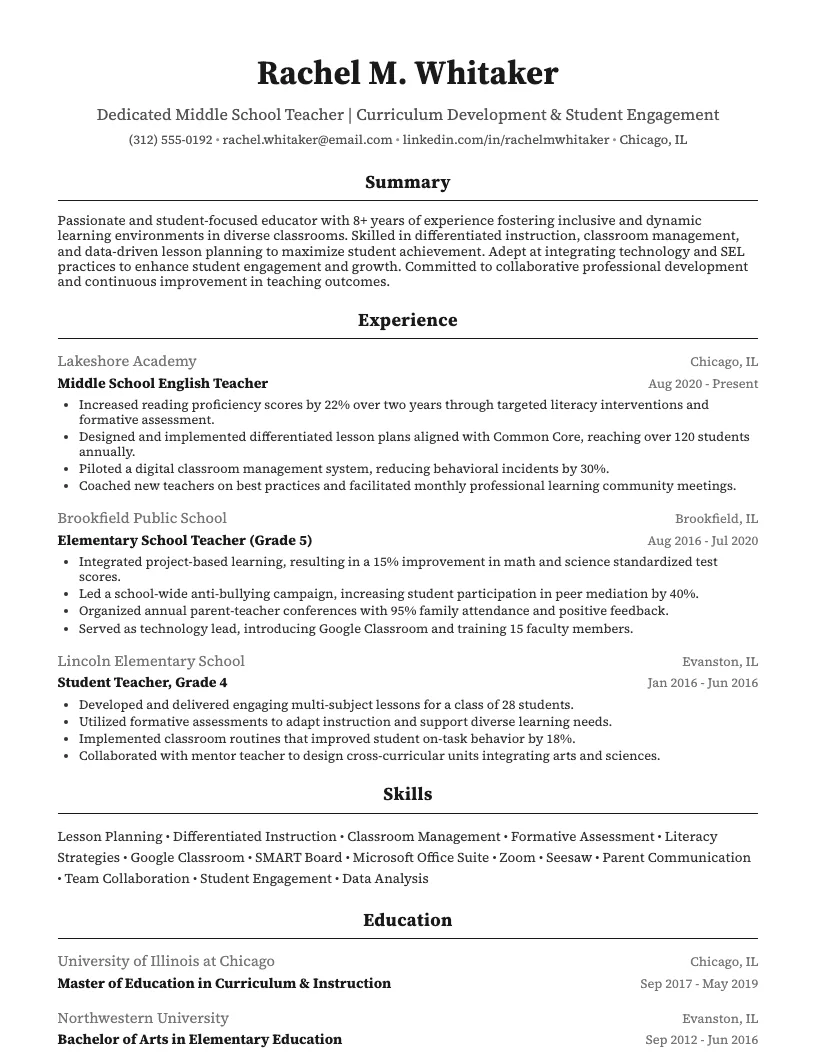
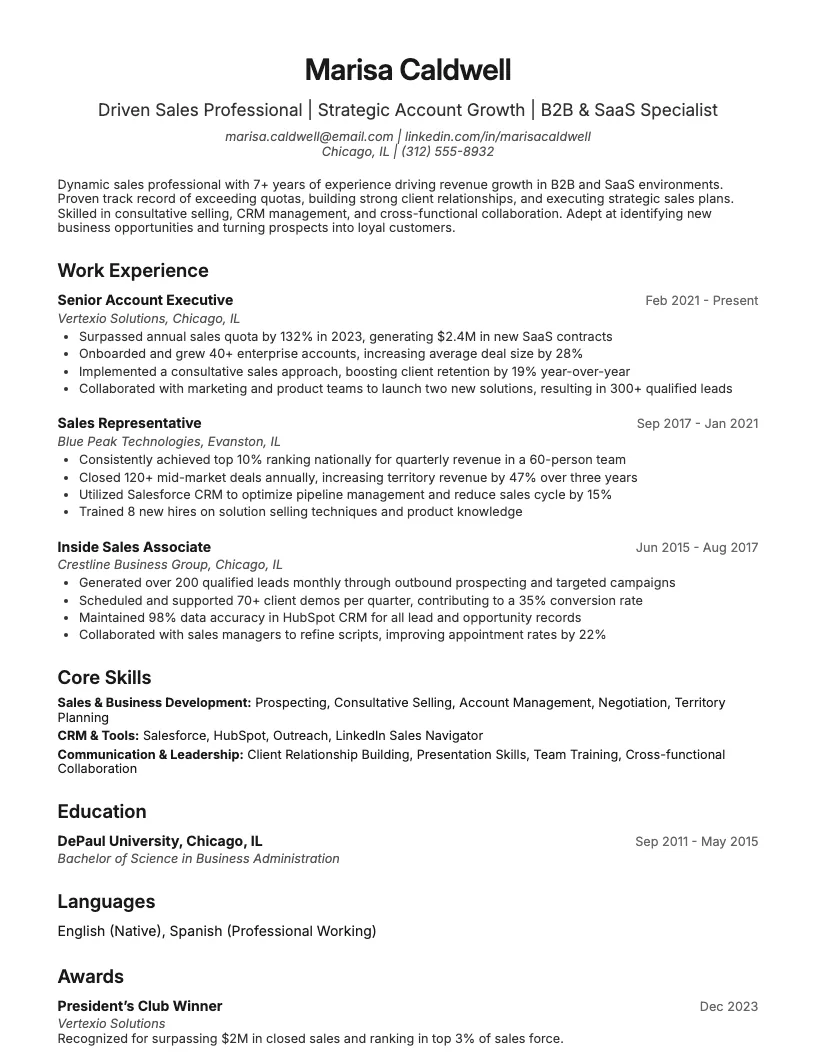
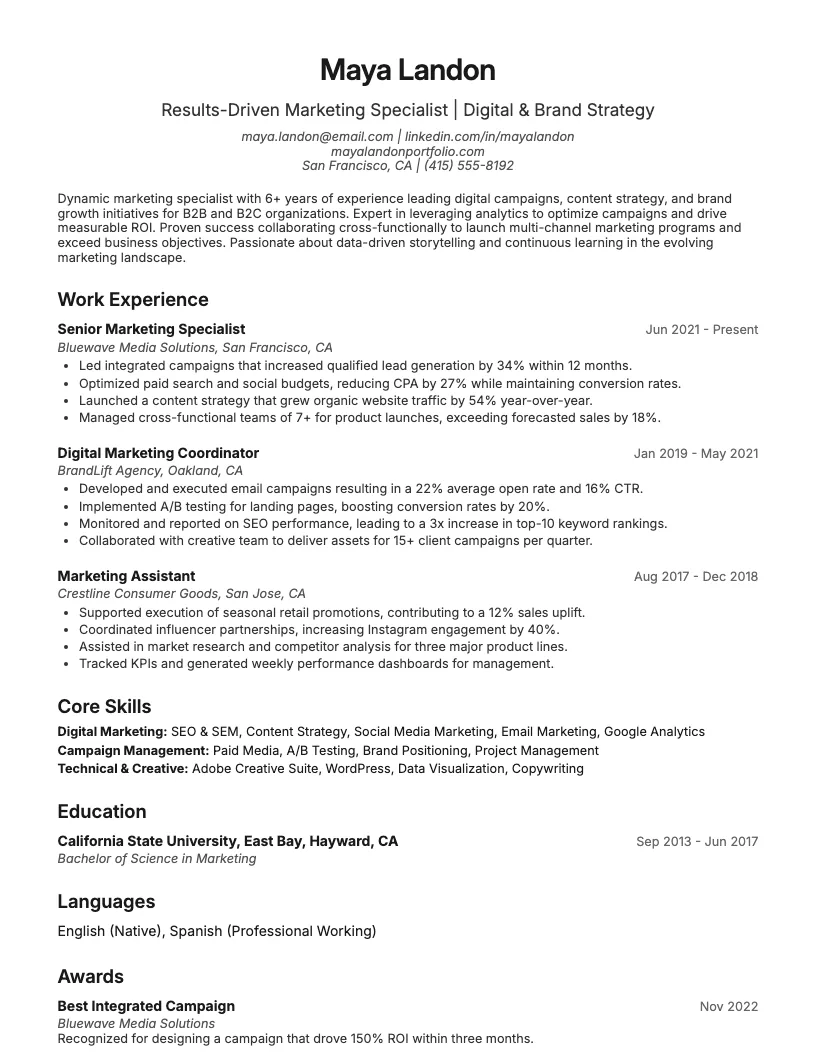
See these skills on a real resume
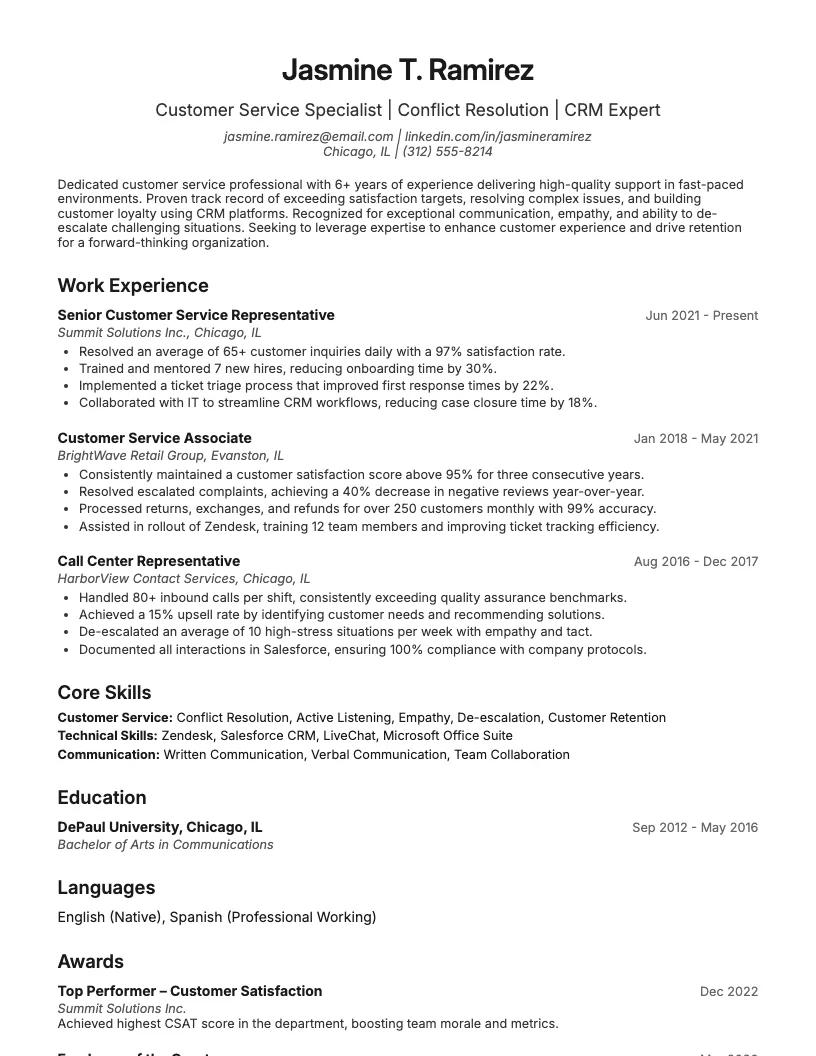
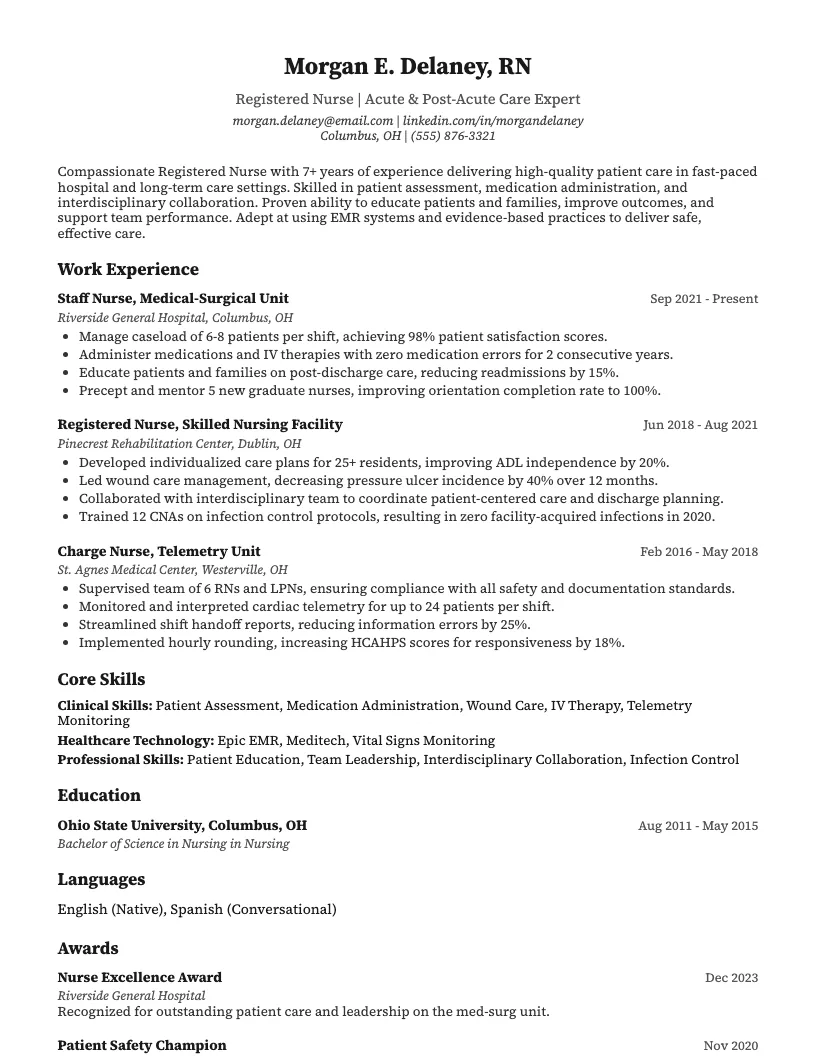
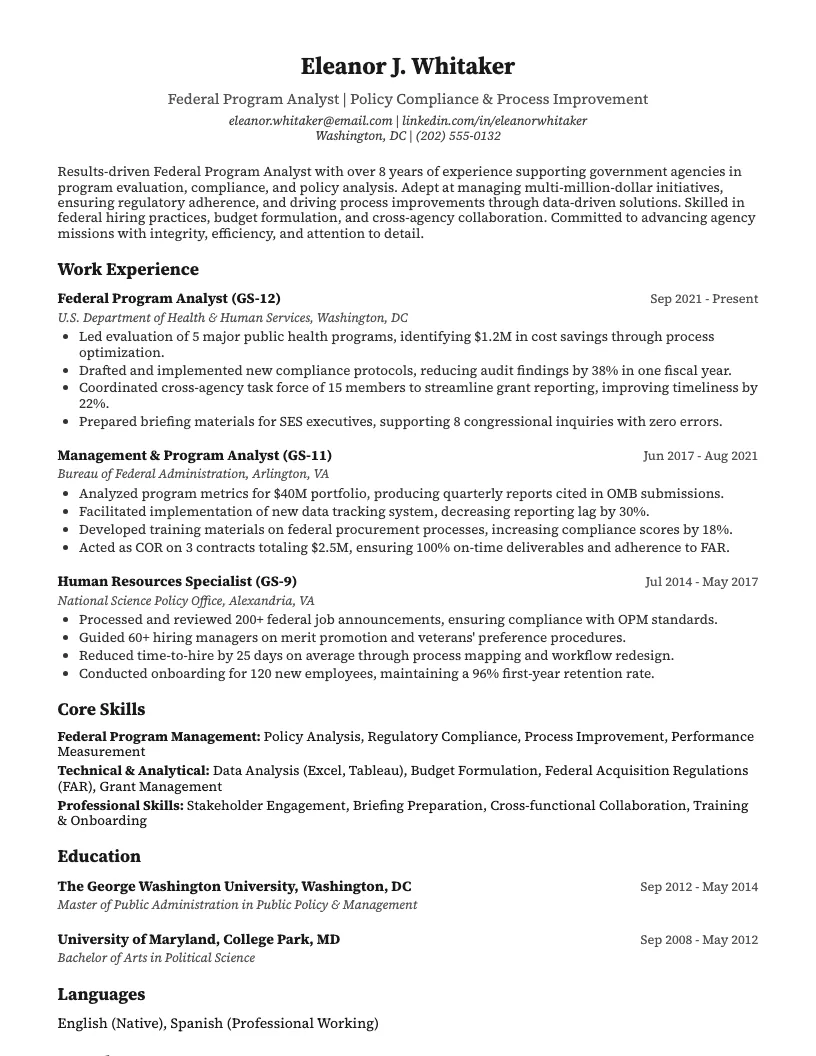
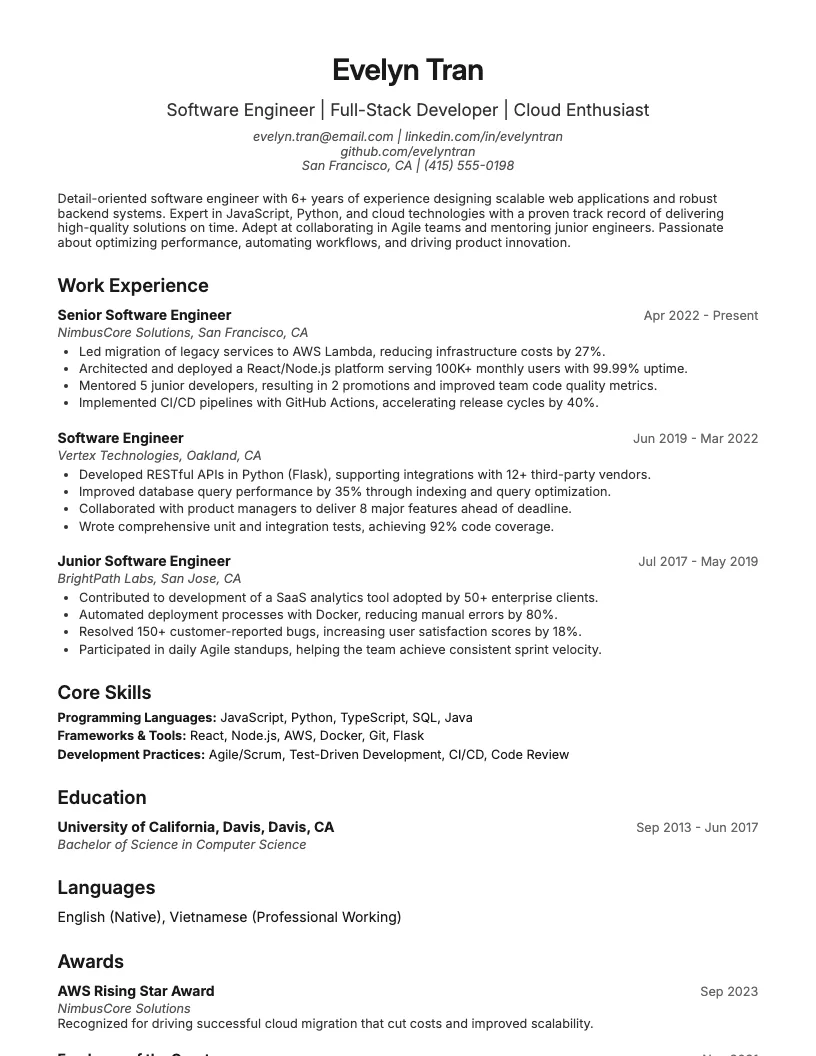
8 examplesStart from an example that already has them, and swap in your own.
Check your resume against the job you want
Scan your resume, see which skills and keywords the posting asks for that you are missing, and fix them before you apply.
Free to use • No credit card required