 ResumeJudge
Metaphors to Describe Yourself: 10 Picks That Don't Sound Rehearsed
10 metaphors, 10 objects to hold onto, and the songs and quotes people actually pick - real examples for each, so you're never caught freezing in an interview.


Written by Sarah Chen
Senior Career Strategist & Resume Expert
Updated August 2026
Reviewed by Marcus Rodriguez
Is your resume ATS-friendly?
Drop your resume in and see which of these skills a scanner can actually read, and which ones the job you want is asking for that you have not listed.
PDF or DOCX. Max 2MB.
We never share your resume or use it to train a model.
In This Guide:
What are some metaphors to describe yourself?
Ask someone to rattle off ten of their own skills and most people freeze halfway through.
A metaphor gets around that. Instead of a list, you give someone a picture, and pictures stick in a way that "detail-oriented" or "team player" never do.
"I'm a lighthouse" - you're the one people come to when they're lost
Turning a metaphor into a line you'd actually say
I'm a natural leader who inspires others.
Whenever a teammate's stuck, I'm the one they come find.
Say this when people lean on you for direction, not answers you hand them but a fixed point they can steer by.
"I'm a sponge" - you pick up new things fast
This is the one to reach for when you're short on years but long on speed. It tells someone you'll be useful fast, not eventually.
"I'm a bridge" - you get two sides talking
Good for anyone who sits between departments, teams, or a client and an engineer. You're the reason the two sides understand each other at all.
"I'm a GPS" - you find the route nobody else spotted
I see this fit analysts, accountants, and engineers most often - people solving quietly in the background, then handing over the fastest way through.
"I'm an orchestra conductor" - you keep a lot of people in time
Use this one for managing, not doing. You're not playing an instrument, you're keeping ten of them in time - that's the whole point of the picture.
"I'm a river" - you keep moving when things get blocked
For the person who doesn't stall when a plan falls apart. You find another way through.
"I'm a detective" - you notice the detail everyone walked past
This is a strong one if your work is catching what others miss. It's also close to how I'd describe what a resume checker does - ResumeJudge reads a job posting and your resume side by side and flags the exact detail a posting cares about that your resume skipped.
"I'm a fortress" - you protect the people and the work you care about
Fits anyone whose job is keeping things safe: security, compliance, ops, or just the person a team leans on when things get shaky.
"I'm a magnet" - people gather around you
Use this for the person people naturally cluster around - in sales, recruiting, community roles, anywhere pulling people in is the job.
"I'm an open book" - what you see is what you get
The honest one. No hidden agenda, no surprises down the line - what you say is what you'll do.
Where to look for your own: a job, an object, an animal, a person people know
If none of the ten above fit, look in four places: another job entirely (a nurse, a pilot), an everyday object, an animal, or a well-known figure. Objects work especially well if you want something less abstract to hold onto.
How to say a metaphor out loud without sounding rehearsed
Don't lead with the metaphor - lead with the moment, then let the picture land as the punchline. Test it on a colleague who's actually watched you work; nine times out of ten, they'll hand you a better one than you'd have picked yourself.
Check the FAQ if you're worried about using one in an interview.
What objects would you pick to describe yourself?
Objects work because they're specific. Anyone can say "I'm hardworking" - showing a beat-up pair of boots and saying why says more in five seconds.
A family photo
This is the most common pick I see when people do this exercise, and there's a reason: it says where you come from without a single word about work.
A book you keep re-reading
Not the book everyone names to sound smart. The one you'd actually grab off the shelf again - that's the one worth explaining.
A pair of work boots
Scuffed, broken in, still on your feet. Good shorthand for someone who shows up and does the job rather than talks about it.
A passport
Stamps, not the cover. Say what the stamps mean - curiosity, adaptability, comfort being the newest person in the room.
A notebook or planner
Pick this one if you're the person who writes things down and actually follows through. "Organized" is one of the words I see claimed most often on a resume; this is proof.
A mug and the drink in it
Small, a little funny, and it opens a conversation instead of closing one. Good for an interview where the room needs to loosen up.
Something someone gave you
The strongest version of this pick usually isn't valuable - it's just proof someone thought of you. Say who and why, briefly.
Something you made yourself
Built, fixed, written, coded - doesn't matter what. This is the object that proves you finish things.
A ticket stub or a badge
A concert, a conference, a race. It marks a moment, and moments are more memorable than adjectives.
A phone or a pair of headphones
Everyone has one, so the point isn't the object - it's what's on it. Name the playlist, the podcast, the group chat that explains you.
Picking 5 objects versus picking 10
Five forces you to cut down to what actually matters; ten lets in more texture but risks a list that drifts. If you're prepping for a metaphor too, treat both exercises the same way - fewer, sharper picks beat a long, safe list.
How to explain why you chose each one
The picks that fall flat are the ones chosen to impress - a passport used only because international travel sounds good. Pick the object that's actually true, even if it's small; a specific mug with a real story beats a borrowed passport story every time.
The object is never the point - the sentence after it is. "This is my passport, because I've worked with three teams on three continents this year" beats the object alone every time.
If you're turning any of this into resume language, ResumeJudge can take the wording you land on and rewrite it against the actual job posting, so the reasons behind your picks turn into keywords that match what the employer's scanning for. For the common questions people ask before doing this out loud, that section covers it.
What songs and quotes describe you?
Songs for the version of you that keeps going
Pick the song you play when a project's falling apart and you're the one holding it together. It doesn't have to be inspirational on its face - a song about pushing through pressure works better than an anthem, because it sounds like you're telling the truth, not performing confidence.
Songs for the version of you that's changing
This is the growing-up song, the one that fits a promotion, a layoff, a move to a new city or a new field. I've read a lot of these answers, and the ones that land are tied to a specific stretch of time, not a vague "personal growth" theme.
Songs for the version of you that's just fun to be around
Not every answer needs weight. One light pick - something you'd play getting ready or driving somewhere - shows you don't take yourself too seriously all the time, and an interviewer remembers the person who let themselves be a little fun.
How to say why the song fits, not just name it
Naming a song and stopping is the most common mistake I see. The fix is the same one that applies to objects - the reason you picked it is the answer, the title is just the label.
Quotes about how you work
A quote about discipline, focus, or finishing things works well here - something short enough to say from memory. If you're picking between two that both fit, the FAQ covers how to choose.
Quotes about how you treat people
This is the one people underuse. A line about kindness, loyalty, or showing up for others tells an interviewer something a work quote never will, and nine times out of ten it's the one they remember after the call ends.
Quotes about what you're still figuring out
A quote about doubt or not having it all worked out is a stronger answer than it sounds. It reads as self-aware rather than unfinished, and it gives you somewhere honest to go if you're asked a follow-up.
A quote that isn't famous: something you actually say
The strongest version of this question isn't a quote at all - it's a line you actually say, one a coworker or friend would recognize as yours. Once you've got wording you're happy with, ResumeJudge can check how it reads against the tone of the job description you're applying to, so it doesn't clash with the rest of your application.
Frequently Asked Questions
Should I use a metaphor in a job interview?
Yes, especially for open-ended questions like "tell me about yourself". Keep it short, say it once, and then explain it in a sentence or two of plain talk so it doesn't sound like a riddle. Save it for the moment it actually helps, not as an opener to every answer.
Can I put a metaphor on my resume?
Not really - a resume gets scanned fast, by a person and often by software, so it needs plain, literal language that matches the job posting, not an image someone has to interpret. Where a metaphor can work is your cover letter, since it's read as a story rather than a checklist. ResumeJudge writes that cover letter for the specific job you're applying to, so you can spend your resume space on the direct, keyword-matched language it actually needs.
What if my metaphor sounds cheesy?
It's usually cheesy because it's too generic - "I'm a bridge-builder" says nothing until you attach it to something you actually did. Ground it in a real example: what the bridge connected, who was on each side, what happened because you were there. A specific, slightly odd metaphor tied to a real story lands better than a smooth, familiar one with nothing behind it.
How do I pick between two metaphors that both fit?
Pick the one that matches the job you're going for, not the one you like better in the abstract. A metaphor about steady, careful problem-solving fits an operations role; one about pushing into new territory fits a growth or sales role. If you're not sure which posting fits you best in the first place, ResumeJudge can show you the jobs that actually suit your background, which makes it easier to see which side of yourself to lead with.
What if I'm asked this in front of a group?
Keep it shorter than you would one-on-one - a group setting rewards a clean, quick image over a long explanation. Say the metaphor, give one concrete detail that backs it up, and stop; you can always expand if someone follows up. Rehearsing it out loud once or twice beforehand helps it come out smooth instead of sounding read off a card.
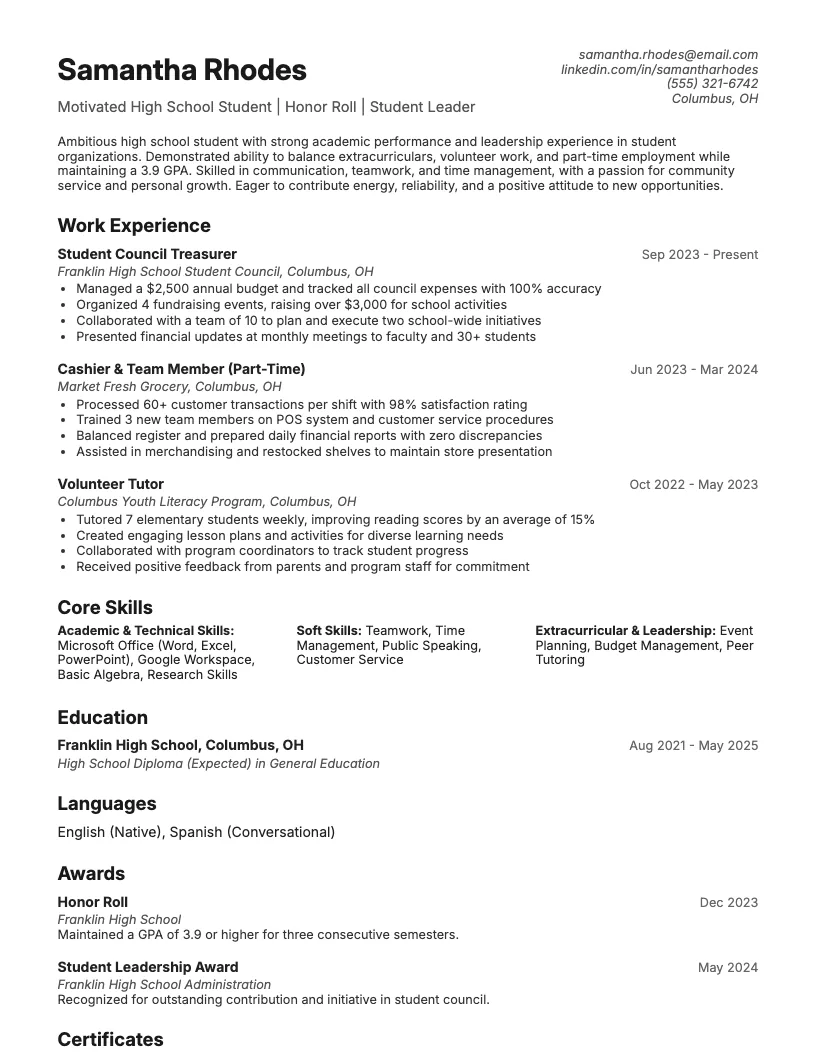
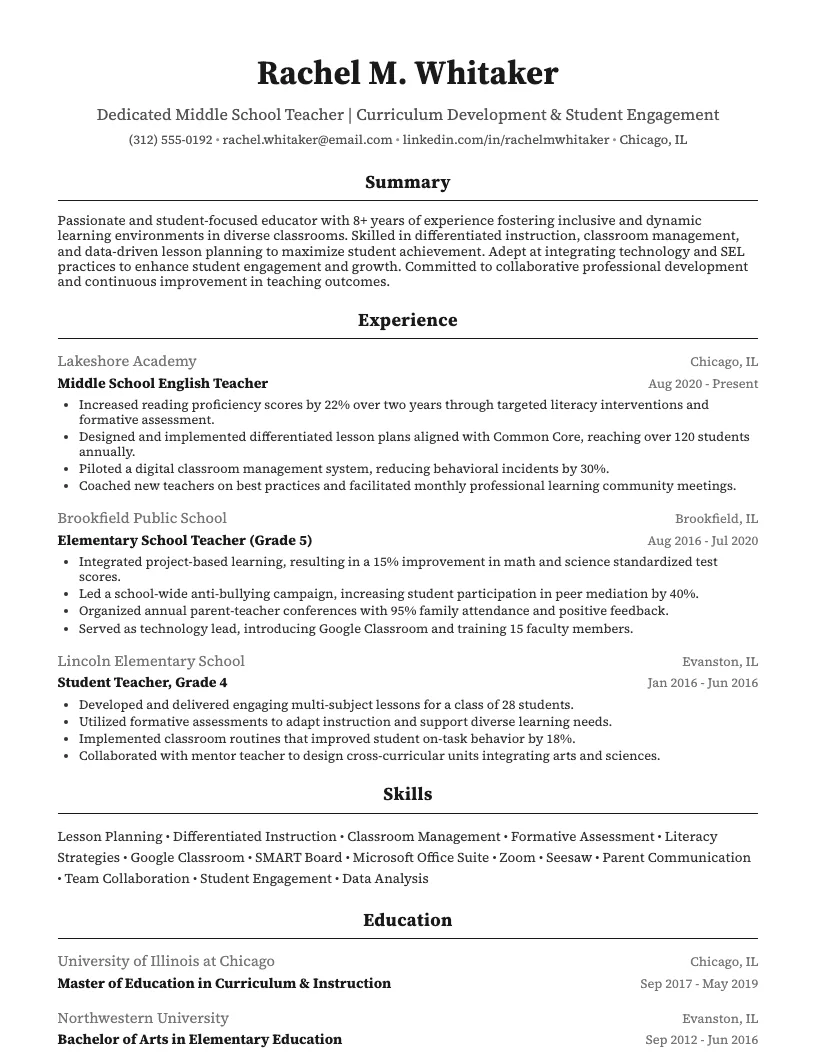
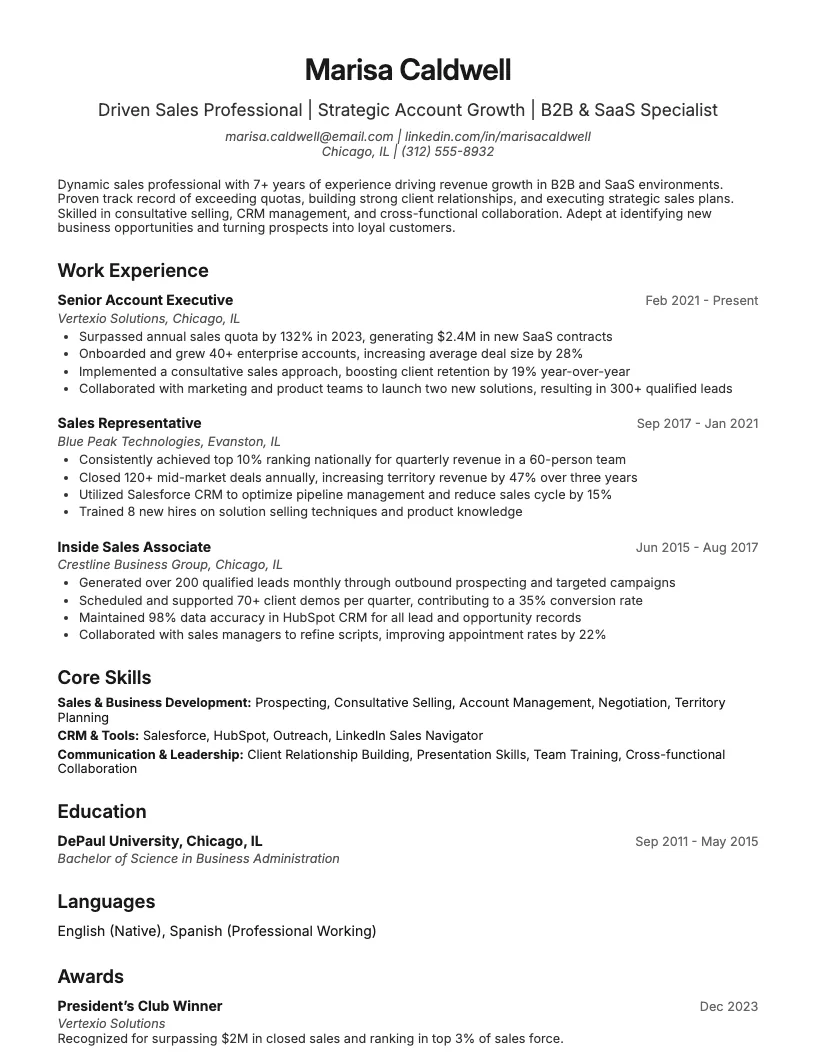
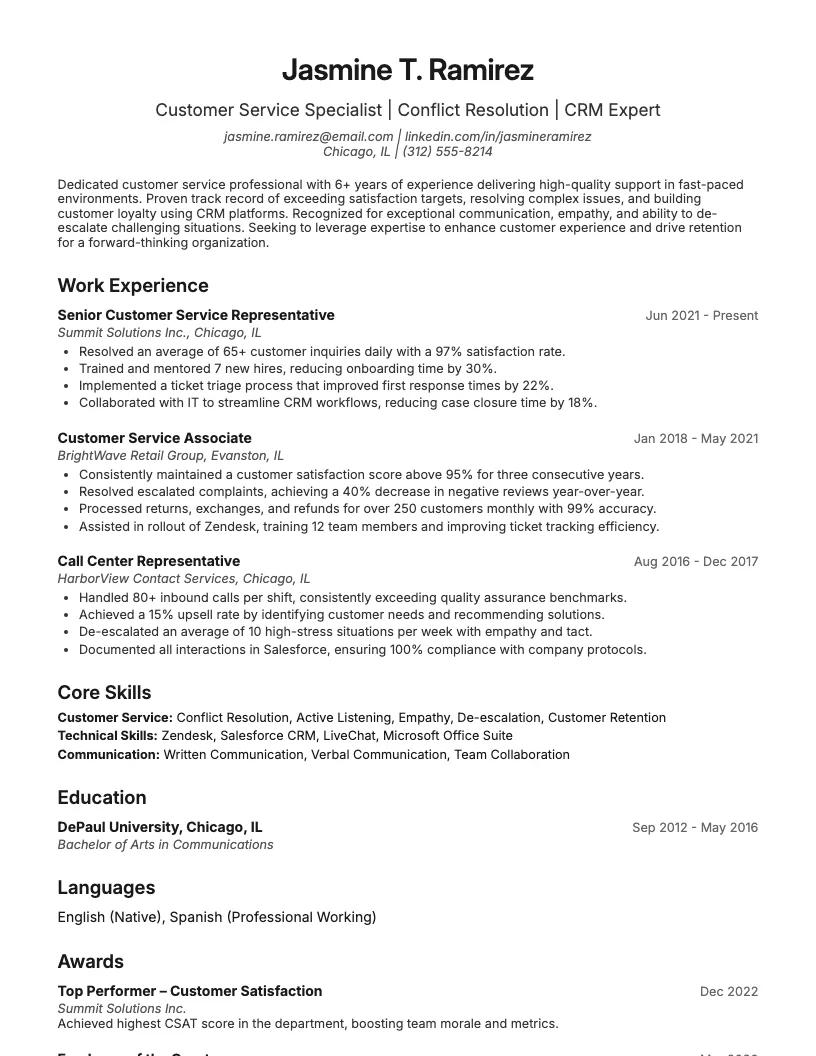
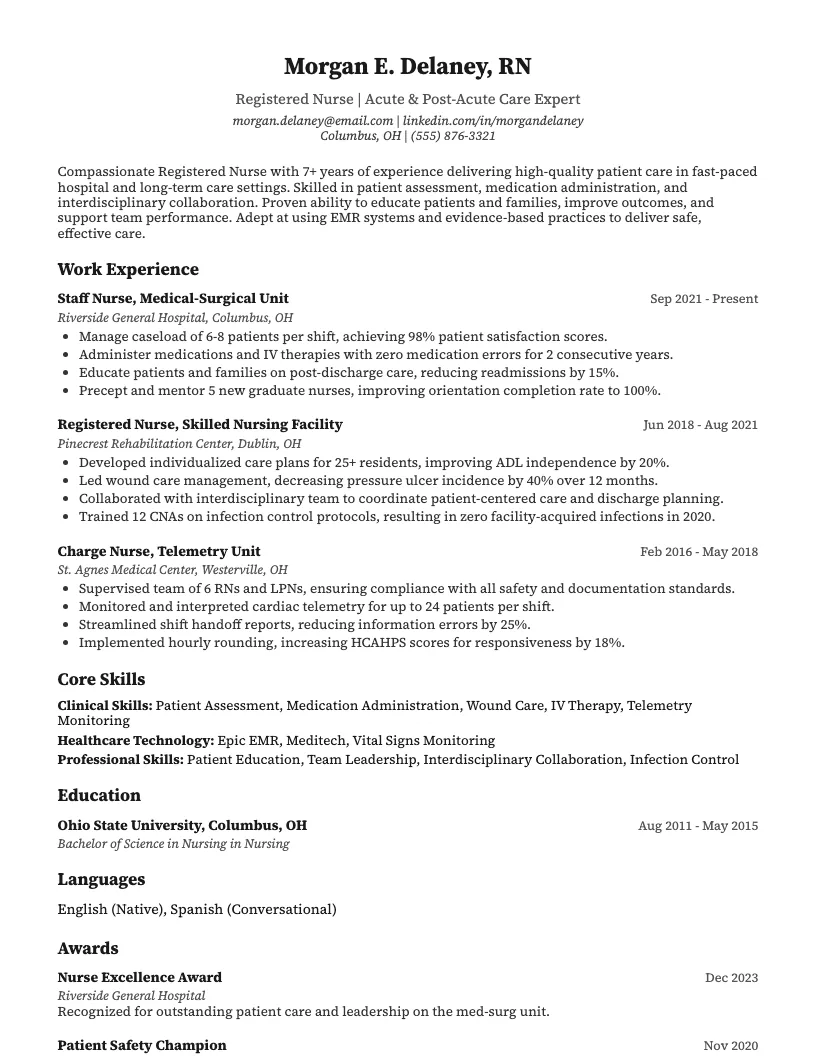
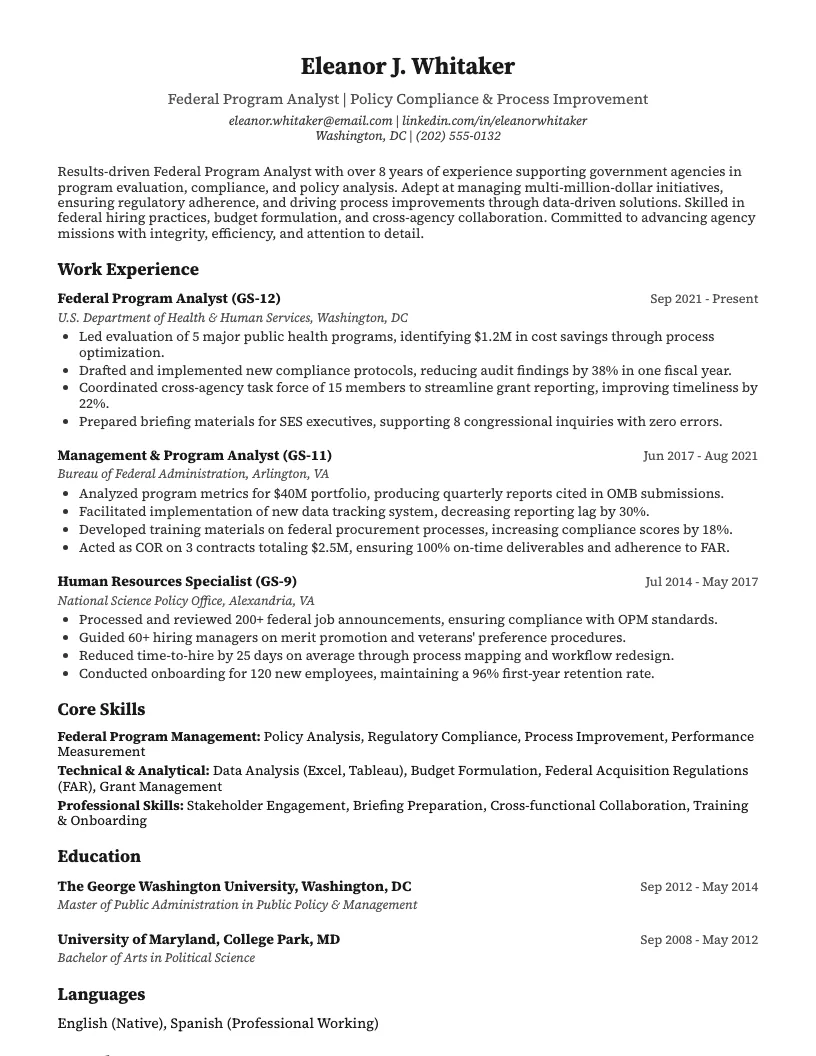
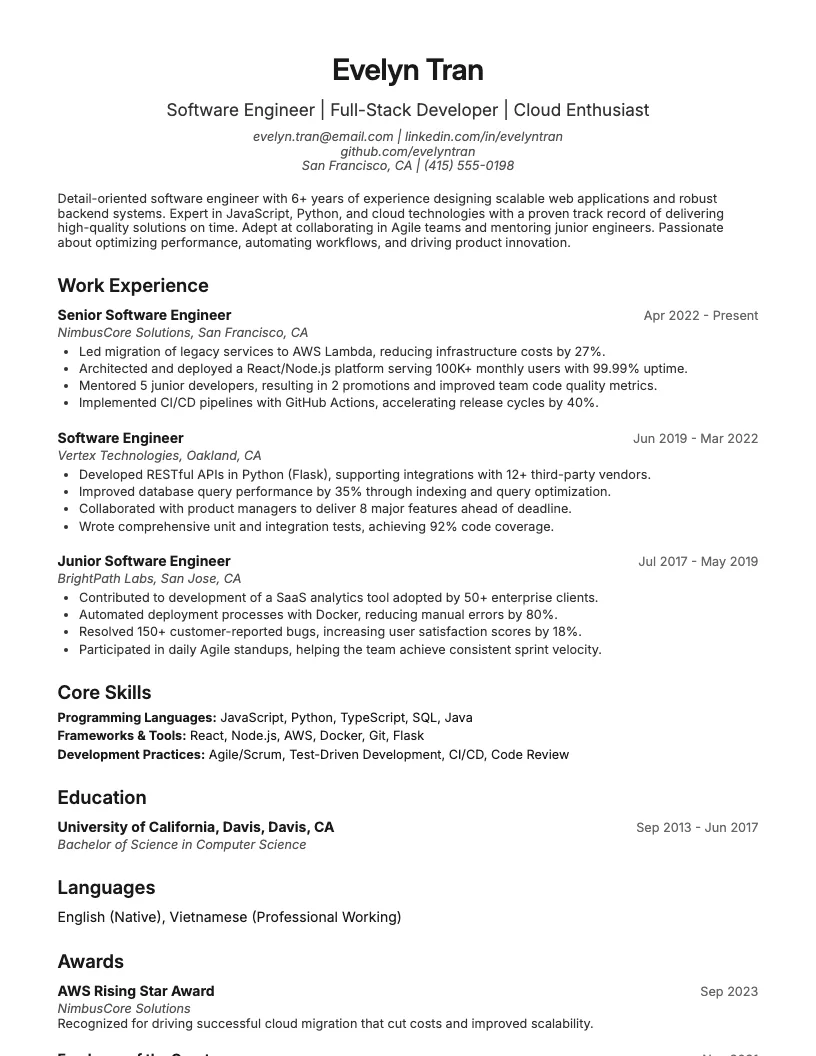
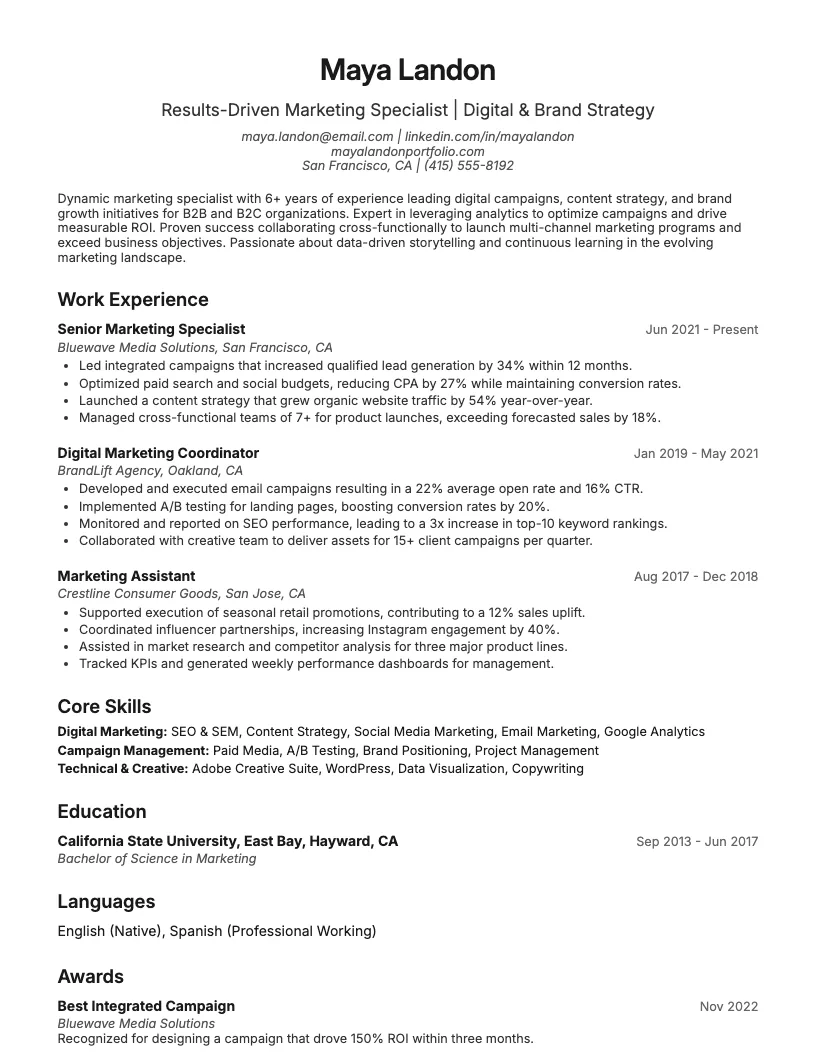
See these skills on a real resume
8 examplesStart from an example that already has them, and swap in your own.
Check your resume against the job you want
Scan your resume, see which skills and keywords the posting asks for that you are missing, and fix them before you apply.
Free to use • No credit card required