Unique Words to Describe Yourself: 27 Good Ones, 13 to Avoid
27 unique words that actually say something about how you work, 13 that only sound unique, swaps for hard-working and passionate, where each one goes.


Written by Dr. Priya Sharma
Career Development Expert & Resume Analyst
Updated August 2026
Reviewed by Sarah Chen
Is your resume ATS-friendly?
Drop your resume in and see which of these skills a scanner can actually read, and which ones the job you want is asking for that you have not listed.
PDF or DOCX. Max 2MB.
We never share your resume or use it to train a model.
In This Guide:
What makes a word unique rather than just unusual?
You didn't come here for "hard-working." You came here because you already know that word is dead on arrival, and you want one that isn't.
Here's the distinction that matters: unusual just means a recruiter doesn't see it often. Unique means it does work in the sentence - it tells them something specific about how you operate.
A word can be rare and still say nothing.
The words everyone uses: hard-working, motivated, team player
I've read thousands of resumes, and these three show up on most of them. Not because people are lying, but because these are the first words anyone reaches for.
The problem isn't that they're false. It's that they're the default setting, so they carry zero information.
Every candidate claims them, which means none of them prove anything.
Rare vs. precise: unflappable and perspicacious both sound clever, only one lands
Put those two side by side. "Unflappable" you can picture - someone calm when a launch goes sideways.
"Perspicacious" you have to stop and translate before you even know if it applies to you.
More on when a longer word is worth it and when it isn't: should you use big words to describe yourself.
Words that name a specific way of working: methodical, dogged, exacting
The words that actually land are the ones that name a behavior, not a vibe. "Dogged" tells someone you don't let go of a problem.
"Exacting" tells them you catch the error nobody else checked for.
Compare that to "motivated," which tells them nothing about what you'd actually do on a Tuesday.
Pick one unusual word, not five
Choosing between one word and five in your summary
Motivated, driven, hardworking, dynamic, results-oriented professional
Methodical project manager who catches what others miss
Nine times out of ten, the resume that overreaches doesn't pick one strong word - it picks five, hoping one sticks. That reads as trying too hard, and it buries the one word that was actually true.
Pick the single word that best matches how you get work done, use it once, and let the rest of the resume back it up.
What can you say instead of the words everyone uses?
You already know the words are tired. What you need is a straight swap - something you can drop into the sentence you already wrote without redoing the whole thing.
Here's what I reach for with each one. This section is only about which tired word each one replaces - for what the words themselves mean, see which unique adjectives you can actually use.
Instead of hard-working: tenacious, dogged, driven
"Hard-working" is on nine out of ten resumes I read, which means it registers as nothing. Tenacious says you don't let go of a problem. Driven works when the story is about ambition, not just effort. Pick the one that matches how you actually work, not the one that sounds best.
Instead of team player: collaborative, steady, dependable
"Team player" tells a hiring manager nothing about what you're like to work with. Collaborative is the safe, accurate swap. Steady is better if your real strength is that people count on you when things get messy. Dependable is the plainest of the three, and plain is fine - it's still miles ahead of the phrase it's replacing.
Instead of detail-oriented: meticulous, exacting, precise
Meticulous is the one I see land best, because it implies a process, not just care. Precise is narrower - use it when you're talking about numbers, code, or anything measured.
Instead of motivated: self-starting, purposeful, ambitious
"Motivated" is a claim with nothing under it. Self-starting proves it in one word - you didn't need to be told. Purposeful fits someone who picks projects deliberately rather than taking whatever's next. Ambitious is honest about wanting more, and there's nothing wrong with saying so.
Instead of creative: inventive, original, imaginative
Inventive is my default here - it points at solutions, not just ideas. Original works when the point is that you didn't copy the standard approach. Imaginative is softer and reads better outside design work, where "creative" can sound like it's claiming a title you don't have.
Instead of problem solver: resourceful, analytical, level-headed
Resourceful is for when you made something work with less than you needed. Analytical fits if your problem-solving is mostly about the numbers. If a posting names a specific problem - a process that's broken, a metric that's stalled - that's exactly the kind of detail ResumeJudge pulls out of the job description and works into the resume for you, so the word you pick has proof sitting right next to it.
Instead of passionate: dedicated, invested, committed
If a posting explicitly asks for 'passion' or 'enthusiasm', it's fine to echo that exact word back once even though it's weak everywhere else - matching the posting's own language still helps it get past a keyword screen. Just don't lead with it, and don't use it twice.
"Passionate" gets flagged so often it's become a punchline in hiring circles. Dedicated and committed say the same thing without the overreach. Invested is the one I'd pick if you want to imply you think about the outcome, not just the task in front of you.
Instead of flexible: versatile, unflappable, quick to adjust
Versatile is for range - you can do more than one kind of work well. Quick to adjust is the plain-English option when you'd rather not lean on a single word at all. All three beat "flexible," which by now says almost nothing.
Which unique adjectives can you actually use about yourself?
Which word category fits your situation
| What It's About | Words | Best For |
|---|---|---|
| How you work | methodical, exacting, dogged | Process-heavy roles |
| How you think | astute, incisive, discerning | Analysis and judgment calls |
| How you work with people | candid, diplomatic, disarming | Client or team-facing roles |
| Under pressure | unflappable, steady, composed | High-stakes, deadline-driven roles |
| In the unknown | resourceful, self-directed, curious | Startups, solo work, no playbook |
| As a leader | decisive, level-headed, mentoring | Management roles |
Forget hunting through a thesaurus for something that sounds smart. Pick the word by asking which part of the job you're actually describing, then choose the one that fits that part exactly.
How you get work done: methodical, exacting, dogged, unhurried, thorough
These five aren't interchangeable. Methodical means you follow a process every time.
Exacting means your standard for "done" is higher than most people's. Dogged means you don't let go of something that's gone wrong until it's fixed. Unhurried is the one people skip, and it shouldn't be - it says you don't cut corners under a deadline, which is worth more to most managers than "fast."
How you think: astute, incisive, inquisitive, discerning, systematic
I'd split these into two groups. Astute and discerning are about judgment - you notice the thing that matters in a pile of noise.
Incisive and systematic are about how you get to an answer, cutting straight to it versus working through it step by step. Inquisitive is the odd one out: it's about the questions you ask before you've formed a view at all, which matters most early in a project.
How you work with people: candid, diplomatic, disarming, patient, generous with credit
Candid and diplomatic look like opposites and mostly aren't - the best version of both is telling someone the hard thing in a way they can actually hear. Disarming is worth using if you're the person who defuses a tense meeting, not the one who wins it.
"Generous with credit" isn't a single word, but I include it because it's more honest than "collaborative," which nine times out of ten just means "was in the meeting."
How you handle pressure: unflappable, steady, resilient, composed
Resilient has been used so often it's nearly invisible now - it's on close to every generic word list out there. Unflappable and composed say something narrower and more useful: you don't visibly change under pressure, which is exactly what someone hiring for a high-stakes role wants to know.
Steady is the quieter cousin - less about a crisis, more about being the same person on a Tuesday as you are the week before a launch.
How you handle new or unclear work: resourceful, self-directed, inventive, curious
This group is for anyone whose resume has a gap where "structured process" would normally go - a startup role, a solo project, a job with no playbook. Resourceful and self-directed say you didn't wait to be told what to do.
Curious is the honest word for someone earlier in their career: pair it with what you asked about or dug into, not just the trait on its own.
How you lead: decisive, level-headed, mentoring, straight-talking
Decisive only works if you can name a call you made without a full picture. Level-headed is closely related to unflappable but belongs here instead when the context is a team relying on your judgment, not just your own composure.
Mentoring beats "people manager" almost every time - it says you grew someone, not just supervised them. Whichever one you land on, don't stop there - prove it with a line of evidence, and check it against your actual role before it goes anywhere near your resume.
Should you use big words to describe yourself?
Sometimes, yes. A precise word beats a plain one when it actually says something the plain word can't.
But "big" and "clear" aren't the same thing, and mixing them up is where most resumes go wrong.
Big words that still read clearly: astute, meticulous, tenacious, candid
These four show up on almost every resume I mark up, and they earn their place.
They're longer than "smart" or "careful," but a reader doesn't have to stop and work them out. You could use any of them in conversation without sounding like you're performing.
That's the bar: if it fits in a sentence you'd actually say out loud to a colleague, it clears.
Big words that read as showing off: perspicacious, indefatigable, sagacious, erudite
Same idea, opposite result. These say "smart," "tireless," "wise," and "well-read," but they cost the reader a beat to translate.
A hiring manager skimming forty resumes in an hour doesn't want to translate. Nine times out of ten, a word that makes someone pause is a word that gets skipped past, not admired.
Say the word out loud before you put it in writing
This is the fastest test I know. If you'd never say "I'm quite perspicacious" to a friend describing your last job, don't write it either.
Resumes get read the way speech gets heard - in real time, once, without a dictionary open. Anything that trips up your own mouth will trip up their eyes.
One big word per document, not one per line
The count is the same as for any unusual word - see pick one unusual word, not five.
Any word you had to look up to use
This one's simple: if you had to check what a word meant before you typed it, it doesn't belong on your resume.
You won't use it right in an interview, and the gap between the word on the page and the word in your mouth is exactly what a hiring manager notices.
How do you prove a unique word instead of just claiming it?
Is your resume good enough?
Drop your resume in and see which of these skills a scanner can read, and which ones the job you want is asking for that you have not listed.
Upload your resumeFree. PDF or DOCX. We never share your resume or use it to train a model.
Any word you put on a resume without something behind it is just an adjective a stranger has to trust. I've read thousands of these, and the ones that stick aren't the ones with the best vocabulary - they're the ones where a single line makes the word obvious before the reader even notices it was used.
Here's what that looks like, broken down word by word.
Tenacious: reopened a dead account and closed it 11 months later
Proving 'tenacious' instead of just claiming it
Tenacious relationship manager
Reopened a dead account and closed it 11 months later
Don't write "I'm tenacious." Write the eleven months.
A dead account that came back to life over the better part of a year says persistence more clearly than the word itself ever could, and a hiring manager remembers a number far longer than they remember an adjective.
Meticulous: caught a pricing error that had run for two quarters
Proving 'meticulous' instead of just claiming it
Meticulous attention to detail
Caught a pricing error that had run for two quarters
Same idea, different trait. An error that survived two quarters before you found it tells the reader you check things nobody else bothered to check.
That's what meticulous means on paper - not a claim, a habit that produced one specific catch.
Resourceful: built the reporting dashboard with no budget for one
Proving 'resourceful' instead of just claiming it
Resourceful and scrappy problem-solver
Built the reporting dashboard with no budget for one
Resourceful is one of the most overused words on any list like this one, so it needs the most proof to earn its place. "Built it with no budget for one" does the work the word can't - it shows the constraint and the workaround in a single line, which is the whole definition of resourceful anyway.
Unflappable: ran the launch weekend after two engineers called in sick
Proving 'unflappable' instead of just claiming it
Unflappable under pressure
Ran the launch weekend after two engineers called in sick
This is the format I'd use for any pressure word. Name the thing that went wrong, then name what still shipped anyway.
The gap between the two is what "unflappable" is standing in for, and it lands harder as a sentence than it ever will as a label.
If the line still feels vague once you've written it, that's usually a sign it's describing the word instead of the work. ResumeJudge rewrites each section of your resume against the actual posting you're applying to, so a bare claim like "resourceful" turns into a proof line pulled from what you really did, worded the way that job wants to see it.
Ask three colleagues which word they would pick for you
If you're stuck between two words, don't decide alone. Ask three people who've actually worked with you which single word they'd use, without giving them options to pick from.
The word two or three of them land on independently is almost always more accurate than the one you'd have picked for yourself - you're too close to your own work to see the pattern from outside it.
Cut any word you cannot follow with a sentence
This is the test I'd apply to every unique word on your resume: can you follow it with a real sentence, right now, without stopping to think? If nothing comes to mind, the word doesn't belong yet.
Cut it, or go find the sentence first and let the word follow after.
Which unique words fit your job?
The word that lands for a nurse falls flat on a software resume, and the reverse is just as true. Pick from the list that matches the actual work, not the list that sounds most impressive.
Sales and account management
Sales resumes lean on the same three words - motivated, driven, results-oriented - so a hiring manager reads them without registering them at all.
Try tenacious, persuasive, relationship-driven, or quota-carrying instead. These name something a sales manager actually screens for: can you open doors, and can you keep an account once you've won it.
Whatever word you pick, back it with a number - a renewal rate, a pipeline you built from nothing, a quota you cleared. See how to prove a word instead of just claiming it for exactly how that pairing works.
Customer service
Patient and friendly are true of almost everyone who's ever worked a support queue, so they don't separate you from the pile.
Empathetic, unflappable, and attentive do more work, because they describe how you behave when a customer is already upset - which is the actual job. If you want more on staying steady under pressure specifically, that's covered under how you handle pressure.
Software engineering
I've reviewed a lot of engineering resumes that reach for "passionate about technology," and it tells a hiring manager nothing about how you actually build.
Methodical, precise, and resourceful say more - they describe how you debug, how you review a pull request, how you handle a system with no clear owner. Analytical works too, if you can follow it with what you actually analyzed.
Different postings emphasize different traits here - one wants methodical, another wants someone who moves fast and figures it out. Run your resume against the actual job description and ResumeJudge will flag which of your words the posting is actually asking for, so you're not guessing which one to lead with.
Nursing and healthcare
Compassionate is expected in healthcare, almost a given, so it reads as filler unless you attach it to something specific.
Meticulous and resilient carry more weight on a nursing resume - meticulous because a medication error is the thing everyone is trying to prevent, resilient because a twelve-hour shift under pressure is the norm, not the exception. Steady under pressure belongs here too; see how you handle pressure for that whole set.
Finance and accounting
Detail-oriented shows up on nearly every finance resume I've seen, which means it's stopped meaning anything.
Exacting, diligent, and trustworthy hold up better, because finance work is built on getting a number right and on someone else being willing to rely on you when they can't check your work themselves.
Marketing
Creative gets overused in marketing to the point that it reads as a placeholder rather than a claim.
Strategic, insightful, and resourceful say more about what you actually did - you didn't just come up with an idea, you read the data behind a campaign and adjusted it. If a posting lists a skill or a channel you haven't named yet, that's exactly the kind of gap ResumeJudge flags before you apply, so your resume matches the language the posting is actually using.
Teaching
Passionate about education is the phrase I see on nearly every teaching resume, and it says nothing a principal can act on.
Engaging and patient are better because they describe a classroom skill directly. Adaptable is worth using too, since no lesson plan survives contact with a real room of students unchanged.
Design and creative work
Creative is the word every design resume already has, so lean on something that shows range instead.
Inventive, expressive, and resourceful work well, especially resourceful - nine times out of ten, the story behind a strong portfolio piece is a constraint you worked around, not a blank check you were handed.
Operations and logistics
Operations resumes tend to under-describe themselves, listing tools and systems with no word at all for how the person actually runs things.
Methodical, decisive, and unflappable fill that gap - methodical for how you build a process, decisive for the calls you make when a shipment or a schedule breaks. That pairs with how you get work done if you want the fuller set.
Administration and HR
Organized is accurate for almost every admin and HR resume, which is exactly why it doesn't separate yours from the rest.
Discreet and diplomatic say more about the actual job - you're trusted with information other people can't see, and you have to deliver a hard message without making it worse. See how you work with people for more words in that vein.
Where do you put these words on a resume?
Where do you put these words on a resume?

Same word, six different jobs. Where you put it changes what it needs to do.
Your resume summary
This is the one place a word can stand alone, because the bullets right below it are about to back it up.
Pick one, maybe two, from your how you get work done or how you think list and open with it. "Methodical project manager" tells a hiring manager more in two words than "results-driven" does in three.
Your work experience bullets
This is where the proof actually lives, not the summary.
Don't write "meticulous" and then a bullet about meetings you attended. Write the bullet that shows the trait - the catch, the fix, the number - and let the reader supply the word themselves.
Your skills section
Skip the character words here entirely. "Meticulous" and "resourceful" are not skills, they're how you use skills, and a skills section that lists them next to "Excel" and "SQL" reads confused.
Save the trait words for the summary and bullets. If you're not sure which hard skills belong here instead, that's a keyword match problem, not a wording one - ResumeJudge pulls the actual terms a posting asks for and rewrites your resume with them in the right sections.
Your cover letter opening
A cover letter has room the resume doesn't, so this is where a slightly bigger word than usual can work - check should you use big words first if you're unsure which ones.
Open with the trait, then spend the rest of the paragraph proving it against this specific job. I've read a lot of openings that lead with "passionate" and never come back to why.
If writing that paragraph from scratch isn't where you want to spend your evening, ResumeJudge will write the cover letter for the posting you're applying to, in your voice, once your resume is set.
Your LinkedIn About section
LinkedIn is the one place you can use two or three unique words in a row without it reading like a list, because the format is closer to a bio than a form.
Pull from which words fit your job rather than the general list - a recruiter searching your industry is scanning for the specific ones.
The "describe yourself in three words" answer
Nine times out of ten this comes up in an interview, not on paper, so it needs to survive being said out loud.
Pick three that don't overlap - one about how you work, one about how you think, one about how you handle people - and have a ten-second story ready for each. If you can't finish that sentence, cut the word.
Which unique-sounding words should you avoid?
You went looking for a word that would make you stand out, and you landed on a list of words that recruiters have seen so many times they've stopped reading them.
That's the trap with "unique" words: the ones that sound the most impressive are usually the ones everyone reaches for when they can't think of anything specific to say.
Rockstar, ninja, guru
These showed up in a wave of job postings a decade ago, and now every recruiter reads them as a red flag instead of a compliment.
I've never once seen "ninja" or "guru" followed by a real example of what the person actually did. If you're good enough to earn a nickname like that, you're good enough to just say what you did instead.
Unique
Calling yourself "unique" is the resume equivalent of saying "trust me" - it asks the reader to take your word for it instead of showing them.
If there's a specific way you work that other people don't, name it. The words that name a specific way of working do that job better than "unique" ever will.
Dynamic
"Dynamic" describes energy, not results, and I've read hundreds of resumes where it's doing nothing except taking up a line.
Ask yourself what you're dynamic about - pace, ideas, problem-solving - and use that word instead. It'll say more in fewer characters.
Visionary
I'd save this one for people who've actually set a direction a company followed, not for someone two years into their career.
Used too early, it reads as overreach, and hiring managers notice the gap between the word and the resume underneath it.
Humble
Here's the trap: call yourself humble and you either sound falsely modest or like you're fishing for the reader to disagree with you.
Neither lands. Let your numbers carry the modesty and skip the label entirely.
Amazing, awesome, phenomenal
These belong in a text to a friend, not a job application. One list of words to avoid on resumes runs to 33 entries, and this trio is on it for the same reason every time: no hiring manager can act on "amazing."
Nine times out of ten, when I see one of these, the bullet underneath has nothing to back it up.
Legend, superior, flawless
"Flawless" claims you've never made a mistake. Nobody believes that, and the word costs you credibility the moment a reader hits it.
The fix is always the same: swap the superlative for the actual result, in the actual language the posting used. That's the gap ResumeJudge closes when it rewrites your bullets against a specific job description - it pulls in the skills and phrasing that posting is asking for instead of leaving you to guess at adjectives.
The resumes I've seen fall apart are the ones with a gap between what someone claimed and what they could show, which is exactly what "legend" and "superior" paper over instead of fix.
Frequently Asked Questions
How many words should I use to describe myself?
One unusual word, not a list. Piling unique adjectives back to back turns into noise, and the reader loses track of which one actually means something. Pick the single word you can back up with a real result and drop the rest.
Will an unusual word get my resume rejected by the screening software?
No. Screening software matches on the skills and keywords the job needs, not on whether a word sounds common or unusual. What gets a resume screened out is missing the specific terms the posting uses - ResumeJudge scans your resume against the posting and shows you exactly which ones are missing before you apply.
What if the job posting uses the common word instead?
Use the posting's word too, in whichever section it expects to find it, and save your unique word for a summary line or a bullet where you can prove it. Matching the posting's exact language matters more than sounding original. ResumeJudge rewrites your resume against that posting and works its exact wording into the right sections for you.
Is it a problem if the hiring manager doesn't know the word?
Only if it's left to stand on its own. A word with nothing attached to it leaves the reader guessing what you mean, so pair it with what you actually did. Once it's tied to a real result, it stops mattering whether the word itself is familiar.
Can I use the same words on my resume and in the interview?
Yes, and you should. Repeating the same word in both places makes you sound consistent, rather than like you picked a strong-sounding term for the page and never mentioned it again. Just be ready to back it up with the same example each time.
Which words can I use if I have no work experience yet?
Words about how you work rather than what you've delivered - resourceful, curious, organized - hold up fine without a job history behind them. Attach each one to a class project, internship, or volunteer role instead of a job. The word matters less than having something concrete sitting next to it.
How do I sound unique without sounding arrogant?
Keep the word paired with evidence instead of a bare claim about yourself. "Resourceful - stretched a $500 budget across a 3-month project" reads as confident; "resourceful" sitting alone with nothing behind it reads as a boast. Let the result carry the weight, not the adjective.
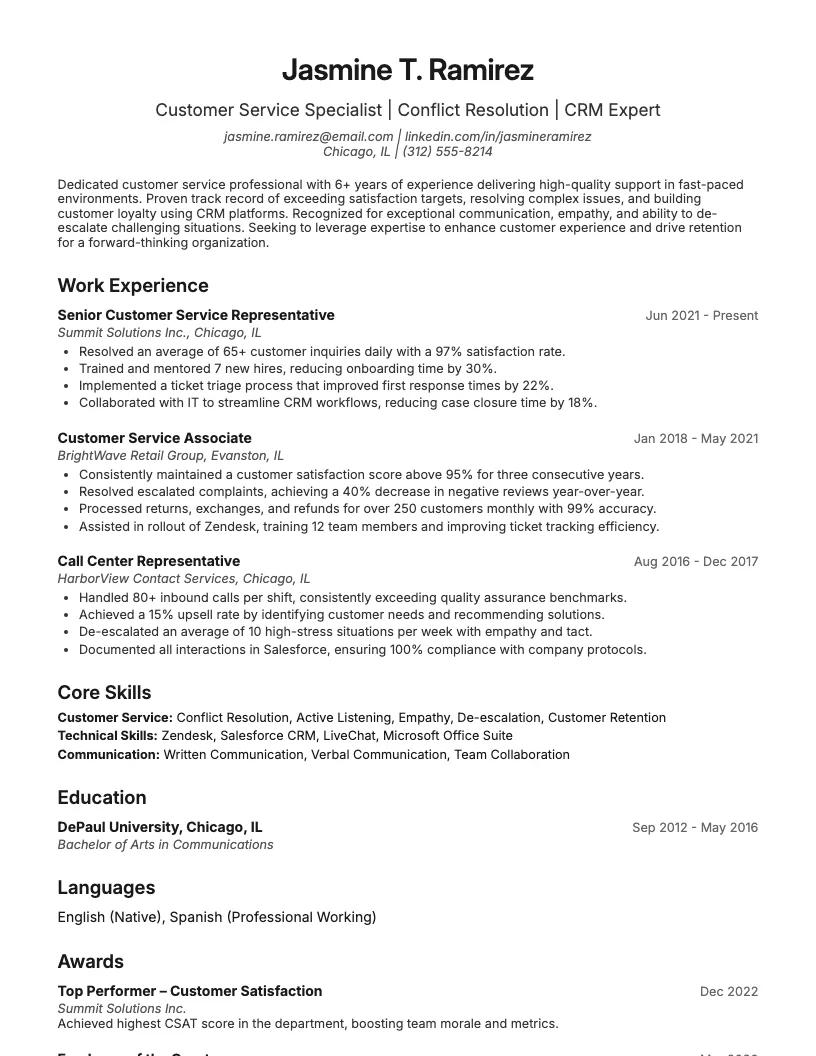
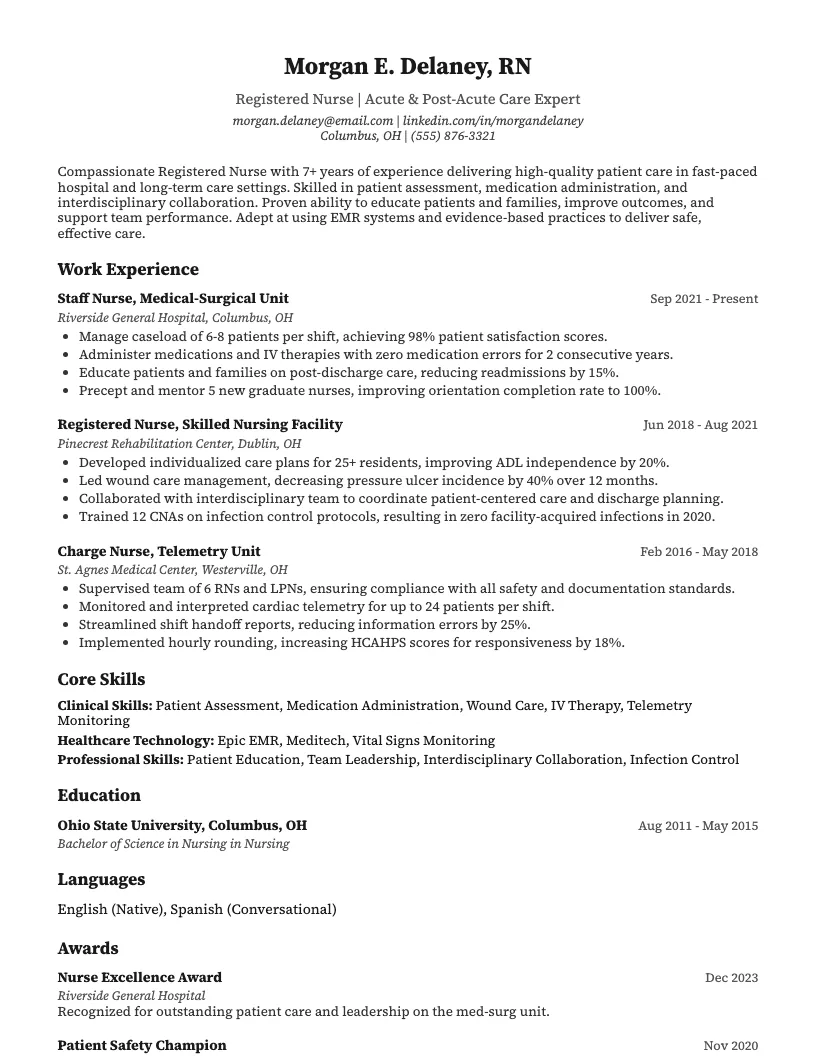
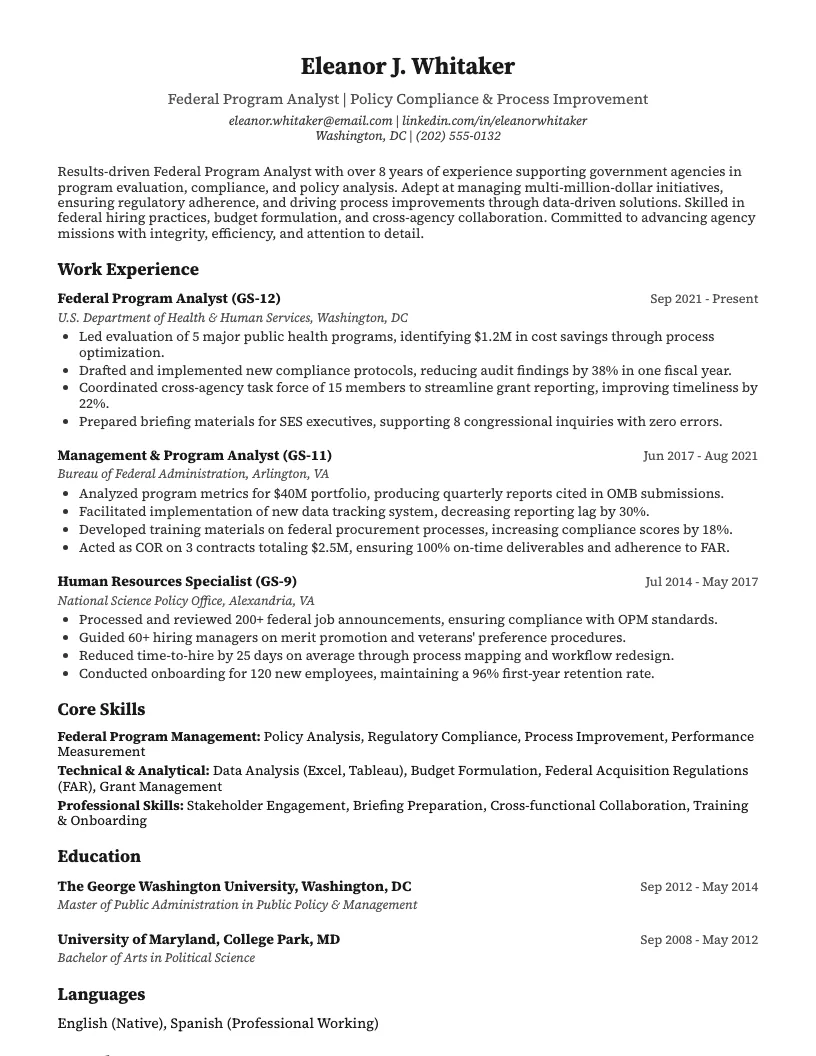
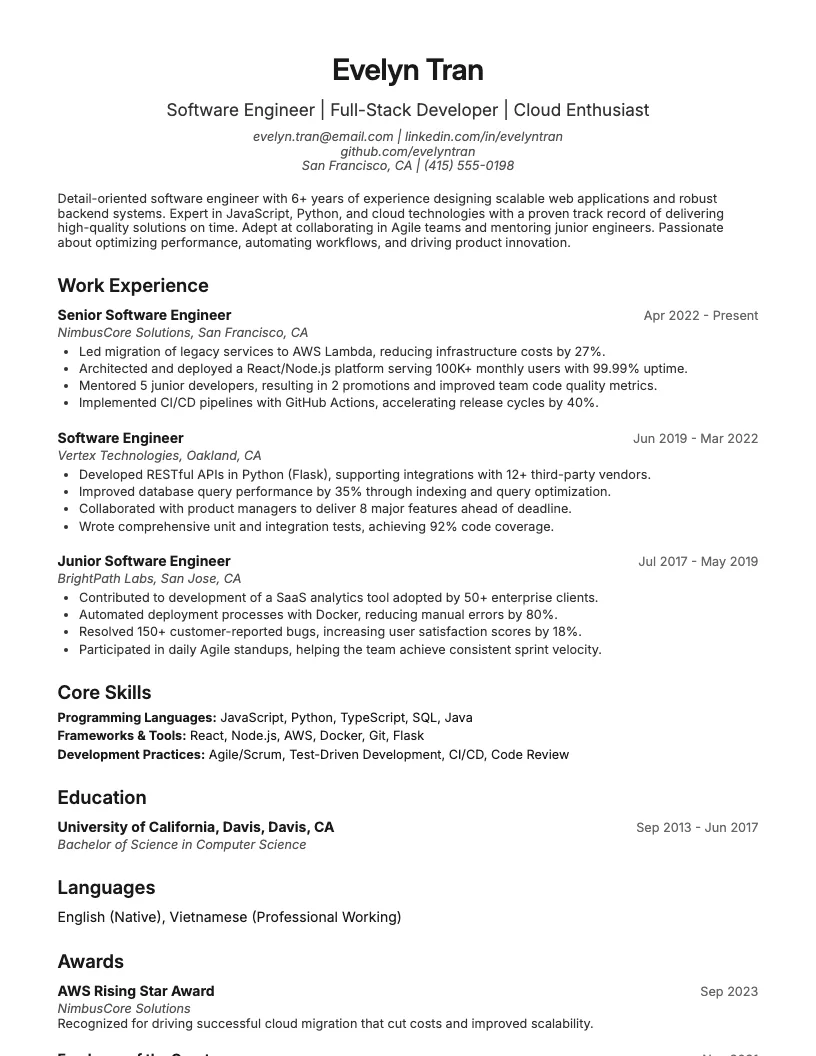
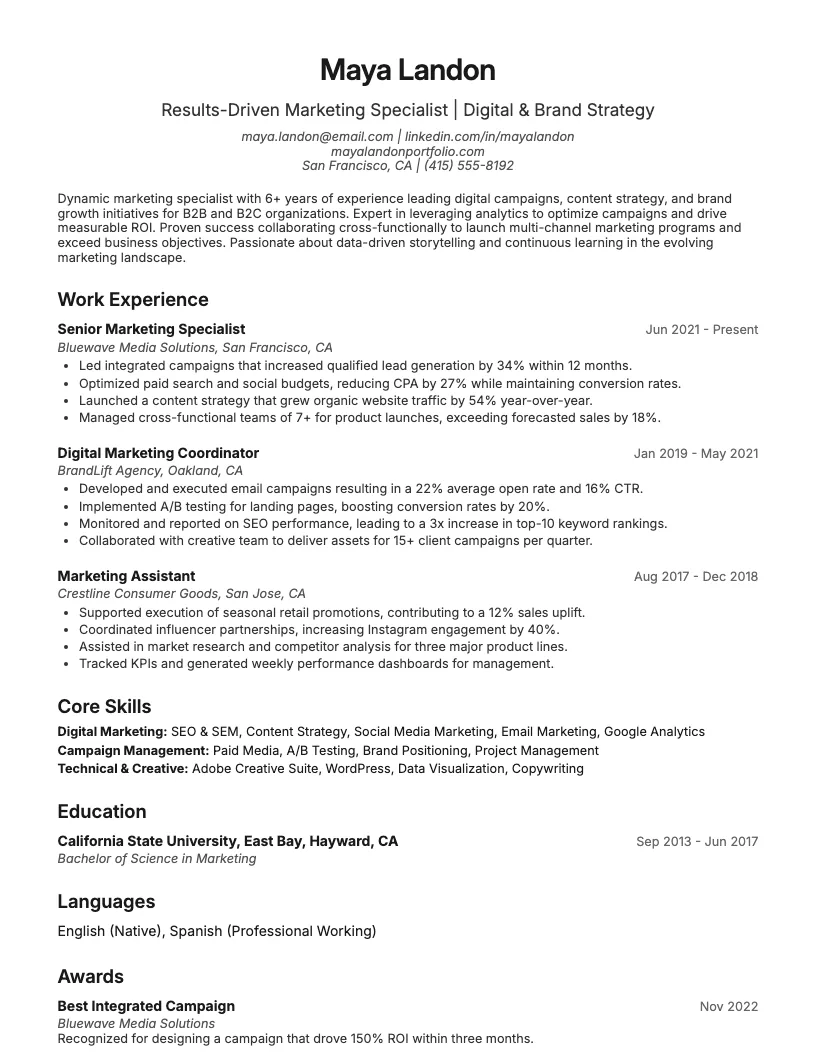
See these skills on a real resume
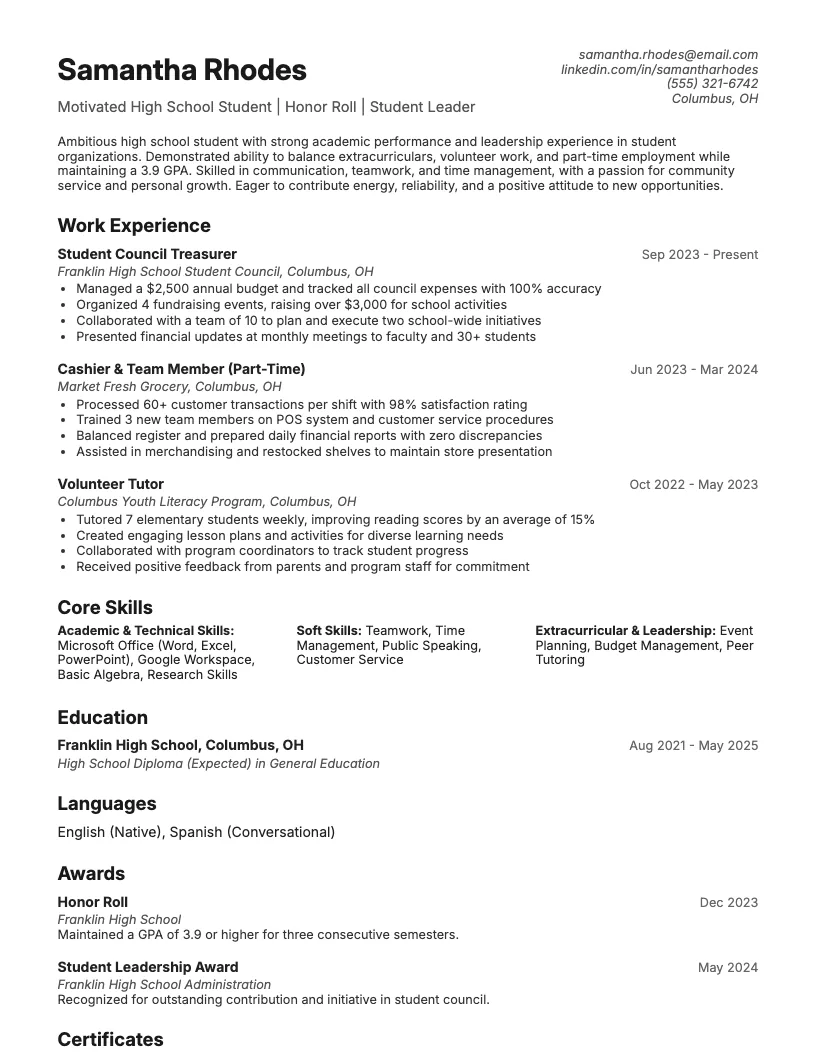
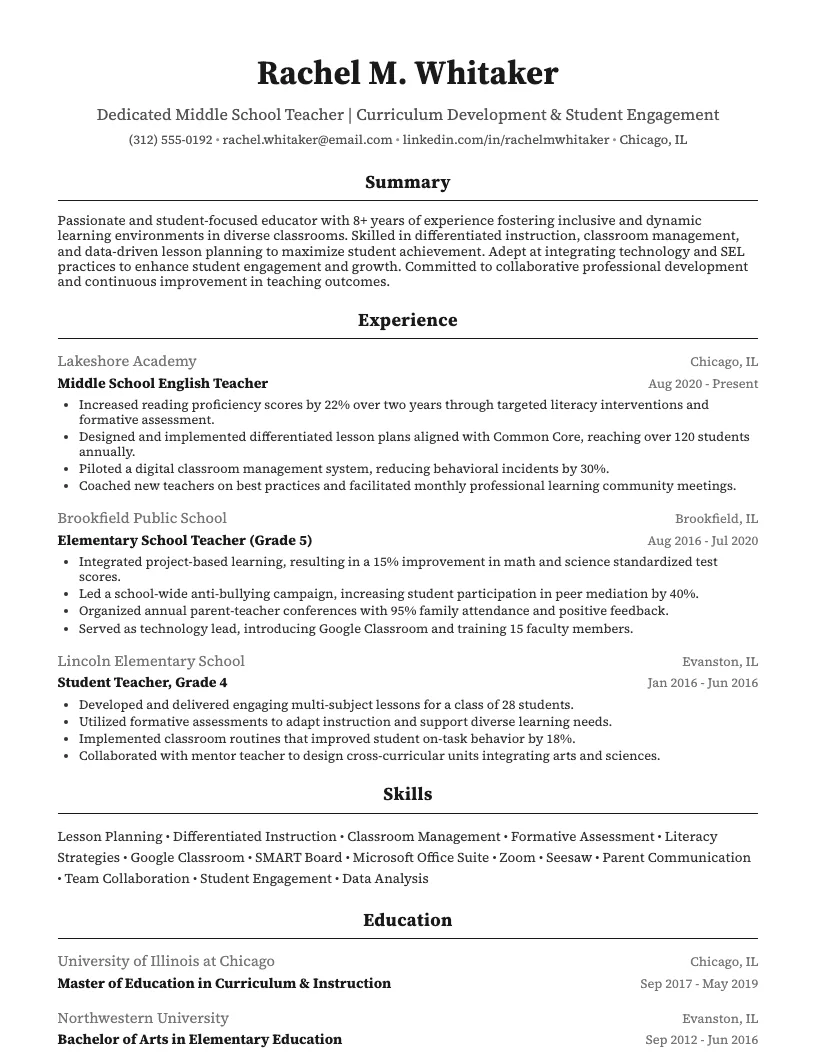
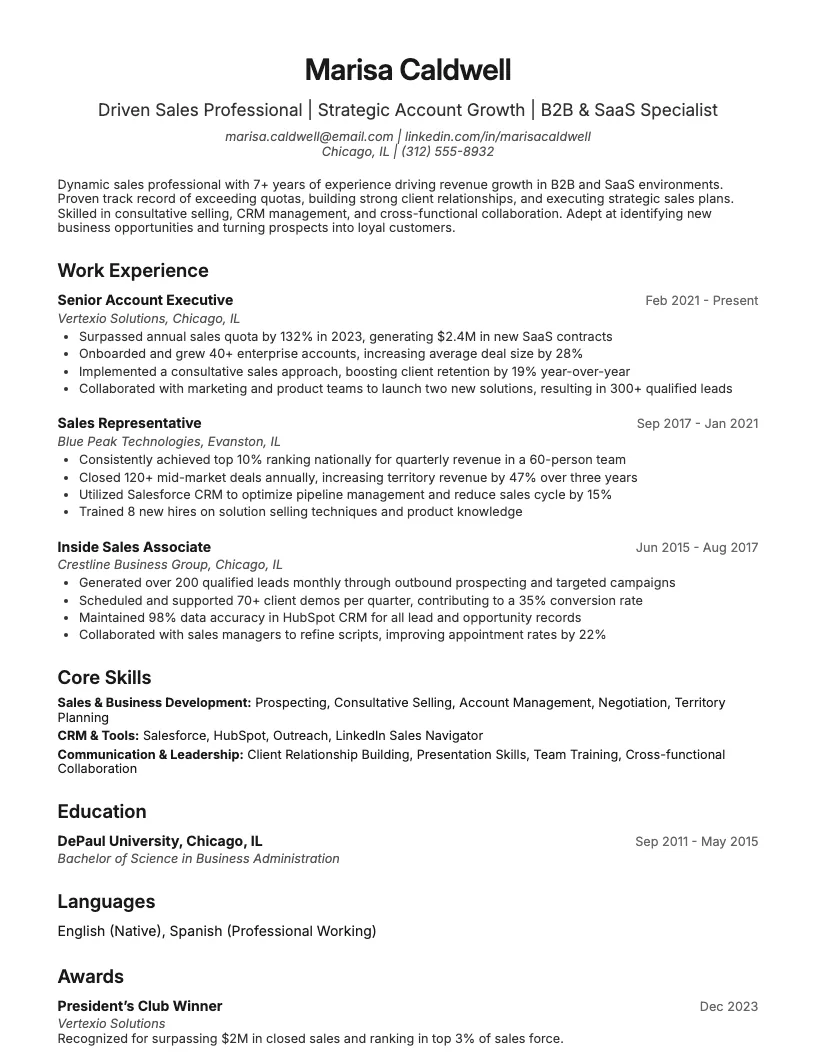
8 examplesStart from an example that already has them, and swap in your own.
Check your resume against the job you want
Scan your resume, see which skills and keywords the posting asks for that you are missing, and fix them before you apply.
Free to use • No credit card required