Words to Describe Yourself as a Student: I Found 10 (Plus 50 More)
10 student resume words explained with real proof examples, a 50-word list sorted into 5 categories, and exactly where each one goes on your student resume.


Written by Sarah Chen
Senior Career Strategist & Resume Expert
Updated August 2026
Reviewed by Marcus Rodriguez
Is your resume ATS-friendly?
Drop your resume in and see which of these skills a scanner can actually read, and which ones the job you want is asking for that you have not listed.
PDF or DOCX. Max 2MB.
We never share your resume or use it to train a model.
In This Guide:
What words describe you as a student?
What words describe you as a student?

I've read thousands of student resumes, and most of them lean on the same three or four words. Here are ten that actually carry weight, and what each one is doing for you.
Curious
This is the word for someone who signed up for something nobody made them take.
Not "curious about learning" - that's every applicant. Curious about a specific thing you went and chased down on your own time.
Diligent
Diligent means you finish the unglamorous parts of the work, not just the interesting parts.
It's a strong word for a resume, but only if a reader can picture what you were diligent about. Pair it with the deadline or the grind you actually stuck with - I show you exactly how in proving the word instead of just claiming it.
Dependable
Watch for hedge words sneaking in next to 'dependable' - 'usually on time' or 'mostly reliable' undoes the word before the sentence finishes. If there's an exception worth mentioning, it doesn't belong in the same line as the claim.
Dependable is the word group projects are made for, because it's the one thing everyone on a bad group project wishes someone else had been.
Showed up, did the part you said you'd do, on time, every time. That's the whole definition, and it's worth more than it sounds.
Adaptable
Adaptable is what you call it when the plan changed and you didn't fall apart.
A schedule that shifted, a professor who changed the assignment format halfway through, a group member who dropped out. If you can point to one of those, this word is earned, not just claimed.
Collaborative
Collaborative gets overused because it's easy to say and hard to prove.
The fix is a role, not a feeling - treasurer of a society, captain of a team, the person who ran the group chat that actually organized the project. I've seen this word land ten times better with a title attached than alone.
Self-motivated
This is the word for the thing you did without a grade attached to it.
A part-time job you worked around a full course load. A project you kept going after the class ended.
If nobody was checking on you and you still did it, say self-motivated.
Organized
Organized is the most common word on a student resume and also the easiest to prove, so there's no excuse for leaving it bare.
Juggling coursework, a job, and a deadline is organization in action - show the juggling, not the adjective.
Resourceful
Resourceful is what you call it when you didn't have the obvious resource and found another way through.
No budget, no senior person to ask, no textbook that covered it - and you solved it anyway. That's a genuinely rare thing to be able to say, so don't waste it on something small.
Analytical
Analytical belongs to anyone who's written a lab report, run a dataset, or built an argument from evidence instead of instinct.
It's one of the most requested traits on job postings in research- or data-heavy fields, so if it's true for you, don't bury it - and if you're not sure a resume is even using it in a way that field wants, that's exactly the kind of gap ResumeJudge flags when it checks your resume against a specific posting.
Coachable
Coachable is the word for someone who took feedback and visibly changed something because of it.
It's rare on student resumes because it takes a little humility to write down - you're admitting you weren't already finished. That's exactly why it stands out when a reader who's seen five hundred of these hits it.
If you're not sure which of these ten actually fits how you'd describe yourself, the longer list of 50 breaks them into categories, or you can jump straight to how to pick the right one.
What are 50 words to describe yourself as a student?
Is your resume good enough?
Drop your resume in and see which of these skills a scanner can read, and which ones the job you want is asking for that you have not listed.
Upload your resumeFree. PDF or DOCX. We never share your resume or use it to train a model.
Fifty words is more than you need for one resume, but it's a good pool to pull from so you're not reaching for "hard-working" for the fifth time this year. Group them by what they're actually proving, then pick the two or three that fit the term you just had.
10 words for how you study
Diligent, thorough, focused, methodical, disciplined, attentive, consistent, prepared, detail-oriented, studious. These describe the habit, not the grade - a 3.2 GPA built on showing up every week reads better than a 3.9 you can't explain.
10 words for how you think
Analytical, curious, logical, inquisitive, reflective, resourceful, perceptive, strategic, insightful, systematic. I'd pick one from this group and one from the study group before anything else - together they say you learn things and then do something useful with them.
10 words for how you work with other people
Collaborative, dependable, approachable, communicative, supportive, diplomatic, patient, team-oriented, considerate, respectful. If you've had a group project or a role in a club, this is the set to draw from - see how "collaborative" gets proved by a society or team role.
10 words for how you handle pressure and change
Adaptable, resilient, calm, flexible, steady, composed, persistent, versatile, level-headed, unflappable. Employers ask about this constantly at interview - a resume word here gives them a reason to ask you about a real deadline instead of a hypothetical one.
10 words for what drives you
Self-motivated, driven, ambitious, dedicated, committed, proactive, enthusiastic, determined, passionate, goal-oriented. These are the easiest to overuse, so pick one and let your bullet points do the rest of the convincing.
Words to leave off: perfectionist, genius, flawless, laid-back
I see "perfectionist" on maybe one in five student resumes I look at, and it never lands the way people think - it reads as "I miss deadlines fussing over details," not "I have high standards." Genius and flawless are worse: they sound like bragging, and nobody believes either one anyway.
Laid-back is the opposite problem - it tells an employer you won't chase the work. If you're not sure which of your fifty words actually holds up, run your resume against a real job posting in ResumeJudge and it'll flag the ones that read as filler instead of proof.
How do you pick the right word for you?
How do you pick the right word for you?
Forget the list for a second. The word has to come from you, not from a page like this one.
Start from what you actually did last term
Open your calendar or your last few assignments and look at what actually happened.
Did you organize a study group? Hit every deadline on a group project nobody else was tracking?
Redo a lab three times until the numbers made sense? Whatever you did is the word.
Don't start from an adjective and go looking for a memory to fit it - that's backwards, and it shows in the writing.
Match the word to the job or course you are applying to
The same you gets described differently depending on who's reading.
A lab role wants analytical. A retail job wants dependable and collaborative.
A course application cares more about why you're curious than whether you're punctual. I've read resumes where someone used the exact same three words for an internship application and a grad school essay - it reads as not having thought about either one.
Once you know the posting or the program, check which words on the resume actually match its language; that's a chunk of what I built ResumeJudge to do, scan the posting against your resume and flag the words it's asking for that you haven't used yet.
Ask a teacher or a group project partner what word they would use
You have a blind spot about yourself. Everyone does.
Ask someone who's worked next to you - a professor, a lab partner, whoever ran your last group project - what word they'd use. Nine times out of ten it's not the word you'd have picked, and it's usually better because it's specific to something they watched you do.
Drop any word you cannot back up with an example
If you can't finish the sentence "for example, I..." after the word, cut it. How do you prove the word shows what a real example looks like for each one.
Pick three words, not ten
The three you pick don't have to come from three different categories. Two words from how you work with other people plus one from what drives you is a fine mix if that's genuinely where your strongest examples are - matching the categories isn't the goal, the examples are.
Three, backed by real examples, beat ten adjectives stacked in a summary line. Every extra word past three dilutes the ones that actually mattered.
How do you prove the word instead of just claiming it?
Here's the thing about student resumes: nobody has ten years of accomplishments to lean on, so the word has to carry more weight than it would for someone with a job history. That's exactly why you can't leave it standing alone.
A bare adjective on a resume is a claim nobody asked you to prove, and hiring managers skip right past it. Give it a job to point at instead.
"Organized" proved by a group project deadline
proving 'organized'
Organized and detail-oriented team member.
Built the timeline that got a five-person group project submitted two days early.
Don't just write "organized." Say you built the timeline that got a five-person group project turned in on time, or that you tracked every team member's part so nothing slipped.
One sentence, one deadline, done.
"Self-motivated" proved by a part-time job alongside classes
proving 'self-motivated'
Highly self-motivated individual.
Worked 20 hours a week at a retail job while carrying a full course load.
Working while you're in school is the proof itself - you don't need to dress it up. Naming the job and the course load together does more than the word "self-motivated" ever will on its own.
"Analytical" proved by a lab report or dissertation
proving 'analytical'
Strong analytical skills.
Ran the data for a dissertation on urban traffic patterns and found a 15% drop after the policy change.
A dissertation, a thesis, a lab report you ran the numbers on - pick the one with the clearest result and describe what you found, not just that you were involved.
"Collaborative" proved by a society or sports team role
proving 'collaborative'
Collaborative team player.
Treasurer, Debate Society - managed a $2,000 budget across 15 events.
A named role beats a vague team mention every time. "Treasurer of the debate society" or "co-captain" tells a reader more in three words than "collaborative" tells them in one.
"Curious" proved by a course you took that nobody made you take
proving 'curious'
Naturally curious learner.
Completed a free online course in behavioral economics outside my major requirements.
An elective outside your major, a free online course, a certificate you didn't need - that's the one piece of evidence a transcript alone can't give you.
Once you've matched each word to its proof, check the wording against the actual posting - that's where ResumeJudge earns its keep: feed it your resume and the job description, and it rewrites your bullets so the proof lands in the terms that posting is scanning for, not just the terms you happened to pick.
Where do these words go on a student resume?
Where do these words go on a student resume?
Same word, five different jobs depending on where you put it.
In the summary at the top
This is the one line people actually read before deciding whether to keep going.
Put your strongest word here, but pair it with what it's for: "Organized computer science student who has run three group projects to deadline" beats "Organized student" on its own. One or two words max - this isn't the 50-word list, it's the headline.
In your education section
Most students leave this section as just a school name and a GPA.
You can attach a word to a specific module or thesis instead - "analytical" next to a dissertation, "curious" next to an elective you didn't have to take. That's stronger than a bare list because it's proof, not a claim.
In bullet points under a project, internship or part-time job
letting a bullet show the word
Collaborative team player.
Coordinated a five-person team to submit our project two weeks ahead of deadline.
This is where the word actually earns its place.
Don't write "collaborative" as a bullet. Write the bullet about the group project, and let it show collaborative.
The resumes that get interviews are the ones where the reader infers the word instead of being told it.
In a cover letter
A cover letter can carry a word your resume can't fit anywhere - the one about how you work, not what you did.
This is a page of its own, and it's worth doing properly rather than reusing your resume summary word for word. If writing it from scratch is the part you dread, ResumeJudge will write the cover letter itself, matched to the job you're applying for.
Why the skills list is the wrong place for them
A skills list is for things you can be tested on - Python, Excel, a language.
"Dependable" isn't a skill, it's a trait, and dropping it into a bullet list next to "Excel" makes both look weaker. Keep the 50 words out of that section entirely and let your bullets carry them instead.
Frequently Asked Questions
How do I describe myself if I have no work experience yet?
Pull your words from what you have actually done, not from a job title you don't have yet: coursework, group projects, clubs, a part-time job, volunteering. If a project taught you to hit deadlines under pressure, "reliable" or "organized" is earned the same way it would be on a job. The words don't need a job to back them up, they need a specific moment you can describe in one sentence if someone asks.
Can I use the same words on a college application and a job application?
Some will carry over, but the two readers are listening for different things. A college application wants to hear about who you are and where you're headed, so words like curious or resilient work well there. A job application wants proof you can do the work, so the same word needs to be paired with a result, like leading a team or finishing a project on time.
How many words should I use to describe myself?
Three is usually enough, whether it's a resume summary, a cover letter opening, or an interview answer. Piling on more than that dilutes each one and starts to read like a list instead of a description. Pick the handful that are most true and most relevant to what you're applying for, and let each one carry more weight.
Is "hard-working" too generic?
Yes, on its own it is - it's one of the most common words on student resumes, so it barely registers. It becomes useful the moment you attach a number or a result to it, like finishing a 20-page project a week early while holding a part-time job. If you're applying to a specific role, ResumeJudge can show you the exact words that posting is looking for, so you can swap in the wording it actually rewards instead of guessing.
What if the honest word is a negative one, like shy or disorganized?
Don't put the negative word itself on paper, but don't ignore what's true either - reframe it around what you do about it. "Shy" can become "I work best one-on-one and prepare carefully before speaking up in groups." The goal is honesty without handing someone a reason to rule you out before they've met you.
How do I answer "describe yourself in three words" in an interview?
Pick three words that are true, relevant to the role, and each backed by a ten-second example you can give if asked. Say the words plainly, then attach one example to at least one of them so the interviewer isn't left to take your word for it. Rehearse it once out loud beforehand so it doesn't come out sounding like a memorized list.
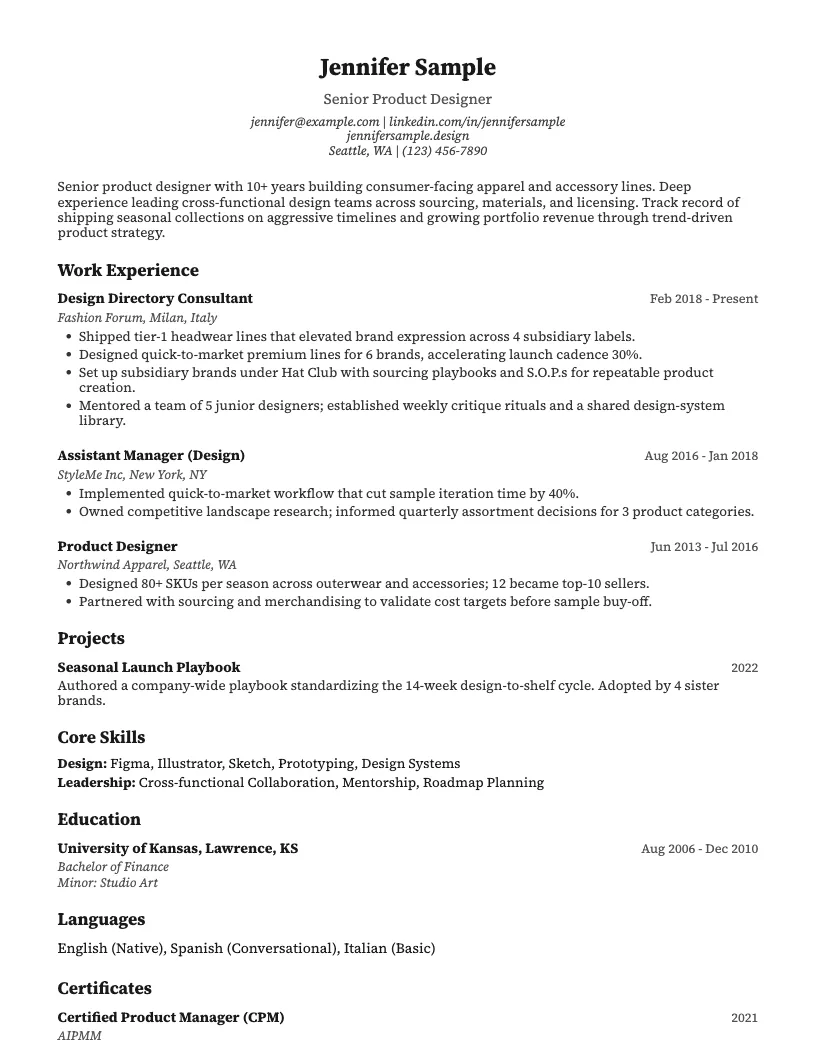
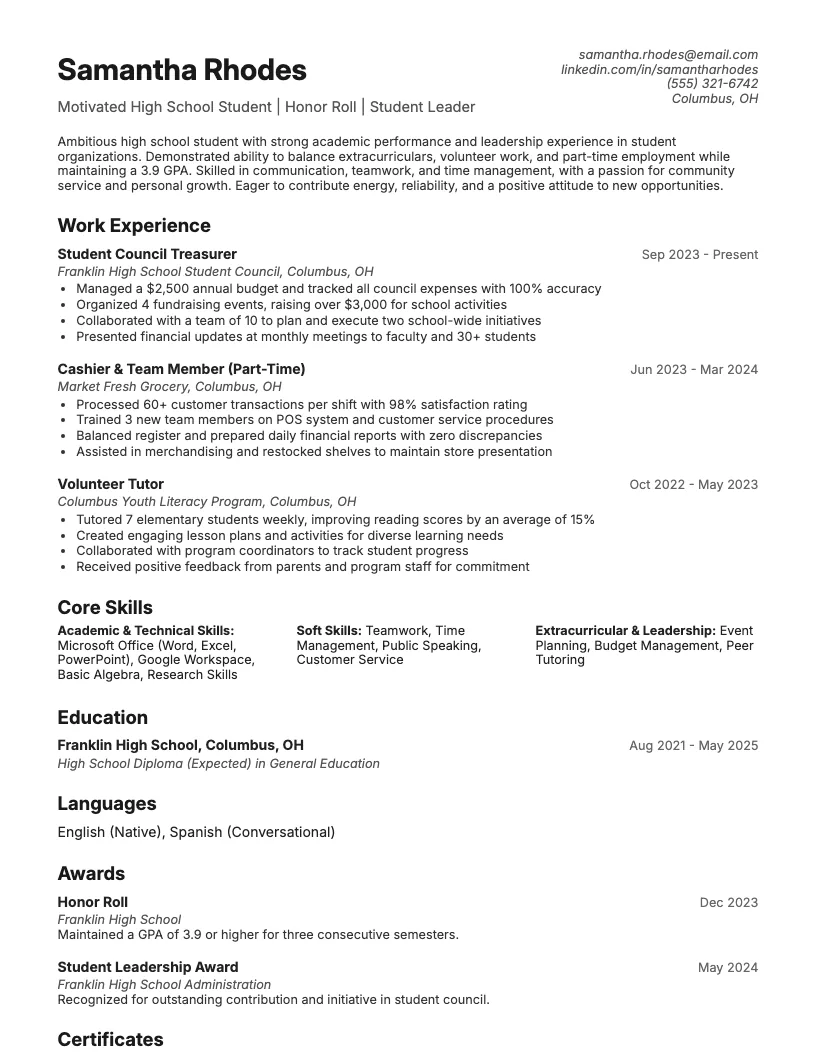
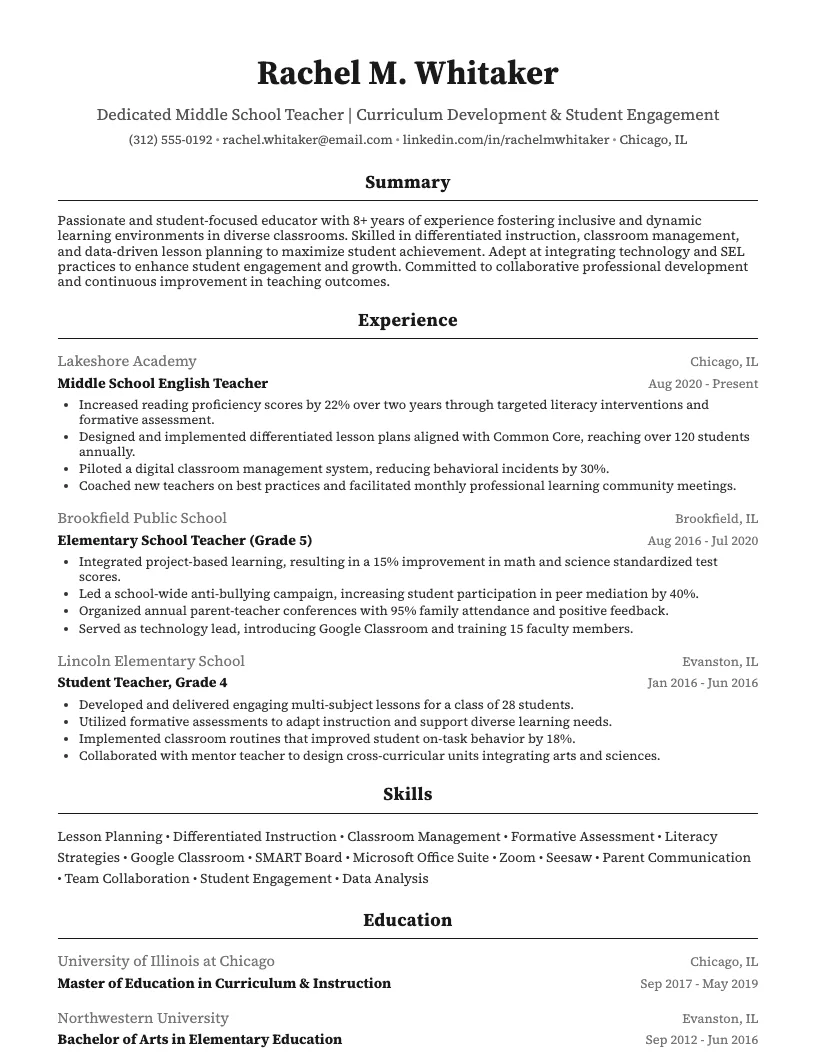
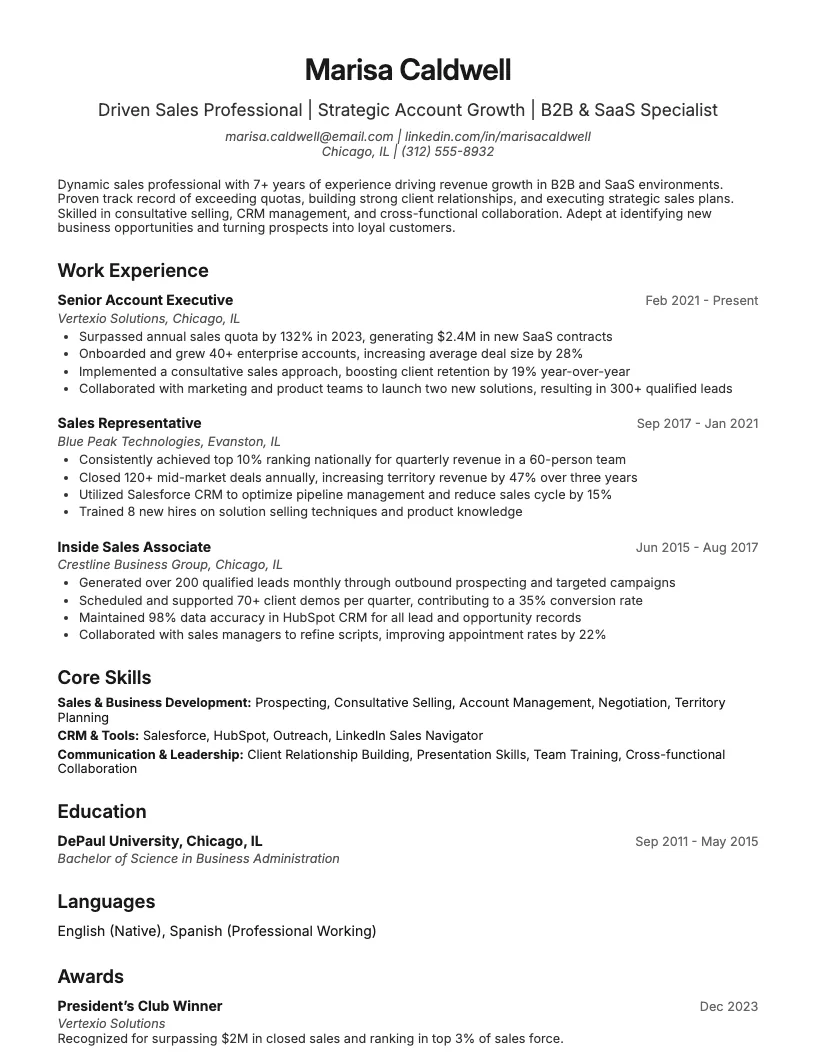
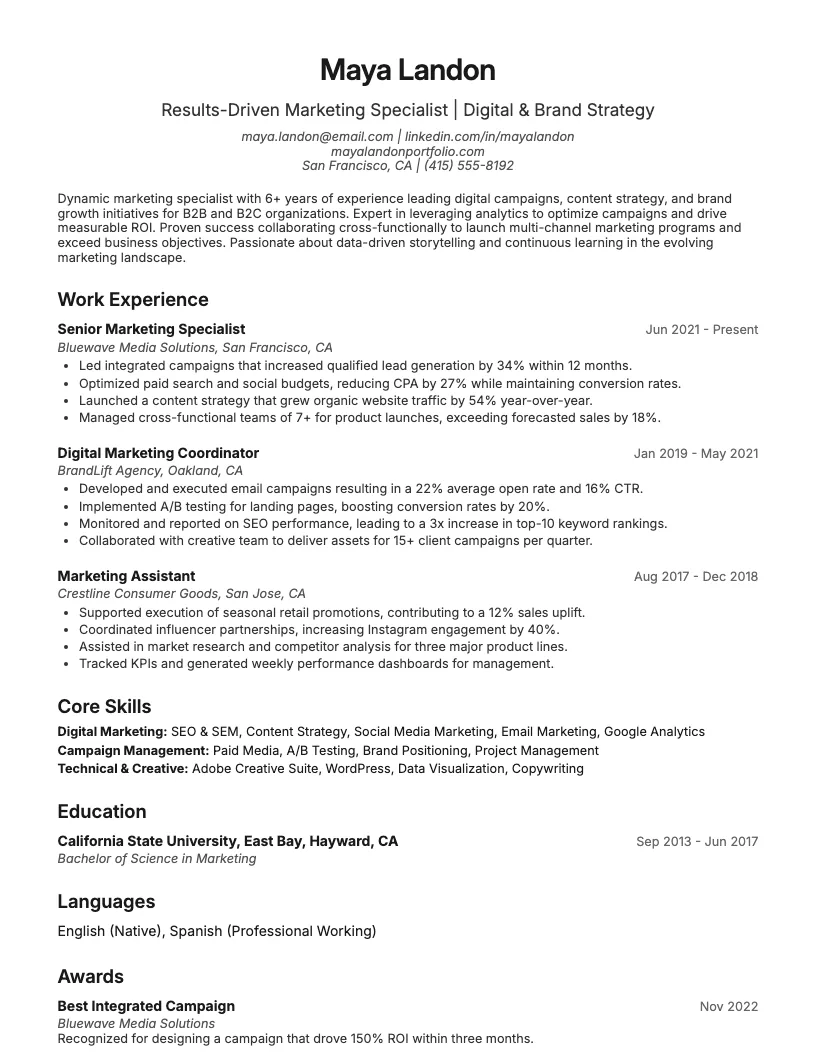
See these skills on a real resume
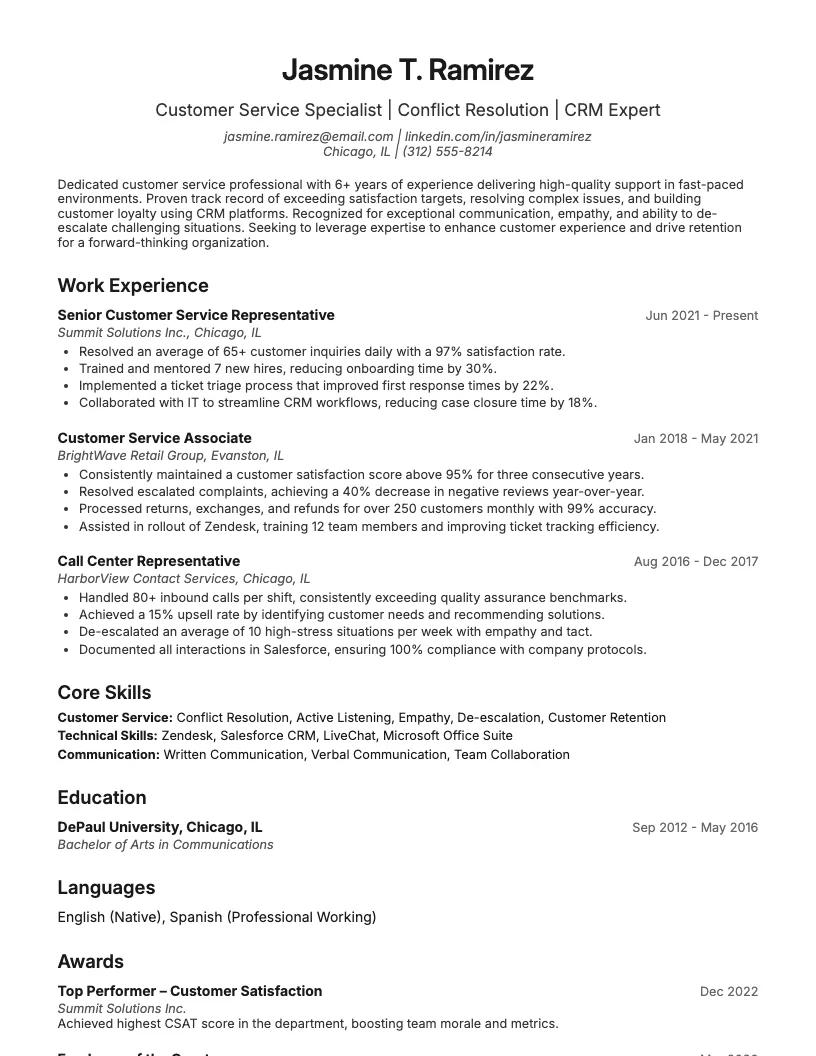
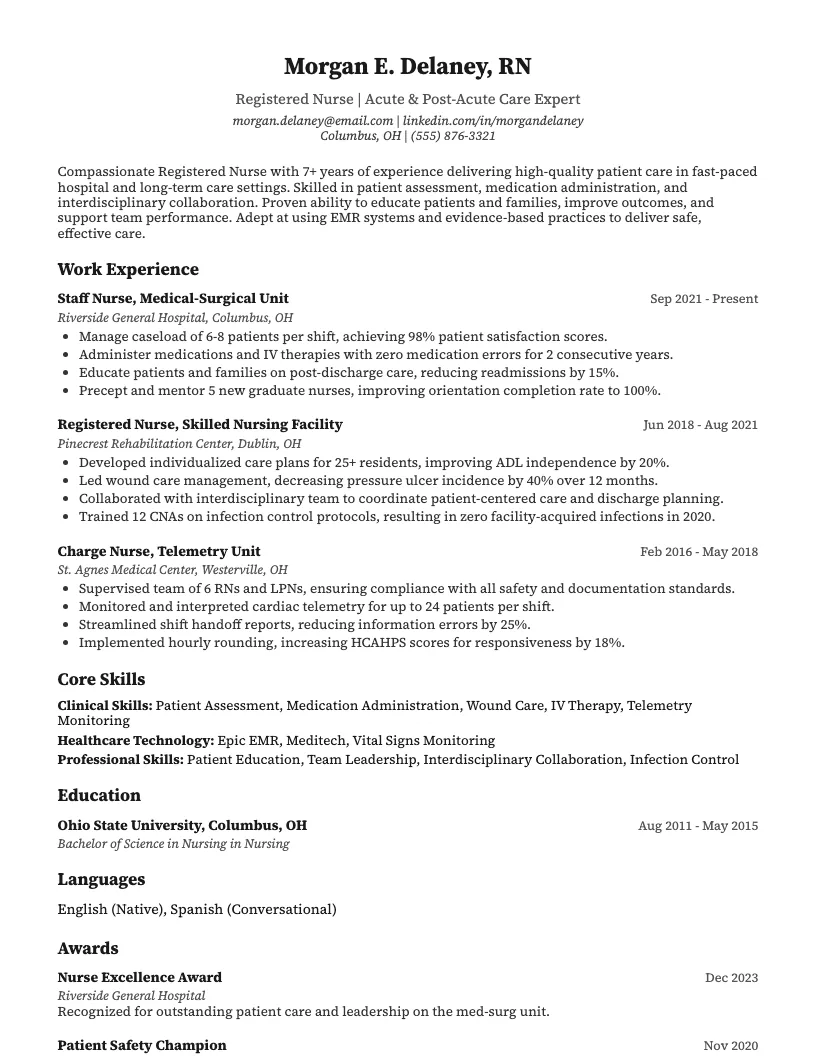
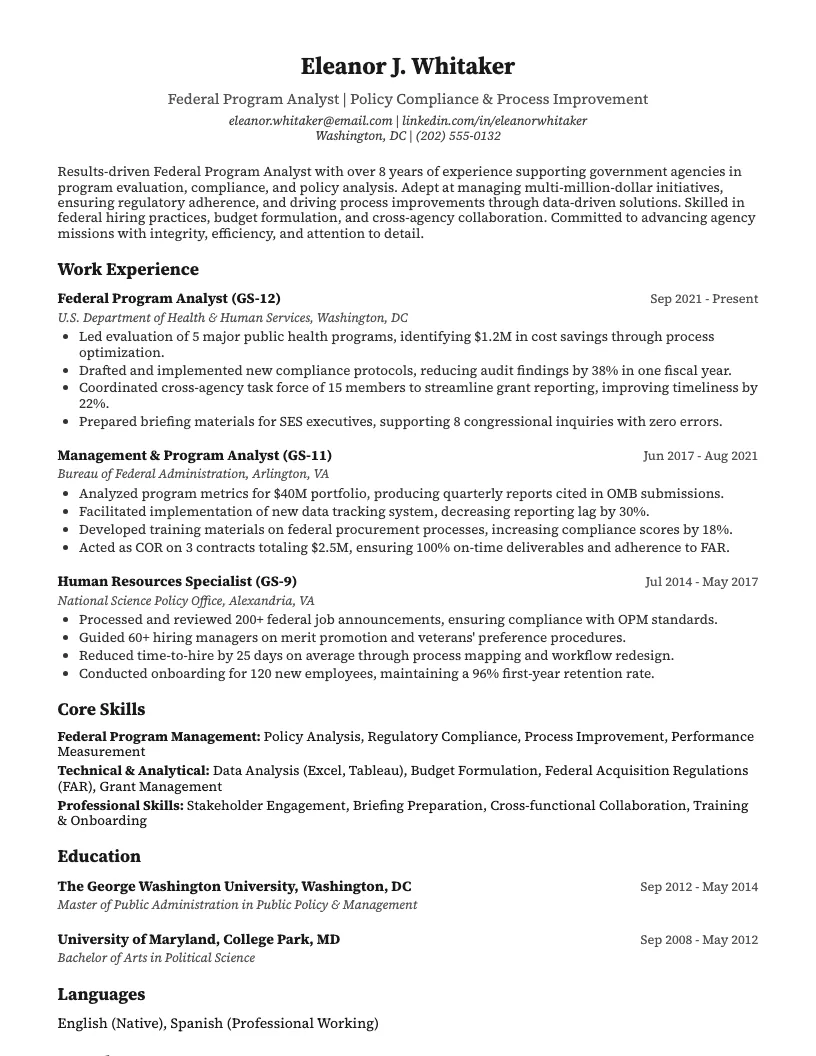
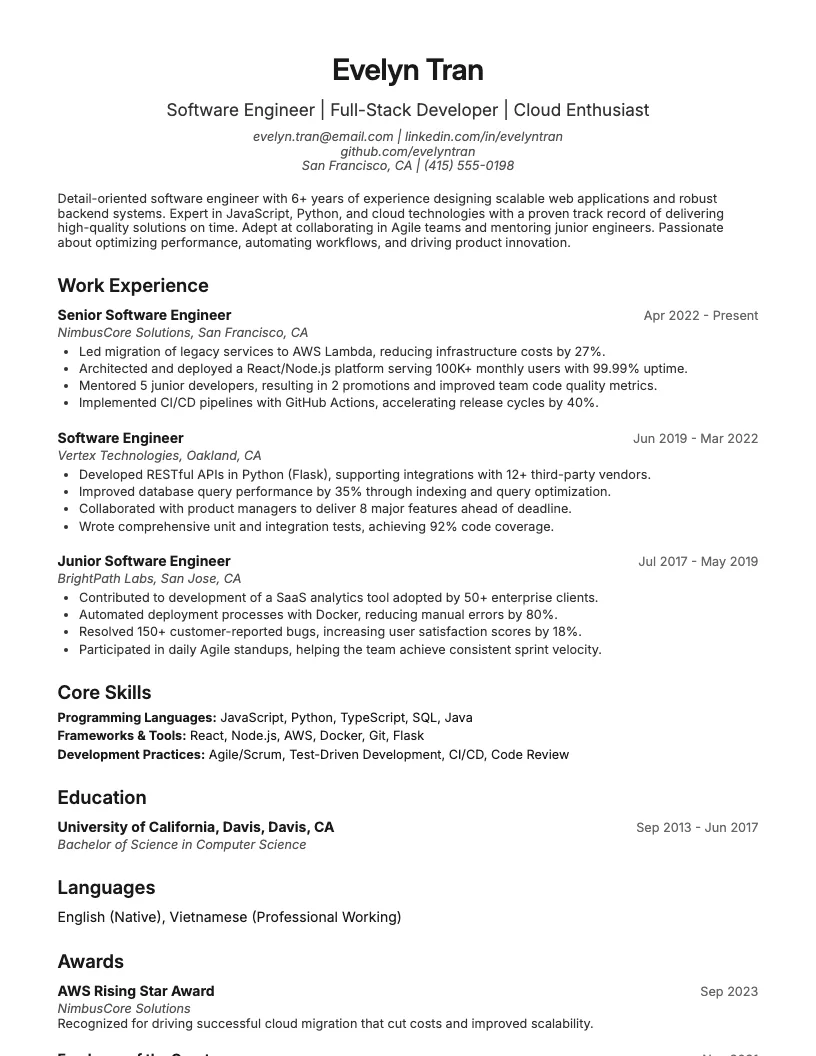
8 examplesStart from an example that already has them, and swap in your own.
Check your resume against the job you want
Scan your resume, see which skills and keywords the posting asks for that you are missing, and fix them before you apply.
Free to use • No credit card required