Positive Words to Describe Yourself: 50 Words (Plus 7 to Avoid)
50 positive words to describe yourself, sorted by job and career stage, plus how to prove each one with a real number instead of just naming it alone.


Written by Marcus Rodriguez
ATS Optimization Specialist & Career Coach
Updated August 2026
Reviewed by Dr. Priya Sharma
Is your resume ATS-friendly?
Drop your resume in and see which of these skills a scanner can actually read, and which ones the job you want is asking for that you have not listed.
PDF or DOCX. Max 2MB.
We never share your resume or use it to train a model.
In This Guide:
What are positive words to describe yourself?
A positive word is any adjective or noun you use about yourself that a hiring manager reads as a strength, not just a nice trait. On a resume, that's usually a single word doing the work a whole sentence used to do.
Adjectives: hardworking, dependable, curious
These describe how you work, and the most common ones show up on almost every resume I read. That's not a reason to skip them.
It's a reason to back them up.
The full set, sorted by what each group signals, is in the next section.
Nouns you can call yourself: problem-solver, team player, self-starter
Nouns work differently. "Problem-solver," "team player," "self-starter" aren't describing a trait, they're naming a role you played.
I lean toward nouns in a summary line and adjectives inside bullets. "Self-starter who rebuilt the onboarding flow" reads better than "Self-starting.
Rebuilt the onboarding flow."
Why a positive word only works if the reader can check it
A recruiter can't check "hardworking" or "detail-oriented" against anything, so the word needs a result, a number, or a scope sitting next to it. How to do that for each word is later on the page.
How many words to use about yourself at once
Three to five, and not more. I've seen resumes open with eight adjectives stacked in a row, and every one of them loses weight the moment you add a ninth.
Pick the words the job posting actually cares about, not the ones you like best. There's a full method for choosing them here.
What are the best positive words to describe yourself?
Every resume I read pulls from the same handful of buckets, whether the person coding it up knows it or not. Once you see the buckets, picking good adjectives to describe yourself stops being a guessing game and starts being a matching exercise: which bucket does this job actually reward, and which word in that bucket sounds like you.
Here's the full set, grouped the way I'd group them if I were coaching you through a rewrite.
Work ethic: hardworking, diligent, persistent, disciplined, driven
This is the bucket everyone reaches for first, and it's also the one that goes stale fastest.
Hardworking and driven show up on so many resumes that a hiring manager's eyes slide right past them.
Diligent and disciplined read a little more specific, mostly because fewer people use them.
Persistent is the one I like best of the five, because it implies a story - something that didn't work the first time, and you stuck with it anyway.
Reliability: dependable, punctual, accountable, consistent, thorough
Reliability words matter more than people give them credit for, especially for roles where someone else's schedule depends on you showing up.
Dependable and punctual are the honest, unglamorous words - use them when the job is genuinely about being where you said you'd be.
Accountable carries more weight in management-track roles, where the question isn't just did you show up, but did you own the outcome.
Thorough is the one worth pairing with a number, because "thorough" alone is a claim and "reduced errors by cutting a checklist that caught 12% more issues" is proof.
Attention to detail: meticulous, detail-oriented, precise, methodical, organized
I've reviewed hundreds of resumes that use detail-oriented, and maybe one in ten backs it up with anything concrete.
Meticulous and precise work best in roles with a real error cost - finance, QA, healthcare, anywhere a small mistake compounds.
Methodical and organized fit process-heavy work: project coordination, operations, anything with a lot of moving parts to track.
Problem solving: analytical, logical, resourceful, practical, solution-oriented
Analytical and logical signal how you think - useful for roles built around data, research, or diagnosis.
Resourceful signals something different: not how you think, but what you do when the obvious resources aren't there. I'd reach for it if your best stories involve working around a constraint, not around a spreadsheet.
Solution-oriented is newer and a bit more corporate-sounding than the others. It reads fine in a cover letter, less fine in a resume bullet where a specific outcome would do more work.
Communication: articulate, persuasive, approachable, diplomatic, good listener
Communication words split into two directions, and mixing them up is a common mistake.
Articulate and persuasive describe how you get your own point across - sales, leadership, anything client-facing.
Approachable, diplomatic, and good listener describe the opposite skill: how you make room for someone else's point. Support roles, HR, and management all lean on this half more than the first.
Teamwork: collaborative, cooperative, supportive, personable, flexible
These five overlap enough that using more than one at a time starts to sound repetitive rather than thorough.
Collaborative is the safest, most widely understood choice.
Supportive and personable lean warmer and fit team-culture-heavy environments.
Flexible is doing double duty here - it can mean flexible with people or flexible with schedule, so make sure the sentence around it makes clear which one you mean.
Leadership: decisive, motivating, strategic, influential, accountable
None of these words land without a team or a decision attached to them - "decisive" with nothing decided is just an adjective floating in space.
Decisive and strategic work best paired with a choice you actually made and what happened after.
Motivating and influential need a person or a group on the other end - who did you move, and toward what.
Attitude: positive, resilient, optimistic, enthusiastic, eager
This is the bucket I trust least on its own, because attitude words are the easiest to claim and the hardest to prove on paper.
Resilient is the exception - it usually implies something went wrong first, which gives it more texture than the others.
Eager and enthusiastic read well for early-career resumes, where you don't yet have the track record to lean on instead.
Creativity: innovative, imaginative, inventive, curious, original
Innovative gets overused to the point of losing meaning - I'd swap it for a specific example almost every time.
Curious is underused and often more convincing, especially in research, product, or engineering roles where the job really is asking questions nobody's asked yet.
Imaginative, inventive, and original fit design and content work more naturally than they fit anything process-driven.
Character: honest, trustworthy, ethical, conscientious, sincere
Character words are the ones I'd use most sparingly. They're true of almost everyone applying, so claiming them rarely differentiates you - save them for roles that explicitly test for trust, like finance, compliance, or anything with confidential data.
Adaptability: adaptable, versatile, open-minded, proactive, self-motivated
This bucket has grown fast over the past few years, mostly because more jobs now change shape after you're hired.
Adaptable and versatile work for people who've moved across roles or industries.
Proactive and self-motivated work best for remote or loosely managed roles, where nobody's checking in on you daily.
If you're weighing a couple of these words against each other, narrowing the list matters more than picking the perfect one - three words you can back up beat five you can't.
The full A-Z list in one place
Here's the complete set from the categories above, alphabetized, so you can scan it in one pass:
Accountable, Adaptable, Analytical, Approachable, Articulate, Conscientious, Consistent, Curious, Decisive, Dependable, Detail-oriented, Diligent, Disciplined, Driven, Eager, Enthusiastic, Ethical, Flexible, Good listener, Hardworking, Honest, Imaginative, Influential, Innovative, Inventive, Logical, Meticulous, Methodical, Motivating, Open-minded, Optimistic, Organized, Original, Persistent, Personable, Positive, Practical, Precise, Proactive, Punctual, Resilient, Resourceful, Self-motivated, Sincere, Solution-oriented, Strategic, Supportive, Thorough, Trustworthy, Versatile.
That's the raw material. The next question is which ones survive contact with an actual job posting - ResumeJudge will pull the words a listing keeps repeating, check them against what's already on your resume, and work the ones you're missing into it, which is faster than reading down this list guessing.
What are good words to describe yourself for a job?
The word that works on your resume summary can fall flat in an interview, and the one your manager used to describe you might sound stiff typed into a cover letter. Same trait, different room.
Here's how to fit the word to where it's landing.
In a resume summary
Your summary gets three or four lines, so every word has to earn its spot. I default to pairing one trait word with the number that proves it - "detail-oriented" next to "caught errors that saved $12K a quarter" does more than either one alone.
Pick words that answer the job posting, not words that describe your personality in general. If the posting says "cross-functional," your summary should say "collaborative" or "cooperative," not "friendly."
In your work experience bullets
Bullets are where a claimed word turns into a shown one. Don't write "I am organized" - write the bullet that only an organized person could have produced.
I'd rather see a bullet that never uses the word "resourceful" but describes solving a problem with no budget and no extra staff, than one that says "resourceful" and stops there. If you want the mechanics of that swap, proving a word instead of claiming it walks through it line by line.
In your skills section
Your skills section is the one place a single word can stand alone without a sentence around it - but only if it's a skill, not a personality trait. "Detail-oriented" belongs in your summary.
"Excel," "SQL," "project scoping" belong here.
The mistake I see most often is a skills section padded with the same adjectives already sitting in the summary above it. Run your list against the actual posting instead - a tool like ResumeJudge will find the skills the job asks for that your resume never mentions and write them into your resume for you, which beats guessing at synonyms.
In a cover letter
A cover letter can carry more personality than a resume, so this is where words like "diplomatic" or "empathetic" get room to breathe. But they still need a sentence of context right after them - a claim with no story attached reads as filler nine times out of ten.
One line, one word, one piece of evidence. That's the whole formula.
In an interview answer
Interviewers ask "describe yourself in three words" more than any other prompt in this list, and I've watched candidates freeze on it because they never picked words in advance. Decide your three before you walk in, and have one sentence of proof ready for each - quoting what a manager actually said about you lands harder than any adjective on its own, which the proof section covers in more depth.
On your LinkedIn headline and About section
LinkedIn is the one surface where a slightly warmer word is allowed - "upbeat" or "curious" can sit next to "strategic" without looking out of place, because a profile gets read by people who might just want to like you, not only screen you. Just don't let it drift into "unconventional" or "visionary" - save those, they tend to invite more skepticism than credibility.
The same word written three ways: resume, cover letter, interview
Take "organized." On a resume: "Organized inventory system that cut count time by 30%."
In a cover letter: "I'm the person my last team called when a project needed a system - organizing our shared files cut our search time in half." In an interview: "I'd call myself organized - my last manager used to hand me anything that needed a process built from scratch."
Same trait, three different shapes, and each one still has a number or a person attached to it.
Which positive words fit your job and your experience level?
Which positive words fit which field
| Field | Words to use | Word to skip |
|---|---|---|
| Finance and accounting | Meticulous, analytical, trustworthy | Organized (too vague) |
| IT and software | Analytical, resourceful, methodical | Passionate, tech-savvy |
| Nursing and healthcare | Compassionate, resilient, reliable | Caring (alone) |
| Retail and sales | Persuasive, goal-oriented, resilient | Friendly |
| Marketing and creative | Innovative, strategic, results-driven | Innovative (with no result) |
| Teaching and education | Patient, engaging, motivating | Passionate about education |
The right word changes depending on who's reading it. A hiring manager in finance wants to see "precise."
A hiring manager in marketing wants to see "creative." Use the wrong one and you sound like you copied a generic list - because you did.
Here's how I'd sort good words to describe yourself for a job by field and by where you are in your career.
Finance and accounting
Finance resumes get judged on whether you can be trusted with numbers nobody's double-checking. Lean on meticulous, analytical, detail-oriented, trustworthy, and diligent.
"Organized" is fine, but "meticulous" tells a controller you won't let a reconciliation slide. Pair any of these with a number - "meticulous" next to "closed the books two days early for 14 straight months" does more work than the adjective alone.
IT and software
Tech hiring managers skim past personality words and look for proof you can solve problems under ambiguity. Analytical, resourceful, methodical, adaptable, and logical consistently land better than "passionate" or "tech-savvy," which every resume already claims.
If you're choosing between "innovative" and "methodical," pick based on the role - a startup wants innovative, an enterprise team wants methodical. Don't guess; pull the word straight out of the job posting.
Nursing and healthcare
This is one of the few fields where "compassionate" isn't a throwaway word - it's genuinely what the job needs, so use it. Combine it with words that show you won't fall apart under pressure: compassionate, reliable, detail-oriented, resilient, and communicative.
Nurse hiring managers read hundreds of resumes that all say "caring." What separates them is proof - "compassionate" next to "managed a 6-patient caseload during a short-staffed shift" reads completely differently than the word by itself.
Retail, sales and customer service
These roles live or die on whether you can talk to a stranger and get a result. Persuasive, energetic, customer-focused, adaptable, and resilient cover most of what a retail or sales manager is screening for.
I'd steer you away from "friendly" as your headline word - it's true of almost every applicant and proves nothing. "Persuasive" or "goal-oriented" next to a sales number does the actual convincing.
Marketing and creative roles
Marketing is the one place where "innovative" and "imaginative" don't sound out of place - the field expects a little flair. Balance them with words that show you can execute, not just brainstorm: strategic, results-driven, and analytical.
A creative resume with zero measurable words reads as unproven. Say "innovative" and then back it up with a campaign result, a launch number, an engagement lift.
Teaching and education
Schools hire for patience and consistency as much as subject knowledge. Patient, engaging, motivating, supportive, and organized are the words that show up again and again on strong education resumes, and for good reason - they're what a principal is actually trying to assess.
"Passionate about education" is the phrase I see on nine out of ten teaching resumes, and it tells a hiring committee nothing. Swap it for a specific outcome - a reading level jump, a club you built from scratch - next to one of the words above.
Admin and HR
Admin and HR roles are trust roles - you're handling schedules, records, sometimes payroll. Organized, discreet, reliable, detail-oriented, and efficient are what I'd want to see if I were hiring for this.
"Discreet" doesn't show up often enough on HR resumes given how much confidential information the job involves. If you've handled anything sensitive, say so.
Trades, warehouse and hospitality
These jobs get judged on whether you show up and get it done, so the words should sound like it. Reliable, efficient, hardworking, safety-conscious, and adaptable carry real weight here, more than they would on a corporate resume.
"Hardworking" is one of the words I usually tell people to avoid when it's the whole pitch - but paired with a shift count or a safety record, it earns its place.
If you have no work experience yet
Without a job history, lean on words a group project, a class, or a part-time gig can actually prove: organized, goal-oriented, adaptable, curious, and dependable.
I'd skip anything that implies scale you don't have yet - "strategic," "visionary." Save those for when you've managed something big enough to earn them.
If you are changing careers
Career changers should reach for words that translate across industries: adaptable, resourceful, quick learner, versatile, and driven. These tell a hiring manager you'll ramp up fast even without direct experience in the field.
The mistake I see most often here is leading with the old job title instead of the transferable strength. Lead with the word, then explain where it came from.
If you are applying for a manager role
Management resumes need words that show you can move other people, not just yourself: decisive, motivating, strategic, accountable, and collaborative.
"Team player" undersells you at this level - it says you can follow, not lead. Swap it for "collaborative leader" or drop it for "decisive" backed by a call you made under pressure.
If you are returning after a break
Coming back after time off, the words that reassure a hiring manager are adaptable, dedicated, resourceful, and reliable - proof you kept those muscles active, whatever you were doing.
If you're not sure which of these words actually match the job you're applying to, run your resume against the posting - a tool like ResumeJudge will show you which ones from this list are missing and which ones you've already covered.
How do you prove a positive word instead of just claiming it?
Is your resume good enough?
Drop your resume in and see which of these skills a scanner can read, and which ones the job you want is asking for that you have not listed.
Upload your resumeFree. PDF or DOCX. We never share your resume or use it to train a model.
I've read hundreds of resumes with the word "organized" on them, and maybe five actually showed me what that meant. The other 195 just typed the word and hoped I'd believe it.
A recruiter can't check your character, but they can check a number - so every good word you use needs one standing next to it.
Put a number next to the word
This is the single biggest fix I recommend. Don't write "detail-oriented."
Write what the detail actually caught, prevented, or improved, and attach a figure.
A number does two things a word can't: it's specific, and it's hard to fake. "Reduced errors" is a claim.
"Reduced errors by 30%" is evidence.
"Organized" rewritten with proof
An experience bullet using "organized"
Organized and efficient team member.
Restructured the filing system for a 40-client caseload, cutting document retrieval time from 10 minutes to under 2.
Weak: "Organized and efficient team member."
Strong: "Restructured the filing system for a 40-client caseload, cutting document retrieval time from 10 minutes to under 2."
The second version never says the word "organized" - and it doesn't need to.
"Hardworking" rewritten with proof
An experience bullet using "hardworking"
Hardworking employee who goes above and beyond.
Covered two open shifts a week for three months during a staffing shortage, with zero missed deadlines.
Weak: "Hardworking employee who goes above and beyond."
Strong: "Covered two open shifts a week for three months during a staffing shortage, with zero missed deadlines."
"Hardworking" describes an effort nobody outside your head can see. A stretch of extra hours, covered with no drop in output, is something a hiring manager can picture.
"Detail-oriented" rewritten with proof
Weak: "Detail-oriented with strong attention to accuracy."
Strong: "Caught a $12,000 billing discrepancy during a routine audit before it reached the client."
One caught mistake, named with a dollar figure, does more work than the adjective ever could.
"Team player" rewritten with proof
Weak: "Great team player who works well with others."
Strong: "Trained four new hires in their first month, all of whom hit full productivity ahead of schedule."
"Team player" is one of the most overused phrases I see, mostly because it's the easiest one to write and the hardest one to prove. A training number fixes that instantly.
Quote what a manager said about you
If you genuinely don't have a number for a particular strength, borrowed praise is your next best option. A line from a performance review or a specific piece of feedback carries weight a self-assessment doesn't, because it isn't coming from you.
"My manager called me the person the team went to when something broke" says more than "resourceful" ever will, and it's nearly impossible to write for yourself, which is exactly why it reads as credible.
Weak answer vs strong answer, side by side
Weak: "I'm a hardworking, detail-oriented team player."
Strong: "I cut onboarding time by 25% by rebuilding our training docs, and the two hires I mentored are still on the team a year later."
Nine times out of ten, when I ask someone to rewrite a line like the weak one, they already have the story - they just never wrote it down. If you're not sure which of your bullets still read as unproven claims, running your resume against a real posting on ResumeJudge will flag exactly which lines need a number and rewrite them for you.
Which positive words should you avoid?

I've rejected more resumes for the words on this list than for almost any other reason. Not because the person wasn't good, but because these are the words a hiring manager has read a thousand times and stopped believing.
If you're building a list of positive words to describe yourself, the fastest win isn't finding more words. It's cutting these first.
Amazing, awesome, incredible
These three show up on resumes constantly, and they mean nothing.
"Amazing communicator" tells me you think you're good at something. It doesn't tell me what you did.
Swap the adjective for the result: what changed because you communicated well? A number, a client kept, a project that shipped on time.
Hardworking, motivated, team player when they stand alone
I don't cut these words outright - I cut them when they're doing all the work by themselves.
Both words are rewritten with real evidence in how to prove a positive word instead of just claiming it.
Humble, funny, likable
Here's the problem with all three: you can't prove them, and the reader can't check them from a page. Humor and likability are things other people decide about you, not things you get to claim for yourself.
Truly humble people rarely describe themselves as humble - that's part of the joke. Leave these for your references to say.
Smart, intelligent, genius
Nobody applies for a job by writing "average." So "smart" and "intelligent" carry zero information - every candidate in the pile would claim the same thing if asked.
"Genius" is worse; it reads as a punchline, not a qualification.
If you're smart, show it: the hard problem you solved, the system you built, the exam you passed. Let the fact do the adjective's job.
Rockstar, ninja, guru, go-getter
These were tired a decade ago and they haven't recovered. I still see them, mostly from candidates who picked them up off an old job posting without noticing the posting was also bad.
They tell a reader you're borrowing language instead of describing yourself. If you actually are the person your team calls when something's broken, say that in plain words instead.
Perfect, flawless, exceptional
"Perfect" is the one word I'd cut on sight every time. It doesn't just fail to prove anything - it actively works against you, because it implies you don't think you have anything left to improve, and every hiring manager knows that isn't true of anyone.
"Exceptional" survives if a number sits right next to it. Alone, it's the same empty claim in nicer clothes.
Unique and visionary
Both words ask the reader to take your word for it, on a claim that's almost impossible to check from a resume. "Visionary" in particular tends to show up attached to people who haven't shipped the vision yet.
If you genuinely started something nobody else had tried, describe the thing, not the label.
What to say instead: a swap list
| Instead of | Try |
|---|---|
| Amazing / awesome / incredible | The specific result - "cut onboarding time by 30%" |
| Hardworking (alone) | "Hardworking" + one line of proof |
| Humble / funny / likable | Leave it to a reference or interview impression |
| Smart / intelligent / genius | The problem you solved |
| Rockstar / ninja / guru | Your actual title or the skill by name |
| Perfect / flawless | "Consistent" or "accurate," backed by a number |
| Unique / visionary | What you built, named plainly |
This is really the same test running through every good word on this page: can the reader check it? If you're not sure whether a word on your resume holds up, running it against a real job posting in ResumeJudge will show you which claims land and which ones read as filler the way these do.
For the words that do belong, see how to pick the right ones for yourself.
How do you pick the right words for yourself?
How do you pick the right words for yourself?
You've got the lists. Now you need a process, because staring at fifty adjectives and guessing which five are "you" is how people end up with a resume that sounds like everyone else's.
Here's the six-step version I walk people through.
Step 1: Pull the words out of the job posting
Open the posting and underline every trait word in it - "detail-oriented," "collaborative," "self-starter," whatever shows up.
That's your shortlist before you write a single line.
Most applicant tracking systems are matching your resume against that exact language, so guessing at synonyms costs you nothing but points. If you want a faster way to fix which of those words your resume is actually missing, run it against the posting in ResumeJudge and it'll put them straight into your resume.
Step 2: List three things you have actually done well
Before you pick a word, pick a memory.
Write down three things you did at work that you're genuinely proud of - a project that landed, a mess you cleaned up, a number you moved. Now describe each one in a sentence.
The adjectives fall out of that naturally: if you spent six months untangling a broken process, you're "methodical" or "resourceful," not because you decided to be, but because the story already proves it.
This is the reverse of what most people do, and it's why it works better.
Step 3: Ask three people how they would describe you
People tend to hedge when you ask this to their face. Ask them to text or email the words instead of answering on the spot - you'll usually get something blunter than what they'd say sitting across from you.
Ask a manager, a coworker, and someone outside work - same question to each: "what are three words you'd use for me?"
I've watched this exercise surprise people almost every time. You'll get a word you'd never have picked for yourself, and nine times out of ten it's more accurate than your own guess, because you can't see your own habits from the inside.
Step 4: Cut any word you cannot back up
Now go back through everything you've collected - job posting words, your own list, what other people said - and cross out anything you can't attach a real example to.
This is the step people skip, and it's the one that matters most. A word with no story behind it reads as filler, and hiring managers can tell.
If you claimed "analytical" in step 2, you'd better have the sentence that proves it ready to go, not just the claim on its own.
Step 5: Narrow it to three to five words
Whatever survived step 4, cut it down to three to five words total - the reason for that number, and what happens when you go past it, is earlier on the page.
Step 6: Check the words sound like you out loud
Last check: say the sentence out loud before it goes anywhere near your resume.
If it sounds like something you'd actually say to a colleague, keep it. If it sounds like it came off a poster in a break room, it probably did - swap it for something plainer.
The best self-descriptions read like a person talking, not a brochure.
Frequently Asked Questions
How many words should I use to describe myself on a resume?
Use three to five positive words on a resume, not more. Pick the ones that match what the job actually asks for - checking your resume against the posting shows you which qualities it's really looking for, which is something ResumeJudge does for you.
What three words describe me best in an interview?
The three best words are whichever ones match what the job actually needs, not your three favorite adjectives. Pick one about a skill, one about how you work with others, and one about a result you've delivered. Read the job posting first and let it point you to the right three instead of guessing.
Can I describe myself as hardworking?
Yes, you can call yourself hardworking, but the word only works if you back it up. Add what that looked like - stayed late to finish a launch, took on a second project, hit a deadline nobody thought was realistic. Without a specific behind it, hardworking reads as filler.
What if the positive word feels like bragging?
If a word feels like bragging, it's usually because there's no evidence behind it yet. Add a number or a specific result and the same word stops sounding like a boast and starts reading as a fact - 'led' feels like a claim, 'led a team of six through a product launch' doesn't. ResumeJudge can turn a bare word like that into a specific rewrite for the line it sits in, rather than leaving you to guess how to phrase it.
Should I use the same words on my resume and my LinkedIn?
Keep them consistent, but you don't need to repeat the exact same words on both. Your resume should stay tight and matched closely to the job you're applying for, while LinkedIn can carry a slightly wider set since it's read by more than one type of employer. The traits behind the words should line up even if the wording shifts a little.
What positive words work if I have no experience?
With no work experience, use words you can back up with school, volunteering, or personal projects - organized, dependable, or quick learner all work if you have a specific moment to point to. A group project you kept on track or a part-time job where you were relied on for something both count as proof. The word still needs an example behind it, the example just doesn't have to come from a job.
Is it bad to use the same word twice on a resume?
Repeating a word on a resume isn't a mistake exactly, but it wastes a chance to show a second strength. Swap the repeat for a different true word instead, so each one is doing its own job. If you're not sure what else to use, checking your resume against the posting will show you which other qualities it's asking for that you haven't covered yet.
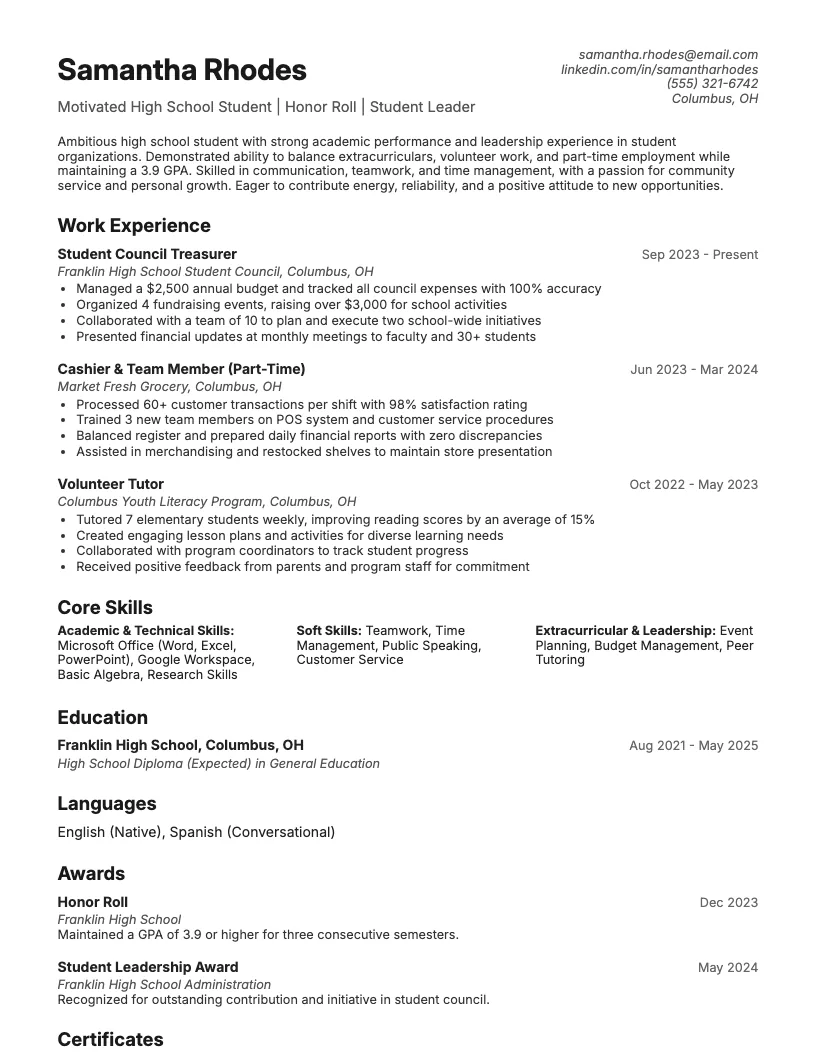
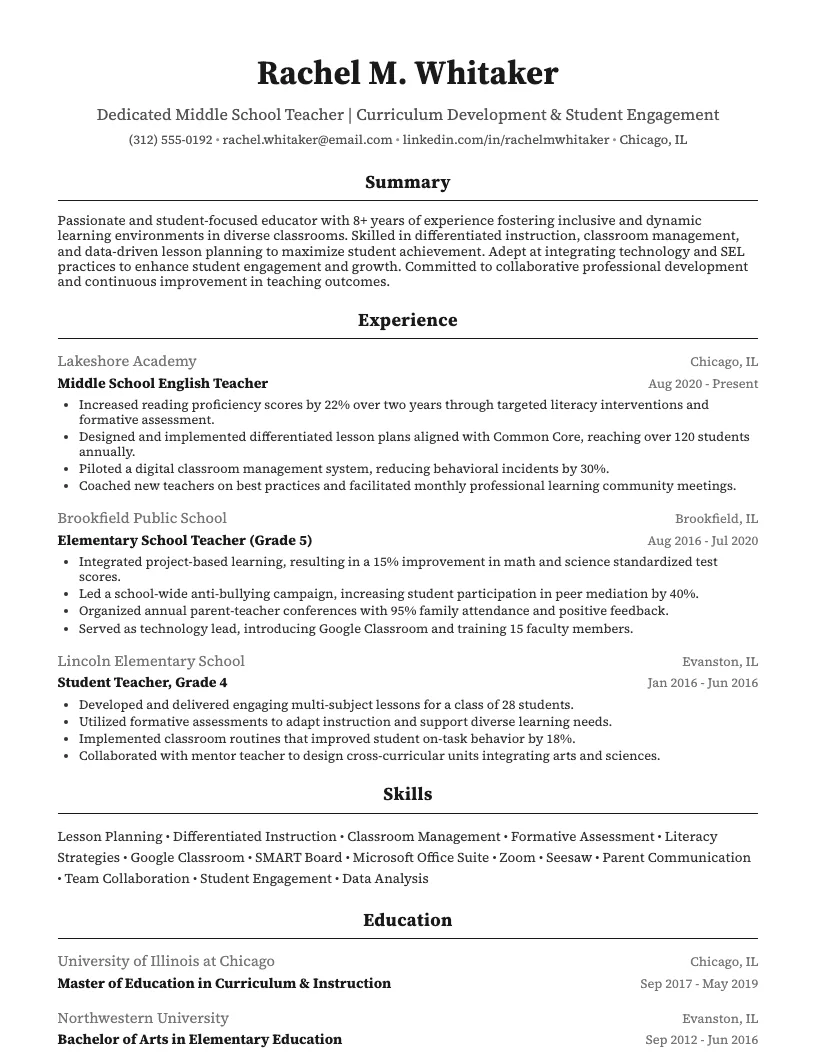
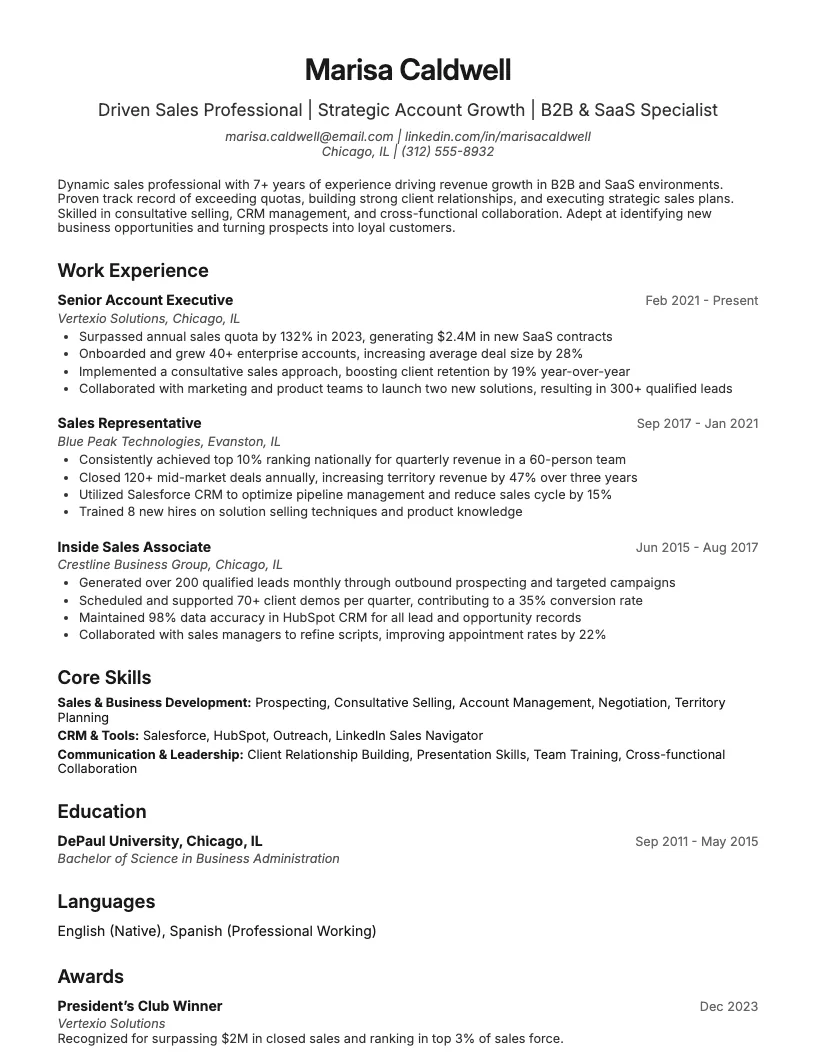
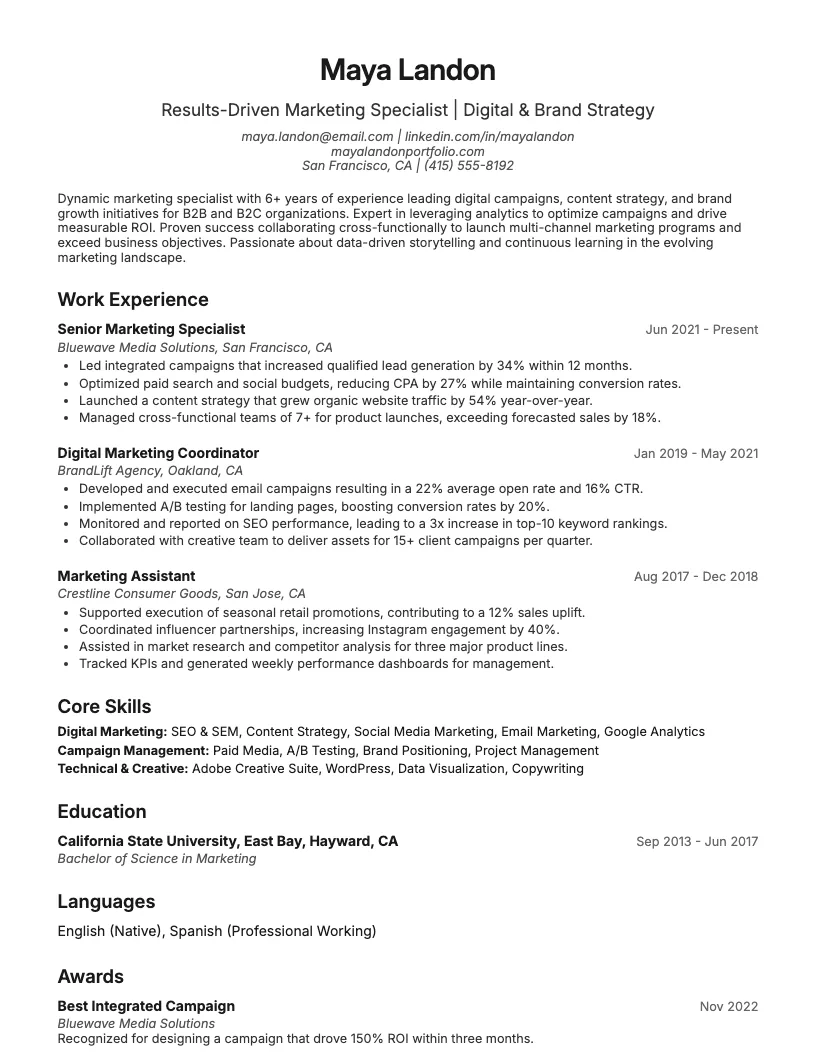
See these skills on a real resume
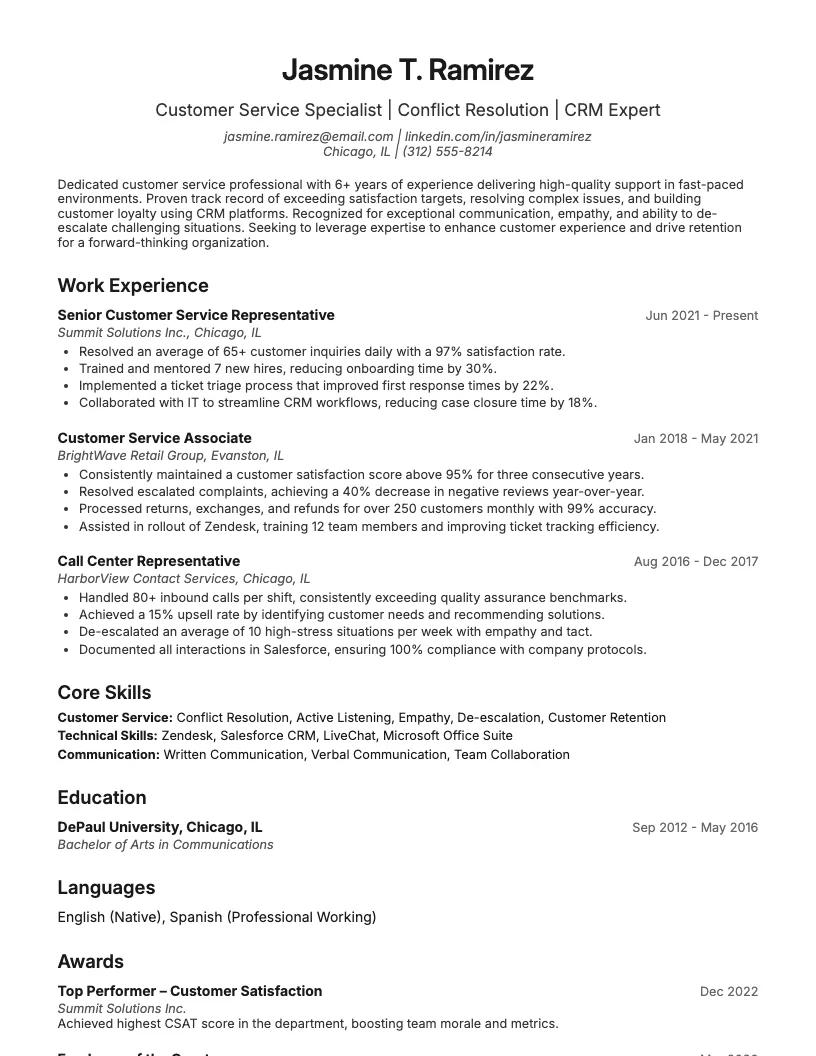
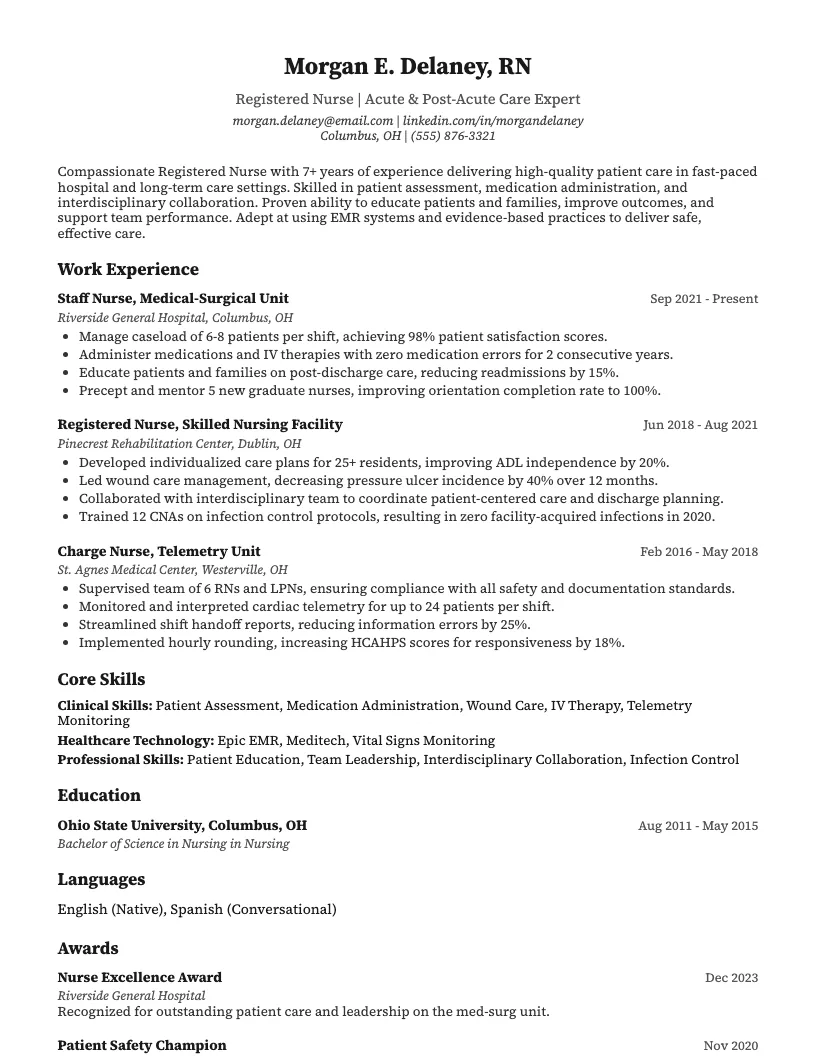
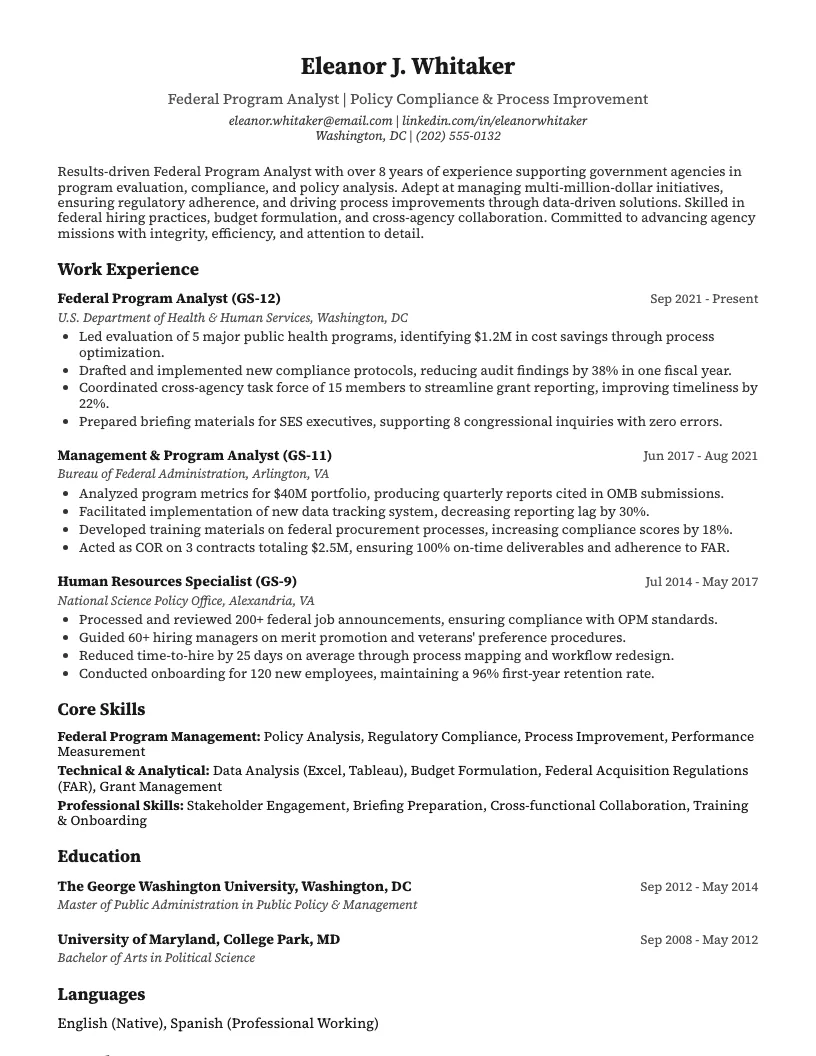
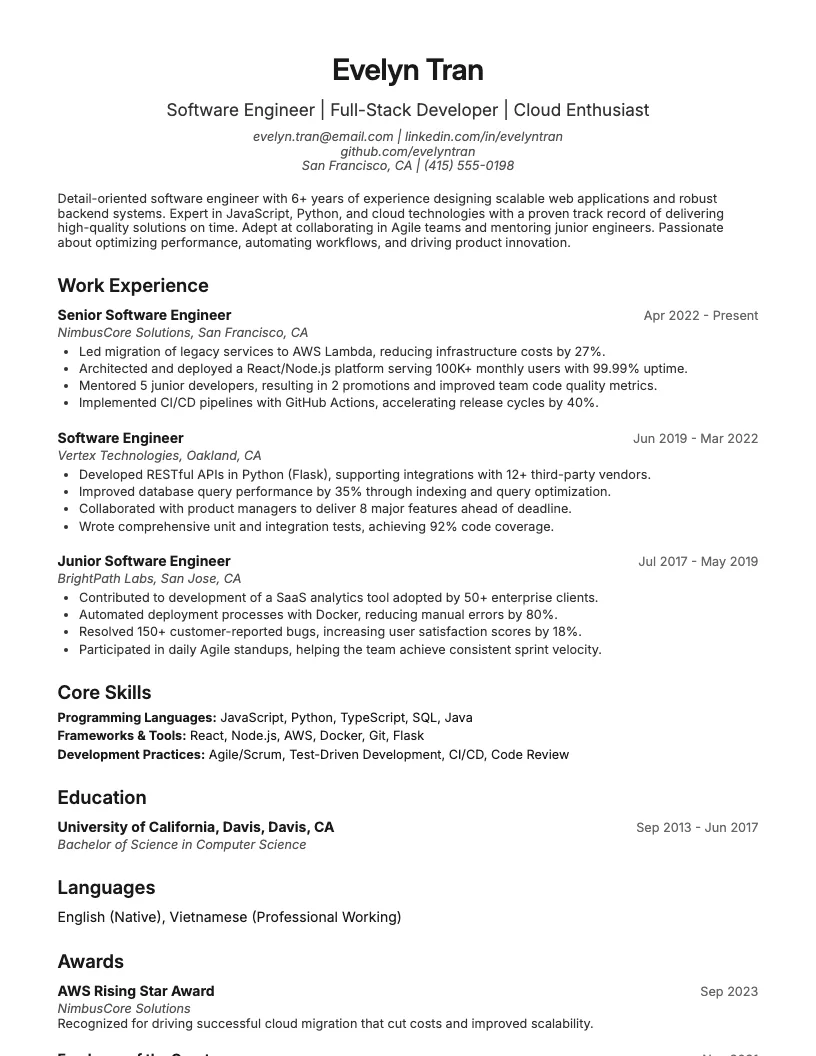
8 examplesStart from an example that already has them, and swap in your own.
Check your resume against the job you want
Scan your resume, see which skills and keywords the posting asks for that you are missing, and fix them before you apply.
Free to use • No credit card required