Skills Based Resume: 6 Steps to Write One, With 4 Real Examples
How to write a skills-based resume in 6 steps, when to use one instead of a chronological resume, 4 real examples by career stage, and whether it beats the ATS.


Written by Marcus Rodriguez
ATS Optimization Specialist & Career Coach
Updated August 2026
Reviewed by Dr. Priya Sharma
Is your resume ATS-friendly?
Drop your resume in and see which of these skills a scanner can actually read, and which ones the job you want is asking for that you have not listed.
PDF or DOCX. Max 2MB.
We never share your resume or use it to train a model.
In This Guide:
What is a skills-based resume?
A skills-based resume puts your abilities front and center instead of a list of job titles and dates.
You group your experience under skill headings, like "Project Coordination" or "Client Relations," and put your best proof under each one.
How it is laid out, top to bottom
Start with a summary that says who you are and what you're aiming for.
Then come 3-5 skill headings, each with two or three bullets proving you have that skill.
After that, a short work history section with just titles, employers, and years. No bullet points there - the skills section already did that job.
Education comes last, same as any resume.
Skills-based vs. chronological
A chronological resume tells a story about your career path: what you did, in order, and how it built on itself.
A skills-based resume tells a different story. It says "here's what I can do," and lets the timeline fade into the background.
Which of the two to pick is covered in when to stick with a chronological resume instead.
Skills-based vs. functional vs. hybrid
Functional and skills-based are the same format under two names - don't let anyone tell you otherwise.
A hybrid resume is different. It keeps skill headings up top but still lists your jobs underneath, in order, with dates.
Whether it's the right pick for you is covered at the hybrid version.
What stays the same as a normal resume
Contact info, summary, education, and even work history are all still there - just reordered.
The skills you pick still have to match the job posting, which is the part people get wrong most often. Before you finalize your headings, run your resume against the actual posting - ResumeJudge will rewrite your skills section to add whatever the job asks for that you haven't covered yet.
Should you use a skills-based resume?
Should you use a skills-based resume?

Some resumes just don't work as a straight timeline. If any of the situations below sound like yours, a skills-based layout is worth trying.
You are changing careers
If your job titles don't say "qualified for this," a list of past roles won't get you there either. What gets you there is naming the skills you already have that the new job needs, then proving each one with something you actually did.
You have a gap of several months or more
A gap looks bigger when it sits at the top of a timeline than when it's folded into a compact work-history line further down. Leading with skills puts your strongest material first and pushes the gap out of the opening seconds of the read.
You just graduated
You don't have years of titles to lean on, and that's fine. Coursework, internships, and part-time jobs all produce real skills - group them under skill headings and they read as capability, not as a thin work history.
Your work has been short-term, freelance, or internships
I've seen plenty of resumes with five short stints in three years, and chronologically it looks scattered even when the actual work was solid. Grouped by skill, the same experience reads as depth in one area rather than a string of lateral moves.
You have been in the same job for years
One employer, one title, a decade of bullet points that all start to blur - that's the resume I see get passed over most, not because the work was thin but because it's hard to scan. Skill headings pull the range of what you actually did back to the surface.
Before you commit to the format, run your bullets against a job posting and see what's still missing - that's a fast way to check if the skills you're leading with are the ones the posting actually asks about.
You are an older worker and want the dates to matter less
Moving the dates further down the page is a real, legitimate way to keep age bias out of the first ten seconds of a screen. It doesn't hide your experience - it just leads with what you can do before anyone starts doing math on your graduation year.
When to stick with a chronological resume instead
If your history is steady, on-topic, and moving upward, don't fix what isn't broken. Recruiters still default to expecting a timeline (see what recruiters say when they see this format), and a straight chronological resume is the fastest read when your career already tells a clean story.
Someone changing careers into skills-based resumes writes it once and reuses it for every job. If you're building yours from scratch, start with the posting, not your resume.
How do you write a skills-based resume?
How do you write a skills-based resume?
I've built enough of these to know the order matters. Skip a step and the whole thing reads like a list instead of a case.
Step 1: Pick 3-5 skills from the job posting
Read the posting and underline every skill it names.
Then cross out the ones you can't actually back up. What's left is your shortlist - and it should be short.
Three to five headings is the range I keep coming back to; much past that and a recruiter stops reading each one closely. ResumeJudge will check your resume against a posting and add whichever required skills are missing, which saves you the guesswork on this step.
Step 2: Put your best proof under each skill
Every heading needs a real example underneath it, not a claim.
One strong bullet beats three vague ones. If you can't prove a skill with something you've actually done, don't use it as a heading - swap it for one you can.
Step 3: Open each bullet with an action verb and a number
A bullet under a skill heading
Responsible for sales
Exceeded sales goals by 10% for five months straight
"Responsible for" is the phrase I cut most often.
Start with what you did: increased, managed, built, cut. Then close with a number - a percentage, a dollar figure, a count of people or accounts.
"Exceeded sales goals by 10% for five months straight" tells a hiring manager something. "Responsible for sales" tells them nothing.
Step 4: Cut the work history down to title, employer, and years
Your proof already lives in the skills section above, so the history underneath doesn't need to repeat it.
Company, title, years - that's it. Years, not full dates.
If you've got a gap or a scattered work history, only list the roles that actually support what you claimed above; the rest can stay off.
Step 5: Write a summary that says why you are a fit
Two or three lines at the top, written for this posting specifically.
Nine times out of ten I see the same summary reused across ten applications, and it shows. Say what you're bringing to this role, not your career in general.
Step 6: Use a plain template with standard section labels
No tables, no text boxes, no graphics.
Call your sections Skills, Experience, Education - nothing clever. A scanner needs to find these labels to read the resume correctly, and a plain layout is what gets it through.
See what a skills-based resume looks like for filled-in examples of this exact structure.
What does a skills-based resume look like?
Reading about the format only gets you so far. Seeing four different people use it usually clicks faster.
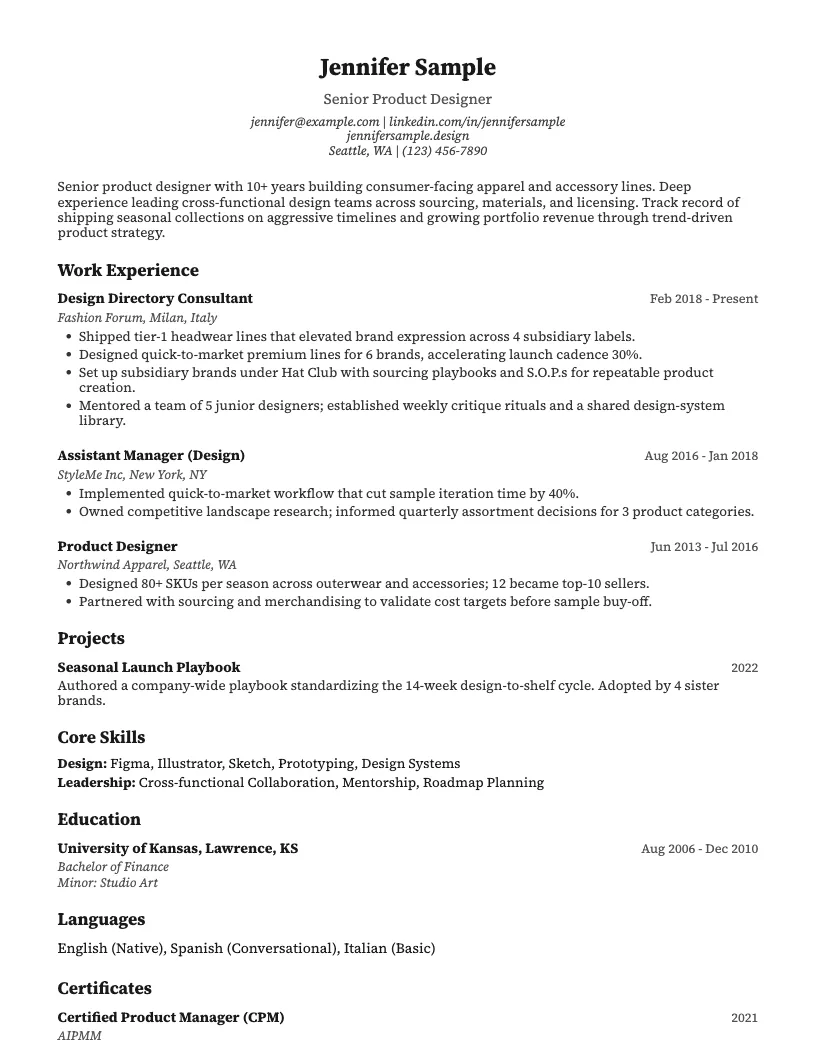
Career changer moving from teaching into project coordination
A teacher moving into project coordination has more overlap than they think - lesson planning is scheduling, parent conferences are stakeholder management.
I'd put "Project Coordination," "Stakeholder Communication," and "Scheduling & Logistics" as headings, then pull the classroom evidence under each one: coordinated a curriculum rollout across 6 teachers, managed a semester schedule for 120+ students, ran weekly parent updates. Same skill, different noun.
Sales representative
For sales, group by "Interpersonal," "Sales," and "Marketing" - it's the layout I see most often for this role, and it works because it separates relationship-building from the numbers.
Lead the sales section with the number: a sales increase, a quota you beat, a customer satisfaction score. That's the line a recruiter reads twice.
Recent graduate with internships only
No full-time job yet doesn't mean no proof. Group your internships and coursework under skill headings the same way you would jobs - "Data Management," "Communication," whatever the posting actually asks for.
A line like "maintained 1,000+ records with 99% accuracy" from a three-month internship carries more weight than a vague bullet from a real job.
Returning to work after a gap
Why this works is covered in should you use a skills-based resume.
Keep the roles listed, just condensed, and let the skill bullets do the talking.
Skill headings you can borrow, with the bullets that go under them
A few I reuse constantly: "Project Coordination" (managed 5-8 projects at once), "Communication & Collaboration" (handled 40+ daily communications), "Data Management" (improved workflow efficiency by 25%). If you're not sure which of your skills actually match what a posting wants, running the resume against the job description with something like ResumeJudge will rewrite it to lead with the ones that match and cut the ones that don't.
Will a skills-based resume get past the ATS and the recruiter?
Is your resume good enough?
Drop your resume in and see which of these skills a scanner can read, and which ones the job you want is asking for that you have not listed.
Upload your resumeFree. PDF or DOCX. We never share your resume or use it to train a model.
Here's the trade you're making with this format: you fix the "wall of dates" problem for the human reader, and you risk creating a new one for the software.
Why dropping dates trips up the software
Applicant tracking systems are built to scan for dates and job titles in a predictable order.
Strip the dates out entirely and some parsers can't map your skills back to a timeline at all - so fields that should auto-fill come back blank. Almost no system throws a resume out over that on its own; what it does is leave you out of the results when a recruiter searches their database for the experience you actually have.
Keep the dates, move them
The fix isn't dropping dates, it's demoting them.
That short work history line is exactly what step 4 asks you to write, and it is what leaves the parser something to map your skills back to.
What recruiters say when they see this format
I've read a lot of recruiter feedback on this format, and the word that comes up most is "hiding."
Fair or not, a resume with no dates reads to a lot of recruiters as concealing a gap or a thin work history, and it takes longer to review because it breaks the layout they scan on autopilot. Nine times out of ten, a recruiter would rather spend three extra seconds on a normal resume than dig for your timeline on this one.
Say why you chose it, in your summary or cover letter
If you use this format, don't make the recruiter guess why.
One line in your summary - career change, return from a gap, whatever it is - does more to reassure them than any amount of clever formatting. It turns an unusual layout into a deliberate choice instead of a red flag.
The hybrid version, if you want the safer option
If you're on the fence, take the hybrid - it's the safer bet for anyone worried about ATS or recruiter pushback, and it's what I recommend by default. Before you send either version, run it against the actual posting - ResumeJudge will rewrite the skills you led with to match what the parser is actually scanning for.
Frequently Asked Questions
Is a skills-based resume the same as a functional resume?
Yes, they're the same format under two different names. The "Skills-based vs. functional vs. hybrid" section above (#skills-based-vs-functional-vs-hybrid) explains how both differ from a hybrid resume.
How long should a skills-based resume be?
One page, the same as any other resume format. Since the skills section already carries your best accomplishments, the work history underneath it can stay short, which makes the one-page limit easier to hit than it looks.
How many skills should I use as headings?
Three to five. Pick the ones the job posting actually asks for and that you can back up with a real example, rather than listing every skill you have.
Do I have to leave dates off?
No. Keep company names, job titles, and at least the years for each role - full dates aren't necessary, but hiding them entirely tends to read as evasive rather than strategic. A condensed work history with years is standard even in this format.
Should I still include education?
Yes, it still belongs on the resume. It just moves lower, after the skills section and work history, since the point of this format is to lead with what you can do rather than where you studied.
Can I use a skills-based resume for a job I have no experience in?
Yes, this is one of the situations the format is built for, since it lets you lead with transferable skills instead of a work history that doesn't match the role. Run your skills list against the job posting in ResumeJudge first so you know which ones the employer is actually screening for before you commit to them as headings.
See these skills on a real resume
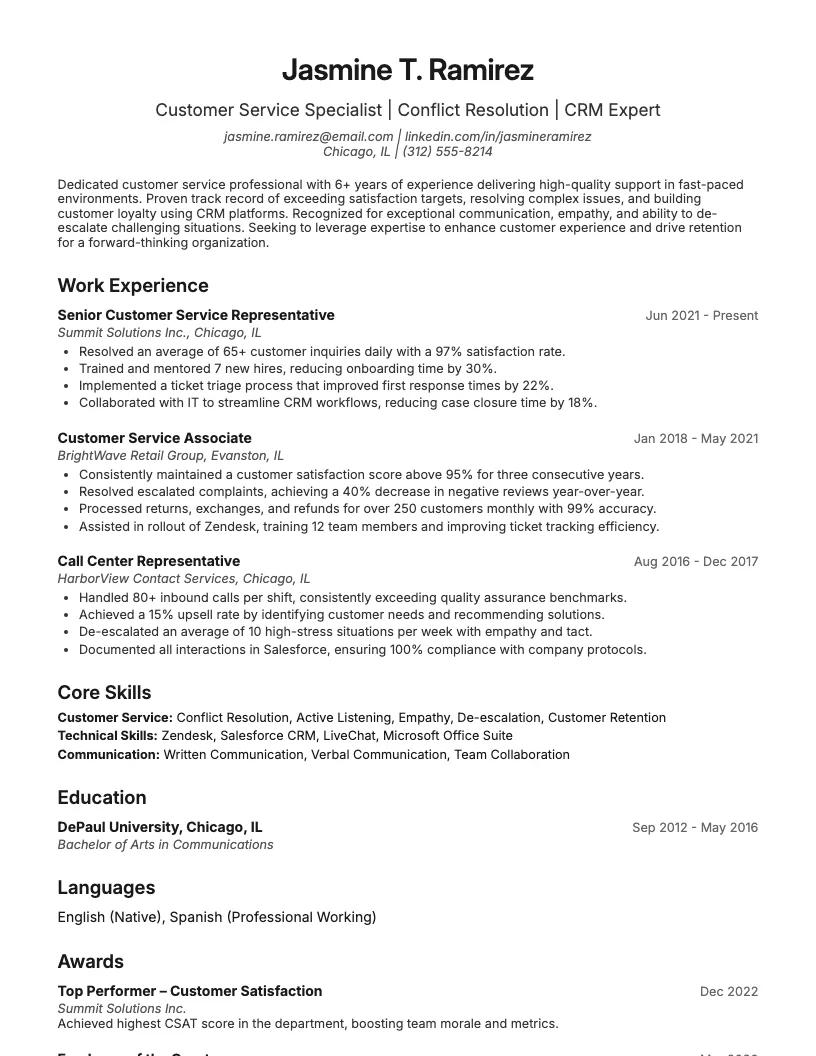
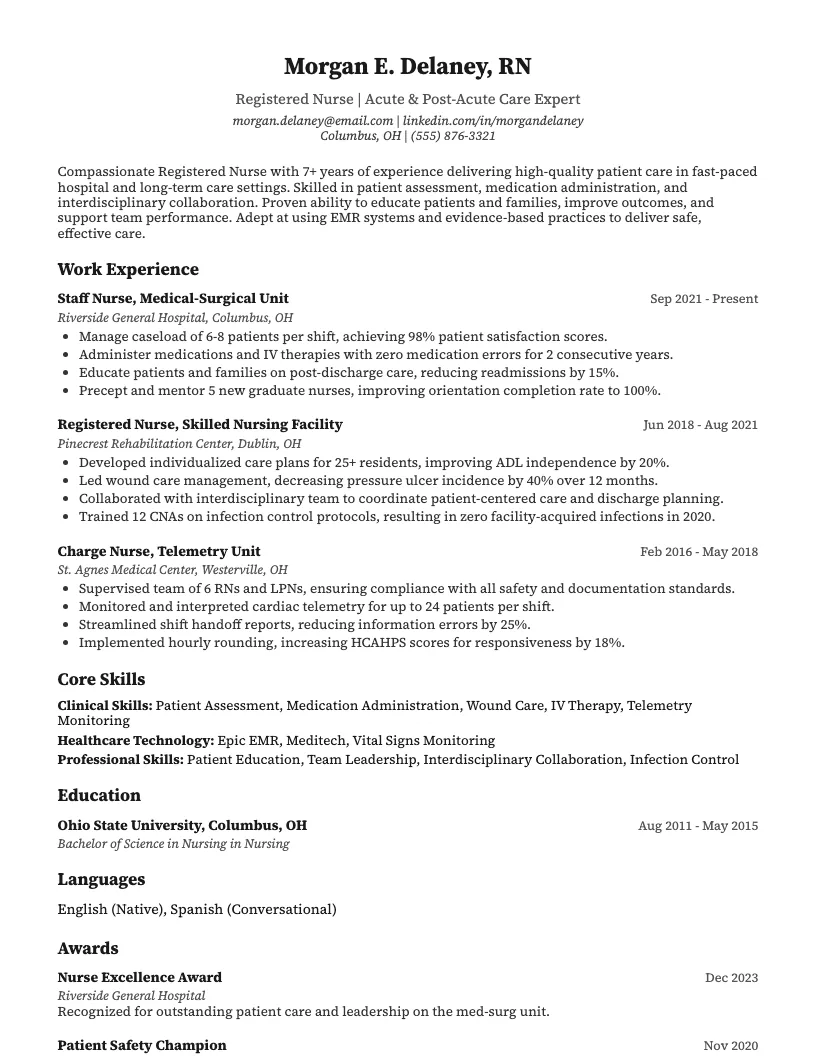
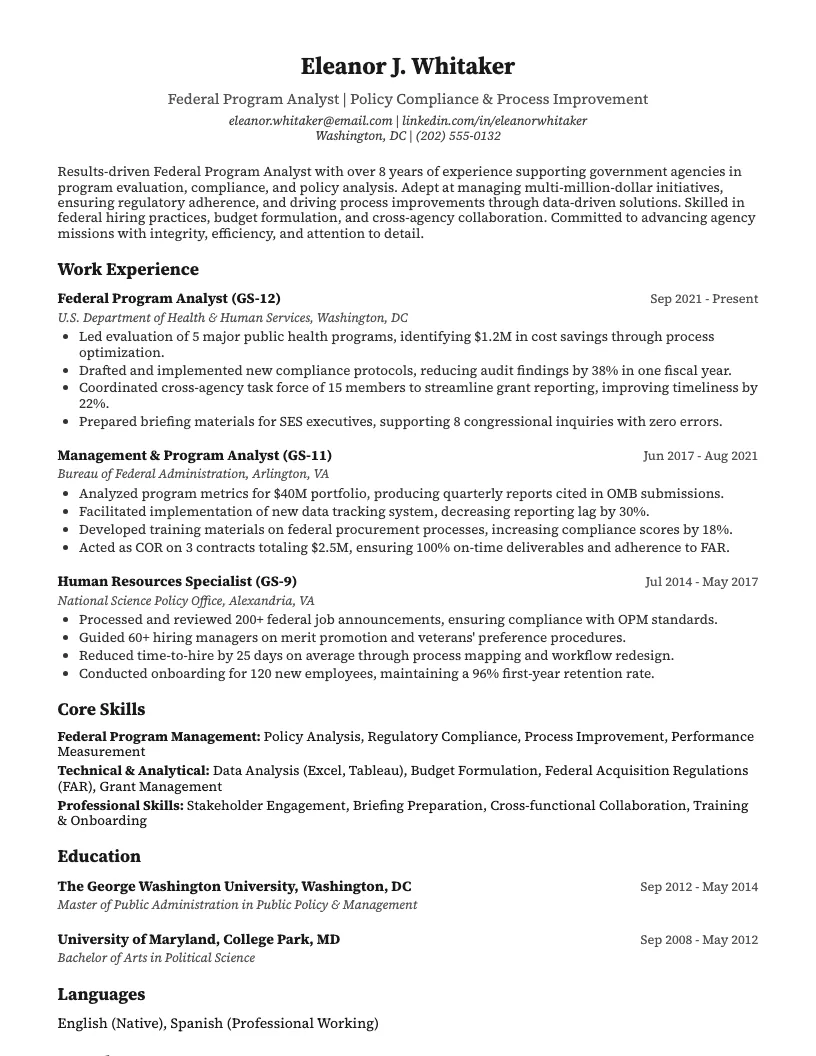
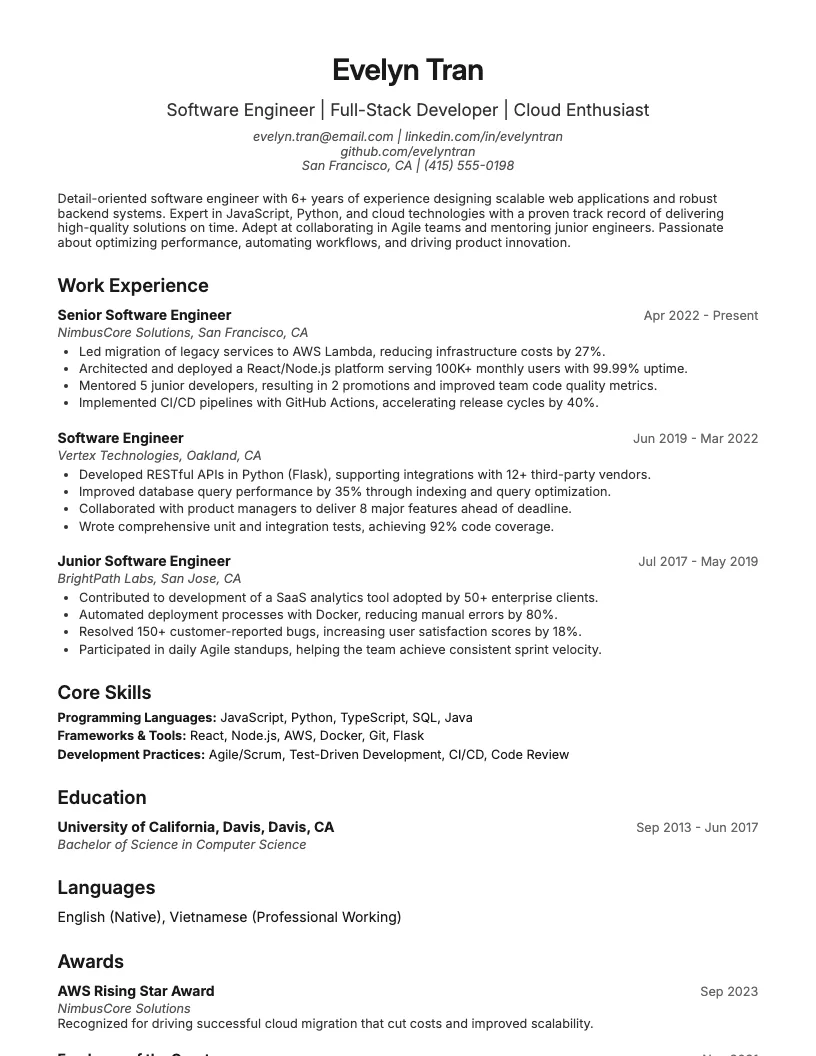
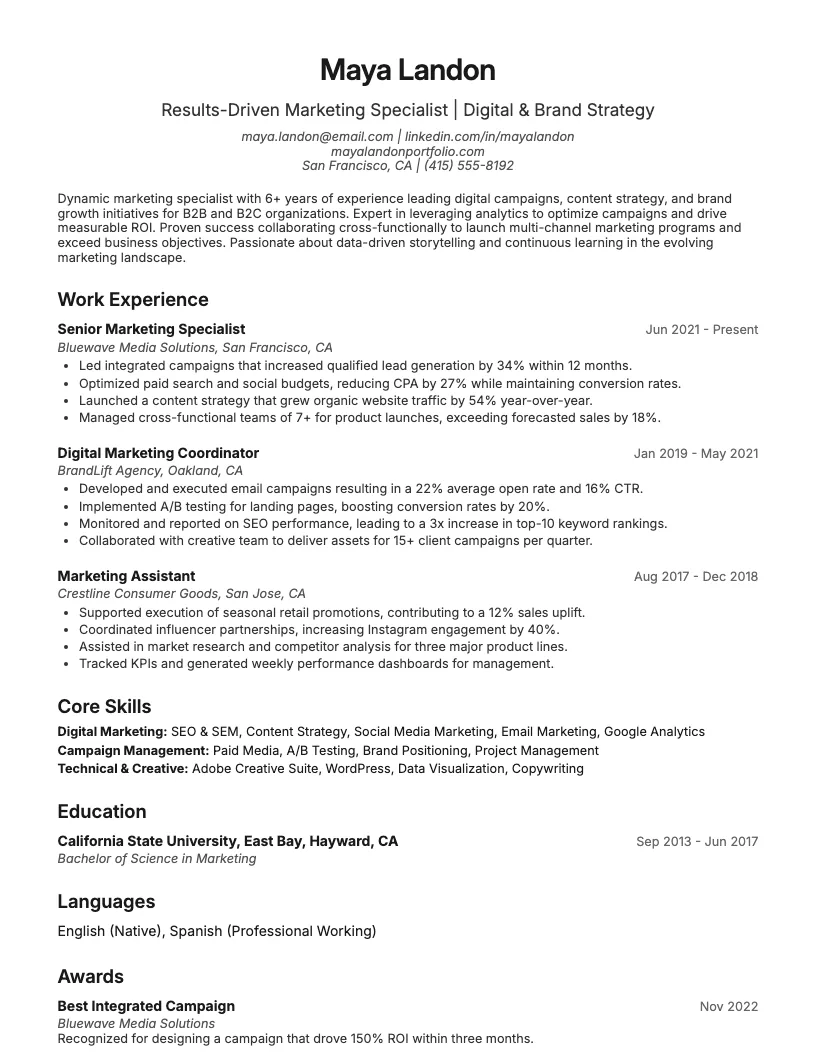
8 examplesStart from an example that already has them, and swap in your own.
Check your resume against the job you want
Scan your resume, see which skills and keywords the posting asks for that you are missing, and fix them before you apply.
Free to use • No credit card required