Special Skills for Resume: 17 Examples, 5 Steps to Find Yours
See 17 special skills for a resume, examples across 9 job fields, plus 5 steps to find your own and how to write each one so it reads credible instead of vague.


Written by Dr. Priya Sharma
Career Development Expert & Resume Analyst
Updated August 2026
Reviewed by Sarah Chen
Is your resume ATS-friendly?
Drop your resume in and see which of these skills a scanner can actually read, and which ones the job you want is asking for that you have not listed.
PDF or DOCX. Max 2MB.
We never share your resume or use it to train a model.
In This Guide:
What counts as a special skill on a resume?
A special skill is anything on your resume that makes a hiring manager stop scrolling. I've read thousands of these, and the ones that work fall into two buckets.
A skill most applicants for the same job don't have
This is the rare one: a language, a licence, a system most people in your field never touch.
If nine other resumes on the pile don't have it, it does the work of ten bullet points on its own.
A common skill you can prove at an uncommon level
Plenty of applicants can say "good with data." Few can say they built the dashboard the whole team still uses.
The skill doesn't have to be exotic. The proof does.
Special skill vs. general skill: a side-by-side
| General skill | Special skill | |
|---|---|---|
| Who else has it | Most applicants | Few applicants |
| How it reads | "Team player" | "Led the migration to a new CRM, trained 12 staff on it" |
| What it proves | Nothing on its own | A specific outcome |
If a posting lists a skill you're claiming, ResumeJudge will check your resume against it before you submit and rewrite the wording to cover what's missing.
Where a special skill actually goes on the page
Not in a plain skills list next to "Microsoft Word." Where to put the proof if the skills section is just a list covers where it belongs and how to word it.
How do you find your own special skills?
How do you find your own special skills?

Most people don't know their special skills because nobody's ever asked them directly. Here's a five-step way to dig them out.
Step 1: List everything you were the go-to person for
Think about who came to you when something needed fixing, explaining, or covering. That pattern is your skill list, before you've called it one.
Step 2: Read three job postings for the same role and mark what's missing from most resumes
Pull three postings for the job you want and highlight what keeps showing up that you rarely see on a resume for that role. Nine times out of ten it's a piece of software, a certification, or a process most candidates never mention.
ResumeJudge will run this comparison for you against one posting and rewrite your resume to add what's missing.
Step 3: Check what you learned outside work - side projects, volunteering, hobbies
I've reviewed hundreds of resumes where the strongest skill was buried under "hobbies" or left off completely. A side project that taught you a tool, or years of volunteering that taught you to run a budget, counts.
Step 4: Cut anything you can't back up in an interview
If someone asked you to demonstrate it tomorrow, could you? If not, leave it off.
Step 5: Keep the three that a rival candidate probably can't claim
Once you've got a long list, cut it down to the few most applicants for the job don't have. Three sharp, provable skills beat ten vague ones every time.
What are examples of special skills for a resume?
What are examples of special skills for a resume?
Here's the actual list I pull from when someone tells me "I don't have anything special." Nearly everyone has three or four of these hiding in a job they didn't think to write up.
Speaking a second language
This is the one people undersell the most. "Conversational Spanish" buried at the bottom of a resume does nothing.
Say what you actually did with it - negotiated a contract, supported customers in a second language, translated for a team. If you want to know how to phrase the proof, that's covered below.
Sign language
Rare enough that most hiring managers have never seen it on a resume, which is exactly why it works. Any level of ASL fluency is worth listing if the role touches customers, patients, or students.
Compliance knowledge: HIPAA, GDPR, SOX
I've seen candidates bury this under "familiar with regulations" - huge mistake. Compliance knowledge protects a company from legal and financial risk, and that makes it one of the highest-value lines you can write.
Name the specific regulation, then the result: an audit with zero findings, a rollout across hundreds of employees, faster reporting. Vague compliance language reads like you skimmed a policy once.
Public speaking and presenting
Most people are uncomfortable speaking in front of a group, so being visibly good at it makes you stand out immediately, especially for customer-facing roles. Don't just write "presentation skills" - say what you presented and to whom: quarterly results to leadership, product demos to a room of prospects.
Data analysis and reading a dashboard
Every company drowning in data wants someone who can turn it into a decision. That's the actual skill - not "proficient in Excel," but "I looked at the numbers and told the team what to do next."
Name the tool if you have one - Tableau, SQL, Google Analytics, whatever you actually touched - then the insight and the result. A resume that says "increased conversion 23% after analyzing funnel drop-off" beats "strong analytical skills" every time.
Cross-department project leadership
This means you got engineering, marketing, and sales pointed at the same goal at the same time, which is a genuinely hard thing to pull off. It's proof of coordination and strategic thinking, not just task management.
Give the team size, the timeline, and the outcome in a number - daily active users up 40%, a launch that hit its date. If you're not sure this even counts as "special," the difference between special and general skills walks through it.
Change management
Guiding people through a merger, a system rollout, or a restructure is a different skill from running the project itself - it's the human side, not just the operational one. Companies going through growth or new technology actively look for this.
Numbers that land here: how many employees were affected, an adoption rate, a retention rate through a merger. "Helped with the transition" tells me nothing; "led CRM adoption across 500 employees, hit 92% adoption in six months" tells me everything.
Grant and bid writing
A narrow skill, but if you have it, it's rarely competed for. This is proof you can write persuasively under a strict format and win money for an organization - name the amount secured or the win rate if you have it.
Technical writing and documentation
The person who can turn a messy process into a doc someone else can actually follow is more valuable than most teams realize until they lose that person. If you've written onboarding guides, internal wikis, or user-facing docs, that's a real, listable skill - say what you documented and who used it.
Coding or automation in a non-technical role
Nine times out of ten, this is the biggest skill someone forgets to list. If you built a spreadsheet macro, a script that saved your team hours a week, or a simple internal tool, that's automation - write it as a skill, not a side project.
I'd rather see "wrote a script that cut weekly reporting time from three hours to twenty minutes" than "basic coding knowledge." One of those is checkable, the other is filler.
Design and video editing
Even outside a design role, being able to build a clean deck, edit a promo video, or lay out a one-pager saves a team from waiting on someone else. Name the tool - Photoshop, Premiere, Canva, whatever you used - and what you produced with it.
Salesforce, SAP, or another heavy internal system
Deep fluency in a system like this is a skill on its own, separate from whatever your job title says. If you were the person your team asked when Salesforce broke, that's worth its own line, not a footnote.
A commercial driver's licence or forklift certification
Straightforward and non-negotiable for a lot of warehouse and logistics postings - if you have the certification, it goes near the top of your skills, not buried at the bottom.
First aid, CPR, or emergency response
Relevant well beyond healthcare - teaching, childcare, retail, anywhere the public is on-site. It signals you can stay calm and act when something goes wrong, which is worth more to a hiring manager than it might seem.
Notary and other licences
Small, specific, and easy to verify - exactly the kind of skill that's cheap for you to list and hard for another candidate to match. If your state or role touches paperwork at all, a notary licence is worth a line.
Musical or performance skills
I'd only list this if it maps to something real about the job - discipline, public performance under pressure, teaching an instrument. On its own it reads as a hobby; tied to a result, it reads as proof you can commit to something and get good at it.
AI tools used for real work output
This is quickly becoming table stakes rather than a differentiator, so the skill isn't "I used ChatGPT" - it's what you built with it. Say the tool and the output: drafted campaign copy, built a research summary process, cut a reporting task from hours to minutes.
The mistake I see most often here is a vague "AI-savvy" with nothing behind it. If you're not sure your resume proves any of these skills instead of just naming them, run it against a real posting - ResumeJudge will find what's missing and rewrite those lines so they prove it instead of just claiming it.
How do you write a special skill so it sounds credible?
How do you write a special skill so it sounds credible?
The mistake I see most often is a skill sitting on its own with nothing behind it. "Fluent in Spanish."
"Strong public speaker." A recruiter reads that and has no way to tell if it's true, so nine times out of ten they discount it.
Name the level, not just the skill
"Spanish" tells a recruiter almost nothing. "Spanish, C2 / fluent" or "Spanish, conversational" tells them exactly what they're getting.
The same goes for any skill with a range - software, a language, a certification. Naming the level does two things: it lets a recruiter match you to what the posting actually needs, and it signals you're being straight with them instead of padding the section.
Attach a number to it
A skill with a number attached reads as real. "Led a cross-department project" is a claim.
"Led a six-person team across three departments to ship a redesign in ten weeks" is proof.
Reach for whatever number you have: a team size, a percentage, a dollar figure, a timeline. If you're not sure which skills on your list even have a number behind them, running the resume through ResumeJudge against the job posting will rewrite the ones that are still just claims into lines with a number behind them.
Say where you used it
Don't leave a skill floating with no context. Say the team, the project, or the situation it came up in - that's what turns "bilingual" into "used French and English daily to manage accounts across two regions."
Before and after: "Fluent in Spanish" vs. the version with proof
How to write a language skill
Fluent in Spanish.
Spanish, C1 - used daily with a 200-person client base to resolve support tickets, cutting response time 20%.
Before: Fluent in Spanish. After: Spanish, C1 - used daily with a 200-person client base to resolve support tickets, cutting response time 20%.
Same skill. One is a word, the other is evidence.
Where to put the proof if the skills section is just a list
If your skills section is just a list of words, the proof doesn't belong there - it belongs in your experience bullets. Pair the skill with an action verb and a result: "Used Salesforce to rebuild the lead pipeline, cutting handoff time by a third."
The list gets you found; the bullet gets you believed.
Which special skills matter for your job?
Which special skill matters most by field
| Field | Skill that matters most | Why |
|---|---|---|
| Customer service and retail | A second language | Moves you to the top of the pile near any bilingual customer base |
| Healthcare and nursing | Compliance (HIPAA) and certifications | Carries real weight, especially with an expiration date |
| Teaching | A curriculum or ed-tech platform | Classroom management alone won't separate you from other applicants |
| Software and IT | The specific language or framework | Vague terms give a recruiter nothing to match you against |
| Marketing | Reading a dashboard | Separates marketers who can prove ROI from ones who just say 'creative' |
| Sales | The CRM you know (e.g. Salesforce) | Shows up in postings constantly |
| Finance and accounting | Compliance (SOX) | The same weight HIPAA carries in healthcare |
| Warehouse and logistics | Forklift or CDL certification | Binary - you either have it or you don't, and it screens you in or out |
| Administrative and office roles | A heavy system like SAP, or an automation you built | 'Microsoft Office' gets cut nine times out of ten |
Not every special skill lands the same way with every hiring manager. What impresses in a warehouse gets ignored in accounting, and what matters to a nurse recruiter means nothing to a sales director.
Here's what I've seen actually move the needle by field - each skill is written up in full in the examples list, so this is only which one to lead with.
Customer service and retail
A second language is the single biggest lift you can put on a retail or call center resume. Stores near any bilingual customer base will move a fluent applicant to the top of the pile.
POS systems, inventory software, and de-escalation experience count too - name the system you used, not just "customer service skills."
Healthcare and nursing
Compliance knowledge like HIPAA carries real weight here, and so does any certification with an expiration date: CPR, ACLS, BLS. List the certification and when it's valid through.
Specific equipment and charting systems (Epic, Cerner) belong next to your clinical skills, not buried in a paragraph.
Teaching
Classroom management is assumed, so it won't separate you from anyone else applying. What does: a second language, experience with a specific curriculum or ed-tech platform, or leading an extracurricular program.
If you've written grants for classroom funding, that's a genuinely rare skill among teachers - say so plainly.
Software and IT
Specific languages, frameworks, and platforms are the skill here, and vague ones give a recruiter nothing to match you against. Name the tool, not the category - "Python" and "AWS," not "programming" and "cloud."
This is also where checking your skills list against the actual posting matters most, because IT postings vary wildly in which tools they screen for - a tool like ResumeJudge will check your resume against the posting and add the tools you're missing before you apply.
Marketing
Data analysis and reading a dashboard is the skill that separates marketers who can prove ROI from ones who just say they're "creative."
Design and video editing skills are a real edge too, since most marketing teams are stretched thin on production help.
Sales
The CRM you know matters as much as your close rate. Salesforce specifically shows up in postings constantly.
Public speaking and presenting is worth a line if you've pitched to groups, not just one-on-one - I see this skipped far more than it should be.
Finance and accounting
Compliance knowledge - SOX in particular - is a special skill in this field the same way HIPAA is in healthcare.
Advanced spreadsheet or modeling skills need a number attached, the way we cover under attach a number to it - "built a model tracking $2M in quarterly spend" beats "strong in Excel" every time.
Warehouse and logistics
A forklift certification or commercial driver's licence is the clearest special skill this field has - it's binary, you either have it or you don't, and it screens you in or out immediately.
Inventory and warehouse management systems are worth naming too, the same way a nurse names their charting system.
Administrative and office roles
The trap here is listing "Microsoft Office" as a skill - nine times out of ten that gets cut, since everyone already has it. What's special is a heavy system like SAP, notary status, or coding a small automation that saved real time.
If you've automated part of your own job, that's rarer than it sounds in admin work - put it on the page.
What if you don't think you have any special skills?
What if you don't think you have any special skills?
I hear this a lot: "I don't have any special skills, I've just done normal jobs." That's almost never true.
It usually means you haven't gone looking yet.
Skills from school, clubs, and group projects
If you ran a club budget, organized an event, or were the one who actually finished the group project while everyone else talked, that's project management and ownership. Recent grads have this more often than they think - they just don't count it because no one paid them for it.
Skills from volunteering
Volunteering produces real, resume-worthy skills: fundraising, scheduling twenty people, training new volunteers, managing a food drive's logistics. I've seen candidates land interviews off a single volunteer role that showed more leadership than three years of paid work did.
Skills from a hobby that produced something
A hobby that made something concrete counts - a podcast, a website, a small Etsy shop, a Discord community you grew to a few thousand members. If it produced an output, it produced a skill: audio editing, basic web design, community management, budgeting.
Skills from caring for family or running a household
Running a household on a budget, coordinating a family's schedules, managing a parent's medical care - that's budgeting, scheduling, and negotiation, done under real pressure. I don't think you need to name it "caregiving" on the page, but don't leave the underlying skill off either.
Skills you carry over from a different industry
Career changers usually undersell themselves the most. A restaurant manager knows inventory, scheduling, and conflict resolution.
A teacher knows how to explain something complicated to someone who's frustrated. None of that is industry-specific - it's transferable, and it's often exactly what a hiring manager wants.
Check a target posting against your background and you'll usually find you're closer than you think - that's the kind of gap ResumeJudge finds and fixes in your resume automatically.
A certificate or short course you can finish this month
If you genuinely have nothing yet, that's fixable fast. A free or low-cost course in a tool your target job keeps mentioning - a CRM, an analytics platform, a certification body's intro class - can be done in a few weeks and gives you something real to put on the page, not a guess.
Which special skills should you leave off?
Not every special skill deserves a spot. I've seen resumes where the special skills section did more harm than the plain one it replaced, because half of what was on it raised a question the candidate couldn't answer.
Anything you can't demonstrate if asked
If a recruiter could ask you to prove it on the spot and you'd freeze, take it off.
This is the one rule I'd keep if I could only keep one. Hiring managers check whether what you claimed matches what you show in the interview, and a skill you can't back up reads as a lie about everything else on the page too.
Hobbies with no link to the job
Interests are fine on their own page. On a resume, they only belong if they built something a rival candidate probably can't claim - see step 5 for how to test that.
Skills every applicant has, like email and Microsoft Word
Typing, email, basic internet research - leave these off unless the posting specifically asks for them. Listing them signals you don't know what actually sets you apart, which is the opposite of the point of this section.
Outdated software
A tool you haven't touched in five years isn't a special skill, it's a history lesson. If it's not something you'd want to be tested on this week, cut it.
Buzzwords: "hard-working", "team player", "motivated"
These aren't skills, they're adjectives, and every resume on the pile has them. If you want credit for being a team player, show the project where you led one instead of naming the trait.
This is exactly the kind of gap ResumeJudge finds when it checks your resume against a posting - it rewrites vague filler like this into a specific, provable line.
Personal details that invite bias
Age, marital status, religion, health conditions - none of it belongs near your skills, special or otherwise. Nine times out of ten it adds risk and adds nothing a hiring manager needed to make a decision.
Frequently Asked Questions
How many special skills should I put on my resume?
Three to five is usually enough. Special skills are meant to stand out, so a long list dilutes them and starts to look like padding. Pick the ones that are most relevant to the job or most likely to make you memorable, and let the rest of your resume carry the standard skills.
Do special skills go in their own section or with my other skills?
Either works, but a separate section makes them easier to notice. If you only have one or two, folding them into your main skills list is fine. Once you have three or more standout skills, give them their own heading so a hiring manager doesn't have to hunt for them among routine ones.
Should I list special skills if the job posting doesn't ask for them?
Yes, as long as they don't crowd out what the posting does ask for. A posting lists the skills it needs filled first, and those should fill your resume before anything extra. ResumeJudge can check your resume against a posting and show you which required skills are still missing, so you know your special skills aren't taking their place.
Do special skills hurt me with applicant tracking systems?
No, not on their own. An ATS scans for the keywords in the job posting, and a special skill only hurts you if it pushes out those keywords or if you word it so differently from the posting that the system doesn't recognize it. ResumeJudge can compare your resume against a posting and flag any required keywords the scanner won't pick up.
Are hobbies and interests the same as special skills?
No. A hobby is something you do for enjoyment, while a special skill is something you can do and would use on the job. Playing guitar is a hobby; being fluent in a rare language or holding a pilot's license is a special skill, because an employer could actually put it to use.
Should I list a language I only speak a little of?
You can, but label it honestly. Say "basic" or "conversational" rather than listing it plainly alongside a language you're fluent in, especially if the job could put you in a real conversation in that language. An interviewer may test it, so don't overstate your level.
What's the difference between a special skill and a soft skill?
A special skill is a concrete, provable ability, like coding in a rare language or holding a certification, while a soft skill is a personal trait like communication or teamwork. Soft skills describe how you work; special skills describe something specific you can do that most other candidates can't.
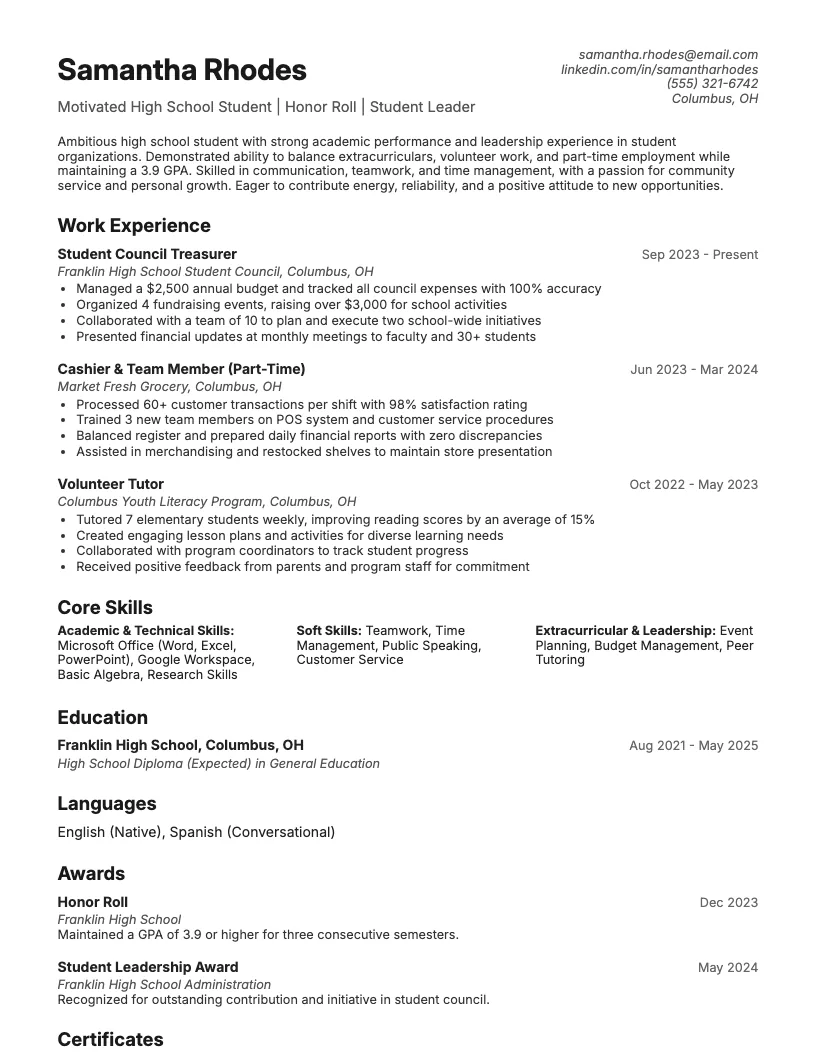
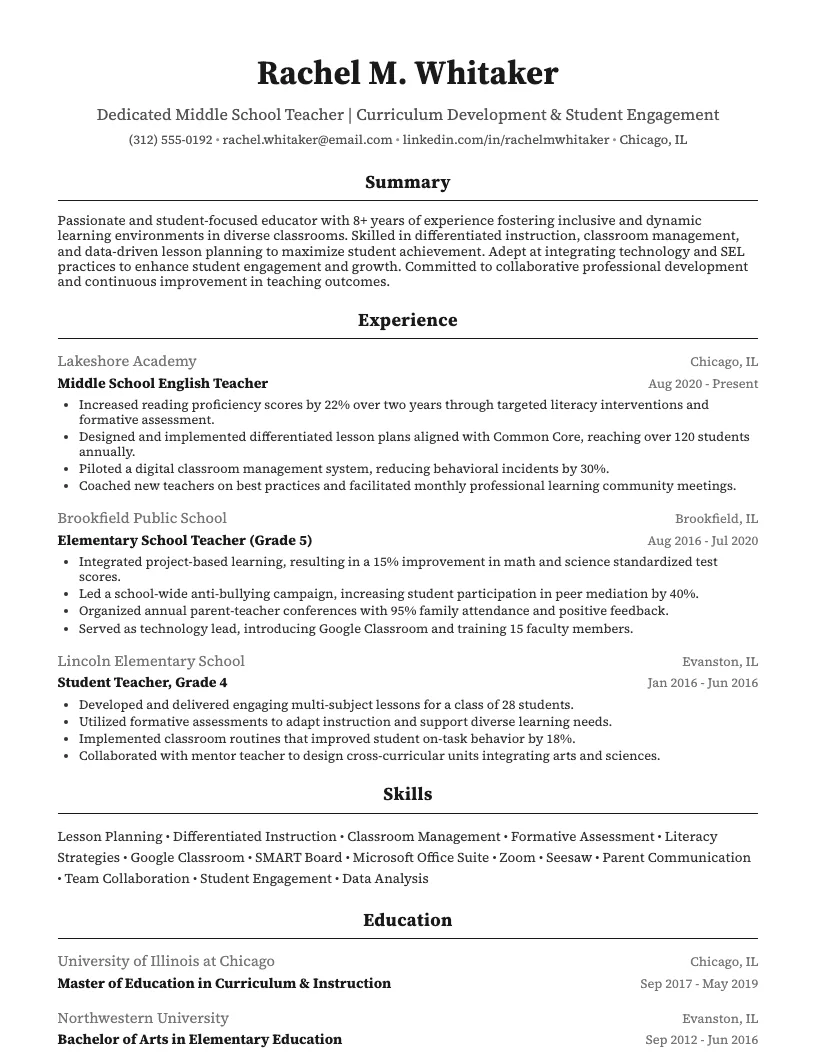
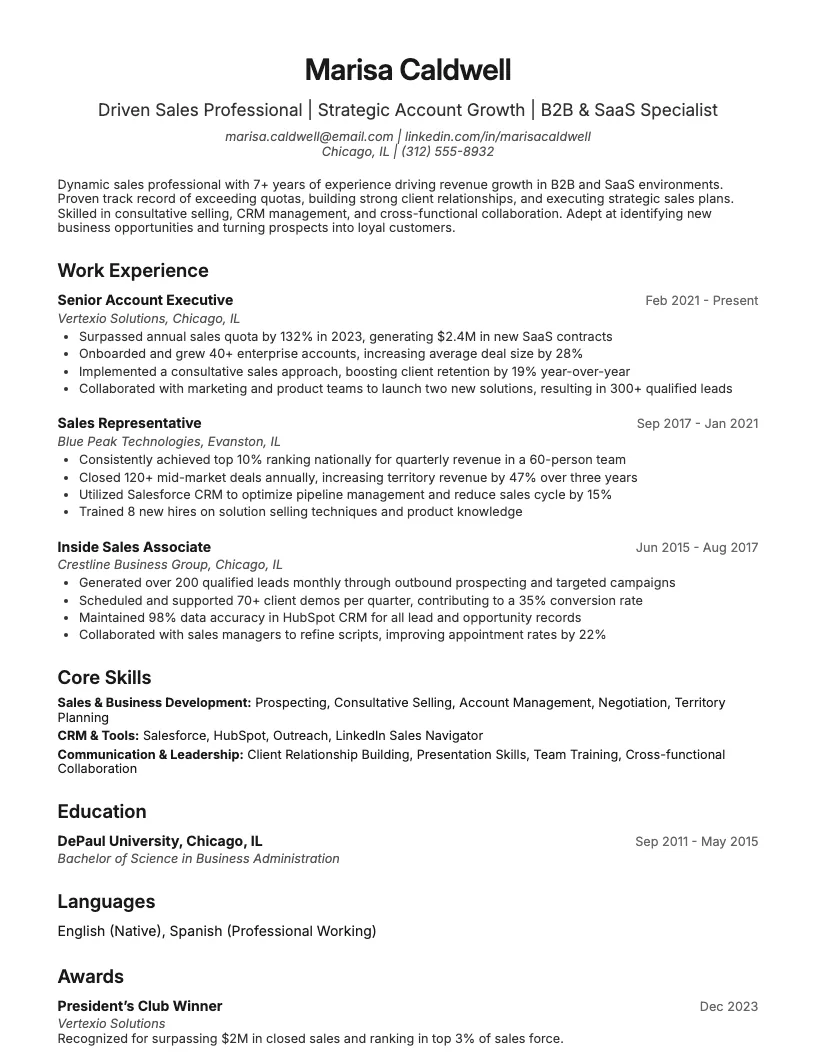
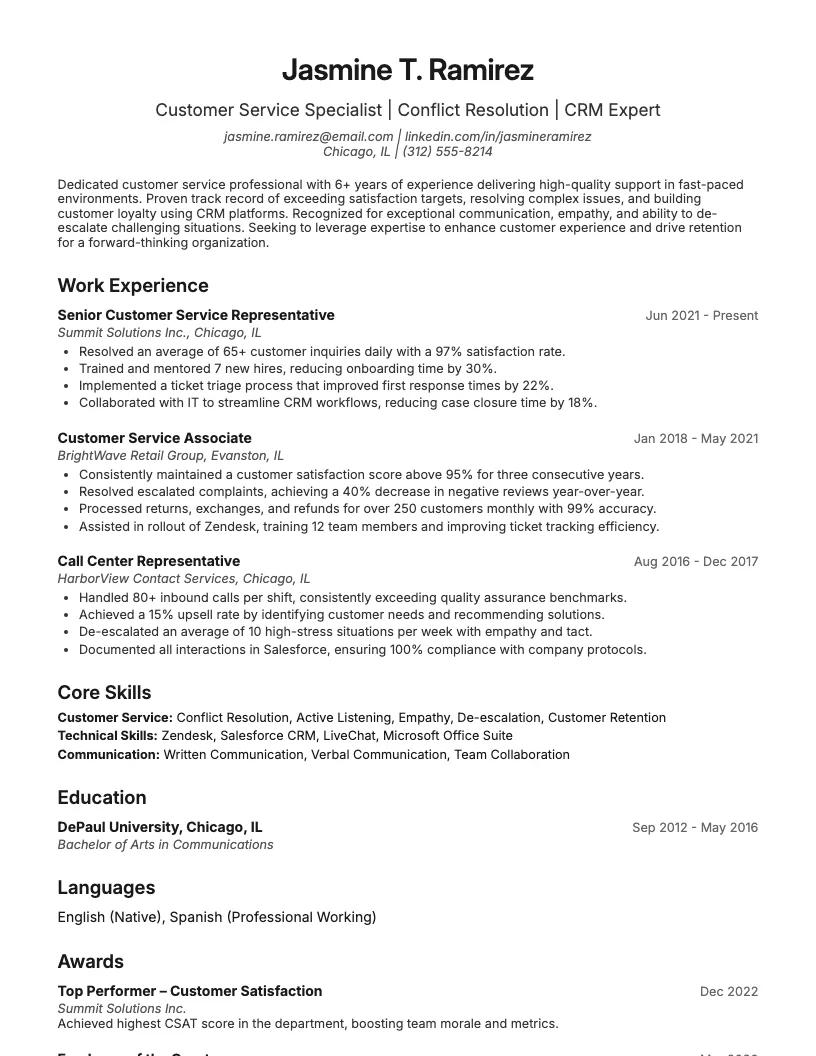
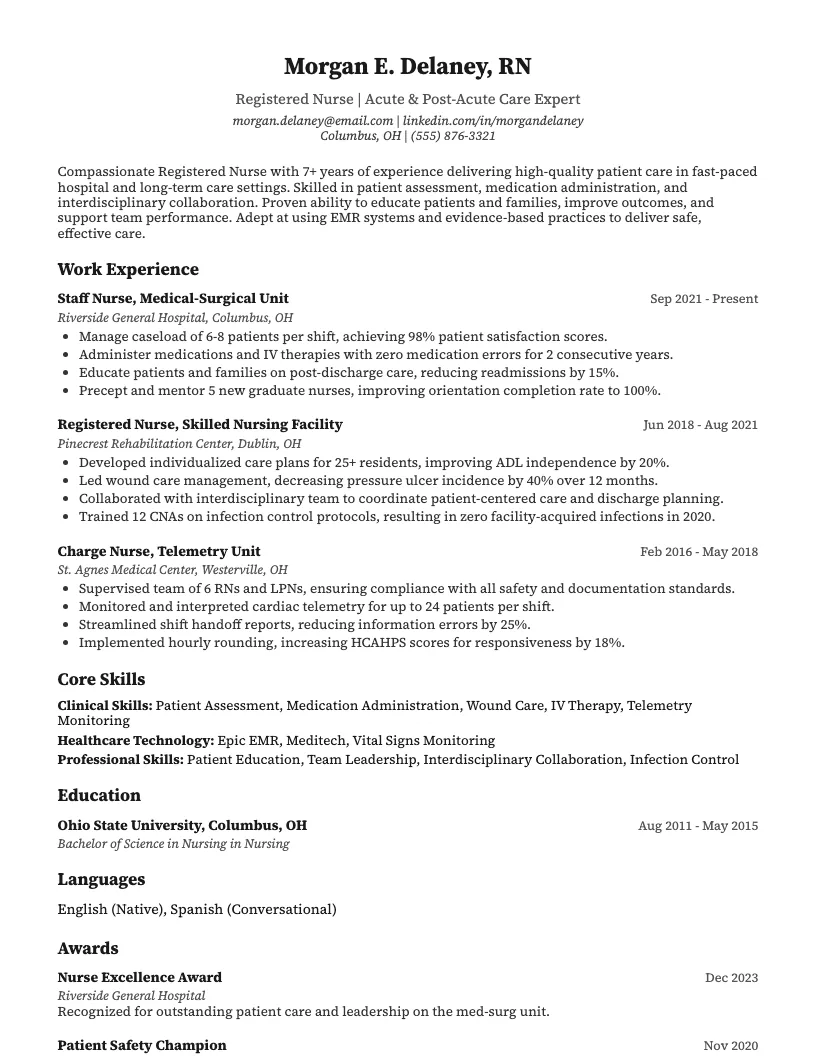
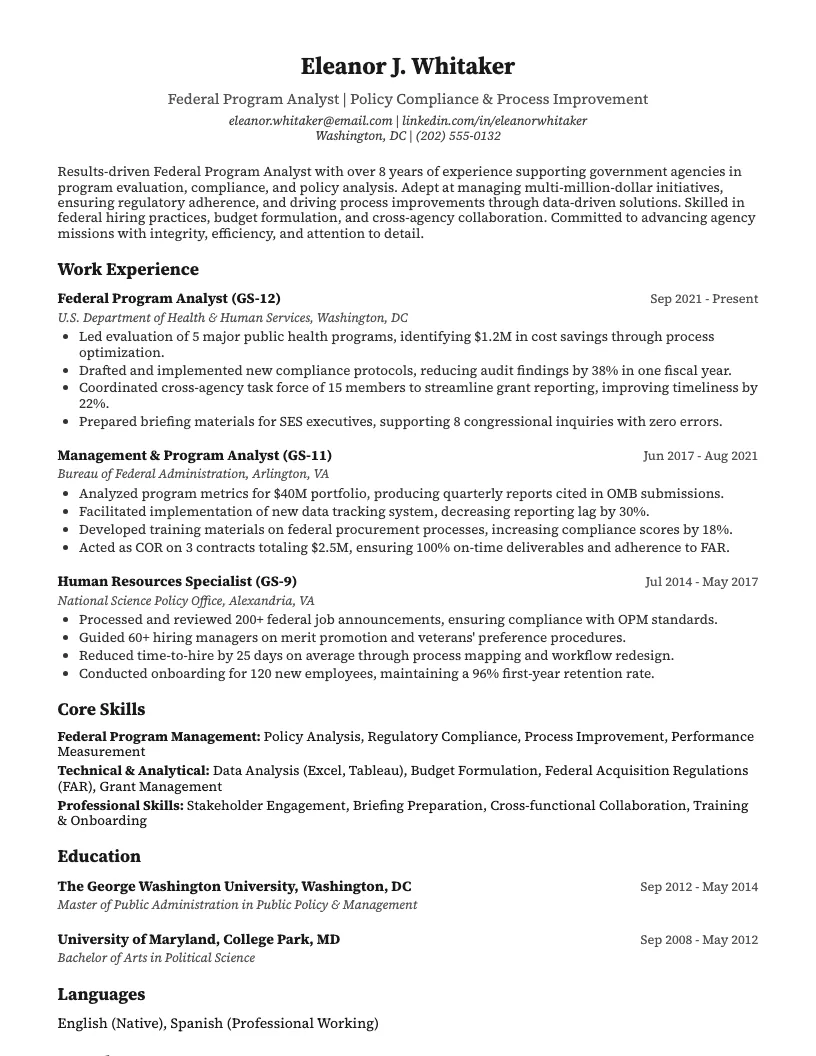
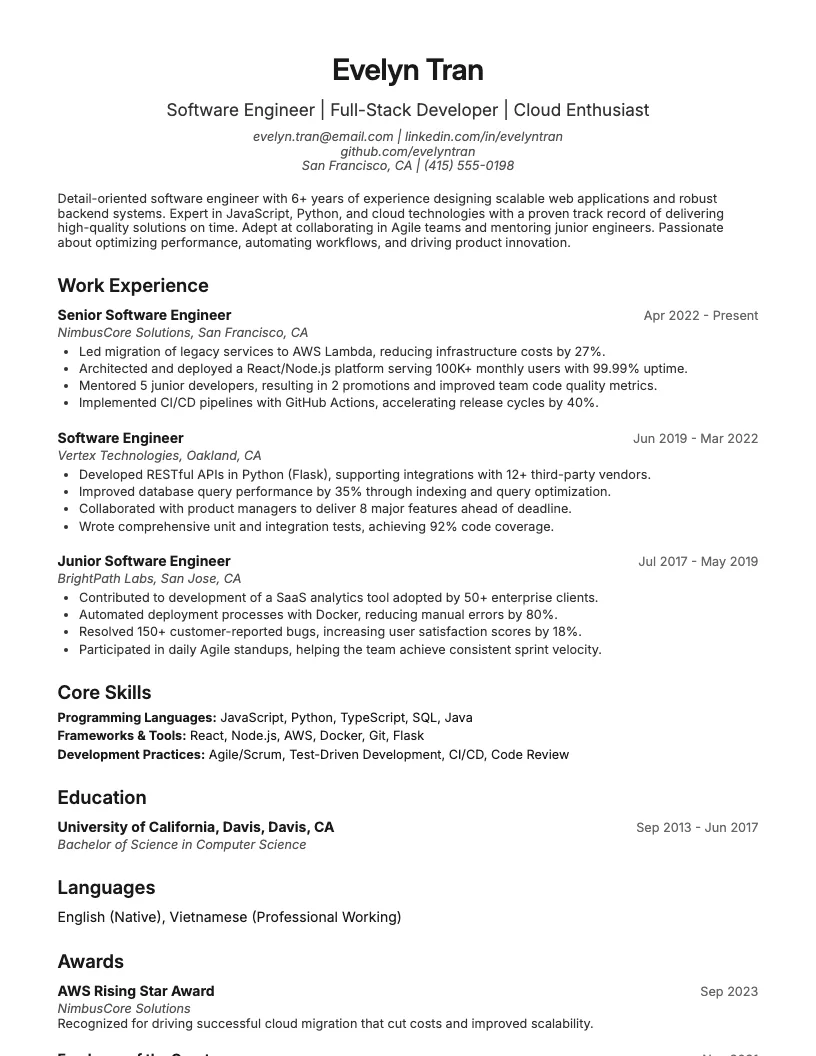
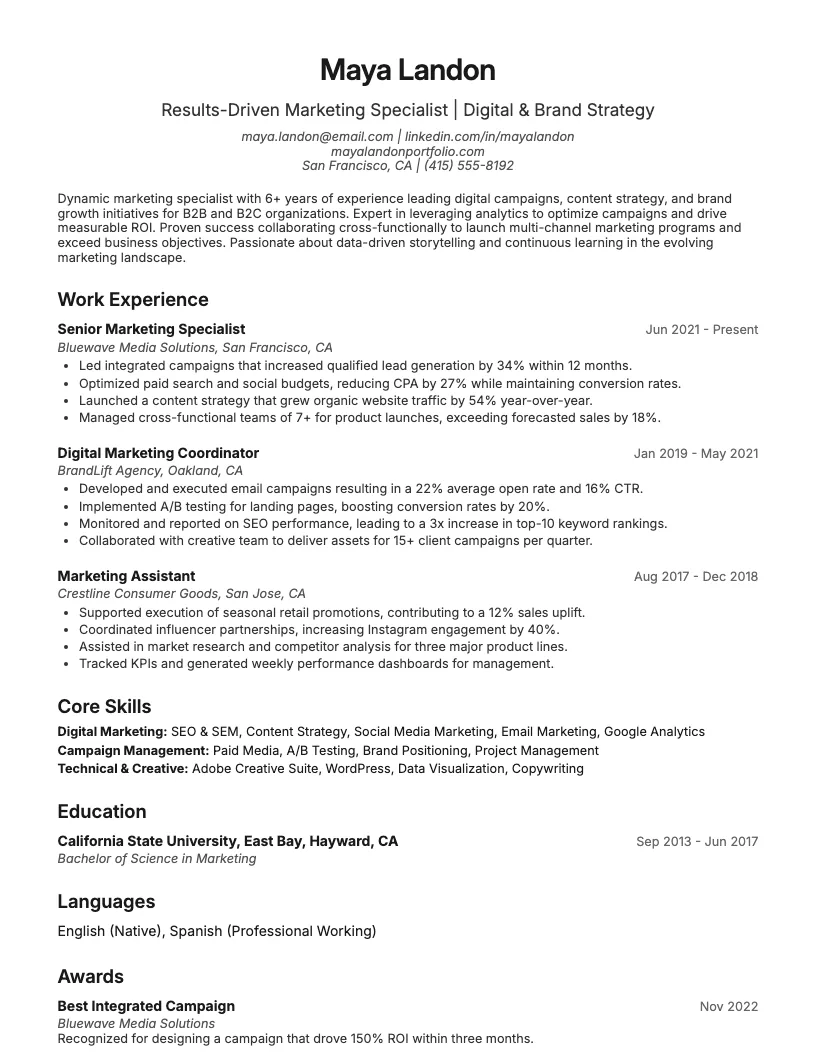
See these skills on a real resume
8 examplesStart from an example that already has them, and swap in your own.
Check your resume against the job you want
Scan your resume, see which skills and keywords the posting asks for that you are missing, and fix them before you apply.
Free to use • No credit card required