Skills Section of Resume: 6-10 Skills, 7 Real Examples
See how many skills to list (6-10, per a 93,000-resume study), what to cut, how to format the section, plus 7 real examples by job and a skills summary option.


Written by Dr. Priya Sharma
Career Development Expert & Resume Analyst
Updated August 2026
Reviewed by Sarah Chen
Is your resume ATS-friendly?
Drop your resume in and see which of these skills a scanner can actually read, and which ones the job you want is asking for that you have not listed.
PDF or DOCX. Max 2MB.
We never share your resume or use it to train a model.
In This Guide:
Do you need a skills section on your resume?
Short answer: yes, almost every resume should have one. I've read hundreds of these, and the ones without a skills section make a recruiter hunt through paragraphs to find out if you know the tools the job needs.
Recruiters spend under 10 seconds on a first pass. A skills section is what they scan first, and it's often what decides whether you get a second look.
When a skills section earns its space
If the job posting lists specific software, certifications, or technical requirements, you need a skills section. That's most jobs now - hiring has shifted from "what's your title" to "can you do this specific thing," and a skills section is where you prove it in five seconds flat.
When you are better off cutting it
The one exception I make: if your skills are already obvious from your job titles and you're desperately short on space, you can skip it. That's rare.
For almost everyone, the section stays.
Where it goes if you have years of experience
With a solid work history, put skills after your experience section. Your track record is the stronger opener - let it lead.
Where it goes if you are a graduate or changing careers
No long work history to lean on yet? Put skills right after your summary, before experience.
It's the fastest way to show you're qualified before a recruiter starts wondering why your job history looks thin. See what to put in it if you're building this from scratch.
Running it against a real posting first is worth doing - ResumeJudge will find exactly what a job description asks for that your list doesn't cover yet and rewrite your skills section to include it.
What the section should be called so software can read it
Call it "Skills" or "Technical Skills." Nothing clever.
Applicant tracking systems look for standard headers, and a creative label like "What I Bring" can make your skills invisible to the software before a human ever sees them.
What do you put in the skills section?
What do you put in the skills section?

Once you've decided the section earns its space, the next question is what actually goes in it. I've read enough of these to tell you: most people put in the wrong things, and leave out the ones that would have gotten them past the scanner.
Software and tools you actually use by name
Name the tool. Not "proficient with software" - Salesforce, QuickBooks, Figma, whatever you actually touch daily.
A recruiter scanning for "Jira" doesn't stop for "project management software." Neither does the applicant tracking system reading the resume before a person ever sees it.
Job-specific technical skills
These are the abilities tied directly to doing the job: data analysis, loss prevention, network security, whatever your field calls its core competencies.
They're measurable, and you either have them or you don't - which is exactly why hiring managers trust them more than anything else on the page.
Certifications and licences
If a certification or licence is required or preferred in the posting, it goes here, not buried in an education section three scrolls down.
PMP, RN license, CPA, a forklift certification - name it exactly the way the posting names it, because that's the string being matched against.
Languages you speak
List the language and be honest about level. "Fluent in Spanish" or "conversational French" tells a hiring manager something real.
Skip vague terms like "beginner" unless the posting is specifically asking about a language you're still learning - in most cases "basic" or "familiar with" reads better.
Soft skills: put the proof in your job bullets, not here
Here's the mistake I see on nine out of ten resumes: "communication," "teamwork," "problem-solving," sitting in the skills list with nothing behind them. Anyone can type those four words.
Nobody believes them without evidence.
The fix isn't to cut soft skills - it's to move them. Show the communication skill in a bullet: "shared weekly updates with 3 cross-functional teams to keep 15+ stakeholders aligned."
That one line proves more than five adjectives ever could.
Transferable skills when you have no direct experience
If you're changing careers or just starting out, you still have real skills - they just came from somewhere other than a job with the right title. Presentation skills, research, writing, project coordination from a class or a volunteer role all count.
Check the posting closely and pull what actually applies. This is exactly where a tool like ResumeJudge earns its keep: paste in the job description and it'll find which of your existing skills match, then rewrite your skills section to close the rest.
What to leave out: typing, email, "team player", "hard worker"
Typing, email, basic computer literacy - unless the posting specifically asks for them, they just take up space. Everyone has them; listing them signals you didn't have much else to put.
Generic adjectives like "team player," "hard worker," and "motivated" come out too - soft skills covers where to put the evidence for those instead.
Anything you cannot talk about for two minutes in an interview
Before a skill goes on the page, ask yourself: could I talk about this for two minutes if someone asked me right now? If not, take it off.
Nothing kills momentum in an interview faster than a candidate stumbling over a skill they listed but can't actually back up. Skills should line up with your experience section - clear where you learned it and where you used it - not just sitting there hoping nobody asks.
How many skills should you list, and how do you pick them?
How many skills should you list, and how do you pick them?
The number most hired resumes land on
There's a real answer to this, not a rule of thumb. A study of 93,000 resumes found the ones that got interviews listed 6 to 10 skills, with most landing on 8 or 9.
Ten skills that actually match the job beat twenty that don't. I've never seen a hiring manager reward volume - they skim the list once and move on.
How many for an entry-level resume
If you're early in your career, aim for 6 to 8. You don't have the work history to back up a longer list yet, and a short, honest one reads better than a padded one.
How many for a senior or manager resume
With more years behind you, 10 to 15 is fair - spread across a couple of categories so it doesn't turn into one long block. See how to format the skills section for how to split those up.
Step 1: Pull the repeated skills out of three to five job postings
Open five postings for the role you want and write down every skill that shows up more than once. That repetition is the employer telling you what actually matters, not what got thrown into the listing as filler.
This is the step people skip, and it's the one that matters most. A resume built from one job ad is a guess; a resume built from five is a pattern.
Step 2: Separate the required ones from the nice-to-have ones
Most postings split into "required" and "preferred" whether they label it that way or not. For where the required ones go once you write the list out, see which skill goes first.
Only list what's genuinely true - see what to put in the skills section for the two-minute test.
Step 3: Use the employer's exact wording, not your own
If the posting says "customer relationship management," don't write "CRM" and assume it's the same thing to the software reading your resume. Match the wording on the page.
This is exactly what I run into most with candidates: they have the skill, just under a different name than the one the job posting used. Running your list against the actual posting - which is what ResumeJudge does - catches that mismatch and rewrites your skills section to fix it before you hit submit.
Step 4: Cut anything the posting never mentions
Once you've matched what you can, look at what's left on your original list and cut it. A skills section isn't your full inventory - it's the short list that answers this specific job.
If you're unsure what's missing versus what's just unlisted, that's the gap worth checking before you apply.
How do you format the skills section?
How do you format the skills section?
Formatting is where a good skills list turns into a good skills section. Get it wrong and none of the work you put into picking the right skills matters, because a recruiter skims past it or a scanner mangles it before anyone reads a word.
Bullets, columns, or a comma list
Bullets or a simple multi-column layout beat a comma-separated paragraph almost every time. A wall of text buried in commas asks the reader to do work; a short bulleted list lets them scan it in three seconds. Stick to a standard font at 10-12 point and keep the layout plain - this is not the section to get creative in.
Grouping skills under category headings
Once you're past six or seven skills, an unsorted list gets hard to scan. Group them under headings like "Technical Skills," "Tools," or "Certifications." It reads faster, and it makes you look like someone who actually organizes their own knowledge rather than someone who dumped everything they could think of onto the page.
How many categories, and how many skills in each
Two to three categories, with 6 to 10 skills total, is the range I see work again and again. Go past that and the section stops looking like a summary and starts looking like a keyword dump - which is exactly the impression you don't want to give.
Which skill goes first
Lead with what the job posting cares about most, not what you're proudest of. Job-specific technical skills go first, supporting soft skills go last - if you're including them at all (see what to leave out).
Showing proficiency levels without star ratings
Showing skill proficiency
Excel ★★★★☆
Excel - Advanced
Skip the star ratings and progress bars - they don't parse in an ATS and they read as filler to a human. Use words instead: basic, intermediate, advanced, or elementary, conversational, proficient, fluent for languages. Plain terms, applied consistently.
Spelling out acronyms so both readers understand them
Write "Search Engine Optimization (SEO)" once, then the acronym is fair game. A human might know the shorthand; the software scanning your resume for exact matches often doesn't, and you lose the match either way if you never spell it out.
Formatting that breaks applicant tracking systems: tables, text boxes, graphics, icons
Tables, text boxes, icons, and graphics are the formatting choices I see cost people interviews. They can look sharp to your eye and be invisible to the software reading your resume first. Plain text, standard headings, no graphics - it's the boring choice, and it's the right one.
What does a good skills section look like?
Is your resume good enough?
Drop your resume in and see which of these skills a scanner can read, and which ones the job you want is asking for that you have not listed.
Upload your resumeFree. PDF or DOCX. We never share your resume or use it to train a model.
Reading about format is one thing. Seeing a real section is what actually changes how you write yours.
Here are seven, each built around a different resume, with the same rule underneath: specific beats vague, every time.
Office and administrative skills section
Microsoft Office (Excel, Outlook), Google Workspace, calendar management, travel coordination, QuickBooks, data entry, 60 WPM typing accuracy.
Notice what's missing: no "organized," no "detail-oriented." Those go in your bullets, not here.
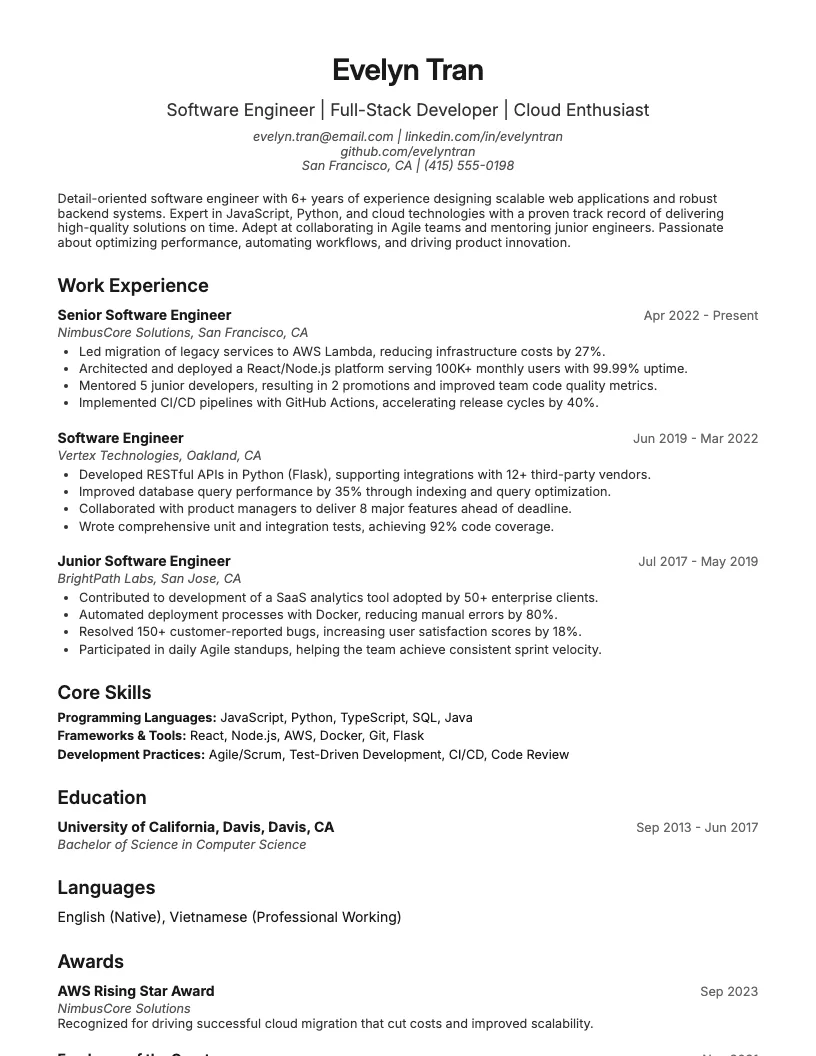
Software engineer skills section
Python, Java, SQL, AWS, Docker, CI/CD pipelines, Agile/Scrum, REST APIs, Git.
I'd cut this list at nine. A wall of thirty languages and frameworks reads like you've used none of them well.
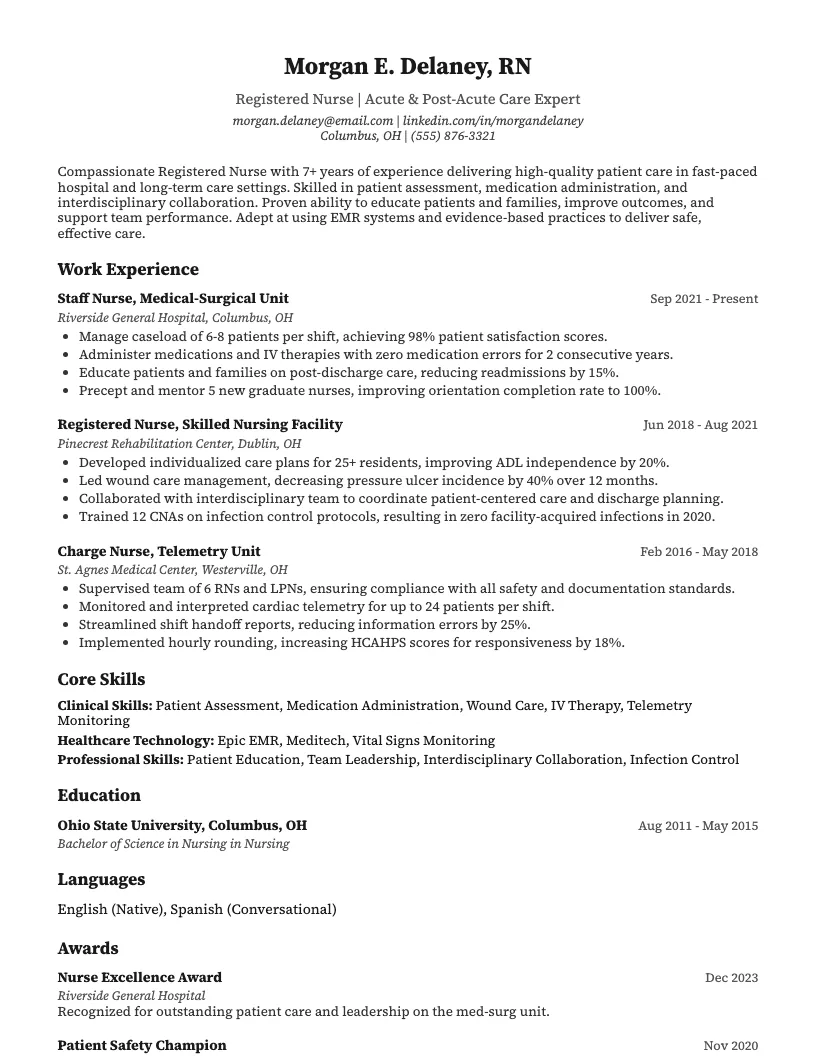
Nurse skills section
Patient assessment, EHR systems (Epic, Cerner), IV insertion, medication administration, CPR/BLS certified, HIPAA compliance, triage.
Put your license and certifications near the top here - a hiring manager scans for them first.
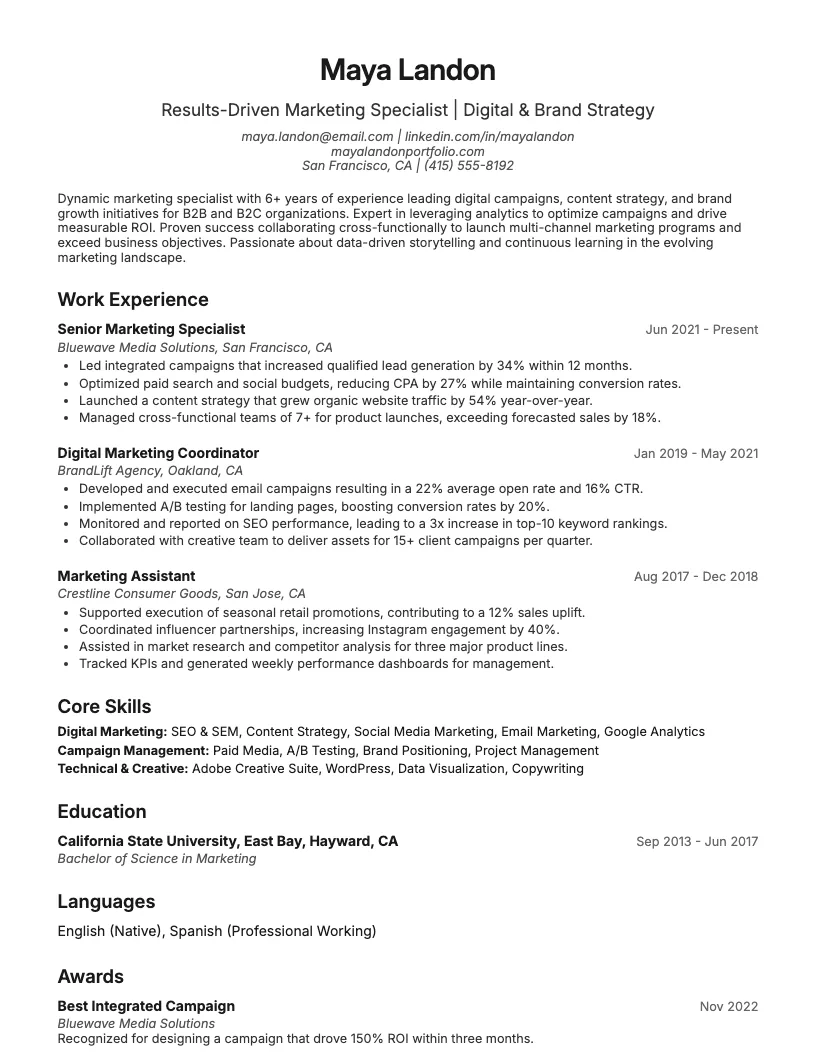
Marketing skills section
SEO/SEM, Google Analytics, HubSpot, content strategy, A/B testing, paid social (Meta, LinkedIn ads), email marketing.
Marketing resumes are where I see the most generic filler. Name the platforms you've actually run campaigns in.
Recent graduate skills section
Excel, SQL, data visualization, Python (coursework), team collaboration, presentation skills, Canva.
Pull skills from classes, group projects, and part-time jobs. Nobody expects five years of tools from someone six months out of school.
Career changer skills section
Project management, cross-functional collaboration, budget tracking, stakeholder communication, Excel modeling, process improvement.
This is a transferable-skills list, not a technical one - notice there's not a single tool specific to the old industry.
The same section before and after tailoring to one job posting
Tailoring your skills list to a posting
Communication, Microsoft Office, teamwork, customer service, problem-solving.
Salesforce, KPI reporting and dashboards, client onboarding, Microsoft Excel, cross-team communication.
Before: Communication, Microsoft Office, teamwork, customer service, problem-solving.
After (posting asked for Salesforce, KPI reporting, and client onboarding): Salesforce, KPI reporting and dashboards, client onboarding, Microsoft Excel, cross-team communication.
Same person, same experience - the second version just answers the posting instead of guessing at it. Nine times out of ten, that's the whole difference between a resume that gets opened and one that doesn't. If you're not sure what a posting is actually asking for, running your resume through ResumeJudge against it will find exactly which of these terms you're missing and write them into your resume for you.
What is a skills summary, and when should you use one instead?
Most resumes don't need one. But if you've changed careers, you're coming back after a gap, or your job history doesn't obviously say "qualified" at a glance, a skills summary does work a plain skills list can't.
How a skills summary differs from a plain list of skills
A skills list is nouns: Excel, SQL, Salesforce. A skills summary is sentences: three or four lines at the top of the resume that say who you are, what you've done, and what you're good at, in that order.
Think of it as the pitch a recruiter gets before they read anything else. The list still belongs further down the page.
The summary is what earns you the read.
When a skills summary works better than a list
I reach for a summary when the resume alone doesn't make the case fast enough. Career changers, people returning after time off, and anyone whose last title undersells what they actually did - that's the group.
If your work history already tells the story in order, skip it. A summary on top of a clean, obvious career path is just extra reading before the good part.
The three or four lines it should contain
Line one: your role and years of experience. Line two: your strongest skills, named the way the job posting names them.
Line three: a result with a number attached. Line four, if you use it: a certification or specialty that sets you apart.
Four sentences, no more. I've seen summaries that run eight lines and every one of them gets skimmed, not read.
Skills summary example: project manager
"Project manager with 5 years leading IT projects. Skilled in Agile, risk management, and cross-functional team leadership.
Delivered a $2M software upgrade on time and under budget for a Fortune 500 client."
Skills summary example: customer service
"Customer service representative with 3 years in SaaS support. Skilled in conflict resolution and upselling.
Maintained a 98% satisfaction rate while handling 100+ inquiries daily, driving a 30% increase in renewals."
Skills summary example: accountant
"CPA with 7 years in corporate accounting. Expert in SAP and QuickBooks.
Saved a mid-size manufacturing firm $500K through cost-cutting initiatives and improved financial reporting."
Skills summary example: recent graduate
Without years of experience, lead with what you can prove instead: "Marketing graduate skilled in social media strategy and Google Analytics. Grew a student organization's Instagram following by 40% through a semester-long content calendar."
That's the same shape as the others - role, skills, a number - just built from coursework and projects instead of a job title.
Putting a number in every line
Every line above has a figure in it, and that's not a coincidence. A summary that says "results-driven professional with strong skills" could be anyone.
One that says "grew renewals 30%" is you.
Nine times out of ten, the summaries that fall flat are the ones where every line is an adjective and none of them are a number.
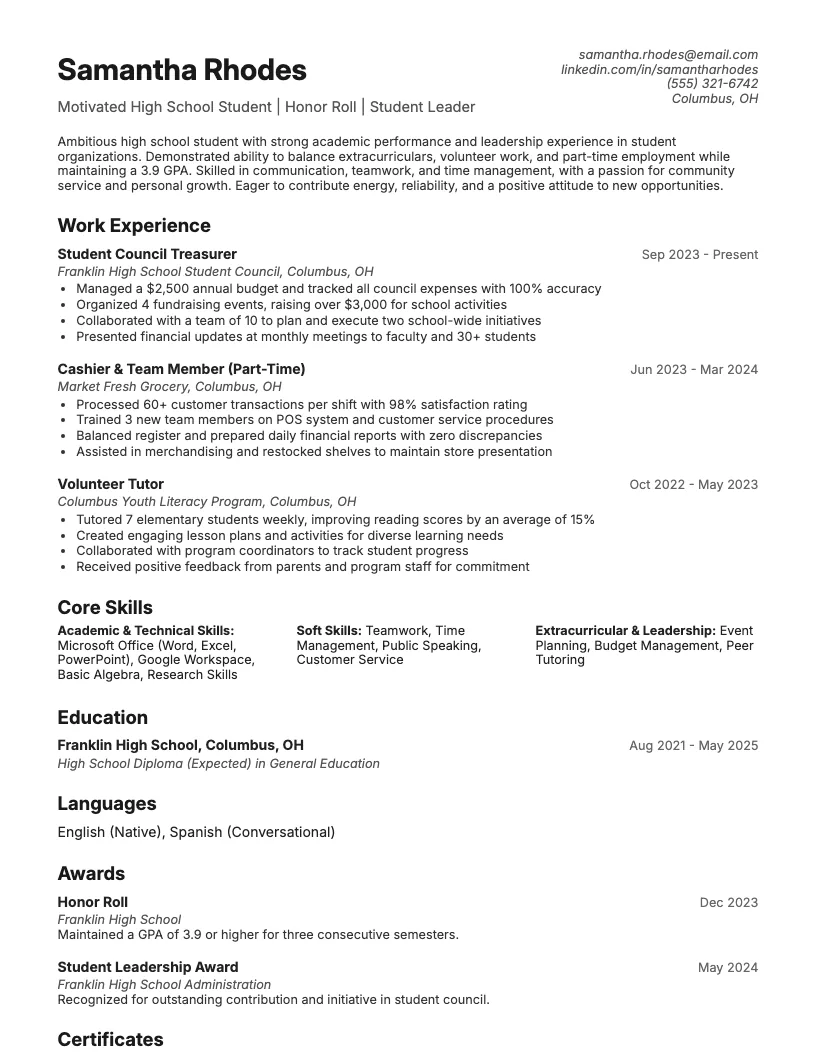
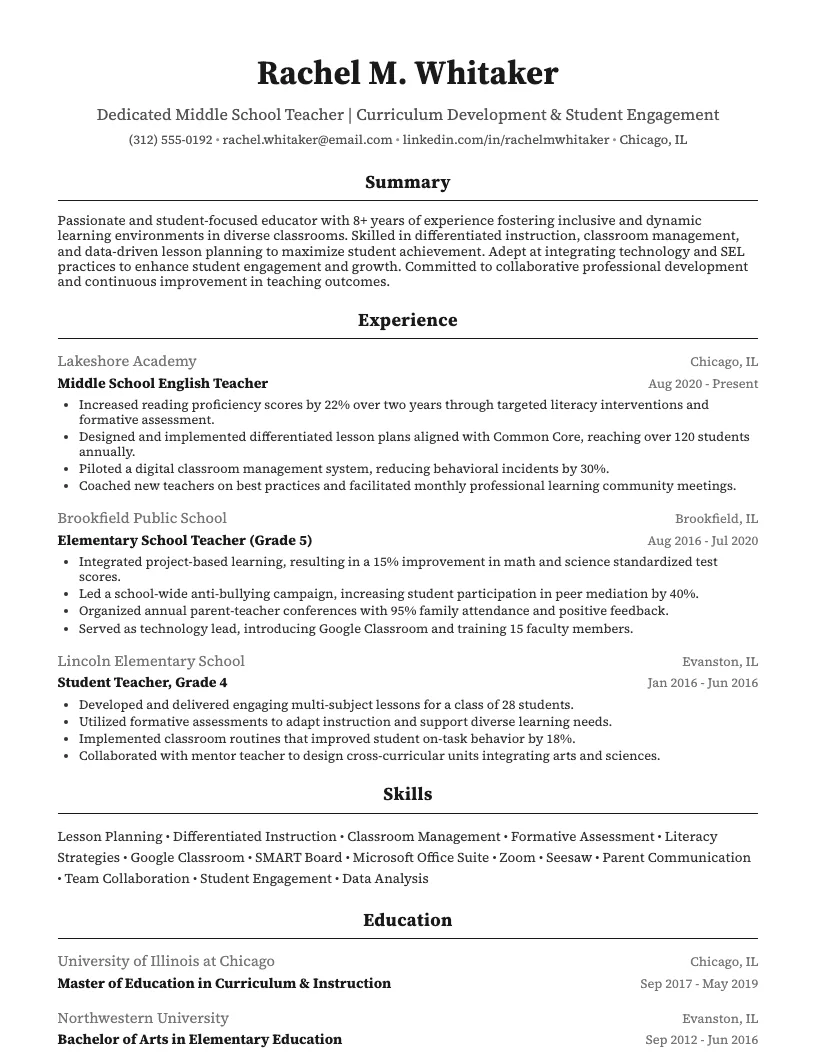
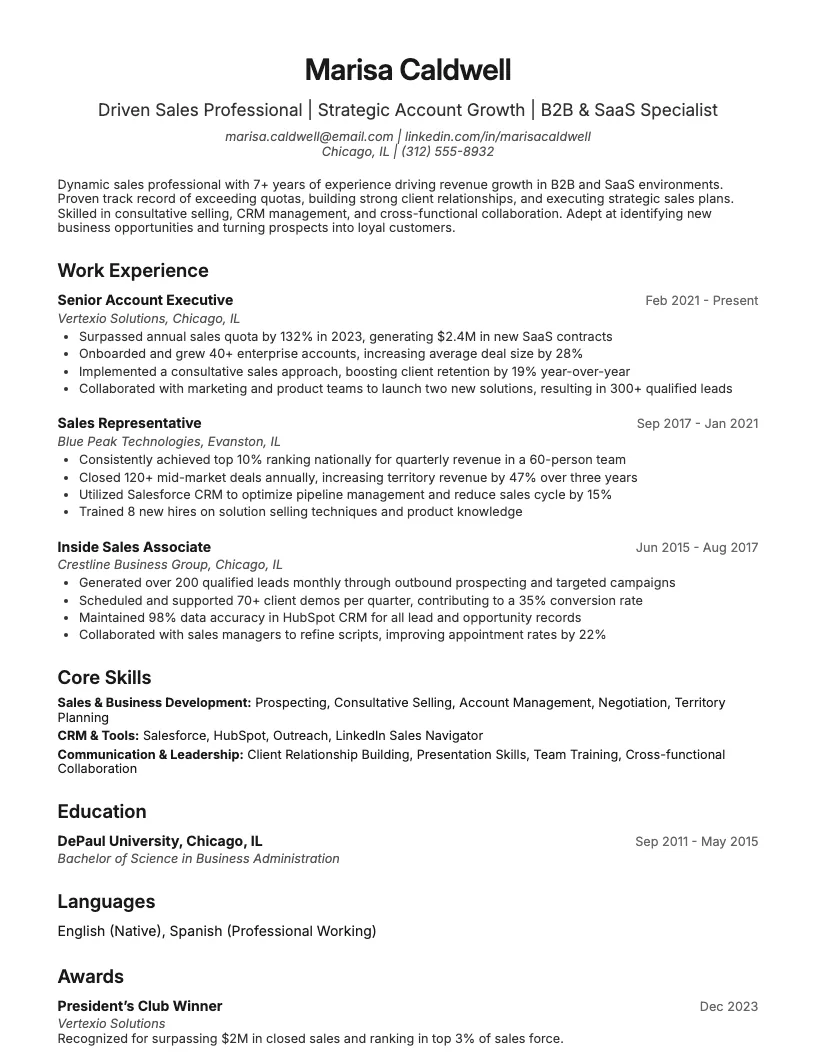
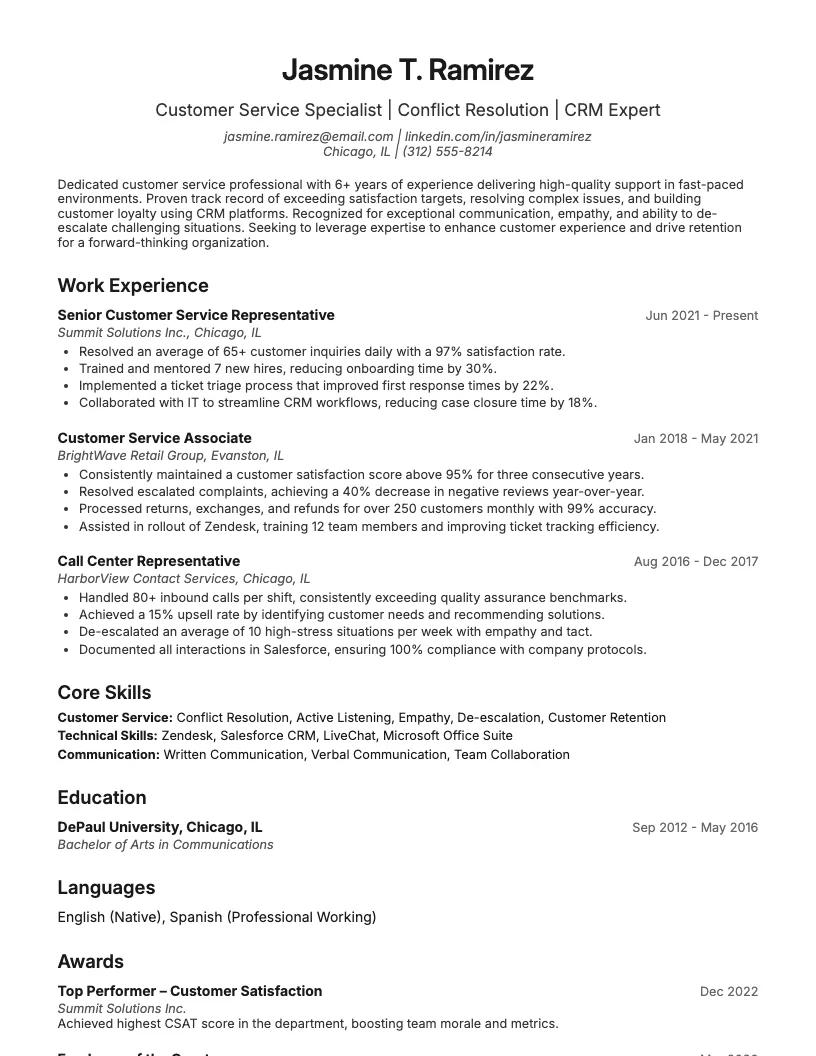
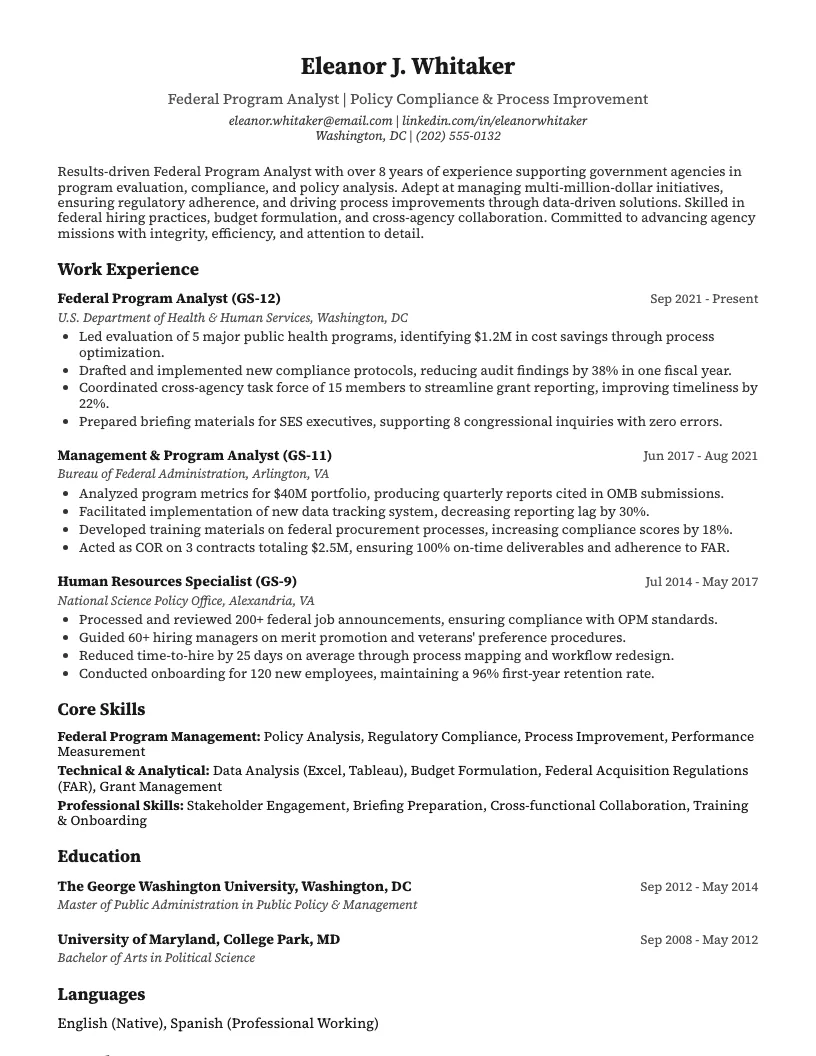
See these skills on a real resume
8 examplesStart from an example that already has them, and swap in your own.
Check your resume against the job you want
Scan your resume, see which skills and keywords the posting asks for that you are missing, and fix them before you apply.
Free to use • No credit card required