Hard Skills for Resume: 12 Examples & 5 Mistakes I Keep Seeing
See the 12 hard skill categories worth listing, the 5 mistakes that sink a skills section, and exactly where each belongs before you hit send on your resume.


Written by Sarah Chen
Senior Career Strategist & Resume Expert
Updated August 2026
Reviewed by Marcus Rodriguez
Is your resume ATS-friendly?
Drop your resume in and see which of these skills a scanner can actually read, and which ones the job you want is asking for that you have not listed.
PDF or DOCX. Max 2MB.
We never share your resume or use it to train a model.
In This Guide:
What are hard skills on a resume?
If a stranger could watch you do it, or a test could score you on it, it's a hard skill. That's the whole test, and it's a better one than any definition.
Skills you can measure or test
Excel, SQL, a coding language, a CRM, a piece of lab equipment - someone could hand you a task right now and watch you either do it or not.
That's what separates a hard skill from everything else on the page. I've seen hundreds of resumes, and the ones that get a callback almost always lead with something a hiring manager could quiz them on in the interview.
Skills you learned somewhere specific
Hard skills usually have a paper trail: a degree, a bootcamp, a certification, a job where you used the tool every day.
That's why they read as credible in a way "hard worker" never will. You can point to where you got it.
If you're not sure a skill actually belongs on the list, running your resume against a real job posting in ResumeJudge will show you which of your skills the posting actually cares about and which ones you're just assuming matter.
Hard skills vs soft skills
Soft skills are how you work - communication, adaptability, working under pressure. Hard skills are what you can actually produce.
One well-known finding puts it simply: hard skills get you the interview, soft skills get you the offer. I'd go further - a resume that's all soft skills reads as someone with nothing to point to.
Put the hard skills where a recruiter scans first, and save the soft skills for how you describe using them (see where to put hard skills).
Are hard skills and technical skills the same thing?
Nearly, but not quite. Every technical skill is a hard skill - Python, networking, CAD software all count.
But hard skills also cover things that aren't "technical" in the usual sense: a second language, fast and accurate typing, knowing your way around a style guide. Technical skills are a subset.
If your field is code- or systems-heavy, our technical skills for resume page goes deeper into that specific list; this page is the wider category.
What are examples of hard skills for a resume?
Twelve categories cover almost every hard skill I've ever seen land on a resume. Not every one applies to you - pick the two or three that match your work and go deep, instead of skimming the surface of all of them.
Data and analysis
If your job involves numbers in any form, this is where you prove it.
Think business analysis, forecasting, market analysis, data visualization, SWOT analysis, or building a report someone actually used to make a decision.
The mistake I see most often: "data analysis" sitting alone on a line with nothing under it. Name the tool - Excel, SQL, Tableau, Python - and name what you did with it.
"Built a weekly sales dashboard in Tableau that cut reporting time by half" tells me something. "Data analysis" tells me nothing.
Computer skills
"Computer skills" is the single most useless phrase I see on a resume, and I see it constantly.
Every adult applying for an office job knows how to use a computer - that line answers a question nobody asked. Name the actual software: the CRM, the CMS, the specific program.
I cover this one in full over on computer skills for resume - the short version is: replace the category with the tool every time.
Technical skills
For anyone in software, IT, or engineering, this is the section that gets read first, sometimes the only one that gets read.
Programming languages, databases, version control, cloud platforms - list what you actually use day to day, not what you touched once in a bootcamp. Recruiters in technical fields scan this list before they read a single bullet point, so put the languages and platforms the job posting names right at the top.
I go deeper on this on the technical skills for resume page if that's your field.
Microsoft Office and Google Workspace
How to list office software
Microsoft Office
Excel (Pivot Tables, VLOOKUP)
Almost every job wants some level of this, and almost every resume gets it wrong by listing "Microsoft Office" as one skill.
Say Excel specifically if you know pivot tables or VLOOKUP - that's a real skill, and it's a different claim than just "familiar with Excel." Check the posting for which suite the company runs on, Google or Microsoft, and lead with whichever one you're stronger in.
I've got the full breakdown on the office skills for resume page.
AI skills
This is the newest category on this list, and it's moving fast, whatever field you're in. It's also one of the skills worth learning right now.
Prompt writing, using AI tools inside your actual workflow, knowing where the outputs need a human check - all of that counts now. It's still new enough that vague claims stand out badly; say what tool and what task, the same rule as everywhere else on this page.
Full detail on the AI skills for resume page.
Languages you speak
Fluency in a second language is a hard skill, not a fun fact, and I still see people bury it at the bottom of a resume like a hobby.
Name the language and your level - conversational, professional, fluent, native. "Spanish" alone leaves the reader guessing whether you can hold a client call or just order lunch.
See levels of language proficiency resume for how to word each level so it's not ambiguous.
Writing and editing
Almost every job involves some writing, from a client email to a full report, and specific writing skills read as a hard skill when you name them.
Technical writing, copywriting, editing against a style guide, grant writing, working inside a CMS like WordPress - these are all distinct, listable skills. If your writing has ever moved a metric - more signups, more replies, faster approval - say the number.
Project management
You don't need the title "project manager" to claim this one.
Agile, Scrum, budgeting a timeline, tracking a project in Jira or Asana, keeping five people moving toward one deadline - that's project management whether or not it's in your job title. I've seen candidates skip this because they weren't formally a PM, and it cost them a line that would've shown real organizational range.
Design
UX and UI work, wireframing, prototyping in Figma, photo or video editing, layout in InDesign - design skills are hard skills the moment you name the tool and the output.
"Creative" is soft. "Built the wireframes for a checkout redesign in Figma" is hard.
That's the whole difference, and it's the same gap I see in almost every category on this page.
Marketing and SEO
Modern marketing is a technical job now, and the resume should read that way.
Google Analytics, SEO tools like Ahrefs or SEMrush, running paid campaigns, A/B testing, email platforms - these are measurable, toolable skills, not creative flourishes. If you've moved a number - traffic, conversion rate, open rate - that number belongs right next to the skill.
This is exactly the kind of claim worth checking against a real posting before you submit it - a tool like ResumeJudge will tell you if the listing wanted a platform you didn't mention, then rewrite your resume to work it in.
Finance and accounting
Budgeting, financial modeling, forecasting, reconciliation, tools like QuickBooks or a Bloomberg terminal - finance work is one of the clearest cases of a hard skill, because so much of it is directly testable.
If you hold a certification - CPA, CFA - that's a hard skill on its own and deserves its own line, not a footnote.
Trade and hands-on skills
Carpentry, HVAC maintenance, welding, vehicle diagnostics, blueprint reading - these get overlooked on "resume skills" advice that's written with office jobs in mind, and that's a gap worth naming.
They're hard skills in the truest sense: measurable, teachable, and either you can do them or you can't. Name the certification, the equipment, or the safety training where you have it - that's what a hiring manager in a trade actually screens for. Once you've got your list down, weigh it against the posting to catch whichever ones you left out - that's the fastest way to close the gap between what you know and what you wrote down.
Which hard skills should you put on your resume?
Which hard skills should you put on your resume?

The job posting decides what goes on the resume, not the other way around.
Step 1: Pull the skills out of the job posting
Open the posting and pull out every skill it names, especially the ones under "required" or "preferred."
Write them down exactly as the employer wrote them. If they say "Adobe Creative Suite," don't shorten that to "creative software" - the applicant tracking system is scanning for their words, not your paraphrase.
Do this for two or three postings in the same role and you'll start seeing the same five or six skills repeat. Those are the ones worth building your resume around.
Step 2: Write down everything you can actually do
Separately, make a list of every hard skill you actually have - pulled from past jobs, training, certifications, side projects, whatever tools you've used enough to be fast at.
Don't filter yet. Just get it all down.
Most people undersell this list because they assume a skill "doesn't count" unless it was their main job duty - it counts.
Step 3: Keep the ones that appear in both lists
Now line the two lists up side by side and keep only what overlaps.
This is the part people skip, and it's the one that actually matters. A resume with fifteen impressive skills the job never asked for reads as unfocused.
A resume with six skills that match the posting word for word reads as exactly right. I'd take the second every time.
If you're not sure what's actually missing, running your resume against the posting is exactly the kind of gap ResumeJudge is built to catch - it flags the skills the job asks for that your resume doesn't show yet, then puts them into the right section for you.
Step 4: Cut anything you couldn't talk about in an interview
Before anything goes on the final draft, run through what's left and take off anything you'd struggle to back up out loud.
Why that matters, and what it costs you when you get it wrong, is under claiming a skill you can't demonstrate.
How many hard skills to list
Somewhere between six and ten is the range I'd aim for. Fewer than that and you look thin; more than that and nothing stands out, because a hiring manager skims a list, they don't study it.
Quality beats quantity here every time. Six skills that map directly onto the posting will outperform twenty generic ones, and it's a much shorter list to actually be honest about.
Where do you put hard skills on a resume?
There's no single right spot. Where a skill goes depends on how far along you are and what you're trying to prove.
A skills section near the top
If you're applying for anything technical, put a dedicated skills section near the top, above your work history.
Recruiters spend six or seven seconds on a first pass, and a scannable block of skills is the fastest thing on the page to read. List your strongest, most job-relevant skills first, not in the order you learned them.
Grouped into named categories
Once you've got more than eight or nine skills, a flat list turns into noise. Group them under two or three labeled categories instead, like "Technical Skills," "Design Tools," or "Languages."
I see this most on resumes that mix very different kinds of skill, say software and a foreign language. Separating them tells the reader which bucket each one belongs to, so a hiring manager scanning for one specific tool finds it in seconds instead of hunting through a wall of text.
If you're not sure which skills even belong on the list, that's what pulling from the job posting is for.
Inside your work experience bullet points
A skills section tells someone you have a skill. Your work experience bullets are what prove it.
The mistake I see most often is a resume with a great skills list and bullet points that never mention any of those skills again. Every skill worth listing should show up at least once inside a bullet, doing something, with a number attached where you can manage it.
"Built a reporting dashboard in Power BI that cut monthly close time by two days" does more work than "Power BI" sitting in a list on its own. If you want to check whether your bullets actually back up your list, running the resume against a real posting in ResumeJudge will show you which claimed skills never show up anywhere else on the page.
In your resume summary
Your summary, if you have one, is prime space, so don't waste it on adjectives. Name two or three of your strongest hard skills right in the first couple of lines, the ones that match what the posting is asking for.
I'd tailor it per application rather than reusing the same one everywhere. If you're not sure which of your skills a specific posting cares about most, that's a job for matching your list against the job description.
Where to put them if you're entry-level or changing careers
Without much work history, your skills section carries more weight, so move it higher and make it bigger than you would on a senior resume.
I tell career changers the same thing: lead with what you can do, not with a work history that doesn't match the role you want. Established professionals can afford to put skills below experience, since the jobs themselves already do the proving.
But if your last title doesn't obviously connect to the one you're chasing, skills near the top are what get you a second look before anyone reads further down the page.
How do you show a hard skill instead of just naming it?
Is your resume good enough?
Drop your resume in and see which of these skills a scanner can read, and which ones the job you want is asking for that you have not listed.
Upload your resumeFree. PDF or DOCX. We never share your resume or use it to train a model.
A list of skills tells me you can do something. It doesn't tell me how well, or what happened when you did it.
That's the gap between a resume that gets read and one that gets skimmed and dropped. I've read enough of these to tell within a few seconds which kind I'm looking at.
Attach a number to the result
Don't write "SEO" and stop there. Write what the SEO work actually did: traffic up 100%, half your tracked keywords into the top 5.
That's the difference between a claim and evidence. Robert Half gives the same advice for other skills too - "increased website traffic by 35%" proves communication skills better than the word itself ever could.
Name the tool, not the category
This is the single most common fix I make on resumes that come to me, and the vague-category version of it is covered in full under listing "computer skills" instead of the software.
If you're not sure which tools to name, pull them straight out of the job posting rather than guessing.
Say what level you're at
Not every skill needs a number attached to it - sometimes the honest move is just naming your level. "Conversational Spanish" beats an unlabeled "Spanish" because it sets the right expectation before an interviewer tests it.
Skip the star ratings and progress bars, though - that one gets its own section below.
Before and after: a skills list rewritten as achievements
Before: "Project management, Jira, Agile."
After: "Led a 10-person team through a Lean and Agile shift, cutting delivery timelines 25% and tracking 30+ concurrent projects in Jira."
Same three skills. One sentence proves them, the other just states them.
Do this rewrite for your own bullet points and you'll usually find the "after" version is shorter than you expect - the numbers do most of the work.
What mistakes do people make with hard skills on a resume?
I've reviewed hundreds of resumes, and the hard skills section is where I see the most self-inflicted damage. The mistakes are rarely creative.
They're the same five, over and over.
Claiming a skill you can't demonstrate
This is the one that ends interviews early. You list "SQL" or "Python," the interviewer asks you to walk through a query or explain a project, and you freeze.
Background checks and references catch the bigger lies. But most of the time it's a live interview or a skills test that exposes a skill you don't have, and there's no recovering from that in the room.
If you can't explain how you learned it and how you've used it, take it off. Better to have seven honest skills than ten that fold under one follow-up question.
Listing "computer skills" instead of the software
"Computer skills" tells a hiring manager nothing. Neither does "Microsoft Office" if the job needs advanced Excel work, or "design software" if they're hiring for Figma specifically.
Name the actual tool: Excel, Salesforce, QuickBooks, Photoshop, Tableau. Applicant tracking systems and hiring managers are scanning for the tool name, not the category, so a vague label can cost you the match even when you have the skill.
This is exactly the gap ResumeJudge checks for - paste in a job posting and it'll flag which specific tools the listing wants that your resume never names. For more on this split, see computer skills and technical skills.
Rating yourself with progress bars and star ratings
I still see these constantly, and they need to go. A five-star rating or a filled-in progress bar next to "Excel" means nothing to an employer - there's no shared scale, and it looks amateurish next to a plain list.
Worse, most of these are built with graphics or tables that applicant tracking systems can't parse at all, so the skill might not even register. Skip the visuals.
A clean list beats a chart of bars every time.
Padding the list with soft skills
"Hard worker," "team player," "great communicator" - none of these belong in a hard skills section, and nine times out of ten they're there because the list was too short without them.
Soft skills have a place, but it's woven into your bullet points and summary, not stacked next to your certifications. A hard skills section padded with soft skills reads as thin, and hiring managers notice the difference immediately.
Using the same list for every application
The single biggest mistake, and the easiest to fix: sending out one static skills list to every job. Skill selection depends entirely on the posting in front of you, not a universal résumé you reuse.
Two postings for the same job title can ask for completely different tools. Reusing one list means you'll miss half of what each specific employer is scanning for.
Run your resume against the actual posting before you send it - that's the whole point of matching what you list to the job, and it's worth doing every single time, not just once.
Which hard skills are worth learning right now?
Which hard skills are worth learning right now?
If you've got a free weekend a month and you're trying to decide what to spend it on, here's where I'd point you.
AI and machine learning
This is the one every recruiter mentions first these days, and it's not hype. I'm seeing it show up in job postings that have nothing to do with engineering - marketing, ops, customer support.
You don't need to build models for it to be worth your weekend - the useful level is knowing which parts of your own job it speeds up. How to write it down once you do is under AI skills, and there's a full page on AI skills for your resume.
Data analysis
Every industry runs on data now, and most people still can't read a spreadsheet past a sum formula. Excel and SQL are still the entry point - learn those two before anything fancier, because they're the ones every posting actually checks for.
Cloud computing
If your work touches infrastructure, storage, or deployment at all, cloud experience is close to non-negotiable now. It doesn't have to be deep - knowing your way around one major platform and being able to talk through a basic setup is usually enough to clear the bar.
The mistake I see is people who've used cloud tools daily but never think to write the platform name down. Name it.
Cybersecurity
You don't have to be a security analyst for this one to help you. Basic data protection know-how - access controls, safe handling of sensitive information, spotting a phishing attempt - reads as a plus on almost any resume that touches customer data, and those jobs are growing fast.
Project management
Formal training in a method is worth a weekend if you've been running projects for years without ever being taught one. What to write down once you have it is covered under project management.
Where to learn them
You don't need a degree for any of these. Short online courses will get you functional in most of them within a few weeks, and a lot of people learn faster by picking a workplace project that forces the skill than by sitting through a course alone.
Volunteering for the task nobody else wants - the one that requires learning a new tool - is one of the fastest ways I've seen people build a real skill line.
Whichever one you pick, don't guess at what to learn next. Run your resume against a posting you actually want and see which of these it's asking for that you don't have yet - that's the one worth your next free weekend.
Go deeper
AI Skills for a Resume
16 AI skills to put on your resume, which ones match your job, where each one goes on the page, and how to word it so it reads as proof, not a buzzword.
Read MoreComputer Skills for a Resume
See 13 categories of computer skills for a resume, plus real skills-section examples for 8 different jobs, from admin assistant to software developer.
Read MoreLanguage Skills and Proficiency Levels on a Resume
Five terms, three proficiency scales (CEFR, ACTFL, ILR), and six mistakes that make a language claim fall apart - plus where each line goes on your resume.
Read MoreMicrosoft Office Skills for a Resume
9 Word skills, 9 Excel skills, and which ones 10 different jobs actually ask for - plus how to word an office skill so it doesn't get skipped by a scanner.
Read MoreTechnical Skills for a Resume
See 11 industry skill lists, a 5-step method to match a job posting, where to place skills on the page, and how to write each so it proves something real.
Read MoreFrequently Asked Questions
How do employers test your hard skills?
Employers test hard skills with skills assessments, timed technical tests, work samples, or portfolio reviews, and by asking you to walk through how you did something in an interview. Some fields also require a certification or licensing exam as proof before you're even considered for the role. A resume claim gets you in the door; the test is where the skill actually gets checked.
What if I have no work experience to back up a skill?
List the skill if you've genuinely used it, then back it up with where - a class, a certification, a personal project, volunteer work - instead of a paid job. Employers care that you can do the thing, not which setting you did it in. If a posting specifically asks for that skill, checking your resume against it can show whether what you've written makes the case clearly enough.
Do certifications count as hard skills?
Yes - a certification is a hard skill on its own, and it's also proof of another one, like a CPA license being both the credential and evidence you know accounting. List it by name along with the issuing body so it's easy to verify. Leave off certifications that expired years ago or have nothing to do with the job.
Should I list a skill I'm still learning?
You can, but say so - mark it "learning" or "in progress" rather than presenting it as something you already have. This works best for a skill that's clearly relevant to the role but not the main one the posting is testing for. If you're unsure it's worth including, checking your resume against that specific posting will show whether it's even one they're asking for.
Do hard skills or soft skills matter more?
Neither wins outright - it depends on the role. Technical and engineering jobs weigh hard skills more heavily because the work itself is technical, while leadership and client-facing roles put more weight on soft skills like communication and judgment. Most resumes need both: hard skills to show you can do the job, soft skills to show how you'll work with people while doing it.
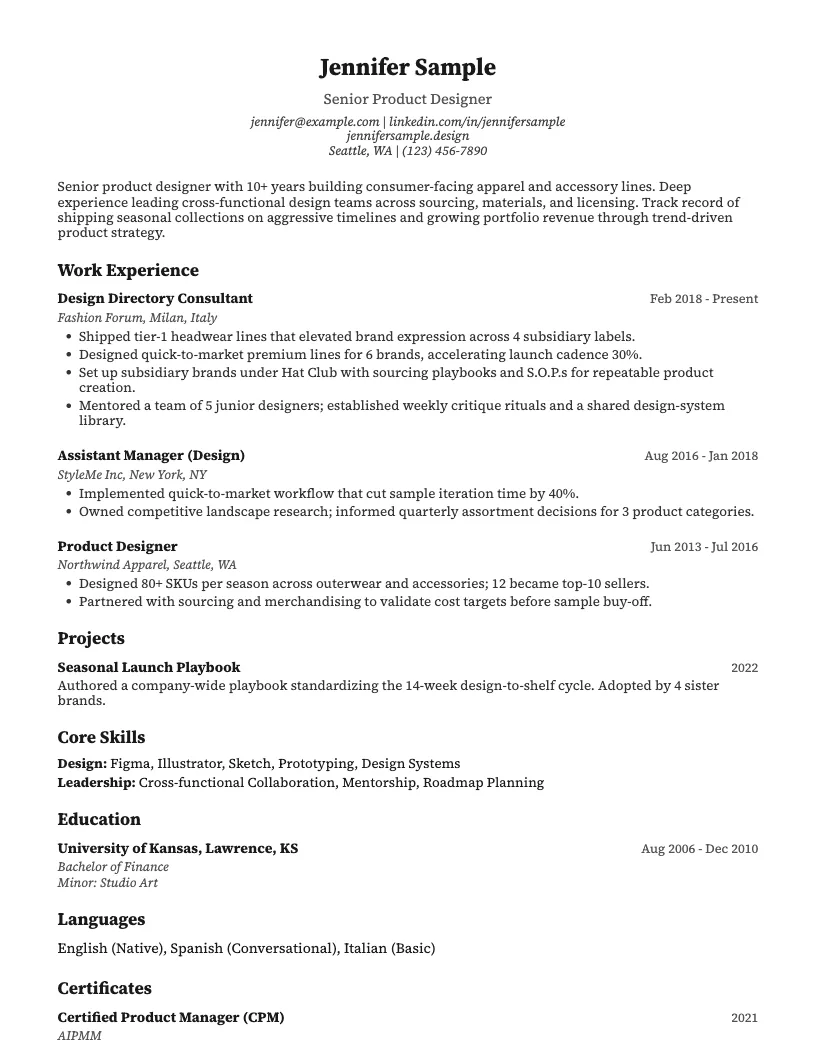
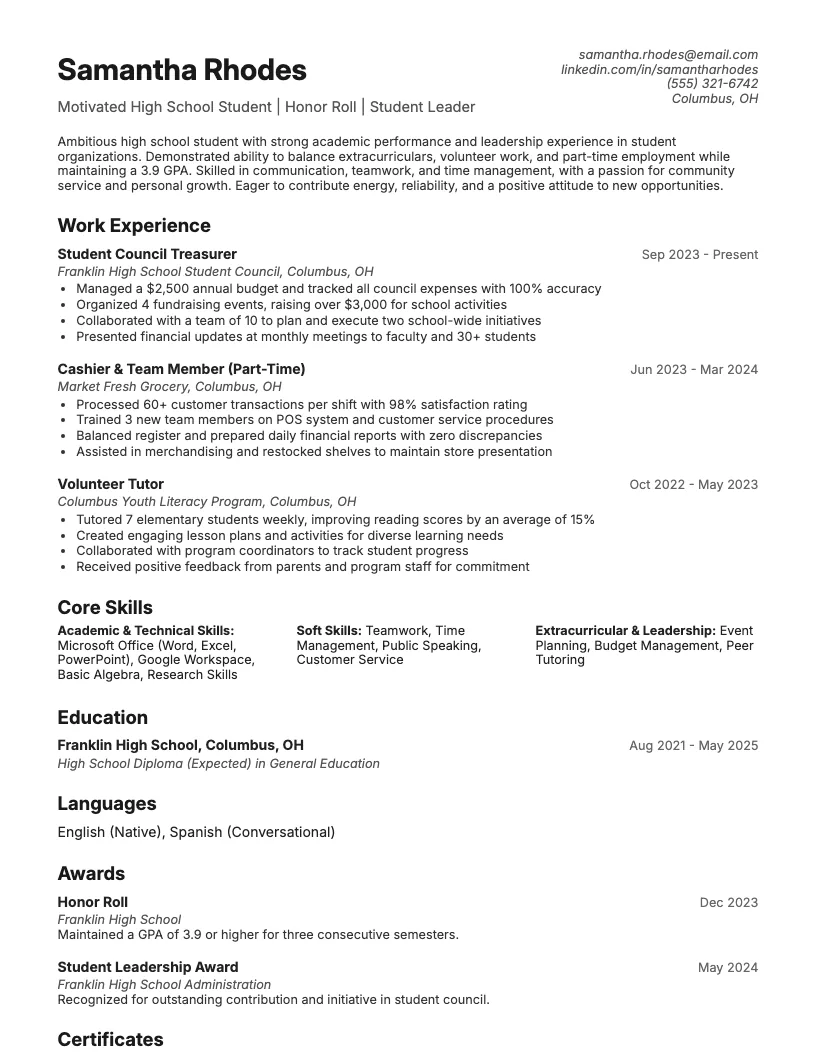
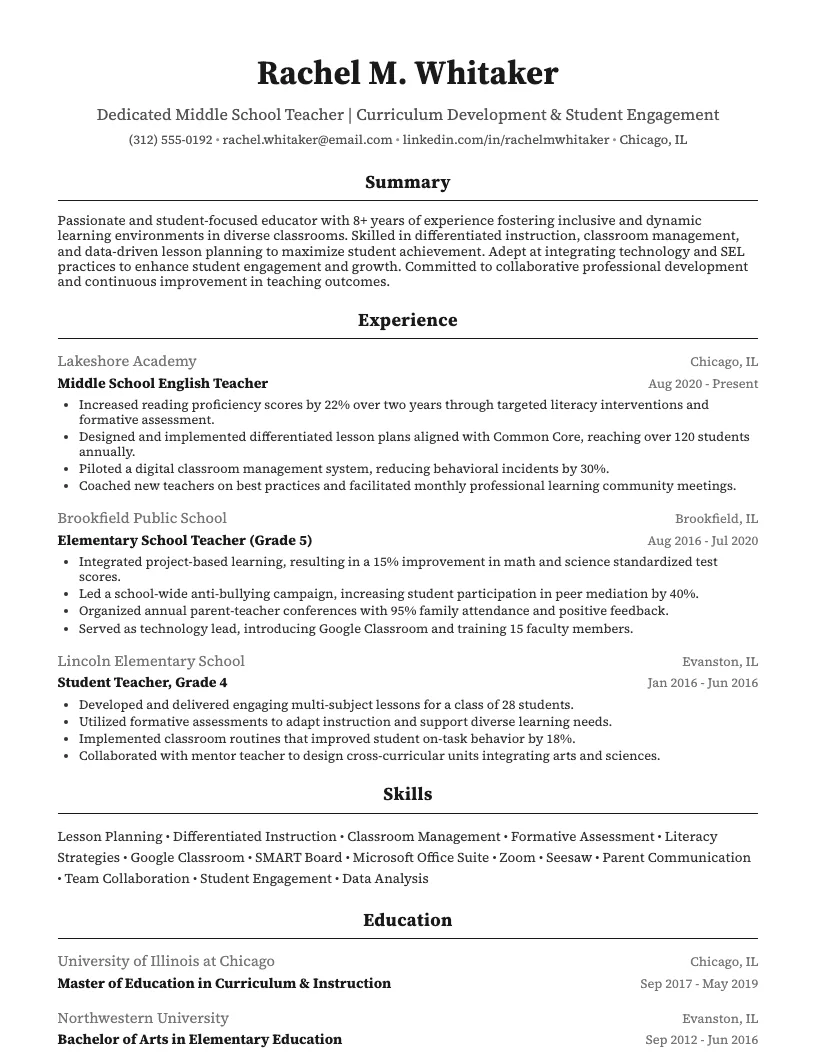
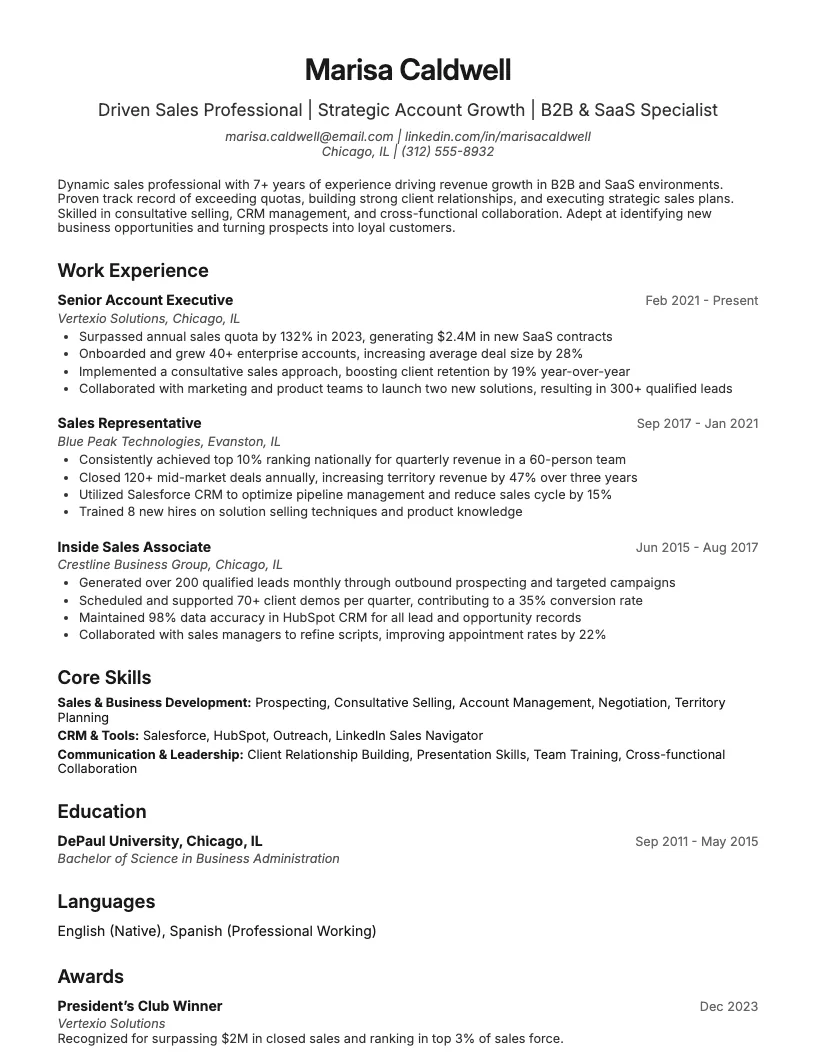
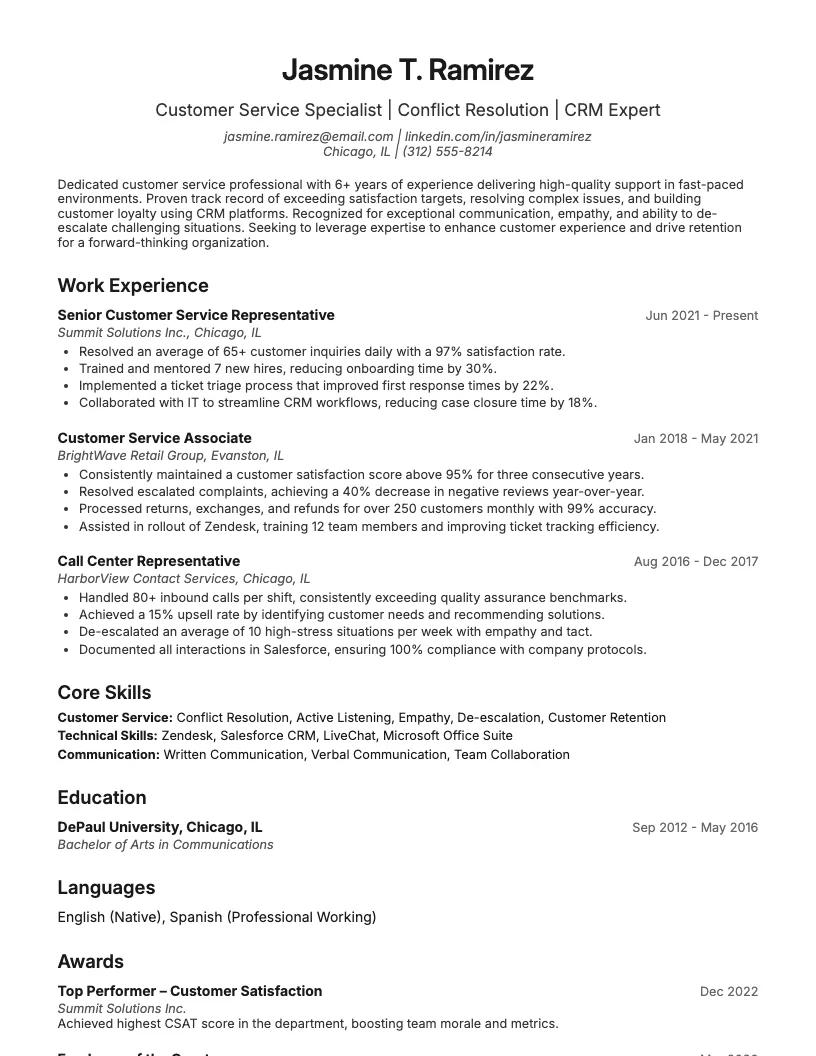
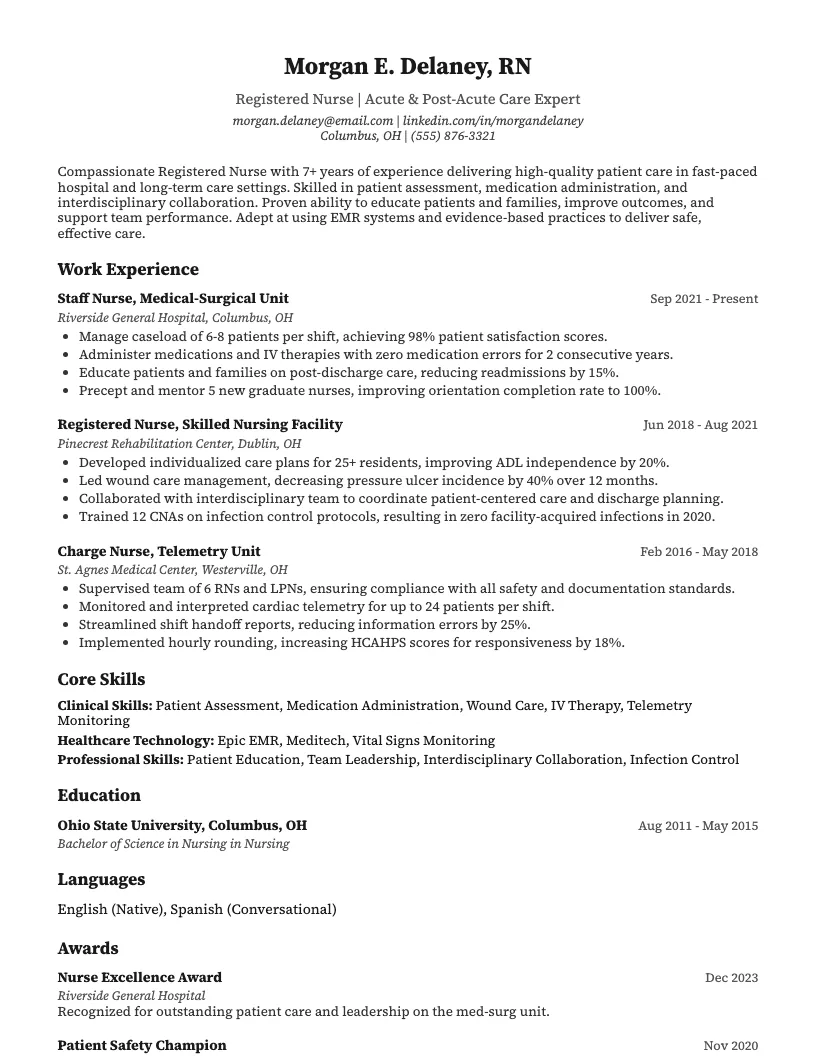
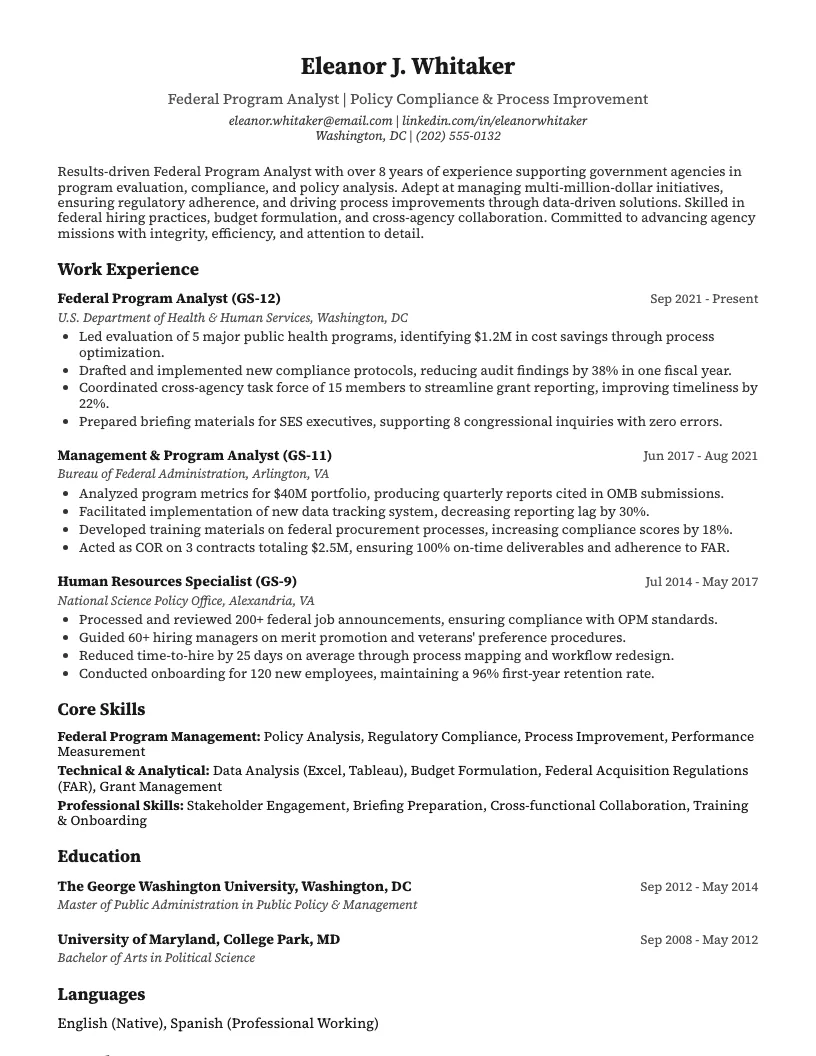
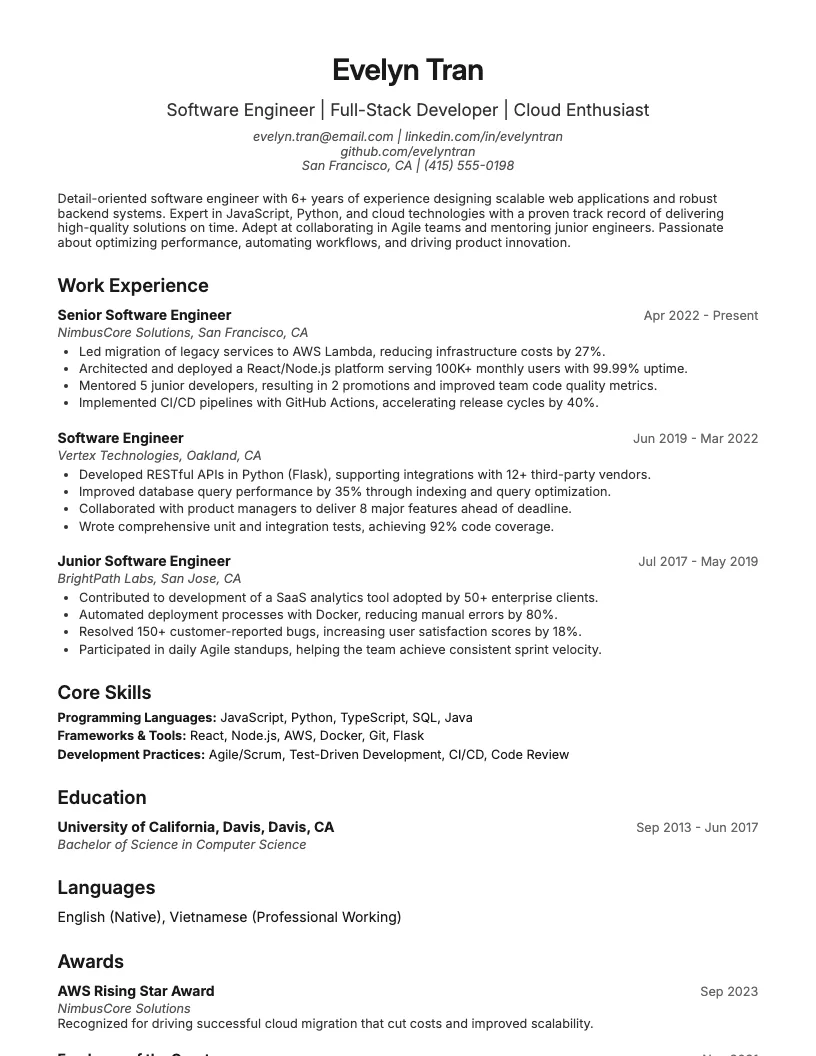
See these skills on a real resume
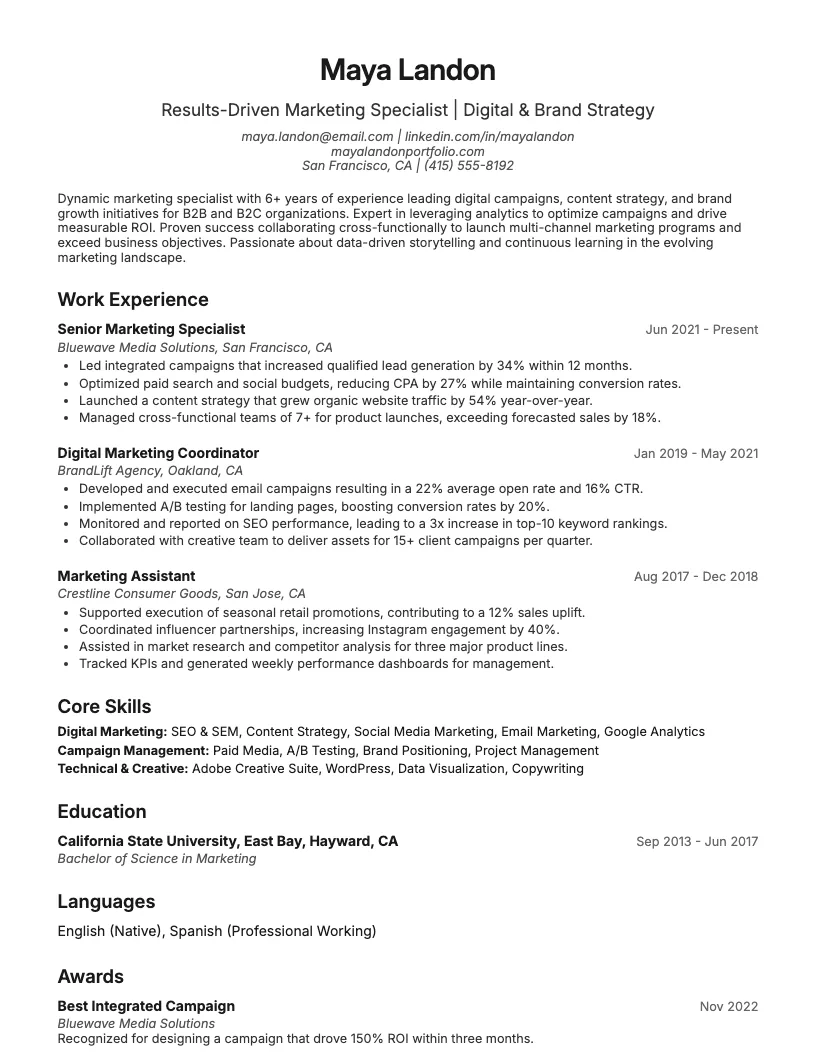
8 examplesStart from an example that already has them, and swap in your own.
Check your resume against the job you want
Scan your resume, see which skills and keywords the posting asks for that you are missing, and fix them before you apply.
Free to use • No credit card required