Skills to Put on Resume With No Experience: 19 I've Seen Work
10 soft skills and 9 hard skills you can list with zero job experience, plus how to pick 8-10, order them, and word them so ATS scanners catch them all.


Written by Dr. Priya Sharma
Career Development Expert & Resume Analyst
Updated August 2026
Reviewed by Sarah Chen
Is your resume ATS-friendly?
Drop your resume in and see which of these skills a scanner can actually read, and which ones the job you want is asking for that you have not listed.
PDF or DOCX. Max 2MB.
We never share your resume or use it to train a model.
In This Guide:
What skills can you put on a resume with no experience?
What skills can you put on a resume with no experience?

You don't need a job title to have skills. You've been building them for years - school just didn't call them that.
The trick is naming what you already did in words an employer recognizes. Group presentations become "presentation skills."
Juggling a part-time shift with exams becomes "time management." Nobody's asking you to invent experience, just to translate it.
Skills from school and coursework
Group projects taught you teamwork under a deadline. A research paper taught you how to dig for information and write it up clearly.
Presentations taught you to stand in front of people and make a point. All of that counts, and I've reviewed plenty of resumes that leave it off entirely because the writer assumed "school" doesn't belong next to "job."
Skills from volunteering
Volunteering is one of the strongest sources of skills for a beginner resume, because it usually involves real responsibility: showing up on a schedule, working with people you didn't choose, sometimes handling money or organizing an event. Employers read commitment into it too - sticking with something unpaid says something about your work ethic.
Skills from part-time and casual jobs
A retail shift or a summer of babysitting is still work experience, and it's full of skills: customer service, handling cash, staying calm when a line's out the door. Don't undersell these jobs just because they weren't in your target field.
Skills from clubs, sports and societies
A team captaincy or a club treasurer role is leadership and reliability, spelled out in a way recruiters understand immediately. Regular practice or training also shows discipline - something worth naming if you go into more detail in your resume summary.
Skills from hobbies and personal projects
A hobby that produced something - a website, a YouTube channel, a small business selling crafts online - is proof of initiative, and I'd list it before I'd list a vague soft skill with nothing behind it. Nine times out of ten, a self-taught project beats "hard worker" as a line on a resume.
Where each skill actually came from: a worked example
Say you ran a bake sale for a school club. That's "budgeting" (you tracked costs), "marketing" (you got people to show up), and "teamwork" (you split the work with others).
One event, three skills - that's the kind of translation this whole section is about.
Once you've got a real list, cut it down against an actual job posting.
Which soft skills should a beginner list?
Which soft skills should a beginner list?
Most beginner resumes list the same five words - "hard worker," "team player" - and a recruiter's eyes slide right past them. The fix isn't a longer list, it's proof.
Two-thirds of employers say soft skills matter more to them than your grades or your degree, so this section is not filler. Pick from what's below, but only keep what you can back up with something you actually did.
Communication
Nearly every job posting asks for this, and nearly every applicant just writes the word and moves on.
Don't. Say how you used it - presented a project to a class, wrote a newsletter for a club, talked customers through a return policy.
Written communication in particular gets ranked as the single most-wanted trait in new graduates, because so much of work now happens over email and chat instead of face to face.
Teamwork
You've done this more than you think - group projects, a sports team, a shift with three other people on register.
Name the group and what you contributed to it. "Worked with a five-person project team to deliver X" tells a hiring manager something; "team player" tells them nothing.
Time management
I see this word on almost every entry-level resume and almost never proven.
Juggling classes, a part-time job, and an assignment deadline is time management. Say that, with the pieces you were juggling.
Problem solving
Employers keep coming back to this one because it's the skill that predicts whether you'll need hand-holding.
You don't need a dramatic story. A group project that hit a snag, a shift where the till didn't balance, a schedule conflict you sorted out yourself - that's the whole bar.
Adaptability
Since remote and hybrid work became normal, this has climbed the list of what employers screen for.
If you've switched majors, picked up a new tool fast, or covered a shift you weren't trained for, that's adaptability. Say the switch, not the trait.
Attention to detail
This one is easy to prove and most people skip it: proofreading, catching an error in a report, checking work before it went out.
The catch is that this is also the skill your own resume gets judged on first - a typo undercuts the claim before anyone reads it.
Customer service
If you've worked a register, a phone line, or a front desk, you have this - patience under a difficult conversation, staying professional when someone's annoyed.
It counts even if the job wasn't in retail. Any role where you had to keep someone calm and happy applies here.
Reliability and work ethic
Almost half of employers say new hires show up short on exactly this - showing up, on time, every time, without being chased.
If you've held any shift work, babysat regularly, or never missed a practice, you have a track record. Say the length of it.
Initiative
This is the one that separates a resume that gets a second look from one that doesn't: did you wait to be told, or did you notice something and just handle it?
A club you started, a process you improved without being asked, a task you took on outside your job description - all of it counts.
Willingness to learn
Nobody expects you to walk in knowing everything, but employers do want to see that you pick things up fast and don't need to be asked twice.
A tool you taught yourself, a course you finished on your own time, a skill you're mid-way through learning right now - say it plainly, don't dress it up as finished expertise.
Once you've got your shortlist, run it against a real job posting - pull the skill words straight from the listing and let ResumeJudge rewrite your draft to work in whatever's missing, not just flag it.
Which hard skills can you list when you have never had a job?
Which hard skills can you list when you have never had a job?
Hard skills feel like the hardest part of a blank resume, but you have more of them than you think.
Nine times out of ten, the beginner resumes I look at undersell basic computer skills because the writer assumes "everyone knows that." Recruiters don't assume it - 92% of job ads now mention some digital skill, and less than half of workers your age can show basic workplace tech competence.
That gap is your opening.
Microsoft Office and Google Workspace
Word, Excel, Docs, Sheets, Slides - if you wrote essays, built a group project deck, or tracked a budget for a club, you've used these.
List them by name, not as "computer skills." A hiring manager can't picture "computer skills."
They can picture "Excel."
Email, calendars and video calls
Scheduling a meeting, managing an inbox, joining a video call on time and prepared - these sound too small to mention, but almost every entry-level job posting lists them anyway.
If you've used Zoom, Slack, or Google Calendar for school or a club, that counts. Say so.
Data entry and basic spreadsheets
Any time you've built a sign-up sheet, tracked attendance, or logged hours in a spreadsheet, that's data entry experience. Pair it with a number where you can: "tracked inventory for a 40-member club" reads better than "data entry."
Social media and content tools like Canva
Running an Instagram account for a team, a class project, or a small side hustle is real experience with content tools. Canva, CapCut, basic photo editing - these are hard skills employers pay for, especially at the entry level.
Point-of-sale and cash handling
If you've worked a till, counted a drawer, or processed returns in any part-time or casual job, list the system by name if you remember it (Square, Toast, whatever it was). Cash handling shows trust, and employers notice that.
Research and writing from coursework
Every research paper you've written is proof you can find sources, synthesize them, and write clearly under a deadline. That's a hard skill - call it "research" or "technical writing" depending on what the job wants.
Languages
Speaking a second language is one of the few hard skills that needs almost no proof. List it with a level - conversational, fluent, native - so it's specific instead of vague.
Free certificates worth listing
Google Analytics, HubSpot's free courses, Coursera certificates - these fill gaps convincingly when you have no job history. I'd rather see one free certificate finished than three half-started ones listed.
Only put down what you actually completed; a recruiter who asks a follow-up question will find the gap fast.
Basic coding: HTML, CSS, Python
Even a beginner's grasp of HTML, CSS, or Python is worth listing if it's true - a class project, a personal site, a Codecademy course. Don't inflate it to "proficient" if you've done one tutorial; "familiar with" or "beginner" is more accurate and still gets read.
If you want the fuller list of soft skills to pair with these, the section above covers those.
How do you choose which skills to put on your resume?
How do you choose which skills to put on your resume?
Once you've pulled your list together from school, jobs, volunteering, and everything else, you've probably got fifteen or twenty things.
That's too many. Here's how I'd cut it down.
Step 1: List everything you have actually done
Start messy, with no editing yet - everything you can point to from school, jobs, volunteering, clubs and hobbies goes on the list before you cut anything.
Step 2: Pull the skill words out of the job posting
Go back to the actual posting and underline every skill it names, both the technical ones and the soft ones like "communication" or "organized."
That posting is written in the exact words a scanner is looking for, so use them. ResumeJudge will check your list against a posting and rewrite your draft to work in whatever words you're missing, which beats eyeballing it twice.
Step 3: Keep only the skills you can back up
Now cross off anything you can't defend if someone asks you about it in an interview.
I've seen a lot of resumes fall apart at this exact moment: the applicant lists "leadership," gets asked for an example, and has nothing. A skill with no story behind it isn't a skill, it's a guess.
Step 4: Cut to 8-10 and put the closest match first
Most resumes that work land somewhere around 8 to 10 skills in the dedicated section, with a few more showing up naturally in your bullets. Order matters too - put whatever matches the posting most closely at the top, because a recruiter skimming for six seconds reads top to bottom and stops early.
Skills to leave off when you are starting out
Leave off anything generic with no proof behind it, like "hard worker" or "team player" on their own with nothing to back them up. Leave off skills that have nothing to do with the job just because you're proud of them.
And leave off anything you'd struggle to explain out loud, because that's the first thing an interviewer will ask about.
How do you write skills on a resume with no experience?
How do you write skills on a resume with no experience?
You know which skills to list. Now you need them on the page in a way a recruiter actually reads.
Where the skills section goes on a beginner resume
Put it high.
With no work history to lead on, your skills and education are the strongest things on the page, so they belong near the top, not buried under a job history that barely exists.
I usually put skills right after the summary, above or level with education, before anything called "experience."
What a skills section looks like: a filled-in example
Here's what I mean, filled in:
Skills: Microsoft Excel and Google Sheets · Customer service · Team collaboration · Social media content (Canva, Instagram) · Time management · Bilingual: English/Spanish · Data entry
Eight lines, no fluff, no sentence fragments explaining each one. That's the whole section.
Grouping skills so a recruiter can scan them
Once you've got more than six or seven, split them into two short groups: technical skills, then people skills.
A recruiter scanning for one keyword shouldn't have to read your whole block to find it. Two labeled groups of four or five beat one long unsorted line every time.
Proving a skill in your experience bullets instead of just naming it
A skill listed once, in one place, is a claim. The mistake I see most often is a resume that names "teamwork" in the skills section and never mentions it again.
Say it a second time inside a bullet from a project, a club, or a part-time job, where it's doing something. That's what turns a word into evidence - see where each skill actually came from for how to trace one back to its source.
Putting a number on a skill you learned at school
Turning a school project into an experience bullet
Worked on a group project
Coordinated a 4-person team that delivered a class project two days early
Every skill from school sounds stronger with a number attached. Not "worked on a group project" but "coordinated a 4-person team that delivered a class project two days early."
Not "used Excel" but "built a spreadsheet tracking 200+ survey responses."
You don't need a job for this. A number just says the skill was real, not decorative.
Naming skills in your resume summary
Your summary is the first thing read, so drop your two or three strongest skills right into it. "Organized, bilingual communicator with hands-on experience in customer service and Excel" tells a recruiter what to expect before they even reach the skills section.
Getting your skills past the ATS
Most resumes get scanned by software before a person sees them, so match the exact wording the posting uses - if it says "Microsoft Excel," don't write "spreadsheets" and hope the system connects the dots. Skip tables, columns, and graphics in this section; plain bullet points parse cleanly every time.
This is the one spot where I'd actually check your work rather than guess: run the resume against the posting and ResumeJudge will rewrite it to include the required skills you're missing before you hit submit.
Frequently Asked Questions
How many skills should I list on a resume with no experience?
Eight to ten is the safe range, and every one of them should trace back to something in the job posting. Fewer than that looks thin, and padding past ten buries the skills that actually matter to the hiring manager. Pull the number from a mix of technical and soft skills rather than loading up on one type. ResumeJudge will check your list against a posting and flag which of the required skills you're still missing.
Can I list a skill I am still learning?
Yes, but say where you actually are with it instead of implying you're proficient. You can list it plainly if you have some real exposure, or note in a cover letter or interview that you're actively building it. Claiming a skill you can't back up in an interview does more damage than leaving it off.
Do soft skills count if I have never had a job?
Yes, and they carry more weight than usual on a resume with no work history. The section "Which soft skills should a beginner list?" above has the ten worth considering and what proof each one needs.
Should I list skills from a hobby?
Yes, if the hobby actually produced a skill the job needs. The section "Skills from hobbies and personal projects" above covers how to word it.
Do certificates and online courses belong in the skills section?
The credential itself belongs in an education or certifications section, but the skill it taught you belongs in your skills list. A completed Google Analytics course, for instance, lets you list "Google Analytics" as a skill with the certificate backing it up elsewhere on the resume. Listing only the course name without naming the skill makes a recruiter do that translation themselves, and most won't bother.
What if the job posting asks for a skill I do not have?
Look for the closest skill you do have and lead with that, rather than leaving the requirement unaddressed or inventing experience you don't have. Postings often list a wish list alongside genuine must-haves, so one missing item rarely rules you out on its own. ResumeJudge compares your resume against the posting and shows you exactly which required skills are missing, so you know whether it's worth addressing directly or a stretch to worry about.
Is a skills-first resume format better when you have no experience?
Often yes. A combination or functional format that puts a skills section near the top lets you lead with what you can do instead of an empty or thin work history section. It works best when your skills are backed by real examples elsewhere on the page, since a list of words with nothing behind it reads the same as no experience at all.
See these skills on a real resume
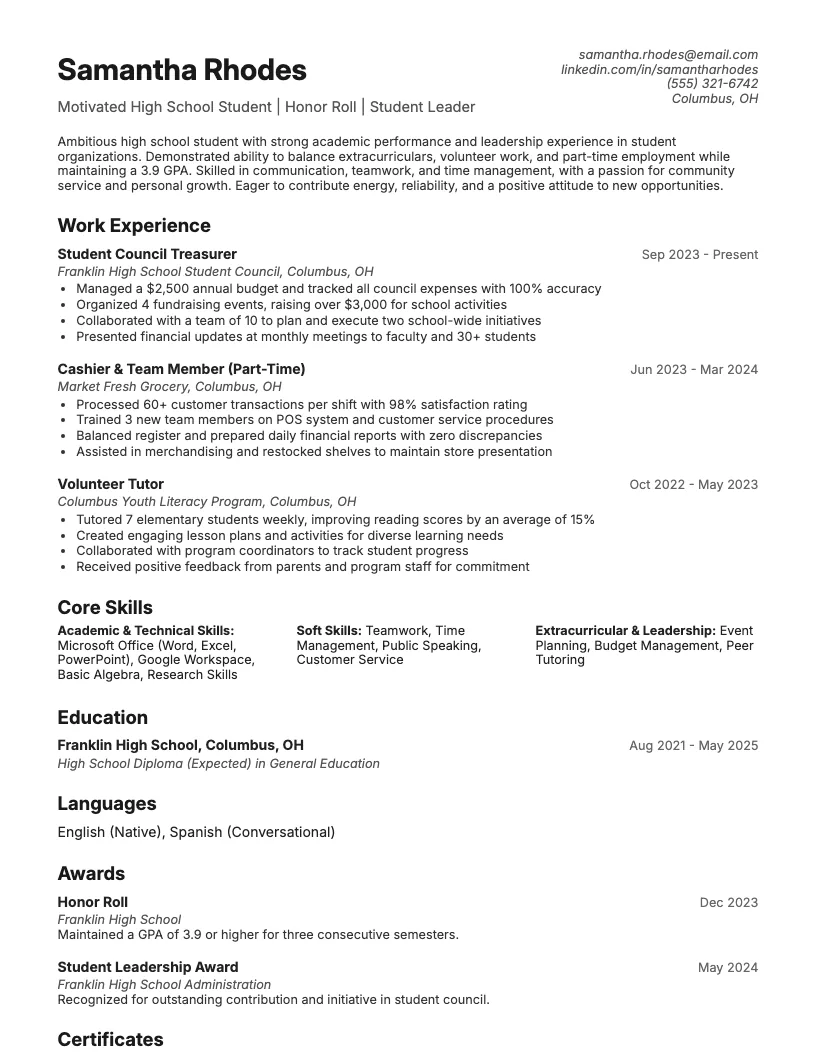
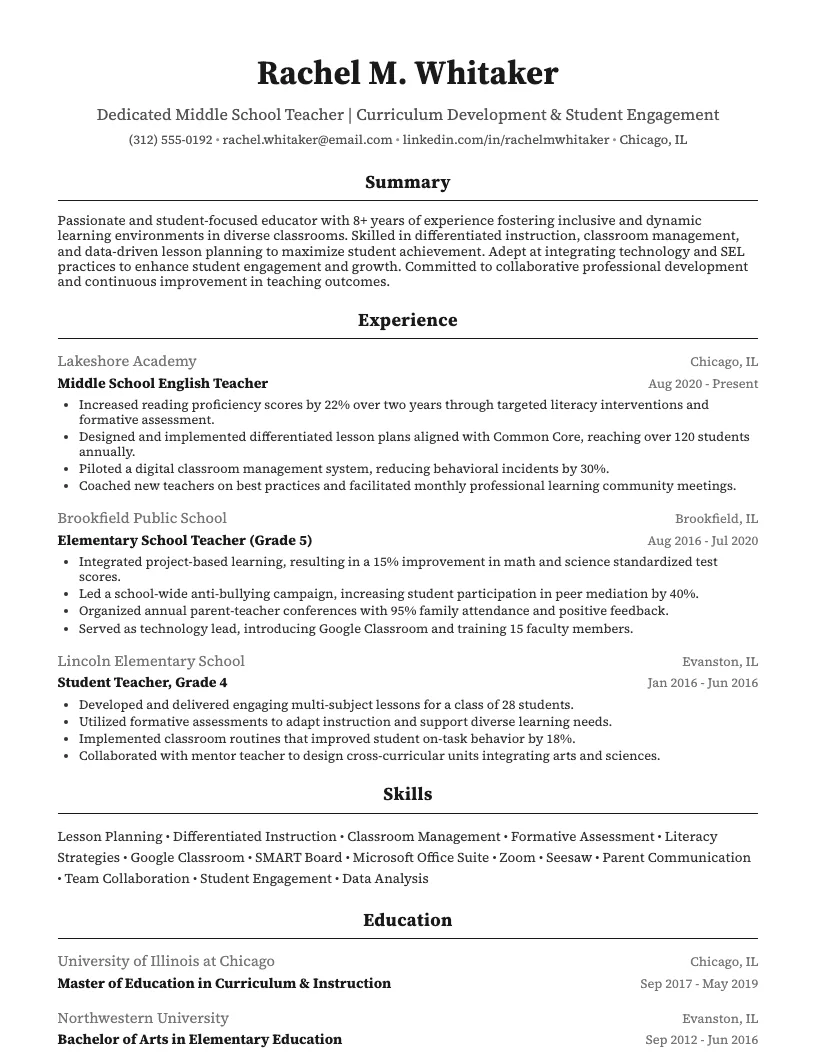
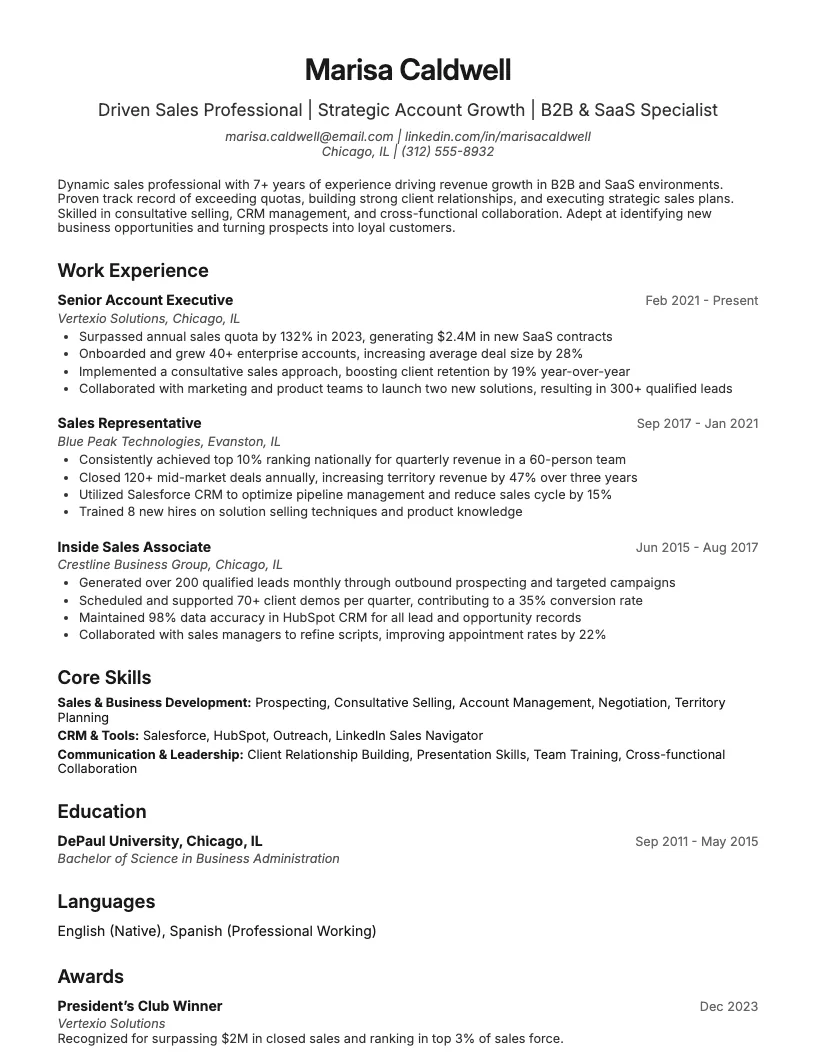
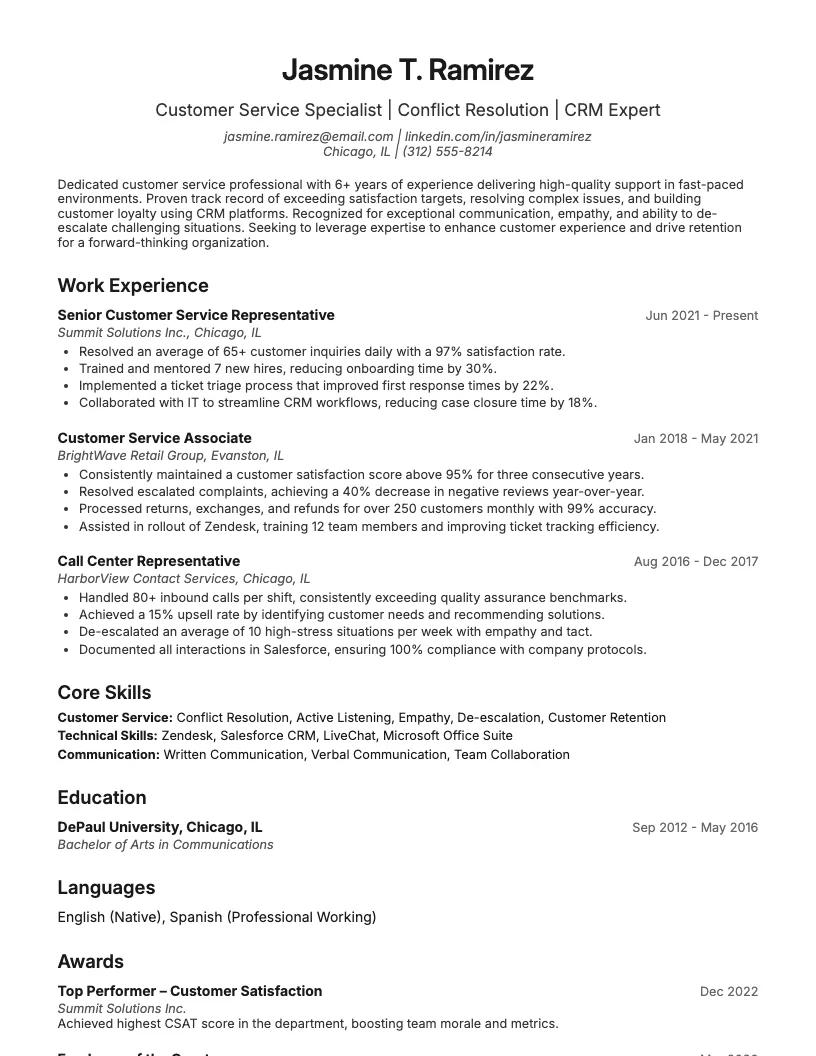
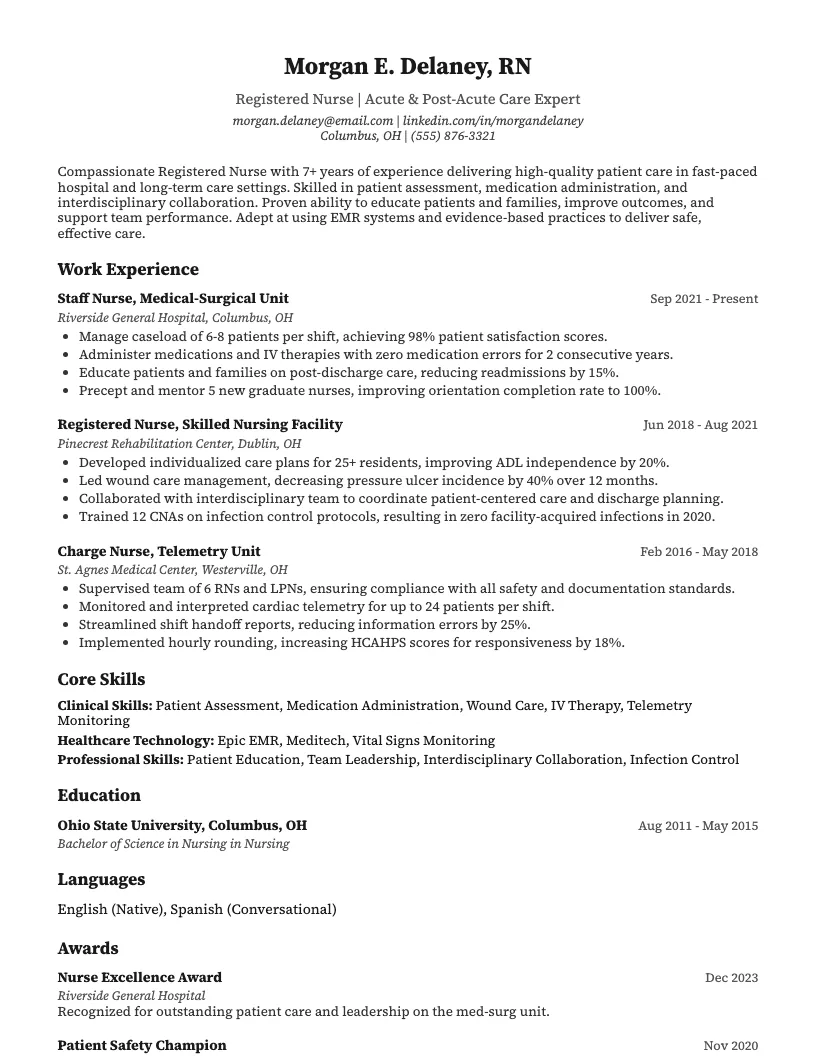
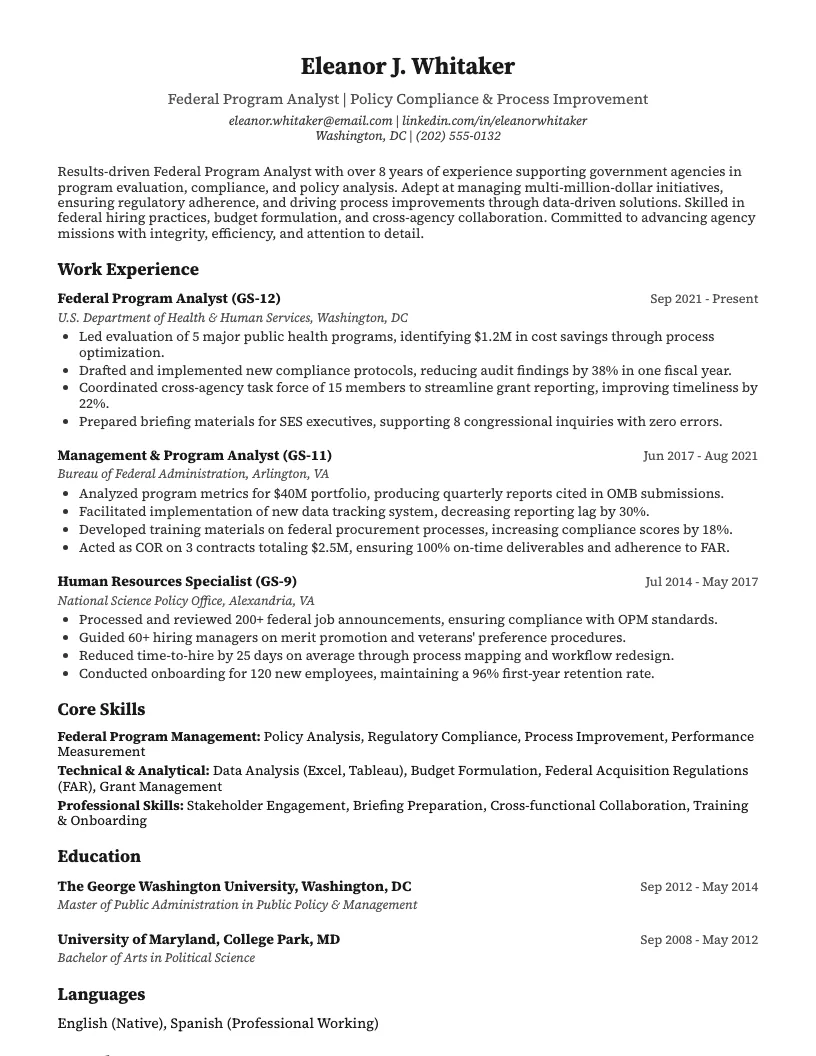
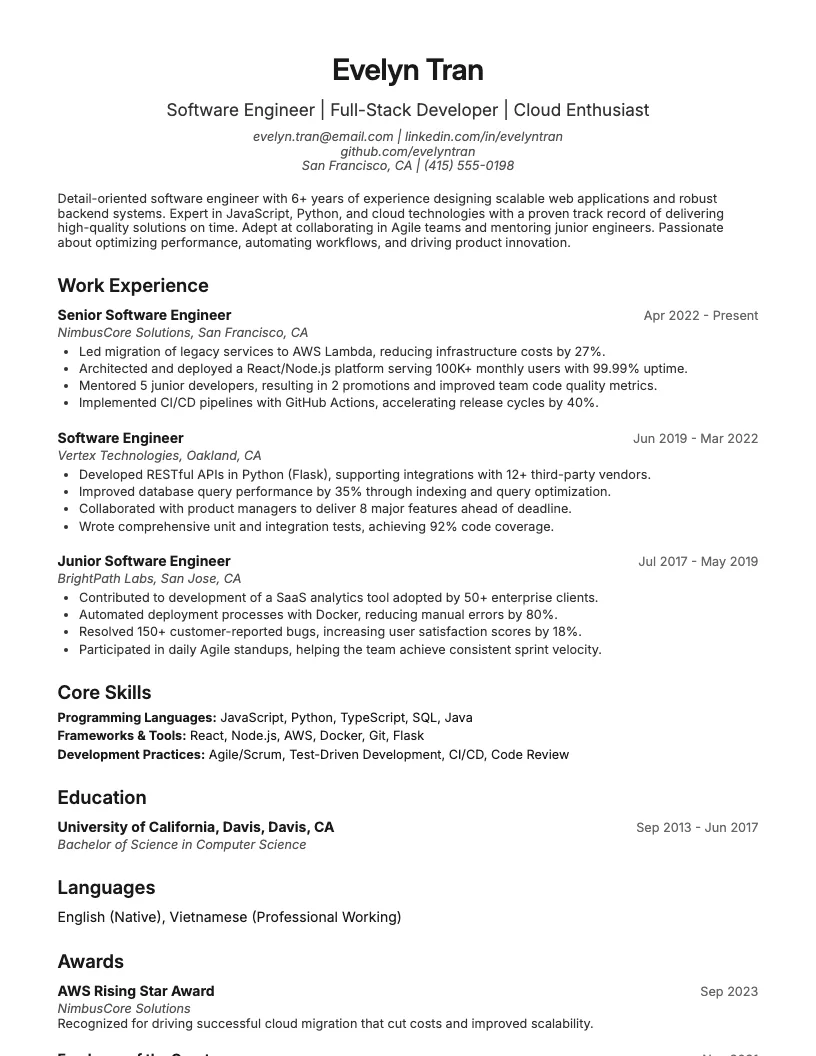
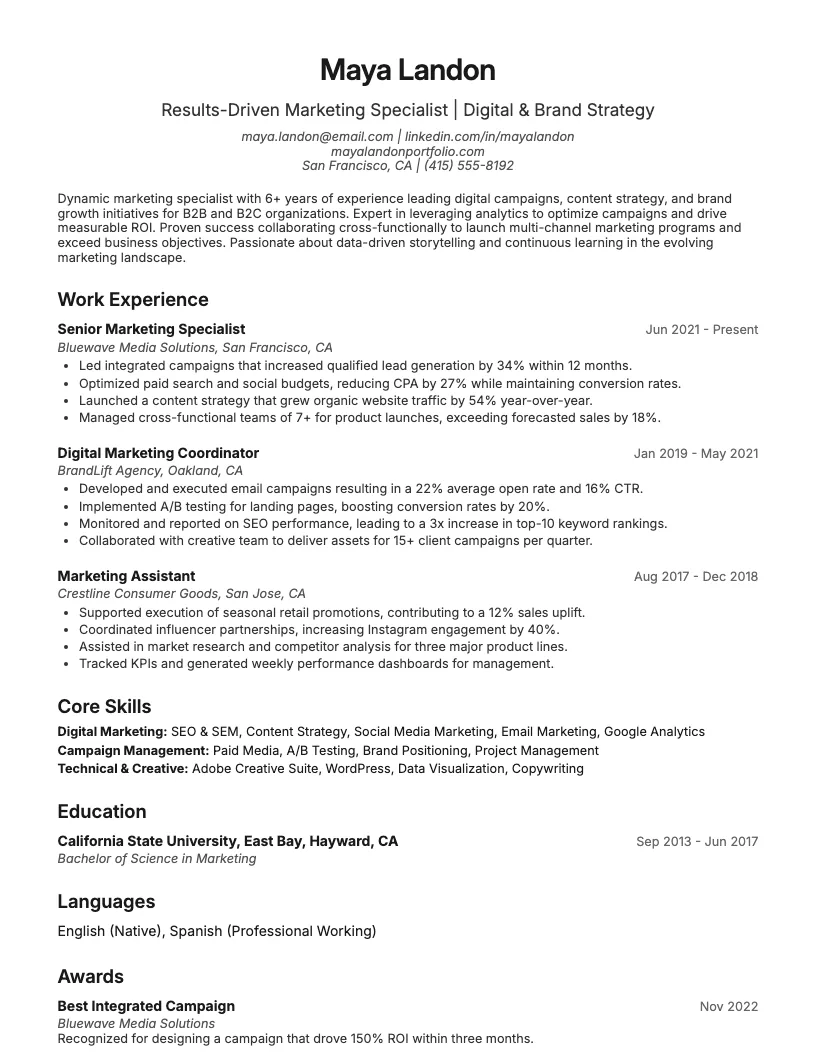
8 examplesStart from an example that already has them, and swap in your own.
Check your resume against the job you want
Scan your resume, see which skills and keywords the posting asks for that you are missing, and fix them before you apply.
Free to use • No credit card required