Levels of Language Proficiency Resume: 5 Terms, 3 Scales, 6 Mistakes
Five terms, three proficiency scales (CEFR, ACTFL, ILR), and six mistakes that make a language claim fall apart - plus where each line goes on your resume.


Written by Sarah Chen
Senior Career Strategist & Resume Expert
Updated August 2026
Reviewed by Marcus Rodriguez
Is your resume ATS-friendly?
Drop your resume in and see which of these skills a scanner can actually read, and which ones the job you want is asking for that you have not listed.
PDF or DOCX. Max 2MB.
We never share your resume or use it to train a model.
In This Guide:
What are the levels of language proficiency on a resume?
Pick the wrong word here and one of two things happens: a recruiter skips you because "conversational" sounds thin, or you get an interview conducted entirely in a language you can't actually hold up your end of. Neither is a good outcome, so use terms that mean something specific.
Native or bilingual
This is your first language, or one you grew up speaking alongside it. Full comfort in speaking, reading, writing and listening, no gaps.
Fluent
You can hold a real conversation, read most things, and write without leaning on a dictionary. Not native-level polish, but close enough that it rarely shows.
Proficient
High comfort, spoken and written, but you're not going to pass for a native speaker. I see this used correctly less often than any other label on the list - most people who write it actually mean conversational.
Conversational
You can hold a discussion and get your point across, but you'll stumble on less common words or fast, casual speech. This is where most second languages people learned in school actually land, years later.
Basic or elementary
Simple phrases, greetings, maybe enough to order food or ask directions. Fine to list if the job doesn't need the language, but don't dress it up as more.
Speaking, reading, writing and listening are rated separately
A single word like "fluent" hides the fact that these four skills rarely sit at the same level. Someone who grew up hearing a language at home but never studied it might speak and listen at native level while reading and writing at basic - that's common, not a flaw, but it needs saying rather than flattened into one label.
If a posting names a required language, check what it actually asks you to do with it - some jobs need writing, others just need you on the phone - and ResumeJudge will flag it if that requirement is on the posting but missing from your resume.
Which proficiency scale should you use - CEFR, ACTFL or ILR?
Once you know your level, you need a scale to put it on. There are three in common use, and they're not interchangeable.
CEFR: A1 to C2
CEFR runs from A1 (beginner) to C2 (mastery), six bands total. It comes out of the Council of Europe, and it's the one nearly every European employer already knows how to read.
ACTFL: Novice to Distinguished
ACTFL has five bands - Novice, Intermediate, Advanced, Superior, Distinguished - and it's the scale American schools and employers use. If you learned a language in a US classroom, this is probably the one your certificate already uses.
ILR: 0 to 5
ILR runs 0 to 5, with "plus" levels in between, and it rates speaking, listening, reading and writing separately rather than giving you one overall number. You'll mostly see it in government and diplomatic hiring - a 5 means native or bilingual fluency.
Which one to use in Europe, the US and everywhere else
Match the scale to where the job is, not where you learned the language. CEFR for Europe, ACTFL for the US, ILR if the posting is government or federal work.
Outside those, either CEFR or plain words reads fine.
How the three scales line up against each other
| CEFR | ACTFL | ILR |
|---|---|---|
| A1–A2 | Novice | 0–1 |
| B1 | Intermediate | 1+–2 |
| B2 | Advanced | 2+–3 |
| C1 | Superior | 3–4 |
| C2 | Distinguished | 4+–5 |
Roughly - nobody expects an exact match, so don't stress over the boundary cases.
Plain words instead of a scale
Most resumes I review skip the scale entirely and just say "fluent" or "conversational," and that's fine for most jobs. Save the letter-and-number codes for postings that ask for a specific proficiency level - mixing a code onto a resume that doesn't need one just looks like you're padding.
If you're not sure which the posting wants, run it through ResumeJudge and it'll flag whether the job description is actually asking for a scale or just a plain-language claim.
How do you work out your own language level?
Most people guess. That's the problem - I've seen resumes where "fluent" meant a semester abroad, and others where someone undersold real working ability as "conversational" because they felt shy about it.
Rate yourself against the scale you picked
Once you've settled on a scale, read the actual level descriptions, not just the label.
C1 isn't "pretty good" - it's a specific list of things you can do. Match yourself to the description, not the vibe of the word.
Rate each of the four skills on its own
The four skills are rated separately for a reason.
I see people who can hold a fluent conversation but write like a B1, or read technical documents easily but freeze up on the phone. Rate each one separately, then decide whether your resume needs one number or four.
Take a test: AAPPL, DELF/DALF, DELE, HSK
A formal test settles the argument. AAPPL covers speaking, reading, writing, and listening across thirteen languages, including French, Spanish, and Chinese.
DELF/DALF (French), DELE (Spanish), and HSK (Chinese) do the same job for their languages, and a certificate on the resume backs up the claim in a way self-rating never does.
Ask someone who speaks it
People are bad judges of their own ability, so ask a native speaker or a colleague who's fluent to talk to you and give you an honest read. It costs nothing and it catches the gap between how you feel and how you actually sound.
The line between conversational and fluent
Both words are defined under the levels above. The quick test when you're deciding between them: if you'd freeze in a work call, you're not fluent yet.
The line between fluent and native
Fluent and native are both defined under the levels above. Claiming native for a language you learned in your twenties is a claim someone will test in the interview - and if the job posting lists the language as a requirement, run your resume against it in ResumeJudge first so you know exactly how your claim reads against what they're asking for.
Where do language skills go on a resume?
Where to put your language depending on the job
| Situation | Placement | Example |
|---|---|---|
| Job doesn't emphasize the language | Skills section | Languages: Spanish, French |
| Posting requires the language | Own section | Dedicated Languages heading |
| Customer-facing or international role | Resume summary | Bilingual account manager, English/Portuguese |
| You used it at work | Experience bullet | 40+ Spanish-speaking client calls weekly |
| You have a test score | Education/certifications | French - DELF B2, 2023 |
There's no single right spot for this. Where it goes depends on how much the job cares.
A Languages block inside the skills section
Most resumes should do this and stop there. Add a short "Languages" line under your skills, next to your hard skills, and move on.
Its own section when the job asks for the language
If the posting says "bilingual preferred" or "Spanish fluency required," give it a standalone section instead of burying it. I've seen recruiters skim past a language buried in a long skills list - a dedicated section is the difference between them noticing and not.
Run the posting through ResumeJudge and it'll rewrite your resume to put the language where it belongs, calling it out on its own or folding it in, whichever the posting asks for.
One line in your resume summary
For customer-facing and international roles, a language belongs in your summary too, not just your skills. "Bilingual account manager, English/Portuguese" at the top does more work than the same words at the bottom.
In the work experience bullets
This is the one people skip. A bullet like "handled 40+ Spanish-speaking client calls weekly" proves the level claimed under conversational or fluent with a real number, not just a label.
Under education or certifications
If you have a DELF, DELE, or HSK score, put it with your other certifications too - see level plus certificate for how to write the line.
How do you write a language line on your resume?
Is your resume good enough?
Drop your resume in and see which of these skills a scanner can read, and which ones the job you want is asking for that you have not listed.
Upload your resumeFree. PDF or DOCX. We never share your resume or use it to train a model.
There's no single right template here. What matters is that a recruiter can read your level in under two seconds.
Language, then level: "Spanish - Fluent (C1)"
This is the format I'd default to if you're not sure which to pick.
Language name, a dash, then the level word, then the scale code in brackets if you know it. It reads fast and it works whether the scanner is a human or an applicant tracking system.
One level per skill: "German - Speaking C1, Writing B2"
If your speaking and writing genuinely sit at different levels, say so.
This is worth the extra words for a role where the language is actually part of the job, not a nice-to-have.
Level plus certificate: "French - DELF B2, 2023"
Got a test score? Lead with it.
A certificate carries more weight than a self-rating because nobody has to take your word for it.
Name the test, the level it awarded, and the year. Skip the self-chosen label entirely - the certificate already says what you can do.
Level plus what you did with it
A level line with proof, not just a label
Mandarin - Fluent
Mandarin - Full Professional Proficiency. Negotiated contracts with Mandarin-speaking clients.
The strongest line I see isn't a label at all. It's a level plus a sentence of proof: "Mandarin - Full Professional Proficiency.
Negotiated contracts with Mandarin-speaking clients."
If the job posting names the language as a requirement, this is the version to write - it answers the interviewer's next question before they ask it. ResumeJudge will flag it if a posting asks for a language you haven't backed up with anything concrete.
Order the list from strongest to weakest
Native and primary languages go first, then everything else ranked by how strong you actually are, not the order they occur to you.
Keep it updated - a language you were conversational in three years ago and have used every week since deserves to move up.
Skip the star ratings and progress bars
I've seen plenty of resumes with five-star icons or filled-in progress bars next to each language, and every one of them was a mistake.
Applicant tracking systems can't read graphics - they just see a blank space where your level should be. Color-coding has the same problem.
Words and numbers only.
What does a language section look like on a real resume?
What the level line looks like by resume type
| Resume type | Example line |
|---|---|
| Bilingual customer service | Bilingual - English and Spanish |
| Translator, three languages | Fluent in English and Spanish, conversant in Italian |
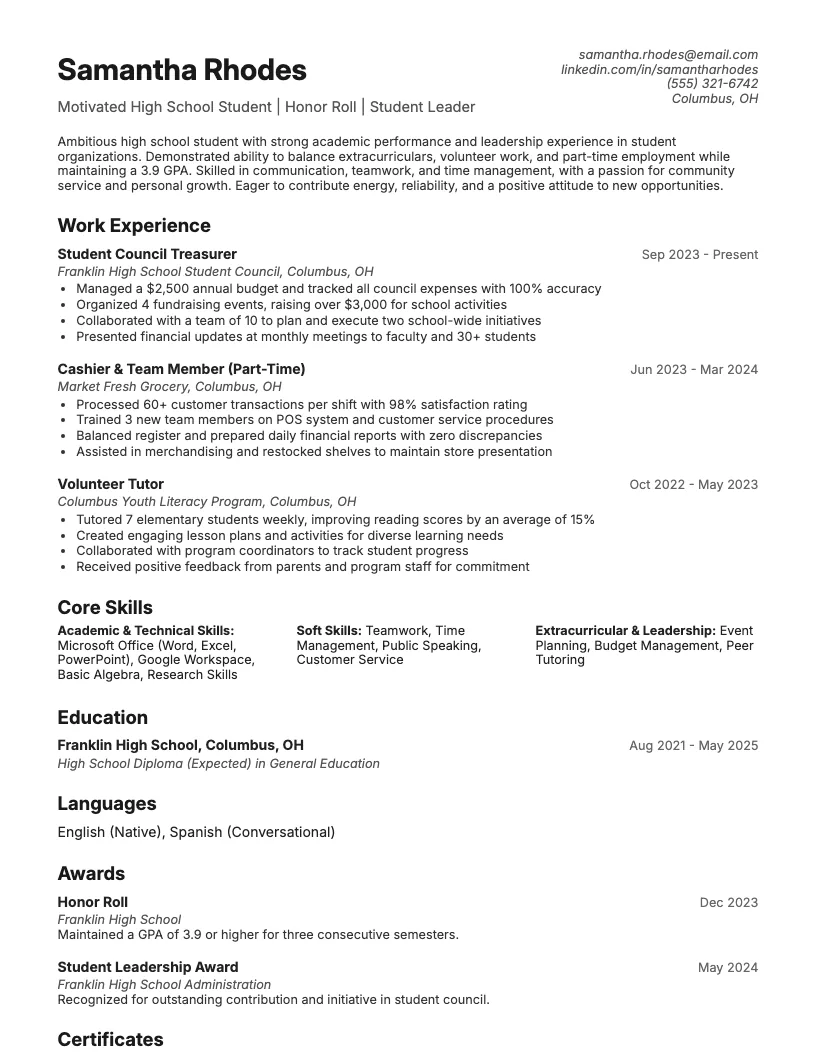
| Student, one school language | Four years of high school and college Japanese education |
| Engineer, language a small extra | One line, bottom of skills section |
| Language is the job requirement | Own section, matched to posting wording |
The formats above are the building blocks. This section only covers which one fits which kind of job.
A bilingual customer service resume
Keep it short: "Bilingual - English and Spanish" under skills, no scale needed.
Nine times out of ten this is the whole entry. The job is the proof.
A translator resume with three languages
This is where you use the full language, level, certificate format three times over. "Fluent in English and Spanish, conversant in Italian" is a real line I've seen work, and it's honest about the gap between the first two and the third.
A student resume with one school language
"Four years of high school and college Japanese education" says exactly what it is - coursework, not fluency - and that honesty is what makes it land instead of backfire.
An engineer whose language is a small extra
One line, bottom of the skills section, nothing more. A hiring manager scanning for Python and AWS doesn't need three lines on German.
A resume where the language is the job requirement
Now it gets its own section near the top, matched word for word against the posting. I've seen strong candidates get filtered out for writing "conversational" when the listing asked for "fluent" - run the resume against the job description before you submit, which is exactly the kind of gap ResumeJudge flags.
What mistakes make a language claim fall apart?

I've read hundreds of language lines on resumes, and the same six mistakes come up over and over.
Claiming fluent when you are conversational
This is the one I see most. Someone can order food and make small talk, so they write "Fluent."
Then an interviewer switches languages mid-conversation and the gap shows immediately. The line between conversational and fluent is worth reading before you pick a word.
Listing a language you last used in school
Two years of high school French does not survive a decade of not speaking it. If you can't hold a real conversation in it today, take it off - or be honest and call it basic.
Mixing two scales on one scale
Pick CEFR, ACTFL, or ILR and stick with it for every language on the page. "Spanish - C1, French - Advanced" tells the reader you didn't check your own resume before sending it.
Calling it "working knowledge"
Nobody agrees on what this means, including the person who wrote it. Use one of the real terms - native, fluent, proficient, conversational, basic - and the reader knows exactly where you stand.
Listing a language nobody in the job needs
A third language you're proud of but the role never touches just takes up space a real qualification could use. Check the posting for what it actually asks for - ResumeJudge will flag the skills a job description wants that your resume doesn't have, so you're not guessing.
Nothing to back the claim if they ask
If you wrote "proficient," expect someone to test it. Have a certificate, a project, or a story ready - a claim with nothing behind it is worse than not making the claim at all.
Frequently Asked Questions
Should I list a language I am still learning?
Yes, but only once you can actually use it in conversation - a language you've just started shouldn't go in your skills list yet. If you're at the very beginning, either leave it off or mention it once as a personal interest rather than a proficiency line. Once you can hold a real conversation or use it in a work setting, it's fair to list.
How do I say I am a native speaker?
Write "Native" or "Native or bilingual proficiency" right next to the language name - that's the standard phrasing. You don't have to justify it further; if an employer wants to confirm it, that happens in the interview, not on paper.
Do I need a certificate to claim a level?
No, in most cases a plain listing is enough and nobody asks for paperwork before an interview. The exception is roles where the language is a stated job requirement, like translation or certain international positions, where a certificate such as DELF or HSK can back up the claim. If a posting requires a specific level, running your resume against it will show whether that requirement is missing from your resume at all.
Should I list every language I know?
No - keep it to languages that are actually relevant to the role and where your level is real enough to use at work. [Listing a language nobody in the job needs](#listing-a-language-nobody-in-the-job-needs) explains what that costs you. Checking your resume against the specific job posting will tell you whether a language is expected for that role or safe to leave off.
Does listing a language help with applicant tracking systems?
It can, but only when the job posting itself calls for that language - the system is matching the exact words in the posting, not judging your general language ability. If a listing names a language you speak and it isn't written on your resume, you can get filtered out before anyone reads it. Comparing your resume against the posting will catch a missing language keyword like this.
What if my speaking is better than my writing?
List the two separately instead of giving one level for both, since the gap usually shows up fast in an interview or on a writing task. [One level per skill](#one-level-per-skill-german-speaking-c1-writing-b2) shows how to write that line.
Do I list my native language at all?
Only if it's relevant to the job or the resume's own language wouldn't already tell the reader. If you're a native English speaker applying for an English-language role, you can usually leave English off the list entirely. It's worth including for multilingual teams or international postings, where the reader can't just assume it.
See these skills on a real resume
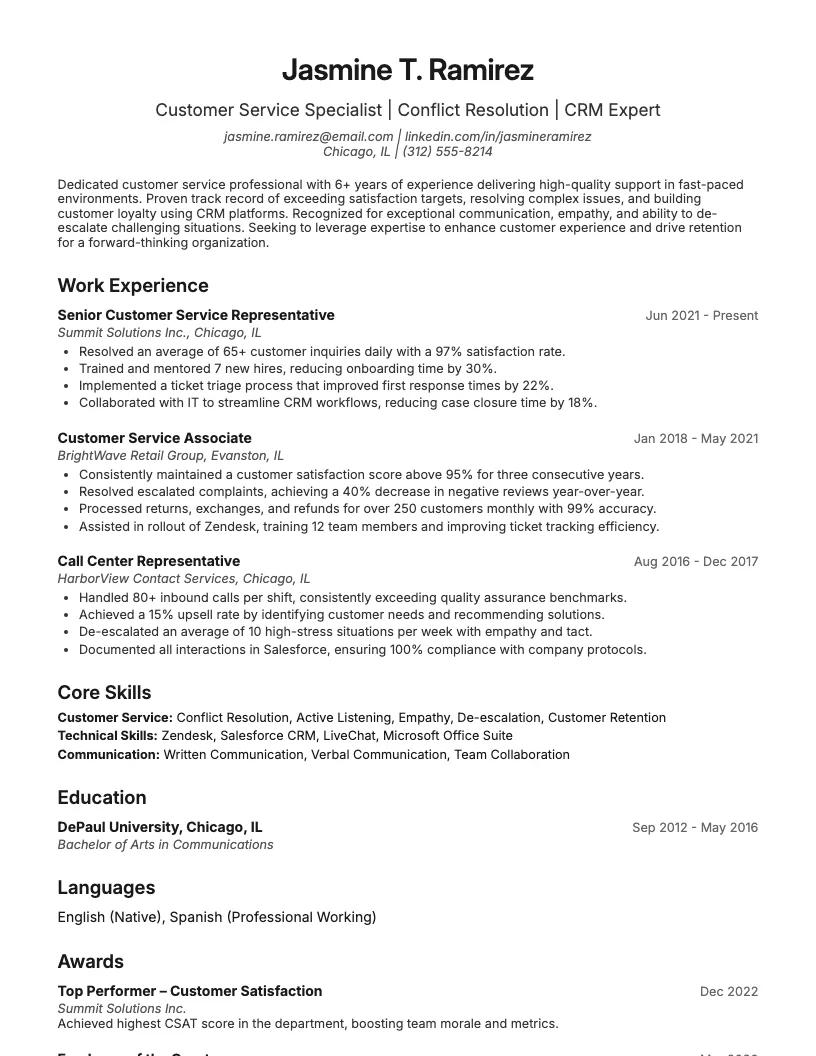
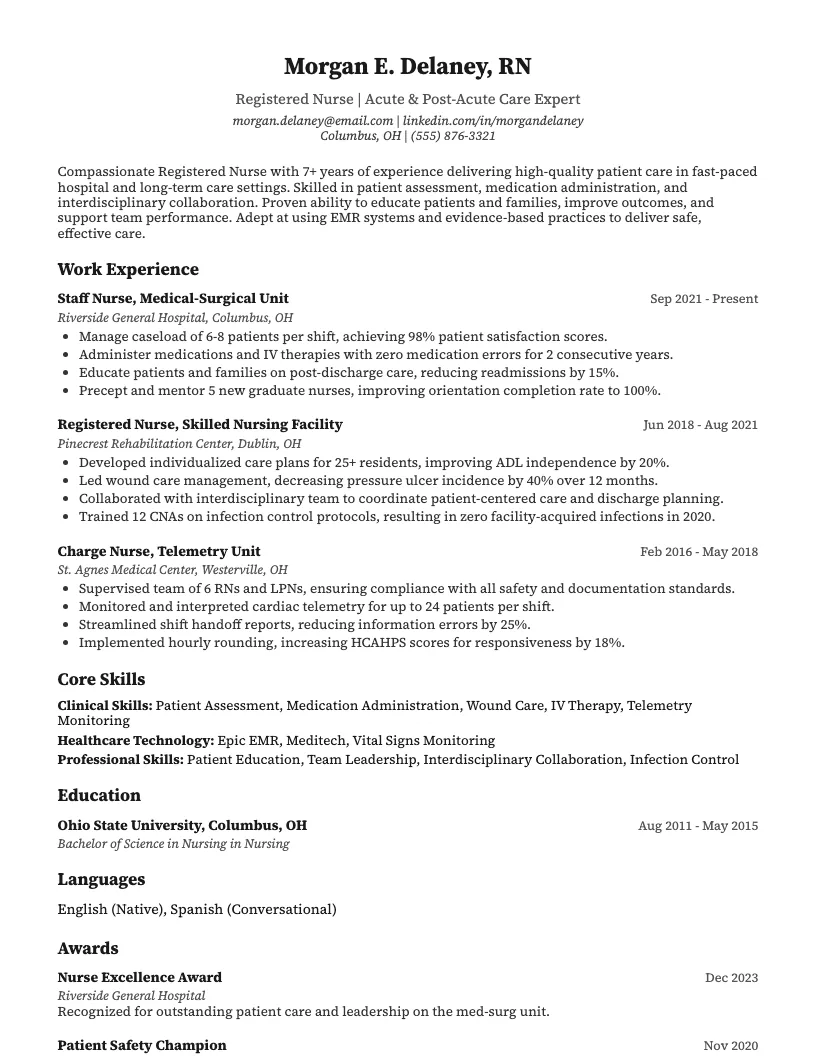
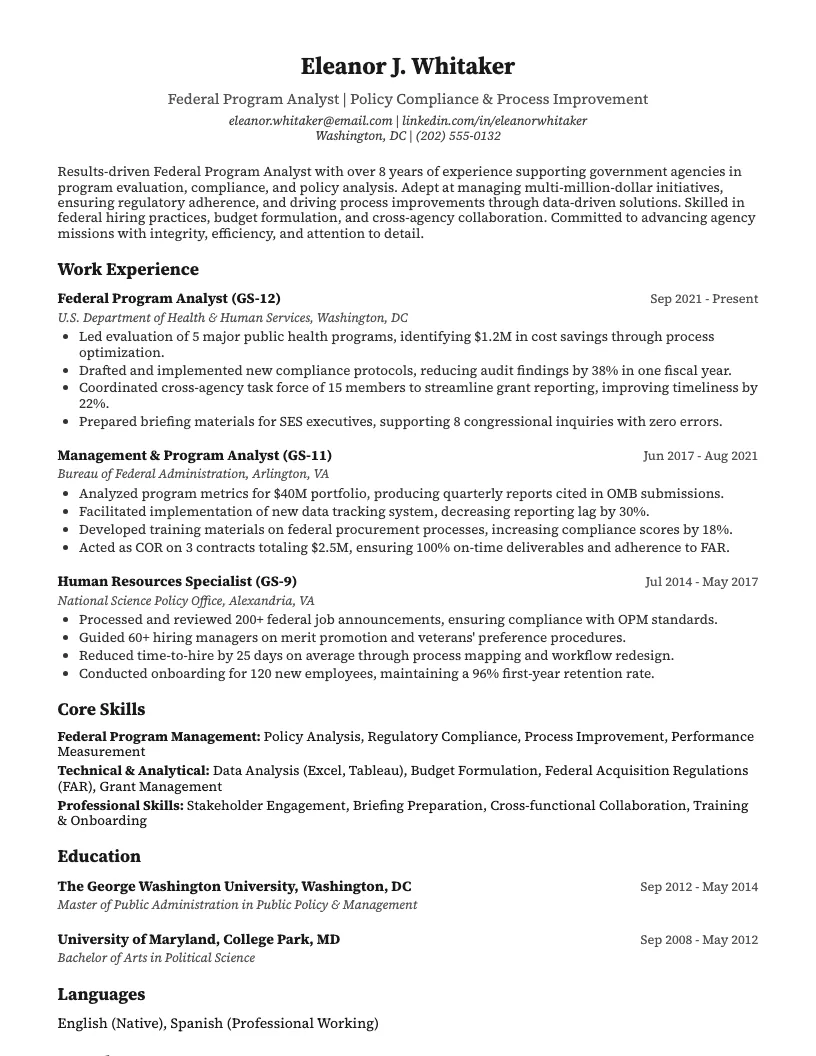
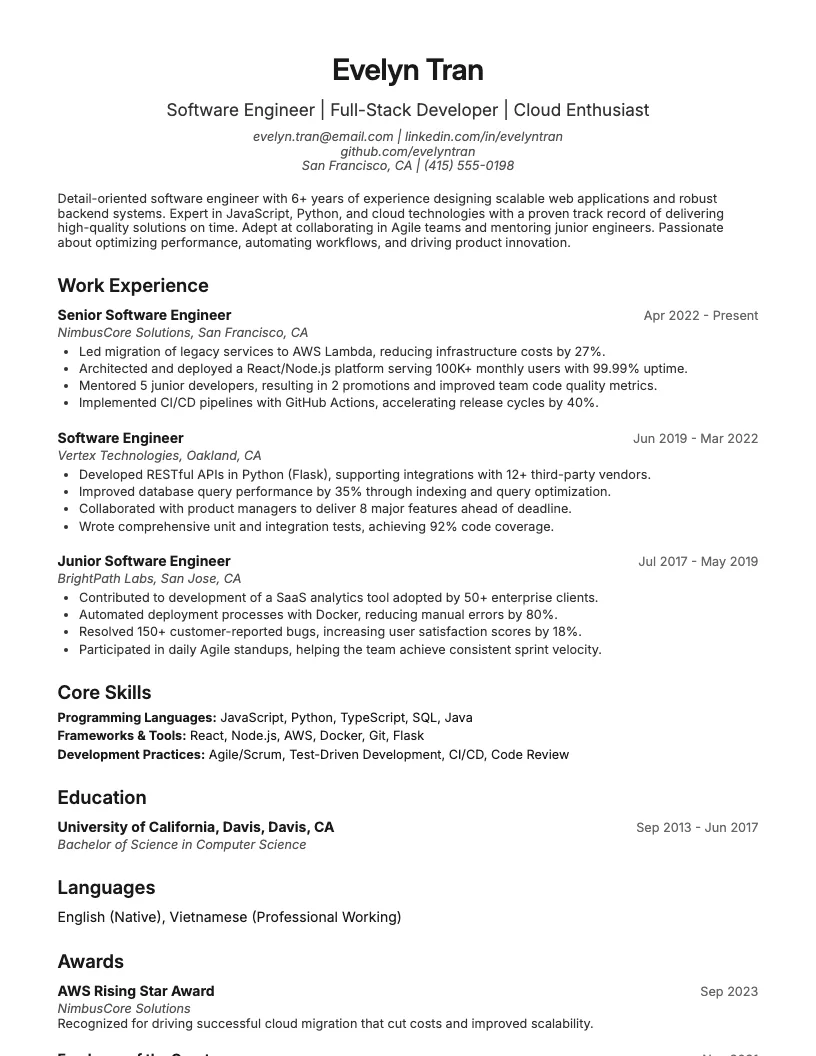
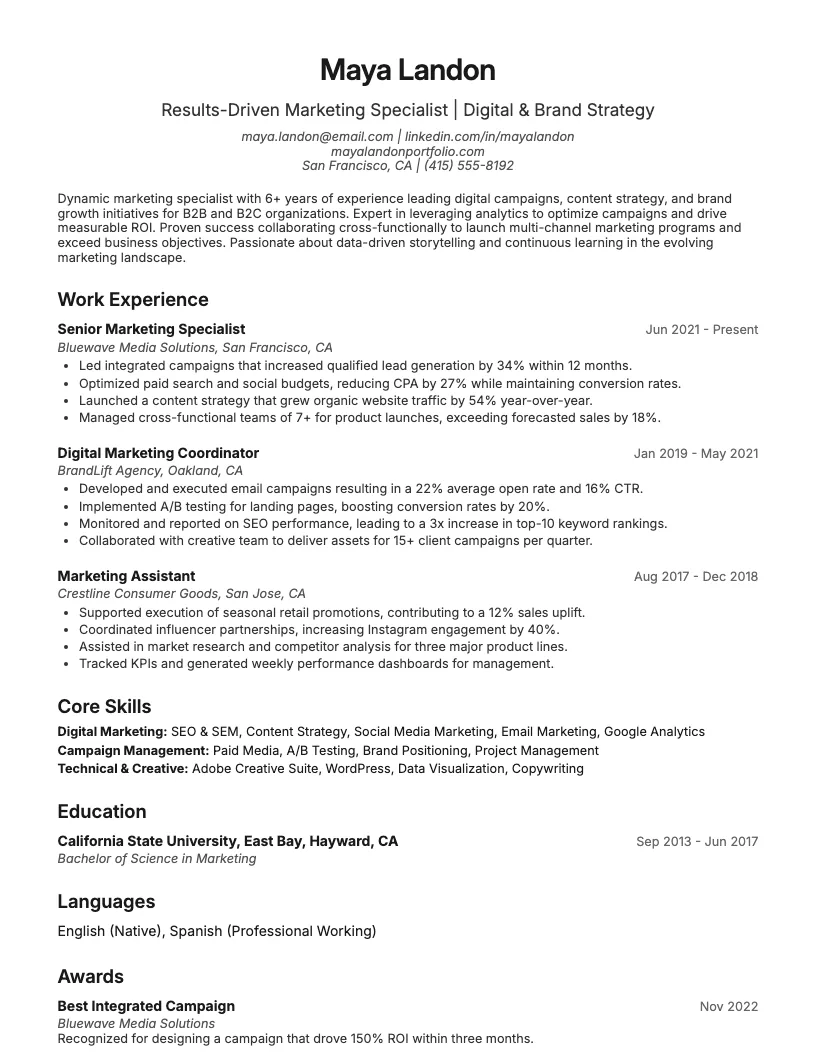
8 examplesStart from an example that already has them, and swap in your own.
Check your resume against the job you want
Scan your resume, see which skills and keywords the posting asks for that you are missing, and fix them before you apply.
Free to use • No credit card required